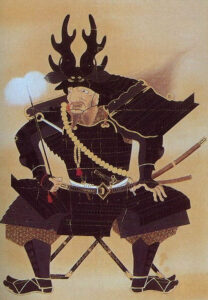
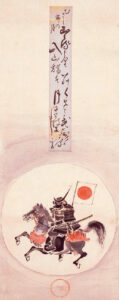
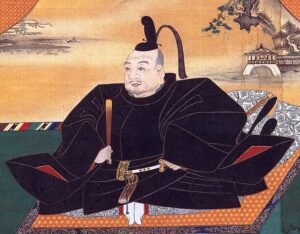
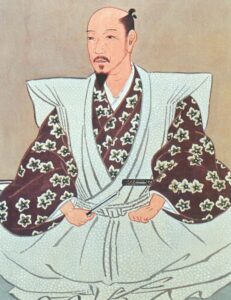
In the five years between the spring of 1863 and the first shots of the Boshin War, by one careful count, about forty-five members of the Shinsengumi died while serving in Kyoto. Six of them were killed fighting the enemy. Most of the rest were made to cut their bellies open, or were cut down in the street or in a borrowed bedroom, by their own comrades.
I find that number more useful than any film. The Shinsengumi are remembered as the shogunate’s swordsmen, a squad of farm boys and drifters in pale blue coats who cut their way through the radicals of Bakumatsu Kyoto. The record shows something stranger: a police unit that preferred to arrest its enemies alive, and saved most of its killing for itself.
It is also a story you can walk, from the farm villages of western Tokyo where its leaders grew up, to a temple in Kyoto where their friends are buried, to a star-shaped fort on the edge of Hokkaido where the last of them gave up in 1869. Most of it costs less than a lunch.
In This Article
- Farm boys from Tama
- The Rōshigumi, and the man who changed sides
- Mibu: rent-free in a farmer’s house
- The rules, and who they were used on
- Ikedaya: one night in June 1864
- Hatamoto at last, and the long slide
- Kōfu, Nagareyama, Itabashi
- North with the navy: Aizu to Hakodate
- Survivors, storytellers and the other Shinsengumi
- Where to see the Shinsengumi today
- Mibu-dera and the Mibuzuka, Kyoto
- The Yagi house and the Maekawa house
- Nishi Hongwanji and the Ikedaya site
- The Ryozen Museum of History, Higashiyama
- Hino: the Shinsengumi’s home town
- Itabashi and Mitaka, Tokyo
- Goryōkaku and Hakodate
- Where Hijikata fell, and the Hekiketsu-hi
- Six out of forty-five
Farm boys from Tama
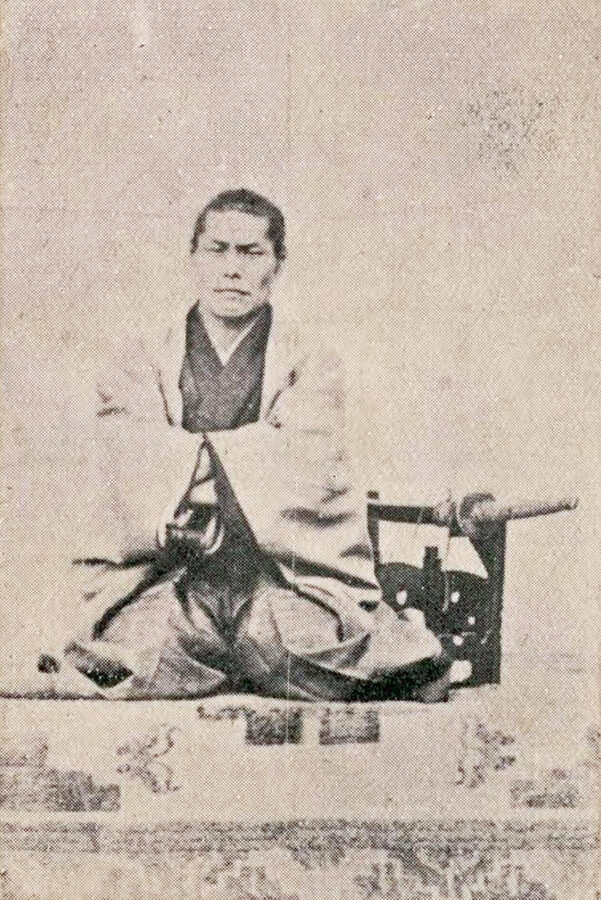
Kondō Isami was born Miyagawa Katsugorō on 9 November 1834 in Kamiishihara, a farming village in the Tama district west of Edo, now part of Chōfu. His father was a prosperous farmer, not a samurai. At fourteen the boy enrolled at the Shieikan, a small dojo of the Tennen Rishin-ryū sword school in Ichigaya, and within a year its master, Kondō Shūsuke, had adopted him.
The Tennen Rishin-ryū was a country style, unglamorous and heavy, with thick practice swords and a following among the village headmen of Tama. Its patrons were men like Satō Hikogorō, headman of the post town of Hino, who had taken up the sword after his grandmother was murdered in front of him during a fire. He built a practice hall onto his house, and the Shieikan’s teachers came out from Edo to instruct there.
Kondō idolised the warriors of the war chronicles. He admired Katō Kiyomasa, partly because Kiyomasa was also said to have been able to put his fist in his mouth, and he told friends he hoped to rise as high. He also loved the story of the 47 Rōnin, which will matter later. In 1861, at a mock battle in the grounds of the Rokusho shrine in Fuchū, he formally succeeded as the fourth master of the school.
Hijikata Toshizō came to the sword by a different road. He was born in 1835 in Ishida, a village now inside Hino city, the youngest of ten children of a rich farming family; his father had died of tuberculosis months before he was born and his mother followed when he was five. As a young man he travelled around selling the family’s patent remedy, Ishida sanyaku, and fought practice bouts at whatever dojo would have him.
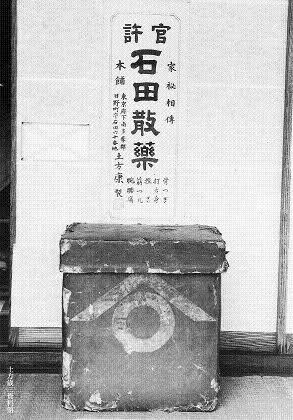
He enrolled formally in the Tennen Rishin-ryū on 9 March 1859, through Satō Hikogorō, who was married to his elder sister. Many stories about his youth are later inventions, and the village registers rule out the best-known one, about an apprenticeship in Edo at eleven. What is certain is that he was clever, sharp-tongued and good with people, and that the bamboo he is said to have planted as a boy, swearing to make his name as a warrior, still grows at his birthplace.
Around the Shieikan gathered the men who would run the Shinsengumi. Okita Sōji, born in 1842 or 1844 to a foot soldier of the Shirakawa domain, had been a live-in pupil since about the age of nine and was teaching the senior students in his teens. Inoue Genzaburō came from a Hino family of hereditary guards. Yamanami Keisuke, Nagakura Shinpachi, Tōdō Heisuke and Harada Sanosuke drifted in from other schools and other domains.
It is easy to call them peasants, and many accounts do. The unit did take farmers’ sons, and its two leaders were exactly that, but the surviving membership records tell a more mixed story: of 106 members whose origins are known, 87 were samurai of some rank. What the Shieikan men shared was not birth but ambition, and a lack of anything better to do in 1862.
The Rōshigumi, and the man who changed sides
The opportunity came from a political crisis in Kyoto. After the Western treaties of the 1850s the capital had filled with radicals of the sonnō jōi (尊王攘夷) movement, “revere the emperor, expel the barbarians”, and with masterless samurai who killed officials, merchants and each other. In 1862 the shogunate relaxed sankin-kōtai, the alternate attendance system that had kept the daimyo shuttling to Edo for two centuries, and the great lords promptly turned their attention to the imperial court instead.
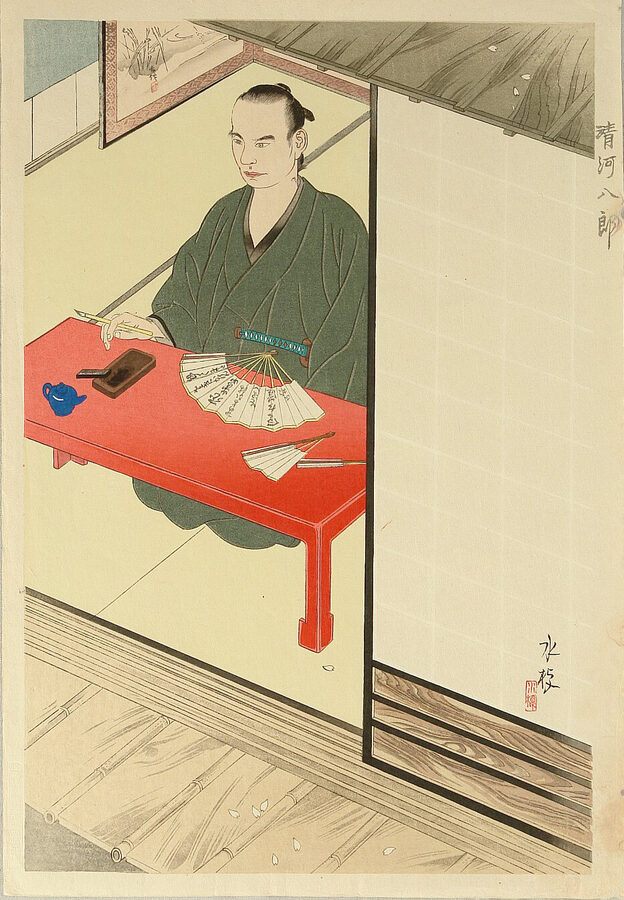
The fourteenth shogun, Tokugawa Iemochi, was due to travel to Kyoto in 1863, the first shogun to do so since Iemitsu in 1634. A rōnin from Shōnai named Kiyokawa Hachirō proposed that the shogunate recruit masterless men to guard him, which had the charm of turning a security problem into a security force. The government agreed, and the Rōshigumi (浪士組) was raised in Edo in the first weeks of 1863.
How many joined is one of those numbers that will not sit still. Sources variously give 234 men, 248, or simply “more than two hundred”. They left Edo on 8 February 1863 by the lunar calendar and marched up the Nakasendō, and the first famous quarrel happened on the road: at Honjō, when Kondō, who was handling lodgings, missed a room for the Mito swordsman Serizawa Kamo, Serizawa lit an enormous bonfire in the street until Kondō came and apologised.
They reached Kyoto on 23 February and were billeted in Mibu, a farm village on the south-western edge of the city. That night, at the temple of Shintoku-ji, Kiyokawa revealed what he really intended: the force would serve the imperial court, not the shogun. The shogunate ordered the whole Rōshigumi back to Edo.
Most went. A small group refused, led by Serizawa’s Mito faction and Kondō’s Shieikan men, who said they had come to guard the shogun and would stay to do it. Again the count wobbles: Kondō’s own letters suggest twenty-four men, English accounts often say nineteen, and the Yagi family, who housed them, list thirteen names under their roof. Kiyokawa went home to Edo and was assassinated there in April by men working for the shogunate he had just double-crossed.
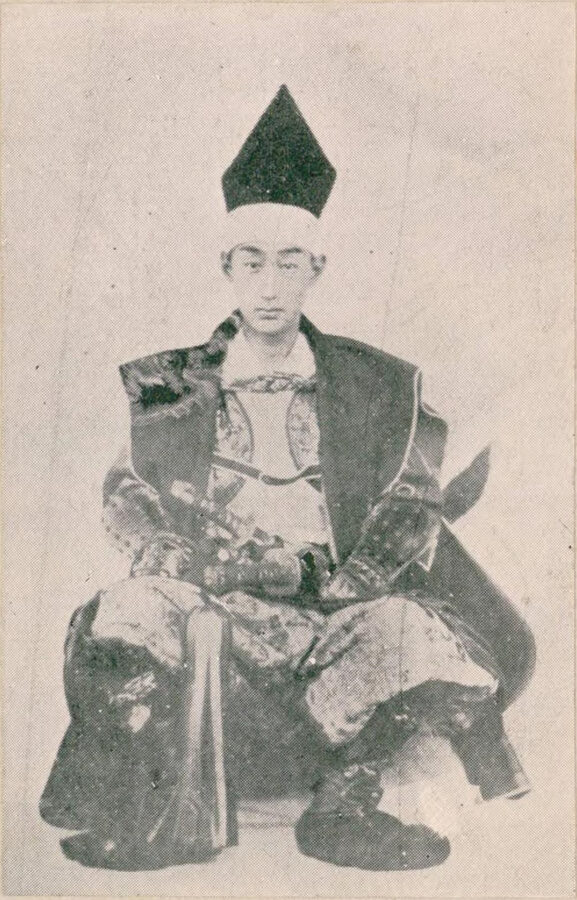
The stayers needed a patron, and found one in Matsudaira Katamori, lord of Aizu, who had been appointed Kyoto Shugoshoku (京都守護職), Protector of Kyoto, the previous year. On 12 March 1863 his domain took them into its custody. They called themselves the Mibu Rōshigumi. Kyoto called them Miburō, “the Mibu rōnin”, and later writers have enjoyed pointing out that the final syllable can also be written with the character for “wolf”.
Mibu: rent-free in a farmer’s house
The Yagi house in Mibu was a big rural property with a gatehouse of 1804 and a main house of 1809, belonging to the senior family among the village’s minor gentry. The family had no say in the matter. Their son Tamesaburō, a boy at the time, would remember the guests for the rest of his life: Kondō and Serizawa sitting high up to watch sword practice, and Hijikata down on the floor in his practice armour, dripping sweat and shouting at the novices that their blows were too light.
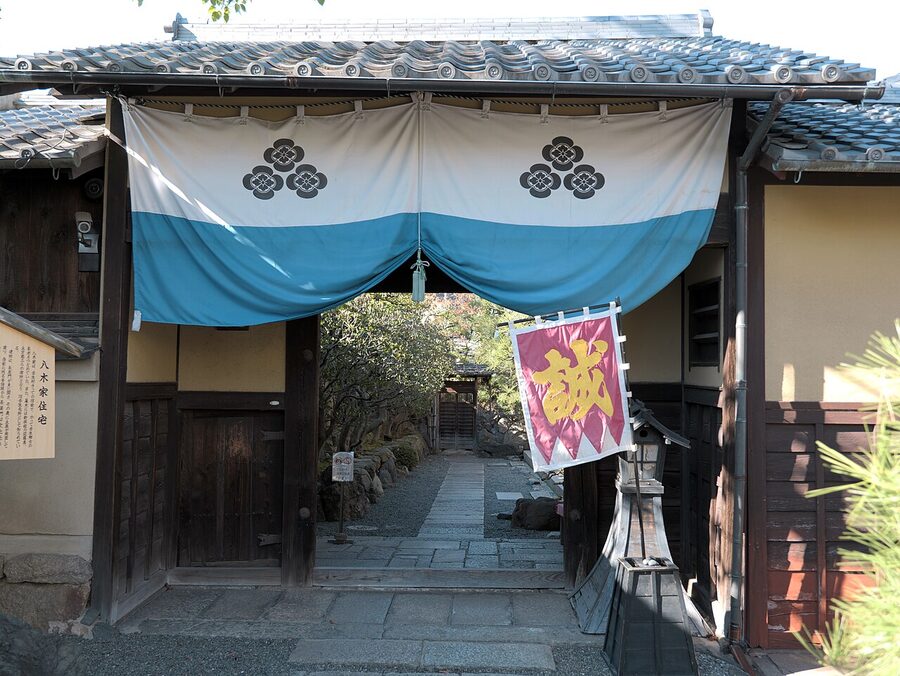
Money came first from a moneychanger in Osaka, Hiranoya Gohei, who was made to hand over a hundred ryō in April 1863. With it they ordered uniforms and flags. The coat everyone knows, a pale blue haori with white saw-tooth “mountain” stripes at the cuffs, was made for them in Kyoto, by tradition by the draper Daimonjiya, the ancestor of today’s Daimaru department store, though some sources name another shop. The haori and hakama were ordinary dress; the colour and the pattern were not.
The pattern was a quotation. It is the costume worn by the 47 rōnin in the Kabuki and puppet versions of Chūshingura, a theatre invention rather than anything the real raiders wore, and a squad of unemployed swordsmen dressing as the most famous loyal retainers in Japan was making a fairly unsubtle point. It was also wildly impractical for night work. The last witness to see the coats in use describes them at the Ikedaya in June 1864; afterwards the men seem to have gone about in black, and not one original survives.
The flag was red, with the single character makoto (誠), “sincerity”, sometimes with the same zigzag border. It was made up by a cotton and old-clothes merchant that grew into Takashimaya. You will see that character on souvenir towels all over Kyoto, which is a strange fate for the badge of a political police.
The early months were not dignified. In June 1863 a group led by Serizawa got into a brawl with sumo wrestlers in Osaka that left wrestlers dead and wounded; the magistrates decided the wrestlers were to blame, and their stable paid the Mibu men fifty ryō in apology. In August, by most accounts, Serizawa’s men burned down the premises of a Kyoto silk merchant, Yamatoya, who had refused them a loan, and kept the fire brigade away with drawn swords.
What saved them was a coup. On 18 August 1863 Aizu and Satsuma forces drove the Chōshū domain and its radical court allies out of the palace, and fifty-two Mibu men turned out in armour to hold a palace gate. It was not much of a fight, but it was noticed, and in its wake the group received a new name, Shinsengumi (新選組), the “newly selected corps”. Who granted it is disputed; one account credits the court’s liaison officials, another Katamori himself, and an Aizu record supports the second.
The name is written two ways. Many period documents, Kondō’s letters included, use 撰 for the middle character, and you will see 新撰組 on old monuments; the unit’s seal used 選, and since the 2000s Japanese textbooks and newspapers have settled on 新選組.
Then Kondō’s men dealt with Serizawa. Niimi Nishiki, the third commander, had already been forced into seppuku over some breach of the rules.
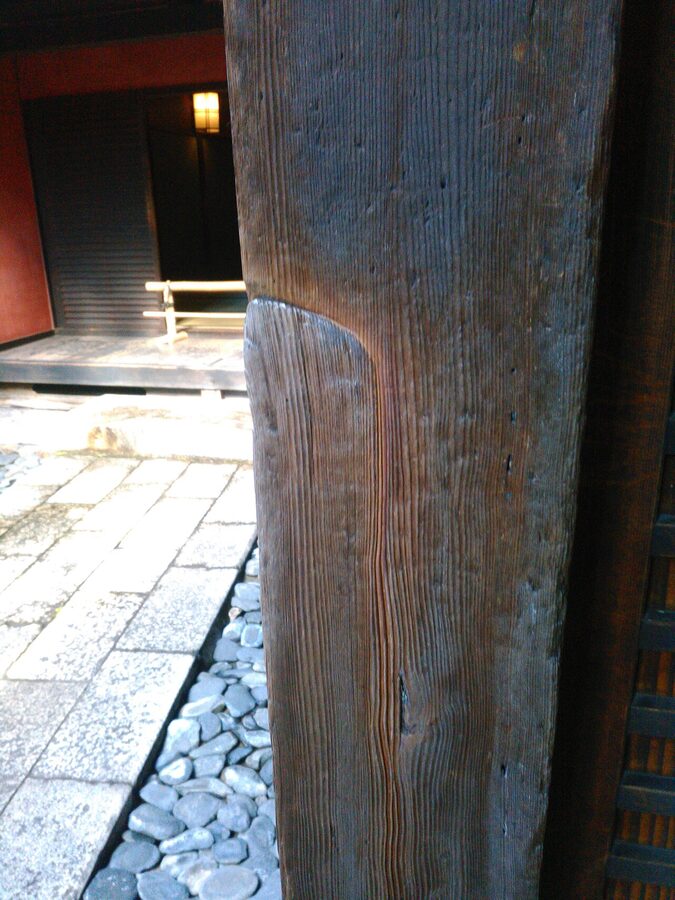
On a night of pouring rain in September 1863, Serizawa came back drunk from a party at Sumiya to the Yagi house with his mistress Oume, and a group including Hijikata and Okita broke in and killed them both in the back reception room, along with his lieutenant Hirayama Gorō. Sources variously give the 16th or the 18th of the ninth month. The Yagi family still points out cuts in the woodwork.
The rules, and who they were used on
The code that every film quotes is the kyokuchū hatto (局中法度), five articles with a single penalty: do not deviate from the way of the samurai, do not leave the corps, do not raise money privately, do not take up other people’s lawsuits, and do not fight private quarrels. Breaking any of them meant seppuku.
The trouble is that nobody can find it. The five-article version became famous through Shimozawa Kan’s book Shinsengumi Shimatsuki in 1928, and no contemporary document records all five. When Nagakura Shinpachi told his story to a newspaper in 1913 he listed four of them, without the rule on private fights, and called them simply “the prohibitions”. Most Japanese historians now think the familiar list was assembled by Shimozawa from those rules and a separate set of field regulations.
The first article is the interesting one, because it means whatever the man in charge says it means. “The way of the samurai” (shidō) was not a written code in 1863, whatever the later cult of bushidō implies, and in practice the vice-commander decided what counted as a breach. Hijikata is the man the sources credit with enforcing it, and the record of deaths suggests he did so without much hesitation.
Yamanami Keisuke, who held the senior post of sōchō and was one of the original Shieikan men, walked out in February 1865, apparently heading for Edo. He got as far as Ōtsu, where Okita, sent after him, found him and brought him back. He was allowed to die by seppuku, with Okita as his second. In a story first written down long afterwards, a woman from the Shimabara quarter came to the barred window of his room to say goodbye.
The others are a roll call. Kawai Kizaburō, the paymaster, died in February 1866 over a discrepancy in the accounts. Takeda Kanryūsai, a military theorist, was killed in 1867, reportedly while trying to change sides. Recruits were tested in their first weeks by senior men who burst in on them at night, and anyone who flinched was sent away; married men had to keep their families at least ten ri, about forty kilometres, from headquarters, so that nobody would start valuing his own life.
The biggest purge was political. Itō Kashitarō, recruited in Edo in 1864, was an imperial loyalist at heart, and in March 1867 he took a group of men out of the unit to serve as guards at the tomb of the late Emperor Kōmei, the Goryō Eji. Tōdō Heisuke, one of the original Shieikan men, went with him; so, it is generally believed, did Saitō Hajime, as a spy. On the 18th of the eleventh month of 1867 Kondō invited Itō for drinks, and on the way home Shinsengumi men cut him down at the corner of Shichijō and Aburanokōji, then waited by the body for the rest of his group.
Tōdō died in that ambush. The method was standard Shinsengumi practice: always attack with more men than the enemy, ideally many more. At Aburanokōji there were seven of Itō’s men against thirty-five or so; in a 1866 incident at the Sanjō bridge, thirty-four against eight. Each squad also kept a rota of shiban, “death duty”, so that the man first through a door was chosen in advance and nobody hesitated on the threshold.
Ikedaya: one night in June 1864
Early on the morning of 5 June 1864, Shinsengumi men raided the shop of a charcoal dealer near the Shijō bridge called Masuya Kiemon. Masuya turned out to be Furutaka Shuntarō, a radical sympathiser, and his storeroom held weapons and letters from Chōshū. Hijikata interrogated him, by the standard accounts under torture, and the confession that came out was spectacular: a plan to set the palace alight on a windy night, seize or kill the shogunate’s chief men in the confusion, and carry the emperor off to Chōshū.
Whether Furutaka said any of that is now an open question. The plot is recorded only on the shogunate’s side, and one diary of the interrogation records only that he gave his real name. The radicals’ own meeting that night, by Katsura Kogorō’s account, was called to discuss rescuing Furutaka. Either way the Shinsengumi knew that radicals would be meeting somewhere in the inn district between Shijō and Sanjō, and they went to look, with the city filling up for the Gion Matsuri.
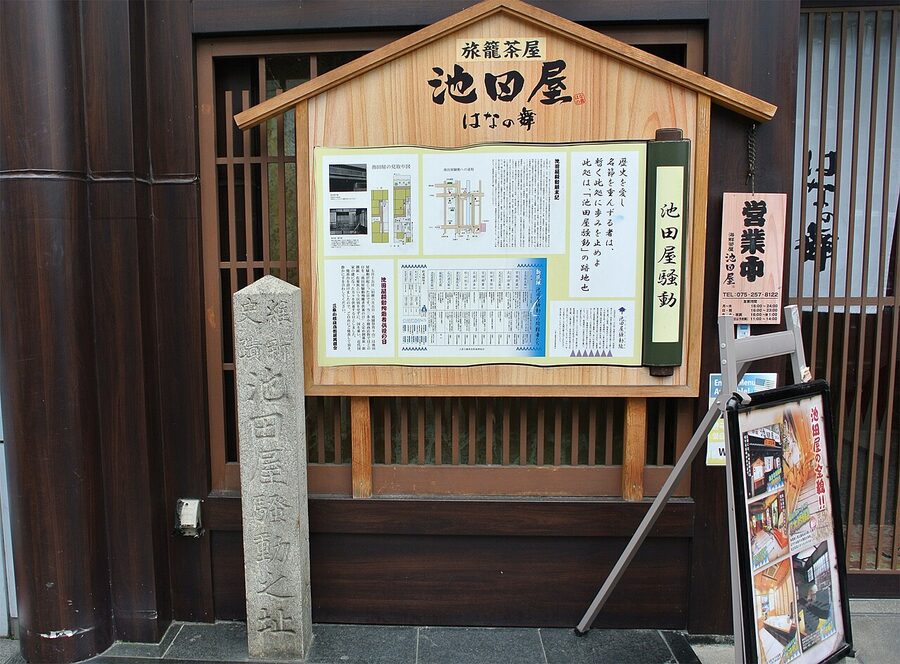
They split into search parties. Kondō led about ten men, Hijikata a larger group, and a third party combed the other streets; they were short-handed because, by Kondō’s account, many men were ill, and because, by another, several had just deserted. At about ten at night Kondō’s party found the radicals at the Ikedaya, an inn at Sanjō Kobashi, with twenty or more men upstairs.
Kondō went in with three others: Okita, Nagakura and Tōdō, with his adopted son Shūhei in some versions. For a while it was four swordsmen against twenty in a dark wooden building with steep stairs. Okita collapsed in the middle of the fight, traditionally coughing blood from the tuberculosis that would kill him, though some historians think it was heat exhaustion on a sultry summer night. Tōdō pushed back his forehead guard in a lull and was cut across the brow.
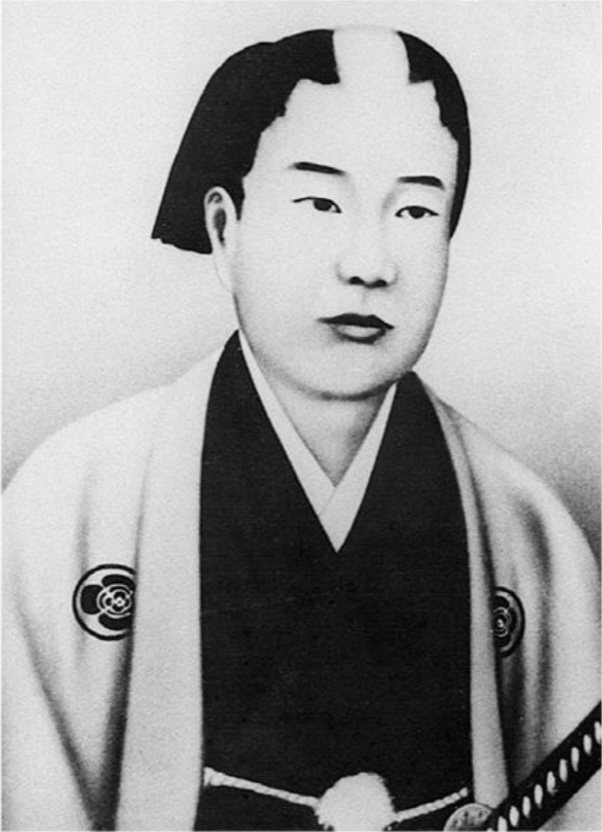
Hijikata’s party arrived, and with the numbers turned the Shinsengumi switched from killing to arresting, which is worth remembering the next time you see the scene staged as a massacre. In his report Kondō gave the result as seven killed, four wounded and twenty-three taken, though counts differ depending on whether you include the sweep of the streets the next morning. Among the dead were Miyabe Teizō of Higo, the domain ruled from Kumamoto Castle, and the Chōshū activist Yoshida Toshimaro. Three Shinsengumi men died, one that night and two of their wounds a month later.
Katsura Kogorō, later Kido Takayoshi and one of the founders of Meiji Japan, escaped because he had arrived early, found nobody there and gone off to visit the Tsushima domain residence. His own memoir has a friend holding him back from running to the fight; another diary puts that friend in Edo at the time. The Shinsengumi waited until daylight, for fear of an ambush in the dark, and marched back to Mibu at noon through streets packed with spectators.
The raid made them famous and it probably made the next disaster worse. Furious, Chōshū marched troops on Kyoto, and on 19 July 1864 fought Aizu and Satsuma at the palace gates in the Kinmon or Hamaguri Gate Incident. The Shinsengumi were in the line. The fires that followed burned nearly 28,000 houses across the city, which is one reason Kyoto’s townspeople never warmed to the men in pale blue.
Hatamoto at last, and the long slide
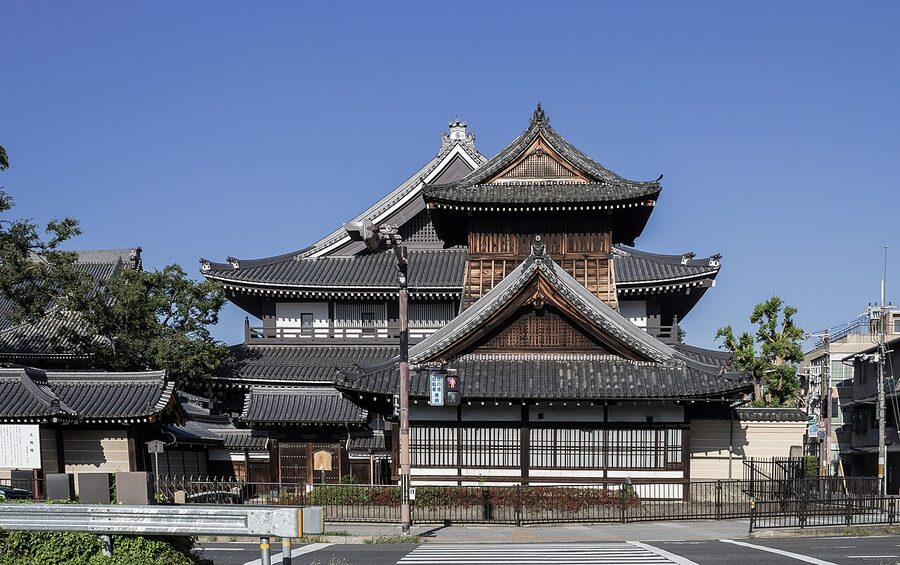
After Ikedaya recruits poured in, and Hijikata, Tōdō and others went to Edo to sign up more; the unit reached about two hundred men, though some English sources give three hundred, and it outgrew Mibu. In March 1865 it moved into the grounds of Nishi Hongwanji, the great temple south of the city centre, which had a reputation for sympathy with Chōshū and was not consulted. The new headquarters sat by the drum tower in the north-east corner of the precinct.
The Shinsengumi drilled with rifles and cannon in the temple grounds; the temple complained to Aizu about the noise, and the drill moved to Mibu-dera, which complained about the damage. This is the part of the story the films leave out. Under the swordsmanship, the unit was organising itself on Western lines, with numbered companies, single named commanders and a field code, and Kondō was being sent on diplomatic missions to Hiroshima to talk to Chōshū.
On 10 June 1867 the whole corps became retainers of the shogun, the status the farm boys from Tama had wanted all along. Four months later, on 14 October, Tokugawa Yoshinobu announced at Nijō Castle that he was returning political power to the emperor, and the shogunate that Tokugawa Ieyasu had founded in 1603 effectively ended.
In December, riding back from Nijō, Kondō was ambushed at Sumizome in Fushimi by survivors of Itō’s group and shot through the shoulder. He was taken to Osaka Castle to be treated by the shogun’s physician Matsumoto Ryōjun, and Okita, now very ill, went with him. When the war came, a few weeks later, neither of them was able to fight.
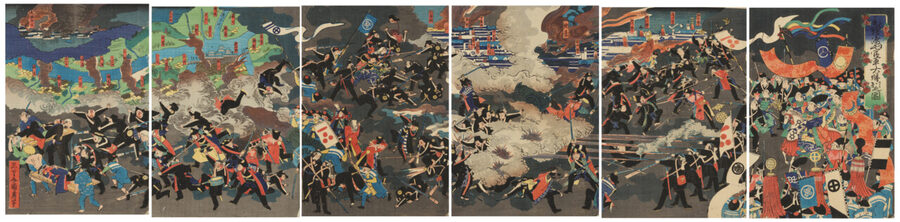
The Battle of Toba-Fushimi began on 3 January 1868. Hijikata commanded the Shinsengumi from the Fushimi magistrate’s office, alongside Aizu troops, and was shelled out of it by Satsuma guns on the higher ground nearby. Inoue Genzaburō, the Hino man who had been with them from the beginning, was killed two days later in the fighting at Yodo. The shogunate’s army, much larger on paper, broke.
Back in Edo, an old acquaintance asked Hijikata at Edo Castle how the battle had gone. His reply is one of the most quoted lines in the whole story: from now on weapons must be guns, he said; “I carried a sword and a spear, and they were of no use at all.” Yoshinobu had already slipped out of Osaka Castle by night and sailed for Edo. The Shinsengumi followed on another ship, and lost more men to desertion on the way.
Kōfu, Nagareyama, Itabashi
Kondō asked for one more job, and the shogunate’s leaders, who by many accounts were glad to have him out of Edo while they negotiated, gave it to him. He was to secure Kōfu Castle in Kai province before the imperial army reached it. The Shinsengumi were renamed the Kōyō Chinbutai, the “Kai pacification corps”; Kondō travelled as Ōkubo Tsuyoshi and Hijikata as Naitō Hayato, and they set off up the Kōshū road on 1 March 1868 with new recruits, cannon and money.
The road ran through home. They stopped at Kondō’s native Kamiishihara for a celebration, and at Hino, where Satō Hikogorō joined them with his farm militia. It was the closest they ever came to a triumphal procession, and it cost them time. On 4 March they learned that Itagaki Taisuke’s Tosa troops, the Jinshōtai, had already taken Kōfu.
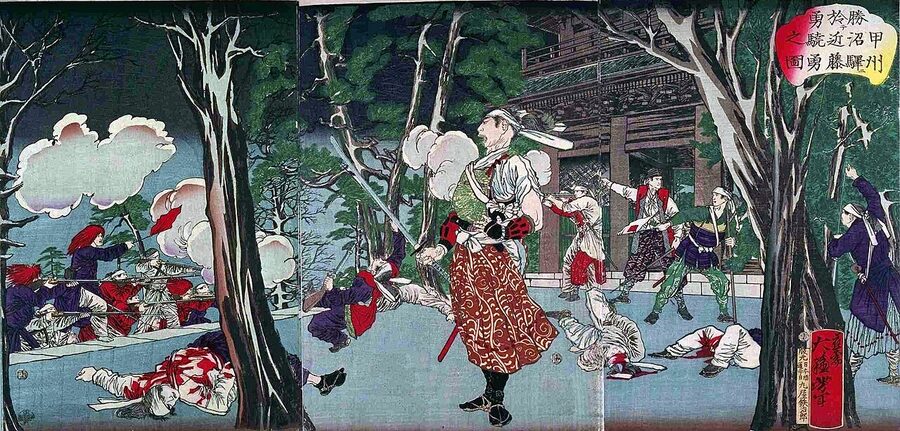
They fought at Katsunuma on 6 March, or the 5th in some accounts, and broke in about two hours. Tosa was ruled from Kōchi Castle, and its troops were better armed and better led. Nagakura Shinpachi and Harada Sanosuke quarrelled with Kondō on the way back and left to form their own unit, ending a friendship that went back to the Shieikan.
Kondō and Hijikata regrouped in the village of Gohei-shinden, in what is now Adachi in Tokyo, and in April moved to Nagareyama in Shimōsa, across the Edo River. On 3 April imperial troops surrounded their quarters. Kondō gave himself up under his false name, Ōkubo Yamato; by one tradition Hijikata talked him out of seppuku, hoping a bluff would save him, and one record has Kondō going to the enemy camp of his own accord.
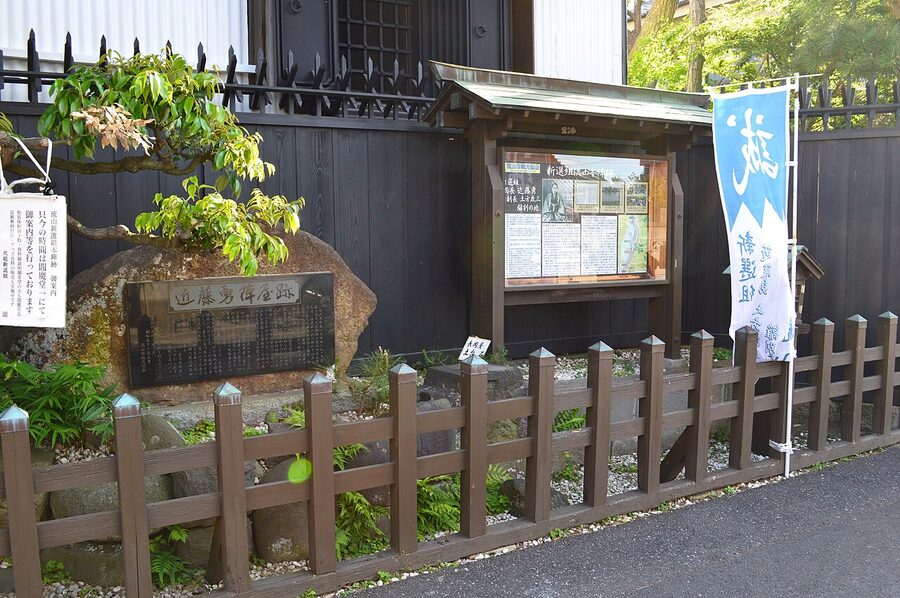
He was taken to the imperial headquarters at Itabashi, on the Nakasendō just north of Edo, where somebody recognised him; tradition names two former members of Itō’s group, though no contemporary source does. Hijikata went to Edo and begged Katsu Kaishū to intercede, without result. On 25 April 1868 by the old calendar, 17 May by the new, Kondō Isami was beheaded at the Itabashi execution ground. He was thirty-five by Japanese reckoning, thirty-three by ours.
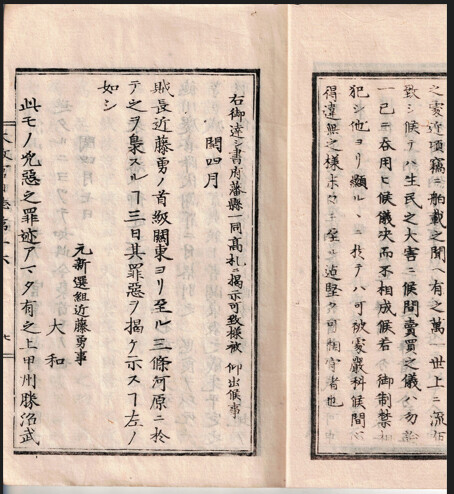
The sentence was beheading, not seppuku, which was the point. Tosa men, led by Tani Tateki, held him responsible for the murder of Sakamoto Ryōma in Kyoto the previous November, and Tani kept saying so even after a member of a different shogunate police unit, the Mimawarigumi, confessed to the killing in 1870. Recent Japanese research is more cautious: the official records put the decision with the local headquarters, and the often-repeated story of a Tosa versus Satsuma argument over his fate has no primary source.
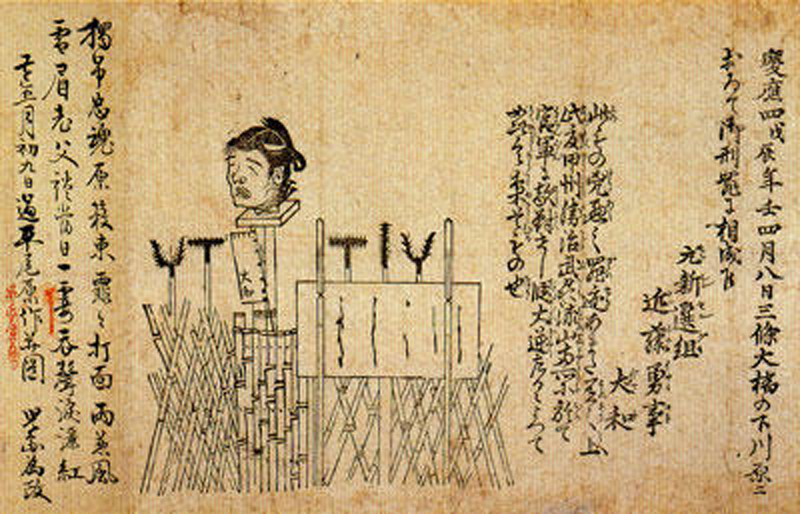
Okita Sōji died on the 30th day of the fifth month of 1868 (19 July by the Western calendar), by most accounts in a gardener’s house at Naitō-chō, beside today’s Shinjuku Gyoen, where Matsumoto Ryōjun had hidden him. He was twenty-four, twenty-five or twenty-seven, depending on which birth year you prefer, and he is said not to have been told that Kondō was dead. The famous story of him trying and failing to cut a black cat in the garden, and murmuring “I can’t do it”, is generally credited to Shimozawa Kan’s imagination.
North with the navy: Aizu to Hakodate
Hijikata’s war went on for another year. He joined the shogunate’s French-trained infantry under Ōtori Keisuke, helped take Utsunomiya Castle in April 1868, and was wounded in the foot in the counter-attack. He spent the summer recuperating in Aizu, the domain of the lord who had first given the Shinsengumi a home, and while he was there he arranged a grave for Kondō at the temple of Tennei-ji, with a lock of his friend’s hair.
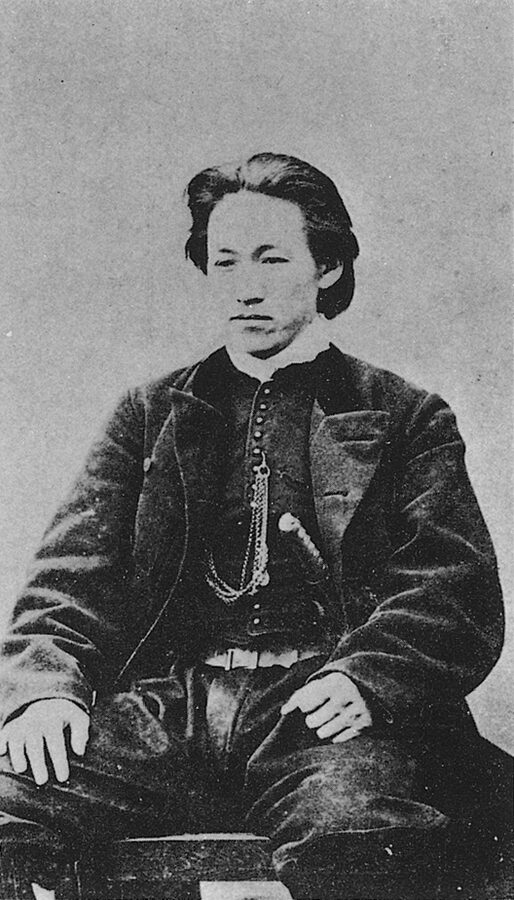
The remnants of the Shinsengumi split in Aizu. Saitō Hajime stayed with a small group to fight for the domain to the end; Hijikata went north to Sendai, where Enomoto Takeaki had arrived with the shogunate’s fleet. On 12 October they sailed for Ezo, the island now called Hokkaido, and landed at Washinoki on the 20th. Within a week the old shogunate fort at Goryōkaku was theirs.
In the following weeks Hijikata took Matsumae Castle and chased its garrison to Esashi, where Enomoto’s flagship, the Dutch-built Kaiyō Maru, ran aground in a storm and sank in sight of both men. By tradition they stood together on the shore, beating a pine tree in frustration; the “pine of lament” is still pointed out in Esashi, though the present tree is a replacement. In December the rebels held an election, often called the first in Japan, and Hijikata became deputy army commissioner of what foreigners called the Republic of Ezo.
He refused to join the toasts when the new government celebrated. In March 1869 he went on a raid to seize the government’s new ironclad, the Kōtetsu, in Miyako Bay; it failed in half an hour under fire from a Gatling gun. In April he held the mountain pass at Futamata against a much larger force for sixteen hours and more, going round his men with sake and telling them one cup each, since he could not have them breaking discipline drunk.
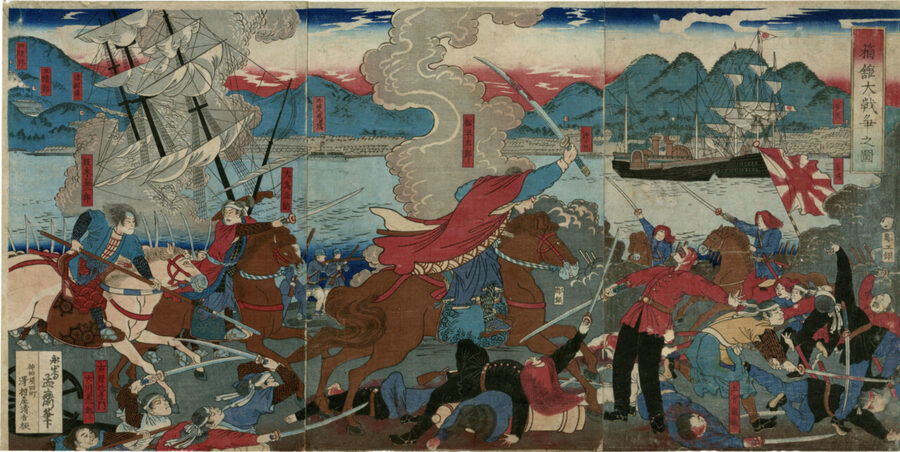
The government landed in force. On 11 May 1869, 20 June by the Western calendar, the general assault on Hakodate began, and the Benten Daiba battery, where some of the Shinsengumi were holding out, was cut off. Hijikata rode out from Goryōkaku with a small force to relieve it. At the Ippongi barrier, a checkpoint on the road into town, he stopped retreating soldiers by announcing that he would cut down anyone who fell back past him.
He was shot in the stomach and fell from his horse. Accounts differ on almost everything else, including who fired the shot, and one local tradition names a Matsumae soldier. He was thirty-four, or thirty-five by Japanese reckoning, the same age as Kondō. Where he is buried is unknown: one theory puts him under an earth mound inside Goryōkaku, others elsewhere in Hakodate.
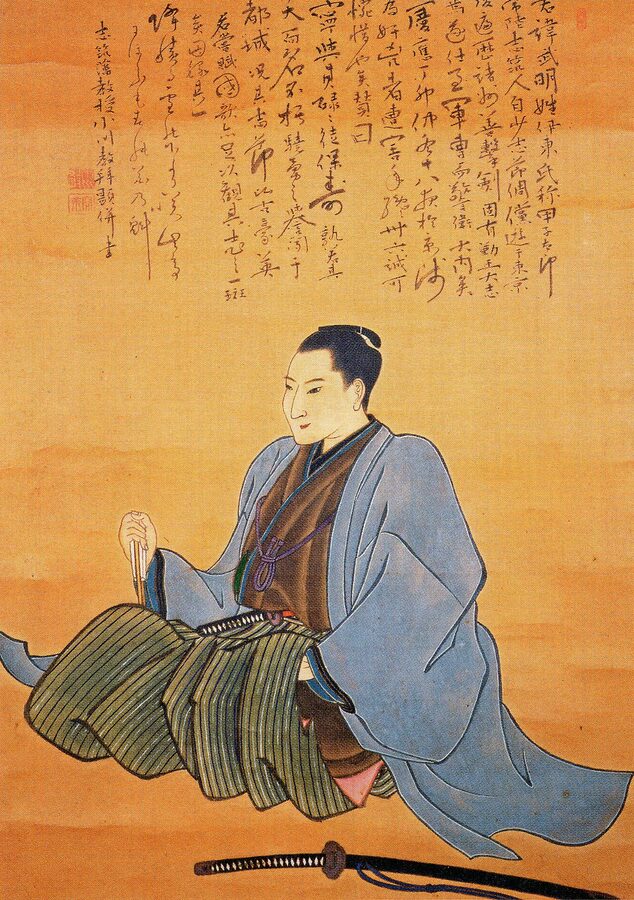
A few days before the end, Hijikata had called his page, Ichimura Tetsunosuke, a boy of about sixteen, and told him to carry his photograph and a lock of his hair to his family in Hino. Ichimura refused; he had come to die here. Hijikata told him that if he refused he would be cut down on the spot, and the boy went. As he left he saw a figure at a window watching him go, and said later that it was probably Hijikata.
The last commander of the Shinsengumi, Sōma Kazue, surrendered at Benten Daiba a few days after Hijikata’s death, and Enomoto surrendered Goryōkaku on 18 May. That was the end of the Boshin War, and the end of the unit. Ichimura reached Satō Hikogorō’s house in Hino with the photograph, and that is why it survives.
Survivors, storytellers and the other Shinsengumi
The new Meiji government did not want shrines to its enemies. Families of the dead were told not to keep their relics, and the Shinsengumi were remembered, when at all, as thugs and as the murderers of Sakamoto Ryōma, an accusation a popular novel of 1883 helped fix in the public mind. A few survivors quietly kept the memory going.
Nagakura Shinpachi did the most. With Matsumoto Ryōjun’s help he raised a memorial to Kondō, Hijikata and their dead near the Itabashi execution ground; sources variously date it to 1875 or 1876. The names of about a hundred and ten men are carved on its sides. Nagakura himself ended up in Otaru, in Hokkaido, and in 1913, in the second year of the Taishō era, a local newspaper serialised his memories, which remain one of the basic sources.
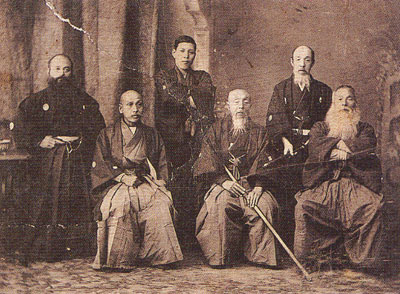
Saitō Hajime’s afterlife is the oddest. After fighting for Aizu to the end, he changed his name to Fujita Gorō, joined the new Tokyo police, and in 1877 fought for the Meiji government against Saigō Takamori in the Satsuma Rebellion. The last known surviving member, Ikeda Nanasaburō, died on 16 January 1938.
The rescue of their reputation began in the 1920s. Storytellers and novelists had kept Kondō alive as a fierce, slightly villainous hero, and from 1925 the film studios found him. Then, in 1928, in the early Shōwa era, the journalist Shimozawa Kan published Shinsengumi Shimatsuki, a mixture of interviews, documents and story that went through edition after edition and turned the corps into tragic heroes.
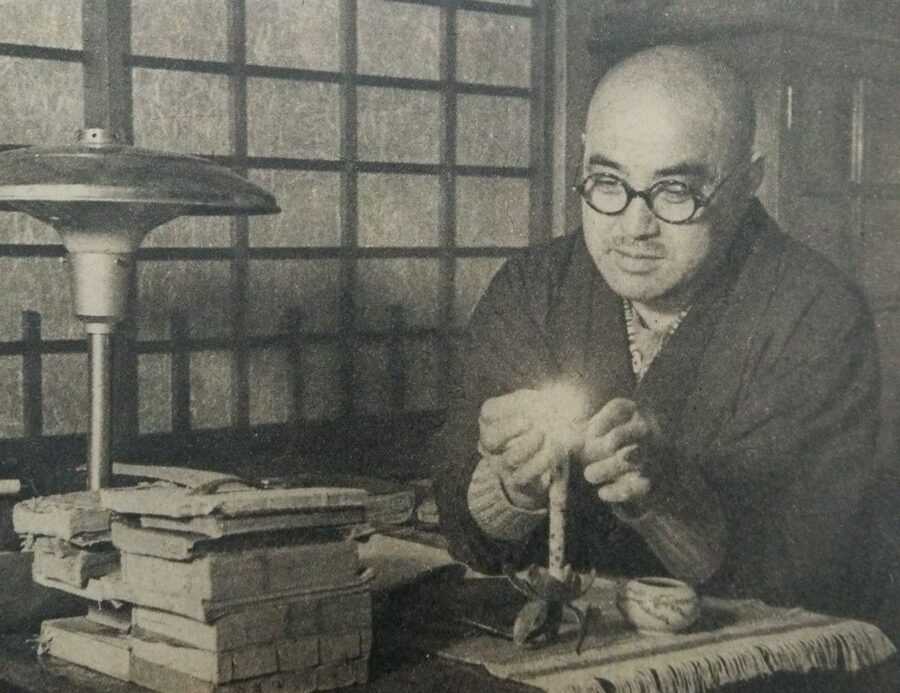
After the war the novelist Shiba Ryōtarō did for Hijikata what Shimozawa had done for the corps. His Moeyo Ken, “Burn, O Sword”, serialised from 1962, and the short stories of Shinsengumi Keppūroku made Hijikata a cool modern professional, and the television versions that followed starred the same actor as Hijikata for years. NHK’s 2004 historical drama Shinsengumi!, written by Mitani Kōki, put Kondō at the centre again, and Mitani noted with some feeling how the unit had been branded traitors for a century for doing what the authorities had asked.
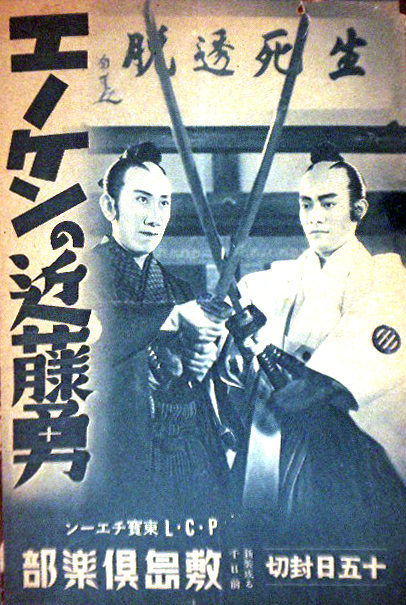
Manga and games took it from there. Gintama turned the corps into a bumbling space-age police force; Hakuōki made its members the love interests of a dating game; Golden Kamuy let Hijikata survive Hakodate and grow old in Abashiri prison. Hijikata now has the same afterlife Hattori Hanzō has as a ninja, or Miyamoto Musashi as the perfect duellist: a real man with a fictional career that has long since outgrown him.
Set against the record, a few things fall away. The dandara coats lasted about a year, and the crossed coat-strings tied behind the neck that every costume designer gives them have no historical basis. Of the seven fencing instructors the unit appointed in 1865, only Okita was a Tennen Rishin-ryū man. Kondō’s prized Kotetsu blade was almost certainly a forgery, possibly by the swordsmith Minamoto Kiyomaro; you can read about how such things happened in the Japanese swords article.
Some things survive the scrutiny, and they are more human than the legend. Hijikata wrote haiku under the pen name Hōgyoku, forty-one of them collected in a notebook that his family still keeps. Early in his Kyoto years he sent a bundle of love letters from geiko and maiko home to Tama with a verse about women who make a man forget his duty to the nation, which is the most Hijikata thing in the entire record. The man who enforced the rules was also, clearly, enjoying himself.
Where to see the Shinsengumi today
The story falls into three places: Kyoto for the years in power, the Hino area of western Tokyo for the beginning, and Hakodate for the end. Kyoto and Hino each fill a day. Hakodate fills one comfortably, and has the best view.
Mibu-dera and the Mibuzuka, Kyoto
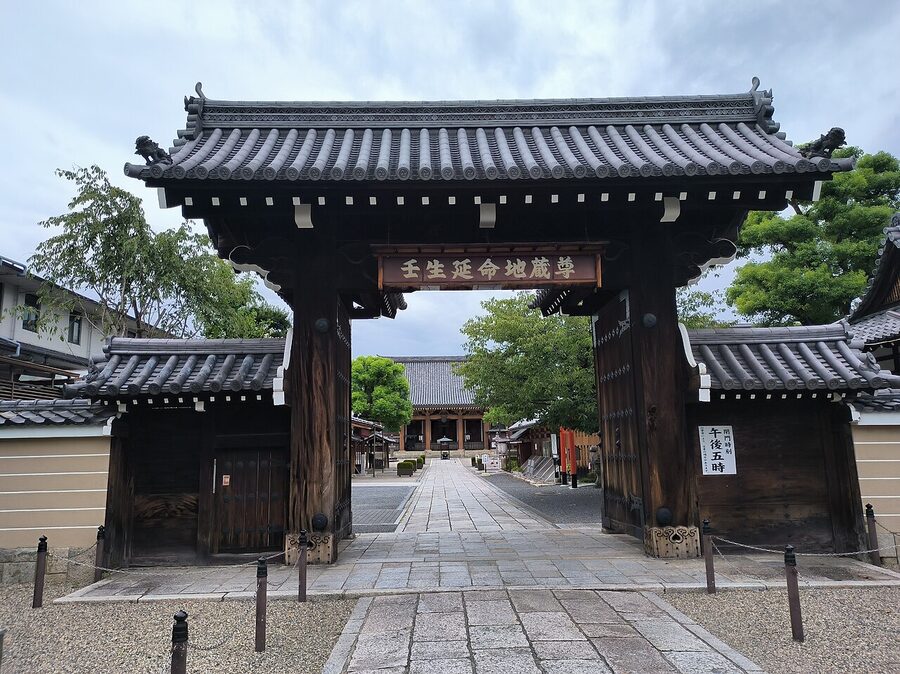
Mibu-dera (壬生寺) is a temple of the Risshū sect founded, by its own account, in 991 in the Heian era. It is a ten-minute walk from Hankyū Ōmiya or Randen Shijō-Ōmiya stations, or a minute from the Mibu-dera-michi city bus stop. The grounds are free.
The Shinsengumi graves are on the Mibuzuka (壬生塚), a little island in the pond at the east side of the precinct, entered through the Amida-dō hall. It is open 9:00–16:00 and costs ¥400 for adults and ¥200 for school students, a fee that includes the small history room in the hall’s basement; out of about thirty items on show, around seven relate to the Shinsengumi. On the island are graves for Serizawa and Hirayama, for the paymaster Kawai, and a shared stone for seven others, including the three Ikedaya dead.
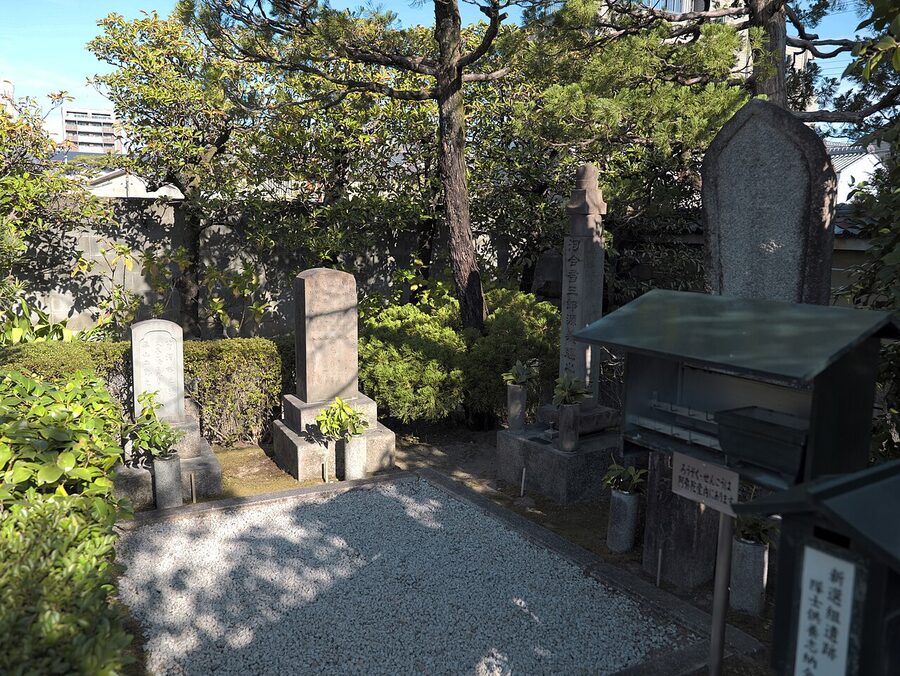
There is also a bust of Hijikata, and a monument to a 1955 hit song about the corps. The temple holds a memorial service for the Shinsengumi dead every year on 16 July, a date chosen for the Ikedaya, with sword demonstrations and recited poetry. If you can, come during the Mibu kyōgen, the temple’s silent masked plays: daily from 29 April to 5 May, 13:00–17:30, ¥1,000 for adults with no reservations, and the Shinsengumi watched them too.
The Yagi house and the Maekawa house
The Yagi house (八木家) is directly north of the temple, and it is the one Shinsengumi building in Kyoto I would not miss. It is open 9:00–17:00 with last entry at 16:00, and adult admission is ¥1,100, which includes a guided tour, a bowl of matcha and a tonsho mochi, a sweet named for the headquarters, made with Mibu greens. The guides show you the room where Serizawa died and the sword marks in the woodwork.
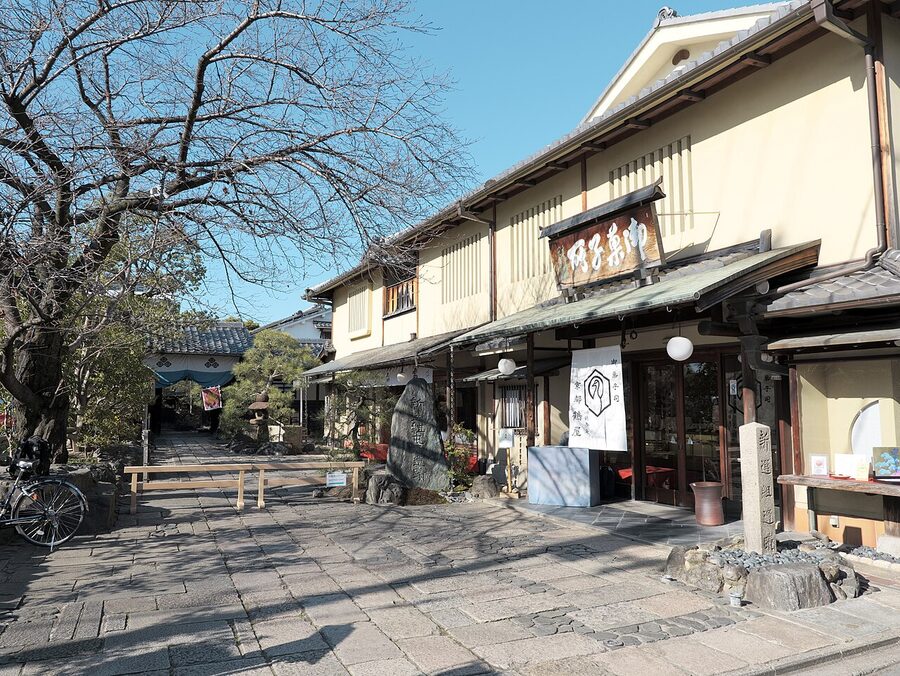
The Maekawa house, a few steps away, was the other main billet and the scene of more than one of the unit’s seppuku; it is private, so look at the gate and move on. Shintoku-ji, where Kiyokawa made his speech, is across the road.
Nishi Hongwanji and the Ikedaya site
Nishi Hongwanji is a fifteen-minute walk north of Kyoto Station, and its gates open 5:30–17:00 every day, free. The Taikorō drum tower stands at the north-east corner of the precinct and is seen from outside, but it is the best surviving witness to the Shinsengumi’s middle years, and the huge halls make a very good place to sit down.
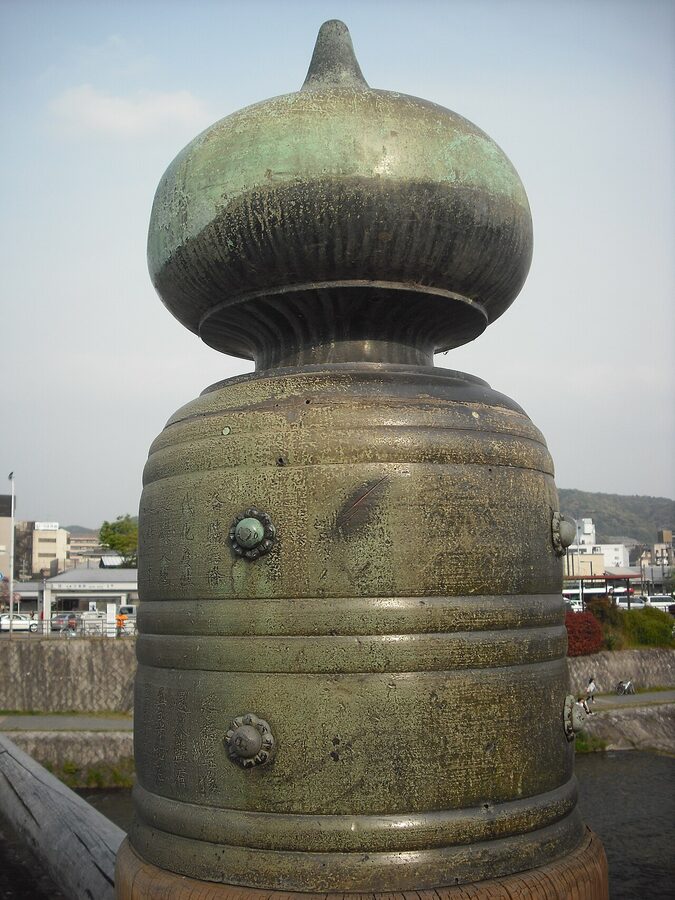
The Ikedaya site is on Sanjō street just west of the Sanjō Kobashi bridge over the Takase canal, between Kyoto Shiyakusho-mae and Sanjō stations. There is a stone and a signboard, free, and the restaurant on the site can be ignored or enjoyed as you see fit. Walk east for two minutes and look for the gash in the bridge finial on the Sanjō Ōhashi.
The Ryozen Museum of History, Higashiyama
The Ryozen Museum of History (霊山歴史館) specialises in the Bakumatsu and Restoration years, and tries to give both sides a hearing. It is open 10:00–17:30, closed on Mondays, and adult admission is ¥1,000. Take city bus 206 to Higashiyama-Yasui or Kiyomizu-michi and walk about seven minutes uphill.
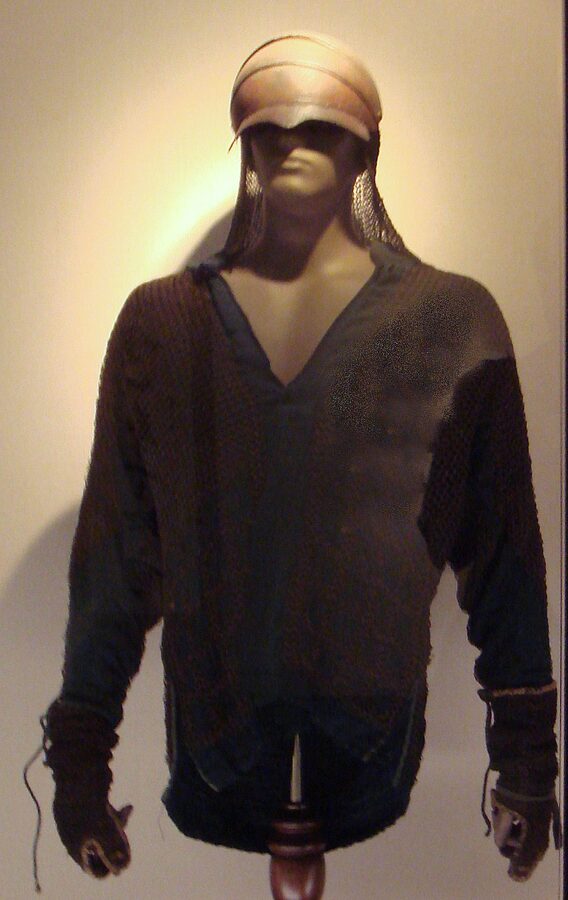
Exhibitions rotate, and at the time of writing it is running a series on individual members of the unit, so check what is on before you climb the hill.
Hino: the Shinsengumi’s home town
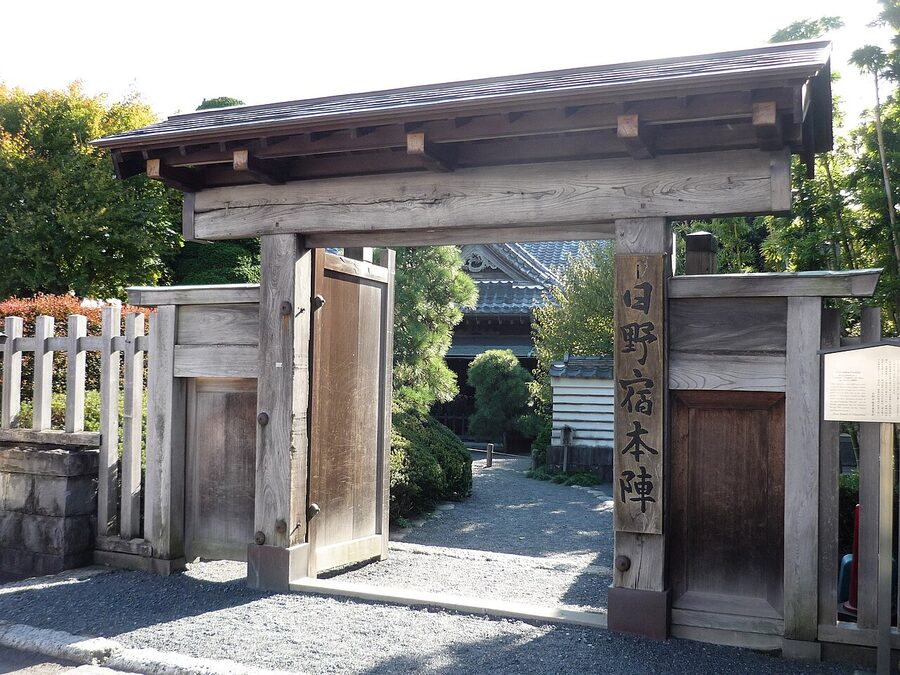
Hino is about forty minutes from Shinjuku on the JR Chūō line or the Keiō line, and the town has adopted the Shinsengumi wholesale. Start at the Hino-juku Honjin (日野宿本陣), Satō Hikogorō’s house and practice hall, twelve minutes on foot from JR Hino Station. It is the only post-town headquarters inn to survive in Tokyo, open 9:30–17:00 except Mondays, ¥200.
The city’s Shinsengumi no Furusato Rekishikan (新選組のふるさと歴史館) is a fifteen-minute uphill walk from JR Hino, or a short Keiō bus ride to the Hino Nanashō-iriguchi stop. It is open 9:30–17:00, closed on Mondays, at ¥200, or ¥300 with the Honjin. From 12 December 2026 to 14 February 2027 it is showing a special exhibition on the unit’s graves and memorials and how the families and survivors kept them up.
The Hijikata Toshizō Museum (土方歳三資料館), run by the family on the site of his birthplace in Ishida, is two minutes from Manganji Station on the Tama Monorail. It opens only on a few days a month, usually the first and third Sundays, from 12:00 to 16:00, and admission is ¥800 in cash; check the calendar on its website before you make the trip. It holds his sword by Izumi-no-kami Kanesada, his haiku notebook, letters and battle-scarred armour, and the bamboo he planted still grows outside.
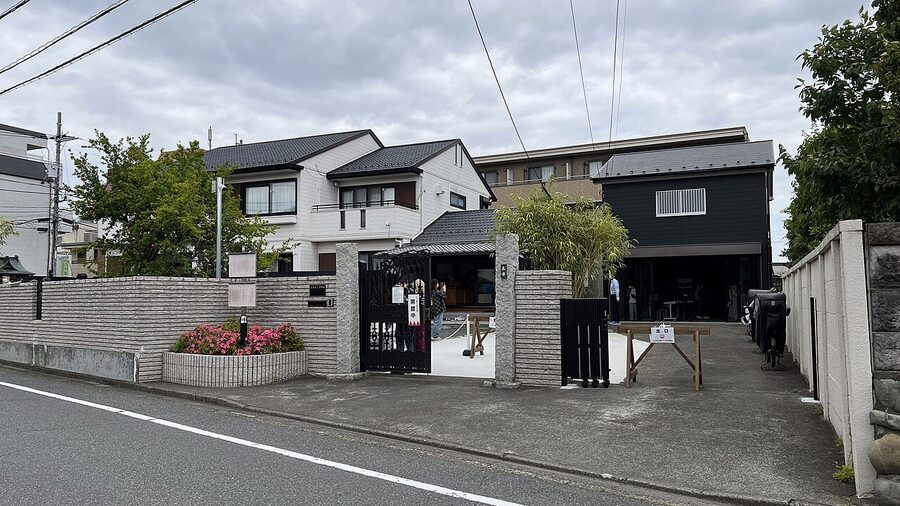
His grave is at Sekiden-ji, a small temple a few minutes’ walk away, though nobody is buried there. Takahata Fudō, the family temple, is by Keiō Takahatafudō Station and has a statue of Hijikata and a stone memorial to Kondō and Hijikata as two heroes who died for their principles. Hino holds a Shinsengumi festival every May, with parades in costume; the date moves, so check with the city.
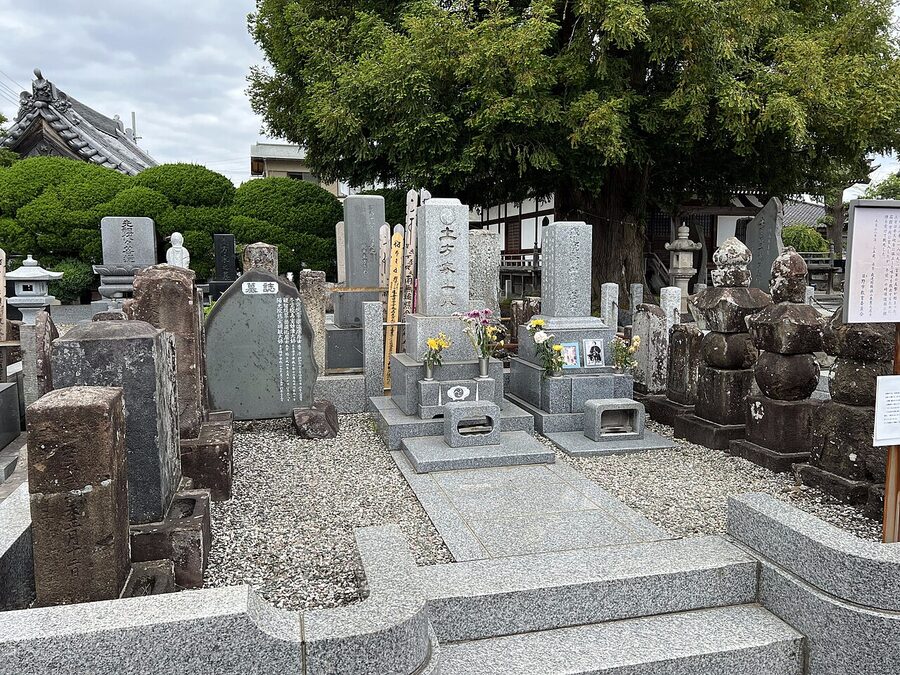
Itabashi and Mitaka, Tokyo
The memorial Nagakura raised is directly in front of the east exit of JR Itabashi Station, on the Saikyō line, in a small walled plot managed by the temple of Jutoku-ji. It is free and always open. A memorial service is held every year on 25 April or the Sunday before it, and Nagakura’s own grave stands in the same enclosure, larger than Kondō’s.
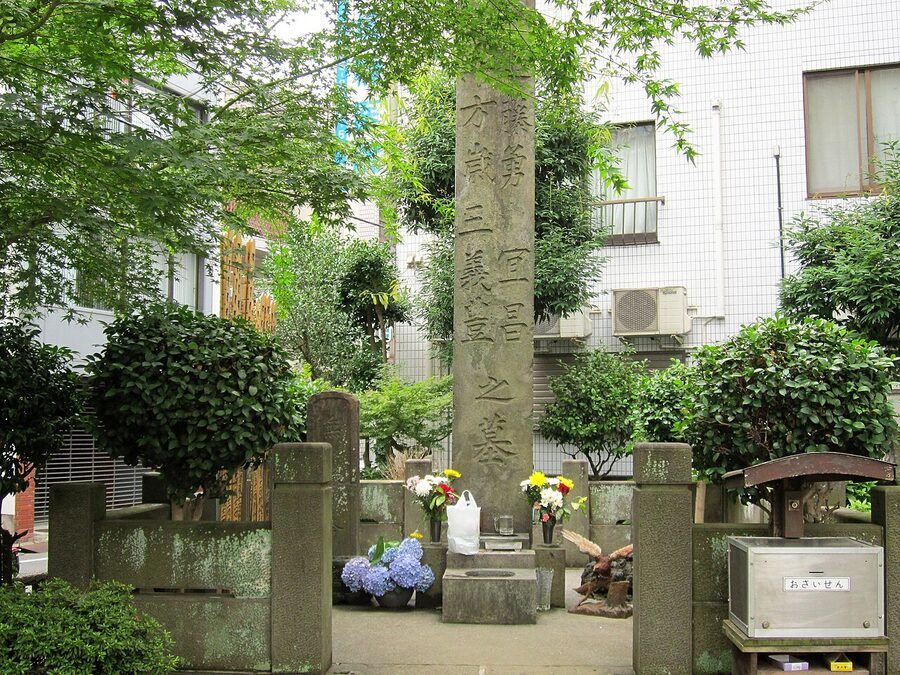
Kondō’s family grave is at Ryūgen-ji in Ōsawa, Mitaka, close to his birthplace on the edge of Nogawa Park; his nephew is said to have brought the headless body home from Itabashi. There is a bust of him at the gate and his death poem carved on a stone in the grounds.
Goryōkaku and Hakodate
Goryōkaku (五稜郭) is a star-shaped Western-style fort built for the shogunate in the 1850s and 1860s, and now a public park. Take the tram from Hakodate-ekimae to Goryōkaku-kōen-mae, sixteen minutes and ¥270, then walk about ten minutes. Goryōkaku Tower beside the park gives you the star from above: it is open 9:00–18:00 every day, the deck is at 90 metres, and adult admission is ¥1,200.
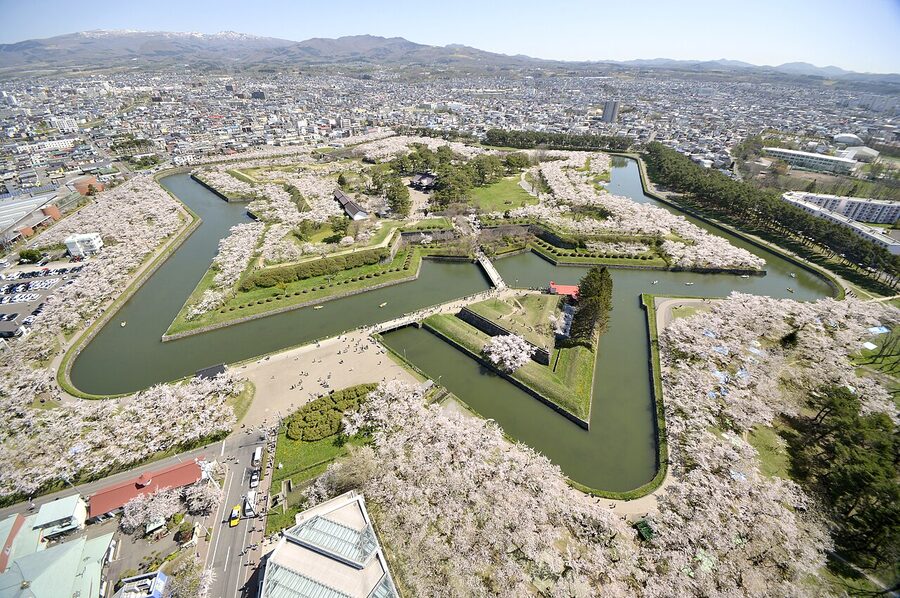
The tower’s atrium has three bronze statues of Hijikata, standing, seated and a bust, all by the Hakodate sculptor Kodera Machiko, based on the Tamoto photograph. I think the tower is worth the money for the view alone. The statues are a matter of taste.
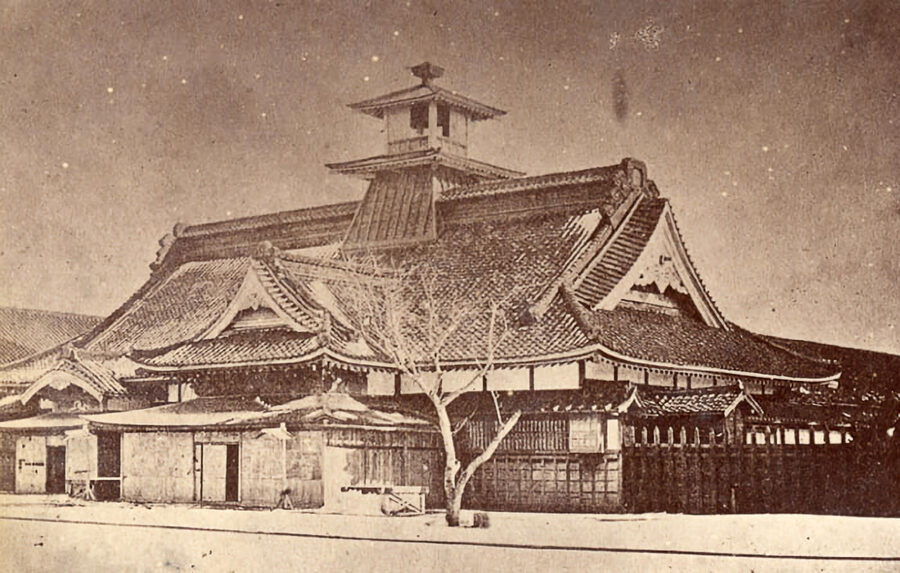
Inside the fort, the Hakodate Bugyōsho, the magistrate’s office that served as rebel headquarters, was rebuilt and opened in 2010 using traditional methods. It is open 9:00–18:00 from April to October and 9:00–17:00 from November to March, last entry fifteen minutes before closing, and adult admission is ¥500. You take your shoes off and carry them in a bag, so wear socks you are prepared to show.
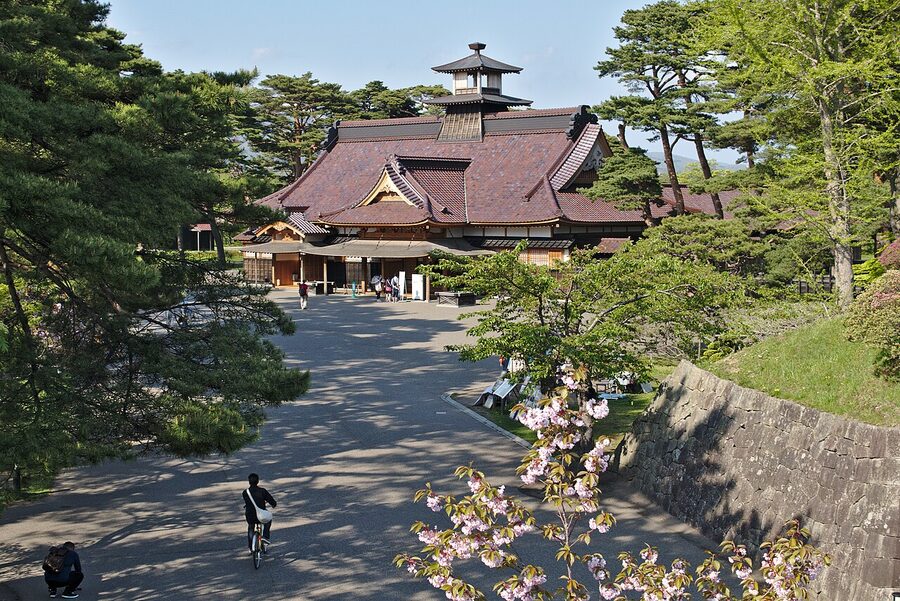
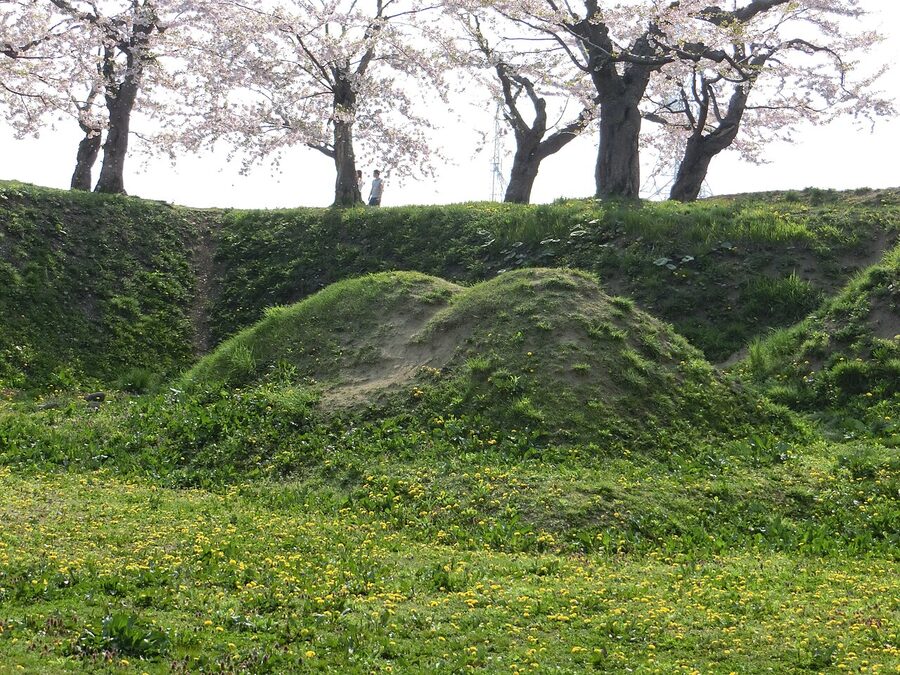
The earth mound inside the fort is one of the places Hijikata may lie, which seems right for a man who is not definitely anywhere.
Where Hijikata fell, and the Hekiketsu-hi
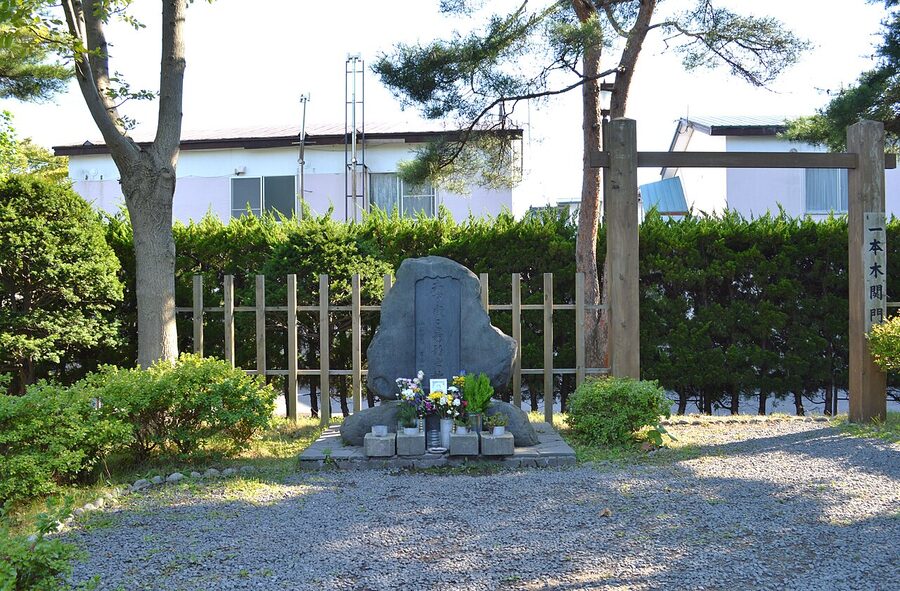
The monument to the place of Hijikata’s death is in a small park in Wakamatsu-chō, between ten and fifteen minutes’ walk from JR Hakodate Station depending on whose directions you trust, and free. It is near the site of the Ippongi barrier. There are usually fresh flowers.
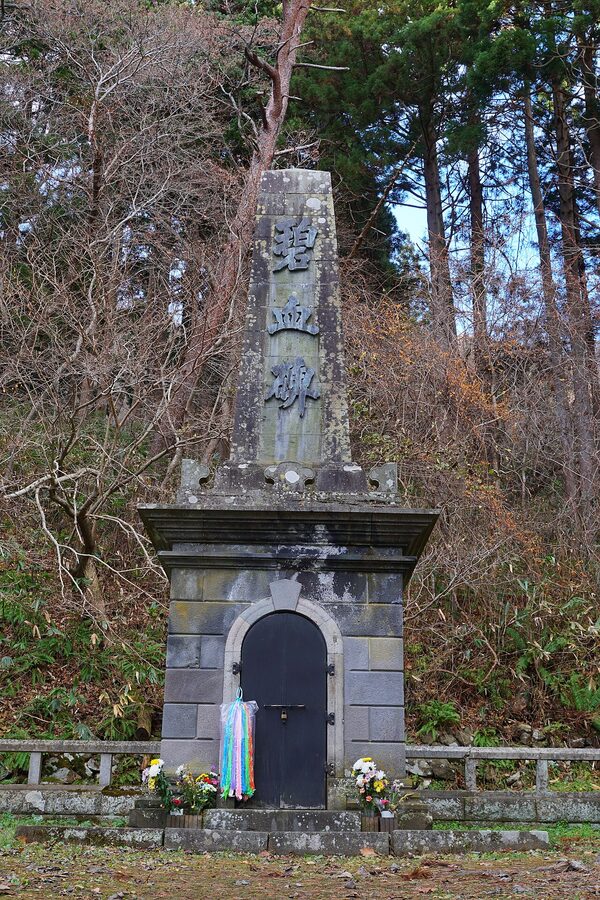
The Hekiketsu-hi (碧血碑) stands on the slope of Mount Hakodate behind Hakodate Hachiman shrine. It is a memorial to the shogunate dead of the Hakodate war, put up by survivors when it was still unwise to say much about them. Its name comes from an old Chinese story that the blood of a loyal man turns to blue jade after three years. The Hijikata Toshizō Hakodate memorial museum in the town closed in October 2024, so do not go looking for it.
Six out of forty-five
I keep returning to that count of the dead. The Shinsengumi went to Kyoto to guard a shogun and stayed to police a city, and they were very good at the work, as long as the work was arresting tired men in inns. When the problem changed, and the enemy came with rifles and an emperor, they did not change with it, apart from one man who bought a Western coat and carried on alone.
They fit oddly among the warriors in my field guide to Japan’s greatest samurai, and oddly in the long run of Japanese history. They were the last policemen of the Edo era, and nearly everything most people know about them was written later, by men who never met them. What remains on the record is more interesting: a farm boy who wanted to be a samurai, his friend who wanted to win, and a rule book that turned their own men into the main casualties.
If you are in Kyoto, go to the Yagi house in the afternoon, drink the tea, and look at the cuts in the woodwork in the back room. Then walk across the lane to the Mibuzuka and find Serizawa’s grave. Between the two you will have covered the whole Kyoto history of the Shinsengumi in about a hundred metres, and most of the men buried at the far end were killed by their own side.