The most famous poem about the Black Ships is a joke about tea. Taihei no nemuri o samasu jōkisen, tatta shihai de yoru mo nerarezu: the best Uji green tea wakes the realm from its peaceful sleep, and after just four cups nobody can sleep at night. Japanese schoolchildren learned it because jōkisen, a premium grade of tea, sounds exactly like jōkisen, steamship, and hai counts both cups and boats.
I like the verse, and I like it more for what it gets wrong. Only two of Commodore Perry’s four ships in 1853 were steamers; the other two were sailing sloops being towed. For a while historians suspected the whole thing was invented decades later. And the shogunate it mocks for being caught asleep had in fact been warned, in writing and by name, a full year before the ships appeared.
This is the story of those two visits, in 1853 and 1854, and of the treaty they produced, told as far as possible from both sides of the water. It is also a story you can walk in a long weekend: a harbour ferry at Uraga, a beach at Kurihama, a tree in Yokohama, and two temples in Shimoda, one where the rules were written and one where the first consul hung his flag.
In This Article
- Nothing in that harbour was a surprise
- Four ships, two of them steamers
- Kurihama, 14 July: a letter in a box
- How Edo saw the ships
- Seven months to get ready
- Yokohama, 1854: nine ships and a tea-house treaty
- Shimoda, and a young man in a rowing boat
- Harris, Ii Naosuke and the road to 1868
- The flag and the stone
- Where to see the Black Ships today
- Uraga: the harbour where it started
- Kurihama: Perry Park and the memorial hall
- Yokohama: the tamakusu tree
- Shimoda: two temples and a festival
- Further afield: the Odaiba batteries
- Four cups
Nothing in that harbour was a surprise
The Black Ships are usually told as a bolt from a clear sky, and the version you learn at school makes the shogunate look like a man woken by a burglar. It was not like that. The Tokugawa shogunate had been watching foreign ships off its coasts for sixty years, and it had a policy for them, then a different policy, then another.
Under sakoku, the closed-country system set up in the 1630s to keep out Christianity, Western trade was confined to the Dutch at Dejima in Nagasaki, and everything else was meant to stay over the horizon. The Edict to Repel Foreign Ships of 1825 told coastal domains to fire on anything that came close. In 1837 the batteries at Uraga did exactly that to the Morrison, an American merchant ship trying to return a group of Japanese castaways, and it sailed away with them still on board.
Then the Opium War arrived in the reports from China. In 1842, frightened by how quickly Britain had beaten the Qing, the shogunate quietly replaced the firing order with an order to give foreign ships firewood and water and send them on their way. In 1844 the King of the Netherlands sent a letter with a warship, politely suggesting Japan open itself before someone opened it by force; the reply, in effect, was thank you, and no.
The Americans had been knocking on the door for years. James Biddle brought two warships into Edo Bay in 1846, asked for trade, and was turned away. In 1849 James Glynn took the USS Preble into Nagasaki to collect fourteen stranded American whalers and the adventurer Ranald MacDonald, and went home convinced that the only argument the shogunate respected was a gun deck.
The warning that matters came through Dejima in the summer of 1852. Each year the Dutch factory chief handed over a fūsetsugaki, a digest of world news, and that year’s special report, delivered by Jan Donker Curtius on 21 July, said plainly that the United States was sending a squadron to demand a treaty. It named ships, said the commander had changed from Aulick to Perry, and added the rumour that the ships carried troops and landing equipment.
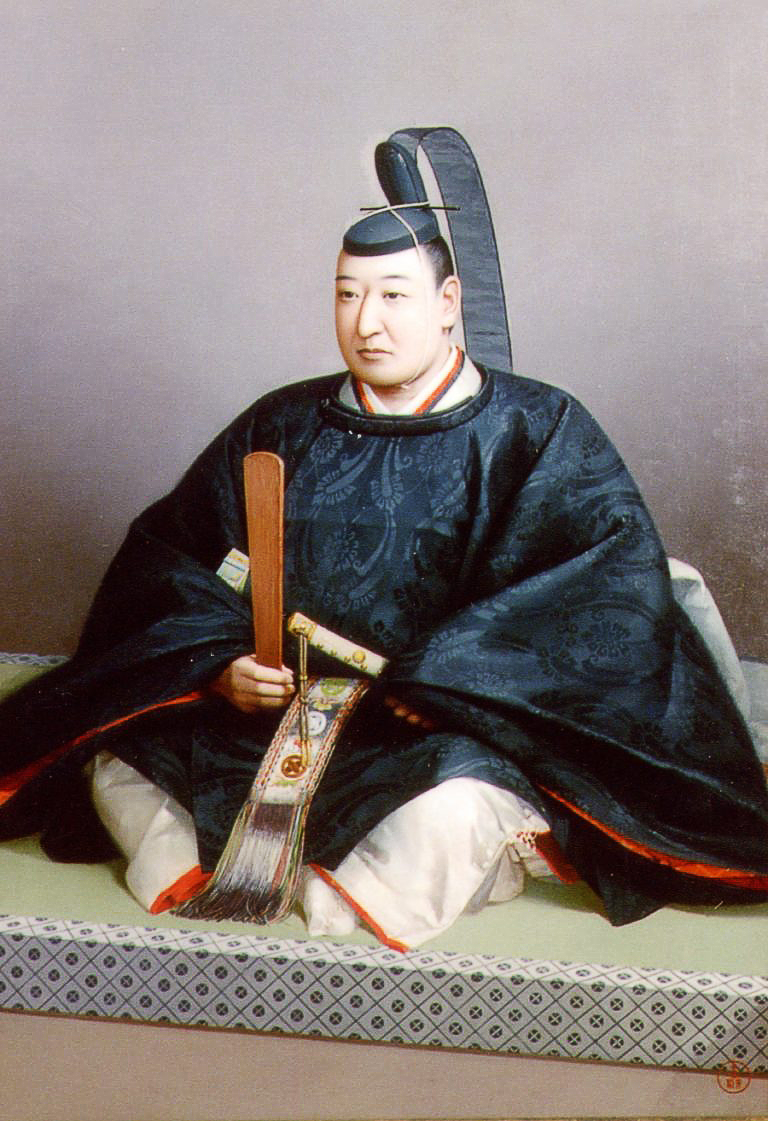
Abe Masahiro, the senior councillor who ran the government, did read it. He circulated it among a few of the great fudai houses, the Ii of Hikone and the Matsudaira of Aizu among them, and by the end of the year the Satsuma lord Shimazu Nariakira had heard it too. But the coastal defence officials advised against any treaty, the Nagasaki magistrate thought the Dutch were crying wolf (an earlier warning about a British envoy had come to nothing), and the information was kept at the level of the magistrates.
So the shogunate added men from Kawagoe and Hikone to the guard on the Miura peninsula and strengthened the Uraga magistrate’s office. What it did not do was tell the people who would actually meet the ships. The yoriki, the working officials of the Uraga office who would row out to the squadron, were not let in on the secret. When the smoke appeared off the cape, they were as surprised as the fishermen.
Four ships, two of them steamers
Perry had left Norfolk, Virginia on 24 November 1852 in the paddle frigate Mississippi, fifty-eight years old and carrying orders that gave him, in their own phrase, full and discretionary powers. He had refused to take any professional diplomat along. He went by way of Madeira, the Cape, Ceylon and Singapore, collected the frigate Susquehanna at Shanghai, and spent weeks at Naha in the Ryukyu kingdom marching marines up to Shuri Castle, a rehearsal for Edo in front of an audience that would report everything to Satsuma.
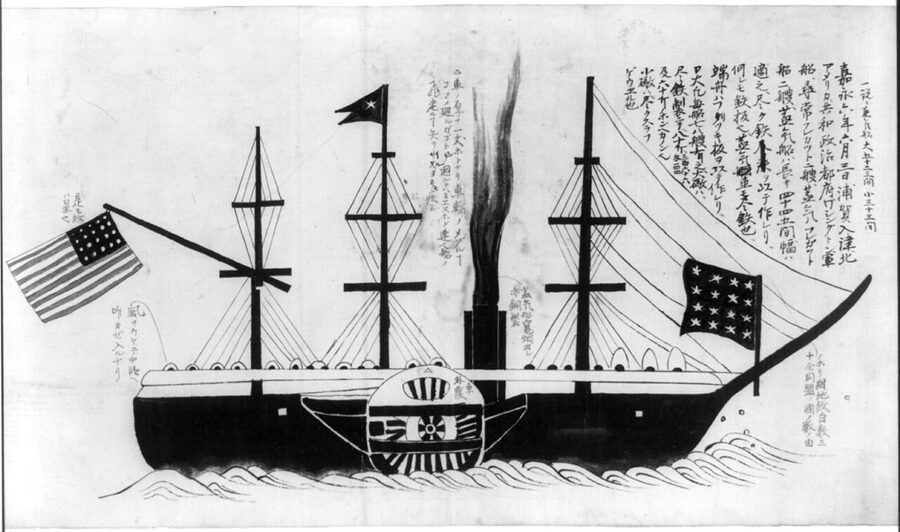
At five in the afternoon on 8 July 1853, the third day of the sixth month of Kaei 6 by the Japanese calendar, four ships anchored off Uraga at the mouth of Edo Bay. The Susquehanna and Mississippi were steaming against the wind, each with a sailing sloop in tow, the Plymouth and the Saratoga. Between them they carried seventy-three guns, cleared for action.
The black of the hulls was tar and paint, and the word kurofune was older than Perry by two and a half centuries: it had been used for the tarred Portuguese carracks of the 1500s, and Japan had been seeing Western hulls ever since, including the Dutch ship that brought the Englishman William Adams ashore in 1600. What was new was the smoke. A ship moving into a headwind with no sails set was something no one on the Uraga shore had seen.
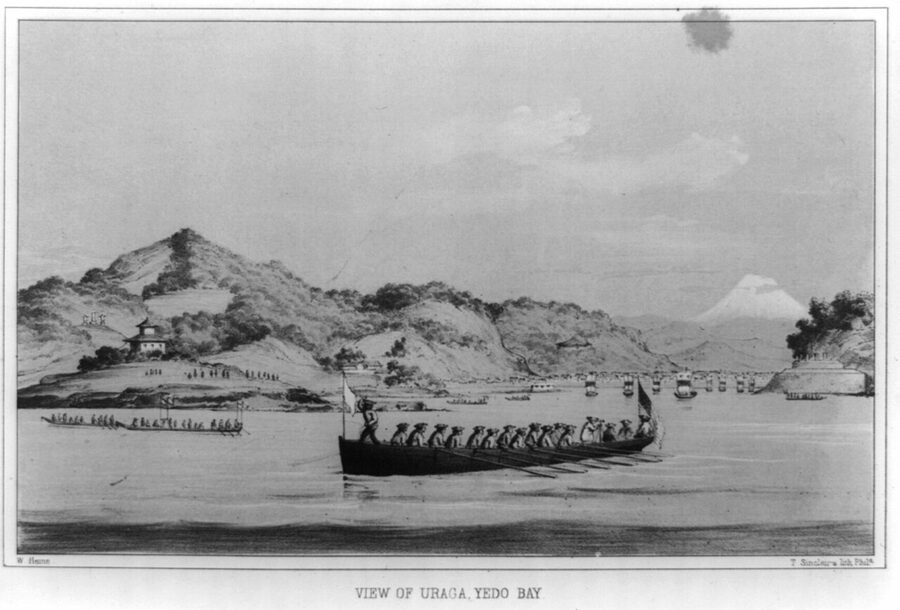
The first Japanese aboard was Nakajima Saburōsuke, a yoriki of the Uraga office, who rowed out with the Dutch interpreter Hori Tatsunosuke. Hori had a little English, and the story goes that he stood up in the boat and shouted “I can speak Dutch!” The Americans refused to receive anyone of low rank, so Nakajima promoted himself on the spot to vice-governor.
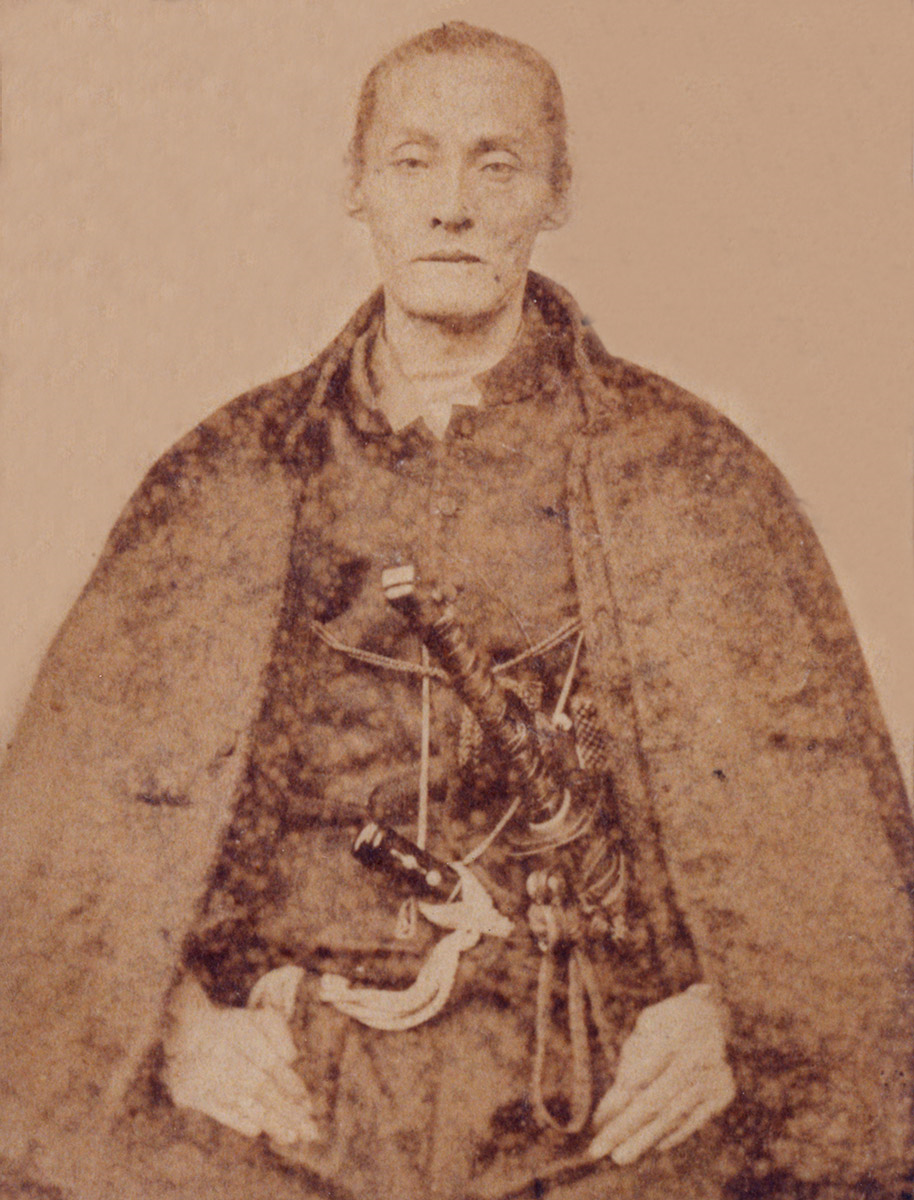
It did not work. Perry stayed in his cabin, as he would for most of the visit, on the principle that the more invisible he was the more important he would seem. Next came Kayama Eizaemon, another yoriki, who announced that he was the Uraga magistrate himself. The Americans believed him, or chose to, and he did most of the talking for Japan over the following week.
The dates of these first meetings are muddled. English-language accounts usually put Nakajima’s visit on 9 July and Kayama’s on the 10th; Japanese sources put Nakajima aboard on the evening of arrival and Kayama on the following day. Either way, the message both men carried back was the same: go to Nagasaki, where foreigners were handled, and the answer was the same too.
Perry would hand the President’s letter only to an official of suitable rank, here and now. If no one came to receive it, he would land troops and march to Edo with it himself. Kayama asked for time to consult; the Americans gave him three days.
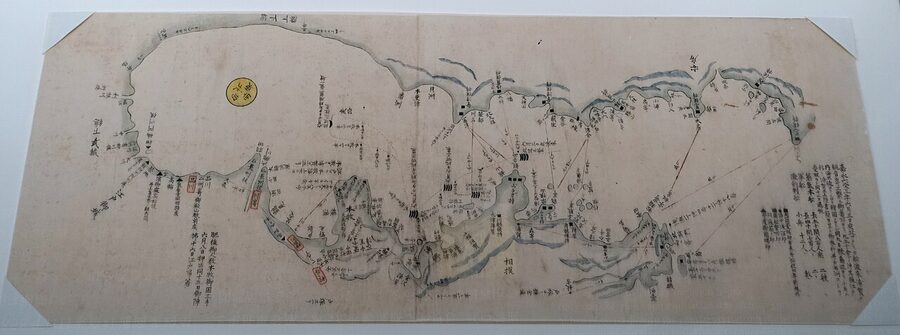
Meanwhile the ships’ boats went out with sounding lines and began charting the bay, and on 11 July a survey party pushed about twenty kilometres up towards the capital with the Mississippi standing by. The Uraga office protested that surveying was forbidden. The Americans carried on regardless, and that was the whole Black Ship argument in a single gesture.
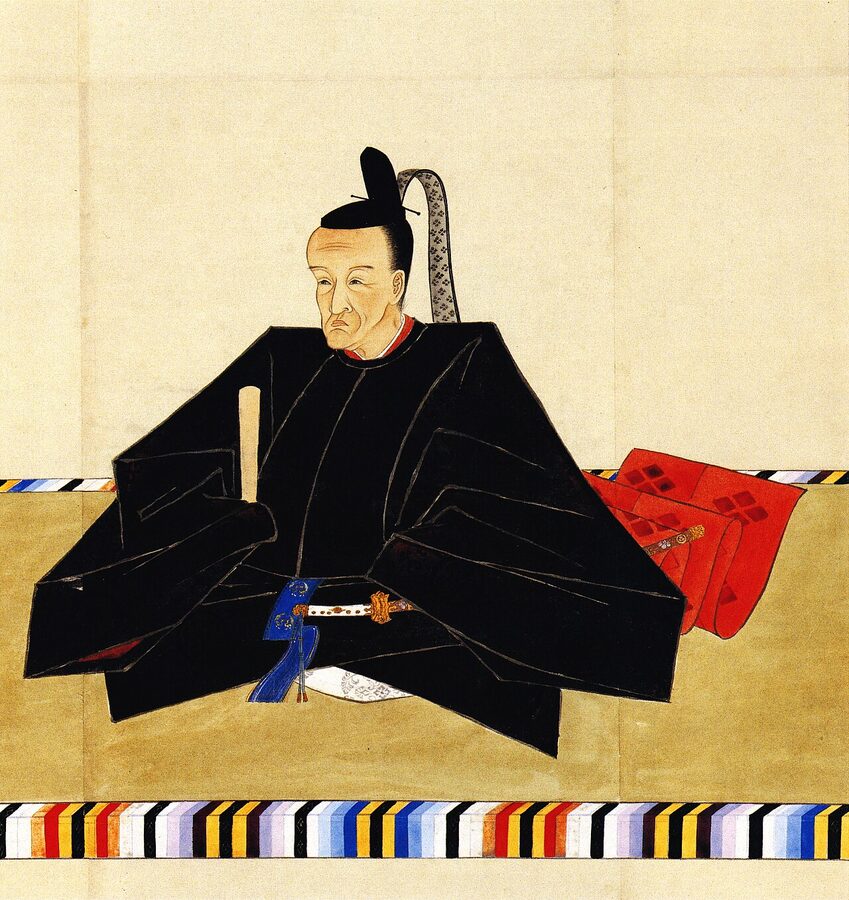
The decision fell on Abe because there was no one else to take it. The twelfth shogun, Tokugawa Ieyoshi, was ill in Edo Castle, too ill to decide anything, and he would be dead within three weeks. On 11 July Abe concluded that merely accepting a letter would not break the law of the land, and the next day the Uraga office was told to take it and get the ships to leave.
Kurihama, 14 July: a letter in a box
The handover was first planned for Tateura, inside Uraga harbour, but the four domains guarding the bay (Kawagoe, Hikone, Aizu and Oshi) protested that there was no room there to deploy their men. They had spent a week under orders to watch foreign boats survey their waters and do nothing. If the letter was going to be received, they wanted to be standing there when it happened.
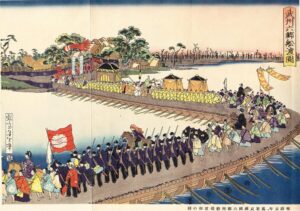
So it went to Kurihama, a fishing beach over the next headland, where a temporary reception hall was thrown up in a few days. On the morning of 14 July Perry finally came out of his cabin. Thirteen guns fired from the Susquehanna, and the boats pulled for the beach.
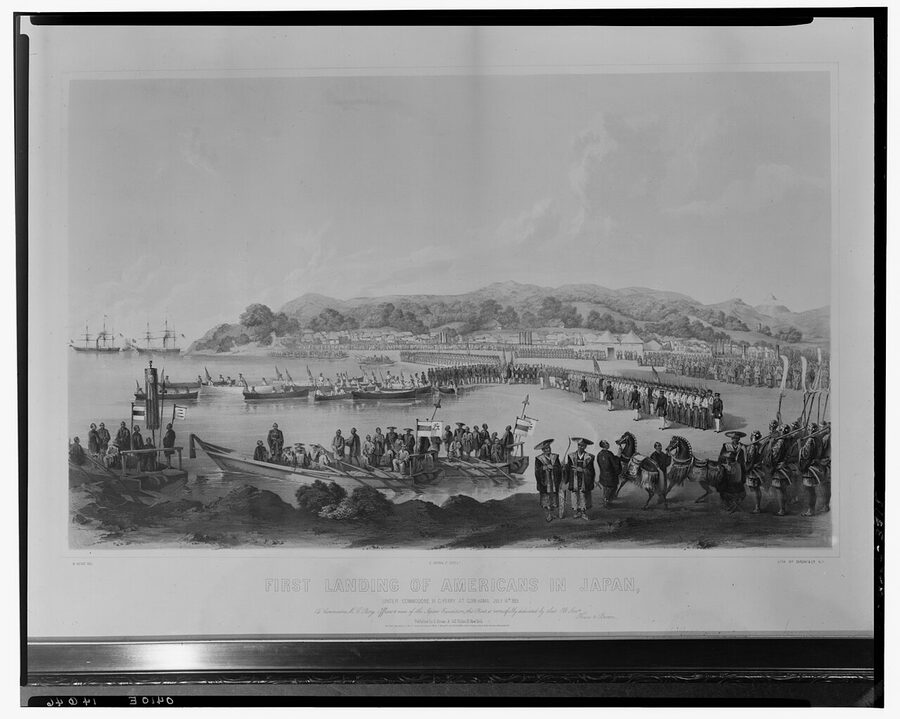
How many men went ashore depends on which side you read. English-language accounts usually say about 250 sailors and marines in fifteen boats; Japanese records put the landing party at around 300, and some go higher. Major Jacob Zeilin’s marines presented arms, two bands played “Hail Columbia”, and a pair of ship’s boys carried the boxes holding the documents, with two tall black seamen marching as Perry’s personal guard.
The President’s letter and Perry’s credentials were in rosewood boxes with gold fittings. They were received by the two Uraga magistrates, Toda Ujiyoshi and Ido Hiromichi, who had instructions to take them and say nothing, and they followed their instructions so exactly that neither spoke a word. A receipt was handed over in Japanese and Dutch, and the whole ceremony took less than half an hour.
Millard Fillmore’s letter, signed the previous November, was a mixture of courtesy and real estate. It said the United States now stretched from ocean to ocean, that its steamers could cross from California in eighteen days, and that it had no designs on Japan. It asked for kind treatment of shipwrecked sailors, coal and provisions for American ships, and trade, and it suggested that if the old laws could not be changed at once, Japan might try opening for five or ten years as an experiment.
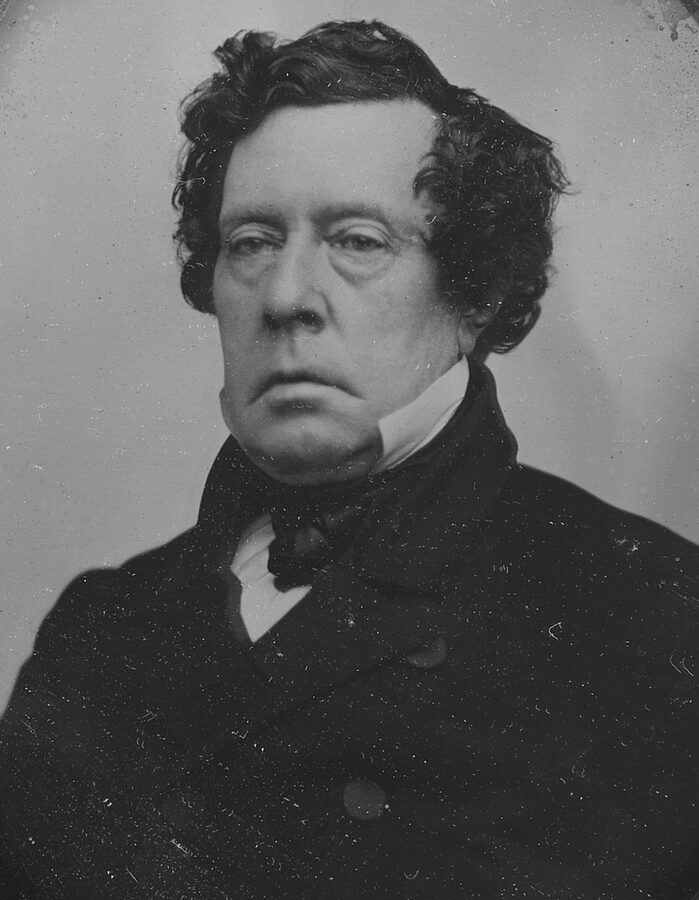
Perry told the magistrates he would come back for the answer the following spring, with more ships. Then, instead of leaving, he moved his flag to the Mississippi and steamed about twenty miles further up the bay, close enough to see the anchorage of Edo, before turning back to anchor off Koshiba. It was pure theatre, and it worked.
On 17 July the squadron left. It had been in Japanese waters for nine days.
How Edo saw the ships
The bay was full of sightseers within a day. People walked down from Edo and hired boats to get close; the shogunate issued orders to stay away, which made it more popular. Among the crowd on the Uraga hills were the gunnery scholar Sakuma Shōzan and his pupil Yoshida Shōin, who wrote to a friend that he hoped the Americans would come back so that he could show them the edge of a Japanese sword.
The guns did more than the ships. Perry’s squadron fired salutes and signal rounds, blank charges announced to the Uraga office in advance, including a Fourth of July salute that they marked a few days late in the bay. The first reports threw Edo into a panic. Once word got round that they were blanks, the townspeople took to cheering each one like a firework.
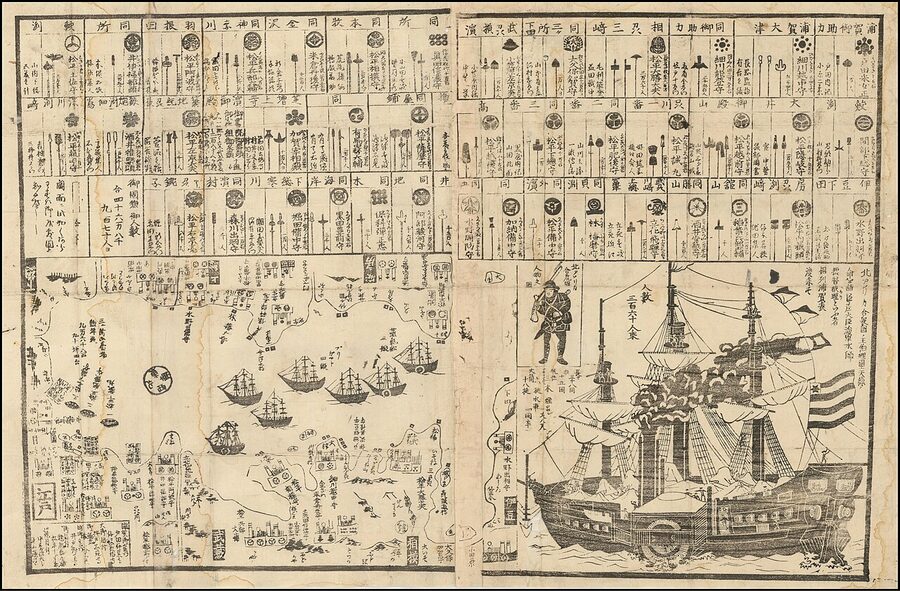
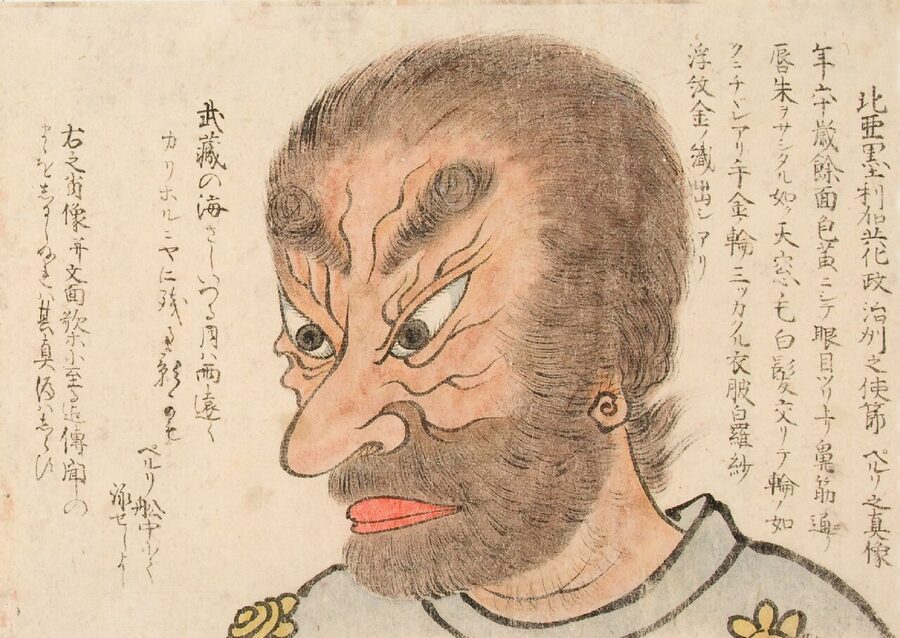
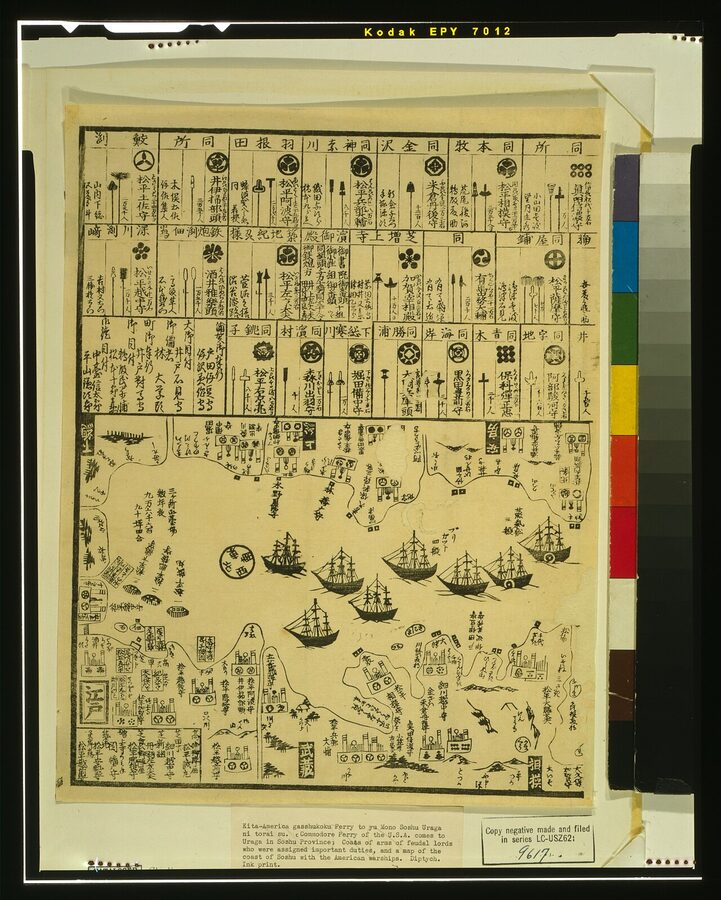
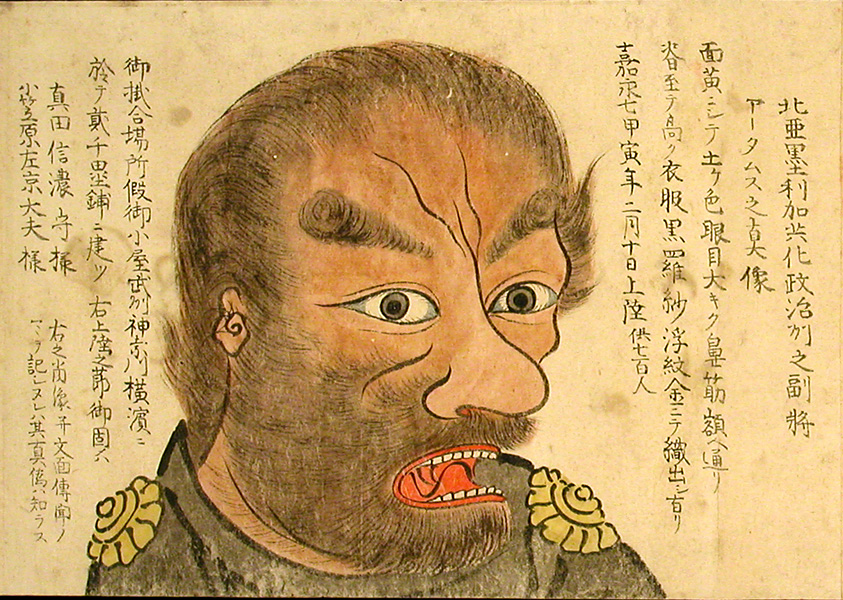
What people wanted was information, and the printers gave them a version of it. A great many different kawaraban survive from the Black Ship years: maps of the bay, lists of the domains on guard, pictures of the ships, and portraits of Perry and his officers that lean, to put it kindly, towards the demonic. Some are surprisingly accurate on tonnage and guns. Most are surprisingly accurate on nothing.
The famous kyōka belongs to this flood. For years it was quoted as the very voice of 1853, and some writers attributed it to the daimyo Manabe Akikatsu. Then historians noticed that the earliest copy anyone could find dated from 1878, and the suspicion grew that it was a Meiji-era joke at the expense of the old regime; most school textbooks quietly dropped it.
The verse was rescued, at least partly, by a letter. An Edo bookseller had copied it into a note to a correspondent within a month of the ships’ arrival, offering it as the latest thing doing the rounds. The wording is slightly different (the realm is woken from its drowsiness, not its sleep), and scholars are still arguing about what that means, but the joke was clearly current in the summer of 1853.
Another story has not been rescued. According to one set of documents, Perry handed over two white flags with a note saying that if Japan chose war it would lose, and that it should raise the white flag when it wanted to surrender. English-language accounts still repeat it, but the documents contradict the known facts in too many places, and most Japanese specialists treat them as forgeries. The Americans did give the Uraga office two flags, and an American officer did mention a white flag, but no American record mentions a surrender note.
Seven months to get ready
Ieyoshi died on 27 July, and his heir Iesada was sickly and, by most accounts, unable to govern. On 5 August Abe did something no Tokugawa government had done in 250 years: he asked for opinions. Every daimyo (most of whom spent alternate years in Edo under sankin-kōtai), every senior bannerman, and in principle anyone with a useful idea was invited to say how the Americans should be answered.
Of the sixty-one written replies from the daimyo that are known, nineteen favoured accepting the American demands and nineteen opposed them. Fourteen were vague, seven proposed temporary concessions, and two said they would go along with whatever was decided. The only thing nearly everyone agreed on was that the coast needed more guns.
The poll produced no answer and one large consequence. The tozama lords, the outer houses who had been kept out of national policy since Tokugawa Ieyasu‘s day, had been asked their views, and they did not forget it. Fifteen years later some of them would be running the country.
The guns were the easy part. On 26 August Abe ordered the artillery expert Egawa Hidetatsu to build batteries in the shallows off Shinagawa, the daiba. Egawa proposed four lines of defence across the bay; the budget ran to one, and of the eleven island forts planned off Shinagawa only six were ever finished.
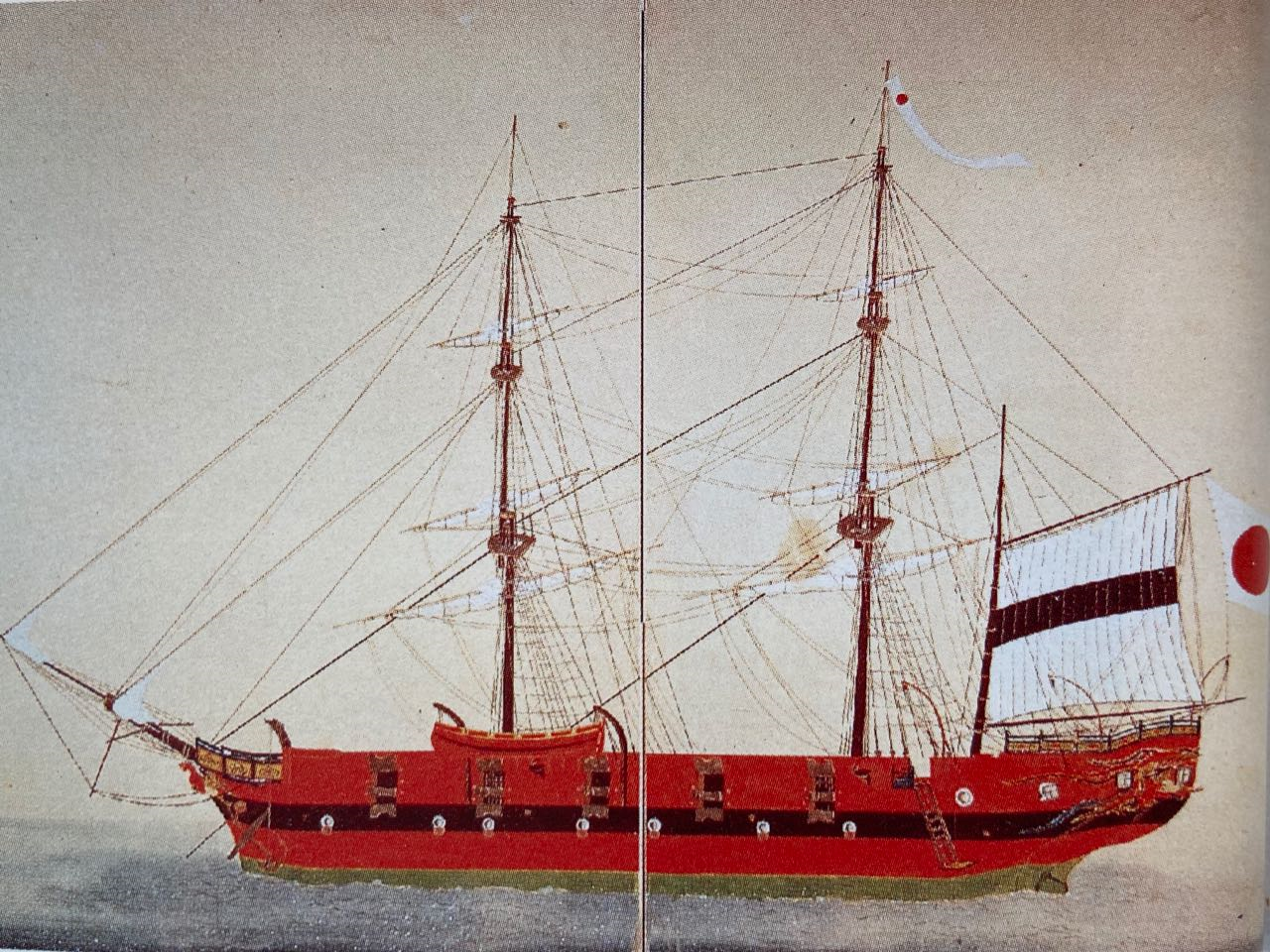
The ban on building large ocean-going ships, a sakoku-era rule designed to keep the daimyo from getting ideas, was lifted that autumn. Within a week of Perry’s departure the shogunate had placed an order for warships with the Netherlands. And in December it summoned Nakahama Manjirō, the Tosa fisherman who had been shipwrecked, rescued by an American whaler and educated in Massachusetts, gave him the rank of a direct retainer, and asked him what America was actually like.
Yokohama, 1854: nine ships and a tea-house treaty
Perry came back early. He had heard that the Russian admiral Yevfimiy Putyatin had been at Nagasaki trying to get a treaty first, and that the British and French might come along to make sure the Americans got nothing exclusive. He returned on 13 February 1854, in the middle of winter, and anchored not off Uraga but much further up the bay.
How many ships he brought depends again on the day and the source. English accounts often say eight; Japanese records count seven arriving by the 13th, the Macedonian having run aground off Nagai on the Miura coast the day before (the Uraga office reported it and offered help, and the Mississippi hauled her off). With later arrivals the squadron reached nine, the largest fleet anyone in Edo had seen, and you will still find popular accounts that say ten.
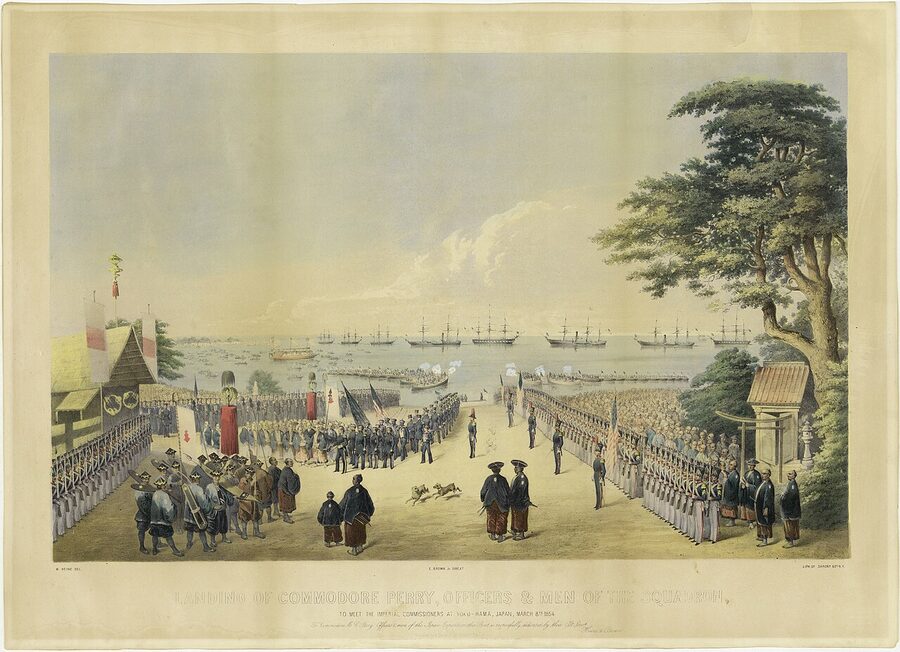
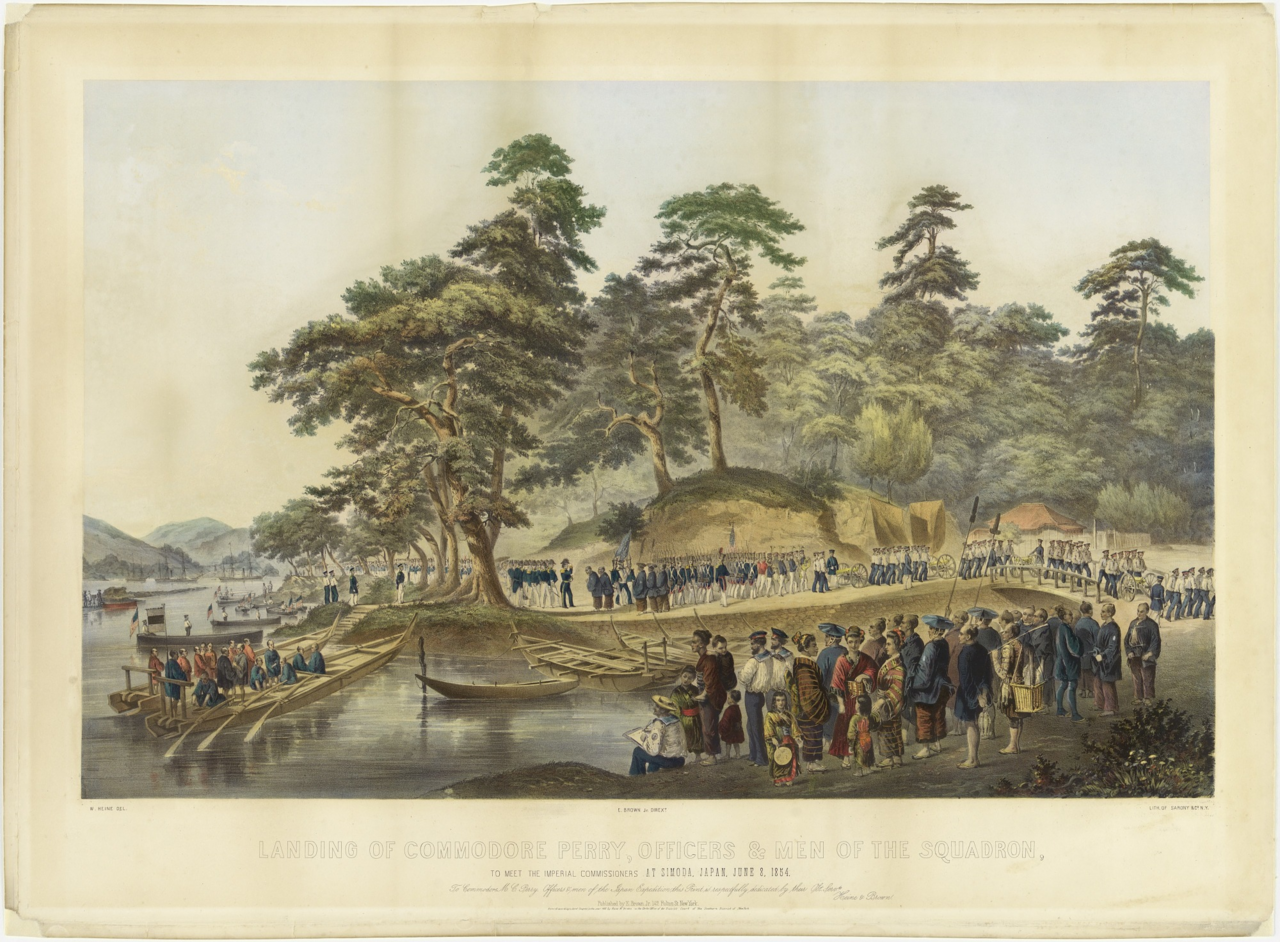
Then came two weeks of arguing about where to argue. The Uraga office had built a reception hall at Tateura; Perry refused it and demanded Edo, or failing that somewhere close. At one point he reportedly threatened to bring a hundred ships within twenty days, which was more than the United States Navy possessed. On 27 February both sides settled on the village of Yokohama, on the opposite side of an inlet from the Tōkaidō post town of Kanagawa.
The Japanese built a hall there in a few days, on the site where the Yokohama Archives of History stands now. On 8 March the Americans landed in force, 446 men by the Japanese count and about 500 in 27 boats by their own, with three bands. Talks began the same afternoon.
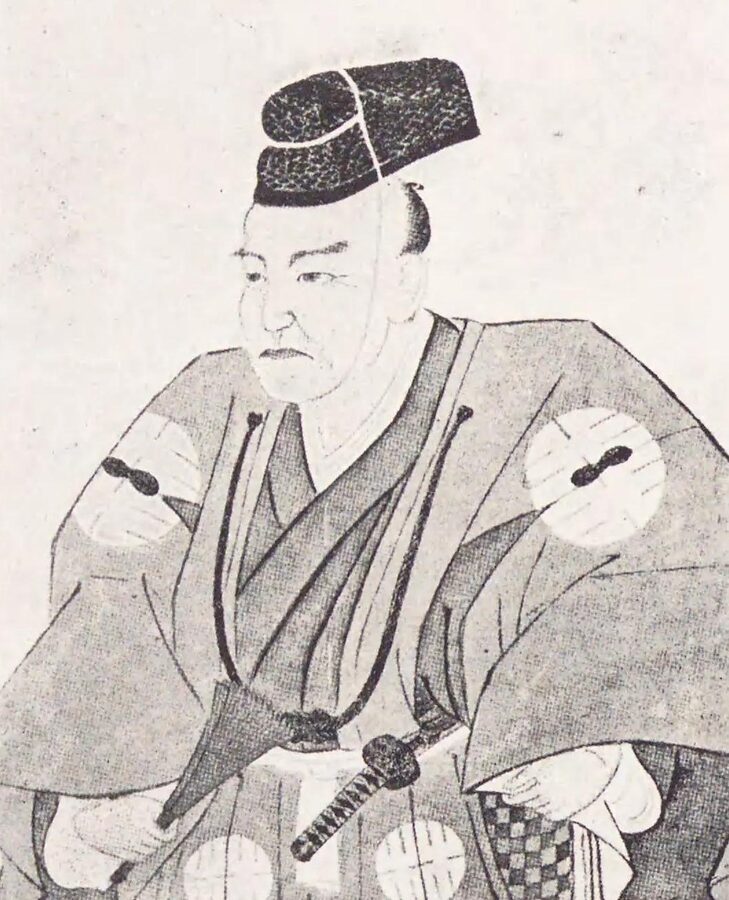
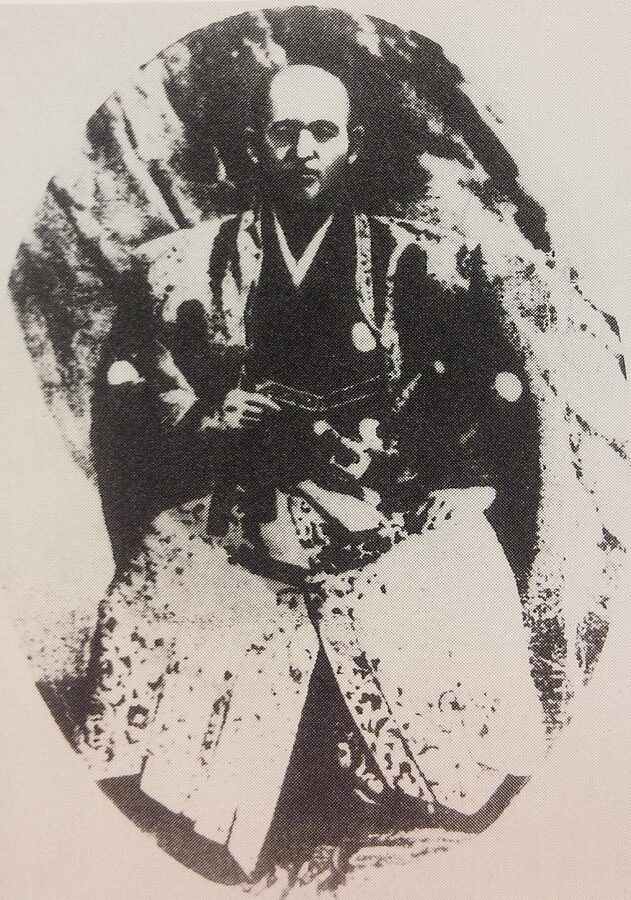
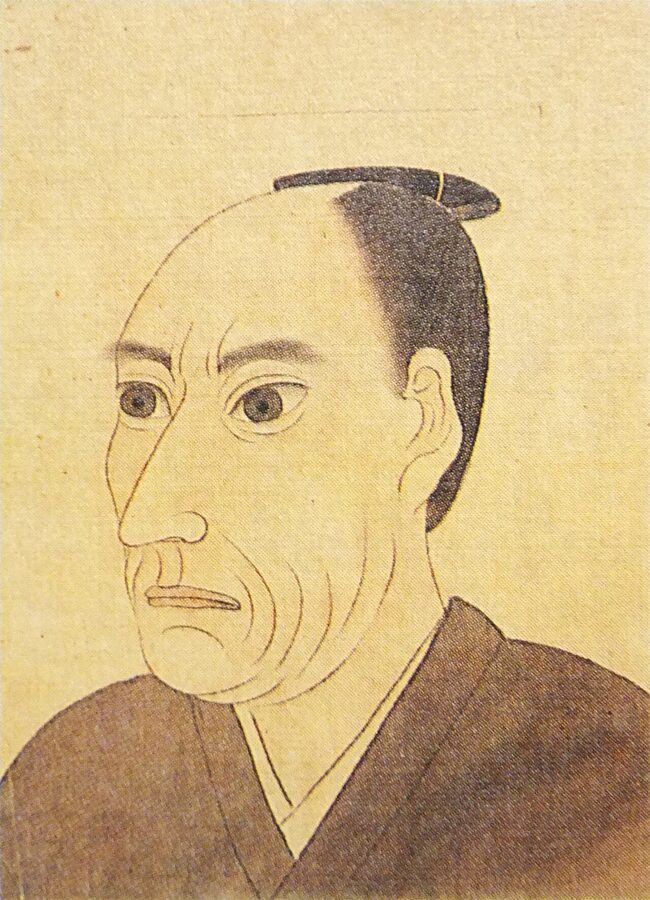
The man across the table from Perry was not a soldier. Hayashi Fukusai was a scholar from the family of Confucian advisers that had served the Tokugawa since the first shogun, and he had been made head of the house only months before. The real negotiating went on in classical Chinese, on paper, through Perry’s interpreter Samuel Wells Williams, with Dutch for conversation. Hayashi was very good at it.
By then the shogunate had decided to give the Americans most of what Fillmore’s letter asked for: coal, food and water, and humane treatment of castaways. It refused trade. In Hayashi’s own record of the talks, he argued that the American complaints were all about saving lives, and that commerce had nothing to do with saving lives; Perry, who wanted a treaty more than he wanted that particular clause, let trade go.
The ports were harder. Japan offered Nagasaki, with real openings in five years; Perry refused Nagasaki on principle and demanded several ports at once. On 24 March they agreed on two, Shimoda at the tip of the Izu peninsula and Hakodate in the far north. The rest was haggling over how far Americans could walk and when a consul could come.
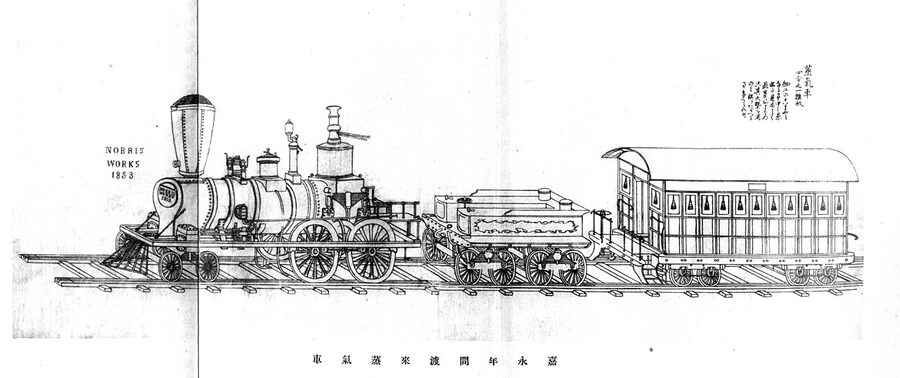
The gifts were part of the argument. The Americans landed about 140 items: the model railway, a telegraph line strung between two buildings, a daguerreotype camera, rifles, pistols, telescopes, farm tools, clocks, a hundred gallons of whiskey, and a set of Audubon’s Birds of America, still one of the most expensive books in the world. There may even have been a sewing machine.
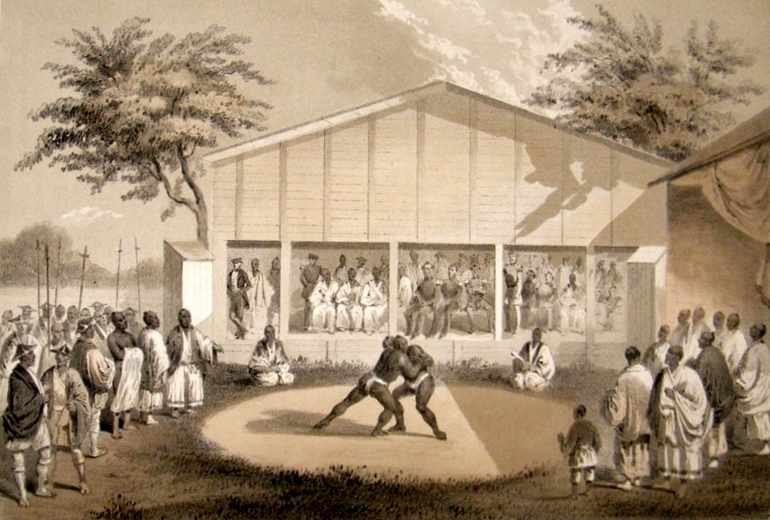
The Japanese answered with lacquer, silk, porcelain, three matchlocks and two swords, which from a samurai government was no small courtesy. Then they had two hundred bales of rice, each about sixty kilos, carried down to the beach by sumo wrestlers, some of them taking two at a time, and staged a tournament.
Dinner went the same way. The shogunate hired the Momokawa, one of Edo’s grandest caterers, for a formal honzen banquet of three hundred settings at a cost of 2,000 ryō, a staggering sum. The Americans found the portions small, the food raw or bland, and the absence of meat a mark of backwardness. Perry wrote that Japan must have been hiding its better cooking.
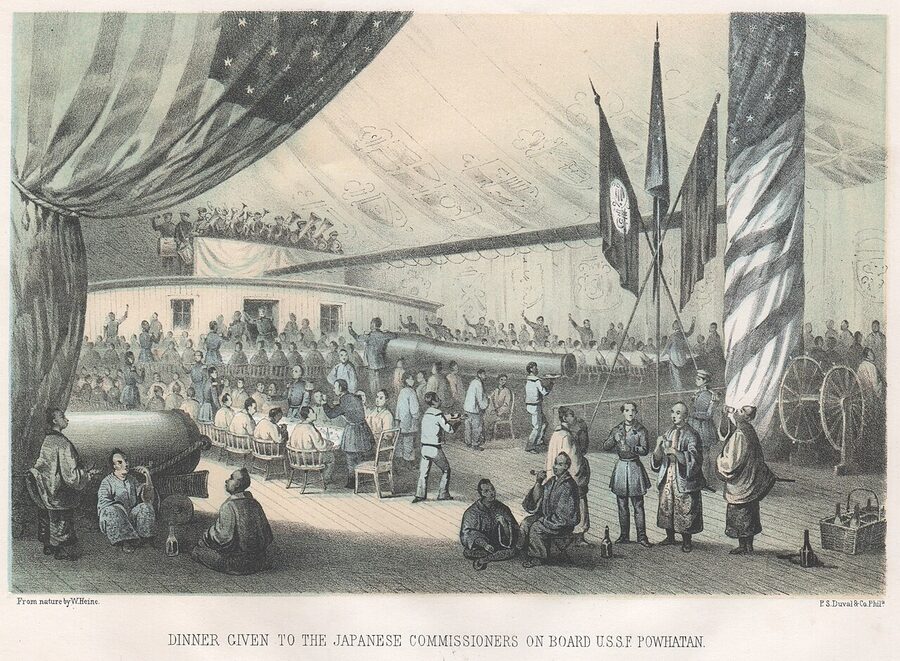
The Convention of Kanagawa was signed at Yokohama on 31 March 1854, the third day of the third month of Kaei 7, which is the day of the Doll Festival. It had twelve articles. Japan promised perpetual peace and friendship, opened Shimoda at once and Hakodate within a year for supplies, promised to treat castaways decently, gave Americans the right to walk up to seven ri from Shimoda, granted the United States any privilege later given to anyone else, and allowed a consul to come after eighteen months.
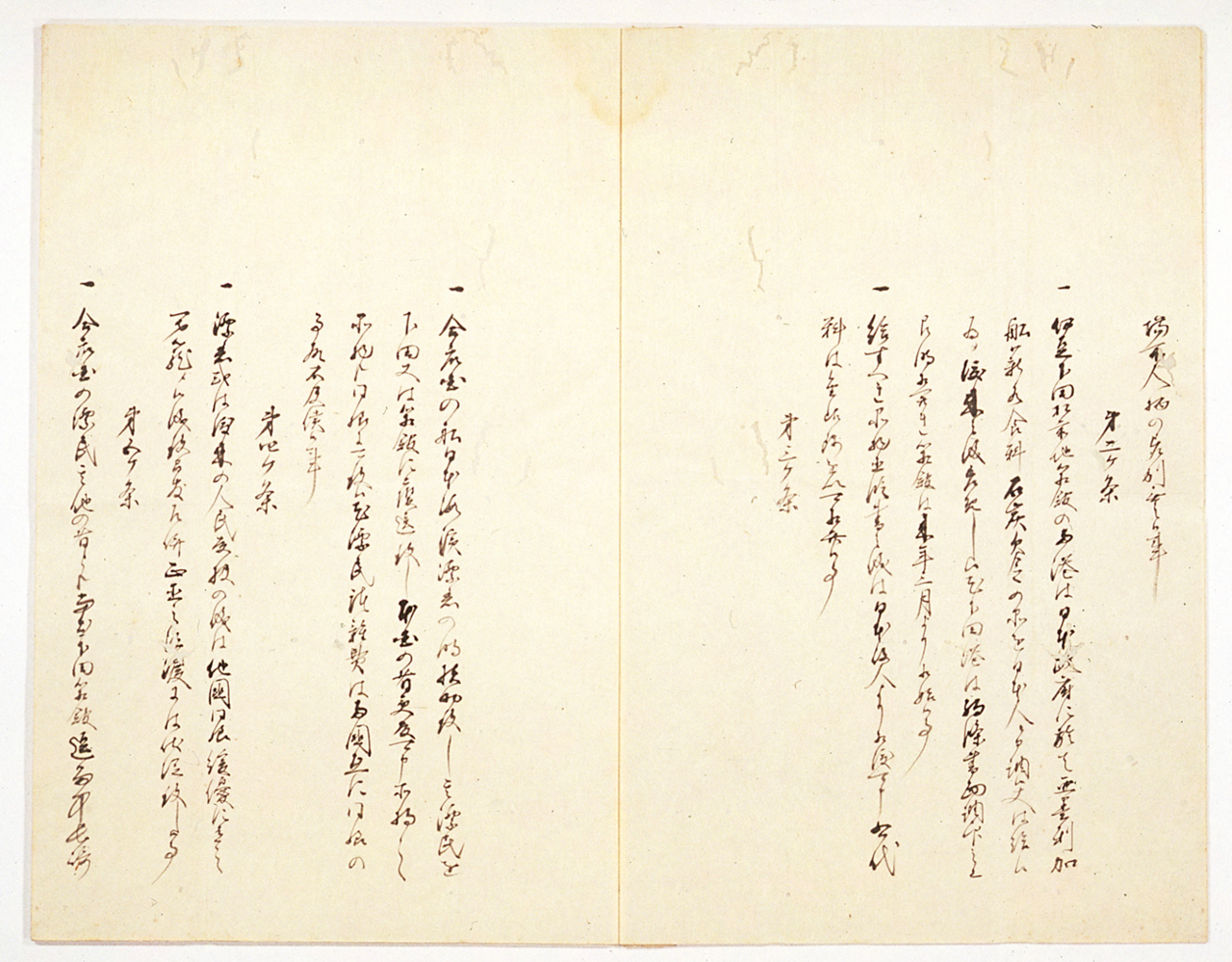
What is odd about the treaty, and almost never mentioned in English, is that there was no single text both sides signed. Hayashi declared that he could not put his name to any document in a foreign language, returned the English copy unsigned and handed over a Japanese version signed by himself, Ido Satohiro, Izawa Masayoshi and Udono Nagatoshi. Dutch and Chinese versions were swapped separately by the interpreters, and nobody ever settled which language was the official one.
That mattered at once. Article 11 in English lets the United States send a consul if either government thinks it necessary; in Japanese it says both governments. Japanese readers could believe the shogunate had given up two harbours and nothing more, and the difference would turn into a diplomatic crisis when the consul arrived. (A small dating trap while you are here: the era name changed from Kaei to Ansei late in that Japanese year, so some Japanese reference works date the treaty to Ansei 1.)
Shimoda, and a young man in a rowing boat
After the signing the squadron went to look at its new ports. It surveyed Hakodate in May, where the Matsumae domain politely said it had no authority to agree to anything, and then settled in at Shimoda, a fishing and shipping town at the bottom of the Izu peninsula. Hayashi and the commissioners came down from Edo to finish the paperwork.
The detailed regulations were negotiated at Ryōsen-ji, a Nichiren temple in the town, and signed on 17 June as thirteen additional articles. Americans could walk five ri around Hakodate and seven around Shimoda but could not enter samurai or merchant houses; Ryōsen-ji and Gyokusen-ji would serve as rest houses, and Gyokusen-ji would take the American dead. The Shimoda talks also fixed which versions of the treaty counted, and this time the Japanese commissioners signed the English text.
Shimoda is also where the most moving episode of the whole affair took place. On the night of 24 April, while the ships lay in the harbour, Yoshida Shōin, the young samurai who had watched them at Uraga the year before, and his follower Kaneko Shigenosuke rowed out from the shore at Kakisaki to the Powhatan and asked to be taken to America.
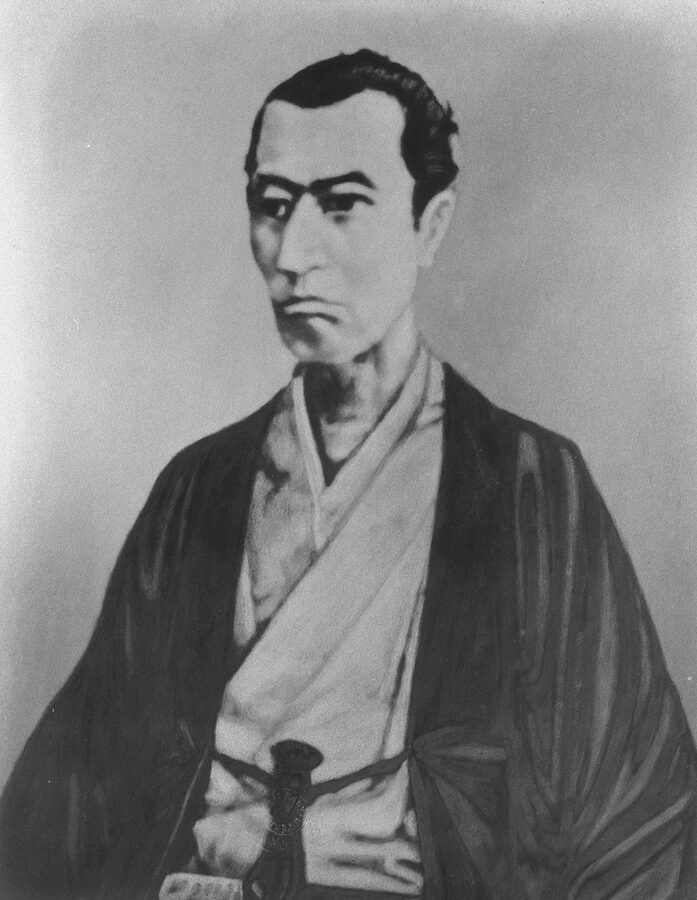
The Americans sent them back, unwilling to wreck a fresh treaty by smuggling Japanese subjects out of the country. Yoshida and Kaneko gave themselves up, were caged, and were taken to Edo; some officials wanted Yoshida and his teacher Sakuma Shōzan executed, and it took the intervention of Kawaji Toshiakira and Abe Masahiro to save them. Kaneko died in prison in Hagi the next year. Perry wrote of the pair with something close to admiration.
The squadron left Shimoda on 25 June and called at Naha, where Perry made a compact with the Ryukyu kingdom. A temple bell the Ryukyuans presented to him spent more than a century at the Naval Academy at Annapolis, rung after football victories, before it was returned to Okinawa in 1987.
Harris, Ii Naosuke and the road to 1868
Perry went home to a reward of $20,000 from Congress, spent much of it producing his three-volume Narrative of the Expedition, and died in New York in March 1858. He never saw what came next. The man who did was a former New York china merchant named Townsend Harris.
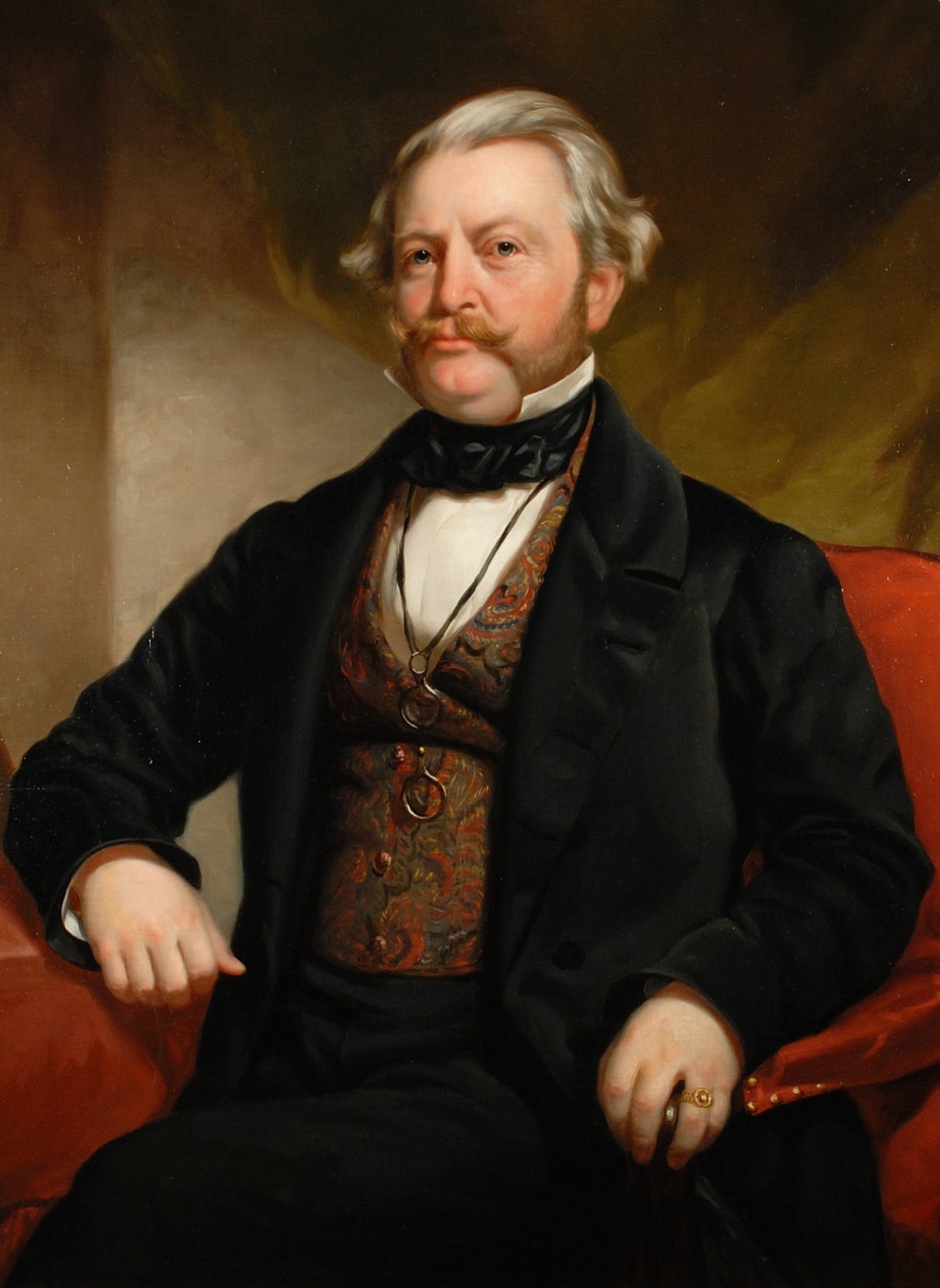
Harris arrived at Shimoda on 21 August 1856 and opened the first American consulate in Japan in the main hall of Gyokusen-ji. The local magistrates first tried to send him away, citing the Japanese wording of Article 11. It took him nearly a year of patient, unpleasant pressure to win an agreement on currency and residence rights, and another six months to be received in Edo by the shogun Iesada.
Shimoda remembers Harris chiefly through Okichi, the “Tōjin Okichi” of novels, songs, plays and a 1930 film, the young geisha supposedly forced to become his mistress and ruined by it. Gyokusen-ji, which ought to know, says flatly that the story is fiction. The record shows a seventeen-year-old named Kichi sent to the consulate as a servant in May 1857 and sent home after three days, and the photograph usually sold as her portrait is of somebody else entirely; the geisha part seems to have arrived with the novelists.
The Treaty of Amity and Commerce that Harris signed on 29 July 1858, aboard the Powhatan in Edo Bay, was the treaty Perry had not been able to get. It opened Kanagawa, Nagasaki, Hakodate, Niigata and Hyōgo to trade, allowed foreigners to live in Edo and Osaka for trade, fixed tariffs that Japan could not change on its own, and placed Americans under their own consuls’ jurisdiction. The Netherlands, Russia, Britain and France signed near-copies within months.
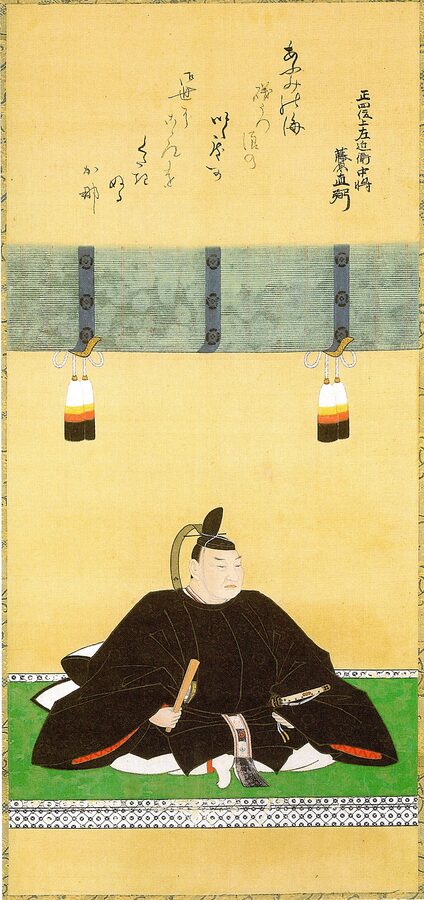
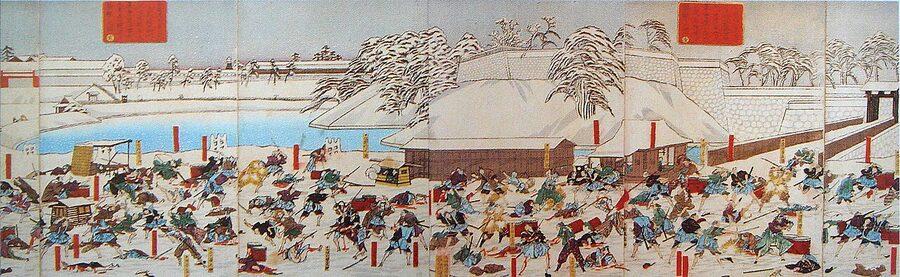
The man who put the shogunate’s name to it was Ii Naosuke, lord of Hikone (one of Japan’s twelve original castles), a serious master of the tea ceremony, descendant of the general Ii Naomasa, newly appointed Great Elder and the only person in Edo prepared to take the blame. He signed without the Emperor Kōmei’s approval, and when the opposition erupted he purged it: the Ansei Purge put daimyo under house arrest and sent Yoshida Shōin to the execution ground. On a snowy morning in 1860, outside the Sakurada Gate of Edo Castle, a band of Mito and Satsuma men cut him down.
From there the road runs fast. The treaty port Harris had wanted at Kanagawa was quietly built across the inlet at Yokohama instead, keeping foreigners off the Tōkaidō, and it opened in 1859. Gold poured out of the country through a ruinous exchange rate Harris had insisted on, prices rose, and the slogan sonnō jōi, revere the emperor and expel the barbarians, turned from a Mito scholar’s phrase into a programme.
Kyoto filled with swordsmen of every persuasion, and the shogunate sent the Shinsengumi to police them. Chōshū and Satsuma, the domains that had felt the Black Ship humiliation most sharply and learned its lesson fastest, made common cause, with Saigō Takamori at the heart of it. In late 1867 the last shogun gave power back to the court at Nijō Castle in Kyoto, and the Meiji era began the next year.
In the Japanese way of dividing history, the years from Perry’s arrival to that handover have their own name, Bakumatsu, the end of the bakufu. If you want to see where those years sit in the longer sweep, the Japan through the ages overview lays the eras end to end, and the Edo era guide covers the two and a half centuries that Perry brought to a close.
The flag and the stone
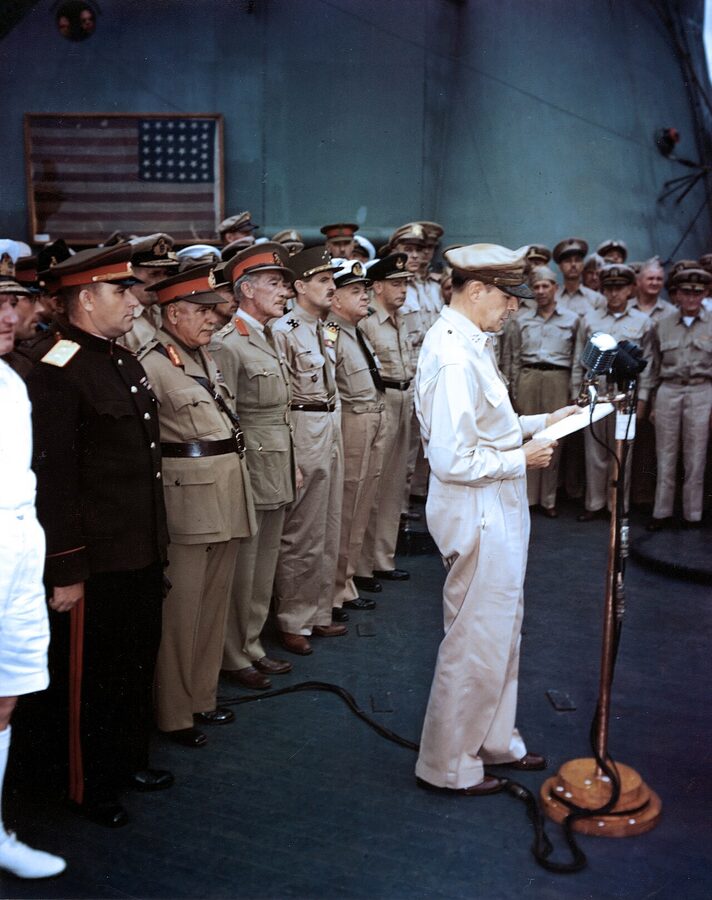
On 2 September 1945, in the twentieth year of the Shōwa era, aboard the battleship Missouri in Tokyo Bay, the Japanese delegation signed the surrender in front of a framed American flag. It had been flown out from the Naval Academy museum at Annapolis: a 31-star flag said to have flown from Perry’s flagship in these same waters. It was so fragile that it had been backed with linen and was displayed with its reverse side showing, so the stars appear at the upper right.
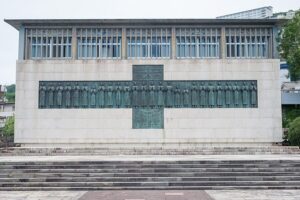
The Japanese side of that comparison had been played out at Kurihama a few months earlier. In 1900 a retired American admiral, Lester Beardslee, who had been a seventeen-year-old midshipman on the Plymouth in 1853, came back to the beach and was dismayed to find nothing at all to mark the landing. The Beiyū Kyōkai, a society of Japanese who had studied in America, raised money in both countries, the emperor added ¥1,000, and on 14 July 1901 a ten-tonne granite slab inscribed by Itō Hirobumi was unveiled in the rain, with Japanese and American warships dressed overall offshore.
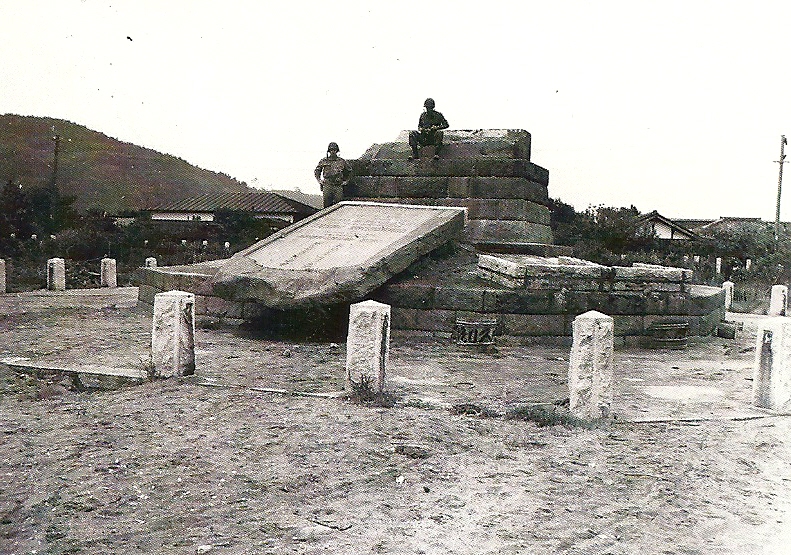
By 1944 it had become a target. A wartime patriotic association in Yokosuka campaigned to destroy it, put up a post beside it lettered “Divine Punishment”, and pressed the Kanagawa governor until, it is said, one of them held a dagger to him. On 8 February 1945 they tried to blast it down; the first charge broke the windows of a nearby shop, glass being scarce, so they piled sand and rice bales in front and hauled it over with ropes.
Within weeks of the surrender, the local police called in the builders who had pulled it down and asked them to put it back up. They did it in November 1945, more carefully than the original masons: the inscription had been cut slightly askew on the natural stone, so they set the slab with the lettering true. Every July since 1947, Kurihama has held a Perry Festival in front of it.
Where to see the Black Ships today
The four main sites run down the east side of the Miura peninsula and then across to Izu, and they divide neatly into two days. Do Uraga and Kurihama together (they sit on neighbouring branches of the Keikyū line, a short bus ride apart) and Yokohama on the way back to Tokyo. Shimoda deserves its own day, preferably a night as well.
Uraga: the harbour where it started
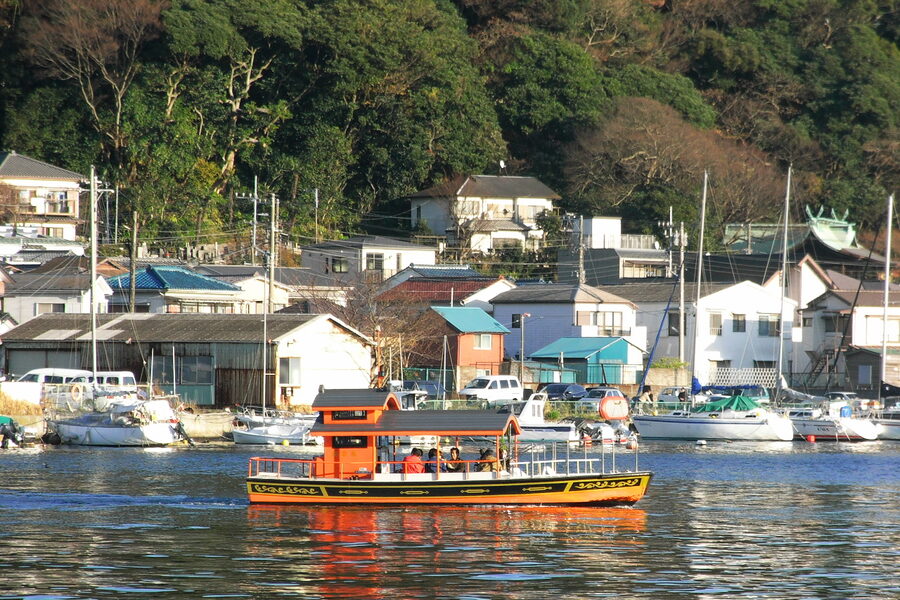
Take the Keikyū line to Uraga, its terminus, about an hour from Shinagawa. The harbour is a long narrow inlet with East Uraga and West Uraga facing each other across it, and the best thing in town is the crossing between them: a small boat run since 2022 by Triangle, the company behind the Sarushima ferries. It runs roughly 7:00–17:00 on demand (press the bell if the boat is on the other side), and costs ¥400 for adults and ¥200 for children.
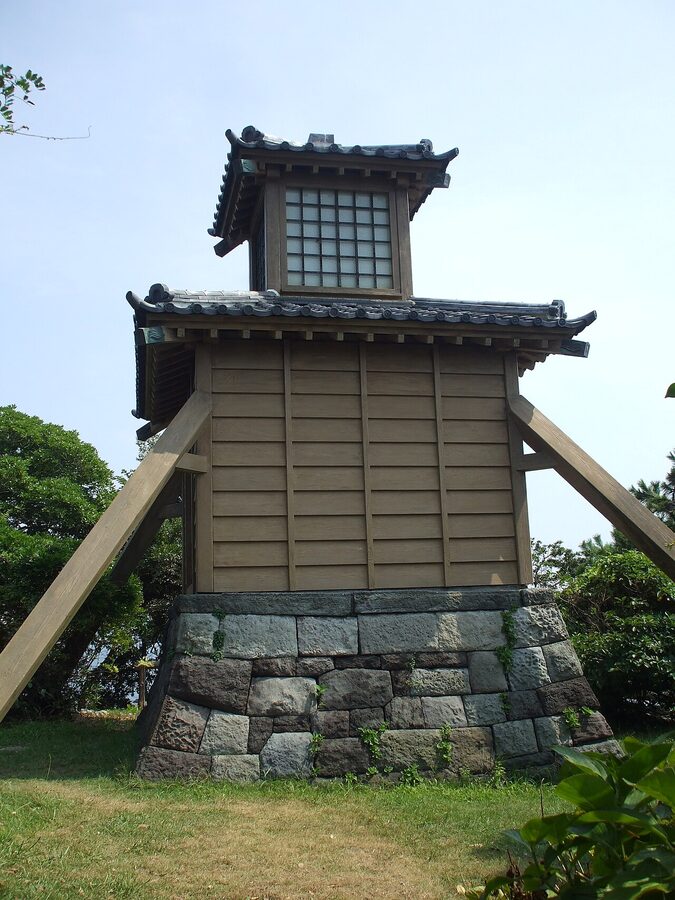
The magistrate’s office, the bugyōsho, stood in West Uraga; there is nothing left but the site and a sign in a residential street, so do not make a special trip. Walk instead out to Tōmyōzaki, the point at the harbour mouth, where a reconstructed Tōmyōdō, the old oil-lamp lighthouse that guided ships into the bay, stands on its stone base above the rocks.
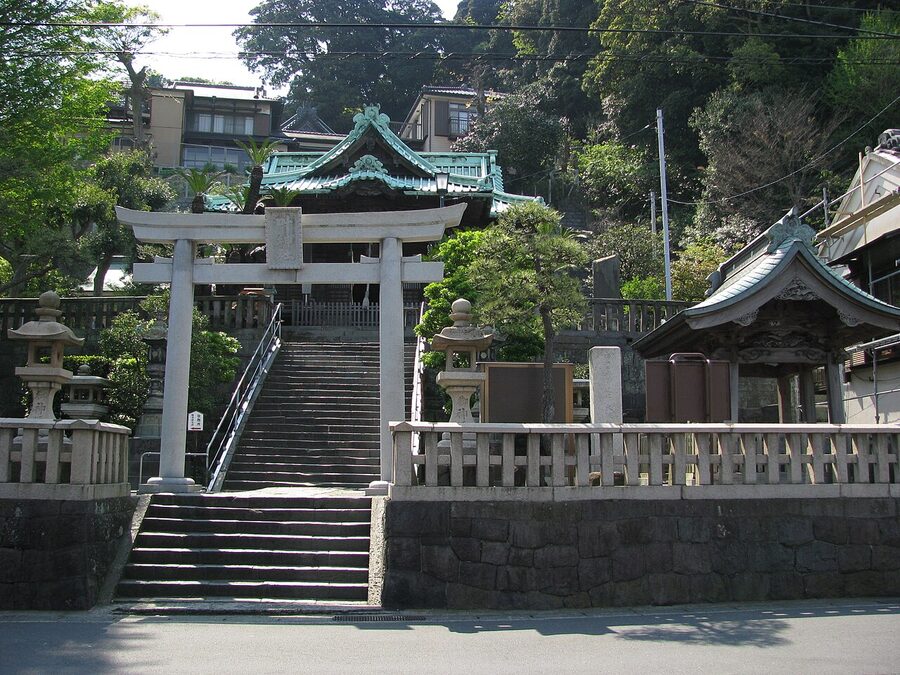
Also in West Uraga is Nishi Kanō Shrine, whose grounds hold a memorial to Kayama Eizaemon, the yoriki who passed himself off as the magistrate; his son, by then a naval officer, put it up. Kayama refused to serve the new government after 1868 and made a success of growing tea, which seems to me the right ending for a man who once outbluffed the United States Navy.
On the way back to the station, look at the brick dry dock of the old Uraga Dock company, built in 1899 and one of very few of its kind left in the world. It is not the dock Nakajima Saburōsuke dug in 1859, the first dry dock in Japan, where the Kanrin Maru was refitted before her crossing to San Francisco, but it stands on the same instinct.
Kurihama: Perry Park and the memorial hall
From Uraga, ride back to Horinouchi and change to the Keikyū Kurihama Line for Keikyū Kurihama, or take a local bus; JR Kurihama, the end of the Yokosuka Line, is next door. Perry Park is about twenty minutes’ walk from either Kurihama station, or ten minutes on the bus to the Perry Kinenhi stop; the Tokyo Bay Ferry pier from Kanaya in Chiba is ten minutes’ walk away, which makes a good loop if you are coming from the Bōsō side.
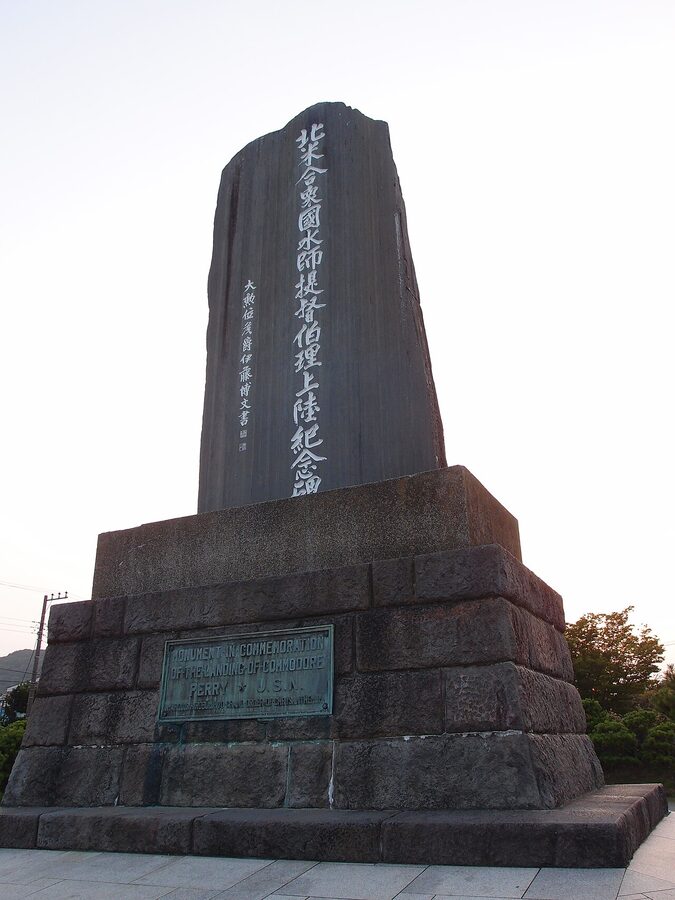
The park is free and always open. The Perry Memorial Hall beside it, opened in 1987, is a small two-storey building with a diorama of the 1853 landing on the ground floor and prints and documents upstairs; it is open 9:00–16:30, closed on Mondays (Tuesday when Monday is a holiday) and over the New Year, and also free. Allow forty minutes, and look for the bust of Toda Ujiyoshi outside.
The Kurihama Perry Festival is held in mid-July, around the anniversary, with a parade and fireworks over the harbour. It has little to do with history and a great deal to do with summer, which is fine.
Yokohama: the tamakusu tree
The treaty house has gone, but its site has not moved. The Yokohama Archives of History occupies the former British Consulate of 1931, two minutes’ walk from Nihon-ōdōri Station on the Minatomirai Line, and it is the best place in Japan to see the documents and prints of the Black Ship years, which it collects and exhibits in rotation.
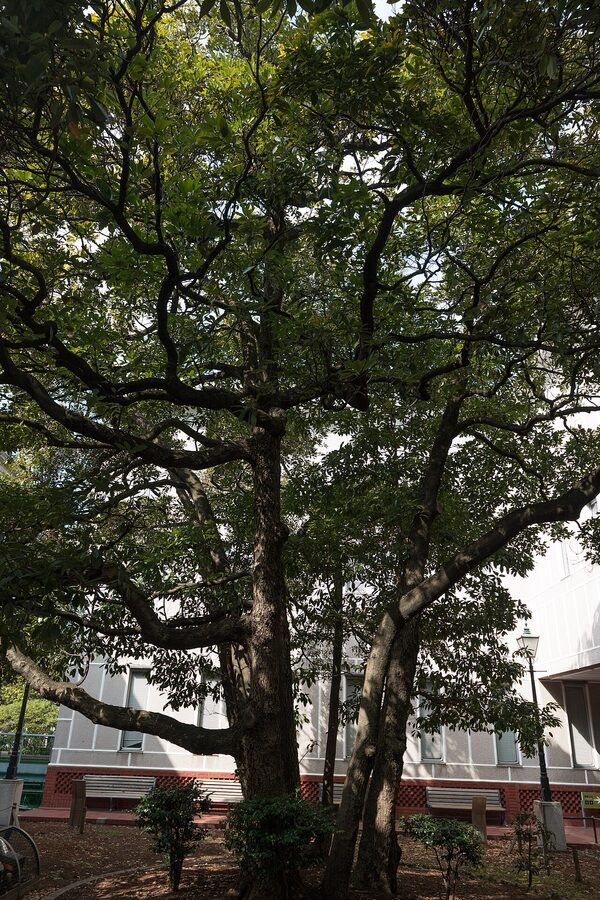
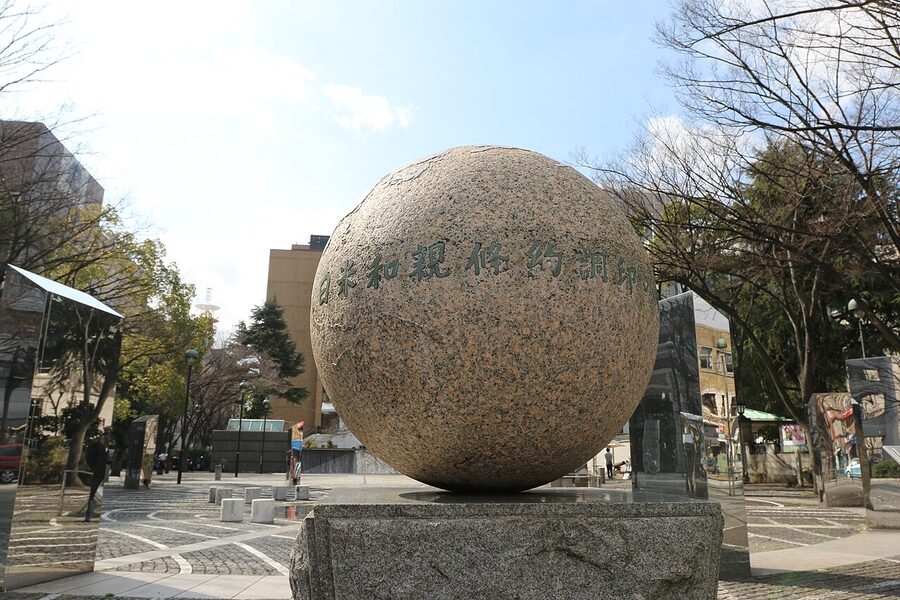
It is open 9:30–17:00 with last entry at 16:30, closed on Mondays (the following day when Monday is a holiday) and over the New Year. Admission to the permanent displays is ¥200 for adults and ¥100 for children, rising during special exhibitions, when ¥500 is typical. Next door, Kaikō Hiroba, Port Opening Square, carries a plaque marking the treaty site, and Yamashita Park and the old foreign settlement are a short walk beyond.
Shimoda: two temples and a festival
Shimoda is about two and a half hours from Tokyo on the Saphir Odoriko or Odoriko limited express to Izukyū-Shimoda; a slower trip on local trains down the Izu coast is better if you have time. The town is small, walkable and nicer than its souvenir shops suggest.
Ryōsen-ji is ten minutes from the station, at the inland end of Perry Road. It was founded in 1635, and because Tokugawa Ieyasu is said to have prayed to the monk Nicchō, revered as a healer of eyes, during the Osaka campaign of 1615 and promised a temple in return, it carries the Tokugawa hollyhock crest. Here the Shimoda additional articles were negotiated in 1854, and the temple is a national historic site.
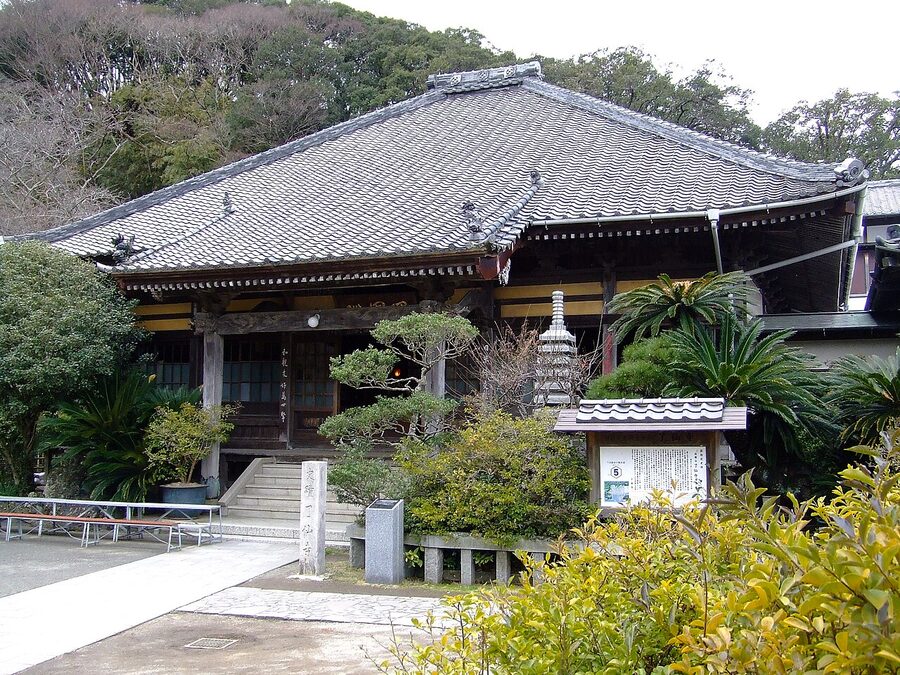
Beside it, the MoBS Black Ship Museum holds about 3,000 original documents, prints and books on Perry, Harris and the opening of the country, many of them the images you have seen in textbooks without knowing where they lived. It is open 8:30–17:00 with last entry at 16:40, daily except 24–26 December, and costs ¥500 for adults and ¥250 for school-age children.
Gyokusen-ji is in Kakisaki, about twenty-five minutes’ walk east of the station or a five-minute bus ride (alight at Kakisaki Jinja-mae and walk two minutes). Its main hall, finished in 1848, served as the American consulate from 1856 until Harris moved to Edo in 1859, and you can see the rooms that he and his secretary Henry Heusken used. It is a national historic site, and I think it is the most affecting place on this whole itinerary.
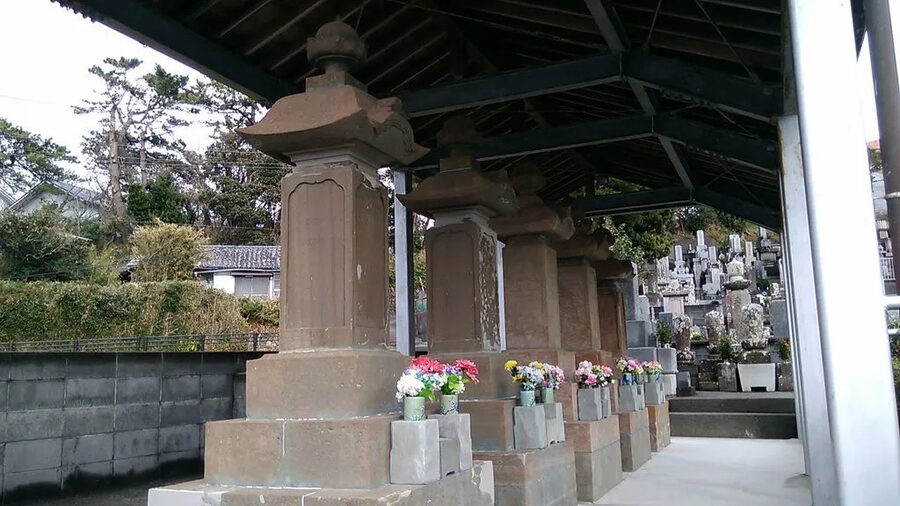
The Harris Memorial Hall in the temple grounds is open daily 8:30–16:30 and costs ¥500 for adults and ¥200 for children. Look for the memorial stone put up in 1927 by the industrialist Shibusawa Eiichi, and for the small stone commemorating the milk the temple bought from local farmers when Harris was ill: about 1.8 litres over two weeks, at a price the temple reckons at ¥150,000–200,000 in modern money.
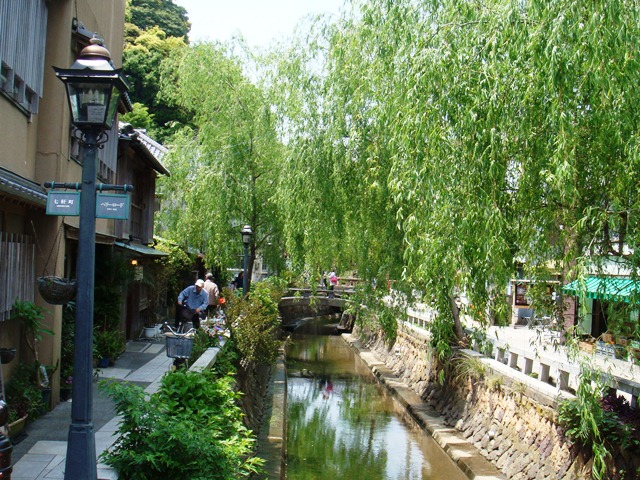
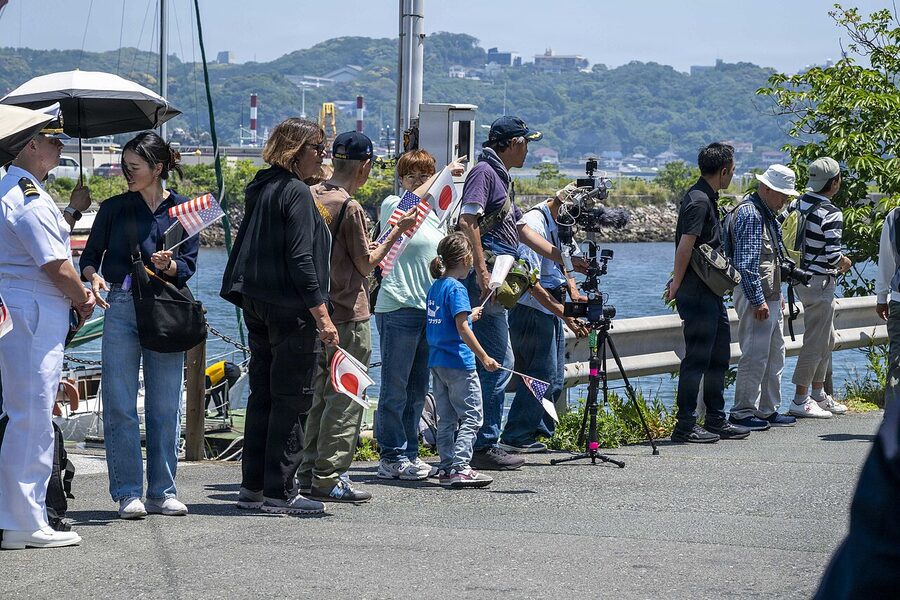
The Black Ship Festival, held in Shimoda every May since 1934 except during the war years, is the town’s biggest event, with US Navy and Japan Maritime Self-Defense Force bands, a costume parade and fireworks over the harbour. The 88th festival is scheduled for 14–16 May 2027. It is one of the stranger entries on any list of Japan’s festivals, and an oddly touching one.
If you are curious about Okichi, Hōfuku-ji near the station runs a small memorial museum to her, and there is a memorial service on 27 March each year. Go, but go knowing that Gyokusen-ji, across town, considers the whole legend a slander on both her and Harris; the two temples have been telling different stories since the 1930s.
Further afield: the Odaiba batteries
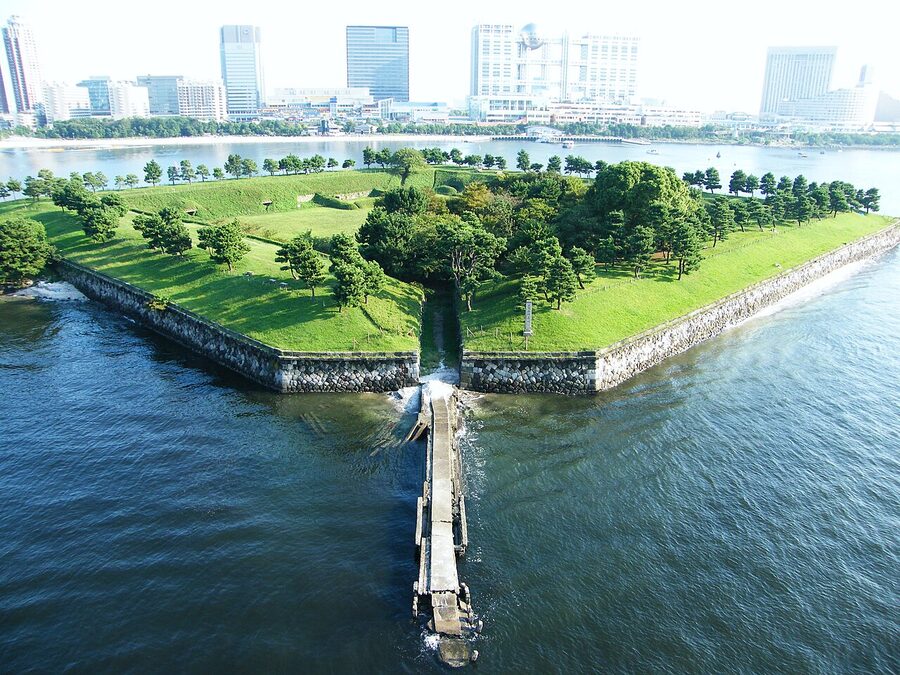
The forts Egawa built in the shallows of Shinagawa are still there, or two of them are. The No. 3 Battery is now Daiba Park, a square of earth ramparts, pines and old cannon emplacements joined to the Odaiba shore, about fifteen minutes’ walk from Odaiba-kaihinkōen Station on the Yurikamome line. It is free and open at all hours, and almost nobody who visits Odaiba for the shopping walks out to it.
Four cups
Abe Masahiro’s government has gone into the textbooks as the regime that panicked, and the kyōka is the reason. I think that is unfair. It had a year’s notice and did too little with it, and it gave away more than it meant to in the Japanese text of Article 11; but it kept trade out of the first treaty, avoided a war it would have lost in an afternoon, and bought fifteen years in which men like Nakajima Saburōsuke learned to build Western ships and dig a dry dock at Uraga.
It is worth going to Uraga and taking the little ferry across the harbour, because from the water the inlet is so narrow that you understand at once why four ships were enough. Then find somewhere by the harbour, order a cup of green tea, and drink it slowly. One cup will not keep you up at night.