Before Kayano Shigeru could ask the Japanese government a question in his own language, the committee secretariat of the House of Councillors told him he needed permission. Nothing in the Diet Law required it, they explained. It was simply the custom whenever a member wished to speak a foreign language.
So on 24 November 1994, in the upper house’s Cabinet Committee, the first Ainu member of Japan’s parliament got the directors’ consent, spoke for several minutes in Ainu, translated himself, and then drew the obvious conclusion. If Ainu counted as a foreign language in the Diet, he said, then the Diet itself had just confirmed that Ainu Mosir, the land of the Ainu, had once been a foreign country. He followed that with a question that still has no tidy answer: on what date, exactly, had Japan made it Japanese?
I keep coming back to that afternoon because most of the history is folded into it. The Ainu lived in Hokkaido, southern Sakhalin, the Kuril Islands and the northern tip of Honshu long before any of it belonged to a Japanese state; they traded and fought with the Japanese for four centuries, were colonised in the 19th, legislated into a “protected” category in 1899, and are still here, speaking for themselves. It is a story in which the Japanese state comes off rather worse than the bears, and it ends with the places where you can hear it told by Ainu themselves.
In This Article
- Ainu, Wajin and the names in between
- A world that ran from the Amur to Tsugaru
- Kamuy, salmon and the bear
- A knife at Shinori
- Shakushain’s war
- The trading post becomes a fishery
- 1869: the island gets a name
- “Protection”, 1899
- Silver drops: the writers of the 1920s
- Kayano Shigeru and the river
- Indigenous, officially
- Where to see Ainu history today
- Upopoy, Shiraoi
- Noboribetsu: Chiri Yukie’s museum
- Nibutani, Biratori
- Akanko Ainu Kotan, Lake Akan
- Sapporo
- Hakodate
- Shizunai and Nokkamappu
Ainu, Wajin and the names in between
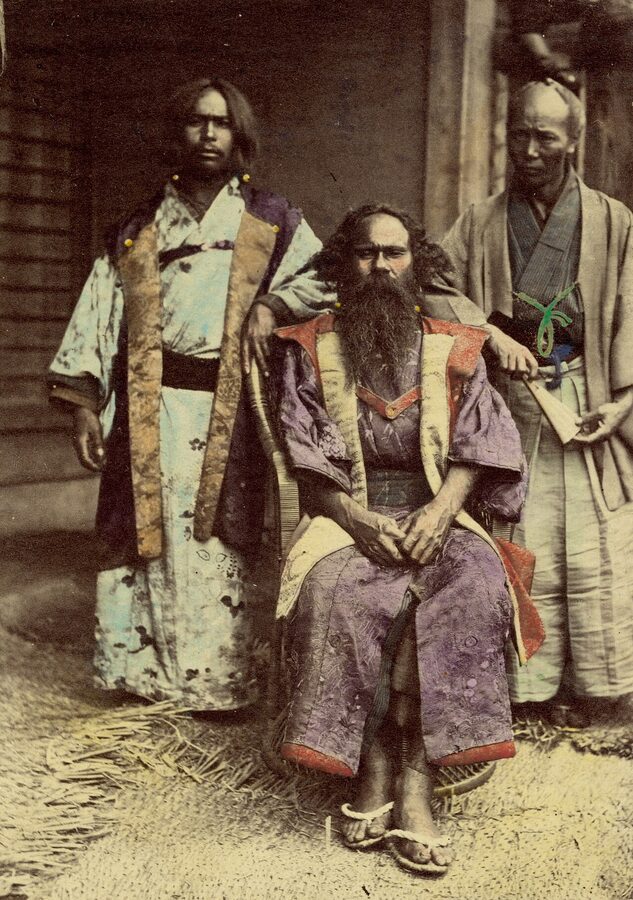
A word on words first, because the people concerned care about them. Ainu (アイヌ) means “human being” in the Ainu language, a person as distinct from a kamuy (カムイ), a god or spirit. In older usage it was also a compliment: someone who behaved badly was not called an ainu at all but wenpe, roughly “a bad lot”. The Ainu world as a whole was Ainu Mosir, and Hokkaido itself was Yaunmosir.
The ethnic Japanese are, in this history, the Wajin (和人). Ainu called them sisam, “neighbours”, and later shamo, which is less neighbourly. Japanese records called the Ainu Ezo, written with the characters 蝦夷, which mean something like “shrimp barbarians” and tell you more about the people doing the writing than about the people written about. The same characters, read emishi, had been used for the unconquered peoples of northern Honshu in the Heian era, and scholars still argue how far the two overlap.
The Meiji state replaced Ezo with dojin, “natives”, and then in 1878 with kyūdojin (旧土人), “former natives”, a label that stayed in law until 1997. In the 20th century so many people flinched at the word Ainu that the main Ainu organisation called itself the Hokkaido Utari Association, from utari, “comrades” or “kin”, between 1961 and 2009. It is the Ainu Association of Hokkaido again now, and I use Ainu and Wajin throughout, as it does.
A world that ran from the Amur to Tsugaru
Nobody arrived in Hokkaido and became Ainu on a particular day. Archaeologists see the island’s Jōmon people give way to the Epi-Jōmon, then to the Satsumon culture from about the 7th century, while a seafaring people of the Okhotsk culture settled the northern and eastern coasts, Sakhalin and the Kurils. By the 13th century the Satsumon pots had stopped, iron pans and lacquer bowls had arrived from Honshu, and people lived in surface houses with a hearth in the middle instead of pit dwellings: the recognisable shape of Ainu life.
That change of label does not mean a change of people, and the point has been made forcefully. In December 2025 Japan’s anthropological, archaeological and cultural anthropology societies issued a joint statement rejecting the idea that a new name for a culture implies a new population, and stressing Hokkaido’s continuity from the Jōmon onward. Genetics points the same way: a 2021 study of a 900-year-old Okhotsk skeleton modelled the modern Ainu as roughly two parts Jōmon to one part Okhotsk, with later mixing with mainland Japanese on top.
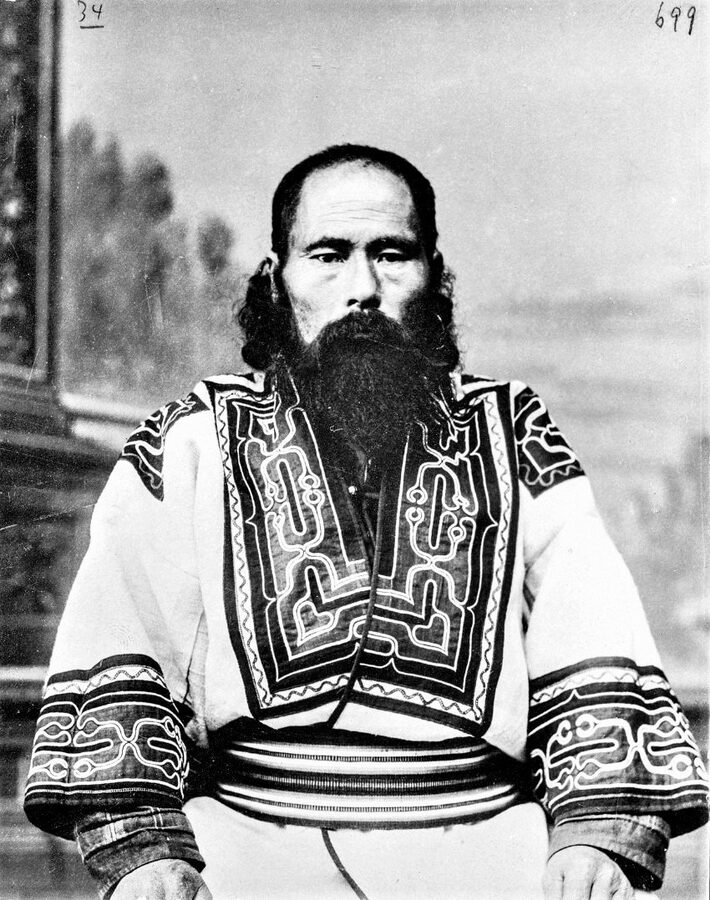
This also disposes of the oldest myth about the Ainu. Nineteenth-century Europeans, the anatomist George Busk in 1867 and the physician Erwin Bälz among them, decided from beards and skulls that the Ainu were a lost white race. Blood-protein studies by Omoto Keiichi and dental work by Hanihara Kazurō in the second half of the 20th century put them firmly among East Asians, and the closest living relatives of the Jōmon.
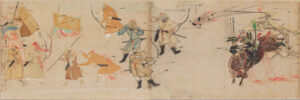
The Ainu world was large, and it faced north as much as south. Ainu groups pushed into southern Sakhalin in the 13th century, where Chinese records of the Yuan dynasty call them the Guwei, and they fought the Mongol empire there from 1264 until about 1308, when they agreed to send furs as tribute. They were, in other words, at war with Kublai Khan a decade before the samurai of Kyushu were.
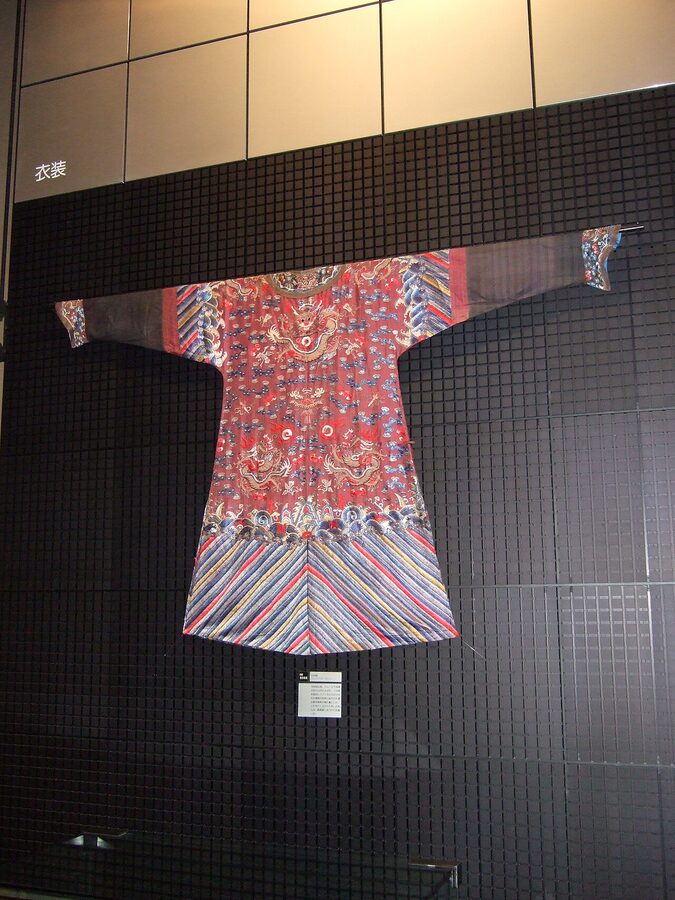
That northern trade ran up the Amur to the peoples the Japanese called Santan, and through them to Ming and then Qing China, which in 1411 set up a post near the river’s mouth and received Ainu tribute. To the south, Ainu traders in big plank-sided boats, itaomacip, sailed to the Andō clan’s port of Tosaminato in Tsugaru and, later, to Matsumae. Out went salmon, kelp, furs, and the tail feathers of sea eagles, which samurai prized for fletching arrows; back came rice, sake, iron, lacquerware and cotton.
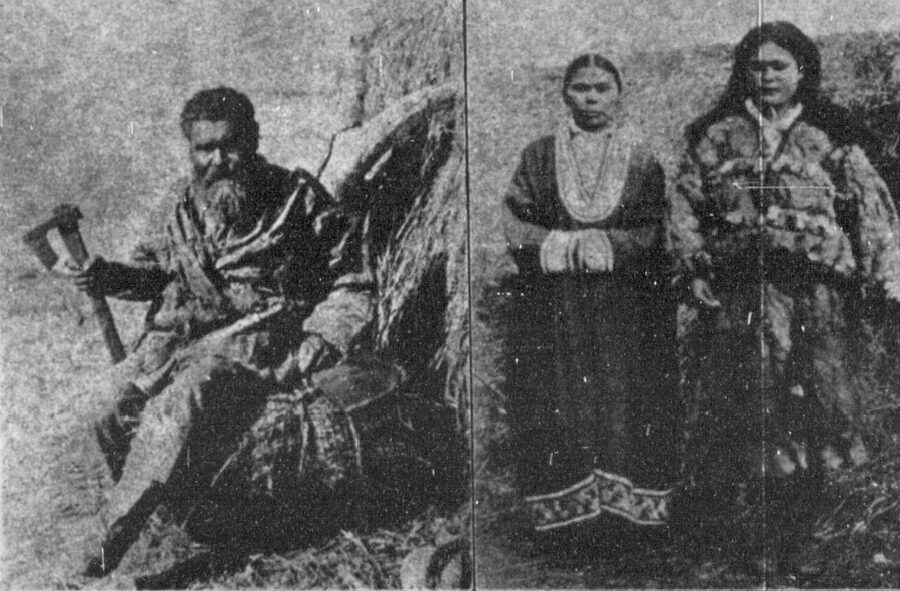
The Ainu were never a single kingdom with a capital. Society ran on the kotan (コタン), a settlement of a few households along a salmon river or a stretch of coast, with chiefs whose authority came from wealth, eloquence and the ability to settle disputes by charanke, formal debate. By the 16th century some chiefs held sway over whole river systems and had built chasi, ditched hilltop enclosures that served as forts, lookouts and ritual sites by turns.
There were Ainu in Honshu, too. The Tsugaru and Shimokita peninsulas had Ainu communities well into the Edo era, and the Hirosaki domain ran two campaigns, in 1756 and 1809, to turn its Ainu fishermen into ordinary commoners. The Kuril Ainu, meanwhile, lived as far north as the islands off Kamchatka and were being taxed in furs by Russian traders by the middle of the 18th century.
Kamuy, salmon and the bear
The Ainu world was full of kamuy. Animals, plants, fire, water, wind, boats and household tools all had spirits, and so did smallpox, though the word was kept for those whose power or usefulness set them apart. The fire in the hearth was Ape-huci, Grandmother Fire, and nearly every prayer went through her.
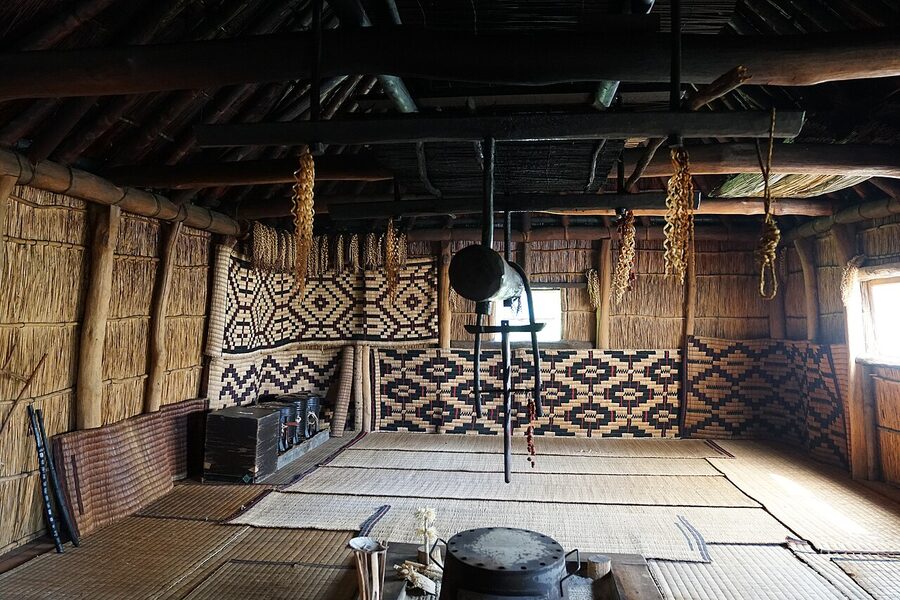
The relationship ran both ways. Kamuy visited the human world in disguise, as a bear in its fur or a salmon in its scales, and left their bodies behind as gifts of meat and skin. People returned the favour with prayer, sake and inaw, willow sticks shaved into curls, and sent the spirits home well entertained so that they would come back.
The grandest of these sendings was the iomante (イオマンテ), the sending-off of a bear. A cub taken in spring was raised in the kotan, sometimes nursed by a woman of the house, and after a year or two its spirit was sent back to the mountains with dancing, food and presents, in the belief that it would report its good treatment to the other bears. The details varied from region to region, and so did the attitude of Japanese governments: the shogunate’s officials discouraged it around 1800, and a 1955 notice under the governor of Hokkaido’s name called it a barbaric rite. That notice was withdrawn only in April 2007.
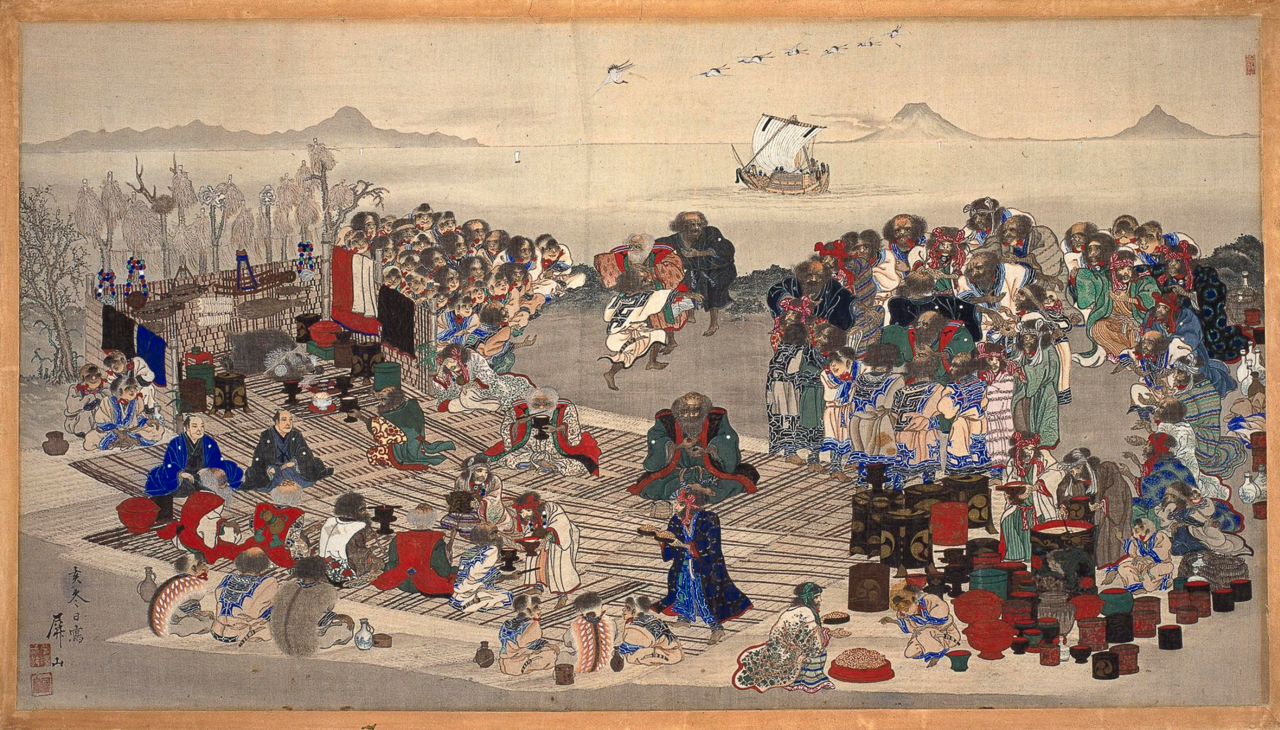
Salmon came closer to a staple than anything else. The Ainu called it kamuy cep, the gods’ fish, or sipe, “the real food”, and smoked and dried enough in autumn to last the winter and to trade. Deer were the other mainstay, and both would later be the first things the Japanese state took away.
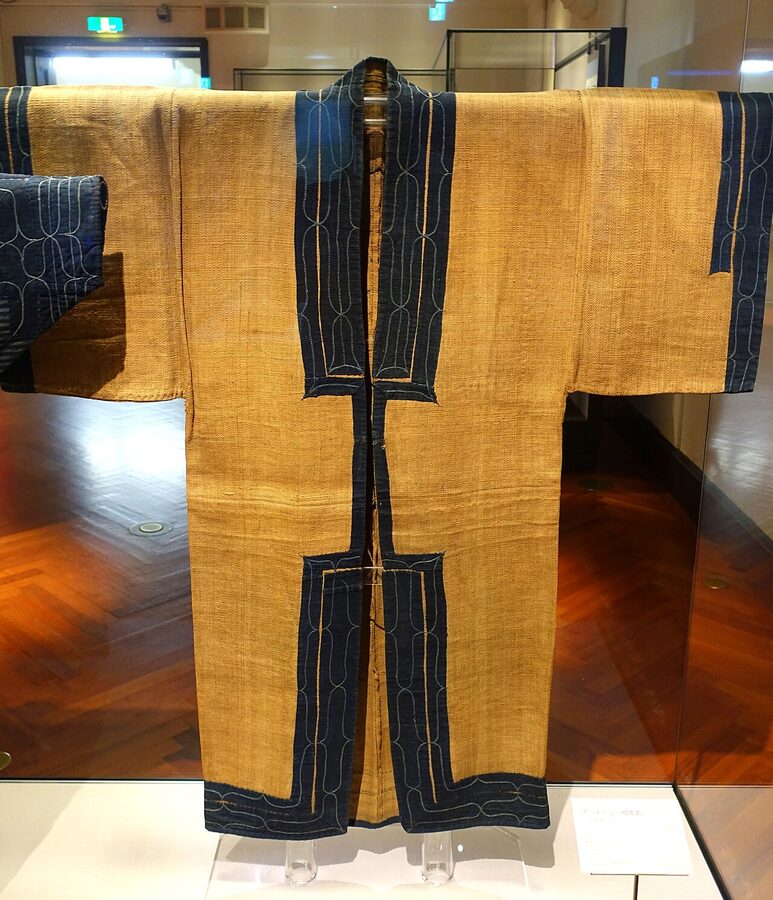
Clothing came from the forest and, increasingly, from trade. The attus (アットゥシ) was woven from the inner bark of the elm, and on it, and on cotton that came north as Japanese cast-offs, women sewed the swirling and thorned patterns that are now the most recognisable thing in Ainu art. Old kimono were taken apart and cut into appliqué, which is a fair summary of how the Ainu treated most imports: as raw material.
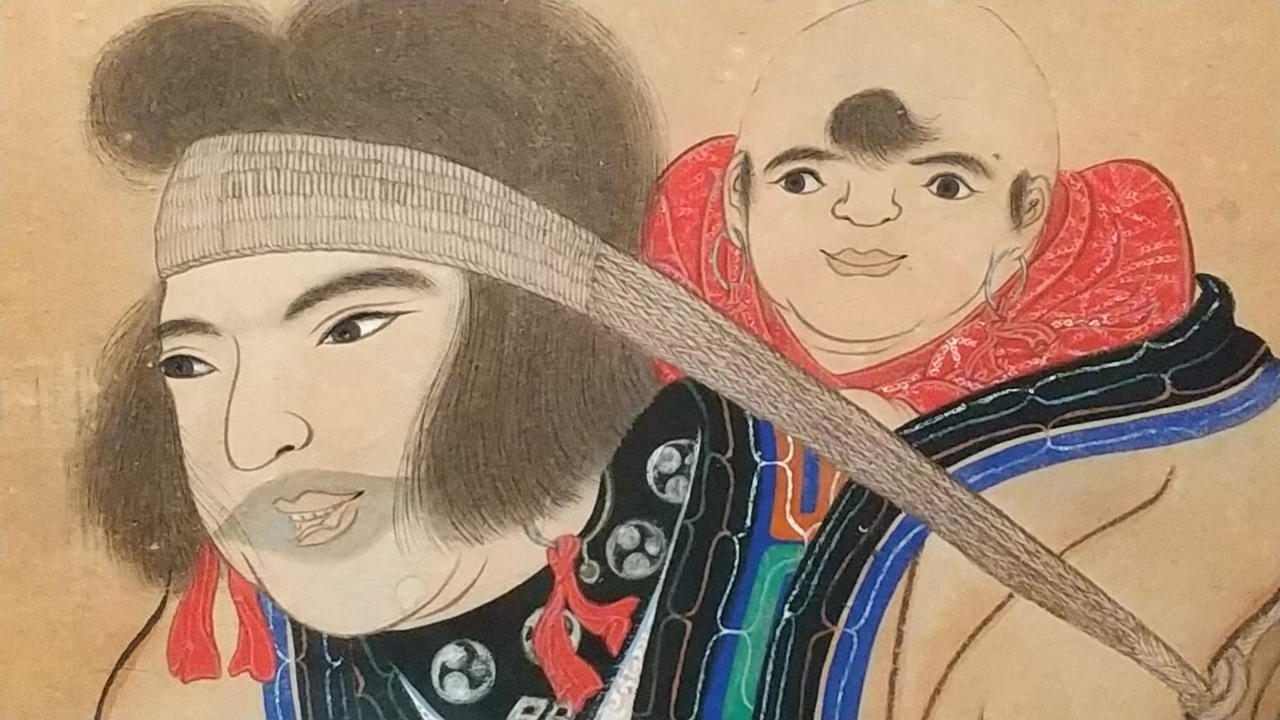
Women were tattooed around the mouth and on the hands and forearms, starting in childhood and finishing around the age of marriage. Men and women wore earrings. Both customs would be banned within two years of the Meiji government’s arrival.
There was no writing, but there was an enormous literature. The yukar were heroic epics that could take nights to chant; the kamuy yukar were shorter songs in which a god tells its own story in the first person; the uepeker were prose tales. Swords mattered too, though rarely for fighting: Japanese blades, lacquer chests and fine bowls were ikor, treasure, displayed at the end of the house and handed over as compensation in disputes, which is why fine Japanese sword guards and scabbard fittings keep turning up in Ainu collections.
A knife at Shinori
The first war between the Ainu and the Wajin began, according to the only detailed account, with an argument over a knife. By the 15th century Wajin settlers had built a string of fortified houses along the southern coast of the Oshima peninsula, the “twelve forts” of southern Ezo. In 1456, at Shinori, now on the eastern edge of Hakodate, an Ainu customer and a Wajin smith quarrelled over the quality and price of a makiri, an Ainu knife, and the smith stabbed him to death with it.
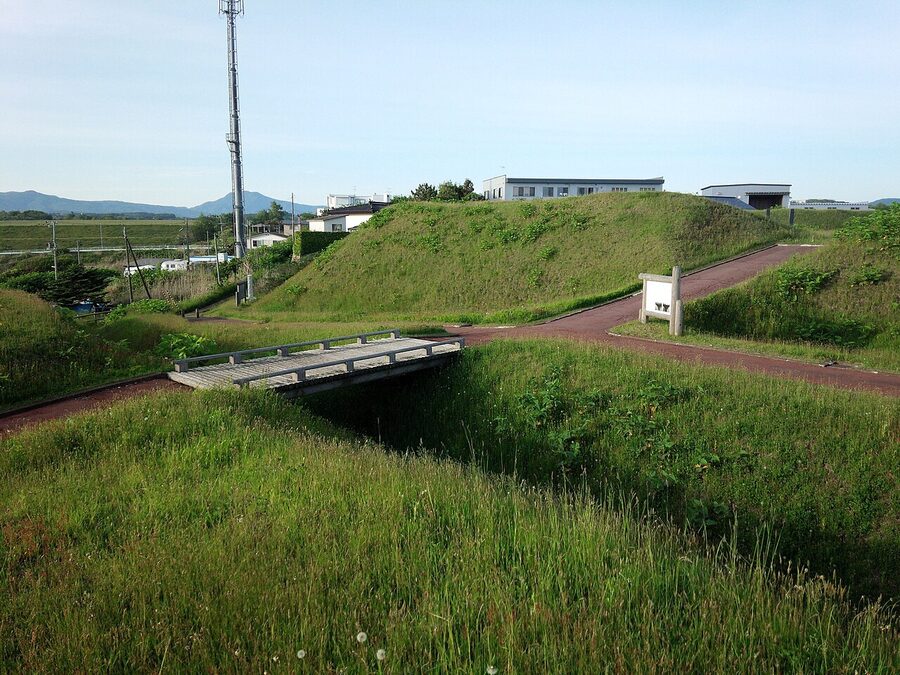
The dead man is recorded as Okkay, which some early sources gloss as “boy” and others take to mean simply “young man”. In 1457, ten years before the Ōnin War tore apart the Muromachi capital, a chief called Koshamain led a rising from Mukawa in the east to Yoichi in the west, and ten of the twelve forts fell. A retainer named Takeda Nobuhiro then shot Koshamain and his son with arrows at Nanaehama, and the alliance collapsed; sources variously date his death to 1457 or 1458.
The catch is that all of this comes from the Shinra no Kiroku, a history of the Matsumae family written in 1646, nearly two centuries later, by the descendants of the man who fired the arrows. Nobuhiro’s line took the name Kakizaki and spent the next century fighting Ainu chiefs, and the record of the Sengoku decades in Ezo has an unpleasant rhythm: risings in 1515, 1529 and 1536, each ended by luring the Ainu leader in under a pretence of peace and killing him. In 1550 Kakizaki Suehiro finally came to terms with two chiefs, Hashitain in the west and Chikomotain in the east, sharing the dues levied on trading ships.
The decisive move was made a long way from Ezo. In 1593 Kakizaki Yoshihiro travelled to Nagoya in Hizen, where Toyotomi Hideyoshi was running his invasion of Korea, and came home with a vermilion-seal letter confirming his right to control the trade; he had it read out, translated into Ainu, to assembled chiefs. In 1599 he renamed his house Matsumae, and in 1604 Tokugawa Ieyasu granted him a black-seal letter forbidding anyone to trade with the Ainu without Matsumae’s leave.
That letter made the Matsumae one of the oddest houses under the Tokugawa shogunate: a daimyo with no rice. Nothing grew in Ezo that could be measured in koku, so the lord paid his retainers in trading rights, akinaiba (商場), each worth one ship a year to a stretch of coast. It was one of the four doors the shogunate left open in the age of sakoku, and a Jesuit, Girolamo de Angelis, who crossed to Matsumae in 1618 reported the lord telling him not to worry about the shogun’s ban on Christianity, because Matsumae was not Japan.
Shakushain’s war
The largest Ainu war started as a feud between Ainu. On the Pacific coast of Hidaka two confederations, the Menashikur to the east and the Shumukur to the west, had been fighting over the fishing on the Shibuchari River, now the Shizunai, since at least 1648. In 1653 the Shumukur killed the Menashikur leader, and his deputy, Shakushain, took his place.
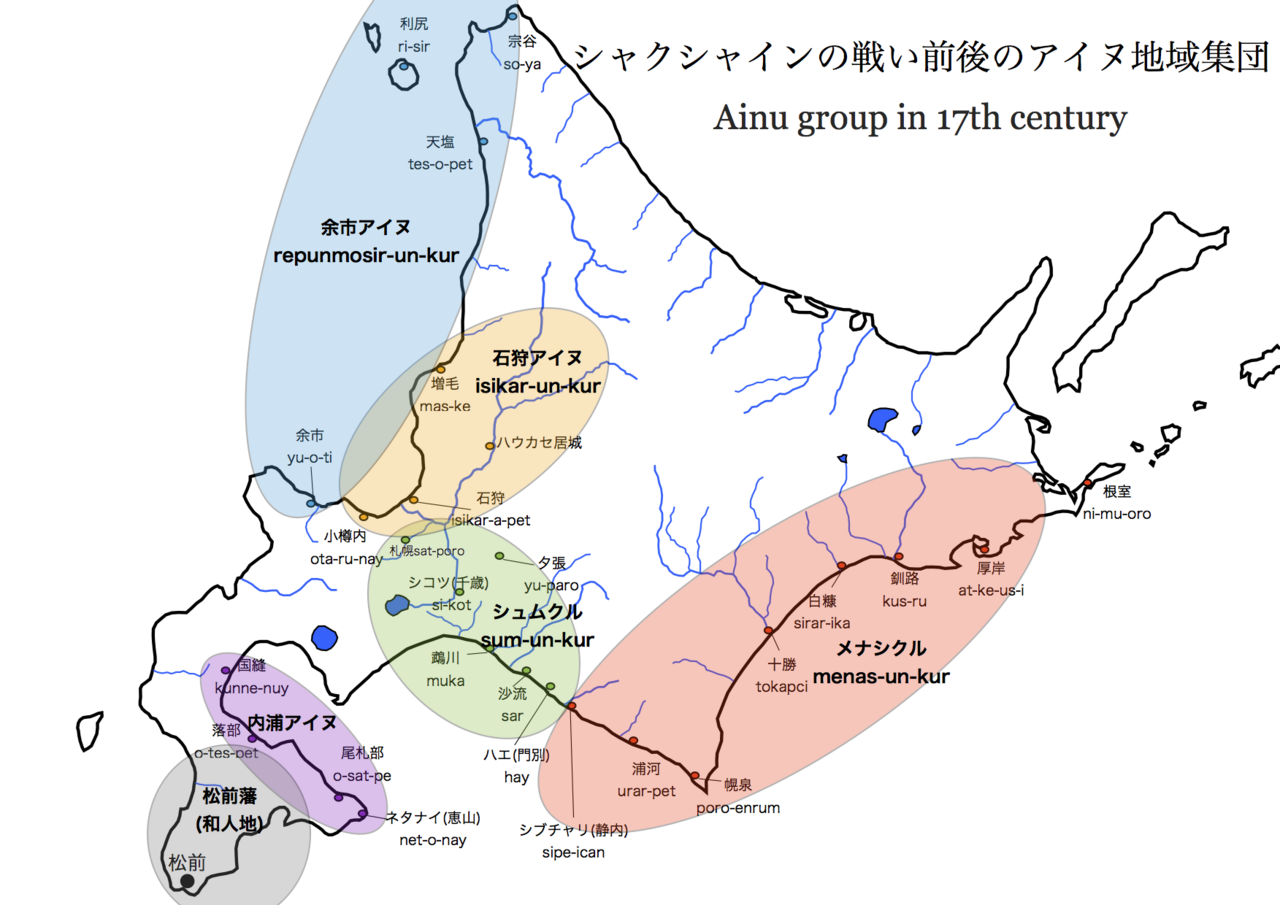
Matsumae brokered a truce in 1655 and leaned towards the Shumukur, and the feud flared again in 1667 over a crane killed on the wrong side of a boundary. In 1668 Shakushain’s men killed the Shumukur chief, Onibishi, at a gold prospector’s hut. Onibishi’s people sent to Matsumae asking for weapons and were refused, and on the way home one of the envoys, Utafu, died of smallpox; the word that came back was that Matsumae had poisoned him.
The rumour landed on years of grievance. Matsumae’s monopoly had worsened the rice-for-salmon exchange rate in the 1660s, Wajin hawk-catchers and gold panners were working Ainu rivers, and eruptions of Usu in 1663 and Tarumae in 1667 may have hurt the salmon runs. A Tsugaru report records the chief of Ishikari, Haukase, putting the Ainu position in one sentence: “Lord Matsumae is lord of Matsumae; I am the chief of Ishikari.”
In June 1669 Shakushain called the Ainu of the whole island against Matsumae, and his former enemies came with him. Some 2,000 fighters struck from Shiranuka in the east to Mashike in the west, killing 213 Wajin on the eastern coasts and 143 on the western: traders, sailors, miners and hawk-catchers, with only five soldiers among them. Shakushain marched on Matsumae and was stopped at the Kunnui River, in what is now Oshamambe, in July and August.
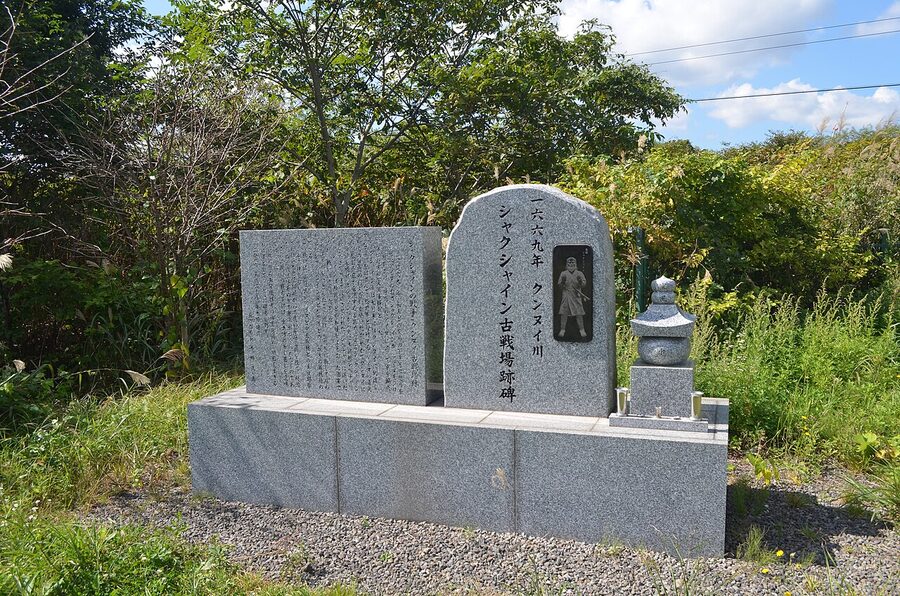
The shogunate took the rising seriously. It ordered the Tsugaru, Nanbu and Akita domains to stand ready, and Hirosaki sent 700 men across the strait under Sugiyama Yoshinari, a grandson of Ishida Mitsunari, the loser of Sekigahara, who had been quietly raised in Tsugaru. A shogunal bannerman of the Matsumae family, Matsumae Yasuhiro, took command, and the domain spent the autumn detaching Ainu groups from Shakushain one by one.
Then Matsumae offered peace. Shakushain came to the Matsumae camp at Pipok, now Niikappu, on the 23rd day of the tenth month by the old calendar, 16 November 1669, and was killed at the banquet held to celebrate the settlement. His fortress at Shibuchari fell the next day, and a Wajin son-in-law named Shōdayū, a former miner who had fought beside him, is said to have been burned alive.
Punitive expeditions went on until 1672, which is why English-language accounts often date the war 1669 to 1672. Every Ainu group, including those that had stayed neutral, had to swear a seven-article oath of obedience. The monopoly was now unanswerable, and the great regional chiefs of the Haukase sort did not appear again.
The trading post becomes a fishery
Through the 18th century Matsumae’s retainers, deep in debt, handed their trading posts to merchants, who paid a fee and ran them as they pleased. This was the basho ukeoi (場所請負) system, and it turned trading partners into labourers. Ainu were put to work at the merchants’ fisheries for herring, salmon and kelp, paid around a quarter of a Wajin migrant’s wage, and sometimes taken to distant posts for years.
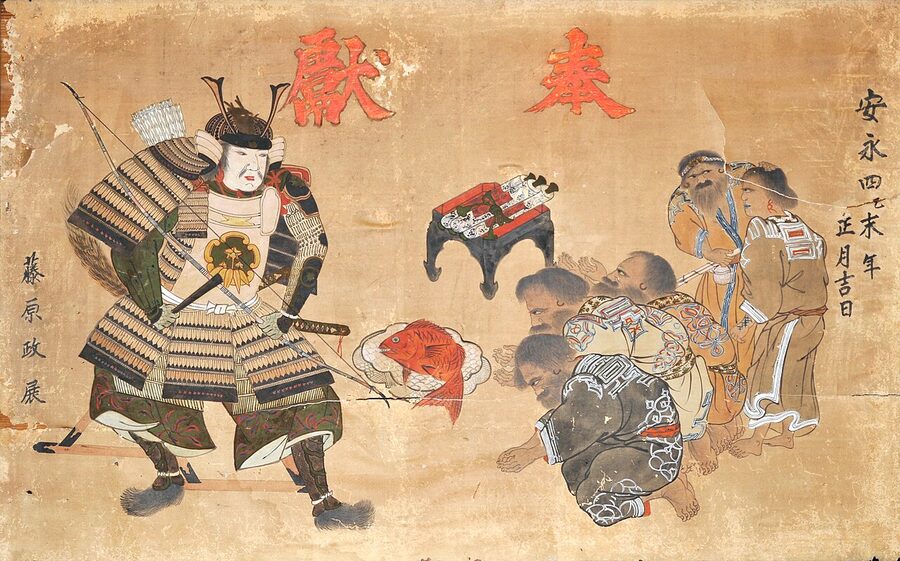
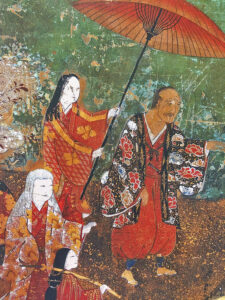
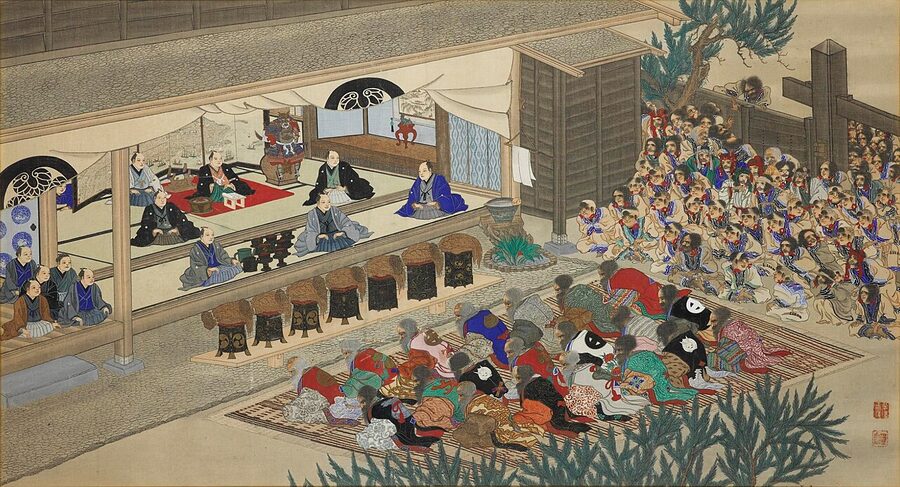
Ezo’s produce went a long way. Dried sea cucumber and abalone went to Nagasaki for the Chinese kitchens that bought them, and fish boiled and pressed into fertiliser went south to the cotton and indigo fields of Honshu; a good deal of the late Edo era‘s cash-crop farming was fed on Ezo fish caught by Ainu hands. The figure on the ema above, all lacquer and lamellar like something out of a samurai armour collection, had very little to do with it. The men who ran Ezo by then were accountants.
The worst of them were at the far eastern end. In 1773 the merchant house of Hidaya, owed 8,183 ryō by the domain, took over four posts in lieu, including Kunashiri, and from 1788 it ran a salmon and trout fertiliser fishery there and on the Menashi coast opposite. Testimony taken afterwards records Ainu worked so hard they could not lay in food for the winter, and Hidaya’s overseers threatening to boil workers in the fish cauldrons and to poison the elders and bring in Wajin settlers instead.
In May 1789 a Kunashiri chief died after drinking sake from a Hidaya manager, and a headman’s wife after eating at the trading house; whether anybody was poisoned is still unknown. Young men on Kunashiri and the Menashi coast, 130 of them in all, rose and killed 71 Wajin, 22 on the island and 49 on the mainland, almost all Hidaya employees. Not every Ainu joined in, and some hid Wajin from the attackers.
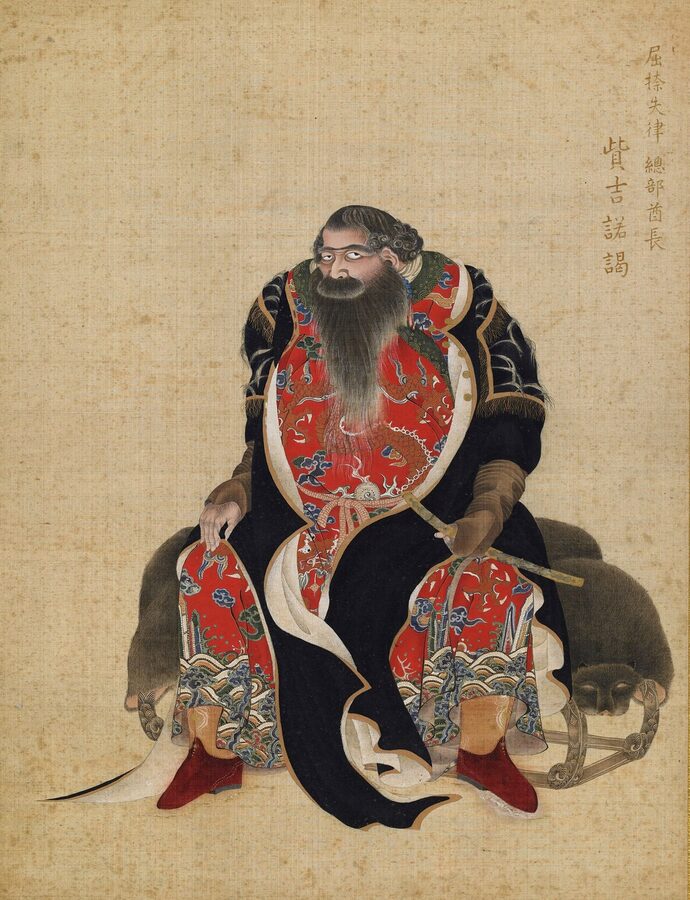
Matsumae sent 260 men with 85 guns, but there was no battle. The elders Tsukinoe of Kunashiri, Ikotoi of Akkeshi and Shonko of Nokkamappu persuaded the rebels to come in, and 314 Ainu assembled at Nokkamappu, near today’s Nemuro, to be questioned. Thirty-seven were condemned; after five had been beheaded the rest raised an outcry in their cell, and the guards fired in and finished the others with swords and spears.
The domain then commissioned its house elder Kakizaki Hakyō to paint twelve of the chiefs who had helped, the Ishū Retsuzō, and took the portraits to Kyoto, where Emperor Kōkaku saw them. Since the 1970s the Nemuro Ainu Association has held an icarpa, a memorial rite, at Nokkamappu every year for the 37, facing across the strait to Kunashiri, which is now Russian.
The Russians are why things changed. Adam Laxman sailed into Nemuro in 1792 asking for trade, more than half a century before Perry’s Black Ships came to Uraga, and the shogunate took eastern Ezo under direct rule in 1799 and the rest in 1807. Its officials curbed the worst merchant abuses and also began the first deliberate assimilation, rewarding Ainu who adopted Japanese hairstyles and names and discouraging earrings, tattoos and the iomante, though they eased off when it caused resentment.
Disease did more damage than policy. Smallpox and measles brought by fishery crews cut the Ainu population from about 23,800 counted in 1807 to 18,630 in 1873. When the explorer Matsuura Takeshirō walked the Shiretoko coast in the 1840s and 1850s he found young women sent off to Kunashiri for the use of the fishermen, and men kept at distant posts so long that many never married at all.
1869: the island gets a name
The last battles of the Boshin War were fought on Ainu land. Enomoto Takeaki’s runaway shogunate fleet set up a short-lived republic at Goryōkaku in Hakodate, and Shinsengumi vice-commander Hijikata Toshizō was shot dead there in June 1869. Within three months the new Meiji government had created the Kaitakushi (開拓使), the Hokkaido Development Commission, and was asking what to call the place.
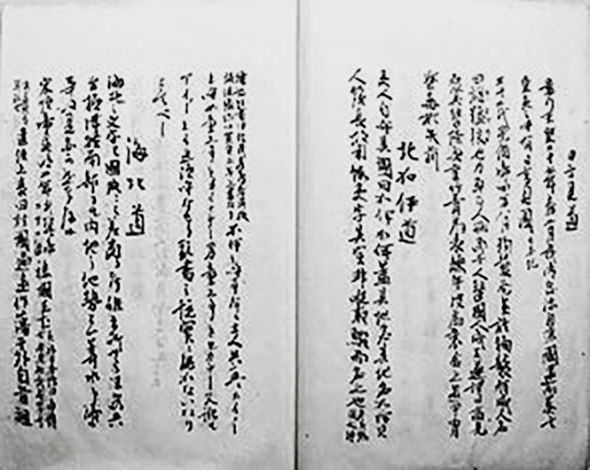
The answer came from Matsuura Takeshirō, who had made six journeys through Ezo, Sakhalin and the southern Kurils and recorded around 9,000 Ainu place names. Of his six suggestions the government took Hokkaidō, which he had written 北加伊道 because, he said, the Ainu called themselves kai. The name was proclaimed on the 15th day of the eighth month of 1869, with the Ainu syllable swapped for the character for sea.
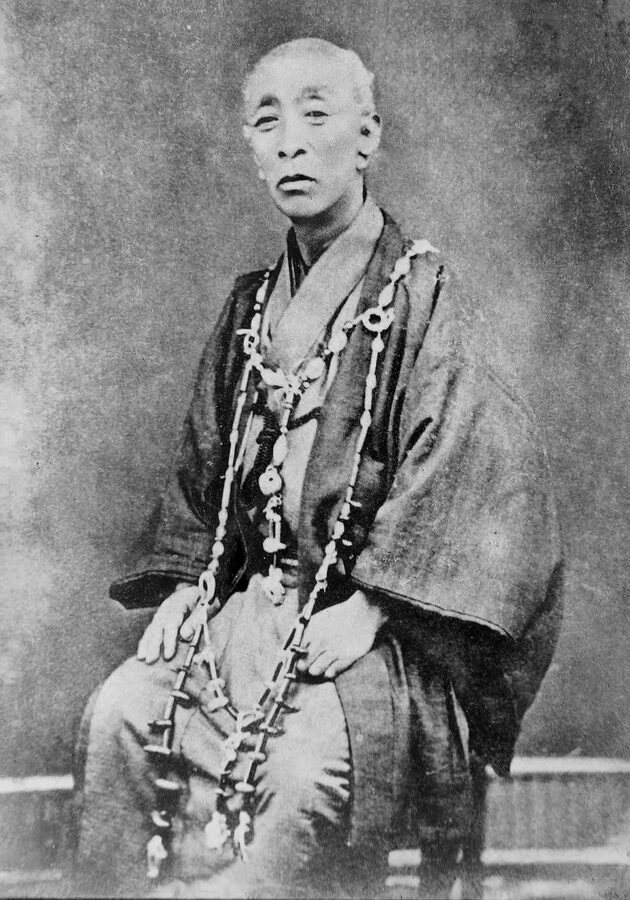
Matsuura lasted less than a year at the Kaitakushi. When the merchants’ trading posts, which he had campaigned to abolish, were allowed to carry on under a new title, “fishery holders”, he resigned in 1870 and handed back his court rank. Kayano Shigeru made the point about his limits in that same 1994 committee session: of the place names around Nibutani, Matsuura had written down fourteen, and Kayano, who grew up there, had counted seventy-two.
The Kaitakushi under Kuroda Kiyotaka, a Satsuma veteran of the war, set about building a colony. American advisers led by Horace Capron surveyed the island, Sapporo was laid out on a grid, and the Sapporo Agricultural College and a state brewery were both opened in 1876; settler-soldiers, the tondenhei, were planted on the land from 1875. Defeated samurai from Aizu, whose Tsuruga Castle had fallen in 1868, were shipped north to clear land at Yoichi.
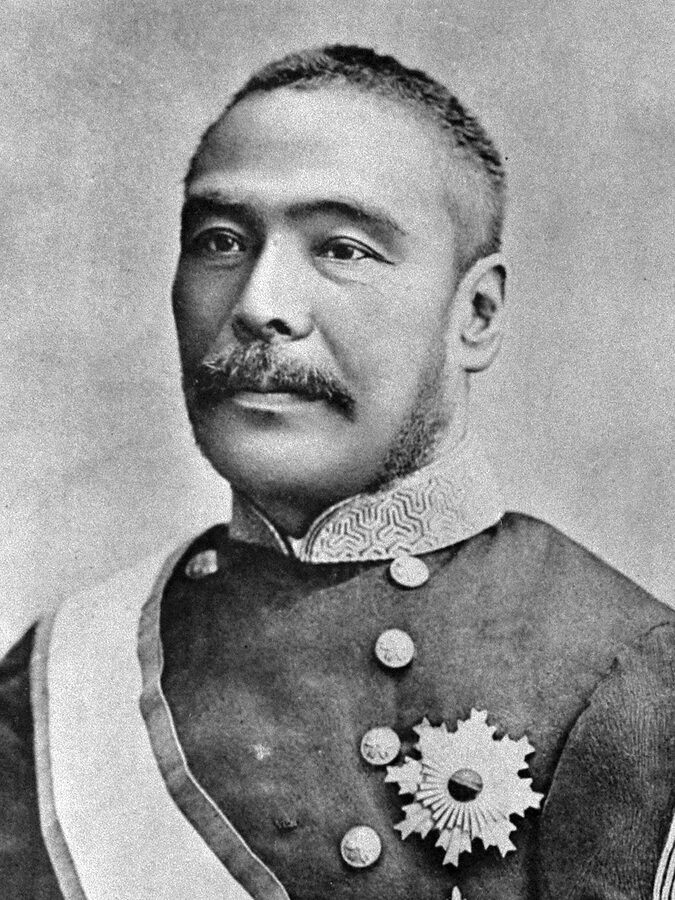
For the Ainu the new order arrived as a series of notices. In 1871 they were entered in the family registers as commoners, often under Japanese surnames chosen for them, and the Kaitakushi banned women’s tattoos, men’s earrings and the custom of burning a house after a death, and told them to learn Japanese. Land regulations of 1872 treated the island as the state’s to sell to settlers; the Ainu, who had never needed title deeds, had none.
Then their food went. The spring-bow traps with poisoned arrows used for deer were banned in 1876, over petitions from Ainu communities asking for a delay; salmon fishing in the rivers was banned in 1878, the same year the word “former natives” became the official term; and in 1889 deer hunting was stopped altogether. Kayano told the committee in 1994 that his own family register still showed the label against his grandfather, Tokkaram, under the Japanese surname Kaizawa, blacked out only under the postwar constitution.
The cruellest single episode concerned the Sakhalin Ainu. When Japan swapped its claim to Sakhalin for the Kurils in the 1875 Treaty of Saint Petersburg, Sakhalin Ainu were persuaded to move to Sōya, at the northern tip of Hokkaido, on the understanding that they could still see their island across the strait. The next year Kuroda had them moved inland to Tsuishikari, by the Ishikari River near today’s Ebetsu, and his own official in charge, Matsumoto Jūrō, resigned in disgust and never returned.
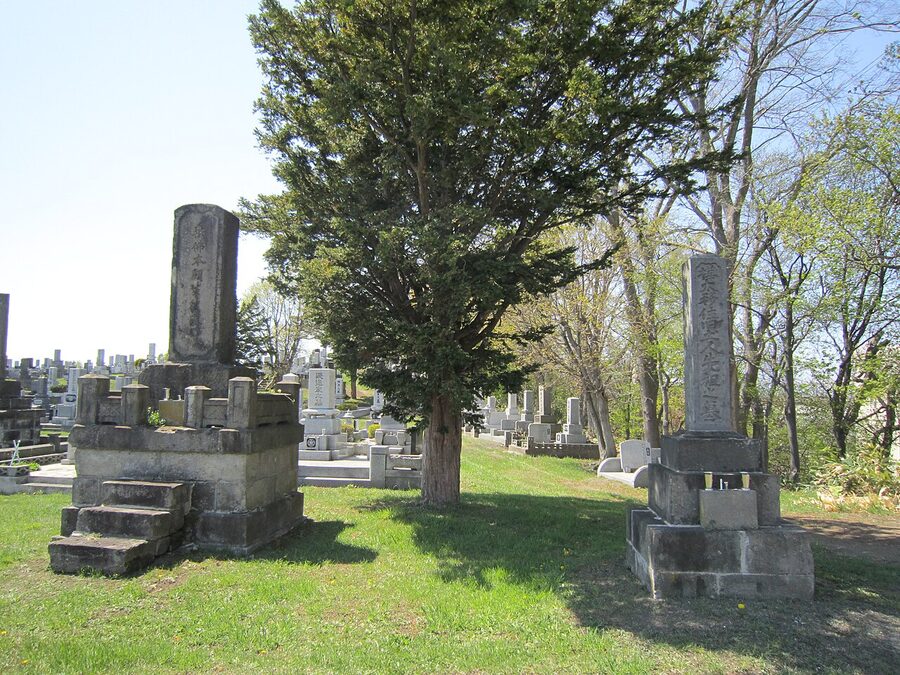
The numbers are not certain, and the sources disagree in a way that is itself telling. Japanese reference works give either 841 people in 108 households or 854 in 127 for the move; cholera in 1879 and cholera and smallpox in 1886 and 1887 killed somewhere between 300 and 400 of them. When Japan took southern Sakhalin in 1905, the survivors were allowed home the following year, and accounts give the number who went as 339 or 395.
The 97 Kuril Ainu of Shumshu were moved south to Shikotan in 1884, far from the sea-otter grounds they had lived by. By 1898 Hokkaido had some 850,000 people. Around 17,000 of them were Ainu.
“Protection”, 1899
The Hokkaido Former Natives Protection Act, Law No. 27 of 2 March 1899, was presented as charity, and some Ainu leaders had petitioned for a law to save their communities from destitution. It offered each Ainu household up to 15,000 tsubo, about five hectares, to farm, plus medicine, relief and schooling. The land could not be sold except by inheritance, and any part not under the plough within fifteen years would be confiscated.
Put plainly, a hunting and fishing people whose hunting and fishing had been outlawed were given, on conditions, small plots of whatever land the settlers had not already taken, and told to become farmers. In 1900 the prefectural office even agreed to sell off the land reserved for the Chikabumi Ainu near Asahikawa to the businessman Ōkura Kihachirō, and backed down only after the Ainu fought it. By 1916 just over half of working Ainu farmed, on incomes about a quarter of an ordinary farm household’s.
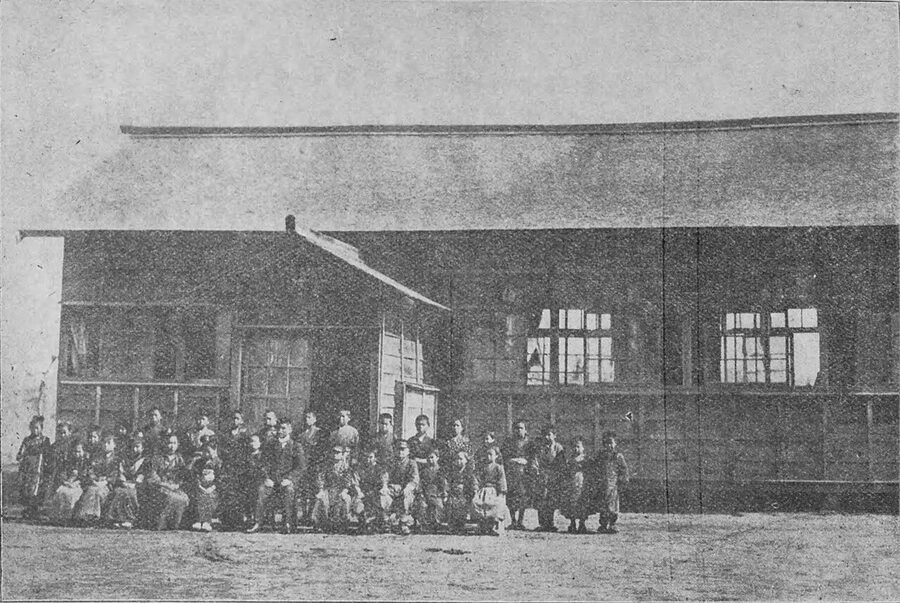
Article 9 allowed separate primary schools for Ainu children, and 21 “former natives schools” opened between 1901 and 1916. They ran a shorter course than ordinary schools, taught in Japanese, and did the job they were designed for: attendance rose from under half of Ainu children to almost all of them, and the language fell silent in a generation. Many parents, wanting their children to hold their own among Wajin, stopped speaking it at home.
Ainu were Japanese enough to be conscripted: at least 63 served in the Russo-Japanese War of 1904, and many more in the Pacific War. They were also, it turned out, foreign enough to be dug up. From 1934 the anatomist Kodama Sakuzaemon and colleagues at Hokkaido Imperial University excavated Ainu graveyards at Yakumo and elsewhere for skulls to measure, and in 1982 the university admitted to holding the remains of 1,004 people.
It built an ossuary on campus in 1984 and has been returning remains, slowly, since. On 27 July 2026 Hokkaido University’s president issued a formal apology for the research, acknowledging that it had deeply wounded Ainu dignity; it was the third such apology, after Sapporo Medical University and the University of Tokyo. Remains that have not gone home are held at a memorial facility at Upopoy, an arrangement many Ainu object to.
Silver drops: the writers of the 1920s
The Ainu answered in print. Chiri Yukie was born in Noboribetsu in 1903 and raised at Chikabumi by her aunt, Imekanu, a Christian lay preacher, and her grandmother Monashinouk, who knew the old songs by heart. When the linguist Kindaichi Kyōsuke came to record them in 1918, he asked the fifteen-year-old to write the songs down herself.
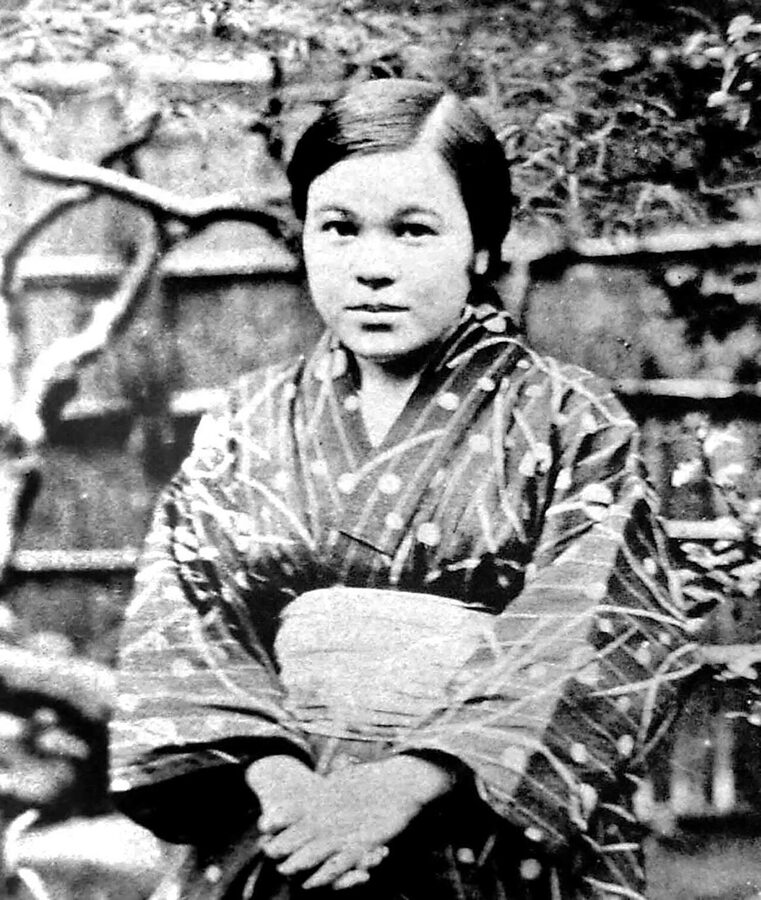
She did more than that. In Tokyo in 1922 she prepared thirteen kamuy yukar in romanised Ainu with her own Japanese translation on the facing page, corrected errors in John Batchelor’s Ainu dictionary, and taught Kindaichi as much as he taught her. When an editor suggested she might not want to be known as Ainu in a women’s magazine, she wrote in her diary, in effect, that she was glad to have been born Ainu.
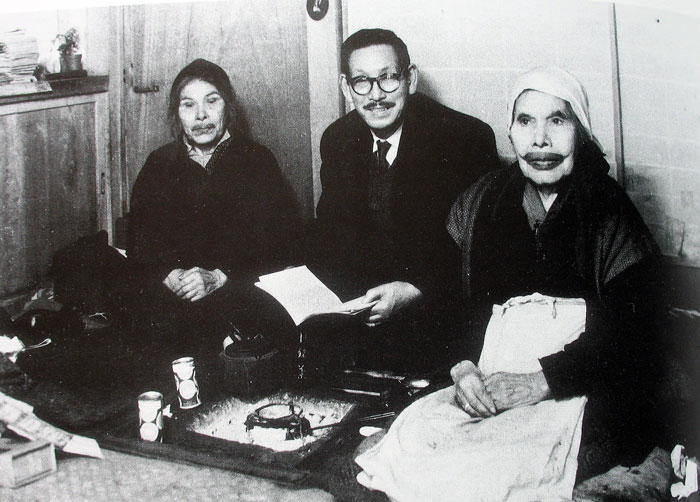
Chiri Yukie finished the proofs on 18 September 1922 and died of heart failure that night, at nineteen. The Ainu Shin’yōshū came out in August 1923, opening with the owl god’s song, whose refrain, Shirokanipe ranran piskan, konkanipe ranran piskan, “silver drops fall, fall all around, golden drops fall, fall all around”, is now probably the best-known line of Ainu ever written. Her brother Chiri Mashiho became the first Ainu professor at Hokkaido University.
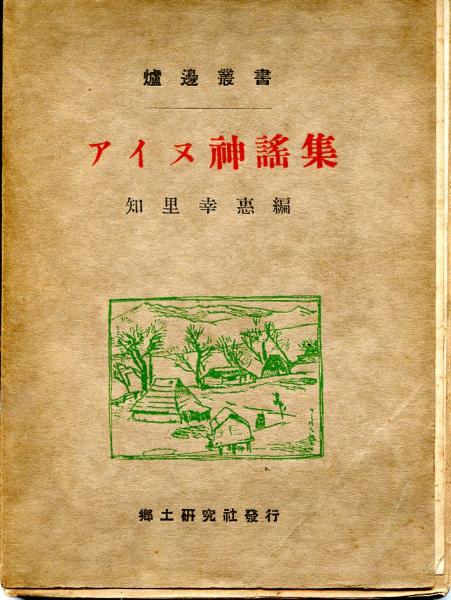
Iboshi Hokuto of Yoichi went further. Born in 1901 and bullied at the Wajin school his mother insisted on, he became a tanka poet and travelled from kotan to kotan arguing that the Ainu had to organise and speak for themselves; his family name came from his grandfather, one of the young Ainu taken to the Kaitakushi’s school in Tokyo in 1872, who built it from the family crest. He died of tuberculosis in 1929, aged twenty-seven, and his poems were published the next year as Kotan.
The poets Batchelor Yaeko and Moritake Takeichi and a 1931 congress of Ainu youth in Sapporo belong to the same moment. The Ainu Association of Hokkaido’s own origins are disputed: Japanese sources variously date it to 1930, when an association of that name was set up under a prefectural official, Kita Masaaki, or to 1946, when the present body was founded, and most treat the two as unrelated.
Kayano Shigeru and the river
Kayano Shigeru was born on 15 June 1926 at Nibutani on the Saru River and was raised partly by his grandmother Tekatte, who spoke little but Ainu, so that he grew up with two mother tongues. As a young man he worked as a labourer in logging camps and on survey crews, by his own account trying to get away from being Ainu at all. What brought him back, in 1953, was watching scholars and collectors carry off the tools and utensils of Nibutani.
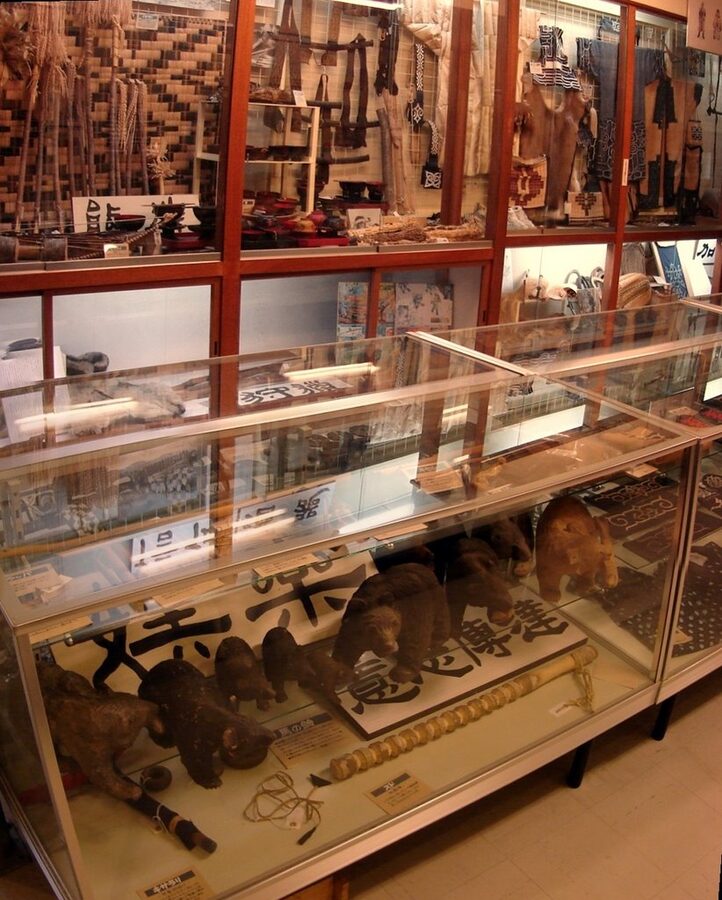
So he started buying them back. From 1960, encouraged by Kindaichi and Chiri Mashiho, he recorded elders’ speech and stories, opened a museum in 1972, won the Kikuchi Kan Prize in 1975 for a collection of uepeker, and in 1977 led the first iomante held at Nibutani in a decade. He also started teaching Ainu to local children; sources give 1983 or 1987 for the founding of the Nibutani Ainu language school, and the difference is that 1987 is when Hokkaido began to fund what he had been running privately for years.
Then the state came for the river. In 1973 the Hokkaido Development Bureau announced two dams on the Saru system, to control floods and to supply an industrial zone at Tomakomai that never grew as planned, and the Nibutani dam would drown land where the cipsanke, the ceremony for launching new dugout canoes, had always been held. Kayano and his neighbour Kaizawa Tadashi refused to sell, the state began compulsory purchase in 1987, and in 1993 they sued.
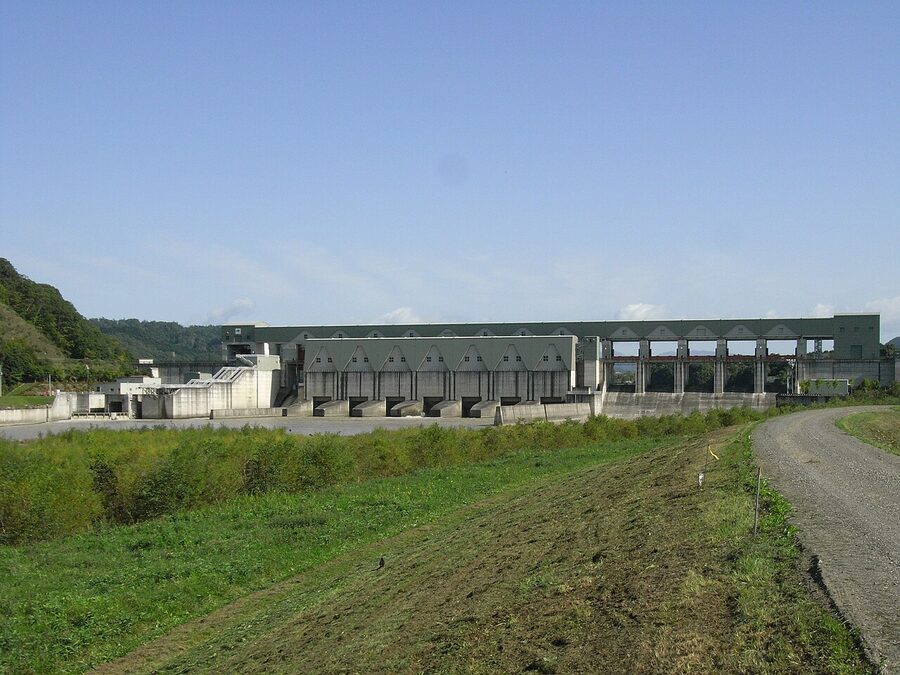
The dam was built anyway, though in 1996 the authorities drained the test reservoir so that the cipsanke could be held on its bed. On 27 March 1997 the Sapporo District Court ruled that the expropriation had been illegal, because the state had ignored the cultural value of the land, and that the Ainu were an indigenous people with a right to their culture under Article 27 of the International Covenant on Civil and Political Rights. It left the dam standing, since tearing it down was not in the public interest, and the government did not appeal.
Kayano by then was in the Diet, having taken up a Socialist seat in 1994 when the member above him on the list died. In May 1997 the Diet passed the Ainu Culture Promotion Act unanimously, and on 1 July the 1899 law was finally repealed. He served one term and left in 1998, saying that a hunter heads home before it gets dark underfoot, and died in Sapporo on 6 May 2006.
Indigenous, officially
The 1997 law funded language classes and culture, but it did not say the word “indigenous”. That took another eleven years. The UN adopted its Declaration on the Rights of Indigenous Peoples in 2007, and on 6 June 2008, a month before Japan hosted the G8 summit at Lake Tōya in Hokkaido, both houses of the Diet passed a unanimous resolution calling on the government to recognise the Ainu as an indigenous people.
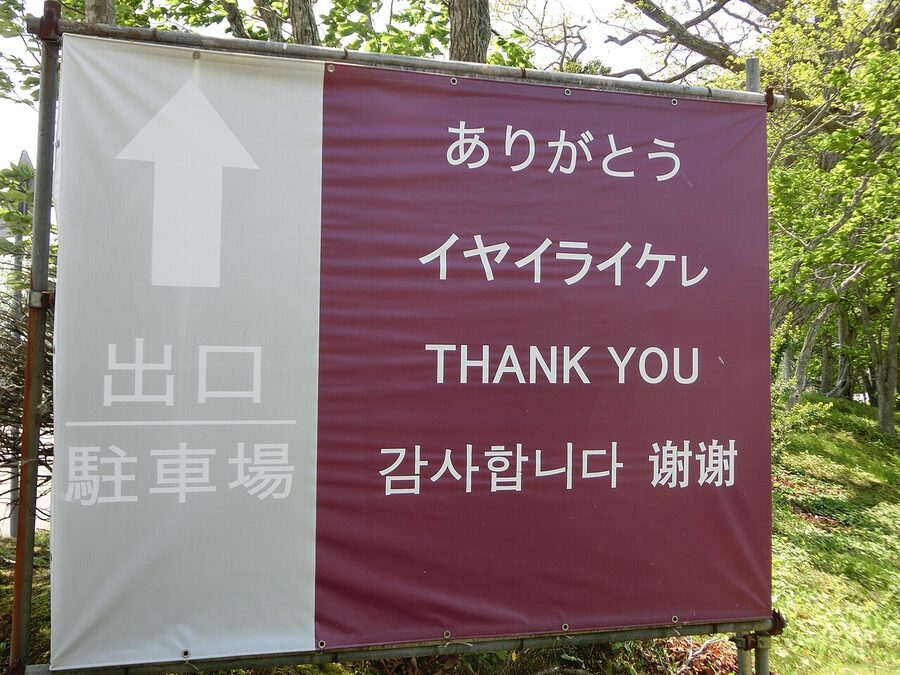
The law that did so came on 19 April 2019, in the last weeks of the Heisei era. It names the Ainu as “an indigenous people of the northern part of the Japanese archipelago, especially Hokkaido”, forbids discrimination against them without attaching any penalty, eases permits for ceremonial salmon catches and for gathering in national forests, and funds local projects. It also paid for Upopoy, which opened at Shiraoi on 12 July 2020, after two pandemic postponements, with its labels written in Ainu first.
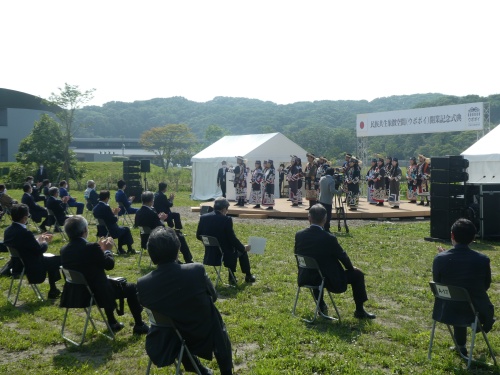
Recognition has not settled much on the ground. Hokkaido’s 2023 survey counted 11,450 Ainu, a figure that measures only people willing to be counted, and found that 24.7 per cent of Ainu high-school leavers went on to university or college against 51.5 per cent in the same towns as a whole. In a 2016 government survey, 72 per cent of Ainu said discrimination existed, against 18 per cent of the general public; the Ainu are presumably better placed to know.
The denials have not stopped either. A Sapporo city councillor declared in 2014 that the Ainu “no longer exist” (he lost his seat the next year), and panel exhibitions in public spaces in Sapporo in 2024 and 2025 claimed that the 1899 law had pampered the Ainu and questioned whether they were indigenous at all. The December 2025 statement by Japan’s three main anthropological and archaeological societies answered them directly, calling Ainu indigeneity self-evident, and in June 2026 the city set up an expert panel to write rules on the use of its buildings.
Salmon is where recognition and rights part company. The Raporo Ainu Nation of Urahoro sued for the right to net salmon at the mouth of the Urahoro Tokachi River as their ancestors had; in April 2024 the Sapporo District Court accepted that the right to culture covers catches for ceremony but rejected any inherent right to fish commercially. The river, in the court’s view, belongs to the public, and Ainu are part of the public.
As for the question people most often ask, whether there are any “pure” Ainu left, it rests on a premise the Ainu themselves do not use. In a survey of Ainu communities carried out between 2009 and 2014, one person out of 264 believed they had no Wajin ancestors, and the 2019 law pointedly does not define the Ainu by blood. Many Ainu households keep Obon and Buddhist funerals like their neighbours, and also the icarpa for the ancestors, and see no contradiction in it.
The language is the part that is closest to the edge. UNESCO classed it as critically endangered in 2009, and the native speakers Kayano grew up among are gone. But it is taught in community classes and on the radio, Upopoy’s staff use it daily, and a manga, Golden Kamuy, whose Ainu was checked by the linguist Nakagawa Hiroshi, sent a generation of Japanese teenagers looking for a dictionary. That counts for something in the long view of Japan through the ages, where the Ainu have usually appeared, if at all, as a footnote to someone else’s frontier.
Where to see Ainu history today
The core sites, Upopoy and Nibutani, can be done from Sapporo in two days; Akan is a long way east and Hakodate a long way south. Many places close on Mondays and some shut in winter, so check each site’s own page before you set off.
Upopoy, Shiraoi
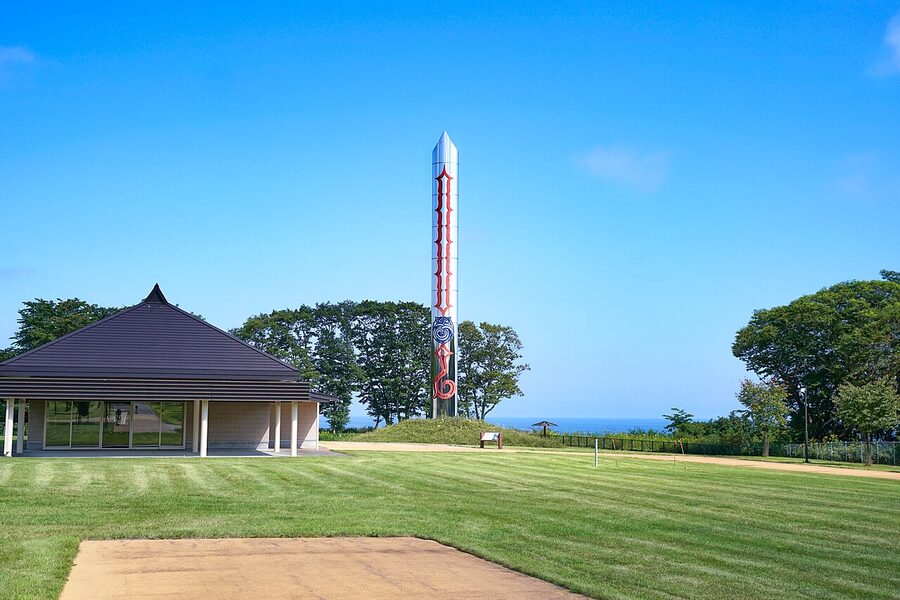
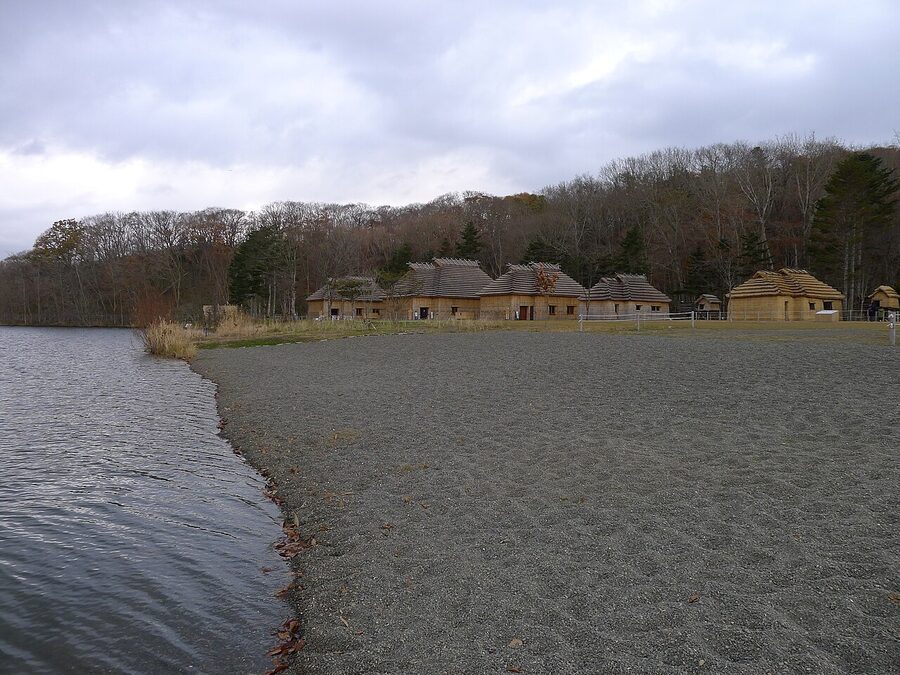
Upopoy (ウポポイ), “singing together”, is the national centre: the National Ainu Museum, a park with a rebuilt kotan on Lake Poroto, craft workshops, performance halls and the memorial facility up the hill. The museum is the best single introduction to Ainu history in Japan, told largely in the voice of the people it is about. Give it a full day, and see at least one performance of traditional dance.
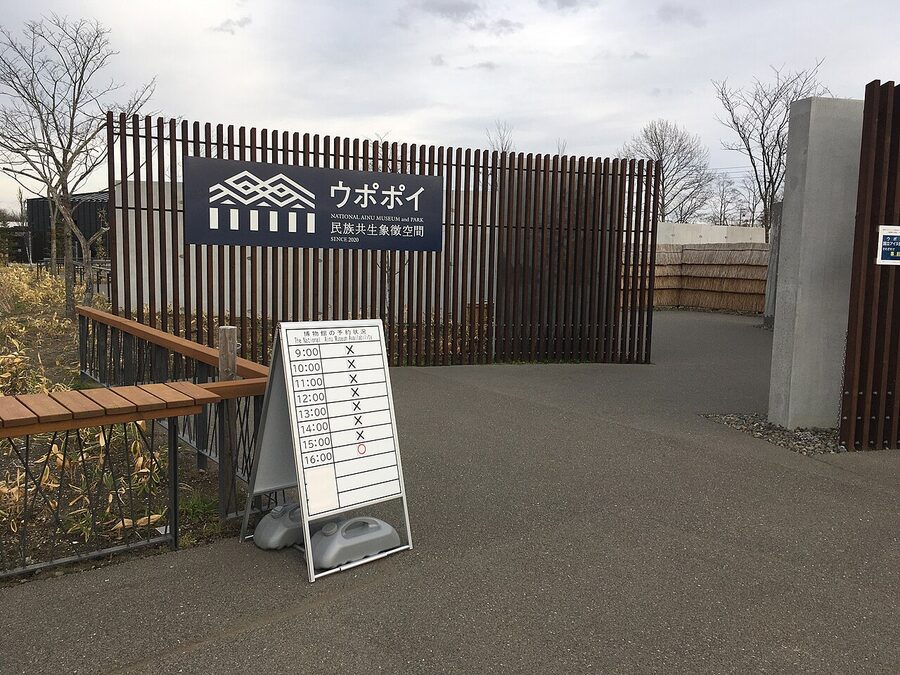
Shiraoi is about an hour from Sapporo by limited express on the Muroran line, and Upopoy is roughly 500 metres from the station’s north exit. Adult admission is ¥1,200, or ¥1,000 if you buy online, and an afternoon ticket valid from 14:00 costs ¥600; paid workshops and special exhibitions are extra. In 2026 it opens 9:00–18:00 from April to October and 9:00–17:00 from November to March, closed Mondays and over New Year, with a maintenance closure from late February into early March.
Noboribetsu: Chiri Yukie’s museum
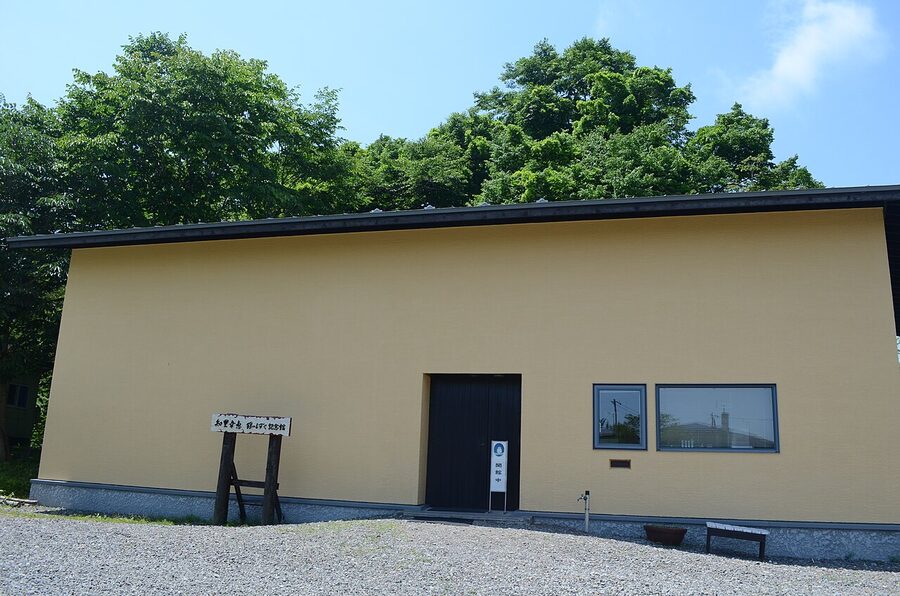
One stop west of Shiraoi by limited express, the Chiri Yukie Silver Drops Memorial Museum stands near her birthplace in Noboribetsu Honchō, about fifteen minutes’ walk from JR Noboribetsu Station. It was built with public donations and opened in 2010, and her grand-niece is the director. It keeps her notebooks in facsimile, letters and photographs; admission is ¥500, 9:30–16:30, closed Tuesdays and Sundays and from 20 December to the end of February.
Nibutani, Biratori
If you see one place after Upopoy, make it Nibutani, one of the few villages in Hokkaido where Ainu families are a large part of the community and the history is local rather than national. The town-run Nibutani Ainu Culture Museum holds about 4,000 objects, including the designated collection, with rebuilt cise and a stretch of the Saru valley that is now a designated cultural landscape. Kayano’s own Kayano Shigeru Nibutani Ainu Museum is a few minutes’ walk away, alongside craft workshops where you can watch carvers at work on the ita trays that, like attus, are a designated craft and one of the finest things in any list of Japan’s traditional crafts.
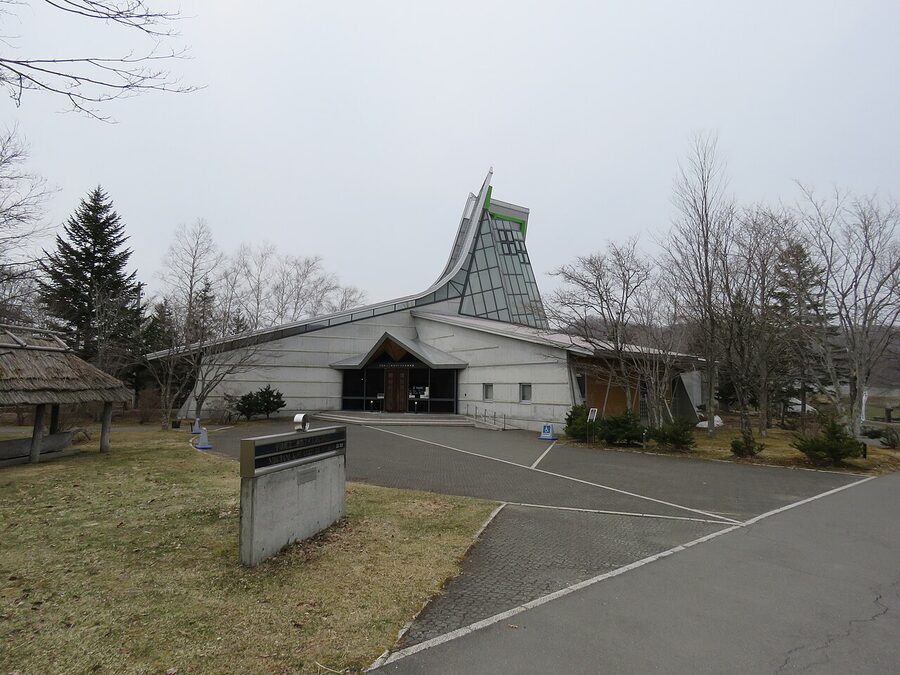
The town museum is open 9:00–16:30, every day from 16 April to 15 November, closed Mondays in winter and from 30 December to 5 January; admission is ¥400. The Kayano museum is also ¥400, 9:00–17:00, by appointment from mid-November to mid-April, and a joint ticket for both is ¥700. Getting there without a car means the JR to Tomakomai and then Dōnan buses via Tomikawa, about an hour and three-quarters from Sapporo by road; a rental car from New Chitose Airport takes about an hour.
Akanko Ainu Kotan, Lake Akan
At Lake Akan in the east, the Akanko Ainu Kotan is not a museum but a working village street of houses and shops at the edge of the hot-spring town. It formed from 1959, when Maeda Mitsuko of the Maeda Ippoen foundation, which owned the lakeside, gave land for Ainu families who had been coming to sell carvings to tourists. Some of the best Ainu woodcarvers of the 20th century worked here, Fujito Takeki among them.
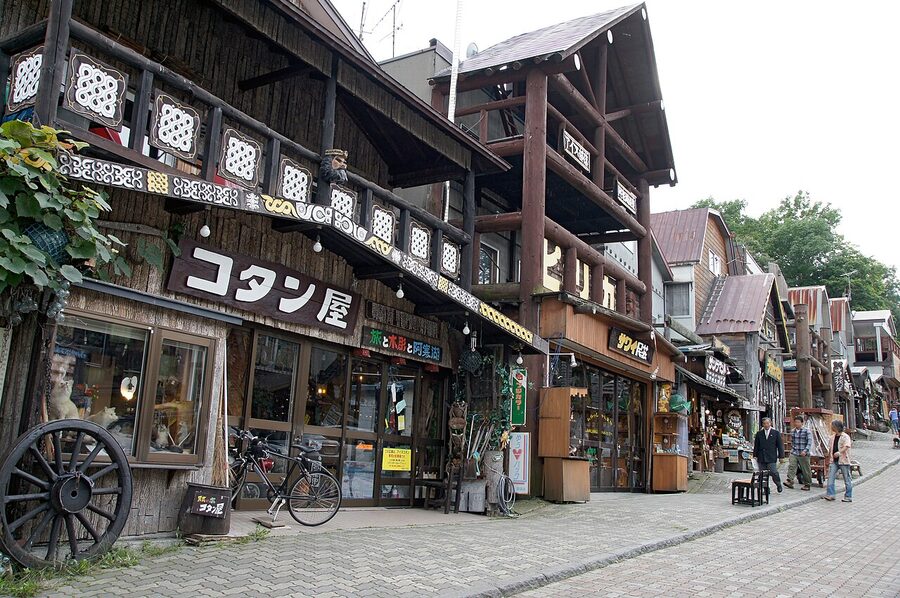
The Akan Lake Ainu Theater Ikor stages traditional dance (¥1,500, about 30 minutes, no booking needed) and two newer productions mixing dance and projection, Lost Kamuy and Sikaricup Rimse (¥2,200 each). Akan is about an hour and a half by road from Kushiro Station and an hour from Kushiro Airport; check the bus times on the kotan’s own site, since there are not many. If you can, go for the Marimo Festival on 8–10 October, a postwar event built on Ainu ritual in which the lake’s moss balls are welcomed and returned to the water; it has none of the floats or crowds of Japan’s greatest festivals, and is all the better for it.
Sapporo
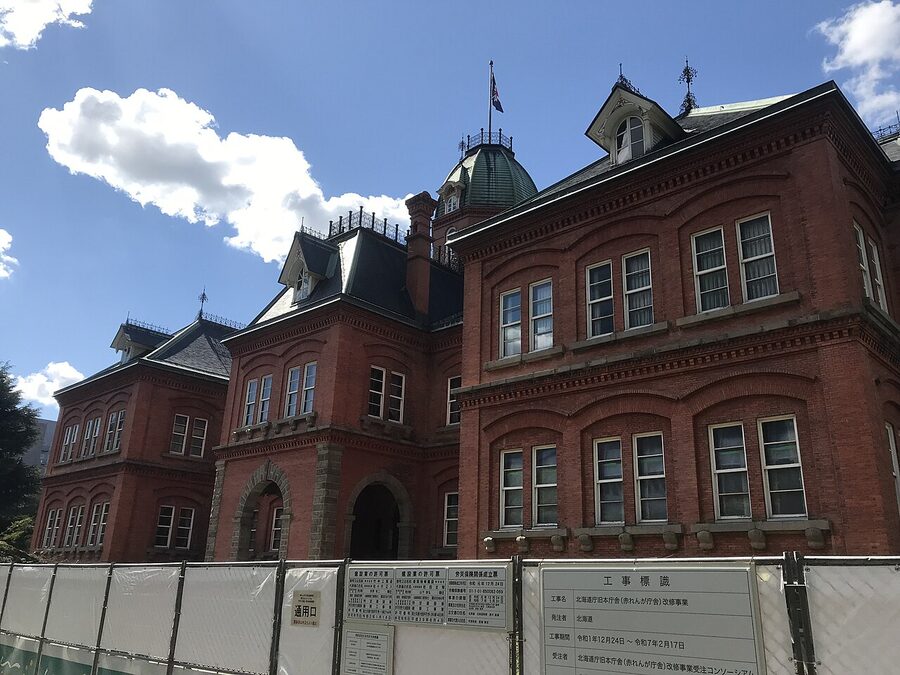
Sapporo is the colony’s capital, and it is worth seeing as such. The red-brick Former Hokkaido Government Office, built in 1888 on the site of the Kaitakushi headquarters, reopened in July 2025 after a long restoration with a gallery on Ainu history; admission is ¥300, 8:45–21:00. If you are here for the Snow Festival, Odori Park is a short walk away.
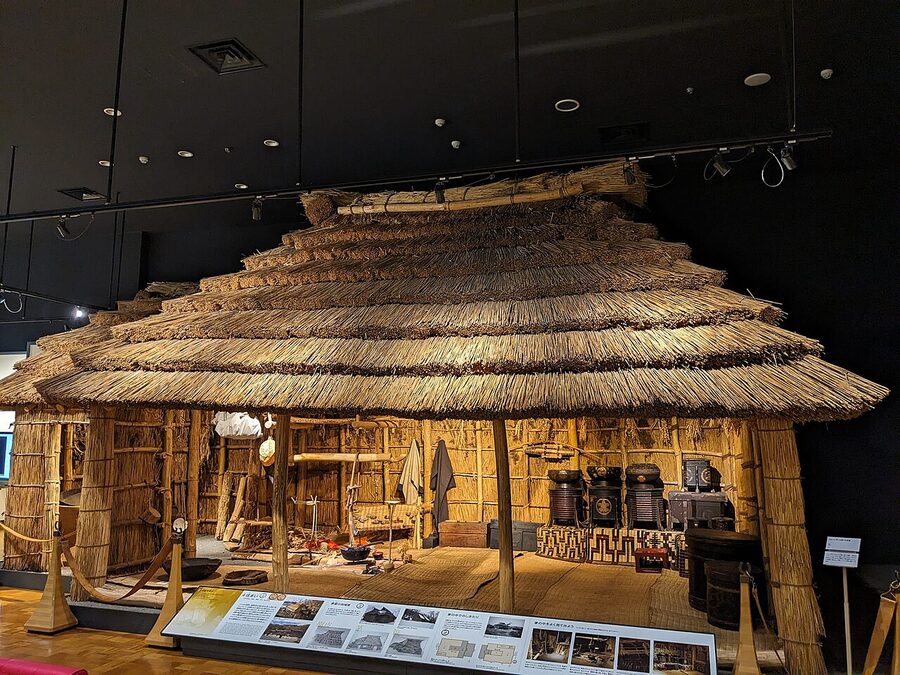
The Hokkaido Museum, in Nopporo Forest Park on the eastern edge of the city, has the most thorough Ainu galleries in Sapporo and a rebuilt cise. Adult admission is ¥800, 9:30–17:00 from May to September and to 16:30 otherwise, closed Mondays; the JR Hokkaido Bus Shin-22 service runs from Shin-Sapporo in about fifteen minutes, and a joint ticket with the Historical Village of Hokkaido next door costs ¥1,400. The Sapporo Pirka Kotan in Koganeyu, on the road to Jōzankei, is a smaller city-run centre with a ¥350 gallery and free craft sessions.
If you go up to Hokkaido Jingū in Maruyama Park, remember that it was founded on imperial orders in 1869 for the three gods of the colony’s “development”, and was renamed in 1964 when the Meiji emperor himself was added, as he is enshrined at Tokyo’s Meiji Shrine. It is a pleasant shrine. It is also, in the plainest terms, the state religion of the Meiji era planted on Ainu land.
Hakodate
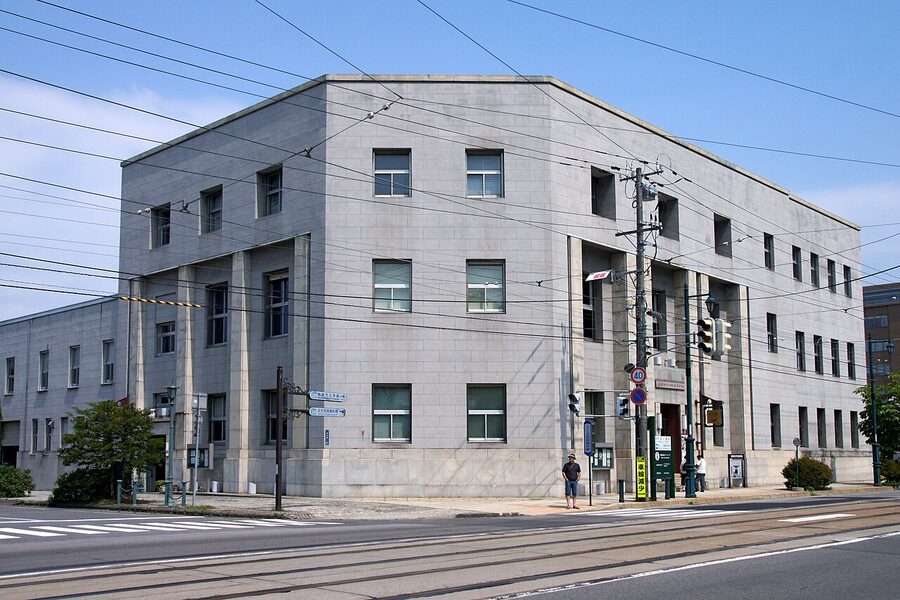
The Hakodate City Museum of Northern Peoples, in the 1926 Bank of Japan branch in the old port district, is a minute from Suehirochō tram stop and costs ¥300. It opens 9:00–19:00 from April to October and 9:00–17:00 from November to March, and its Ainu robes are as fine as any on the island. The city’s Central Library holds a set of Kakizaki Hakyō’s preparatory sketches for the Ishū Retsuzō.
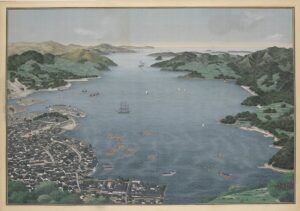
For the beginning of the story, take a taxi east past the airport to the earthworks of Shinori Date, where the knife was sold; it is free and usually empty. Hakodate is also where the Boshin War ended, at the star fort of Goryōkaku, so you can stand in one afternoon at the place where the Ainu wars began and the place where the colony did.
Shizunai and Nokkamappu
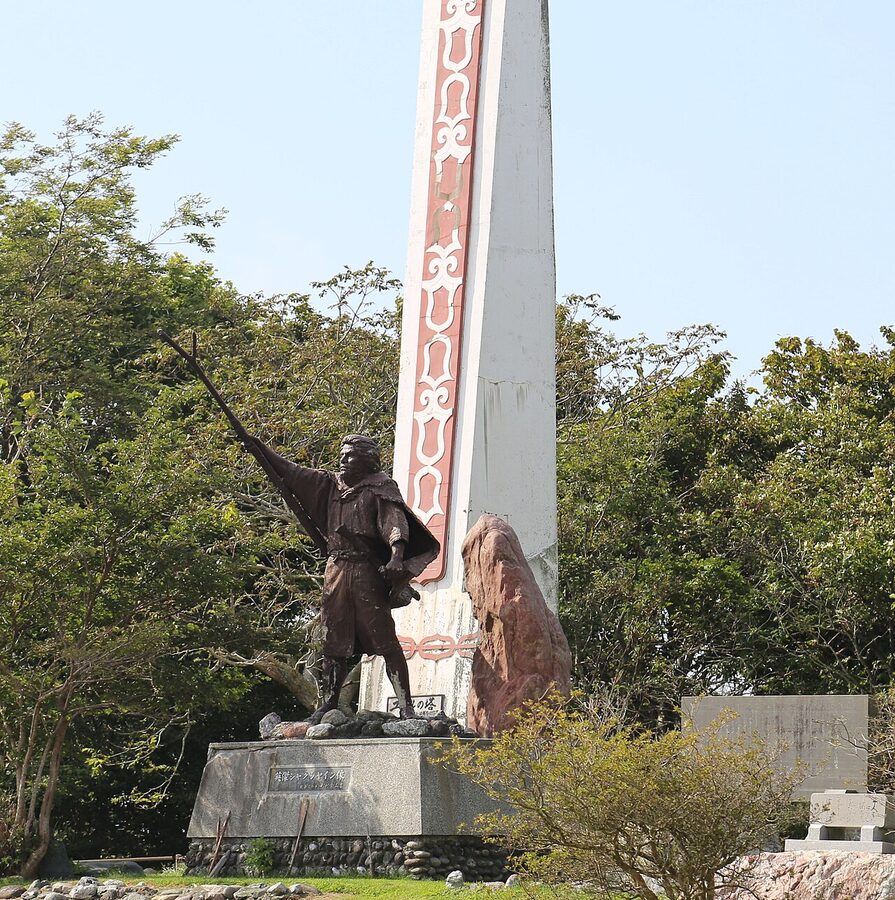
Shakushain’s fortress stood on Mauta hill above the Shizunai River in Shinhidaka, on the coast road east of Nibutani, and a memorial rite is held there each September. It has two statues, which is a story in itself: the original of 1970, raised by Ainu and Wajin together with donations from across Hokkaido, and a gentler replacement of 2018 put up by the local Ainu association. A bronze recast of the first now stands across the river.
At the other end of the island, the Nemuro Ainu Association holds the yearly Nokkamappu icarpa for the 37 men of 1789 on the Nemuro peninsula, on a headland facing Kunashiri; if you happen to be there, watch from a respectful distance and take your cue from the organisers. At Nosappu, the easternmost point of Hokkaido, a stone of 1812 marked “Grave of seventy-one who died by violence” remembers the Wajin side of the same story.
Wherever you start, you are travelling across a map that was written in Ainu before it was written in Japanese. Sapporo, Shiraoi, Noboribetsu, Shiretoko, Shizunai: nearly every name you will read on a station board was an Ainu description of a river, a slope or a fishing place, which is what Kayano told the Cabinet Committee in 1994, a minute or two before he used his permission to speak the language those names came from.