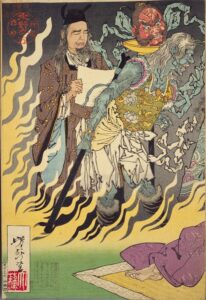
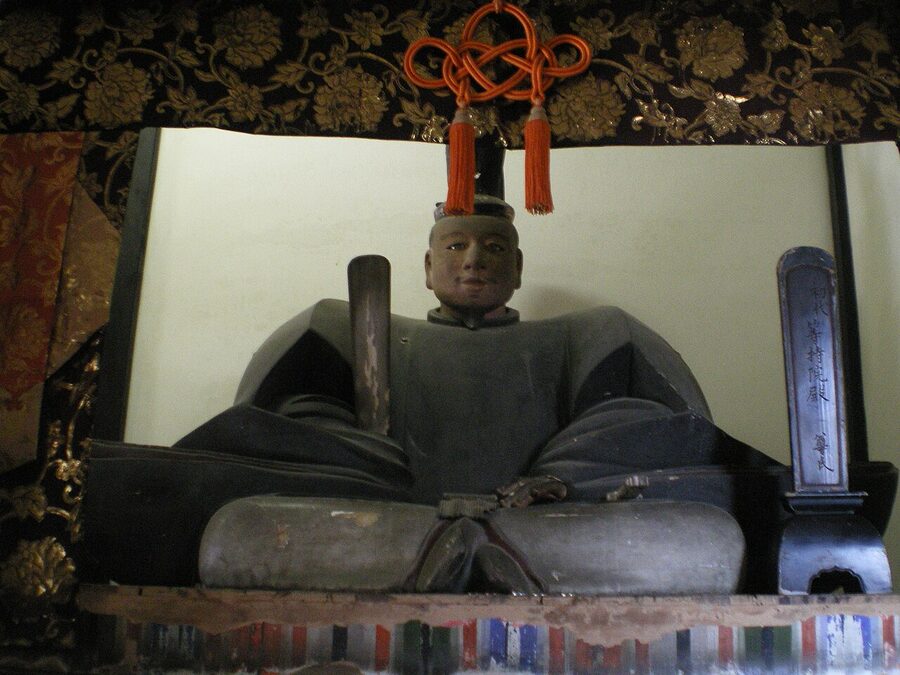
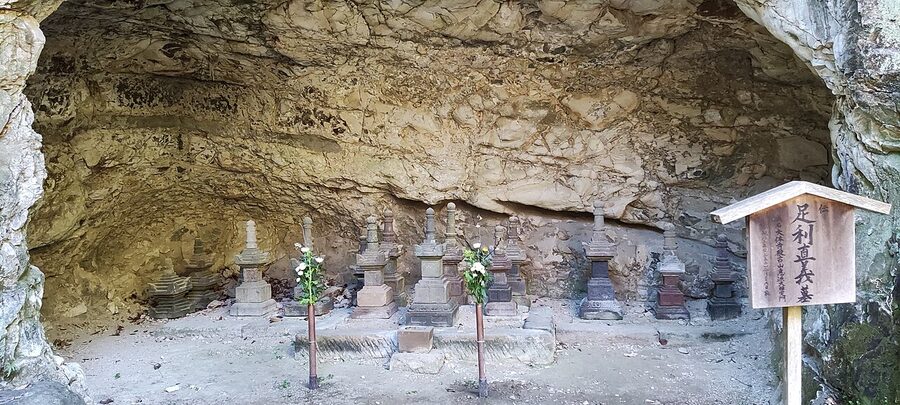
On the night of the 22nd day of the second month of 1863, a dozen or so young men got into the memorial hall of Tōji-in, a quiet Zen temple under Mount Kinugasa in north-west Kyoto, and cut the heads off three shoguns. The shoguns were made of wood. By morning the heads of Ashikaga Takauji, his son Yoshiakira and his grandson Yoshimitsu were sitting on the riverbank at Sanjō beside a placard listing their crimes against the rightful line of emperors, as if they had been taken in battle the day before.
The men were disciples of the Hirata school of nativist learning, and their real target was the Tokugawa, who were still in power and could take the hint. The authorities in Kyoto certainly did, and most of the culprits were under arrest within two months. But I keep coming back to the stunt for a different reason. Five hundred and five years after he died, Ashikaga Takauji was still the man you beheaded when you wanted to make a point about loyalty.
He earned it, in a sense. In 1333 he destroyed the Kamakura shogunate for Emperor Go-Daigo; three years later he turned on Go-Daigo, drove him into the mountains, put a rival emperor on the throne and founded the Ashikaga shogunate, which lasted, after a fashion, until 1573. For the best part of six centuries that made him the great traitor of Japanese history, and as late as 1934 a cabinet minister lost his job for saying something kind about him.
The people who knew him described a different man: generous to a fault, brave to the point of carelessness, given to black moods, devout, and devoted to his younger brother, whose sudden death in his custody most people at the time put down to poison.
The site already covers the Kamakura era he ended and the Muromachi era his family named, so this is about the man, the partisan chronicles that told his story, the long argument over him, and the places where you can still stand where he stood. He is on my list of Japan’s greatest samurai, though not for his swordsmanship.
In This Article
- A Minamoto in a Hōjō world
- Matatarō
- 1333: the general who changed sides
- Kasagi
- Shinomura
- Kamakura burns
- Three years of the Kenmu restoration
- The Nakasendai revolt
- The haircut
- Defeat, Kyushu and the road back
- Thirty-three poems at Onomichi
- Minatogawa, from the ships
- Two emperors and a dream
- Shogun at last
- A temple for the enemy
- The brothers’ war
- The last six years
- Generous, moody, devout
- The portraits that may not be him
- Six hundred years as the great traitor
- The baron who praised a traitor
- Rehabilitation
- Where to see Ashikaga Takauji today
- Ashikaga: Bannaji and the Ashikaga Gakkō
- Tōji-in, Kyoto
- Tenryū-ji
- Jōdo-ji, Onomichi
- Minatogawa and Hyōgo, Kobe
- Further afield
- A head put back on
A Minamoto in a Hōjō world
The Ashikaga were Minamoto, and everything about Takauji starts there. The line came down from Minamoto no Yoshiie through a grandson, Yoshiyasu, who settled on the Ashikaga estate in Shimotsuke province, now the south-west corner of Tochigi Prefecture. Yoshiyasu’s son Yoshikane rode with his cousin Minamoto no Yoritomo in the Genpei War and married a daughter of Hōjō Tokimasa. When Yoritomo’s own line died out in 1219, the Ashikaga were left as one of the most senior Minamoto houses in the country, which made them grand, useful and closely watched.
The Hōjō regents managed them with marriages and money. Generation after generation of Ashikaga heads took Hōjō wives, and the family paid for prestige projects in Kyoto out of all proportion to other vassals. The Hōjō house chronicle, the Azuma kagami, even records an Ashikaga lord claiming special status as a Minamoto in a quarrel over the wording of a letter, and the shogunate ruling that he was a vassal like any other.
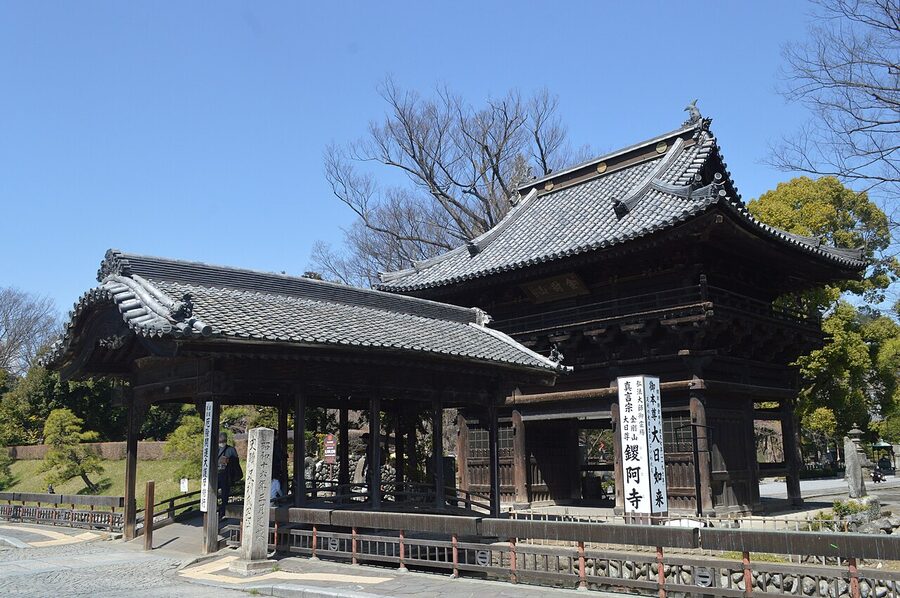
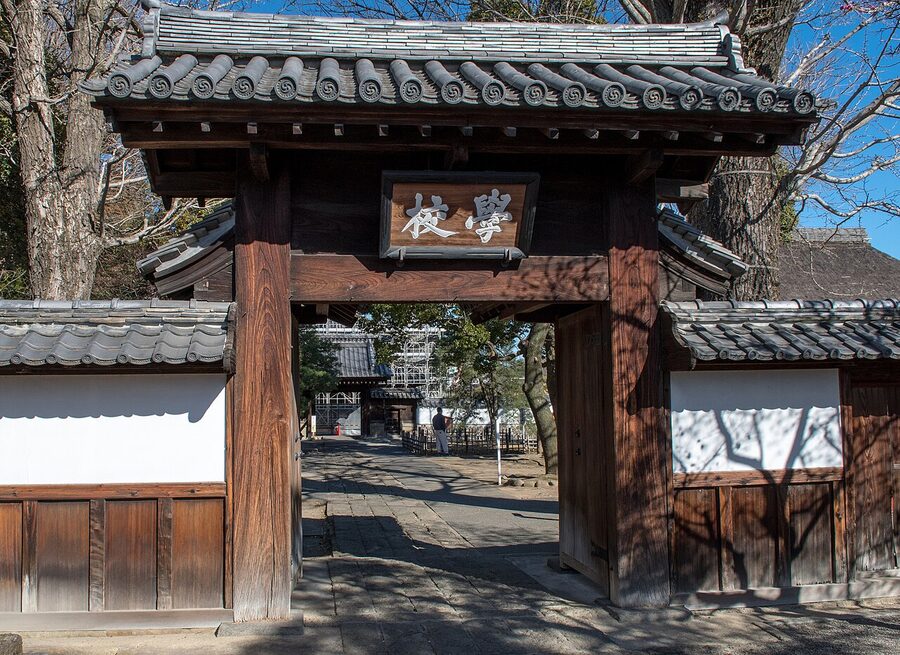
The family home in Ashikaga is still there, more or less. In 1196 Yoshikane built a private chapel inside the residence, his descendants turned the compound into a temple, and today it is Bannaji (鑁阿寺), with the moat and earth ramparts of a 12th-century warrior’s house still running round it.
There is a famous story that the family had been waiting two hundred years to take power. In the Nantaiheiki, written in 1402 by the Ashikaga general Imagawa Ryōshun, Minamoto no Yoshiie leaves a letter promising to be reborn in his seventh-generation descendant and take the realm, and that descendant, Takauji’s grandfather Ietoki, kills himself after praying that the family would rule within three more generations. Japanese historians have been dismantling this for a century: Nakamura Naokatsu showed that Tadayoshi only came across a letter from Ietoki around 1350, and Kawai Yasushi has argued that the Ashikaga’s status as the senior Minamoto line was built up after they took power. It is the kind of prophecy that only gets written down once it has come true.
Matatarō
He was born in 1305. English-language accounts often give a birthday in August; Japanese reference works give only the year, and the birthplace is disputed between the family estate at Ashikaga, Kamakura, where the family lived to stay close to the Hōjō, and Ayabe in Tanba, home of his mother’s Uesugi family, where the temple of Ankoku-ji keeps the well said to have supplied his first bath. Recent Japanese scholarship has swung between Kamakura and Ayabe. Ashikaga is the outsider, which has not stopped it from putting up a statue.
He was a second son by a secondary wife, Uesugi Kiyoko, and was not expected to inherit until his elder half-brother Takayoshi died in 1317 at twenty-one. On the 10th day of the tenth month of 1319, at fifteen, he came of age and took the name Takauji (高氏), the “Taka” borrowed from the regent Hōjō Takatoki as a mark of favour; his everyday name was Matatarō. His wife, Akahashi Tōshi, was the sister of Akahashi Moritoki, who would be the last regent of the Kamakura shogunate.
When his father Sadauji died in 1331, Takauji became head of the Ashikaga at twenty-six: a Minamoto lord with a Hōjō name, a Hōjō wife and every reason to stay loyal.
1333: the general who changed sides
Kasagi
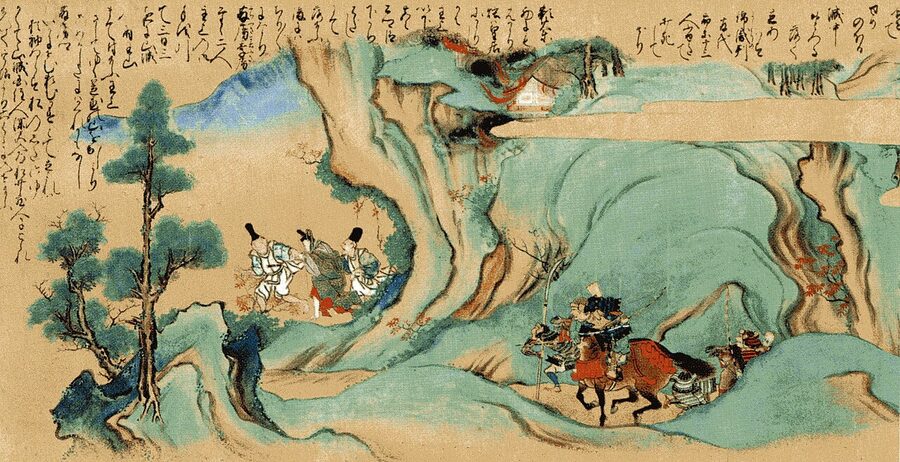
In the eighth month of 1331 Emperor Go-Daigo went up Mount Kasagi south of Kyoto and declared war on the Hōjō. Kamakura ordered Takauji west with an army. His father had just died and the funeral rites were not finished; he asked to be excused and was refused, and both the Taiheiki, the great war chronicle of the age, and the Baishōron, a chronicle written from the Ashikaga side, date his resentment of the Hōjō from that refusal.
He did the job. Kasagi fell, Go-Daigo was caught, and Takauji went straight home to Kamakura in the eleventh month without paying his respects at court, which the retired emperor Hanazono noted in his diary with some exasperation. Go-Daigo was exiled to the Oki Islands in the third month of 1332, escaped early in 1333, and dug in on Funanoe-san in Hōki province.
Shinomura
Kamakura sent Takauji west again in the third month of 1333, though he was ill. The regents kept his wife and his small son Senjuō, the future shogun Yoshiakira, in Kamakura as hostages, which suggests they had some idea what might happen. At Yatsuhashi in Mikawa, a province thick with Ashikaga relations, he told his kinsman Kira Sadayoshi that he meant to turn, and he sent a messenger to Go-Daigo for a secret order to do it.
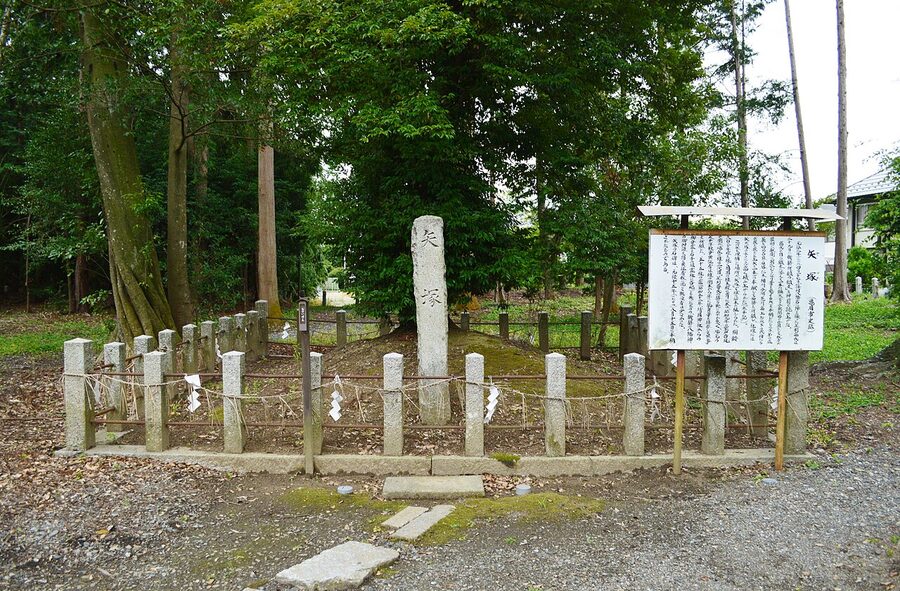
His fellow commander Nagoe Takaie was killed in the first fighting outside Kyoto. On the 29th day of the fourth month, at Shinomura Hachimangū in Tanba, on the road between the capital and Go-Daigo’s mountain, Takauji declared against Kamakura. He sent summonses to warriors across the country, one as far as Satsuma at the southern tip of Kyushu, a long way from anything he needed for an attack on Kyoto and a hint that he was already thinking past it.
With Akamatsu Enshin of Harima and Sasaki Dōyo of Ōmi he marched on the capital, and on the 7th day of the fifth month Rokuhara, the shogunate’s headquarters in Kyoto, fell. In little more than a week he had gone from declaring against the regime to holding its western capital.
Kamakura burns
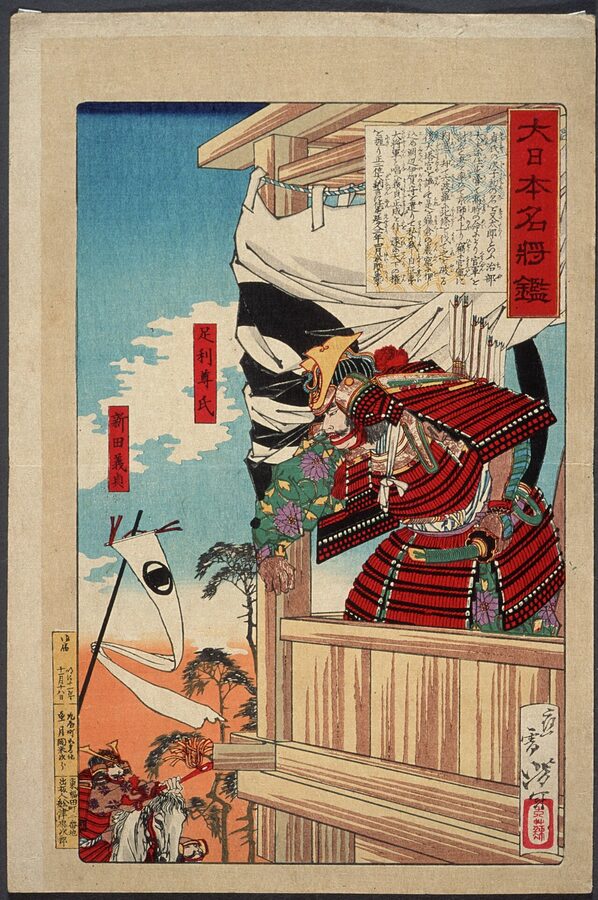
Kamakura was taken by someone else. Nitta Yoshisada, a Minamoto kinsman of the Ashikaga from neighbouring Kōzuke, rose in the fifth month and fought his way south, and Takauji’s son Senjuō, smuggled out of Kamakura, rode with Nitta’s army as the Ashikaga’s representative. Takauji’s eldest son by a concubine, a boy called Takewakamaru, was less lucky; he was caught and killed by Hōjō men while trying to reach Kyoto disguised as a mountain ascetic.
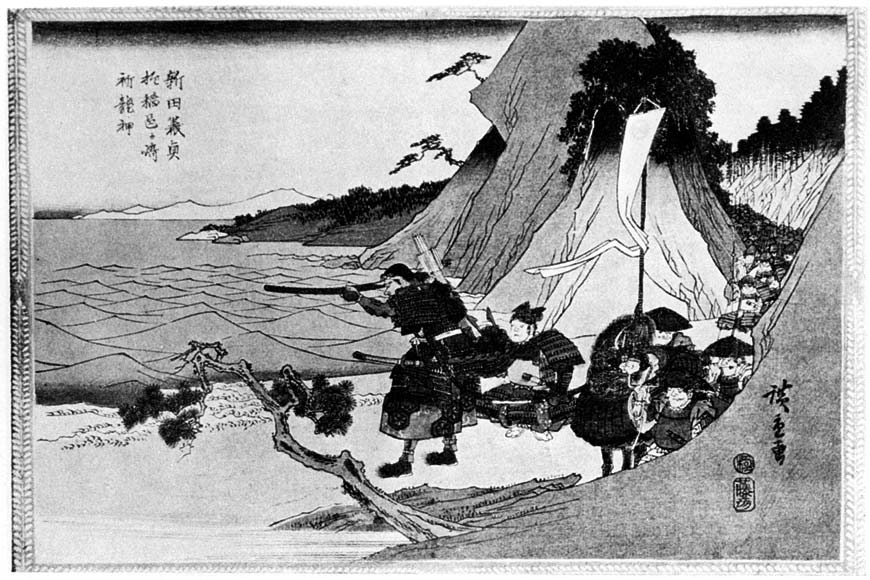
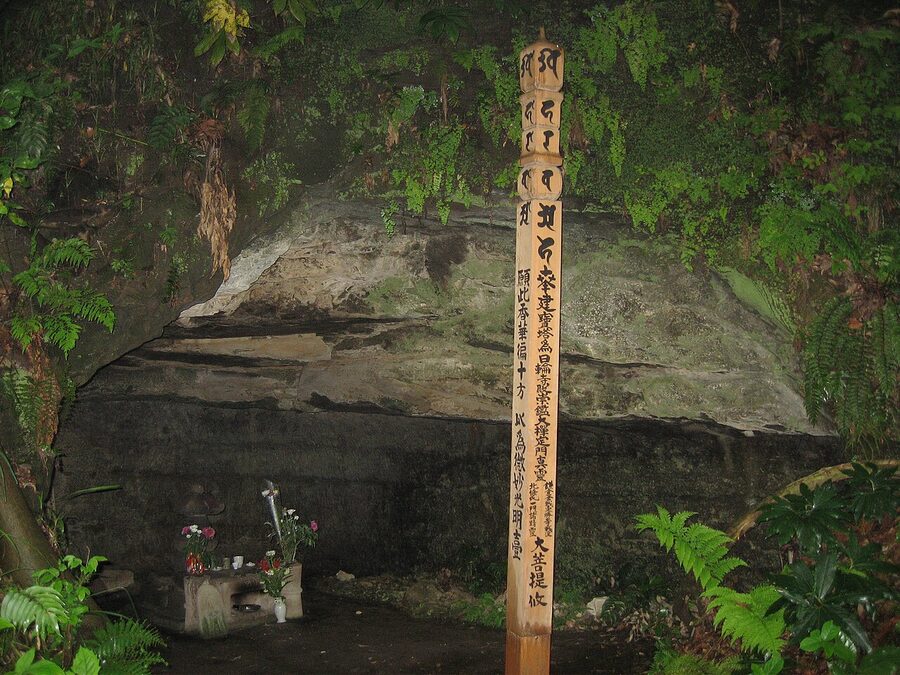
The city fell on the 22nd day of the fifth month. Hōjō Takatoki and his family killed themselves at their temple of Tōshō-ji, more than eight hundred of them by the Taiheiki’s count, and Takauji’s brother-in-law Moritoki, the regent, had already died fighting. The real wound was older: the regents had never been able to reward the warriors who fought off the Mongol invasions, because a defensive war produced no land to hand out, and the vassals had been waiting for a better patron ever since.
Why did he turn? Add the unfinished funeral to decades of Hōjō demands and the plain fact that the Hōjō were losing, and you do not need a prophecy.
Three years of the Kenmu restoration
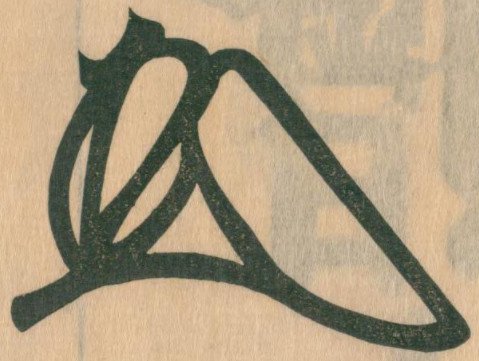
Go-Daigo rewarded him as first in merit: the junior third rank, the governorship of Musashi and some thirty estates. On the 5th day of the eighth month of 1333 he was also allowed to change the character of his name. Out went the “Taka” (高) of Hōjō Takatoki, and in came 尊, from Go-Daigo’s personal name Takaharu (尊治); the new name was pronounced exactly like the old one, so he had changed masters without changing the sound of his name.
Oddly, he held no post in the new government’s offices, and the capital noticed: “No Takauji” ran the gossip. Recent research shows him running his own office in Kyoto, issuing a flood of orders carrying out Go-Daigo’s edicts, and founding Hōkai-ji in Kamakura on Go-Daigo’s instructions to pray for the man he had just helped destroy. He was outside the government and doing more of its work than most people in it.
What the warriors hated about the Kenmu restoration was simple. Go-Daigo meant to rule in person, on a model of the Heian court that had not worked for three hundred years, and the rewards for the war went disproportionately to courtiers and favourites while the claims office drowned in lawsuits. In 1334 someone posted a long lampoon on the riverbank at Nijō which begins, in my translation, “Fashionable in the capital these days: night raids, robbers, forged imperial decrees.”
Go-Daigo’s son Prince Moriyoshi, who had fought harder than anyone in the war, hated Takauji openly. In 1334 he was arrested on his father’s orders, with Takauji’s encouragement, and sent down to Kamakura to be held by Takauji’s brother Tadayoshi.
The Nakasendai revolt
In the seventh month of 1335 Hōjō Tokiyuki, a young son of the dead regent, rose in Shinano and marched into Kamakura. Tadayoshi abandoned the city, and before leaving had Prince Moriyoshi killed. Tokiyuki held Kamakura for about twenty days, hence the name Nakasendai, “the middle former generation”.
Takauji asked Go-Daigo to make him sei-i taishōgun so he could rescue his brother, and was refused. On the 2nd day of the eighth month he left Kyoto with his army anyway; the court gave him a lesser title as he went, to make the march look authorised, and on the 19th day of the eighth month he was back in Kamakura.
Then he stayed. He handed out lands to his followers on his own authority and ignored summonses back to the capital, and in the eleventh month Go-Daigo sent Nitta Yoshisada to destroy him. Whether Takauji had planned the break from the start, as the historian Satō Shin’ichi believed, or simply assumed that Go-Daigo would approve whatever a loyal servant did for the realm, as Goza Yūichi argues, is the central argument about his whole career.
The haircut
What he did next does not look like a man executing a plan. He withdrew to the temple of Jōkōmyō-ji in Kamakura, cut off his topknot and talked of becoming a monk rather than fight the emperor. Only when Tadayoshi began losing in the field did he come out, saying, in the chronicles’ version, that if Tadayoshi died there was no point in his living. The Taiheiki adds that the warriors of Kamakura all cut their own topknots so their cropped commander would not stand out to enemy archers.
In the twelfth month of 1335 he beat Nitta at Hakone and Takenoshita and marched west, at the head of the largest army in Japan, towards the emperor he had just shaved his head to avoid fighting.
Defeat, Kyushu and the road back
He took Kyoto in the first month of 1336, and Go-Daigo retreated to Mount Hiei, whose monks had a long record of trouble-making (the site’s piece on Enryaku-ji has the details). Then Kitabatake Akiie arrived from the far north after one of the great forced marches of Japanese history, and with Kusunoki Masashige and Nitta he drove the Ashikaga out. Takauji lost on the 30th day of the first month, regrouped at Shinomura, and on the 11th day of the second month was beaten again at Teshima-gawara.
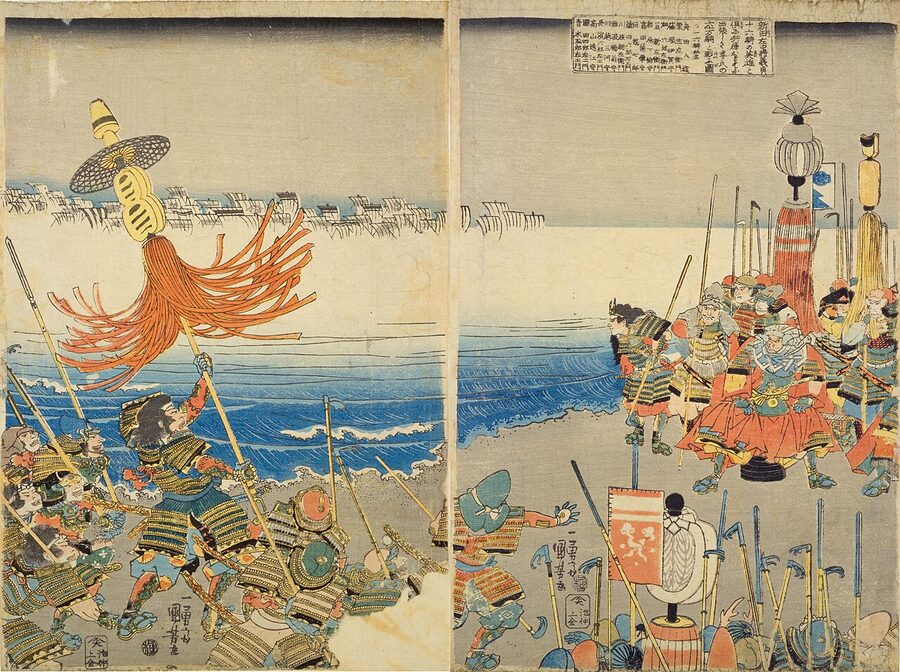
He fell back to Hyōgo, the port that is now part of Kobe, where the temple of Fukkai-ji says he escaped Nitta’s patrols by hiding beneath the altar of a Kannon hall. Then Akamatsu Enshin gave him the best advice of his life: go west, raise Kyushu and come back. On the way, at the port of Tomo, the monk Kenshun brought him an order from the retired emperor Kōgon, of the rival branch of the imperial family that Go-Daigo had pushed aside, commanding him to destroy Nitta Yoshisada. A rebel against one emperor now carried the written authority of another, and that cleverness did more for him than any battle.
At Tatarahama, east of Hakata, on the 2nd day of the third month of 1336, he met the Kyushu loyalists under Kikuchi Taketoshi. Modern accounts give the Kikuchi more than 20,000 men against perhaps 2,000; the Taiheiki, never shy of a number, makes it 500 against 40,000 or more, and has Takauji propose to kill himself on the spot until Tadayoshi talks him out of it. Then, with a north wind at his back, he attacked, a large part of the Kikuchi army changed sides, and within a month Kyushu was his.
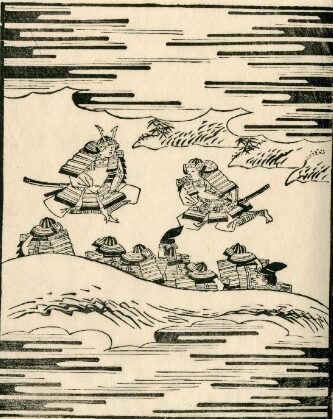
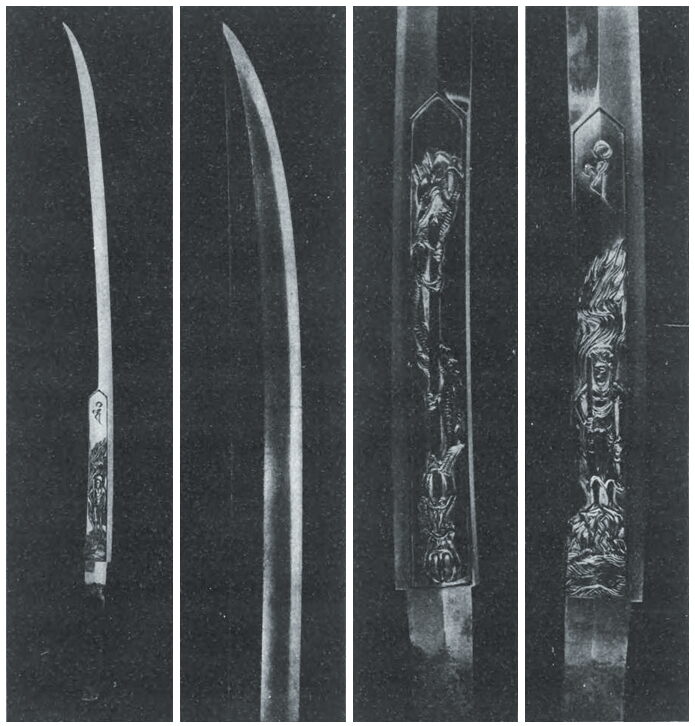
The Baishōron describes what he wore that day: a red brocade robe, armour laced with Chinese twill, a horse presented the day before by the high priest of Munakata, and the family heirloom blade Honebami, the Bone-Eater. Later records show Honebami was really a naginata; cut down into a short sword, it passed through the hands of the Ōtomo, Toyotomi Hideyoshi and the Tokugawa. The site’s guide to Japanese swords explains that kind of remounting.
Thirty-three poems at Onomichi
He came back east by sea in a great fleet, with Tadayoshi marching along the coast road. On the 5th day of the fifth month he put in at Onomichi and spent the day at Jōdo-ji, a temple he had prayed at on his way west, where he had the Kannon sutra recited ten thousand times and then sat down with Tadayoshi, the abbot Dōken and three others to compose thirty-three poems on lines from the sutra, seven of them his own. The scroll still belongs to the temple. Jōdo-ji also says he took the doors of the main hall to use as shields, which is why only two of the originals survived.
Minatogawa, from the ships
The battle was fought on the 25th day of the fifth month of 1336, 4 July by modern conversion to the Western calendar, on the shore where Kobe now stands. Tadayoshi came along the coast road with the main army; Takauji came by sea. The Hosokawa ships sailed east as if to land behind Nitta’s lines at Ikuta, Nitta moved to stop them, and Takauji’s own ship, at the back of the fleet, turned in and landed at Wada-misaki, the beach Nitta had just left.
That left Kusunoki Masashige alone on the high ground west of the Minato river. He charged Tadayoshi’s army so hard that it broke, and Takauji, watching, sent fresh troops in to save his brother; after six hours and, the Taiheiki says, sixteen charges, Masashige and his brother killed each other in a farmhouse. The Taiheiki also says Takauji sent Masashige’s head home to his family. The battle belongs to the other side, and I leave it to my piece on Kusunoki Masashige; it also has its place among Japan’s most decisive battles.
Two emperors and a dream
Two months after he took the capital for good, Takauji wrote a prayer in his own hand and gave it to Kiyomizu-dera, dated the 17th day of the eighth month of 1336. It says, roughly: “This world is a dream. Grant me a heart for the Way, and save me in the next life; I want to leave the world as soon as I can. Give the rewards due to me in this life to Tadayoshi, and keep him safe.”
Historians have read that prayer as sincere, as depression, as weariness and as a clever way of handing his brother the work. I read it as all of those, which is the fairest thing I can say about Takauji. A man who had just won Japan wanted to give it away, and meant it, and did not do it.
That month he had Kōgon’s younger brother enthroned as Emperor Kōmyō. Go-Daigo came down from Hiei to negotiate and on the 2nd day of the eleventh month handed over the regalia described in the site’s piece on Japan’s three sacred treasures. On the 7th day of the eleventh month Takauji issued the Kenmu shikimoku, seventeen articles of principle drafted by the legal scholar Ze’en, his brother Shin’e and others in answer to his questions, and that, more than any appointment, is the real founding date of the Ashikaga shogunate.
In the twelfth month Go-Daigo escaped to Yoshino in the mountains of Yamato and announced that the regalia he had handed over were fakes. Nobody can now say which set was genuine. From then on there were two courts, the Northern in Kyoto and the Southern in Yoshino, until Takauji’s grandson Yoshimitsu negotiated an end in 1392; the site’s Japan through the ages puts the half-century in context.
Shogun at last
In 1338 the war turned. Kitabatake Akiie was killed at Ishizu near Sakai in the fifth month and Nitta Yoshisada at Fujishima in Echizen in the intercalated seventh month, and on the 11th day of the eighth month Emperor Kōmyō appointed Takauji sei-i taishōgun, the title he had wanted since 1333. The shogunate finally had a shogun.
The Southern Court’s reply came in 1339 from Kitabatake Chikafusa, Akiie’s father, holed up in a castle in Hitachi. His Jinnō shōtōki, a history of the true imperial line, treats the Ashikaga as vassals raised far above their station, and it is the first serious statement of the case against Takauji.
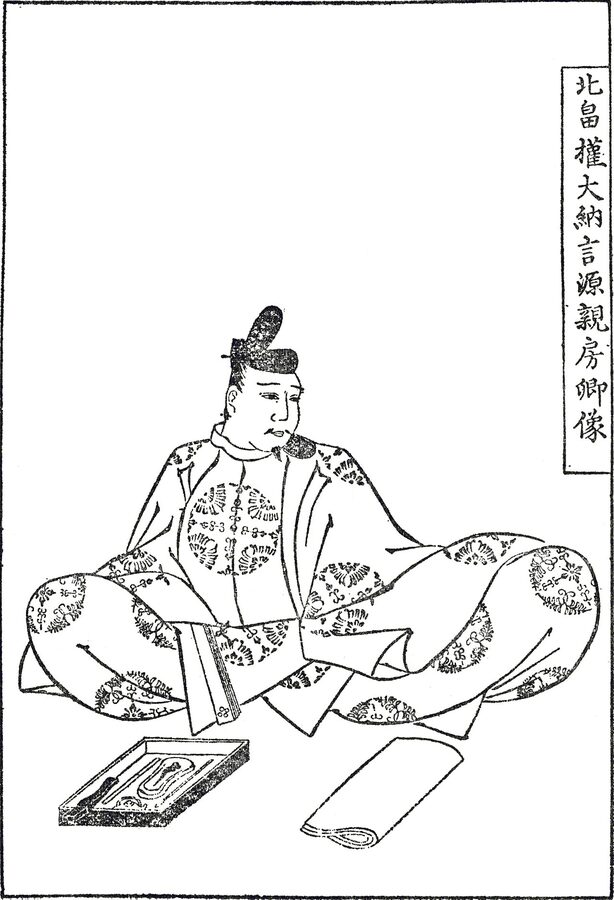
That gives you the three chronicles to keep in mind. The Jinnō shōtōki speaks for Yoshino, and the Baishōron, written around mid-century, speaks for the Ashikaga and supplies most of the flattering stories. The Taiheiki, forty chapters composed over decades, sides with the loyalists in feeling and with the Ashikaga in fact; the Nantaiheiki says an early draft was shown to Tadayoshi, who had errors corrected.
Go-Daigo died at Yoshino on the 16th day of the eighth month of 1339. The Taiheiki gives him a deathbed line that every Japanese schoolchild of the 1930s knew: his bones might lie in the southern hills, but his spirit would always long for the northern sky.
A temple for the enemy
The Zen master Musō Soseki, once close to Go-Daigo and now Takauji’s teacher, persuaded him to build a temple for the dead emperor’s soul. A ruler who had fought an emperor did well to pacify the emperor’s ghost. With an order from the retired emperor Kōgon, Takauji turned the Kameyama palace in Saga, west of Kyoto, into a monastery with Musō as founder.
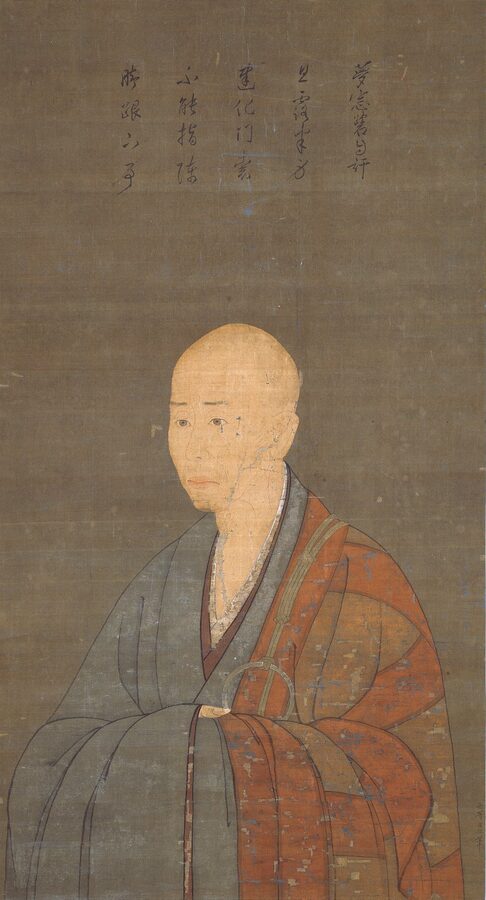
It was to have been named after the era, Ryakuō, until Tadayoshi dreamed of a golden dragon rising from the Ōi river below, and it became Tenryū-ji, the temple of the heavenly dragon. Money was short, so in 1342 a trading ship was sent to Yuan China to raise funds, on the model of ships sent for Kamakura’s temples a generation earlier. The same seas were about to fill with the wokou raiders who would trouble the Ashikaga for two centuries.
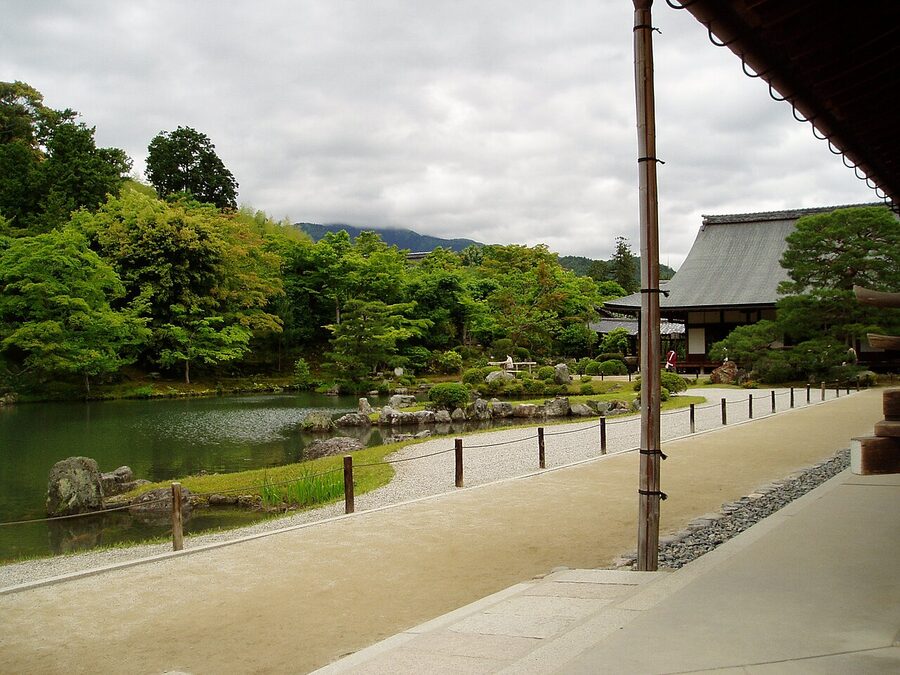
The temple was dedicated in 1345, on the seventh anniversary of Go-Daigo’s death by the Japanese count, over furious protests from the monks of Mount Hiei; according to the Taiheiki, the retired emperor stayed away from the main ceremony and came the following day. Musō’s gardens, and the tradition they started, run through the site’s history of Japanese gardens.
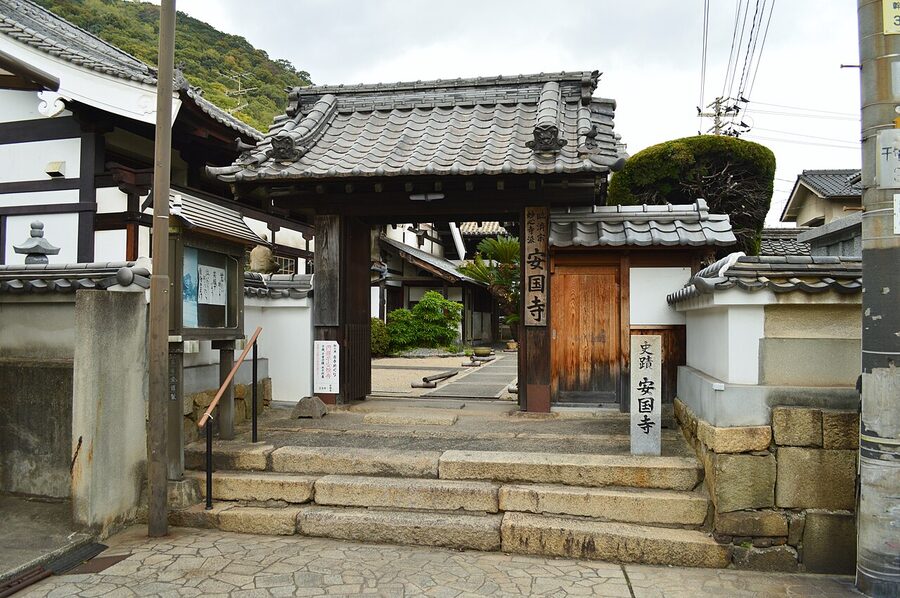
At the same time, with Musō’s encouragement, the brothers ordered a temple and a pagoda in every province, the Ankoku-ji and Rishō-tō, to pray for everyone who had died in the wars since 1331 on either side. Most of the pagodas are gone, but many of the temples survive under the same name, which is why you find an Ankoku-ji in towns all over western Japan.
The brothers’ war
For its first dozen years the shogunate was run by two men. Takauji commanded the armies, appointed provincial governors and handed out rewards, and Tadayoshi heard lawsuits and ran the administration; Imagawa Ryōshun wrote that people called Takauji “the shogun of the bow”. In the 1960s Satō Shin’ichi built this into a theory of a two-headed state, and Goza Yūichi and Kameda Toshitaka have since argued that it overstates Tadayoshi’s share, pointing to the far larger number of orders that went out under Takauji’s name.
Between the brothers stood Kō no Moronao, the Ashikaga house steward and Takauji’s best general. The Taiheiki makes him a lecher who had the essayist Kenkō write his love letters and a cynic who said that if the country needed a king it could carve one out of wood. Read closely, even the Taiheiki does not give that line to Moronao; it comes in a denunciation laid before Tadayoshi by a monk who hated him. Four centuries later the puppet and Kabuki stage made Moronao the stand-in for Kira in the 47 rōnin story, which has not helped.
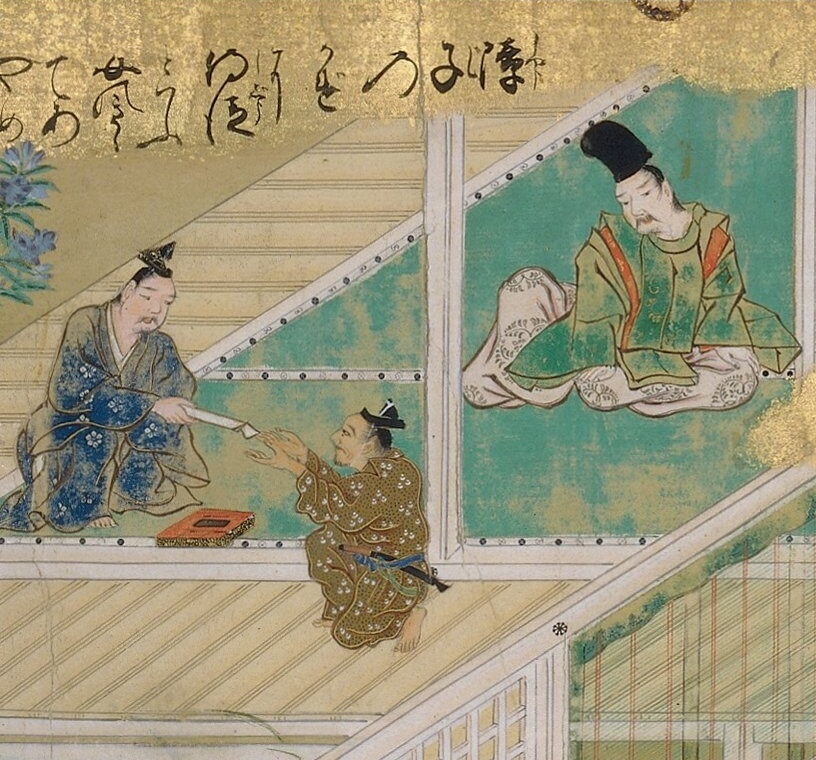
In 1348 Moronao destroyed Kusunoki Masatsura, Masashige’s son, at Shijōnawate and burned the Southern palace at Yoshino. In 1349 Tadayoshi tried to move against him, Moronao’s troops surrounded Takauji’s mansion where Tadayoshi had taken refuge, and Tadayoshi was forced to retire. Takauji brought his son Yoshiakira from Kamakura to take over, and sent his younger son Motouji east in his place.
There was a third Ashikaga in the quarrel. Tadafuyu was Takauji’s son by a woman the Taiheiki calls the Lady of Echizen; Takauji never warmed to him, Tadayoshi adopted him, and by 1350 he was building a power base in Kyushu. When Takauji marched west to deal with him late that year, Tadayoshi slipped out of Kyoto and surrendered to the Southern Court, the enemy the brothers had spent fifteen years fighting.
What historians call the Kannō disturbance moved fast. On the 17th day of the second month of 1351 Takauji was beaten at Uchidehama, near modern Ashiya, and made peace on condition that Moronao and his brother Moroyasu become monks. Nine days later, under escort near the Muko river, the Kō brothers and most of their family were cut down by Uesugi troops avenging Uesugi Shigeyoshi, whom Moronao had had killed.
That peace lasted until summer. In the eighth month Tadayoshi left for Kamakura, and Takauji did the most cynical thing of his career: he made peace with the Southern Court, accepted the deposition of his own Northern emperor, and obtained a Southern order to destroy his brother. He beat Tadayoshi at Satta pass in Suruga at the end of the year and brought him back to Kamakura on the 5th day of the first month of 1352.
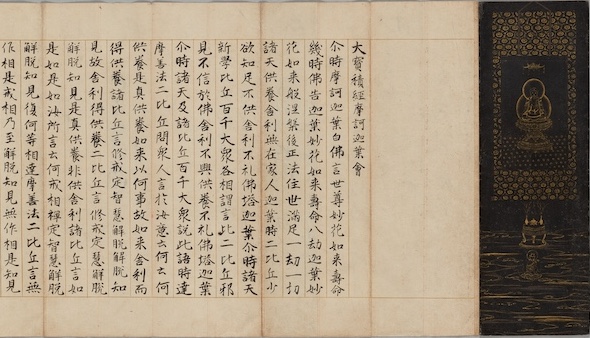
Tadayoshi was confined at Enpuku-ji, in the grounds of Jōmyō-ji in Kamakura, and died there on the 26th day of the second month of 1352, 12 March by modern conversion, exactly a year after Moronao. The official cause was jaundice. The Taiheiki says people whispered that he had been poisoned, and elsewhere in its pages leaves no doubt who it thought did it.
Historians are split. Shimizu Katsuyuki is among the many who accept that Takauji had his brother poisoned; Minegishi Sumio and Kameda Toshitaka think he died naturally, and Tanabe Hisako has suggested suicide. I think the date is the tell, though not in the obvious way: if it was murder, somebody chose the anniversary of Moronao’s death to make a point, and Moronao’s surviving followers had that point to make at least as much as his brother.
The last six years
The deal with the South collapsed within weeks. In the intercalated second month of 1352 Southern armies took Kyoto and Kamakura at once, and when they withdrew from the capital they carried off the three retired emperors of the Northern line and the crown prince. Sasaki Dōyo patched the hole by persuading Kōgon’s mother to authorise the enthronement of a teenage prince as Emperor Go-Kōgon without the regalia, so for a while the dynasty Takauji had built was held together by a grandmother.
He lost and retook Kyoto twice more. Early in 1355 he personally led a charge on Tadafuyu’s headquarters at Tōji, the great Shingon temple by Kyoto Station, not to be confused with Tōji-in, where he is buried. The Gen’ishū, a warrior’s memoir of the period, says that when the fighting went badly he wore “his usual smile” and told his men they need only let him know when it was time to kill himself.
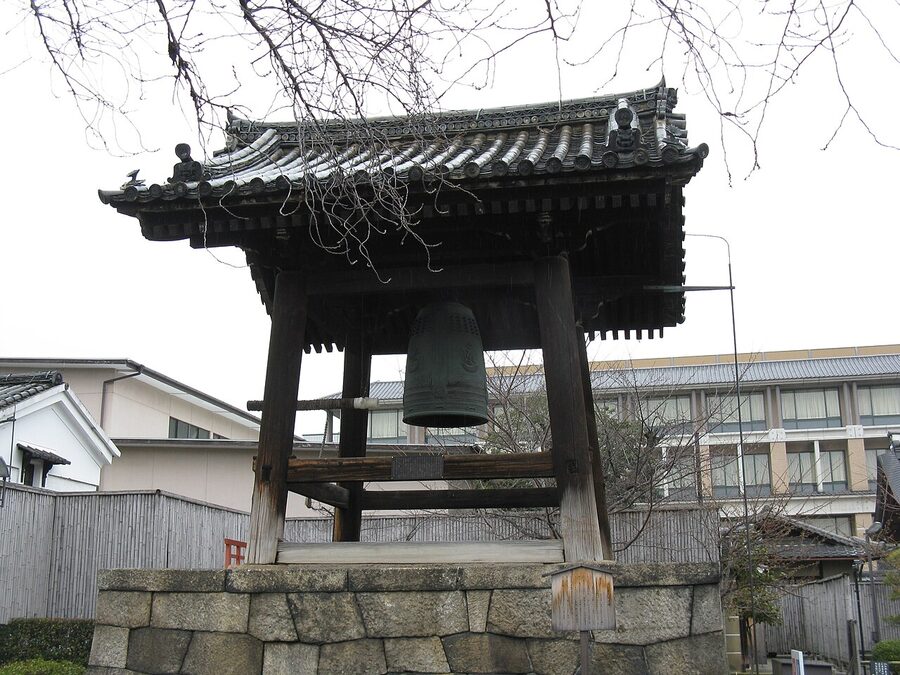
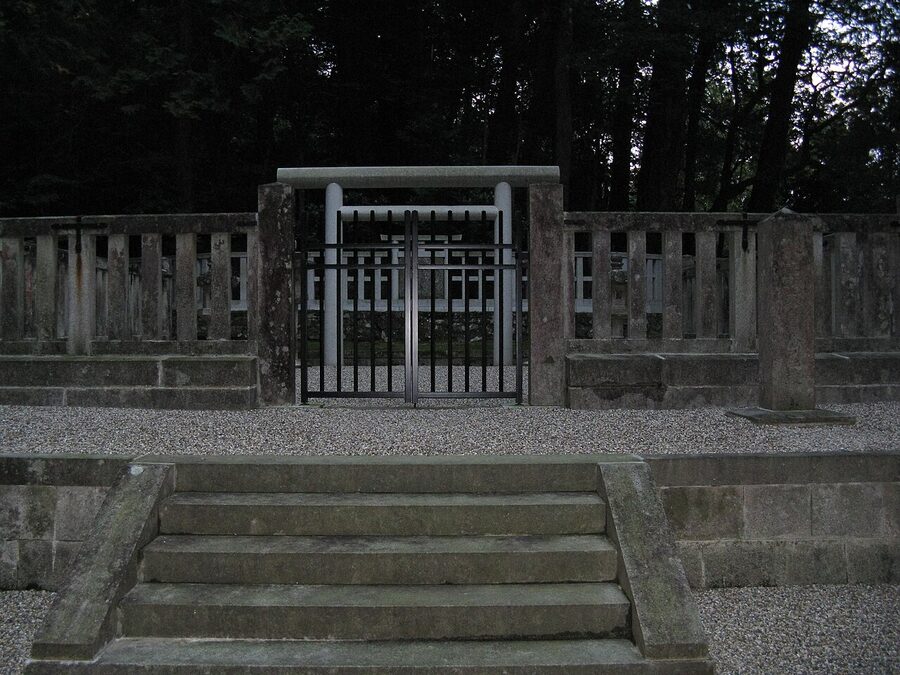
He wanted to go to Kyushu in person to deal with the Southern prince Kaneyoshi, and Yoshiakira talked him out of it. He died at his house at Nijō Madenokōji in Kyoto on the 30th day of the fourth month of 1358, of an abscess on his back, aged fifty-four by the Japanese count, and was buried at Tōji-in and, in the east, at Chōju-ji in Kamakura. Exactly a hundred days later his grandson Yoshimitsu was born, the shogun who would end the war between the courts and build Kinkaku-ji.
Generous, moody, devout
The most quoted description of Takauji comes from Musō Soseki, by way of the Baishōron. Musō said he had three virtues: he smiled under falling arrows and showed no fear of death; he bore no grudges and treated even his worst enemies like his own children; and he treated gold and silver like earth and stone, giving away arms and horses to whoever was nearest without looking at what he gave.
The Baishōron has a story to prove the last one. On the first day of the eighth month it was the custom to send gifts to one’s superiors, and Takauji gave his away as fast as they arrived, so that by evening nothing was left. Tadayoshi, the chronicles add, refused to accept the gifts at all, on the grounds that they were bribes. You could not invent a better pair of brothers for a tragedy.
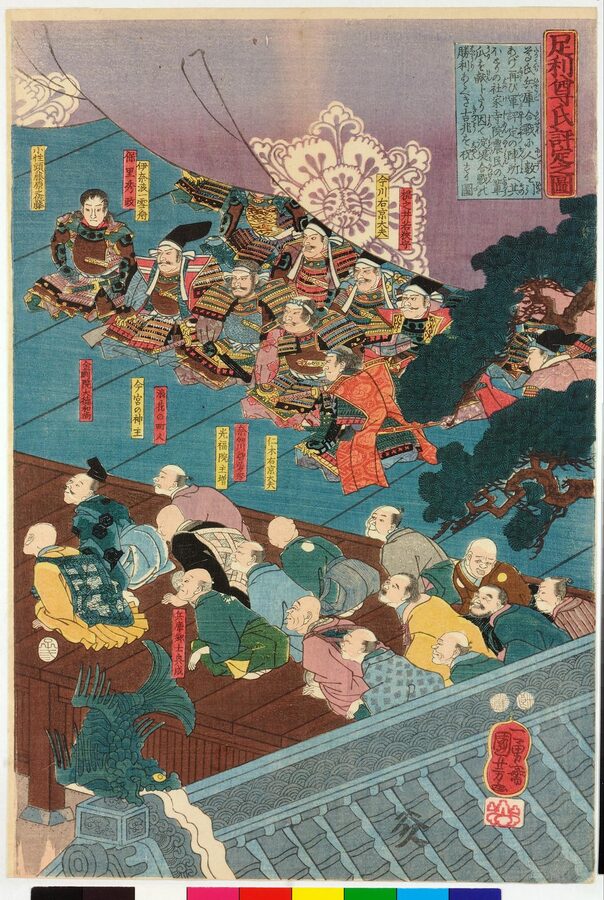
The open hand was also policy. He wrote letters of commendation to warriors on the day they did something brave, sometimes on the day their claim reached him, and gave away his own sword, his fan, even the crest torn from his own cape. Kameda Toshitaka points to a passage in the Gen’ishū where Takauji remembers exactly how a vassal had been armed eight years earlier, and argues that the shogunate survived two centuries largely because Takauji made effort pay. I find that persuasive.
He was also moody. He talked of suicide at Tatarahama, retreated into a temple rather than fight Go-Daigo, and prayed to give everything to his brother two months after winning. In the 1960s Satō Shin’ichi suggested what was then called manic depression and spoke of madness in the family; Goza Yūichi has since demolished this, pointing out that a historian is in no position to diagnose a man dead six hundred years, and that once you drop the assumption that Takauji was secretly plotting against Go-Daigo, his behaviour is consistent: loyal to Go-Daigo as long as he could be, and to his brother almost to the end.
His faith ran across the whole range of Japanese Buddhism, from Musō’s Zen to the esoteric rites of the Daigo-ji abbot Kenshun, and his private devotion was to Jizō, whose image he painted himself; the Jizō in the Reikōden at Tōji-in is said to have been his own. He was a good poet, with eighty-six poems in six imperial anthologies and sixty-eight verses in the linked-verse collection Tsukuba-shū, and he played the shō, the mouth organ of court music, well enough to perform before Go-Daigo.
One poem in the Fūgashū of 1349, written on the eve of the brothers’ war, gives you the man in thirty-one syllables. In my rough translation: “How fleeting, to have wandered lost until I am fifty, in what was only ever a makeshift grass hut.” He was forty-five by the Japanese count when the anthology was finished, and the rounding up is the most Takauji thing in it.
The portraits that may not be him
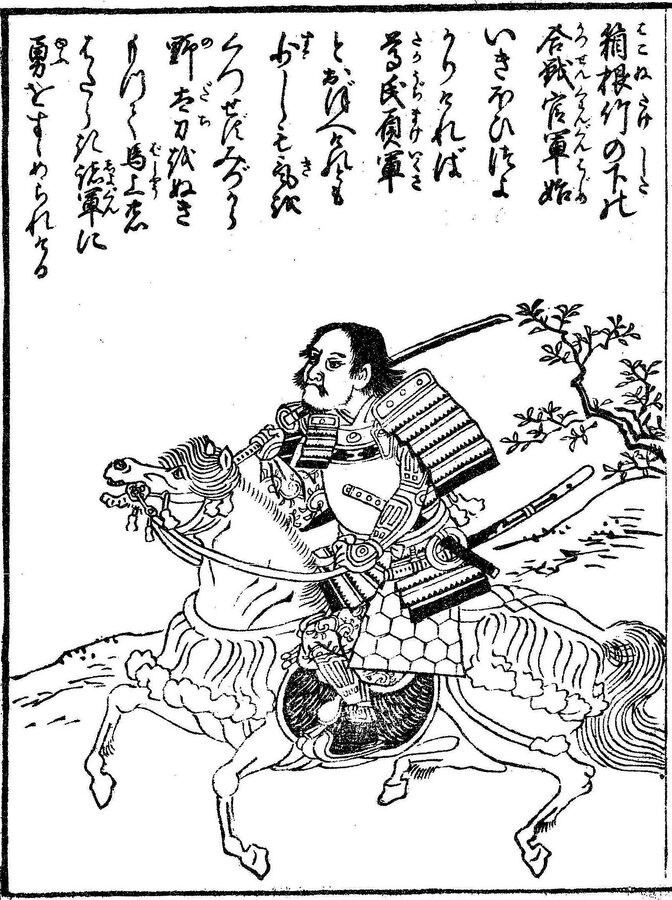
The face most people know as Takauji’s is a man on a black horse with a drawn sword on his shoulder, hair loose and arrows broken, in a painting about a metre tall at the Kyoto National Museum. It was published as Takauji in 1800 in Matsudaira Sadanobu’s catalogue of antiquities, confirmed by the historian Kuroita Katsumi in 1920, and designated in 1935, under the prewar law, with the careful title “Mounted Warrior”; it is now an Important Cultural Property. Above the rider is the monogram of Takauji’s son Yoshiakira.
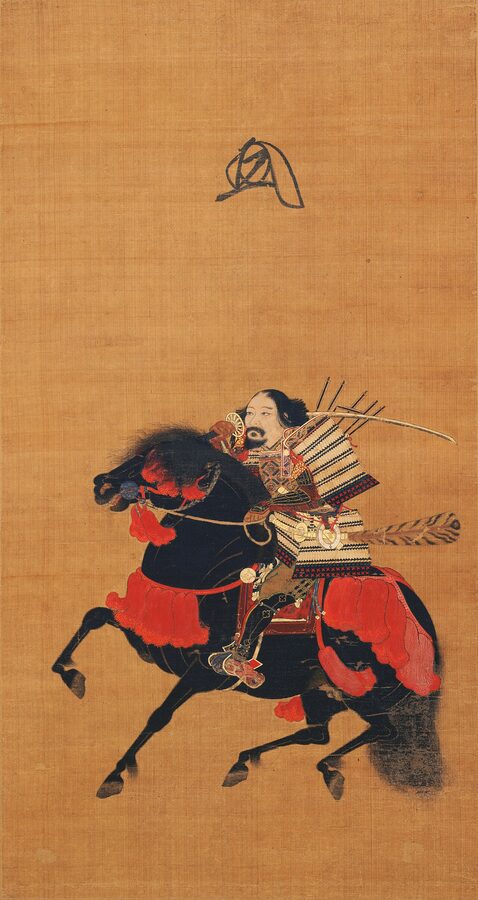
A son writing his monogram above his father’s image would have been grossly disrespectful, and in 1974 Fujimoto Masayuki spotted the crest of the Kō family on the sword fittings and harness, so for a generation the picture was usually labelled Kō no Moronao, or one of his sons. Restoration in 1990 showed under X-ray that the crests had been added later, and in 2011 the repair of a copy made in 1916 turned up the copyist’s own notes marking the retouched parts of the original, crests and face included; a 1749 picture book, meanwhile, reproduces the same pose and ties it to Takauji at Hakone and Takenoshita. The case for Takauji has revived, but it is not proven, and the museum is right to stay noncommittal.
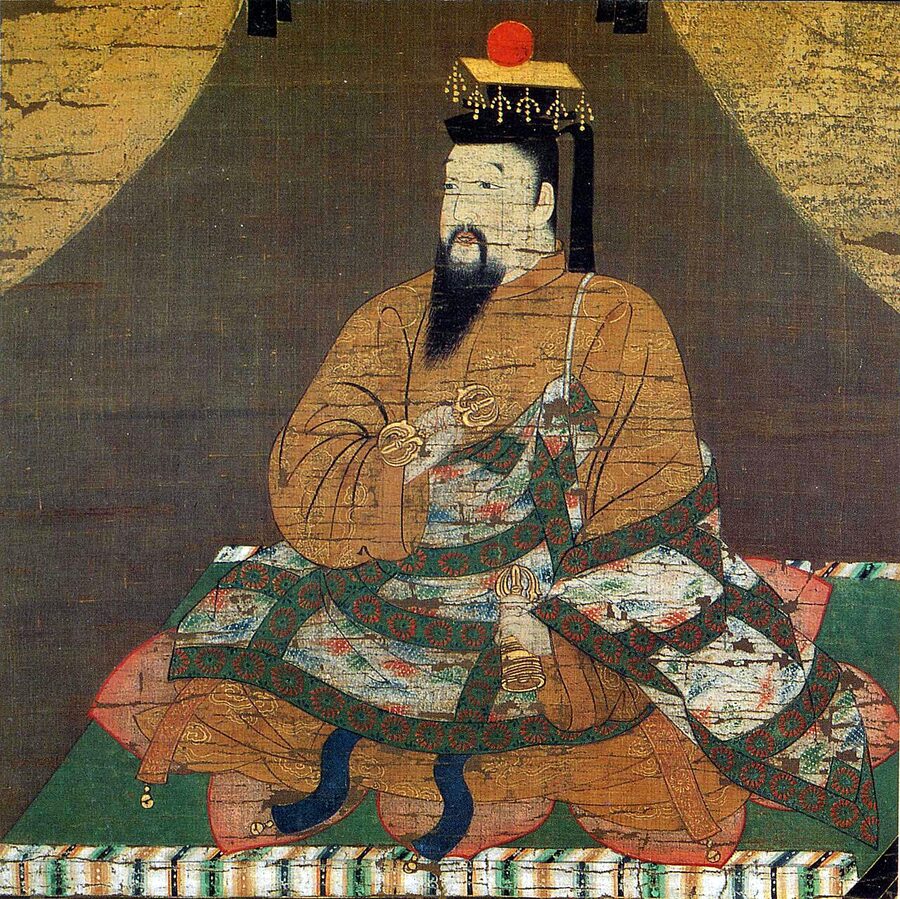
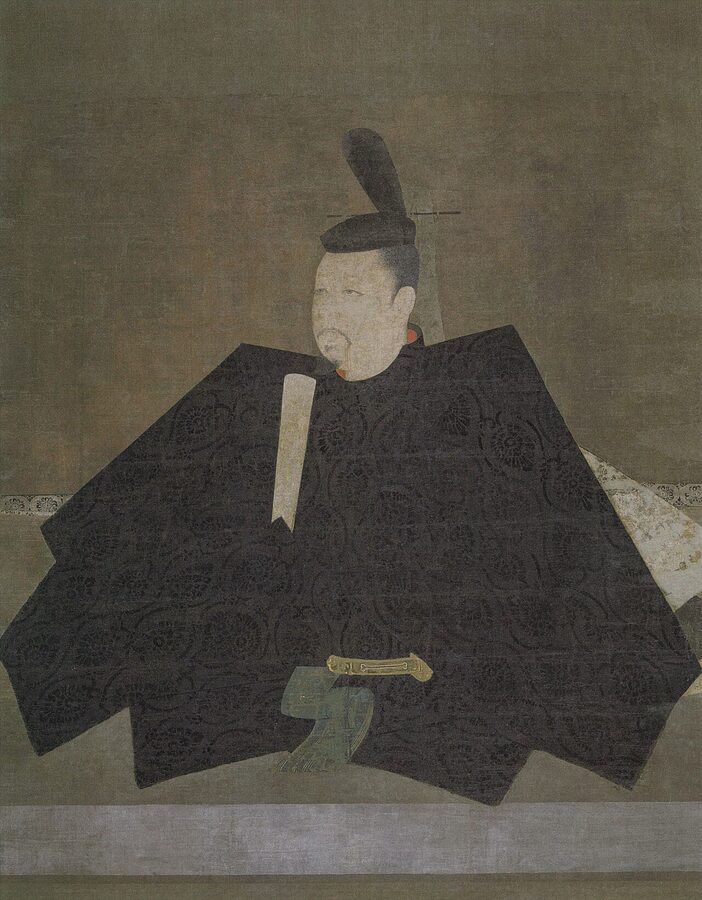
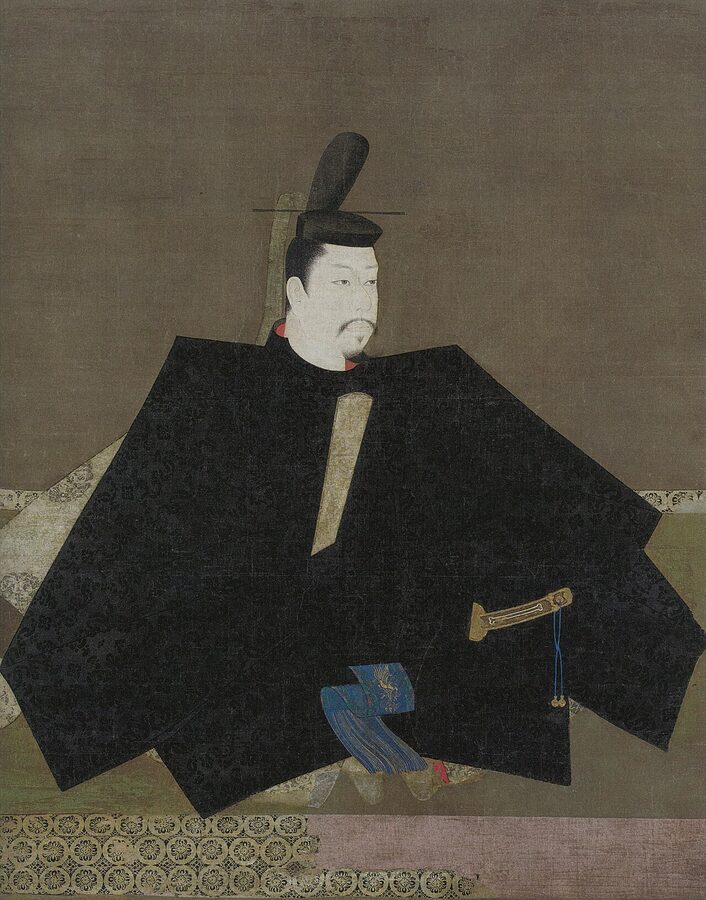
The second puzzle is bigger. Jingo-ji in Kyoto owns two of the most famous portraits in Japanese art, traditionally Minamoto no Yoritomo and Taira no Shigemori, the son of Taira no Kiyomori. In 1995 the art historian Yonekura Michio and the historian Kuroda Hideo argued that they are Takauji and Tadayoshi, citing a document of 1345 in which Tadayoshi dedicated portraits of himself and his brother to Jingo-ji. Art historians objected on grounds of style, and the debate continues, but the new reading has gained ground.
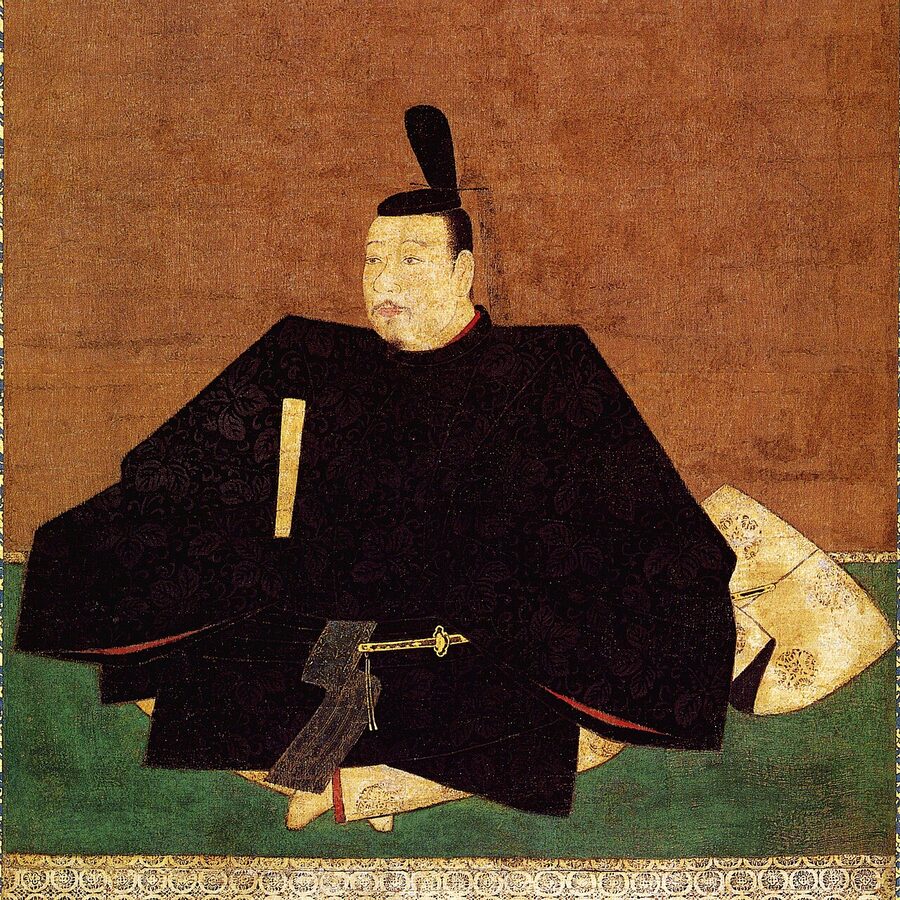
The safer likenesses are less glamorous. Jōdo-ji in Onomichi owns a portrait of him in court dress; the oldest image of all is a wooden statue at the Ankoku-ji of Kunisaki in Ōita, unidealised enough to have been made in his lifetime or soon after; and the head of the Tōji-in statue follows the same type. In 2017 curators at the Tochigi Prefectural Museum found a mid-Muromachi copy of a portrait of him that had been passed down as a picture of Sugawara no Michizane.
Six hundred years as the great traitor
His own century did not see him as uniquely wicked. The great traitor was the work of the Mito school, the historians gathered by Tokugawa Mitsukuni in the 17th century to write the Dai Nihon shi, which treated the Southern Court as the legitimate line. In 1692 Mitsukuni put up a stone at Minatogawa inscribed “Alas, the loyal servant Kusunoki”, and the moral shape of the 14th century was settled: Masashige loyal, Takauji traitor, and the Tokugawa shogunate blandly ignoring that it was another warrior government ruling in an emperor’s name.
That is what the 1863 raid was about. Matsudaira Katamori, the lord of Aizu who had just arrived in Kyoto as its military governor, took the beheaded statues as a threat to the Tokugawa and abandoned his policy of talking to the radicals. That spring he took on a band of masterless swordsmen recruited in Edo, the core of what became the Shinsengumi.
After the Meiji Restoration the loyalists became national saints. Minatogawa got a grand shrine for Masashige, Kamakura got one for Prince Moriyoshi, and Nitta Yoshisada appeared on the new banknotes.
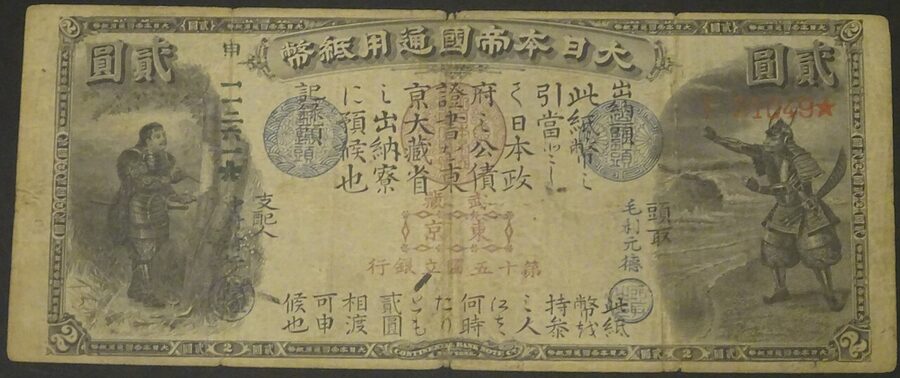
In 1911 a school textbook that described the two courts as simply coexisting set off a political storm, and the government ruled that the Southern Court had been the legitimate one. The irony, which nobody in the Diet seems to have pointed out, was that the emperor of 1911, like the emperor today, descended from the Northern line Takauji had put on the throne. The site’s piece on Emperor Meiji covers the man who had to live with that.
The baron who praised a traitor
In 1921 Baron Nakajima Kumakichi, an industrialist with a taste for poetry, saw a wooden statue of Takauji at Seiken-ji in Shizuoka, said to have been carved by Takauji himself, and wrote a short essay for a haiku magazine suggesting that Takauji deserved a second look. Thirteen years later, when he was Minister of Commerce and Industry, the essay was reprinted in the February 1934 issue of the magazine Gendai. On 3 February it was raised in a Diet committee, and Nakajima apologised.
Then the House of Peers took it up, led by Baron Kikuchi Takeo, a retired general descended from the Kikuchi of Kyushu, the family Takauji had beaten at Tatarahama six centuries earlier. Right-wing groups joined in, letters poured into the Imperial Household Ministry, and Nakajima resigned on 9 February 1934.
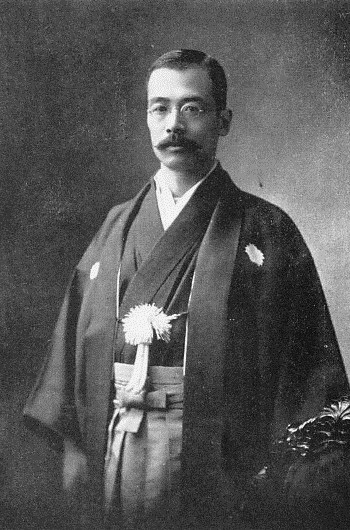
The Film Law of 1939 gave, as its example of a film that might shake the young’s judgement of national history, one that portrayed Takauji as a good man. Ashikaga Atsuuji, a descendant of the shoguns, remembered his teachers at the Peers’ School warning him before the lesson on the two courts not to take it personally, and feeling his classmates’ eyes on him, the future Shōwa emperor among them.
Rehabilitation
The collapse of the imperial version of history in 1945 freed Takauji at a stroke. Satō Shin’ichi’s 1965 history of the war between the courts became the standard account, Mori Shigeaki has called Takauji one of the real founders of Japanese culture, and Kameda, Goza and Shimizu have argued about him in detail rather than in slogans. Yoshikawa Eiji’s novel Shihon Taiheiki, published from 1959, made him a sympathetic hero for a mass audience.
Television took longer. When NHK considered the Taiheiki for its year-long Sunday historical drama in the late 1970s, its head of drama dismissed the idea as out of the question; the drama finally ran in 1991, with Sanada Hiroyuki as Takauji, and averaged 26 per cent of the Kantō audience over forty-nine episodes. In 2023 Kakine Ryōsuke won the Naoki Prize with Gokuraku sei-i taishōgun, a novel about a likeable man who rose to the top without ever quite wanting to, and in 2024 the anime of Matsui Yūsei’s The Elusive Samurai, whose hero is the boy rebel Hōjō Tokiyuki, brought Takauji back as a villain with glowing eyes and a serene smile.
Both are true to parts of the record. The traitor of the textbooks is the one portrait that is definitely wrong.
Where to see Ashikaga Takauji today
The best three are easy: two in Kyoto that fit in a day, and the family home in Ashikaga, a day trip from Tokyo. Onomichi and Kobe fit into a trip along the Inland Sea.
Ashikaga: Bannaji and the Ashikaga Gakkō
Bannaji is the family residence turned temple, and the outline is the best thing about it: a square of moat and earthen rampart with a gate on each side. The main hall was rebuilt in 1299 by Takauji’s father Sadauji, remodelled in the early 15th century and made a National Treasure in 2013. The grounds are free, and they are about ten minutes on foot from the north exit of JR Ashikaga Station on the Ryōmō Line, or a short walk north across the river from Tōbu Ashikagashi Station.
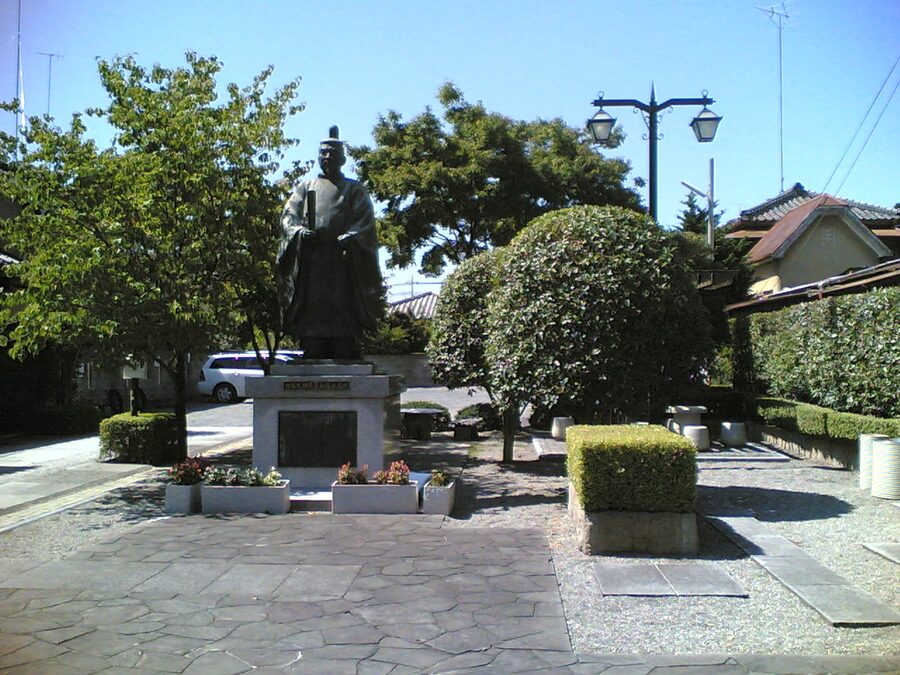
A modern bronze of Takauji stands near the approach.
Next door is the Ashikaga Gakkō, which calls itself the oldest school in Japan. Its origins are unclear, and its history only becomes solid in 1439, when the Kantō deputy Uesugi Norizane endowed it with books and a headmaster; a century later Francis Xavier described it as the largest and most famous university in Japan without ever having seen it. Admission is ¥480, with reception 9:00–16:30 from April to September and 9:00–16:00 from October to March. When I checked, the main hall’s thatched roof was being replaced until 25 March 2027, with parts of the building and garden closed.
Tōji-in, Kyoto
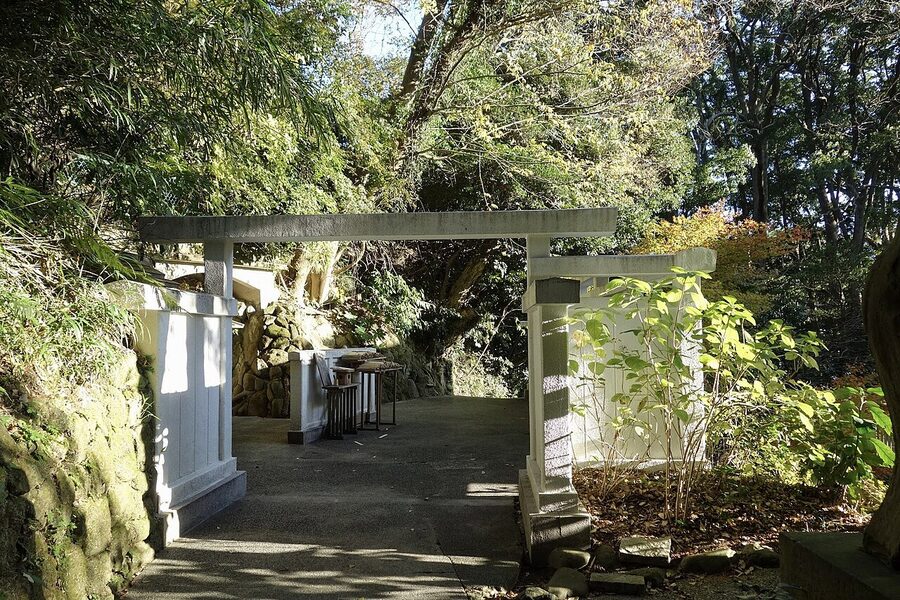
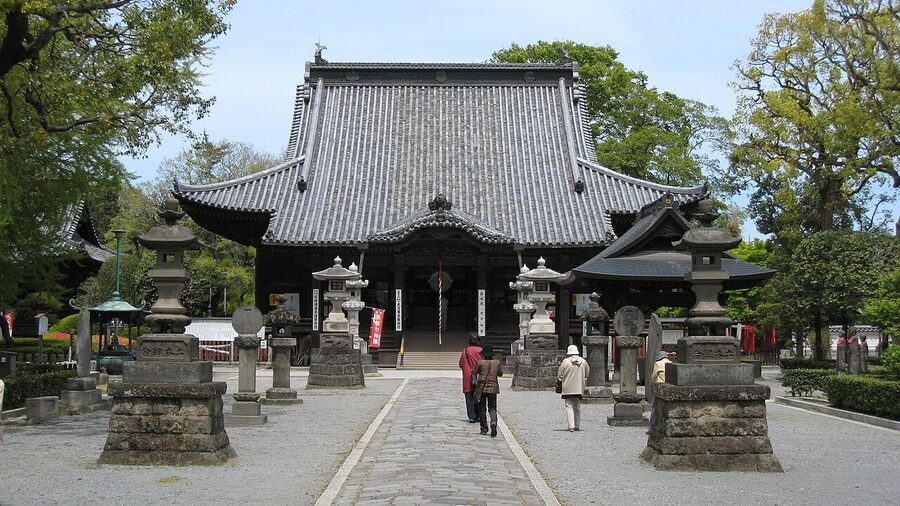
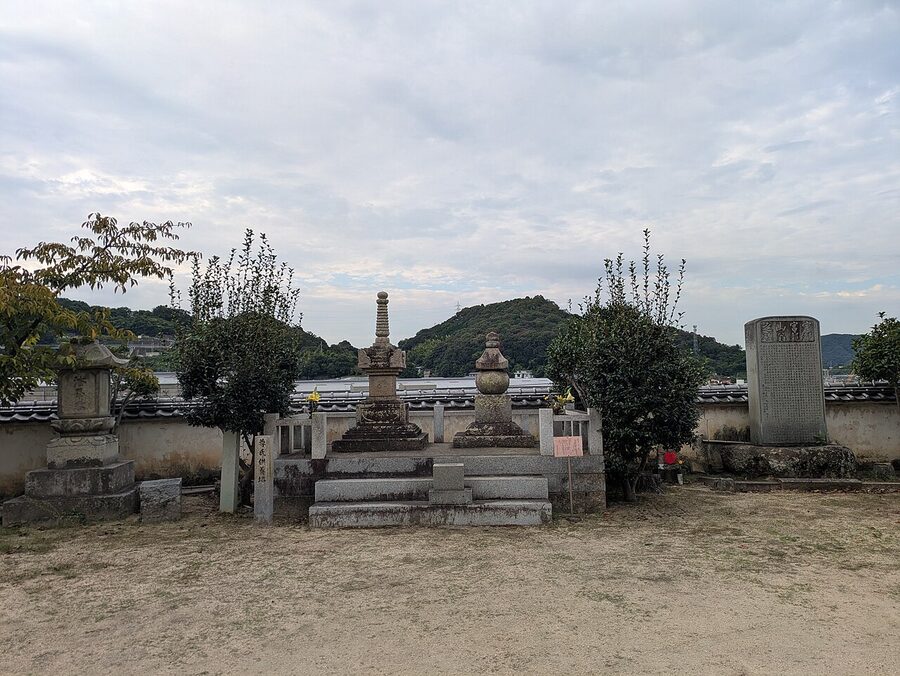
Tōji-in is where Takauji is buried and where the statues were beheaded, and it is one of the most underrated temples in Kyoto. It opens 9:00–16:30 with last entry at 16:00 (9:00–15:00 from 30 December to 3 January), and admission is ¥600; matcha in the study overlooking the garden is another ¥600. Take the Randen Kitano Line to Tōjiin-Ritsumeikan University Kinugasa Campus station, whose name is almost as long as the five-minute walk, or city bus 26 from Kyoto Station to Tōjiin-minamimachi, about forty minutes plus eight on foot. Ryōan-ji is one stop up the same Randen line.
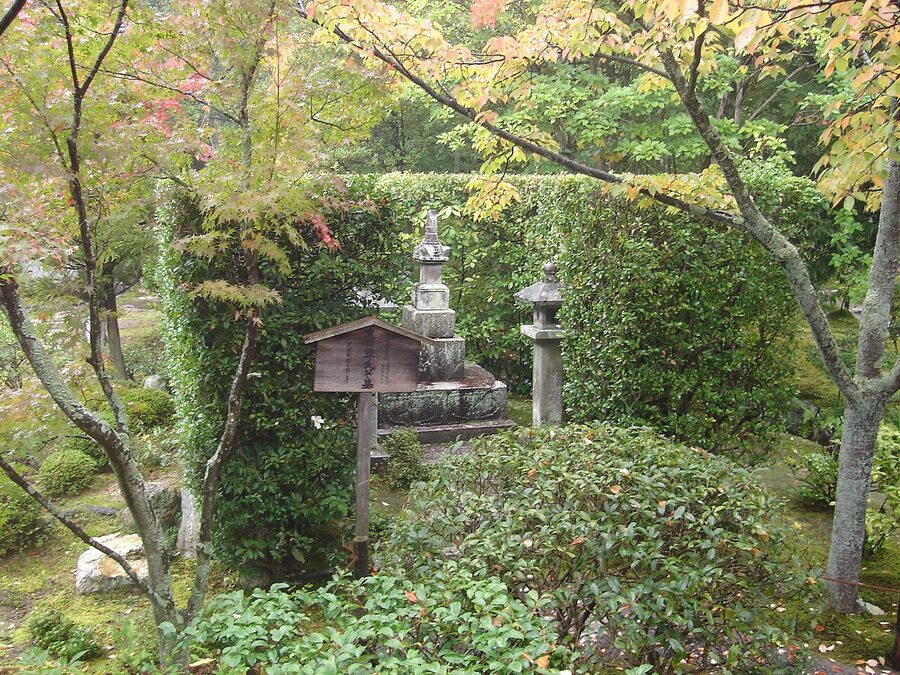
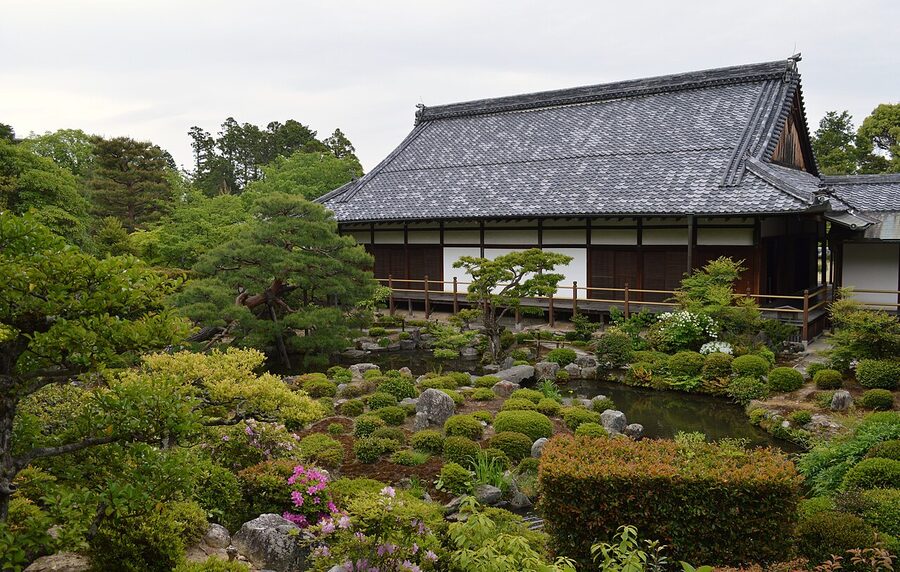
The Reikōden holds the row of shogun statues from the start of this article, with Takauji nearest the altar. The main hall was built in 1616 by the warlord Fukushima Masanori for a subtemple of Myōshin-ji and moved here in 1812, the gardens around the two ponds are attributed to Musō Soseki, and the little teahouse Seiren-tei is said to reflect the taste of the eighth shogun Yoshimasa, who built Ginkaku-ji and presided over the Ōnin War that burned the temple’s sister house in the city.
Tenryū-ji
Tenryū-ji is in the middle of Arashiyama, directly in front of the Randen Arashiyama terminus and thirteen minutes on foot from JR Saga-Arashiyama Station. The garden opens 8:30–17:00 with last entry at 16:50, for ¥500; the halls cost ¥300 more, and Kayama Matazō’s ceiling dragon in the lecture hall, open mainly at weekends and holidays, is a separate ¥500. Nothing standing there dates from Takauji’s time except the garden, so go for that, and go at 8:30 before the tour groups; the Japan’s greatest gardens guide covers it properly. The two Randen lines meet at Katabiranotsuji, so Tōji-in and Tenryū-ji make an easy day on one ticket.
Jōdo-ji, Onomichi
The main hall where Takauji prayed in 1336, built in 1327, is still standing and a National Treasure, as is the pagoda of 1328, and the temple still uses the Ashikaga two-bar crest as its own. The treasure hall holds documents from Takauji and the portrait.
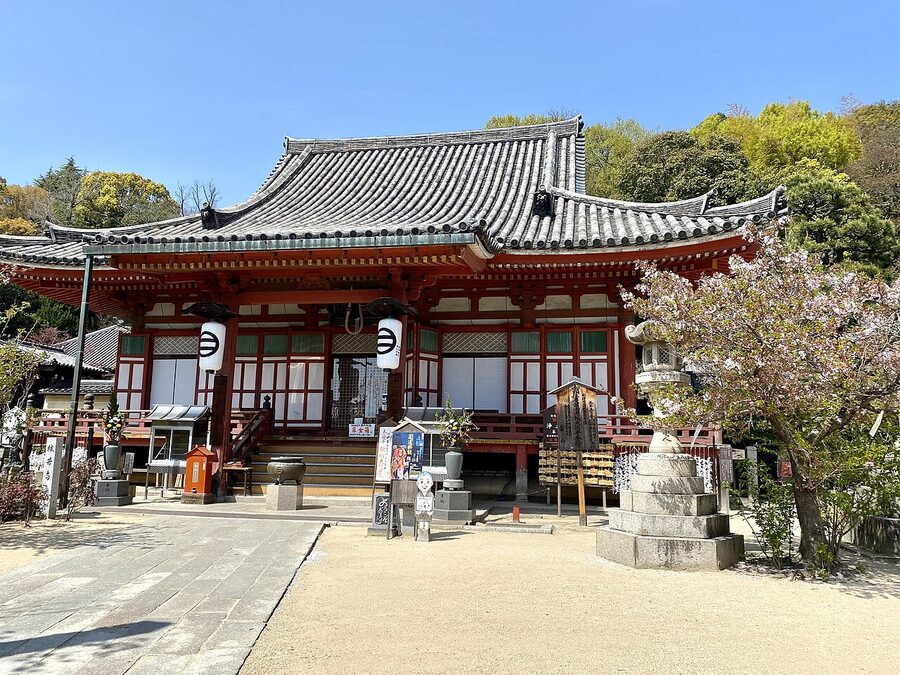
Viewing runs 9:00–16:00 with last entry at 15:45, and the temple closes 1–4 January. Admission is ¥300 until the end of 2026 and ¥500 from 1 January 2027; a guided visit to the inner sanctuary costs more. A bus from JR Onomichi Station takes about five minutes to Jōdoji-shita, then three minutes of steps, or you can walk the old temple path from the station in about twenty-five minutes, which is the better way.
Minatogawa and Hyōgo, Kobe
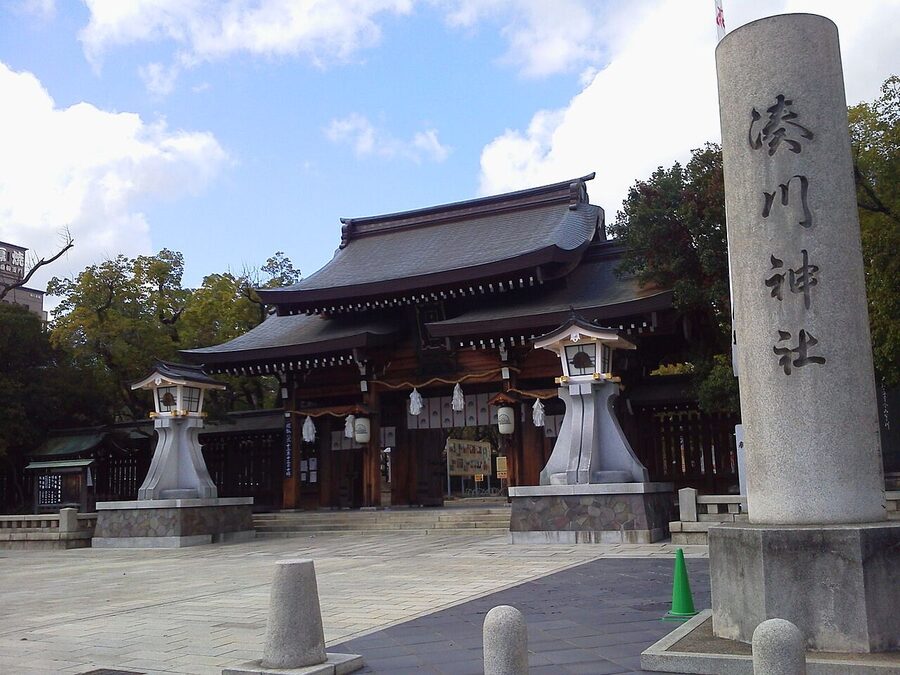
Minatogawa Shrine stands where Masashige died, a couple of minutes from JR Kobe Station and Kōsoku Kōbe Station, and its grounds are open 6:00–18:00 every day. It is Masashige’s place, not Takauji’s, and there is no marker for the winning side, which seems fair. For Takauji’s side, Fukkai-ji, the temple he is said to have founded in 1344 in thanks for his escape, is in the Nishi-yanagihara district near JR Hyōgo Station, and the beaches at Wada-misaki where his ship came in are a short ride south.
Further afield
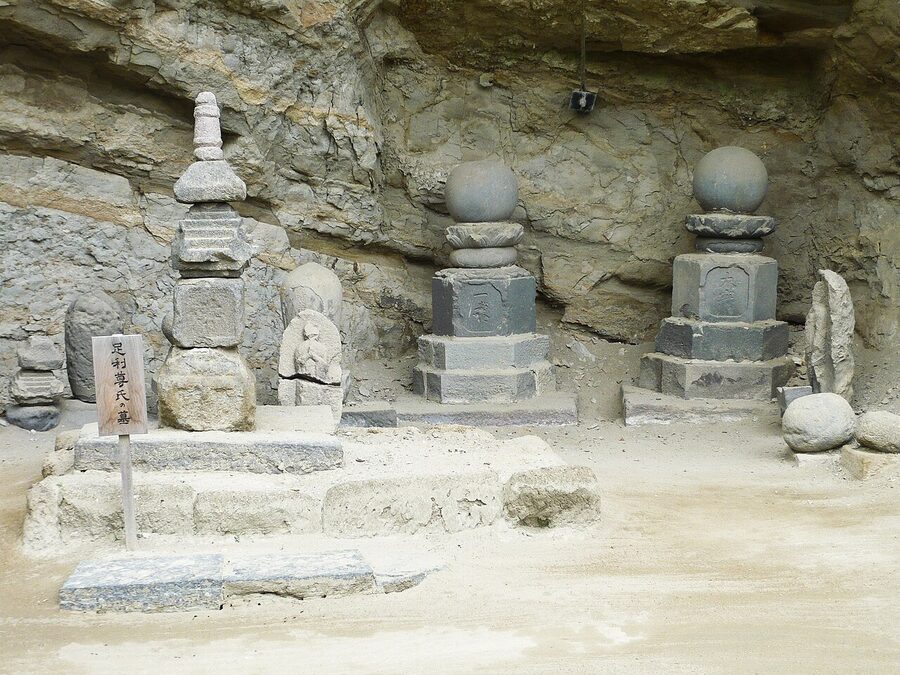
Shinomura Hachimangū, where he turned against Kamakura, is in the southern part of Kameoka, west of Kyoto, with no admission charge; the arrow mound, the tree where his flag is said to have flown and a stone marking the rising are all in the grounds. It is a long walk from the nearest stations on the JR Sagano Line, and a taxi from Kameoka is simpler. In Kamakura, Chōju-ji keeps his eastern grave and opens only on certain days, so check before you go, and Jōmyō-ji and Kamakura-gū are a short ride away; Go-Daigo’s north-facing tomb is on the hill behind Nyoirin-ji in Yoshino.
A head put back on
The wooden Takauji at Tōji-in has been repaired, and if you look closely in the Reikōden you can see where the head was set back on its shoulders. The men who cut it off in 1863 thought they were striking a blow for the true line of emperors, and the baron who praised him in 1934 thought he was writing about a statue. Both were really arguing about something else, and Takauji, who spent his life being used by other people’s quarrels and using theirs in turn, would have understood that better than anyone.
He prayed at Kiyomizu-dera that this world was a dream and that he wanted out of it. He never got out, and he did more to shape the next two centuries than anyone else of his. If you go to Tōji-in, look at the neck, then sit by the pond he is buried beside and order the matcha; he would have given you his.