The Chinese character for “one” is a single horizontal stroke of the brush, the first thing a child learns to write. Murasaki Shikibu, the best-read woman at the court of Empress Shōshi and the author of The Tale of Genji, says in her diary that she gave it up. People had been heard to remark that even a man who shows off his learning never prospers, she explains, so these days she does not write so much as the character for one, and she has become hopelessly clumsy at it.
A few sentences later she admits that for the past two summers she has been secretly reading Chinese poetry with the empress, behind closed doors, whenever nobody else was about. I think it is the most enjoyable lie in early Japanese writing, and nearly everything worth knowing about her is folded inside it: the learning she was not supposed to have, the court that punished women for showing it, and the dry voice that tells you so while pretending not to.
Nobody knows her real name. Nobody knows the year she was born or the year she died, and the scholars who have tried to fix them disagree by more than a decade at each end. This piece is about the woman rather than the book: her family, a winter in Echizen, a short marriage, service in the household of the most powerful man in Japan, the diary she kept there, and an afterlife that put her in hell and then made her a bodhisattva. It ends with where you can go and stand in her footsteps.
In This Article
- A girl who should have been a boy
- Snow on Mount Hino
- Married to a dandy
- Michinaga’s household
- Autumn at Tsuchimikado
- Sei Shōnagon, and the letter
- The last sightings
- A novelist in hell
- Where to find Murasaki Shikibu today
- Rozan-ji, Kyoto
- Her grave at Kitaōji Horikawa
- Senbon Enma-dō
- Ishiyama-dera, Otsu
- Echizen (Takefu): Murasaki Shikibu Park
- The stroke she would not write
A girl who should have been a boy
She was born into the northern house of the Fujiwara, the family that ran the Heian court, but into one of its shabbier branches (my walk through Japan’s eras puts the period in context). Her great-grandfather Fujiwara no Kanesuke had been a middle counsellor, a patron of the poet Ki no Tsurayuki and the owner of a fine house on the bank of the Kamo River, which is why he was remembered as the Tsutsumi Chūnagon, the Counsellor of the Embankment. Within two generations the family had slid down to the rank of provincial governors, men who lived on appointments to posts far from the capital and spent the years between them waiting.
Her father, Fujiwara no Tametoki, was a scholar of Chinese and a poet of real ability. In 977 he served as an assistant reader at the first formal lessons of the crown prince, the future Emperor Kazan, and when Kazan came to the throne in 984 Tametoki was made a secretary and a junior officer of the Shikibu-shō, the Ministry of Ceremonial. Two years later Kazan was tricked into abdicating and shaving his head, and Tametoki went down with him. He spent the next ten years without a post.
Those were the years in which his daughter grew up. Her mother, a daughter of Fujiwara no Tamenobu, died young; there was an older sister who also died young, and a brother, Fujiwara no Nobunori, whose birth year is unknown, so nobody can say which of the two children came first. The family lived, by most accounts, in the old embankment house of Kanesuke, on the site now occupied by the temple of Rozan-ji in Kyoto, and the daughter read everything in it.
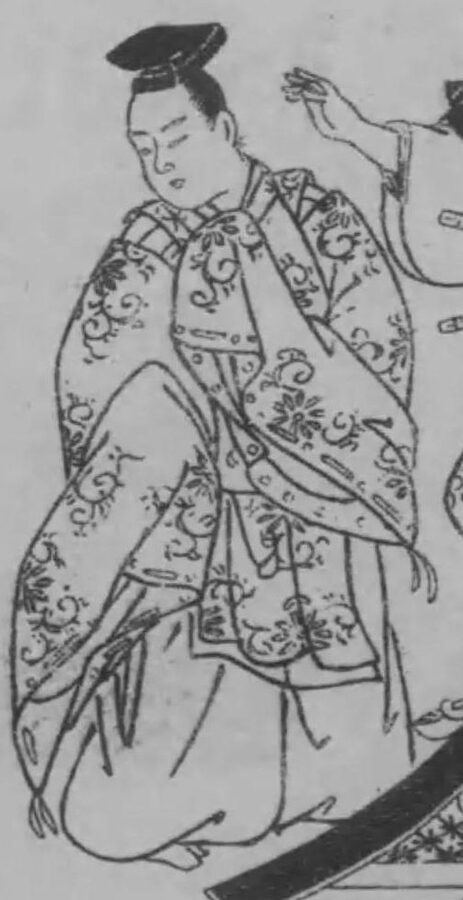
The diary tells the story that everyone remembers. When Nobunori was a boy reading the Chinese classics with their father, she sat nearby and listened, and the passages he was slow to take in and quick to forget she picked up with what she calls a strange quickness. Their father, who loved his books, used to sigh that it was his bad luck she had not been born a son.
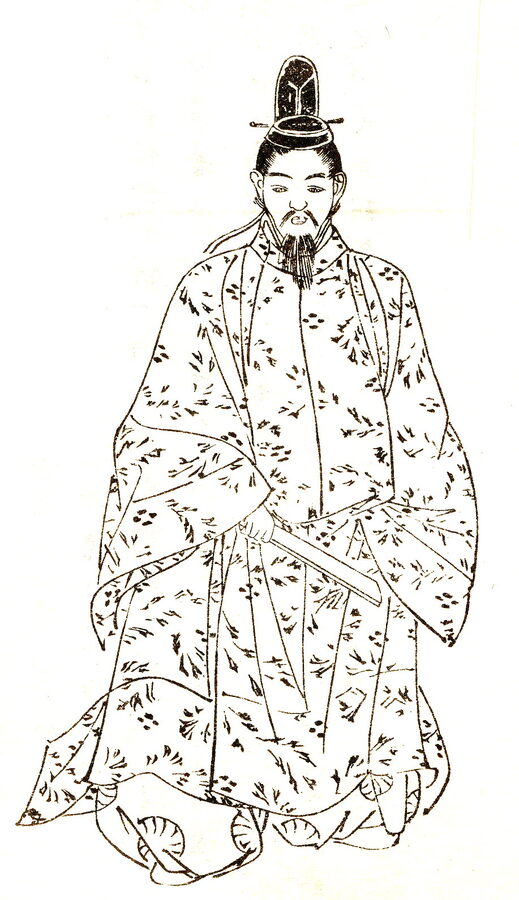
Her name is the second puzzle. Heian women of her class almost never had their personal names recorded, and “Murasaki Shikibu” is a nickname built of two borrowed parts. At court she was first called Tō Shikibu, the Fujiwara lady of the Ministry of Ceremonial, after her father’s old post (some argue her brother’s). The “Murasaki” came later, almost certainly from Murasaki, the heroine of her own book, so she ended up named after a character she invented.
The historian Tsunoda Bun’ei argued in 1963 that she was the Fujiwara no Kaoruko whom Michinaga’s diary records being appointed to a palace office in the first month of 1007. The theory has fierce critics, who point out that a woman holding that rank should have left other traces, and nobody has proved it or disproved it. Rozan-ji has adopted it wholesale, and so have several novelists; the 2024 NHK drama about her life sidestepped the whole question and called her Mahiro.
Her birth year is a matter of arithmetic and taste. Japanese scholars have proposed 970, 972, 973, 974, 975 and 978, mostly by counting backwards from remarks in the diary about her age and her eyesight, and the English-language convention of “about 973” is simply the most popular of these guesses. I would settle for the 970s and leave it there.
Snow on Mount Hino
In the first month of 996 her father’s luck turned. On the 25th day he was named governor of Awaji, a small province, and three days later the new chief of the court, Fujiwara no Michinaga, came to the palace in person and had Tametoki moved to Echizen, one of the great provinces, pushing aside the man just appointed there. A later collection of anecdotes, the Kojidan, explains it as the reward for a couplet in Chinese that Tametoki had sent in to the emperor, about cold nights of study and tears of blood soaking his sleeves, which made the young emperor Ichijō so miserable that he could not eat.
The more likely reason is less romantic. The previous autumn more than seventy Song Chinese merchants had landed on the coast of Wakasa, next door to Echizen, and were still in the region; somebody had to deal with them, and Tametoki was one of the best Chinese writers in the bureaucracy. One of the poems he wrote to a Song visitor survives. Whatever the reason, it was the beginning of a long association between his family and Michinaga.
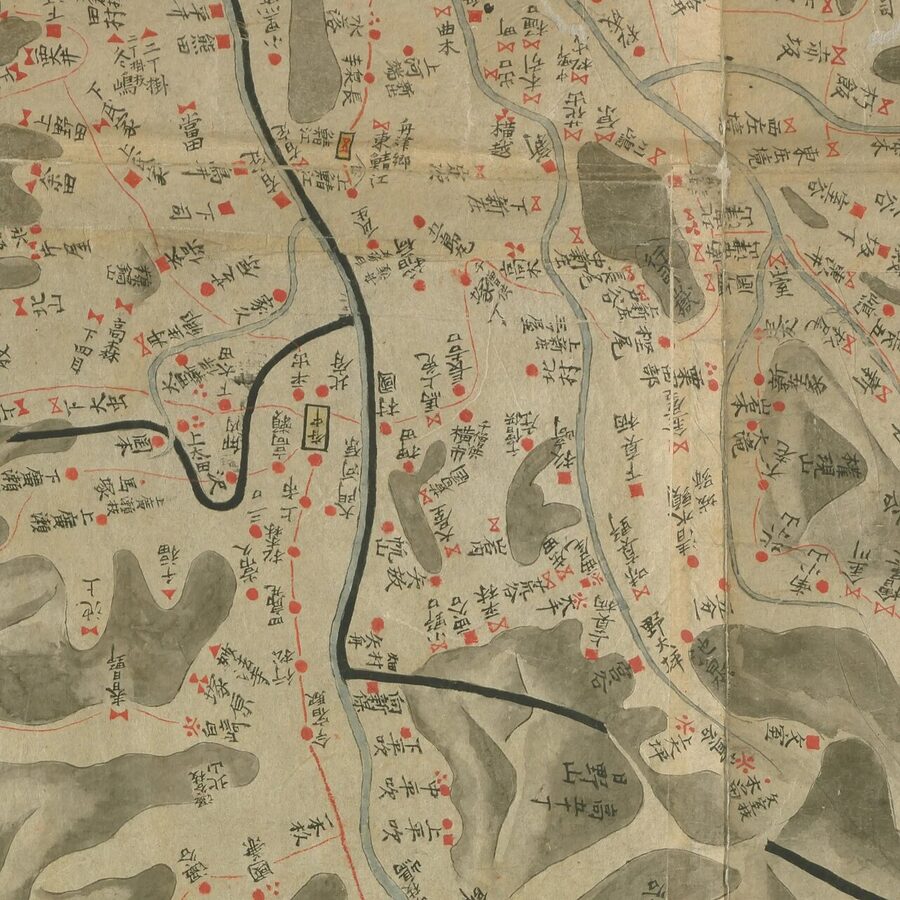
She went with him, which was unusual for a woman of her class, and this year in the provinces is the only time in her life she is known to have left the capital region. The party left in the summer, went up Lake Biwa by boat to Shiotsu, crossed the hills to Tsuruga and came down to the provincial capital at Takefu. At the pass above Shiotsu she heard the porters complaining about the road and teased them in a poem that turns on the word karashi, which means both salty and hard: they ought to know by now, she wrote, that the road through this world is always a bitter one.
Then came the winter. Snow in Echizen is not the polite dusting of the capital, and her poems are full of it: the cedar groves on Mount Hino buried, the snow piled up in the courtyard by servants who thought it might amuse her. She replied that the only snow mountain she wanted to see was Kaeru-yama, a real mountain on the road home whose name means the “mountain of return”. It is the first of many times in her writing that she is unhappy and funny in the same breath.
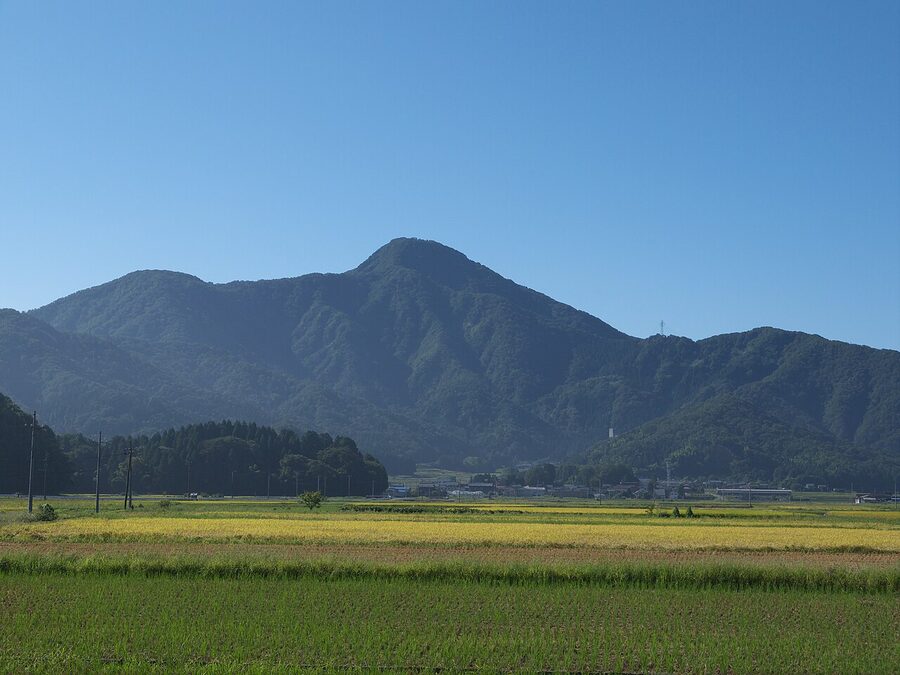
Letters followed her north. A courtier of her father’s acquaintance, Fujiwara no Nobutaka, had been courting her since before she left, and he now wrote that he would come up to Echizen to look at the Chinese, a joke about the Song merchants, and that in spring, as everybody knows, all ice melts. She answered that it might be spring in the capital, but on the White Peak of Echizen the snow was getting deeper, and there was no telling when it would thaw.
It thawed within the year. Japanese reference works disagree on whether she left Echizen in the late autumn of 997 or the spring of 998, but by the winter of 998, or the very first days of 999, she was back in the capital and married to the man who had been joking about ice. That one provincial year is the reason a city in Fukui now has a station named after her.
Married to a dandy
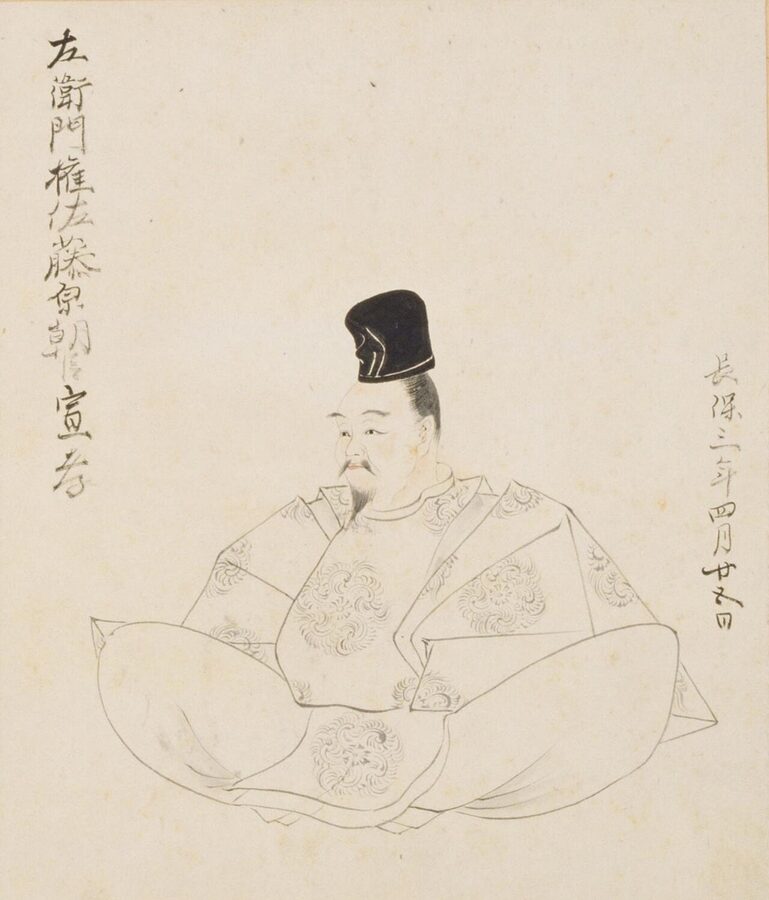
Fujiwara no Nobutaka was a second cousin of hers and old enough to be her father, probably past forty-five when they married. He already had several wives and grown sons, one of them about her own age, and he was a capable official, a famous dancer and a man of conspicuous clothes. He also had the misfortune of turning up in someone else’s book.
Sei Shōnagon tells the story in her Pillow Book. In 990, when pilgrims to the holy mountain of Mitake in Yoshino were expected to go in their plainest clothes, Nobutaka announced that the god of the mountain had never asked for shabby clothing and went up with his son in purple and white and bright yellow, to general horror. A few months later he was appointed governor of Chikuzen, and people said he had been right after all. Sei clearly found the whole thing delightful, and some Japanese scholars think his widow never forgave her for telling it.
Her own poems show a marriage with real feeling and real friction. He showed her letters to other people, and she demanded them all back; he retorted that in that case they were finished, and by the middle of the night he had sent a peace offering. Another time he sent a letter spattered with vermilion to show the tears of blood he was shedding for her, and she wrote back that the red only made her trust him less, since it was the colour of a heart that changes. Several more poems complain that he had stopped visiting.
Their daughter, Kenshi, was born in 999. In the fourth month of 1001 Nobutaka died, after about two and a half years of marriage. English-language accounts often say cholera, which is a modern guess; what the records of that year actually show is an epidemic in the capital, and a husband who had already been too ill in the second month to answer a summons from Michinaga.
Her poems of mourning are restrained, which makes them worse. In one she writes that since the evening he turned to smoke, even the name of Shiogama Bay, famous for the smoke of its salt-fires, has become dear to her. In the diary, years later, she remembers how she passed those empty years watching the flowers and the birds and the turning seasons without any idea of what would become of her, and how the only comfort came from exchanging letters about stories with friends of the same mind.
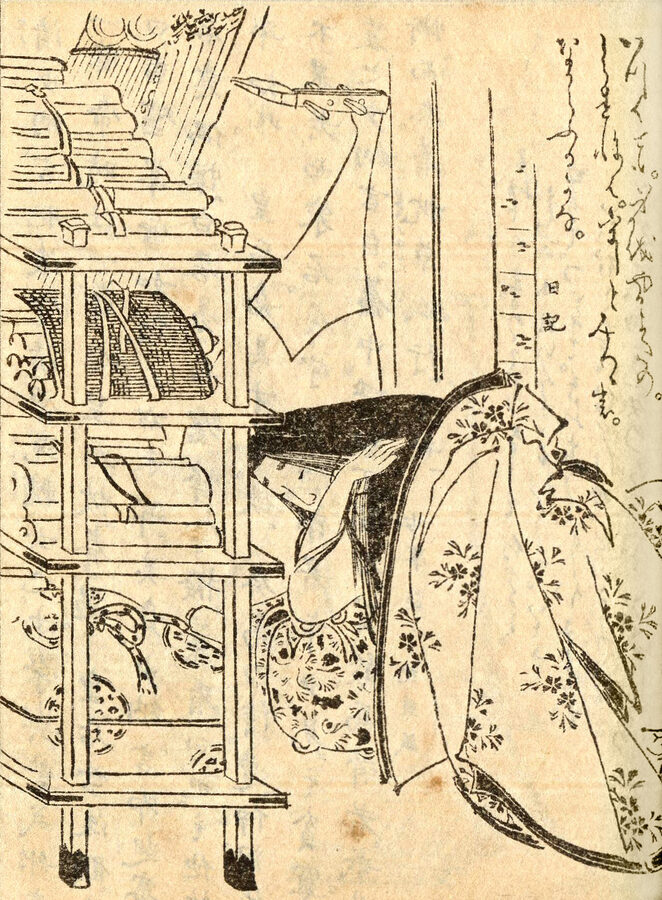
This is where the book begins, as far as anyone can tell. The great scholar Imai Gen’e put the start of The Tale of Genji in the autumn after Nobutaka’s death, and most Japanese reference works agree that it was written, at least in its early chapters, by a widow at home. The early chapters were passed round her circle in handwritten copies; one theory has the “Broom Tree” chapters modelled on the household of Prince Tomohira, a learned son of Emperor Murakami with whom her father and uncle were close. I leave the story itself to my piece on The Tale of Genji; by about 1005 it had made her a name, and the most powerful man in the country had heard it.
Michinaga’s household
Fujiwara no Michinaga came to power in 995, when both of his elder brothers died within a month of each other. He beat his nephew Korechika in the fight for control of the court, saw him exiled the next year after an incident in which an arrow was shot at the retired emperor Kazan, and then turned to the Fujiwara method, which was the marriage bed of the emperor. In 999 he sent his eldest daughter, Shōshi, into the palace of Emperor Ichijō, aged eleven by Western reckoning; he would run the court for more than twenty years and end as a monk, making the long pilgrimage to Kōyasan in 1023.
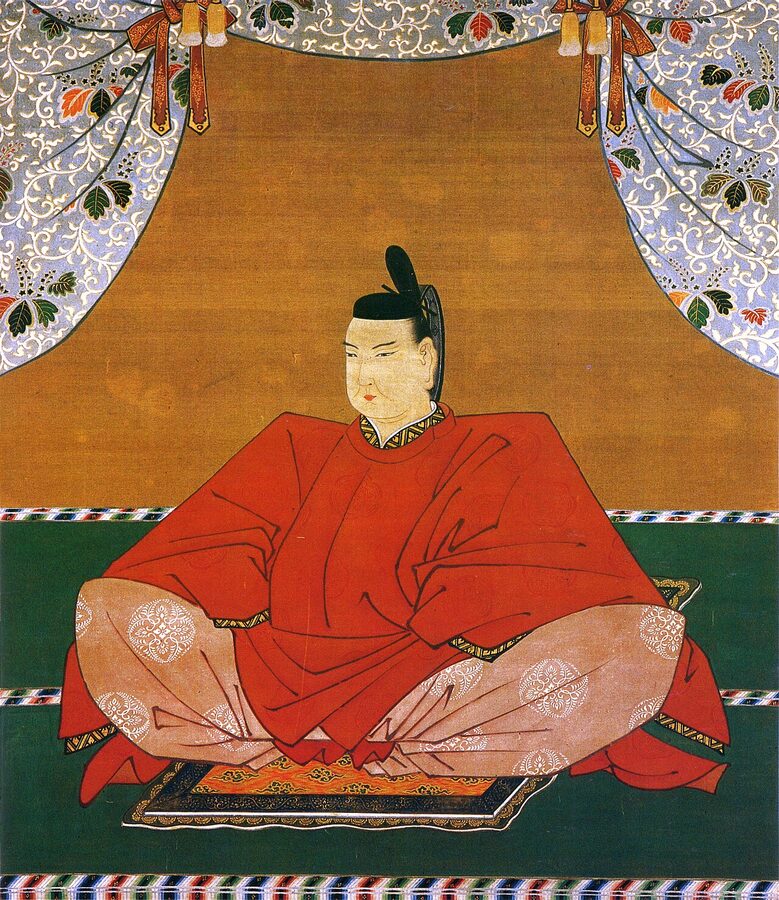
The trouble was that Ichijō already had an empress, Korechika’s sister Teishi, whom he loved, and whose household of brilliant, witty women included Sei Shōnagon. Michinaga solved it in 1000 by having Shōshi made empress too, with a newly minted title, so that one emperor had two empresses at once for the first time. Teishi died in childbirth at the end of the same year by the Japanese calendar, which is early 1001 by the Western one, and her salon broke up.
Michinaga’s answer to the memory of Teishi’s court was to fill his daughter’s with talent. Akazome Emon was there, a poet who had served Michinaga’s wife; Izumi Shikibu came, the most notorious poet of the age; Ise no Ōsuke joined later. And at the end of a year, on the 29th day of the twelfth month, the author of the tale that everybody was passing round arrived to take up service.
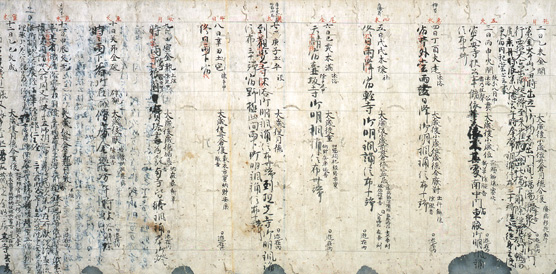
Which year is disputed. Writing on the 29th day of the twelfth month of 1008, she says only that this was the anniversary of her arrival, without saying how many years had passed. Scholars argue for the second or third year of the Kankō era, which, because the twelfth lunar month runs into the next Western year, means January 1006 or January 1007 by the Western calendar (English-language books usually say “1005 or 1006”, the Japanese year rather than the Western date). A minority of Japanese scholars go further and argue, from remarks in medieval Genji commentaries and the 12th-century Ima Kagami, that she had already served Michinaga’s wife Rinshi as a young woman twenty years earlier.
She hated it at first. She remembers that first night as a kind of dream in which she had lost her way, and on the anniversary she found herself lying awake listening to the other women gossip about the clatter of courtiers’ shoes, and wrote a poem about the year ending and her own life growing late in the sound of the wind. She seems to have gone home soon afterwards and stayed there for months. The women who stayed on had decided, before they ever met her, that she would be grand, prickly, poetry-mad and contemptuous of everyone, and they told her later that she had turned out to be so mild they took her for somebody else.
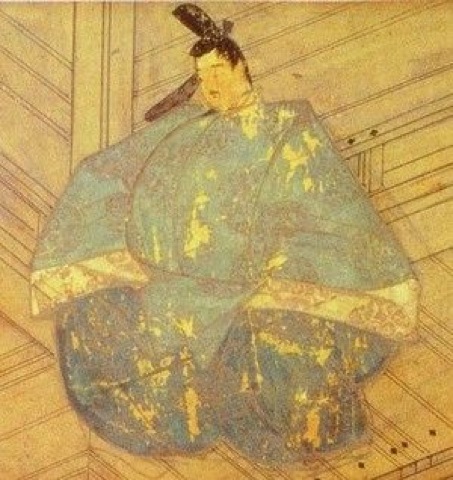
Was she his mistress? A 14th-century genealogy of the court families, the Sonpi Bunmyaku, notes against her name, flatly, “concubine of Michinaga”, and the diary gives the gossips something to work with. In one scene Michinaga sees a copy of her tale lying in front of the empress beside a dish of plums, and writes on the paper under the fruit that since she is famous as a sukimono, a word that means both a sour thing and an amorous woman, surely nobody passes her by without picking. She replies that nobody has picked her yet, so who has been spreading such a reputation, and adds, “How outrageous.”
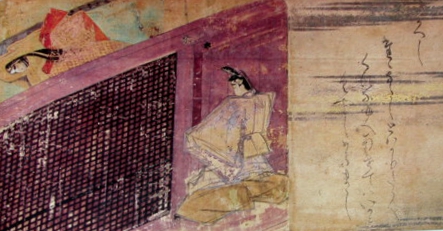
The next entry is the one people quote. One night, sleeping in her room on the gallery, she hears someone knocking at the door and is too frightened to make a sound until morning. Then a poem arrives: all night long, crying more than a water rail, he knocked in vain at her cypress door. She sends back that, given how urgently the water rail was knocking, she would have bitterly regretted opening.
The diary never names the knocker, and the evidence for an affair comes down to that and a 14th-century note. Arthur Waley thought they were lovers; Richard Bowring, who translated the diary, sees no evidence that she was brought to court as anyone’s concubine. My own reading is that she wanted you to see her keep the door shut, which is not the same as proving she always did.
Autumn at Tsuchimikado
The diary in its surviving form starts in the autumn of 1008 at the Tsuchimikado mansion, Michinaga’s main house, where Shōshi had gone to give birth for the first time after nine years of marriage. Its opening is famous in Japan: the trees around the pond and the grasses by the stream turning colour, the sky bright, and under all of it the voices of the monks reading sutras without a break, day and night, against the dangers of childbirth. The mansion stood in what is now the Kyoto Gyoen and nothing of it survives; the diary’s illustrated scroll, painted in the early Kamakura period, is the nearest thing to a picture of it.
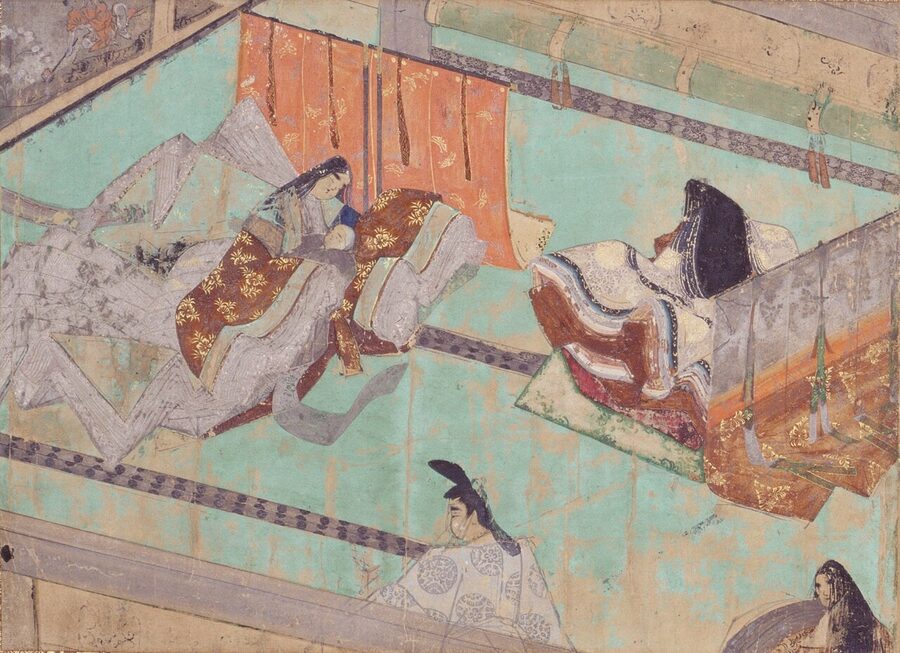
The birth, on the 11th day of the ninth month, is the longest set piece in the book, and the least romantic account of a royal birth I have read. Exorcists shout themselves hoarse, the spirits possessing the empress are transferred into women chosen as mediums, and one priest is knocked flat by the spirit he is wrestling. She is careful to say the priests were not weak, the spirits were simply terribly stubborn, and the priest assigned to her friend Saishō’s medium shouted all night until his voice gave out (the world of yokai and vengeful spirits was not folklore here, but medicine). When the boy is born at noon, she looks round at the women who have spent the night weeping and finds one with her carefully made-up face so ruined by tears that she was unrecognisable.
The baby was Prince Atsuhira, the future Emperor Go-Ichijō, and he made Michinaga the grandfather of an heir to the throne. The diary records the grandfather’s happiness with an odd tenderness. Michinaga comes in at all hours to pick the baby up, and one day the prince wets him; he takes off his robe, has it dried behind a curtain, and declares that being soaked by this prince is the thing he has been waiting for.
On the 16th day of the tenth month the emperor came to see his son. New pleasure boats, one with a dragon’s head and one with a bird’s head, were brought round the pond for Michinaga to inspect; two women dressed like figures from a Chinese painting carried two of the imperial regalia, the sword and the box holding the jewel; and the ladies’ layered robes are described in the kind of detail that historians of the kimono live on. Murasaki watched the palanquin bearers crawling up the steps bent nearly double, and thought that her own place, high up among the great, was not so different. Watching the waterbirds on the pond earlier, she had written that she could not see them as strangers floating on the water, since she too was floating through a weary world.
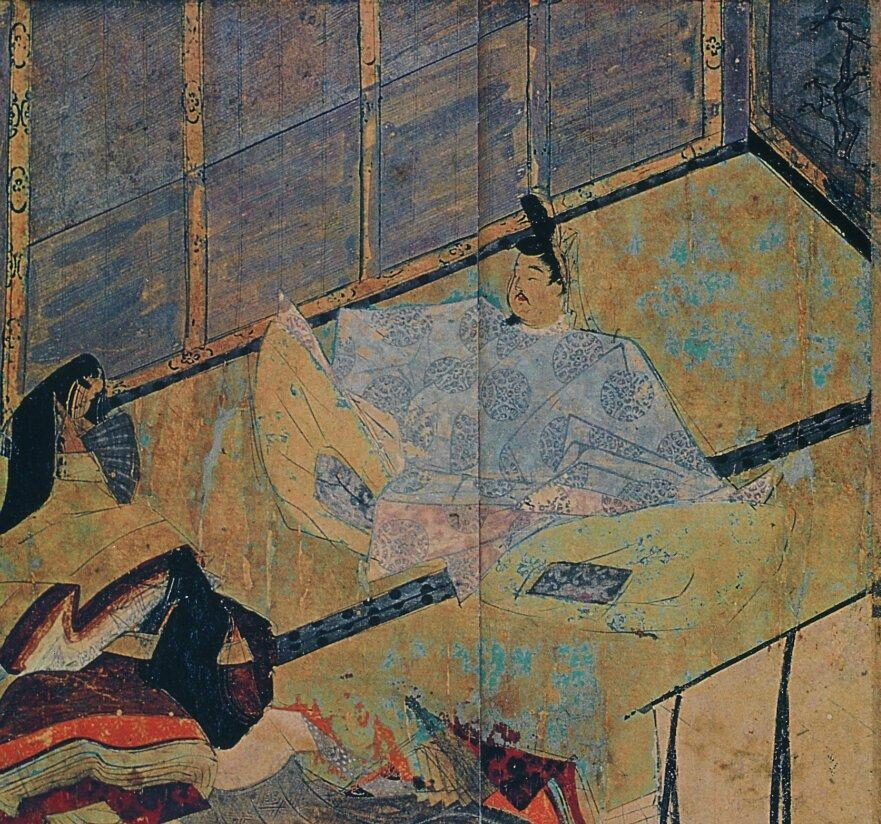
The fiftieth-day feast, on the 1st day of the eleventh month, is where the court goes to pieces. One minister tears open the seams of a curtain to get at the women behind it; the general Fujiwara no Sanesuke, the most serious man present, is caught counting the layers of the ladies’ sleeves; and Fujiwara no Kintō, the leading literary critic of the day, puts his head round the screens and asks, “Excuse me, would young Murasaki be anywhere hereabouts?” She sat still and thought that since there was nobody in the room remotely like Genji, there was certainly no Murasaki either.
That remark is the earliest securely dated mention of The Tale of Genji. Japan has since made 1 November its Classics Day, which is the right number on the wrong calendar, since the diary’s date is lunar and fell weeks later in the Western year.
The next scene is pure workshop. Before the empress went back to the palace she decided to have a fine copy of the tale made, and Murasaki spent her days choosing coloured papers, sending pages out to calligraphers and binding the results. Michinaga grumbled at his daughter for doing such work in the cold so soon after giving birth, then brought fine paper, brushes, ink and finally an inkstone, which the empress promptly gave to Murasaki while he complained. And while she was on duty he crept into her room, found the draft she had hidden there and gave it to his second daughter, so that an unrevised version went out into the world under her name.
The last scene of that year is a robbery. On the last night of the twelfth month, with the exorcism ceremony over and the guards gone home, she was blackening her teeth in her room when screaming broke out in the empress’s quarters, and she went to look with two other women, shaking, to find two ladies-in-waiting stripped naked by a thief. There was nobody to call; the men on duty had all left. Forgetting her dignity, she shouted for the chamberlain Hyōbu no Jō, whom most commentators identify as her own brother Nobunori, and he had gone home too.
Sei Shōnagon, and the letter
Partway through, the diary changes shape. The dated record breaks off and a long section begins that reads like a letter to an unnamed woman friend, with portraits of the women around her and then of herself, and it is the part that made her reputation for sharpness. Japanese scholars still argue about whether it was always part of the diary.
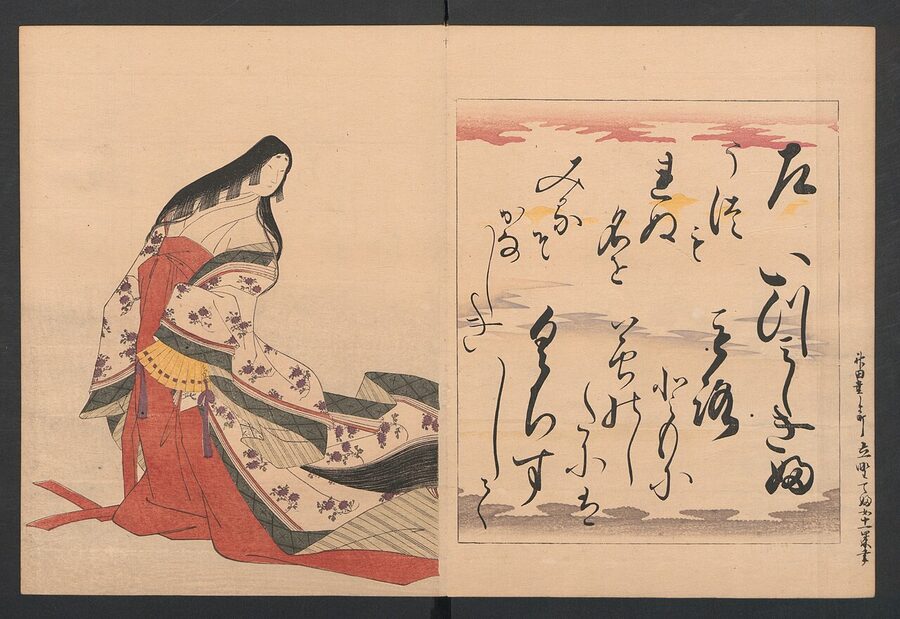
Izumi Shikibu, she writes, carried on a delightful correspondence and has a gift for dashing off letters with a fragrance in every careless word, but she has an improper side, and when it comes to understanding poetry she is not the real thing; poems simply seem to come out of her mouth. Akazome Emon, the wife of the governor of Tanba, is not of grand family, but her poems are truly distinguished and she does not scatter them about. There is a pointed aside about other women who produce poems so feeble they have almost broken in half and think themselves clever.
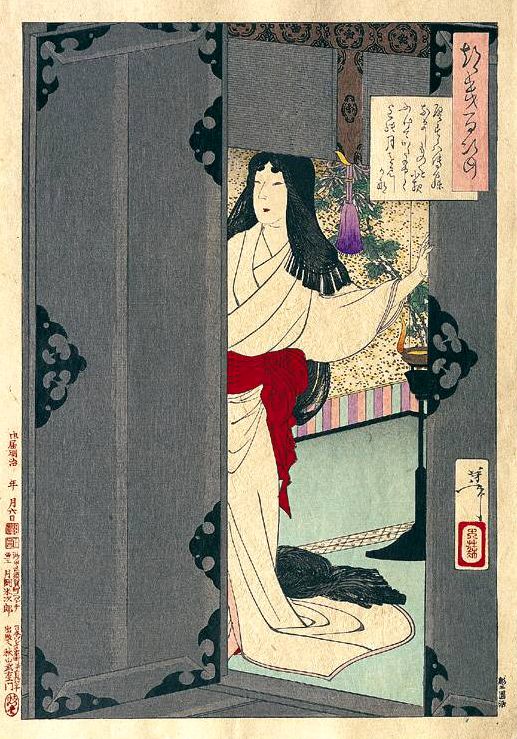
Then comes the paragraph that every Japanese schoolchild knows. Sei Shōnagon, she writes, is a woman with a dreadfully smug face. For all her show of cleverness and the Chinese characters she scatters about, if you look closely there is a great deal that falls short; people so set on being different from everyone else are bound to look worse in the end, and how could the end of a woman like that be anything but bad?
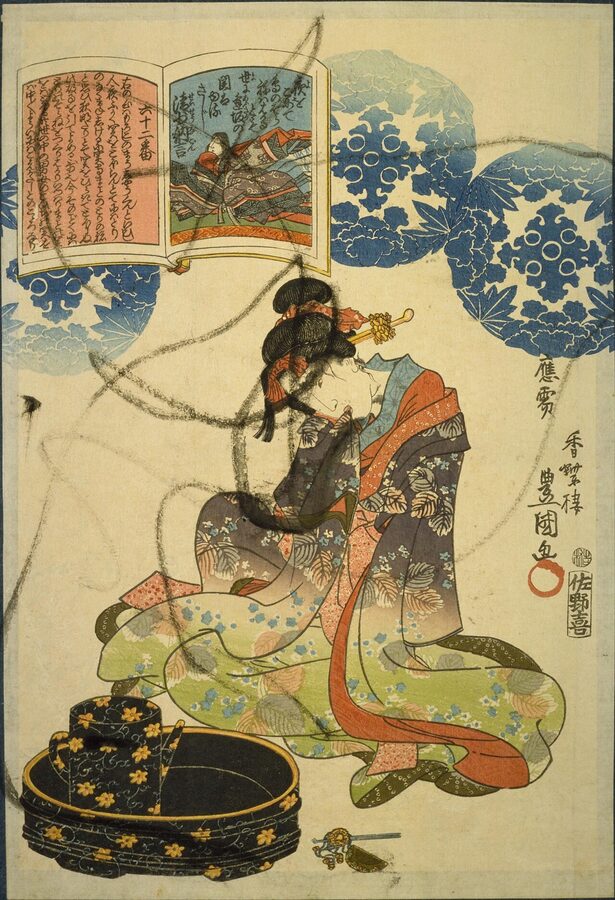
The two women probably never met. Sei Shōnagon’s service had ended with Teishi’s death, several years before Murasaki arrived at court, and although Tsunoda Bun’ei thought Sei came back to look after Teishi’s orphaned children, nothing proves they were ever in a room together. What Murasaki knew was the Pillow Book, which kept the memory of Teishi’s court alive in the face of her own mistress’s, and which, as some scholars note, had made fun of her husband.
My view is that it was all of those things and also temperament. Sei Shōnagon flaunted her Chinese; Murasaki hid hers, and resented a court that admired the flaunting. The letter’s real subject is the cost of being a clever woman, and it is no accident that the paragraph after Sei Shōnagon is about herself.
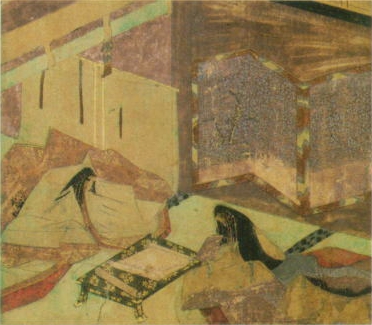
It is in this part that she tells the story of the character for one. A lady-in-waiting named Saemon no Naishi, the same woman who had carried the sacred sword at the imperial visit, heard that the emperor, listening to the tale being read aloud, had said the author must have read the Nihon Shoki, the official chronicle of Japan. She spread it round the courtiers that Murasaki was showing off and nicknamed her “the Lady of the Chronicles”, and Murasaki remarks that she would hardly flaunt her learning at court when she hides it even from the maids at home.
Her own maids, she says, whispered that reading Chinese books was why their mistress had so little luck; why should a woman read Chinese, when in the old days women were not even allowed to read sutras? So she pretended she could not read the inscriptions on the screens, and taught the empress the two scrolls of Bai Juyi’s ballads in secret, until Michinaga and the emperor found out and Michinaga had a fine copy made as a present for his daughter.
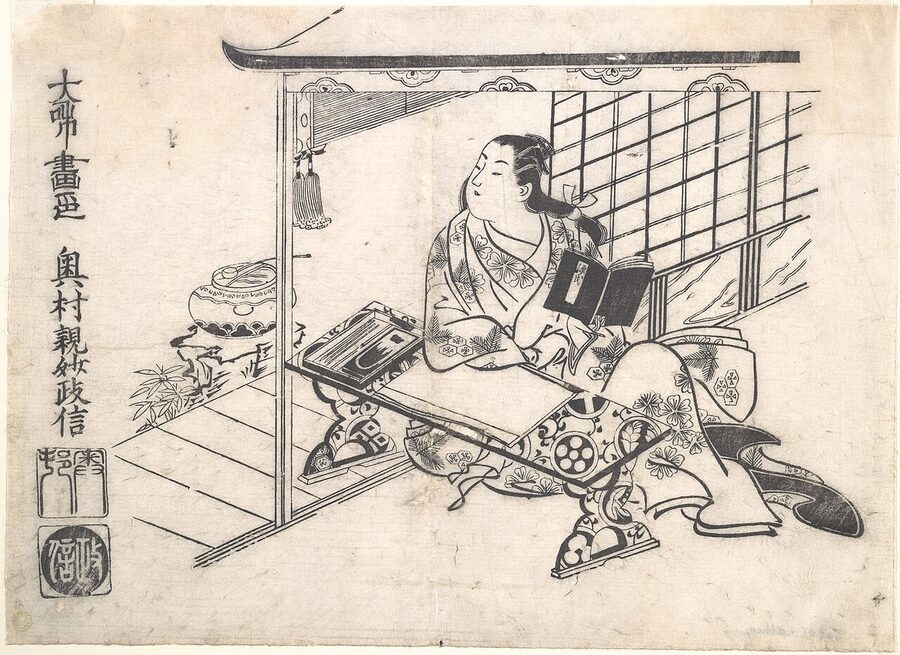
The letter also defends her mistress’s court, which she admits had a reputation for dullness, against the household of the Kamo Priestess. And it ends with what she wanted: to give herself to Amida and become a nun, though she is not sure she is ready, and she is getting to the age for it, and soon her eyes will be too weak to read the sutras. She was somewhere in her thirties.
She was also a working member of the household, with jobs to do. One spring a branch of double cherry blossom was sent up from Nara, and it was her task to receive it and offer a poem; she passed the honour to the newcomer Ise no Ōsuke, who produced the famous poem about the eightfold cherry of the old Nara capital blooming today in the ninefold palace, which ended up in the Hundred Poets. Her name is not on it, but she gave a newcomer her best moment.
The last sightings
The diary stops in the first month of 1010. Emperor Ichijō died in the sixth month of 1011, Shōshi became empress dowager, and Murasaki stayed with her. After that she fades into other people’s records, mostly as a nameless woman at a door.
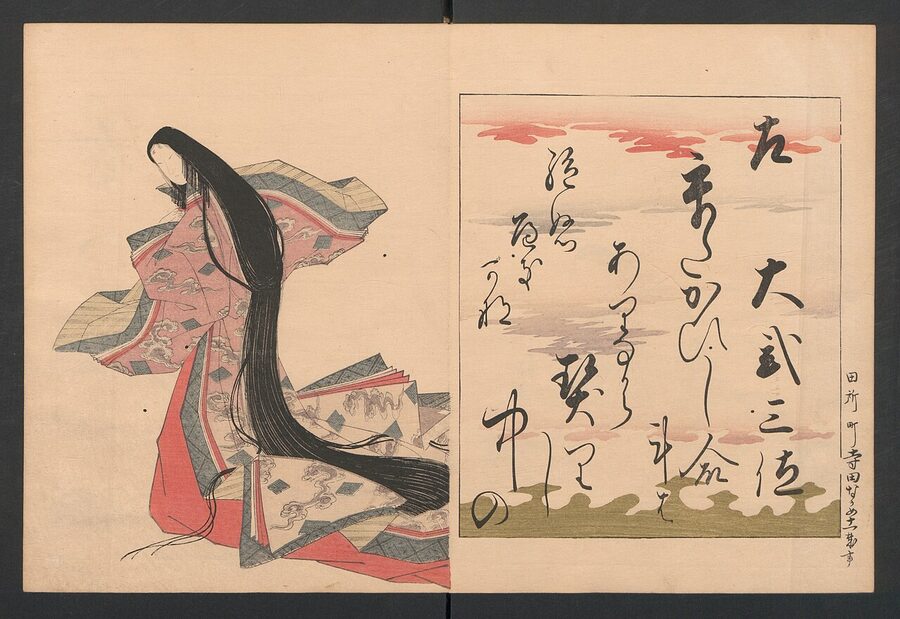
The most important record is the diary of Fujiwara no Sanesuke, the same general who counted sleeves at the feast. On the 25th day of the fifth month of 1013 he sent his nephew and adopted son to the empress dowager, and noted that the go-between who took the message was the daughter of Tametoki, the governor of Echigo. For decades this was taken to be the last trace of her, and the conventional death date of about 1014 grew out of it.
That date has a second prop. Tametoki, governor of Echigo from 1011, resigned in the sixth month of 1014 with a year still to run and came home; Oka Kazuo argued that he came back because his daughter had died early that year. Tametoki had already lost his son Nobunori in Echigo in 1011. On the 29th day of the fourth month of 1016 he became a monk at Mii-dera, and the poet Yosano Akiko read that as the sign of a death in the family instead, putting hers in about 1016.
Most others move the date later. Yamanaka Yutaka pointed to events of 1017 that seem to be reflected in the tale; Hagitani Boku and Imai Gen’e found her in a Sanesuke entry for the first month of 1019; Uehara Sakukazu puts her death at the end of 1020; the Edo scholar Andō Tameaki thought she was alive in 1025, and the historian Kuramoto Kazuhiro keeps her alive into the late 1020s or beyond. Tsunoda Bun’ei put her death in 1031, which is the date the temple of Rozan-ji gives, along with her age, fifty-nine.
So when an English-language summary says she died “in 1014 or 1025”, it is choosing two of at least eight proposals. I lean towards the later ones, mainly because the 1014 case rests on reading a father’s resignation as grief, and Heian governors resigned for all sorts of reasons. But nobody knows, and anyone who tells you otherwise has picked a scholar.
Her daughter, meanwhile, did better than any of them. Kenshi entered Shōshi’s service in about 1017 under the name Echigo no Ben, conducted affairs with at least three courtiers, one of them Kintō’s son, married twice, and in 1025 was appointed wet nurse to Prince Chikahito, the newborn son of Shōshi’s younger sister. When he became Emperor Go-Reizei she rose with him to Junior Third Rank, far above anything her mother or grandfather had held, and her second husband, Takashina no Nariakira, became Senior Assistant Governor-General of Dazaifu, which gave her the name she is remembered by, Daini no Sanmi. She was still composing for a palace poetry contest in 1078, at nearly eighty.
A novelist in hell
Within a century of her death Buddhist moralists had a problem with her. One of the five precepts forbids false speech, and a long, beautiful fiction about adultery was hard to fit into the rules; by the late 12th century the story was going round that she had appeared in someone’s dream and said she had fallen into hell for writing lies. The Hōbutsushū, a collection of Buddhist tales compiled around 1179, repeats it, and the historical tale Ima Kagami, written a decade earlier, already felt obliged to defend her.
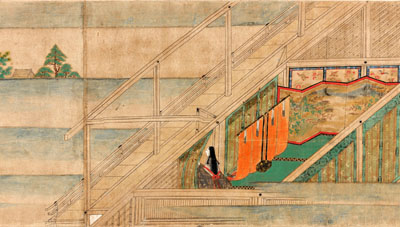
The response was a ritual called Genji kuyō, a memorial service for the book and its author. From around the 1170s and 1180s readers met to copy the twenty-eight chapters of the Lotus Sutra, one each, and dedicate them to rescuing Murasaki from hell and themselves from the sin of having enjoyed her. It was the medieval equivalent of a reading group with a guilty conscience.
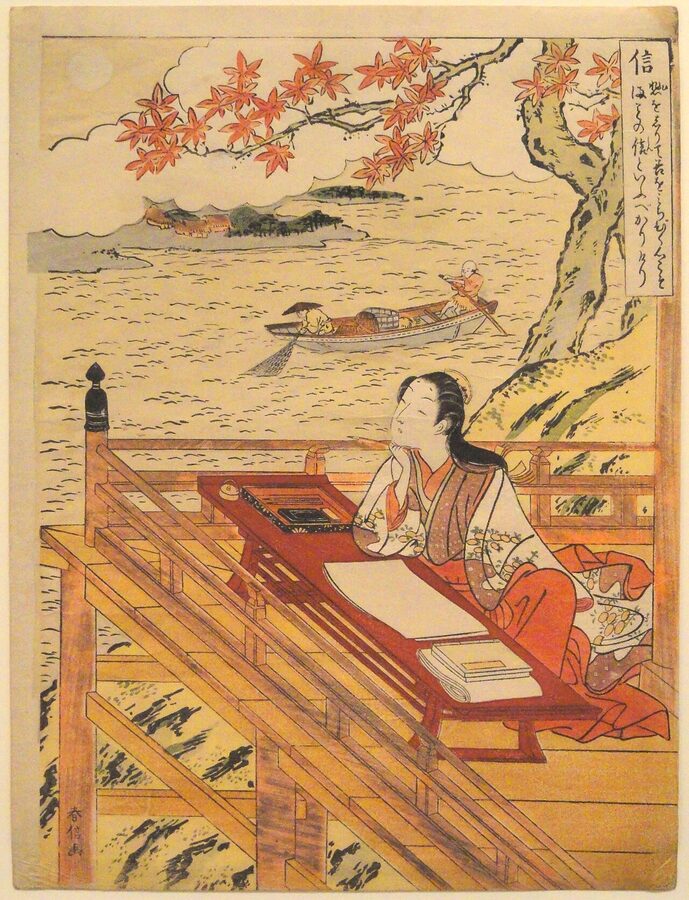
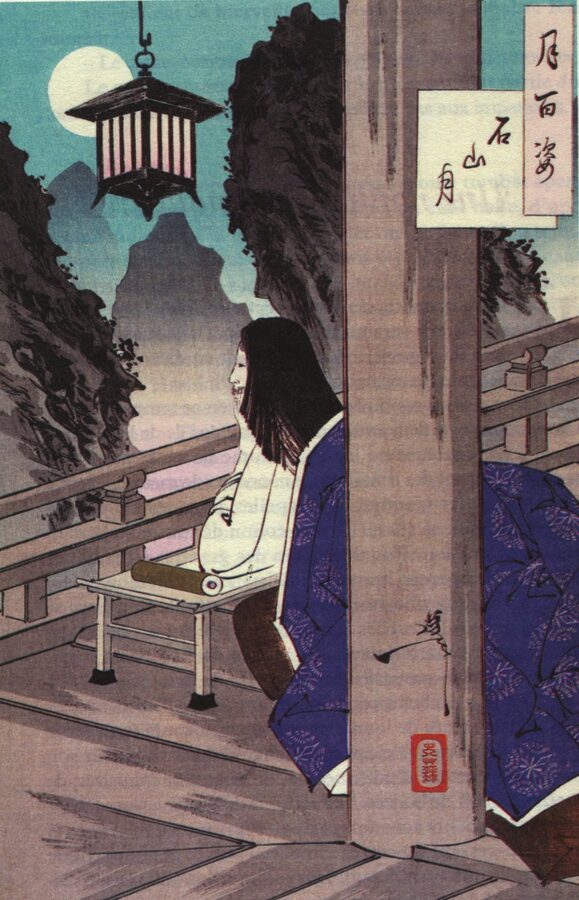
The same anxiety produced the opposite legend. At Ishiyama-dera, the temple of Kannon above the Seta River, the monks told how she had come to pray for inspiration in 1004 and, on the night of the full moon of the eighth month, seen the moon on Lake Biwa and begun writing the Suma and Akashi chapters on the spot. In some versions she was not a sinner at all but an incarnation of Kannon, writing to lead readers towards the truth. Neither the diary nor her poems mention any retreat at Ishiyama, which is why the 18th-century scholar Motoori Norinaga and others doubted it, though court women of her day certainly went on retreat there, as they did at Kiyomizu-dera and Hase.
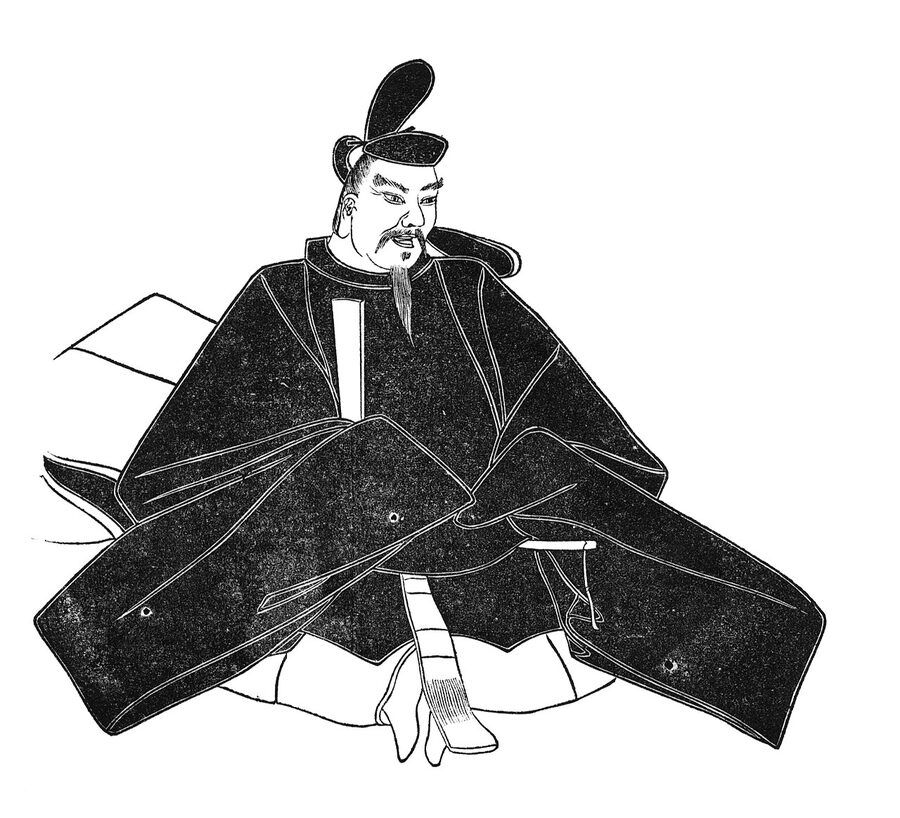
The Noh play Genji Kuyō puts both stories on stage. A priest on his way to Ishiyama meets a village woman who asks him to hold a memorial for Genji; she returns as the ghost of Murasaki, dances to a song made of the chapter titles, and is revealed as Kannon. Toyotomi Hideyoshi, who liked to perform Noh himself, danced it in 1592 and 1593, which is one of the stranger facts about the man who was invading Korea at the time.
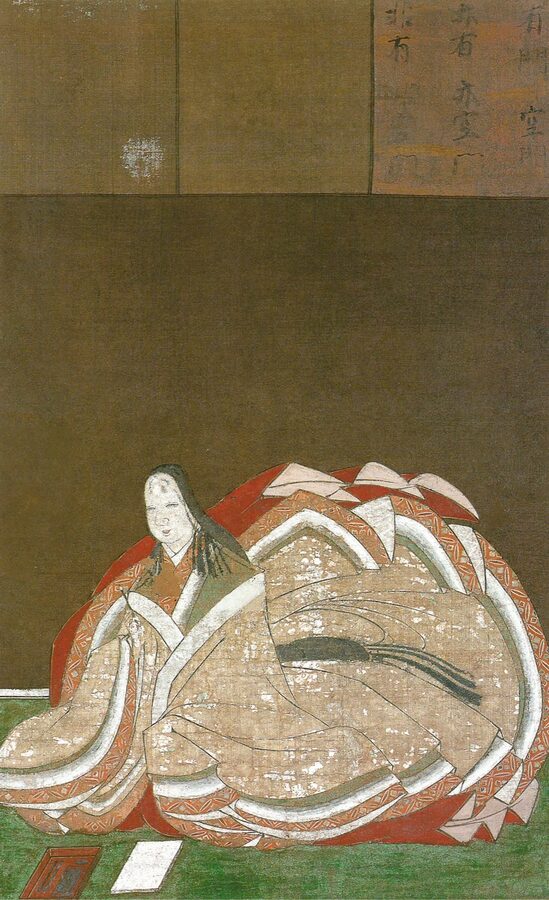
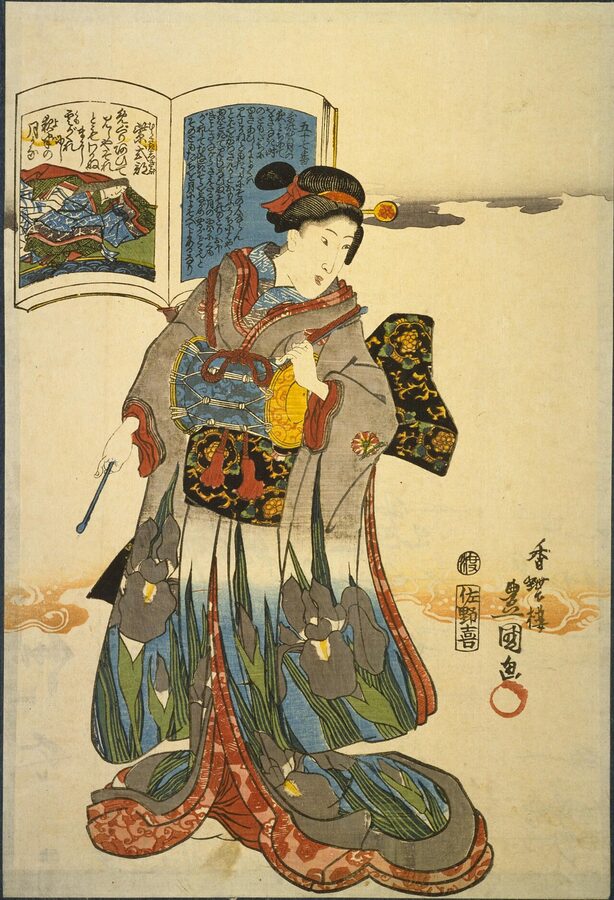
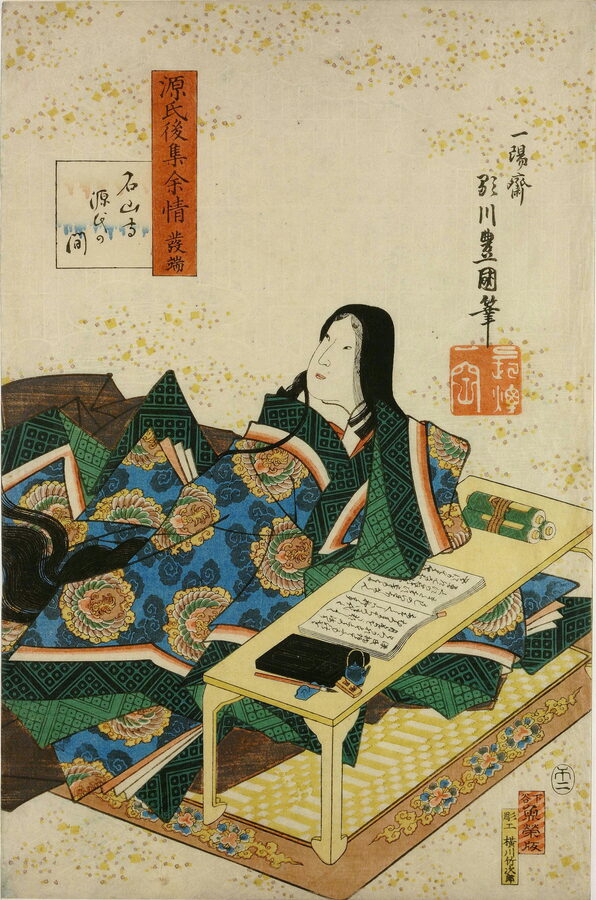
By the Edo period the hell story had gone out of fashion. Confucian scholars praised her as a model of female virtue and Andō Tameaki insisted she had been a chaste widow who never took a second husband; dowry sets for brides were painted with scenes from her book, and the ukiyo-e print designers, from Harunobu to Hiroshige, turned her desk at Ishiyama into one of their stock subjects. In 2000 she went onto the back of the new ¥2,000 note, using her figure from the diary scroll, and almost nobody uses it.
Where to find Murasaki Shikibu today
Most of her places are in Kyoto, and three of them are within a short bus ride of each other in the north of the city: Rozan-ji, her traditional grave and Senbon Enma-dō. Ishiyama-dera is about half an hour away in Otsu, and Echizen (Takefu) is a proper day trip into Fukui. If you are coming for the Tale of Genji places in Uji, the Byōdō-in stands on the site of Michinaga’s own Uji villa, which his son turned into a temple in 1052.
Rozan-ji, Kyoto
Rozan-ji (廬山寺) stands on Teramachi-dōri, across the road from the eastern wall of the Kyoto Gyoen, on the ground that Tsunoda Bun’ei identified in 1965 as the site of the old embankment house of her great-grandfather. If he is right, this is where she grew up, married, gave birth and wrote much of the tale. Masuda Shigeo thought he was over-reading a 14th-century commentary, and Uehara Sakukazu puts the house a little to the west, inside what is now the palace park; I would go anyway.
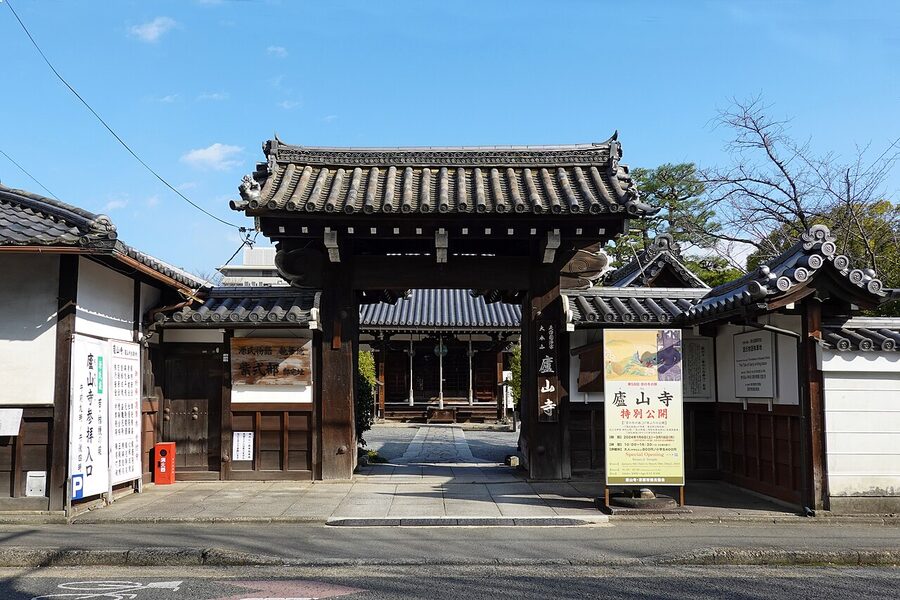
The temple itself is older than the theory. It was founded in 938 on the slopes of Funaoka by Ryōgen, the abbot who rebuilt Enryaku-ji on Mount Hiei, is said to have been spared in 1571 when Oda Nobunaga burned Hiei because Akechi Mitsuhide intervened, and was moved here in Hideyoshi’s rebuilding of the city. A stretch of Hideyoshi’s earth rampart, the Odoi, runs along the back of the precinct, and the main hall is a building moved from the retired emperor’s palace in 1794.
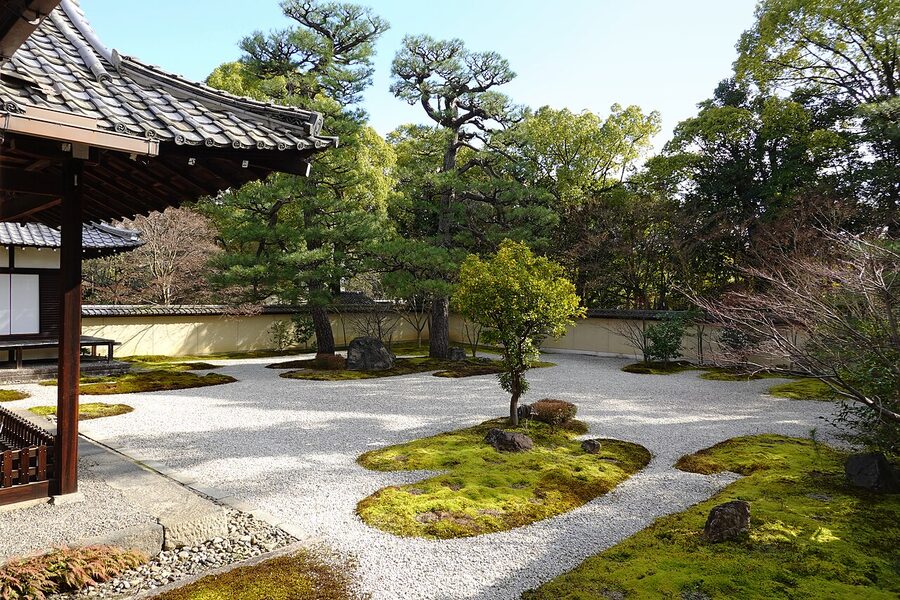
The garden is the reason to go, best seen from the veranda when the bellflowers are out. The temple’s own literature follows Tsunoda all the way, calling her Fujiwara no Kaoruko and claiming she was chosen by UNESCO as one of the world’s five great figures, a story that circulates widely in Japan and that I have never seen documented. On 3 February the temple holds its Setsubun ceremony with red, blue and black oni dancing in the precinct before being driven out with beans and rice cakes.
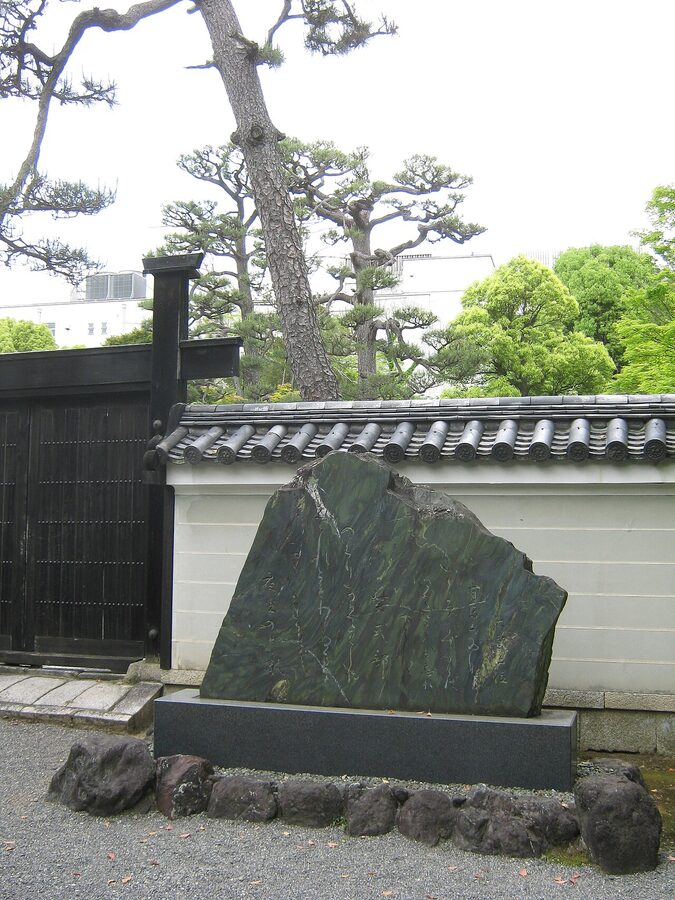
The temple’s official hours for the garden are 9:00–16:00, closed on 1 January and from 1 to 4 February; admission is ¥500 for adults and ¥400 for children. In autumn 2026, from 20 November to 6 December, it opens normally closed halls for the Kyoto special openings, with admission at ¥1,000 and hours to 16:30, and on 22 November it holds a memorial service for Murasaki Shikibu and her family at 13:00 with a talk afterwards. Kyoto city buses stop at Furitsu Idai Byōin-mae, about five minutes’ walk away, or you can walk from Demachiyanagi or Jingū-Marutamachi stations on the Keihan line in about fifteen minutes.
Her grave at Kitaōji Horikawa
Her traditional grave is in Murasakino, on the west side of Horikawa-dōri just south of Kitaōji, in a corner beside the Murasakino works of the Shimadzu Corporation. Two small burial mounds sit side by side behind a bamboo fence: hers and that of Ono no Takamura, the poet who commuted to hell. The Genji commentary Kakaishō, written by Yotsutsuji Yoshinari early in the Muromachi period, already places her grave just west of his, south of the Byakugō-in of Unrin-in, so the tradition is at least six hundred years old, which is not proof but is more than most of her places can claim.
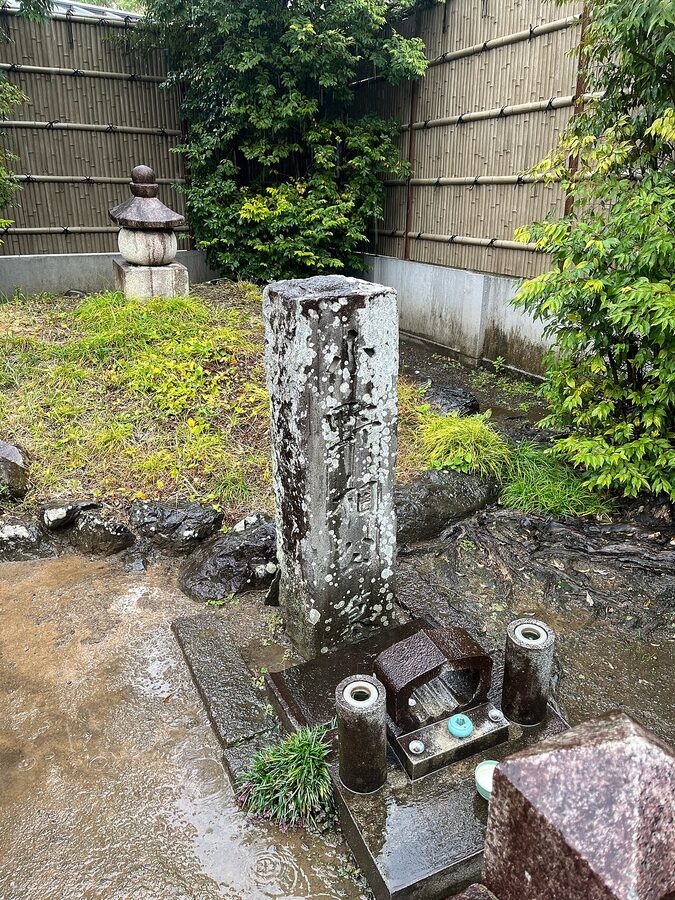
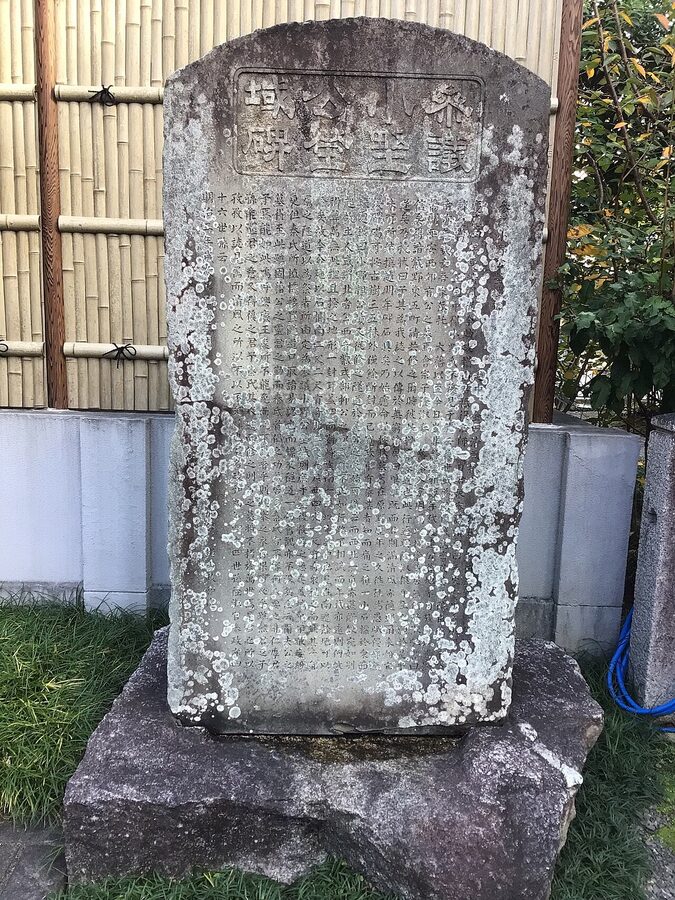
The plot is small, quiet and free, and there is no ticket office. Murasakino is the district where, local tradition says, she was born, near the site of Unrin-in, once a great temple and now a small hall belonging to Daitoku-ji, which turns up in the Sakaki chapter of Genji; the name of the district is one of the explanations offered for hers. Take any of the many city buses to the Kitaōji Horikawa stop, or walk about fifteen minutes west from Kitaōji subway station.
Senbon Enma-dō
A short bus ride south-west, Injō-ji, always called Senbon Enma-dō (千本ゑんま堂), stands at the old entrance to Rendaino, one of the three great burial grounds of medieval Kyoto. Its founding legend gives it to Takamura, who is said to have carved a figure of King Enma, judge of the dead, here; the Enma in the hall today was made in 1488. It is a working neighbourhood temple with red lanterns across the front of the hall, and it still uses Enma to teach local children not to tell lies.
The yard is free to enter and also has a modern statue of her. Come at the end of April, when the late Fugenzō cherry drops its blossoms whole, or for the masked Enma-dō Kyōgen plays in the first days of May. The nearest stop is Kenryūkō-mae on the city buses, two minutes’ walk away; the temple posts its event days on its own website.
Ishiyama-dera, Otsu
Ishiyama-dera (石山寺) is where the legend lives, and it does the legend handsomely, in a precinct worth the trip for its own sake. The temple was founded in 747 at the request of Emperor Shōmu by Rōben, the first abbot of Tōdai-ji, and in the Nara period it was enlarged by workmen and sculptors sent from Tōdai-ji’s own building office. Its main hall stands on a great outcrop of wollastonite, a national natural monument that gives the “stone mountain” its name.
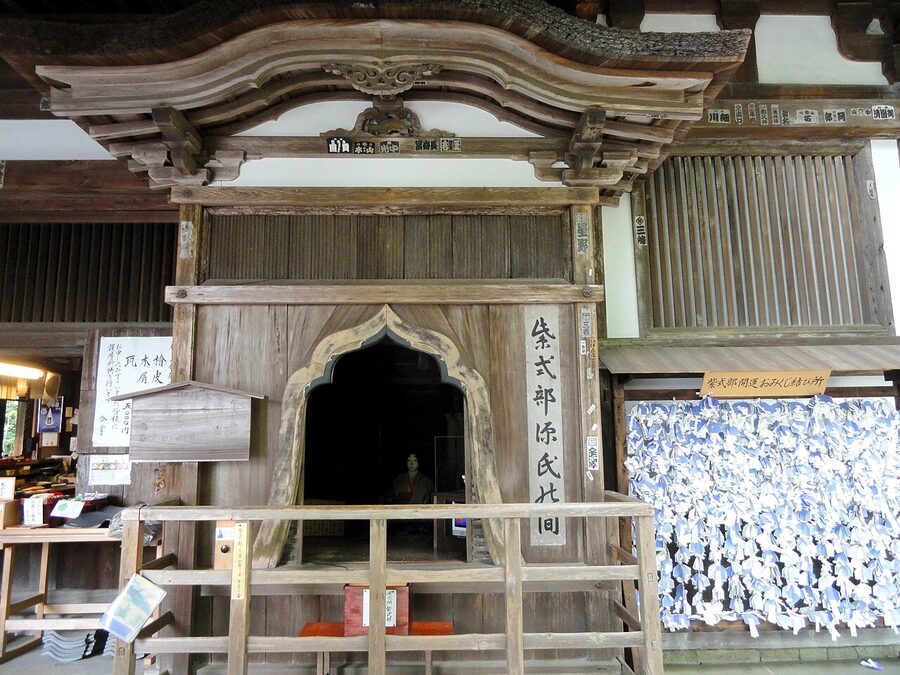
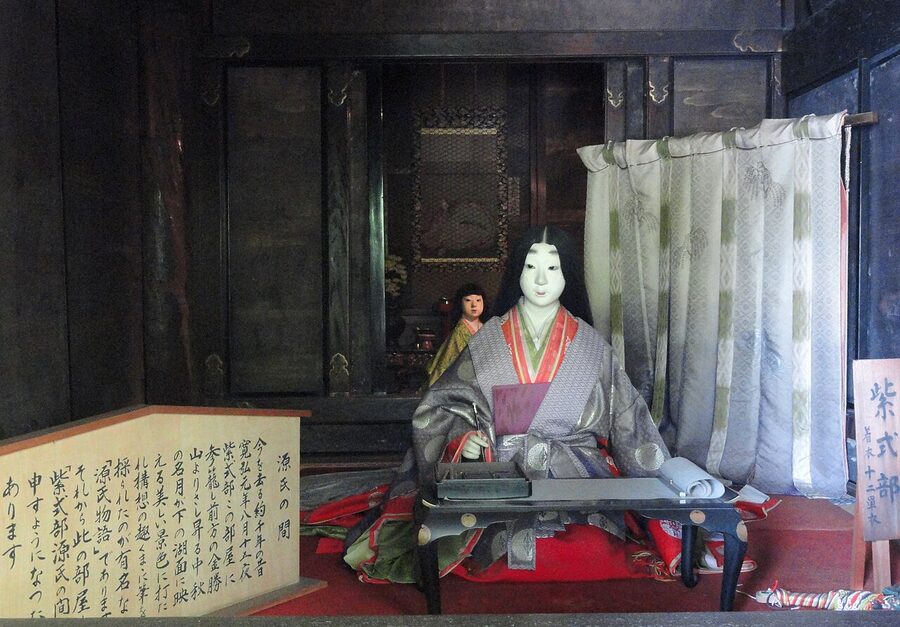
The Genji no Ma is a small room at the east end of the passage between the two parts of the hall, where she is said to have stayed and begun writing. A costumed figure of her at her desk, made by the tenth Itō Kyūjū, the Kyoto maker of court dolls, sits behind a cusped window, and the temple says that the shape of that window is why Japanese carpenters call it a Genji window.
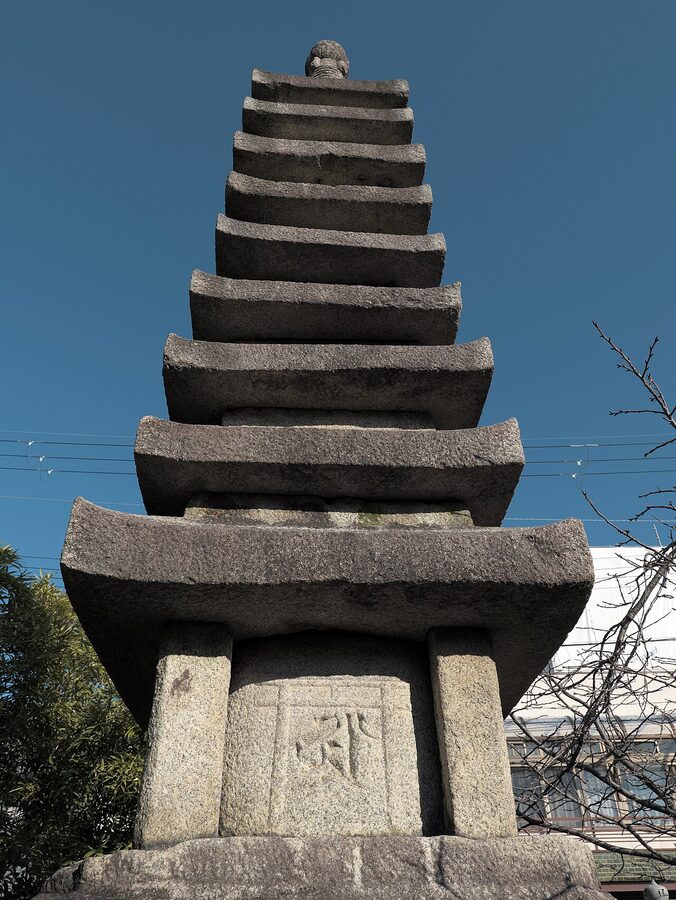
Further up the hill is the Tahōtō pagoda of 1194, a National Treasure and the oldest dated pagoda of its type in Japan, which temple tradition says was given by Minamoto no Yoritomo. Near the sutra store is a three-tiered stone stupa of the Kamakura period known as Murasaki’s memorial tower, standing beside a haiku stone for Bashō, and at the top of the precinct is a bronze statue of her and the Hōjōden treasure house, which opens only for the temple’s twice-yearly “Ishiyama-dera and Murasaki Shikibu” exhibitions. There is also a founders’ hall in which Kūkai is enshrined alongside Rōben and the scholar-abbot Jun’yu.
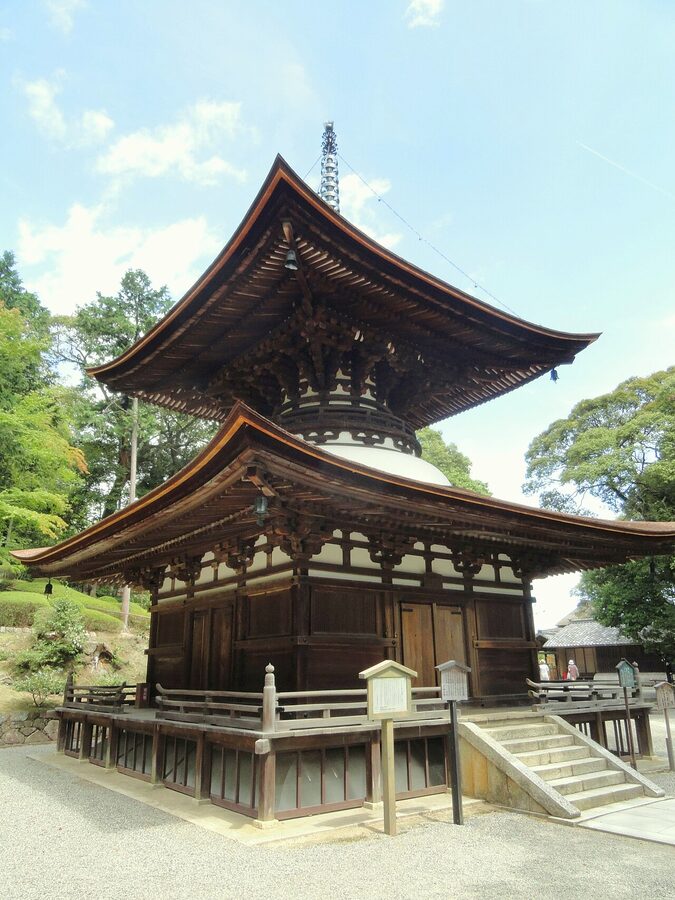
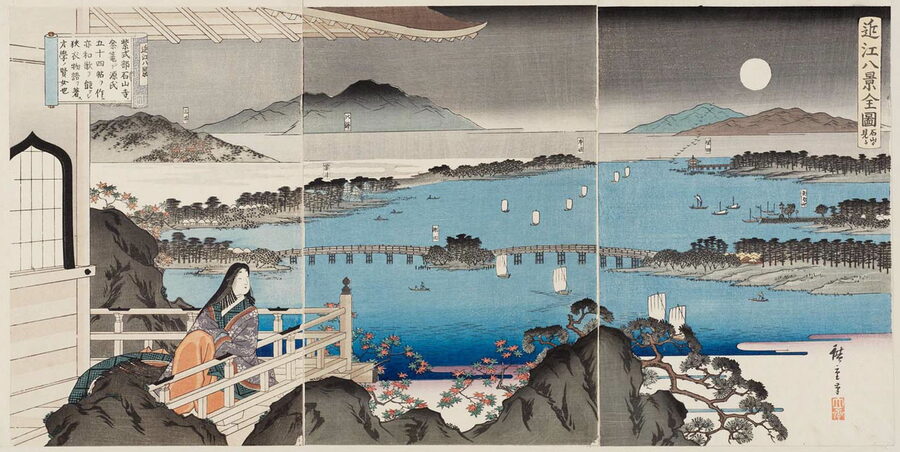
The temple’s official hours are 8:00–16:30, last entry 16:00, and admission is ¥600 for adults. The inner sanctuary of the main hall costs another ¥500 (9:00–16:00, closed on some festival days), and the Hōjōden ¥300 during the exhibitions, from 18 March to 30 June and from 1 September to 30 November. The maples are lit up in the evenings in the second half of November.
To get there, take the JR line from Kyoto to Ishiyama, thirteen minutes on the Special Rapid, and a bus for about ten minutes to Ishiyamadera Sanmon-mae; or walk ten minutes from Ishiyamadera Station at the end of the Keihan Ishiyama-Sakamoto line. That Keihan line also runs to Zeze, for Gichū-ji, the little temple of Tomoe Gozen and Kiso Yoshinaka, so you can make one long Otsu day of two very different women. I would go on a weekday in early spring or late autumn.
Echizen (Takefu): Murasaki Shikibu Park
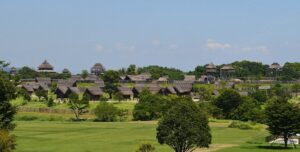
The city of Echizen, the old Takefu, has done more with one year of her life than most places do with their saints. Murasaki Shikibu Park, built by the city and finished in 1986, is a reconstruction of the garden of a Heian shinden-zukuri mansion, designed by the garden historian Mori Osamu, with a long pond shaped to hold the reflection of the moon, two bridges and a fishing pavilion built to Heian dimensions. It is said to be the only garden of its kind in Japan, and I believe it.
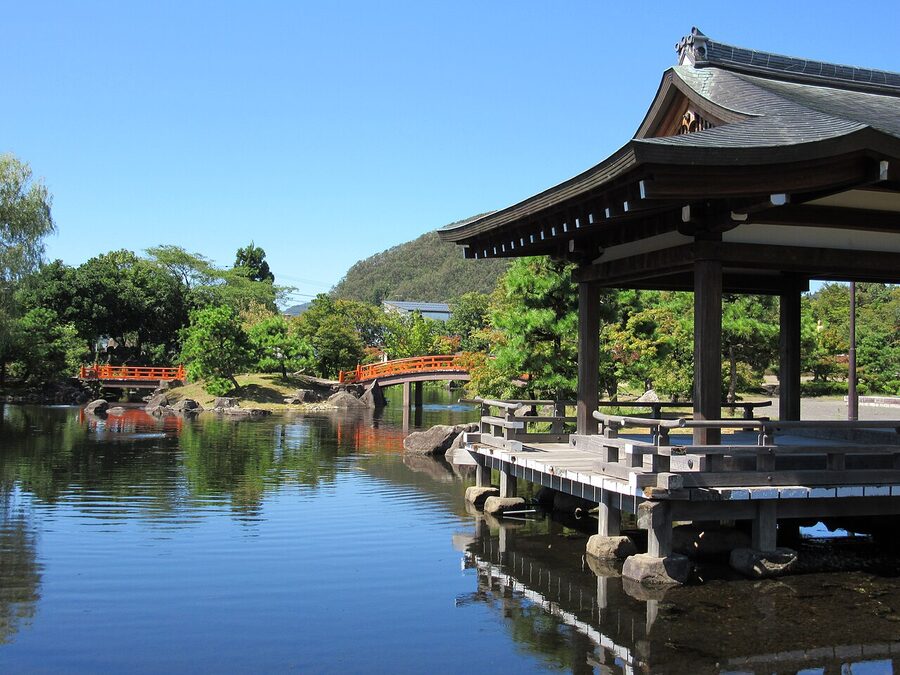
On a mound at the north-west corner stands a gilded bronze statue of her by the sculptor Enzuba Katsuzō, about three metres tall including the train of her robes, looking towards Mount Hino. The park also holds a poem stone carved with one of her poems in the hand of the novelist Tanizaki Jun’ichirō, who translated Genji into modern Japanese and came to Takefu for its unveiling at a temple in town in 1958; it was moved here in 1986. The park is free and always open.
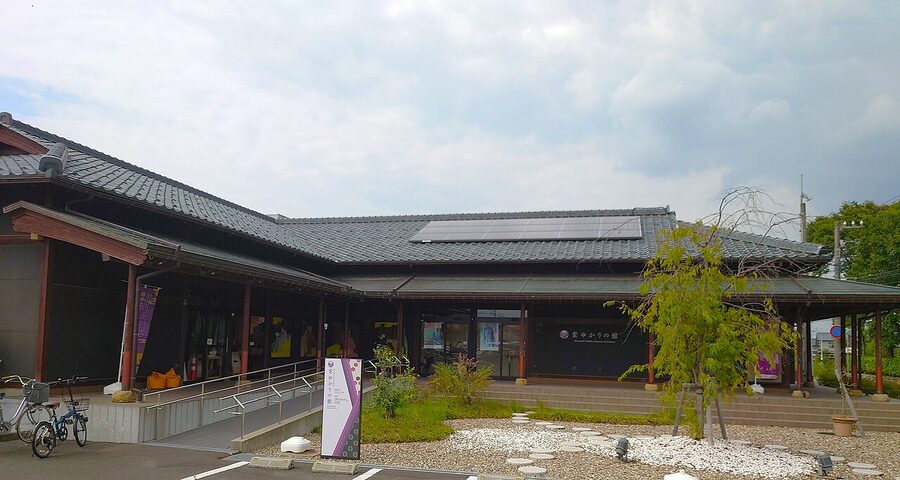
Across the road from the park, Murasaki Yukari no Yakata is free, open 9:00–17:00, and closed on Mondays (the next weekday when Monday is a public holiday) and from 29 December to 3 January. It tells the story of her year in the province without pretending to know where the governor’s residence stood. The city has been excavating in the centre of Takefu since 2023 to find the provincial headquarters, and so far it has found ditches, post holes and green-glazed pottery, but not the building.
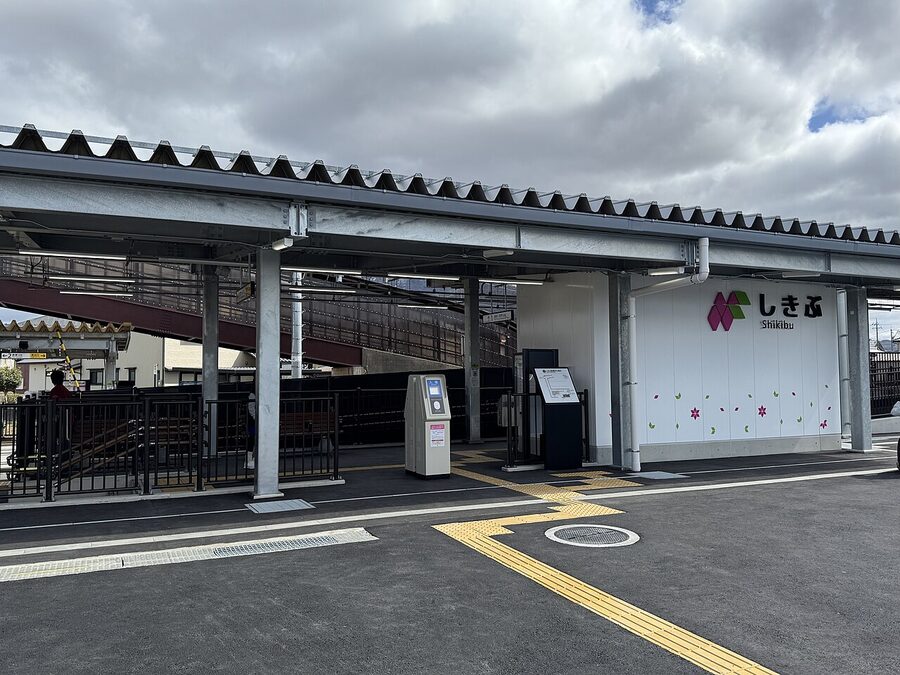
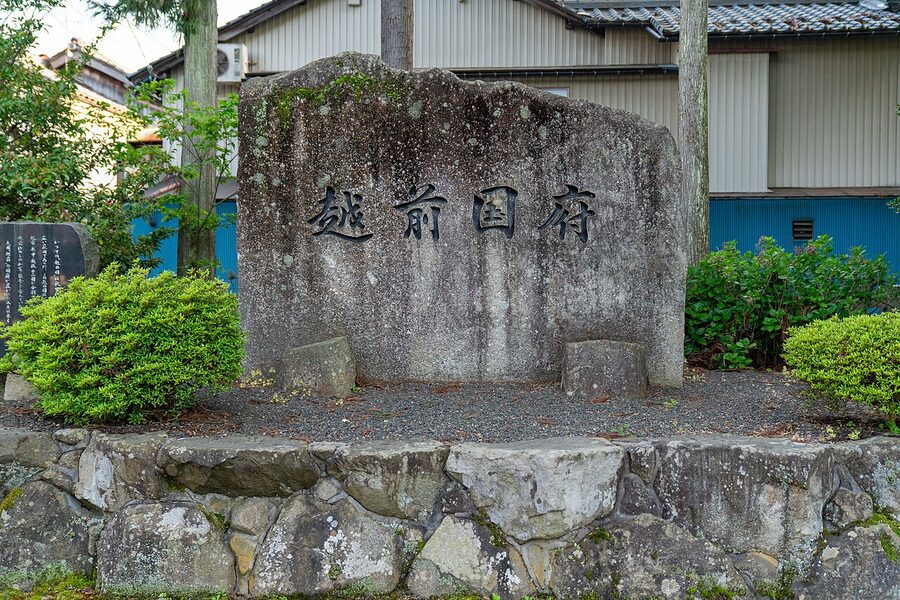
The easiest way in is now Shikibu Station on the Hapi-Line Fukui, opened in March 2026 between Ōshio and Takefu, about a kilometre’s walk from the park. From the Hokuriku Shinkansen, Echizen-Takefu Station is about five and a half kilometres away by taxi; from Takefu Station on the Hapi-Line, buses run to the Bunkyō 1-chōme stop, about 250 metres from the park. If you have time, walk into the old centre to Sōja Daijingū, the head shrine of the province, where a stone marks the site of the Echizen provincial capital.
The stroke she would not write
I keep coming back to that horizontal line. A woman who could read the Chinese histories faster than her brother spent her working life at a court that admired her for a book written in the women’s script and mocked her for knowing the men’s, and she dealt with it by pretending, in her own diary, that she could not manage the simplest character there is. Then she wrote down, in the next breath, exactly how much she knew, for a friend and, it turned out, for everybody after.
If you want to find her, the places above will get you close. But the best way is to read the diary itself, which is short, and then go and sit on the veranda at Rozan-ji in late summer, when the bellflowers are out, and look at the white gravel. It is the same colour as an unwritten page, and the first stroke on it would be one.