If you were a courtier walking home through Kyoto after dark a thousand years ago and you met the night parade of a hundred demons, the approved response was to tell them you were drunk. A primer compiled in 970 for the son of a great noble house, the Kuchizusami, records a little verse for the purpose. It is half nonsense, and the half that makes sense says, roughly, “hands drunk, feet drunk, I have got myself drunk.”
Nobody now agrees on exactly why that worked. Perhaps the demons had no interest in a man who was already out of his wits; perhaps the words were a charm and the meaning was beside the point. What I like about it is how practical it is. The same primer lists the nights when the parade was due, one day of the twelve-day zodiac cycle for each pair of months, so that a sensible man could simply stay in, and if he had to go out, he had a line ready.
That is the right way into the yōkai (妖怪), the strange creatures of Japanese tradition. They were never a mythology in the Greek sense, with a family tree and a mountain; they were a working vocabulary for the things that went wrong at night, on roads, by rivers and in old houses. Over twelve centuries of Japanese history they turned from omens into monsters, from monsters into book illustrations and toys, and from toys into the bronze statues that now line a shopping street in a fishing port in Tottori. This is how that happened, what the old texts actually say, and where you can go to meet them.
In This Article
- Mononoke, bakemono, obake: a word that meant trouble
- The philosopher who wanted them gone
- The folklorist who kept them
- The night parade on Ichijō Avenue
- Older than the parade
- Old tools, new monsters: the tsukumogami
- The Edo boom: a hundred stories and a picture dictionary
- Toriyama Sekien
- Toys, prints and a prophet in the sea
- A field guide to the famous ones
- Kappa
- Tanuki
- Rokurokubi
- Nurikabe
- Yuki-onna
- Umibōzu
- Mizuki Shigeru and the second boom
- Where to see yōkai today
- Mizuki Shigeru Road, Sakaiminato
- Miyoshi Mononoke Museum, Hiroshima
- Ichijō Yōkai Street and Daishōgun Hachi Jinja, Kyoto
- Tōno, Iwate
- In Tokyo: Tetsugakudō Park
Mononoke, bakemono, obake: a word that meant trouble
Start with the word, because it has moved. In the third month of 777, according to the Shoku Nihongi, the court held a great purification “because yōkai appeared frequently in the palace.” Some English-language accounts date the entry to 772; the era date in the chronicle, the eighth year of Hōki, is 777. Either way the word did not mean a creature.
It meant a portent, something uncanny happening, the kind of event a court diviner was paid to interpret.
The Heian court’s own word for the dangerous unseen was mononoke (物の怪), and it meant something closer to a hostile spirit that got inside people. Sei Shōnagon complains in the Pillow Book of a mononoke that would not let go of a patient, and Murasaki Shikibu writes of one as dreadfully stubborn. In the Heian era these were dealt with by exorcist monks, mediums and a great deal of chanting, and the patients were usually women of the household.
By the fourteenth century the word yōkai could describe an apparition you might see, but it was still a rare and learned word. The Edo townsman said bakemono (化物), “a thing that changes”, or the friendlier obake, and the scholar wrote kishin, spirits and demons. If you had asked a fishmonger in the 1780s to tell you about yōkai, he would have looked at you as though you had used a word from a Chinese dictionary, which in a sense you had.
The philosopher who wanted them gone
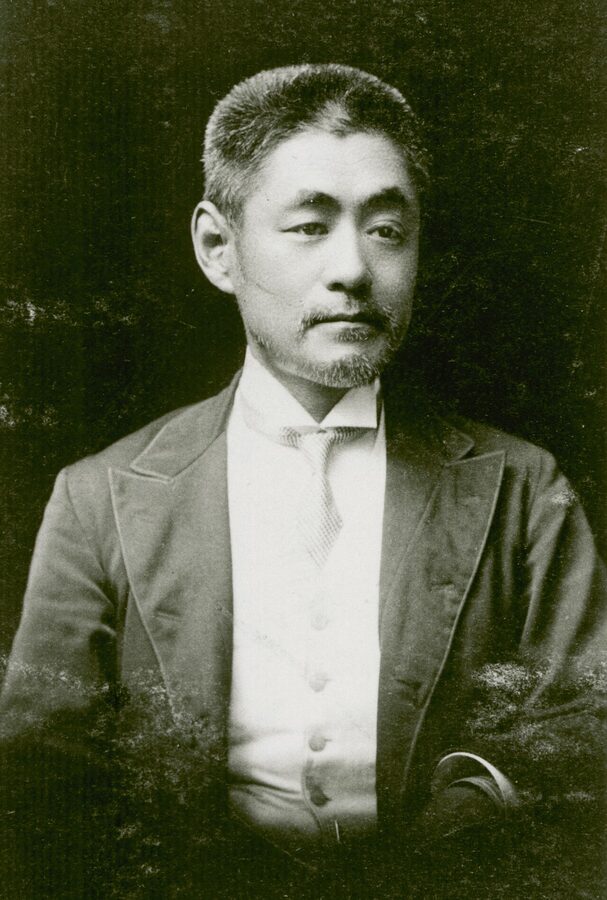
The man who made yōkai the standard word was trying to abolish the things it described. Inoue Enryō, born in 1858 to a temple family in Echigo, studied philosophy at the University of Tokyo and in 1887 founded a private college, the Tetsugakkan, which became Tōyō University. He believed the new Japan of the Meiji era could not modernise while half its population feared fox possession and lucky days, and he set out to classify every superstition in the country so that it could be explained away.
His lectures came out as the Yōkaigaku Kōgi, “Lectures on Yōkai Studies”, in 1896, six volumes that sorted every kind of wonder he could collect, much of it sent in by correspondents across Japan. He sorted wonders into the false (fraud), the mistaken (misperception and fear), the provisional (real natural phenomena not yet understood) and a final category he called shinkai, true mystery, which for him was the infinite reality behind the universe and not anything you could meet in a corridor. He became known as Obake Hakase, Doctor Ghost.
The irony is real. Before Enryō, the kappa, the tanuki and the snow woman had no shared category. After him, the newspapers, then the folklorists, then the comic artists all used his word, and it stuck to the creatures rather than to the superstitions.
The folklorist who kept them
The folklorist was Yanagita Kunio, a civil servant who collected stories as other men collect stamps. His view, set out in essays later gathered as Yōkai Dangi in 1956, was that yōkai were gods who had lost their worshippers: the water spirit nobody feeds becomes the kappa that drowns children. He also drew a line that is still quoted. A yōkai, he said, haunts a place and waits for whoever comes along at dusk; a ghost, a yūrei, pursues a particular person and comes at any hour.
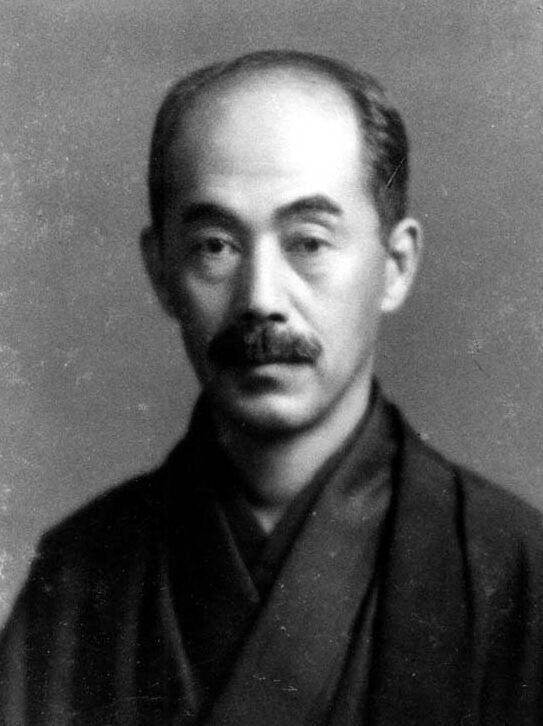
Modern scholars, Komatsu Kazuhiko above all, have picked holes in both halves of that. Plenty of yōkai were never gods, and plenty of ghosts loiter at a single bridge for centuries. But the two men between them fixed the word and the field. The Kaii-Yōkai Densetsu database that Komatsu’s team built at the International Research Center for Japanese Studies in Kyoto now holds more than 35,000 reported encounters drawn from folklore journals and local histories, and you can search it in Japanese for free.
The night parade on Ichijō Avenue
Go back to those Heian streets. The hyakki yagyō (百鬼夜行), the night procession of a hundred demons, turns up again and again in the story collections of the eleventh to thirteenth centuries, and the stories have a shape. A nobleman is out at night on some errand he would rather not explain. He hears torches and voices, sees a crowd of oni of every shape coming down the avenue, and survives because of a Buddhist spell, usually the Sonshō darani, that someone has sewn into his clothes.
The Konjaku Monogatarishū, compiled in the early twelfth century, tells it of Fujiwara no Tsuneyuki, son of a minister, who in the Jōgan era (859 to 877) was slipping off to see a lover when he met about a hundred demons near the Bifukumon gate of the palace. His old nurse had had the darani copied and sewn into his collar. The demons saw it, shouted that there was a spell here, and ran. It is the earliest case I know of a nanny saving a young man from the consequences of his love life.
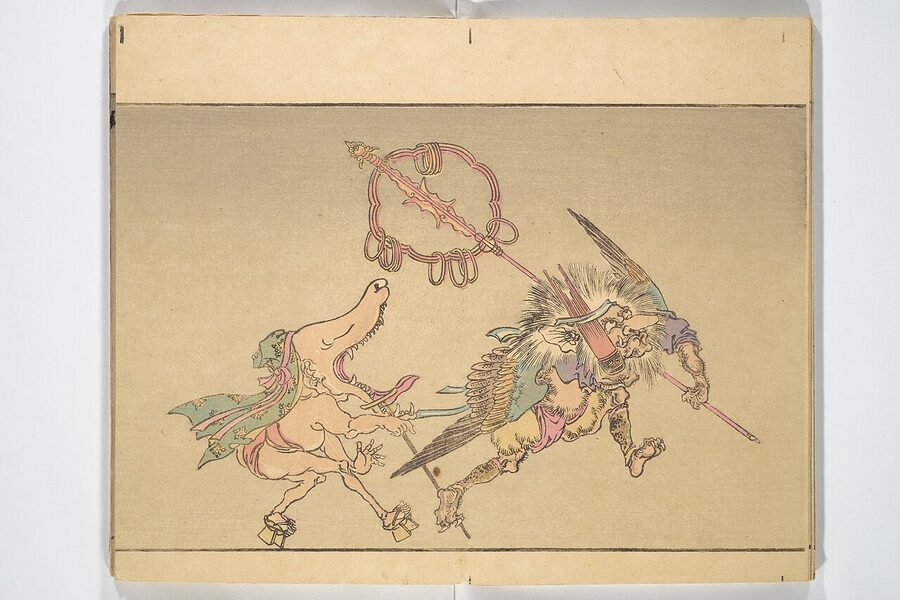
My favourite version is in the Gōdanshō, a collection of the conversation of the scholar Ōe no Masafusa. The poet and official Ono no Takamura, who had a reputation for seeing things other people could not, was walking with the young Fujiwara no Takafuji and spotted the parade before anyone else. Knowing that the boy’s clothes had the darani sewn in, he steered him straight into it to see what would happen. When the demons had fled, Takamura told the shaken boy, with great politeness, that he had had the honour of arranging the meeting.
The great historical tale Ōkagami has Fujiwara no Morosuke meet the parade and save himself by reciting the darani, and the Konjaku has the young Abe no Seimei, later the most famous diviner in Japanese history, spotting oni coming down the road while his teacher dozed in the cart. These are court stories about court men, which is a reminder that the hyakki yagyō was mostly a hazard of the Fujiwara capital, not of the countryside.
The Uji Shūi Monogatari adds two that have stayed in the city’s memory. In one, a wandering monk spending the night in an old temple in Settsu finds a hundred oni filing in and sitting down around him; one of them carries him outside to make room, and in the morning he finds himself in Hizen, at the other end of the country. In the other, a horse-headed oni walks down Ichijō Avenue at night chanting a line of scripture about the impermanence of all things. Keep Ichijō in mind; the shopkeepers there certainly have.
Older than the parade
The parade stories were written down in the Heian period, but the creatures in them came from further back, and here it pays to be careful with the sources. The Kojiki of 712 and the Nihon Shoki of 720 have oni-like beings and the great eight-headed serpent Yamata no Orochi, a local god in some readings, whom the storm god Susanoo gets drunk and cuts to pieces; the sword found in its tail became one of the Three Sacred Treasures. Neither chronicle calls any of these yōkai.
The Nihon Ryōiki, a collection of Buddhist miracle tales from the early ninth century, has the first stories that read like later yōkai tales: an oni that devours a bride on her wedding night, a fox wife who goes back to the wild. The Nihon Shoki also has a mujina, a badger, in Mutsu in the thirty-fifth year of Empress Suiko’s reign (627) that “turned into a man and sang”, the first shapeshifting animal in the Japanese record, and an ancestor of every tanuki that has played a trick since.
What none of these texts has is a picture. For four centuries, people knew what a demon did and roughly what it was like, but not exactly what it looked like. That changed in the scroll studios of the Kamakura and Muromachi periods.
Old tools, new monsters: the tsukumogami
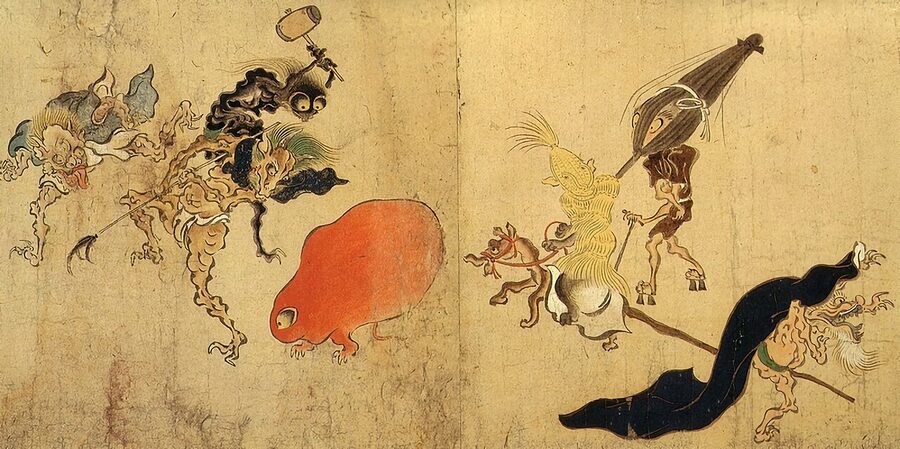
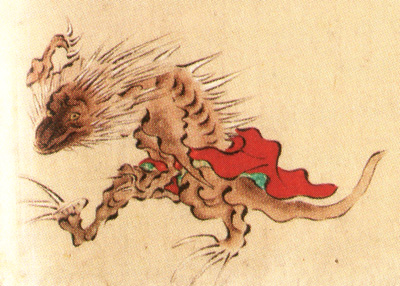
The most famous picture of the night parade is a scroll kept at Shinju-an, a subtemple of Daitoku-ji in northern Kyoto, and registered as an Important Cultural Property. It was painted in the sixteenth century and tradition gives it to Tosa Mitsunobu, the court painter, though nobody has proved it. It has no text at all. The creatures simply process from right to left, and the scroll ends with a huge red ball rolling in on the stragglers, which most readers take to be the rising sun and some take to be the fire of a Buddhist spell.
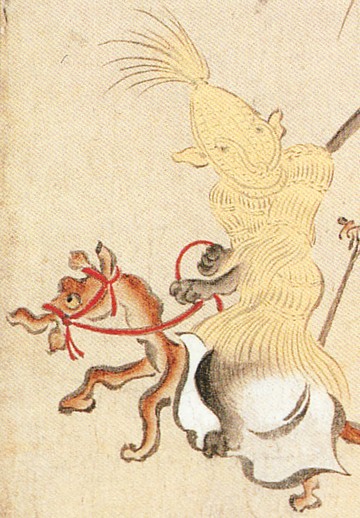
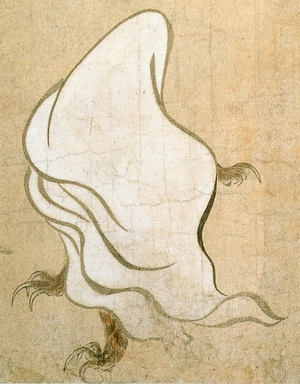
The striking thing is what is marching. A few are classic oni, but most of the Shinju-an parade is made of household objects: pots and cooking vessels, musical instruments, umbrellas, Buddhist ritual tools. These are tsukumogami (付喪神), and the story that explains them is in a separate Muromachi scroll, the Tsukumogami-ki, “the record of the tsukumogami”.
Its opening line cites a book on yin-yang lore nobody has ever found: “after a hundred years, an object acquires a spirit and deceives the hearts of men; this is called a tsukumogami.” The story is set in the Kōhō era (964 to 968). At the year-end house cleaning, the susuharai, the people of the capital throw out their old tools, and the tools, discarded one year short of their hundredth birthday, are furious. On the night of Setsubun they turn into monsters, hold a council, prey on people and animals, and stage their own festival procession.
They come to grief, as usual, on the Sonshō darani and the protector spirits of esoteric Buddhism, and then something unexpected happens. Repentant, the tools shave their heads, become monks of the Shingon school, train in the mountains and attain Buddhahood. The scroll is a sermon on the Shingon teaching that even grass, trees, tiles and pots can become Buddhas, wrapped around a monster story so that people would sit still for it.
“Tsukumo” is a pun. It means ninety-nine, one short of a hundred, and borrows a phrase from the Tales of Ise for an old woman’s white hair. The oldest surviving copy, a two-scroll set of the sixteenth century, belongs to Sūfuku-ji in Gifu, but the courtier Sanjōnishi Sanetaka wrote in his diary for the tenth day of the ninth month of 1485 that he had looked at a “Tsukumogami picture” in two scrolls, so the story was around in some form before that.
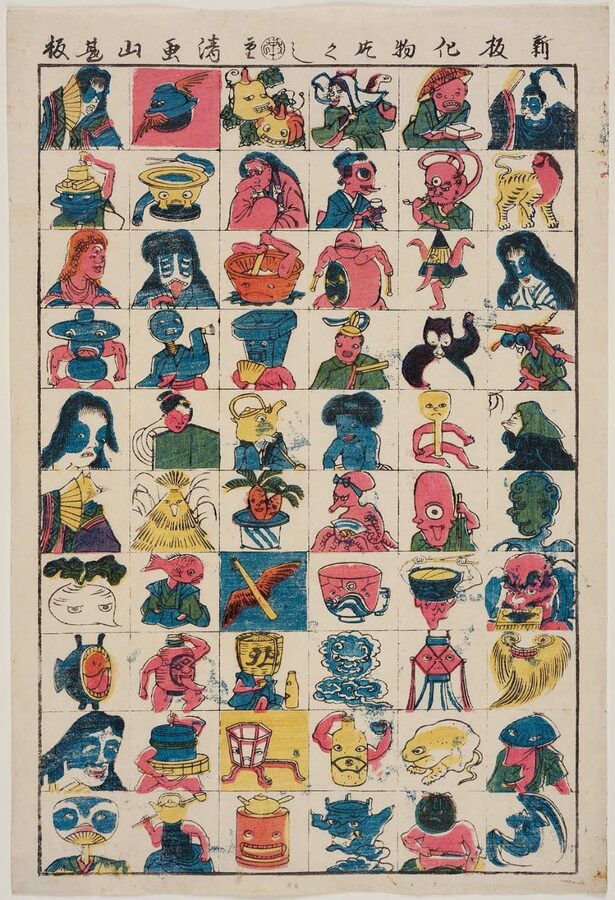
Komatsu Kazuhiko makes the point that the tsukumogami as an idea faded after the Muromachi period. Object-monsters came back in Edo prints, but as gags about broken umbrellas, with the religious teaching stripped out. That is the story of yōkai in miniature: something that started in the temple ended up on the stationer’s counter.
The Edo boom: a hundred stories and a picture dictionary
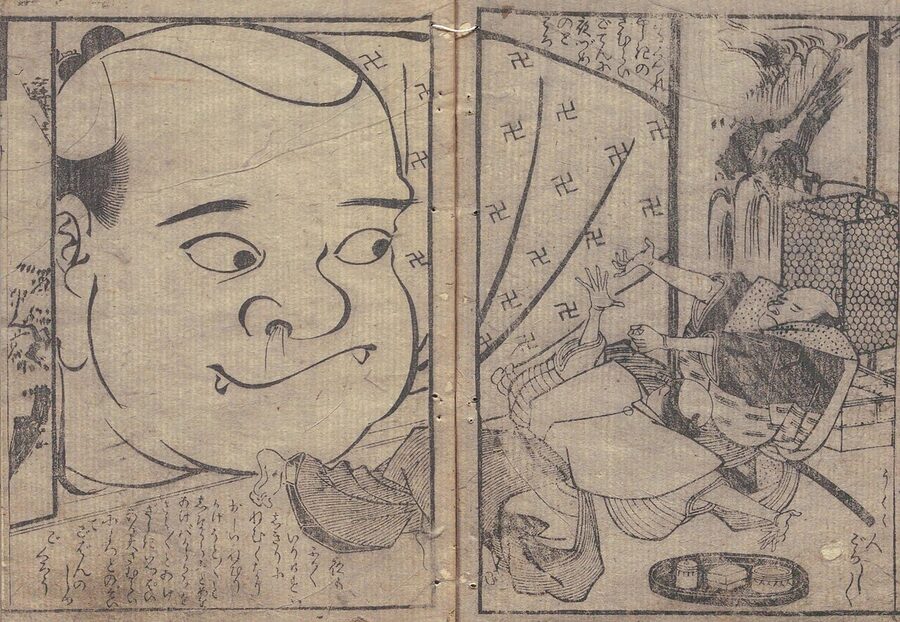
The Edo period made yōkai into entertainment, and the machine that did it was the hyakumonogatari kaidankai, the gathering of a hundred strange tales. The format was simple. A group met at night, lit a hundred wicks in a lamp shaded with blue paper in a back room, and took turns telling strange tales; after each one, a wick was put out and the room grew a little darker. When the hundredth flame went out, something was supposed to appear.
A description printed in 1802, in the Wakan Kaihyōrin, adds that the swords and short swords of everyone present had to be hidden first, which tells you something about the company. It may have begun as a courage test among Sengoku warriors, and by the late seventeenth century it was a parlour game. Publishers followed: the Shokoku Hyakumonogatari came out in 1677, the Otogi Hyakumonogatari in 1706 and the Taihei Hyakumonogatari in 1732, and the telling season was summer, around Obon, when the dead were already close.
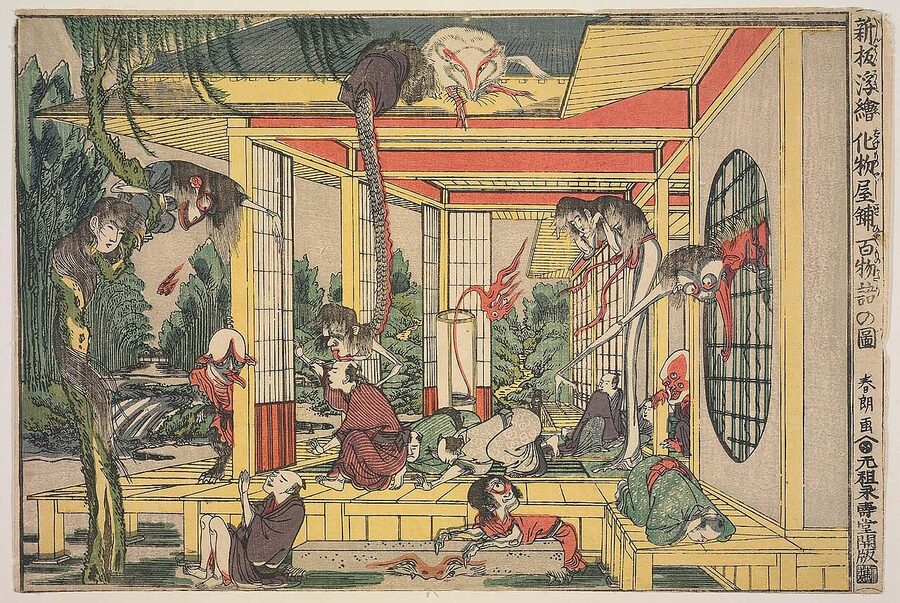
Demand for new stories outran the supply. Tellers borrowed from Chinese ghost collections, moved the scenery to Japan, mixed two legends into one and, when all else failed, invented a creature.
Japanese scholars point to the kasa-obake, the one-eyed umbrella hopping on a single leg, and the tōfu-kozō, a little boy carrying a plate of tofu, as yōkai born this way. Nobody’s grandmother ever told a story about the tofu boy. He was made for the market.
Toriyama Sekien
The man who gave the market its catalogue was Toriyama Sekien. He was born in 1712 (some sources say 1713) as Sano Toyofusa, son of a family of tea servants to the shogun’s household, and he trained with painters of the Kanō school, the official academy. He made his name with temple votive plaques and haikai verse, and he ran a busy studio: Kitagawa Utamaro was his pupil, and so was the comic novelist Koikawa Harumachi.
In 1776 he published the Gazu Hyakki Yagyō, “the illustrated night parade of a hundred demons”, three thin volumes with one creature to a page and its name in the corner. It sold, and he followed it with three more: the Konjaku Gazu Zoku Hyakki in 1779, the Konjaku Hyakki Shūi in 1781 (some catalogues give 1780) and the Hyakki Tsurezure Bukuro in 1784. Together they hold around two hundred creatures.
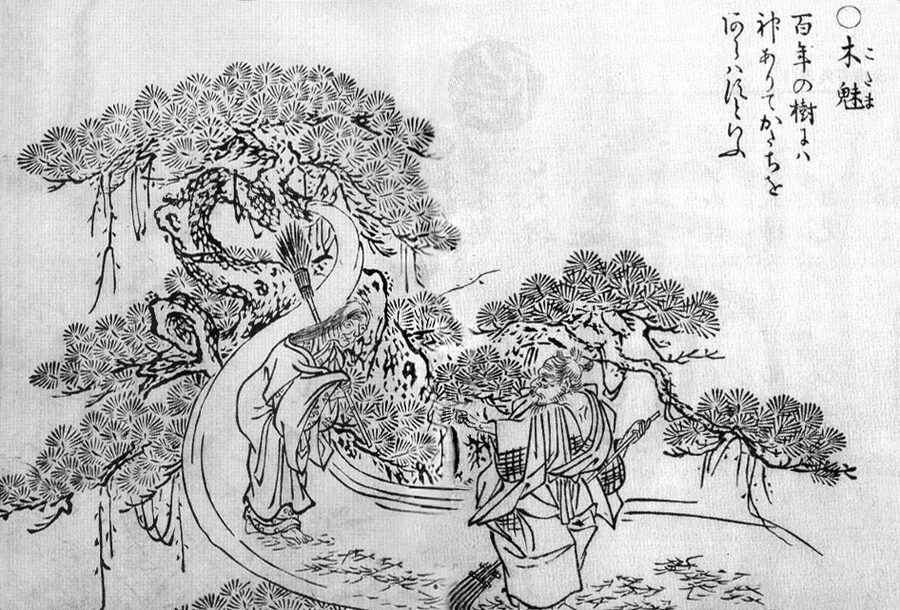
It is easy to underrate what Sekien did. He took creatures scattered across scrolls, local legends, Chinese encyclopedias and his own imagination and gave each one a fixed face and a name. A great many of the yōkai that Japanese children can draw today look the way they do because Sekien drew them that way, and the line runs straight through Mizuki Shigeru, who used him constantly.
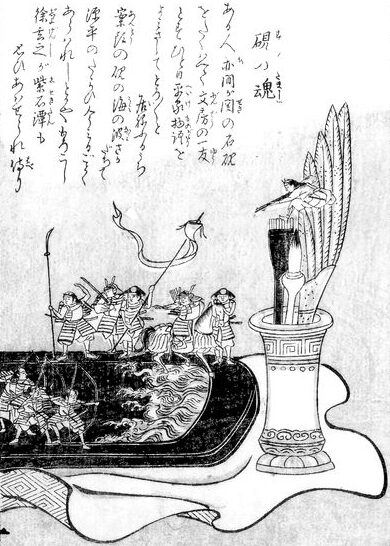
He also invented freely, and later books did not always say so. The Hyakki Tsurezure Bukuro is almost entirely made-up object monsters, many of them puns on lines from Essays in Idleness, the fourteenth-century classic every educated reader knew. An old koto, a lute, a saddle and a stirrup all get faces. Some of them now appear in yōkai dictionaries as though farmers had been meeting them for centuries.
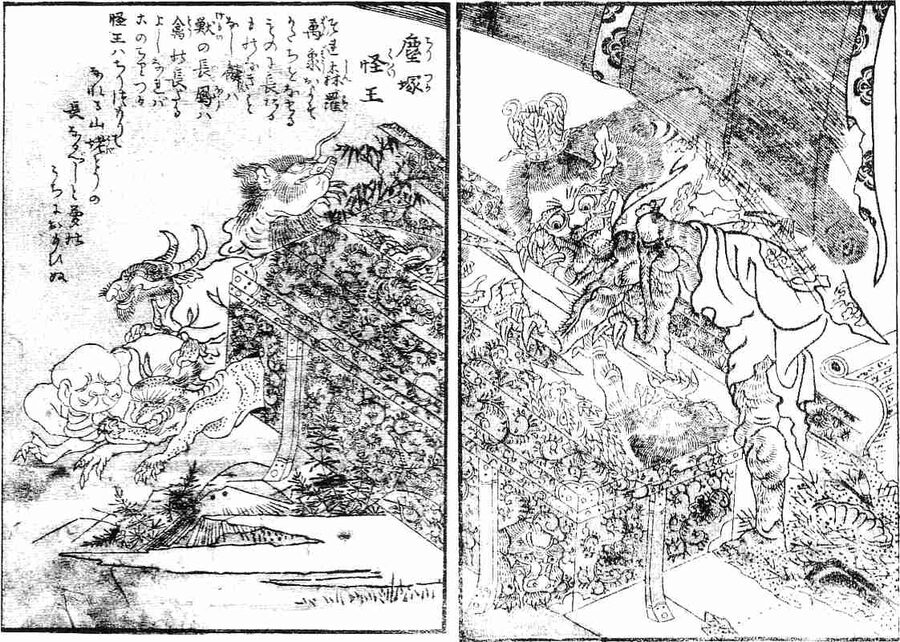
Sekien died on the third day of the eighth month of 1788 (2 September by the Western calendar, as reference works convert it) and is buried at Kōmyō-ji in Moto-Asakusa, Tokyo, a small temple a short walk from Sensō-ji, though there is not much to see.
Toys, prints and a prophet in the sea
Once yōkai had a standard look, they became merchandise. Edo printers sold yōkai karuta card games, sugoroku board games, paper cut-outs and comic booklets by the thousand. The lending libraries, the kashihon-ya, carried the booklets around the city on their backs, and the result was that every child in Edo pictured a kappa the same way.
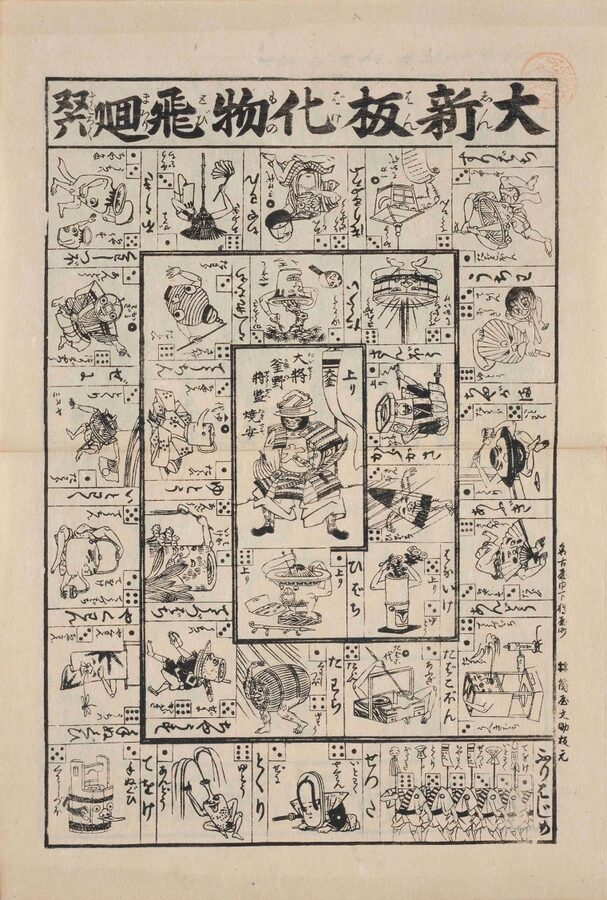
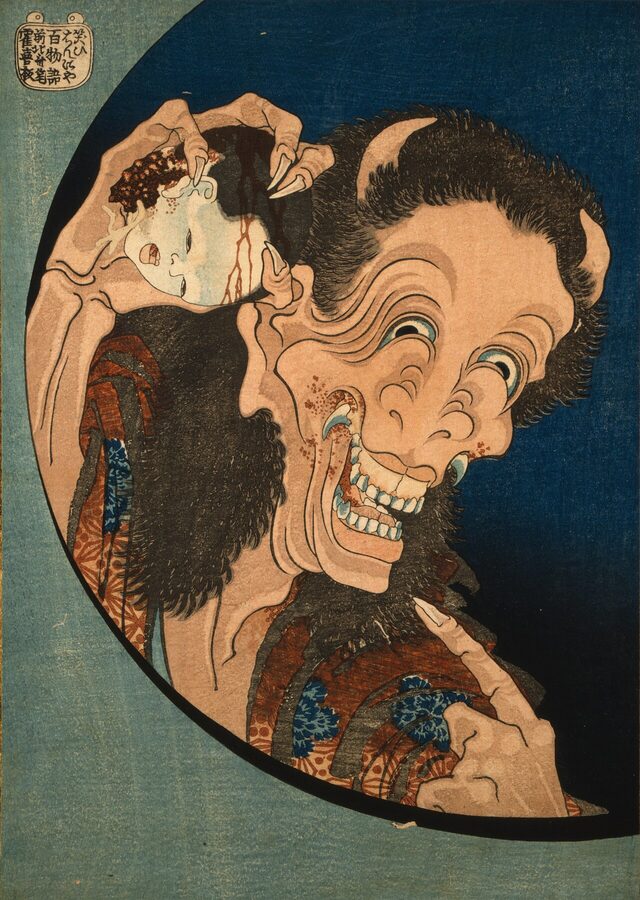
The great ukiyo-e artists all tried their hand. Hokusai started a series called Hyaku Monogatari around 1831, the same years as his views of Mount Fuji and the Great Wave, and only five prints are known, among them the lantern ghost of Oiwa and a laughing hannya. Utagawa Kuniyoshi drew skeletons, giant cats and sea monsters. Tsukioka Yoshitoshi, the last great master of the form, published New Forms of Thirty-Six Ghosts between 1889 and 1892, when gas lamps were already lighting the Ginza.
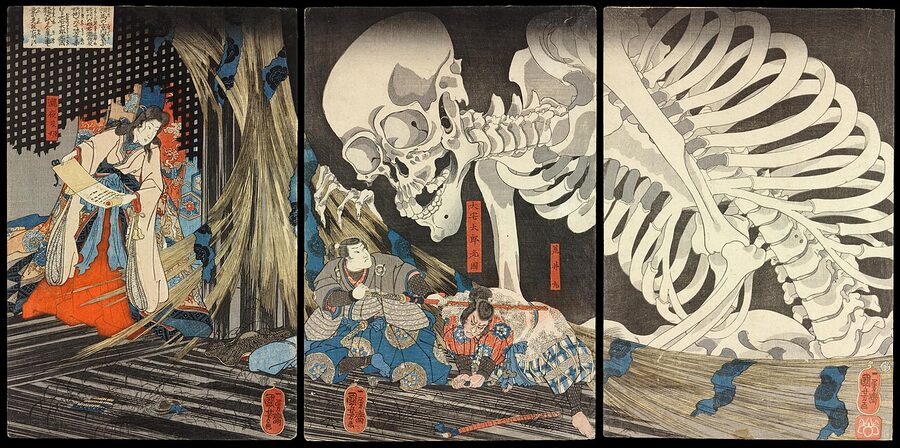
The stage joined in. On the kabuki stage, actors of the Onoe family specialised in ghost and monster roles with trapdoors and quick changes, and as late as January 1900 the Kabuki-za staged Yami no Ume Hyakumonogatari, a dance piece full of umbrella monsters, skeletons and a snow woman, with Onoe Kikugorō V playing several of them.
One more Edo invention deserves a mention because it came back from the dead. In the middle of the fourth month of 1846 a broadsheet reported that a glowing creature had risen from the sea off Higo, in what is now Kumamoto, and told a local official that there would be six years of good harvests and an epidemic, and that people should look at its picture. Its name was Amabie, the broadsheet was its picture, and it was selling protection for the price of a print.
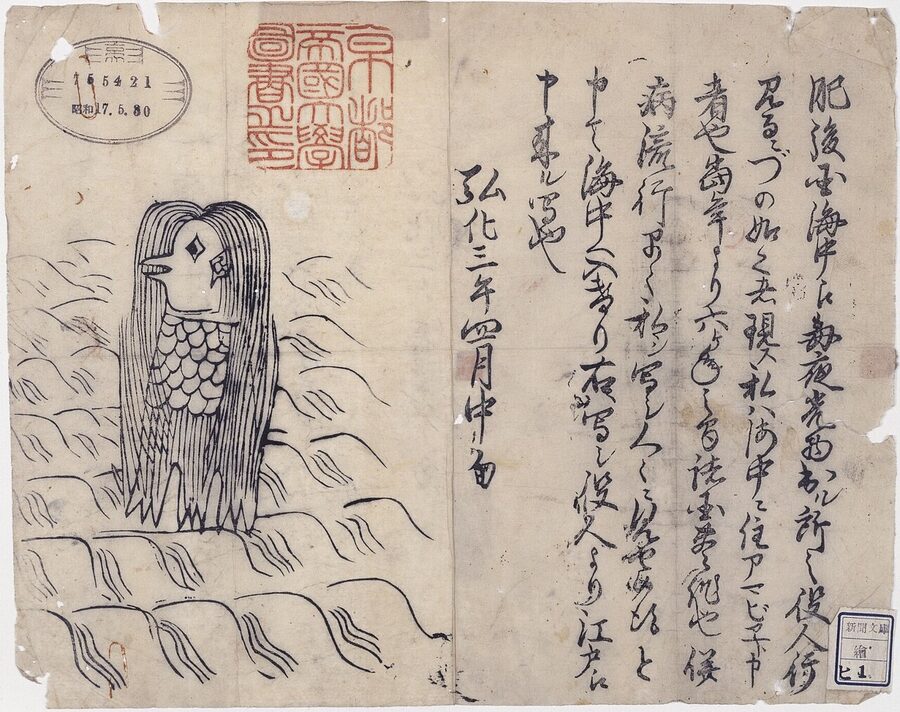
In 2020 Amabie went from obscurity to every shop window in Japan in a matter of weeks, on masks, sweets and a government health campaign. It is the clearest case I know of a yōkai doing the job it was printed for.
A field guide to the famous ones
There are hundreds of yōkai, and most are local: a sound on a particular hill, a light on a particular marsh. A few dozen are known across the country, and of those, four big ones have their own articles on this site.
The kitsune, the shapeshifting fox and messenger of Inari, belongs as much to the shrines of Fushimi Inari and Toyokawa Inari as to the night.
The tengu, the long-nosed mountain goblin, appears in the Taiheiki dancing at the drinking parties of the Hōjō ruler Takatoki. The oni, the horned ogre, marched at the head of the Heian parade. And the yūrei, as Yanagita insisted, is a ghost with an address. Here are six more.
Kappa
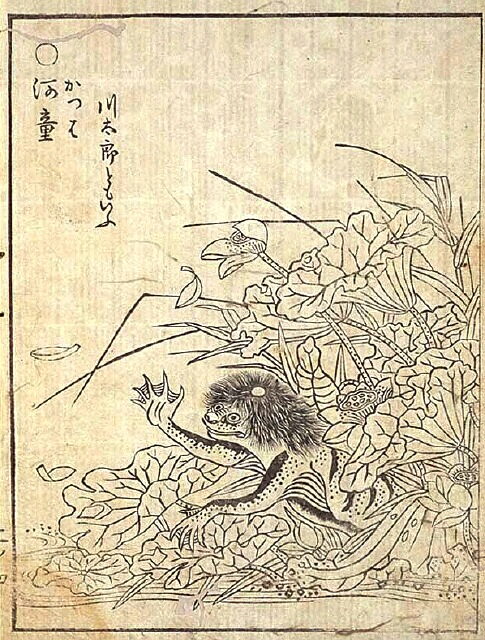
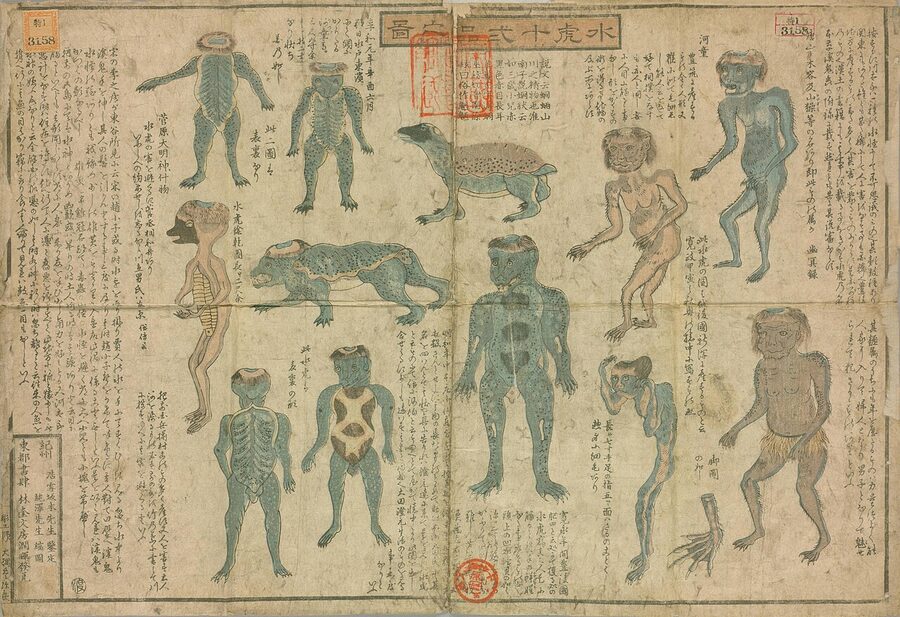
The kappa (河童), the river child, is the yōkai most Japanese would name first. The modern picture is a child-sized creature, green and slimy, with a beak, a turtle’s shell and a dish-shaped hollow on top of its head that holds water. Spill the water and it loses its strength, which is why the standard advice is to bow to it; it bows back, the dish tips, and you walk away.
Older sources are much less tidy. Folklorists count more than eighty regional names, from kawatarō in the west to garappa in southern Kyushu and medochi in the north, and the early natural-history books saw something closer to a monkey or an otter than a turtle. The fifteenth-century dictionary Kagakushū says an old otter turns into one. The encyclopedia Wakan Sansai Zue of 1712 describes the kawatarō as built like a child of ten and given to stealing melons and aubergines, and a dialect dictionary of 1775 gives it the water-filled dish and a love of sumo.
The cucumber is older than the sushi bar. The Wakan Sansai Zue already has the kawatarō stealing melons, and later writers say it prefers cucumbers above all.
Japanese folklorists tie this to the water god: the first cucumbers of summer were offered to the water god before anyone else could eat them. A cucumber cut across also shows a pattern people likened to the crest of the Gion shrine, which is why some Kyoto families still avoid cucumbers during the Gion Matsuri. In Edo, nervous parents wrote their children’s names on cucumbers and threw them into the river so the kappa would take those instead.
That is the cute side. The other side is the shirikodama, an imaginary ball inside the anus that the kappa pulls out of swimmers, leaving them drowned or witless; it is the folk explanation for the slack, open look of a drowned body. Kappa drag horses into rivers, too, and the commonest kappa story in Japan is the one in which the creature loses an arm, begs for it back, and signs a written apology promising to leave the village alone. Families and temples from Saitama to Kyushu still keep these apology letters, along with mummified hands.
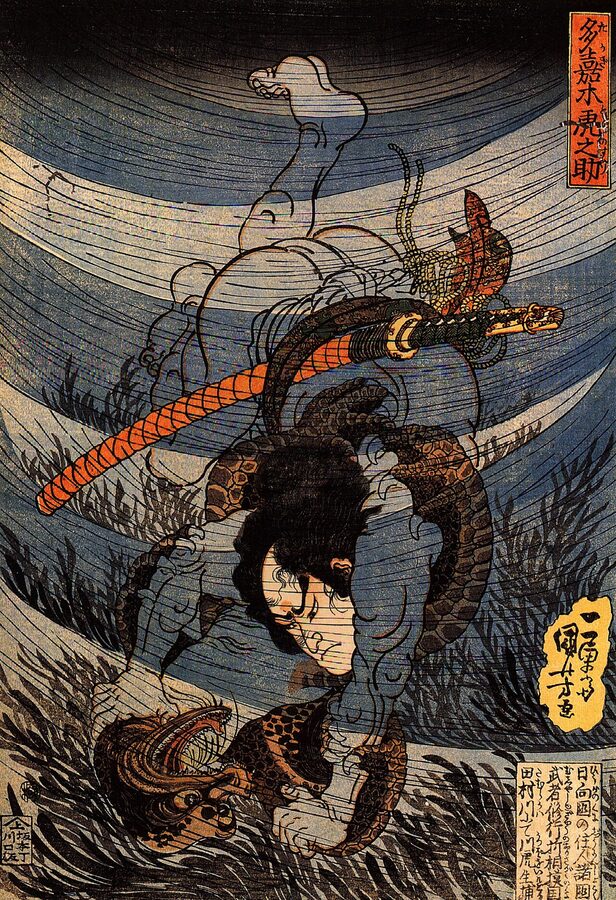
The written roots go back further. The Nihon Shoki, under the sixty-seventh year of Emperor Nintoku, has a mizuchi, a water serpent, in a river in Kibi that was killing travellers; a man named Agatamori threw three gourds into the pool and challenged it to sink them, and when it could not, he went in and killed it. Gourds, water, a test of strength: folklorists have been joining those dots to the kappa for a century, and the case is suggestive rather than proven.
Akutagawa Ryūnosuke’s satirical novella Kappa came out in 1927, a few months before his suicide, and the anniversary of his death, 24 July, is still called Kappa-ki in Japanese literary calendars. A cucumber roll is a kappa-maki. And in Tōno, as you will see, you can buy a licence to catch one.
Tanuki
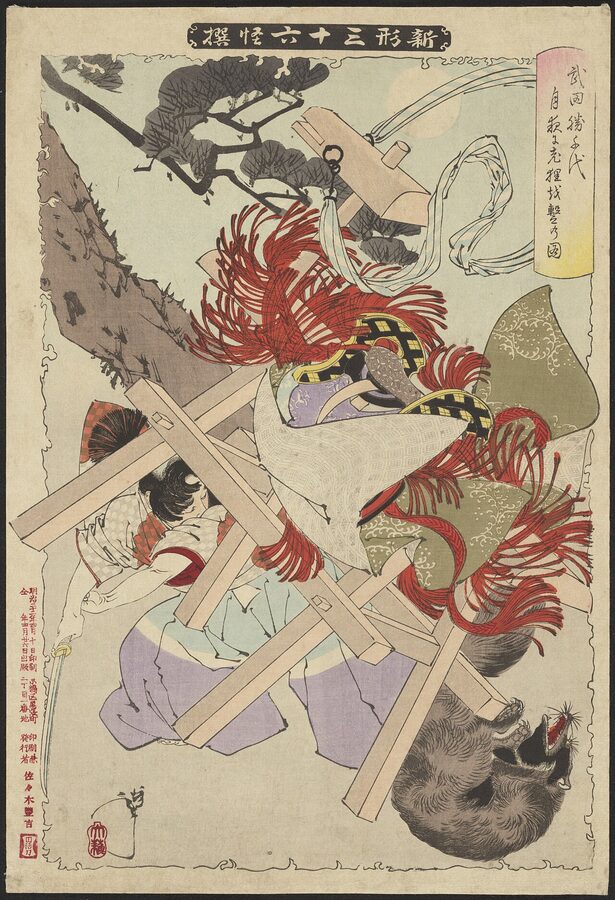
The tanuki (狸) is a real animal, the raccoon dog, and the yōkai is that animal with a sense of humour. Where the fox seduces and possesses, the tanuki mostly plays pranks: it drums on its belly in the hills at night, turns leaves into money that turns back into leaves, and impersonates monks, trains and, in Meiji stories, steam locomotives, which promptly derail into nothing.
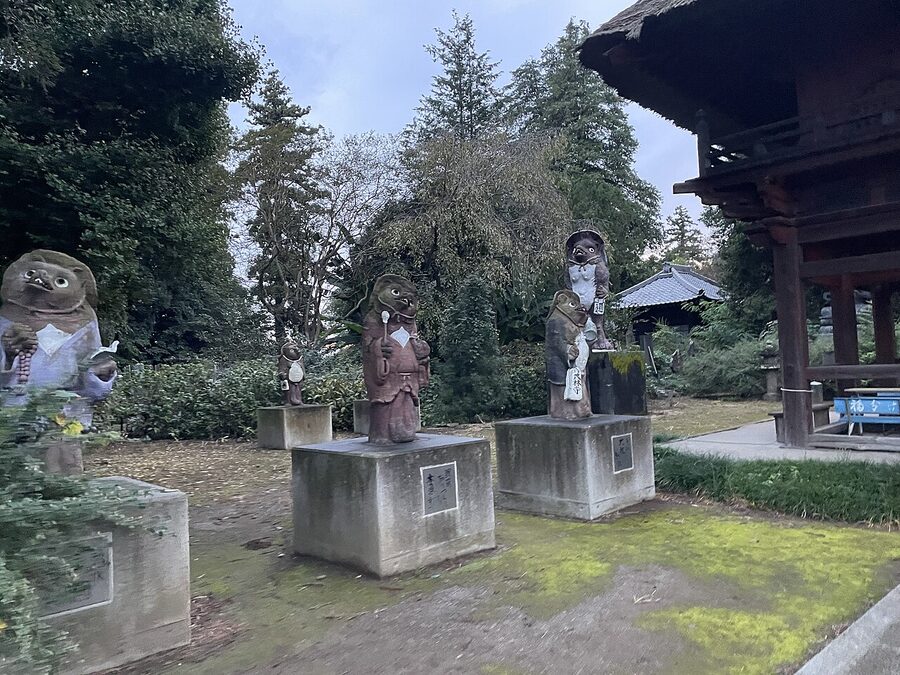
The famous tanuki temple is Morin-ji in Tatebayashi, Gunma, home of the Bunbuku Chagama story. In the temple’s version, a monk named Shukaku had a tea kettle that never ran dry however much he poured; years later, dozing, he let slip a tail, and it turned out he had been a tanuki all along. The temple still shows the kettle, and its approach is lined with tanuki statues in robes, each a little different.
The pot-bellied ceramic tanuki outside every second noodle shop comes from Shigaraki in Shiga, where kilns had been turning them out for decades before the Shōwa Emperor’s visit in 1951; the town lined the road with them, the newspapers photographed it, and the statue went national. Studio Ghibli’s Pom Poko of 1994, about tanuki fighting the building of a Tokyo new town, is the best modern tanuki story, and it does not shy away from the anatomy.
Rokurokubi
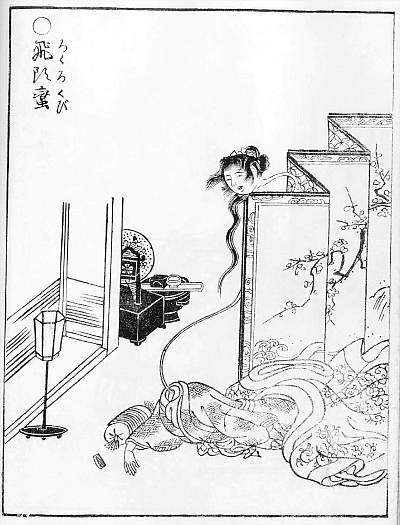
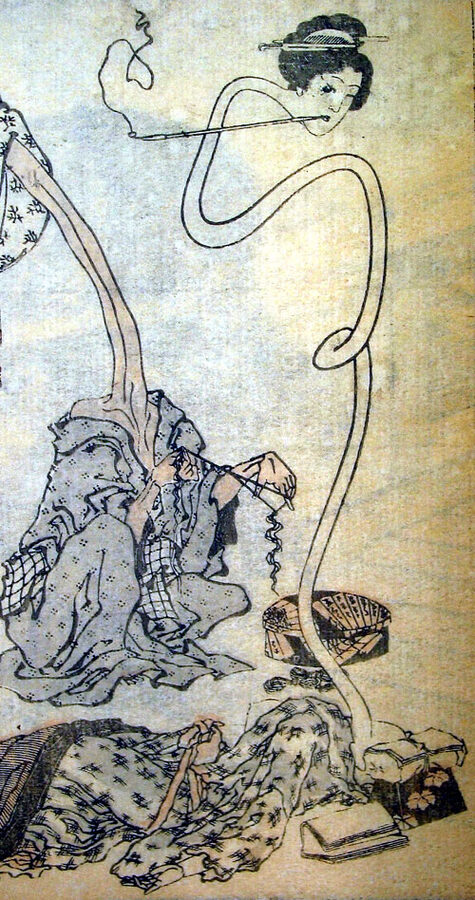
The rokurokubi (ろくろ首) looks like an ordinary woman by day and at night her neck stretches to absurd lengths, usually to lick the oil from a lamp. That is the Edo version. The older one is the nukekubi, in which the head comes off entirely and flies about on its own, and the older one tells you more about what the creature was for.
The early tales treat it as a sickness of the soul. In the Sorori Monogatari, a man chases a flying head home and hears the woman inside wake from a bad dream.
In the Shokoku Hyakumonogatari of 1677, a woman of Echizen whose head is chased home is so ashamed that she leaves her husband and becomes a nun. An essay of the 1790s tells of a maid in Echizen whose head was seen rolling by her pillow while she slept, and explains it as the soul leaving the body and taking the shape of a head. Nobody in these stories is evil. They are ill, and they are frightened of themselves.
Lafcadio Hearn’s version in Kwaidan, the 1904 collection that introduced much of this material to English readers, uses the older detachable head. His rokurokubi are a family of woodcutters in the mountains of Kai who eat travellers, and the hero, a samurai turned priest, ends up carrying one of their heads about, still biting his sleeve.
Nurikabe
The nurikabe (塗壁), the plastered wall, is one of the few yōkai defined entirely by what it does. Yanagita recorded it from the Onga district of northern Kyushu: walking at night, you find you cannot go on, because an invisible wall has risen across the road. Pushing does nothing. Tap the bottom of it with a stick, the advice goes, and it vanishes, which suggests that people in Onga had some experience of being too tired or too drunk to walk home.
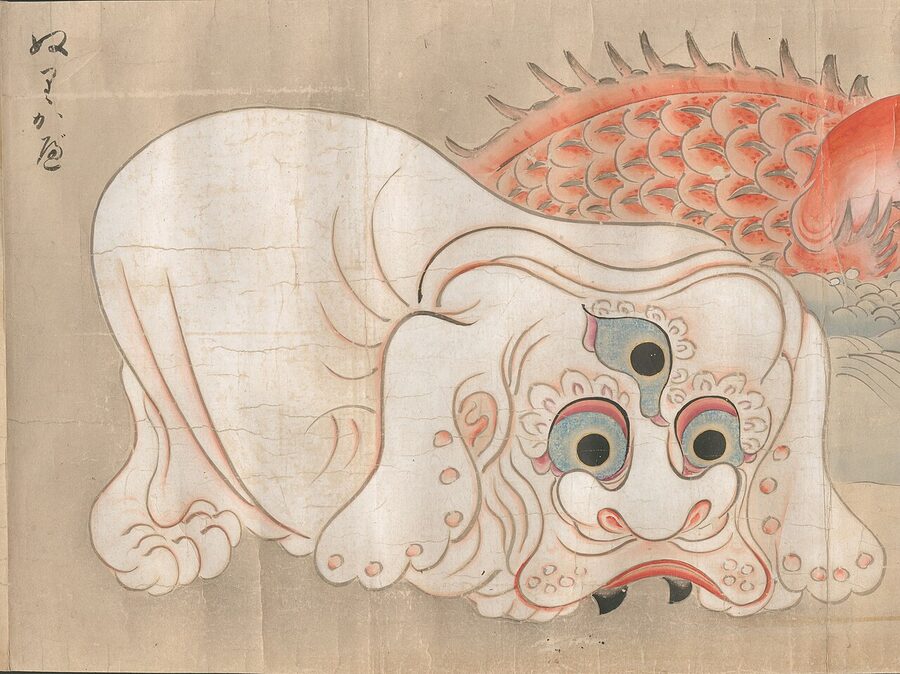
Mizuki Shigeru’s nurikabe, a big grey wall with stubby arms and sleepy eyes, is the one every Japanese child knows. It is entirely his design. The folk nurikabe had no shape, and that is the most unsettling thing about it.
Yuki-onna
The yuki-onna (雪女), the snow woman, belongs to the deep-snow country from Aomori to Niigata and down to the mountains of the west. The stories vary a great deal. In some she is the soul of a woman who died in the snow, in some a spirit of the snow itself, and in some, as in Yamagata, a princess from the moon who fell to earth with the snow and could not get home.
She is old in print. The Sōgi Shokoku Monogatari, published in 1685 under the name of the linked-verse poet Sōgi, has the poet seeing a snow woman some three metres tall during a stay in Echigo. Elsewhere she asks a passer-by to hold her baby, which grows heavier and heavier; in Hirosaki a samurai saved himself by holding the child with a dagger in his teeth, blade at the infant’s head.
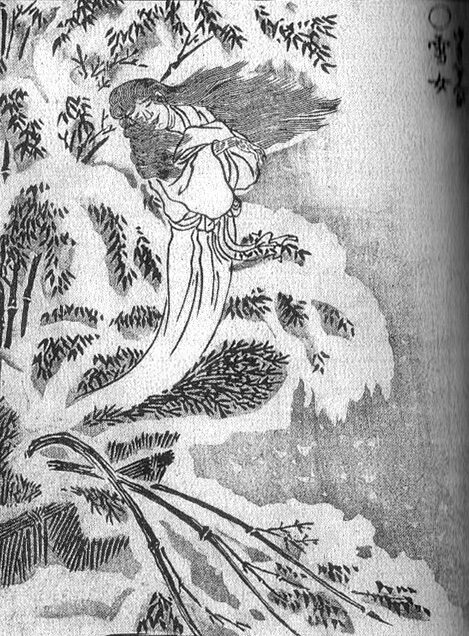
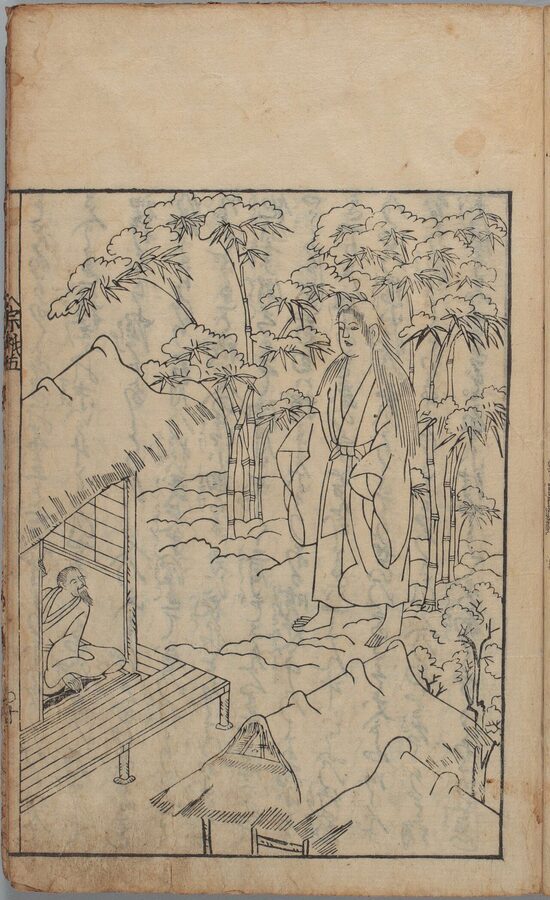
The comic variants are the ones I like best. In Ojiya in Niigata, a beautiful woman marries a man, refuses ever to take a bath, is finally made to, and melts; all he finds in the tub is a broken icicle. Several northern dialects call her by names that simply mean icicle wife.
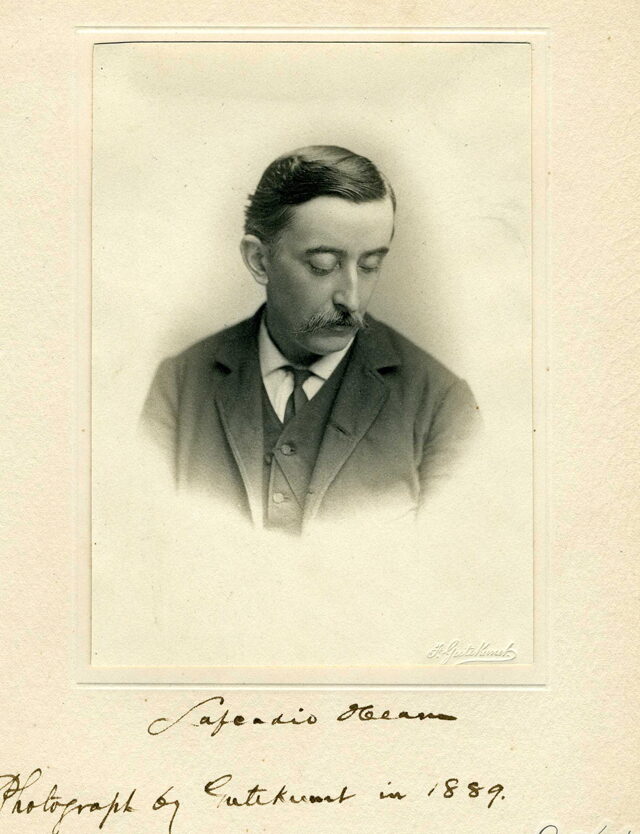
The yuki-onna known around the world is Hearn’s, from Kwaidan. A young woodcutter sees the snow woman kill his old master in a hut in a blizzard; she spares him on condition he never speaks of it; years later he tells the story to his beautiful wife, and she turns out to be the snow woman. Hearn says in his preface that a farmer from Chōfu, in the Nishitama district outside Tokyo, told it to him. Keep the name Chōfu; it turns up again.
Umibōzu
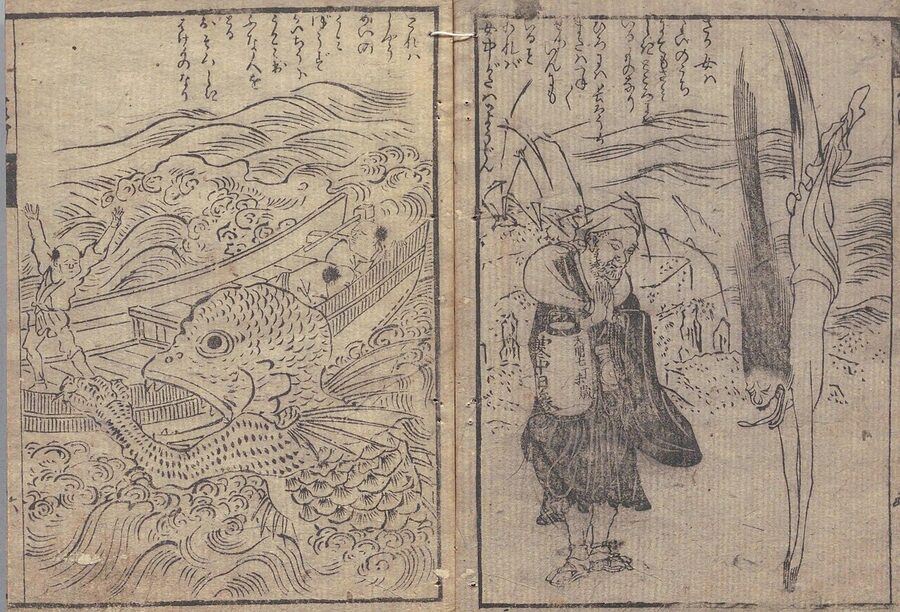
The umibōzu (海坊主), the sea monk, is a vast black shaven head that rises out of a calm sea at night and wrecks boats. Fishermen’s stories have it climbing aboard, putting out the fishing fires, or asking for a ladle; you must hand over one with the bottom knocked out, or it will use it to fill your boat with water. Its one known weakness is smoke, which made a pipe of tobacco a reasonable safety precaution.
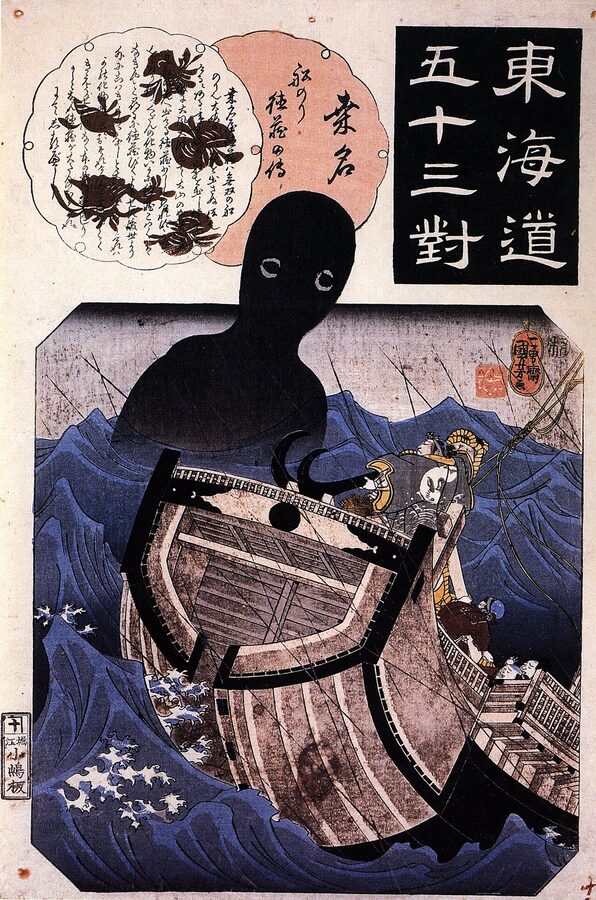
Not every coast feared it. In Uwajima in Shikoku, the story went that if you saw an umibōzu you would live a long life, which is about the most generous reading of a boat-wrecking giant I have come across. In the Sanin region they said it came ashore at night as a slimy black mass that rubbed itself against people walking on the beach.
Mizuki Shigeru and the second boom
If Sekien gave yōkai their faces, Mizuki Shigeru gave them back to children. He was born Mura Shigeru on 8 March 1922 in Osaka and grew up in Sakaiminato, a fishing port at the mouth of the Nakaumi lagoon in Tottori, where an old woman named Kageyama Fusa, who helped in the house, filled him with stories of the things in the dark. He called her Nonnonbā, and she is the reason he became who he did.
He was drafted in 1943 and sent to Rabaul on New Britain, where his unit was all but wiped out. He contracted malaria and lost his left arm in an air raid, and he spent much of his recovery among the Tolai people near the base, who offered him land if he would stay. He went home instead, and spent most of the next two decades very poor.
His pen name came from the Mizuki-sō, a run-down apartment house he owned on Mizuki Street in Kobe while he painted kamishibai, the paper-theatre stories sold to children on street corners. When television killed kamishibai he moved to Tokyo and to the rental-library comics of the 1950s, and in 1960 began Hakaba Kitarō, “Kitarō of the Graveyard”, a grim story about a one-eyed ghost boy born in a grave.
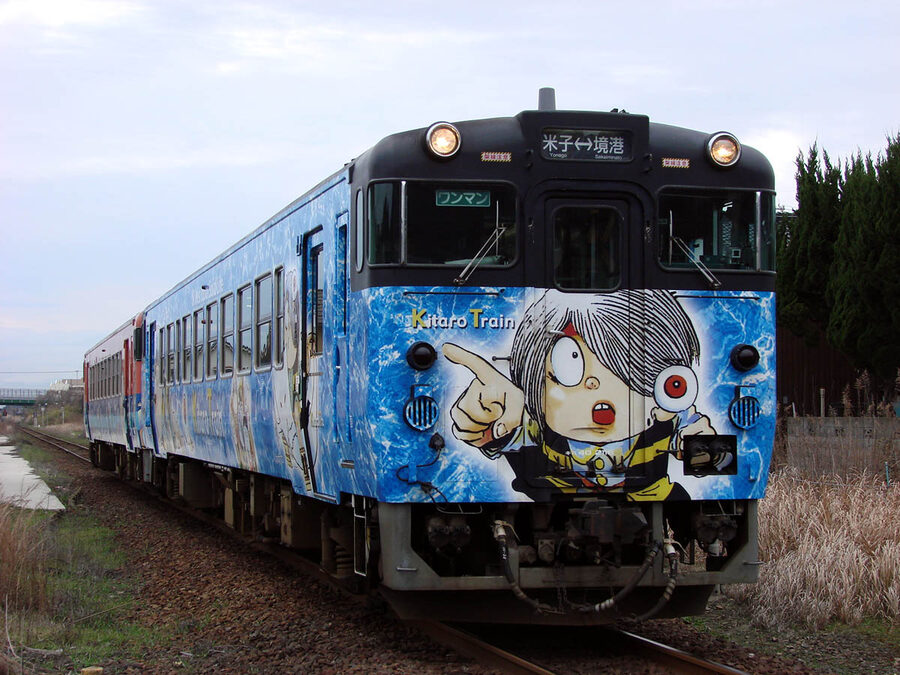
The boy softened. When the strip moved to the weekly Shōnen Magazine and was readied for a television cartoon in 1968, the title changed to GeGeGe no Kitarō, from his own childhood nickname (as a small boy he pronounced Shigeru “Gegeru”). Kitarō became a good yōkai who fights bad ones, with his eyeball father in his hair and the spiv Nezumi-otoko at his side, and it has been made into a television cartoon seven times.
Mizuki’s real influence was as an encyclopedist. Through the 1970s and 1980s he published illustrated yōkai dictionaries that ran to hundreds of entries, drawing on Sekien, Yanagita, Edo scrolls and local surveys, and putting them all in the same deadpan style. He also admitted he had invented about thirty yōkai himself for the strip, and critics have pointed out that some of his inventions sit in the dictionaries unmarked. Since Sekien had done exactly the same, I find it hard to be cross.
The Shōwa boom he began has never quite ended. Modern urban legends, like the slit-mouthed woman who frightened schoolchildren across Japan in 1979, came to be called “modern yōkai”.
The nine-tailed fox and the snow woman turned up as Pokémon, and in 2013 the game Yo-kai Watch sold the word back to a generation of children who thought it was a brand name. Mizuki died on 30 November 2015, aged ninety-three. He had lived since 1959 in Chōfu, the Tokyo suburb whose farmer gave Hearn the snow woman.
Where to see yōkai today
Yōkai tourism is now a small industry, and some of it is very thin: a statue, a souvenir shop, a mascot. These four places are the ones I think are worth the journey, each for a different part of the story. You can see the summer side of it, too, at the giant paper oni and dragons of the Aomori Nebuta Matsuri and the other big events in my guide to Japan’s greatest festivals.
Mizuki Shigeru Road, Sakaiminato
Mizuki Shigeru Road runs about 800 metres from Sakaiminato Station to the Mizuki Shigeru Memorial Museum, through what was, by the late 1980s, a dying shopping street of shuttered shops. The town put up 23 bronze yōkai in July 1993, a few were vandalised and stolen within weeks, the thefts made the national news, and the visitors came. The street had 21,000 visitors that first year and 2.74 million in 2018.
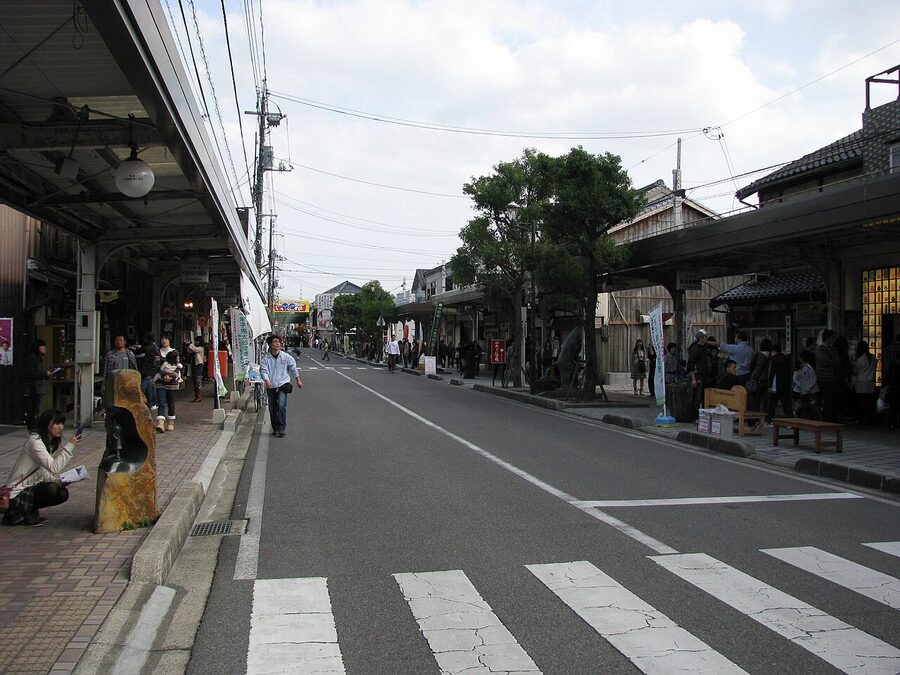
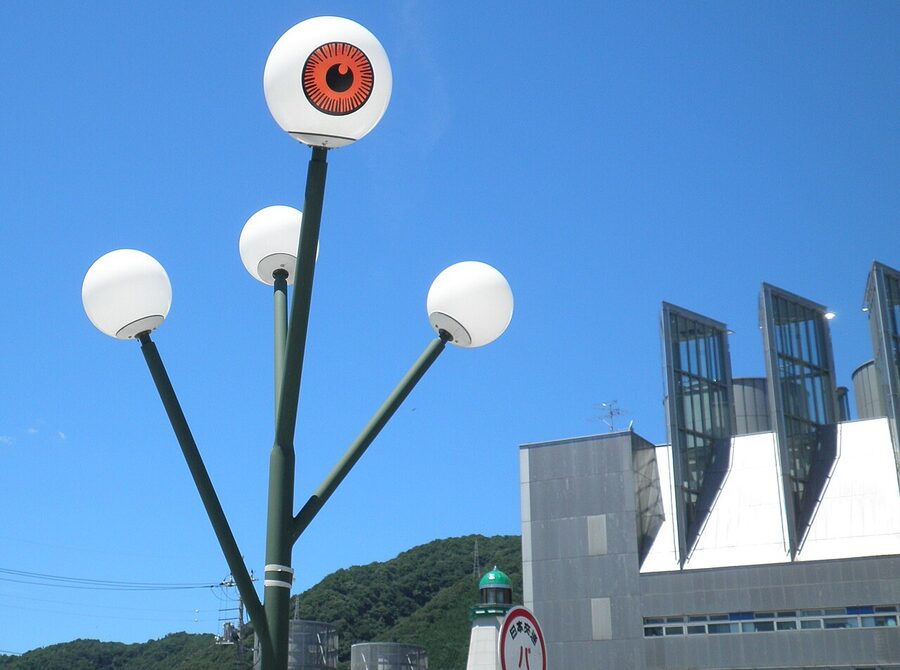
There are now 178 statues, rearranged in 2018 into themed zones (yōkai of the forest, of the house, of the gods, of everyday places) and lit at night, which is when I would walk it. Each has a nameplate, so the street works as a field guide in bronze. Look out for the nurikabe, the kappa and the figure of Mizuki himself at his drawing desk.
The Mizuki Shigeru Memorial Museum reopened on 20 April 2024 after a full rebuilding. It covers his life, the war years included, and his yōkai work, and for me it is the best short introduction to the whole subject. It is open every day from 9:30 to 17:00, last entry 16:30, and admission is ¥1,000 for adults, ¥500 for junior high and high school students and ¥300 for primary school children; it is about ten minutes’ walk from Sakaiminato Station.
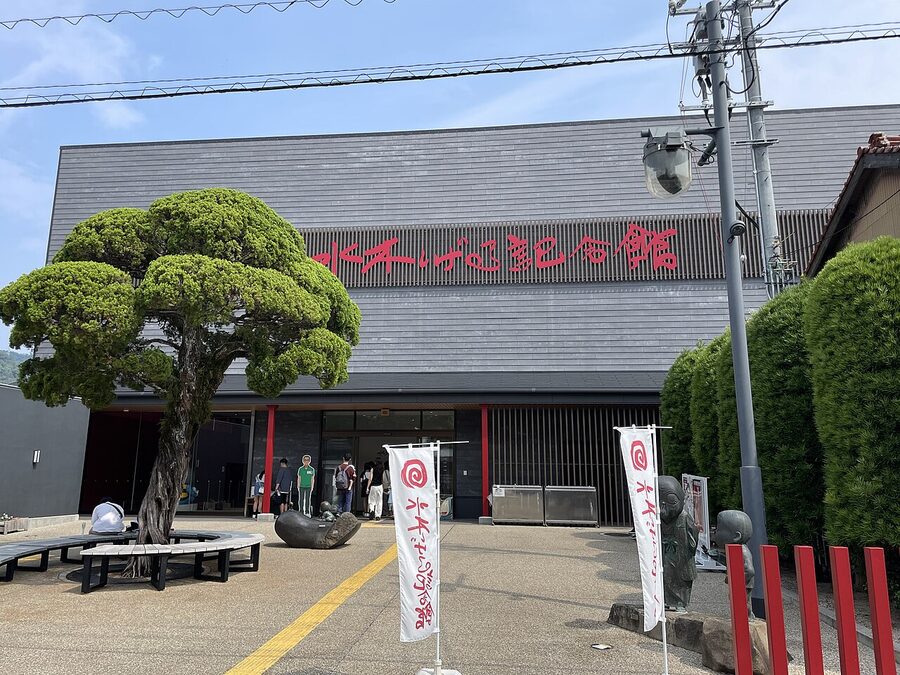
Getting there is part of it. Fly into Yonago Kitarō Airport, or take the train to Yonago and change to the JR Sakai Line, about 45 minutes to Sakaiminato on the Kitarō trains. If you are staying in Matsue for Matsue Castle and Hearn’s old house, Sakaiminato makes an easy half-day trip.
Miyoshi Mononoke Museum, Hiroshima
The museum in Miyoshi exists because of a ghost story set in the town. In the summer of 1749, the Inō Mononoke Roku relates, a sixteen-year-old samurai’s son named Inō Heitarō went up the local hill on a dare with a sumo wrestler who lived next door. From the first day of the seventh month, something came to his house every night: a one-eyed giant monk, a three-eyed boy, heads that danced across the floor, hair that flew about the room. Heitarō, the story insists, mostly ignored them and went back to sleep.
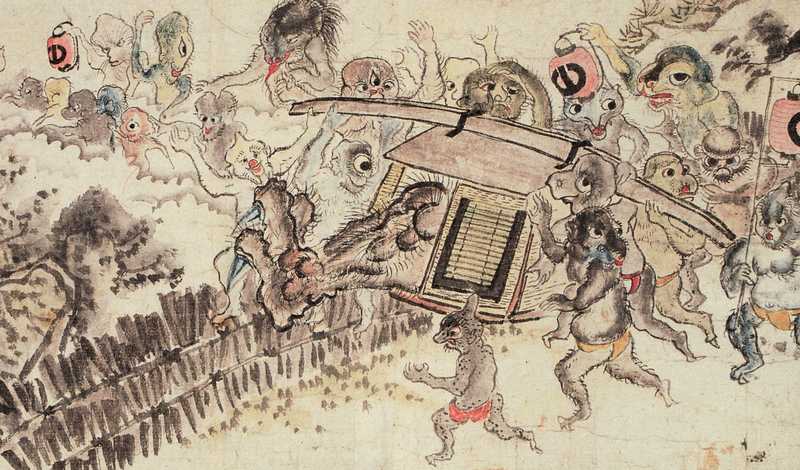
The story spread in copies and picture scrolls, the scholar Hirata Atsutane collected and promoted versions in the nineteenth century, and Mizuki drew it as a manga. In 2019 the city opened the Miyoshi Mononoke Museum, officially the Yumoto Kōichi Memorial Japan Yōkai Museum, to hold the collection of around 5,000 scrolls, prints, toys and books that the historian Yumoto Kōichi gave to the town. It is the first public museum in Japan devoted to yōkai.
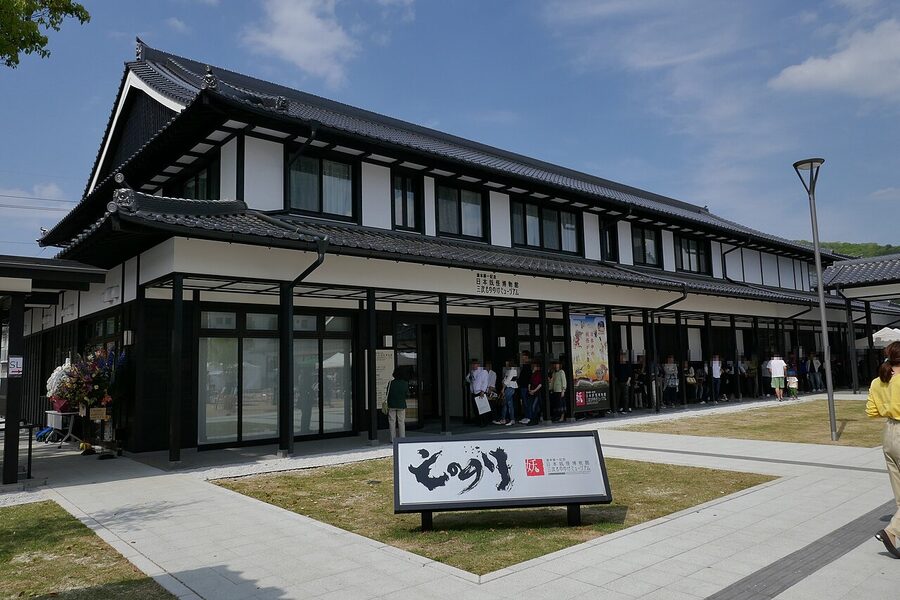
The museum is open from 9:30 to 17:00, last entry 16:30, and closed on Wednesdays (the next day when Wednesday is a holiday) and over the New Year. Admission is ¥1,000 for adults, ¥600 for high school and university students and ¥300 for younger children. Miyoshi is about an hour and twenty minutes from Hiroshima on the rapid trains of the JR Geibi Line, and a local bus covers the last ten minutes from Miyoshi Station; there is also a direct highway bus from the Hiroshima Bus Center to the museum, about an hour and a half.
If you have time back in the city, Inō Heitarō’s grave is at Honshō-ji in Naka ward, the same ward as Hiroshima Castle. He grew up to be an ordinary retainer of the Hiroshima domain, and his descendants still live in the city.
Ichijō Yōkai Street and Daishōgun Hachi Jinja, Kyoto
The shopkeepers of the Daishōgun shopping street, on about 400 metres of Ichijō-dōri in north-west Kyoto, decided some years ago that the night parade had walked down their road. The Uji Shūi does put a horse-headed oni on Ichijō Avenue, and the tsukumogami story is set in the capital, so they have a case. Since 2005 the street has called itself Ichijō Yōkai Street, and the shops put out yōkai figures by their doors, each made by the shop itself.
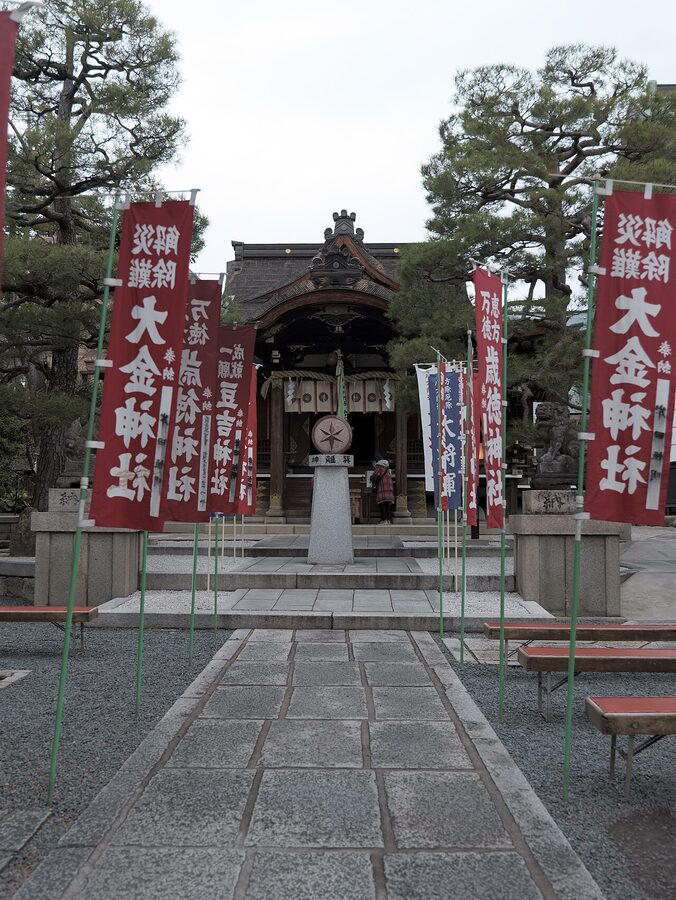
The big night is the Ichijō Hyakki Yagyō, a costume parade of homemade yōkai held in October, usually on the third Saturday, which grew from a few dozen art students to well over a hundred marchers. On ordinary days the street is quiet, a run of family businesses with odd figures in the windows, and that is when I prefer it. Do not expect a theme park.
Daishōgun Hachi Jinja itself is the real reason to come. It was founded in 794, at Emperor Kanmu’s order, to guard the inauspicious north-west of the new Heian capital, and its treasure house, the Hōtokuden, holds 80 wooden statues of the god Daishōgun carved between the mid- and late Heian period, armoured, in court dress and, in one case, as a child. They are an Important Cultural Property and nothing quite like them survives anywhere else in Japan.
The Hōtokuden opens to the public only from 1 to 5 May and 1 to 5 November; the November 2026 opening ran from 10:00 to 16:00 at ¥500, and on other days you need to ask the shrine in advance. The grounds are open from 6:00 to 18:00. Take a city bus to Kitano Tenmangū-mae, about 200 metres away, or Kitano Hakubaichō, about 300 metres, and combine it with Kitano Tenmangū, a few minutes’ walk away, and Kinkaku-ji, a short bus ride north.
Tōno, Iwate
Tōno is where Yanagita Kunio’s yōkai came from. In 1908 he met a young writer from the village of Tsuchibuchi, Sasaki Kizen, and wrote down the stories Sasaki had grown up with; the result, the Tōno Monogatari, was printed at Yanagita’s own expense in June 1910 in an edition of 350 copies. It has 119 short entries, about mountain men and women, house spirits called zashiki-warashi, fox tricks, wolves and five episodes about kappa.
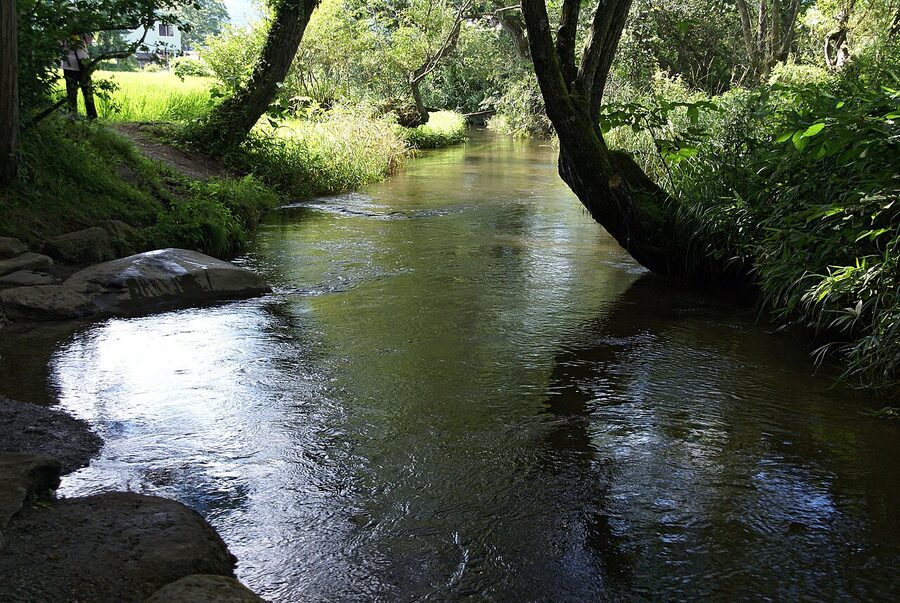
The Tōno kappa, Yanagita notes, are not like other kappa: elsewhere their faces are said to be blue, but here they are red. One tried to drag a horse into the Kogarase River and was dragged into the stable instead; another, darker story has a family whose women gave birth to kappa children two generations running. Some folklorists read the Tōno kappa as a memory of infants lost in famine years, and once you have heard that reading it is hard to put down.
At Kappa-buchi you can try to catch one. The Tōno tourist association sells a Kappa Capture Permit, ¥220 a year at the time I checked, from the tourist office, the Kaze no Oka roadside station, Denshōen and Tōno Furusato Village. The rules on the back say the kappa must be taken alive and unharmed, with its dish unspilled, at Kappa-buchi only, and must have a bright red face and a large mouth; bait must be fresh vegetables. The posted prize for a qualifying kappa is ¥10 million, and nobody has claimed it.
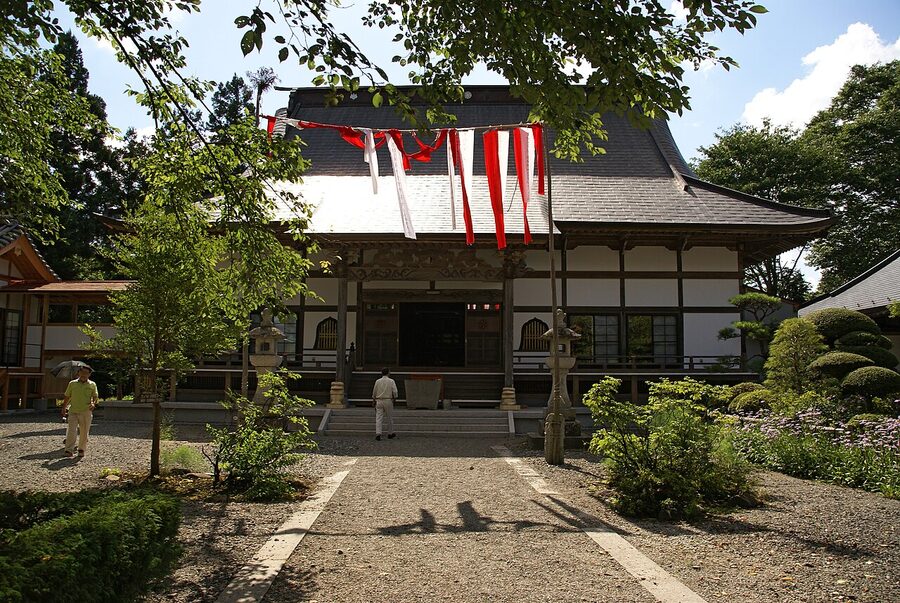
Kappa-buchi is free and always open, a five-minute walk from the big car park it shares with Denshōen. Denshōen itself is an open-air folk museum with a national Important Cultural Property farmhouse, the L-shaped magariya where people and horses lived under one roof, and a hall hung with about 1,000 Oshira-sama, the paired horse-and-girl house gods of the Tōno Monogatari, each dressed in cloth from someone’s wish.
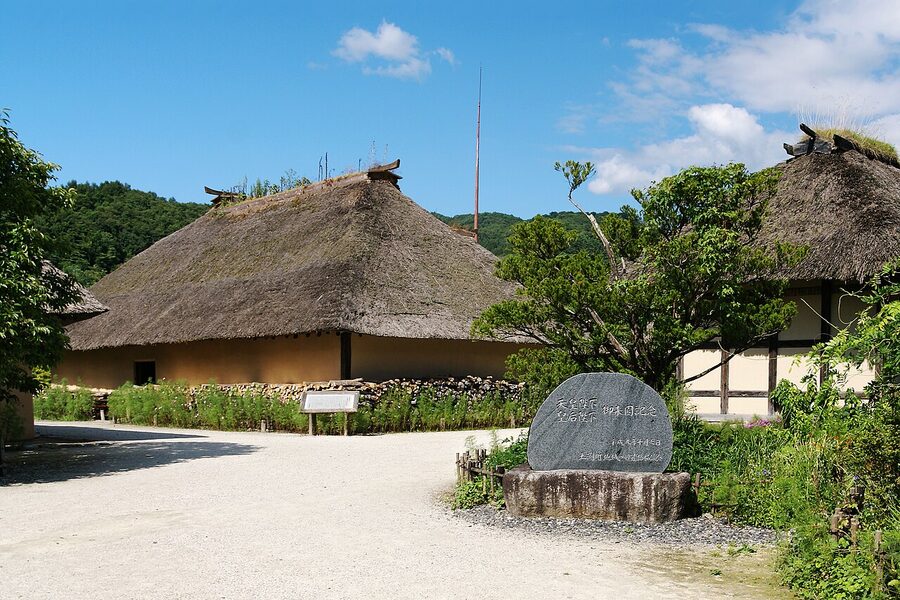
Denshōen is open from 9:00 to 17:00 (9:00 to 16:00 from December to February), closed on Tuesdays in January and February and on 31 December and 1 January, and admission is ¥450 for adults and ¥350 for school-age children. A storyteller can tell you the old tales in Tōno dialect if you book; I would not expect to understand much, but the sound of it is the point. Buses from Tōno Station to Denshōen take about 25 minutes.
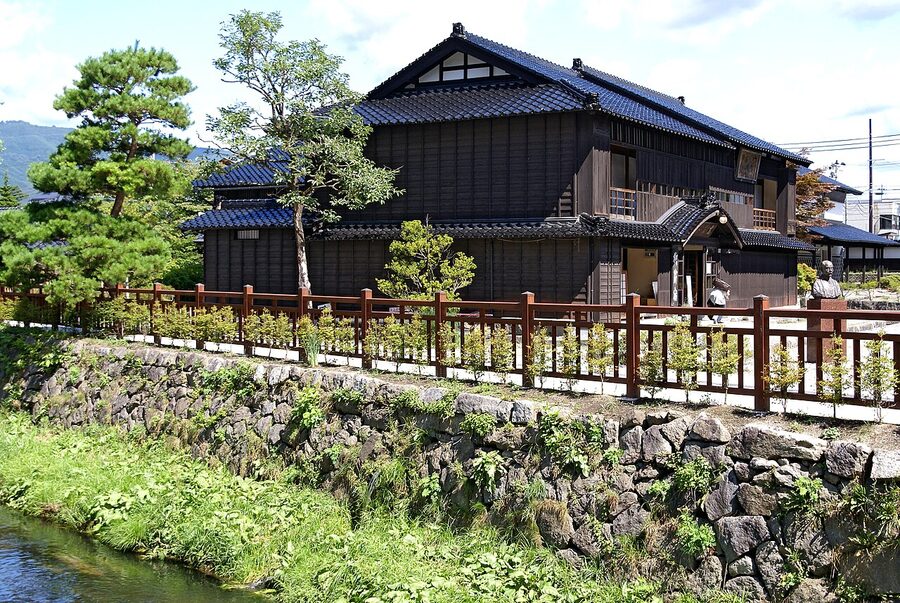
In town, Tōno Monogatari no Yakata is an eight-minute walk from the station, open from 9:00 to 17:00 (last entry 16:30) at ¥600; it closes every Tuesday from November to March and on the first Tuesday of the month from June to October. The Tōno City Museum next door, at ¥310, has the better collection and shows an animated version of the Tōno Monogatari drawn by Mizuki Shigeru, which is about as neat a meeting of Yanagita and Mizuki as you will find. Tōno is on the JR Kamaishi Line, about an hour from Shin-Hanamaki on the Tōhoku Shinkansen.
In Tokyo: Tetsugakudō Park
If you only have Tokyo, go to Nakano. Tetsugakudō Park, the “temple of philosophy”, is the garden Inoue Enryō built in the last fifteen years of his life, a hillside of small pavilions dedicated to Socrates, Kant, Confucius and the Buddha and dotted with stones and benches named for branches of thought. Its main gate, the Tetsurimon, is also called the Yōkai Gate: on one side stands a tengu and on the other a ghost, Enryō’s pictures of the mysteries of matter and of the mind.
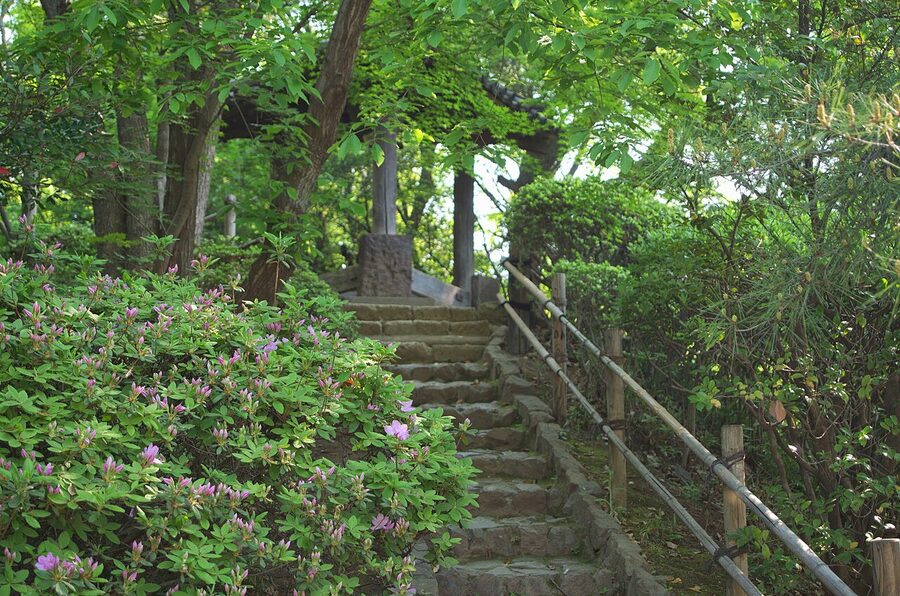
Entry is free. The park is about twelve minutes on foot from the north exit of Araiyakushi-mae Station on the Seibu Shinjuku Line, and its opening hours change with the seasons, so check before you go. It is the one place on this list where nobody is selling anything, which suits its builder.
The parade has never really stopped. It moved from Ichijō Avenue onto paper, from paper onto the stage and into the toy shops, from the toy shops onto television and from television onto a shopping street in Sakaiminato, and at every stage somebody has added a few new marchers. If you find yourself on Mizuki Shigeru Road after dark, with the eyeball lamps lit and the bronze figures throwing long shadows, you are walking with it. You probably will not need the verse about being drunk, but it does no harm to know it.