The first tengu in Japanese writing had no nose, no wings and no feather fan. It was a noise. On the 23rd day of the second month of 637, says the Nihon shoki, a great star crossed the sky over the capital from east to west with a sound like thunder, and while the court argued about whether it was a falling star or a rumble in the earth, a monk named Min, lately home from China, settled the matter: “It is not a falling star. It is a tengu, a heavenly dog, and the sound is its barking.”
Thirteen centuries later the heavenly dog is a red-faced, long-nosed mountain goblin in a priest’s cap, standing on one-toothed clogs and fanning himself with feathers. He lends his face to bean-paste cakes on Mount Takao, leads festival parades in Aichi, guards a station forecourt in northern Kyoto, and is officially the “Japanese goblin” on your phone’s emoji keyboard. I find the journey between those two creatures, the star that barked and the goblin who taught Minamoto no Yoshitsune the sword, one of the oddest in Japanese history.
It runs through a court chronicle, a shelf of Buddhist horror stories, a cursed emperor, a satirical picture scroll, a Noh play, an Edo scholar who interviewed a kidnapped boy, and some sixty films. This piece follows it, names the text at each step, and ends on the mountains where you can still meet the creature in person.
In This Article
- A dog barking over the capital
- Kites in the persimmon tree
- Seven scrolls of beaked monks
- The emperor who grew his nails
- Bird tracks on the tatami
- Why tengu dress like mountain monks
- The beak and the nose
- Sōjōbō and the boy on Mount Kurama
- Taken by the tengu
- The boy who came back
- Noses at the festival
- Where to meet a tengu today
- Kurama-dera and the walk to Kibune, Kyoto
- Shiramine Jingū, Kyoto
- Mount Takao and Yakuō-in, Tokyo
- Dewa Sanzan and Mount Haguro, Yamagata
- Kenchō-ji’s Hansōbō, Kamakura
- The masks in Ueno
A dog barking over the capital
Min was not making it up. The word he used, 天狗 (tengu in Japanese, tiangou in Chinese), came straight out of Chinese astronomy, where the “heavenly dog” was a fireball: a meteor big enough to explode with a roar and fall to earth. The astronomical chapter of the Records of the Grand Historian describes it as a great running star that makes a sound and comes down to the ground looking like a dog, and Chinese chroniclers treated it as an omen of war and slaughter. Min had spent more than twenty years studying in Sui and Tang China and came home in 632, so he knew the vocabulary of portents better than anyone at the Yamato court.
The old manuscripts hold a small puzzle. The characters say “heavenly dog”, but the Japanese reading glossed beside them gives amatsukitsune, “heavenly fox”, and a few later medieval texts treat the tengu and the sky fox as the same thing. The Dutch scholar Marinus Willem de Visser thought the early Japanese idea might have blended two Chinese creatures, the meteor-dog and the fox spirit, and if you have read about the kitsune, it is a nice moment to watch the two families brush past each other.
Then the dog vanished. After 637 no surviving Japanese text calls a meteor a tengu, and the word itself disappears from the record for roughly three centuries. When it comes back, in the middle of the Heian era, it has come down out of the sky and moved into the mountains.
The first Heian tengu are heard rather than seen. In the late tenth-century Utsubo monogatari, music drifts out of a remote mountain and a character guesses it must be “a tengu playing”. In the last chapter of The Tale of Genji, the bishop of Yokawa, explaining how he found the half-drowned Ukifune lying under a tree, guesses that “a tengu, a tree spirit or some such thing” must have led her astray. Neither writer describes the creature, which is simply the thing in the hills that does what cannot otherwise be explained.
Kites in the persimmon tree
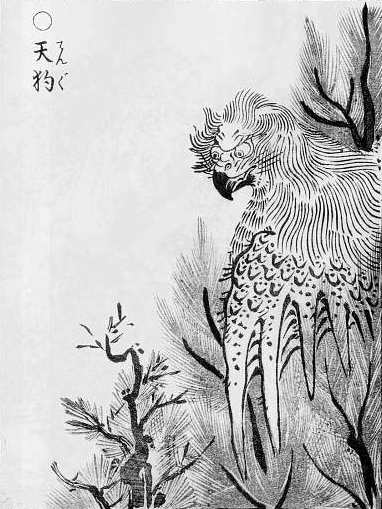
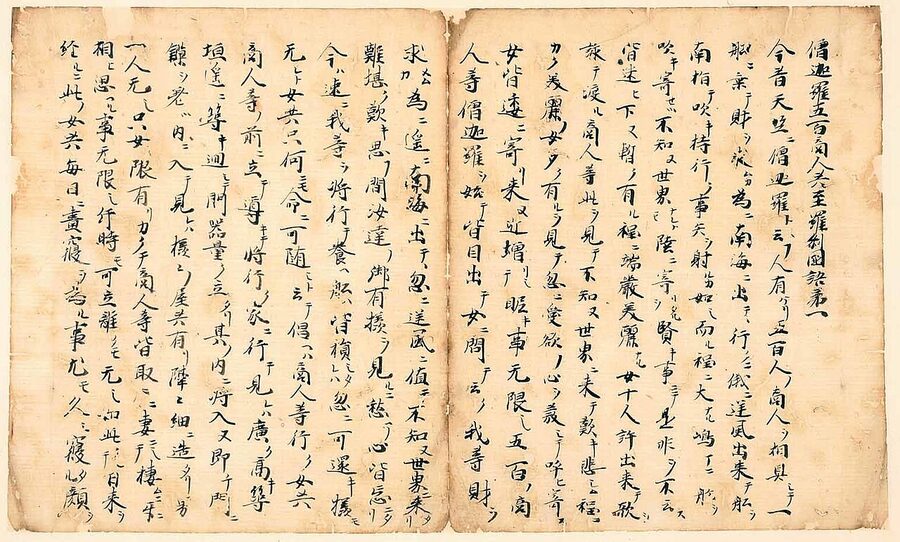
The tengu gets a body in the Konjaku monogatari, the great collection of more than a thousand Buddhist and secular tales put together in the late Heian period, probably around the 1120s. Its twentieth volume opens with a run of tengu stories, and they settle the creature’s character for the next five hundred years. These tengu are enemies of the Buddhist law. They disguise themselves as Buddhas and holy men, possess women in order to seduce monks, carry priests off and leave them stranded, and grant worldly power to anyone foolish enough to worship them.
Their true form, the stories keep revealing, is a kite. In my favourite of them, set in the reign of Emperor Daigo, a Buddha appears in the top of a fruitless persimmon tree at Gojō in Kyoto, shining and scattering flowers, and the whole city crowds in to worship. The Minister of the Right, Minamoto no Hikaru, smells a rat. He has his ox-carriage drawn up under the tree and stares at the Buddha without blinking for something like two hours, until the vision gives up, turns into a large kite with a broken wing and drops to the ground, where the local children beat it to death.
Another Konjaku tengu flies all the way from India because it hears the sea reciting a verse of the sutras, follows the sound across China to a stream running down from Mount Hiei, and ends up so moved that it resolves to be reborn as a monk. A third, a Chinese tengu called Chira Eiju, crosses to Japan to humble the eminent priests of Hiei, fails three times in a row, is thrashed by the boy attendants of the last one and has to soak his bruises in a bathhouse before flying home. You can feel the monastic storyteller enjoying himself. The tengu is dangerous, but he is also a show-off who keeps getting his comeuppance.
The court diaries and histories of the same period take tengu just as seriously. The Ōkagami, a history written in the late Heian period, explains that Emperor Sanjō went blind because the resentful spirit of a priest was sitting on his neck, covering his eyes with its wings. By the end of the twelfth century a theology had grown up to explain where such spirits came from. A proud or ambitious monk could not go to hell, because he was a Buddhist, and could not reach paradise, because he was proud, so he fell instead onto the tengu road, the tengudō, a sort of private purgatory for arrogant clergy.
The Genpei jōsuiki, the long expanded version of the war tales of the Genpei War, has a god explain the system to the retired emperor Go-Shirakawa in some detail. Learned men become great tengu, ignorant ones small tengu, and the ranks include monks, nuns, laymen and laywomen, all united by pride. This is the origin of a phrase still in daily use. A Japanese person who gets above himself is said to have “become a tengu”, tengu ni naru, and when someone deflates him you “snap the tengu’s nose”.
Seven scrolls of beaked monks
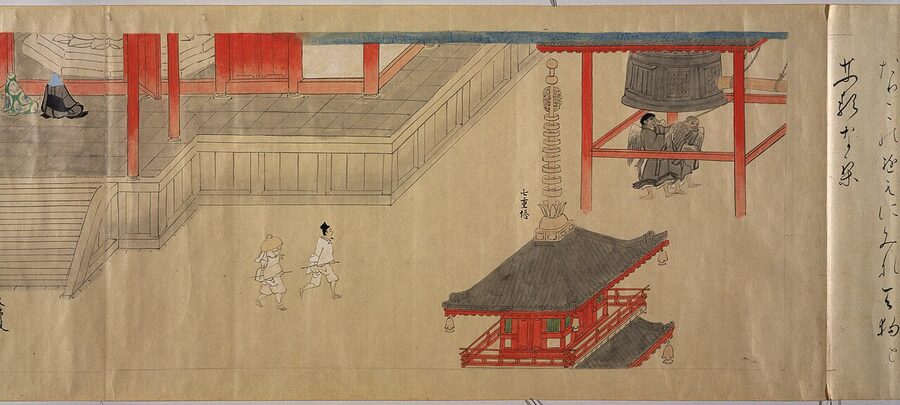
The finest pictures of these proud tengu were painted to embarrass real people. The Tengu zōshi, a set of seven picture scrolls whose preface is dated the sixth day of the tenth month of 1296, goes through the great temples of the day one by one. Kōfuku-ji, Tōdai-ji, Enryaku-ji on Mount Hiei, Onjō-ji, and Tō-ji with Daigo-ji and Mount Kōya each get a scroll that first praises the temple’s history and then explains, with weary precision, how the pride and stubbornness of its monks have turned them into tengu.
The pictures do the rest. Ordinary monks in processions and debates have hooked beaks where their noses should be, warrior monks crowd round to vote for armed protests in the capital, and crow tengu perch in the trees overhead. A sixth scroll turns on the new sects of the Kamakura era, mocking wandering yamabushi, Zen monks and the dancing nenbutsu followers of the itinerant preacher Ippen. The last scroll is a happy ending of sorts, in which the tengu repent, build temples and are told that even they can reach enlightenment through the Buddhist law.
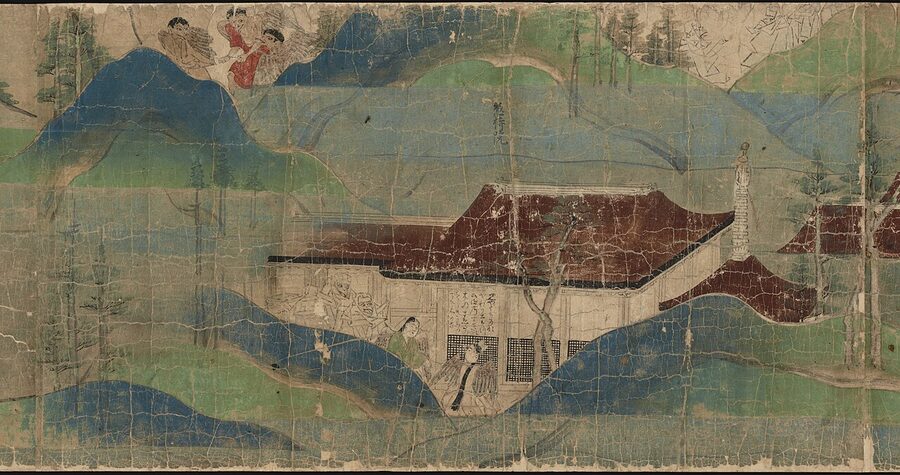
The scrolls come from an anxious time. Mount Hiei’s monks had burned their own lecture hall in a protest in 1264, the rival Tendai houses of Enryaku-ji and Onjō-ji were at each other’s throats, and fire, famine, plague and the Mongol invasions had all, in some quarters, been put down to tengu. Scholars still argue about who commissioned the set, though most point to a learned monk close to the old Tendai establishment, someone defending the great temples’ teaching while despairing of the men who ran them. Either way, the Tengu zōshi is the moment the tengu became a cartoon.
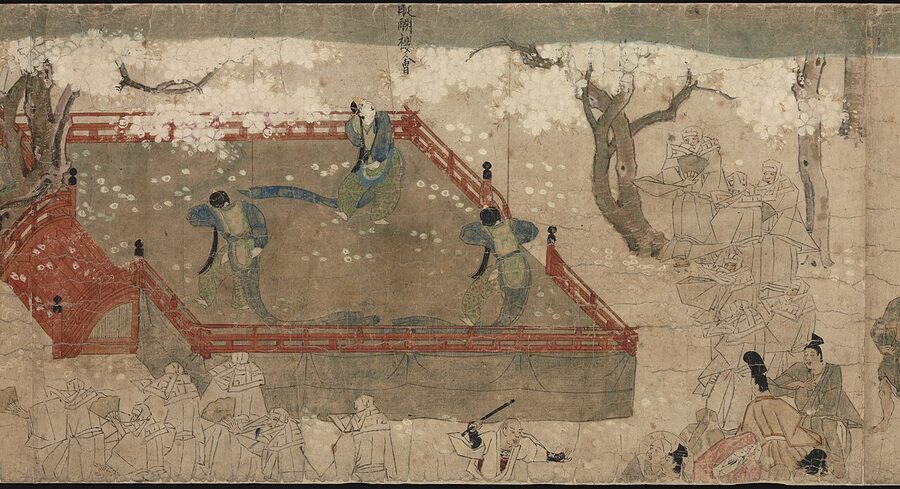
The seven scrolls did not stay together. Two originals are in the Tokyo National Museum, one in the Nezu Museum and two in private hands, and the Kōfuku-ji and Tōdai-ji scrolls survive only in copies made by Kanō Osanobu in 1817. None is on permanent display, so seeing the real thing means watching exhibition listings and getting lucky.
The emperor who grew his nails
Proud monks were one source of tengu. Angry ghosts were another, and the angriest of them all was an emperor. Sutoku had been pushed off the throne as a young man by his father, the retired emperor Toba, and when Toba died in the seventh month of 1156 he made a grab for power with the help of the Fujiwara minister Yorinaga.
The Hōgen Disturbance that followed was settled in a single night. Sutoku’s side lost to his brother Go-Shirakawa, whose forces included Taira no Kiyomori and Minamoto no Yoshitomo, and within days the defeated emperor was on a boat to exile in Sanuki on Shikoku, the first sovereign sent into exile in about four hundred years.
What happened next comes from the Hōgen monogatari, the war tale of the rebellion, and its versions do not all agree. In exile, it says, Sutoku spent three years copying out the five great Mahayana sutras as penance and sent them to the capital to be placed in a temple. Go-Shirakawa suspected a curse in them and sent them back. Sutoku bit his tongue and wrote across the sutras in his own blood that he would become a great demon of Japan, “take the emperor and make him a commoner, and take the commoners and make them emperor”, and dedicated the whole work to the demon road.
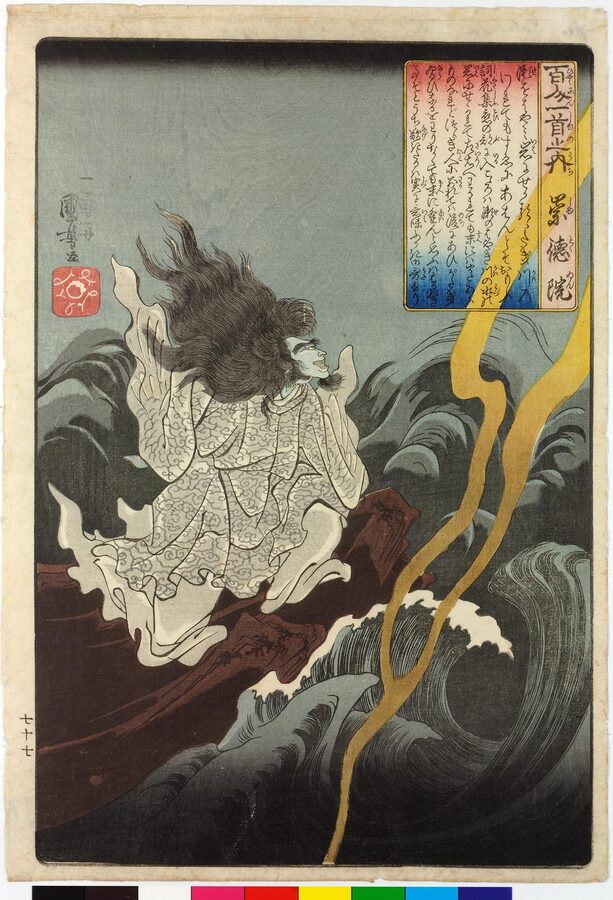
From then on, the tale says, he never cut his hair or his nails, and he became a living tengu, a figure out of nightmares, until he died on the 26th day of the eighth month of 1164. Some versions add that blood seeped out of his closed coffin. Some versions have the sutras written in ink, not blood. And the historian Yamada Yūji, who wrote the standard modern study of Sutoku’s ghost, points out that the only contemporary mention of the blood-written sutras surfaces nineteen years after his death, that nobody is known to have seen them, and that they may never have existed.
The ghost did not need them. For a decade nobody at court seems to have worried about Sutoku at all, and then 1177 brought an armed protest by the monks of Mount Hiei, a fire that burned a third of the capital and the Shishigatani plot against the Taira, one after another. Courtiers’ diaries begin to name the dead emperor and Yorinaga as the cause, and Go-Shirakawa, thoroughly rattled, replaced his brother’s exile title, “the Sanuki emperor”, with the honourable name Sutoku, and in 1184 built him a shrine on the old battlefield. The Taira, meanwhile, were being destroyed in the Genpei War, which for anyone counting confirmed the curse in its first line: the commoners were indeed taking the realm.
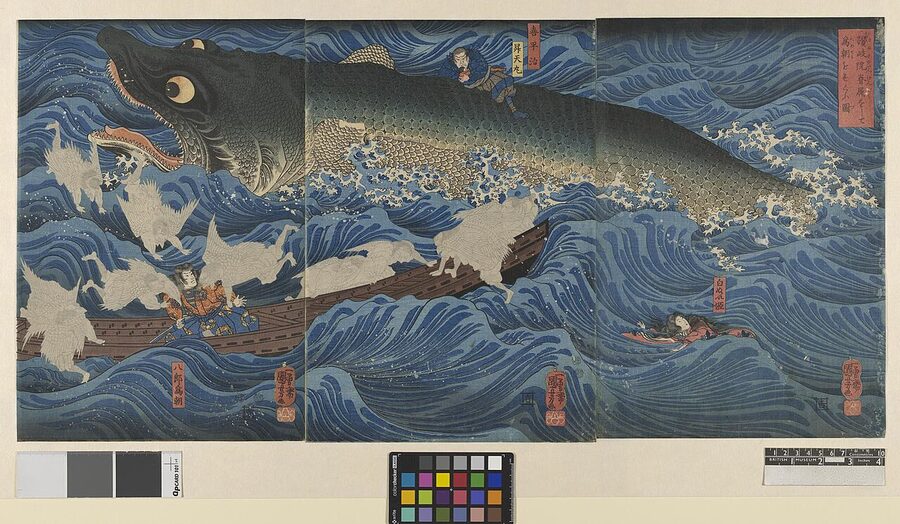
Over the next two centuries Sutoku rose through the tengu ranks. In the Taiheiki’s account of a yamabushi who is spirited away to Mount Atago, the great tengu of Japan hold a council there to plan the chaos of the fourteenth-century civil wars, and at the head of the table sits Sutoku, in the form of a golden kite, with the exiled emperors Go-Toba and Go-Daigo and a row of disappointed high priests beside him. In 1776 Ueda Akinari opened his Ugetsu monogatari with the poet Saigyō visiting Sutoku’s grave on Shiramine, where the ghost appears, argues politics with him, and calls up a tengu named Sagami that looks like a monstrous kite. Tradition still ranks Sutoku with Sugawara no Michizane and Taira no Masakado as one of the three great vengeful spirits of Japan, the aristocracy of the yūrei world.
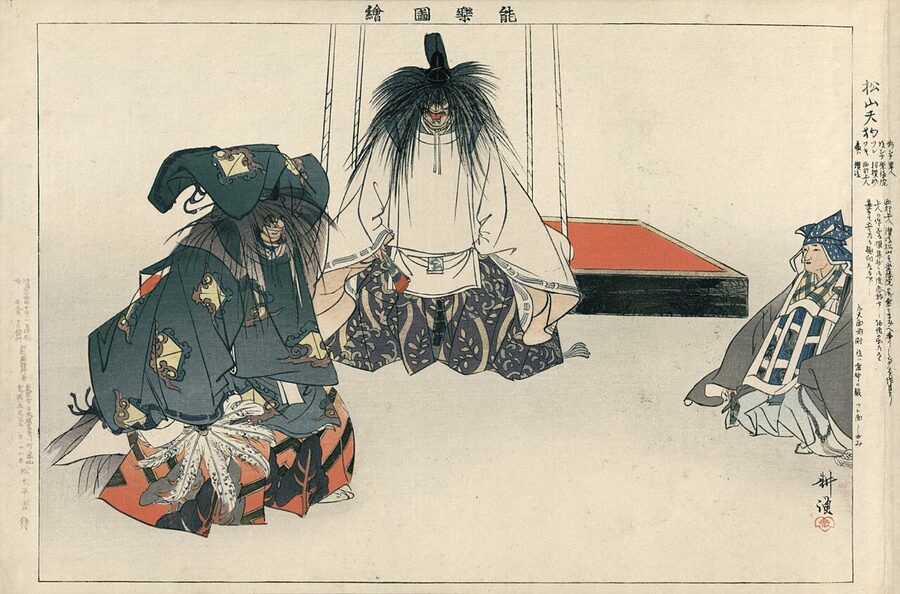
The story has a strange coda. In 1868, days before his own enthronement, the teenage Emperor Meiji sent an envoy to Shikoku to fetch Sutoku’s spirit home to Kyoto after seven hundred years, and built the shrine of Shiramine Jingū to hold it. The new government of the Meiji Restoration was about to take the realm back for the throne, and it did not want an emperor-tengu muttering about commoners in the background.
Sutoku was not the only grandee to be called a tengu, either. When Go-Shirakawa gave Yoshitsune an order in 1185 to move against his brother Minamoto no Yoritomo, and then tried to shift the blame once the plan collapsed, Yoritomo’s reply, preserved in the Azuma kagami for the eleventh month of that year, called the retired emperor “the greatest tengu in Japan, and nobody else”. He meant a schemer who causes chaos for his own ends. It is one of the rudest things a subject ever wrote about a sovereign, and he got away with it.
Bird tracks on the tatami
The Taiheiki has another tengu scene that I think about more often than I should. Hōjō Takatoki, the last real head of the Hōjō regents in Kamakura, was obsessed with dengaku, the acrobatic field-dance music of the day, and one night, drunk, he was dancing alone when a dozen or so strange dancers appeared and joined in. Their song was about wanting to see “the yōrei star of Tennō-ji”, and it was very good.
A maid peeped through the sliding doors and saw that the dancers had the beaks of kites and wings on their backs. By the time a retainer arrived with his sword, they had gone, and all that remained was Takatoki, passed out drunk, and the prints of bird feet all over the tatami. A Confucian scholar named Fujiwara no Nakanori was asked about the song and said that the yōrei star was an omen that appears when a realm is about to fall. A few years later, in 1333, the Hōjō fell, and Takatoki killed himself with his clan in the burning city.
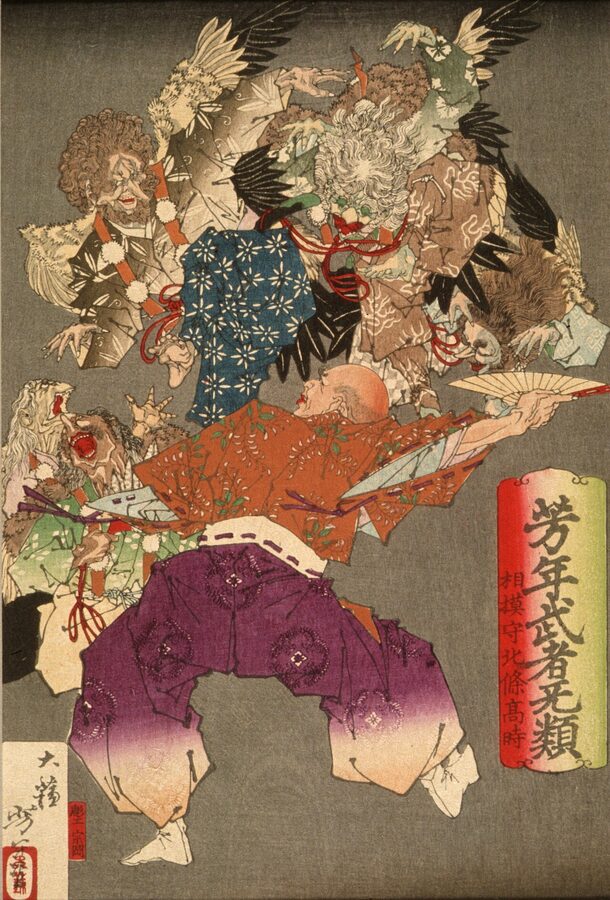
Notice how the story bends back on itself. The tengu began as a star that announced disaster, and here, seven centuries after Min, a song about a star brings the same message, sung by the creature that the star became. Whoever wrote that chapter of the Taiheiki knew exactly what he was doing.
Why tengu dress like mountain monks
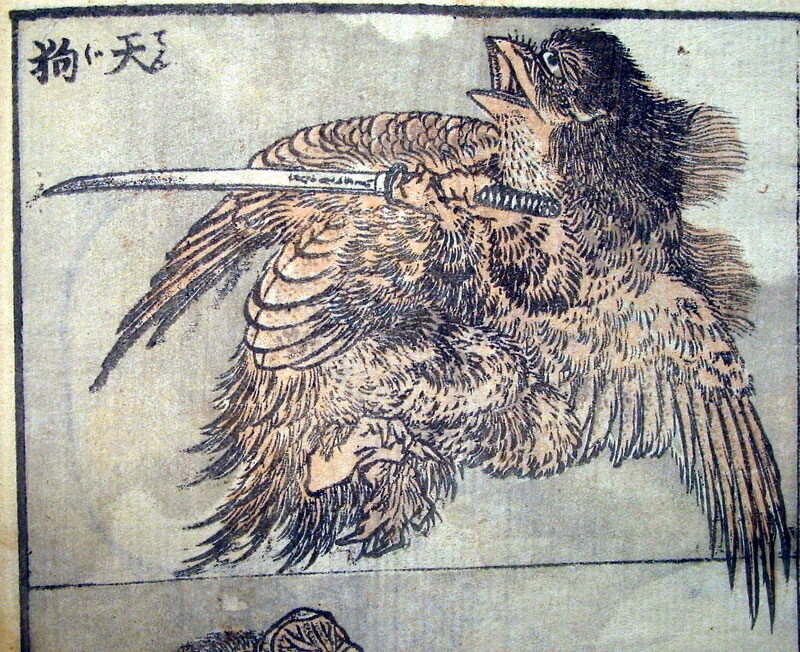
Look at any tengu from the Edo period onward and you will find the same outfit. On his head is a small black pillbox cap, the tokin. Round his neck hangs a sash with fat pompoms, the yuigesa, and in his hand is a ringed staff, a conch-shell trumpet, or a feather fan, and his feet are in high clogs. Every item belongs to the yamabushi, the mountain ascetics of Shugendō, the old Japanese religion of walking, fasting and chanting on sacred peaks.
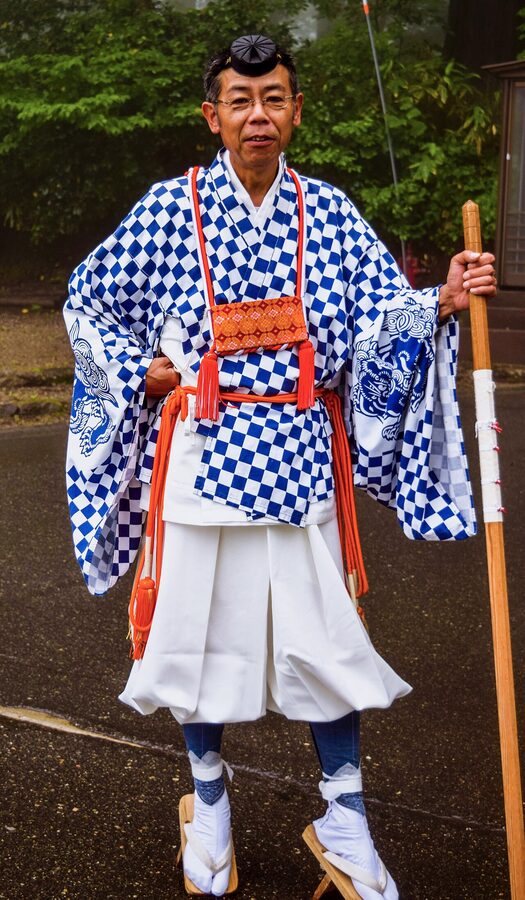
Shugendō grew up from the late Heian period by fusing Japan’s ancient mountain worship with esoteric Buddhism, and it claimed as its founder the seventh-century wonder-worker En no Gyōja. Its practitioners spent weeks in the mountains, and the mountains were where the tengu lived. The folklorist Gorai Shigeru, who spent a career on Shugendō, argued that the overlap ran deeper than costume. In his reading the good tengu was simply the god of the mountain, and the whole point of a yamabushi’s austerities was to become one with that god and acquire its power, so that a yamabushi at the top of his training was, in a sense, a tengu.
The villages below reached the same conclusion from the other direction. Yamabushi came down from the peaks with odd clothes and unsettling powers, and medieval stories are full of tengu disguised as yamabushi, as though the costume had always been a thin disguise. The Konjaku tengu dressed as Buddhas; the later ones dressed as the men who actually lived on their mountains.
The beak and the nose
The long nose is the late arrival, and on this point the English and Japanese accounts tell the story a little differently. English-language books usually say that the long nose appears in the fourteenth century and spreads from the Muromachi period onward, while Japanese reference works place the first long-nosed figures at the end of the Kamakura period and stress that the nose only became the normal tengu face in the Edo period. Both agree on the shape of the change. The medieval tengu is a bird, the early modern one is a man with a nose.
Where the nose came from is a proper scholarly quarrel. Gorai Shigeru traced both kinds of tengu to the masks of gigaku, the masked processional theatre that came from the continent in the seventh century. One gigaku character, Chidō, has a long nose and walked ahead of the procession to clear away evil, and another, Karura, is the bird-headed Garuda who eats snakes. Long-nosed Chidō and beaked Karura, on this theory, became the long-nosed great tengu and the beaked crow tengu.
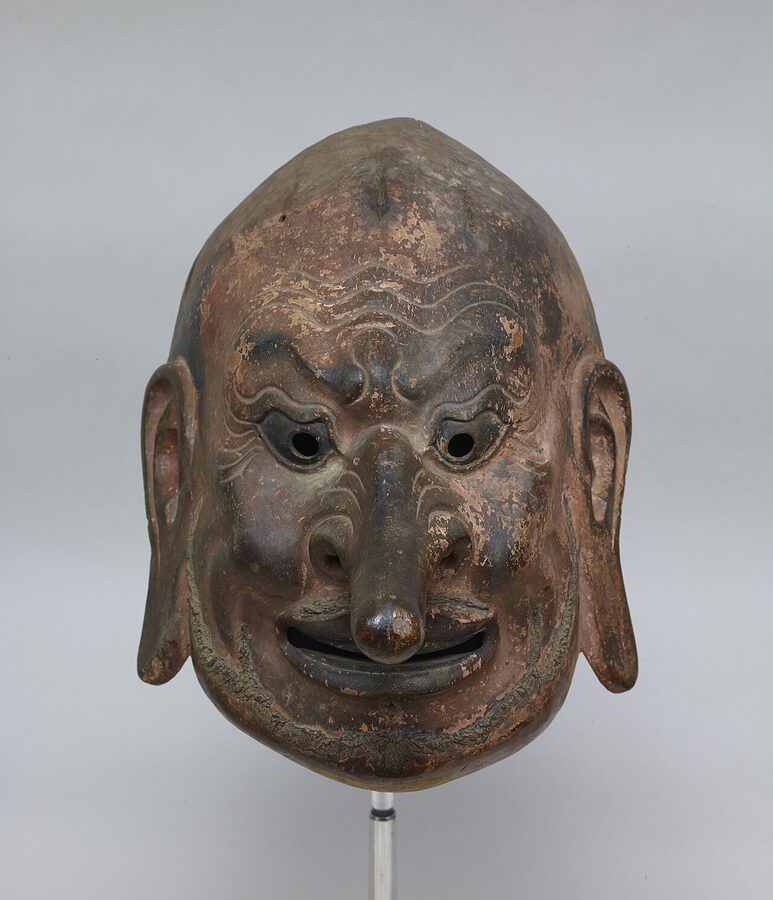
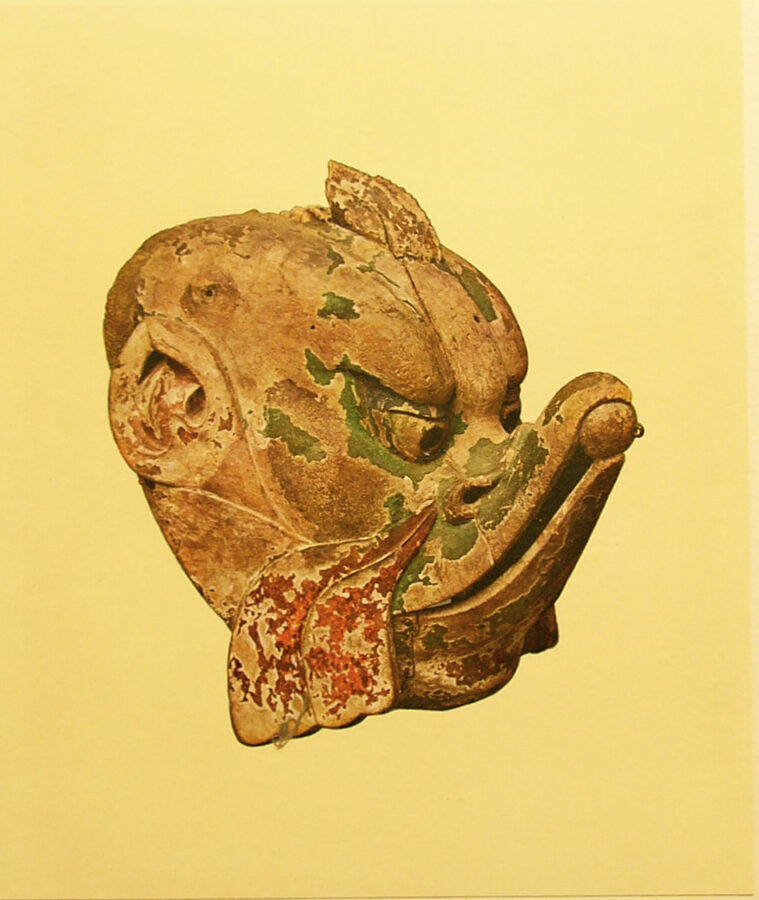
The literary scholar Katsumata Takashi and the art historian Sugihara Takuya are not convinced. There is no text linking gigaku masks to tengu, they point out, and nothing explains why the connection would have been made. Their alternative is simpler and, I think, more persuasive: the long nose is a beak that has been humanised. In the Zegaibō picture scroll, a tengu disguised as a man changes back into a kite and his nose visibly stretches out into the upper half of the bill.
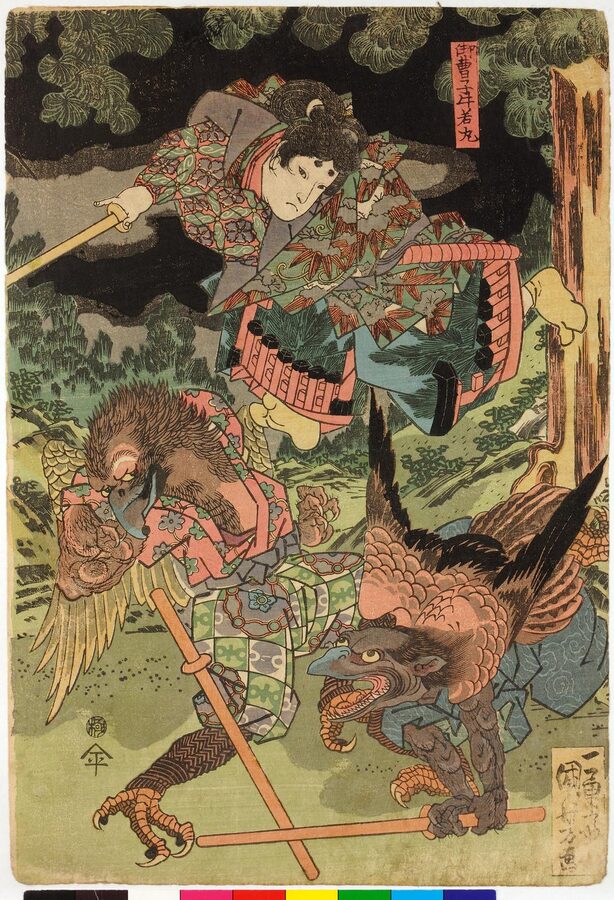
By the Edo period, whichever way it happened, every bestiary listed two kinds of tengu. The great tengu, daitengu, is the long-nosed one, red-faced, white-haired, human in shape and often rather grand. The small tengu, kotengu, is the beaked one, usually called a karasu-tengu or crow tengu, though the feathers in the pictures look more like a hawk’s, and he does the fighting, flying and fetching. In the Noh play Kurama Tengu the comic interlude is played by the small tengu, and on Mount Takao there is a statue of each.
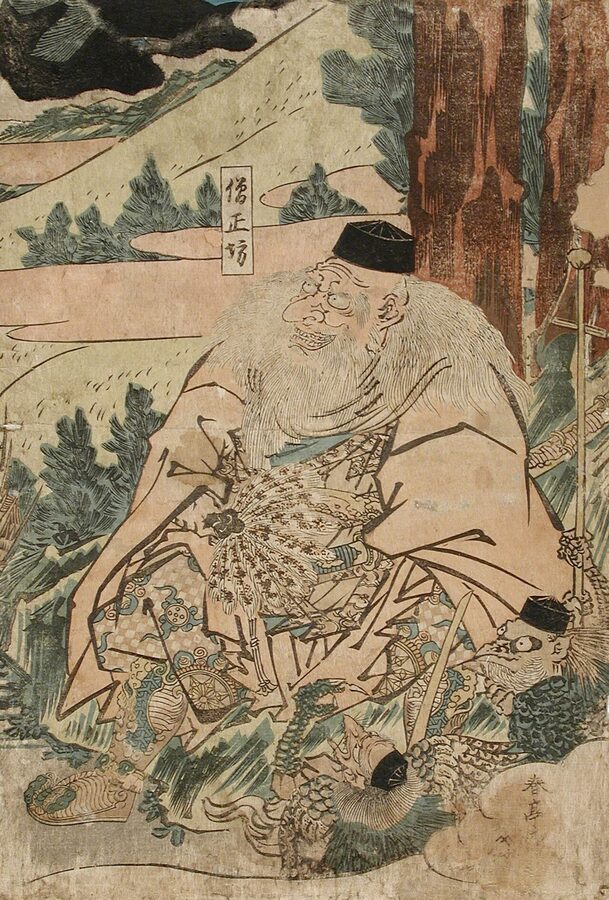
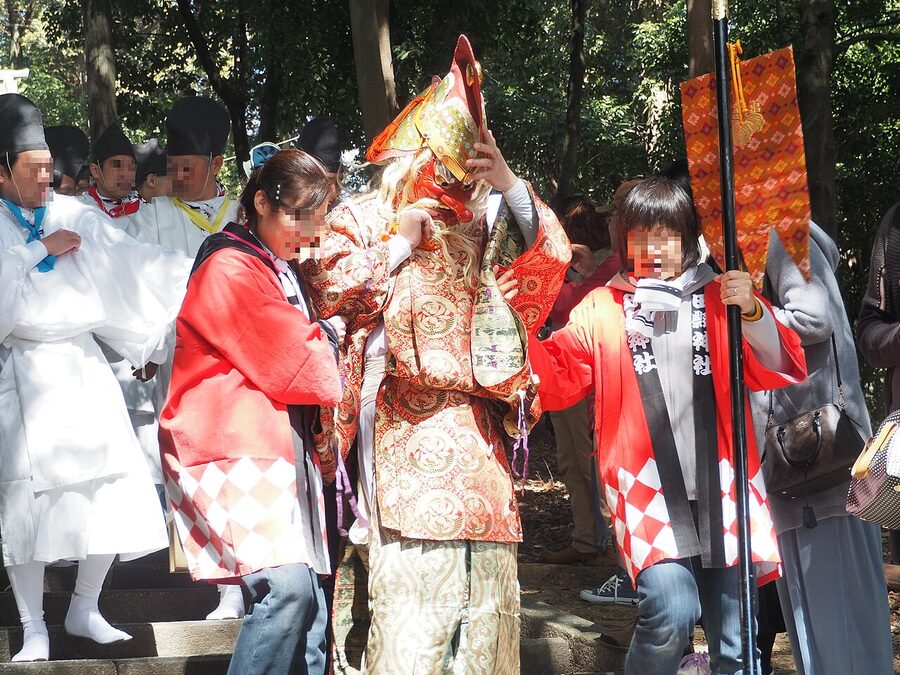
There is one more face in the mix. Sarutahiko, the earthly god who met the grandson of the sun goddess at the crossroads of heaven, is described in the Nihon shoki with a nose seven hand-spans long and eyes that shine like mirrors. Nobody thinks he started out as a tengu, but by the Edo period the two had merged so thoroughly that when a shrine procession is led by Sarutahiko, the man playing him almost always wears a red long-nosed tengu mask.
Sōjōbō and the boy on Mount Kurama
By the fourteenth century the tengu had a new speciality: war. The heavenly dog of China had always been an omen of fighting, and now Japanese stories gave the tengu a deep knowledge of weapons and strategy. That reputation is fastened to one person above all others, the boy Ushiwakamaru, the future Yoshitsune, and to one mountain, Kurama, in the hills north of Kyoto, where the great tengu Sōjōbō was said to rule the valley of Sōjō-ga-tani.
Here it pays to read the oldest text carefully, because it says less than everyone remembers. The Gikeiki, the romance of Yoshitsune’s life put together some two centuries after his death, does send the boy to Sōjō-ga-tani. It describes the valley as a place where the gods of the old shrine had lost their power, which had become “nothing but a dwelling of tengu”, where “when the sun sinks in the west, monsters shriek”, and where nobody dared to go. That is exactly why he goes there.
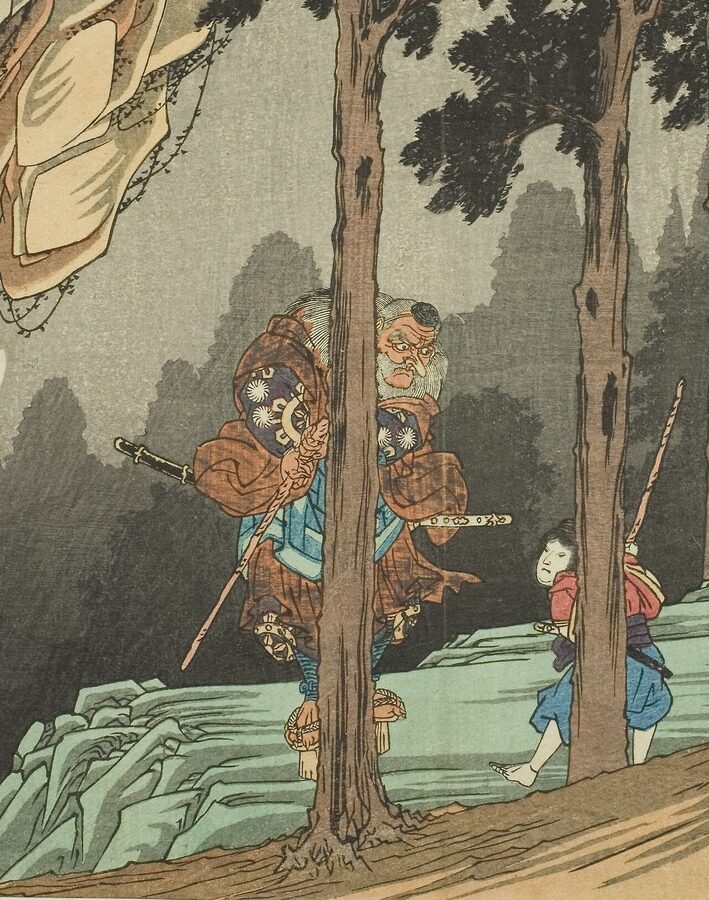
By day, the Gikeiki says, Ushiwaka pretended to study, and by night he put on a suit of armour called Shikitae, buckled on a gold-mounted sword and walked alone through the valley to the shrine of Kibune, where he prayed to the god and to Hachiman for the Minamoto. Then he named every tree and blade of grass around him after a member of the Taira clan, called one of the two biggest trees Kiyomori, and hacked at it with his sword. He hung two little ball-like objects from a branch and named them the heads of Kiyomori and his son Shigemori, and at dawn he crept back to bed.
A monk named Izumi followed him one night, hid in the undergrowth and reported what he saw. The senior monks, alarmed, decided to shave the boy’s head at once, and he faced them down with his hand on his sword hilt until a kinder monk took him into his own lodging and renamed him Shanaō, after which the night visits to Kibune stopped. That is the whole episode, and nobody teaches him anything.
The tengu are scenery. The only military lesson in the book comes from a human strategist, Kiichi Hōgen, whose daughter Ushiwaka seduces in order to steal her father’s copy of the Chinese military classic, the Six Secret Teachings.
The tengu teacher comes from the stage. The Noh play Kurama Tengu, credited to an obscure playwright called Miyamasu, was being performed before the shogun by 1465. In its first half, the monks of Kurama are holding a cherry blossom party with their temple boys when a rough-looking yamabushi barges in and sits down. The monks, disgusted, call the party off and leave, and only one boy stays behind to talk to the stranger, who turns out to be the lonely son of Yoshitomo, snubbed by the Taira boys around him.
The yamabushi, touched, takes him on a tour of the mountain’s best blossom, reveals that he is the great tengu of Kurama, and promises to teach him the art of war the next day. In the second half Ushiwaka waits with a halberd, and the great tengu arrives in full glory to tell him the Chinese story of the strategist Zhang Liang, who earned a secret book of tactics by humbly fetching an old man’s shoe. He promises to guard the boy in every battle to come and vanishes into the clouds.
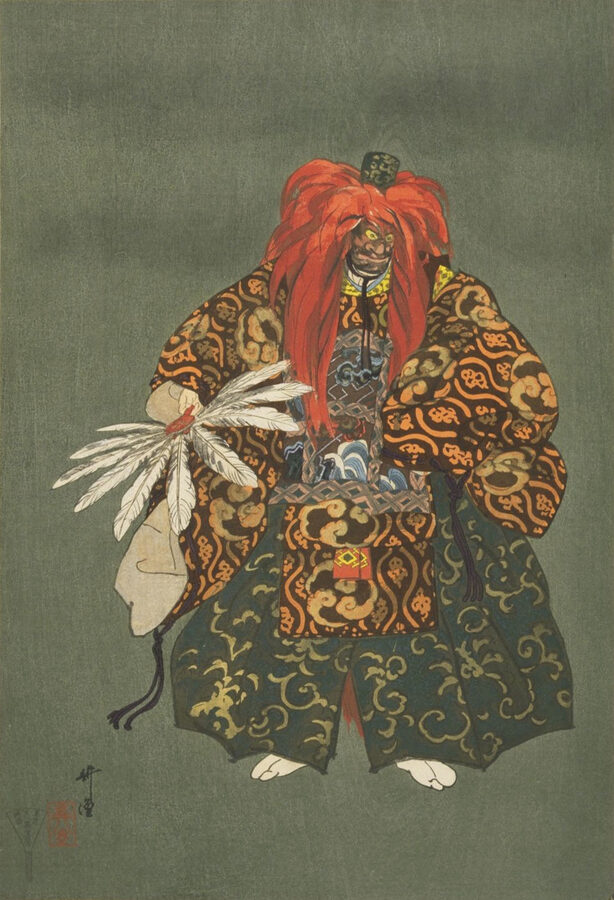
Japanese critics single the play out for two things. It makes the tengu, a demon by every older definition, into a protector of the weak, and its first half has a wistful, half-romantic tenderness between the old outsider and the beautiful lonely boy, in the manner of the medieval monastery’s affection for its temple boys. It also owes almost nothing to the Gikeiki. Its sources were the popular “Ushiwaka stories” of the ballad singers and storytellers, which were also feeding the illustrated tales of the period, one of which sends the boy flying to the tengu’s palace to meet his dead father.
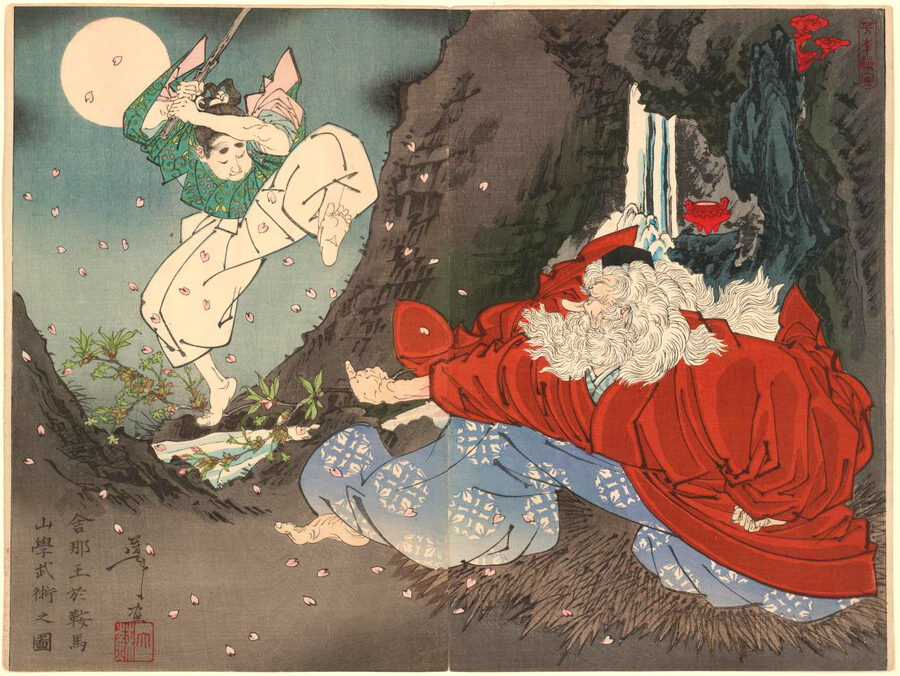
The Edo period finished the job. The puppet play Kiichi Hōgen sanryaku no maki of 1731, later taken into kabuki, folded the Gikeiki’s human strategist into the tengu, and the ukiyo-e designers drew the lessons over and over: Hiroshige, Kuniyoshi, Kyōsai and Yoshitoshi all had a go. The scholar Hayashi Razan had already named Sōjōbō of Kurama, Tarōbō of Atago and Jirōbō of Hira as the greatest tengu in Japan, and the lists kept growing until every holy mountain had a tengu lord with a name ending in -bō.
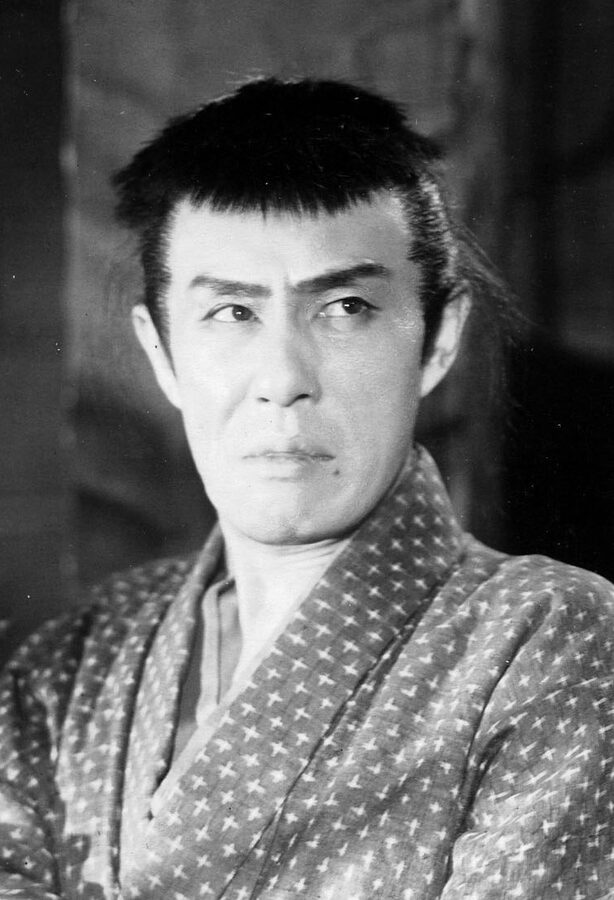
The last twist is a novel with no tengu in it at all. In 1924 Osaragi Jirō began a series about a masked swordsman of the 1860s who calls himself Kurama Tengu after the Noh play and spends his time fighting the Shinsengumi for the imperial loyalist cause. It ran to dozens of stories and some sixty films, and the actor Arashi Kanjūrō played the hero in about forty of them. For most of the twentieth century, a Japanese child who heard the words “Kurama Tengu” pictured a man in a black hood on a galloping horse.
Taken by the tengu
In the Edo period the tengu acquired a new habit, or rather an old habit became the thing everyone feared. When a child disappeared without trace, people said the tengu had taken him, tengu-kakushi or tengu-sarai, and folklorists who later collected the accounts found that, where medieval people had blamed eagles or oni, the cases blamed on tengu multiply sharply after about 1600. Children taken by tengu tended to vanish around the fourth month of the old calendar, the turn of the season, and the sign that a tengu had done it was that the child’s sandals were found neatly placed side by side.
The village would turn out at night with gongs and drums, calling the child’s name and shouting “give him back”. Missing children were often found days later in odd places, up a tree, on a roof, or in a spot that had already been searched three times. In parts of Nagano a person passing a place known for abductions would chant “saba kutta, saba kutta”, “I’ve eaten mackerel”, because everyone knew tengu hated mackerel, and in Ishikawa people used the fish as a charm for the same reason.
Some of the children came back with stories. They had been flown around Japan to see the famous sights, or taught magic, or medicine, and they sometimes described places they could not possibly have seen. The darker interpretation was there too. A book of 1795 from Akita says that boys returned from being spirited away were known as “the tengu’s catamites”, and much later the folklorist Yanagita Kunio suggested that some abductions were the work of real people, renegade ascetics and hill-dwellers taking boys from the villages.
The boy who came back
The most famous abductee of all was an Edo boy named Torakichi, from the Shitaya district near Ueno. He said that at the age of seven, while playing at the temple of Kan’ei-ji, he met a mysterious old man called Sugiyama Sōjō, who took him to Mount Iwama in Hitachi province (in modern Ibaraki) to be trained, and that over the following years he had been taken through the hidden worlds, learned charms and divination, and even flown abroad. In the autumn of 1820, at about fifteen, he reappeared in Edo and became the talk of the city.
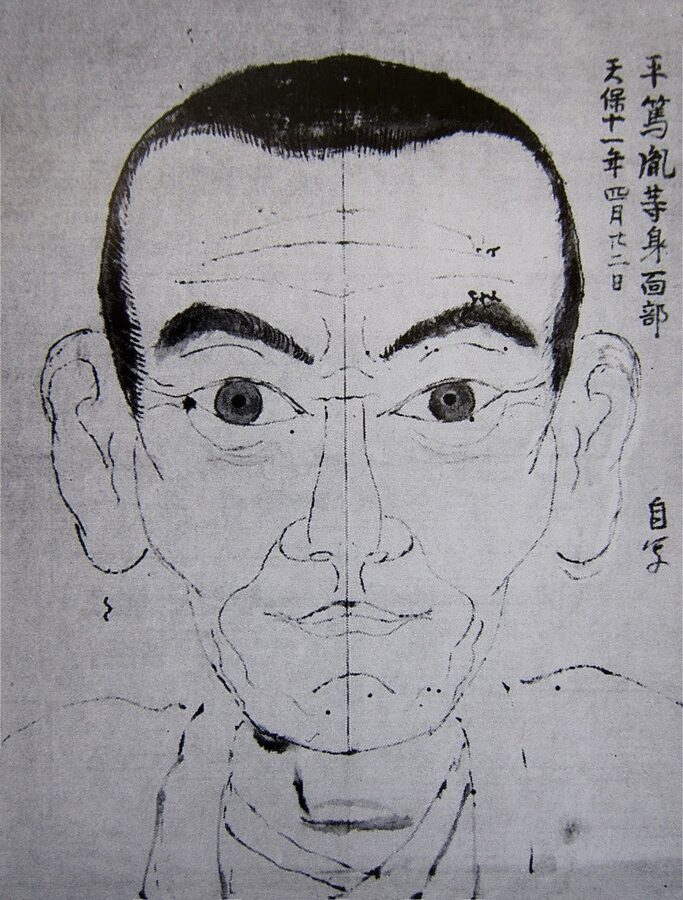
The man who took him most seriously was Edo‘s most energetic nativist scholar, Hirata Atsutane. Hirata more or less removed the boy from the merchant-essayist Yamazaki Yoshishige, who had been looking after him, installed him in his own house for several years and questioned him about everything: what the beings in the other world ate and wore, how they worshipped, how they healed the sick, how they fought. The result was the Senkyō ibun, “Strange Tidings from the Realm of the Immortals”, completed in 1822.
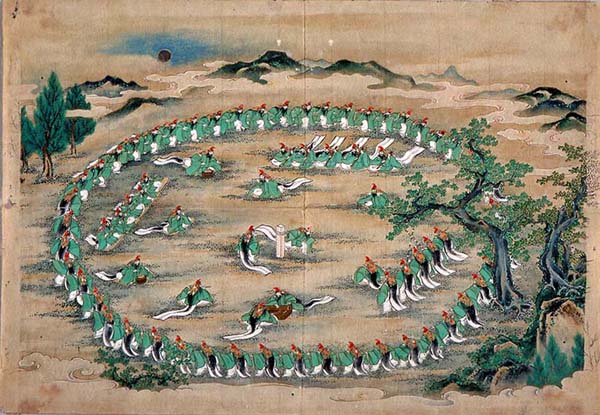
Hirata believed every word. He had a painter draw Torakichi’s immortal teacher from the boy’s description and kept the picture as a family treasure, and when the boy went back to the mountains he sent with him a letter to the mountain god, a copy of his own book on the afterlife, and a list of scholarly questions about the ancient script of the gods. He also asked, through a disciple, whether the tengu practised love between men. Torakichi replied, with what I imagine was great composure, that he could not speak for other tengu mountains but there had been nothing of the kind on his.
The book was kept so close that even Hirata’s senior pupils were not allowed to read it. Its afterlife has been long and peculiar. Hirata’s ideas about the hidden world fed the nativist movement that helped bring down the shogunate, and in 2018 the book went viral on Japanese social media, carried along by the craze for fantasy novels about being reborn in another world, so that the paperback had to be reprinted and an abridged modern translation, “The boy who was kidnapped by tengu”, came out the same year. Torakichi got there first.
Noses at the festival
By the nineteenth century the tengu was many things at once: a guardian in Shugendō temples, a monster in the bestiaries, and in the woodcutters’ huts a neighbour who must be kept sweet. Woodsmen in Mino offered him special rice cakes before work, and hunters elsewhere gave him a small ugly fish called okoze, and nobody in the mountains would fell a tree that a tengu was known to sit in.
The mountain itself was full of his noises. The sound of a great tree crashing down at night, when nothing has fallen by morning, is tengu-daoshi. Laughter from nowhere that grows louder if you laugh back is tengu-warai, stones that rain down out of a clear sky are tengu-tsubute, and a hut that shakes on a windless night has been visited by tengu-yusaburi. In the Edo period, fossil megalodon teeth dug out of the ground were treasured as tengu claws.
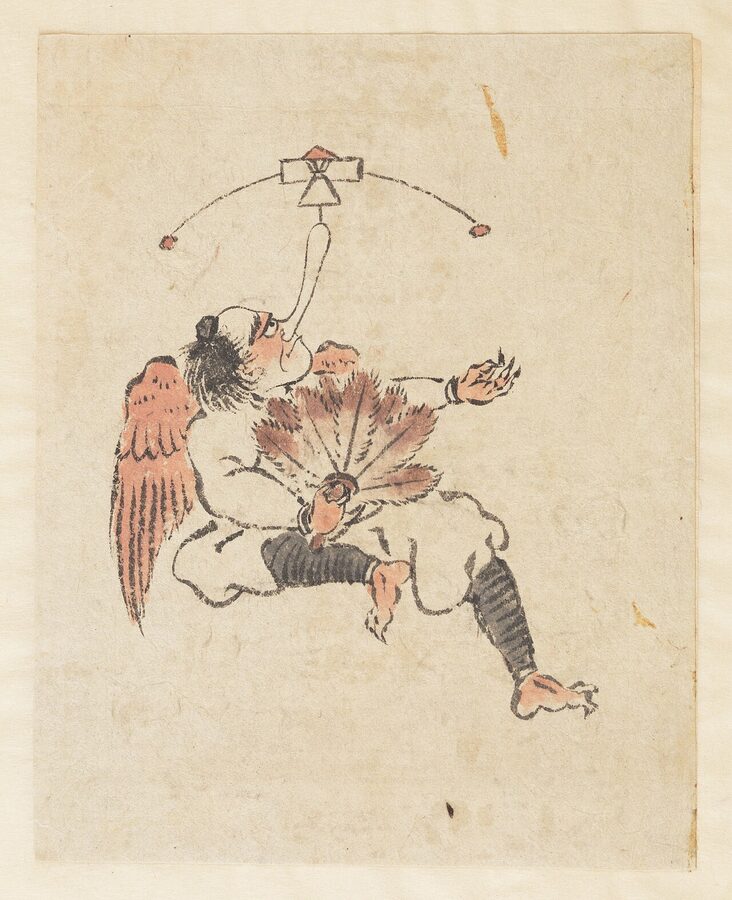
The folk tales collected by folklorists treat him as something close to a comic stooge. A boy looks through a bamboo tube, tells a passing tengu that he can see Kyoto and Osaka, and trades the useless tube for the tengu’s cloak of invisibility. A gambler tells a tengu he is terrified of gold, and the tengu, trying to be cruel, buries him in it. In some regional versions of the story of the old man with the lump on his face, the lump is removed by a party of tengu rather than the more usual oni, which tells you how freely the creatures of the yōkai world swapped parts.
At festivals the tengu became the man at the front. Wherever a mikoshi procession is led by Sarutahiko, there is a long red nose bobbing along at the head of it, and some of the great festivals have giant tengu of their own. At Kashōzan Mirokuji in Gunma, a temple of tengu worship, the largest of the masks presented by the faithful is 6.5 metres tall with a 2.8-metre nose, and at the Numata festival below the mountain in August a giant tengu mikoshi is carried entirely by women.
One more meaning deserves a footnote. When the Jesuits needed a Japanese word for the devil in the 1590s, the word they reached for was tengu, and the Japanese devotional books printed by the mission press in the Christian century warn readers against the schemes of the tengu. It is a fair measure of how the creature looked to an educated Japanese around 1600: no longer the barking star, not yet the festival clown, but the prince of the demon road.
Where to meet a tengu today
The tengu’s country is the holy mountain, and the three best for meeting him are Kurama in Kyoto, Takao on the western edge of Tokyo, and Haguro in Yamagata. Each is a working religious site and a proper walk, and each tells a different part of the story: Kurama the boy and the king of the tengu, Takao the tengu as a god’s attendant, Haguro the yamabushi whose clothes he borrowed. I add short stops for the cursed emperor, the crow tengu of Kamakura and the masks. For the wider timeline, Japan through the ages is the place to start.
Kurama-dera and the walk to Kibune, Kyoto
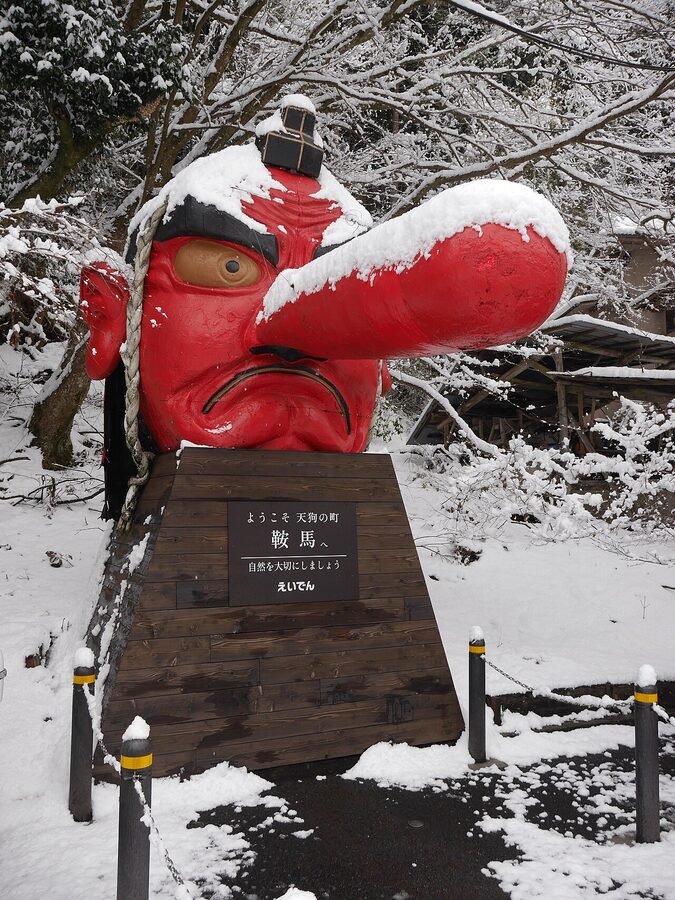
Kurama-dera sits at the end of the Eizan Railway’s Kurama Line, about thirty minutes from Demachiyanagi Station in northern Kyoto. The first tengu you meet is a giant red head with a nose like a ship’s figurehead in the station forecourt, put there for the photographs and very effective. From the station it is a three-minute walk to the main gate, where you pay the ¥500 mountain entry fee; the halls are open 9:00–16:15.
The temple runs its own little funicular to the pagoda (a ¥200 donation each way, every twenty minutes, last car up at 16:20), but if your legs allow it, walk the zigzag path: about thirty minutes from the gate to the main hall, past the memorial on the site of the boy’s lodging. The Reihōden museum near the main hall (¥200, 9:00–16:00, closed Tuesdays and from 12 December to the end of February) has a natural-history floor with a display on the local flying squirrels, which, the label explains, glide from tree to tree in the dark and gave rise to tengu stories. I have never read a more satisfying museum caption.
Beyond the main hall the path climbs through cedars over the Ki-no-ne michi, the stretch where roots lie across the ground like a net because the bedrock is too hard for them, and drops into Sōjō-ga-tani. The little hall there, the Yoshitsune-dō, enshrines his spirit, which the temple believes came home to the mountain after his death at Hiraizumi. A short way on is the Maō-den, the inner sanctuary, built where Maōson, the great demon king the temple worships as the power of the earth and identifies with its tengu lord, is said to have come down from the sky in the remote past.
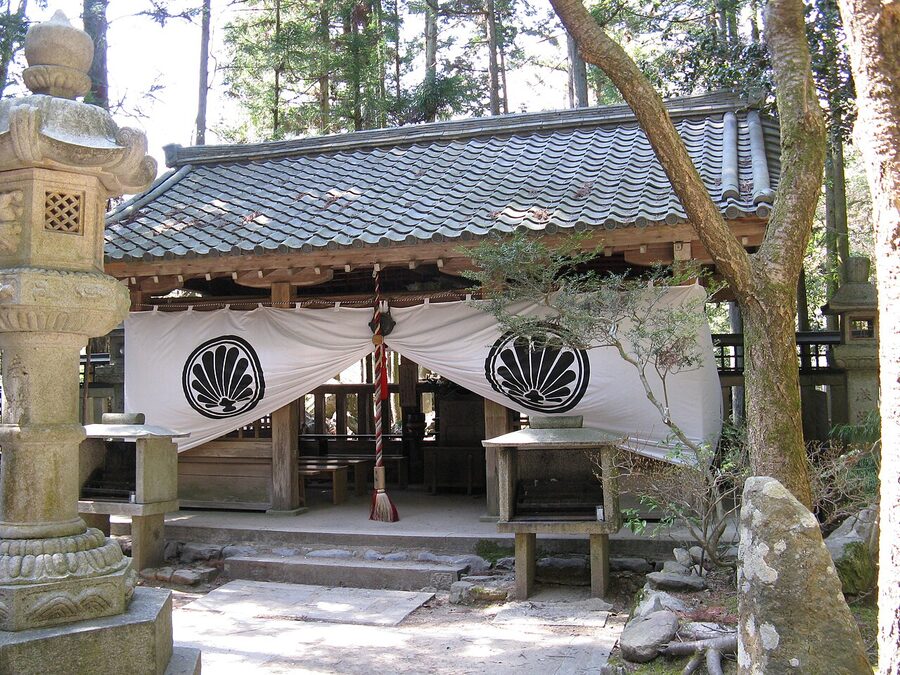
From the Maō-den the path descends steeply to the west gate and Kibune, about twenty minutes, the same way the Gikeiki’s boy went in his armour by night. Kibune Shrine is free and open 6:00–20:00 from May to November (it closes earlier in winter; check the shrine’s site), and its Okumiya, the inner shrine ten minutes further up the valley, is the older and quieter of the two. From Kibune it is about thirty minutes’ walk down to Kibuneguchi Station, or a few minutes on Kyoto Bus 33. Allow half a day for the whole crossing, wear shoes with grip, and start from the Kurama end unless you enjoy climbing roots.
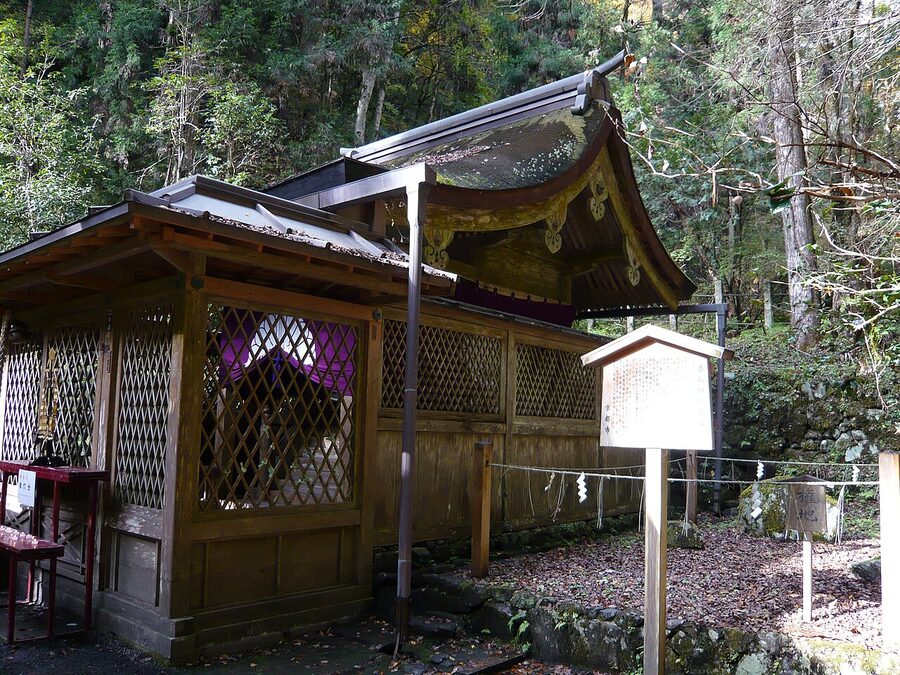
Shiramine Jingū, Kyoto
Sutoku’s shrine sits on the old Asukai family estate by the Horikawa Imadegawa crossing, about fifteen minutes’ walk west of Imadegawa Station on the Karasuma subway line. It is open 8:00–17:00 and free to enter. The cursed emperor shares it with Emperor Junnin, another sovereign who died in exile, and with Seidai Myōjin, the god of kemari, the courtly football game the Asukai house taught for centuries.
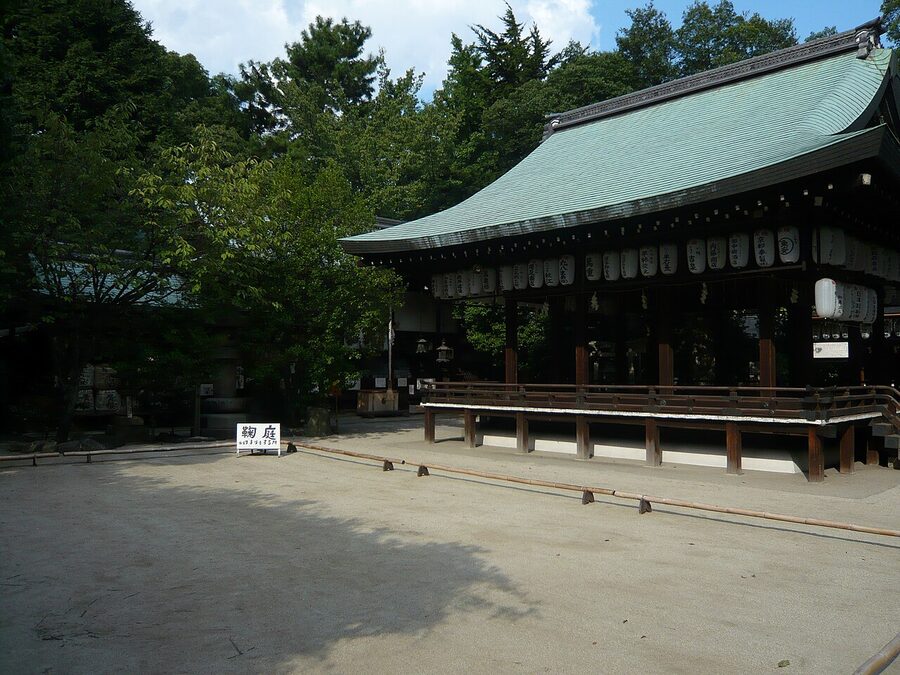
It is a small shrine, worth the detour only if the Sutoku story has caught you. If it has, go on a weekday afternoon, when the school teams are in class. His actual grave is far away, on the mountain of Shiramine near Sakaide in Kagawa, next to the temple of Shiramine-ji, the 81st stop on the Shikoku pilgrimage.
Mount Takao and Yakuō-in, Tokyo
Mount Takao is the easiest tengu mountain in Japan to reach: about fifty minutes from Shinjuku on the Keiō Line to Takaosanguchi Station, then three minutes’ walk to the cable car at Kiyotaki. The cable car costs ¥490 one way (¥980 return), takes six minutes and runs from 8:00 every fifteen minutes, with last cars between 17:15 and 18:30 depending on the month; from the top station it is about twenty minutes on foot to the temple. Expect crowds at weekends and in the autumn colours: Michelin gave the mountain three stars in its first Japan guide, and the temple counts it the most climbed mountain in the country.
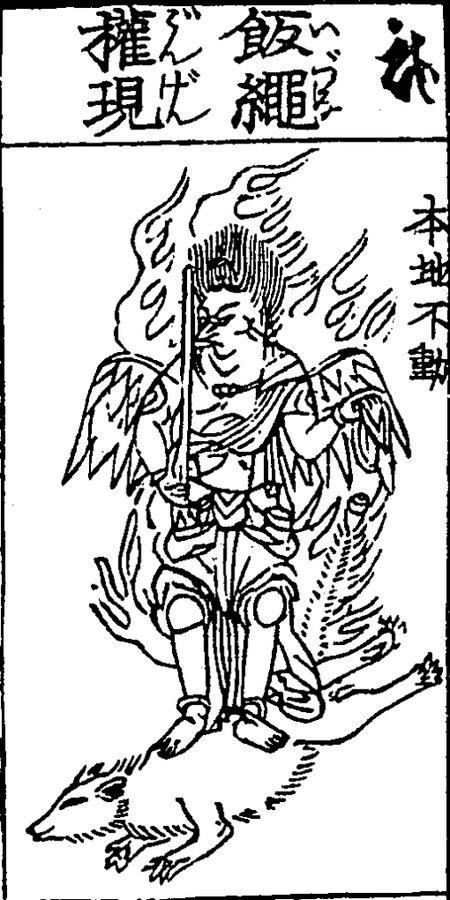
Yakuō-in, the temple on the mountain, was founded according to tradition in 744, but its tengu arrived with the monk Shungen, who came from Daigo-ji in the 1370s and enshrined Izuna Gongen as the mountain’s deity. Izuna Gongen is a ferocious, winged, beaked figure who rides a white fox and brandishes a sword, and the temple explains that the tengu are his attendants, and that the yamabushi who trained here were often taken for tengu themselves. The warlords of the sixteenth century prized Izuna Gongen as a war god: Uesugi Kenshin wore his image on the front of his helmet, and Takeda Shingen is said to have carried a small figure of him into battle.
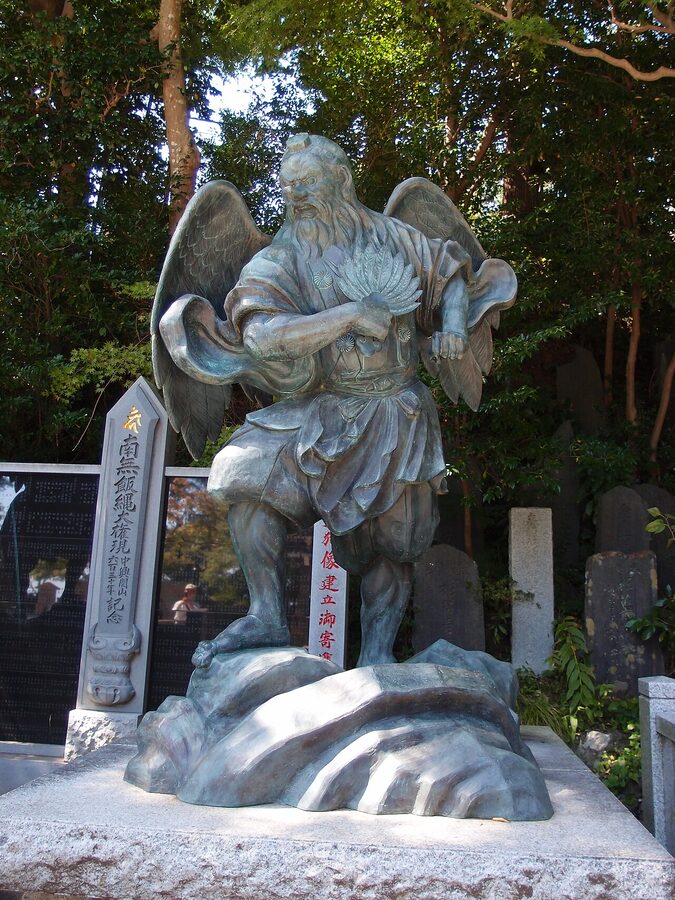
Before the temple, on the path from the cable car, you pass the Tako-sugi, the “octopus cedar”, whose roots spread across the ground like tentacles. The local story says that when the path was being cut, the tengu decided the tree was in the way and would have to come down, and overnight the cedar drew back its roots to save itself. Near the top of the cable car they sell tengu-yaki, little cakes in the shape of a tengu’s face filled with black-bean paste. They are an ordinary snack, and you will buy one anyway.
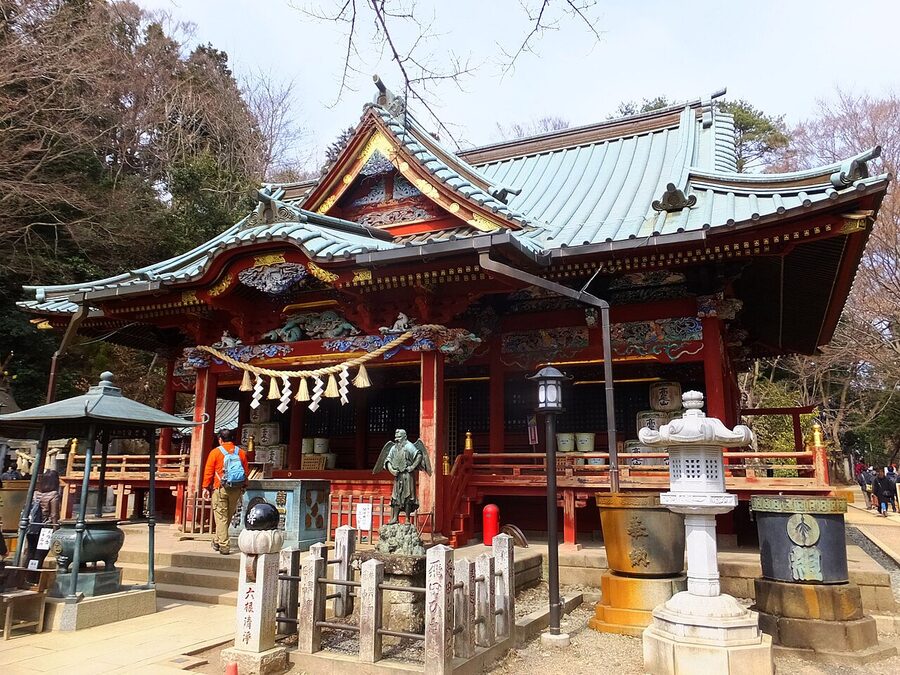
If you can choose your day, come on the second Sunday of March, when Yakuō-in holds its fire-walking festival in the open ground near the foot of the mountain. The yamabushi perform a great outdoor fire ritual and then walk across the embers, and members of the public are allowed to follow them. One warning: the old texts’ “Takao” tengu, Naigubu of the lists and the “great tengu of Atago and Takao” in the Hōgen monogatari, almost certainly belong to the other Takao, in the hills of Kyoto next to Mount Atago, not to this one.
Dewa Sanzan and Mount Haguro, Yamagata
The tengu borrowed his clothes from the yamabushi, and the best place to see the yamabushi at work is Dewa Sanzan, the three sacred mountains of Yamagata. Of the three, Haguro is the one you can reach all year: it is about fifty minutes by Shōnai Kōtsū bus from Tsuruoka Station to the summit, or you can get off at the Zuishin-mon gate and climb the old way, up 2,446 stone steps through cedars more than three centuries old.
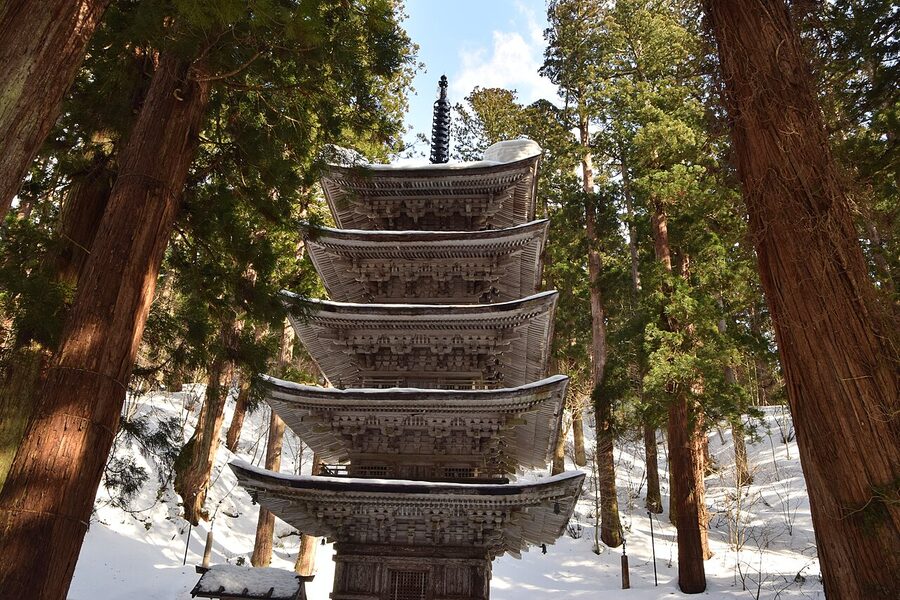
The pagoda comes early; the full climb to the summit takes an hour to an hour and a half, with some steep stretches. At the top is the Sanjin Gosaiden, the great hall where the gods of all three mountains are worshipped together, and the Dewa Sanzan History Museum (¥500, 10:00–16:30, open from late April to late November, closed Thursdays except in July and August), whose collection is mostly from the centuries when this was a Shugendō mountain rather than a Shinto shrine.
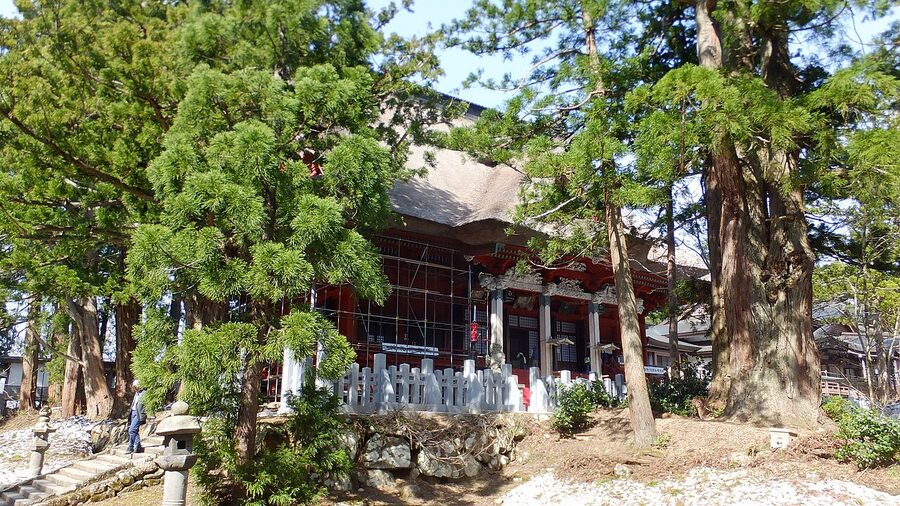
Every year from 26 August to 1 September the shrine runs the Akinomine, the autumn mountain retreat that once qualified a man as a yamabushi. It is not tourism: places are limited to 120, it is open only to men fit enough for the mountain runs, it costs ¥70,000, and cameras, phones and food other than water are forbidden. Applications close in mid-June. Everyone else can stay at the pilgrims’ lodgings in Tōge at the foot of the mountain, eat the shōjin food, and watch the men in checked robes and pompom sashes come down off the mountain looking exactly like the tengu in the prints.
Kenchō-ji’s Hansōbō, Kamakura
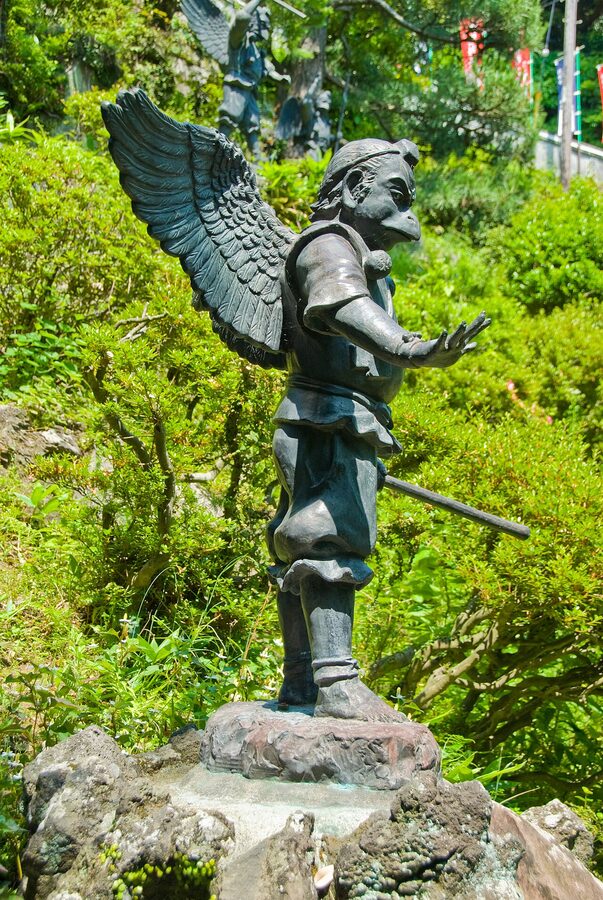
For the crow tengu, go to Kamakura. Behind the great Zen temple of Kenchō-ji (¥500, 8:30–16:30, fifteen minutes’ walk from Kita-Kamakura Station), a long flight of steps climbs the hill to Hansōbō, a guardian shrine brought here from Shizuoka in 1890, and the last stretch is lined with bronze tengu. They are not old, but they are fierce, and the view back over the temple roofs towards the sea from the top is the best in Kamakura.
The masks in Ueno
The gigaku masks that may be the ancestors of the tengu’s face are in the Gallery of Hōryū-ji Treasures at the Tokyo National Museum in Ueno (¥1,000, 9:30–17:00, closed most Mondays). The masks are delicate and rotated, and the museum’s Tengu zōshi scrolls appear only in occasional exhibitions, so check what is on before you go.
If you do end up on Kurama on a clear night, walking down to the station after the halls have closed, look up for a while. A meteor big enough to make a sound is rare, but they happen. If one goes over with a crack and a roar, you will know exactly what Min would have told you, and you will be standing on the right mountain to hear it bark.