Three times, in the dark, a priest imitates a cockerel. Kakekō, kakekō, kakekō, he calls, and a line of more than a hundred men in white silk begins to move through the forest by torchlight, carrying something nobody in the crowd is allowed to see, from one wooden building to an identical wooden building on the plot of white gravel next door. At the same hour, in the palace in Tokyo, the emperor is said to bow towards Ise. The last time this happened was at eight in the evening on 2 October 2013, and the next will be in the autumn of 2033.
The thing being carried is the sacred mirror of the sun goddess, and the walk from old hall to new is the climax of the shikinen sengū (式年遷宮), the rebuilding that Ise Jingū (伊勢神宮) has carried out, with one long and embarrassing gap, roughly every twenty years since the end of the 7th century. It is why the holiest shrine in Japan is also, at any given moment, one of its newest buildings. I have been going to Ise for fifteen years, and I still find that the oddest and most persuasive thing about it.
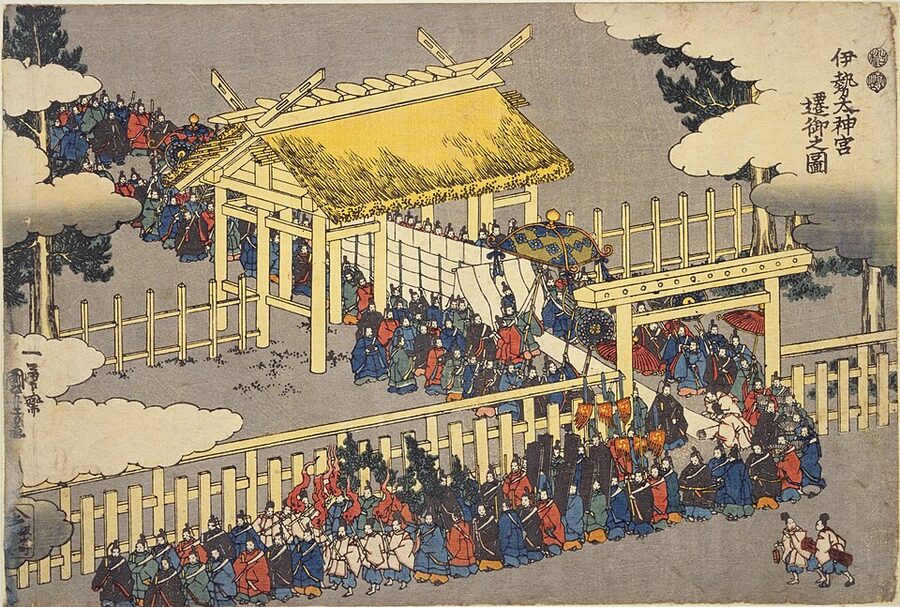
Ise is not one shrine but 125. Two matter most: the Naikū (内宮), the Inner Shrine, home of Amaterasu, the sun goddess and ancestor of the imperial house, and the Gekū (外宮), the Outer Shrine, a few kilometres away, home of Toyouke, the goddess who cooks for her. The other 123 are scattered over four cities and two districts of Mie prefecture, and the official name of the whole lot is simply Jingū, “the Shrine”. If you want the periods straight first, my overview of Japan through the ages lays them out.
In This Article
- A goddess looking for a home
- What the historians and the diggers say
- Every twenty years since 690
- The timber
- The gap
- What happens to the old shrine
- The 63rd sengū is already under way
- A granary for a goddess
- What you can and cannot see
- The shrine nobody was allowed to pray at
- Shrine lands, samurai and the divine wind
- Millions on the road
- The Ise clubs
- Okage-mairi: the great runaways
- Ee ja nai ka
- The state takes Ise back
- Where to visit Ise Grand Shrine today
- The Gekū first
- The Sengūkan
- Between the shrines: Furuichi and Kuratayama
- The Naikū
- Oharai-machi and Okage Yokochō
- Futami and the Wedded Rocks
- Further out: Asama, Saikū and the other shrines
- Planning around 2033
- The cockerel and the mirror
A goddess looking for a home
The story starts with a mirror. In the Nihon shoki, the court chronicle finished in 720, Amaterasu hands her grandson a bronze mirror as he descends from heaven and tells him to look on it as he would look on her. It is the Yata no Kagami, one of the three sacred treasures of the imperial regalia, and for generations, the chronicle says, it lived in the palace with the emperors, sharing their bed and their hall.
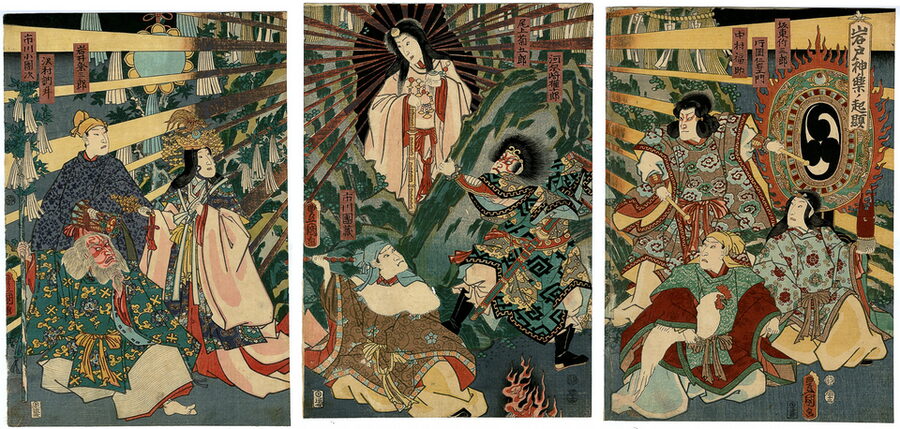
Amaterasu deserves more than a paragraph, and she has her own article. The short version is that she was born from the left eye of the creator god Izanagi, that she once shut herself in a cave and left the world in darkness, and that the other gods lured her out with a party, crowing roosters and a mirror. The Kojiki of 712 and the Nihon shoki tell the cave story slightly differently, but both make the mirror the trick that worked. Those roosters are why the priest crows at the sengū.
Then the emperors grew nervous of their lodger. Under the tenth emperor, Sujin, the Nihon shoki reports a plague that killed more than half the people, and a decision that the goddess was too powerful to keep at home. The mirror went to a village called Kasanui in Yamato in the care of a princess, and in the 25th year of the next emperor, Suinin, it passed to his daughter Yamatohime, who carried it through Uda, Ōmi and Mino looking for a place the goddess would accept.
In Ise the goddess finally spoke. The Nihon shoki gives her words, and they are worth having: this land of Ise, of the divine wind, is where the waves of the eternal world break, wave upon wave; a secluded and lovely land, and here I wish to stay. The shrine was built on the upper reaches of the Isuzu river, and a variant tradition in the chronicle dates the move to a hinoto-mi year, the 26th of Suinin.
Notice how little the oldest texts actually say. The Kojiki gives the founding a single note. The detailed itinerary comes from later documents: the shrine’s ritual handbooks of 804, and above all the Yamatohime no mikoto seiki, a Kamakura-period text by Gekū priests with an agenda of their own. The stops on the way are called moto-Ise, “former Ise”, and their number has grown from twenty-odd to more than sixty as local shrines have put in a claim.
The Gekū is absent from the chronicles altogether. Its story first appears in its own handbook of 804: in the 22nd year of Emperor Yūryaku, Amaterasu came to him in a dream, complained that it was painful to be alone and that she could not eat in peace, and asked for her food goddess to be fetched from Hiji no Manai in Tanba. Toyouke’s shrine still sends up meals twice a day. It is the only divine complaint about room service I know of that founded a major institution.
What the historians and the diggers say
Nobody in academic history takes the Suinin date at face value. Since Tsuda Sōkichi’s work in the early 20th century, historians have treated the chronicles before Emperor Ōjin as myth, and the shrine’s own handbook follows the scholar Sakamoto Kōtarō, who counted the chronicle’s years mechanically and arrived at 4 BC. Everyone else spreads the founding across five centuries.
Okada Noboru kept the Suinin reign but moved it to 297, leaning partly on radiocarbon dates for the Hashihaka tomb at Makimuku, which are themselves disputed. Okada Seiji argued for 477, under Yūryaku, when the Yamato kings reorganised their rituals and looked east; Naoki Kōjirō thought Ise began as a local sun cult that the court adopted in the 6th century; and Tsukushi Nobuzane and Tamura Enchō put a shrine to a goddess called Amaterasu as late as the end of the 7th. A few writers have even identified Yamatohime with the 3rd-century queen Himiko, on the strength of both being priestesses, which is not much strength.
Archaeology has tilted the field towards the 5th century. Hozumi Hiromasa points to the mass of ritual objects found around the Naikū and argues it was a large ritual site by then, and Hachiga Susumu noted that seven of the twenty-four known mirrors of one Chinese type turned up around Ise Bay. The counter-argument is a silence: southern Ise has no great keyhole tombs, and its first important tomb, the Takakurayama kofun inside the Gekū’s own forest, dates only from the late 6th century.
What all sides accept is that the Ise you can visit took shape under Emperor Tenmu and his widow, Empress Jitō. Tenmu sent his daughter Ōku to Ise as its priestess in 673 after winning the war of succession, the rebuilding cycle began under Jitō, and the festivals, tax lands and buildings were fixed in the same generation. Whatever stood here before, the Ise of the texts is a 7th-century creation wearing a far older costume.
Every twenty years since 690
The Daijingū shozōjiki, a chronicle kept by the shrine’s priests in the Heian period, says Tenmu decreed a rebuilding every twenty years. The first at the Naikū came in 690, the fourth year of Jitō, and at the Gekū in 692. Sources variously give 685 or 688 for the decree, and English-language accounts often date the first rebuilding to 692, which is the Gekū’s date, not the Naikū’s.
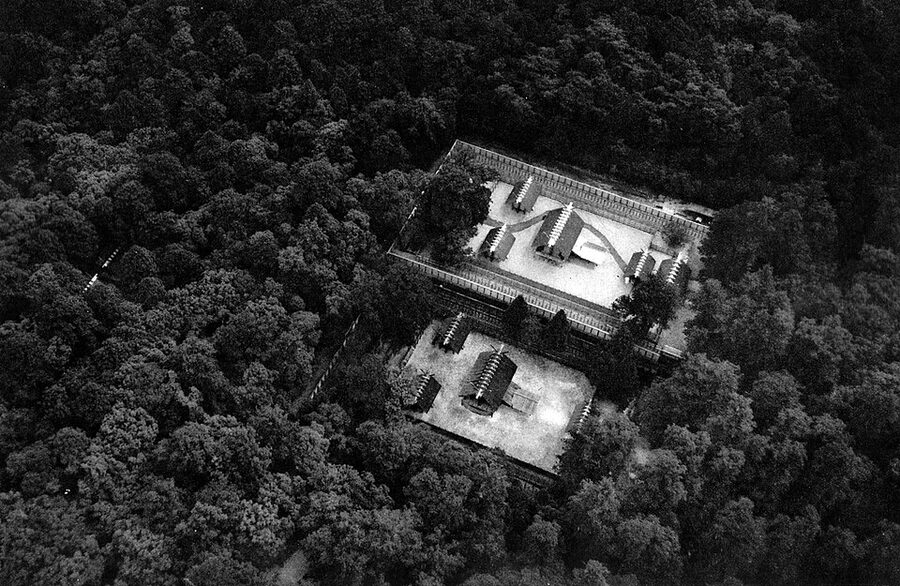
Every shrine building at Ise stands on one of two identical plots, east and west. When the time comes, an exact copy of every building rises on the empty plot, the deity moves across, and the old buildings come down. The sengū covers both main halls, the fourteen secondary shrines called betsugū, 65 buildings in all, the Uji Bridge and 1,576 sacred objects in 714 categories, from silk robes to swords, looms and writing brushes, every one made new by hand.
Why twenty years, nobody knows, and the shrine is candid about it. Posts sunk straight into the earth and thatched roofs do not last much longer; twenty years lets one generation of carpenters learn from the last; and Kobori Kunio, a former director of the Sengūkan museum, noted that twenty years was the ancient storage limit for dried rice. The shrine’s own word for it is tokowaka (常若), “always young”.
It was a choice. People in Japan had been lacquering wood since the Jōmon period, and in Tenmu’s own time the builders of Hōryū-ji were setting pillars on stone footings that have kept them up for thirteen centuries. The court could have built Ise to last; it built it to be rebuilt instead, which is a cleverer kind of permanence.
The timber
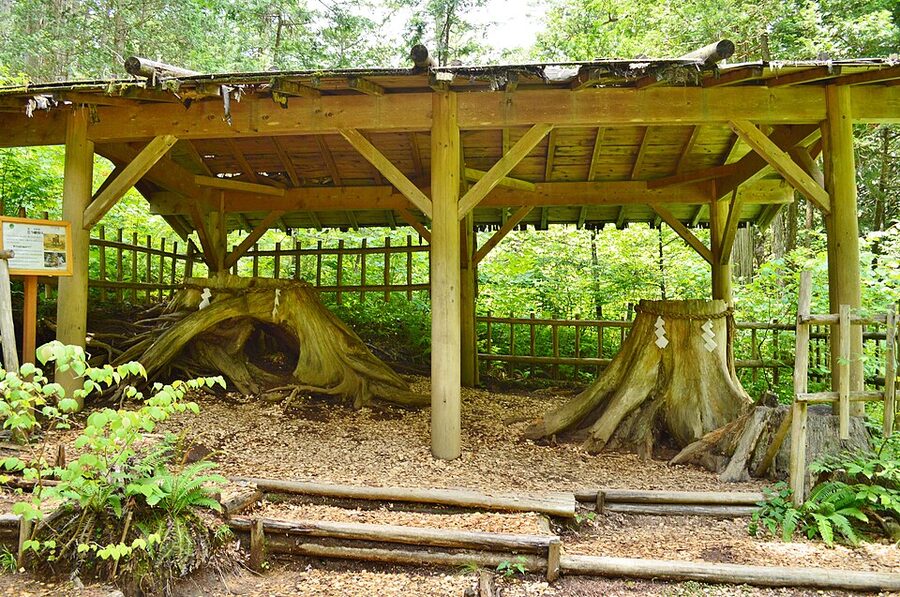
A sengū needs more than ten thousand cypress logs, about 8,500 cubic metres, some of them over a metre thick and four centuries old. For centuries the shrine cut them from its own hills, Kamiji, Shimaji and Takakura, but those were exhausted by the 14th century, and the timber forest, the misomayama, moved to Mikawa and Mino, then to Kii, and from the early 18th century to the Kiso valley, where it has stayed ever since.
In 1923 the shrine began replanting its own hills. The first thinnings supplied about a quarter of the wood for 2013, the first local timber in roughly seven hundred years, but the big logs will not be ready until the 2120s or 2130s, and the plan runs to around 2400. I know of no other building in the world with a four-hundred-year forestry schedule attached.
The gap
The sengū has not, in fact, happened every twenty years. In the 14th-century civil wars it slipped into chronic delay, and in 1431 the Naikū was rebuilt with the halls unfinished because the timber ran short and the metal fittings were the wrong size. The 40th rebuilding of the Naikū came in 1462, twelve years late, paid for by the shogun Ashikaga Yoshimasa and an imperial envoy out of their own pockets, which tells you how far the Muromachi state had sunk. Then the Ōnin War broke out and there was no money for anything.
For more than a century the shrines decayed. Damp rotted the timbers and the sacred robes, priests worried about climbing into halls that might collapse, and in 1486 (some accounts say 1487) the Gekū’s main hall burned down in a street war between the shrine towns of Yamada and Uji. In the Sengoku era Ise was one more property nobody was paying for.
The rescue came from a most unexpected direction. Seijun, abbess of the Buddhist convent of Keikō-in in Uji, had already rebuilt the Uji Bridge with money begged on the road, and she now wrote to warlords across Japan asking them to fund the sengū. The Naikū’s priests objected to a Buddhist nun touching their rebuilding, so she worked through the Gekū, which was rebuilt in 1563, a hundred and one years after the Naikū’s last.
Her successor, Shūyō, finished the job. Oda Nobunaga gave three thousand kan of copper cash, Toyotomi Hideyoshi added five hundred pieces of gold and a thousand koku of rice, and in 1585 both shrines were rebuilt in the same year for the first time, a habit that has stuck. Tokugawa Ieyasu gave thirty thousand koku for 1609 and put the whole business on a stable footing; the people of the district once granted to Keikō-in still haul the Naikū’s door timber in a procession named after the convent.
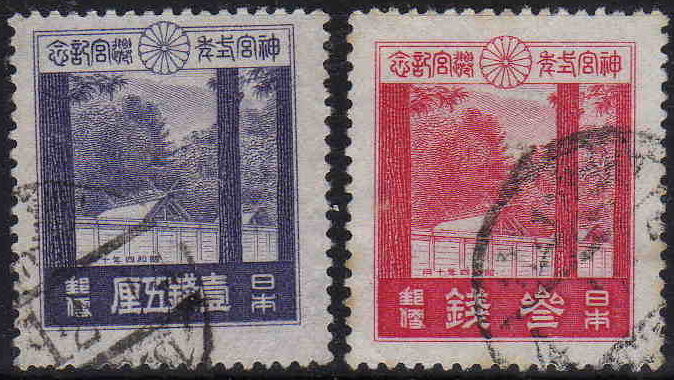
The 20th century brought its own interruption. The 59th sengū was due in 1949, the Occupation was in no mood to pay for it, and it slipped to 1953; only the Uji Bridge, too rotten to wait, was replaced in 1949, and it has been rebuilt four years ahead of the shrines ever since. The 62nd, in 2013, cost about ¥55 billion by the shrine’s own figure, ¥22 billion of it from donations; English-language accounts often give ¥57 billion, all from private gifts.
What happens to the old shrine
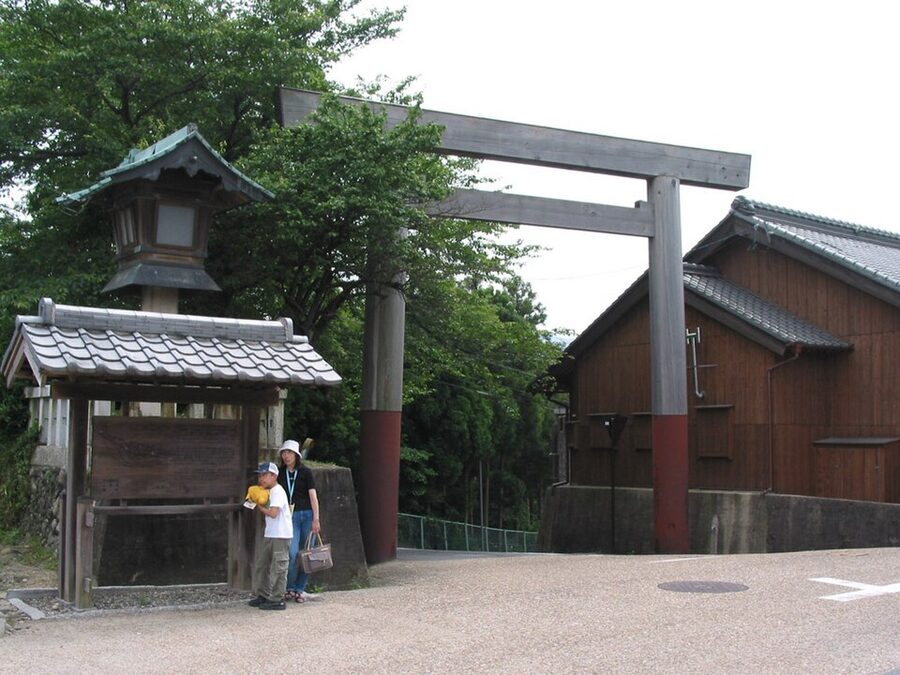
Nothing at Ise is thrown away if it can be used again. The two great ridge-supporting pillars of each main hall, the munamochi-bashira, are planed down to become the torii at either end of the Uji Bridge, the Naikū’s at the shrine end and the Gekū’s at the town end. Twenty years later they are planed again and sent to the old highways as gateways to Ise, one at Seki-juku on the Tōkaidō and one at the Shichiri ferry landing in Kuwana. That is sixty years of service for one pair of trunks.
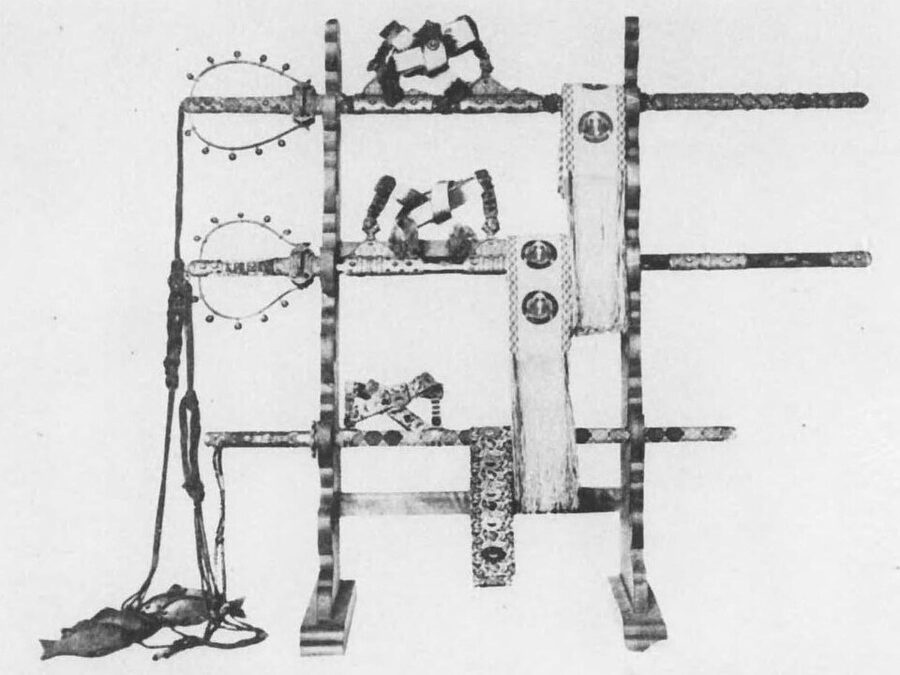
The rest of the timber is given free to shrines all over Japan that ask for it. The sacred objects used to be burned or buried after their twenty years, as befits things that have belonged to a god; since the Meiji period many have been kept instead, some at the Jingū Chōkokan museum and some given to other shrines, Izumo Taisha among them after 2013.
Before 1872 the old hall stood beside the new one for another twenty years and was still worshipped; now it comes down within months. What stays on the empty plot is a tiny hut over a short post, the shin no mihashira, the “heart pillar” that stands under the floor of the main hall and is planted at night in a rite no outsider sees. What it represents, the shrine is not saying.
The 63rd sengū is already under way
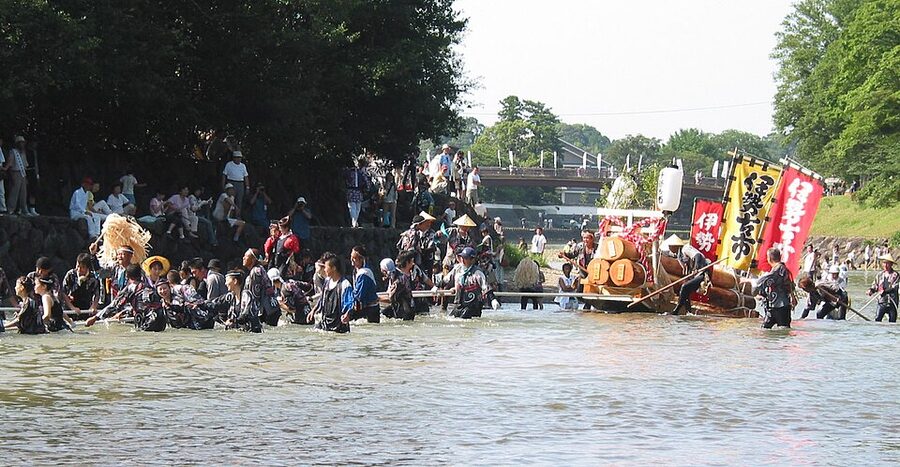
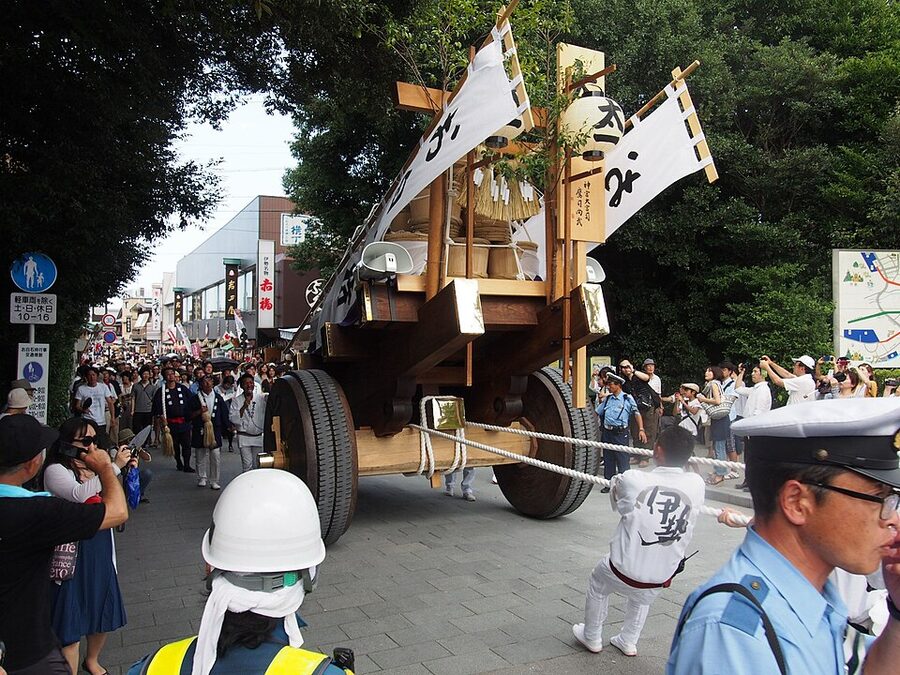
If you visit before 2033, you are visiting during a rebuilding. The cycle began on 2 May 2025 with the Yamaguchi-sai, prayers to the gods of the timber, and a month later priests felled the first two trees in the Kiso valley at Agematsu, cutting from three sides in the old manner so that they fell across each other. In the summer of 2026 the people of Ise hauled the first logs into the precincts, up the Isuzu river on sledges for the Naikū and through the streets on carts for the Gekū, and the second round is due in 2027.
Then the carpenters take over. The shrine’s schedule has the new Uji Bridge in November 2029, the main pillars and ridgepoles in 2032, and in the summer of 2033 the oshiraishi-mochi, when tens of thousands of people carry white stones from the Miyagawa river to lay around the new halls; in 2013, 226,000 took part. The goddess moves in October 2033, and the fourteen secondary shrines follow in 2034.
A granary for a goddess
The style of the two main halls is called yuiitsu shinmei-zukuri (唯一神明造), “the one and only shinmei style”, and the “one and only” is literal: after the Meiji Restoration the government forbade any other shrine to copy it exactly. Plenty of shrines use plain shinmei-zukuri, but they set their posts on stones or change some other detail. Only Ise puts its pillars straight into the ground.
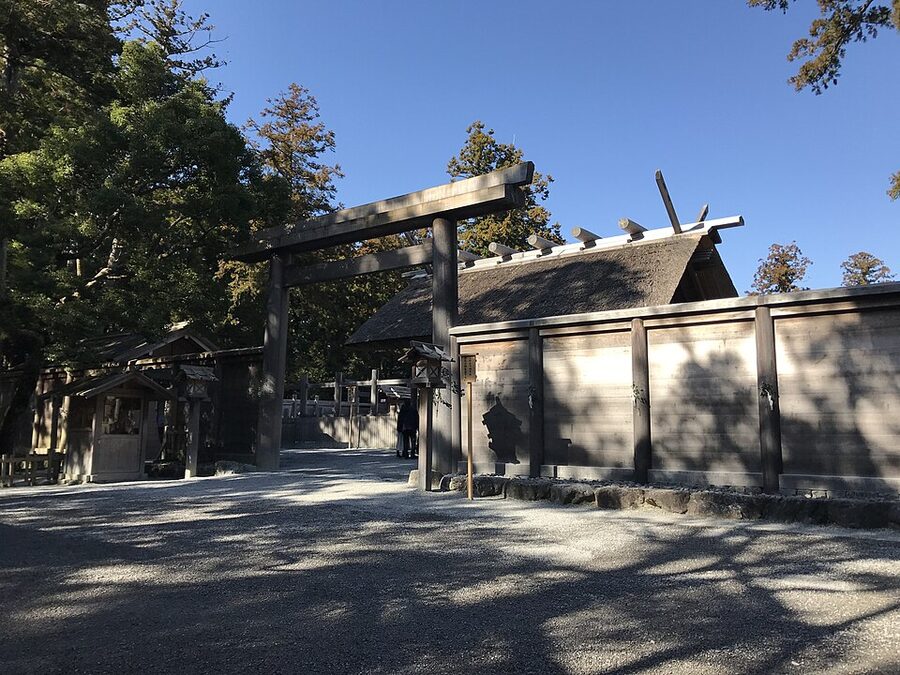
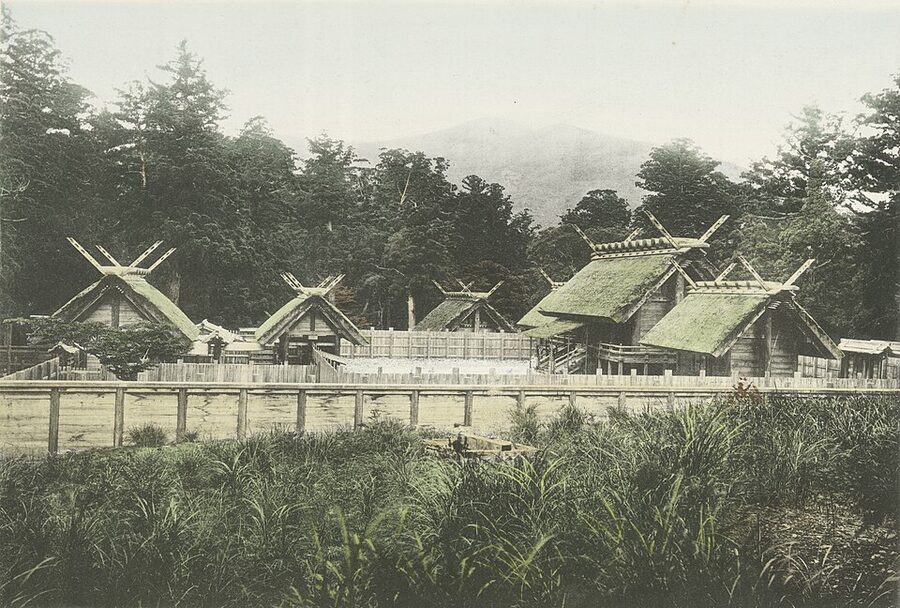
Look at the shape and you are looking at a raised storehouse. Architectural historians derive it from the granaries of the Yayoi period: a rectangular hall of unpainted Japanese cypress, gabled, entered from the long side, lifted on round posts sunk into the earth, under a deep thatch of kaya grass. The Naikū’s main sanctuary is roughly eleven metres by five and a half, with a veranda all round and a single door.
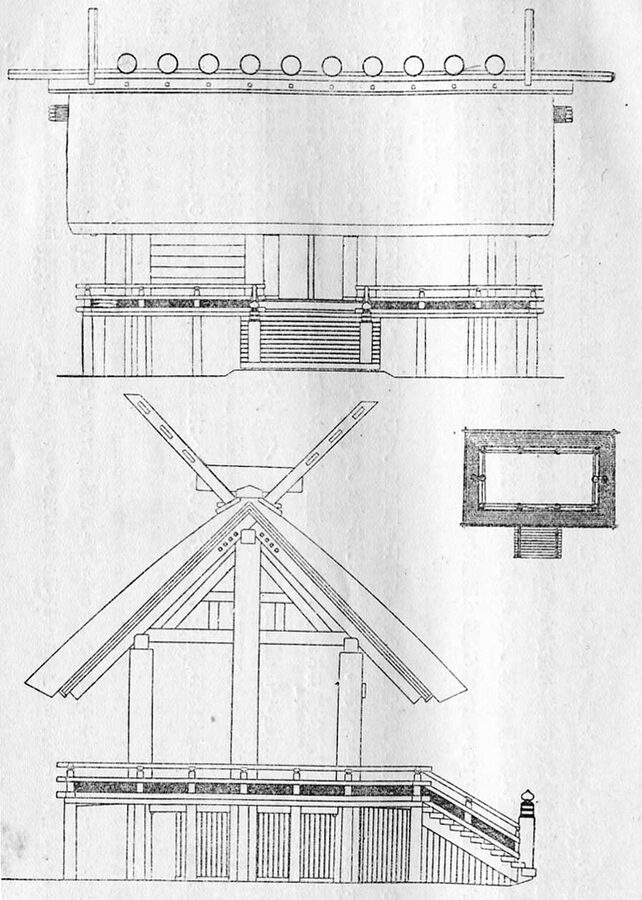
The roof does the talking. At each end the bargeboards cross and continue upward as the forked chigi; along the ridge lie short logs called katsuogi; and at each gable a free-standing pillar rises to the ridge without quite touching the wall. The Naikū’s chigi are cut flat and it carries ten katsuogi; the Gekū’s are cut vertically and it carries nine. You will hear that flat means a goddess and pointed a god, but plenty of shrines break the rule, the Gekū included, whose deity is also a goddess.
The oldest record of the buildings, in Nara-period documents preserved at the Shōsōin, gives dimensions close to the modern ones. That is the real argument for rebuilding: more of the 7th-century design survives at Ise than anywhere else, precisely because no building at Ise is old. When Tange Kenzō and Kawazoe Noboru published their book on the shrine in 1965, they called it the prototype of Japanese architecture, and the label has stuck.
What you can and cannot see
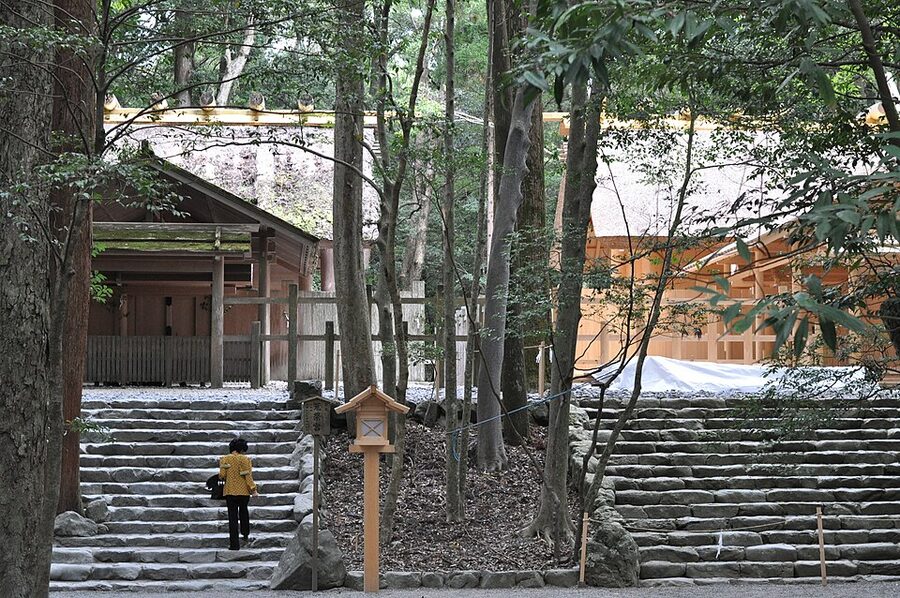
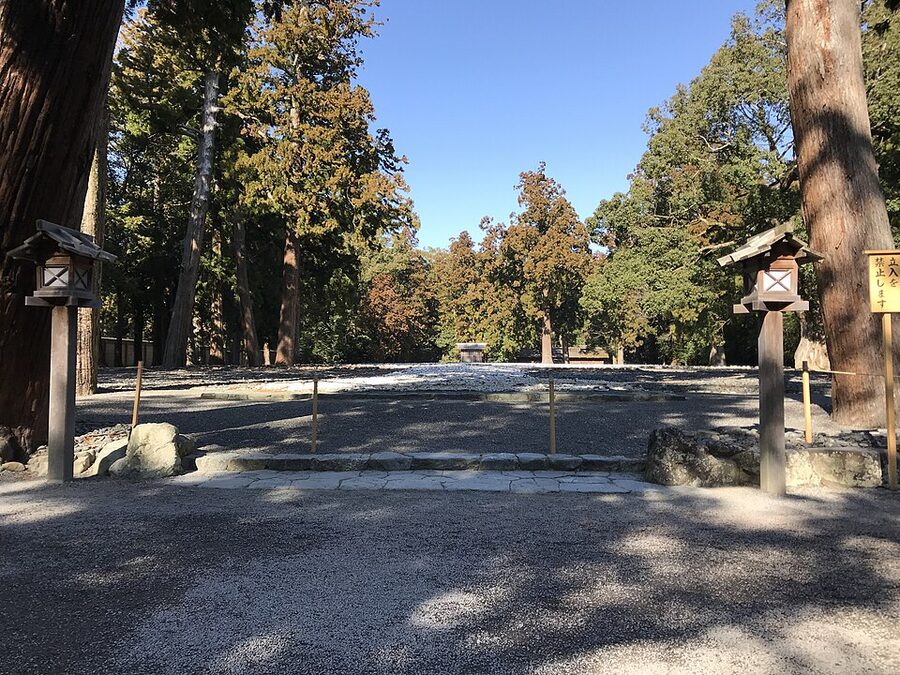
Very little, is the answer. Each main hall stands within four concentric fences, and you pray at the gate of the outermost, with a white curtain hanging across it. You see the gilded tips of the chigi and a slice of thatch, and at the Naikū a side path shows you more of the roof through the trees. Photography is forbidden from the foot of the stone steps up to the Naikū’s main sanctuary, and the guards enforce it.
The best view of a main hall is, oddly, of the one that is not there. Beside each sanctuary lies the empty plot, the kodenchi, a rectangle of white stones with the little hut over the heart pillar in the middle, the exact footprint of the next building.
There are two ways closer. You can pay for a formal prayer, gokitō, at the kagura hall, a ceremony of music and dance rather than a tour; or you can join the oshiraishi-mochi in 2033, the only time outsiders walk into the inner precinct. The one time I did it, I found it oddly moving to set two white pebbles where nobody will tread again for twenty years.
The shrine nobody was allowed to pray at
For its first five centuries Ise was closed to private prayer. The handbook of 804 forbids nobles and commoners alike to make offerings and threatens banishment for anyone who tries it by trickery, and the Engishiki, the court’s rulebook of 927, required even the empress and the crown prince to ask permission. The shrine belonged to the state, and only the emperor could pray there.
His representative was the saiō (斎王), an unmarried imperial princess chosen at the start of each reign by reading the cracks in a heated tortoise shell. She purified herself for a year in the palace and another at Nonomiya outside Kyoto, then travelled to Ise in a great procession. The first, if you set aside the legends, was Tenmu’s daughter Ōku, and the Man’yōshū keeps two poems she wrote after her brother, Prince Ōtsu, slipped down to Ise to see her in 686, shortly before he was forced to kill himself on a charge of treason.
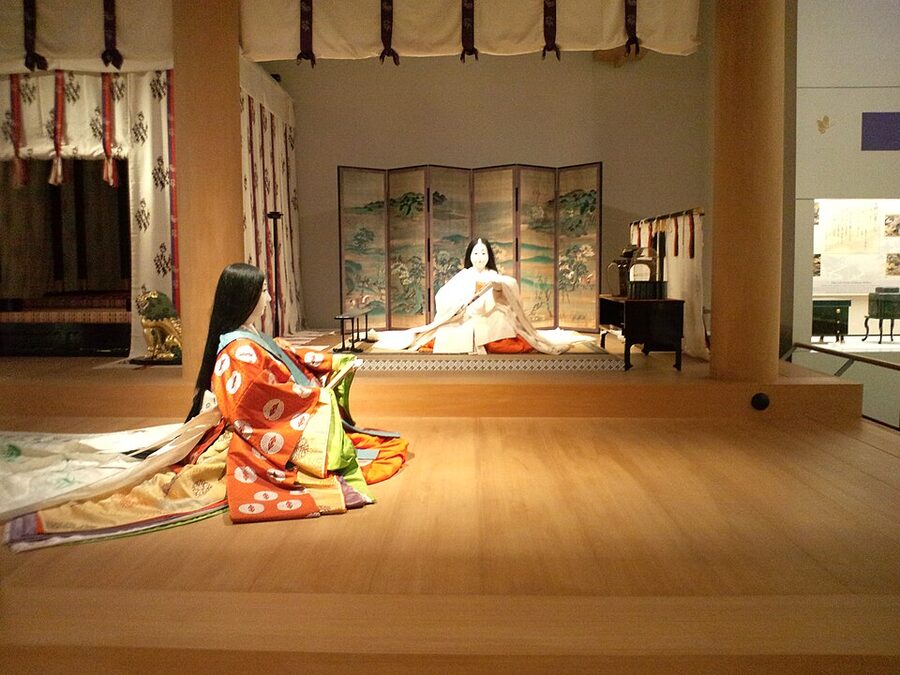
The saiō did not live at the shrine. Her palace, the Saikū, stood about twenty kilometres away in what is now Meiwa, a planned compound of 137 hectares with more than five hundred staff, and she went to the shrines only three times a year. Her world was hedged with taboo words: Buddha was “the middle one”, nakago; a monk was “long hair”, kaminaga; a temple was a “tiled roof”.
She was a fixture of Heian literature: The Tale of Genji sends one of its heroines to Ise as saiō, and her mother’s parting from Genji at Nonomiya became a famous Noh play. The office faded in the wars of the 14th century; the last saiō, Princess Shōshi, daughter of Emperor Go-Daigo, never left Nonomiya before the system collapsed in the 1330s.
Shrine lands, samurai and the divine wind
What opened Ise to everyone else was money. As the old tax system broke down in the 11th century, the shrine sent low-ranking priests into estates across the country to collect a levy for the rebuilding, and they told the local landowners about the goddess and sold them her protection. Warriors began to donate land, and Minamoto no Yoritomo gave the Gekū an estate in the Kantō in 1184. By the late Kamakura era, peasants were invoking Amaterasu in their oaths as “lord of Japan”.
The Mongol invasions sealed it. When storms wrecked the invasion fleets in 1274 and 1281, many credited the wind to the gods of Ise, and the idea that the shrine guarded the whole country took deep root. Buddhist monks came too, taboos or no: the poet-monk Saigyō is traditionally credited with a poem written here that says, roughly, “I do not know what dwells here, but the gratitude brings me to tears”.
The two shrines also spent much of the middle ages quarrelling. In 1296 the Gekū added the character for “imperial” to its name and the Naikū protested; in 1332 the Naikū complained that the Gekū, being nearer the road, was pocketing pilgrims’ offerings; and their towns, Uji and Yamada, came to blows at least six times between 1392 and the 1480s. I mention this because the shrines are so serene that it helps to remember the priests were human.
Millions on the road
By the Edo era, everyone in Japan wanted to go to Ise, and the people who made it possible were the oshi (御師, pronounced onshi here), the shrine’s travel agents, missionaries and innkeepers in one. Each oshi house had its own clients across the country, and once or twice a year its agents toured their villages handing out amulets, almanacs, medicine, tea, seaweed and fans, collecting rice in return and telling everyone it was time to come.
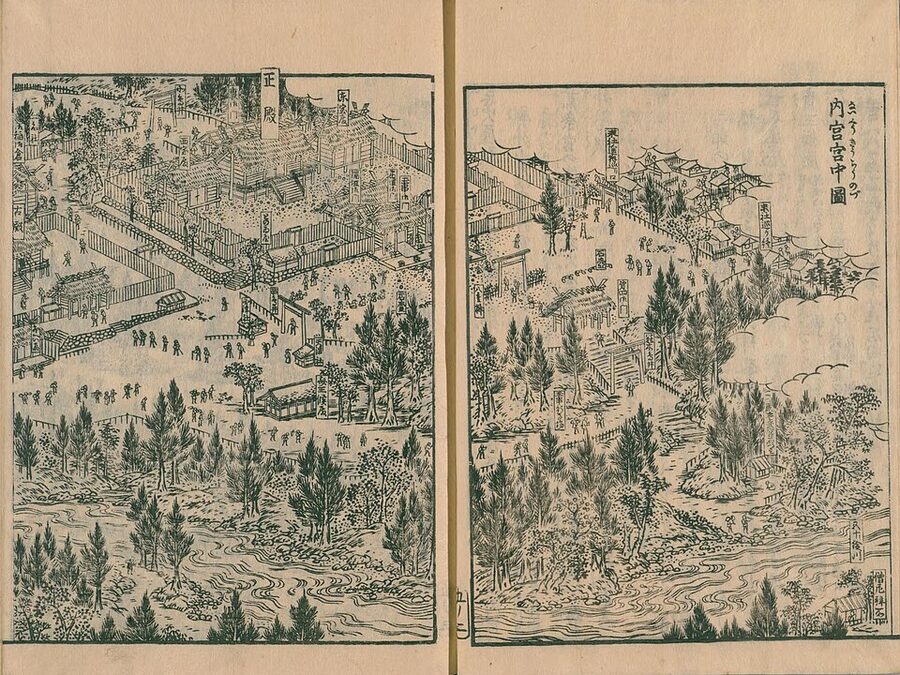
The scale is hard to take in. A survey of 1777 recorded some 4.2 million households linked to an Ise oshi, close to nine in ten households in Japan, and in 1724 the Gekū alone had 615 oshi houses. The system grew from the same medieval model as the guides of the Kumano Kodō, but Ise scaled it to a nation.
When you arrived, your oshi looked after everything. His men met you on the road, ferried you over the Miyagawa river, carried you by palanquin to his mansion and fed you spiny lobster, sea bream and abalone; you slept on silk quilts, watched a kagura dance performed in your name, and were guided round both shrines, Gekū first and Naikū second, the order the shrine still asks you to follow. Of the six hundred oshi mansions of Uji and Yamada, almost nothing is left.
The Ise clubs
A pilgrimage cost more than a farming family could save alone, so villages formed Ise-kō (伊勢講), Ise clubs. Members paid into a common fund, and each year they drew lots to send two or three of their number on behalf of everyone; winners came off the list, so that every member got a turn. The earliest record of one is in a courtier’s diary of 1407, and by the Edo period almost every village in Japan had one, with a send-off party at the village boundary and another for the homecoming.
Getting permission was the easy part. The Tokugawa shogunate controlled travel tightly, yet a pass for Ise was granted almost for the asking, and once you had it nobody looked too closely at the route. The same highways that carried the daimyo processions of sankin-kōtai carried the pilgrims, and many went home by way of Kyoto, Osaka or the Nakasendō. From Edo it was about fifteen days on foot; from Kamaishi in the far north, a hundred.
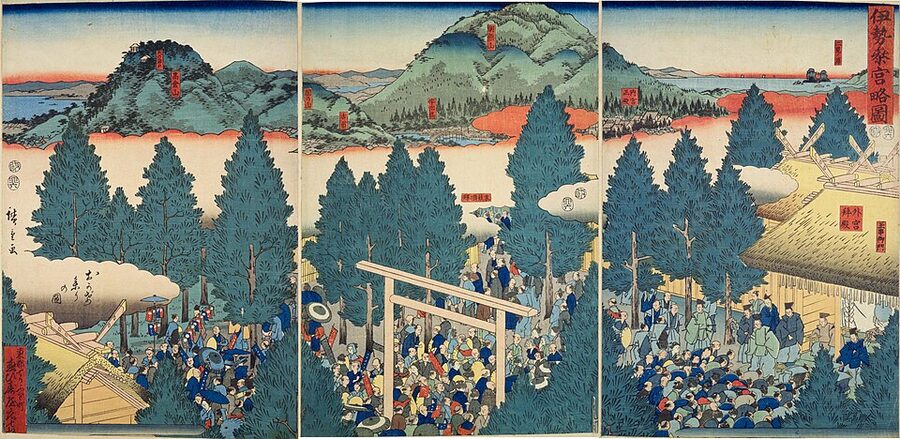
In the early Edo period perhaps twenty or thirty thousand people a year made the trip; by the 18th century the usual estimate is two to four hundred thousand, and Jippensha Ikku sent his comic heroes Yaji and Kita to Ise in Hizakurige, the bestselling travel farce of the age. The traffic kept Hiroshige and the other ukiyo-e artists busy with views of the road and the shrines for pilgrims who wanted something to show the village. Then, every sixty years or so, the whole thing went mad.
Okage-mairi: the great runaways
The waves were called okage-mairi (御蔭参り), “thanksgiving pilgrimages”, and their other name, nuke-mairi, “slipping-away pilgrimages”, is more candid. In an okage year servants walked out on their masters and children on their parents, and set off with nothing but the clothes they stood in. Custom held that nobody could be punished for going to Ise without leave, so long as they came back with an amulet to prove it, and a book of shrine miracle stories published in 1626 includes masters struck down for trying to stop them.
The first wave historians count as a full okage-mairi came in 1705. It started in Kyoto in the fourth month, and in about two months between 3.3 and 3.7 million people reached Ise, at a time when Japan had fewer than 28 million. Figures later collected by the Matsusaka scholar Motoori Norinaga have two or three thousand a day passing through his town early in the fourth month, over a hundred thousand a day by the middle of it, and a peak of 230,000 in one day in the fifth.
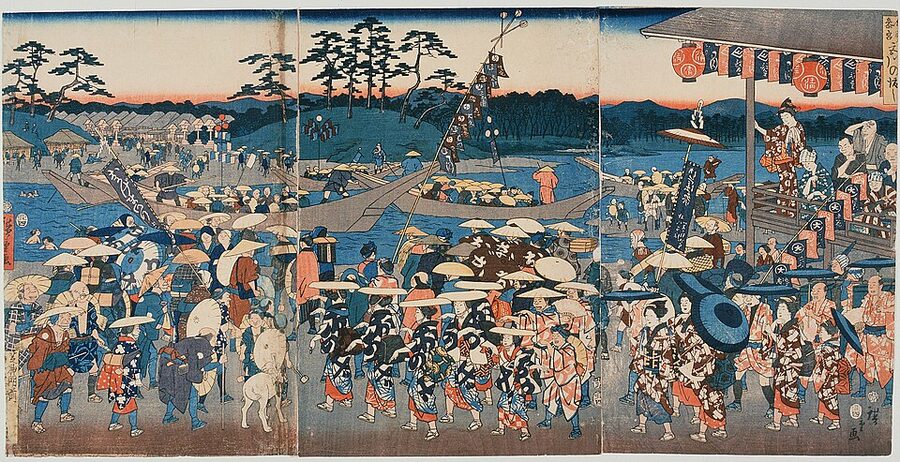
The 1771 wave began in Uji itself, when women and children walked off the tea fields, and about two million made the trip. Pilgrims chanted “okage de sa, nuketa to sa“, roughly “thanks to her, they say, off and away”, and their banners, which began by naming their villages, grew steadily cheekier and then frankly obscene. A Matsusaka diarist wrote that at the peak you could not cross the road to your neighbour’s house.
The biggest came in 1830, starting with children of six and seven in Awa province on Shikoku in the intercalary third month. Japanese sources give 4.28 million or 4.76 million pilgrims, depending on which count you trust, and English-language accounts round it up to five million; either way it was almost certainly the largest movement of people in Japan before the railways.
Every okage year produced its own economy. Rich merchants along the roads set up free kitchens and gave away sandals, a practice called segyō, alms-giving, and children who left home penniless came back with silver. Prices did the rest: in 1830 pilgrims carried a wooden ladle as their badge, and the cost of a ladle in Kyoto went from 16 coins to 300.
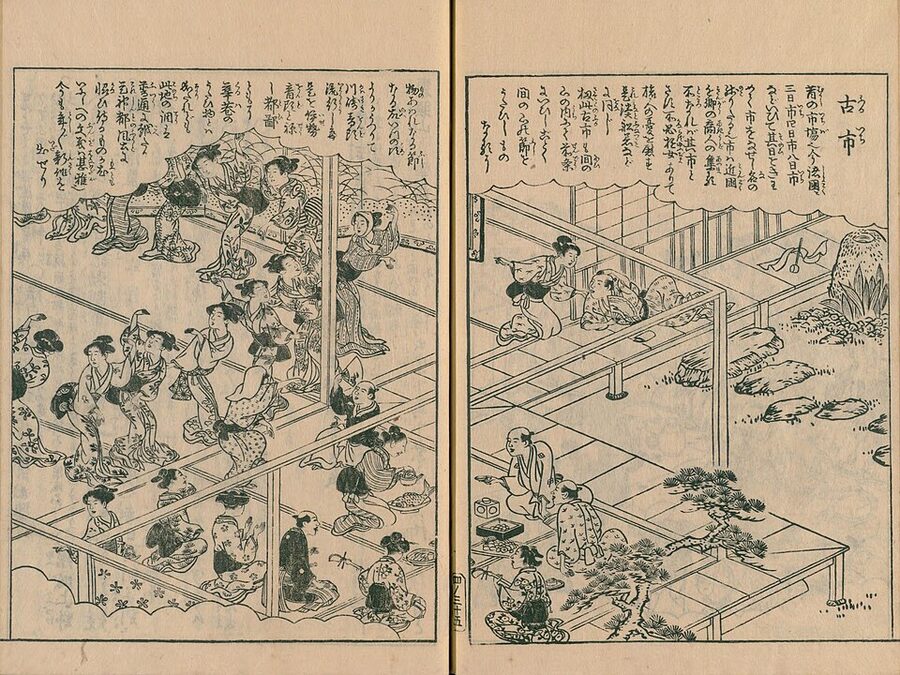
Not everyone was thinking of the gods. Between the two shrines lay Furuichi, which by the 1780s had some seventy brothels, around a thousand women and several theatres, and the Edo joke had it that you went to Ise “and dropped in at the Great Shrine on the way”. Furuichi’s theatres trained young kabuki actors, and a real murder at the Aburaya house in 1796 was on the stage within a couple of months as Ise ondo koi no netaba.
The house dance at the Bizen-ya, the grandest of them, was the Ise ondo, and Kyoto’s Gion district modelled its own spring dances on it in 1872. Pilgrims took the songs home, “a souvenir that weighs nothing”, and versions are still sung all over Japan. Even dogs went: from around 1790 there are stories of owners too sick to travel sending their dog with a purse round its neck, passed from traveller to traveller until it reached Ise and came home with an amulet.
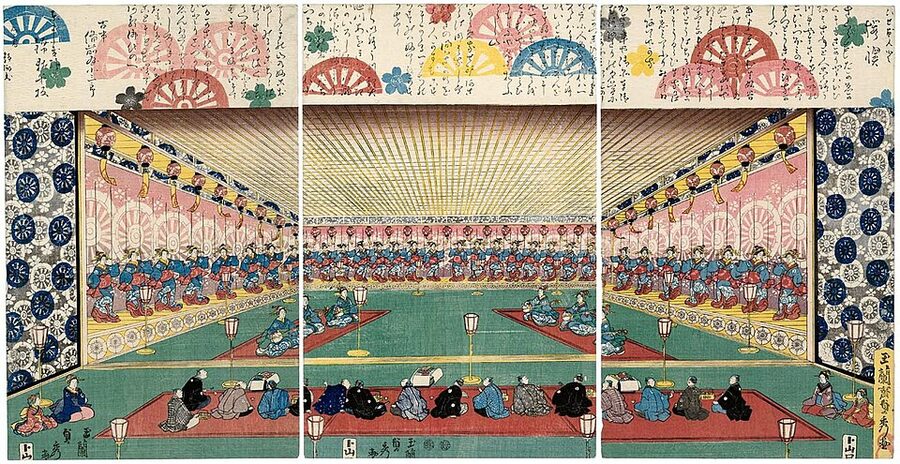
Pilgrims came back with new seed rice, new patterns for cloth, new songs and new farm tools, having met people from every corner of the country doing the same thing. The historians Nishigaki Harutsugu and Kamata Michitaka have both argued that the Ise pilgrimage did more than anything to make people think of themselves as Japanese rather than as some lord’s subjects, long before the state tried to teach them so.
Ee ja nai ka
The last outbreak was the strangest. From the eighth month of 1867, paper amulets started falling from the sky, or at least turning up on roofs and in gardens, across central Japan, and the towns where they fell erupted into days of dancing. Men dressed as women and women as men, people walked into strangers’ houses and helped themselves, and the crowds chanted “ee ja nai ka“, “isn’t it fine”, over verses that ranged from the political to the unprintable.
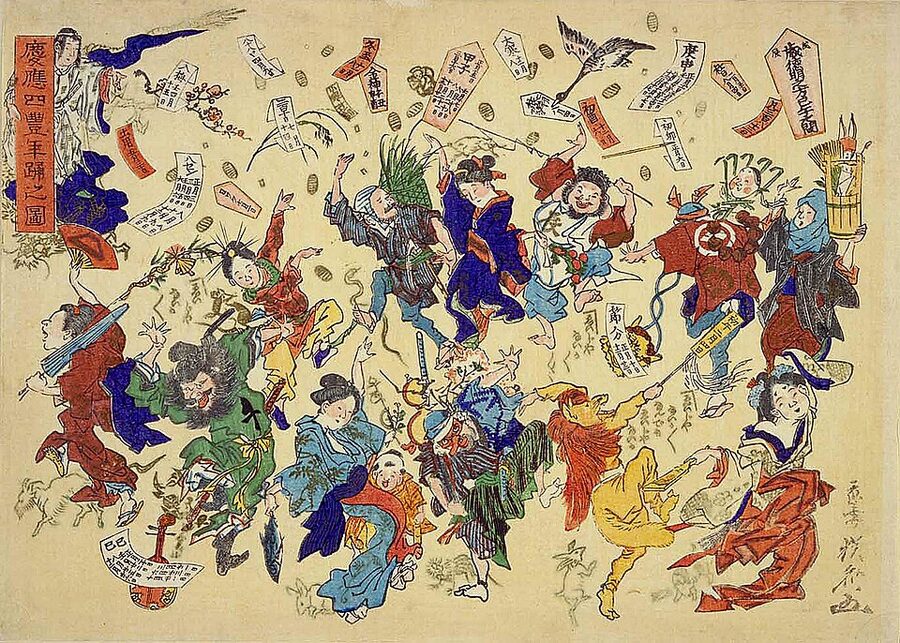
The timing has never looked innocent. The last shogun, Tokugawa Yoshinobu, handed power back to the emperor in the tenth month, and the courtier Iwakura Tomomi’s memoirs say the dancing in Kyoto stopped on the ninth day of the twelfth month, the day imperial rule was proclaimed. One verse from Nishinomiya ran “Chōshū’s coming up to the capital, prices will come down, isn’t it fine”, and rumour then, like the historian Hani Gorō later, suggested the anti-shogunate faction had staged it all; most historians now see a genuine popular eruption that the plotters were happy to exploit.
Where it began is still argued over by local historians, with the Kyoto region holding the oldest written testimony and Tōkai towns claiming earlier dates; one reference work has a fire charm falling at Goyu on the Tōkaidō on the fourth day of the eighth month, which it converts to 1 September by the Western calendar. Within months the Boshin War had begun.
The state takes Ise back
The new government had plans for Ise. On the 12th day of the third month of 1869, which Japanese reference works convert to 23 April by the Western calendar, Emperor Meiji worshipped at the shrine, the first reigning emperor known to have done so. Before he came, every Buddhist temple on his route was ordered cleared away; of the temples of Uji and Yamada, 109 were abolished and only about fifteen survived.
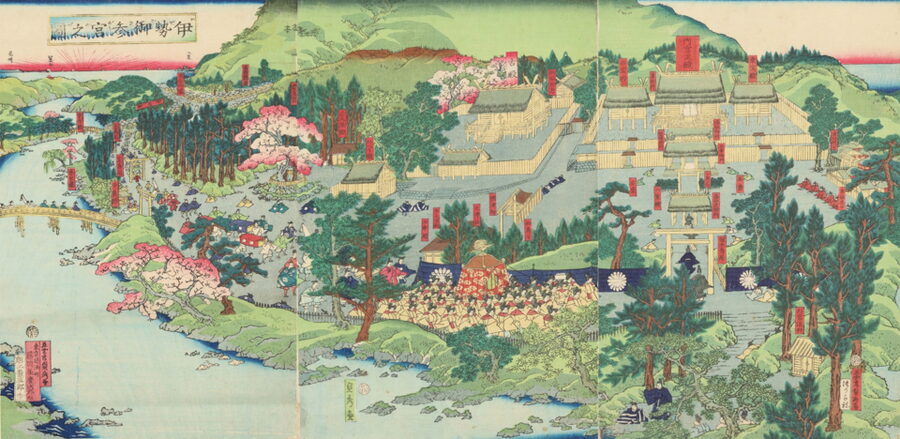
The Meiji Restoration then remade the shrine itself. In 1871 the hereditary priestly families, the Arakida at the Naikū and the Watarai at the Gekū, were dismissed after a thousand years, the staff was cut from about 360 to about 90, and in the seventh month the oshi were abolished outright. Their mansions and records were scattered, which is why so little of their world survives, and the shrine found within a few years that it had to reopen halls for private prayer, because people kept turning up wanting them.
Under the Meiji state, Ise sat above every other shrine in the country. The railway reached the town in 1894, schools sent their pupils from the late 1890s, and pilgrim numbers rose every year until 1945, most steeply in the war years of the early Shōwa era. In December 1945 the Occupation cut the link with the state, and the shrine became a private religious corporation, which it legally remains.
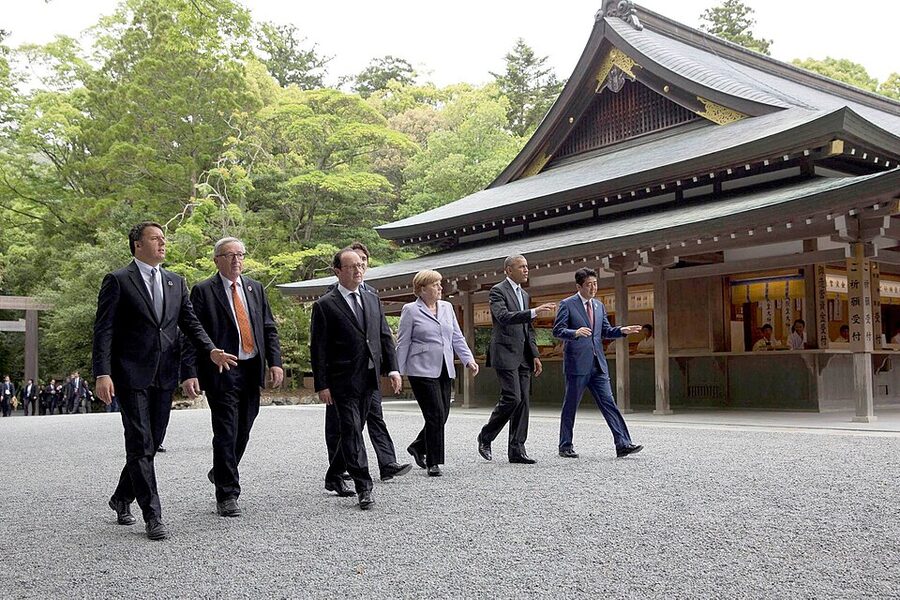
The link never quite broke. The chief priestess is always a woman of imperial descent, since 2017 Kuroda Sayako, daughter of the emperor emeritus; prime ministers have come to pray every January since Satō Eisaku in 1965; and in 2016 the leaders of the G7 were walked to the Naikū. For the other side of Meiji religion, compare Ise with Meiji Jingū in Tokyo, built in 1920 for the emperor who was the first to come here.
The shrine counts more than seven million visitors a year, and 14.2 million in 2013, the year of the last sengū. It is often said that Ise has never been put forward as a World Heritage Site because the rebuilding sits badly with the rules about authentic old fabric. I like the idea that the oldest thing in Japan fails the test for being too new.
Where to visit Ise Grand Shrine today
Ise is an easy trip from Nagoya or Osaka, about an hour and a half on the Kintetsu limited express to Ise-shi or Ujiyamada; JR also runs to Ise-shi. The shrines are free and open daily from 5:00 to 18:00 in January to April and September, 5:00 to 19:00 from May to August, and 5:00 to 17:00 from October to December, with changes over New Year. Go early: at 5:30 on a weekday the gravel paths are yours.
Etiquette is the same as at any shrine, with a few local touches. Rinse your hands, bow at each torii, keep to the left at the Gekū and the right at the Naikū, and leave the middle of the approach to the gods. There are no fortune slips at Ise; the shrine’s explanation is that the day you finally make it here cannot be anything but great luck.
The Gekū first
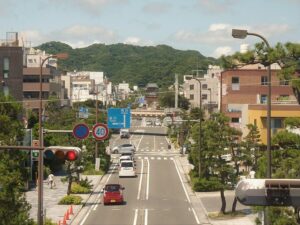
The Gekū is a five-minute walk from Ise-shi station along a straight avenue, over the Hiyokebashi bridge and into a forest of old cedars and camphor trees. The main sanctuary is at the end of a short gravel walk with its kodenchi alongside; further back, up a flight of stone steps, is the Takanomiya, the shrine to Toyouke’s rough spirit.
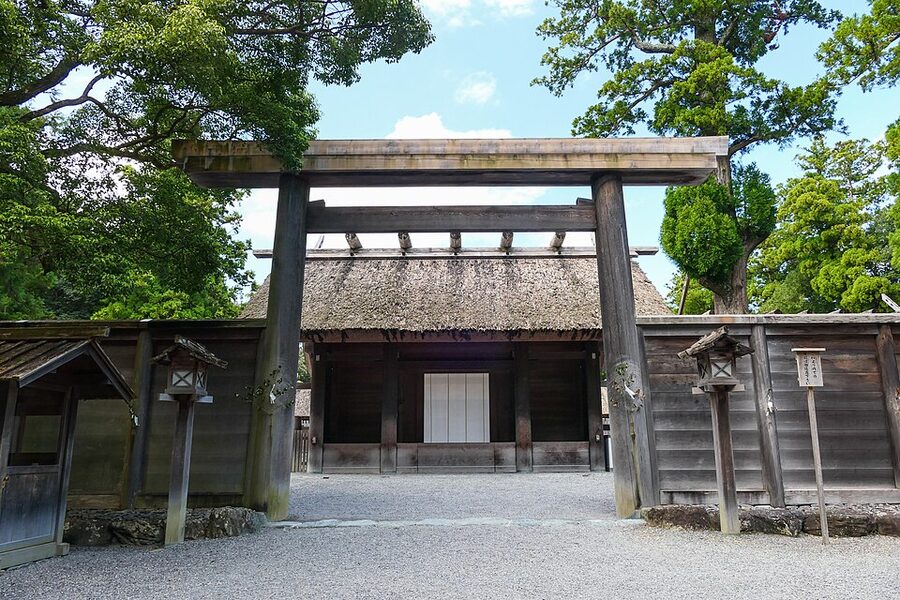
Look out for the Mikeden, a small hall of interlocking planks in the northeast corner inside the fences, the only building at Ise still built that way. Twice a day the priests carry up food cooked over a fire lit by friction drill and offer it to Amaterasu and the other gods. The shrine says it has done so without a break for 1,500 years, and whether or not you trust the figure, it is the most ancient-feeling thing that happens at Ise.
The Sengūkan
Beside the Magatama pond inside the Gekū precinct is the Sengūkan, the museum of the rebuilding and the one place you can see what the fences hide. Its centrepiece is a full-size replica of part of the Gekū’s main sanctuary, fences and all, surrounded by tools, sacred robes and treasures at every stage of making; staff give a ten-minute talk at the replica on the hour from 10:00 to 15:00, in Japanese only.
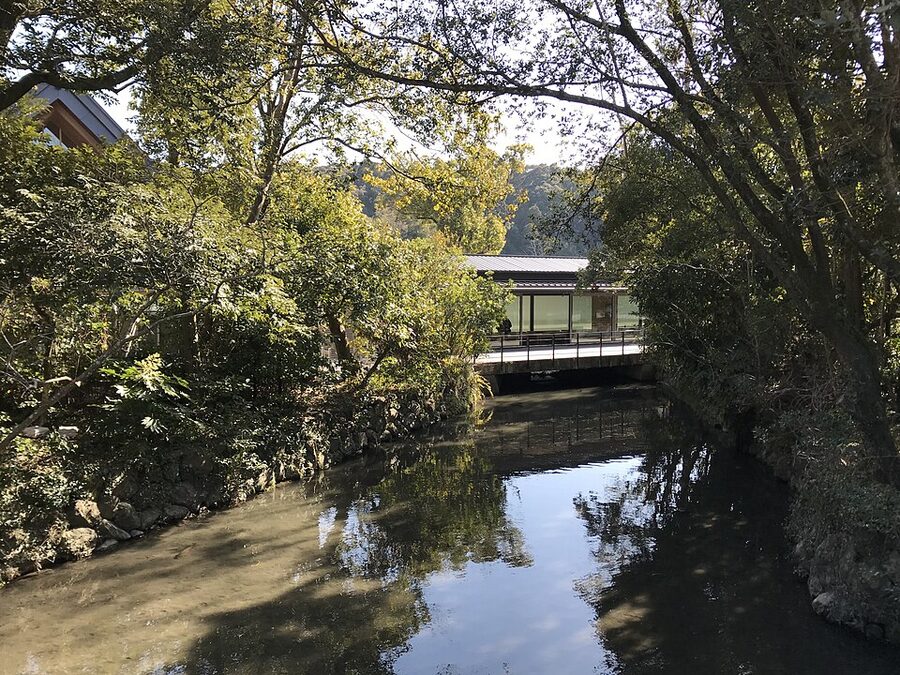
The Sengūkan opens 9:00 to 16:30 (last entry 16:00) and closes on the second and fourth Tuesdays of the month. Admission is ¥300 for adults and ¥100 for school pupils, and foreign visitors can borrow a free audio guide in English against a ¥1,000 deposit. Allow half an hour; no photography inside.
Between the shrines: Furuichi and Kuratayama
The Naikū is about fifteen minutes from the Gekū by Mie Kōtsū bus, routes 51 and 55, from the stop outside the Gekū entrance. The old pilgrim road ran over the hill through Furuichi instead, and if you have time it is worth walking part of it, though the air raids of 1945 finished off most of what the 19th century left.
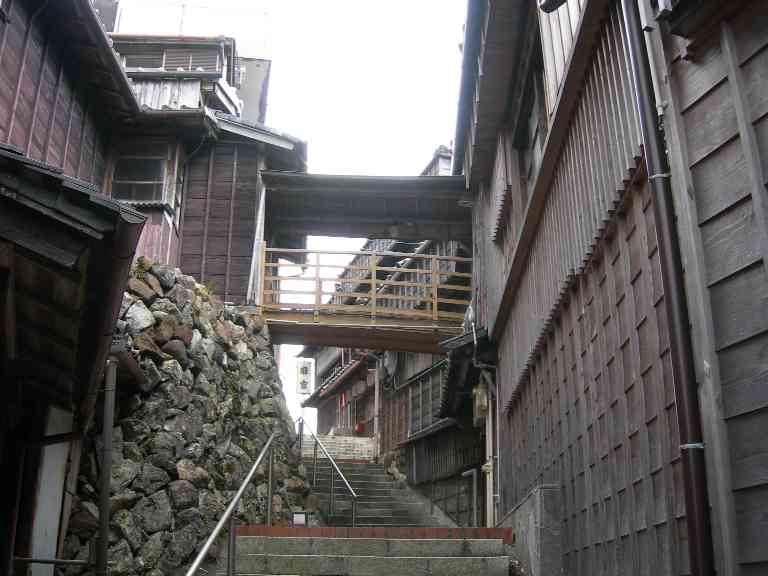
One survivor is the Asakichi, a terraced six-storey wooden inn climbing the slope, the last of Furuichi’s pleasure houses still taking guests. Nearby, the small Ise Furuichi Sangū Kaidō museum tells the district’s story, theatres and pleasure houses included.
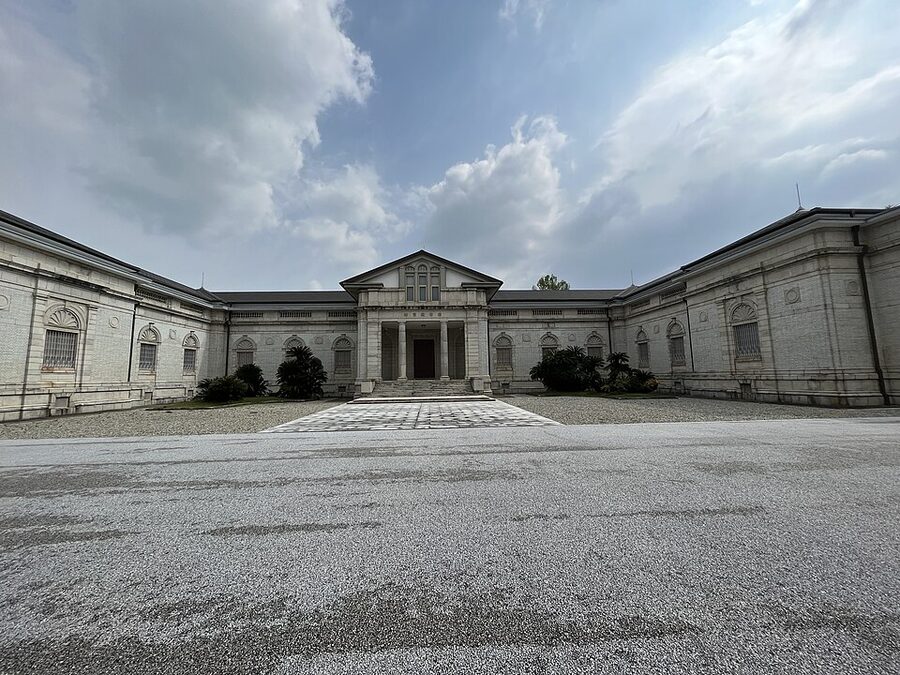
On Kuratayama is the Jingū Chōkokan, the shrine’s history museum, in a stone building of 1909 by Katayama Tōkuma, architect of the Akasaka Palace, restored after war damage in 1953. Here are the treasures retired at past rebuildings, swords, robes and fittings, with the Nōgyōkan beside it, founded in 1891 as Japan’s first museum of industry. Both open 9:00 to 16:30 (last entry 16:00) and close on Thursdays; together they cost ¥500, or ¥700 with the Jingū art museum next door.
The Naikū
You enter the Naikū across the Uji Bridge, a hundred metres of cypress over the Isuzu river, with a torii at each end made from the old pillars of the main halls. One of its bronze finials carries an inscription of 1619, and around the winter solstice the sun rises exactly between the uprights of the torii, a fact the shrine only noticed in the 1980s when a visitor pointed it out.
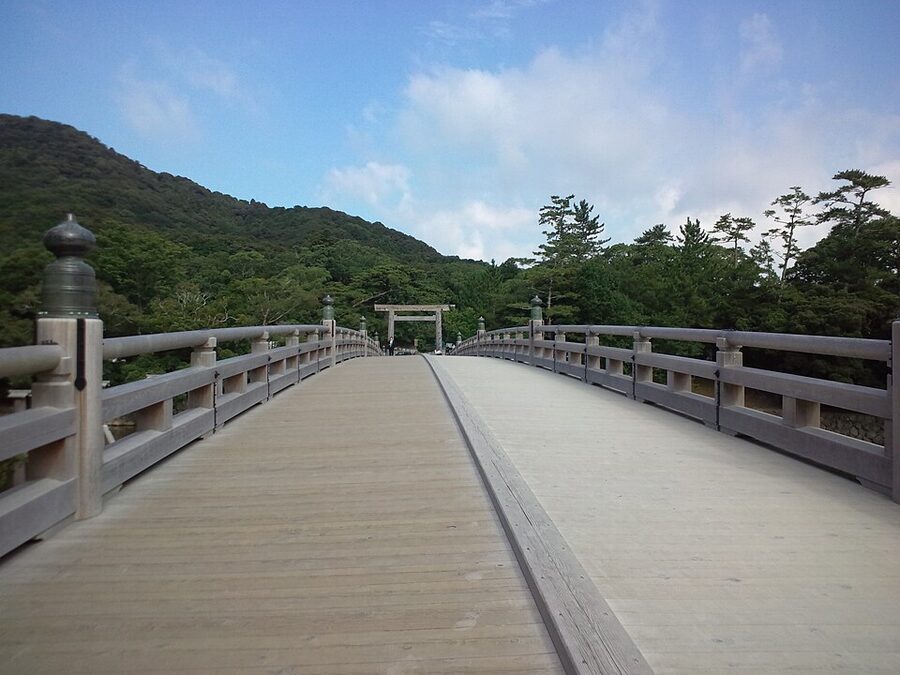
The path turns right along the river and into the forest. At the Mitarashi, a broad stone landing traditionally said to have been paved by Keishōin, mother of the fifth shogun, Tokugawa Tsunayoshi, you can wash your hands in the Isuzu itself, which beats a basin. Beyond the second torii are the kagura hall, where you book a formal prayer, and the amulet office, and then the path climbs.
The main sanctuary of the Naikū stands at the top of a broad flight of stone steps. Put the camera away at the bottom. You pray at the gate in the outer fence, with the white curtain stirring in front of you, and if the wind lifts it you may see a gate behind a gate behind a gate.
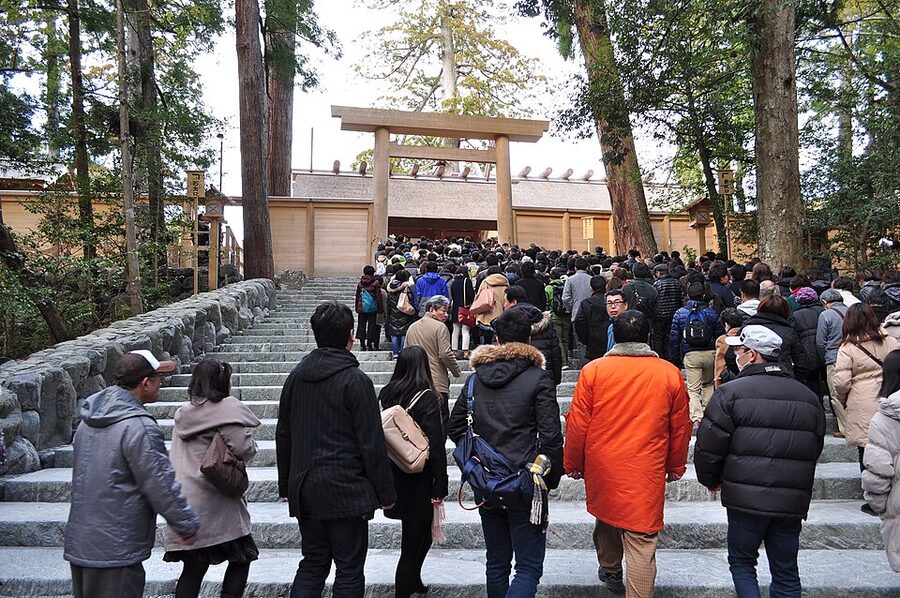
Behind it, up more steps, is the Aramatsuri-no-miya, the shrine to Amaterasu’s rough spirit, second only to the main hall. Ise custom says you give thanks at the main sanctuary, which is the nation’s shrine, and bring your personal requests round the back to the Aramatsuri-no-miya. On the steps between them is the fumanu-ishi, the stone you do not step on, with a crack in the shape of the character for “three”.
Oharai-machi and Okage Yokochō
Outside the Uji Bridge begins Oharai-machi (おはらい町), eight hundred metres of wooden shopfronts with their gable ends to the street in the local style, named for the purifications the oshi once held in their mansions along it. By the late 1970s it was almost dead: tour buses drove straight to the bridge and away, and of five million shrine visitors a year perhaps two hundred thousand walked the street.
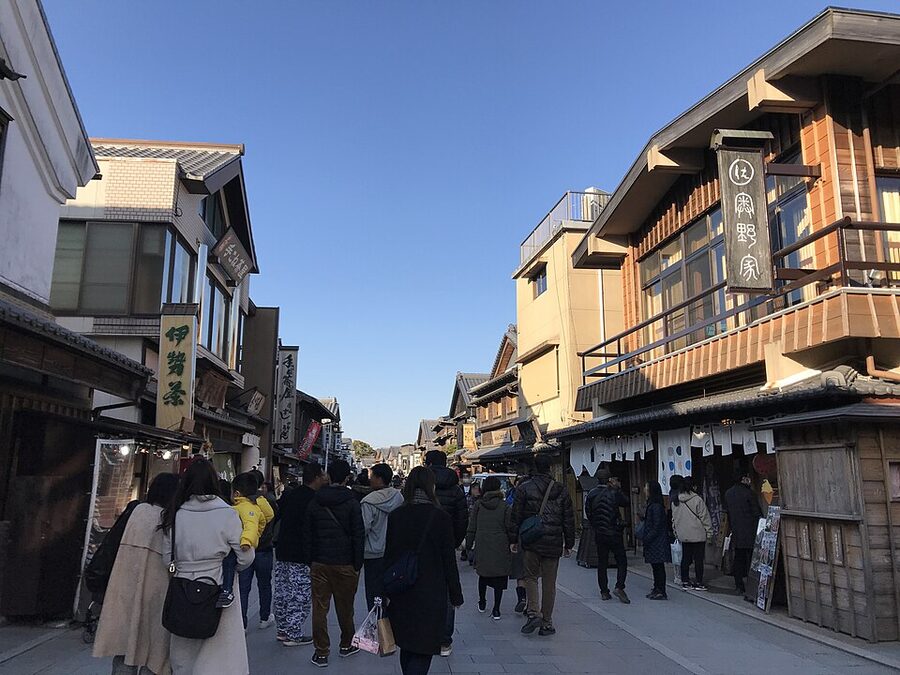
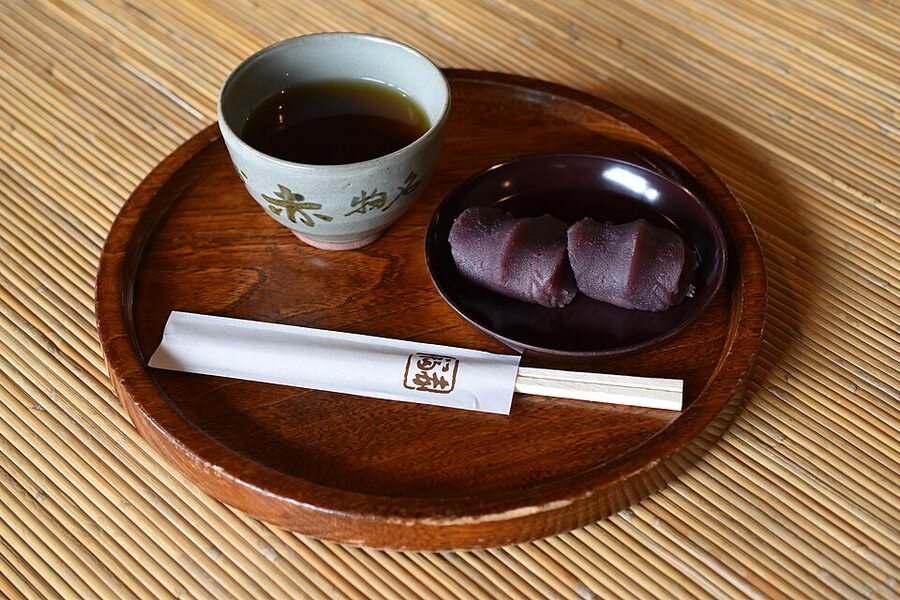
The revival was led by Akafuku, the sweet shop by the bridge whose name first appears in a story written in 1707, in which a Furuichi woman complains that her lover has married into “Akafuku or Aofuku or some such” rice-cake shop. In 1979 Akafuku and its neighbours began rebuilding the street in the old style, the city followed with a townscape ordinance in 1989, and within ten years the place looked like the 19th century again. Akafuku’s main shop opens at 5:00, and a plate of its mochi with green tea before the crowds is one of the small pleasures of Ise.
In the middle of the street is Okage Yokochō (おかげ横丁), which Akafuku opened in July 1993 at a cost of about ¥14 billion of its own money: a re-creation of an Ise street of the late Edo and early Meiji periods, with around fifty shops and restaurants selling Ise udon, tekone-zushi, pearls and Ise tea. Entry is free, and most shops open from 9:30 until 17:00 or 18:00, depending on the season.
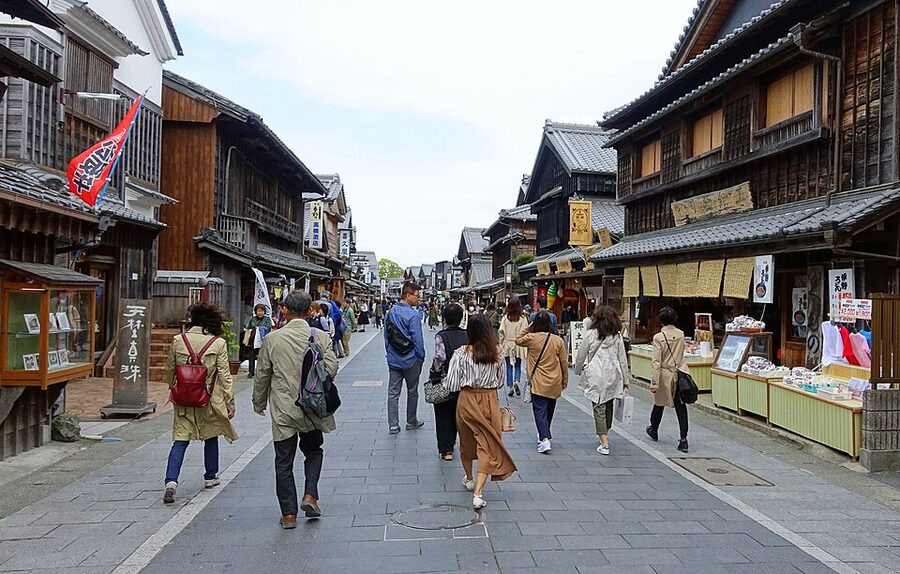
It is unashamedly a theme street, and I like it anyway. The food is good, and on the first of every month the shops open before dawn for the tsuitachi asaichi, when locals come to pray at the shrine and eat breakfast in the street. If you are in Ise on the 1st, set an alarm.
Futami and the Wedded Rocks
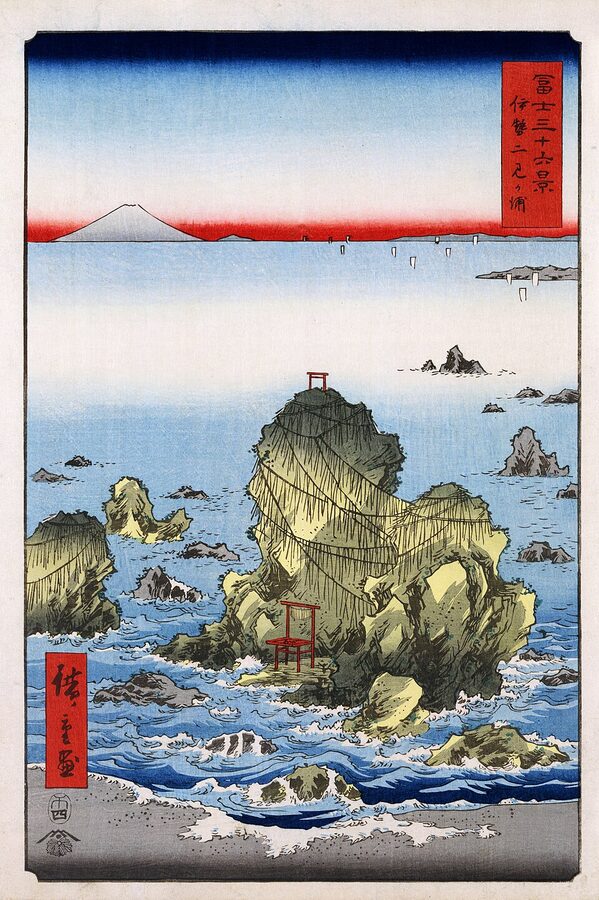
Edo pilgrims purified themselves in the sea at Futami before the shrines, and starting there is still a good idea. Twenty minutes by bus from Ise-shi station, or fifteen minutes’ walk from JR Futaminoura station, is Futami Okitama shrine, and just offshore the Meoto-iwa, the Wedded Rocks, bound together with a great straw rope. The shrine treats them as a torii for a sacred stone under the sea about seven hundred metres out, and for the sun rising behind it.
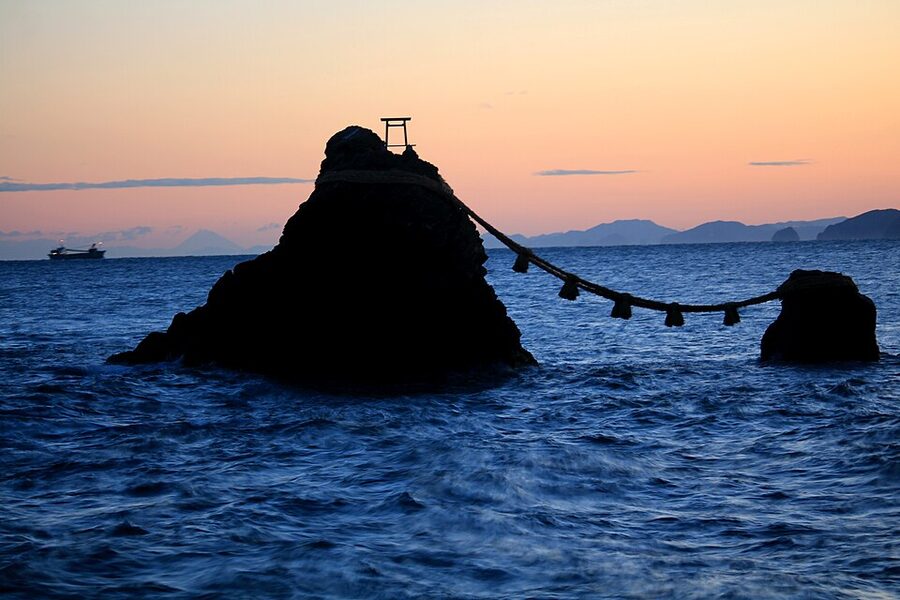
From May to July the sun rises between the rocks, which explains the crowds at dawn in early summer, and on the clearest winter mornings Mount Fuji shows behind them, some two hundred kilometres away. The rope is replaced on 5 May, 5 September and a day in December, and entry is free. The shrine’s second deity is Uka no Mitama, whom it identifies with Toyouke and whom you may know as the rice spirit of Fushimi Inari.
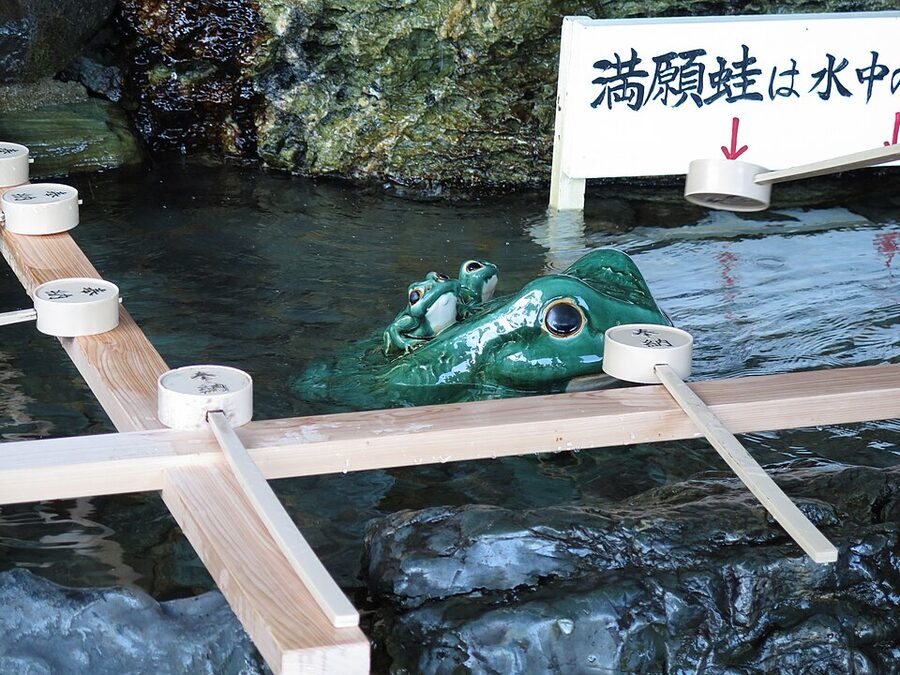
The precinct is crowded with frog statues, because kaeru, frog, also means “to return”: you come home safe, lent things come back, money returns. Further inland in Futami is the Mishio-dono, the shrine’s own salt works, where the salt for every offering at Ise is still made by boiling seawater in an iron pan through a day and a night.
Further out: Asama, Saikū and the other shrines
“Go to Ise without going up Asama and you have made half a pilgrimage”, the Edo pilgrims used to say. Kongōshō-ji on Mount Asama was the Buddhist “inner sanctuary” of the shrine when Shinto and Buddhism were mixed, and it still offers sakaki, a Shinto plant, at its altar; the Ise-Shima Skyline toll road gives you the temple and a view over Ise Bay together.
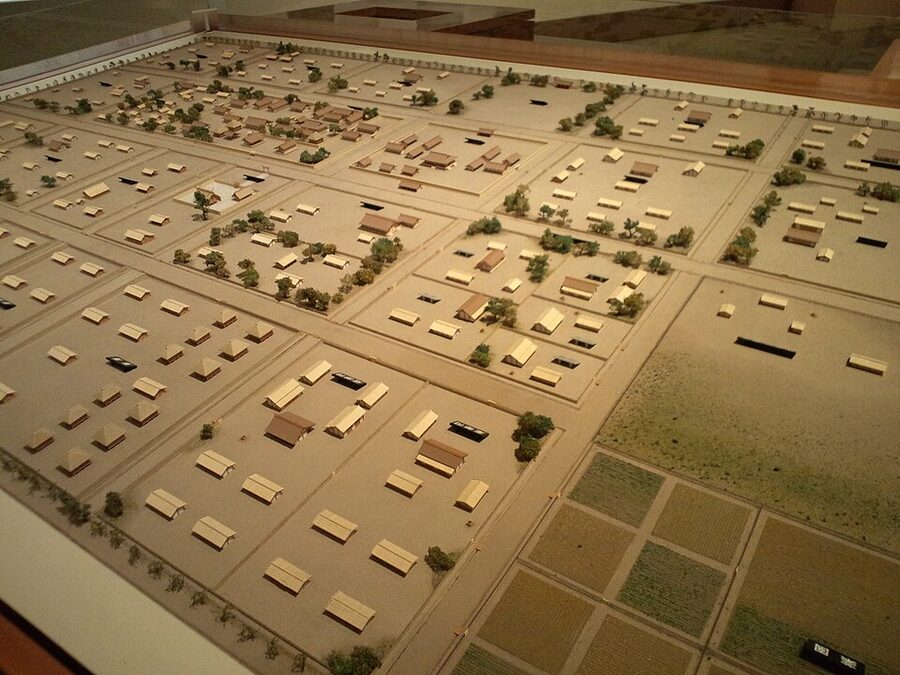
The saiō’s palace site is a short walk from Kintetsu Saikū station on the line from Nagoya. Excavations began in 1970 and it became a national historic site in 1979; the Saikū Historical Museum has a reconstruction of the princess’s rooms and a model of the whole compound, and outside you can walk the old street grid. It is the best place in Japan to understand the saiō, and almost nobody goes.
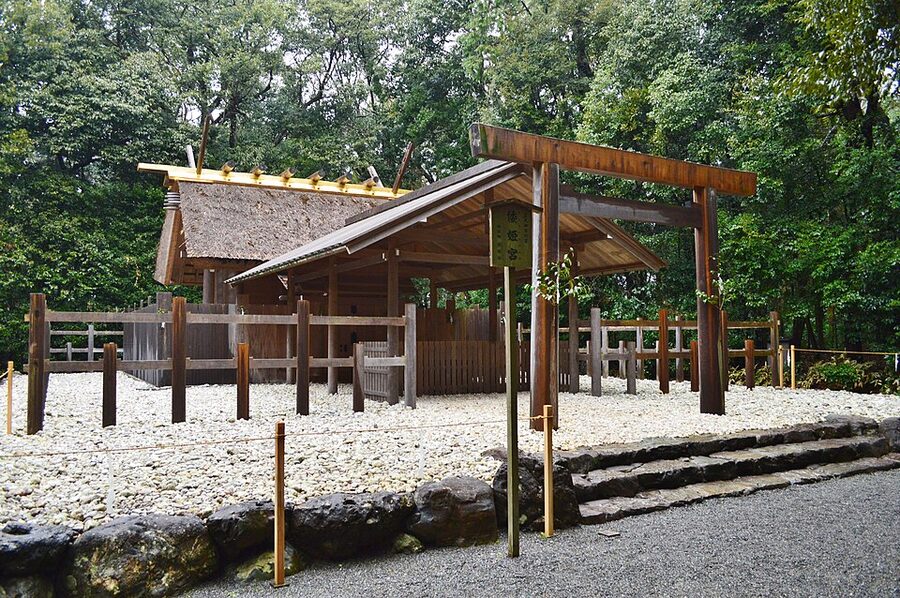
Back in Ise, Yamatohime-no-miya, the shrine to the princess who brought the mirror, stands on Kuratayama near the Chōkokan, founded only in 1923 and one of the most peaceful of the 125. Tsukiyomi-no-miya, the shrine of the moon god, Amaterasu’s brother, is a short walk from Isuzugawa station.
Planning around 2033
The rebuilding will set the calendar for the next seven years. Anyone can register through the local organisers as a “one-day shrine resident”, ichinichi shinryōmin, to pull a rope in the second log-hauling in 2027 or carry a stone in 2033; the new Uji Bridge opens in November 2029; and the transfer itself in October 2033 is by invitation and at night, but the town will be full for weeks around it.
Avoid the first three days of January if you value your ribs, and Golden Week in May. The Kannamesai on 15 to 17 October, when the new rice is first offered to the goddess, is the most important rite of the shrine’s year, and the town holds its own parades around it; for the rest of the year’s big ones, see my guide to Japan’s greatest festivals.
The cockerel and the mirror
The oldest thing at Ise is the habit, not the building. The cypress is twelve or thirteen years old; the plan is thirteen centuries; the idea that a goddess should always have a fresh house is older than any text that records it. I have seen a great many old buildings in Japan, from the gold of Nikkō to the castles, and none of them makes the past feel as present.
So go to the Gekū first, walk the old road, cross the bridge at dawn and stand at the curtain. Then plan to come back in October 2033, stand somewhere in the dark forest by the Isuzu river, and listen for a priest pretending to be a cockerel. The goddess has been moving house for thirteen hundred years, and it would be a pity to miss the next one.