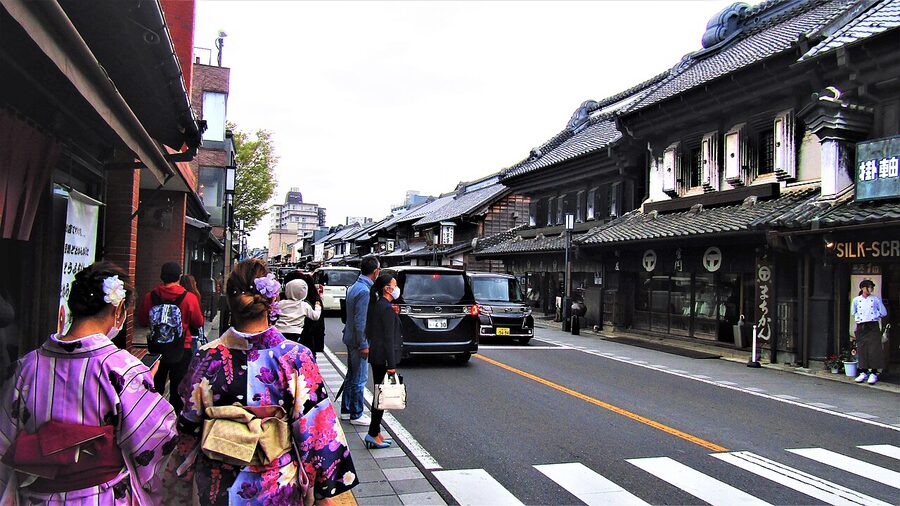
Very little of what you photograph on Kawagoe’s famous main street is from the Edo period. The black-walled merchant houses of Ichibangai, with their roof ridges stacked up like walls and their windows shut behind doors a hand’s breadth thick, were nearly all built in the 1890s, in a hurry, by dealers in tobacco, kimono cloth and hardware. They had just watched a third of their town burn down because a dyer’s workshop near Yōju-in temple had swept up its ash before it was properly cold.
The town sells itself as Koedo (小江戸), “Little Edo”, and the label is not exactly false. It is just pointing at the wrong street. The Edo period in Kawagoe is in a Tendai temple to the south, where rooms from the shogun’s own castle were rebuilt after 1638; in the last main palace hall of any castle in the Kantō; on the site, if not in the timber, of a bell tower first put up in the 1630s; and in a festival that keeps the floats Edo itself gave up.
I like Kawagoe more for knowing this, not less. Its story takes in a castle on the edge of a plateau, a battle that may or may not have been fought at night, the shogunate’s most trusted men, a river that carried sweet potatoes to Edo, a fire, a railway that went somewhere else, and a group of shopkeepers who decided their old buildings were worth more than flats. It ends, as everything on this site does, with where to go and what to look at.
In This Article
- A castle on the lip of the plateau
- The night of the twentieth day
- A fief for the shogun’s own men
- Ninety-nine bends to Edo
- Tenkai’s temple and the rooms from Edo Castle
- Ash that was not cold
- The bell that tells the time four times a day
- The railway went to Ōmiya
- The festival Edo gave up
- Where to see Kawagoe today
- Getting there from Ikebukuro and Shinjuku
- Kawagoe Castle Honmaru Goten
- Kita-in and the Senba Tōshō-gū
- Ichibangai, the bell and the Festival Museum
- Kawagoe Hikawa Shrine
- Tōmyō-ji and the battlefield
- When to go
A castle on the lip of the plateau
Kawagoe sits on the northern tip of the Musashino plateau, where the gravel terrace west of Tokyo drops five or six metres into the wet lowlands of the Iruma and the Arakawa. The name is older than the town. In the 12th century a local warrior house took its name from the place, written 河越 or 河肥, “beyond the river” or “rich from the river” depending on whose etymology you prefer, and the Kawagoe were the leading vassals of Musashi when the warriors took over the country at the start of the Kamakura era.
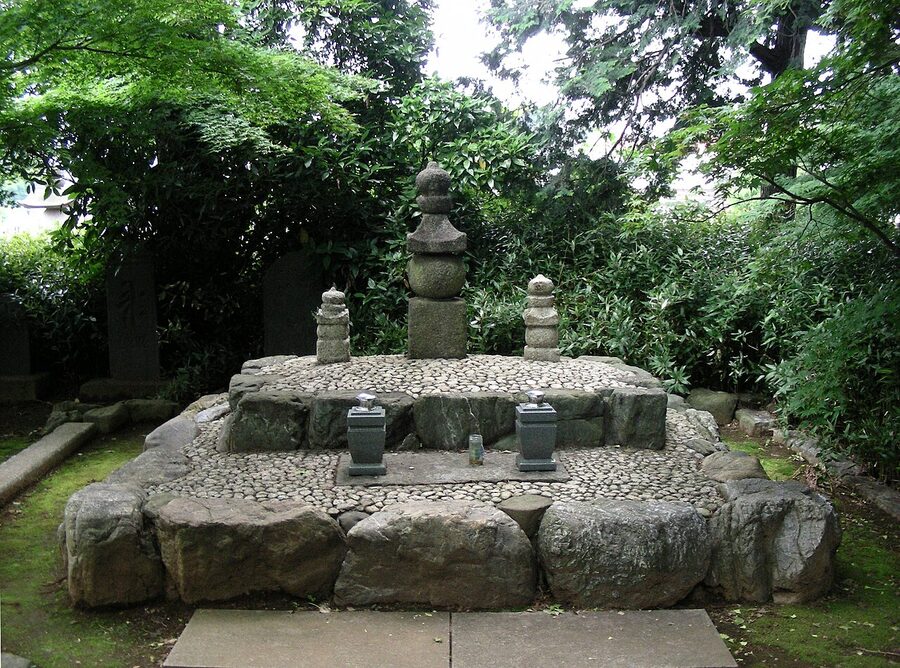
They are remembered for one bad marriage. Kawagoe Shigeyori gave his daughter to Minamoto no Yoshitsune in 1184, and when Yoshitsune fell out with his brother Minamoto no Yoritomo the father-in-law went down with him, executed by the new government in Kamakura in 1185. The family never recovered, though it lasted long enough to give the place its name for good.
The castle came in 1457, out of the long war that wrecked the Kantō a decade before the Ōnin War wrecked Kyoto. In 1454 the shogun’s deputy in the east, Ashikaga Shigeuji, had the Uesugi Kantō deputy murdered, lost Kamakura, moved to Koga and set up as a rival power, and for the rest of the Muromachi era the Uesugi fought him across the lowlands of Musashi. Uesugi Mochitomo of the Ōgigayatsu branch needed a fortified base facing Koga, and he gave the job to his steward Ōta Dōshin and Dōshin’s son, a young man who would become famous as Ōta Dōkan.
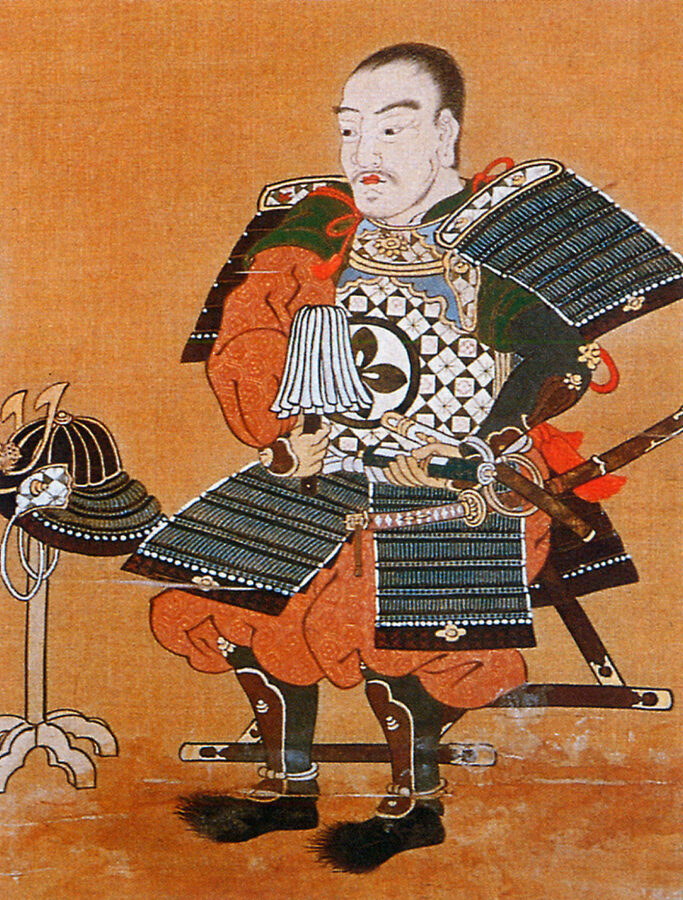
They built two castles that year, one at Kawagoe and the other at a village on the bay called Edo, and the road between them became the Kawagoe Kaidō highway. Dōkan’s own story is told in the Edo Castle article; what matters here is that the two forts were twins, built by the same men in the same season, and that for most of the next four centuries Kawagoe would be treated as Edo’s northern gate.
The chronicles cannot agree which Ōta was in charge. The Hōjō Godaiki gives the work to the father, the Ōta family’s own records give it to the son, and modern historians tend to split the credit. Dōkan’s method, a chain of separate baileys walled with earth banks about two ken high and linked by bridges that could be pulled back, became known as Dōkan-gakari.
He also left Kawagoe its two nicknames. When geese flew over the castle shrine at the feast for its completion, the story goes, Dōkan called it Hatsukari-jō, the Castle of the First Geese, and a well in the grounds was said to breathe out mist and hide the walls whenever the castle was in danger, which gave it a second name, Kirigakure-jō. The mist well is still there, moved to the forecourt of the city museum. I have stood next to it in a November fog and can report that it was not responsible.
The night of the twentieth day
The family that ended the Uesugi came from the south. Ise Sōzui, the man later called Hōjō Sōun, took Odawara in the 1490s; his son Ujitsuna seized Edo in 1524; and in the seventh month of 1537, when the Ōgigayatsu lord died and left a thirteen-year-old heir, Ujitsuna took Kawagoe too. Kita-in, the great temple south of the castle, burned in the fighting. Ujitsuna put his adopted son Tsunashige in command, and for the next nine years the Uesugi tried to get it back.
The last attempt was the big one. In the autumn of 1545 the new Hōjō lord, Ujiyasu, was pinned in Suruga by Imagawa Yoshimoto, who had an understanding with Uesugi Norimasa, the Kantō deputy. While Ujiyasu was busy in the west, Norimasa, the young Ōgigayatsu lord Tomosada and finally the Koga shogun Ashikaga Haruuji, Ujiyasu’s own brother-in-law, brought every lord in the Kantō they could raise to sit around Kawagoe. Tsunashige and the garrison held out through the winter.
What happened next is one of the great set pieces of Sengoku storytelling, and it reaches us mostly through the Kanhasshū Kosenroku, a chronicle of the Kantō wars finished in the 18th century. In that version the besiegers numbered 86,000 and the garrison 3,000, and Ujiyasu came up with 8,000. He sent Tsunashige’s younger brother riding alone through the siege lines with the plan, offered humiliating peace terms, and pulled back to Fuchū as if he had lost his nerve.
Then, on the night of the 20th day of the fourth month of 1546 (19 May by the Julian calendar, as the conversion tables give it), he attacked. His men wore white paper over their armour so they would not kill each other in the dark, left their banners behind and were told not to stop for heads. Tomosada was killed, an Uesugi commander called Nanbada fell into a well, and Tsunashige came out of the castle under his yellow Jiō Hachiman banner shouting “We’ve won, we’ve won”, driving the Koga shogun’s army off the field. The chronicle puts the allied dead at 13,000.
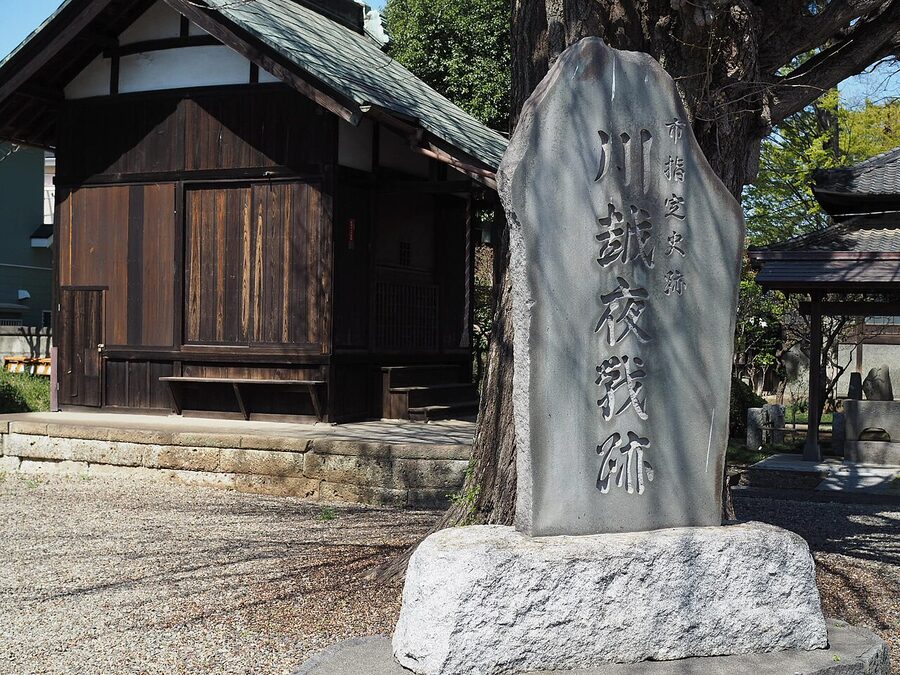
It is a wonderful story, and almost every detail of it is disputed. No commendation letters from the Hōjō side survive, which for a victory this size is very odd, and almost no historian now accepts the 86,000. The Hōjō Godaiki puts the battle at noon. The well story attaches to Nanbada Zengin, whom a contemporary temple diary records as killed in 1537, and only the Kosenroku has Tomosada dying in battle.
What can be pinned down is smaller. Letters that Norimasa sent out on the 26th and 27th day of that month thank men for their service in “the battle at Kawagoe on the 20th”, and a letter in Ujiyasu’s name, possibly later doctored, says he won “rather to his surprise”. The death register of Gyōden-ji in Kawagoe records 2,820 dead in the battle that month. Some scholars think the night attack was borrowed from the moonlit capture of the castle in 1537, and others that there was hardly a battle at all, only a siege that fell apart.
I think the sceptics are mostly right about the details and entirely wrong about the outcome. Whatever happened on the 20th day, the Ōgigayatsu Uesugi ceased to exist; Norimasa lost his allies one by one and ended up in Echigo, where he handed his name and office to a young lord who became Uesugi Kenshin; and Haruuji was forced to name his Hōjō-born son as heir. It rarely appears on lists of Japan’s most decisive battles, and yet it is the reason the Hōjō ran the Kantō from Odawara Castle for the next 44 years.
They kept Kawagoe as a branch castle under the Daidōji family. When Toyotomi Hideyoshi came for Odawara in 1590, Daidōji Masashige marched north to meet the invaders in Kōzuke, surrendered there and changed sides, and Kawagoe opened its gates to the army of Maeda Toshiie without a fight.
A fief for the shogun’s own men
When Hideyoshi handed the Hōjō lands to Tokugawa Ieyasu that summer, Ieyasu put his most reliable retainers in the castles around his new capital. Kawagoe went to Sakai Shigetada with 10,000 koku, the smallest scale of daimyō. It set the pattern for the whole Edo era: Kawagoe was given to men the shogun trusted, usually men who sat on his council, and changed hands whenever one of them was promoted, disgraced or needed elsewhere.
The domain had eight ruling houses, and seven of its lords served as rōjū, the senior councillors of the Tokugawa shogunate, about as many as any domain in the country. It was a day’s ride or an overnight boat from Edo, close enough for a councillor to manage, and its lords travelled to and from Edo on sankin-kōtai duty along the Kawagoe Kaidō. Iemitsu came out to hunt with hawks at least nine times and often stayed the night.
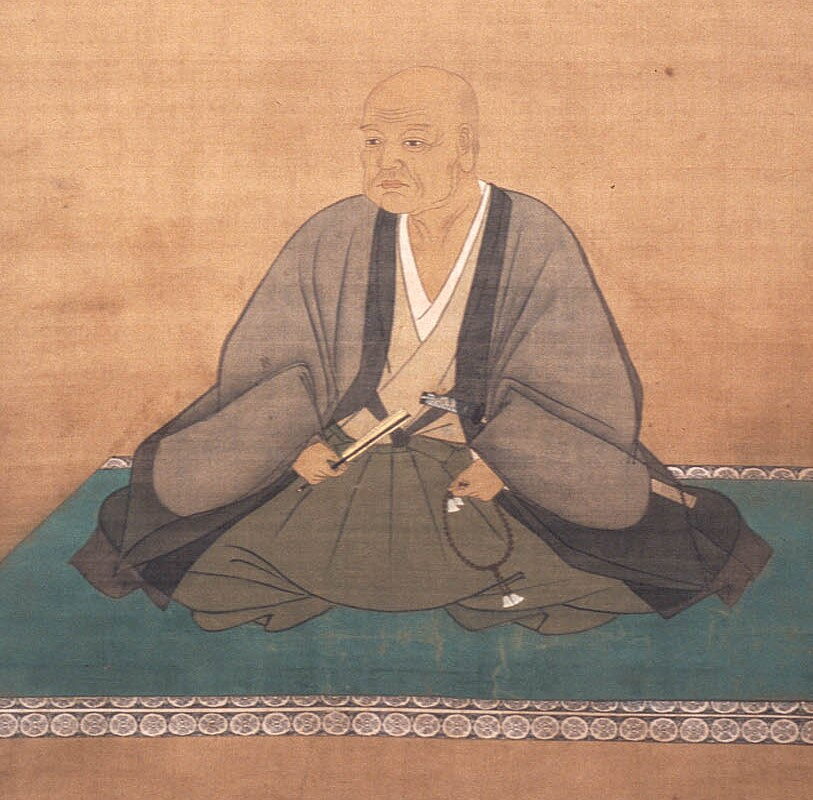
The early Sakai lords set the tone. Sakai Tadatoshi rebuilt Kita-in for its new abbot at Ieyasu’s command in 1612; his son Tadakatsu, a councillor who went on to steer the government for Iemitsu’s young heir, gave the town its first time bell. Then came Hotta Masamori, a protégé of Iemitsu related by marriage to the shogun’s wet nurse Kasuga no Tsubone. On the 28th day of the first month of 1638 (13 March by the Western calendar, as one conversion gives it) the town burned, taking Kita-in and a third of the castle town with it.
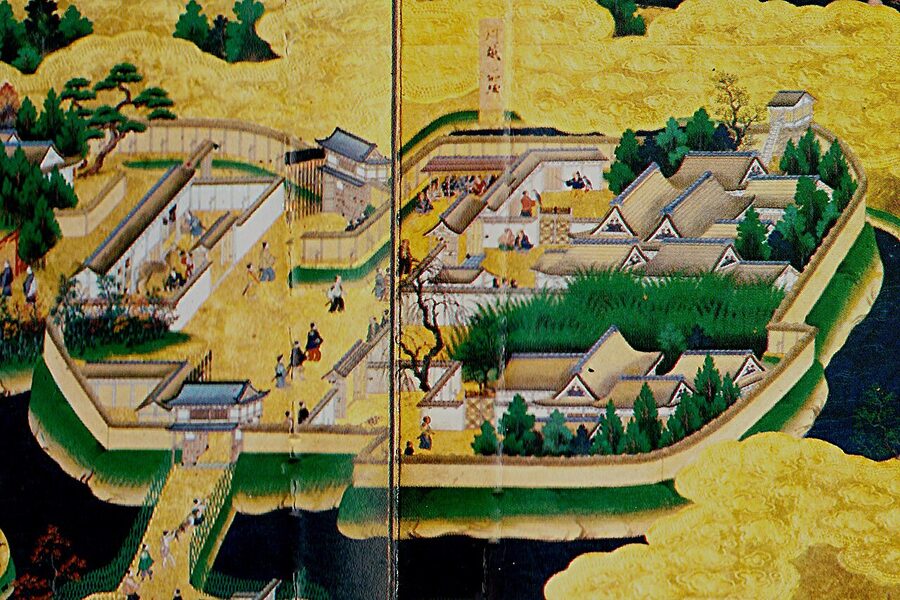
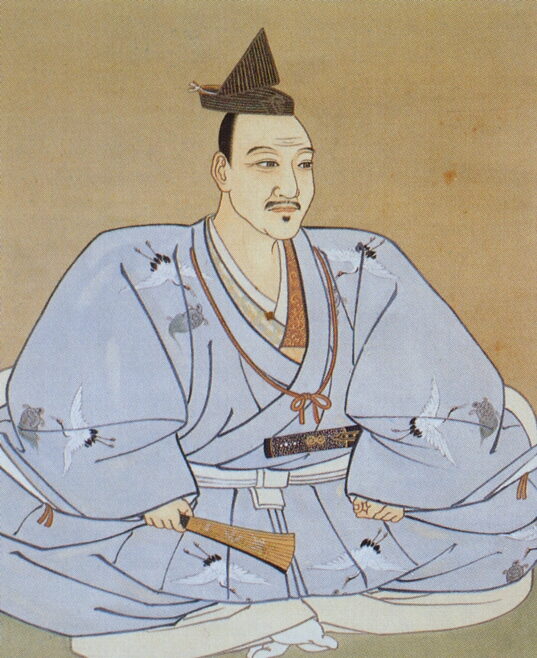
The man who rebuilt it was Matsudaira Nobutsuna, called Chie Izu, “Clever Izu”, after his court title. He had grown up as one of Iemitsu’s pages, had just put down the Shimabara Rebellion, and arrived in the first month of 1639 with 60,000 koku as his reward. He began the works that roughly doubled the castle to about 326,000 square metres, with thirteen gates, water moats and the Fujimi turret on the high corner standing in for a keep.
He also laid out the town you walk through today. Ten wards ran off a crossroads called Fuda-no-tsuji, the notice-board junction west of the castle’s main gate, with five merchant wards along the main streets and five craftsmen’s wards behind, plus four districts at temple gates. Minami-chō, the southern ward of the big kimono-cloth dealers, is the street now called Ichibangai. The plan is full of the usual castle-town dog-legs and T-junctions, and you will still get lost in it.
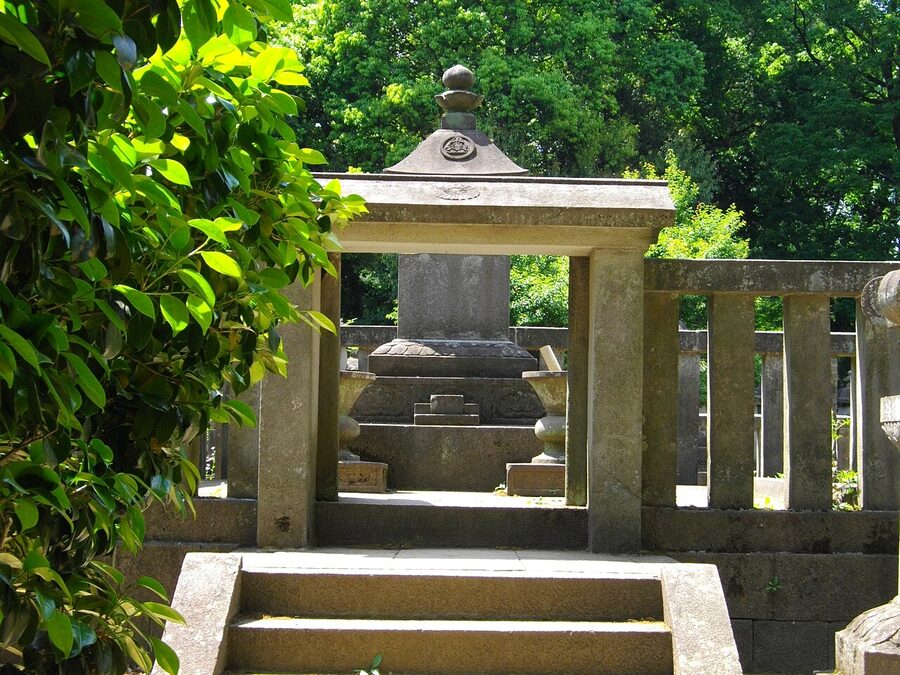
His real monument is engineering. He improved the Kawagoe Kaidō, built river banks, had his retainer Yasumatsu Kin’emon dig the Nobidome canal across the dry plateau, and turned the little Shingashi river into a waterway to Edo. He also gave the town shrine two portable shrines in 1648, which is where the Kawagoe festival begins.
His heirs held Kawagoe until 1694, when it passed to the most famous lord it ever had and the one it saw least of. Yanagisawa Yoshiyasu, favourite and chamberlain of Tokugawa Tsunayoshi, held Kawagoe for ten years and never once set foot in it. He ran the domain by letter, opened up the Santome new fields on the plateau on the advice of the philosopher Ogyū Sorai, then in his service, and left in 1704 for Kōfu.
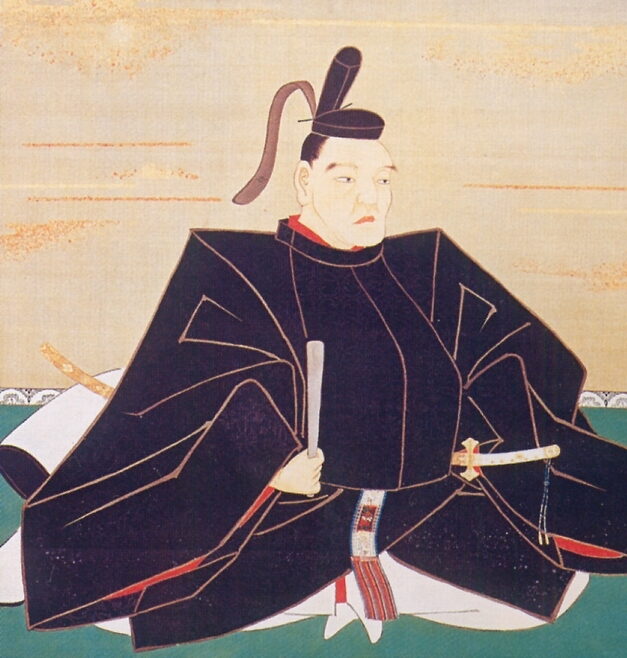
The Akimoto, who came next, brought silk weavers from their old domain in Kai and also brought a bell, of which more later. In 1767 Kawagoe passed to a much grander house, the Echizen Matsudaira, descended from Ieyasu’s second son, whose castle at Maebashi was being eaten by the Tone river. They simply moved into Kawagoe and stayed for a hundred years, rich on paper at up to 170,000 koku and poor in practice.
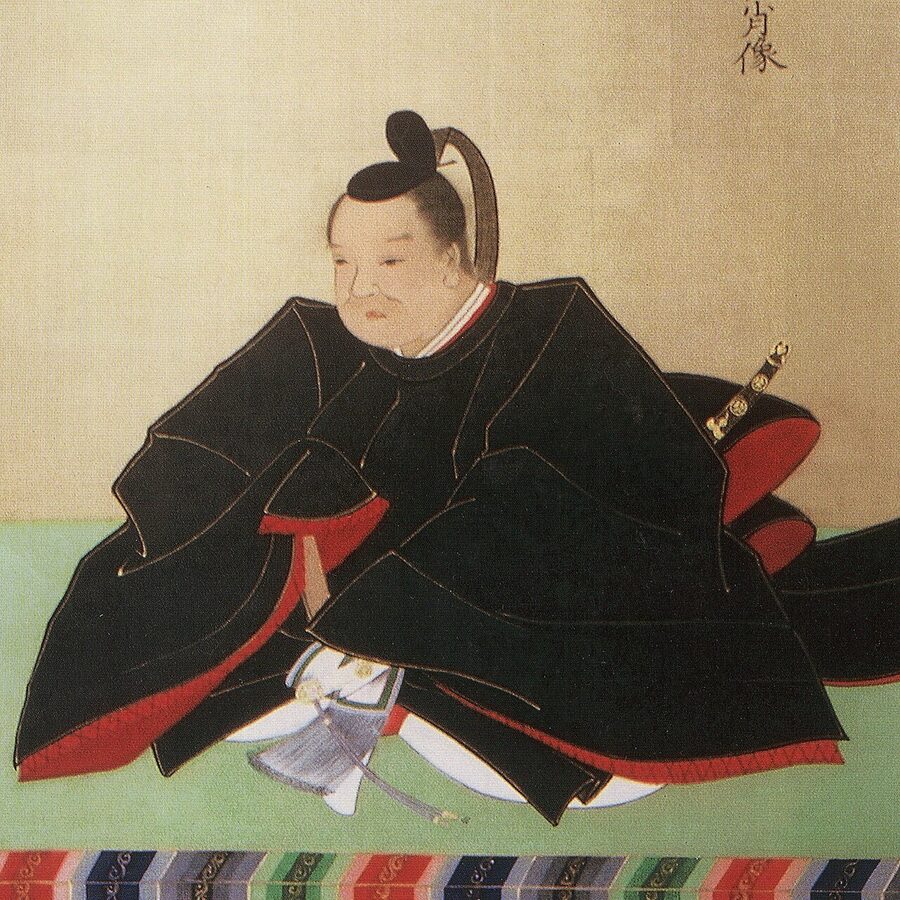
From the 1820s the shogunate also gave Kawagoe the job of guarding the Sagami coast against foreign ships. In 1853, when Perry delivered the American president’s letter at Kurihama, 147 Kawagoe samurai were drawn up on the beach, as the Perry article describes, and the domain then garrisoned the first of the new gun batteries in Edo Bay.
In 1846 the Ninomaru palace burned, and in 1848 Naritsune built a new palace of sixteen buildings in the Honmaru, the main bailey; its entrance and great hall survive. Twenty years later it was over. The Matsudaira went back to a rebuilt Maebashi, a new lord arrived from Tanagura in 1866, and in 1868, as the imperial army marched east in the Boshin War, he filled in the moats to show he meant no resistance.
Ninety-nine bends to Edo
The Shingashi is not much of a river. It rises from springs and paddy channels on the north side of Kawagoe and runs about 25 kilometres south-east, close beside the Arakawa, to join the Sumida in Tokyo. In the Edo period the Arakawa was the “outer river” and the Shingashi the “inner river”, and for two and a half centuries the inner river was the busiest trade route in what is now Saitama.
Local tradition says the boats began with the fire of 1638, when materials for rebuilding the Tōshō-gū shrine and Kita-in came up from Edo by water. Nobutsuna improved the channel and, so the story goes, kept its meanders, the “ninety-nine bends”, to hold back enough water to float a loaded boat. Landings grew up along it, five of them belonging to Kawagoe, and the river took the name Shingashi, “new landings”.
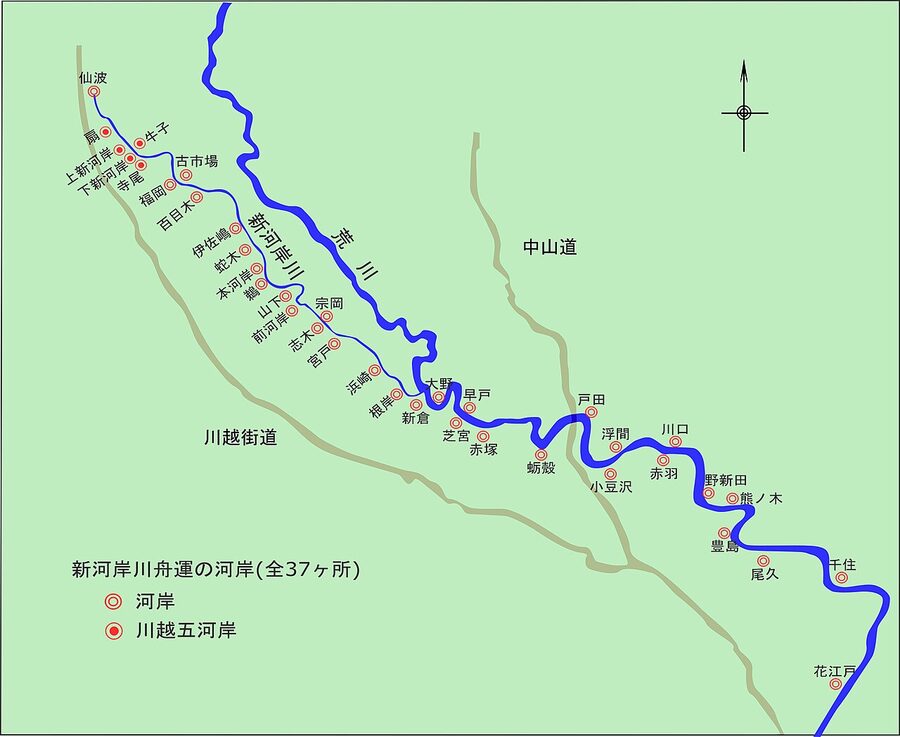
The boats were flat-bottomed craft about fifteen metres long, carrying seventy or eighty koku of cargo. A slow boat did the round trip in seven or eight days; the express went down one day and came back the next. The passenger service, the Kawagoe yobune or night boat, left Kawagoe at about three in the afternoon, drifted and was poled downriver all night, reached Senju at about eight and tied up at Hanakawado, a few minutes from Sensō-ji, before noon.
Down went rice, timber and the products of the plateau; up came salt, sake, cloth and fertiliser. The most famous cargo was sweet potatoes. When baked sweet potatoes became a craze in Edo in the 1790s, the ones from the dry Kawagoe uplands were the ones to have, said to have earned the name Kawagoe-imo when some were presented to the shogun Ieharu. Street sellers advertised them with a pun, “kuri yori umai jūsan-ri”: tastier than chestnuts (kuri, which sounds like nine ri) plus yori (four ri) makes thirteen ri, about fifty kilometres, roughly the distance from Kawagoe to Edo.
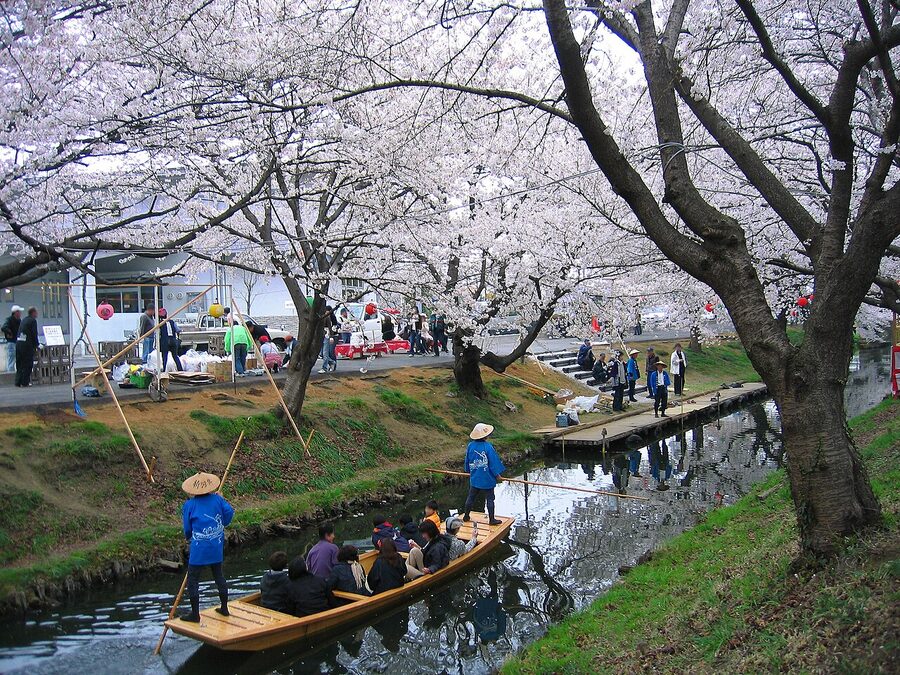
Rail took the passengers, but freight kept moving on the Shingashi into the 1920s, until the great flood of 1910 led to the straightening of the Arakawa and the rebuilding of the Shingashi’s channel, which cut the bends and dropped the water. Saitama prefecture banned navigation in 1931.
Tenkai’s temple and the rooms from Edo Castle
Kita-in is the reason I first went to Kawagoe and the reason I keep going back. It claims a founding in 830 by the monk Ennin, was rebuilt in 1296 as the headquarters of Tendai Buddhism in the east, with authority over more than 580 temples, and burned in the Hōjō attack of 1537. It was a ruin on a good site when, in 1599, it got a new abbot.
That abbot was Tenkai, the Tendai monk who became Ieyasu’s religious adviser and, after Ieyasu’s death, the architect of his cult as a god. His career is told in the Enryaku-ji article and I will not retell it here. For Kawagoe, what matters is that he renamed the temple Kita-in, with characters meaning “much happiness” in place of the old “north temple”, and that Ieyasu had the temple rebuilt for him.
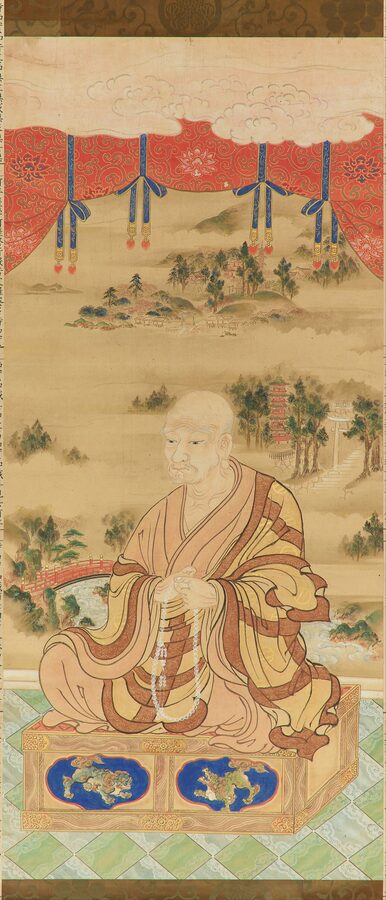
In 1617, when Ieyasu’s body was carried from its first grave at Kunōzan to Nikkō, the procession stopped at Kita-in and Tenkai conducted memorial rites. A shrine to Ieyasu as a god was built on the spot, the Senba Tōshō-gū, which with Nikkō Tōshōgū and Kunōzan is counted among the three great Tōshō-gū. It burned in 1638, and the present buildings date from its rebuilding in 1640 under Hotta Masamori.
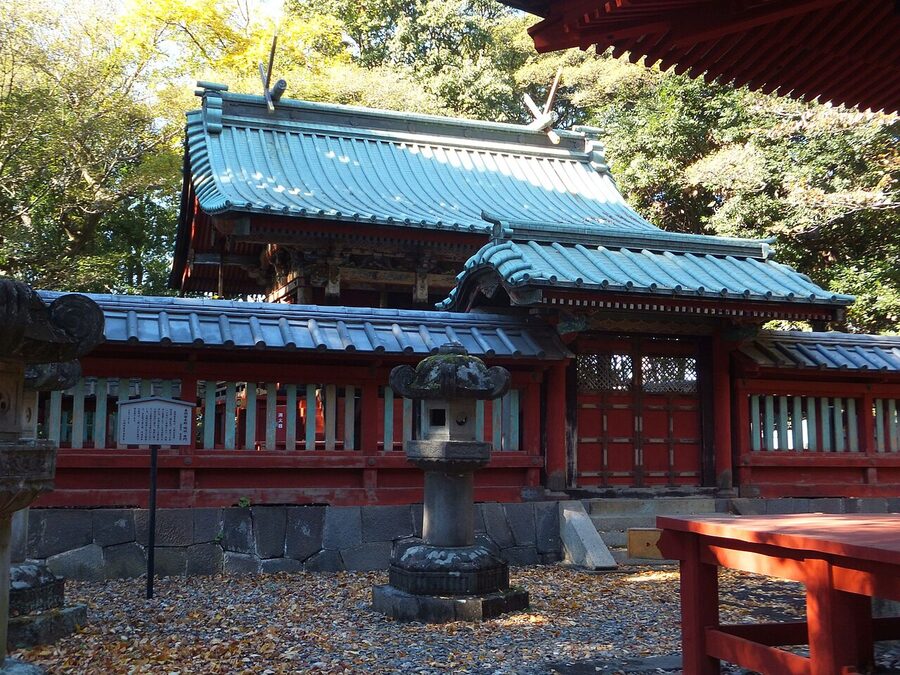
After the fire of 1638 the only things left standing at Kita-in were Tenkai’s main gate of 1632 and the sutra store. Iemitsu’s answer was to give the temple buildings from his own castle. Parts of a detached palace in the Momijiyama enclosure of Edo Castle were taken down, brought out to Kawagoe (the river trade, remember, is said to have started with this job) and put back together as the temple’s reception hall, study and kitchens. All three are Important Cultural Properties, and I know of nowhere else where you can walk through rooms that once stood inside Edo Castle.
The reception hall, the kyakuden, has a ceiling of 81 painted flower panels, its own bath and lavatory, and a raised room with an alcove and staggered shelves that the temple calls the room where Iemitsu was born. Iemitsu was born at Edo Castle in 1604. The national register dates the building to 1638, when it was set up here, and nobody can now show where it stood in 1604, so I treat the birth room as a tradition rather than a fact.
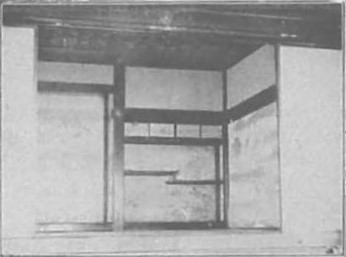
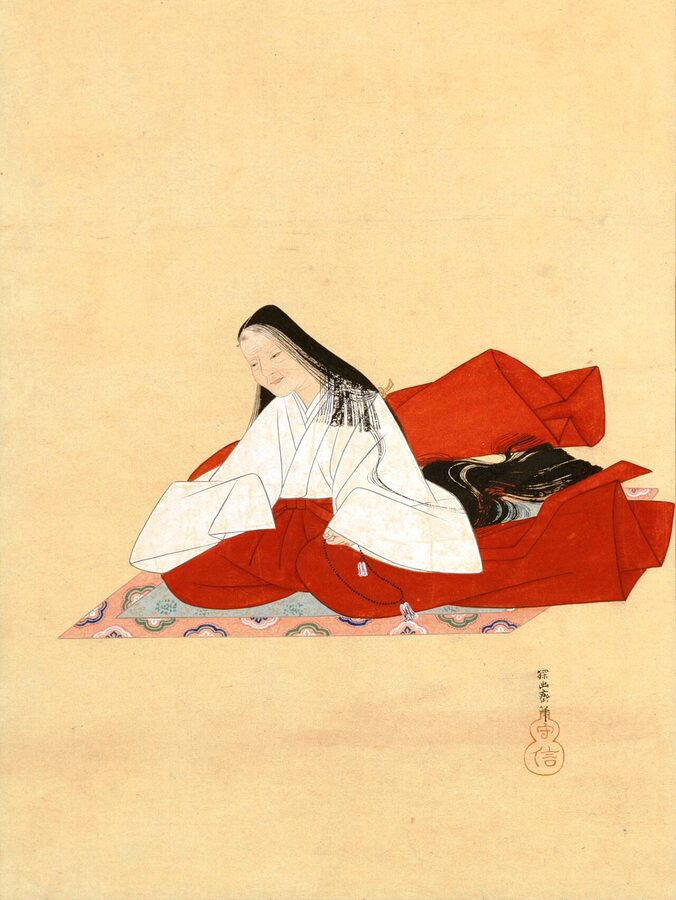
The guides like to add that the shogun’s health was checked daily from what he left in that lavatory, which is the kind of detail you hear at Kita-in and nowhere else. The study, the shoin, is a smaller building with a mezzanine, and its best room is called the dressing room of Kasuga no Tsubone, Iemitsu’s wet nurse and the woman who organised the inner quarters of Edo Castle into the Ōoku.
The garden behind the reception hall is in the manner of Kobori Enshū, with a weeping cherry said to have been planted by Iemitsu. Across the precinct, the Jigen-dō of 1645 enshrines a wooden statue of Tenkai, and behind the main hall stand the stone stupas of five Matsudaira lords of Kawagoe, fenced off because the stones are no longer safe.
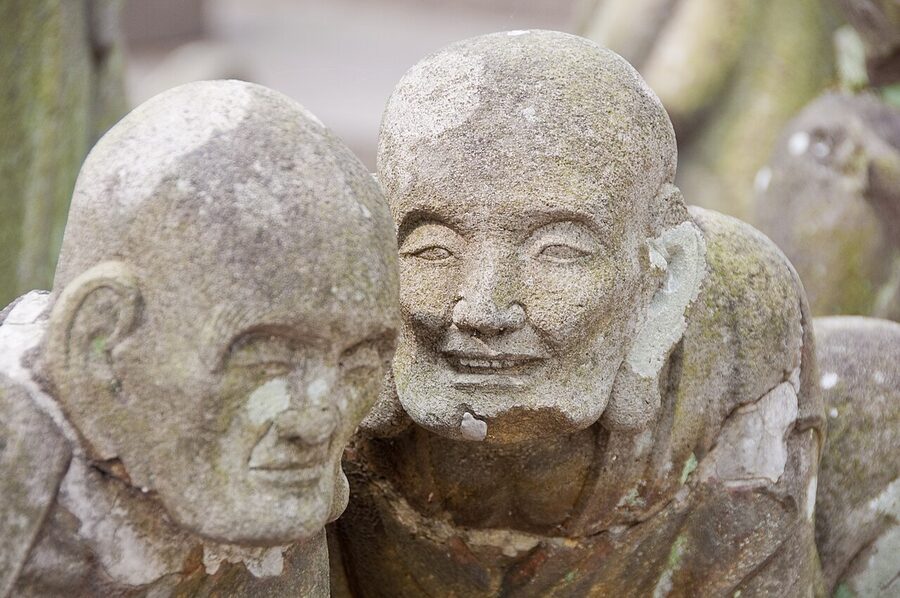
The Five Hundred Rakan, the disciples of the Buddha, are the other thing everyone comes for. They were carved over forty years at the end of the 18th century and the start of the 19th, every one with a different face, some laughing, some drunk, one apparently gossiping into his neighbour’s ear, and they are the best value in Saitama for the price of the temple ticket. Kita-in gave the capital one more building: when Kan’ei-ji in Ueno lost its halls in the fighting of 1868 described in the Tokugawa Yoshinobu article, its replacement main hall was moved there from Kawagoe in 1879.
Ash that was not cold
Kawagoe had always burned, with great fires in 1638, 1719, 1825 and 1829. But the one that matters began at about a quarter past eight on the evening of 17 March 1893, in the workshop of a dyer in the lane leading to Yōju-in, where someone had put the day’s ash into the ash store before it had gone out.
A north wind had been blowing on a run of dry days, and the town’s twenty-two fire companies emptied the wells long before they emptied the streets. By the time the fire was out at eight the next morning it had burned 1,302 houses in seventeen wards, about a third of the town, including the bell tower, the 85th National Bank and three temples. Remarkably, nobody died; the 1,014 people made homeless were put up in temples and schools.
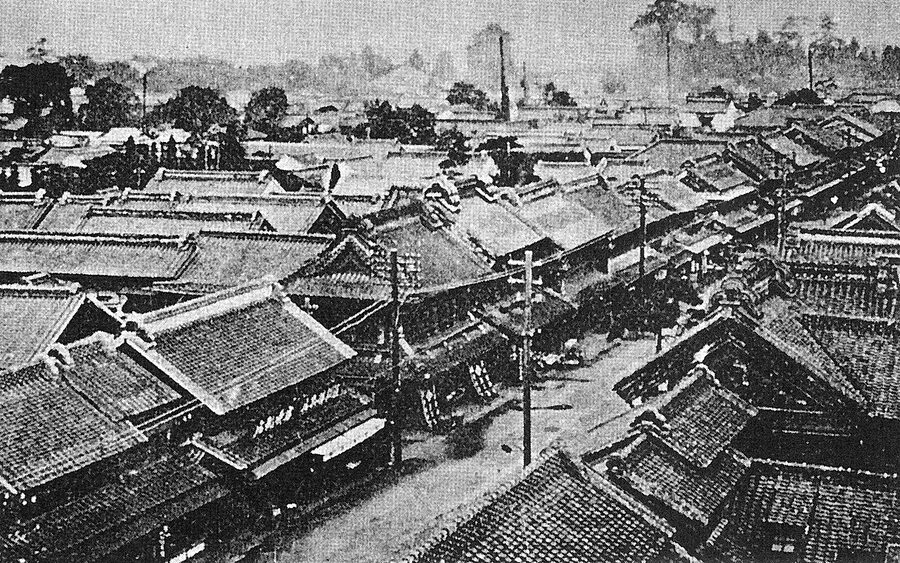
English-language accounts sometimes date the fire to 13 May 1893. Japanese records, from the town’s histories to the city’s own heritage pamphlets, give 17 March, and since 1893 is well after Japan’s switch to the Western calendar there is no conversion to blame. I go with March.
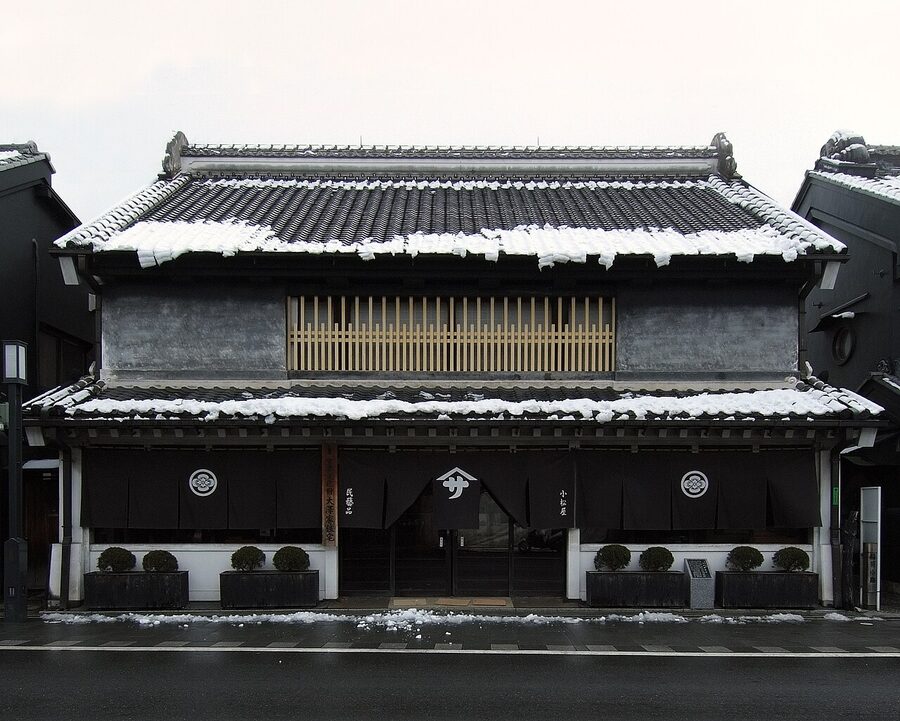
The buildings that survived were the ones built as storehouses, kura, with thick clay walls and heavy tiled roofs. The oldest of them, the Ōsawa House, a cloth shop built in 1792 by an Ōmi merchant, came through untouched, and the merchants drew the obvious conclusion. They rebuilt their shop fronts as kura, a style called kurazukuri (蔵造り), and they did it fast; by one count more than two hundred went up within two or three years, though the city museum puts the total at its height at over a hundred.
They had models. Tokyo’s Nihonbashi had streets of kura-fronted shops by the 1880s, and the Kawagoe merchants hired plasterers and carpenters from Tokyo. What is interesting is what they did not choose. Tokyo by then was building fireproof shops in brick and stone, and Kawagoe went for traditional clay instead, borrowing brick only for cellars and boundary walls, with Ōya stone, granite and artificial stone for the bases.
The essential point is that the shop itself is the storehouse, a type called misegura, with earth walls (Ōsawa’s are about 30 centimetres thick, over a lattice of bamboo tied with akebi vine) running round the whole front. The upper windows close with hinged doors called kannon-biraki, cut in stepped profiles so they shut as tight as a safe. Below them on the ground-floor roof runs a long ledge, the menuridai, where in a fire the shopmen stood to seal the cracks of the closed doors with mud.
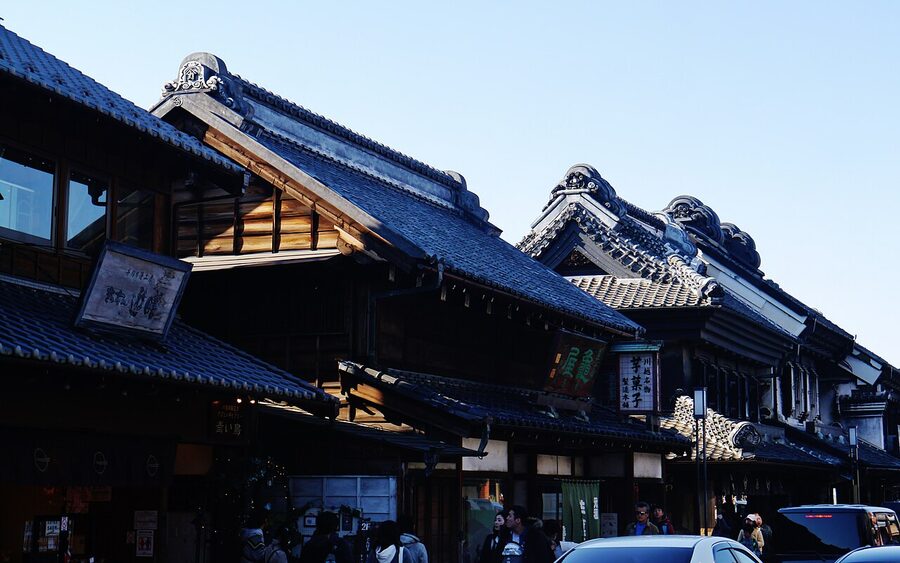
The roof is where the showing-off happened. The ridge was built up into a towering box of plaster, ostensibly to protect the ridge beam and in practice to be bigger than your neighbour’s, capped at each end with massive kawara demon tiles. On the walls you will see little domes of plaster with bent iron hooks in them, which held ladders for repairs; the dome took the strain, so that a heavy load would crack the knob rather than the wall.
And the colour. The Kawagoe kura are black, finished in kuro-shikkui, polished plaster blackened with soot, which cost more than white and needed more upkeep. It is generally said the merchants chose it to go with the red brick they used alongside. I would add that black plaster polished to a shine was about the most expensive-looking finish a builder of 1893 could offer, and that these were men who had just lost everything and wanted the town to know they were back.
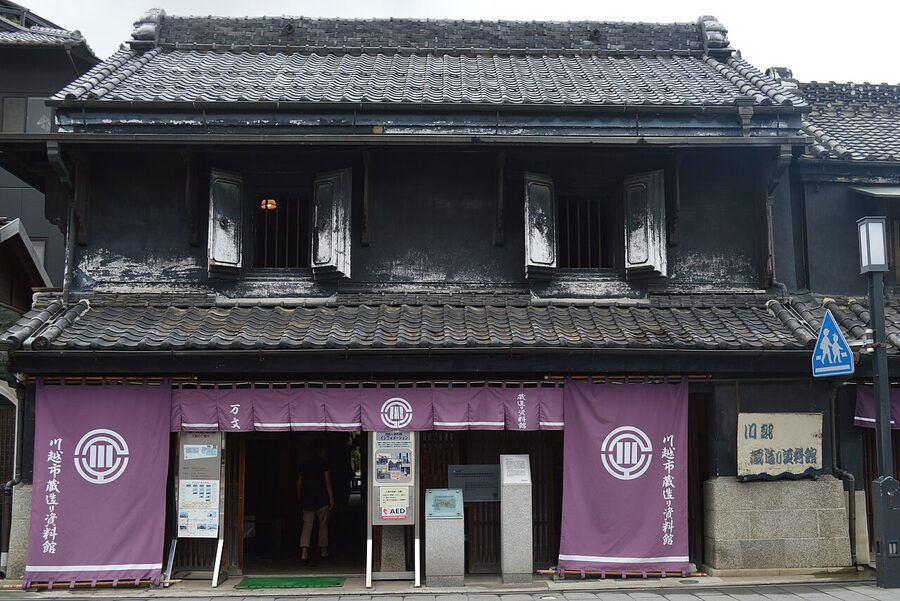
The Manbun closed in October 2016 for seismic strengthening, turned out to be in such poor condition that it had to be taken apart completely, and then lost its contractor to bankruptcy in 2020; work resumed in 2023. When I checked the city’s pages on 16 November 2026 it was still closed, with the works scheduled through the 2026 fiscal year.
The bell that tells the time four times a day
A street of new black shops needed a centrepiece, and the merchants rebuilt their bell tower within a year. The Toki no Kane, the “bell of time”, stands in what was Taga-chō, the coopers’ and carpenters’ quarter, just off Ichibangai, and it is the one image of Kawagoe everybody knows.
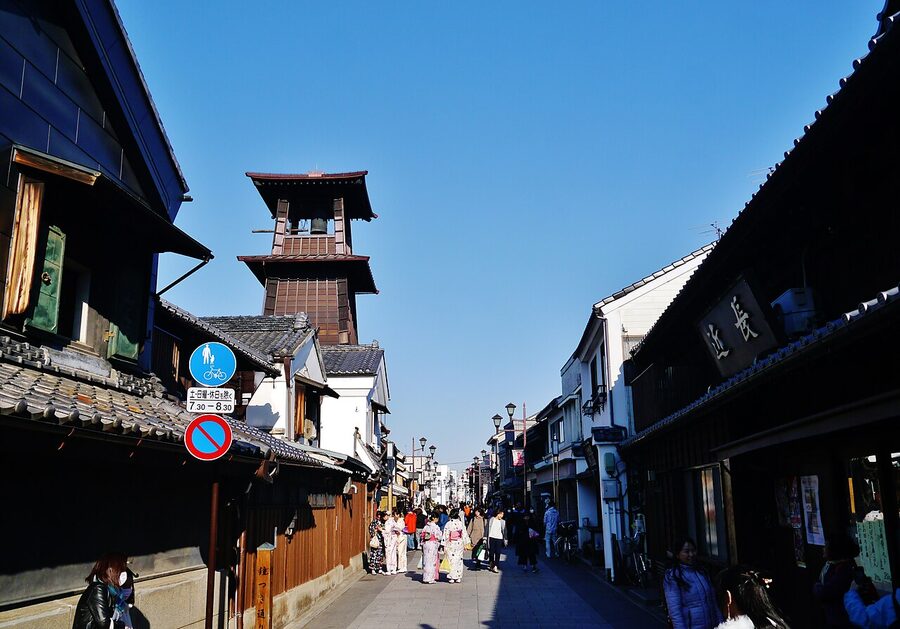
The city’s history of the tower is a catalogue of disasters. Sakai Tadakatsu built the first sometime between 1627 and 1634; Nobutsuna recast the cracked bell in the early 1650s and then took the new one down because it was too quiet; the Akimoto brought a bell from their old castle town in Kai; and the tower burned in 1774 and 1856, when the town had to borrow bells from temples. Japanese accounts call the present tower the fourth, though counting the rebuildings in the city’s own timeline gets you a higher number.
Under the old system of unequal hours the bell was struck the number of the hour, nine strokes for the hour called nine, and rang a different pattern for fires. After 1893 the merchants rebuilt the tower in 1894 to a design by the master carpenter Sekine Matsugorō, with a grant from the Meiji emperor and gifts from Kawagoe men who had done well in Tokyo and Yokohama. When clocks and the radio time signal made it pointless in the 1920s, a man called Iwanai Tarō volunteered to keep ringing it by hand, and is said never to have missed an hour.
It fell silent in the war, got an automatic striker in 1975, and in 1996 was named one of the hundred soundscapes of Japan. It now rings at six in the morning, noon, three in the afternoon and six in the evening. Seismic work in 2015 to 2017 put its four main posts back on their original foundation stones, so what you see is a Meiji building, of an Edo design, on an Edo site, ringing modern hours, and I find I don’t mind at all.
The railway went to Ōmiya
Kawagoe came into the Meiji era as the biggest town in what became Saitama. It was briefly a prefectural capital in the early 1870s, its merchants founded the 85th National Bank in 1878, the first bank in the prefecture, and it was the first town in Saitama to get electric light. Then the railways came, and they came the wrong way.
The first trunk line north out of Tokyo, opened by the private Japan Railway in 1883, ran through Urawa and Ageo, well to the east, and Kawagoe had to build its own connections. Local merchants backed the Kawagoe Railway, which in 1895 linked the town to the Kōbu line at Kokubunji and is the ancestor of the Seibu Shinjuku line, and in 1906 a company led by the merchant Ayabe Riemon opened the Kawagoe Electric Railway to Ōmiya, the first electric line in the prefecture.
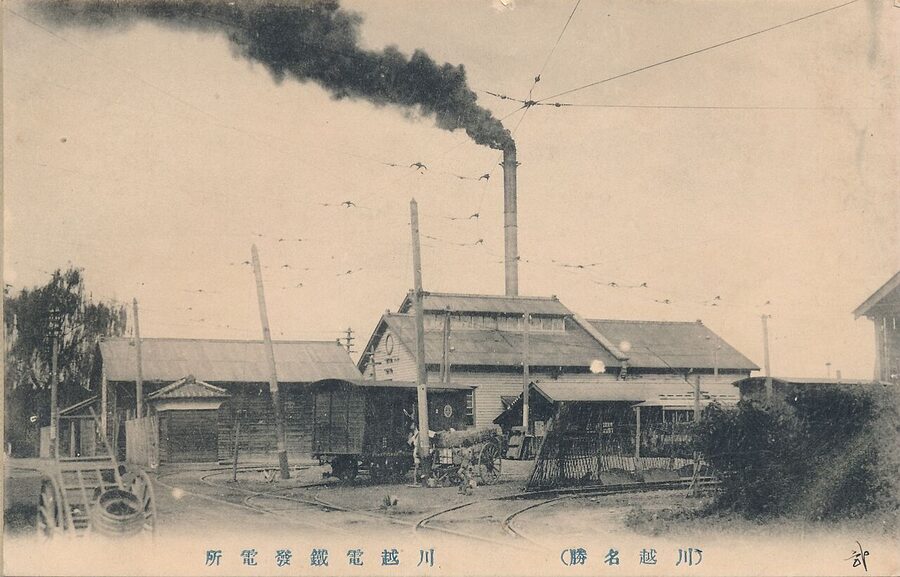
The line that changed the town was the Tōjō Railway, the present Tōbu Tōjō line, which reached Kawagoe from Ikebukuro in 1914. A year later a station opened well south of the old town, the one now called simply Kawagoe, and over the next fifty years the centre of gravity moved down to it. The shopping street that runs north from Kawagoe Station is now one of the busiest in the prefecture, and Ichibangai, at its far end, became the old end of town.
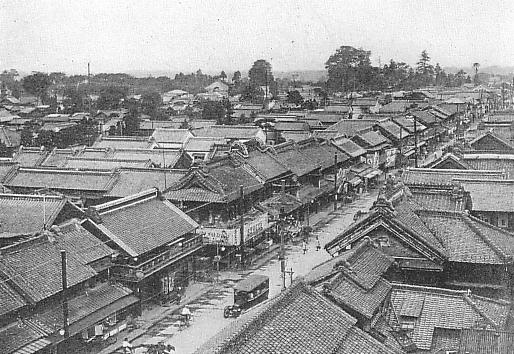
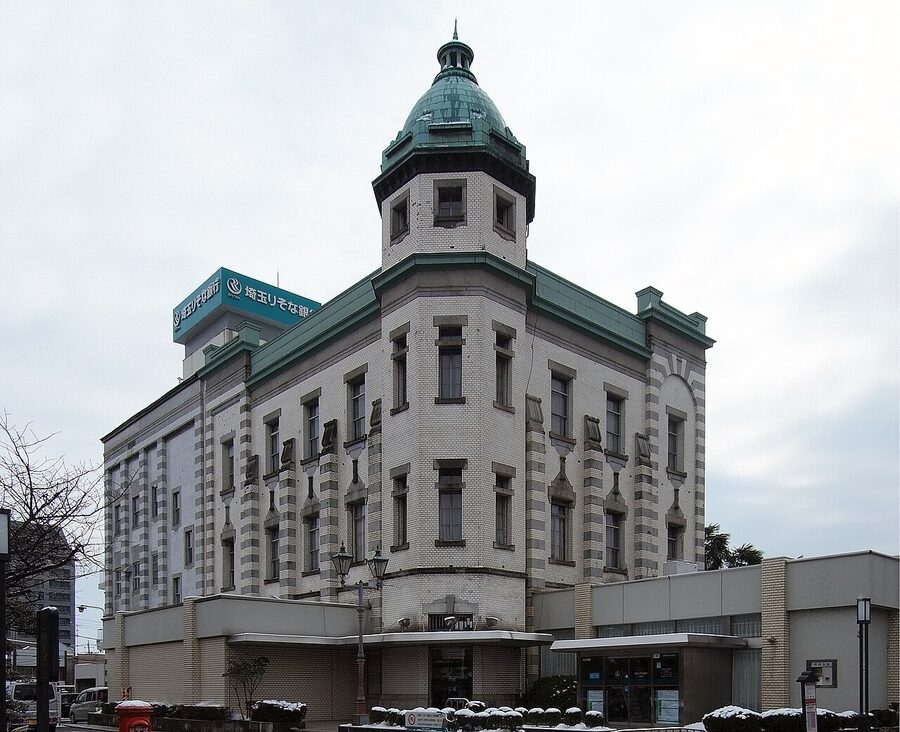
The bank did well out of the 20th century. The 85th Bank, whose first head office burned in 1893, built a new one on Ichibangai in 1918, a white Western-style block with a green dome by the architect Yasuoka Katsuya, and it is the most surprising building on the street. After a string of mergers it ended up as a branch of Saitama Resona Bank, which moved out in 2020, and since 2024 it has been a café and offices called the Resona Koedo Terrace.
After the war the old quarter emptied. Through the 1960s and 1970s the kura came down one by one for flats and car parks, and there were plans to widen the road through Ichibangai. The turning point came in 1972, when the Manbun was sold for demolition and a protest campaign shamed the city into buying it, a year after the Ōsawa House had been made an Important Cultural Property.
The people who saved the rest were mostly shopkeepers. In 1983 young merchants, architects and residents set up the Kawagoe Kura no Kai, the Kura Society; in 1987 the Ichibangai shopping association formed a townscape committee with outside experts; and in 1988 that committee adopted a voluntary design code, the Machizukuri Kihan, setting out how owners should repair, rebuild and sign their shops. In 1999 about 7.8 hectares of the old town were designated a national Important Preservation District for Groups of Traditional Buildings, the same scheme that protects Shirakawa-gō.
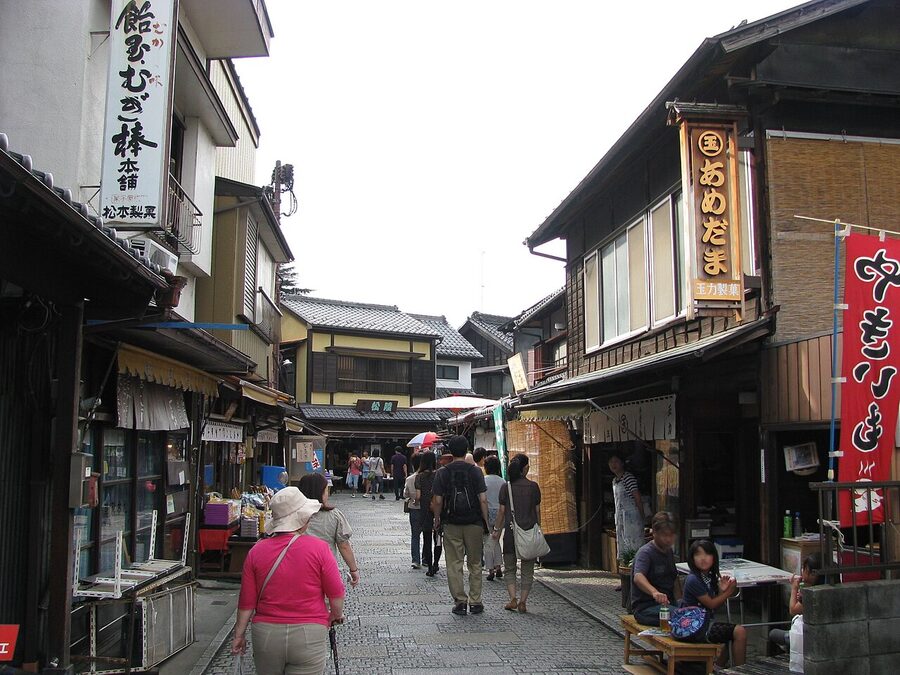
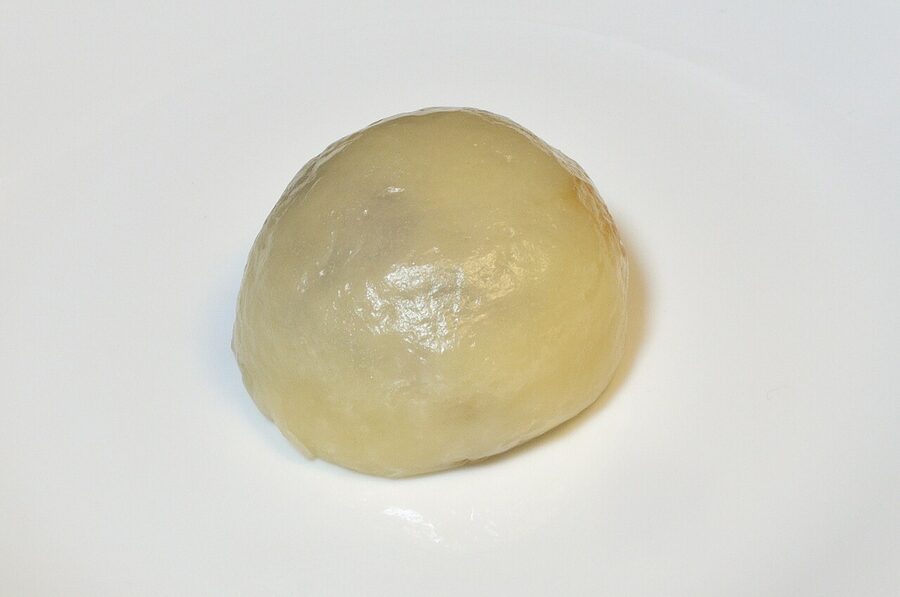
“Little Edo” as a brand came in the 1990s. The nickname is old, and there is a saying, said to date from the Edo period, that Japan has many little Kyotos but only one little Edo. But the city only started using it in earnest after the first Koedo Summit in 1996 with Tochigi and Sawara, two other towns that claim the title. Today you can drink Coedo beer, ride the Seibu Koedo limited express and eat sweet potato in every form, and the city counts several million tourist visits a year.
I am not sentimental about the branding. Ichibangai on a weekend afternoon is a queue of people eating sweet-potato soft-serve, and many of the shops inside the kura sell the same things. But I would much rather have the queue than the car park, and the buildings are there to queue in front of because the shopkeepers did the work themselves, with a code they wrote, a decade before the national government got involved.
The festival Edo gave up
On the third weekend of October the floats come out. The Kawagoe Hikawa festival grew out of Nobutsuna’s gift of 1648 and became a formal festival in 1651. Dancing stages appear in the records in 1698, and in 1842 the ten wards of the town each built a float topped with a doll, the form it has kept.
The point about these floats is that they are Edo floats. In the 18th and 19th centuries Edo’s two great festivals, the Sannō festival and the Kanda Matsuri, paraded tall wheeled floats with dolls on top through the shogun’s capital. After 1868 the new government had no interest in festivals that processed into the shogun’s castle, and telegraph and tram wires made tall floats impossible on Tokyo’s streets, so Tokyo’s festivals turned to portable shrines. Kawagoe kept the floats.
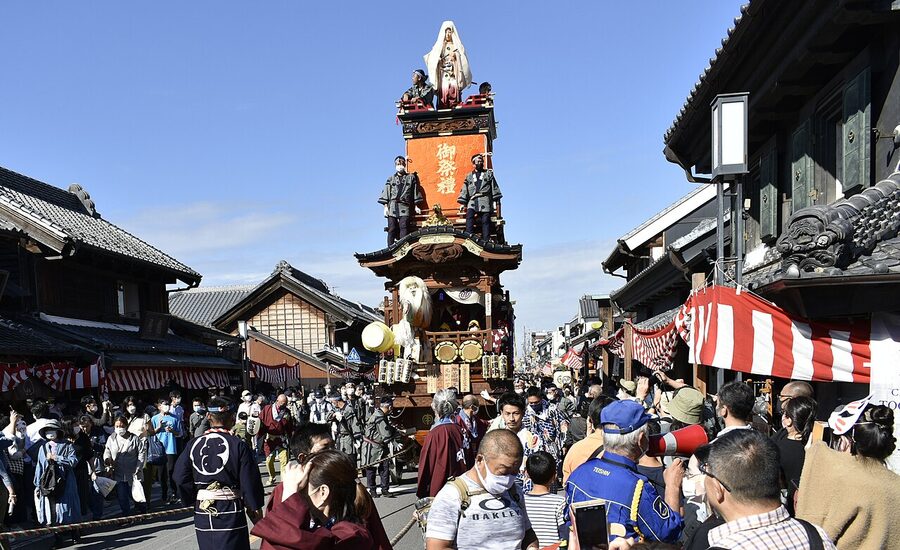
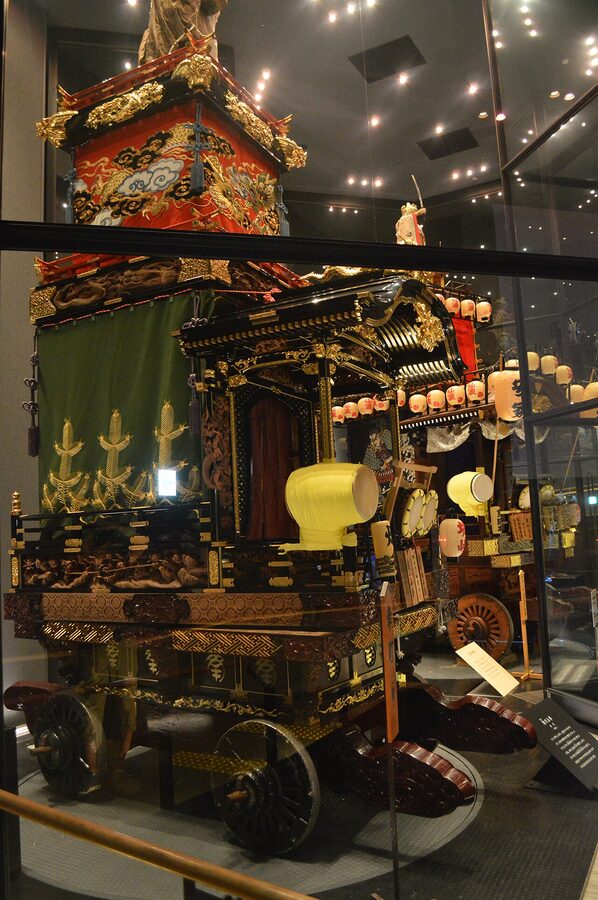
And it kept them well. Where other towns mostly bought the floats Edo no longer needed, Kawagoe commissioned new ones from the same Edo craftsmen, and several dolls are by named Edo masters such as Naka Shūei and Hara Shūgetsu. A typical float has three tiers, a band platform in the middle and a doll on top, and the whole upper part revolves, so the band can turn to face a shrine, a host’s door or another float.
There are 29 floats, and about fifteen come out in a normal year. The dolls come from myth, Noh and local history: there is a Dōkan float, a Nobutsuna float and floats for Ieyasu and Iemitsu, as well as Benkei, Urashima and the dragon god.
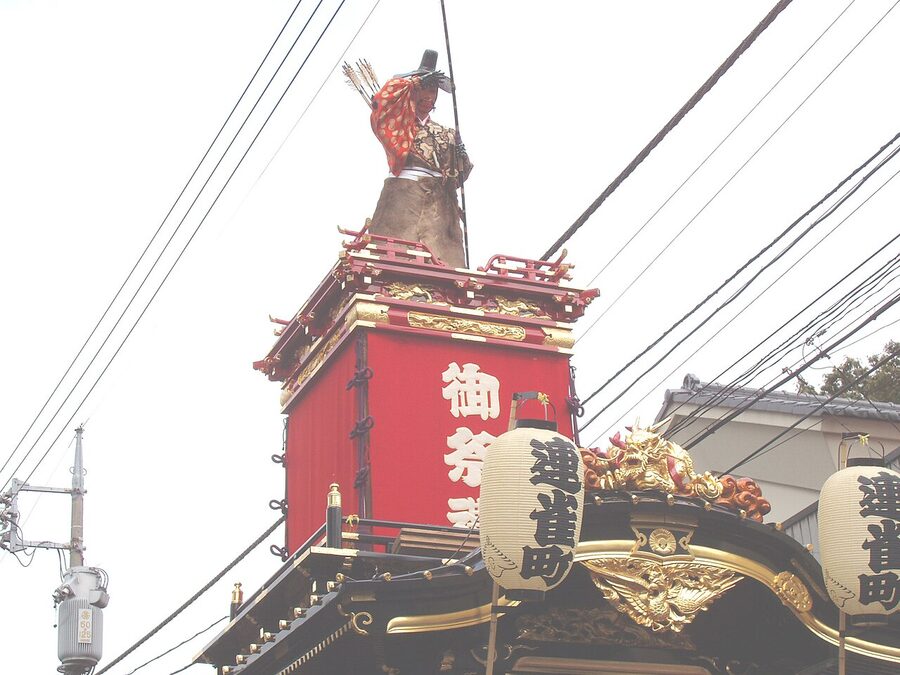
The great moment is the hikkawase. When two floats meet, they turn to face each other and the bands play at each other, flute, drums and gong, with masked dancers as a fox, a comic woman or a lion; at the big crossings after dark three or four floats may face off at once. You will be told that the band which loses its rhythm must give way. The people who run the festival say firmly that there is no winner, and that the custom began as an offering of music to the god riding in the other float.
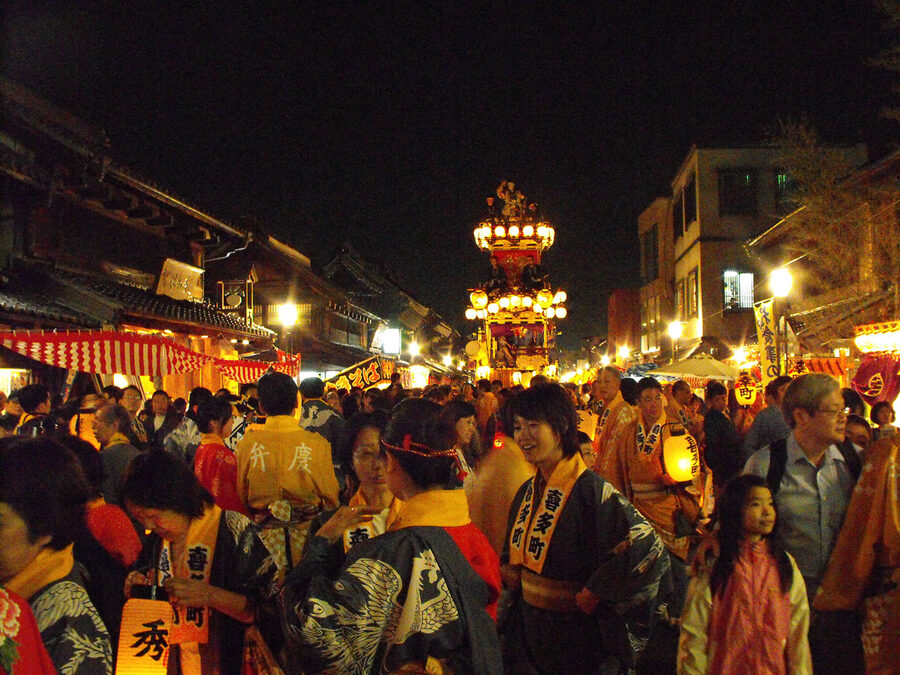
The festival was made an Important Intangible Folk Cultural Property in 2005 and was inscribed by UNESCO in 2016 with 32 other Japanese float festivals, including the Takayama Matsuri. Since 1997 it has been held on the third Saturday and Sunday of October rather than on 14 and 15 October; in 2026 it fell on the 17th and 18th, and the organisers counted about 666,000 visitors. It sits a long way down most lists of Japan’s greatest festivals, and I think it deserves better.
Where to see Kawagoe today
Kawagoe is an easy day trip from Tokyo and a slightly frustrating one, because the sights are spread along a two-kilometre north-south line and the station most people arrive at is at the wrong end. My order is Kita-in in the morning, before the coach parties, then north up Ichibangai to the bell, the festival museum and Kashiya Yokochō, then east to the castle palace and Hikawa Shrine, finishing at Tōmyō-ji if you care about the battle. All prices and hours below were checked on the official sites of the temple, the city and the railways on 16 November 2026.
If you plan to see the city’s museums, buy a combined ticket at the first one. The three-site ticket covers the City Museum, the Honmaru Goten and the City Art Museum for ¥370; the four-site ticket adds the Festival Museum for ¥600.
Getting there from Ikebukuro and Shinjuku
From Ikebukuro, the Tōbu Tōjō line runs to Kawagoe and Kawagoeshi stations in about thirty minutes by express, for ¥490 to Kawagoe. Tōbu also sells the Koedo Kawagoe Coupon, a discounted return with a one-day pass for Tōbu’s sightseeing and local buses, for ¥1,110 from Ikebukuro, and it pays for itself if you take the bus twice.
From Shinjuku, the Seibu Shinjuku line runs from Seibu-Shinjuku to Hon-Kawagoe, the closest station to the old town, about fifteen minutes’ walk from both Kita-in and the bell. The Koedo limited express, with reserved seats and a surcharge, takes about 45 minutes; ordinary expresses about an hour. JR Saikyō line trains also run through from Shinjuku to Kawagoe Station, more slowly.
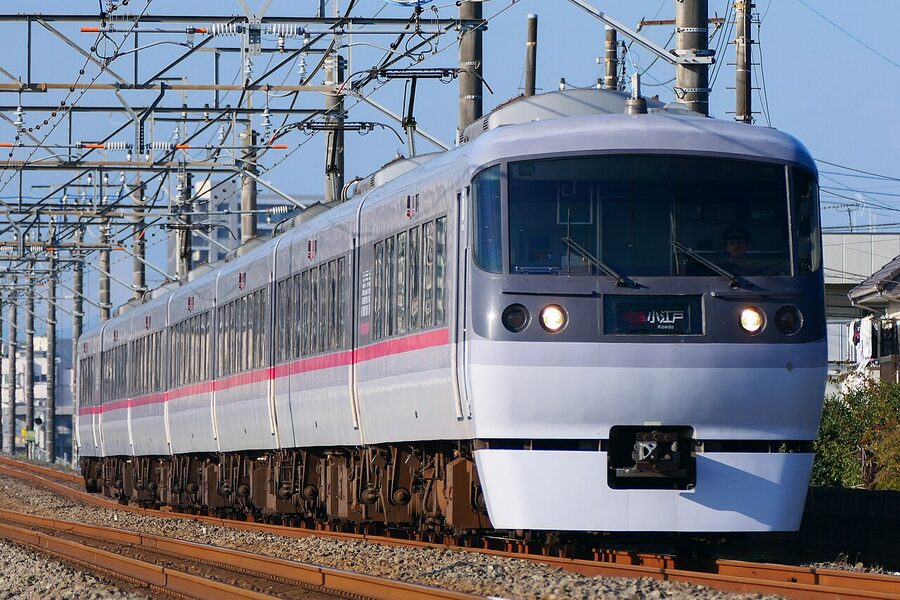
From Kawagoe Station it is about two kilometres north to Fuda-no-tsuji, a dull walk up a long shopping street. The Tōbu buses via Kura-no-machi, the Tōbu Koedo Meisho Meguri sightseeing bus and Eagle Bus’s Koedo loop bus all stop near Ichibangai, the museum and the shrine.
Kawagoe Castle Honmaru Goten
What survives of Naritsune’s 1848 palace is the entrance hall, with its great Chinese-style gable over the porch, and the 36-mat great hall behind it, wrapped in wide board corridors. The senior retainers’ council house, which had been sold off and rebuilt as a farmhouse in what is now Fujimino, has been brought back and set up beside it, with mannequins of retainers in conference.
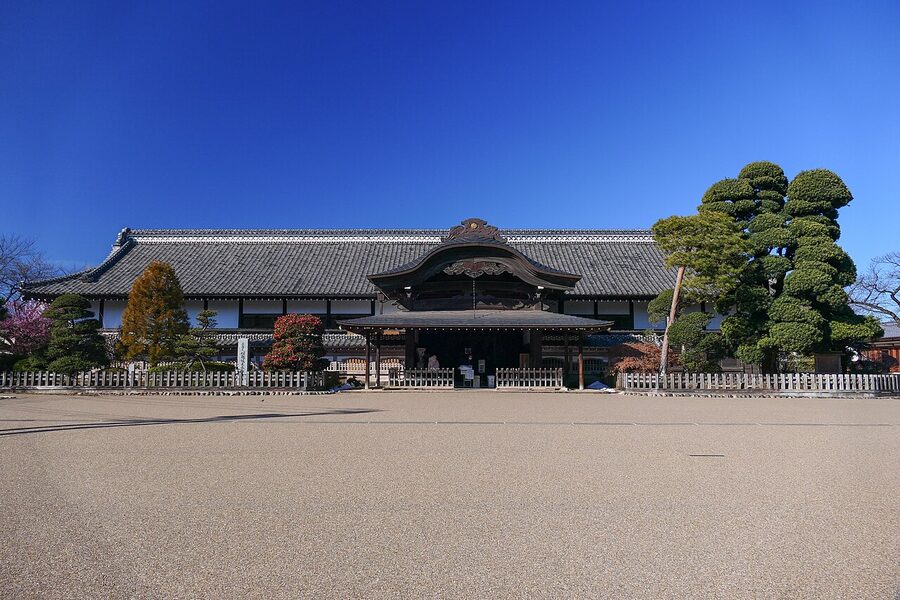
It is easy to underrate. Kawagoe and Kōchi Castle are the only two castles in Japan that keep the great hall of their main palace, and the other big castle palaces are the Ninomaru at Nijō Castle and the one at Kakegawa. It is smaller, plainer and later than Nijō, and it shows how a daimyō of the 1840s actually lived and worked, which a keep never does. Kawagoe never had a keep, so you will not find it among Japan’s twelve original castles.
The palace is open 9:00–17:00 (last entry 16:30), closed on Mondays (Tuesday if Monday is a holiday), on the fourth Friday of the month except holidays and from 29 December to 3 January. Admission is ¥100 for adults and ¥50 for high school and university students. Look at the window sills at the entrance, which have two grooves instead of the usual three; the restorers of 2008–2011 found they were original and still cannot explain them.
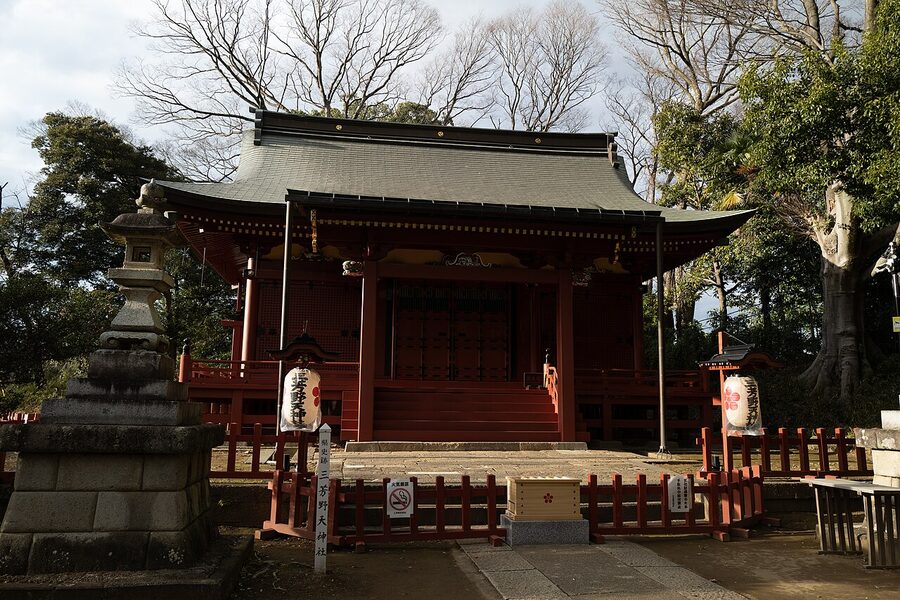
Five minutes’ walk south-west, behind the prefectural high school, a low wooded mound with two small shrines on top is all that is left of the Fujimi turret. West of the palace the city has restored a stretch of the Naka-no-mon moat, one of Nobutsuna’s devices for slowing attackers from the west gate. The Kawagoe City Museum stands on the site of the Ninomaru, two minutes from the palace, with galleries on the castle, the river trade and the fire and full-size models of the stages of building a kura; it keeps the same hours, costs ¥200, and has the mist well in its forecourt.
Kita-in and the Senba Tōshō-gū
The precinct is free, and the ticket, ¥400 for adults and ¥200 for children, covers the reception hall with the birth room, the study, the kitchens, the gardens and the Five Hundred Rakan. From 1 March to 23 November the buildings are open 9:00–16:30 on weekdays and 9:00–16:50 on Sundays and holidays; from 24 November to the end of February, 9:00–16:00 and 9:00–16:20. Ticket sales stop thirty minutes before closing.
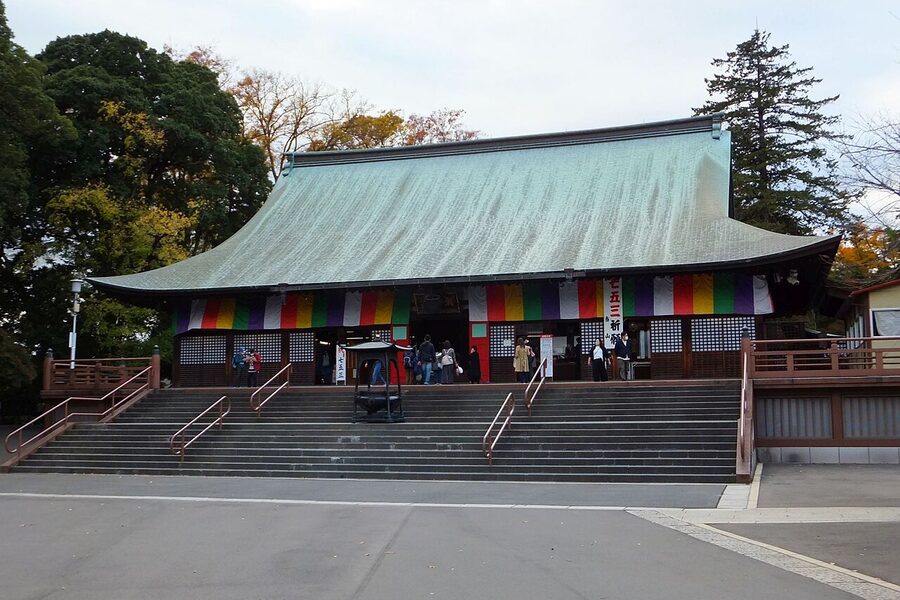
Note the closures: the buildings cannot be visited from 25 December to 8 January, on the afternoon of 2 February and on 3 February, or from 2 to 4 April. Tenkai’s gate of 1632, the oldest building on the site, is under conservation until about September 2027, so you will be directed round it. The temple is about fifteen minutes’ walk from Hon-Kawagoe and twenty from Kawagoe Station.
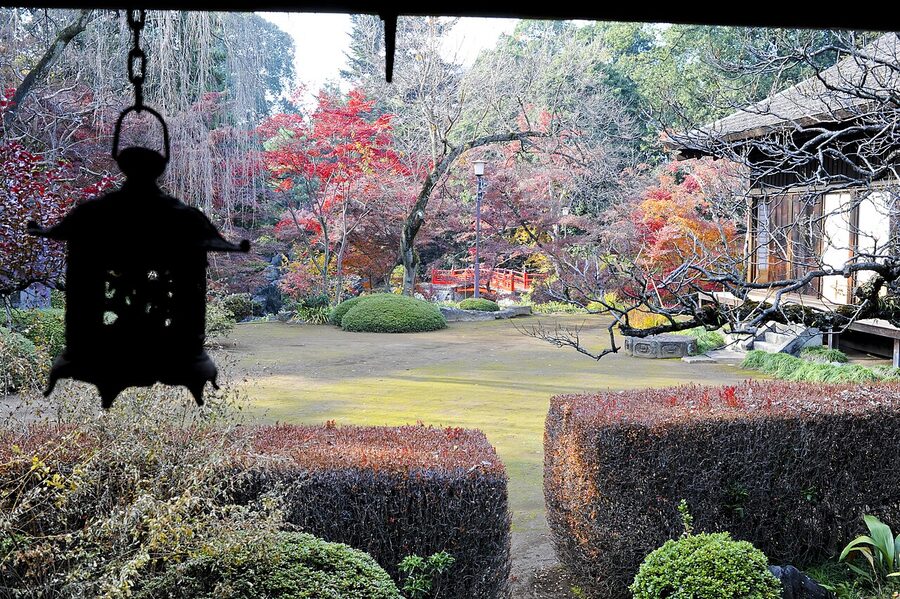
Leave time for the Senba Tōshō-gū, up the steps on the mound to the south, and for the stupas of the Matsudaira lords behind the main hall.
Ichibangai, the bell and the Festival Museum
Ichibangai runs about 430 metres from the Naka-chō crossing to Fuda-no-tsuji, with roughly seventy shops; the Ōsawa House and the Resona Koedo Terrace are both on it, and Kanetsuki-dōri, the lane to the bell, runs off it to the east. The Kurazukuri Museum is still closed, and its re-opening date has slipped before, so check before you plan around it.
The Kawagoe Festival Museum, a minute’s walk from the Fuda-no-tsuji bus stop, keeps two real floats on display in rotation and shows film of the festival on a six-metre screen. It is open 9:30–18:30 from April to September and 9:30–17:30 from October to March (last entry thirty minutes before), and closed on the second and fourth Wednesdays and from 29 December to 1 January. Admission is ¥300 for adults and ¥100 for children.
Kashiya Yokochō is a couple of minutes north-west. Go early in the day, buy a stick of fu-gashi, the long brown wheat-gluten sweet the lane is known for, and don’t expect it to taste of much. Be at the foot of the bell tower at noon or at three to hear it strike.
Kawagoe Hikawa Shrine
Hikawa Shrine, about 400 metres north of the castle palace, has been the town’s guardian shrine since Dōkan’s day and claims a founding in 541. Its main hall was paid for by Naritsune and finished in 1849, and its plain-wood walls are covered in carving by the Edo sculptors Shimamura Genzō and Iida Iwajirō. In May 2026 the national Council for Cultural Affairs recommended it for designation as an Important Cultural Property, calling it the high point of decorated shrine building in the late Edo period.
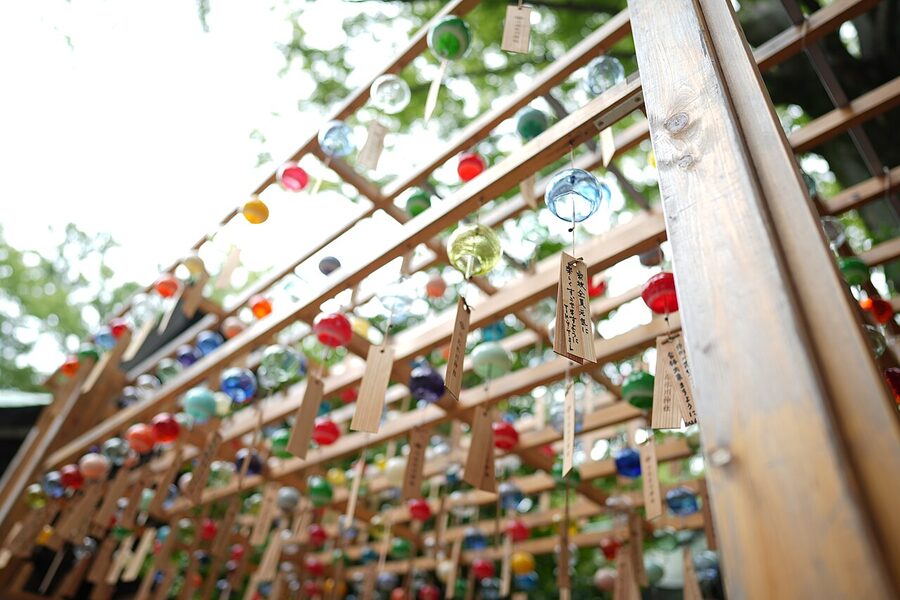
Walk round the back to see the carving. The panels along the base of the main hall show the dolls of the festival floats as they were in the 1840s, which ties shrine and festival together as no other building does. The great wooden torii of 1991 carries a nameplate written by Katsu Kaishū, and the small Yasaka shrine in the precinct, dedicated to the same deity as Kyoto’s Yasaka Shrine, is said to be the Tōshō-gū that Iemitsu built in the Ninomaru of Edo Castle in 1637, moved here by way of the castle in 1872.
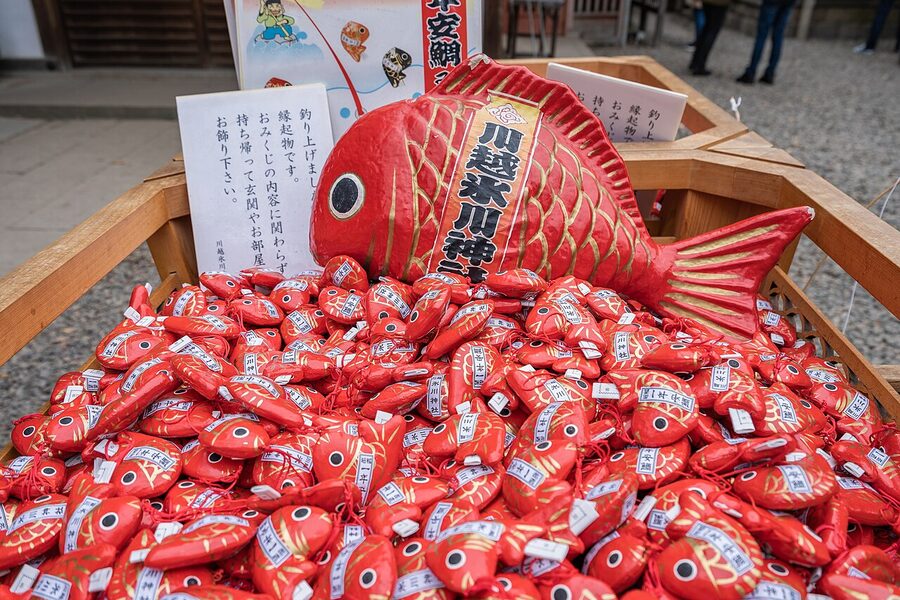
Entry is free. The shrine holds its annual grand rite on 14 October whatever the day of the week, a few days before the floats come out.
Tōmyō-ji and the battlefield
Tōmyō-ji is a small temple in Shita-machi, a short walk north of Fuda-no-tsuji, and the only place in Kawagoe that remembers the battle of 1546 on the ground. The monument stands by an old ginkgo beside a mound said to hold the dead, and the grounds are free. Combine it with Yōju-in, near Kashiya Yokochō, for Shigeyori’s grave and the lane where the 1893 fire began.
When to go
The best day of the year is the festival Saturday, the third Saturday of October, which in 2027 is 16 October. The second best is late March or early April, when the cherries are out along the Shingashi behind Hikawa Shrine and the boats run. Weekday mornings are quiet; weekend afternoons on Ichibangai are not. Whatever the season, aim to be under the bell when it strikes.
For the bigger picture of the centuries this town lived through, start with Japan through the ages. Then come back to Ichibangai at dusk, when the black fronts go darker than the sky, and think about the dyer by Yōju-in, sweeping warm ash into its store on a windy March night. Without that mistake there would be no Little Edo, only another Saitama town with a very good temple. Walk to the bell and wait for six.