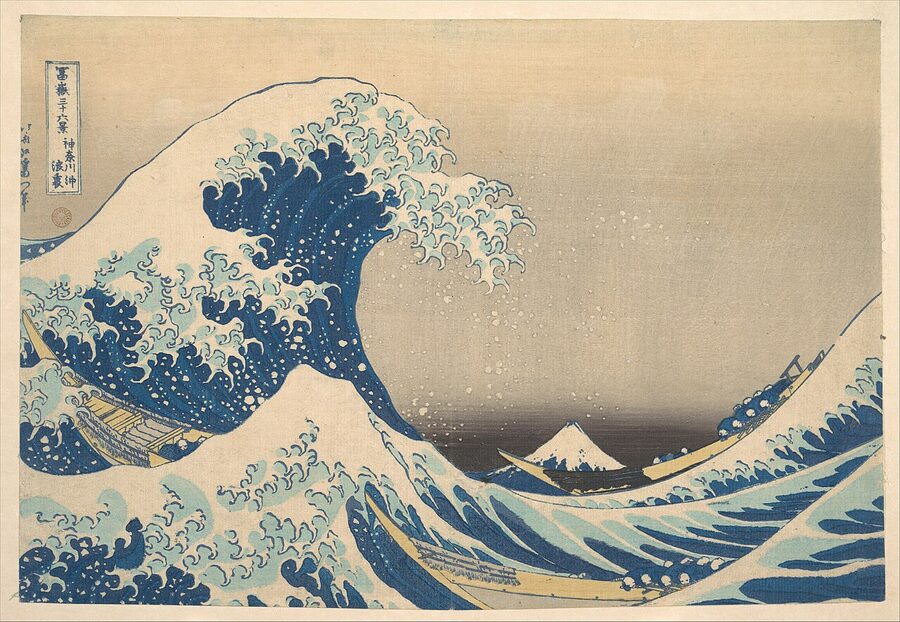
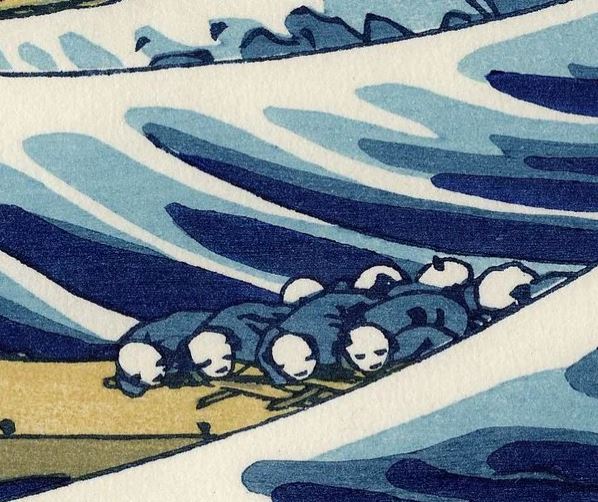
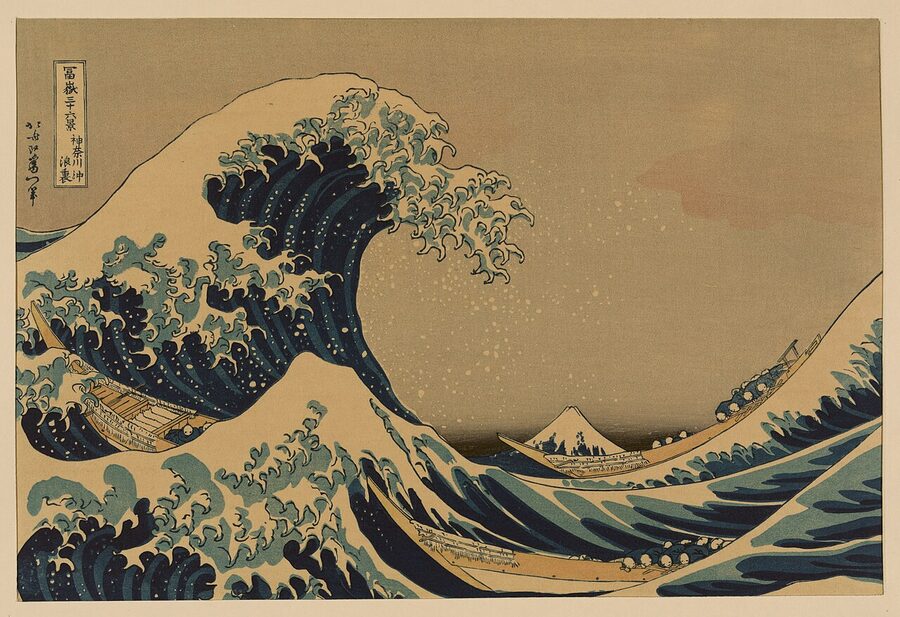
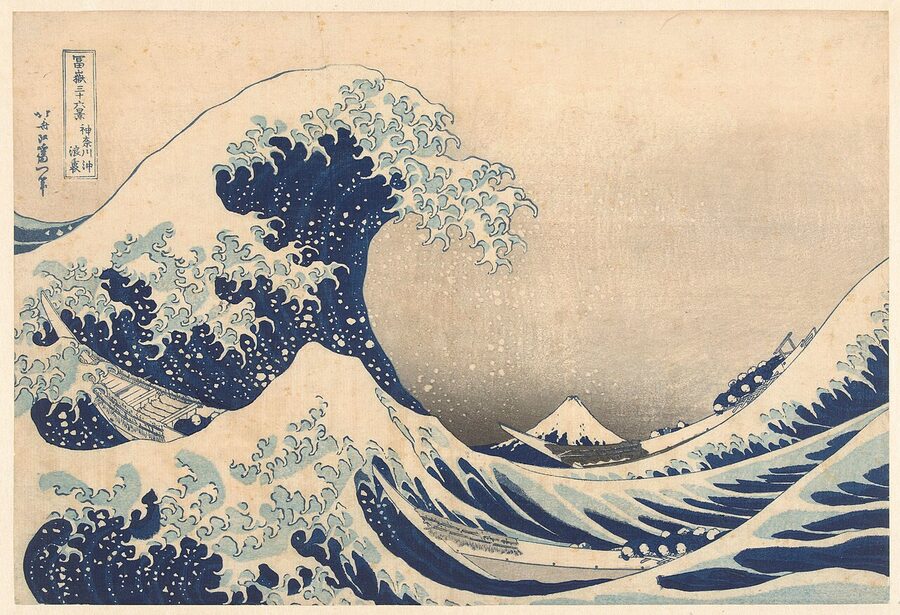
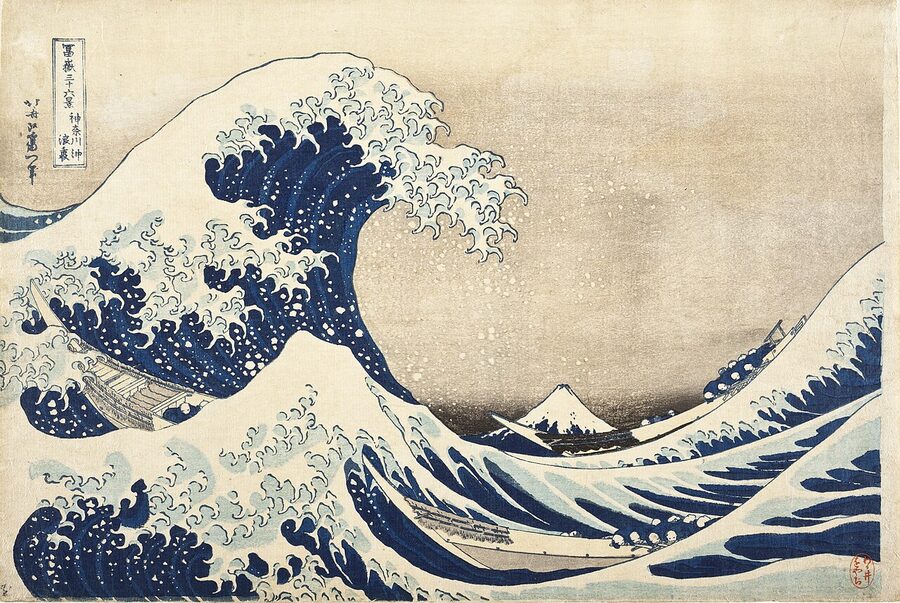
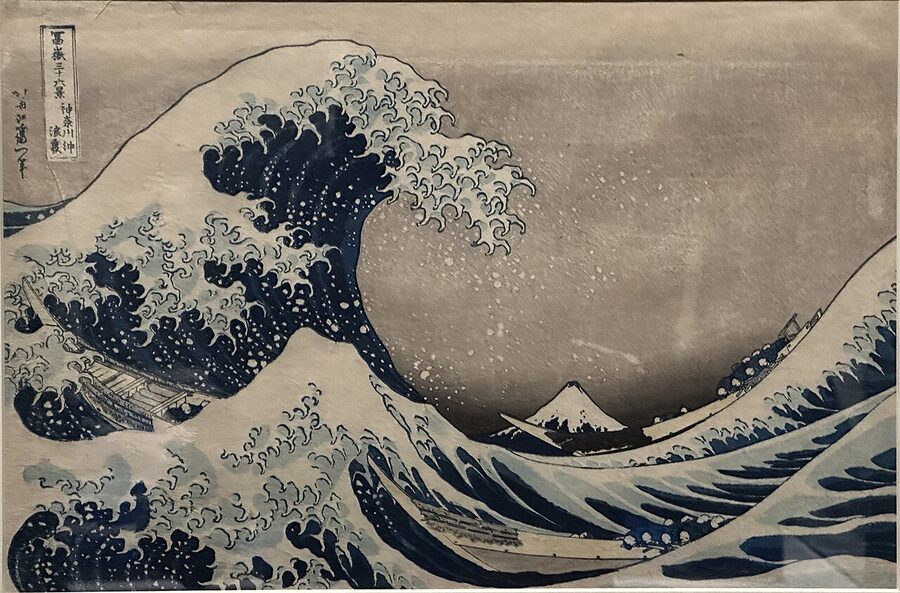
Somewhere between twenty and thirty men are in Hokusai’s Great Wave, depending on how you count heads in the spray, and not one of them is looking at the wave. They are folded over their oars in three long boats, each man a blue hunch with a white face no bigger than a grain of rice, and the claw of water above them is about to come down on the lot. I have watched people stand in front of this print in more than one museum, and almost nobody looks at the boatmen first.
That seems a shame to me, because the men are the point. They are working fish carriers on a bad morning in Edo Bay, the mountain behind them is shrunk to the size of a thumbnail, and the picture they are in was sold over a counter for about the price of a bowl of noodles. Two centuries later it is on the back of every thousand-yen note in Japan, which is a better joke than anything Hokusai put in the print himself.
In This Article
- Thirty men, heads down
- Where “off Kanagawa” is
- Drawn by Iitsu, sold by Eijudō
- A blue from Berlin
- Thousands of originals, about a hundred left
- From a bowl of soba to an auction room
- Thirty years of waves
- Claws, according to Vincent
- On the thousand-yen note
- Where to see the Great Wave today
- Sumida Hokusai Museum, Ryōgoku
- Tokyo National Museum, Ueno
- Kanagawa Prefectural Museum of Cultural History, Yokohama
- Kanagawa-juku on the old Tōkaidō
- Honmoku’s lost shoreline
- Umihotaru, in the middle of the bay
- Faces down
Thirty men, heads down
The boats are oshiokuri-bune (押送船), and in their day they were the fastest things on the bay. Japanese dictionaries describe a hull about 12 metres long and 2.5 metres wide, with a high, sharp bow for cutting through waves, seven sculling oars, and a sail for when the wind was kind. Their job was to rush fresh fish from the fishing ports around the bay to the great fish market at Nihonbashi, in the shogun‘s capital, before it spoiled. In the last decades of the Edo era the Tokugawa shogunate‘s magistrates at Uraga borrowed the same type as patrol and messenger boats, because nothing else they had was quicker.
Hokusai was not drawing a shipwright’s plan. He gives each boat about eight rowers bent over their oars and a couple of men crouched in the bow, which comes to roughly thirty men, of whom about twenty-two can actually be picked out. Japanese commentators note that some of the boat details are simply wrong. What he got right is the posture: every man is braced, low and still, waiting for the water to pass over rather than fighting it.
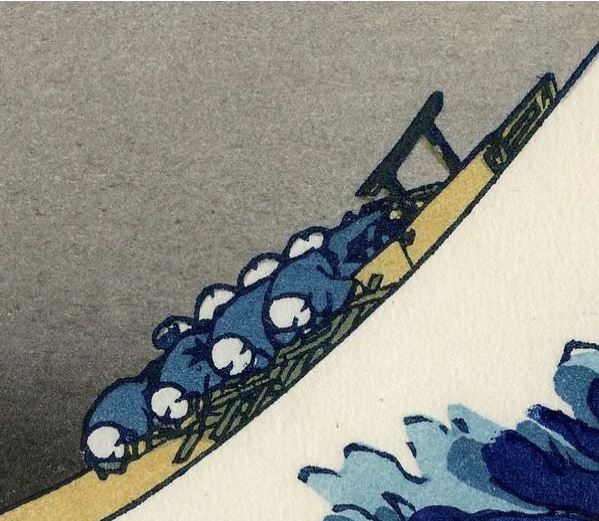
The wave itself has been measured, which tells you something about the people who write about this print. Using the boats as a scale, the researchers Cartwright and Nakamura worked out in a 2009 study that Hokusai squashed the vertical scale by about thirty per cent, and that the crest would be ten to twelve metres high in real life. That is a big wave in Tokyo Bay. It is not an impossible one.
The print is still sometimes labelled “Tsunami” in English, a habit that dies hard. Japanese sources point out that nobody read it as a tsunami until the 1960s, that no great tsunami struck the Kantō coast in Hokusai’s lifetime, and that a tsunami does not curl like this anyway: its wavelength is far too long. In 2019 a team from Oxford and Edinburgh recreated a famous North Sea freak wave in a test tank and found that the shape it made looked remarkably like Hokusai’s. I like that a laboratory took 188 years to agree with him, and that the wave it was copying, measured at the Draupner oil platform in 1995, was the first freak wave anyone had recorded properly.
Then there is the mountain. The whole series is called Thirty-six Views of Mount Fuji, and in its most famous view Fuji is the smallest thing in the picture apart from the men. It sits low in the trough between waves, white-capped, the same shape as the swell in front of it, and Japanese writers like to point out that the spray falling from the crest looks like snow falling on the peak. Hokusai has made the sacred mountain into one more wave, and the wave into a mountain.
None of this is accidental. Japanese writers describe the design as a nest of spirals, every curl of water, the swing of each boat and the slope of Fuji winding in towards the same centre, and it is easy to dismiss that as the kind of geometry critics find in anything. But Hokusai had published a drawing manual in 1812 arguing that any form could be built up from the circle and the square, with nothing more than a ruler and a compass. He was the sort of artist who would have drawn the spirals in pencil first and then hidden them.
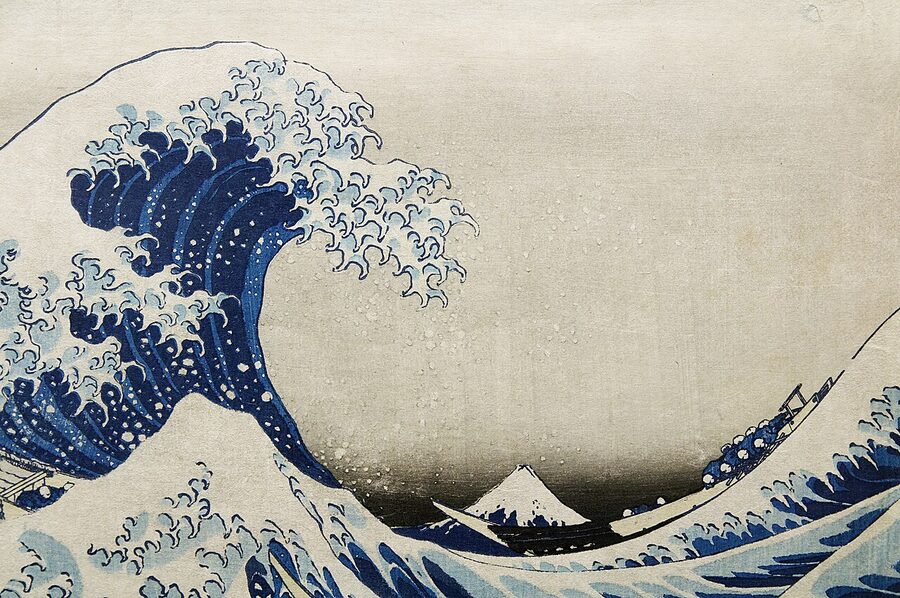
There is also the question of which way to read it. Japanese picture scrolls and books run right to left, so a Japanese eye enters at Fuji and the far boat, travels across the bay and meets the wave last. A Western eye starts on the left with the wave already in its face. The narrow, pointed bows face left, which suggests the boats are heading into the wave rather than away from it, and that changes the story from flight to nerve.
Where “off Kanagawa” is
Kanagawa in 1831 was not a prefecture. It was Kanagawa-juku, the third post station on the Tōkaidō out of Nihonbashi, a strip of inns and teahouses along a shore road in what is now Kanagawa Ward of Yokohama. Every daimyo procession heading west under sankin-kōtai came through it, and the teahouses on the bluff at Daimachi were famous for their view across the bay. The prefecture borrowed the town’s name decades later.
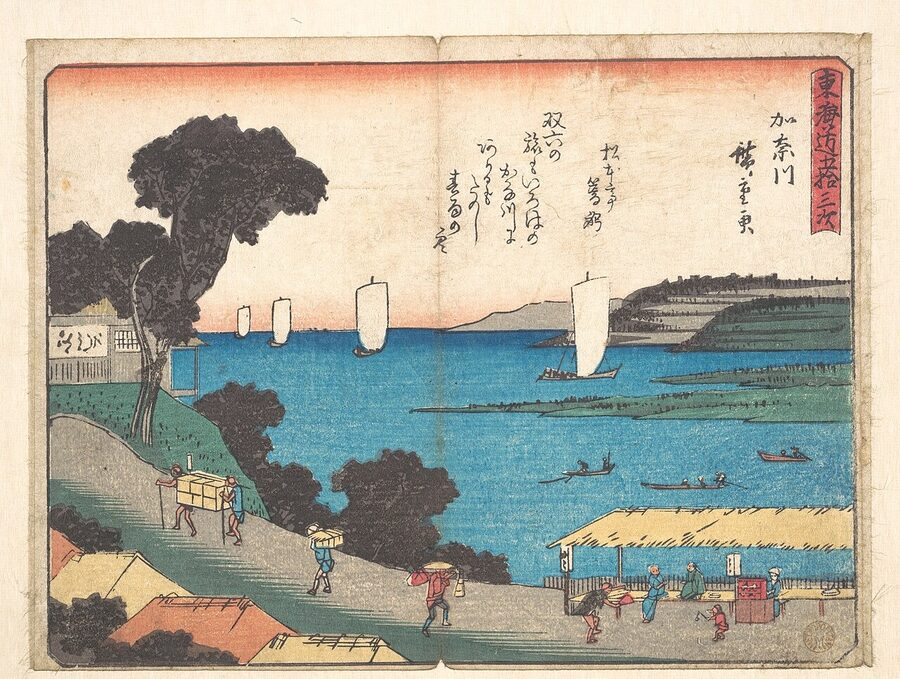
“Off Kanagawa” is less precise than it sounds, and there is no agreement on where Hokusai imagined himself. A standard Japanese dictionary puts the scene in the sea off Honmoku, the headland south of Kanagawa. Other Japanese writers note that oshiokuri-bune ran fish in from the Bōsō peninsula on the far side of the bay, and so place the viewpoint off Kisarazu, looking west across Tokyo Bay, roughly where the Umihotaru rest area of the Aqua-Line now sits in the water.
English-language accounts often follow Cartwright and Nakamura, who put the boats off present-day Kanagawa Ward with Edo to the north and Fuji to the west. They have the boats heading south, empty, to collect a cargo; Japanese sources usually have them racing a full load to market. Some Japanese writers think the whole view is invented. My own view is that Hokusai picked a title that told an Edo buyer roughly where to look and then drew what he wanted, which is what he did with most of the series.
This stretch of water had a busy century ahead of it. Perry’s ships anchored off Kanagawa in 1854, and the treaty signed that year at Yokohama village is still called the Treaty of Kanagawa (the story is in my piece on the Black Ships). When Ii Naosuke signed the commercial treaty of 1858, it named Kanagawa as a port, and the shogunate built the port across the inlet at Yokohama instead to keep foreigners off the Tōkaidō. Hokusai’s fishermen were rowing past the place where modern Japan would come ashore.
Drawn by Iitsu, sold by Eijudō
Look at the top left corner and you will find a narrow cartouche with the title in three lines: Fugaku sanjūrokkei, Kanagawa-oki, nami-ura. The last part means “under the wave” or “behind the wave”, so the real title is something like Under the Wave off Kanagawa. “The Great Wave” is a Western nickname, and Japanese speakers usually just say Nami-ura.
Beside it is the signature, Hokusai aratame Iitsu hitsu, “from the brush of Iitsu, formerly Hokusai”. By 1831 he had been using the name Iitsu for about a decade and was in his early seventies, but “Hokusai” was what buyers recognised, so the publisher kept it on the print. His habit of changing names, and the long, chaotic life behind them, belong to my article on Hokusai himself; here the signature is mostly a piece of marketing.
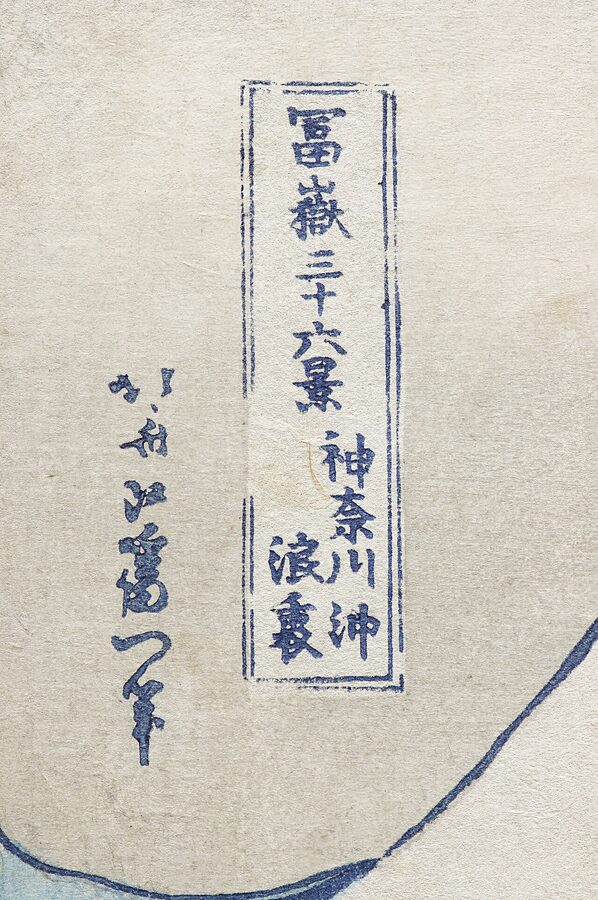
The publisher was Nishimuraya Yohachi, whose house name was Eijudō, one of the big commercial print houses of Edo. In the system that produced ukiyo-e, the publisher put up the money, hired the designer, the carvers and the printers, owned the blocks and sold the sheets from his shop. The carvers and printers who made the Great Wave are not named anywhere on it, and as far as I know nobody has ever identified them. I find that the strangest fact about the most famous print in the world, and it is why woodblock printing should probably have made my list of Japan’s greatest crafts.
The series was announced like a magazine. At the New Year of 1831 Eijudō published a short illustrated novel by Ryūtei Tanehiko, and in its back pages it advertised a new set of Fuji views by “Iitsu, formerly Hokusai”, printed in blue, one view to a sheet, to be carved and issued one after another. As the advertisement is usually quoted, it even promised that the series might run past a hundred if the public wanted it. The public did, though not to a hundred: the thirty-six views became forty-six.
Japanese collectors still group the Great Wave with Red Fuji (Gaifū kaisei) and Storm below the Summit (Sanka hakuu) as the three masterpieces of the set, and the block wear visible in late impressions tells you it was a best seller from the start.
The making is worth picturing, because it explains why there is no “original” in the sense most people mean. Hokusai drew the design on thin paper, which was pasted face down on a block of mountain cherry, and the carver cut through his drawing to make the key block, destroying it in the process. Proofs from that block were used to mark up the colour blocks, one for each colour, and the printer then laid damp paper on each block in turn and rubbed it with a baren, a pad of bamboo leaf over coiled cord. The famous gradation in the sky was done by wiping the block by hand before each pull.
So the drawing went under the knife, and what survives are the sheets. Every impression pulled from Eijudō’s blocks in the 1830s is an original print, in exactly the same sense as every other. Some are earlier and better than others, which is where the money comes in, but you will never see “the” Great Wave, and nor did anyone in Edo.
A blue from Berlin
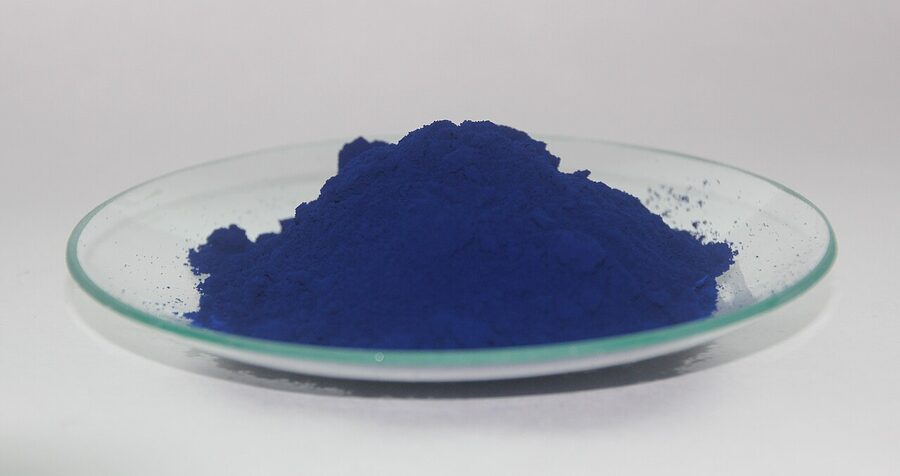
The other thing Eijudō was selling was a colour. Prussian blue was made by accident in Berlin early in the 18th century, the first modern synthetic pigment, and it reached Japan through Dutch and Chinese traders at Nagasaki, the one window that sakoku left open. The Japanese called it bero-ai (ベロ藍), “Berlin indigo”, the Berurin worn down to bero in the mouths of Edo dealers. Some of it came in through the Dutch factory on Dejima, and from about 1829 larger and cheaper supplies made it practical for printmakers.
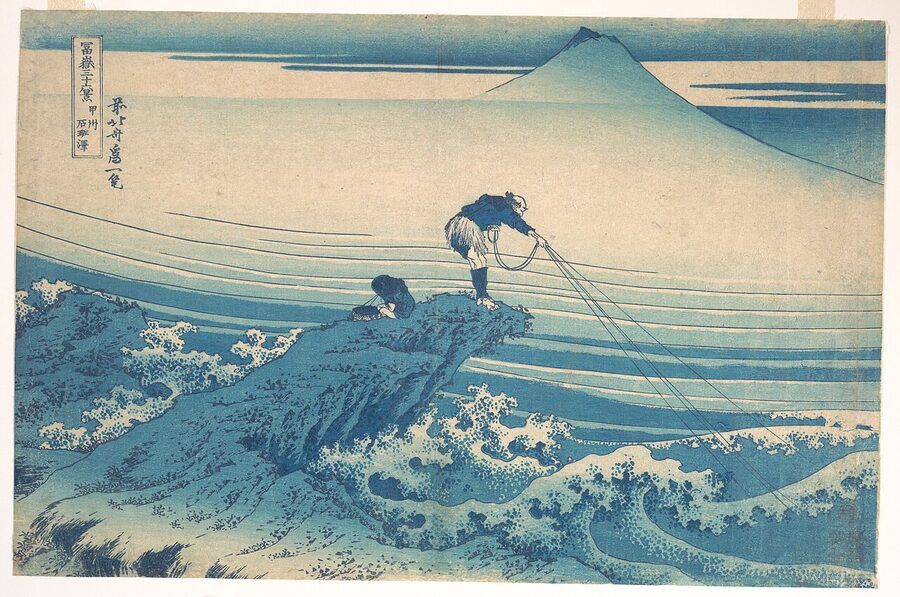
The first Edo print to use it is usually credited to Keisai Eisen in 1830, but Hokusai and his publisher built a whole series on it. Some early designs, Kajikazawa among them, were first printed in blue alone, a style called aizuri. The Kanagawa Prefectural Museum of Cultural History points out that thirty-six of the forty-six designs even have their outlines printed in blue instead of the usual black; the ten added later went back to black ink.
In the Great Wave the blue does most of the work, but not all of it. Scientific analysis of an impression found that the lightest blue is diluted Prussian blue, the middle tone is the same pigment printed denser, and the darkest blue in the curl of the wave is Prussian blue mixed with indigo, which deepens it without dulling it. Around that sit a grey for the sky and the shading behind Fuji, a pale yellow for the boats, and in good impressions a pink cloud near the top of the sky that rarely survives in full.
Thousands of originals, about a hundred left
Nobody wrote down the print run. The British Museum’s estimate, often quoted in Japanese sources, is that five to eight thousand sheets were pulled while the design was in demand. English-language accounts tend to say about a thousand for the first run and perhaps eight thousand in total, and the late impressions show the kind of block wear you would expect from that sort of use.
How many survive depends on who is counting and what they count. Japanese sources usually say about a hundred, with perhaps twenty or thirty still capable of turning up on the market. One census published in 2022 counted 113 early impressions, with the largest group (35) in American museums, and an auction house catalogue in 2025 gave about 130. I would trust the order of magnitude and not the last digit.
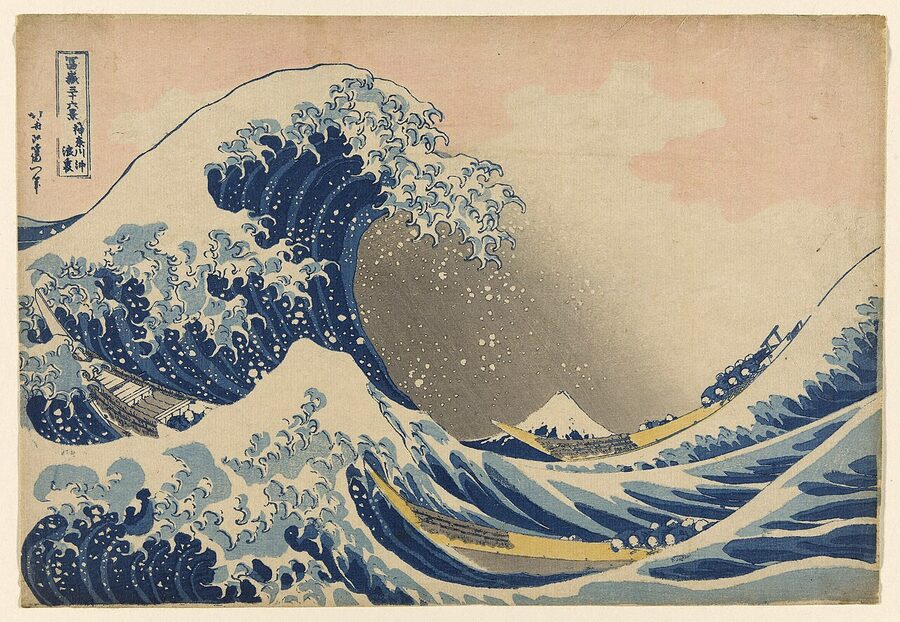
Telling an early impression from a late one is a game with fairly clear rules. The thinnest lines on the key block went first, so the frame around the title cartouche, and especially its outer left line, is the first thing to check: crisp in early pulls, broken in later ones. The pink cloud and the yellow of the boats were printed with fugitive colours that fade in light, and some later printings left them out altogether. Later sheets also tend to show duller, broken outlines, and some were printed from blocks that had been patched or recut.
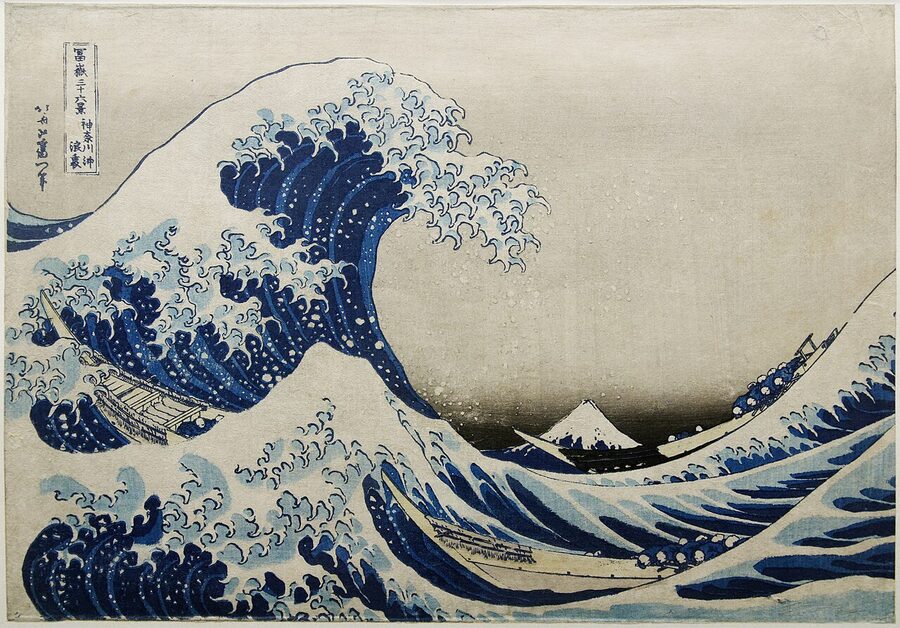
Light damage complicates all of this. Edo printers used colours that were never meant to hang on a gallery wall for months, and the pinks and greys of many sheets have turned buff or brown. This is why museums rotate the print and show it for a few weeks at a time, and why the one you travel to see may not be on the wall when you get there.
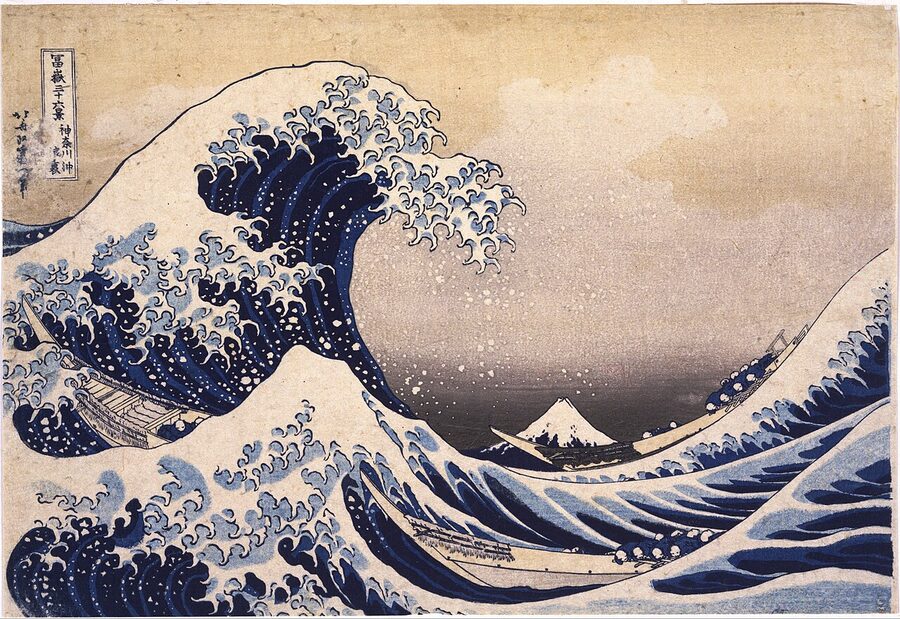
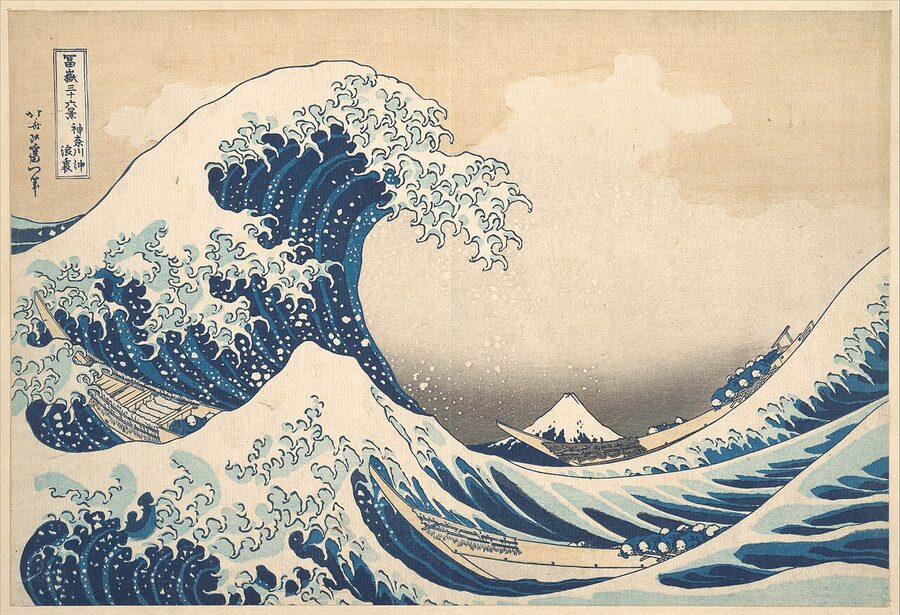
Then there are reproductions, which are a different thing again. From the late 19th century onwards Japanese workshops recut the design on new blocks and printed it by hand for the export and souvenir trade, and the best of them are very good. They are not impressions of Hokusai’s blocks, though, and a recut can usually be spotted by comparing the lines and solid areas against a known early sheet.
From a bowl of soba to an auction room
The figure usually quoted for a single colour print in the Edo period is about sixteen mon, which was roughly what a bowl of plain kake-soba cost; some writers say two bowls. I know of no shop record for this design in particular, but nothing suggests Eijudō charged a premium. It was a mass-market product made for townspeople, and the fact that it sold in thousands is exactly why the blocks wore out.
What it costs now depends on the same things that separate good impressions from bad. In 2002 a complete set of the series was sold in Paris, and in 2003 a single impression from the Huguette Berès collection went for 23,000 euros. In March 2021 Christie’s in New York sold one for about ¥170 million, more than ten times its low estimate, and in March 2023 another went for 2.76 million dollars after six bidders fought over it for thirteen minutes.
In November 2025 an impression from the collection of the Okada Museum of Art in Hakone sold at Sotheby’s in Hong Kong for about 2.8 million dollars, nearly three times its low estimate, in a sale reported as part of settling a long-running debt. Each of those buyers was paying, in effect, for the condition of the cartouche lines and the survival of a pink cloud. I find that more interesting than the price itself.
Thirty years of waves
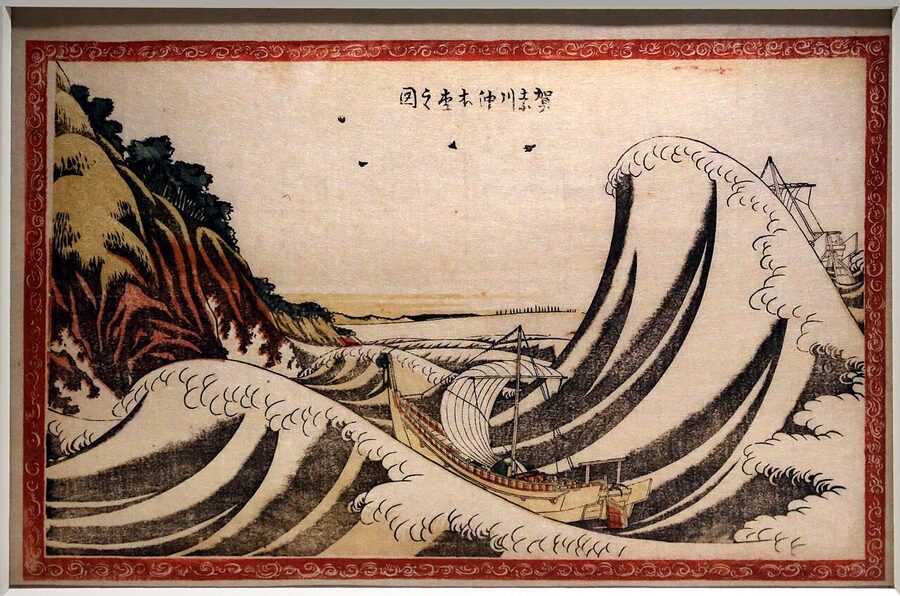
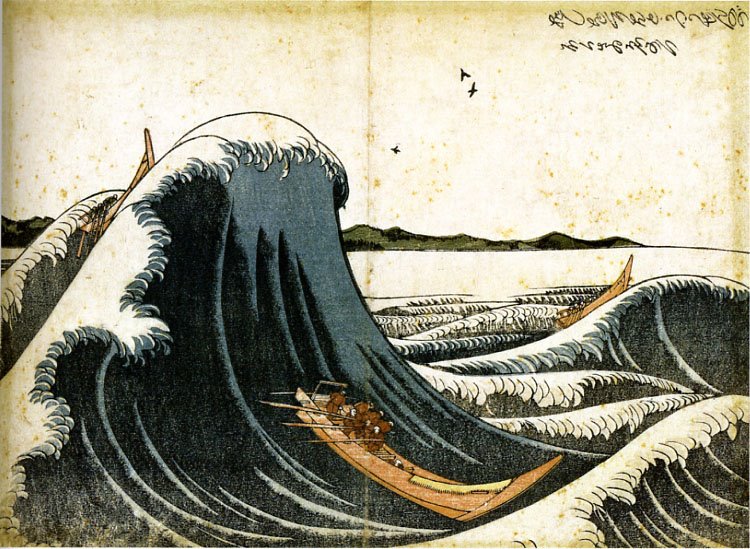
Hokusai did not arrive at this wave in one go. Around the first decade of the 19th century, sources variously dating it between about 1803 and 1807, he made a small print called Kanagawa-oki Honmoku no zu (賀奈川沖本杢之図), a view of the sea off Honmoku. It belongs to a set of Western-style pictures with framed borders and titles in hiragana written sideways to look like European lettering, and it already has a big wave, a ship and a cliff.
A companion print of about the same years, Oshiokuri hatō tsūsen no zu, shows one of the same fast fish boats climbing a wave. Here the wave is a solid green-black wall with white crests, and the boat is close enough to show the crew. The idea of the Great Wave is all there, but the wave has not yet grown claws.
He was also looking at Japanese painting. The Rinpa artists Ogata Kōrin and Sakai Hōitsu had painted stylised, curling waves for screens and fans, and one illustration in Hōitsu’s picture book of 1817 has a wave strikingly close to the one Hokusai printed fourteen years later. The Great Wave is usually sold as East meets West; it is just as much Edo painting meeting Edo printing.
The European influence is not a fancy of Western critics. Hokusai learned about perspective in the 1790s and 1800s from Japanese painters such as Shiba Kōkan, who were studying Dutch engravings that had come in through Dejima, and the Great Wave uses a low horizon and a far vanishing point in a way no earlier Japanese print does. The writer Richard Lane once suggested that part of what Western viewers love in Hokusai is a hidden kinship with their own tradition. I think he was right, and I think Hokusai would have taken it as a compliment.
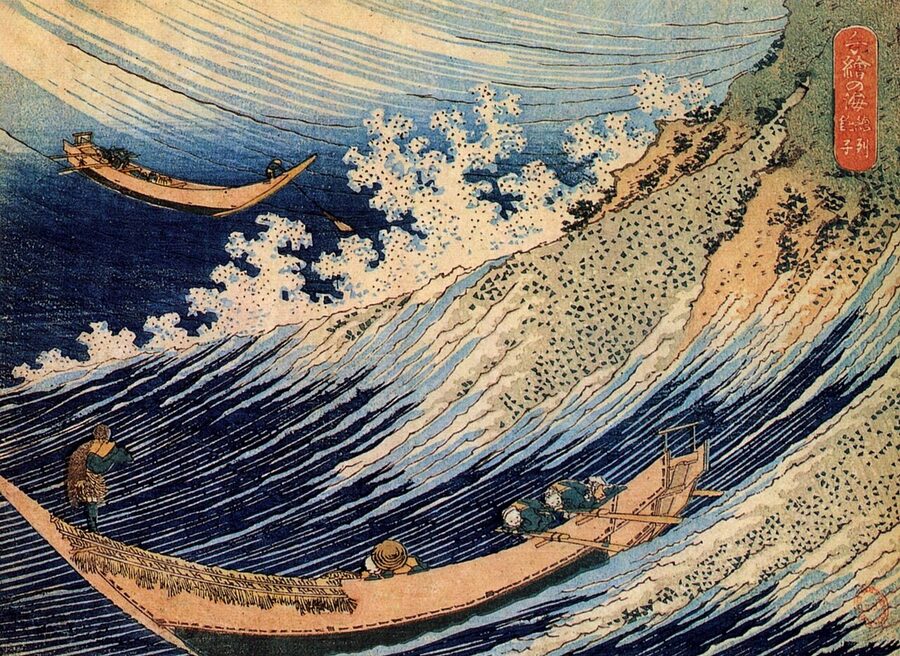
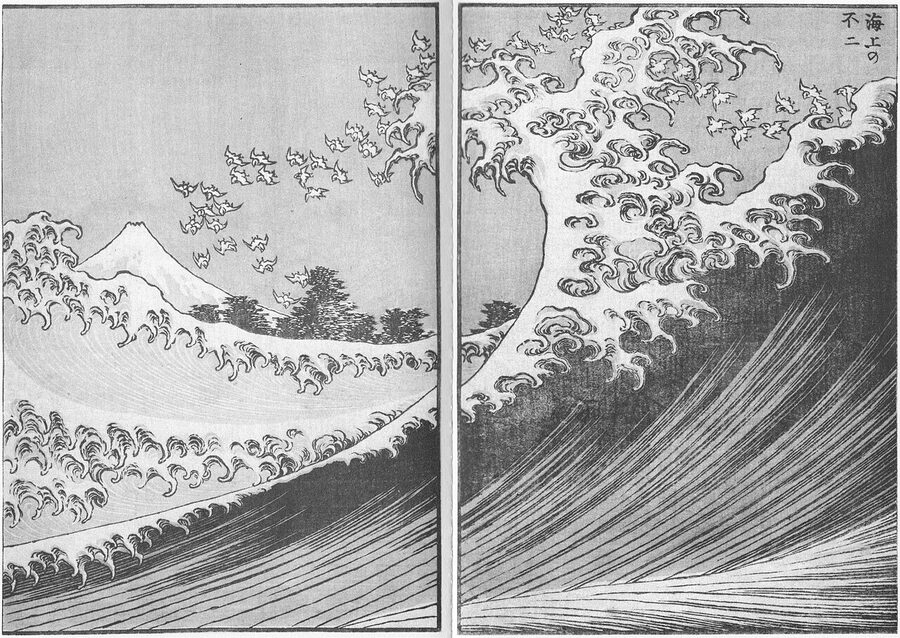
After the Great Wave he kept going. In the series Chie no umi (Oceans of Wisdom), from about 1832 to 1834, the sea fills whole sheets, and in the second volume of his picture book One Hundred Views of Mount Fuji, published in 1835, he drew the same wave again with no boats and no men. The spray breaks off the crest and turns into a flock of birds.
The last waves came at the very end. In 1845, in his mid-eighties, Hokusai painted a pair of wave panels, a male wave and a female wave, for the ceiling of a festival float in the town of Obuse in the mountains of Shinano, where a wealthy patron had given him a studio. They are not prints, the claws have turned into seething whirlpools, and you have to lie on your back in your imagination to see them as intended. They are still in Obuse, in the Hokusai-kan museum, and the story of how he got there belongs to the Hokusai article.
Claws, according to Vincent
The print reached Europe late and then all at once. A few works from Hokusai’s circle had already gone to Leiden through Dejima in the 1820s, but the flood came after Japan opened its ports in the wake of the Black Ships, and especially after 1868, when the Meiji Restoration left a great deal of old art cheap and unwanted at home. In the Meiji era Japanese prints were sold in Paris by the trunk.
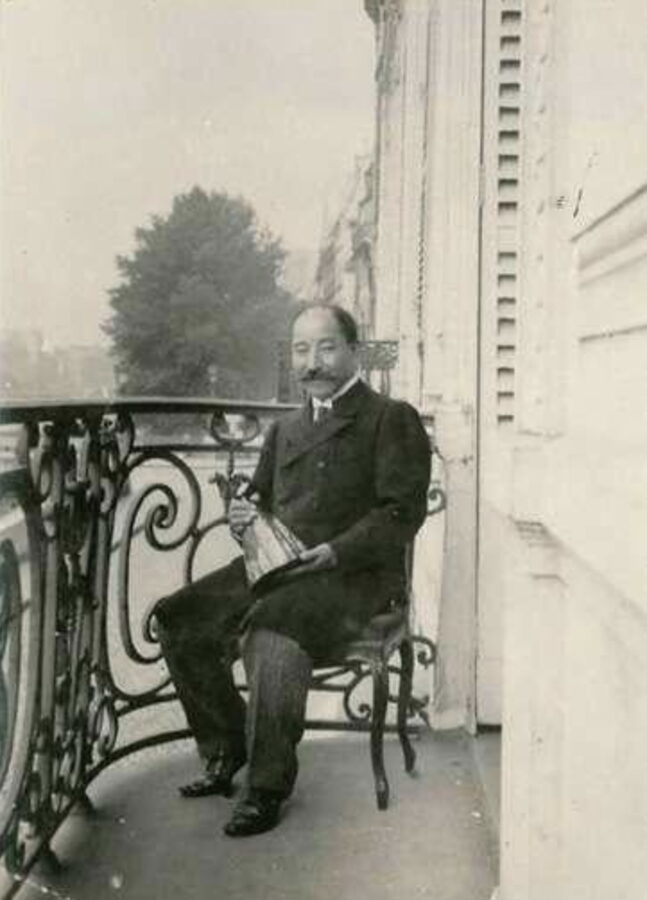
The dealers who did most to put them there were Siegfried Bing and Hayashi Tadamasa, who went to Paris for the Exposition Universelle of 1878 and stayed to sell Japanese art to the French. Their customers included painters, writers and the first great museum collectors. The copy now in the Bibliothèque nationale de France came from Bing’s stock in 1888.
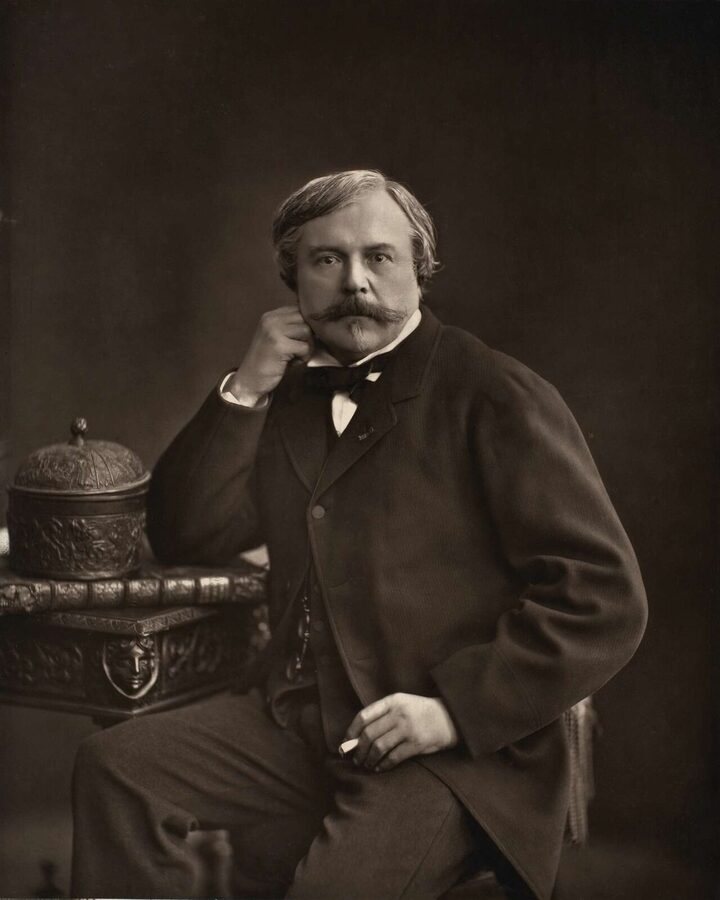
Edmond de Goncourt, who wrote one of the first Western books on Hokusai in 1896, described the wave rising angrily into the sky, its crest tearing apart into droplets shaped like an animal’s claws.
Some later writers went further and read the wave as a ghost, its foam as skeletal fingers reaching for the boats, and point out that Hokusai was designing a series of ghost prints, One Hundred Ghost Stories, at almost the same time. I think that reading is too clever, but I can see the fingers once someone has shown them to me, and so will you. Vincent van Gogh had already seen claws. In a letter written from Arles on 8 September 1888 he told his brother Theo that Hokusai made him cry out, and agreed with Theo that these waves were claws and the boat was caught in them, something you could feel.
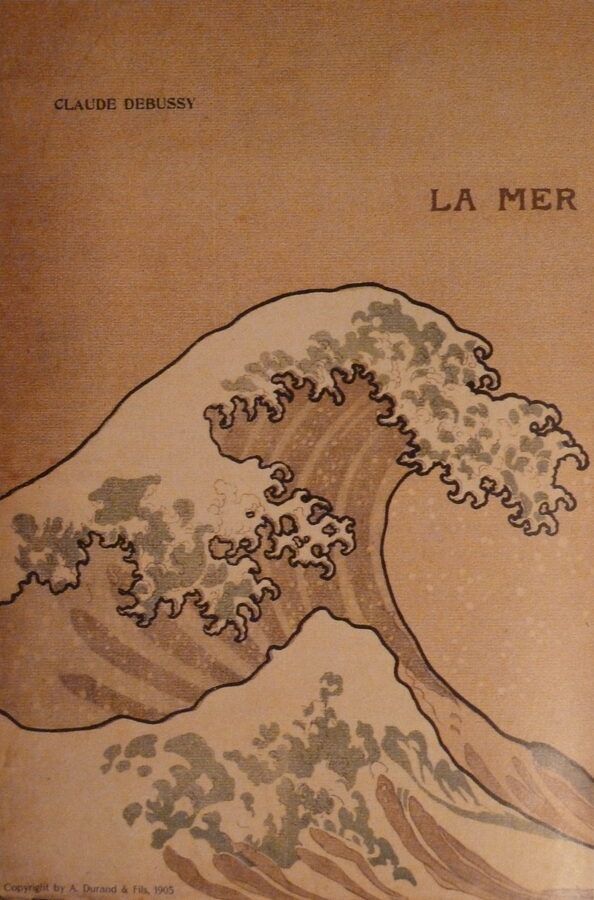
Claude Debussy is usually the next name, and here Japanese and Western accounts part company. The first edition of his orchestral work La Mer, published by Durand in 1905, carried an adaptation of the Great Wave on its cover, and English-language writers often say the print inspired the music. Japanese sources call that a popular story with no evidence behind it. The cover is documented; what was in Debussy’s head while he wrote is not.
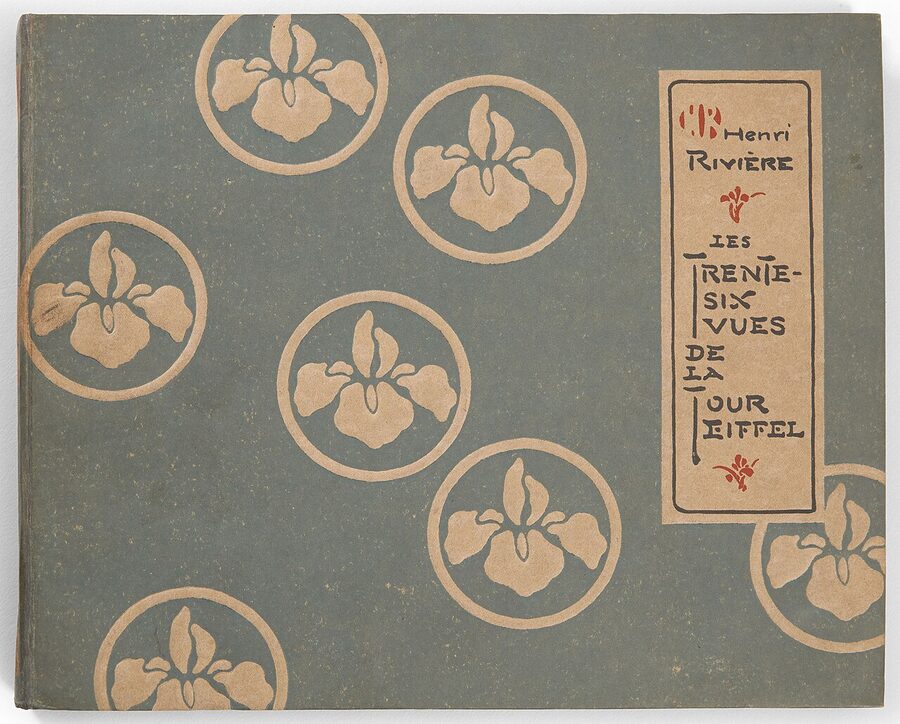
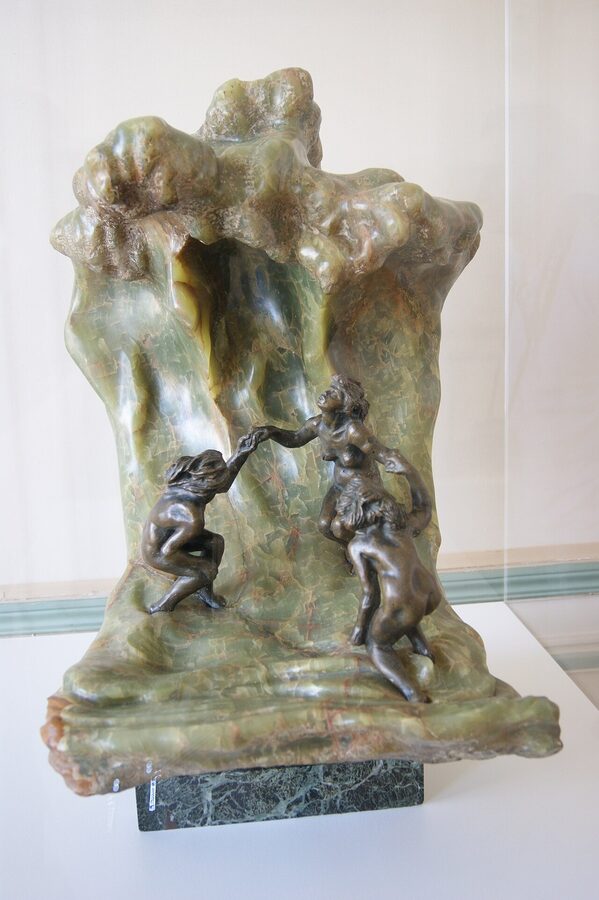
Artists borrowed it in every medium. Henri Rivière, a collector who bought from Hayashi and Bing, published his own Thirty-six Views of the Eiffel Tower in 1902, a tribute to the whole series, and Camille Claudel’s sculpture La Vague of 1897 replaced the boats with three small bronze women about to be swamped by a wave of green onyx. In Japan, Hiroshige had answered it earlier still with a vertical view of the sea at Satta, published in 1858.
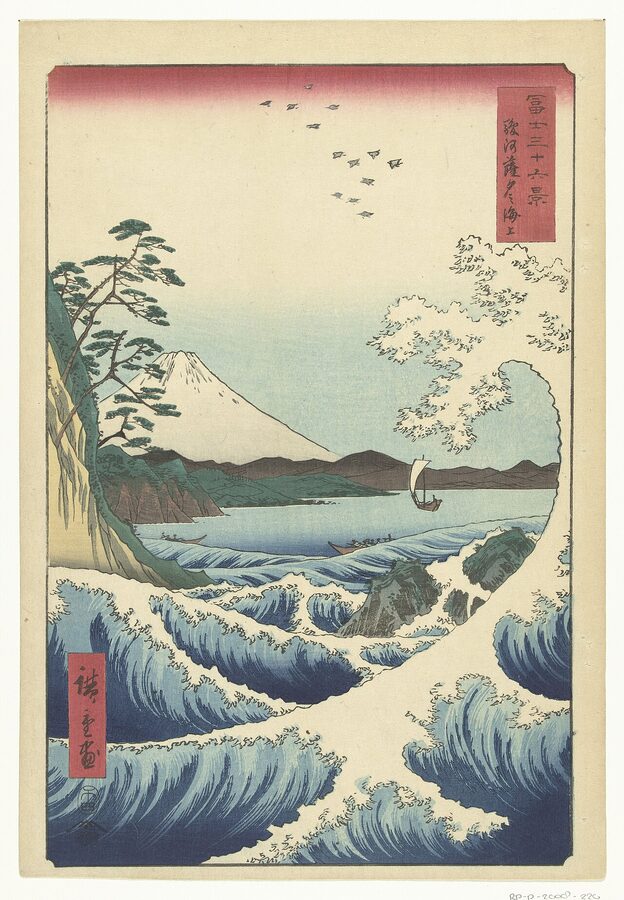
The American collections were built the same way. The Museum of Fine Arts in Boston holds the impressions collected by William Sturgis Bigelow, given in 1911; the Metropolitan Museum’s best-known copy came with the Havemeyer collection in 1929; the Guimet in Paris received one from Raymond Koechlin in 1932. That is why, if you want to see a lot of Great Waves in a short time, you are better off in Boston or New York than in Tokyo.
On the thousand-yen note
In Japan the print took a slower road to celebrity, partly because it had never stopped being an ordinary thing there. Through the Meiji years ukiyo-e were widely treated as popular ephemera, cousins of the posters for the kabuki theatre, and serious Japanese collectors came to them late. The Great Wave became a national emblem partly by coming home from Paris with a reputation.
It went on a stamp for International Letter Writing Week, issued on 6 October 1963. Since 4 February 2020 the visa pages of Japanese passports have carried views from the Fuji series, the Great Wave among them. And on 3 July 2024 the Bank of Japan issued a new thousand-yen note with Kitasato Shibasaburō, the bacteriologist, on the front and the Great Wave on the back.
The engravers worked from real impressions, not from the internet. Yamanashi’s tourism authority says that the sheets in the Yamanashi Prefectural Museum and the Tokyo National Museum were chosen as references because they were in the best condition. The Bank of Japan presented the note with serial number AA000002AA to Kanagawa Prefecture, and the prefectural museum in Yokohama put it on show that summer next to its own, rather battered, impression.
The rest of the wave’s modern career you can probably recite. A surfwear brand built a logo on it, a Lego artist built it from 50,000 bricks in 2020, and the water-wave emoji on Apple’s phones looks so much like it that most people assume it is. Nobody asked the thirty fishermen.
Where to see the Great Wave today
Start with a warning. Real impressions are light-sensitive, so every museum shows them for short runs, and the Sumida Hokusai Museum, which owns more than one, limits each original to no more than thirty days on display a year. Check the museum’s own site for what is on the wall before you build a day around it.
More Japanese museums own impressions than you might expect. Besides the places below, the Shimane Art Museum in Matsue, the Yamanashi Prefectural Museum in Fuefuki, the Japan Ukiyo-e Museum in Matsumoto and the Edo-Tokyo Museum, which owns a complete set of the forty-six, all bring the print out from time to time. It is worth searching each museum’s exhibition list for 神奈川沖浪裏 if you are passing; the Japanese title finds it faster than the English one.
The best plan in Tokyo is to combine the places that explain the print with the coast it is named after. You can see Hokusai’s museum and the bay in a single day, and add Ueno or Yokohama on another. For the wider frame, my walk through Japan’s eras sets the 1830s in their place.
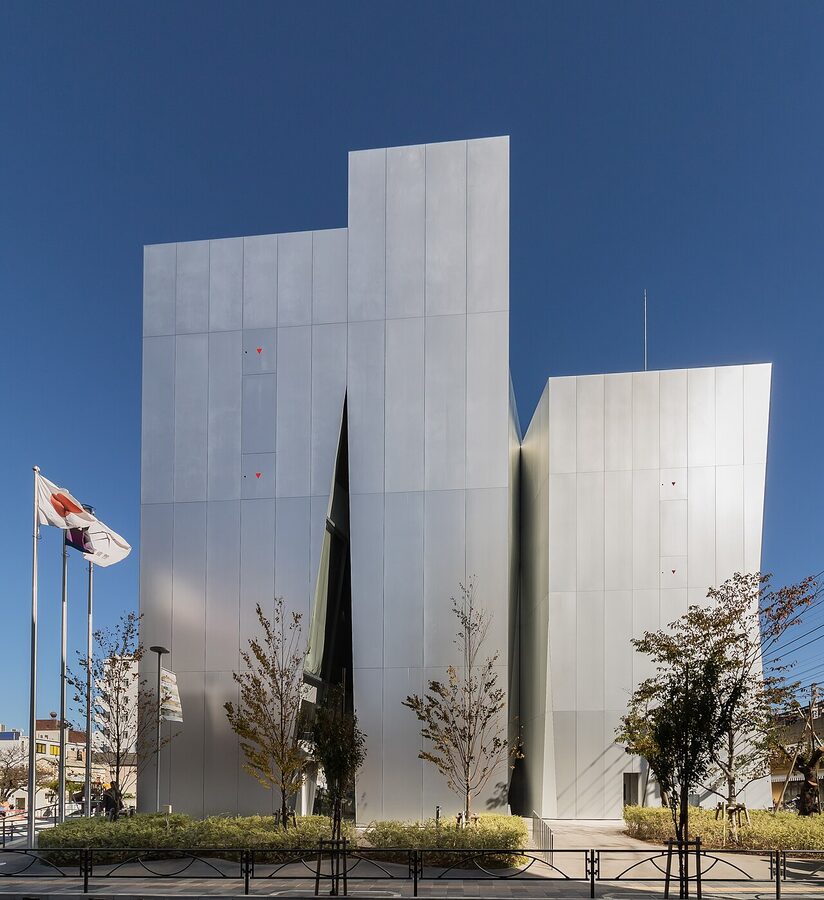
Sumida Hokusai Museum, Ryōgoku
The museum stands at Kamezawa 2-7-2 in Sumida Ward, in the neighbourhood where Hokusai was born and spent most of his life. It is open 09:30–17:30, last entry 17:00, and closes on Mondays (the next weekday instead if Monday is a public holiday) and from 27 December to 1 January. From Ryōgoku Station on the Toei Ōedo Line it is five minutes on foot from Exit A3, or nine minutes from the East Exit of JR Ryōgoku.
The permanent room, called AURORA, costs ¥400 and walks you through Hokusai’s life in seven sections. Because of the thirty-day rule, almost everything in it is a full-size, high-definition replica, and the museum says so plainly. The corner explaining how a colour print was made, with the blocks laid out in order, is the best short explanation I have seen anywhere.
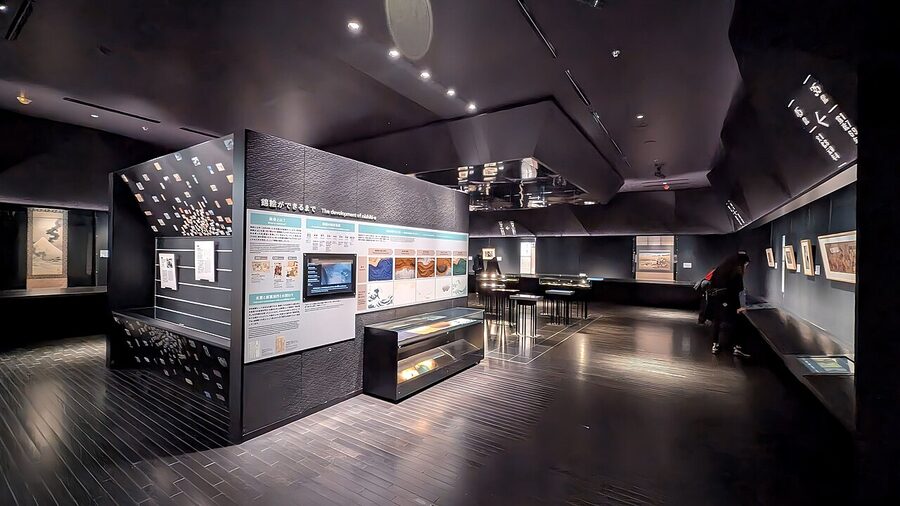
Real impressions come out in the special exhibitions, which have their own tickets and prices. In 2024 the museum marked the new banknote with a whole show on the Great Wave, swapping in a second impression of its own halfway through to protect the first. The museum’s tenth-anniversary programme runs into 2027, and the exhibition schedule on its site is the place to check.
Tokyo National Museum, Ueno
The national museum owns at least one impression, the one used for the banknote, and shows ukiyo-e in rotation in Room 10 on the second floor of the Honkan, the main building. The regular exhibition costs ¥1,000 for adults and ¥500 for university students, and is free for under-18s and over-70s. It opens 09:30–17:00, until 20:00 on Fridays and Saturdays, and closes on Mondays (or the following weekday after a Monday holiday).
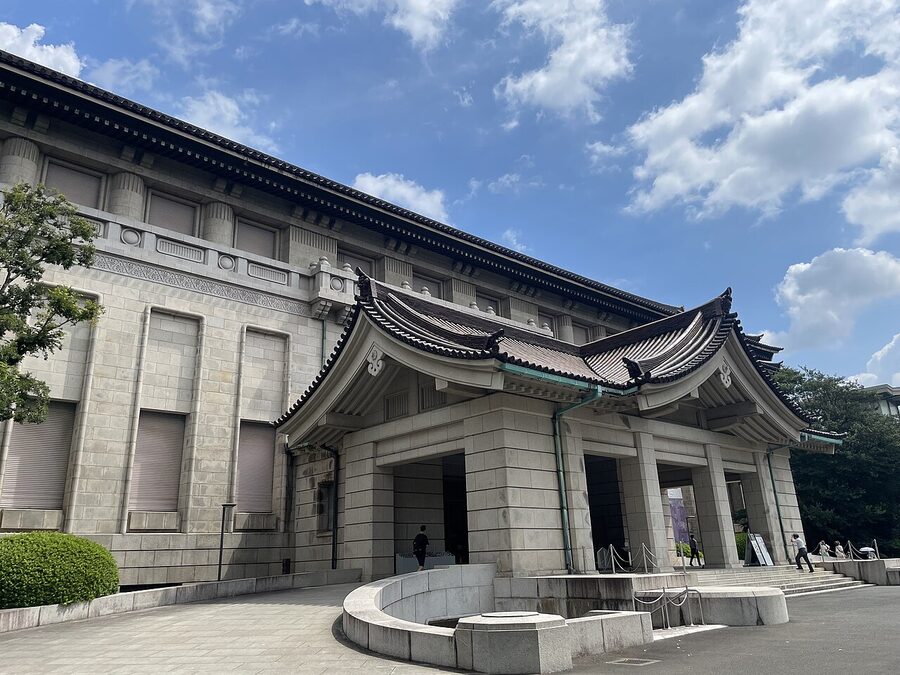
The museum is ten minutes on foot from the Park Exit of JR Ueno Station. Room 10 changes its prints every few weeks, so look at the regular-exhibition calendar on the museum’s site for the Fuji series. If the Great Wave is not there, the room still shows what Edo actually bought from print shops, which is the best context there is.
Kanagawa Prefectural Museum of Cultural History, Yokohama
If you are heading to the coast anyway, start here. The museum is in the former Yokohama Specie Bank building of 1904, at Minaminaka-dori 5-60 in Naka Ward, a minute’s walk from Bashamichi Station on the Minatomirai Line. It is open 09:30–17:00 (last entry 16:30), closed on Mondays (open if Monday is a public holiday) and from 28 December to 4 January, and the permanent galleries cost ¥300.
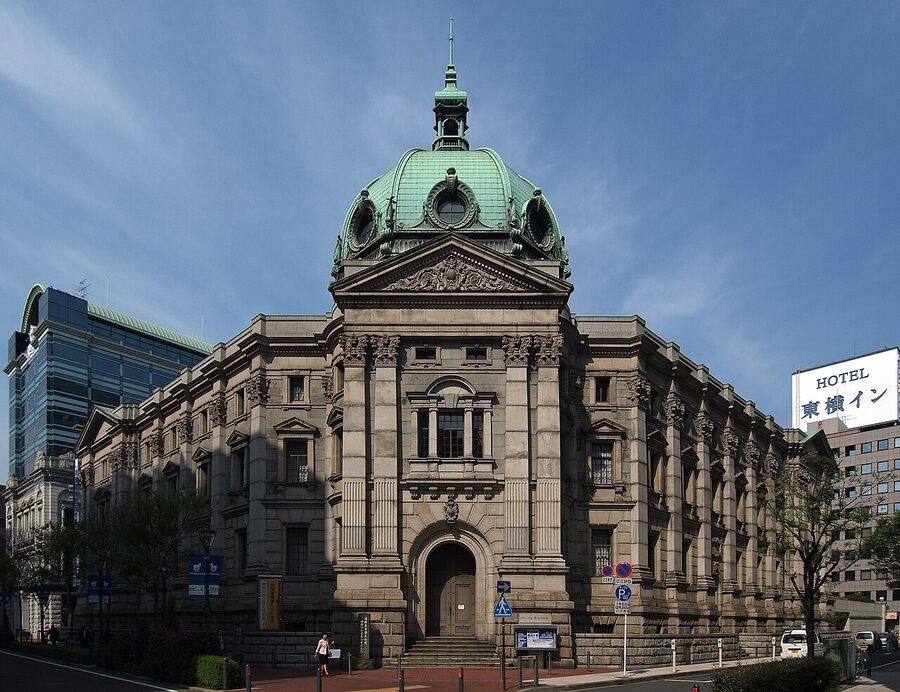
Its Great Wave belongs to the Tanba Collection, assembled by the trader Tanba Tsuneo, and the museum’s own description admits that it is badly worn. I like it better for that. It is on show only now and then, so check the museum’s calendar, but the collection is strong in views of the old Tōkaidō towns, which make a good introduction to the coast you are about to walk.
Kanagawa-juku on the old Tōkaidō
Take the Keikyū line to Kanagawa Station, or walk up from Yokohama Station, and you can follow the Kanagawa-juku history trail that the ward has marked along the line of the old highway. It runs from Kamidai-bashi bridge in the west through the old post town, with information boards at the sites of the inns, shrines and checkpoints. Most of the buildings were lost in the 1923 earthquake and the air raids of 1945, so you are walking a line on a map more than a street of old houses.
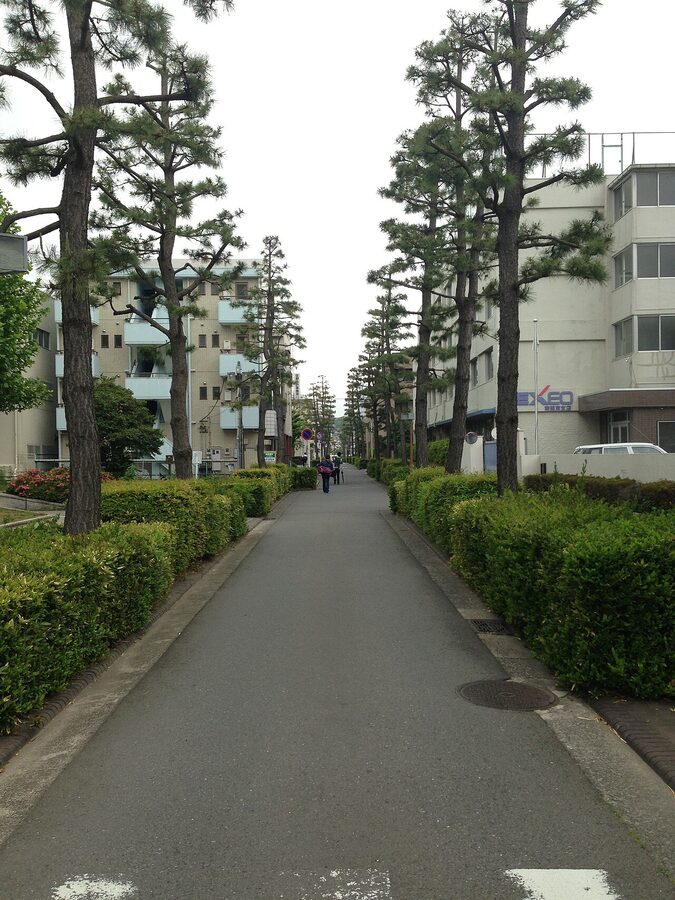
The one place that still connects directly to the prints is the Tanakaya, a ryōtei on the slope at Daimachi. The prefecture identifies it as the successor of the Sakuraya teahouse that Hiroshige labelled in his Kanagawa view of the bluff, and it is also where Oryō, the widow of Sakamoto Ryōma, worked after his death. It is a serious restaurant rather than a museum, so book through its own channels if you want to eat there.
From the top of the slope you will not see the sea. Reclamation has pushed the shoreline far out under railway yards and container docks, and the fishermen’s bay is now mostly land. So the Great Wave’s coast asks you to imagine the water, which is what Hokusai did too.
Honmoku’s lost shoreline
Honmoku, the headland that one Japanese dictionary names as the scene of the print, is now a residential district in Naka Ward whose cape has been swallowed by landfill. Honmoku Rinkai Park keeps the shape of the old ground: it opened in 1944 as Hasseiden Park, the sea around it was filled in during the 1950s and 1960s, and the neighbouring Honmoku Shimin Park sits on land reclaimed between 1963 and 1968. Information boards at the old cape site explain the coast that used to be here.
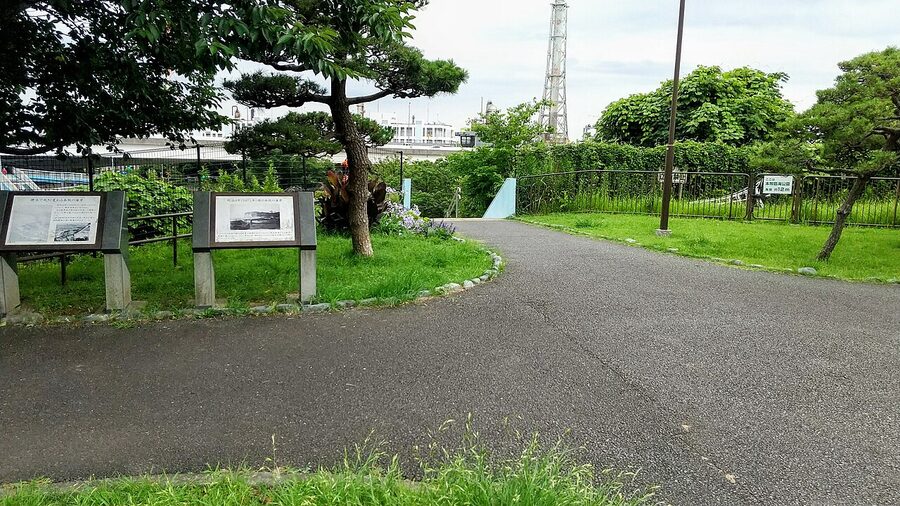
The Hasseiden itself, built in 1933 and modelled on the Yumedono at Hōryū-ji, is now a small local history museum run by the city, with displays on the history of Honmoku. There is no railway station; take a city bus from JR Negishi or Sakuragichō Station to the Honmoku Shimin Kōen stop and walk about five minutes. It is a quiet afternoon, not a spectacle, and it is the closest you can get on foot to the water off Honmoku.
Umihotaru, in the middle of the bay
If you favour the Kisarazu theory, the place to stand is Umihotaru, the artificial island where the Tokyo Bay Aqua-Line comes up out of its tunnel from Kawasaki and becomes a bridge to Kisarazu. It is a motorway rest area with shops and restaurants on several decks, and the highway buses between Kawasaki Station and Kisarazu Station stop there; from Kisarazu it is a little over twenty minutes. Check the bus operators’ timetables, because not every service calls at the island.
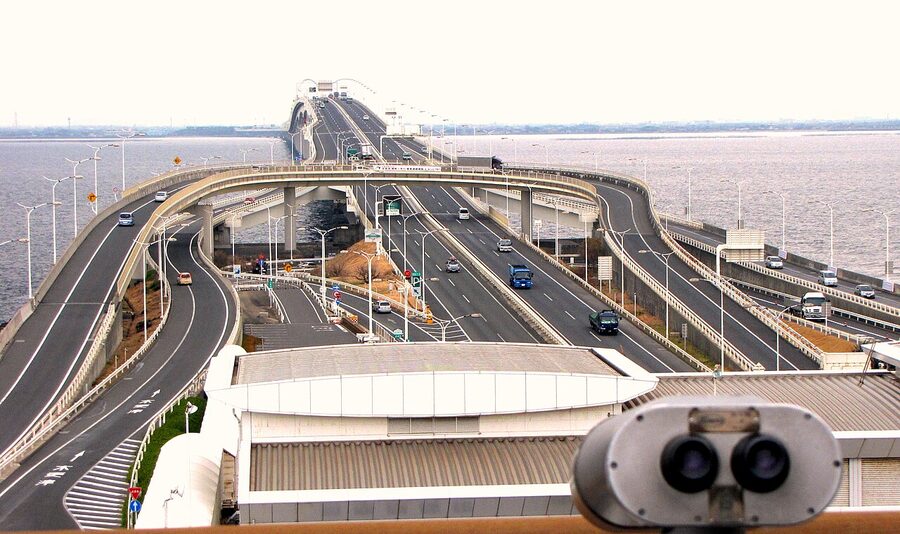
Go on a clear morning in winter, when the air over Tokyo Bay is driest, and walk to the western side of the upper deck. On a good day Fuji stands small and white beyond the haze of Kawasaki and Yokohama, about the size it is in the print. You will not see an oshiokuri-bune, though you may see a tanker, which is the same job at a different speed.
Faces down
The men in the boats did not know they were in a masterpiece. They knew that fish went off in a few hours, that Nihonbashi paid for speed, and that the only sensible thing to do when a wave like that came over was to get your head down and hold on to your oar. Hokusai, who was in his seventies and short of money when he drew them, seems to have understood that better than the people who later turned the wave into a logo.
So when you finally stand in front of a real impression, in Ryōgoku or Ueno or Boston, give the wave its due and then look lower. Find the far boat first, then the near one, then count the white faces. Every one of them is still pressed to the gunwale, waiting for the water to pass, and every one of them made the trip to the thousand-yen note without once looking up.