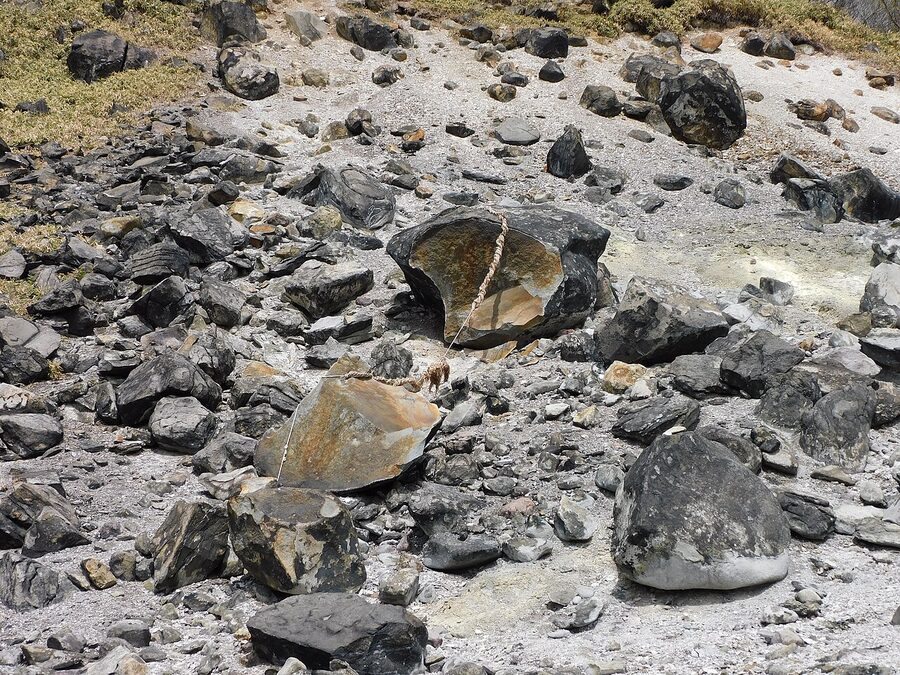
The climax of the Noh play Sesshōseki is a boulder breaking in half. A monk prays over a stone on the moor at Nasu, the prop splits down the middle, and out steps the spirit of a fox that once nearly killed an emperor. The play has been doing this on cue for five or six hundred years. On 5 March 2022 the real stone, a lump of lava in a sulphur field at the foot of Mount Nasu, did it without a monk, and Japanese social media spent a happy week deciding that the nine-tailed fox was loose again.
The town of Nasu held a memorial service at the site three weeks later, with Shinto priests, a drum troupe and a peace prayer. Geologists pointed out that the stone had been cracked for years and that rain had got in. Both responses seem to me exactly right, and between them they sum up the fox in Japan: an animal people have trapped, worshipped, feared and blamed for twelve hundred years, and never quite stopped taking seriously.
This is a long piece, because the fox is a long story. It runs from a dog barking at a wife in the 8th century to a man in fox make-up walking through Tokyo at one in the morning on New Year’s Day, by way of a rice god, a courtesan who glowed in the dark and a long, unhappy chapter about families accused of keeping foxes. With foxes the retelling is almost always younger, and sillier, than the source, so I will name the text each time. If you want the periods straight first, my overview of Japan through the ages lays them out.
In This Article
- Come and sleep: the oldest fox in Japan
- Kuzunoha and the forest of Shinoda
- The god of rice and its messengers
- Fried tofu, and before that fried rat
- Tamamo-no-Mae: the woman who glowed in the dark
- The hunt on the Nasu plain
- The killing stone
- Fox possession: illness, blame and the families who kept foxes
- The fox-holding families
- Doctors against the fox
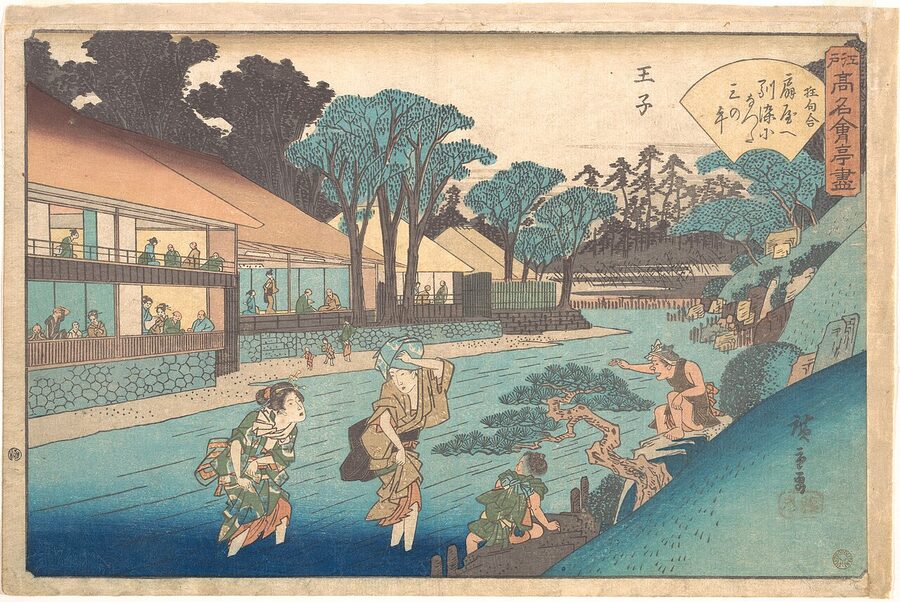
- Fox fire, fox weddings and the Ōji foxes
- The fox’s wedding
- New Year’s Eve at Ōji
- Foxes on the stage and in the prints
- Where to see the foxes of Japan today
- Fushimi Inari, Kyoto
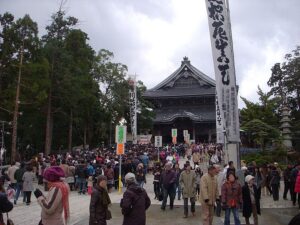
- Toyokawa Inari, Aichi
- The Sesshō-seki at Nasu-Yumoto, Tochigi
- Ōji Inari and the New Year’s Eve fox procession, Tokyo
- Kuzunoha Inari, Izumi, Osaka
- Zao Fox Village, Miyagi
- The stone that split
Come and sleep: the oldest fox in Japan
Real foxes came first. A Jōmon necklace made from a fox’s teeth and jawbone is the oldest sign of the two species noticing each other, and the oldest written kitsune (狐) is a gloss in a Buddhist glossary of 794. The Nihon Shoki, finished in 720, mentions the animal twice, both times as an omen: a white fox seen in Iwami in 657 was reported as a good sign, and two years later a fox that bit through a vine held by a shrine labourer was read as foretelling the death of Empress Saimei.
The first fox with a personality appears a century later, in the Nihon Ryōiki (日本霊異記), a collection of Buddhist miracle tales put together by Kyōkai, a monk of Yakushi-ji in Nara, in its final form around 822. Its second story is set in the 6th century, in the reign of Emperor Kinmei. A man from Ōno in Mino province, looking for a wife, meets a beautiful woman on a wide moor, marries her and has a son by her.
The household dog has a puppy at about the same time, and the puppy will not leave the wife alone. One day it frightens her so badly that she turns back into what she is, a yakan (野干), a wild fox, and leaps up onto the hedge. Her husband does not chase her away. He tells her that since they have a child together he will not forget her, and that she should “come and sleep” with him whenever she likes; she does, every night.
Kitsu-ne, “come and sleep”, is the Ryōiki’s explanation of the animal’s name. It is a pun and almost certainly wrong (the word was probably an imitation of a fox’s bark plus an affectionate ending), but it is the oldest Japanese etymology on record and I prefer it to the scholarly ones. The son is named Kitsune and founds a family, the Kitsune no Atae. A later tale in the same book has one of his descendants, a woman of enormous strength nicknamed Mino Kitsune, robbing merchants at a market until a stronger woman from Owari beats her at her own game.
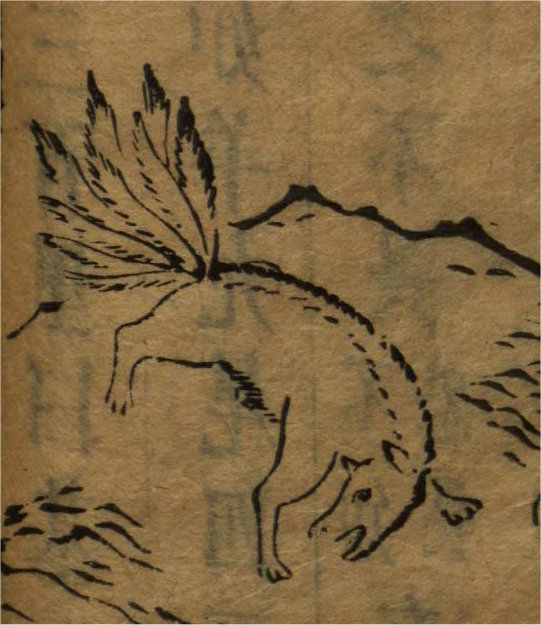
The fox wife is not a purely Japanese idea. Chinese literature had been full of fox spirits for centuries, and the Ryōiki plot is close enough to the Tang story of Lady Ren, written around 800, that scholars have suggested a reworking. China also supplied the tails, and the lore, gathered in the Song compendium Taiping guangji, that a fox takes human form at fifty and becomes a “heavenly fox” at a thousand. The nine-tailed fox of the classics was originally a lucky omen, and the Japanese court’s rulebook of 927, the Engishiki, lists it among the auspicious beasts to be reported to the throne.
The Japanese stories quickly grew their own habits. In the Konjaku Monogatari (今昔物語), the great collection of tales compiled in the 12th century, a well-off man of Bitchū province called Kaya no Yoshifuji is lured away by a fox woman in the ninth month of 896, lives with her for what he believes are thirteen years, and is found thirteen days later crawling out from under his own storehouse. The story had already been written down by the scholar Miyoshi Kiyotsura in the early 10th century, so it is genuinely old.
By the time of the medieval picture scrolls the transformation has rules. A fox puts something on its head, a skull, a leaf, a hank of weed, and becomes a person; it may keep its tail, cast a fox’s shadow or bolt at the sight of a dog. Fox money turns to leaves in your purse, fox food turns out to be horse dung, and a man who thinks he is soaking in a hot bath wakes up sitting in a manure pit. These are the bakasu tricks, the beguilings, and they put the fox among the shape-shifters in my overview of yōkai.
The fox has better manners than the oni and less pride than the tengu. It is also the only one of the three that people built shrines for in their thousands.
Kuzunoha and the forest of Shinoda
The fox wife’s most famous child is not Kitsune of Mino. It is Abe no Seimei (安倍晴明), the court diviner of the 10th century who became, in legend, the greatest sorcerer Japan ever produced. The historical Seimei was a well-connected master of yin-yang divination who died in 1005 at about eighty-four; in the Heian era that was a long and successful career, not a supernatural one. The stories about him multiplied for centuries after his death, and at some point in the late Middle Ages somebody decided that a man that clever must have had a fox for a mother.
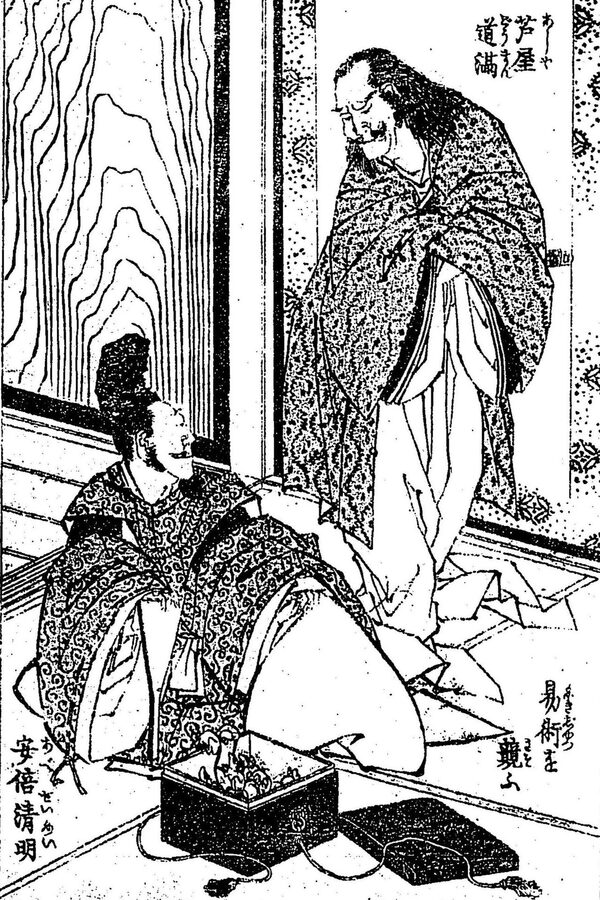
The earliest version is in the Hoki-shō, a late-medieval commentary on a divination manual attributed to Seimei. The legend grew among the shōmonji, low-status freelance diviners who claimed Seimei as their founder, and several Japanese scholars have read it as their own story: like the fox mother, they could not marry outside their kind, and they risked everything if their origins were known. One theory holds that it took its final shape among the storytellers of an outcaste village beside the forest of Shinoda, south of Osaka.
The plot runs like this, in its most familiar form. Abe no Yasuna, a young nobleman, rescues a white fox from hunters at the shrine of Shinoda and is wounded doing it. A woman appears, nurses him and becomes his wife, and they have a son. Years later the boy sees his mother’s true shape, and she knows she has to leave.
Before she goes, she writes a poem on the paper of a sliding door. “If you love me, come and find me, in the forest of Shinoda in Izumi, where the kudzu leaves show their sorrow.” The kudzu vine turns its leaves over in the wind, showing their pale undersides, and the word for that, urami, also means grief and reproach. Father and son go to the forest, she appears to them once more, and she gives the boy a golden box and a crystal ball whose powers make him a diviner and let him cure an emperor.
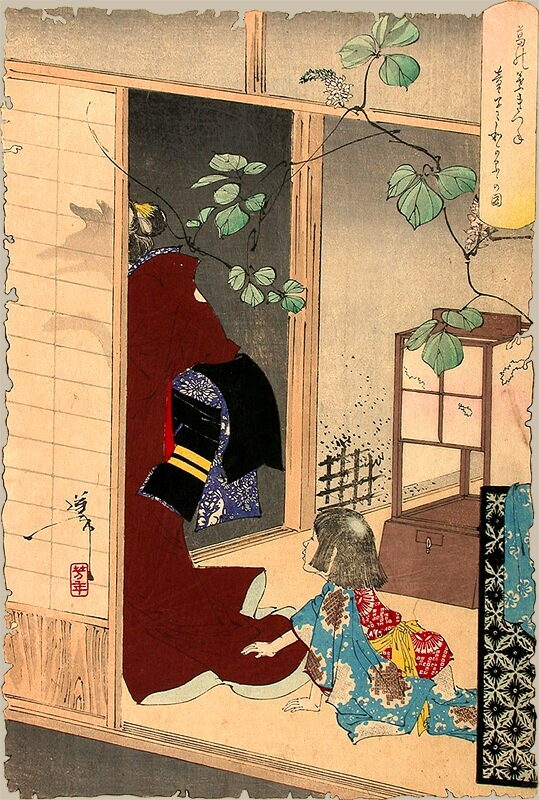
She does not even have her name at first. The puppet play Shinodazuma of 1674 calls her simply the Shinoda wife, and “Kuzunoha”, Kudzu Leaf, appears only in a kabuki version of 1699. The text that fixed her was Takeda Izumo I’s Ashiya Dōman Ōuchi Kagami, staged by puppets in 1734 and by kabuki the next year, whose parting scene is still performed on its own. In the kabuki the actor traditionally writes the poem in front of you, some of it in mirror-writing and some with the brush in the mouth, because the fox’s hands are full of child.
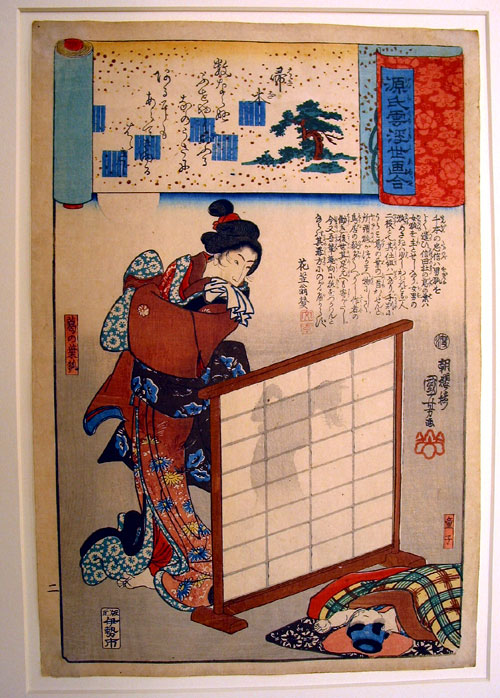
Kuzunoha also left her mark on the menu: fried tofu dishes in Kansai are still called shinoda after her forest. A gazetteer of Izumi province in 1700 already dismissed the idea that Seimei’s mother was a Shinoda fox as “a bizarre theory”. It made no difference, because people wanted a mother who loved her son and had to leave him.
The god of rice and its messengers
The fox you will actually meet in Japan is not the wife or the trickster. It is the one in stone, sitting in pairs outside some thirty thousand shrines, and it belongs to Inari (稲荷), the god of rice. I have told the story of the head shrine in my piece on Fushimi Inari, so I will keep this short and stick to the foxes.
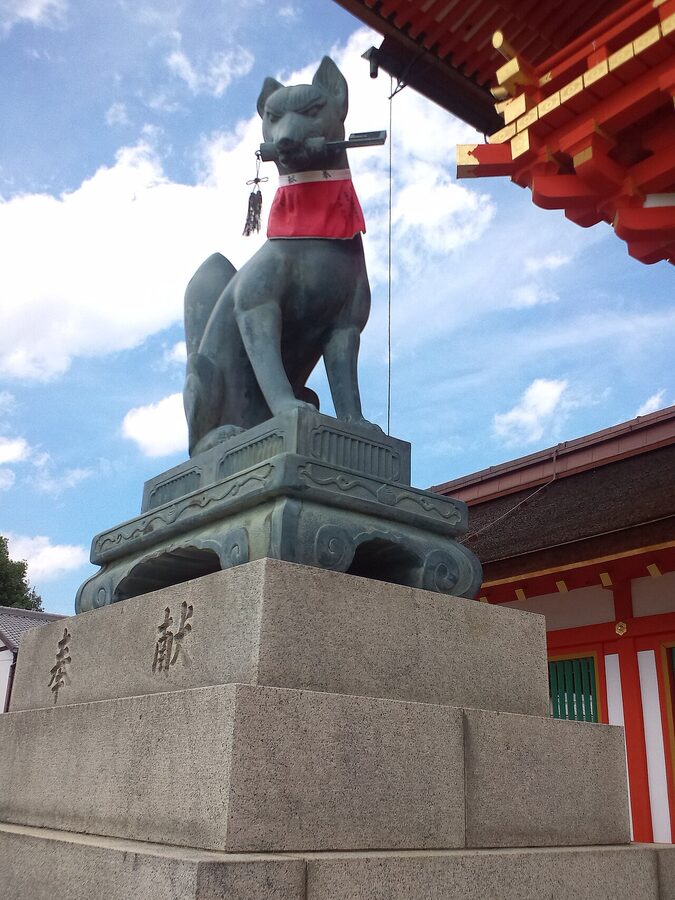
The shrines themselves insist on one point: the fox is not the god. Inari is a grain deity, usually identified with Ukanomitama, the spirit of stored rice, and the foxes are its tsukai, messengers; Fushimi Inari specifies invisible white foxes, byakko, not the red animals on the mountain at night. Popular belief has ignored this for at least five hundred years. A children’s rhyme recorded in the Edo period put it plainly: “Inari is a fox, and a fox is Inari.”
Why a fox? Foxes live at the edges of paddy fields and eat the mice that eat the rice, and folklorists think the kitsune-zuka, fox mounds found in fields all over Japan, were places to worship the god of the paddies long before Inari’s red gates arrived. A fox’s coat in autumn is close to the colour of ripe grain. And an old title of the food god, Miketsu no Kami, could be written with characters meaning “three-fox god”, a pun the scribes did not resist.
The statues carry things, and the things tell you what the god is for: a key to the granary, the hōju or wish-granting jewel of Buddhism, a sacred scroll, a sheaf of grain. The fox jewel has a folk life of its own. In the Konjaku a samurai snatches a fox’s jewel, a white ball the size of a mandarin orange, from a possessed woman and returns it only when the fox promises to protect him, and the fox keeps its word. The Noh play Kokaji goes further, sending Inari’s fox spirit to swing the hammer beside the swordsmith Sanjō Munechika as he forges the blade Kogitsunemaru, “Little Fox”, a story every maker of Japanese swords knows.
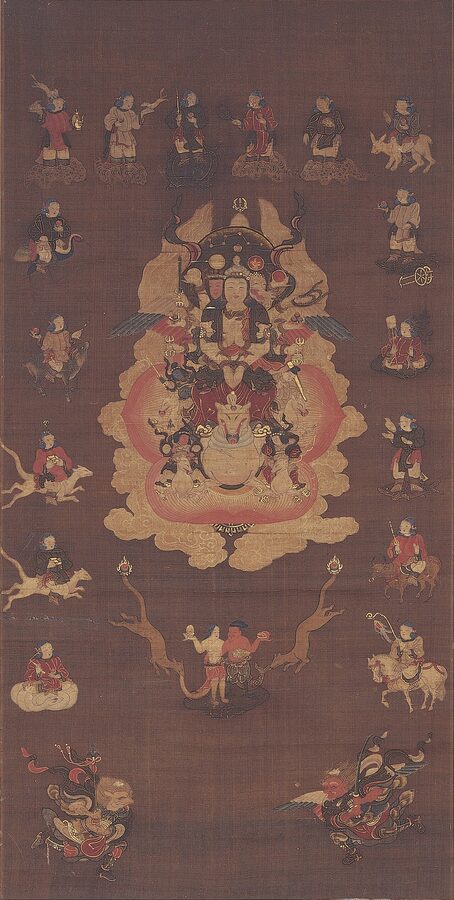
The jewel points to the other half of the fox’s religious life. The Shingon school of esoteric Buddhism brought with it Dakiniten (荼枳尼天), an Indian demoness tamed into a protector and shown riding a fox. By the Kamakura era she and Inari had merged so thoroughly that hardly anyone could tell them apart, and Dakiniten rites were credited with making the fortunes of ambitious men. A goddess who once ate hearts is a strange partner for a rice god, and the darker side of the fox owes a good deal to her.
The clearest living example is Toyokawa Inari in Aichi, which is a Zen temple, not a shrine. Its legend says that the Zen monk Kangan Giin, sailing home from Song China in the 1250s, saw Dakiniten riding a white fox above the ship, and that a later abbot in his line carved her image when he founded the temple in 1441. Warlords from Imagawa Yoshimoto to Tokugawa Ieyasu were among its patrons, and I doubt it was the rice they had in mind.
In the cities the god went into trade. Once Inari could be divided and carried home, merchants set up Inari shrines on their premises for profit, and by the Edo era every theatre in the country had an Inari altar backstage. Actors prayed to the fox before going on, which matters later in this story, because they then went on and played foxes.
Fried tofu, and before that fried rat
The fox’s supposed favourite food is aburaage, deep-fried tofu, which gives its name to kitsune udon and to inarizushi, rice packed into tofu pouches. Real foxes have no particular taste for it. The custom of offering fried tofu at Inari shrines seems to be an Edo-period one, and the older belief was much less vegetarian: the fox’s favourite treat was a mouse fried in oil. In the kyōgen play Tsurigitsune the fried rat is the bait in the trap, and hunters really did use it.
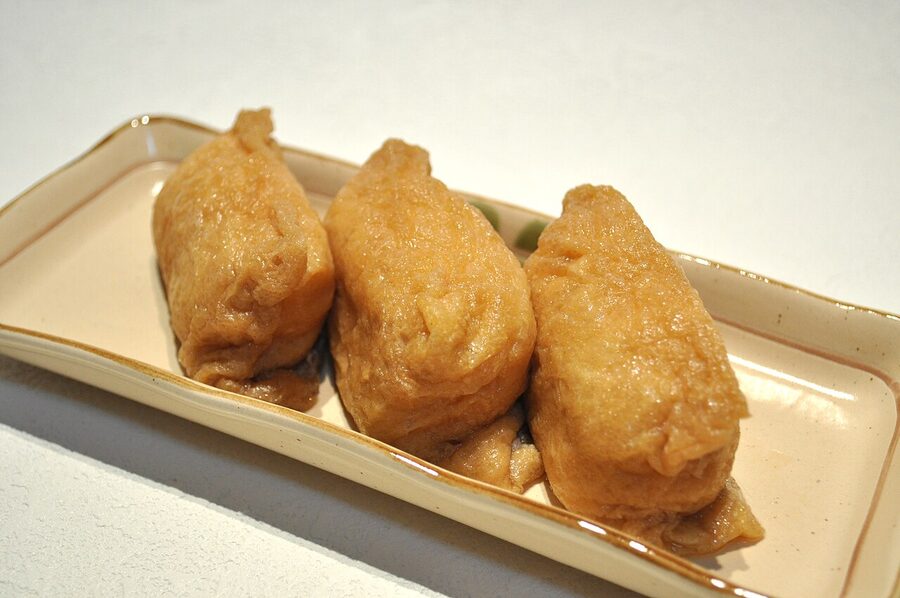
Kitagawa Morisada, who spent 1837 to 1853 recording the street life of Edo and Osaka, says inarizushi was first sold in Edo in the early 1840s by night vendors whose lanterns were painted with torii. A book of vendors’ cries from 1852 has the seller cutting it from a long roll, sixteen mon for the whole or four for a slice. Morisada says the dish came from Nagoya, Toyokawa says it came from the shops outside its gate, and an Osaka noodle house claims to have invented kitsune udon in 1893. The fox, as usual, has not been asked.
Tamamo-no-Mae: the woman who glowed in the dark
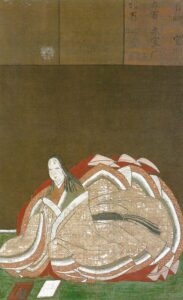
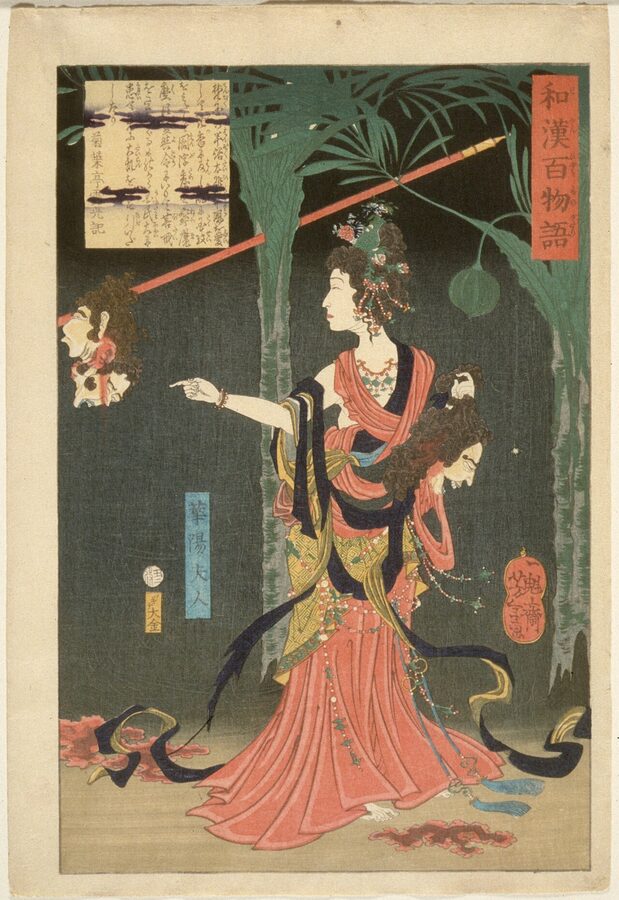
The most famous fox in Japan is a woman, and she was never a mother. Tamamo-no-Mae (玉藻前), Lady Jewel-Weed, was the favourite of a retired emperor at the end of the Heian period, the cleverest woman at court and the most beautiful, and she was a nine-tailed fox who had already destroyed two dynasties abroad. Her story is the one the Noh play tells, and it is also a fine case study in how a legend grows.
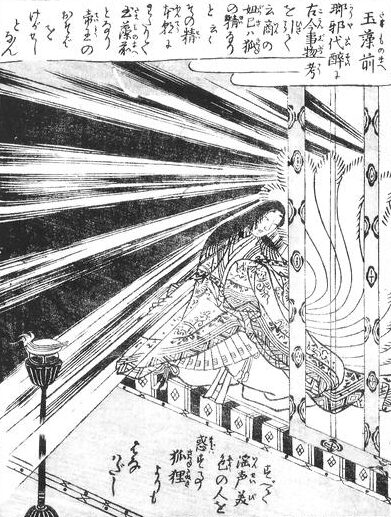
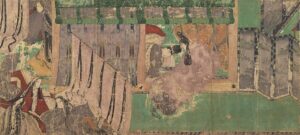
The core of it goes back to the late 14th century. A history called the Shinmeikyō mentions the fox at court, a dictionary of 1444 has the killing stone, and a prose tale of the Muromachi era, the Tamamo no Sōshi, gives the story its classic shape. Tamamo can answer any question on poetry, scripture or the stars, and one autumn night, when a gust of wind puts out the palace lamps, light streams from her body.
Soon afterwards the emperor falls ill and the doctors can do nothing. A diviner of the Abe family, a descendant of Seimei, identifies the cause. Under his incantations she changes shape and flies off east.
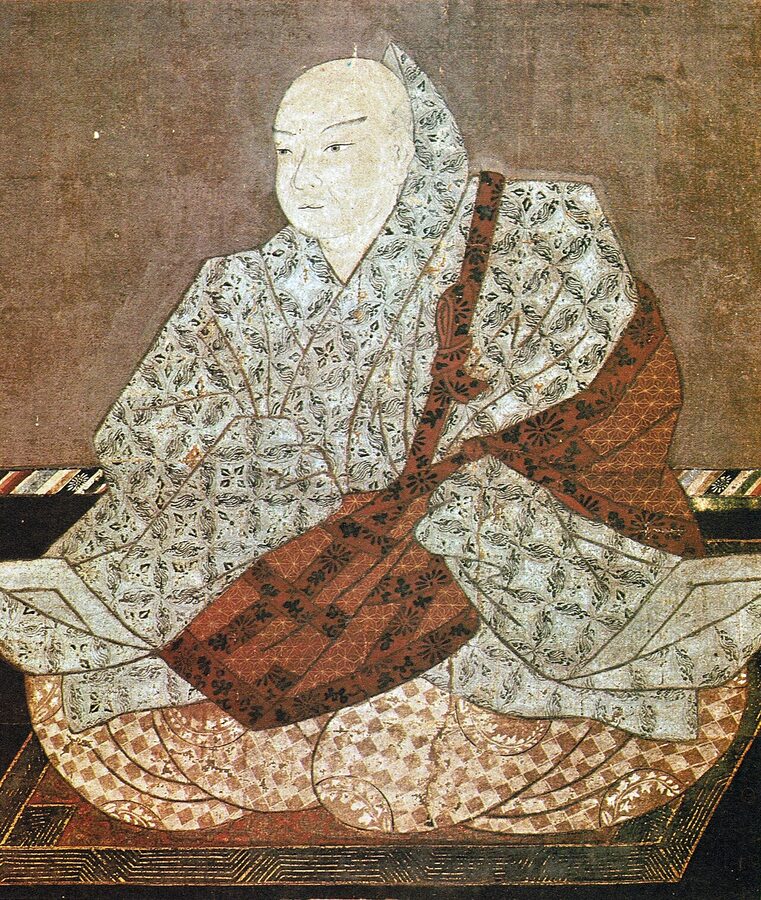
Japanese sources almost all name the cloistered Emperor Toba as the victim, while English-language accounts usually say his son, Emperor Konoe, and one Japanese dictionary hedges with “Toba (or Konoe)”. The diviner is just as slippery, Abe no Yasunari in most versions and Abe no Yasuchika, a real court astrologer of the 12th century, in others. Japanese scholars have long suspected that the model was Toba’s consort Bifukumon-in, a woman of middling birth who rose to empress, put her own son on the throne and was blamed for the quarrel that led to the Hōgen war of 1156. In a court that wrote its own history, that kind of career ended up with a fox’s tail.
What the oldest versions do not have is the nine tails. The Muromachi tellings describe a fox about seven shaku long, a little over two metres, with two tails. The nine-tailed golden fox who had been Daji, the wicked consort of the last king of Shang, and then Lady Kayō, wife of Prince Hanzoku in India, arrives in full only with the illustrated novels of the Edo period, Takai Ranzan’s Ehon Sangoku Yōfuden of 1803 to 1805 and Okada Gyokuzan’s Ehon Tamamo-tan of 1805. Hayashi Razan had linked Tamamo to Daji in the 17th century, but it was these cheap, thrilling books that made her the fox of three countries.
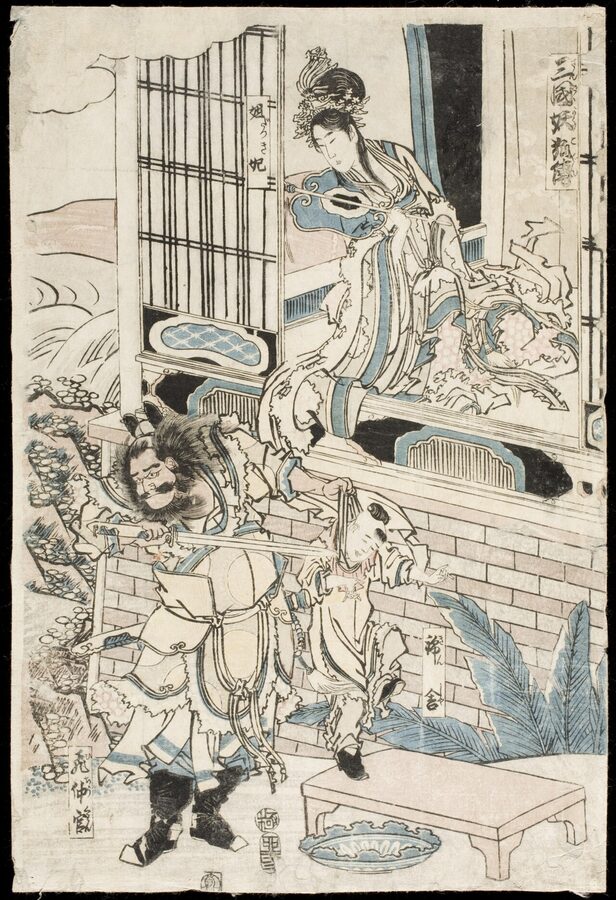
The craze lasted twenty years: puppet plays, the 1806 revision of which is still performed, kabuki by Tsuruya Nanboku, picture books by Santō Kyōden and Shikitei Sanba, and a dance of 1819 in which Nakamura Utaemon III played nine roles and finished as Tamamo. Kyokutei Bakin, the most learned novelist of the age, complained that the wicked nine-tailed fox was a recent invention lifted from Chinese pulp. He pointedly put a good nine-tailed fox in his own epic, Hakkenden. He was right about the history and lost the argument anyway.
The hunt on the Nasu plain
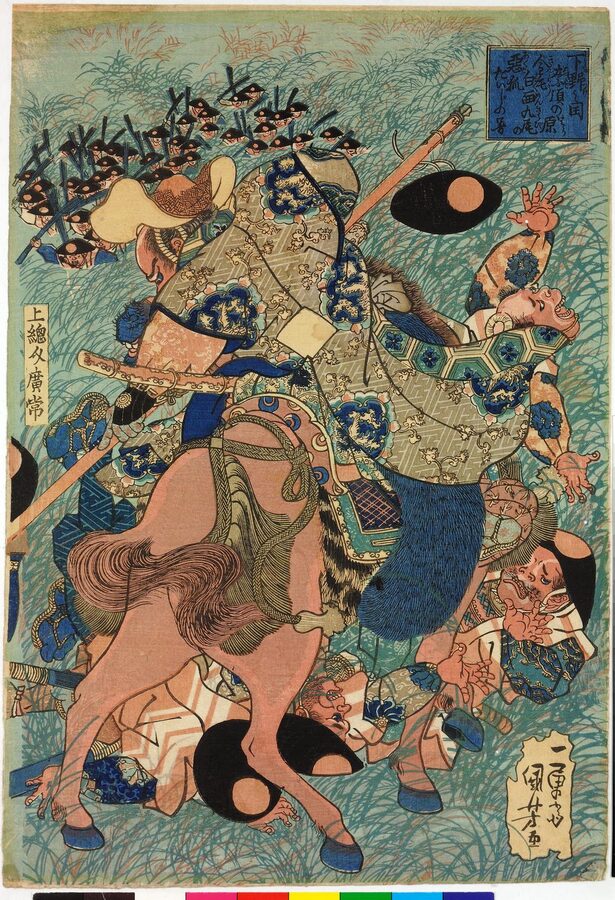
The fox fled to the plain of Nasu in Shimotsuke, in what is now Tochigi, and started killing people. The court sent an army under two eastern warriors, Miura-no-suke and Kazusa-no-suke, with the diviner along as adviser, and the first attack failed. The Edo versions add a lovely detail. To practise, the warriors’ men chased dogs on horseback and shot at them, the dogs standing in for foxes, and this is offered as the origin of inuoumono, the “dog-chasing” archery that samurai really did practise for centuries.
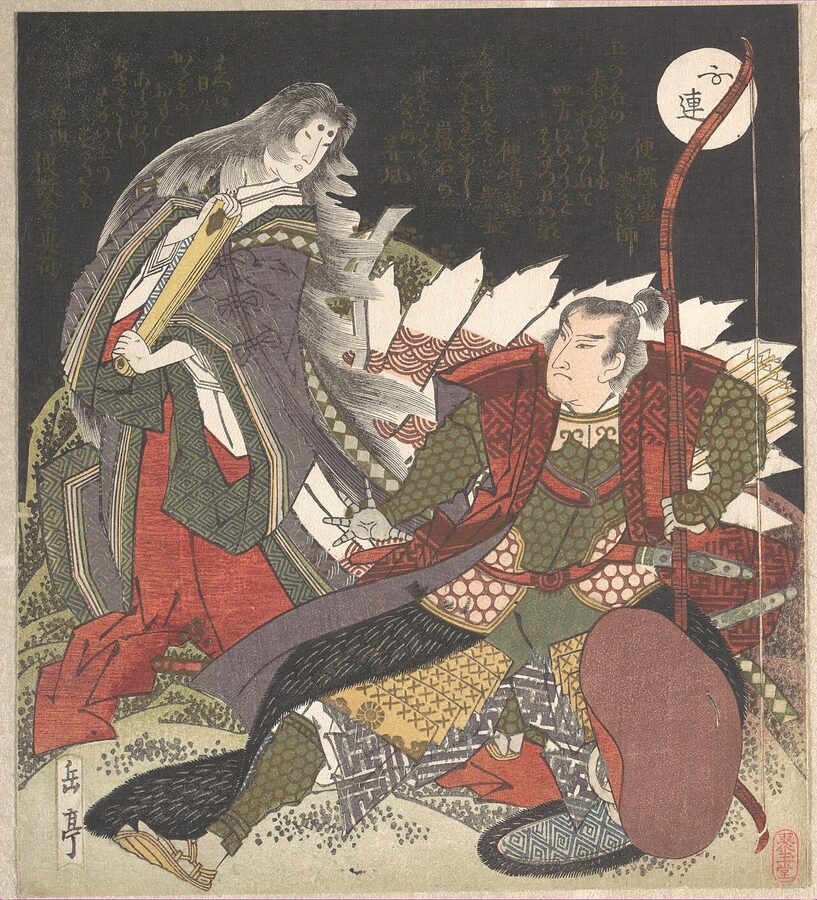
On the second campaign the fox appeared in a dream to the local lord as a young girl begging for her life, and he took it as a sign that she was weakening. Miura-no-suke put two arrows into her, one through the flank and one through the neck, and Kazusa-no-suke finished her with a naginata. The Edo novels name the archer Miura Yoshiaki; the Nasu town history gives his son Yoshizumi, and some versions add Chiba Tsunetane to the hunt. All three were real men of the late 12th century who fought for Minamoto no Yoritomo.
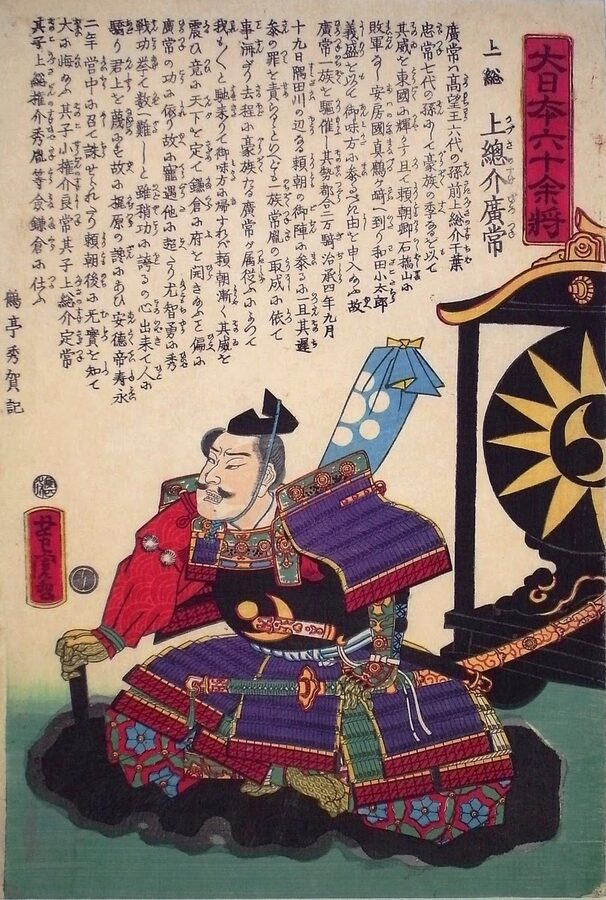
The real Kazusa Hirotsune brought something like twenty thousand men to Yoritomo’s side in 1180 and was killed on his orders three years later, probably because he had become too powerful to trust. It is a strange irony that the one undisputed fact about the fox-killers is that the man they served was more dangerous than any fox. You can read the full story of Yoritomo’s rise, and the Genpei War these men fought in, elsewhere on this site.
The killing stone
Dead, the fox turned into a stone, and the stone kept killing. Birds that flew over it dropped dead, animals that touched it died, and the people of the district named it Sesshō-seki, the Killing Stone, after the Buddhist sin of taking life. The obvious explanation is underneath it. The stone sits in a field of vents pouring out hydrogen sulphide and sulphur dioxide, and even now the area is closed when the gas readings are high.
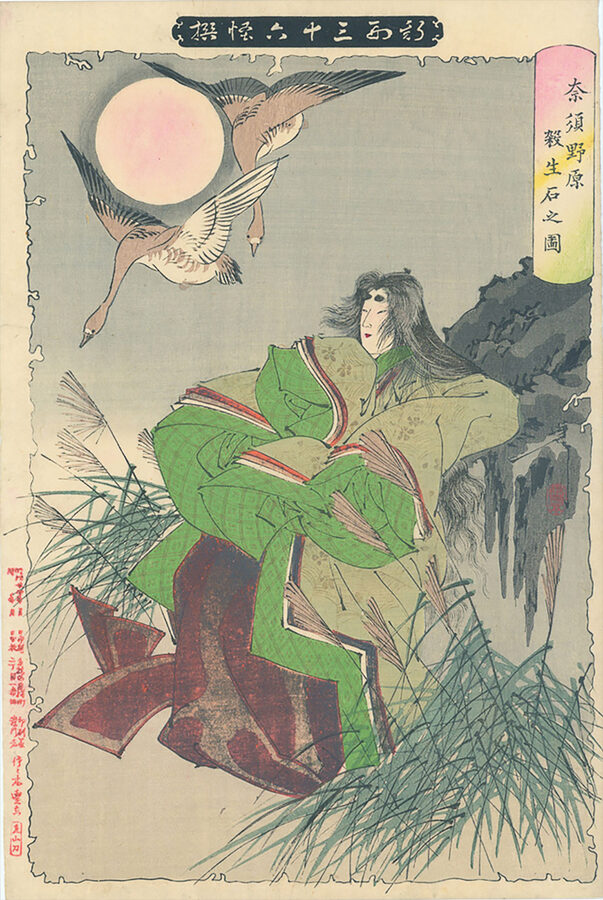
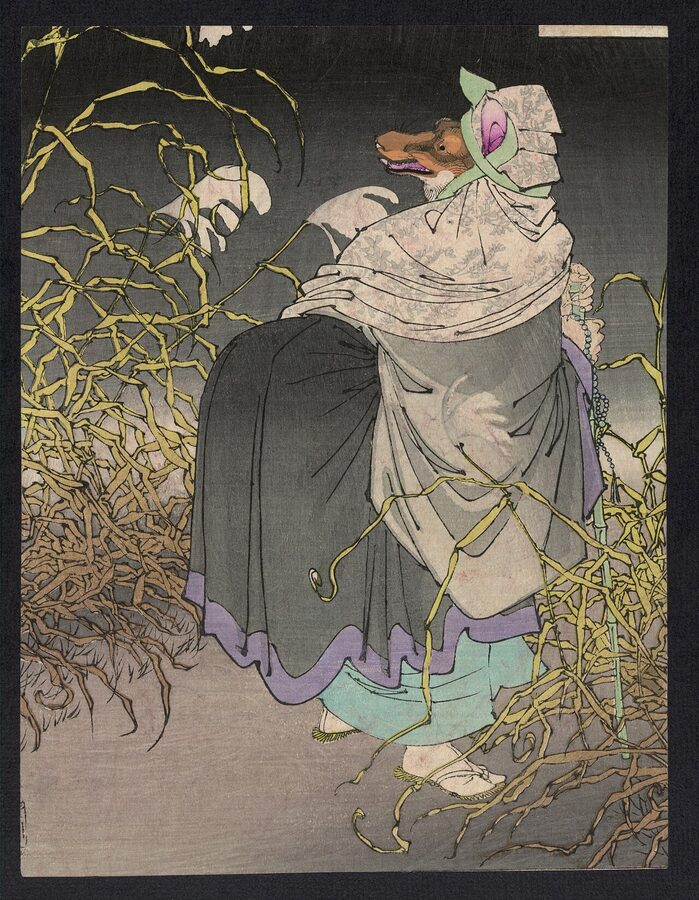
The Noh play has the rest. A Zen monk named Gennō sees birds fall dead over a great rock at Nasu, and a village woman tells him the story of Tamamo and confesses that she is the spirit of the stone. That night he performs a Buddhist service, the stone splits in two, and the fox appears, tells its history across three countries and swears to do no more harm. Legend dates the exorcism to 1385, though one dictionary puts Gennō a century earlier and the Nasu town history says the stone broke into three; the legends do not agree, and there is no reason why they should.
Gennō Shinshō was a real Sōtō Zen monk who founded temples in Aizu, and the heavy mallet Japanese carpenters and masons use is still called a gennō after him. The pieces of the stone, says the legend, flew across Japan, and places called Takada claim them, among them Katsuyama in Okayama, where Kasei-ji keeps a fragment. Other versions are darker: in Hida the shards became the gobōdane, in Shikoku the dog spirits called inugami, and in Kōzuke the possessing foxes called osaki. The stone, in other words, seeded the belief that the next section is about.
Fox possession: illness, blame and the families who kept foxes
Every culture has had ways of explaining an illness that looks like a change of personality. In Japan the explanation for more than a thousand years was often a fox. Kitsunetsuki (狐憑き), fox possession, could mean a person who suddenly talked in a strange voice, craved fried tofu and red rice, ran on all fours or simply wasted away, and it could also mean the cure, the business of getting the fox out. I want to treat this section plainly, because the subject has real victims, and because the folklore is easier to understand once you see what it was used for.
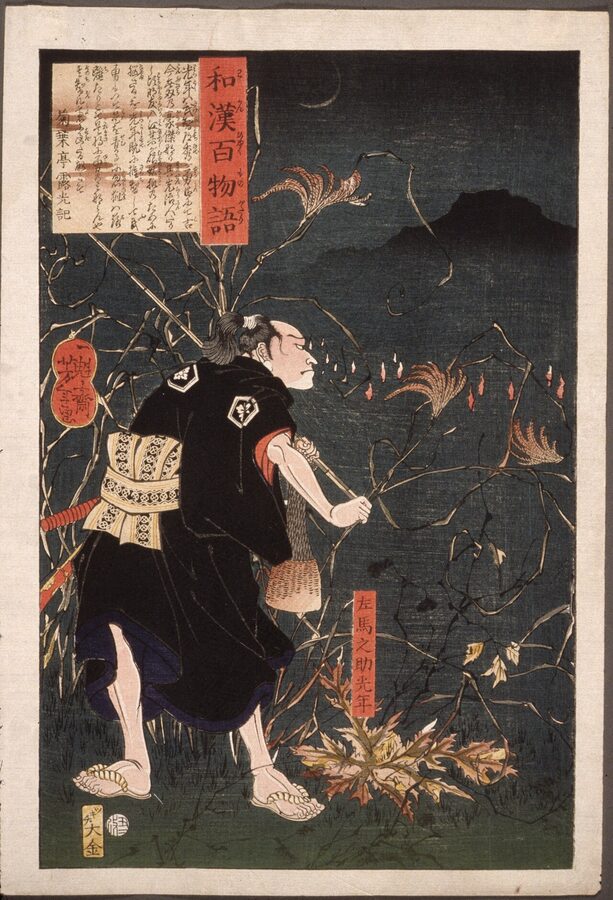
The idea is old. The courtier Fujiwara no Sanesuke records a fox possession in his diary in the eighth month of 1031, and in the Uji Shūi Monogatari a fox, speaking through a medium, explains that it possessed the patient only because it wanted something to eat. By the 15th century professional “fox handlers” were working in Kyoto, and in the early 17th century the Yoshida shrine family issued printed talismans against wild foxes. Exorcisms ran from prayers by mountain ascetics to smoking the patient with green pine needles or simply beating them, and the patient often came off worst from the cure.
The greatest men in the land took it as seriously as anyone. In 1595 Toyotomi Hideyoshi’s adopted daughter Gō fell ill after childbirth, the household blamed a fox, and his officials ordered a fox hunt; an anthology of samurai anecdotes even quotes a letter in which he threatens the god of Inari with annual fox hunts in every province. I tell that story in my piece on Fushimi Inari, and Hideyoshi comes out of it rather well.
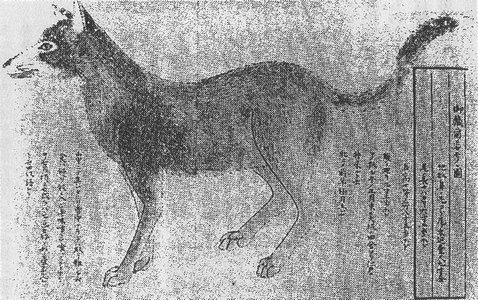
The foxes had local names and remarkably consistent descriptions. Folklorists recorded osaki and izuna from the Kantō to the north-east, kuda-gitsune in central Japan, ninko, “human foxes”, and tōbyō along the Sea of Japan coast, and yako in parts of Kyushu, usually kitten-sized, brown, and travelling in families of seventy-five. Around Nagashino in Mikawa people told of Otora, a fox who had watched the battle of Nagashino from a castle tower and been shot in the left eye; ever after, the people she possessed recited the battle and complained of a sore left eye. A possessing fox was not always a stranger, either; sometimes it had been sent.
The fox-holding families
This is the part of the story that stops being folklore. In parts of western Japan, above all in Izumo (now eastern Shimane), certain households came to be known as kitsune-mochi, fox-holders: families believed to keep invisible foxes that brought them wealth and could be sent to sicken a neighbour, blight his crops or kill his cattle. Since the foxes were thought to pass with a bride, nobody would marry into a fox-holding family, and the label stuck to the house for generations.
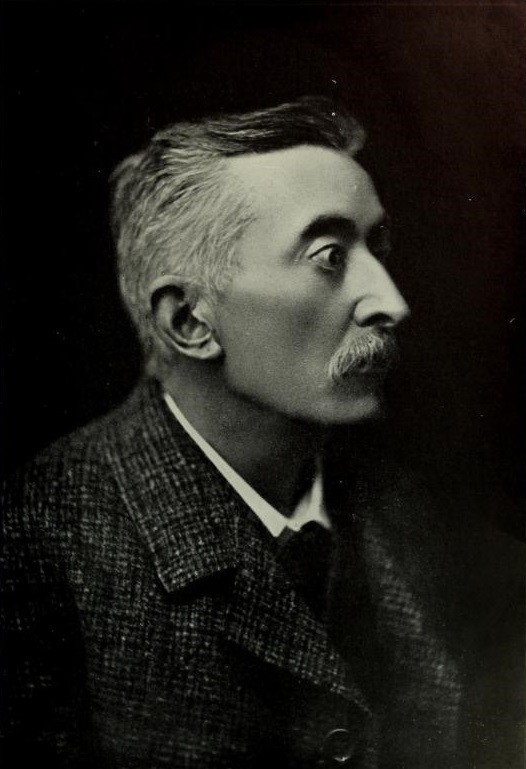
Who got the label? Studies of the San’in villages, from Ishizuka Takatoshi’s research of the 1950s onward, point to a pattern: the accusation tended to fall on families who had recently become rich, often newcomers who had bought land and lent money to their neighbours. The fox explained, in a way that needed no evidence, why someone else had prospered and you had not. The village headman of a district in Izumo, Yamane Yoemon, published an account of the “human foxes” of the province on the first day of the 11th month of 1786, and the belief was already a social fact by then.
The consequences were concrete. Fox-holding households were refused as marriage partners, shunned at village functions and sometimes driven out, and when a member of another household fell ill, the fox family next door was the obvious suspect. Hearn, writing from Matsue in the early 1890s, described respectable families ruined by the rumour. Researchers working in Shimane in the 1950s and 1960s found that it was still shaping who could marry whom.
Doctors against the fox
Physicians had been arguing against the whole idea for a long time. In 1807 Kagawa Shūtoku broke “fox possession” up into six disorders: convulsions in children, epilepsy, a general nervous illness, two forms of what psychiatry now calls psychosis, intellectual disability and refusal of food. In the ninth month of 1818 a country doctor from Hōki, Suyama Hinan, published an argument that possession was a form of madness and that no fox ever got inside anybody. It did not reach the villages.
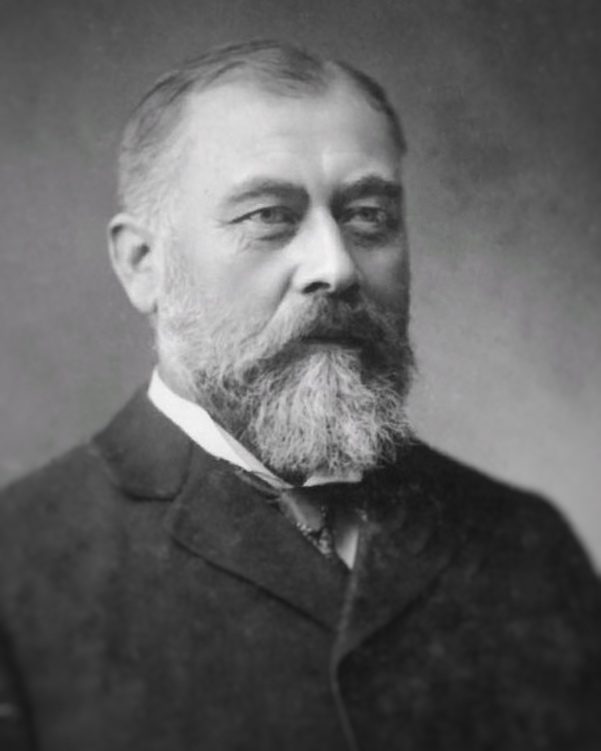
The Meiji state took the side of the doctors. Erwin Bälz examined possessed patients and published in 1885, the official gazette was used to discourage the belief, and the philosopher Inoue Enryō made fox possession a set piece of his lifelong campaign to explain away the supernatural. In 1892 the government sent the psychiatrist Shimamura Shun’ichi to Shimane to study cases on the spot, and in 1902 Kadowaki Masae, director of a mental hospital in Tokyo, published an analysis of 113 patients diagnosed with fox possession.
What the science could not do was provide care. There were very few hospitals, and the law of 1900 on the custody of the mentally ill made it the family’s duty to confine its own sick, often in a locked room in the house. Kure Shūzō, the founder of modern Japanese psychiatry, surveyed these home confinements in 1918 and wrote that the mentally ill of Japan suffered two misfortunes: their illness, and having been born in this country. Home confinement was abolished only in 1950, by which time the fox had become a diagnosis people were ashamed of, which is not the same as one they understood.
Fox fire, fox weddings and the Ōji foxes
Not every fox story is dark. The other great body of fox lore is about lights, and about the animals’ own lives, which were supposed to go on in parallel with ours just out of sight.
Kitsunebi (狐火), fox fire, is the name for the strings of lights that country people saw at night across rivers and on hillsides, flickering on and off and always vanishing before you got there. The word appears in a courtier’s diary on the second day of the second month of 1488. Explanations over the centuries included the fox’s breath, sparks struck from its tail and a horse bone held in its mouth, and the Echigo writer Suzuki Bokushi, in his Hokuetsu Seppu of the 1830s, claimed to have watched a fox breathe fire on the snow outside his window.
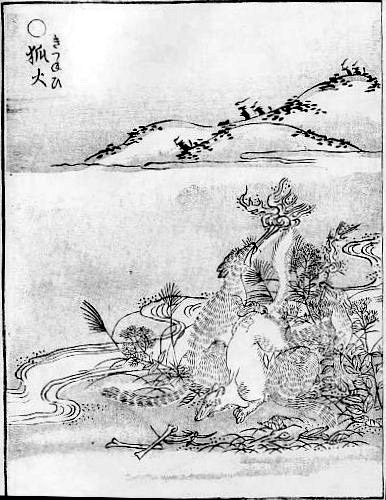
The fox fire is a cousin of the onibi, the cold ghost lights that drift around the yūrei in so many prints, but it was never quite as sinister. The modern explanations are less fun. In the 1970s the folklorist Kakuta Yoshiharu showed that most reports came from alluvial fans where hills meet plains, where light from distant lamps can be bent by layers of air near the ground; others suggest the torches farmers carried to drive insects from the paddies. Whatever caused the lights, the fox was the obvious suspect for anything that led you off the road at night.
The fox’s wedding
A line of lights on a hillside looked, to anyone who had been to a country wedding, like a bridal procession carrying lanterns to the groom’s house. So the lights became kitsune no yomeiri, the fox’s wedding, and the name spread to the other trick of the weather: rain falling from a clear sky. In most of Japan a sunshower is still a fox’s wedding, and children are still told not to look.
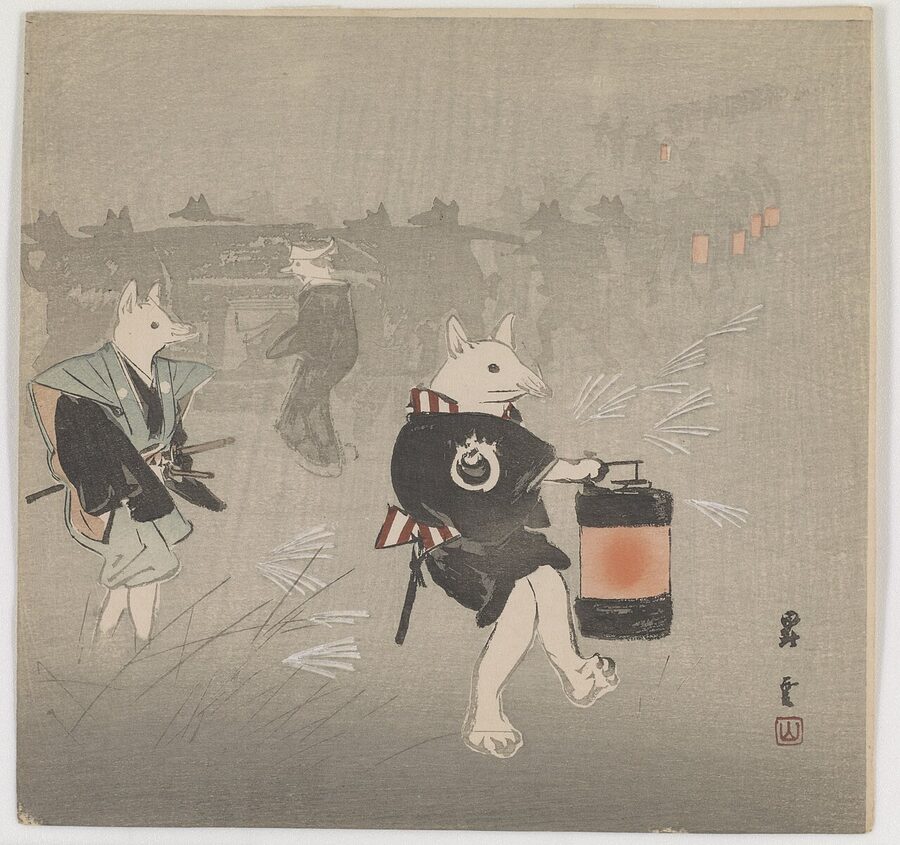
The wedding could be an omen either way. Some districts read many lights as a good harvest, while around Kiryū in Gunma a family that saw fox fires on the night of a real wedding would call it off, and in Tokushima the lights were a fox’s funeral and a sign of death. Akira Kurosawa opened his film Dreams of 1990 with a boy who watches a fox wedding in the forest against his mother’s orders and is sent to beg the foxes’ forgiveness. It is the most faithful piece of fox folklore I know on film.
New Year’s Eve at Ōji
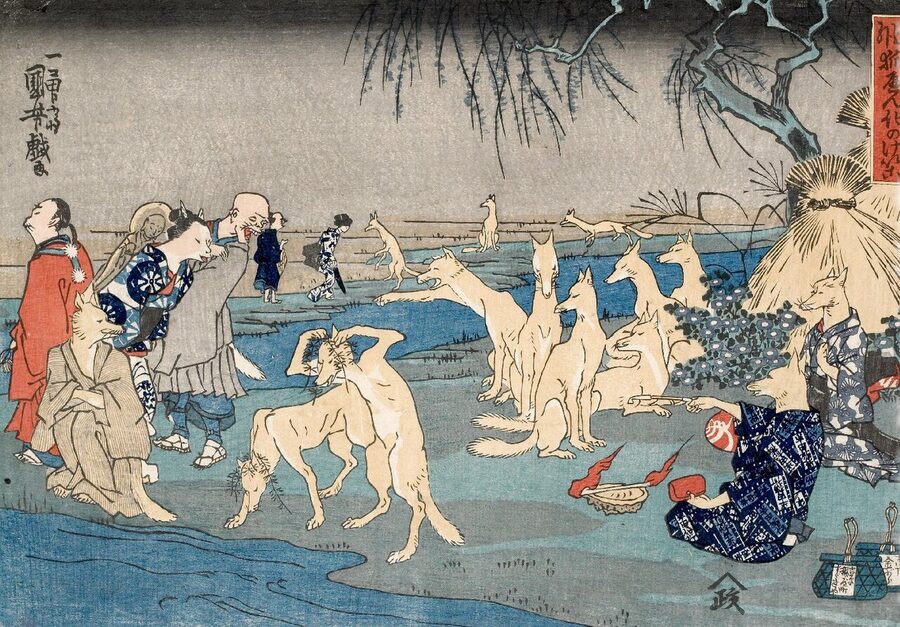
The most famous fox lights of all were at Ōji, then a village of paddy fields north of Edo and now a district of Tokyo. An Edo guidebook of 1732 records the tradition: every New Year’s Eve the foxes of all the provinces gathered at an old enoki, a nettle tree, east of Ōji Inari, changed into their formal clothes, and then went to pay their respects at the shrine, which claimed to be the head of all the Inari shrines in the east. Farmers counted the fires and forecast the harvest from the number.
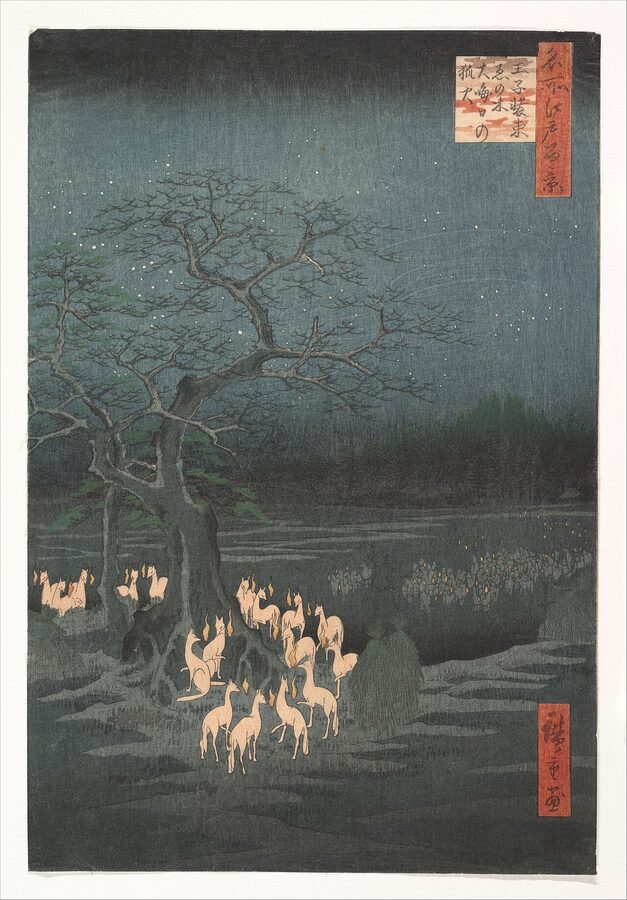
It is the one frankly supernatural scene in Hiroshige‘s hundred views of the city, and the one people remember. The nettle tree was cut down in 1929 when the road was widened, and a small shrine, Shōzoku Inari, the “Inari of the change of clothes”, now stands on its site. In 1993 the people who look after it walked to Ōji Inari on New Year’s Eve in imitation of the print, and the Ōji fox procession was born; more on that in the travel section.
Foxes on the stage and in the prints
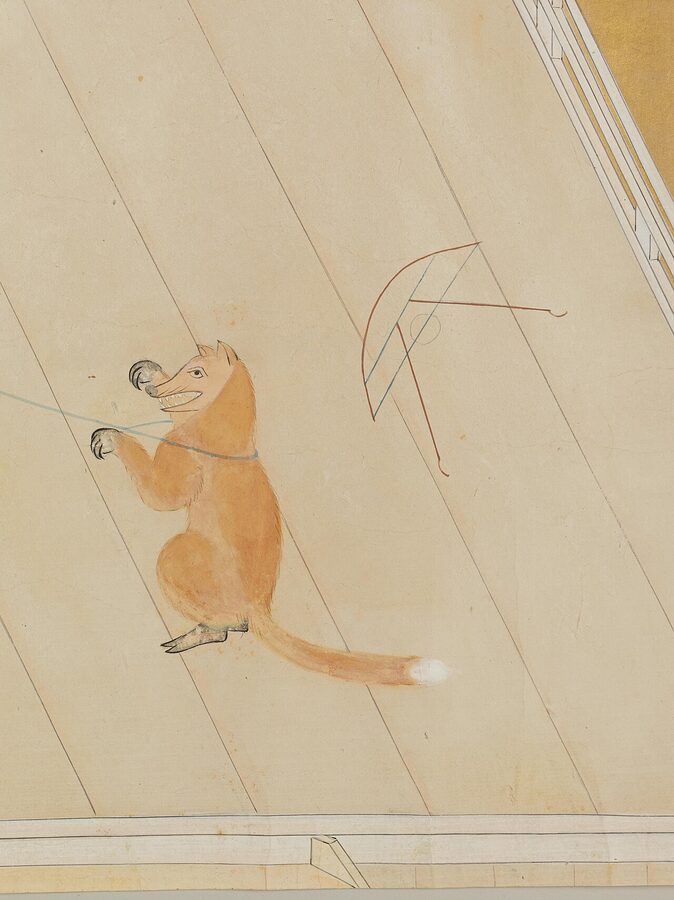
With an Inari altar in every playhouse, foxes were bound to end up on stage. The kyōgen comedy Tsurigitsune (釣狐), Trapping the Fox, is the hardest piece in the repertoire, and the profession says a kyōgen actor “begins with the monkey and ends with the fox”. An old fox, whose family a hunter has wiped out, disguises itself as the hunter’s uncle, the priest Hakuzōsu, and lectures him on the sin of killing foxes until he promises to stop. On the way home the fox finds the trap, baited with a fried rat, and cannot resist.
The biggest fox role in kabuki belongs to Yoshitsune Senbon Zakura, first staged by puppets in 1747. Among the retainers of Minamoto no Yoshitsune on the run is a loyal warrior, Satō Tadanobu, who turns out to be two people: the real Tadanobu, and a young fox who has taken his shape. The fox has followed Yoshitsune because of a drum, the Hatsune, whose skins were made from the fox’s own parents. When the truth comes out, Yoshitsune gives the drum to the fox and his own name with it, and the fox Genkurō leaps away into the cherry trees.
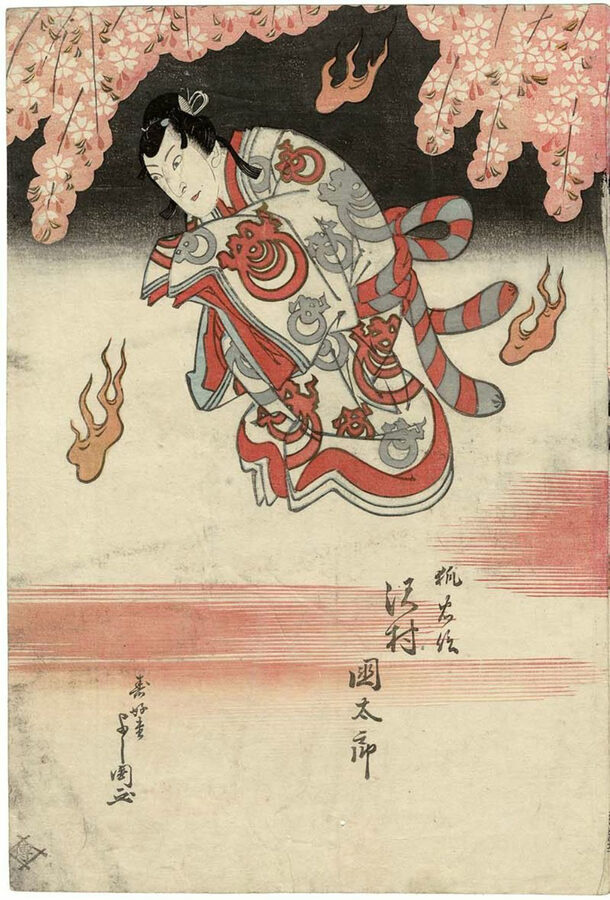
The fox scenes are among the most acrobatic in the repertoire: the actor pops out of the floor, a staircase and a box, and in the Ichikawa Ennosuke version flies out over the audience on a wire. It is spectacular and a little ridiculous, and audiences love it.
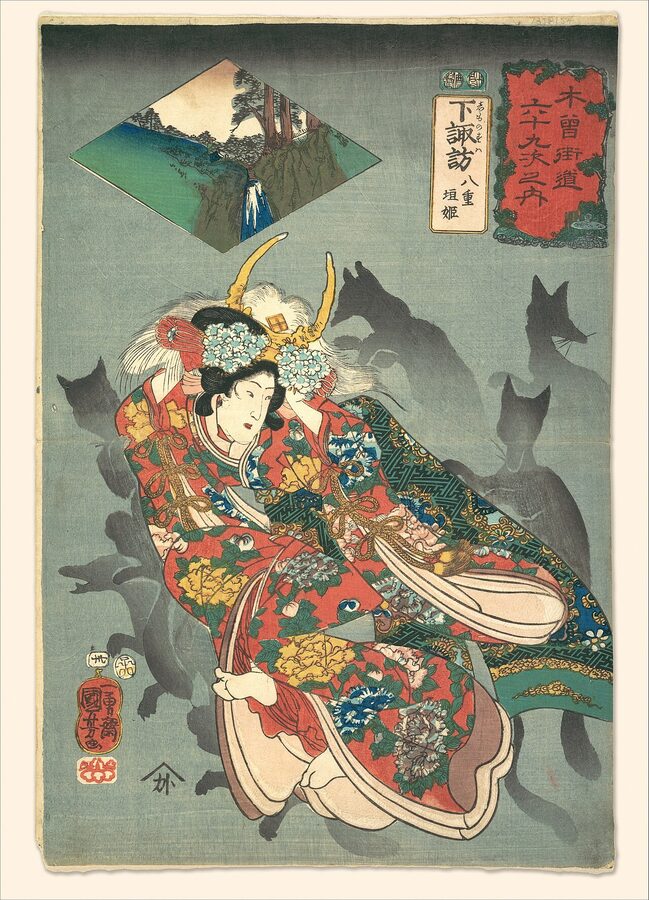
The other great fox scene is a woman’s. In the puppet play Honchō Nijūshikō of 1766, Princess Yaegaki, daughter of Uesugi Kenshin, learns that the man she loves, the son of Takeda Shingen, is about to be murdered. She prays to a sacred helmet guarded by the white foxes of Suwa Shrine, the fox spirits enter her, and she sets off across the frozen Lake Suwa to save him. The scene is called the Okuniwa Kitsunebi, the Fox Fire in the Inner Garden, and it is the best argument I know for the fox as something other than a menace.
The printmakers followed the stage. Besides Hiroshige’s Ōji foxes and countless actor prints of Kuzunoha and Tadanobu, Hokusai painted a fox wedding passing through the countryside while farmers rush to bring their crops in out of the rain. Edo children played kitsune-ken, a rock-paper-scissors in which the fox beats the village headman, the headman beats the hunter and the hunter beats the fox. Once you know to look, ukiyo-e is full of foxes in the margins, on screens and in shadows.
The tails came back in the 20th century. The nine-tailed fox most readers under forty know is the one sealed inside the hero of the manga Naruto, and games have made “more tails, more power” common knowledge. It is a Chinese rule that reached Japan through Edo pulp fiction; Tamamo would recognise it, and Bakin would not be pleased.
Where to see the foxes of Japan today
The fox is easy to find. There are Inari shrines on office roofs and in car parks across the country, and you will pass a pair of stone foxes on your first day without noticing. The places below are the ones that tell the story above, from the god’s head shrine to the stone that split; for the big festivals of the year, my guide to Japan’s greatest festivals covers the rest.
Fushimi Inari, Kyoto
The head shrine of the god is open 24 hours a day and charges nothing. JR Inari Station on the Nara Line is directly opposite the first gate, five minutes from Kyoto Station. Walk up through the tunnels of torii and look at the foxes on the way: at the Rōmon gate, beside every small shrine on the mountain, and at the Byakko-sha behind the main hall, the one hall on the grounds dedicated to the messengers rather than to the god.
Buy a fox-faced ema at the inner shrine and draw the face yourself; the wall of them, thousands of foxes each drawn by a different hand, is the cheerful counterweight to everything in the possession section above. My piece on Fushimi Inari has the mountain circuit and the hours to beat the crowd.
Toyokawa Inari, Aichi
The temple gate opens at 05:00 and closes at 18:00, and entry is free. Toyokawa Station on the JR Iida Line and Toyokawa-Inari Station on the Meitetsu Toyokawa Line are both about five minutes’ walk away, and the Tōkaidō Shinkansen gets you to Toyohashi, where you change for Toyokawa. The car park charges ¥600 a day.
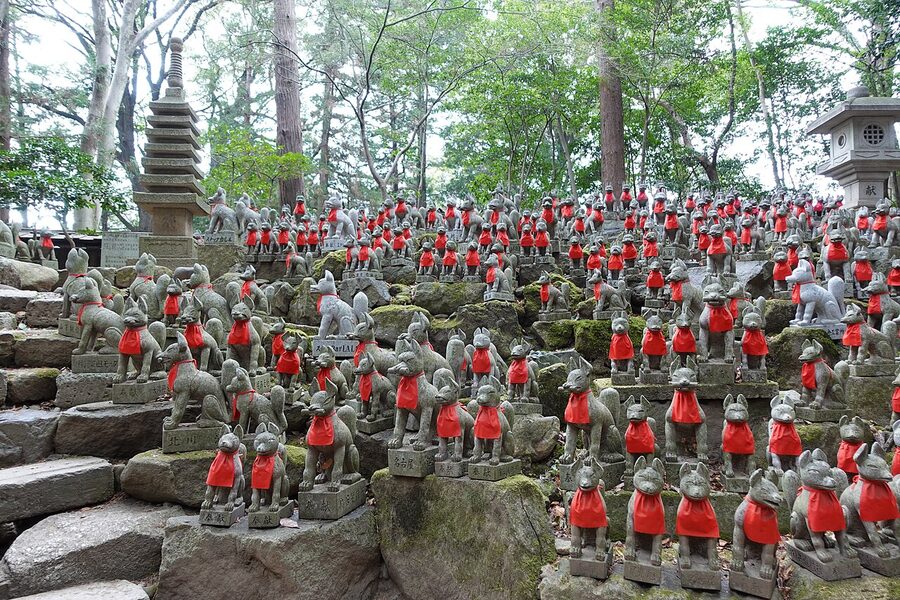
The place to go is the Reikozuka at the back of the precinct, through the path of red banners. In November 2026 the temple opened the shrine of its hidden Dakiniten to the public for the first time since 1954, from 1 to 23 November; if you missed it, you have a long wait, but the foxes in the grove are there every day. My full guide to Toyokawa Inari has the history and the rest of the grounds.
The Sesshō-seki at Nasu-Yumoto, Tochigi
The killing stone lies in a gully of grey rubble on the edge of the Nasu-Yumoto hot-spring village, about 200 metres north of Nasu Onsen Jinja, at 182 Yumoto in the town of Nasu. There is no gate and no charge, but the path closes when the volcanic gas is strong, and the warnings about small children and dogs mean what they say. In December 2022 eight wild boar were found dead beside the stone. Dead foxes and tanuki had been found there before, but never boar, which rather supports the old name.
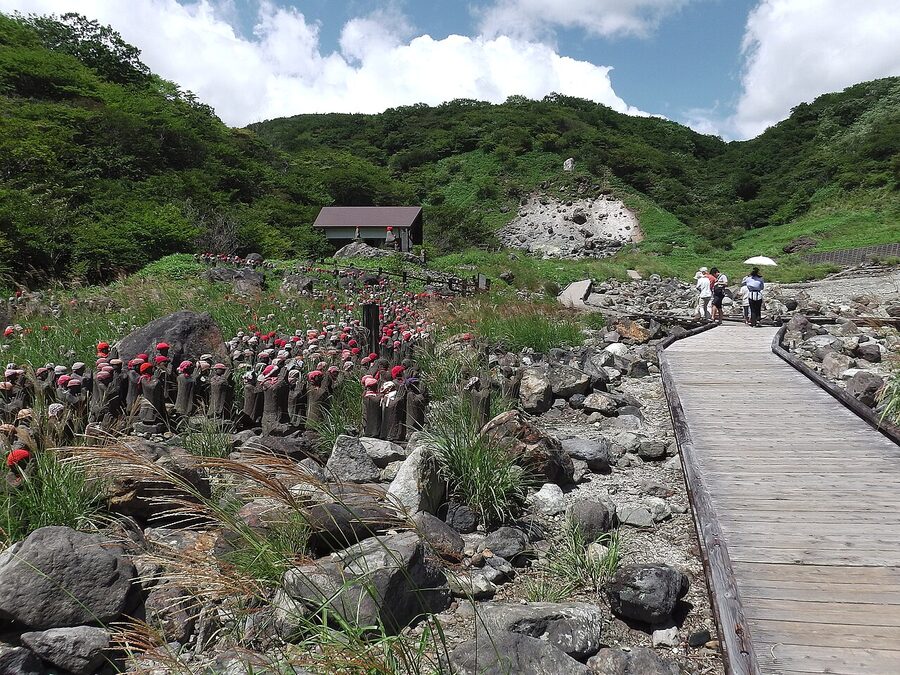
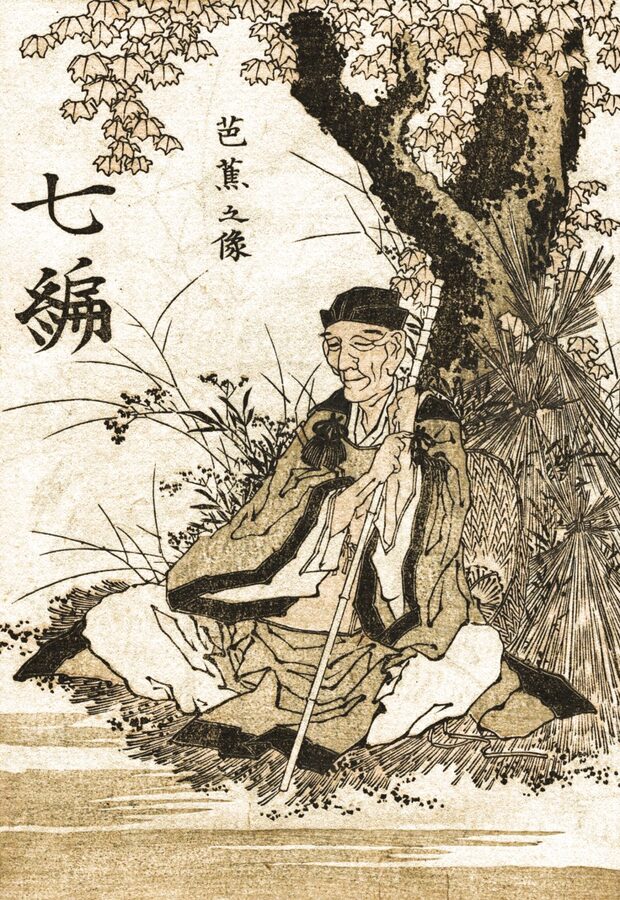
Take a bus from Kuroiso Station on the JR Tōhoku Line, or from Nasu-Shiobara on the Tōhoku Shinkansen, to the Nasu-Yumoto Onsen stop; the walk is short. Matsuo Bashō came in 1689 on the journey that became Oku no Hosomichi and wrote that the stone’s poison had not yet died, with dead bees and butterflies lying so thick you could not see the sand. In 2014 the site was designated a national Place of Scenic Beauty, one of the landscapes of his journey.
Walk up the steps to Nasu Onsen Jinja, the shrine of the hot springs, where the Kyūbi Inari, the shrine of the nine-tailed fox, stands in the grounds. Every May the Gojinka-sai is held at the stone (in 2026 on 31 May): torch-bearers in fox make-up carry fire down from the shrine and light a giant torch beside the stone to calm the volcano. The old public bath of Shika-no-yu is a few minutes away if you want to smell of sulphur for the rest of the day, which you will anyway.
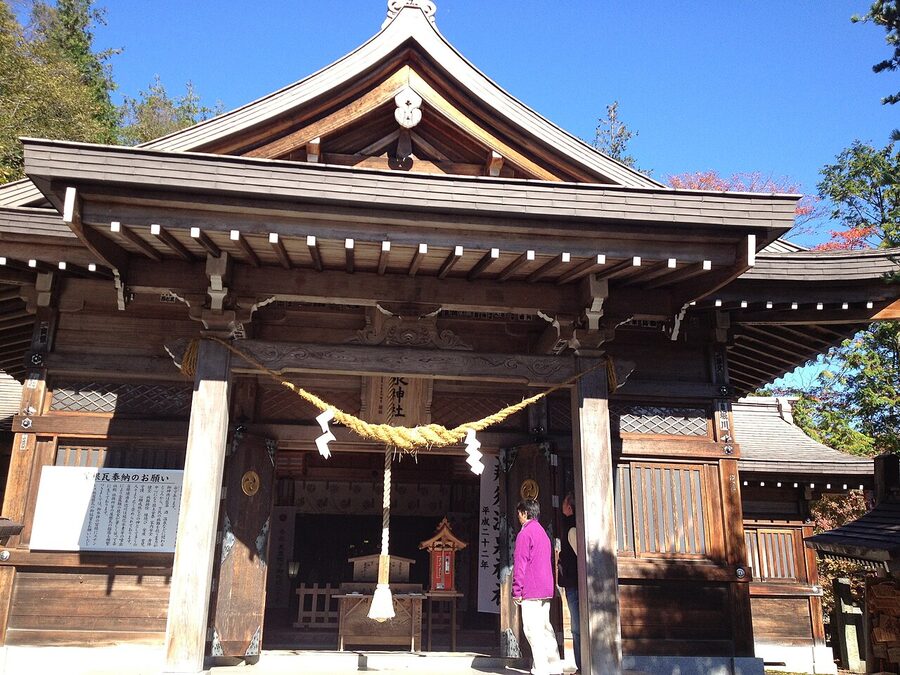
If you are in western Japan rather than the north, Kasei-ji in Maniwa, Okayama, keeps a fragment of the stone that Gennō is said to have scattered. It is a quiet country temple, and what you are looking at is, of course, a rock; the story is what makes it worth the detour.
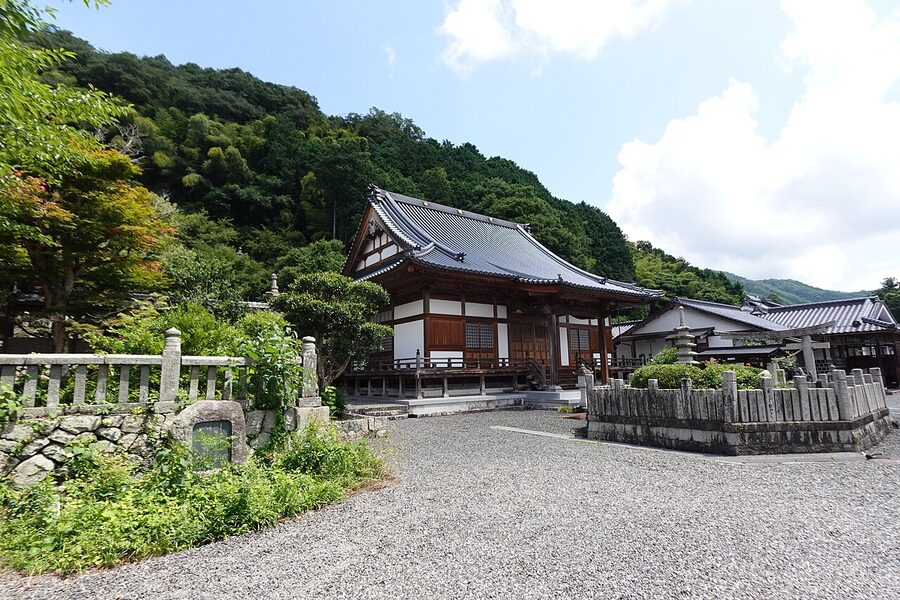
Ōji Inari and the New Year’s Eve fox procession, Tokyo
Ōji Station is on the JR Keihin-Tōhoku Line and the Tokyo Metro Namboku Line, and both shrines are free. Shōzoku Inari, the little shrine on the site of the old nettle tree, is a couple of minutes from the station; Ōji Inari is about ten minutes’ walk from the station, up a slope. At Ōji Inari look for the Oishi-sama, a stone you lift to see whether your wish will come true, and the old fox den in the hillside behind the hall. On the Days of the Horse in February the shrine holds its kite market, selling kites as charms against fire.
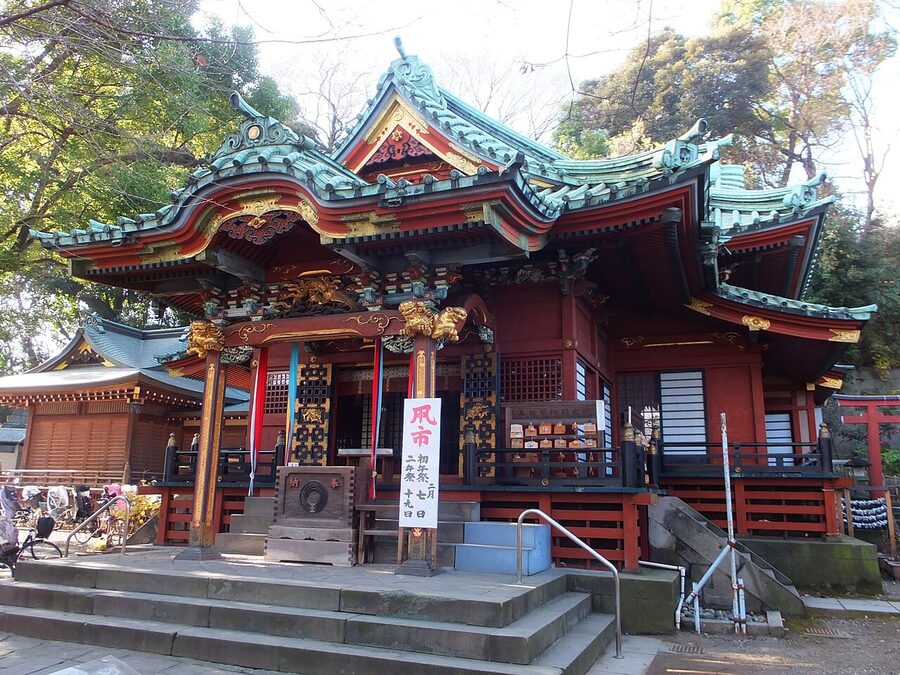
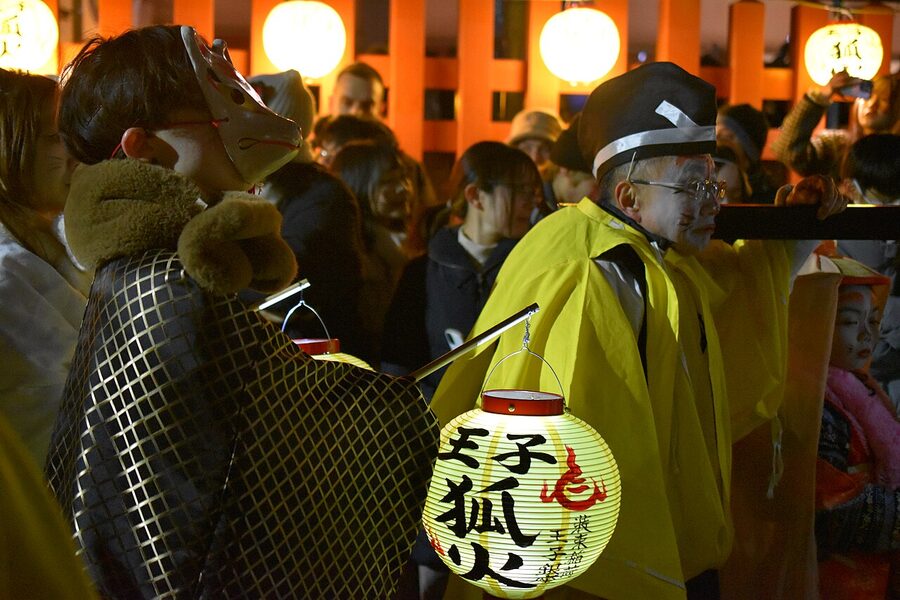
The fox procession, the Ōji Kitsune no Gyōretsu, runs on New Year’s Eve. The 34th is planned for 31 December 2026. In recent years the timetable has gone like this: the giant fox masks at Shōzoku Inari are lit in the afternoon, there is a mirror-breaking ceremony at 23:00, the procession leaves Shōzoku Inari on the stroke of midnight, and it arrives at Ōji Inari at about 01:30.
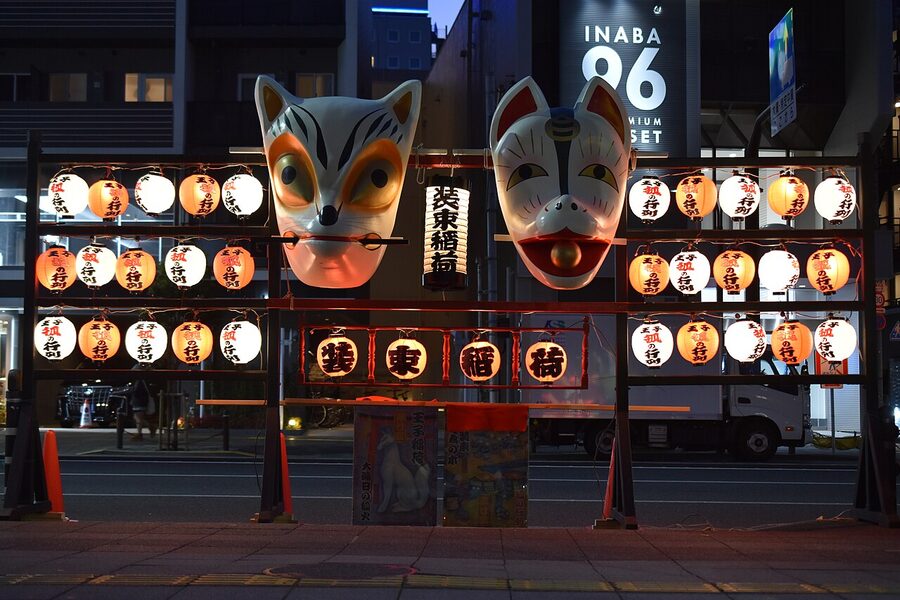
The marchers, some 250 of them, wear formal dress and fox masks or fox make-up, and they are drawn partly from the public, so if you want to walk you need to apply well in advance on the organisers’ official site; places for the 2026 procession have already gone. Everyone else lines the road. A make-up service by the station will paint a fox face on you for the evening, and I recommend it; it is the only way to stand in that crowd without feeling underdressed.
Kuzunoha Inari, Izumi, Osaka
Shinodanomori Kuzunoha Inari Jinja stands about 250 metres from Kita-Shinoda Station on the JR Hanwa Line, south of Osaka, and costs nothing to visit. It claims the forest of Kuzunoha’s poem and has the mirror well where the fox checked her human disguise, a camphor tree some seven hundred years old, and a stone carved with the poem and the figure of the fox as she left.
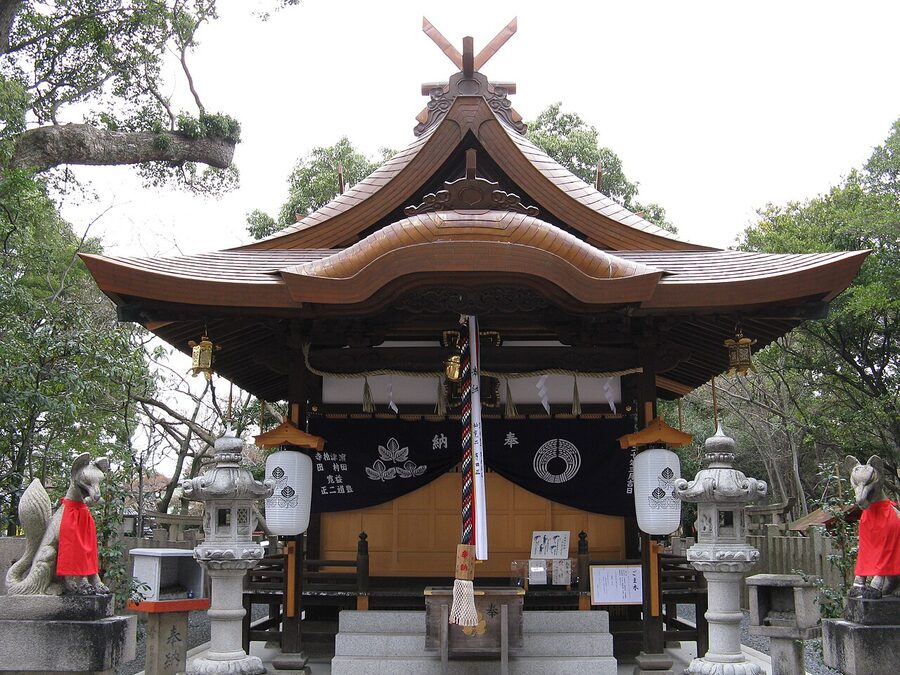
The older Hijiri Shrine, the original home of the Shinoda god, is in the hills nearby, and if you are following Seimei, his shrine in Kyoto and the Abe no Seimei Shrine in Osaka’s Abeno ward complete the set.
Zao Fox Village, Miyagi
Zao Fox Village, in the hills above Shiroishi in Miyagi, is the one place in Japan where you can see a great many real foxes at once: more than a hundred, of several kinds, in a free-range enclosure you walk through. Admission is ¥1,500 from junior high school age up, and younger children enter free. In winter, from 15 October, it opens 09:00 to 16:00 with last entry at 15:30, and it closes on Wednesdays except in the May holidays and Obon. It is about twenty minutes by car from Shiroishi-Zao Station on the Tōhoku Shinkansen, with a loop bus from October.

My own view is mixed, and you should hear it before you go. The place is essentially a large pen built on the lines of a fox farm, and animal-welfare writers have raised concerns about crowding, fights and injuries. The village itself forbids touching the foxes, warns that bites are common, requires an adult with every child, lets you feed them only from inside the feeding hut and publishes its own advice on the echinococcus parasite that foxes can carry. If you go, follow the rules exactly; if you are not sure, the stone foxes at Toyokawa will not mind being looked at.
The stone that split
The two halves of the Sesshō-seki lie side by side in the rubble now, and the gas still comes out of the ground as it did when Bashō counted the dead bees. The town held its memorial, the geologists wrote their notes, and the visitors kept coming, most of them, I suspect, to see whether anything had got out. Nobody has reported a nine-tailed fox at court since.
That is the fox in Japan: a god’s messenger, a wife who loved her son, a courtesan who brought down an emperor, a neighbour’s malice, a light on a hillside and a man in face paint on New Year’s Eve, and the country has never felt the need to choose. If you are in Nasu, walk out past the Jizō and look at the stone for a while. Do not touch it. And on the way back, make sure you know which way the road goes.