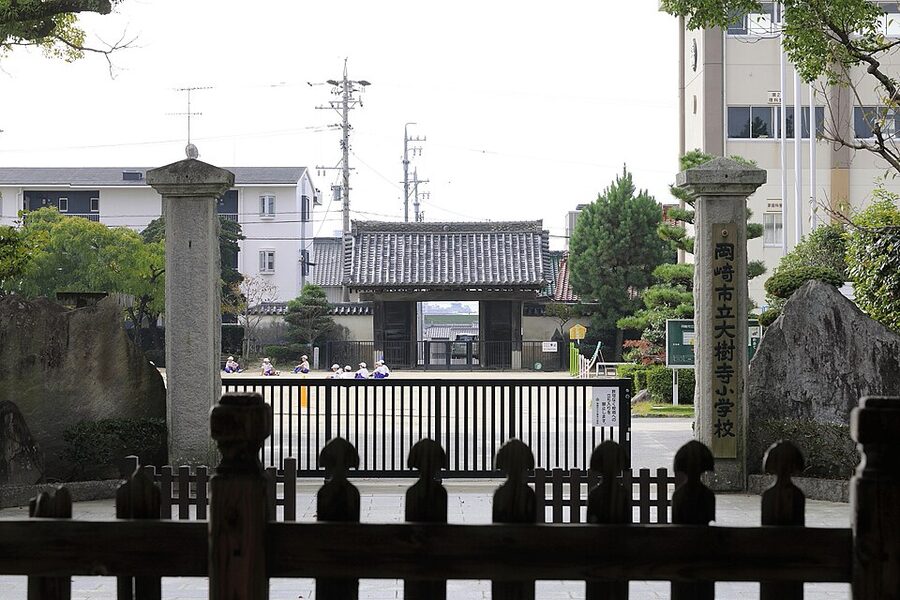
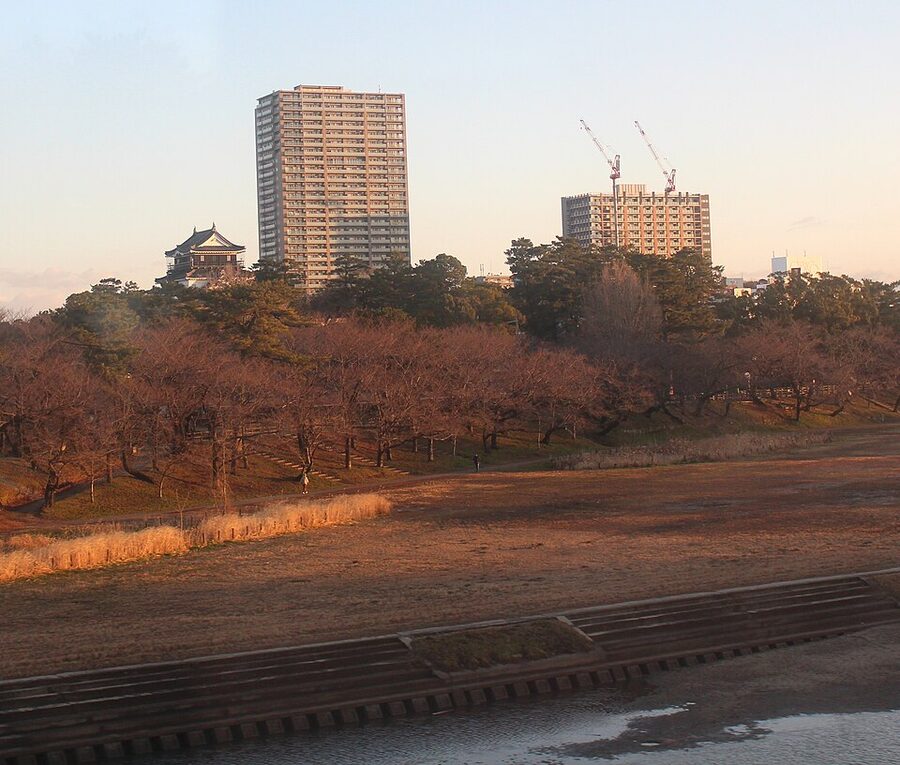
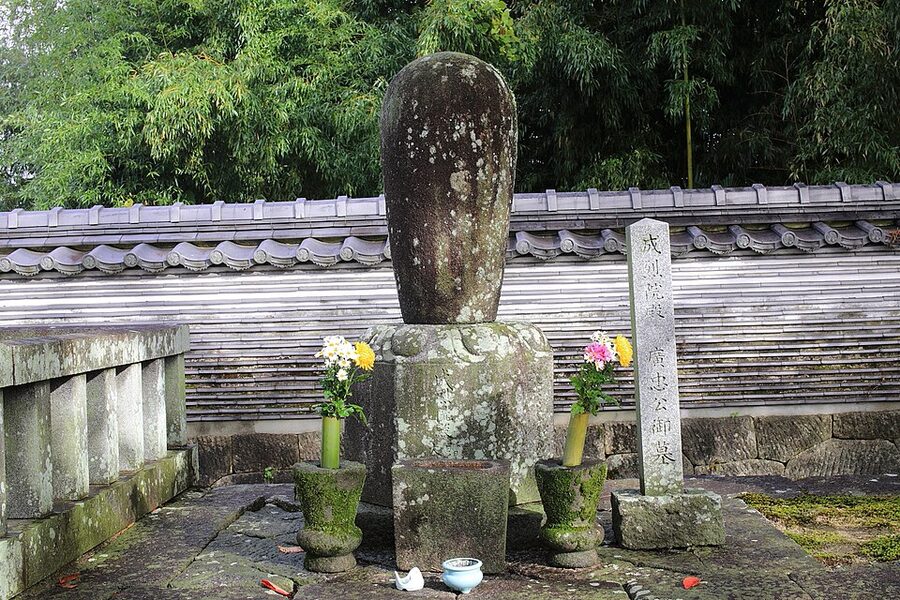
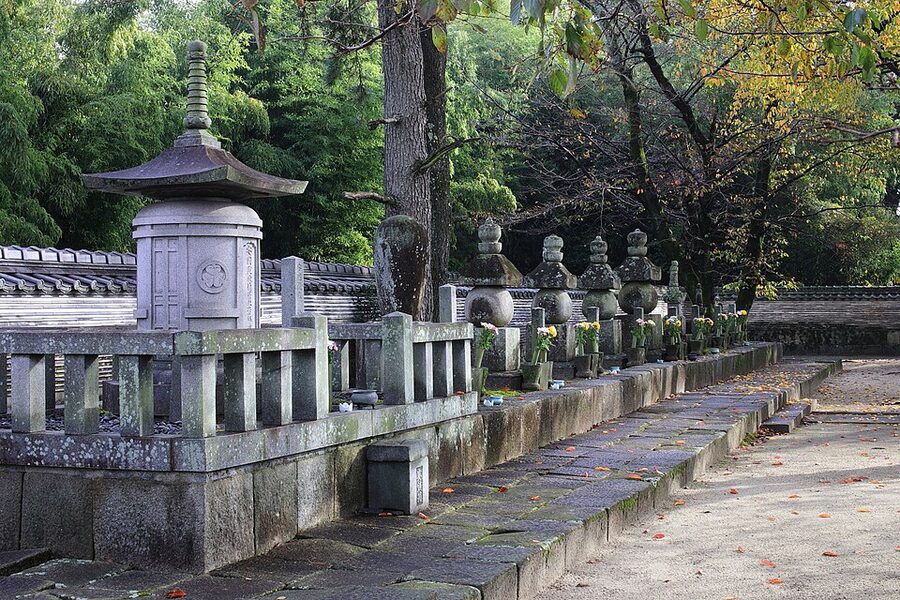
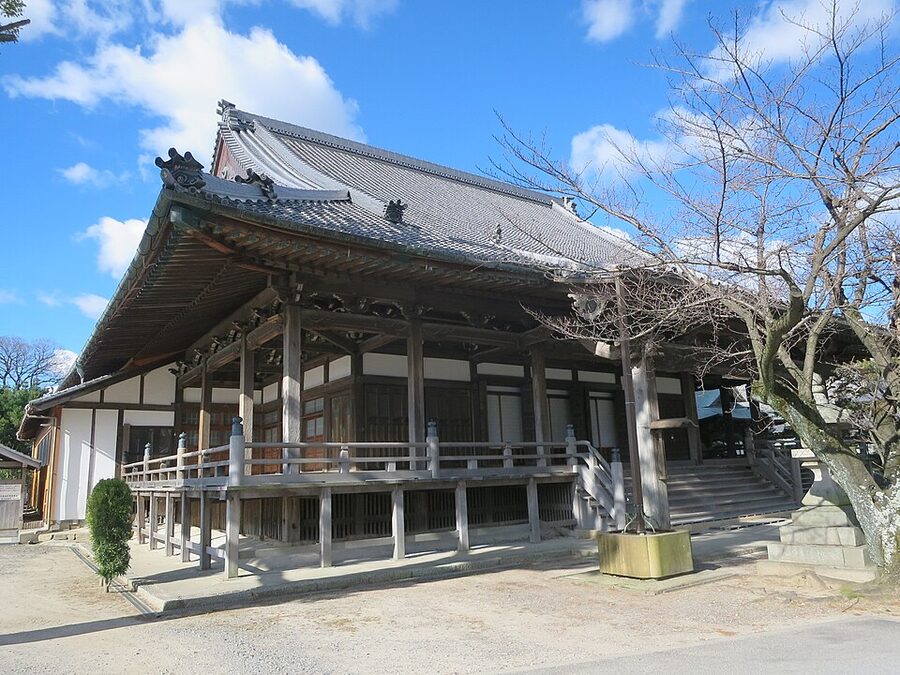
Stand on the steps of the main hall at Daiju-ji, in the northern suburbs of Okazaki, and look south. Your line of sight runs through the temple’s two-storey gate, across a primary-school playground, through a second and older gate on the far side of the playground, and on for three kilometres to a white castle keep. The ground between the two points sags into a shallow dip, and the two ends differ in height by only about five metres, so the keep sits in the gap at an elevation of roughly 0.2 degrees: just enough to clear the roofs.
The view is not an accident. When the third shogun, Tokugawa Iemitsu, began rebuilding his family’s funerary temple in 1636, the halls and gates were set out so that the temple would look straight at the castle where his grandfather, Tokugawa Ieyasu, had been born. Since 2018 the city has had the power to order anyone building under that line to stay below it, and by one account the school, needing a covered passage between its classrooms and its swimming pool, dug the passage underground rather than put a corridor across the view.
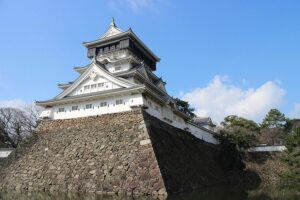
The joke, which Okazaki takes in good part, is that the keep at the end of the line is reinforced concrete from 1959. I don’t think that spoils it. What the sightline protects is not a building but an idea, that this one small hill above the Oto River is where the Tokugawa story begins, and the idea is older and more carefully guarded than any timber that ever stood there.
This is the story of how a fort on a river bluff became the place a dynasty pointed its temples at: the quarrelsome Matsudaira who seized it, the boy born there at the turn of 1543 who grew up as somebody else’s hostage, the son who lost it in 1579, the caretaker lords of the Edo period, a demolition, a rebuild, and a great deal of miso. It ends, as everything on this site does, with how to go and see it.
In This Article
- A fort on the dragon’s head
- A boy born in the twelfth month
- Other people’s castle
- “If it is an abandoned castle, I will pick it up”
- The son he left at Okazaki
- The traditional account
- What the documents say
- The modern readings
- The man who left in the night
- Twenty-seven bends
- A birthplace kept by caretakers
- Sold off, then poured in concrete
- Eight chō west of the castle
- Where to see Okazaki Castle today
- Getting there from Nagoya
- The keep and the Ieyasu-kan
- Okazaki Castle Park
- Daiju-ji and the sightline
- Iga Hachimangū
- The miso storehouses
- Nobuyasu’s mound, Lady Tsukiyama’s mound, and the bends
- When to go
A fort on the dragon’s head
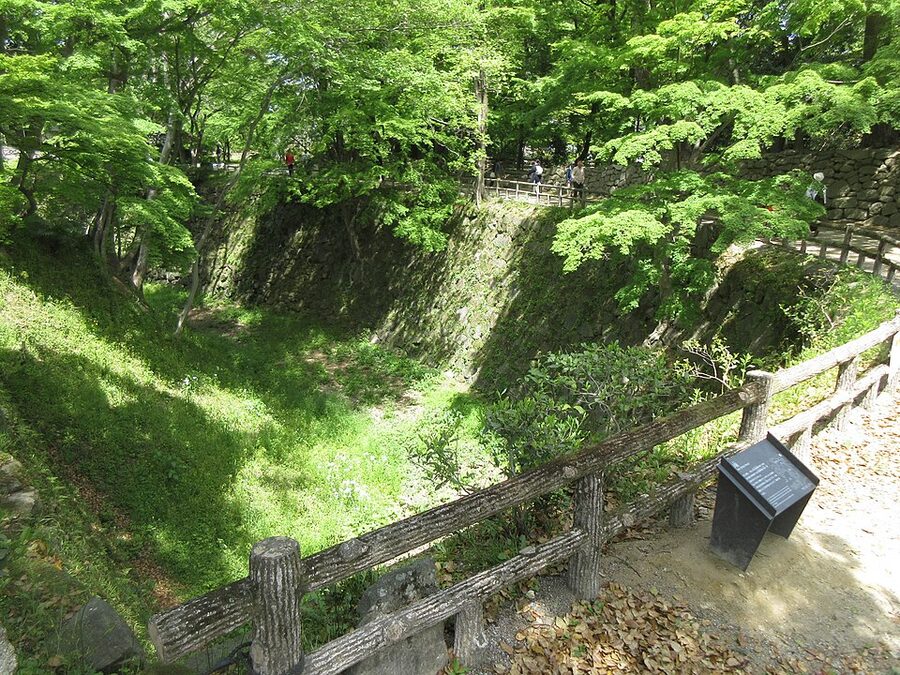
Okazaki Castle stands at the tip of a low terrace on the north bank of the Oto River, a short way above its junction with the Yahagi, the big river of western Mikawa. The tip of the terrace was called Ryūtōzan (龍頭山), “dragon’s head hill”, and it rises to about 24 metres above sea level. The castle’s old nicknames, Tatsu-jō and Ryū-ga-jō, both mean “dragon castle”, and the dragon comes back into the story at the moment of Ieyasu’s birth.
The first fort here was not built by the Matsudaira at all. Saigō Tsuguyori (西郷稠頼), also known as Yoritsugu, deputy of the Niki family who governed Mikawa for the Ashikaga shogunate, put a fort on the dragon’s head in the 1450s as an outpost facing north. Sources give either 1452 or 1455 for the work, and the standard dictionaries settle on 1455. His real residence was across the river at Myōdaiji, on the old line of the Tōkaidō highway, and for decades the name “Okazaki” belonged to that south-bank settlement rather than to the hill.
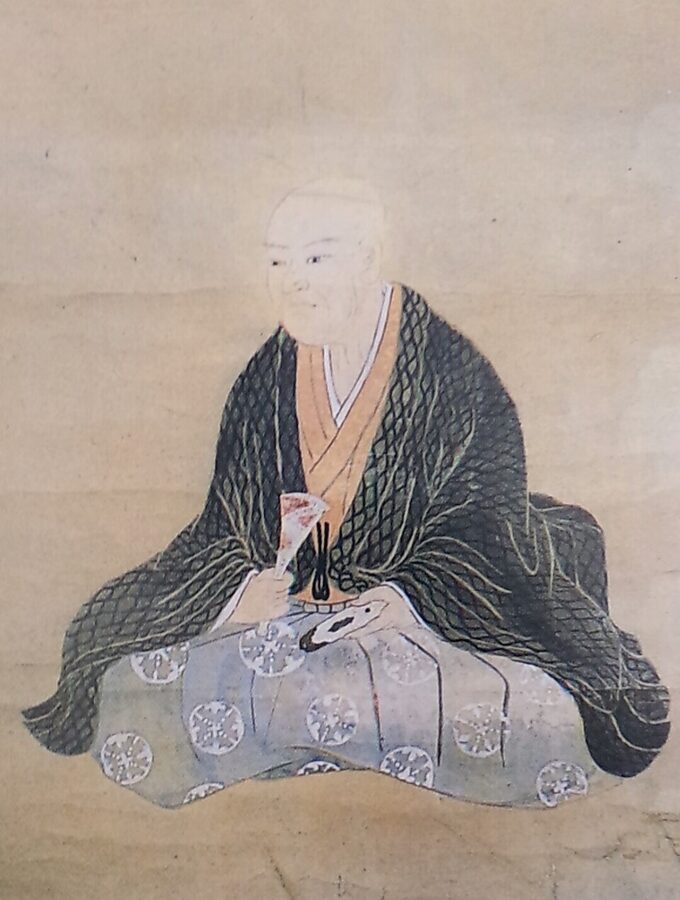
The Matsudaira came down from the hills. The family’s origin story has a wandering priest of noble Minamoto blood marrying into a farming family in the mountain village of Matsudaira-gō in the 14th century; Japanese reference works treat the noble blood as later decoration and the wandering priest as probably true. What is certain is that the third head, Matsudaira Nobumitsu, used the chaos of the Ōnin War to pick up castles across western Mikawa, Okazaki and Anjō among them, and shared them out among his sons. The Anjō branch became the senior line, and it was an Anjō Matsudaira who took Okazaki for good.
He was Matsudaira Kiyoyasu, Ieyasu’s grandfather, who became head of the family at 13 by the Japanese count. English-language accounts usually say he took Okazaki from the Saigō line in 1524; Japanese sources give 1524 or 1526, and the historian Muraoka Motoo has argued from a donation register of the 1520s that Kiyoyasu may have married into the Okazaki house rather than conquered it. Either way, around 1530 he moved his seat from Myōdaiji across the river to the dragon’s head and built the castle there in earnest. The renga poet Sōchō, passing through, noted that Myōdaiji was “now called Okazaki, the house castle of Matsudaira Jirōsaburō”, which was Kiyoyasu’s name.
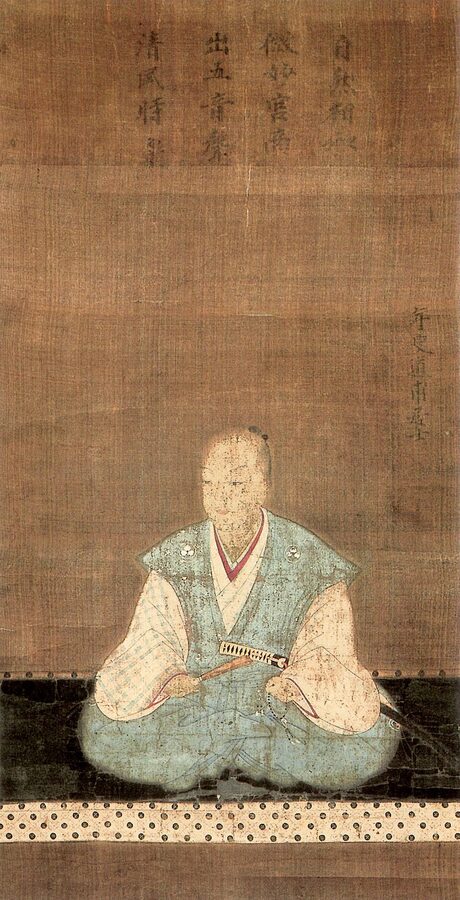
It ended in Owari. On the 5th day of the twelfth month of Tenbun 4 (1535), with his army camped at Moriyama in what is now Nagoya, a horse broke loose in the camp at dawn, and in the uproar one of his own retainers, Abe Masatoyo, cut Kiyoyasu down. The episode is known as the Moriyama Kuzure, “the collapse at Moriyama”, and it left the Matsudaira with a ten-year-old heir and a castle full of relatives who wanted it.
A boy born in the twelfth month
The heir was Matsudaira Hirotada, Ieyasu’s father, and his first years as lord were spent not in Okazaki but on the run. His great-uncle Matsudaira Nobusada occupied the castle, and loyal retainers hurried Hirotada away to Ise. He came back in 1537 with the help of Imagawa Yoshimoto, the great lord of Suruga to the east, and it would not be the last time the Matsudaira needed the Imagawa to keep their own castle.
In 1541 Hirotada married Odai, daughter of Mizuno Tadamasa, lord of Ogawa in Owari, a girl of 14 by the Japanese count. Their son was born in Okazaki Castle on the 26th day of the twelfth month of Tenbun 11. Japanese sources write the year as 1542, because that is the year Tenbun 11 mostly covers; converted to the Western calendar, the date falls on 31 January 1543, which is why English-language books say 1543. Both are right, which is the kind of thing that makes footnotes long.
The boy was called Takechiyo. The castle he was born in looked nothing like the one you will visit. A note in the Japanese castle literature says that in 1542 the turrets and gates were still thatched and that there was no stone wall at all, in a district full of good stone: only earth ramparts heaped up from the spoil of the moats and planted over with turf.
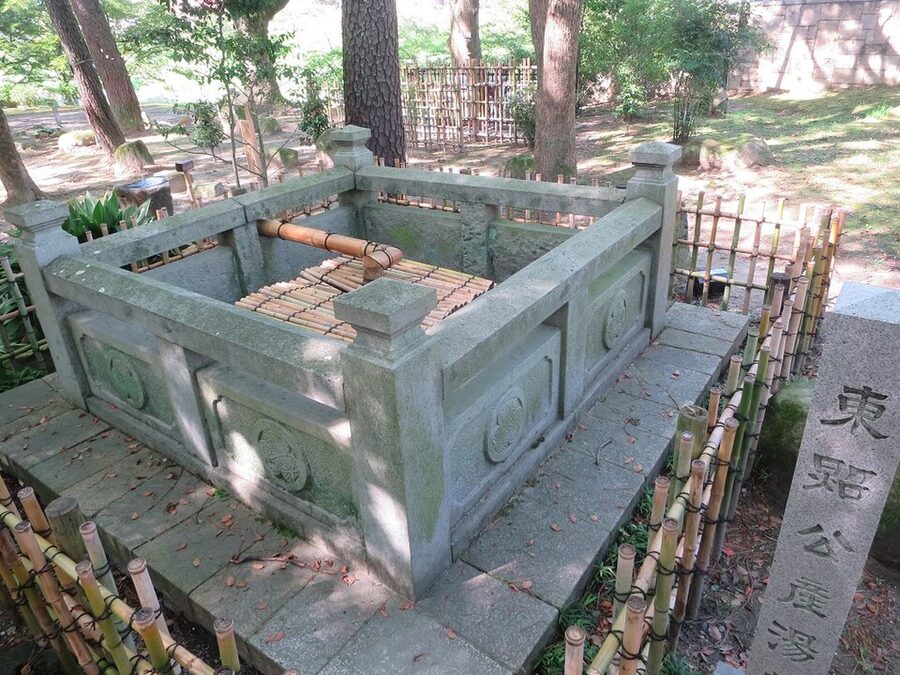
Okazaki has three birth stories, and you will meet all of them in the park. There is the well. There is the Ena-zuka, a mound where, by the city’s account, the infant’s placenta and cord were buried, following an old Japanese custom of burying the afterbirth to pray for a child’s growth. And there is the dragon: Tatsuki Shrine, beside the keep, tells that on the morning of the birth a golden dragon appeared over the castle tower, called up clouds and wind, and rose into the sky.
None of the three has a contemporary source, and the city’s own guide presents them as tradition. What does survive from those years is more touching.
On the 3rd day of the second month of Tenbun 12, a few weeks after the birth, Odai gave a bronze image of the healing Buddha Yakushi to Myōshin-ji in Mikawa with a prayer for her son’s long life. Then her brother Mizuno Nobumoto broke with the Imagawa and went over to the Oda, and in the ninth month of 1544 Hirotada, who could not afford to look disloyal to his protectors, sent her home. Takechiyo was three by the Japanese count.
Other people’s castle
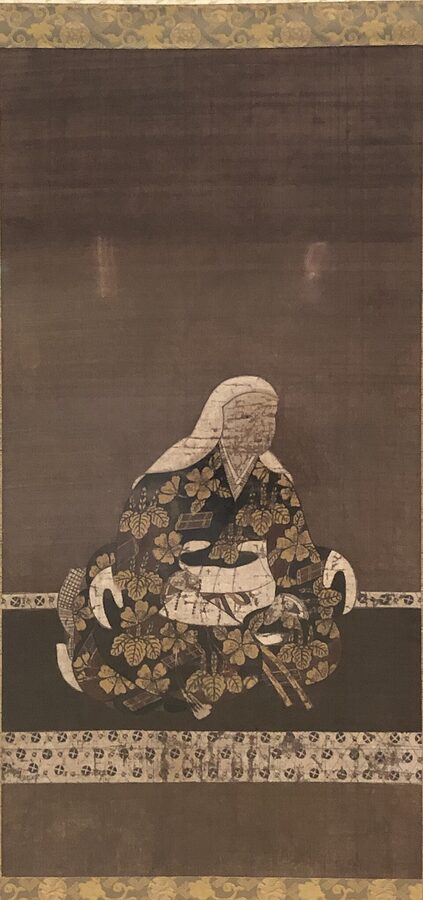
The next 13 years explain a good deal about how Okazaki sees itself: its castle was run by other people while its lord grew up somewhere else. In the eighth month of 1547 Takechiyo, aged six by the Japanese count, was sent as a hostage to the Imagawa capital at Sunpu, the price of Imagawa protection. On the way, at Tahara, Toda Yasumitsu, whose daughter was Hirotada’s second wife, handed him to Oda Nobuhide instead, and the boy spent the next two years in the house of Katō Junsei at Atsuta, in Owari.
That is the story the Edo-period chronicles tell. A document preserved among the Honjō-ji papers says that Oda Nobuhide took Okazaki Castle itself in the ninth month of 1547, and the historians Muraoka Motoo and Shiba Hiroyuki have used it to argue that Hirotada surrendered and handed over his son as a hostage, with no kidnapping involved. Whichever is true, the story that the young hostage met the young Oda Nobunaga at Atsuta and that the two became friends has no source behind it at all.
Hirotada’s death left Okazaki without a lord in residence. The Imagawa took Nobuhide’s eldest son, Oda Nobuhiro, prisoner and traded him for Takechiyo, and in the eleventh month of 1549 the boy went to Sunpu after all. Okazaki Castle was run by Imagawa castellans, Yamada Kagetaka among them, and the Matsudaira retainers were folded into the Imagawa army. When Takechiyo was allowed home to visit his father’s grave, the main enclosure was occupied by the Imagawa officer, and the young lord of Okazaki had to lodge in the second enclosure of his own castle.
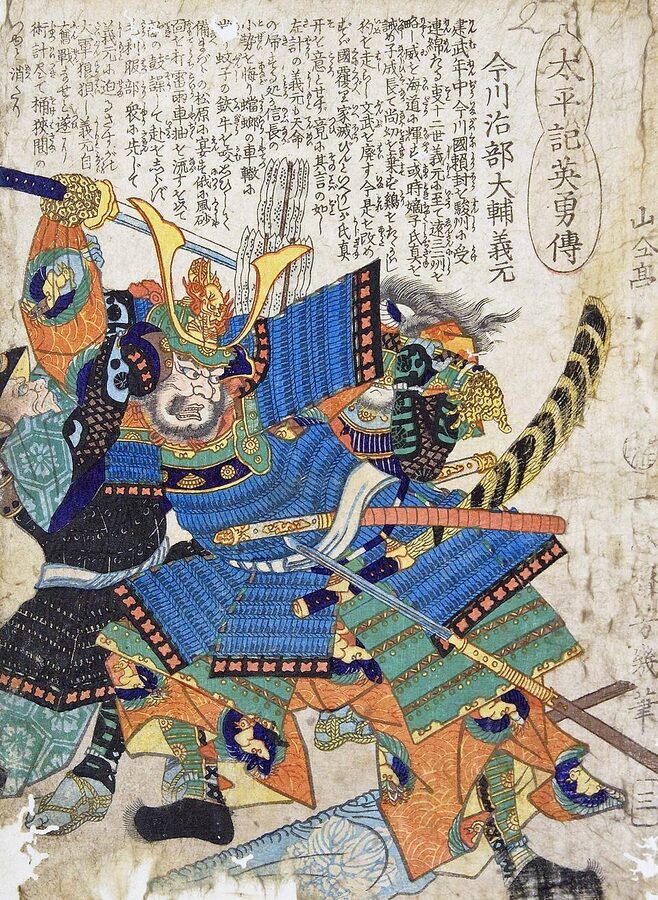
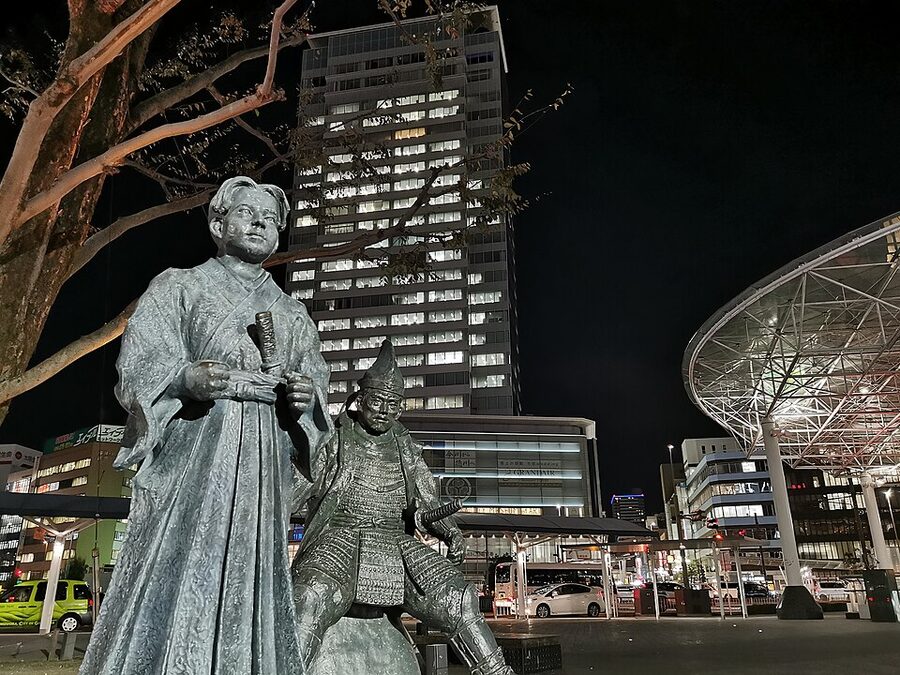
Japanese historians now tend to say that the boy was lord of Okazaki all along, and that the Imagawa ran the castle because he was a child. Under Yoshimoto he came of age in the third month of 1555, aged 14 by the Japanese count, as Matsudaira Motonobu, the “Moto” borrowed from Yoshimoto’s own name. He married a lady of the Sekiguchi, a branch of the Imagawa family, known to history as Lady Tsukiyama, in 1556 or 1557, and around 1558 he took the name Motoyasu, the “yasu” from his grandfather Kiyoyasu.
His first campaign, at Terabe in 1558, won back part of his family’s old lands. In the fifth month of 1559 he exchanged a seven-article agreement with the retainers back in Okazaki, a sign that he was being prepared to go home as an Imagawa lord. Nobody expected him to go home the way he did.
“If it is an abandoned castle, I will pick it up”
On the 19th day of the fifth month of Eiroku 3 (1560), Imagawa Yoshimoto was killed by Oda Nobunaga’s men at Okehazama. Motoyasu was not with him. The day before, he had forced a supply column into the besieged Imagawa fort at Ōdaka, and he was holding it when, that evening, a messenger from his uncle Mizuno Nobumoto arrived with the news and the advice to leave before the Oda came. He sent scouts to confirm it, slipped out in the night, and headed for home.
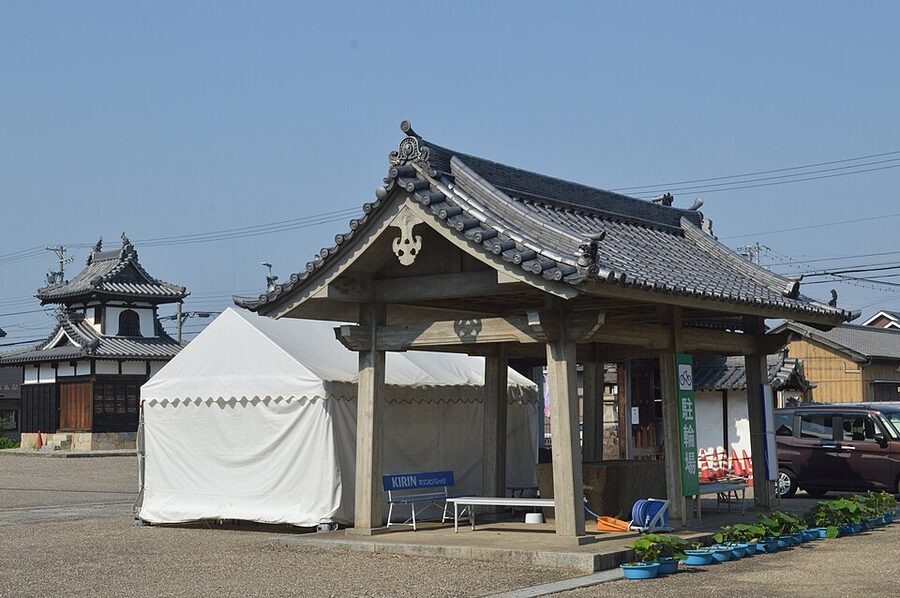
He did not go straight to the castle, because there were still Imagawa troops in it. On the 20th he went instead to Daiju-ji, the Matsudaira family temple north of the town, and waited. When the Imagawa garrison pulled out, he entered Okazaki Castle on the 23rd with a line the chronicles put in his mouth: “If it is an abandoned castle, I will pick it up.” Some Japanese historians now argue that Yoshimoto’s heir, Imagawa Ujizane, allowed his return so that he could hold the frontier against the Oda, which would make the famous line rather less defiant than it sounds.
Daiju-ji tells a bigger story about those three days. With enemies around the temple, Motoyasu went to his ancestors’ graves meaning to commit seppuku, and the abbot, Tōyo Tenshitsu, talked him out of it with the Pure Land teaching “Onri edo, gongu jōdo”, “turn from this defiled world, seek the Pure Land”. The abbot then armed some 500 monks; one of them, a monk of enormous strength named Sodō, drove off the attackers by swinging the gate’s locking bar, which the temple still keeps; and the eight characters became Ieyasu’s battle banner for life. Japanese research is blunt that no document supports the suicide story or the banner: it is the temple’s story, and a good one, but don’t mistake it for evidence.
What followed is on firmer ground. In 1561 Motoyasu attacked Imagawa strongholds in eastern Mikawa and made peace with Nobunaga through his uncle Mizuno Nobumoto; Japanese sources date the agreement to 1561 and a meeting that confirmed it to 1562, which is the date English books usually give for the alliance. In 1562 his retainer Ishikawa Kazumasa went to Sunpu and exchanged two Udono brothers, captured at Kaminogō, for Motoyasu’s wife and children. On the 6th day of the seventh month of 1563 he dropped the “Moto” of Yoshimoto and became Ieyasu.
That autumn his own province rose against him. The Mikawa Ikkō-ikki of 1563 and 1564 was led by the True Pure Land temples of the Yahagi valley: Honshō-ji at Nodera, Jōgū-ji at Sasaki and Shōman-ji at Harisaki, together with Honshū-ji at Toro, whose temple towns were legally closed to the lord’s officers. When Ieyasu’s men broke that immunity (by seizing grain from Jōgū-ji in one version, by arresting a fugitive inside Honshō-ji in the “Mikawa Monogatari”), the temples called out their congregations, and rival Matsudaira branches, the Kira, and many of Ieyasu’s own vassals joined them.
The split ran straight through the households that would later be celebrated as the Mikawa samurai. Honda Masanobu, who became Ieyasu’s closest political adviser, fought for the temples and then left Mikawa for years; Hachiya Sadatsugu and Watanabe Moritsuna were pardoned and came back. The Ishikawa were leaders of the Honganji congregation in Mikawa, and Kazumasa’s father joined the rising while Kazumasa himself converted to the Jōdo sect so that he could stay at Ieyasu’s side. One Japanese encyclopedia says Ieyasu himself was struck by two bullets in the fighting.
Ieyasu won the decisive fight at Batōgahara on the 15th day of the first month of 1564, and by spring the temples had agreed terms. Once the congregations had disarmed, he ordered the True Pure Land temples to convert or be pulled down, and the sect was banned in his lands until 1583. The historian Hirano Akio has argued that the risings of the temples and of the dissident lords were never coordinated, which is part of how a young lord survived them. Japanese writers count this as the first of Ieyasu’s three great crises, alongside Mikatagahara in 1572 and his flight across Iga after the Honnōji Incident of 1582.
On the 29th day of the twelfth month of 1566, with Mikawa united, the emperor granted him a new surname and the title of Lord of Mikawa. He took the name Tokugawa, on the strength of a claimed descent from a medieval family of that name, and the lord of Okazaki Castle became Tokugawa Ieyasu.
The son he left at Okazaki
In 1570 Ieyasu moved his headquarters east to the new frontier at Hamamatsu and left Okazaki to his eldest son. Nobuyasu had been born at Sunpu on the 6th day of the third month of 1559. In 1567, aged nine, he had been married to Nobunaga’s daughter Toku-hime, also nine, the living seal on the Oda alliance, and that year he came of age with the “Nobu” of his name borrowed from his father-in-law. From 1570 he held Okazaki in his own right, as Okazaki Saburō Nobuyasu.
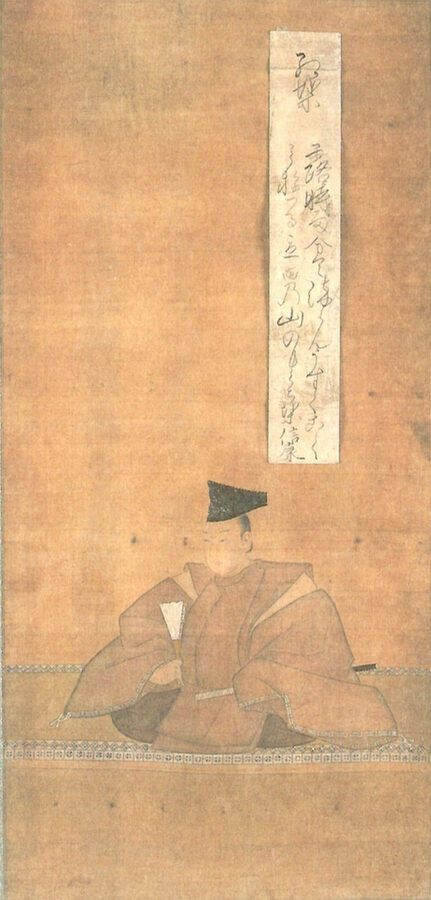
He was a good soldier. He led a division at Nagashino in 1575 at 17, and twice took command of the rearguard in retreats before Takeda forces, the post of greatest danger. The Edo-period chronicles also give him a vicious temper, shooting at dancers at a Bon festival because their clothes were shabby and turning against his wife because she had given him two daughters and no son. Those stories come from texts written to explain what happened next, and you should read them that way.
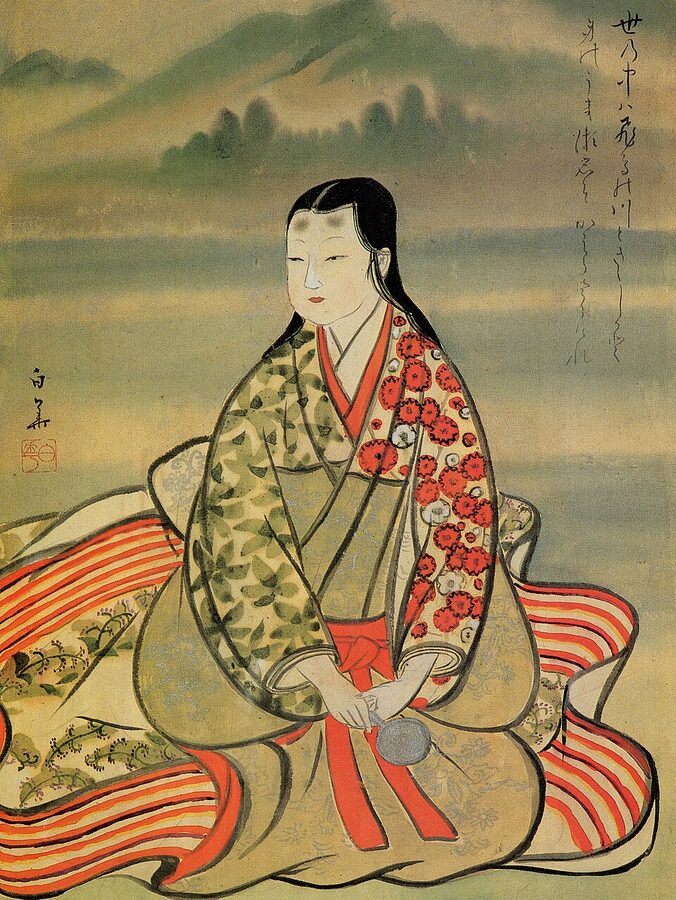
His mother lived nearby. Lady Tsukiyama took her name from the place she lived, a residence called Tsukiyama in what is now Kyūemon-chō, about a kilometre north-east of the castle, which suggests she kept a household of her own. Her family were Imagawa kin, and by the 1570s the Imagawa were finished and her husband was the ally of the man who had killed their lord.
In the eighth month of Tenshō 7 (1579) it happened very quickly. Ieyasu arrived at Okazaki on the 3rd day, and on the 4th Nobuyasu was put out of the castle and sent to Ōhama Castle on the coast; from there he was moved to Horie and then to Futamata, in Tōtōmi. The retainers at Okazaki were made to sign oaths that they would have no contact with him, and Ieyasu filled the castle with his own guards.
On the 29th day of the month Lady Tsukiyama was killed by two Tokugawa retainers, Okamoto Tokinaka and Nonaka Shigemasa, near Lake Sanaru outside Hamamatsu. On the 15th day of the ninth month Nobuyasu was made to kill himself at Futamata. He was 21 by the Japanese count.
The traditional account
The version most people know comes from the “Mikawa Monogatari”, written in the Edo period by the Tokugawa retainer Ōkubo Tadataka. Toku-hime, at odds with her Imagawa-born mother-in-law and estranged from her husband, wrote her father a letter of twelve charges, among them that Lady Tsukiyama was in secret contact with Takeda Katsuyori. Nobunaga questioned Ieyasu’s senior retainer Sakai Tadatsugu, who had carried the letter; Tadatsugu did not defend the young lord; and Nobunaga demanded Nobuyasu’s death, which Ieyasu, too weak to refuse his ally, carried out. It is a story with a grieving father in the middle and the blame placed safely outside the family.
What the documents say
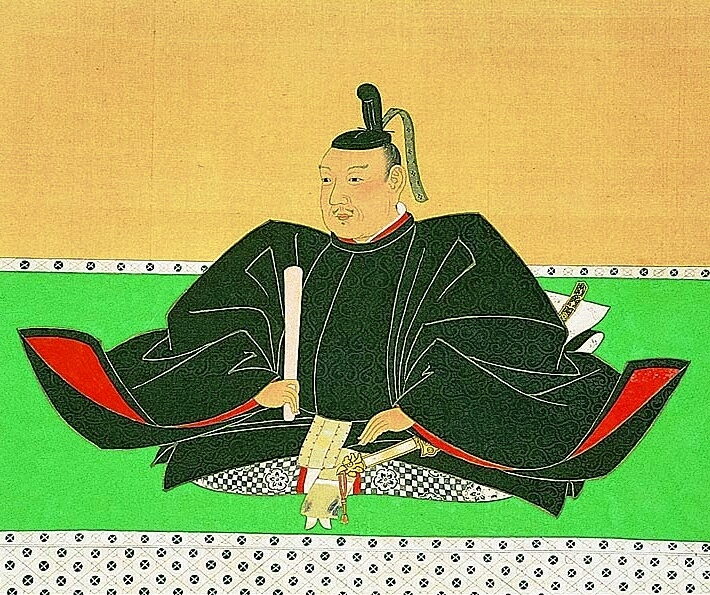
The trouble is that the earliest texts do not quite say that. The “Azuchi Nikki”, the oldest surviving version of Nobunaga’s biography, the “Shinchō Kōki”, records rumours that Nobuyasu was plotting rebellion, and says that Ieyasu and his elders, judging this an affront to Nobunaga, put Nobuyasu out on the 4th day of the eighth month. In that text and in the “Tōdaiki”, Nobunaga’s answer to Ieyasu’s envoy amounts to “do as you think best”. On the 8th day Ieyasu wrote to Nobunaga’s aide Hori Hidemasa thanking him for his good offices and reporting that he had expelled his son for “lack of resolve”, which is the language of a lord disciplining an heir, not of a vassal carrying out an order.
The diary of the Tokugawa retainer Matsudaira Ietada, a contemporary witness, adds more. Early in 1578 Lady Tsukiyama wrote to the Okazaki retainers, which was unusual, and Nobuyasu called on Ietada in person a few days later; that autumn Ieyasu told the Mikawa lords that they need no longer report for duty at Okazaki. When the historian Iwasawa Yoshihiko examined the diary’s original in 1968, he read its entries for 1579 as a father trying to make peace with a son who would not have it.
The modern readings
From there the arguments divide. The old suggestion of Takayanagi Mitsutoshi, that Nobunaga had Nobuyasu killed because he outshone Nobunaga’s own heir Nobutada, is now generally rejected for want of evidence. The writer Tenkyū Gorō and the historian Taniguchi Katsuhiro see a quarrel between the Hamamatsu men, who fought the war and won the promotions, and the Okazaki men around Nobuyasu, and suspect a plot to replace Ieyasu with his son.
Shiba Hiroyuki ties the affair to the Ōoka Yashirō plot of 1575, when officials of Nobuyasu’s household were caught planning to defect to the Takeda, and argues that the contacts with the Takeda went on afterwards; Honda Takashige thinks it was Lady Tsukiyama, not Nobuyasu, who kept them going. Kuroda Motoki points to timing: Ieyasu’s third son, the future shogun Hidetada, was born in the fourth month of 1579, and an alliance with the Hōjō against the Takeda was concluded on the 4th day of the ninth month, eleven days before Nobuyasu’s death.
I am not going to pick a villain, because the sources won’t let me. What they do allow is this: the decision was made inside the Tokugawa house, by Ieyasu, for reasons that had at least as much to do with Okazaki as with Nobunaga, and the old story was convenient for everyone who told it afterwards. Late in life, the chronicles say, Ieyasu admitted that father and son “had not been at peace”.
Nobuyasu’s head went to Nobunaga for inspection and then came back to Okazaki, where it was buried at the place that became Wakamiya Hachimangū; Ishikawa Kazumasa raised a memorial mound over it in 1580. Lady Tsukiyama’s head also came home, to Yūden-ji in Okazaki, and was moved to Yahashira Shrine in 1646 when the temple relocated. Both Okazaki mounds are still there, and I tell you how to find them at the end.
The man who left in the night
The guardian who failed to keep Nobuyasu alive became castellan of Okazaki after him. Ishikawa Kazumasa had been with Ieyasu since the boy was sent to Sunpu in 1549; he had brought home Ieyasu’s wife and son, stayed loyal through the rising that took his own father, and led the western Mikawa contingent through Anegawa, Mikatagahara and Nagashino. After 1582 he handled the Tokugawa side of the dealings with Toyotomi Hideyoshi, and after the inconclusive campaign of Komaki and Nagakute in 1584 he is said to have been the voice in Ieyasu’s council arguing for terms.
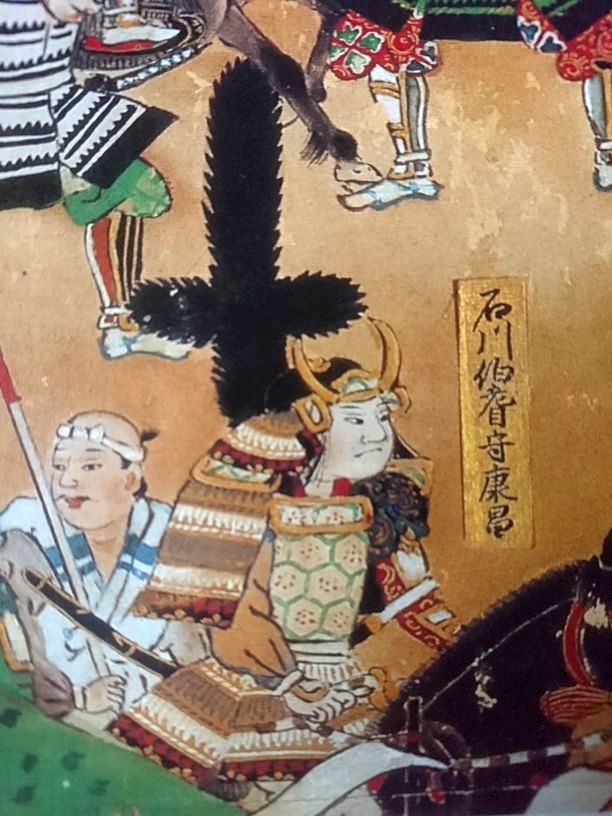
On the 13th day of the eleventh month of Tenshō 13 (1585) he left Okazaki and went over to Hideyoshi. Nobody knows exactly why. Hideyoshi’s own letter says it was because the Tokugawa had refused his demand for more hostages; Japanese historians add that Kazumasa had become isolated as the leading voice for peace, that hard-liners such as Honda Tadakatsu suspected him of dealing with the enemy, and even that Ieyasu sent him as a planted defector. The one thing everyone agrees on is the damage: Kazumasa knew every detail of the Tokugawa military organisation, and Ieyasu rebuilt his army on the model of the defeated Takeda in response.
Hideyoshi gave him land in Kawachi and, in 1590, a domain of 80,000 or 100,000 koku at Matsumoto in Shinano, where he and his son Yasunaga worked on the castle, town and keep that make Matsumoto Castle one of Japan’s 12 original castles. He died in 1592 or 1593, depending on whose record you follow. In Okazaki’s story he is the man who walked out; in Matsumoto’s he is the founder. Both towns are right.
Twenty-seven bends
In 1590, after the fall of the Hōjō at Odawara, Hideyoshi moved Ieyasu out of his home provinces to the Kantō, where he made Edo Castle his seat. Okazaki went to one of Hideyoshi’s own men. Tanaka Yoshimasa was a man of Ōmi, born in 1548, who had served Hideyoshi’s nephew Hidetsugu; he received Okazaki with something over 50,000 koku and had been raised to 100,000 by 1596. His job was to keep watch on Ieyasu’s old province for Hideyoshi.
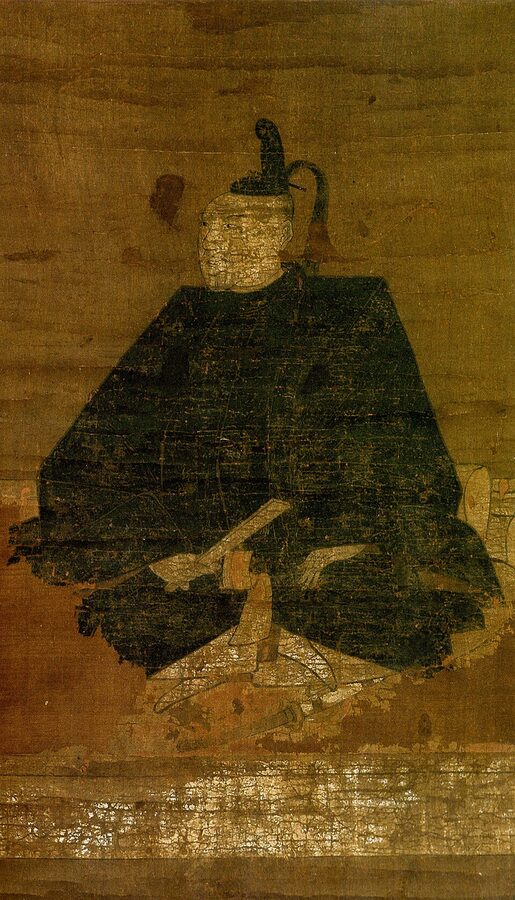
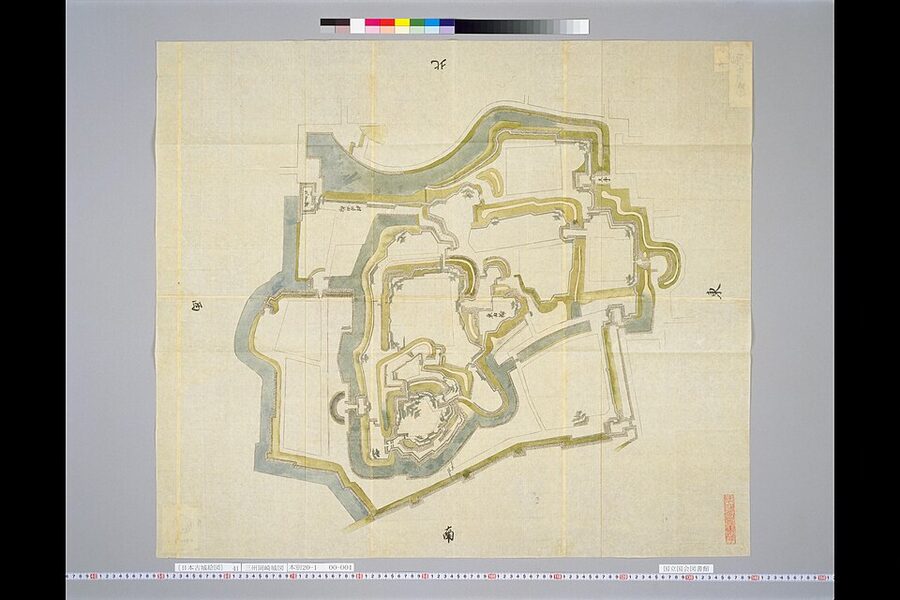
He did it with spades. In 1592 he began the Tanaka-bori, an outer moat and earthen bank running about 4.7 kilometres around the east, west and north of the town, and he filled in the marshy ground to the west. He rebuilt the castle in stone: the Hiroshima University castle specialist Miura Masayuki dated a stretch of rough stone wall found in 2007 to Tanaka’s work, on the grounds that its style predates 1608. Temples without Tokugawa ties were pushed aside, and one temple history complains bitterly of him.
Most of all, he moved the Tōkaidō. The great highway had skirted the town; Tanaka brought it through the middle and made it turn, and turn again, through a sequence of right-angled corners known as the Okazaki no Nijūnana Magari, the “twenty-seven bends”. A highway full of right-angled turns is good for innkeepers and bad for an army in a hurry, and the bends stretched Okazaki into a long, thin castle town. A local story says Tanaka walked his town every day and, when hungry, ate a lunch box from the castle by the roadside, which made him popular.
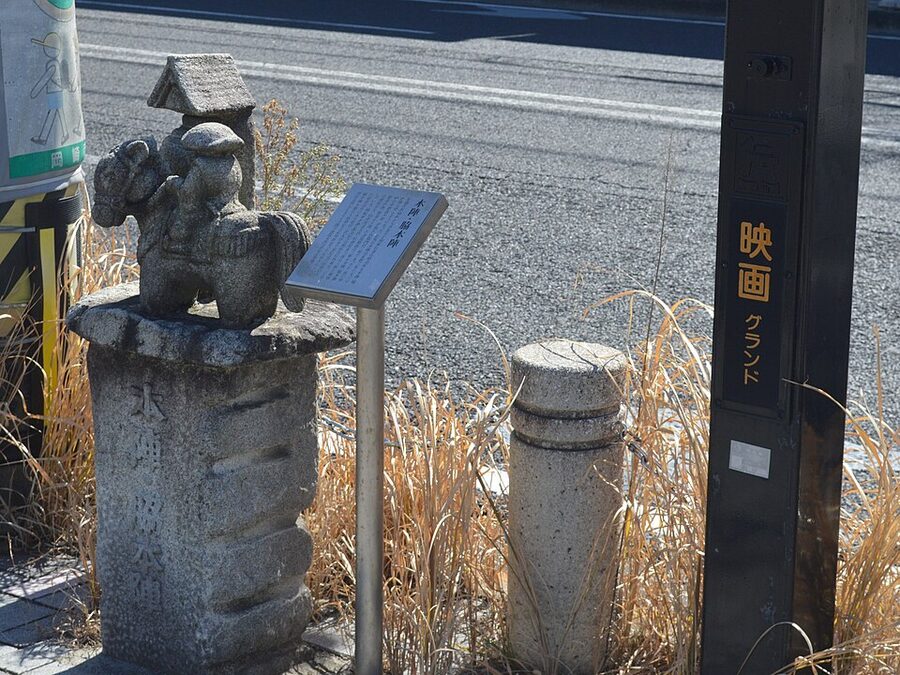
Okazaki-juku was a post town on the road between Edo and Kyoto, and the lords on the alternate attendance circuit passed through it with their trains. Hiroshige drew it more than once, and his favourite view was not the town at all but the long bridge over the Yahagi, with the castle beyond.
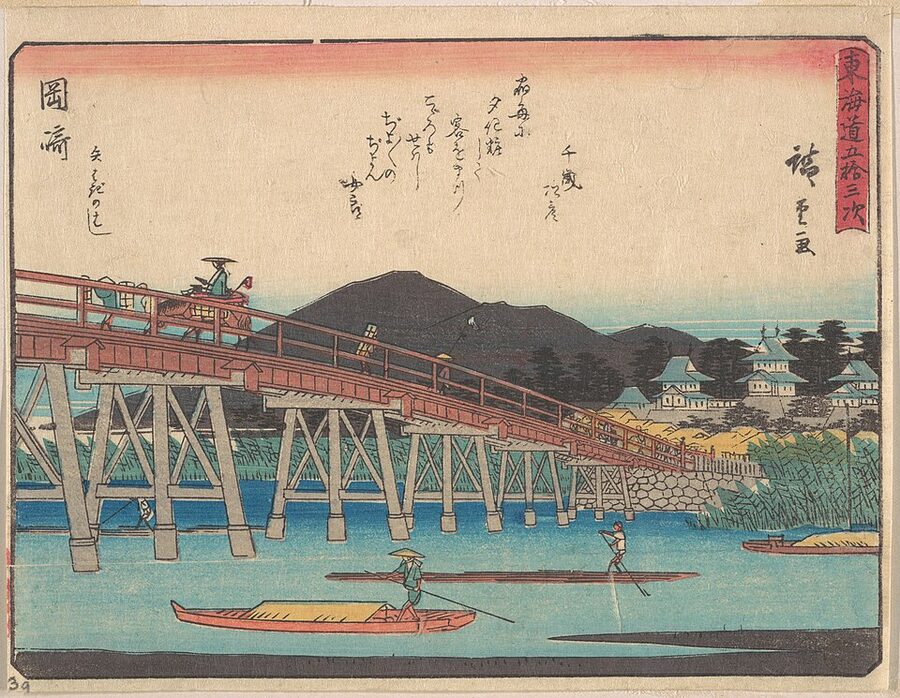
After Sekigahara in 1600, where Tanaka fought for Ieyasu and his men took the fugitive Ishida Mitsunari prisoner, he was rewarded with a whole province, Chikugo in Kyūshū, worth 325,000 koku. Okazaki came back to the Tokugawa, and from then on it was never held by anyone but their most trusted hereditary vassals.
A birthplace kept by caretakers
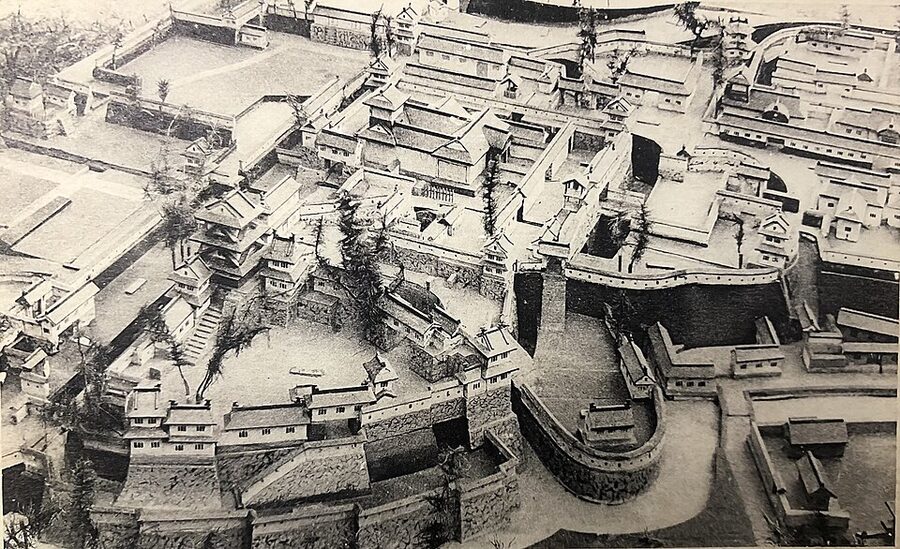
The Edo-period domain of Okazaki began in 1601 (some sources say 1602), when Honda Yasushige came from Shiroi in Kōzuke with 50,000 koku. The Honda turned the hilltop fort into a castle on the flat, and in 1617 they finished a keep of three storeys with attached turrets on the main enclosure. Honda Tadatoshi completed the stone walls in 1644. From then on Okazaki was valued not for its size but for its meaning, as the castle where the founder of the Tokugawa shogunate had been born, and it was always given to a fudai, a house that had served the Tokugawa before 1600.
Ieyasu came back as an old man. On the 20th day of the first month of 1612, after several days of hawking at Kira, he rode into Okazaki Castle, and on the 26th he visited Daiju-ji, held a memorial service, and gave the temple 50 pieces of silver. He went on to inspect the works at Nagoya Castle before returning to Sunpu. In 1615 he ordered his ancestors’ graves at Daiju-ji restored, and when he died on the 17th day of the fourth month of 1616, the temple’s abbot was at his bedside.
His grandson Iemitsu turned the town into a shrine to him. In the 1630s, while he was rebuilding the Tōshō-gū mausoleum at Nikkō, Iemitsu also paid for great building works at Okazaki’s Matsudaira temples and shrines, and the “great Kan’ei rebuilding” of Daiju-ji put up 58 buildings between 1638 and 1641, laid out so that the main hall looked straight down the line to the castle. In 1644 he ordered a Tōshō-gū built at Daiju-ji itself; in the end it went to Takisan-ji in the hills east of the town instead.
The lords who held the castle lived with the honour and the bill. The Honda of Yasushige’s line gave way in 1645 to the Mizuno, whose Mizuno Tadayuki sat as a senior councillor during the Kyōhō reforms; his successor Mizuno Tadatoki tried to reform the domain’s finances, was blocked by his own senior retainers, and ended his days confined in a locked room by them. After a brief Matsui Matsudaira tenure, the castle went in 1769 to the Honda line descended from Honda Tadakatsu, who held it for six generations until the domains were abolished. They had 50,000 koku and the formal rank of a 100,000-koku house, too many retainers for either, and debts that passed 300,000 ryō in the 1790s.
Every year on the 17th day of the fourth month, Ieyasu’s death day, the lord of Okazaki went to Iga Hachimangū as the shogun’s proxy. In 1865 Tokugawa Iemochi stopped at Okazaki on his way west to the second campaign against Chōshū, worshipped at Iga Hachimangū and Daiju-ji, and became the first and only reigning shogun to worship at the temple. There was still no bridge over the Yahagi, ten years after the flood, so his party crossed on a temporary bridge of 150 boats.
Sold off, then poured in concrete
The Meiji Restoration reached Okazaki as paperwork. The last lord, Honda Tadanao, became the domain’s governor in 1869; when the domains were abolished in 1871 the castle became the offices of a short-lived Okazaki Prefecture and then of Nukata Prefecture, and when Nukata was folded into Aichi in 1872 the government moved to Nagoya. In 1873 the castle abolition order condemned Okazaki, and over 1873 and 1874 the keep, the main gate, the turrets and the earthen walls were taken down and sold.
A few pieces escaped: a gate at a private house in the Nukata district, another at Shukuen-ji in Nishio, a red gate at a shrine in Higashi-Ajiwa. The main enclosure, the moats and the stone walls stayed, and became a park.
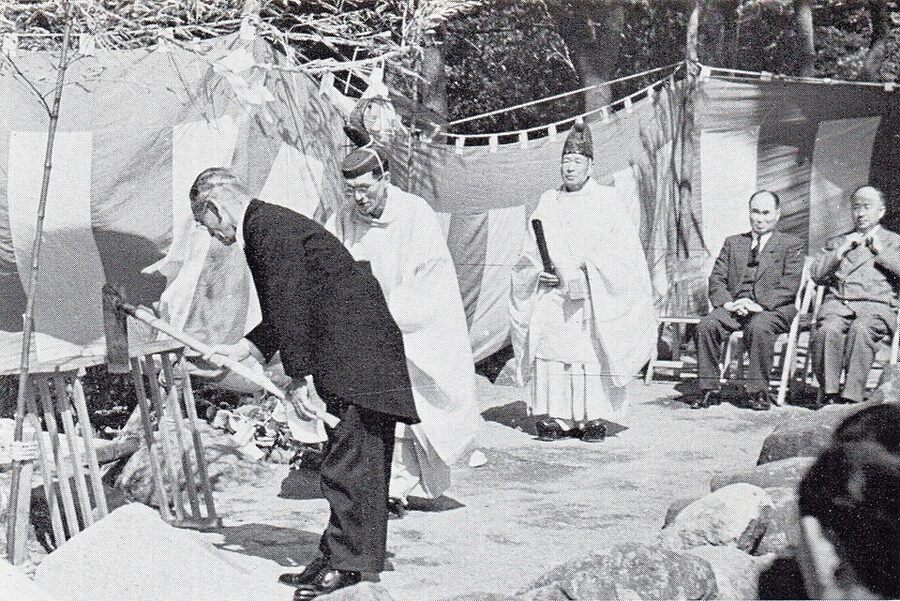
The rebuilding began with a vote. On 9 June 1955, at its founding meeting, the Okazaki tourism association resolved unanimously to bring the castle back, and the architectural historian Kido Hisashi surveyed the site in 1956 and drew the plans. Aichi Prefecture voted a subsidy of ¥10 million in 1957; Shimizu Construction won the main contract in August 1958 for ¥31.6 million, with 85,000 roof tiles on order. The Kanogawa typhoon of September 1958 cost the builders 20 days.
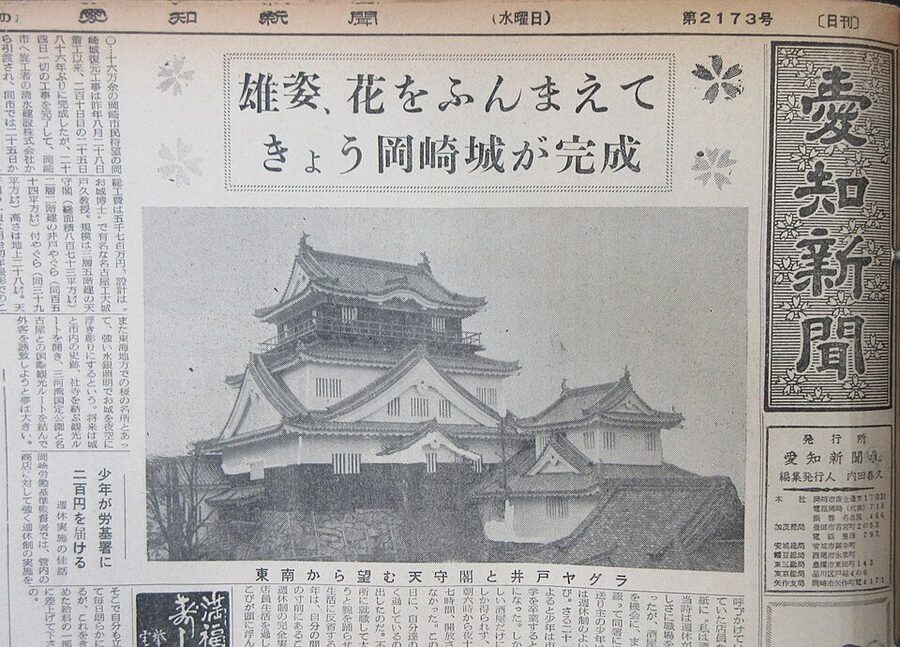
The keep that went up is reinforced concrete, with three roofs outside and five floors inside, finished on the outside to imitate old weatherboarding. Its promoters built it to bring visitors to Okazaki, and it did what they built it for. In 1993 the city added a wooden main gate, the Ōtemon, but road traffic meant it could not go back on its real site; the official guide puts the original gate about 200 metres to the north-east, south of Jōruri-ji, while other accounts say about 50 metres.
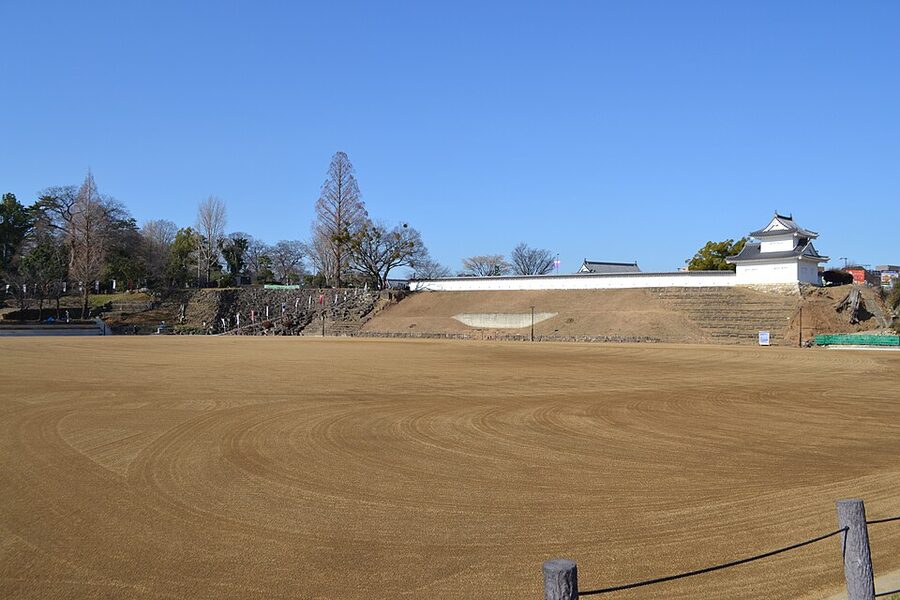
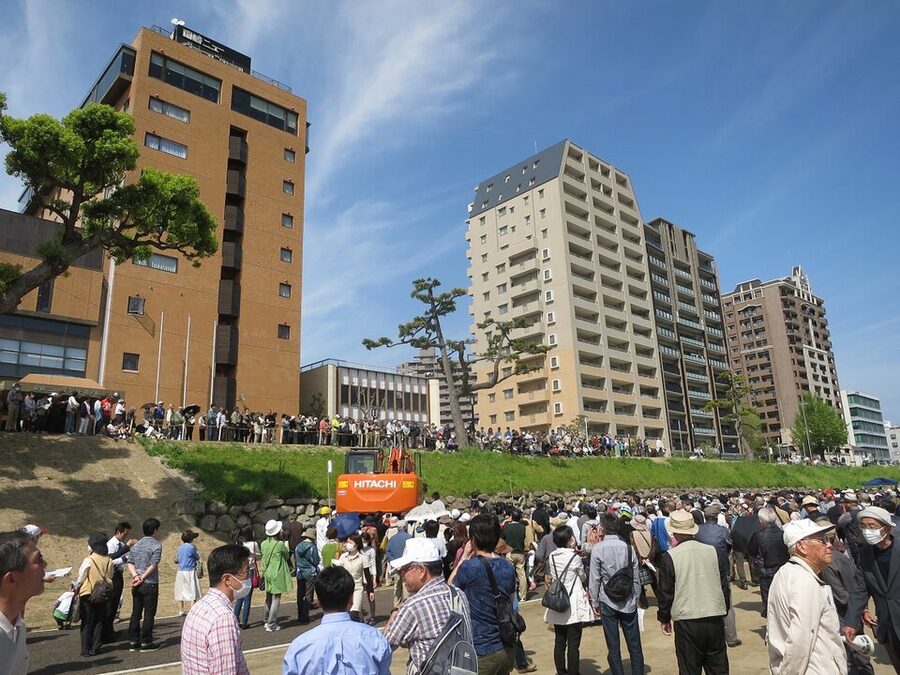
Then came the archaeology. In 2007 building work in Zaimoku-chō turned up the stone wall of the old Dairin-ji enclosure moat, the Tanaka-period wall mentioned above, and the city has since repeated the claim that Okazaki was the fourth-largest castle in Japan. In 2015 work on the riverside park uncovered the Sugōgawa-bata wall, an early Edo-period wall shown on the old plans, running about 400 metres along the river and up to five metres high, with three projecting firing bastions at 80-metre intervals. By the city’s reckoning it is the longest surviving castle wall in the country.
The latest chapter was television. When NHK chose Ieyasu for its 2023 historical drama, “Dōsuru Ieyasu” (“What will you do, Ieyasu?”), Okazaki closed the keep on 16 June 2022 and spent ¥177.77 million renewing its exhibits, lighting, lavatories and paintwork, reopening on 21 January 2023. The Ieyasu museum next door became a drama exhibition hall until 8 January 2024, and Daiju-ji, swamped by cars, began charging for parking. On 26 December 2024 Okazaki Park was formally renamed Okazaki Castle Park, in case anyone had missed the point.
Eight chō west of the castle
Walk west from the castle along the line of the old Tōkaidō, and after eight chō, about 870 metres, you reach the village that gave Hatchō miso its name. Hatchō, “eight chō”, had good spring water fed from below by the Yahagi, sat on the highway, and had its own river landing, and there two families, the Hayakawa (now the company Kakukyū) and the Ōta (now Maruya Hatchō Miso), made miso for Okazaki and then for everyone else.
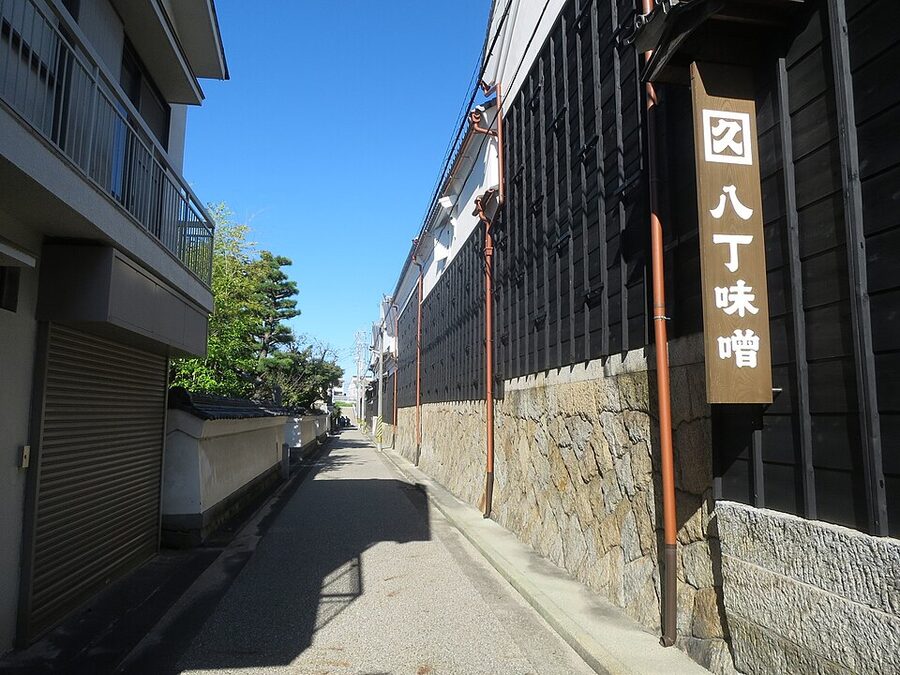
Both companies have claims to age, and neither is quite provable. The Hayakawa family’s own petition to Aichi Prefecture in 1878 gave 1645 as its founding date; Maruya’s family tradition goes back to 1337, which would make it older than the Matsudaira. A third theory derives the method from a Korean embassy that stayed at Okazaki in 1655. What is documented is that an Edo official sent in 1855 to inspect the fire damage at Daiju-ji wrote that “the miso is the famous Hatchō miso” and that there were two wholesalers in Hatchō village, as there still are.
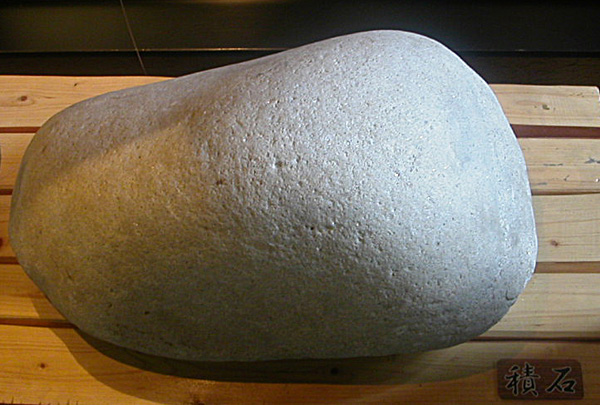
Hatchō miso is a pure soybean miso, with no rice or barley koji: just steamed soybeans formed into balls, cultured into soybean koji, salted, and packed into cedar vats under stones for two years or more, which gives it its dark colour and its slightly astringent depth. The Edo-period trade brought soybeans by ship from the Kantō and from Sendai and Nanbu in the north, sent them up the Yahagi by riverboat to the landing at Hatchō, and used salt from the pans near the mouth of the old Yahagi channel. Japanese sources like to say that Ieyasu’s long life was built on barley rice and bean miso. It may even be true.
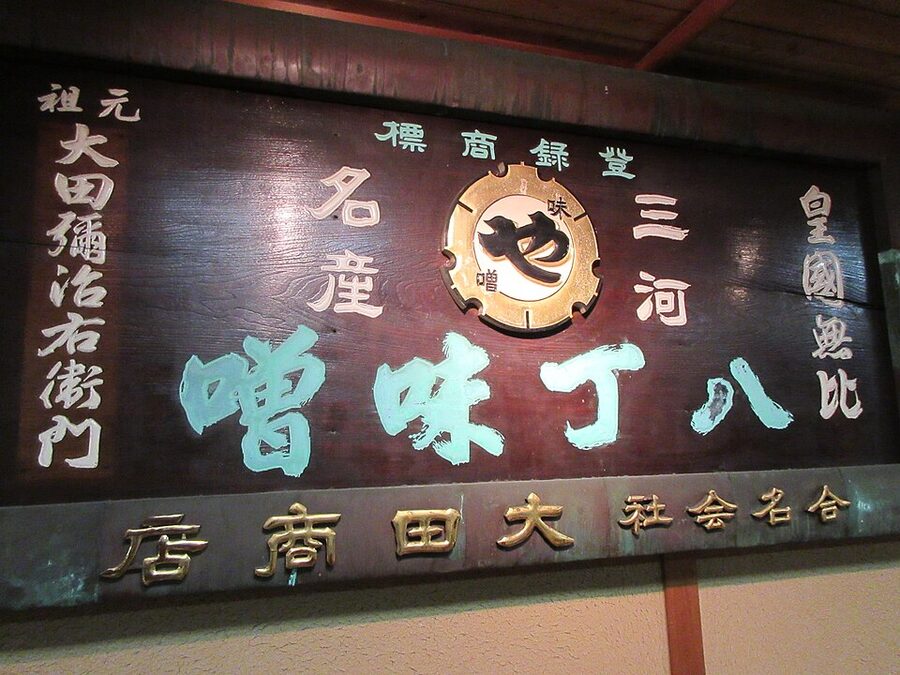
The 20th century was hard on them. In 1901 Kakukyū became a purveyor to the imperial household; in 1939 wartime price controls set the official price of Hatchō miso below the cost of making it, and in August 1940 both companies announced they were shutting down. They came back after the war, began selling to America in the 1960s, and found a best seller in akadashi, a blend of Hatchō and rice miso that both firms started making in the 1950s.
In 2017 the agriculture ministry gave the protected geographical indication “Hatchō miso” to a prefectural association of 39 Aichi miso makers, which the two Okazaki houses had left in 2009, and so excluded the only two companies actually in Hatchō. Maruya sued and lost in 2022, lost on appeal in 2023, and lost at the Supreme Court in 2024. On 24 January 2025 the ministry added the Okazaki makers’ cooperative as a second producer group, so that every maker in Aichi may now use the name. It is a very Okazaki ending: a fight over a birthright, settled by agreeing that everyone can claim it.
Where to see Okazaki Castle today
I checked every hour, price and access detail below on the official sites in November 2026. They change, and the Ieyasu museum has a planned closure in early 2027, so look again before you go.
Getting there from Nagoya
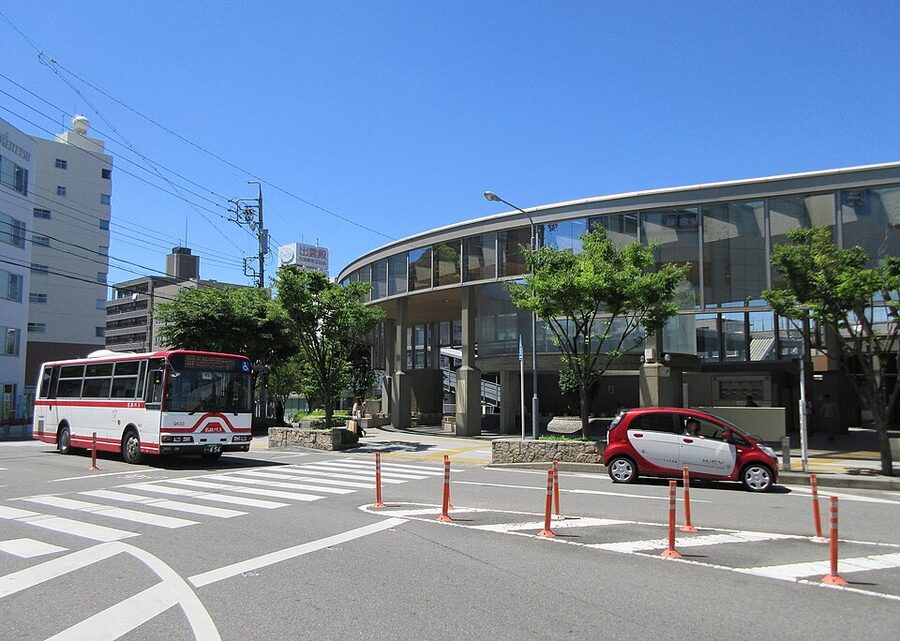
Take the Meitetsu Nagoya Main Line from Meitetsu Nagoya to Higashi-Okazaki: about half an hour on the faster trains, and ¥750 one way by the journey planner I used. From Higashi-Okazaki it is a 15-minute walk to the castle, or a short Meitetsu bus ride to the Kōsei-chō stop and five minutes on foot. Naka-Okazaki station on the Aichi Loop Line is 10 to 15 minutes’ walk away, and Okazaki-kōen-mae on the Meitetsu line is the closest station to the miso storehouses.
The keep and the Ieyasu-kan
The keep is open 9:00–17:00 (last entry 16:30) and closed only from 29 to 31 December. Entry is ¥300 for adults and ¥150 for children. Inside are the exhibits installed in the 2023 renewal on the castle and its lords, and the fifth floor is an observation deck. The interior is a museum in a concrete shell, and I would not pretend otherwise; you go up for the view over the rivers and the town Tanaka laid out.
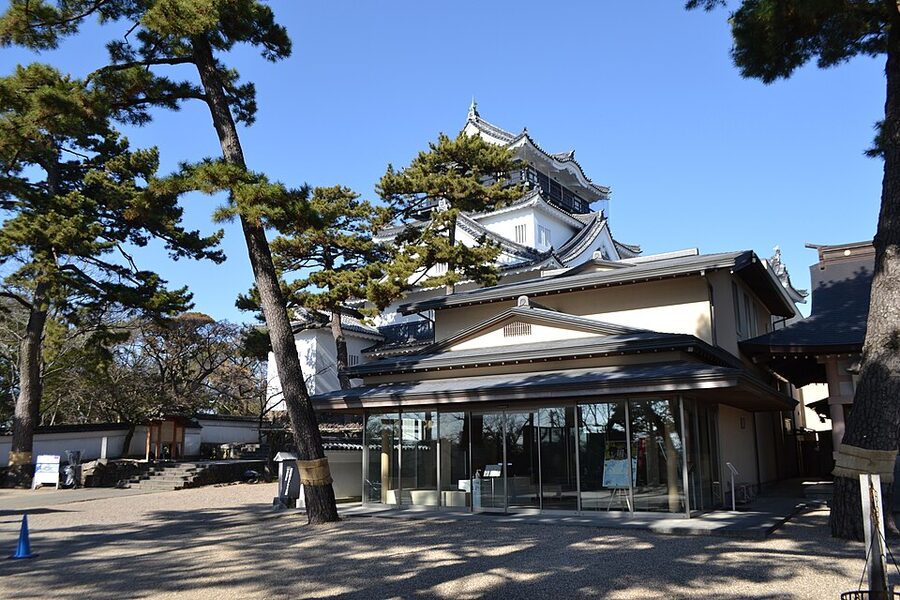
The Mikawa Bushi no Yakata Ieyasu-kan, the museum of Ieyasu and his Mikawa retainers on the site of the second enclosure, reopened on 23 March 2024 after its year as the drama hall. It tells Ieyasu’s life from Okazaki to the unification of the country and has a corner where you can feel the weight of a sword, a spear and a helmet. It keeps the same hours as the keep, at ¥400 for adults and ¥200 for children; a combined ticket for both is ¥650 and ¥320. It will be closed from 12 January to 19 March 2027 while its air conditioning is replaced.
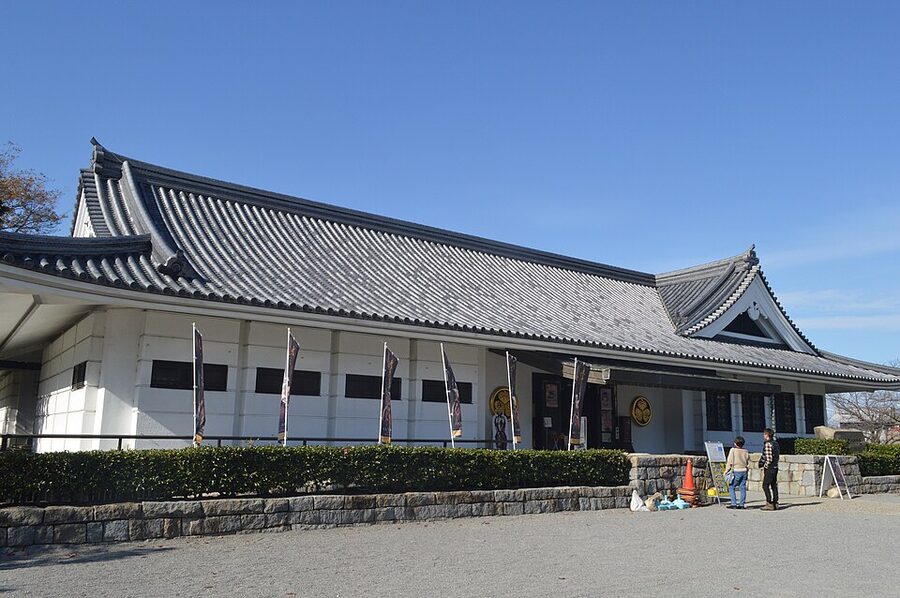
Okazaki Castle Park
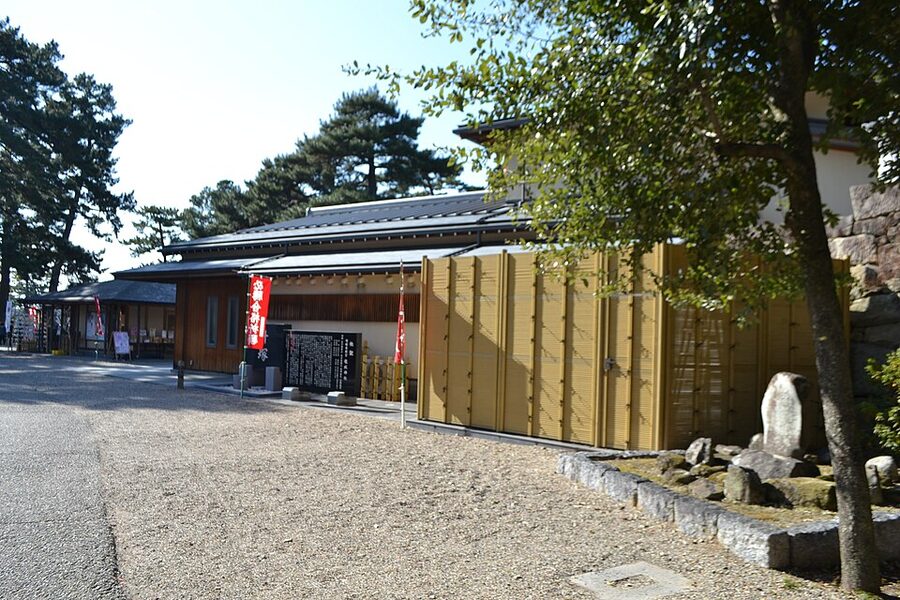
Give the park an hour. The birth well and the Ena-zuka are north of the keep, Tatsuki Shrine sits beside it, and the Seikai-bori runs along the north side of the main enclosure. In front of the Ieyasu-kan is a karakuri clock tower about six metres high: at every hour and half-hour a figure of Ieyasu comes out, dances a little Noh, and recites his precepts. Children love it.
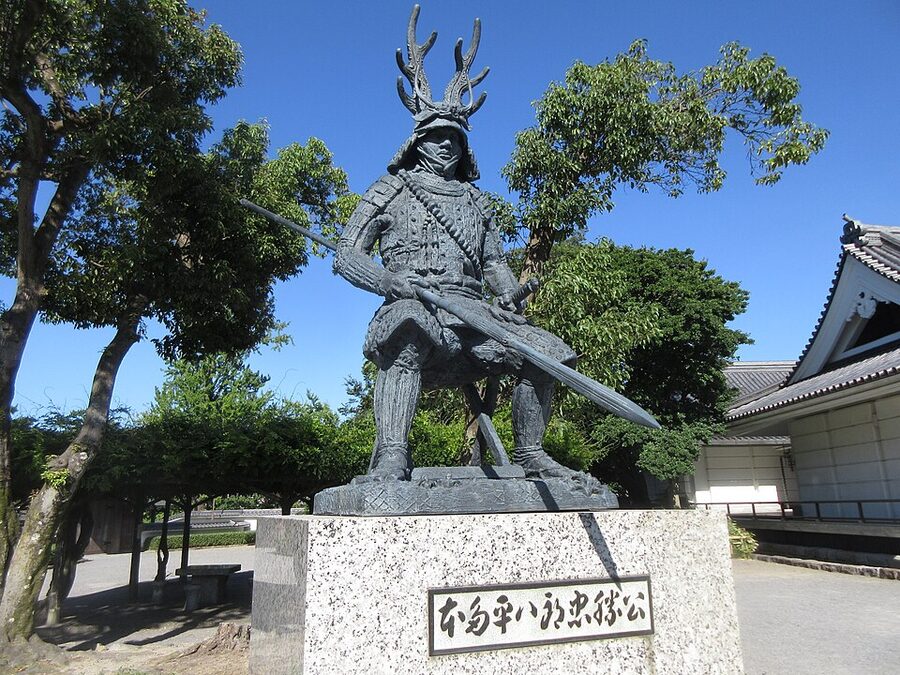
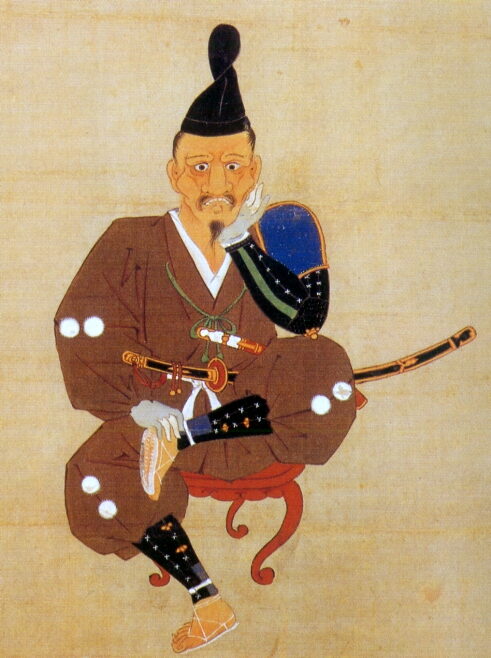
There are statues of Ieyasu, of the young Motoyasu and of Honda Tadakatsu, and a stone copy of the so-called Shikami portrait. Look for the stone carved with Ieyasu’s supposed last instructions to his heir, too: if the shogun governs so badly that the people suffer, the government should pass to someone else, and if the people are content under another house, that would be his true wish. It is a startling thing to carve beside the birthplace of a dynasty.
For lunch, Yachiyo Honten inside the park has been cooking for more than 130 years, and its set to order is nameshi dengaku: rice cooked with greens, and tofu grilled under a coat of Hatchō miso. It opens from about 11:30 until 18:00 last order, or until the dengaku runs out, and is closed on Tuesdays except on holidays and during the cherry festival.
Daiju-ji and the sightline
Daiju-ji is about three kilometres north of the castle. Take the Meitetsu bus from Higashi-Okazaki to the Daijuji stop and walk five minutes, or walk ten minutes from Daimon station on the Aichi Loop Line. The temple charges only for its treasure hall and great reception hall: ¥500 for adults and ¥300 for children, open 9:00–16:00 with the last entry at 15:50. Since April 2026 car parking has cost ¥300 for up to an hour and ¥500 for up to 12 hours.
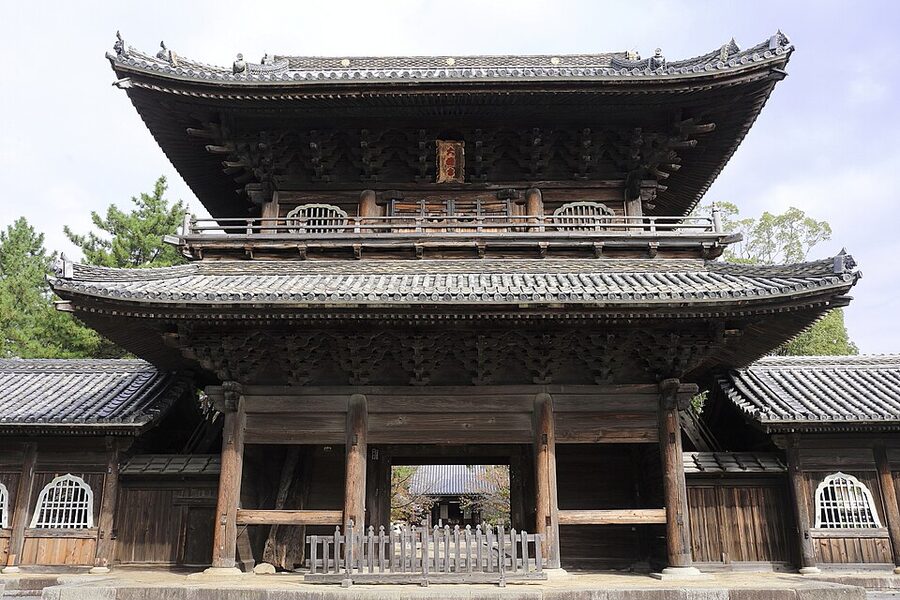
Inside, the hall of memorial tablets holds a full-length tablet for every Tokugawa shogun except the last, Yoshinobu, who was buried with Shinto rites. The temple’s tradition is that each tablet matches its shogun’s height at death; Ieyasu’s is 159 cm, and Tsunayoshi’s, at 124 cm, has fed a theory that the fifth shogun was very short. The great reception hall has wall paintings by the court painter Reizei Tamechika, which the temple paid for itself after the 1855 fire, when the shogunate would fund only the buildings.
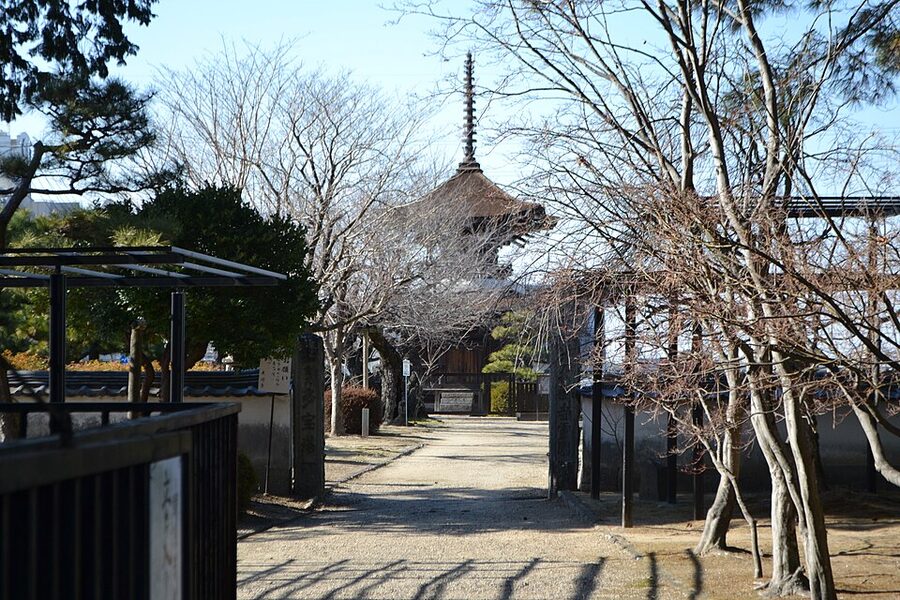
Then do what I told you at the start. Go to the main hall steps, turn round, and look.
Iga Hachimangū
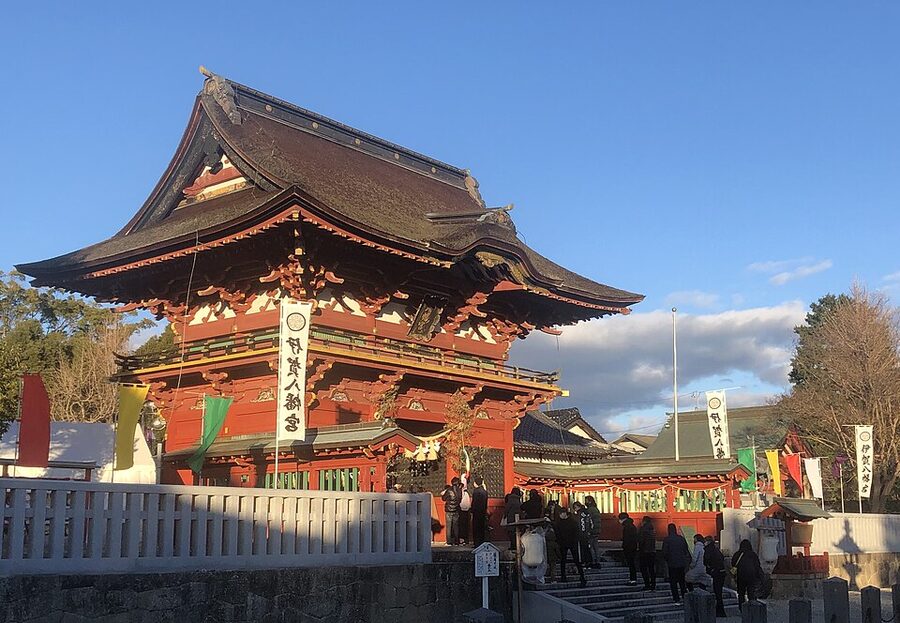
The Matsudaira family’s guardian shrine is ten minutes’ walk from Kita-Okazaki station on the Aichi Loop Line, or three minutes from the Hachimansha-mae bus stop. Tradition says Matsudaira Chikatada brought its god from Iga Province in 1470; Ieyasu rebuilt the main hall in the Keichō era, and Iemitsu enlarged the shrine and added Ieyasu to its gods. The main hall, the gate with its guardian figures, the stone bridge in front and most of the rest are Important Cultural Properties, and the gates are open 6:00–16:00.
The miso storehouses
Kakukyū runs free guided tours of its museum and maturing storehouse every day except 31 December to 2 January: on the hour from 10:00 to 16:00 on weekdays, and on the hour and half-hour at weekends and holidays. Its shop is open 9:00–17:00, and it is five minutes’ walk from Okazaki-kōen-mae station. Maruya, across the road, also runs free tours, every hour and half-hour from 9:00 to the last at 16:20, with a break from 12:00 to 13:00, and ends with a tasting of konnyaku in miso sauce. Groups should book with both.
Maruya also has a well with a story: that the boy Hideyoshi, then called Hiyoshimaru, threw stones into it, in one version while trying to rob the storehouse. I would file it with the golden dragon. If you have time for only one tour, take Kakukyū’s for its museum.
Nobuyasu’s mound, Lady Tsukiyama’s mound, and the bends
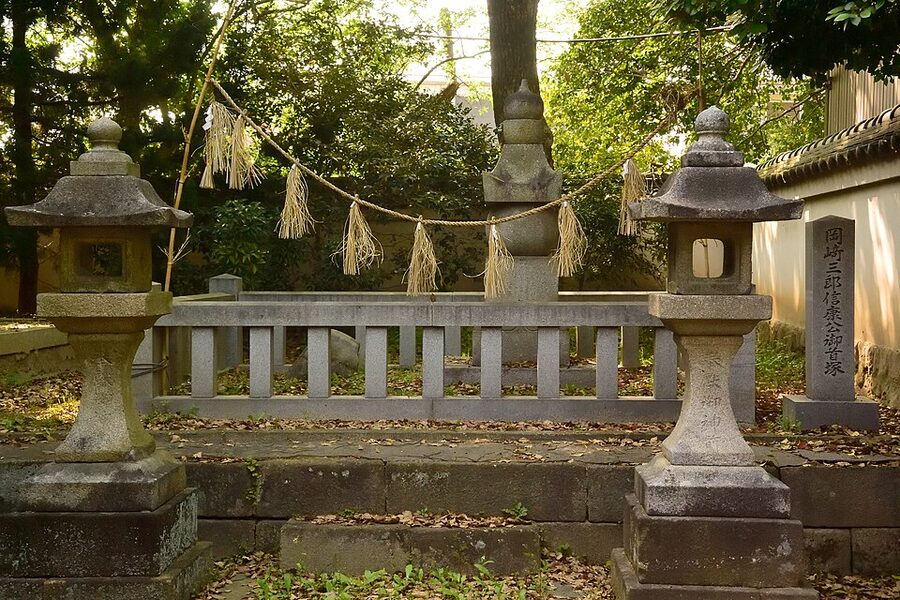
Nobuyasu’s head mound is at Wakamiya Hachimangū in Asahi-chō. The shrine burned in the air raid of 20 July 1945 and has been rebuilt; the mound beside the main hall is the part that matters. Lady Tsukiyama’s head mound is at Yahashira Shrine in Kake-chō. Both are quiet, small and easy to miss, so bring a map.
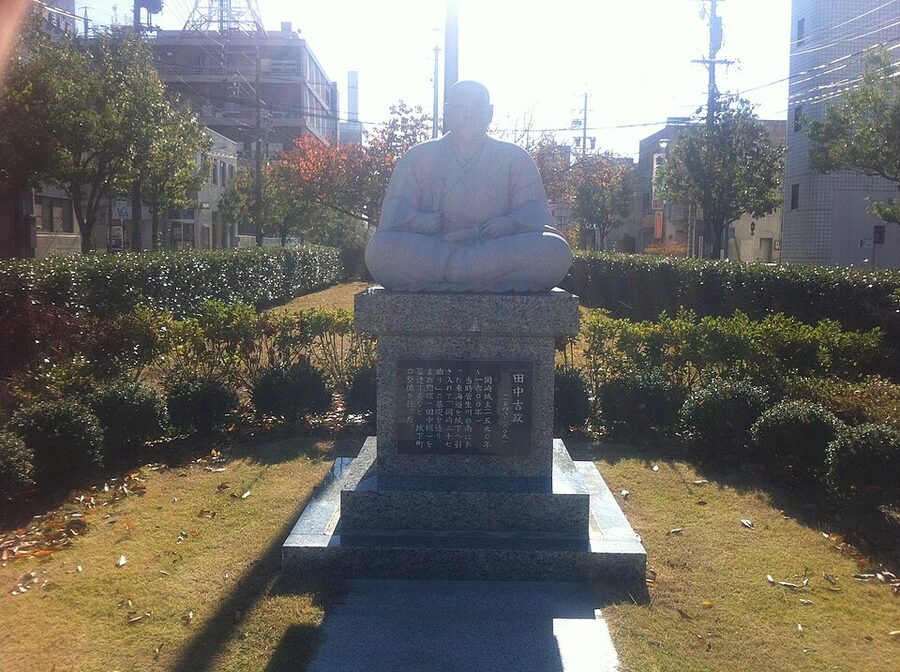
If you have a spare hour, walk the route of the 27 bends west towards Hatchō, which sits on the old highway: ordinary modern streets with a 400-year-old plan underneath them, and the only part of Tanaka Yoshimasa’s Okazaki still in daily use.
When to go
April is the obvious answer. About 800 Somei-yoshino cherry trees line the park and the banks of the Oto and Iga rivers, the Iga River trees make a tunnel that runs for several kilometres, and the cherry festival brings the Ieyasu procession and night lighting.
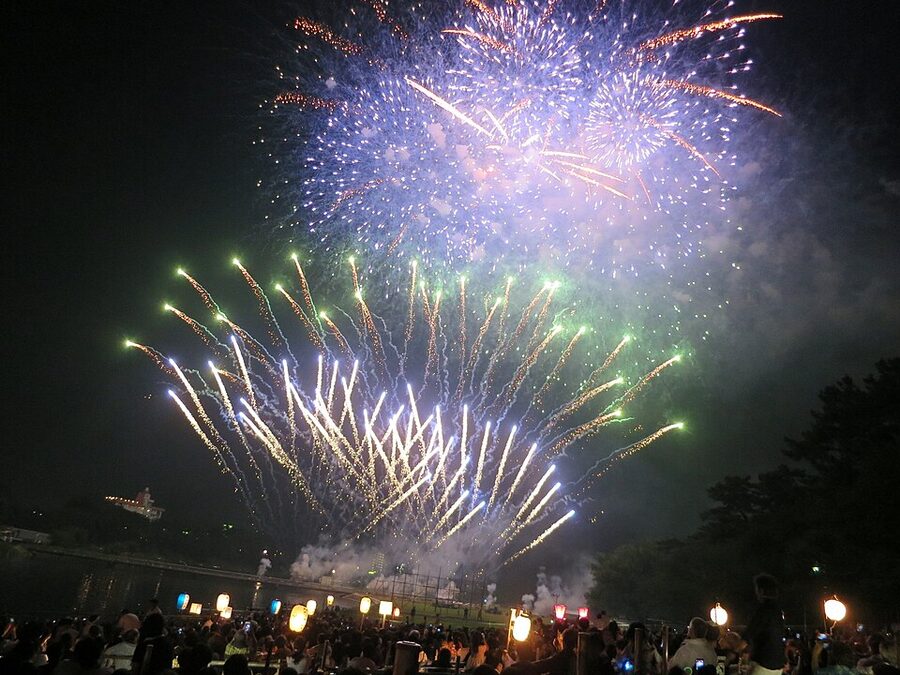
The Gomangoku wisteria, a 1,300-square-metre trellis on the Oto riverbank on the south side of the park, flowers around Golden Week. The summer festival ends with fireworks over the river in early August; check the city’s listings for the exact date in the year you go. If you want the castle to yourself, go on a winter weekday, but not between 12 January and 19 March 2027 if the Ieyasu-kan is the point of your trip.
For other castle towns shaped by their lords’ fears, the samurai districts of Japan are the natural next read, and Kawagoe, another castle near the shogun’s capital held by trusted houses, is the closest parallel I know. For the whole arc from the Matsudaira to the Meiji state, start with Japan through the ages and the Sengoku era.
End the day at Daiju-ji, before the 15:50 last entry, when the low sun comes in from the west and the keep goes pale in the gap. Iemitsu built the line so that his family’s dead could look at the place the founder was born. They still can, through a school playground, at an angle of 0.2 degrees, towards a concrete keep they would not recognise, and the city has written a law to keep it that way. The Tokugawa would have understood that perfectly.