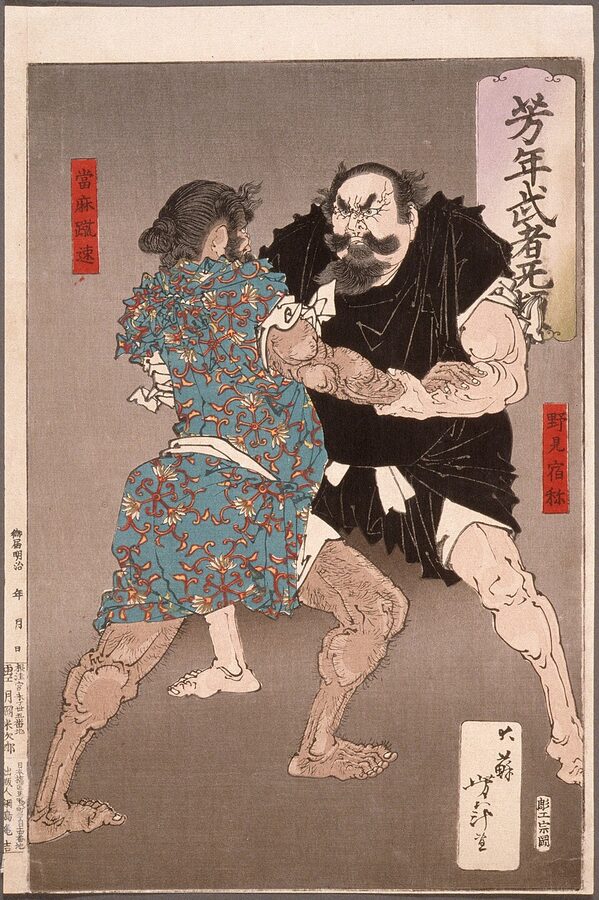
The first sumo bout in Japanese writing was a kicking match, and it ended in a killing. According to the Nihon shoki, finished in 720, two strongmen faced each other before the emperor Suinin, “raised their feet and kicked each other”, and when Nomi no Sukune had broken Taima no Kehaya’s ribs he stamped on the fallen man’s loins until they gave way. Kehaya died. The emperor gave the winner the dead man’s land.
Every January, thirteen centuries after that chronicle was finished, a man in a white rope of hemp and copper wire climbs onto a clay ring at the Ryōgoku Kokugikan in Tokyo, claps, spreads his arms and stamps the earth, and the sport presents itself as the oldest thing in Japan. Parts of it are. The rope was invented in 1789 by a family of referees from Kumamoto to impress a shogun, the ring is a 17th-century answer to crowd violence, and the shrine-style roof above it dates from 1931. I have come to think the most Japanese thing about sumo is not its age but its showmanship: a ritual that learned very early how to sell tickets.
In This Article
- A kick in Yamato: gods, strongmen and clay
- Hollyhocks and gourds: the sumo banquet at the Heian court
- Rice spirits and crows: sumo for the gods
- Warriors on the sand: Yoritomo, Nobunaga and the ring
- Twenty days a year: the kanjin tournaments of Edo
- The rope: Tanikaze, Onogawa and the invention of the yokozuna
- Raiden: the best who never got the rope
- Naked dancing: how sumo survived the Meiji era
- A steel umbrella in Ryōgoku: the Kokugikan of 1909
- Sixty-nine: Futabayama
- Bombs, a Memorial Hall and a ring one foot wider
- Rice, sleep and the topknot: life in a stable
- From Maui to Ulaanbaatar: the outsiders
- The ring women may not climb
- Gambling, fixed bouts and a beer bottle: the scandals
- What you are watching: ranks, rituals and four minutes of staring
- Where to see sumo today
- The six tournaments, and how to get a ticket
- The Kokugikan and the Sumo Museum
- Ekō-in and the Chikara-zuka
- Nomi no Sukune Shrine and Tomioka Hachimangū
- Watching morning practice
- Sumō Jinja and the Kehaya-za, Nara
- Beyond Tokyo and Nara
- The kick and the rope
A kick in Yamato: gods, strongmen and clay
Before Suinin’s strongmen there were gods. The Kojiki of 712 has Takeminakata of Izumo challenge Takemikazuchi, the envoy of heaven, to a contest of strength over who should rule the land; Takemikazuchi crushed his hand “like a young reed”. Japanese histories of sumo still begin here, which tells you how keen the sport has always been on a good pedigree. The Nihon shoki bout is human and nastier, and the word it uses is not today’s 相撲 but 捔力, read sumai, “a trial of strength”: closer to kickboxing with a fatal finish than to anything you will see in Ryōgoku.
It is a legend, and Japanese scholars treat it as one. Sukune was the ancestor claimed by the Haji clan, the potters and tomb-builders of the early state, and the same chronicle credits him with persuading the emperor to bury clay figures with the dead instead of living attendants. One Japanese reading is that the story grew out of the Haji’s own family lore: people who raised mountains of earth for kings would naturally remember an ancestor of tremendous strength. The bout’s supposed site, below Mount Makimuku in Nara, now has a shrine and a ring, and I will send you there at the end.
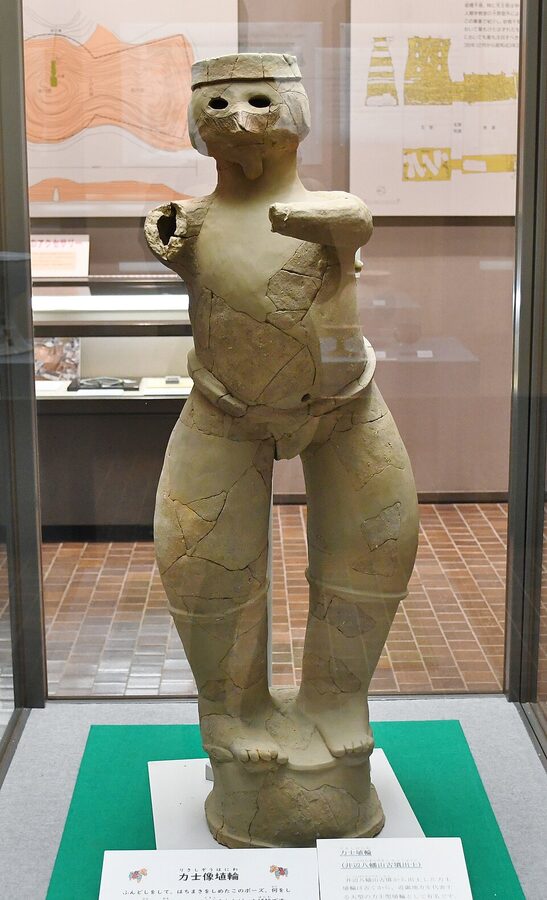
The first contests historians do trust were diplomatic entertainment. In the seventh month of 642 the court had palace strongmen wrestle for envoys from the Korean kingdom of Paekche, and in 682 men of the Hayato, the people of southern Kyushu, wrestled at court, Ōsumi against Ata. The Nihon shoki also has the emperor Yūryaku ordering palace women to strip to loincloths and wrestle, to test a carpenter who boasted that his blade never slipped. It is the first appearance of the word sumō in Japanese writing, and, given what came later, an awkward precedent for the modern sport.
Hollyhocks and gourds: the sumo banquet at the Heian court
By the Nara period sumo was part of the palace calendar. An office for picking wrestlers appears in 719, and the Shoku Nihongi records the emperor Shōmu watching sumo on the seventh day of the seventh month of 734, because Sukune’s bout was supposed to have fallen on that date; the oldest court sumo was an entertainment of Tanabata, complete with poetry. Under the emperor Saga it became a ceremony of its own, written into the palace protocols of 821. An edict of 833 insisted that “the sumo festival is not mere amusement; the training of martial strength lies within it”.
This was the sumai no sechie (相撲節会), the sumo banquet, and in the Heian era it ranked with the court’s two great archery ceremonies. Officers of the Left and Right Palace Guards sent messengers round the provinces each spring to find about forty strong men, and a governor who hid his best could be dismissed. On the day the two teams paraded in, the Left with artificial hollyhock flowers in their hair and the Right with gourd flowers, and fought seventeen to twenty bouts while the emperor drank with his court.
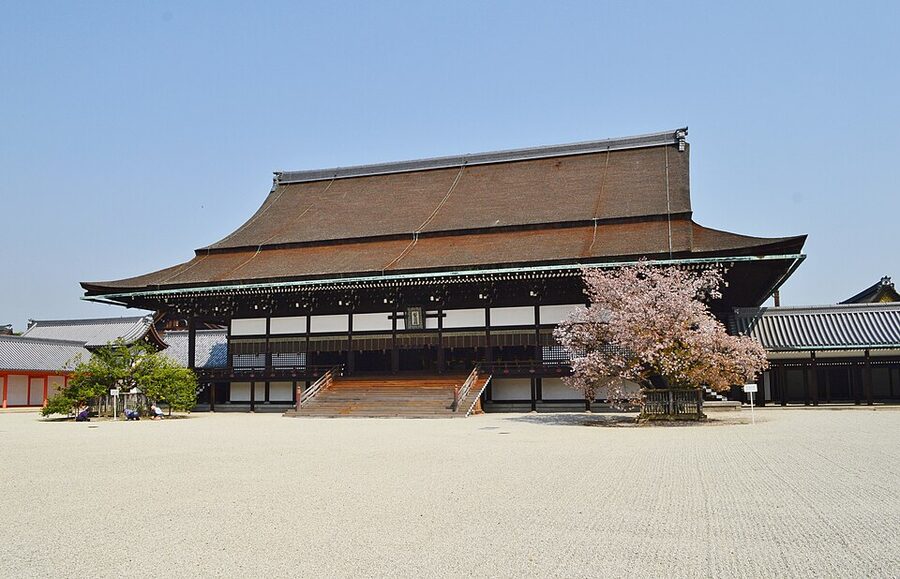
There was no ring and no referee. You won by throwing your man or putting him on his hands or knees, a scorer planted an arrow for each win, and if the guards’ officers could not agree on a fall, the emperor ruled, without appeal. The year’s strongest wrestler was the hote (最手) and the next the waki (脇), and Japanese reference works trace the ranks of ōzeki and sekiwake to them.
It did not last. As the court lost its grip on the provinces the festival faltered in the 12th century, and it was held for the last time in the seventh month of 1174, a few years before the Genpei War put the warriors in charge. The Yoshida family of referees later claimed a 16th-century revival; Japanese historians find no evidence for it.
Rice spirits and crows: sumo for the gods
Sumo never needed the court. Villages wrestled at shrine festivals to ask the gods about the harvest and thank them afterwards, and Japanese folklorists treat this shinji-zumō (神事相撲), which they trace back to the rice farmers of the Yayoi period, as the root of the whole tradition. One standard Japanese encyclopedia dates its official start to 727, when the emperor Shōmu, grateful for a good harvest after a drought, had wrestlers perform before the gods at Ise and twenty-one other shrines.
Much of it survives. At Ōyamazumi Shrine on the island of Ōmishima in the Inland Sea, a man performs hitori-zumō, one-man sumo, against the invisible spirit of the rice, three falls at planting and three at harvest, and the rice spirit always wins two falls to one. Records of sumo offerings there go back to 1364. It must be the only fixed bout in Japan that everyone is pleased about.
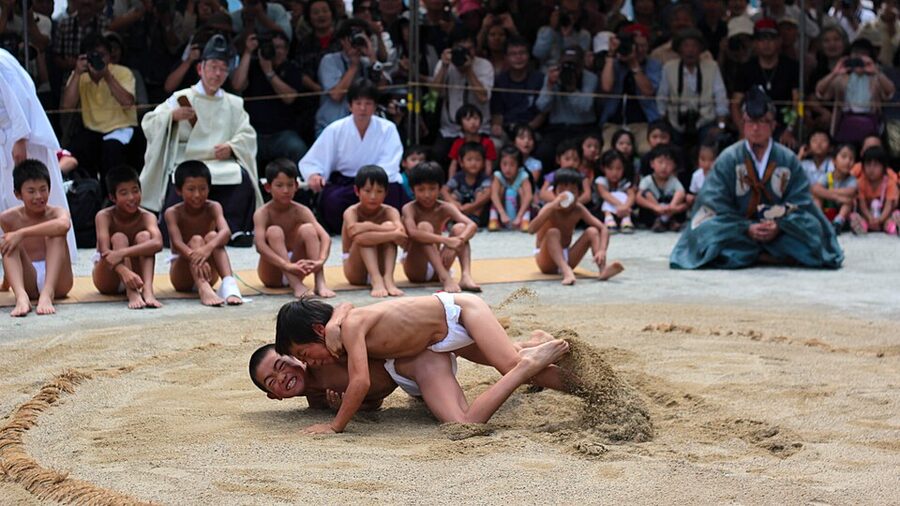
Kyoto’s version is gentler and odder. On the ninth day of the ninth month, now kept on 9 September, Kamigamo Shrine holds its chrysanthemum rites and then a boys’ tournament beside the two cones of white sand in its forecourt. It is not one of Japan’s great festivals, but dozens of shrines from Ibaraki to Kyushu still hold sumo at theirs, and the crowds are mostly grandparents.
Warriors on the sand: Yoritomo, Nobunaga and the ring
When the court let go, the warriors picked sumo up, because grappling decided fights once the arrows were spent. The most famous bout of the age was fought in 1176 at a hunting party in Izu, before the exiled Minamoto no Yoritomo: Kawazu Saburō Sukeyasu against Matano Gorō Kagehisa. In the Soga tales Kawazu threw Matano, and the same hunting trip ended with Kawazu shot dead by assassins sent by a kinsman, which set his small sons, aged five and three, on the vengeance their story is famous for.
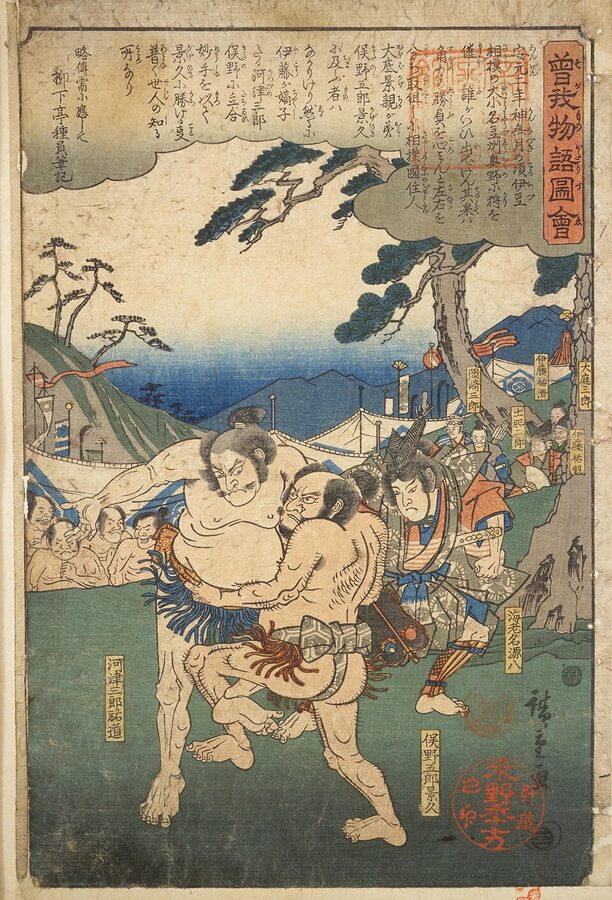
Yoritomo stayed fond of sumo. The Azuma kagami, the shogunate’s own chronicle, records him holding sumo before the gods at Tsurugaoka Hachimangū, his son Sanetomo appointed a commissioner of sumo in 1206, and a Kamakura era warrior could be praised as “skilled in bow, horse and sumo”. The Muromachi shoguns cared less, but townspeople did, and sumo is the subject of a whole group of comic kyōgen, the plays still performed between noh dramas.
The warlord who loved it most was Oda Nobunaga. According to the Shinchō kōki, the chronicle of his reign by his retainer Ōta Gyūichi, Nobunaga held tournaments again and again between 1570 and 1581, and in the second month of 1578, by the usual reading, summoned fifteen hundred wrestlers to Azuchi. After one tournament in the eighth month of that year he took fourteen men into his service at a hundred koku each and gave them houses.
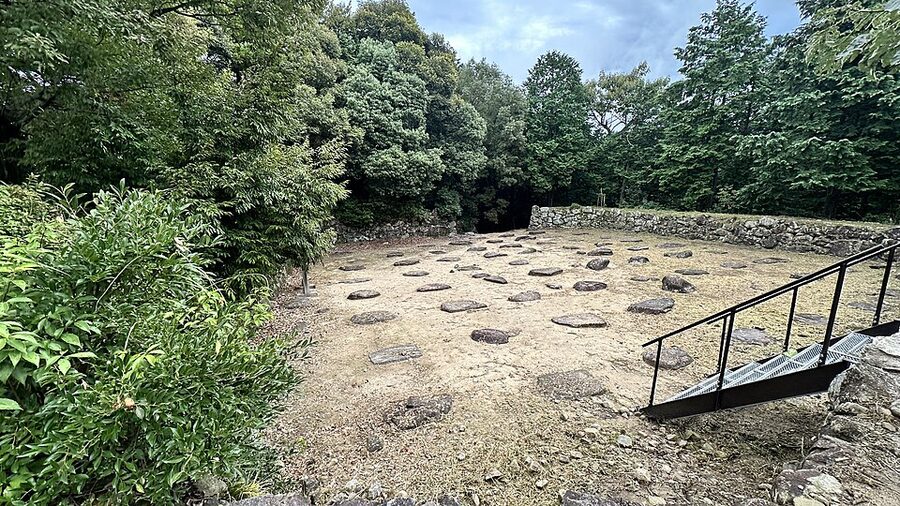
The Shinchō kōki also names two men, Kise Zōshun’an and Kise Tarōdayū, as the gyōji of these tournaments, the ancestors of the sumo referee. English-language accounts often add that the Azuchi tournaments invented the ring, the dohyō. Japanese sources put it later: bouts were fought inside a ring of spectators, the hitokataya, and the ring of straw bales, at first square and then round, only appears in pictures from the 1660s and 1670s.
Twenty days a year: the kanjin tournaments of Edo
Peace made sumo a business. With the Sengoku era over, troupes of professional wrestlers, many of them out-of-work soldiers and rōnin, toured the country staging bouts for money. They called them kanjin-zumō (勧進相撲), “fund-raising sumo”, because in principle the takings paid for a temple roof or a bridge. In practice, as Japanese reference works note drily, the fund-raising was for the wrestlers.
The story you will read everywhere is that the first such tournament in Edo was staged in 1624 by Akashi Shiganosuke, the first yokozuna. Both claims come from later popular fiction, and there is no reliable evidence that Akashi existed. What the record does show is trouble: bouts ended in brawls between rival troupes and their hangers-on, and in 1648 the Tokugawa shogunate banned fund-raising sumo in Edo, and kept banning it for decades.
The Meireki fire of 1657 changed the mood. Scores of temples needed rebuilding and unemployed wrestlers were making trouble, so in 1684 the commissioners of temples and shrines allowed fund-raising sumo again, provided the wrestlers organised under responsible elders, the toshiyori, and fought only in temple or shrine grounds. The applicant, Ikazuchi Gondayū, is counted as the first elder of the modern sport, and the first licensed tournament was held at Tomioka Hachimangū in Fukagawa, itself rebuilding after a fire.
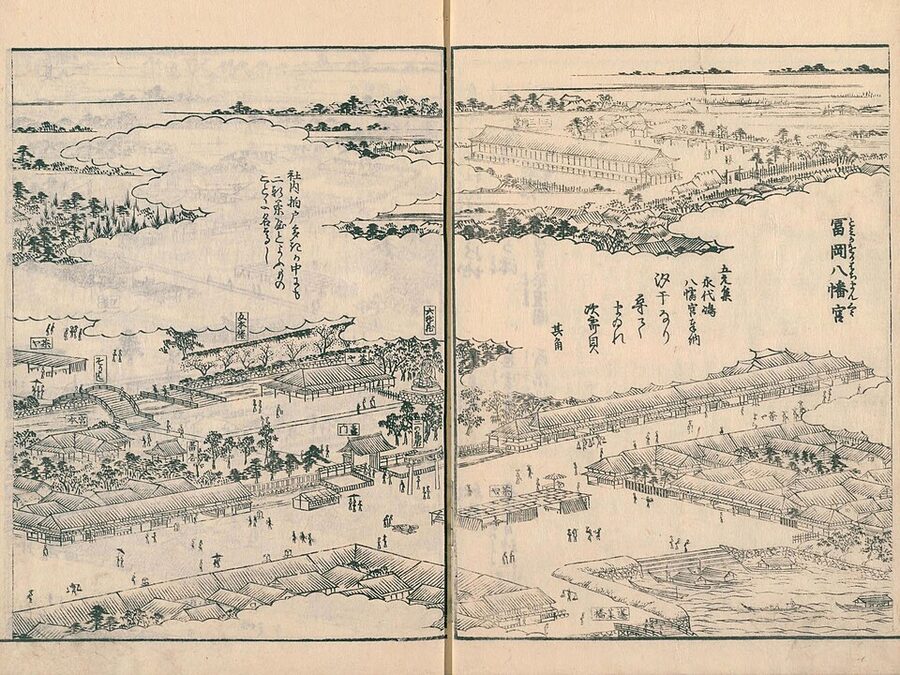
What grew out of that licence was the professional sport in almost every detail. The elders ran stables, the heya; tournaments settled into a regular round in Edo, Kyoto and Osaka; and the ring took shape, with four coloured pillars holding up a roof, a circle of half-buried straw bales, and the rule that touching the ground with anything but your soles, or stepping out, loses. The crouch with fists on the clay is credited to a wrestler called Kagamiyama, from Kii, around the turn of the 18th century.
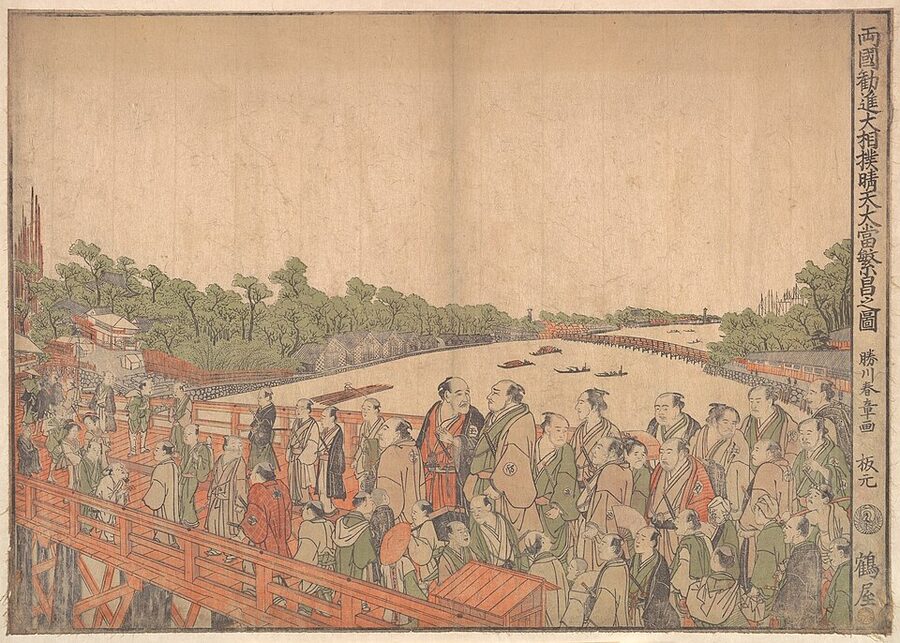
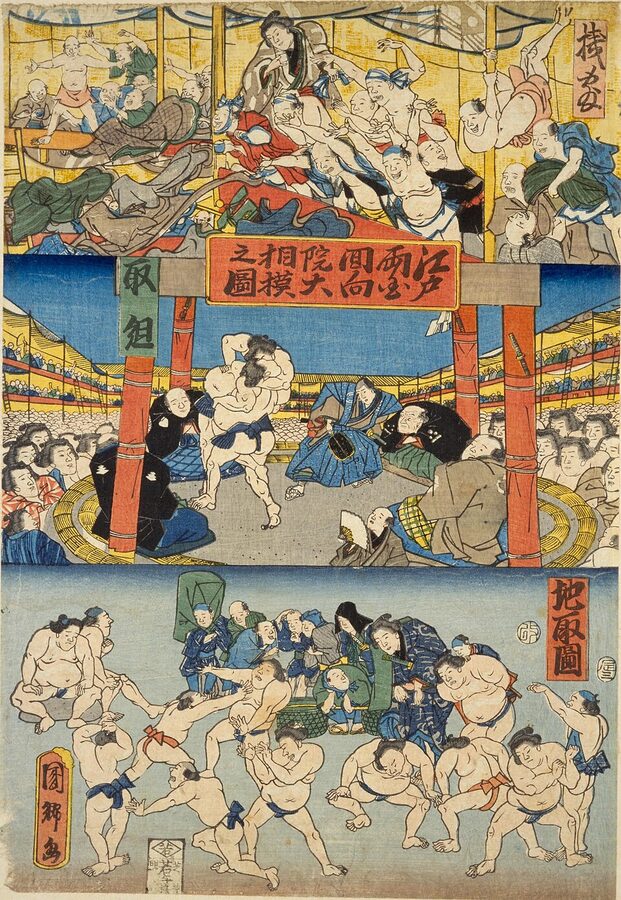
It was outdoor theatre, and it behaved like it. Two tournaments of ten fine days meant twenty days of work a year, and an Edo comic verse called the wrestler “a fine fellow who lives the year on twenty days”. Women were not allowed in to watch. Fights broke out in the stands so often that, according to one Japanese history, the elders kept swords at the ring pillars to break them up.
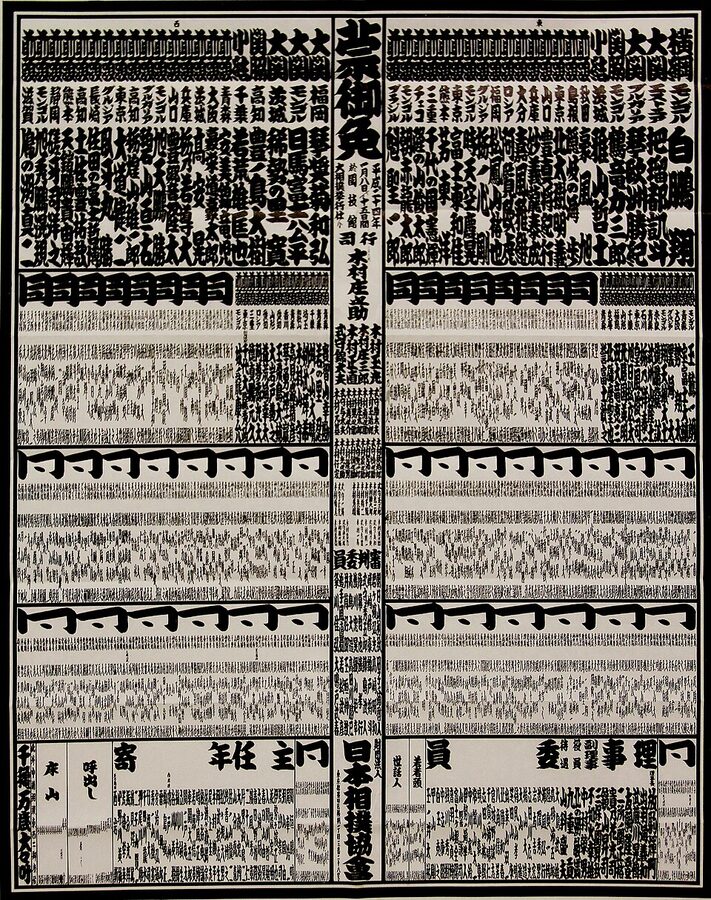
The ranking sheet, the banzuke, became a woodblock print sold in the streets; the oldest surviving Edo one dates from 1757, though Kyoto and Osaka printed theirs decades earlier. The top of the sheet was showbusiness too. Promoters liked to put a huge, unproven young man straight in at ōzeki to draw a crowd, and one Japanese reference work counts sixty-eight of these “signboard ōzeki” between 1757 and 1780, of whom seven turned out to be any good.
In 1768 the sport found its home, with a tournament in the grounds of Ekō-in, a temple founded across the river at Ryōgoku to bury the nameless dead of the 1657 fire. From 1833 every Edo tournament was held there, and the district has belonged to sumo ever since. In the Edo era the great lords competed for the best wrestlers, who became samurai on paper, wore two swords, drew a stipend and fought for their lord’s face as much as their own.
The rope: Tanikaze, Onogawa and the invention of the yokozuna
Tanikaze Kajinosuke was born on the eighth day of the eighth month of 1750 in a farming village outside Sendai, and in his prime stood about 189 centimetres and weighed about 169 kilograms, a giant among Edo men. From 1779 he went seven years losing only one recorded bout. The man who beat him, in the spring tournament of 1782, was a quick, clever wrestler from Ōtsu called Onogawa Kisaburō, not yet even in the top division.
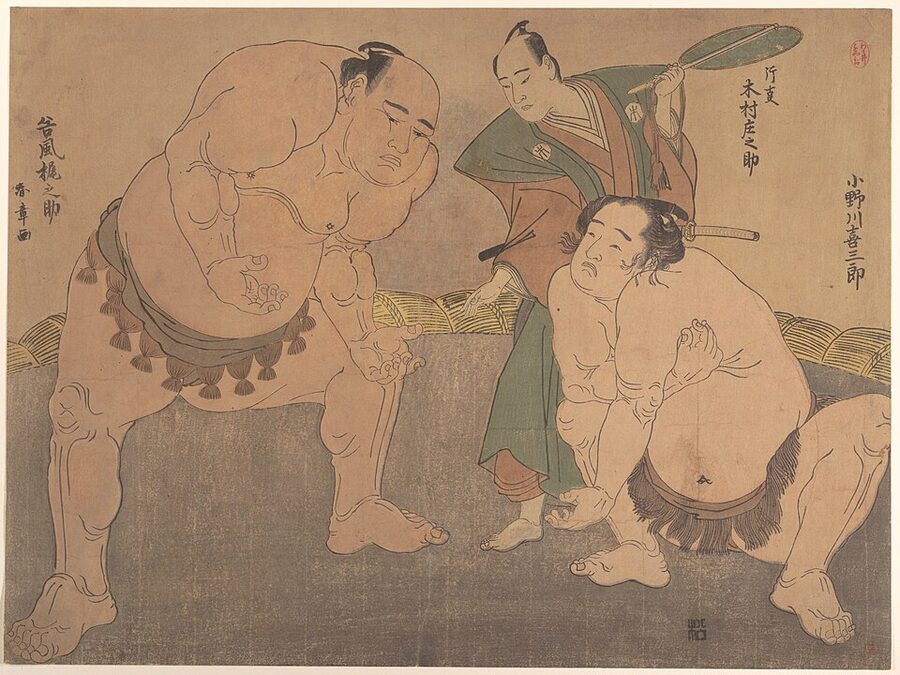
Their rivalry made Edo sumo the hottest ticket in the city, and somebody saw the chance to make more of it. The Yoshida house had served the Hosokawa lords of Kumamoto since 1661 and claimed to have inherited the lore of the Heian court’s sumo officials, and its nineteenth head, Yoshida Oikaze, set out to make his family the arbiter of sumo etiquette for the whole country. On the nineteenth day of the eleventh month of 1789, at the Hosokawa mansion in Edo, he licensed Tanikaze and Onogawa to wear a white rope, a tsuna, hung with paper streamers like the sacred ropes of a shrine, and to enter the ring alone. The yokozuna, the man of the horizontal rope, had arrived.
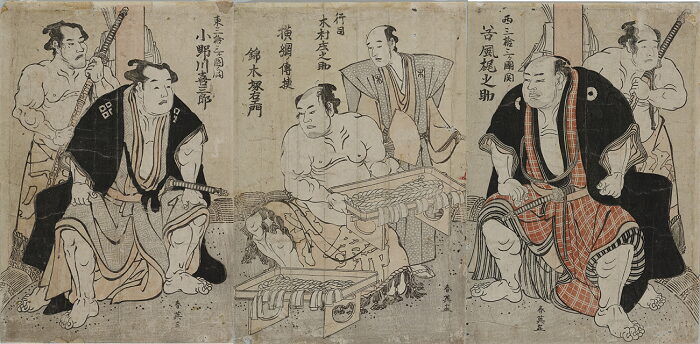
The purpose of all this was a single day. On the eleventh day of the sixth month of 1791 the shogun Tokugawa Ienari watched sumo in the grounds of Edo Castle, and Oikaze staged it as a rite. He opened with a consecration of the ring, the ancestor of the dohyō-matsuri still held before every tournament; the two rope-wearers performed their solo entrances; and Tanikaze, given a bow by the shogun, is said to have danced with it, which is where the bow-twirling ceremony that ends every day’s sumo is supposed to come from.
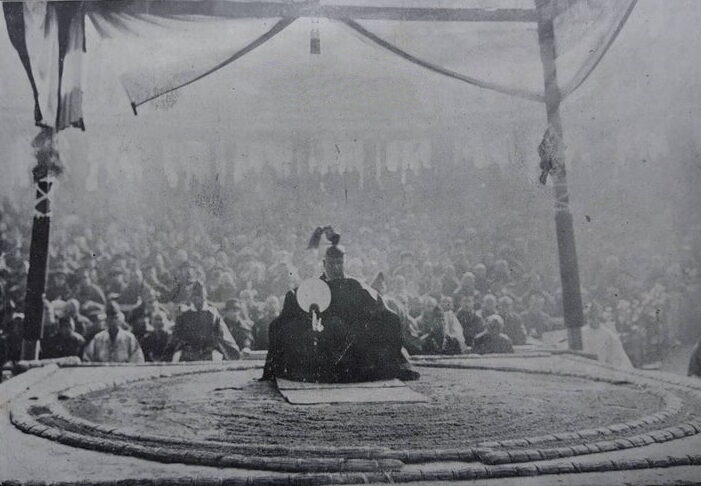
It worked. Sumo went from a rough commercial show to a ceremony fit for a shogun, and in 1827 the shogunate confirmed the Yoshidas as supervisors of Edo sumo. But nobody yet thought of yokozuna as a rank. The banzuke still put ōzeki at the top, and after Tanikaze and Onogawa the Yoshidas did not issue the rope again for thirty-nine years.
Tanikaze died in harness in an influenza epidemic on the ninth day of the first month of 1795, aged forty-four; Edo liked to say he had boasted that anyone who wanted to see him down would have to wait until he caught a cold. His Edo record was 258 wins and 14 losses. His best-known winning streak, 63, stood as the record until Futabayama, though historians still argue over how to count his draws and his bouts outside Edo, and one count by Ikeda Masao finds a run of 98. The official list of yokozuna, carved in 1900, makes him the fourth; the three before him are legends with names.
Raiden: the best who never got the rope
Ask Japanese sumo writers for the greatest wrestler who ever lived and a good number will not name a yokozuna at all. Raiden Tameemon, born in 1767 in Ōishi in Shinano, trained under Tanikaze, wrestled for the lords of Matsue, and in thirty-five Edo tournaments between 1790 and 1811 lost ten bouts. His record was 254 wins, a winning rate of .962, which nobody before or since has matched.
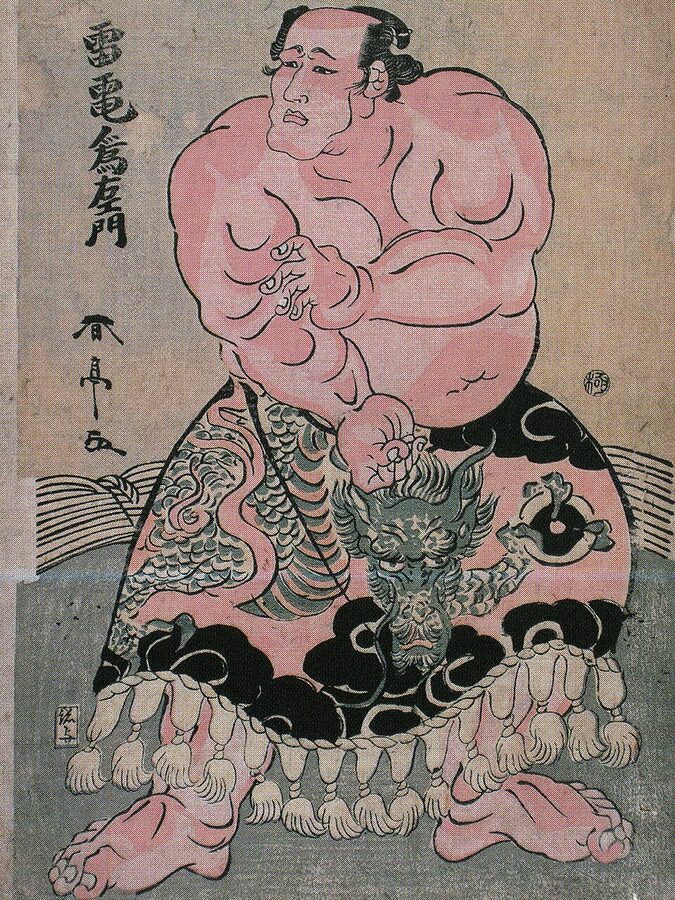
He was also, unusually for a wrestler, a writer, keeping a diary of tours, fires, earthquakes and a drinking contest in Nagasaki in 1802 in which, he says, he outdrank a Chinese scholar and walked home humming. The story that his thrusts and slaps were so dangerous they were banned is told on a memorial stone of 1861, and Japanese historians doubt it; the oldest testimony has Raiden as a pushing wrestler, which is exactly what the supposedly banned techniques would have stopped.
Why he never received the rope is the great puzzle of sumo history. The theories (that he refused, that his lords and the Yoshidas’ lords were rivals, that he was too ugly) have no evidence. The historian Nitta Ichirō’s answer is the most convincing and the dullest: in Raiden’s time the licence was not yet an institution, only a one-off piece of theatre for the shogun, so there was nothing for him to miss. The 1900 yokozuna monument at Tomioka Hachimangū carved his name anyway, as the “peerless wrestler”.
His old age was less serene. In 1814 he paid for a bell for Hōdo-ji temple in Akasaka, cast with two wrestlers locked together on the hanger and inscribed “Raiden, matchless under heaven”; the shogunate took it as presumption, the bell was destroyed, one of his patrons died in prison, and Raiden was banned from Edo. He died on the twenty-first day of the second month of 1825, 9 April by the Western calendar.
Naked dancing: how sumo survived the Meiji era
The last years of the shogunate left sumo two odd footnotes. When Perry came back to Edo Bay in 1854, the shogunate’s return gift included two hundred bales of rice, and the wrestlers who carried them aboard as if they were pillows astonished the crews of the black ships. And in Osaka in the sixth month of 1863, local wrestlers fought the swordsmen who would shortly be called the Shinsengumi, and one wrestler was killed.
The Meiji Restoration very nearly finished sumo off. The domains of the daimyo who had kept wrestlers on stipends were abolished in 1871, and to the young officials remaking Japan on Western lines, fat men in loincloths were an embarrassment to hide from foreign eyes. “Naked dancing”, they called it, and there was serious talk of a ban.
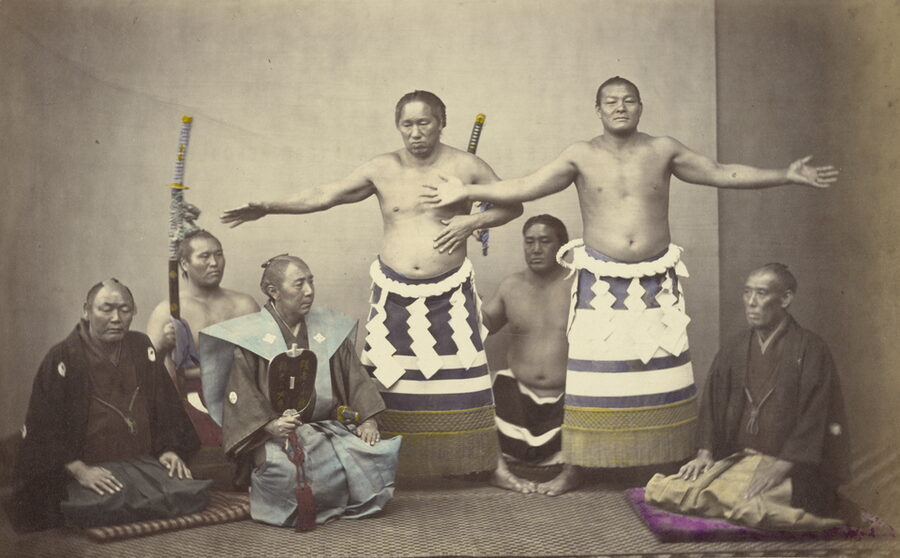
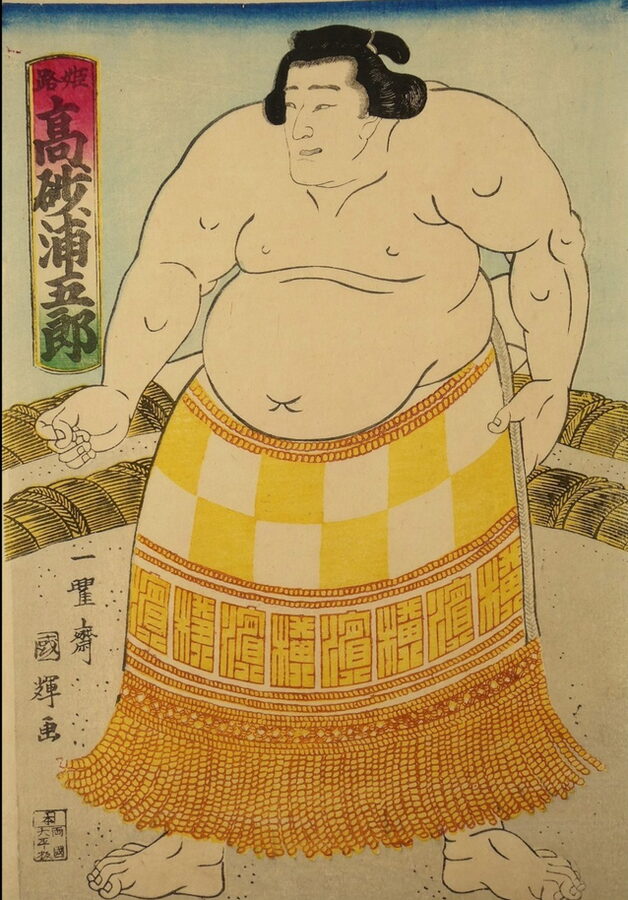
What saved it was politics, hard work and an emperor. Sympathetic men in the new government, Saigō Takamori among them by Japanese accounts, let the wrestlers keep their topknots when everyone else was encouraged to cut theirs in 1871, and in 1872 women were allowed to watch for the first time. A reforming wrestler, Takasago Uragorō, walked out with his followers in 1873 and forced the elders to modernise. In 1876 the sport offered junior wrestlers as firemen for the capital, public relations that a city of wooden houses had every reason to appreciate.
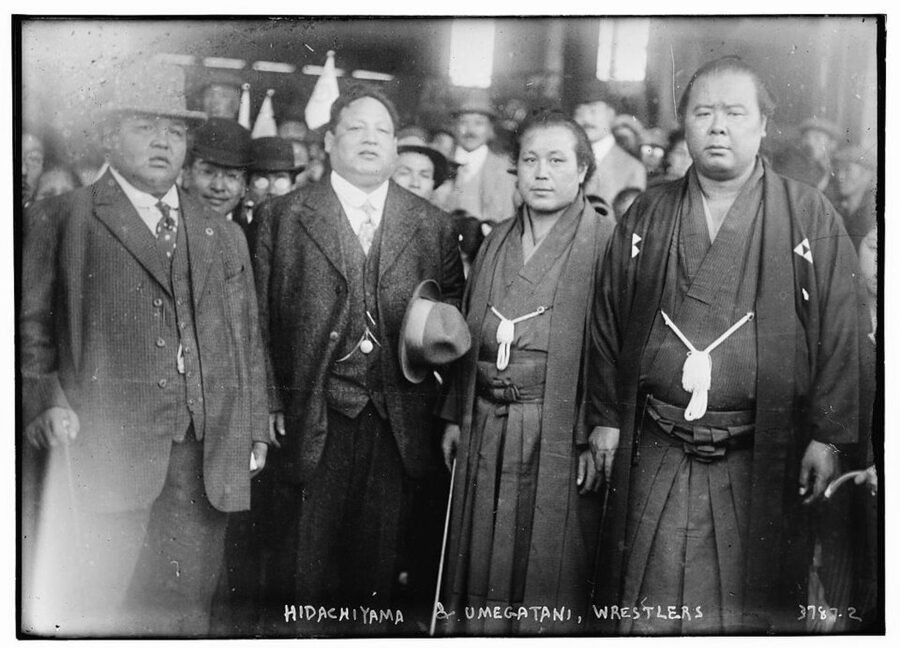
Emperor Meiji liked to wrestle himself, and on 10 March 1884 he watched a full programme of sumo arranged for him in Tokyo, with the champion Umegatani Tōtarō hurriedly licensed as yokozuna for the occasion. If the emperor watched sumo, nobody could call it naked dancing, and Japanese histories treat that afternoon as the moment the sport was saved. Victories over China and Russia did the rest, as national feeling in the late Meiji era washed over anything that could be called traditional.
A steel umbrella in Ryōgoku: the Kokugikan of 1909
The turning point was a building. Outdoor tournaments stopped for rain, and on 2 June 1909 a permanent hall opened in the grounds of Ekō-in: a domed hall of steel designed by Tatsuno Kingo, the architect of Tokyo Station, holding about thirteen thousand people under a roof that Tokyo nicknamed the Great Iron Umbrella.
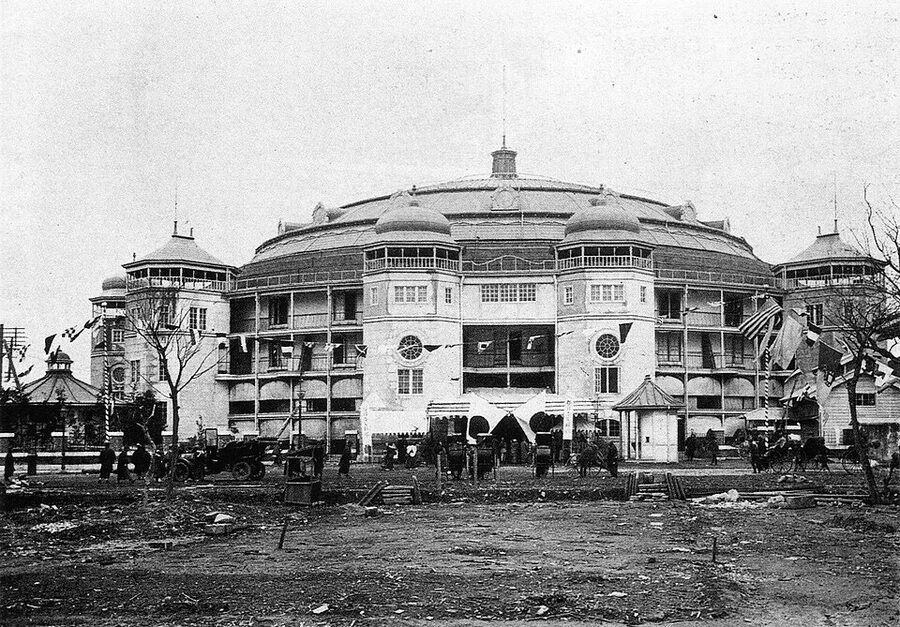
The name came from the opening announcement, written by the novelist Esami Suiin, which declared that “sumo is the national sport of Japan”, kokugi, and within a year everyone was calling the building the Kokugikan, the hall of the national sport. No law or decree has ever made sumo Japan’s national sport. It is an advertising line from 1909 that the country has been repeating ever since.
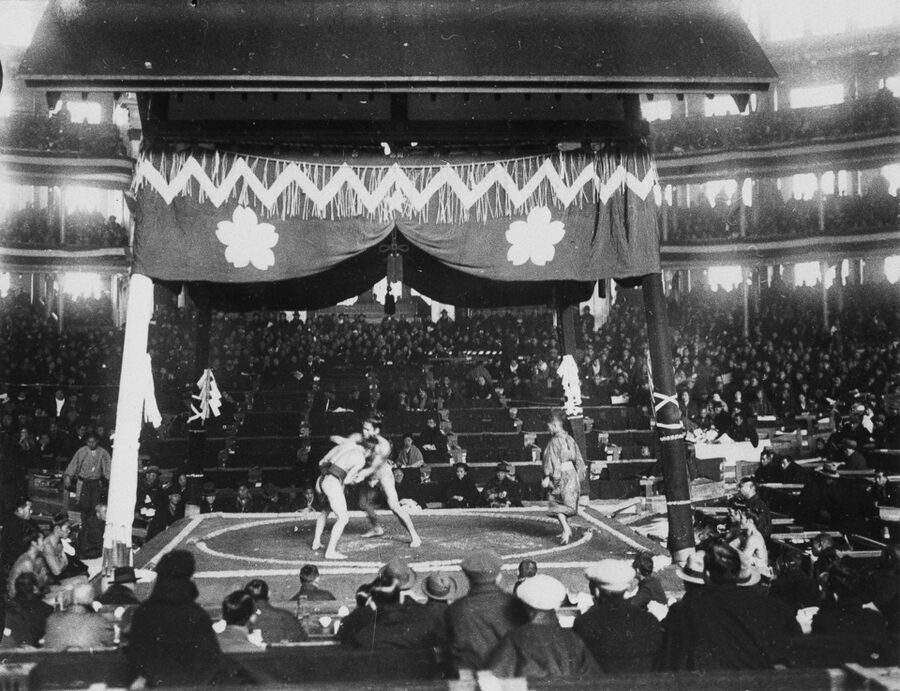
The building changed the sport inside it. A newspaper began presenting a portrait to the wrestler with the best record, and that portrait became the championship, the yūshō. In 1910 the referees swapped samurai dress for the black lacquered cap and loose robes of medieval court costume, chosen for its antiquity. And in 1909 the rules formally made yokozuna a rank above ōzeki, as it had been in practice since the joint promotion of Hitachiyama and the second Umegatani in 1903.
The rest of the modern sport was built in the Taishō and early Shōwa years. In 1925 the Prince Regent, the future emperor Shōwa, gave the cup the champion still lifts, and the Tokyo and Osaka associations merged; the single national body held its first tournament in January 1927. When national radio began carrying sumo on 12 January 1928, the crouching and staring before a bout had to fit a schedule, so a time limit was imposed and two white lines were painted on the clay to mark where the wrestlers crouch.
Both are still there. In 1931, after two tournaments held for the emperor inside the palace, the ring was widened to fifteen shaku, 4.55 metres, and roofed in the style of a Shinto shrine. That roof is younger than the BBC.
Sixty-nine: Futabayama
The wrestler who turned all this into a national obsession was born in 1912 at Usa on the Ōita coast, the son of a shipowner who went bankrupt. At five Akiyoshi Sadaji was hit in the right eye, probably by a blowgun dart, and he wrestled half-blind on that side without ever saying so. He joined Tatsunami stable at fifteen as Futabayama, and for years was known mainly for saving bouts at the edge with a backward pivot throw, because he kept getting pushed there.
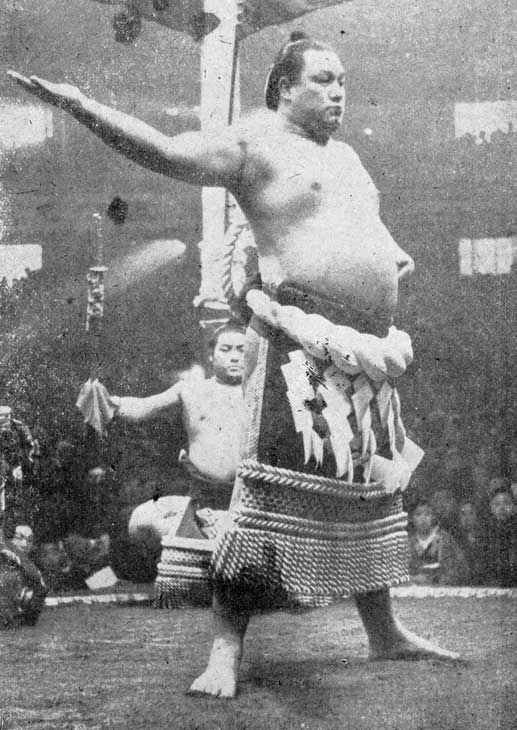
Then something clicked. In 1935 he had a sinus operation, gained weight, and became a man who stood opponents up, took a left-hand grip on the belt and threw them. On the seventh day of the January tournament of 1936 he won a bout, and he did not lose another for three years; tournaments, then two a year of eleven days, were stretched to thirteen days in 1937 and fifteen in 1939 to cash in on the excitement.
He passed through sekiwake and ōzeki without losing a bout and was made yokozuna in 1937. By January 1939 the streak stood at sixty-nine, and the rival Dewanoumi stable had a university-educated wrestler, Kasagiyama, study him; Kasagiyama spotted that Futabayama was weak on his right and told the young Akinoumi to go for the right leg. Futabayama had also caught amoebic dysentery on tour in Manchuria and lost weight.
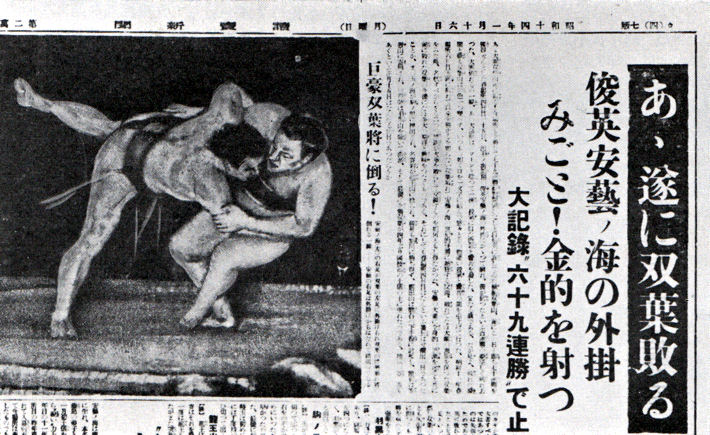
The bout on the fourth day, 15 January 1939, lasted seconds: Akinoumi hooked his left leg round Futabayama’s right, and both went down with the champion underneath. English-language accounts sometimes date it to 3 January; the Japanese record is clear that it was the fifteenth. The Kokugikan erupted, with cushions, bottles and, by more than one eyewitness account, lit charcoal braziers flying through the air.
That night Futabayama sent a telegram to his teacher, the philosopher Yasuoka Masahiro: imada mokkei tarienzu, “I am not yet a wooden rooster”. The reference is to the fighting cock in the Chinese classic Zhuangzi, trained until it stood so still that other birds fled from it, the kind of parable Zen teachers have borrowed for centuries. His sixty-nine is still the record; Hakuhō reached sixty-three in 2010.
His later life was stranger. In January 1947, adrift after the war, he was arrested in Kanazawa alongside the leader of a new religion called Jiu, who had predicted that Tokyo would burn. He recovered his dignity, ran the Japan Sumo Association from 1957 until his death in 1968, and pushed through a retirement age for elders and a system that matched every stable against every other.
Bombs, a Memorial Hall and a ring one foot wider
The war took the Kokugikan away. The army requisitioned it in 1944, sumo moved to the baseball stadium at Kōrakuen, and the hall was gutted in the air raid of 10 March 1945. In June 1945 a seven-day tournament was held in the roofless building with no public admitted, only wounded soldiers as guests; it is the only closed-door tournament in the sport’s history.
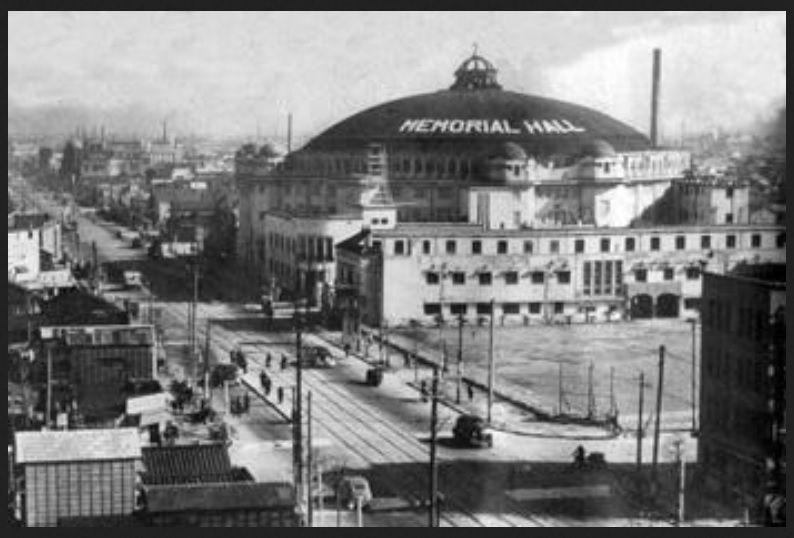
The occupation was less hostile to sumo than to kendo, and the sport tried hard to please. For the November tournament of 1945 the ring was widened by one shaku, to 4.84 metres, to make bouts last longer for American spectators; the wrestlers hated it, the Americans were not much interested, and it went back to fifteen shaku after one tournament. Futabayama, who believed the narrow ring had made sumo technical, retired that month without fighting on it, by some accounts partly in protest.
Sumo wandered for a decade, from an outdoor arena at the Meiji Shrine Outer Garden to a wooden hall at Hamachō, before settling on land the association owned at Kuramae. The Yokozuna Deliberation Council of outside worthies was set up in 1950 after complaints that too many weak yokozuna were being licensed, and from 1951 the Yoshida house issued no more licences; in 1986 it formally handed its authority to the association, and the family of referees from Kumamoto stepped out of the sport they had dressed.
Rice, sleep and the topknot: life in a stable
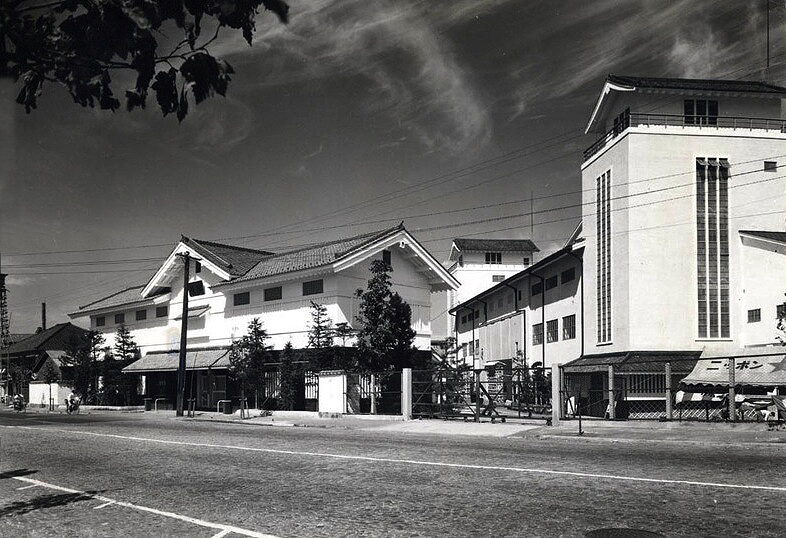
Every professional wrestler belongs to a stable, a heya, run by a retired wrestler holding one of the association’s limited elder names. There are forty-odd, mostly in the old working districts either side of the Sumida. A recruit must be male and pass a physical check; he sleeps in a dormitory and, at the bottom of the banzuke, owes service to everybody above him.
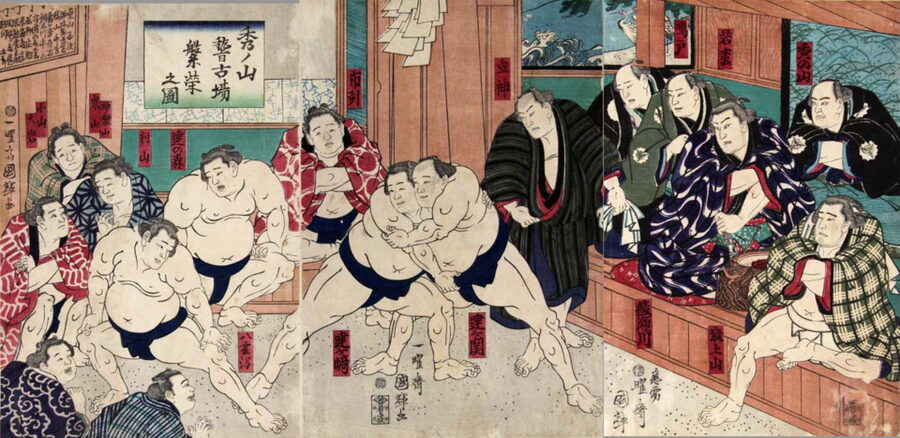
The day begins early with practice, keiko: the leg-raising stamp called shiko, the shuffling slide of suriashi, and then bout after bout in the practice ring. Lunch is the first meal, usually the stew called chanko, eaten in order of rank and followed by a long sleep, which is where the weight comes from. Only the seventy or so men of the top two divisions, makuuchi and jūryō, are salaried sekitori, and a yokozuna earns ¥3,000,000 a month. Everyone below them gets an allowance and does the chores.
Every wrestler grows a topknot, and on tournament days a sekitori wears it as the ōichō, shaped like a ginkgo leaf by stable hairdressers who need years to learn it. Wrestlers are forbidden by the association to drive. When a man retires, the topknot is cut off on the ring, often by hundreds of guests one snip at a time, with the stablemaster making the final cut.
From Maui to Ulaanbaatar: the outsiders
The first foreigner to make a career in professional sumo was Jesse Kuhaulua, a big high-school footballer from Maui who took up sumo to strengthen his legs. He arrived at Takasago stable in 1964, wrestled as Takamiyama, and in July 1972 became the first foreign-born man to win a top-division championship; the American ambassador read out a letter from President Nixon on the ring, the first English officially spoken there. He became a Japanese citizen, an elder and the founder of his own stable.
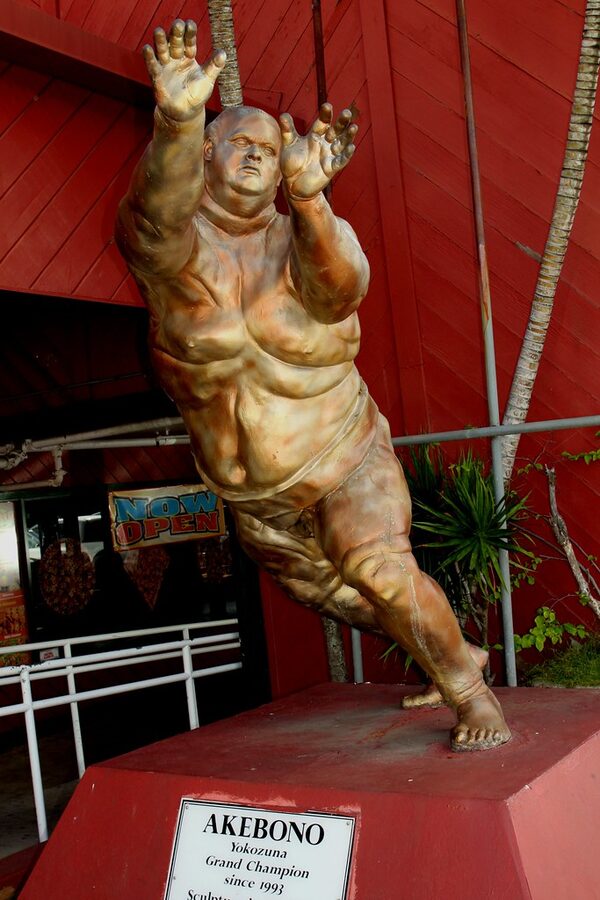
The Hawaiian ōzeki Konishiki was turned down for yokozuna in 1992 amid a public argument over whether a foreigner could have the dignity the rank demanded; Akebono, who then won two championships in a row, could not be refused, and Musashimaru followed in 1999. Then came Mongolia. Asashōryū, promoted in 2003, won seven tournaments in a row and twenty-five in all, with a fire that delighted crowds and appalled the deliberation council, and was pushed into retirement in February 2010 after assaulting a man outside a Tokyo nightclub.
Hakuhō, who arrived at fifteen weighing 62 kilograms and was nearly sent home because no stable would take him, became the most successful wrestler in the sport’s history: forty-five championships, sixty-three straight wins until Kisenosato stopped him, and Japanese citizenship in 2019. The association now limits each stable to one foreign-born wrestler, naturalised or not, and only citizens may become elders. From 2006 to 2016 no Japanese-born wrestler won a tournament at all; the yokozuna of 2025 were the Japanese-born Ōnosato and the Mongolian Hōshōryū, and a Ukrainian, Aonishiki, reached ōzeki that November.
The ring women may not climb
No woman may step onto the ring at a professional tournament. In 2000 Ōta Fusae, Japan’s first woman prefectural governor, asked to present the Osaka governor’s prize on the ring, as her male predecessors had, and was refused. On 4 April 2018, at an exhibition in Maizuru, the mayor collapsed while speaking on the ring, and when women from the crowd climbed up to give him heart massage, the public address asked them to get down; the association’s chairman, Hakkaku, apologised and called it “inappropriate in a situation involving a human life”.
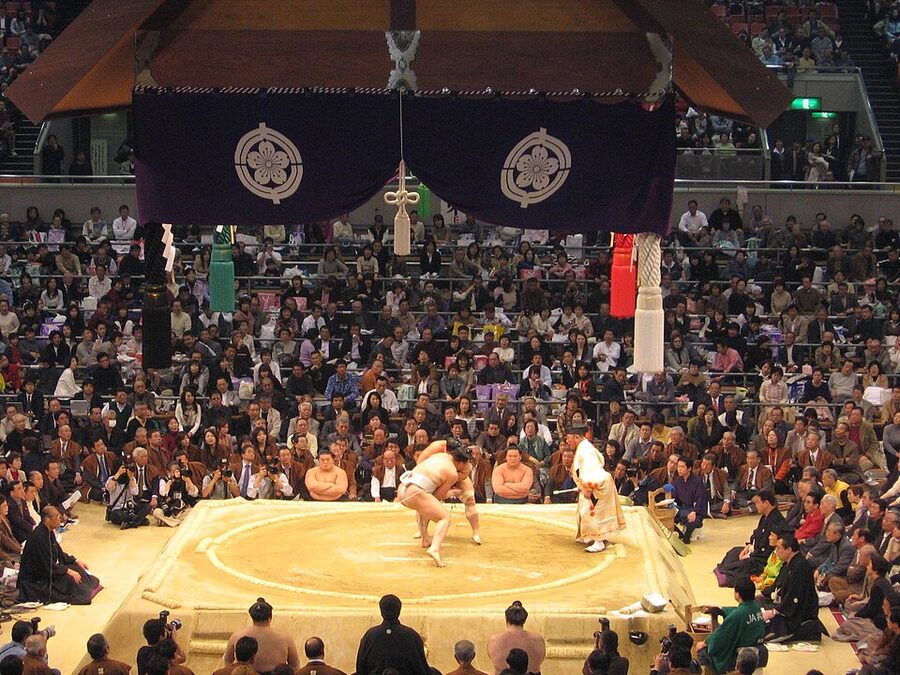
The association calls it tradition: the ring is consecrated and must be kept ritually pure. Historians are not so sure. The Nihon shoki has women wrestling at the palace, Edo had a thriving trade in women’s sumo, and in 1769 a women’s tournament at Sensō-ji was extended by twenty days because of the crowds. Some Japanese scholars argue that the ban in its present form is a Meiji creation, built from police regulations against public indecency and a new emphasis on Shinto ideas of pollution.
The anthropologist Suzuki Masataka has pointed out that the gods are formally sent off from the ring at the end of every tournament, before the prizes are given, so by the association’s own logic nothing sacred remains to be polluted. In 2025 Japan’s first woman prime minister, Takaichi Sanae, said she would respect the custom and not present the Prime Minister’s Cup on the ring herself, which reopened the argument from the other side. Amateur women’s sumo is now international, and its wrestlers, like those of naginata, are used to being told what women in Japanese history supposedly did not do.
Gambling, fixed bouts and a beer bottle: the scandals
The modern sport has had a bad twenty years, and it is better to set them out than to hint. On 26 June 2007 a seventeen-year-old recruit of Tokitsukaze stable, Futabayama’s old stable, died after beatings at its lodgings in Inuyama, having tried to run away; his stablemaster, the former komusubi Futatsuryū, had hit him with a beer bottle and told senior wrestlers to “look after” him. Three wrestlers received suspended sentences in December 2008. The stablemaster was sentenced to six years in May 2009, reduced to five on appeal, and the Supreme Court upheld it in August 2011.
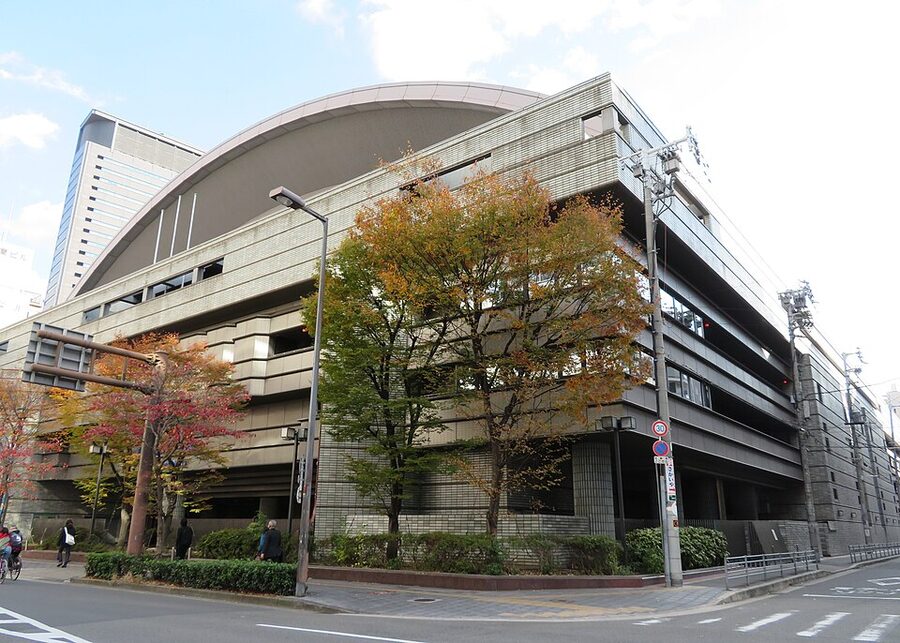
In 2010 a weekly magazine reported that the ōzeki Kotomitsuki had bet on professional baseball through gangsters. The investigation named dozens of wrestlers and elders involved in illegal gambling, Kotomitsuki and the elder Ōtake were dismissed, and NHK dropped live coverage of the July tournament for the first time since 1928. Going through phones seized in that case, police then found text messages arranging the results of bouts, and in February 2011 the association cancelled the Osaka tournament. About two dozen wrestlers and one elder were forced out, though one of them, Sōkokurai of Inner Mongolia, sued, won in the Tokyo District Court in 2013 and came back to fight.
Violence did not stop with Tokitsukaze. In October 2017 the yokozuna Harumafuji struck a younger wrestler, Takanoiwa, at a drinking party in Tottori; he retired on 29 November and was fined ¥500,000 in January 2018. In 2024 a wrestler of Hakuhō’s stable, Hokuseihō, was found to have beaten juniors, Hakuhō was demoted for failing to supervise him and his stable absorbed into another, and in 2025 he left the association. Each case has brought new rules, from a ban on phones in the dressing rooms to an explicit ban on violence dressed up as training, and each has asked again whether a closed world run by its own former members can change its habits as fast as its rulebook.
What you are watching: ranks, rituals and four minutes of staring
The banzuke divides the wrestlers into six divisions: from the bottom, jonokuchi, jonidan, sandanme and makushita, then the salaried jūryō and makuuchi. At the top of makuuchi sit the titled ranks, komusubi, sekiwake, ōzeki and yokozuna, above the rank-and-file maegashira. Win at least eight of your fifteen bouts and you go up, lose eight and you go down, unless you are a yokozuna, who cannot be demoted and is expected to retire instead.
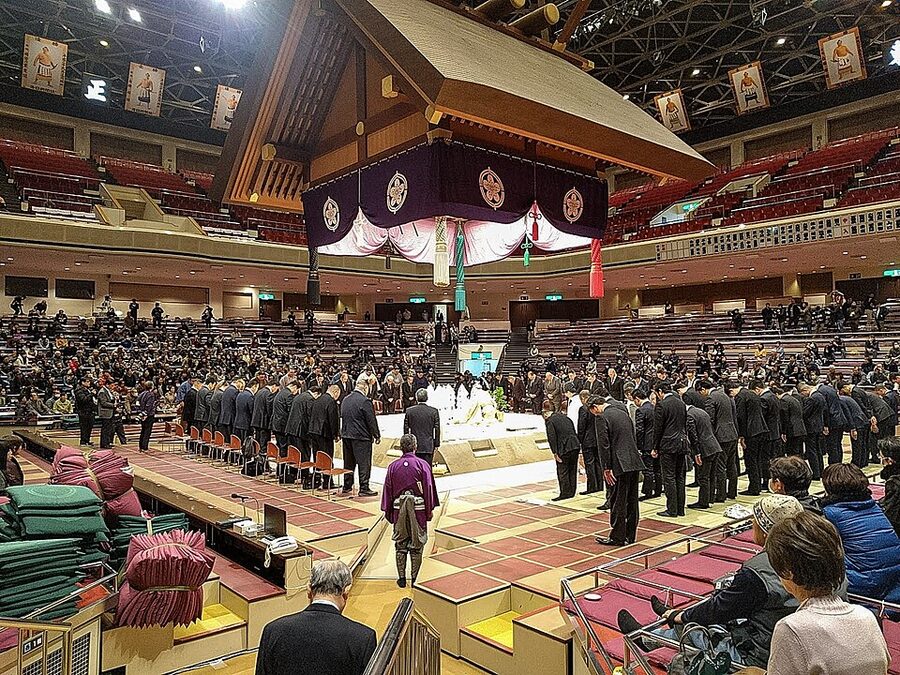
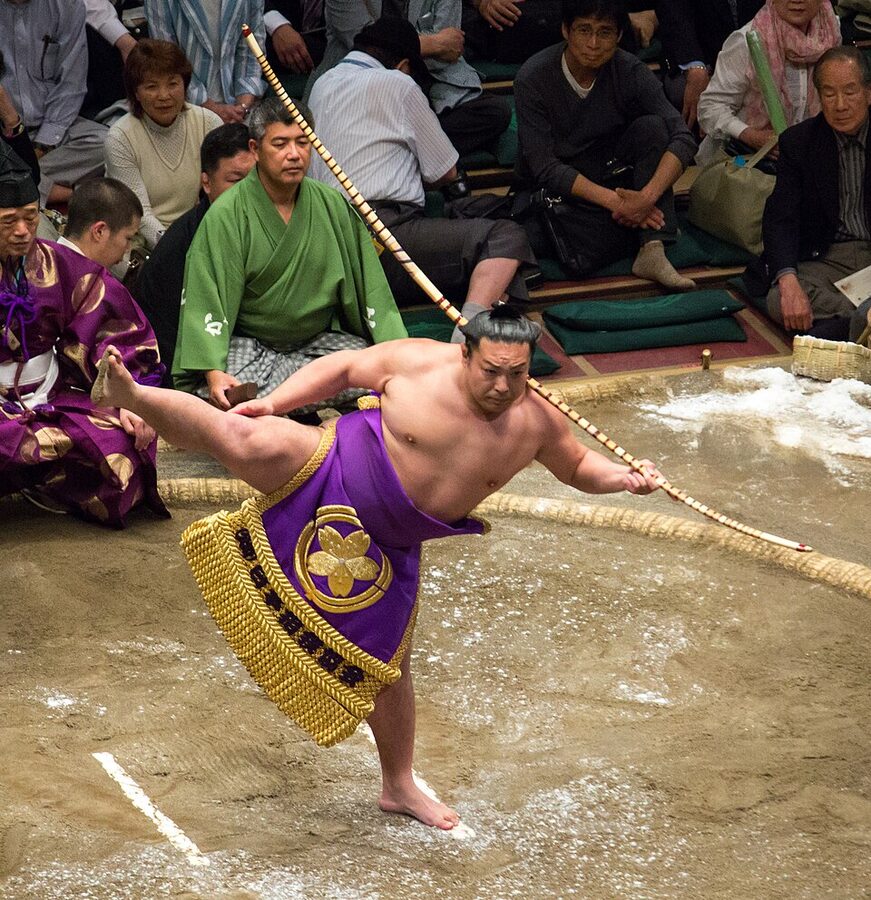
The ring is rebuilt for every tournament by the yobidashi, the ushers, who also call the wrestlers and beat the drums: a platform about 60 centimetres high of tamped Arakida clay from the Arakawa river, with a circle of bales 4.55 metres across. Before a bout the wrestlers stamp, rinse their mouths with water, throw salt over the clay and squat facing each other again and again, for up to four minutes in the top division. There is no starting signal. The bout begins when both men put their fists down and charge together, and the referee only confirms that they agreed.
The rules fit on a postcard. You lose if anything but the soles of your feet touches the clay, or any part of you touches the ground outside the ring; even a falling topknot counts. Punching with a closed fist, pulling hair, jabbing at the eyes and grabbing the vertical front fold of the belt are fouls, and the judges in black round the ring can overrule the referee, with video replays since 1969.
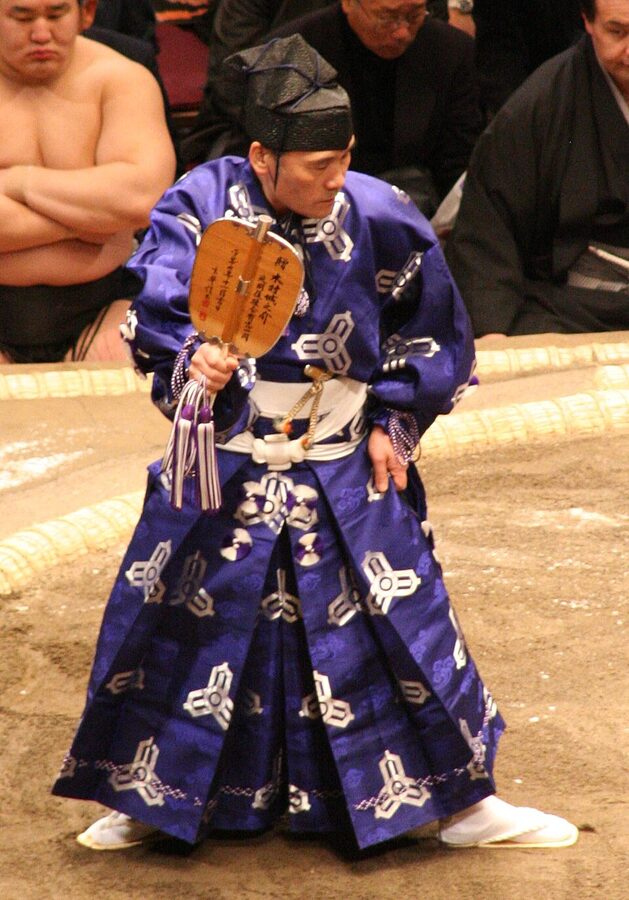
The rites fill the gaps. The top division enters the ring in the afternoon in embroidered aprons, the keshō-mawashi, woven in Hakata and Kyoto silk, and each yokozuna follows with his own entry, flanked by a dew-sweeper and a sword-bearer. Sponsors parade banners round the ring before big bouts, each worth ¥70,000 since May 2025, of which the winner takes ¥10,000 in cash in an envelope on the referee’s fan. When the last bout is over, a junior wrestler performs the yumitori-shiki, the bow-twirling ceremony, on the winner’s behalf.
Where to see sumo today
Sumo is easier for a visitor to see than almost any other Japanese tradition, because it is a business and businesses sell tickets. The catch is that it now sells them very fast. Plan around the six tournaments, and fill the gaps with Ryōgoku and two shrines in Nara.
The six tournaments, and how to get a ticket
There are six fifteen-day tournaments, the honbasho, each starting and ending on a Sunday: January, May and September at the Ryōgoku Kokugikan in Tokyo, March at EDION Arena Osaka, July at the new IG Arena in Nagoya, and November at the Fukuoka Kokusai Center. The current Fukuoka tournament, 8 to 22 November 2026, is sold out on every day, with nothing at the door. The 2027 dates are 10 to 24 January, 14 to 28 March, 9 to 23 May, 11 to 25 July and 12 to 26 September.
Tickets go on sale four to eight weeks ahead through Ticket Oosumo, the association’s official seller, which has an English site; January 2027 opens at 10:00 Japan time on 5 December 2026. The English site takes credit cards only, charges a ¥2,000 fee per ticket and limits you to two, and you print them at a 7-Eleven in Japan. For January 2027 a chair seat at the back costs ¥5,000 on a weekday, a four-person floor box, the masu-seki, ¥38,000 to ¥88,000 depending on position and day, and ringside seats, where you risk a wrestler in your lap, ¥20,000 on the Japanese site only.
The doors open at 8:45, the junior divisions wrestle all morning to a near-empty hall, the top division enters in mid-afternoon, and the last bout ends around six; you may leave and come back once, before 17:00. Buy the cheapest chair seats and arrive by noon, when the makushita wrestlers, the hungriest men in the building, are fighting for promotion. Avoid resale sites: the association says it may refuse entry to tickets bought that way.
The Kokugikan and the Sumo Museum
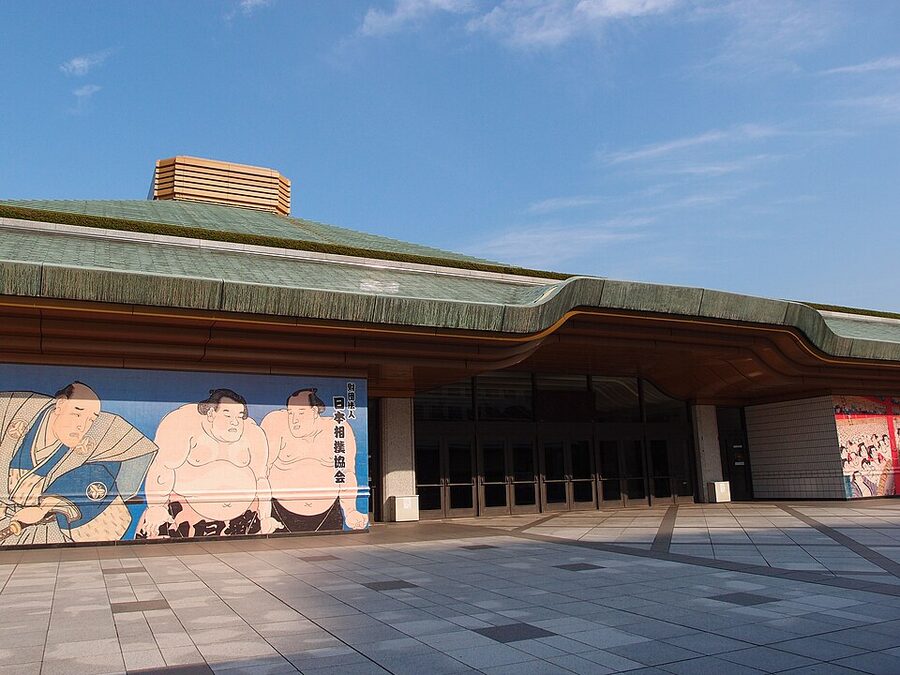
The Kokugikan is a minute’s walk from the west exit of JR Ryōgoku Station on the Sōbu Line, or five minutes from exit A4 of Ryōgoku on the Toei Ōedo subway. The Sumo Museum on its ground floor, founded in 1954 around the collection of Sakai Tadamasa, is free, open 10:00 to 16:30 (last entry 16:00), and closed on Saturdays, Sundays and holidays, which catches a lot of people out. During Tokyo tournaments it opens 12:30 to 16:00 to ticket holders only.
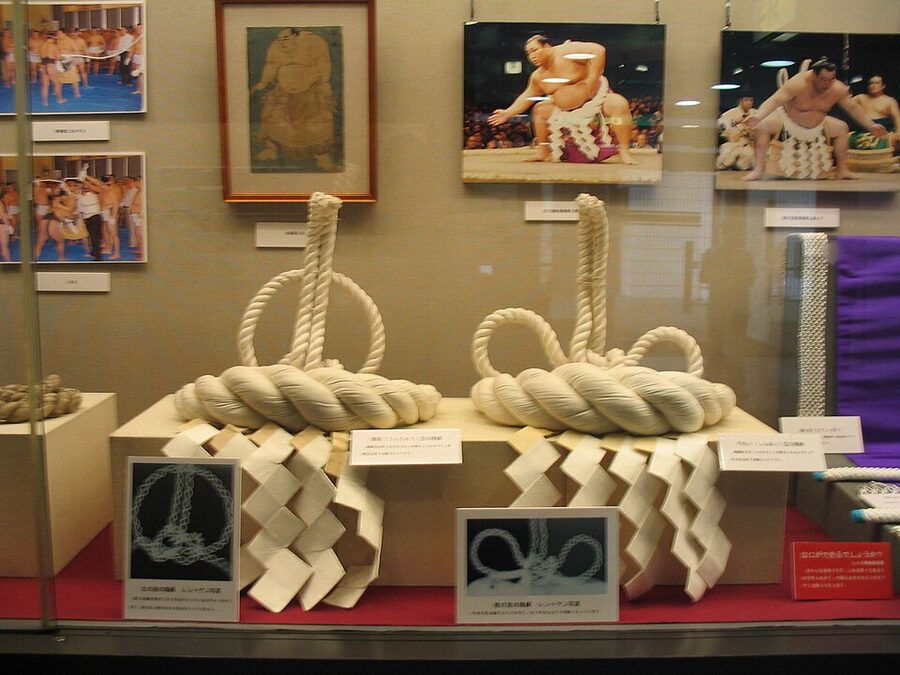
The museum’s prints and aprons belong as much to Japan’s great crafts as to its sport: the aprons come from the same Hakata and Nishijin weavers who make obi, and every rope is twisted by hand. Around the arena, Ryōgoku is a district of stables, chanko restaurants and wrestlers’ handprints cast in bronze.
Ekō-in and the Chikara-zuka
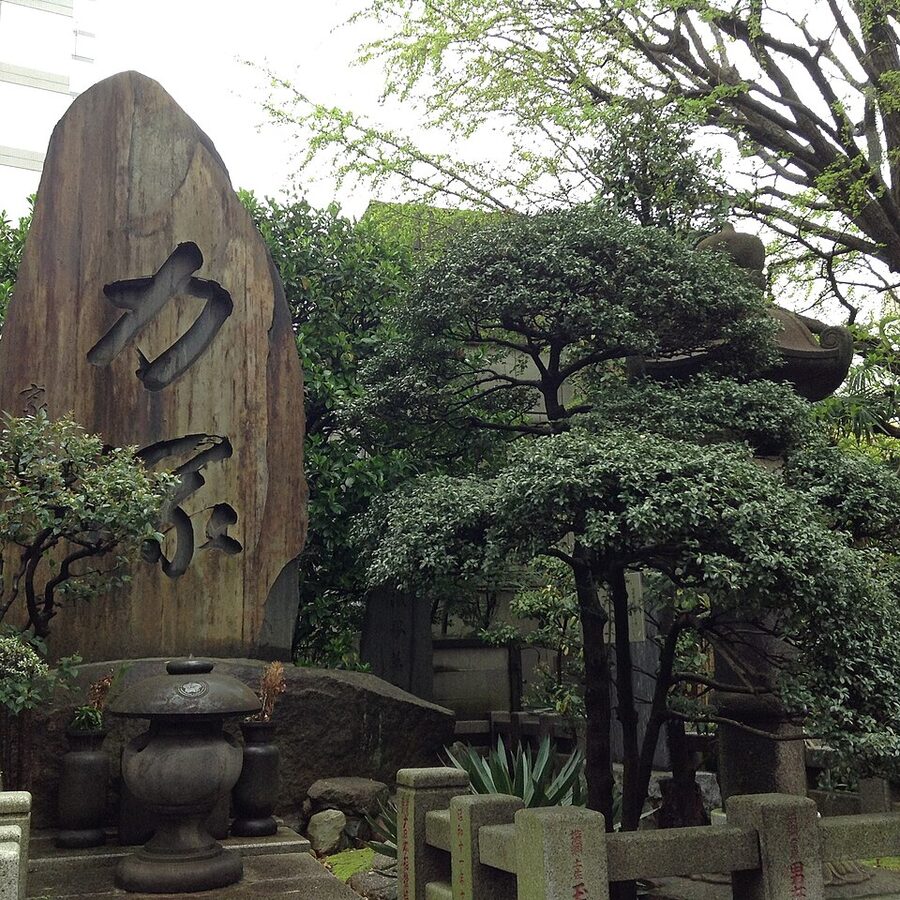
Ekō-in is three minutes from the west exit of Ryōgoku Station. Founded in 1657 for the unclaimed dead of the Meireki fire, it has a memorial to animals, the grave of the gentleman thief Nezumi Kozō, whose stone students chip for luck before exams, and the Chikara-zuka, the “power mound”, raised by the association in 1936 to the memory of its elders.
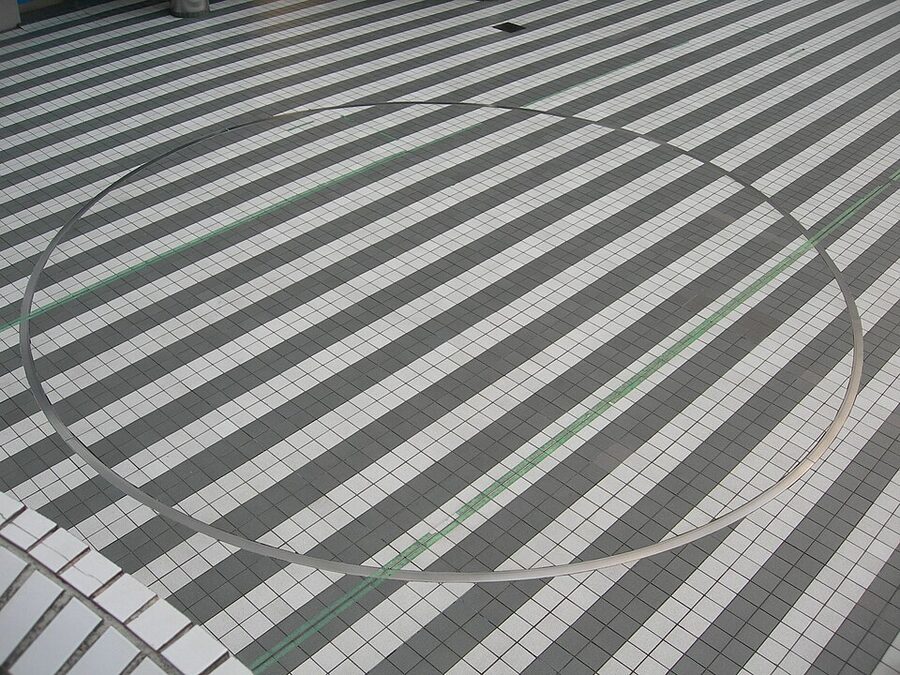
Next to the temple, in the courtyard of the Ryōgoku City Core block, a circle of darker tiles marks where the ring of the 1909 Kokugikan stood. Hardly anyone looks for it.
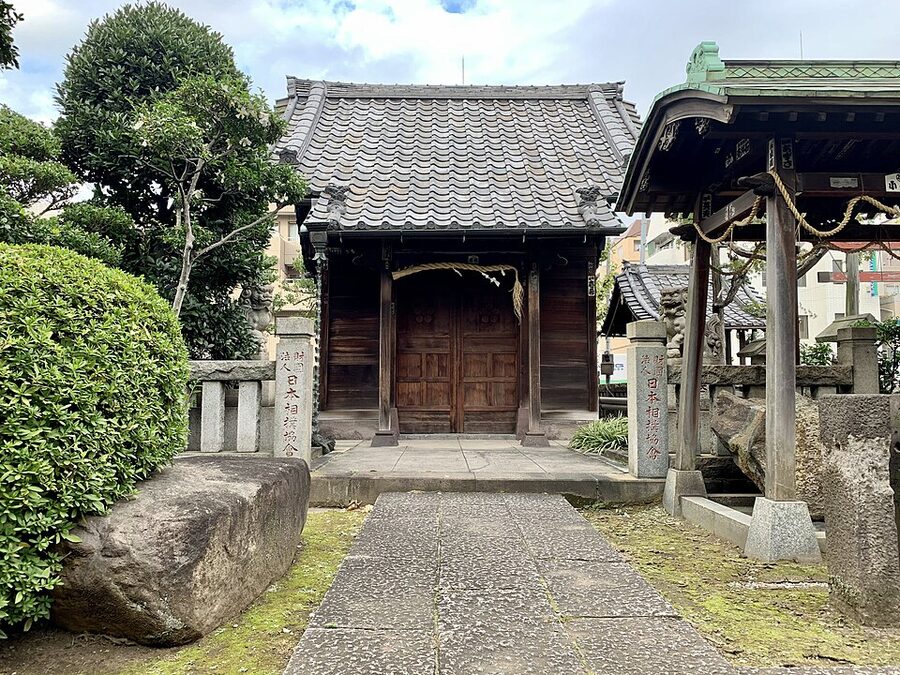
Nomi no Sukune Shrine and Tomioka Hachimangū
A short walk east of the Kokugikan, in Kamezawa, a small shrine to Nomi no Sukune stands on the site of a former domain mansion. It was founded in 1885 by Takasago Uragorō and other sumo men, burned in 1923 and 1945, and was rebuilt in 1953 with a monument listing every yokozuna; before each Tokyo tournament the association’s chairman and judges attend a rite here.
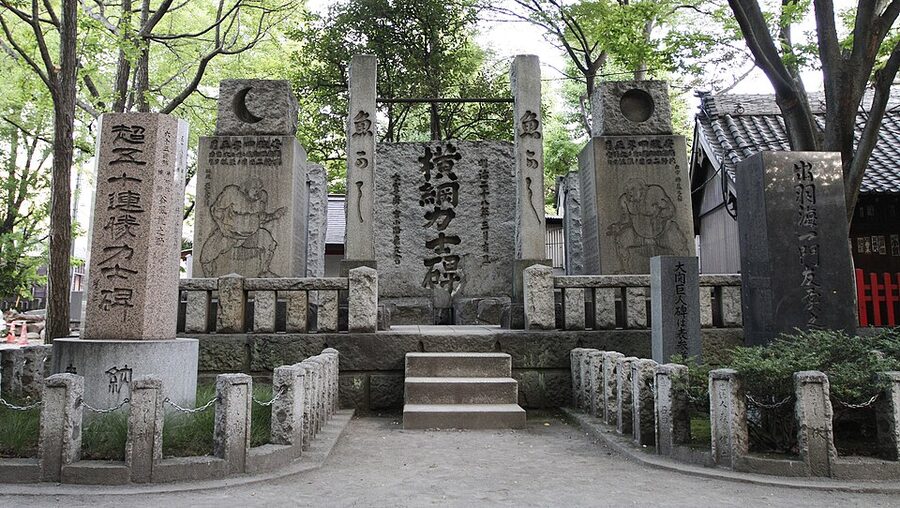
For the birthplace of the professional sport, take the subway to Monzen-nakachō and walk a few minutes to Tomioka Hachimangū. In its grounds stands the Yokozuna Rikishi Monument, raised in 1900 by the twelfth yokozuna, Jinmaku Kyūgorō, which fixed the official list of the rank, along with stones for the ōzeki, for wrestlers who won fifty bouts in a row, and for the tallest wrestlers in history.
New yokozuna also perform their first ring-entry at the Meiji Shrine, on a date the association announces shortly after the promotion. If you are in Tokyo that week, it is free, outdoors, and the best way to see the ceremony up close.
Watching morning practice
Practice at a stable is the one part of sumo you can see without a ticket, and the part I would choose if I could see only one. It starts around seven or eight and runs until about ten, and the best time is the week before a Tokyo tournament. Many stables no longer admit casual visitors, and the reliable way in is a booked viewing through one of the tour operators that arrange visits with individual stables.
The rules are always the same: sit on the floor in silence, do not eat, use no flash, do not speak to the wrestlers, and bow if the stablemaster speaks to you. It is the most extraordinary hour in sumo: the smell of the clay, the thump of bodies, and a young man doing the same charge for the fortieth time while his seniors watch.
Sumō Jinja and the Kehaya-za, Nara
The legend of the first bout has sites of its own on either side of the Nara basin. On the east, below Mount Makimuku in Sakurai, the small Sumō Jinja stands in the grounds of Anashi-ni-imasu-hyōzu Jinja, at a spot called Katayakeshi where Sukune and Kehaya are said to have fought. In 1962 the yokozuna Taihō and Kashiwado performed their ring-entries here before a crowd newspapers put at a hundred thousand.
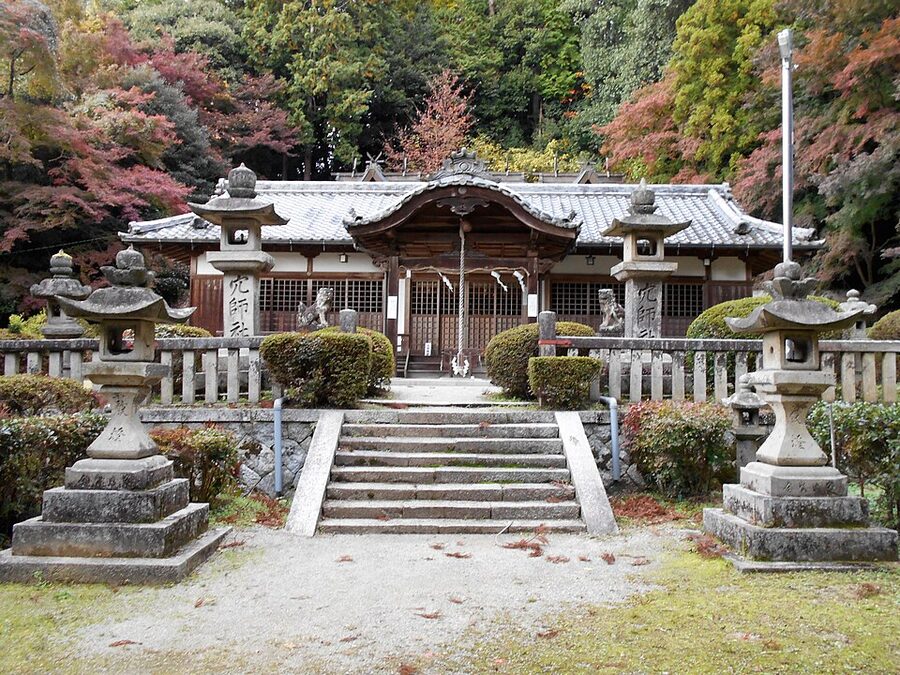
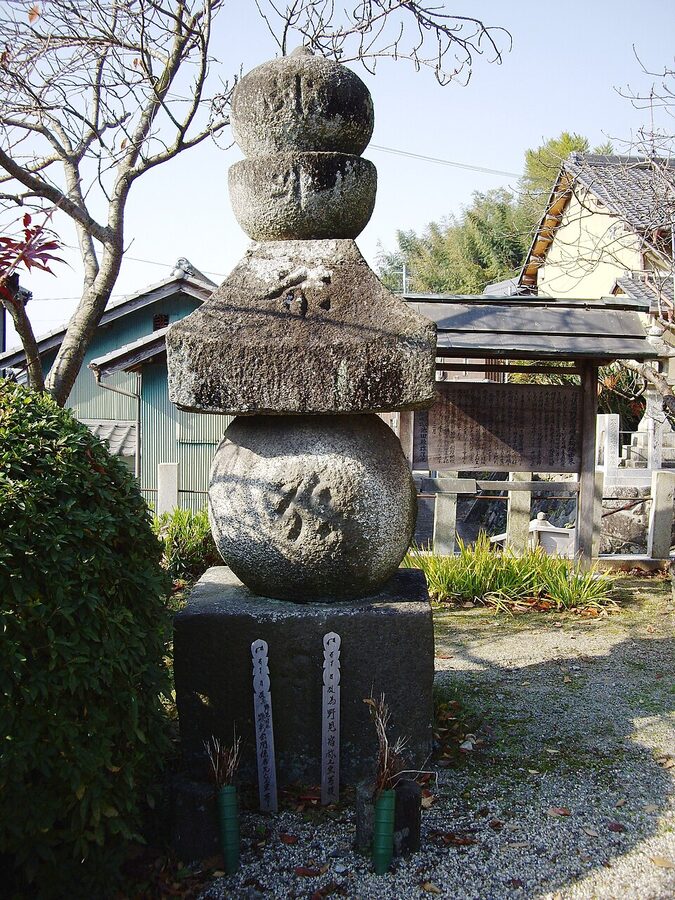
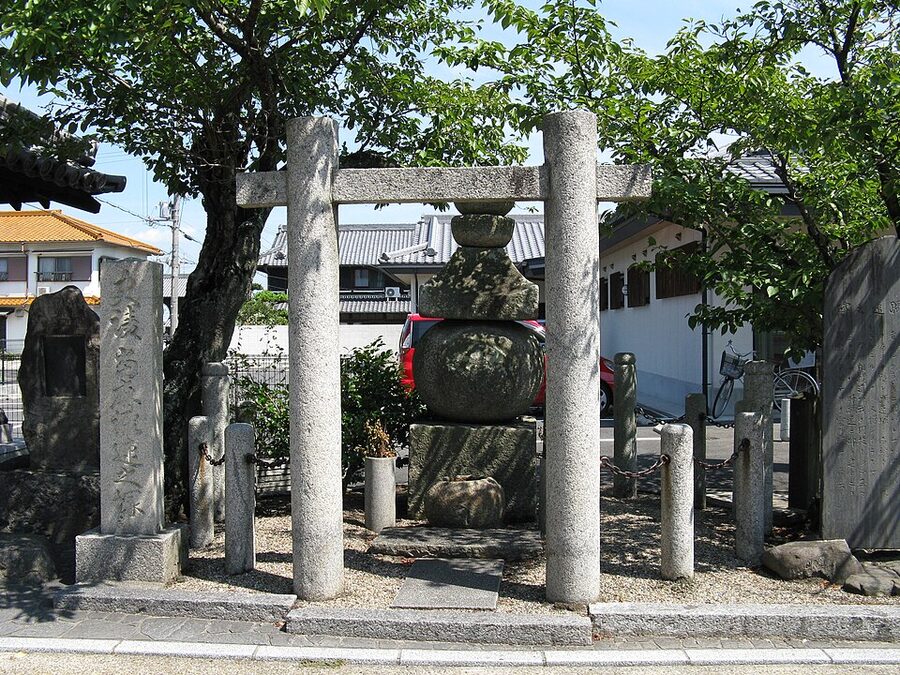
In the hamlet of Izumo at the eastern edge of Sakurai, which claims to be Sukune’s home, a stone memorial tower to him stands at Jūnihashira Shrine, whose guardian dogs have wrestlers on their pedestals.
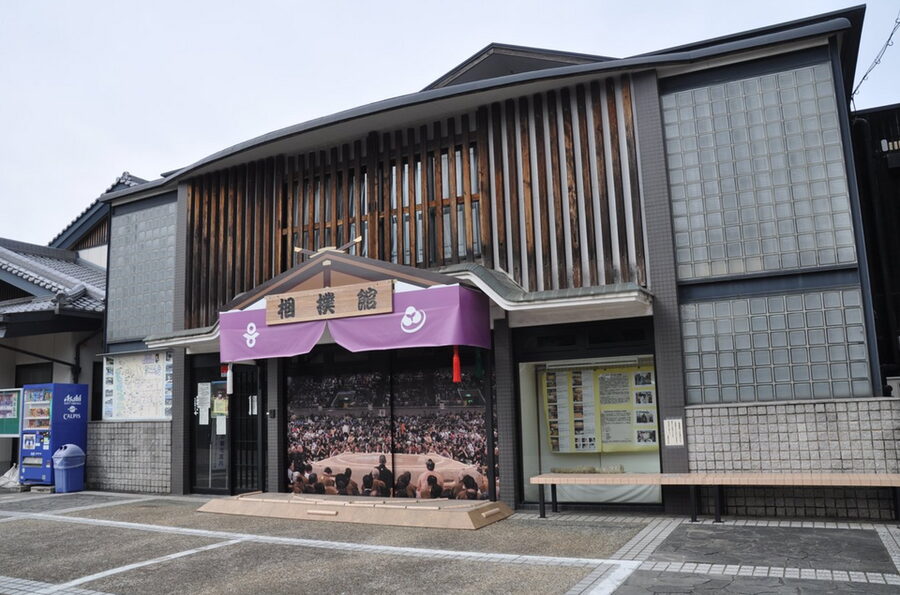
On the west side, in Katsuragi, Kehaya gets his due. The Katsuragi City Sumo Museum, the Kehaya-za, five minutes’ walk west of Kintetsu Taimadera Station, has a full-size tournament ring, a film about Kehaya and some twelve thousand items of sumo memorabilia; it opens 10:00 to 17:00, closes Tuesdays and Wednesdays, and charges ¥300 for adults, but check the city’s site before you go.
Beyond Tokyo and Nara
Tanikaze has a statue in Kōtōdai Park in central Sendai, and when the sumo tour comes to the city, a new yokozuna performs his ring-entry in front of it. Raiden’s birthplace, a house he built as an ōzeki with a practice ring inside, stands in Tōmi, Nagano, with copies of his diaries, and his grave is at Hōdo-ji in Akasaka, the temple whose bell got him banished.
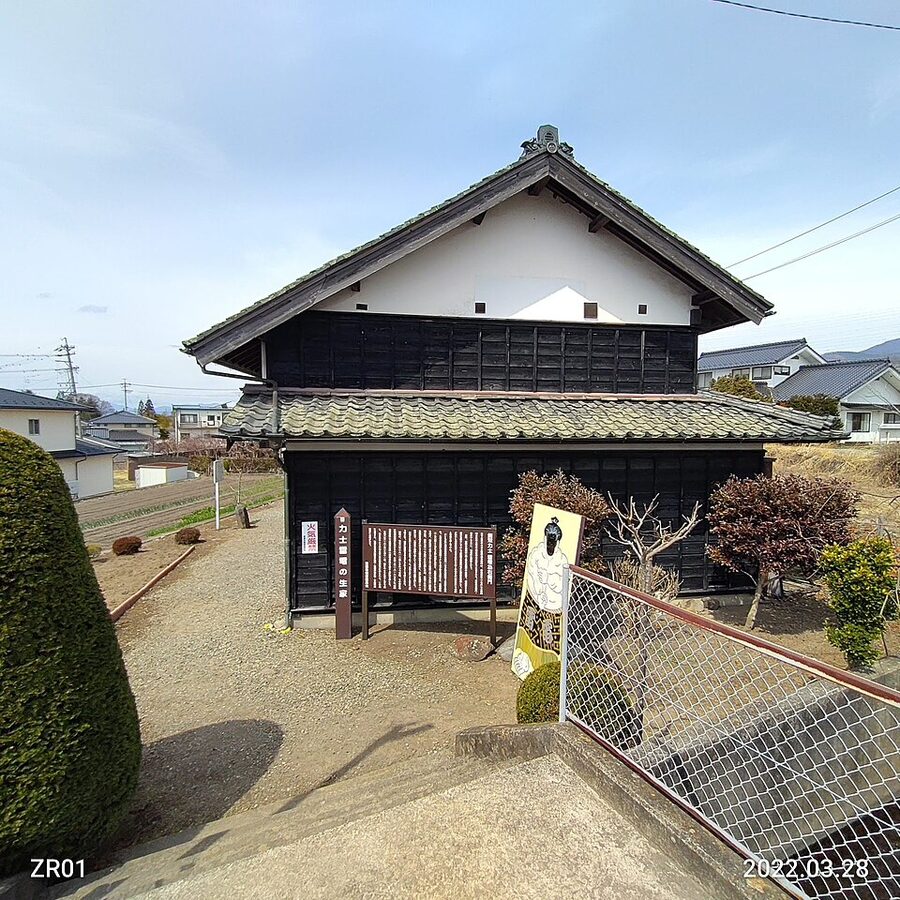
The kick and the rope
Sumo has spent thirteen centuries telling you how old it is, and most of what it says is true in a way it did not intend. The kicking match is a legend about a clan of potters, the rope a licence invented for a shogun, the ring a 17th-century crowd-control measure, the shrine roof a fixture of 1931 and the white lines a concession to radio. None of that makes it less extraordinary. Sumo has outlived the court, the samurai, the shogunate, the war and its own scandals by reinventing itself whenever it had to, and calling each reinvention ancient.
If you go to Ryōgoku in January, buy the cheap seat and come early. When the yokozuna climbs into the ring, raises his arms and stamps, remember that the first stamp in a sumo story in Japanese writing killed a man. The stamp is gentler now. It still brings the house down.