For the better part of two years, Francis Xavier was telling the Japanese to worship Dainichi. The word was his interpreter’s choice for God, and it is the name of the cosmic Buddha at the centre of Shingon Buddhism. The monks who heard it were pleased to meet a party of bearded foreigners who had arrived from the direction of India, the land of the Buddha, preaching what sounded like a reformed version of their own school. When Xavier finally understood what he had been saying, he sent his companion into the streets of Yamaguchi to tell the crowds not to pray to Dainichi at all, and the monks stopped being pleased.
That is the story of Xavier in Japan in miniature. He spent twenty-seven months in the country, from August 1549 to November 1551, and never learned more than a few memorised pages of the language. He walked to Kyoto in midwinter to ask an emperor for permission to convert the country and found an emperor who could barely keep his palace walls up.
He wrote home that the Japanese were the best people yet discovered, and he was misunderstood, admired, mocked and occasionally fed by them in roughly equal measure. I want to walk you through what his own letters and the Jesuit and Japanese records actually say, year by year, and then send you to Kagoshima, Hirado, Yamaguchi, Sakai, Ōita and Kobe, where his twenty-seven months left marks you can still find.
In This Article
- A Navarrese in a Portuguese empire
- The fugitive in Malacca
- A pirate’s junk to Kagoshima
- Ten months in Satsuma
- Dainichi, Deus and the word for God
- Hirado, and the road north
- Yamaguchi, first time: street corners and a lord’s temper
- Walking to a ruined capital
- Yamaguchi in silk
- Bungo, and a young lord
- What the letters got right, and wrong
- Shangchuan, December 1552
- An arm in Rome, a face in a chest
- Where to find Francis Xavier in Japan today
- Kagoshima
- Hirado
- Yamaguchi
- Sakai and Kyoto
- Ōita
- Kobe and Tokyo
A Navarrese in a Portuguese empire
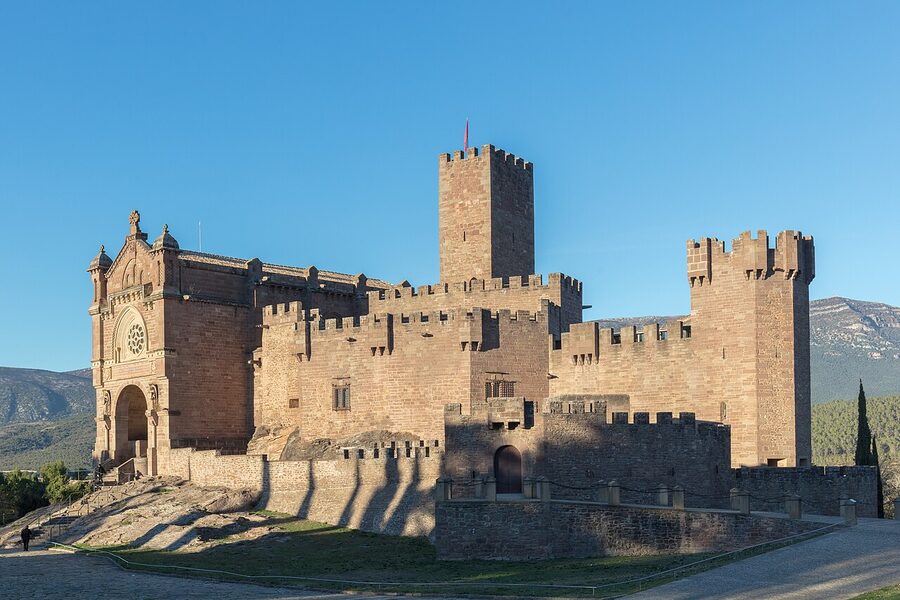
Xavier was born on 7 April 1506 in the castle of Javier, on the southern edge of the Pyrenees in the small kingdom of Navarre, the youngest of five children of a Basque noble family. Castile swallowed Navarre when he was a boy, and his brothers fought on the losing side. In 1525 he went to the University of Paris, where he shared a room with a Savoyard, Pierre Favre, and later met an older Basque student, a wounded former soldier called Iñigo de Loyola.
On 15 August 1534, the feast of the Assumption, Loyola, Xavier, Favre and four others took vows together in a chapel on Montmartre, the founding act of what became the Society of Jesus. Keep that date in mind. In 1540 the king of Portugal, João III, asked for Jesuits to work in his Asian possessions, the man chosen fell ill, and Xavier was sent in his place at a day’s notice.
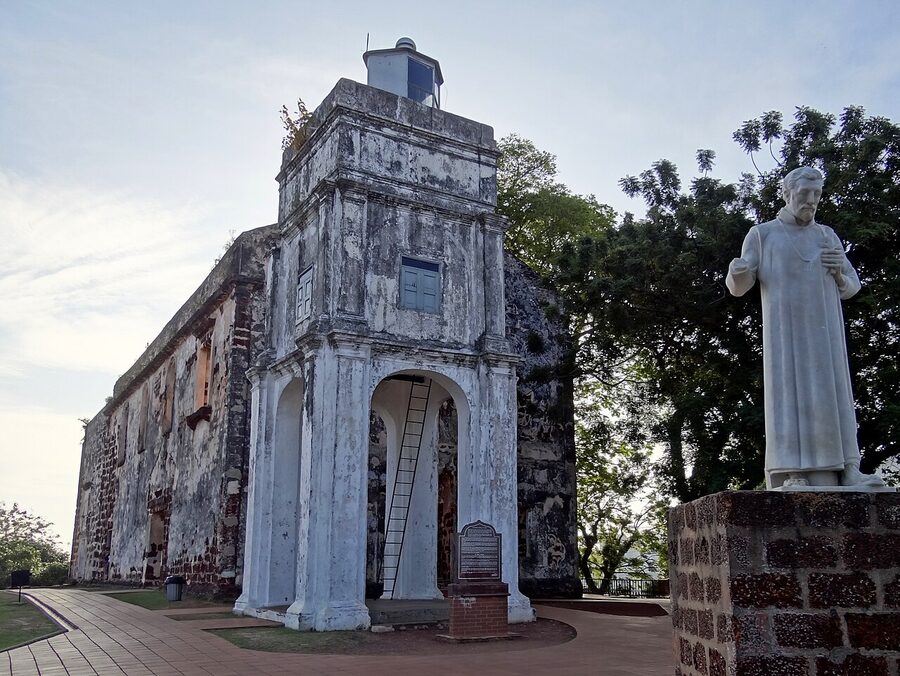
He sailed from Lisbon on his thirty-fifth birthday in 1541 and reached Goa, the capital of Portuguese India, in May 1542. For the next five years he worked the fishing coasts of southern India, Malacca on the strait between Sumatra and the Malay peninsula, and the spice islands of the Moluccas. He baptised in great numbers and moved on fast, a habit that both his admirers and his critics have noticed ever since.
The fugitive in Malacca
In December 1547, back in Malacca, Xavier was introduced to a Japanese man in his mid-thirties who had come a very long way to confess a killing. Japanese sources call him Yajirō (ヤジロウ); the Jesuit letters spell him Anjirō, which is closer to how a Portuguese ear would have caught the name, and both forms are in use. He was from Kagoshima or nearby, in the far south of Kyushu, and by his own account he had killed a man and fled aboard a Portuguese ship.
The man who brought him was a Portuguese captain, Jorge Álvares, who had been trading at Yamagawa on the Satsuma coast in 1546 and who, at Xavier’s request, wrote the first eyewitness description of Japan by a European. Álvares described a proud, clean, curious and well-armed people. Yajirō described them better, because he was one, and because he spoke enough Portuguese by then to answer a missionary’s questions.
Xavier asked him whether the Japanese would become Christians if he went to Japan. In a letter from Cochin dated 20 January 1548, Xavier reports the answer: not at once. They would first ask a great many questions and watch to see whether the missionary lived as he preached. If he passed, the lord, the nobles and the people would all be Christian within half a year, because the Japanese were “a people who are guided by reason”.
That sentence decided the next four years of Xavier’s life, and you can argue about whether Yajirō was describing his country or flattering his confessor. He was sent to the Jesuit college of St Paul in Goa, learned to read and write Portuguese, and was baptised at Pentecost 1548 as Paulo de Santa Fé, Paul of the Holy Faith, the first Japanese Christian anyone can name.
A pirate’s junk to Kagoshima
The Japan party left Goa in April 1549 (sources give the 14th, 15th or 19th) and changed ships at Malacca. Besides Xavier there were two Spaniards, the priest Cosme de Torres and a young lay brother, Juan Fernández, who had been a prosperous cloth merchant in Córdoba before he joined the Jesuits; Yajirō and two other Japanese converts, João and António; a Chinese convert called Manuel; and an Indian, Amador. Xavier was forty-three. He carried letters from the viceroy of India and the bishop of Goa, and a cargo of gifts for whoever turned out to be king of Japan.
No Portuguese ship was sailing for Japan that season, so they took passage on a Chinese junk. Xavier’s own letter calls its captain “the Ladrão”, the Pirate, which was apparently what Malacca called him to his face, and he was precisely the kind of China-coast operator who appears in my piece on the wokou. The captain wanted to winter in China, consulted an idol in the stern by casting lots at every decision, and lost his own daughter overboard in a storm off Cochinchina; Manuel fell into the open hold and was nearly killed. Then the wind turned, and the junk ran for Kagoshima.
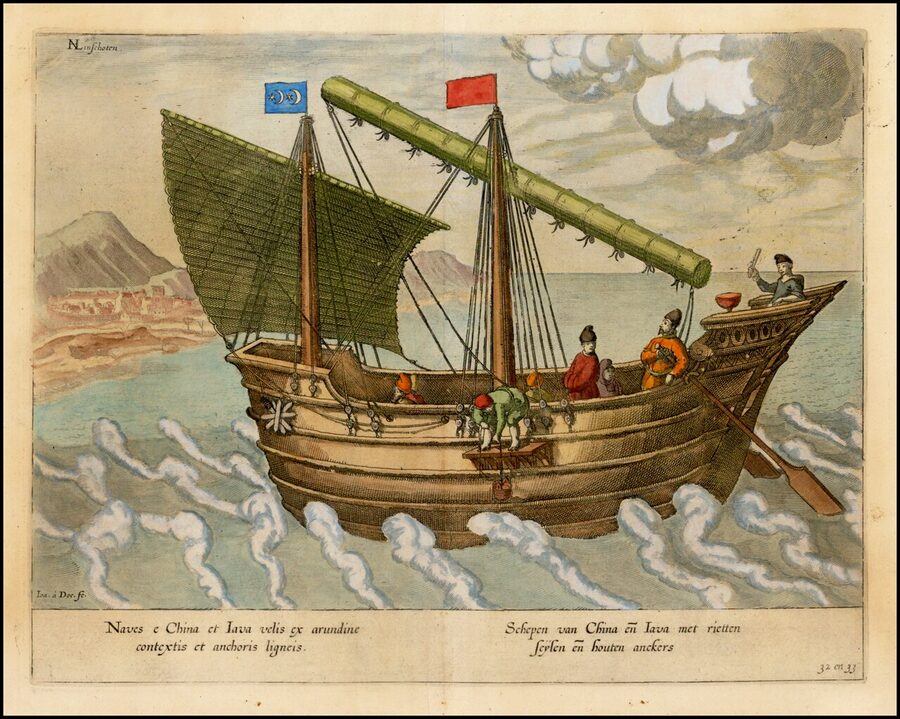
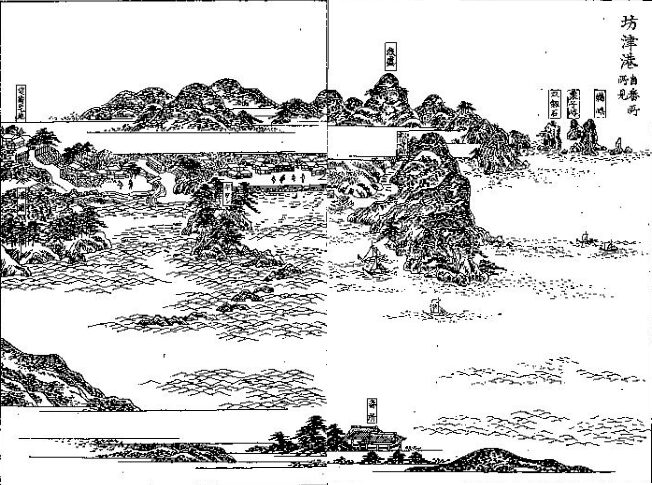
They came ashore on 15 August 1549, which Japanese reference works give as the 22nd day of the seventh month of Tenbun 18. It was the feast of the Assumption again, fifteen years to the day after Montmartre, and Xavier dedicated the new mission to the Virgin. Some Japanese accounts have the junk touching first at Bōnotsu, the old China-trade harbour at the tip of the Satsuma peninsula, a few weeks earlier; Xavier’s letters say nothing of it, and the date that everyone celebrates is the Kagoshima one.
Ten months in Satsuma
Kagoshima took the strangers in with more curiosity than alarm. Yajirō’s family lodged them, and his wife, daughter and a number of relatives were baptised. Yajirō himself was suddenly the most interesting man in the province, a local boy back from Tenjiku (天竺), the land of the Buddha, with a story to tell. That was the first misunderstanding, and it was not his fault: from Kagoshima, Goa and India were the same direction.
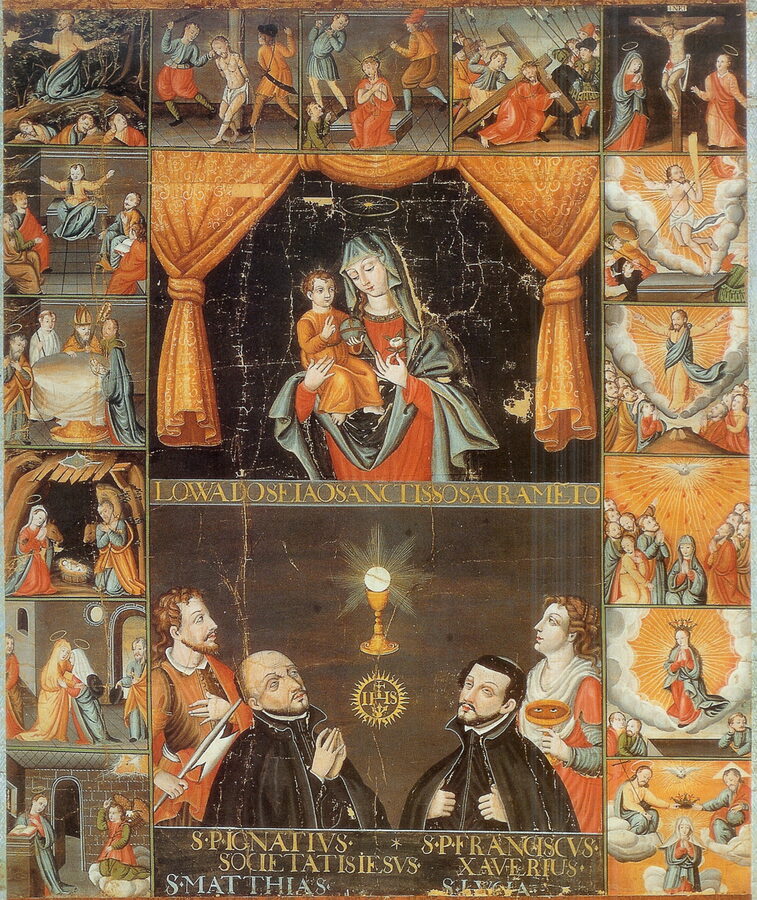
The lord of Satsuma, Shimazu Takahisa, sent for Yajirō and then for the foreigners; his second son was the formidable Shimazu Yoshihiro, then a boy of fourteen. Xavier’s letter of 5 November 1549 describes the audience at Takahisa’s seat, which Japanese sources place at Ichiuji castle at Ijūin, on 29 September by the Western calendar, the feast of St Michael. Yajirō showed the lord a painting of the Virgin and Child; Takahisa knelt before it and had everyone in the room do the same. Then it was taken to his mother, who asked for a written account of the new teaching.
Takahisa gave the Jesuits leave to preach and his subjects leave to convert. Xavier was delighted, and over the following months he and Yajirō baptised somewhere between a hundred and a hundred and fifty people in and around Kagoshima. One of them was a poor young samurai whom Xavier baptised as Bernardo and took with him almost everywhere afterwards.
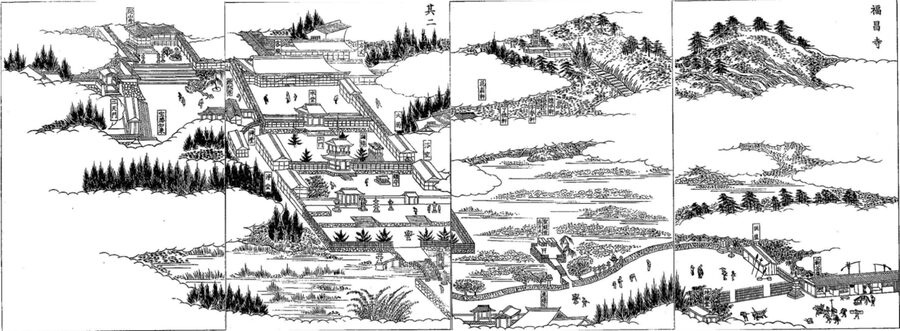
The man Xavier most enjoyed talking to in Kagoshima was a Zen monk. Ninshitsu (忍室) was abbot of Fukushō-ji, the great Sōtō temple of the Shimazu family, and Xavier describes him as old, learned and greatly respected. By Xavier’s account they talked many times, and Ninshitsu could never make up his mind whether the soul survives the body: sometimes he said yes, and sometimes no.
Xavier also asked him which he preferred, youth or old age. Youth, said Ninshitsu, when the body is free and can do what it likes. Xavier countered with a ship: is a sailor happier leaving port or coming in to harbour? Xavier tells the story as a small victory for eternity, but what comes through, four and a half centuries later, is two elderly men from opposite ends of the world enjoying an argument.
On 5 November 1549 Xavier wrote the long letter that made his reputation in Europe. “The people we have met so far are the best who have yet been discovered,” it runs, “and it seems to me that we shall never find among heathens another race equal to the Japanese.” He admired their sense of honour, which he thought stronger than any people’s he knew, and their attitude to poverty, which he noticed carried no shame among the warrior class. Most of them, he reported, could read and write, which he did not expect.
The same letter is fierce about the Buddhist clergy, and especially about the sexual relations between monks and boys, which Xavier was horrified to find openly tolerated. It is not a balanced document. It was written three months after landing by a man who spoke no Japanese and depended entirely on Yajirō, and it was copied, printed and read aloud across Catholic Europe for a century.
The welcome cooled within the year. Portuguese ships went to Hirado instead of Kagoshima, Buddhist pressure on Takahisa grew, and he forbade further conversions. In late August or early September 1550, Xavier left Yajirō in charge of the small Kagoshima congregation and went north.
Dainichi, Deus and the word for God
The catechism the Jesuits read aloud in Kagoshima was Yajirō’s work. Xavier had dictated an account of the creation, the fall and the life of Christ, Yajirō had put it into Japanese, and Xavier had it written out in Roman letters so that he could read it aloud without understanding much of it. In it, God was Dainichi (大日), the Great Sun Buddha, the cosmic source of all things in the Shingon teaching founded by Kūkai at Kōyasan.
It is easy to laugh at Yajirō, and Jesuit writers did. Xavier later called Dainichi an invention of the devil. Some modern scholars are kinder: Shingon had a long habit of treating foreign gods as forms of Dainichi, and a Satsuma layman reaching for the nearest Japanese word for a supreme, all-creating being could hardly have done otherwise. The Japanese had no word that meant what Xavier meant, and neither did anyone else in Asia.
English-language accounts often compress the discovery into a few weeks in Kagoshima. Xavier’s letters and the Japanese scholarship that follows them put it in Yamaguchi in 1551, when Shingon monks greeted the Jesuits as colleagues and Xavier finally asked them enough questions to see why. He switched to the Latin Deus, pronounced Deusu, and sent Fernández out to tell the crowds that Dainichi was not to be prayed to. Buddhist critics, as my piece on Christianity in Japan recounts, soon turned Deusu into dai-uso, the great lie.
From then on the Jesuits imported their theology wholesale: Deus, anima, gratia, cruz, words the Japanese would learn as loanwords rather than misread as Buddhism. But the confusion ran both ways and lasted longer than the Jesuits liked to admit. The licence that the lord of Yamaguchi granted them in 1552 for their church describes them as monks “come from the western regions” to make the Buddha’s law flourish.
Hirado, and the road north
Hirado, a small island port off the north-west corner of Kyushu, had just received its first Portuguese ship when Xavier arrived there in the late summer of 1550. Its lord, Matsura Takanobu, was keen to keep the ships coming and welcomed the priest who came with them. The Portuguese fired salutes, Fernández read the catechism, and in a couple of months about a hundred people were baptised, more than in a year in Kagoshima.
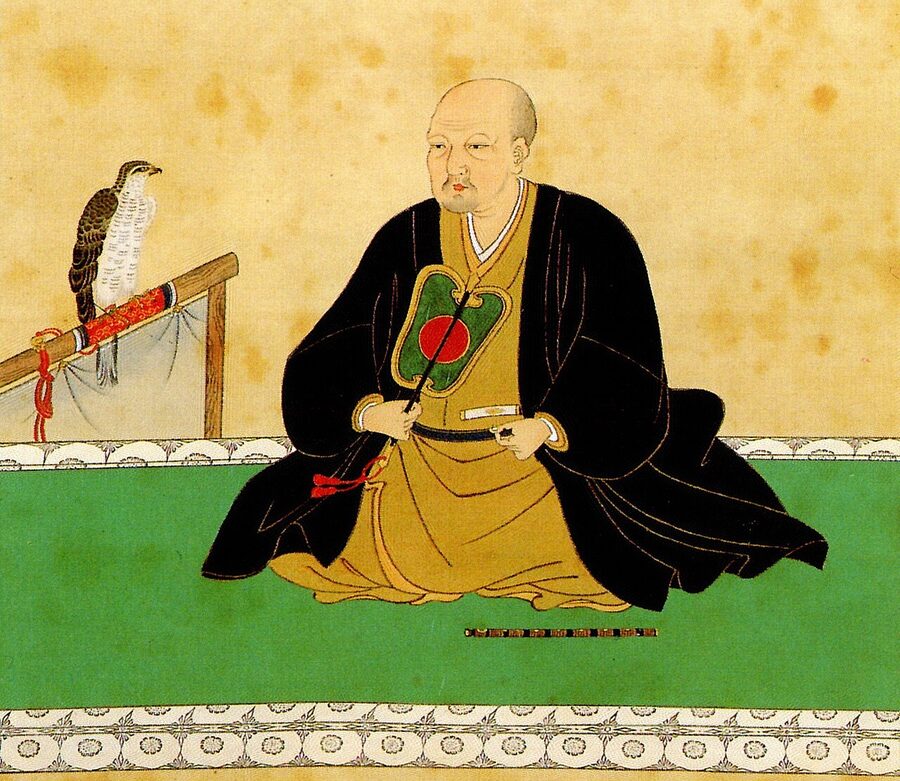
Xavier had not come to Japan to convert a fishing port. His plan, formed in Malacca, was to go to the capital, win the “king of Japan” and let the faith descend through the hierarchy, which was roughly how it had worked in parts of India. In late October 1550 he left Torres in charge at Hirado and set off with Fernández and Bernardo for Kyoto, by way of Hakata and Yamaguchi.
Yamaguchi, first time: street corners and a lord’s temper
Yamaguchi in 1550 was, after Kyoto, the most cultivated city in Japan. Xavier put it at more than ten thousand households. The Ōuchi family had ruled from it for two centuries, laid it out on Kyoto’s grid, grown rich on the official trade with Ming China, and filled it with refugee courtiers and poets from the war-wrecked capital. The current lord, Ōuchi Yoshitaka, held the governorship of seven provinces and was in fact more powerful than the shogun.
The Jesuits preached on street corners twice a day. Fernández, who had the better Japanese, read from the notebook while Xavier stood beside him and prayed. The crowds were large and mostly unconvinced; children threw stones and adults asked pointed questions, and a few people took them home and fed them.
Then Yoshitaka sent for them. The audience went badly, and the sources disagree about why. The Jesuit historian Luís Fróis, writing more than thirty years later from Fernández’s recollections, says that Fernández read the passage of the catechism condemning sodomy, comparing those who practised it to animals, and that Yoshitaka, whose own tastes were well known, was furious and had them shown out.
Xavier’s own letter of 1552 tells it differently: Yoshitaka listened attentively for more than an hour and then let them go. Japanese accounts of the Ōuchi add a third version, that the lord was offended above all by two filthy foreigners in travelling clothes arriving empty-handed. I suspect all three are true, and I think the third explains the most. Either way, there was no licence to preach, and on 17 December 1550 the three left Yamaguchi for the capital.
Walking to a ruined capital
It was the coldest stretch of the journey. They walked east through the snow to Iwakuni, took passage through the Inland Sea, hiding from pirates among the cargo by one account, and landed at Sakai, the great merchant city south of Osaka. A rich Sakai merchant, Hibiya Ryōkei, took them in. From Sakai to Kyoto they went on foot again, and Xavier is said to have run behind a horseman’s stirrup as a servant to get through dangerous country, barefoot, with a Japanese hat on his head.
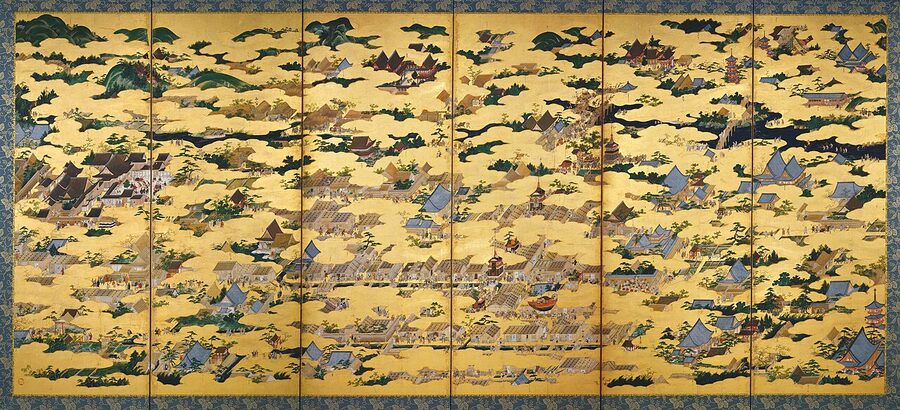
They reached Kyoto in January 1551 and stayed eleven days. The city had been fought over for most of a century, since the Ōnin War of the 1460s had wrecked the old Muromachi capital, and in 1550 it had changed hands again between the Miyoshi and the shogun’s camp. The Ashikaga shogun Yoshiteru, the descendant of the family that built Ginkaku-ji and Kinkaku-ji, was not even in town: he had fled into the province of Ōmi to the east.
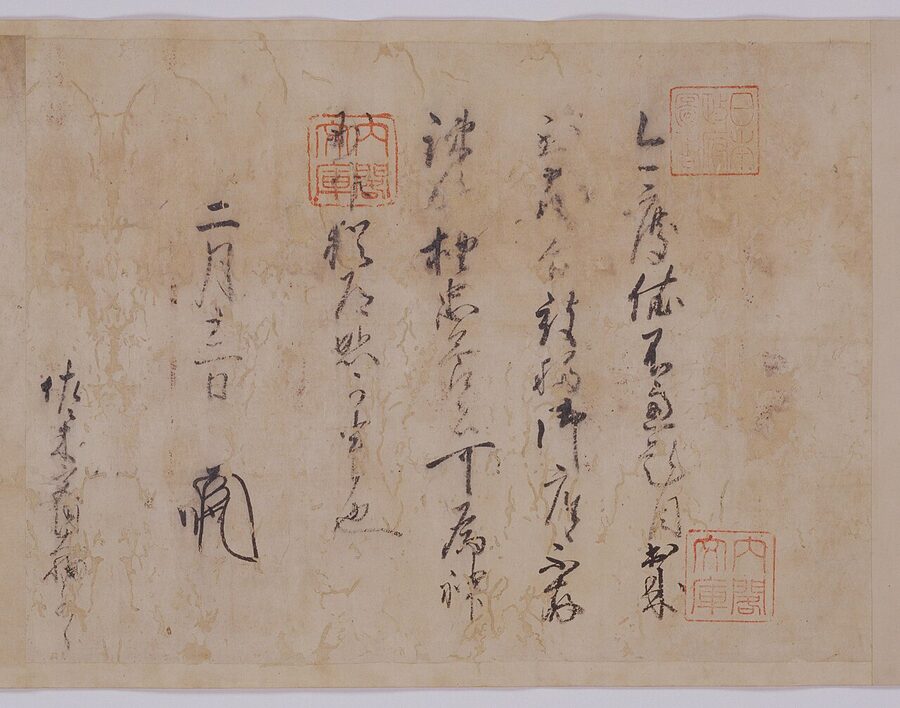
The emperor, Go-Nara, was in residence, but in poverty. His enthronement had waited ten years for money, which was finally found in 1536 largely by, as it happens, Ōuchi Yoshitaka. Xavier asked for an audience to request permission to preach throughout the kingdom, and was told that nobody approached the emperor without presents. His presents were in Hirado.
He also asked for a debate with the monks of Enryaku-ji on Mount Hiei, and was refused. His own account of Kyoto in his letters runs to about ten lines, which tells you how it felt. He had come for a king, and found that Japan was a country of many kings, none of them in Kyoto.
The trip was not wasted. Xavier went back to Hirado by ship, collected his letters and presents, and drew the right conclusion: the person to win was not the emperor but whichever lord actually held power where you stood. It is the lesson every Christian lord of the Sengoku era would teach the missionaries over the next forty years, and Xavier learned it in eleven days.
Yamaguchi in silk
In late April 1551 Xavier was back in Yamaguchi, transformed. He came not as a barefoot pilgrim but as the envoy of the viceroy of Portuguese India, in silk, with attendants and a list of gifts. He presented the viceroy’s and the bishop’s letters intended for the emperor, and with them a mechanical clock that struck the hours, a keyboard instrument, a glass decanter, a mirror, spectacles, books, paintings and a musket.
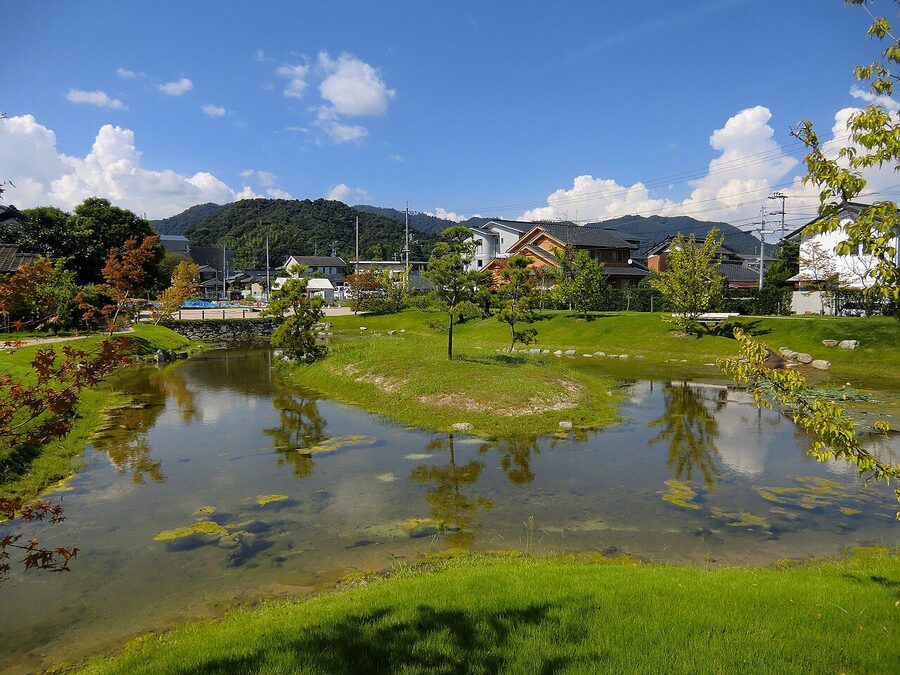
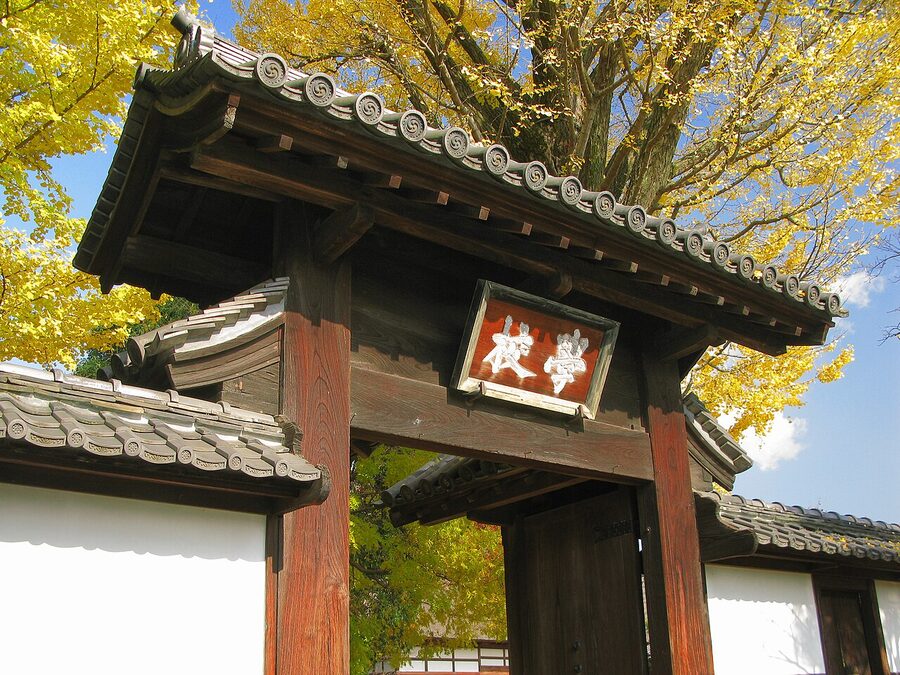
The clock is usually called the first mechanical timepiece in Japan, and the spectacles may have been the first pair. Yoshitaka was enchanted. He offered gold and silver in return; Xavier declined it and asked instead for leave to preach, which he got, publicly, with notices posted in the streets saying that the people might convert and that the padres were not to be harmed. Yoshitaka also gave the Jesuits an empty temple, the Daidōji (大道寺), to live and preach in.
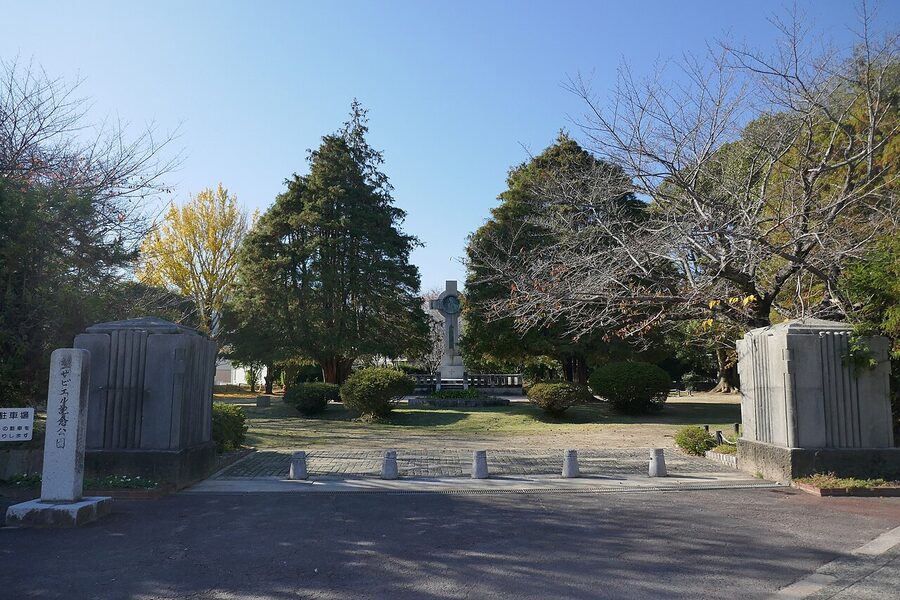
For the next five months the Daidōji was the busiest religious building in Yamaguchi. Xavier and Fernández preached twice a day and argued for hours with monks, samurai and townspeople, and the questions they were asked, which Xavier listed in his letters, are better evidence of what the Japanese made of him than anything else that survives.
Why, if God was good, did he create demons? Why was hell eternal? If God had made the world, why had he waited so long to tell Japan about it? And what about the Chinese, from whom Japan had learned everything worth knowing, who had never heard of him?
The hardest question was about the dead. Converts asked what had become of their parents and grandparents, who had never heard of Deus and so, by Xavier’s teaching, could not be saved. Xavier writes that they wept, and that he wept with them. It is the most human passage in all his letters, and the doctrine did not move.
They also asked him about the shape of the earth, the cause of lightning, the paths of comets and why it rained. Here Xavier had the advantage of a Paris education, and he noted with some satisfaction that answering well on the weather made people listen on the soul. It is the first appearance of an argument the Jesuits would use in Asia for two centuries: Europe’s astronomy as a calling card for Europe’s God.
About five hundred people were baptised in Yamaguchi in two months, by Xavier’s figure. One of them was a nearly blind biwa player from Hirado who had been earning his living singing stories in the streets. He took the name Lorenzo, joined the Jesuits as a lay brother, and became the mission’s best Japanese preacher for the next forty years, arguing down Buddhist monks in front of Oda Nobunaga himself.
Bungo, and a young lord
In September 1551 news came that a Portuguese ship under Duarte da Gama had put in on the coast of Bungo, in north-eastern Kyushu, and that the young lord of Bungo would like to meet the famous priest. Xavier left Torres and Fernández in Yamaguchi and went. It was a lucky decision: within weeks Yamaguchi exploded.
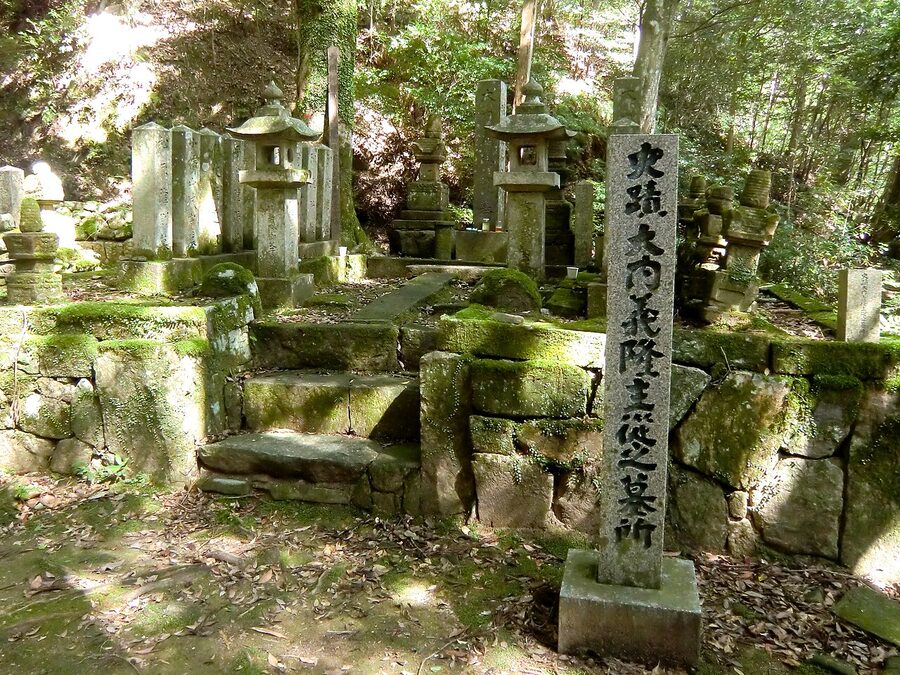
At the end of the eighth month of Tenbun 20 by the Japanese calendar, Yoshitaka’s senior general, Sue Takafusa, rose against him. The lord fled west and killed himself at Tainei-ji on the 1st day of the ninth month, and his son and the court nobles who had taken refuge in Yamaguchi were killed with him. By the Jesuit account the city burned for days, and Torres and Fernández survived because converts hid them.
The lord of Bungo was Ōtomo Yoshishige, the man history knows by his later Buddhist name, Ōtomo Sōrin. He was twenty-one and had been lord for a year, since a palace massacre in which his father was killed and his half-brother’s faction destroyed. He received Xavier at his residence in Funai, the present Ōita, with every honour, listened to him, promised protection to any missionary who came, and sent his own envoy back to the viceroy in India with Xavier.
The most colourful account of the visit is by Fernão Mendes Pinto, the Portuguese adventurer who was on da Gama’s ship and claimed to have marched with Xavier into Funai in a procession of Portuguese in their best clothes, firing salutes, with Xavier carried along like a bishop. Pinto also describes a public debate in which Xavier demolished a Zen monk before the lord. Pinto is a wonderful writer and an unreliable witness, and modern historians accept the outline of the welcome and very little of the detail.
There is also a quieter political story underneath. Sue Takafusa needed a new figurehead for the Ōuchi, and the man he chose was Sōrin’s younger brother, who became Ōuchi Yoshinaga and in 1552 confirmed the Jesuits in the Daidōji with the licence quoted above, monks from the western regions and all. The Christian mission in western Japan survived the fall of its first great patron because the next family on the board was happy to inherit it.
What the letters got right, and wrong
In mid-November 1551 Xavier sailed from Bungo on da Gama’s ship. He had been in Japan twenty-seven months, and he left Torres and Fernández behind with congregations at Kagoshima, Hirado, Yamaguchi and Funai. Sources variously give his total baptisms as five hundred, seven hundred or about a thousand; the likeliest explanation is that nobody kept a careful count, and the higher figures fold in the converts his companions baptised.
He did not regard the mission as a failure, and he did not mean to stay away. The letter he wrote from Cochin on 29 January 1552, his longest account of Japan, is a strategist’s report. The Japanese, he explained, were warlike, proud, contemptuous of foreigners and ruled by reason, and they would argue with a missionary until they were satisfied.
So the men sent to Japan must be learned, ready to answer questions about the heavens as well as heaven, and tough enough for snow and hunger. He thought Flemish and German Jesuits might stand the cold. He also wrote that the Japanese took their religion and learning from China and kept asking why the Chinese had not heard of Deus. The answer, he concluded, was to convert China first, and Japan would follow.
That was the great misreading, and it was a reasonable one. Xavier had seen Japanese monks quote Chinese texts and Japanese lords trade for Chinese silk, and he could not see how proud Japan already was of being something other than China. Nor did he understand that the “king” he wanted did not exist, or that the conversions of the coming decades would run through lords like Ōtomo and Ōmura, for reasons of trade as much as faith.
He got one thing right that his successors forgot. He wanted a Japanese clergy, and he sent Bernardo and three other young Japanese to be educated at Goa.
Shangchuan, December 1552
Bernardo went on from Goa to Lisbon and Rome, where he met Loyola, and died in Coimbra in 1557, the first Japanese known to have set foot in Europe. Xavier did not go back to Japan. In April 1552 he sailed from Goa for China, intending to talk his way into Canton as part of a Portuguese embassy to the Ming emperor.
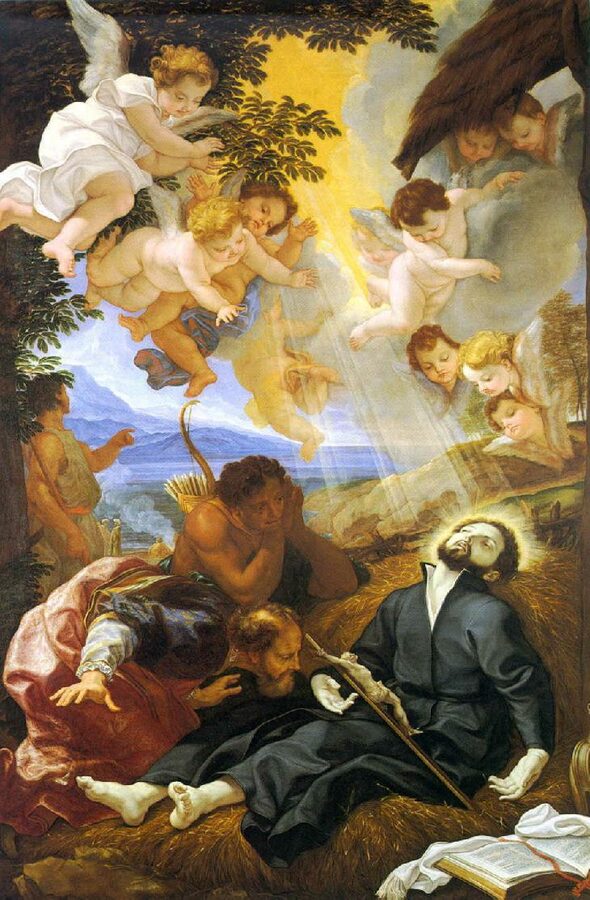
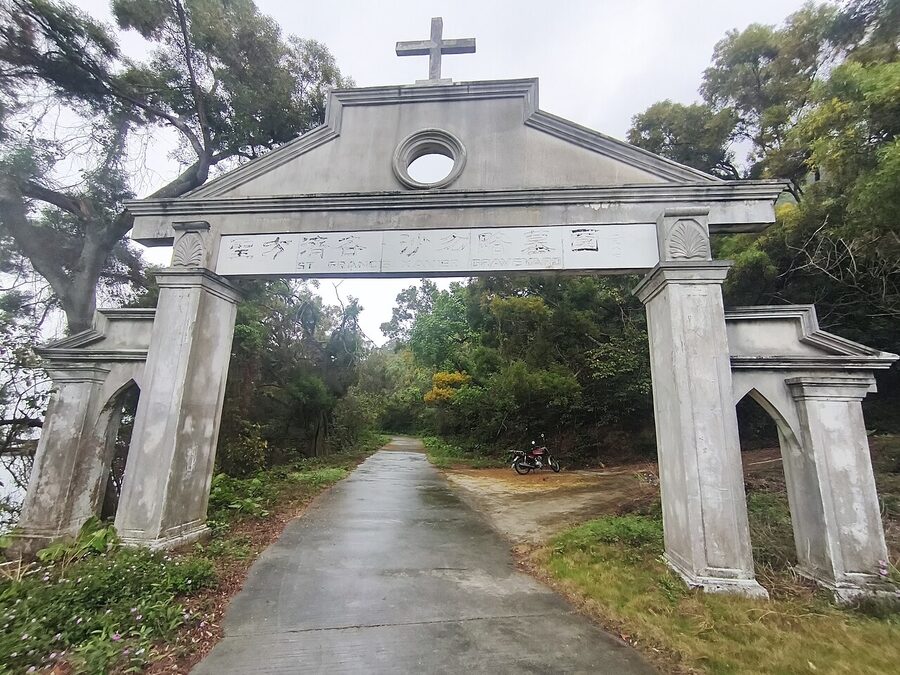
At Malacca the captain of the fortress refused to let the embassy proceed and took over the ship. Xavier went on anyway, with almost nobody, and by the end of August 1552 he was on Shangchuan (上川島), the island off the Guangdong coast that the Portuguese called São João and the English later called St John’s, where Portuguese traders met Chinese smugglers out of sight of the Ming coastguard. He paid a Chinese merchant to land him secretly on the mainland, and the merchant never came.
He fell ill with fever in November and died in a hut on the beach on 3 December 1552, at the age of forty-six, attended by a young Chinese Christian from the Goa college called António. That is the date the Church keeps as his feast day; some historians argue for the 2nd, and the plain truth is that nobody wrote it down at the time. He was buried in quicklime, so that the flesh would fall away and the bones could be carried back to India.
An arm in Rome, a face in a chest
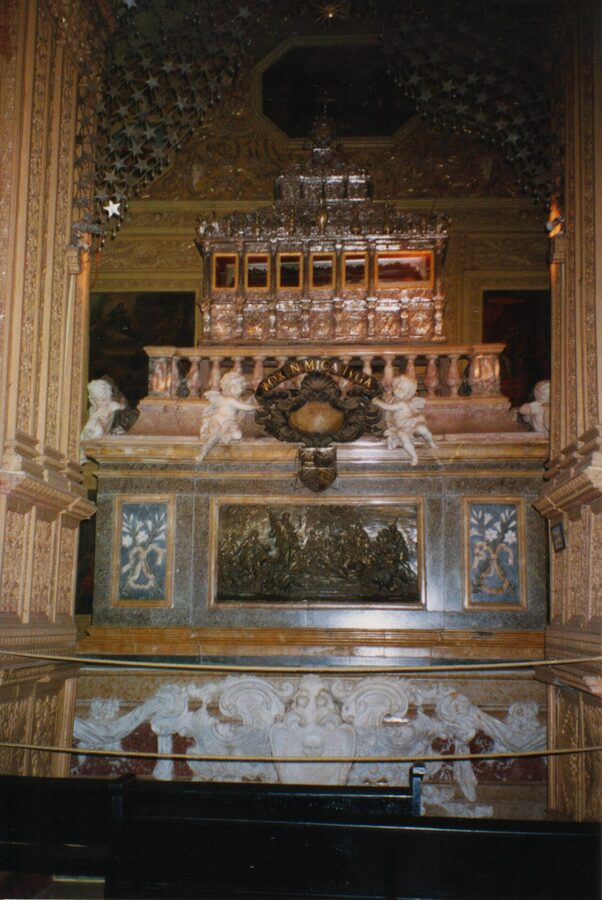
The quicklime did not do its work. When the coffin was opened in February 1553 the body was found intact, and it was carried to Malacca and then, in March 1554, to Goa, where crowds rioted to touch it and a Portuguese woman is said to have bitten off two of his toes. It lies there still, in a silver casket in the Basilica of Bom Jesus, and is brought down for public veneration about once a decade.
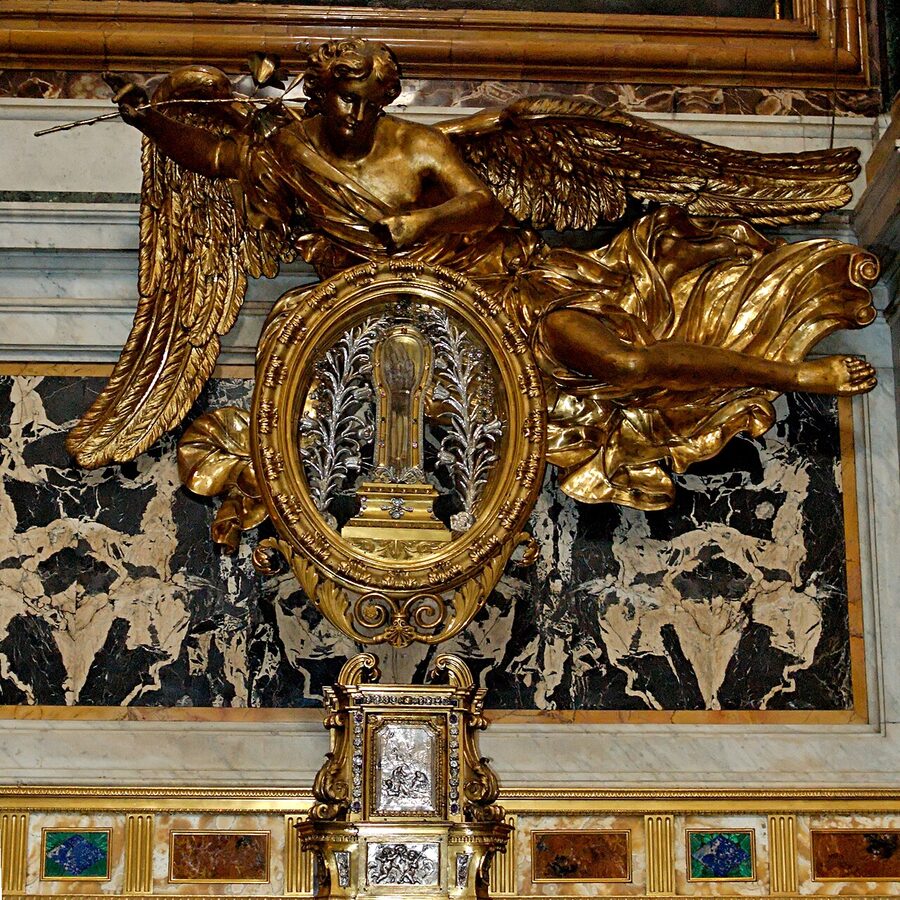
In 1614 the Jesuit general in Rome had the right forearm cut off and sent to the Gesù, the order’s mother church, on the reasoning that the hand that had baptised so many should be where the order could venerate it. It is the arm Xavier blessed and baptised with in Kagoshima and Yamaguchi. He was beatified in 1619 and canonised on 12 March 1622 alongside Loyola.
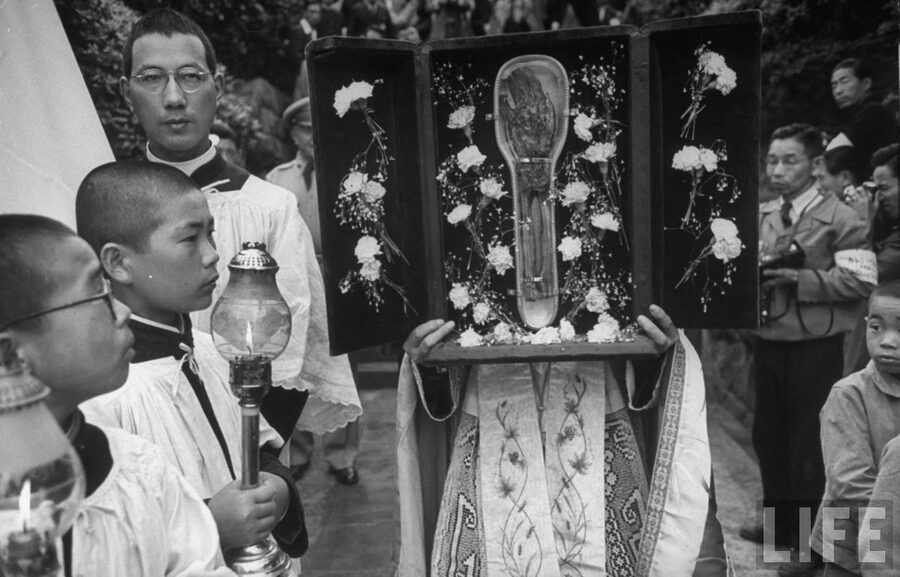
The arm has been to Japan. In 1949, for the 400th anniversary of the landing, it was brought from Rome and carried in procession through Japanese cities, under an American occupation that looked kindly on Christian events, and the magazine Life sent a photographer. It came again in 1999 for the 450th.
Smaller relics stayed. Fragments of bone are kept at the Kagoshima cathedral, the Xavier Memorial Cathedral in Yamaguchi and the Kanda church in Tokyo. For a man who stayed twenty-seven months, Japan holds a remarkable amount of him.
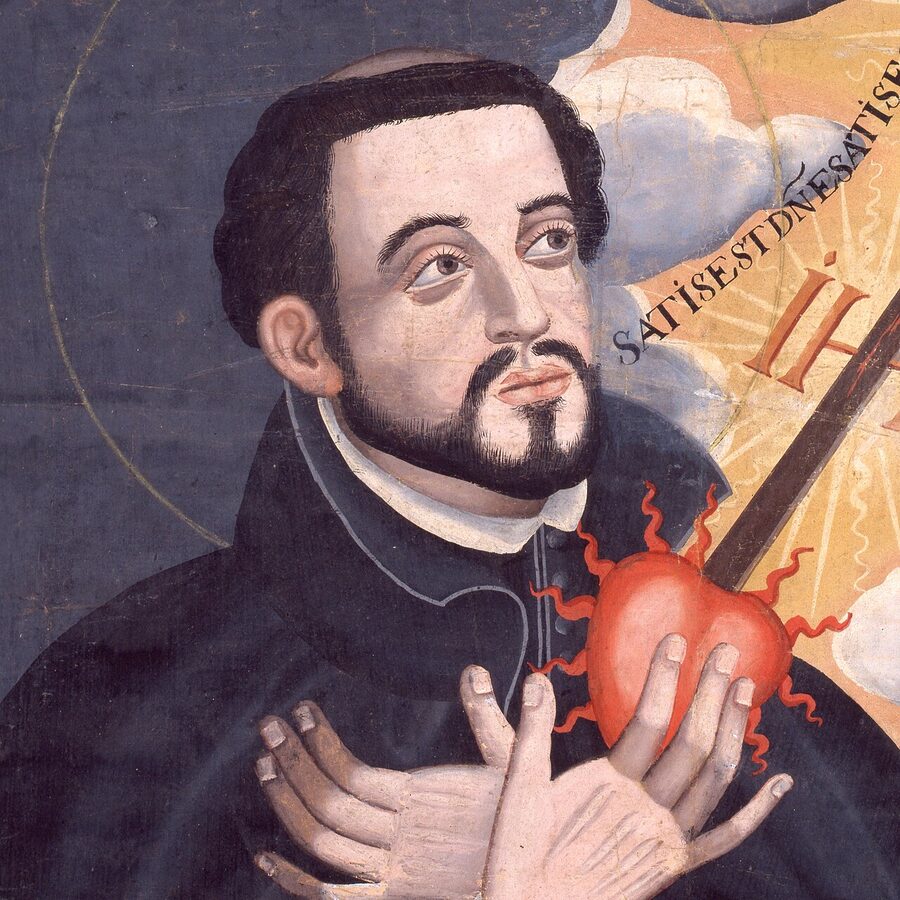
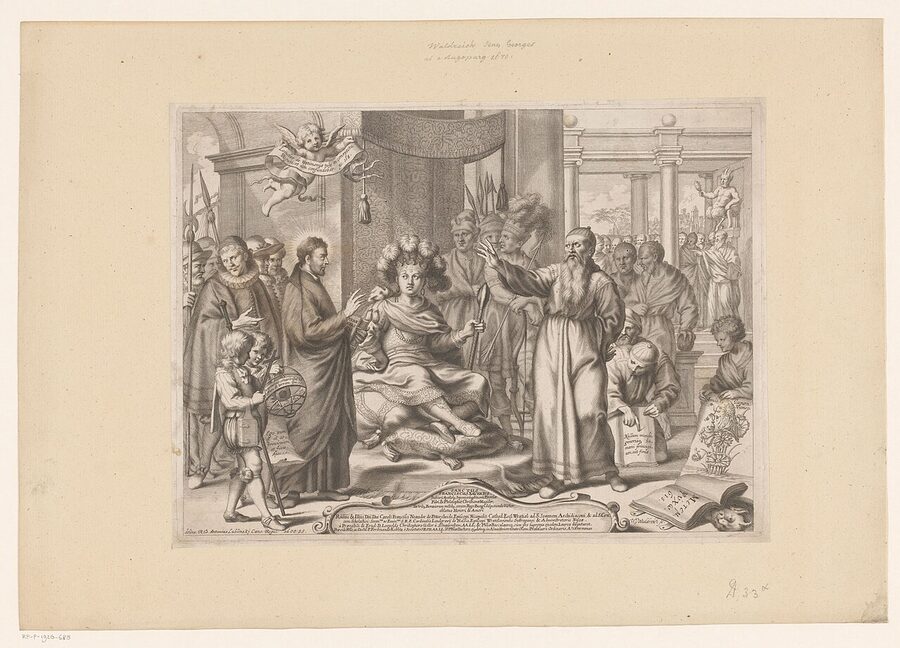
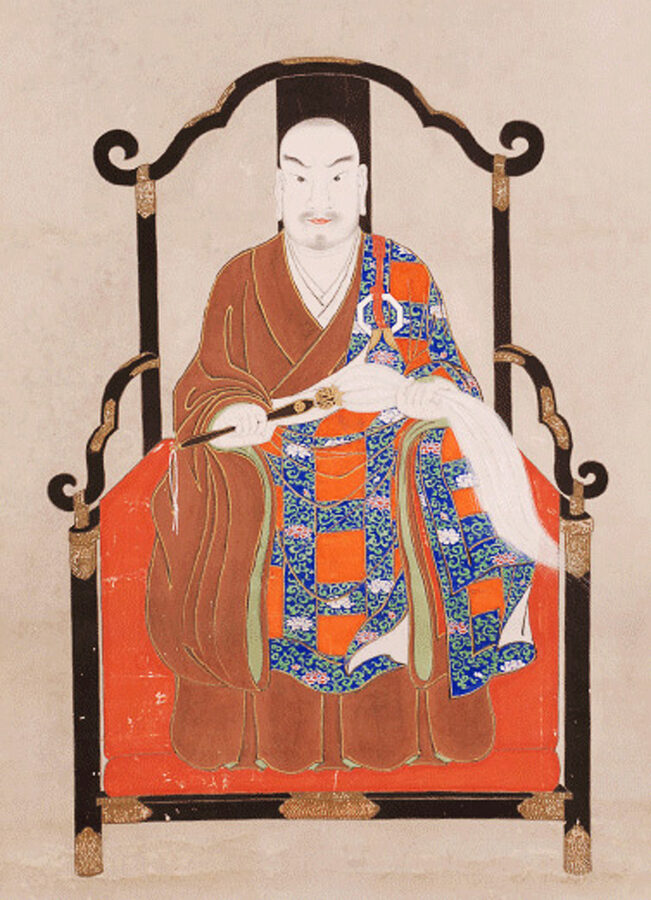
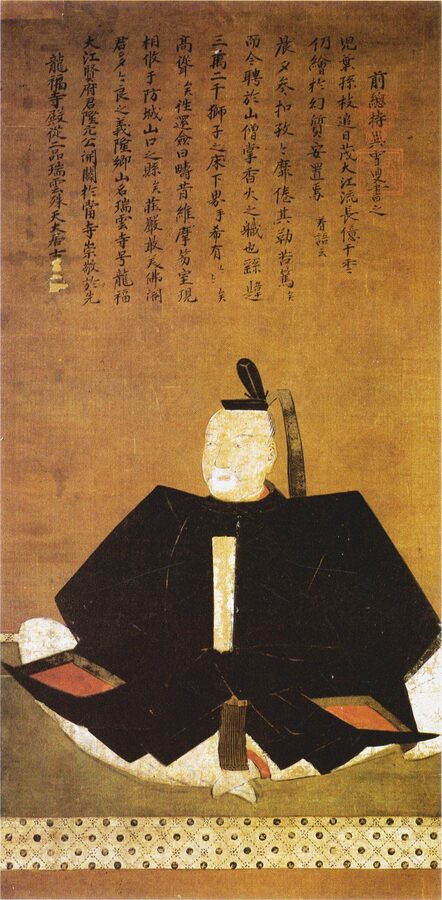
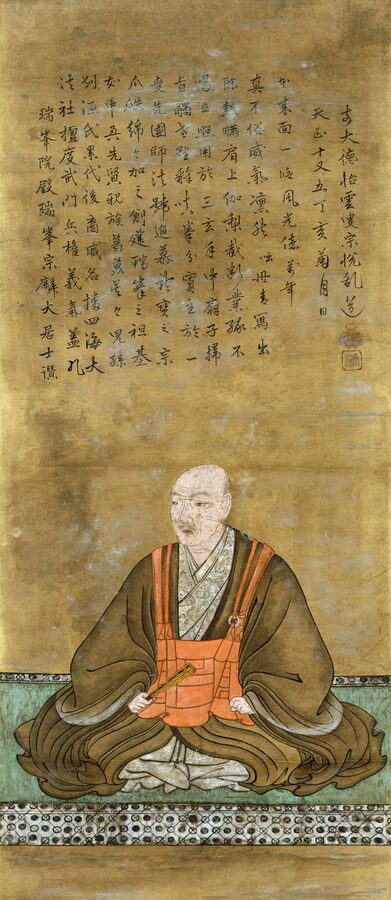
And then there is the face. The Kobe portrait was kept for three centuries by a family of hidden Christians who registered at a Buddhist temple and never opened the box it was in. It has made the stranger with the bald crown and the clasped hands into one of the most recognisable faces in Japanese history, which, for a Navarrese priest who could not order dinner in the language, is quite an achievement. Everything that followed his twenty-seven months, the Christian lords, Nagasaki, the Twenty-Six Martyrs, the Shimabara Rebellion and the closing of the country under sakoku, belongs to the century he opened rather than to him, and for the wider sweep of it you can start at my overview of Japan through the ages.
Where to find Francis Xavier in Japan today
Xavier’s route makes a good itinerary if you take it in his order: Kagoshima, Hirado, Yamaguchi, Sakai, Kyoto, Ōita. You can do the Kyushu and Yamaguchi stretch in four or five days by rail, which is about a tenth of the time it took him. I have left Kobe and Tokyo to the end, because they hold pieces of him rather than places he went.
Kagoshima
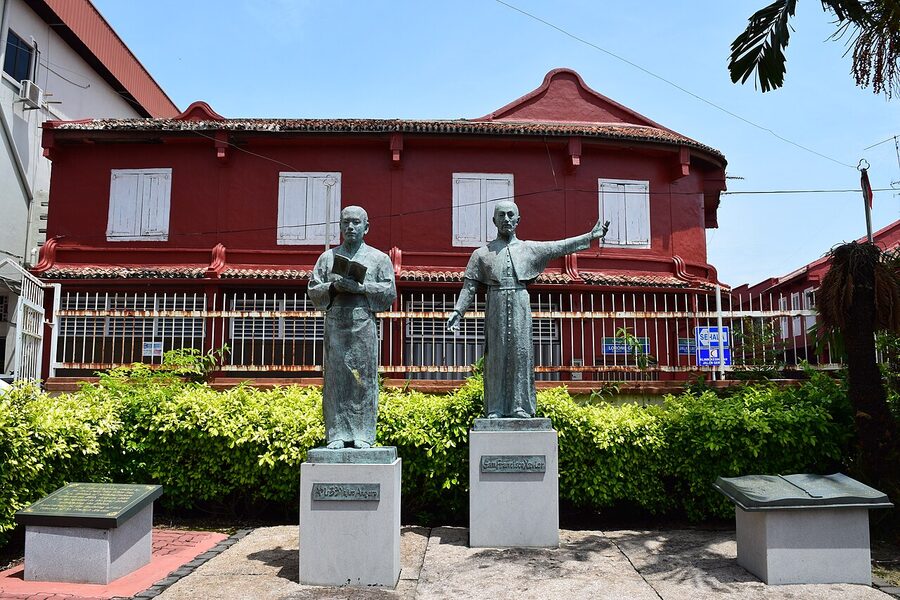
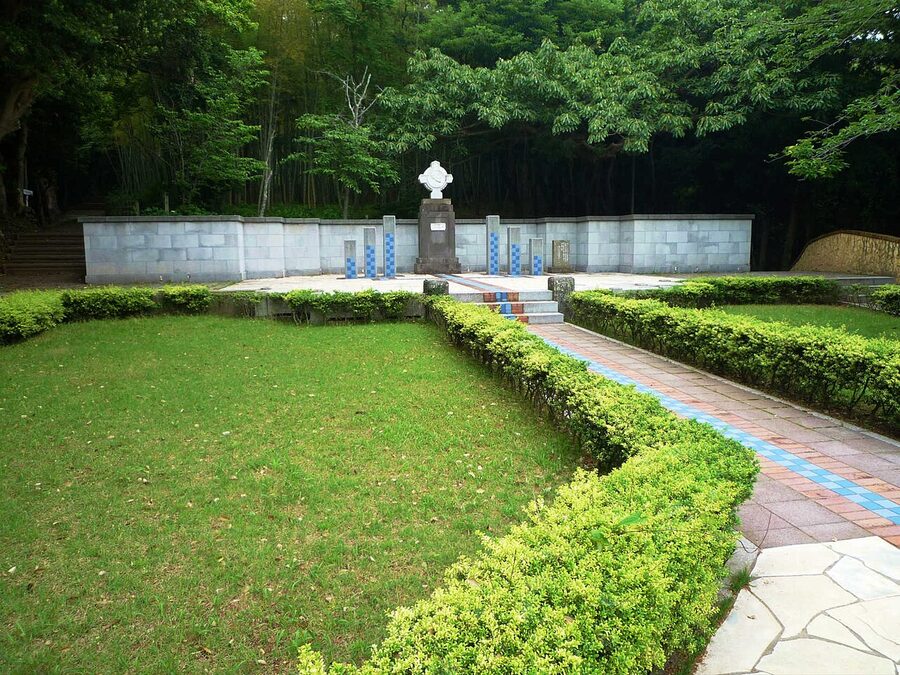
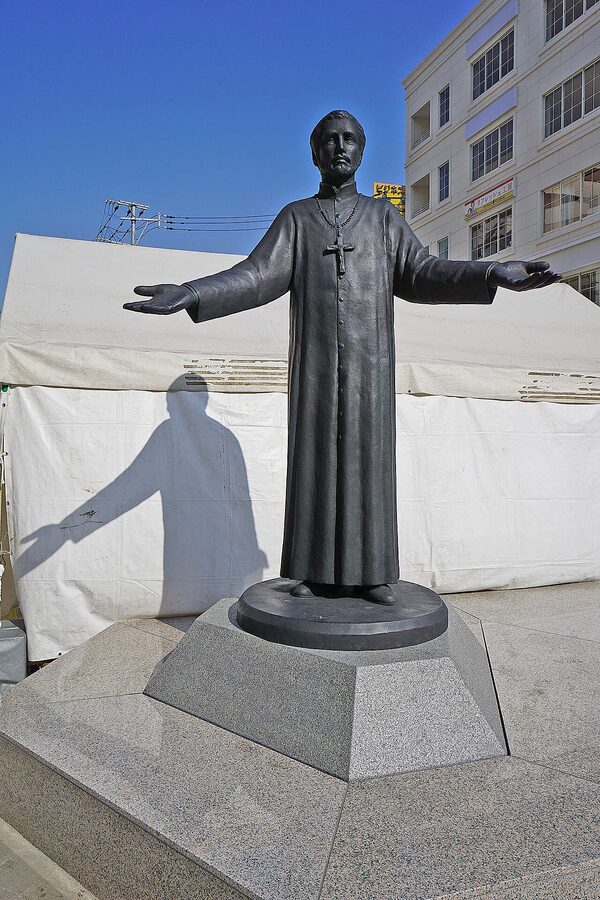
Start at Xavier Park, opposite the Kagoshima Cathedral of St Francis Xavier in Higashi-sengoku-chō, a few minutes’ walk from the Tenmonkan-dōri and Takamibaba tram stops. The memorial wall at the back was built in 1961 from the ruins of a memorial church that burned in the air raids of 1945, and the 1999 bronzes of Xavier, Yajirō and Bernardo stand near the entrance. It is free, small and always open.
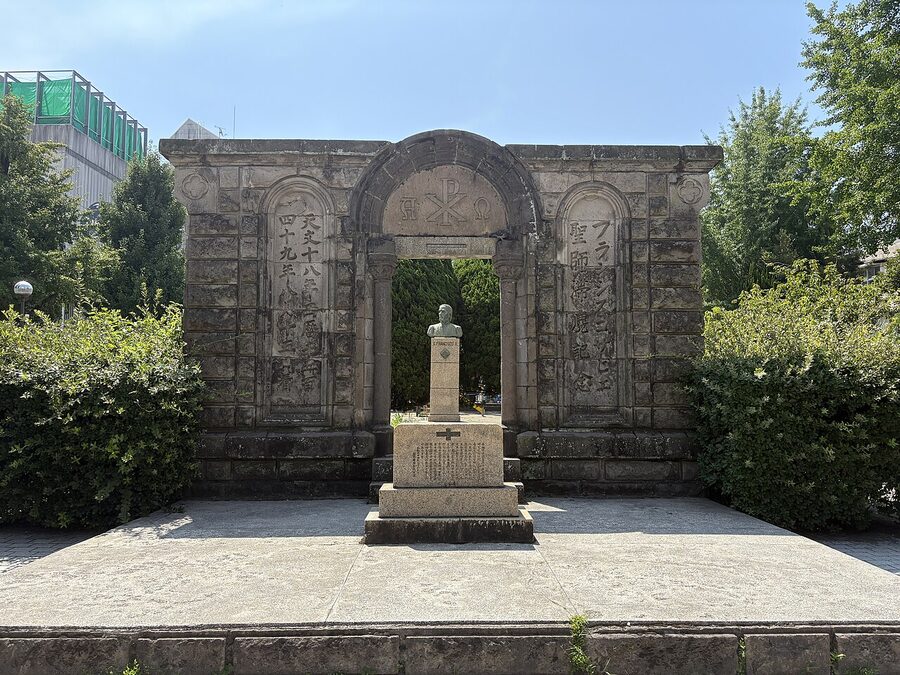
The cathedral across the road is open to visitors outside service times and keeps a relic of Xavier’s bone.
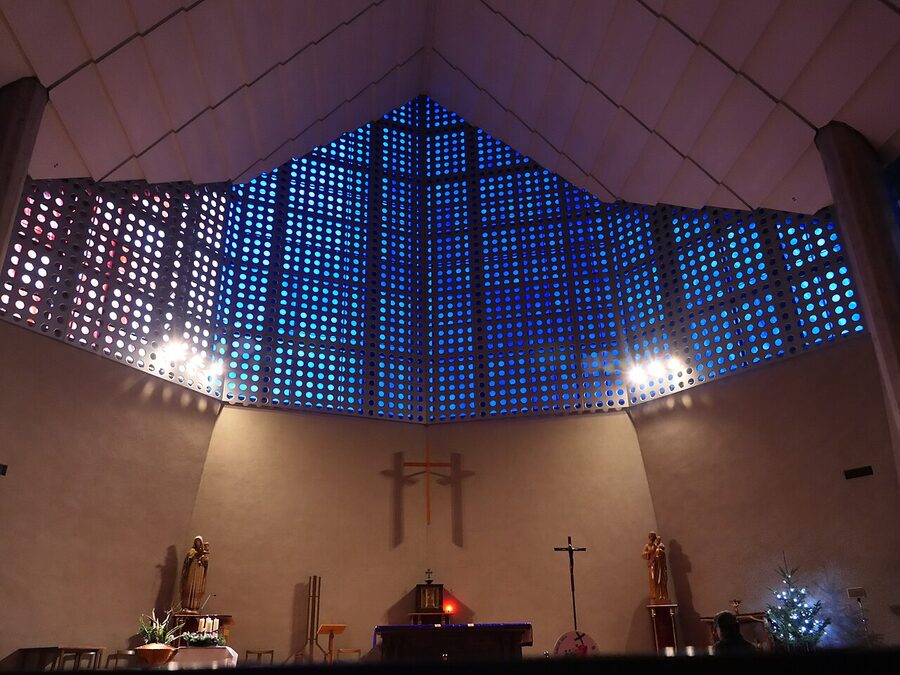
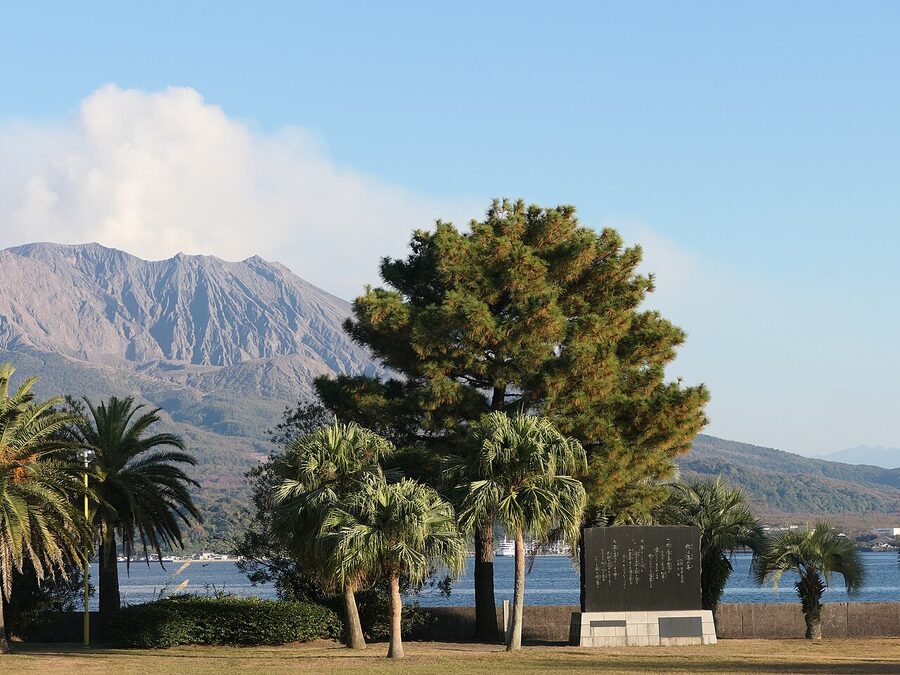
If you want the landing place, the 1978 monument in Gionnosu Park, a bus ride north at the Gionnosu Kōen stop, is on land reclaimed in the 1970s; the real shoreline of 1549 was further inland, near the mouth of the Inari river. Go for the view of Sakurajima rather than for the history.
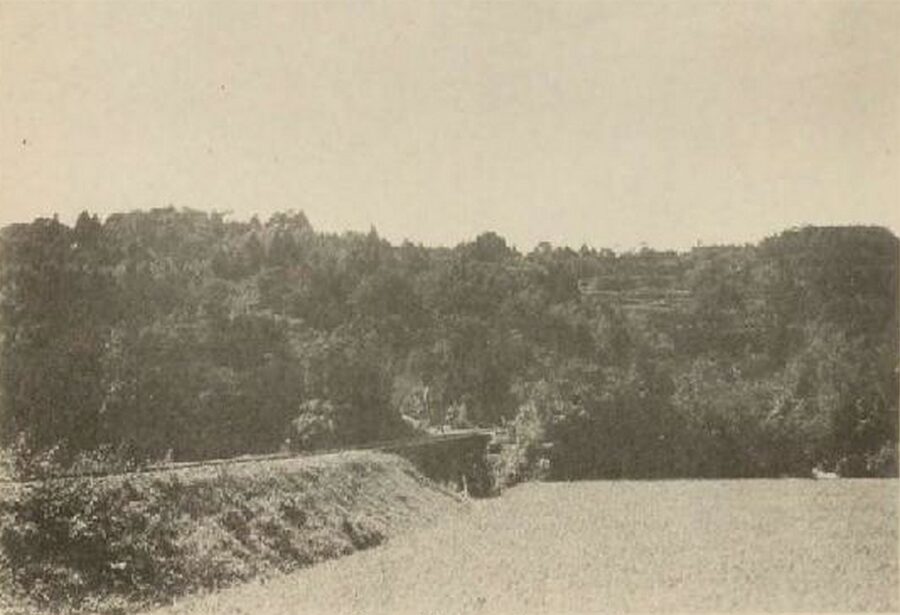
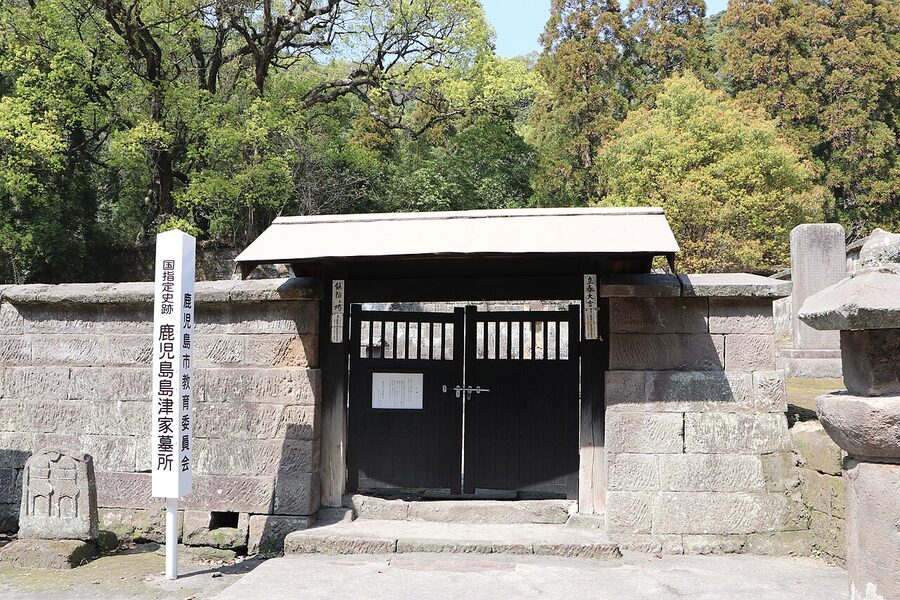
For Ninshitsu, go to the site of Fukushō-ji in Ikenoue-chō, by bus to the Gyokuryū Kōkō-mae stop; there is no parking. The temple was abolished in the anti-Buddhist purges of 1869 and a school now stands on much of the site, but the Shimazu family graveyard survives, with the tombs of the lords from the 6th to the 28th head of the house, and the abbots’ graves on a terrace to the north.
Ichiuji castle, where Takahisa received him, is now Joyama Park above Ijūin, a short taxi ride from JR Ijūin Station on the Kagoshima Main Line, with a 1949 monument to the audience. Come in cherry-blossom season, when the earthworks are at their best.
Hirado
Hirado is a long way from anywhere: about two hours from Hakata to Sasebo by JR, then the Matsuura Railway to Tabira-Hiradoguchi and a bus or taxi across the bridge. The Hirado Xavier Memorial Church stands on a hill on the west side of the town, ten minutes’ walk from the Hirado Shiyakusho-mae bus stop. It was built in 1931, is painted pale green, has its octagonal tower on one side only, and is dedicated to St Michael; it took Xavier’s name after the statue of him beside it went up in 1971.
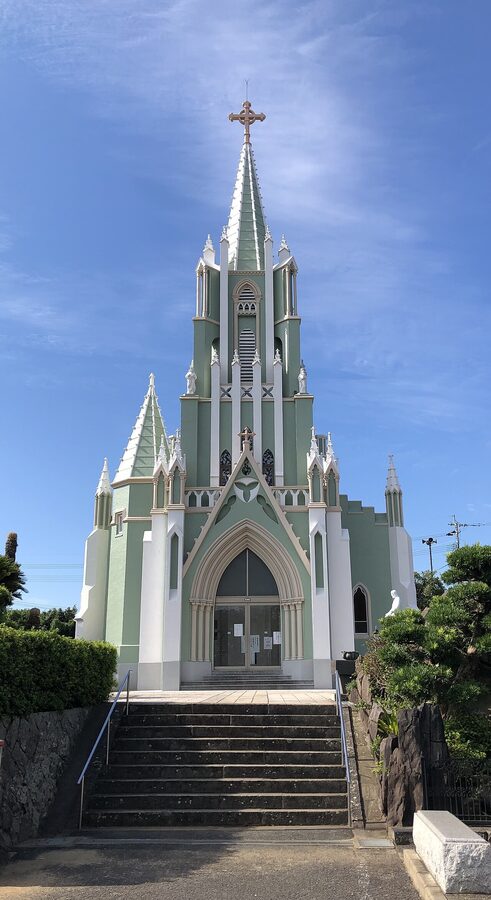
From the church it is a short walk to Sakikata Park and the 1949 Xavier memorial, and on the way you pass the grave of William Adams, the English pilot who reached Japan forty-nine years after Xavier left. Allow a half day for Hirado and a full one if you want the Matsura Historical Museum as well.
Yamaguchi
The Yamaguchi Xavier Memorial Cathedral stands on Kameyama, about fifteen minutes’ walk from JR Yamaguchi Station. The first memorial church, built in 1952 in imitation of the castle of Javier, burned down in September 1991; the replacement of 1998, by the Italian priest Constantino Ruggeri and the architect Luigi Leoni, is a white tent of a building with two 53-metre towers. Locals hated it at first and have come round. It is open 9:00–17:00 and asks for a donation of at least ¥100.
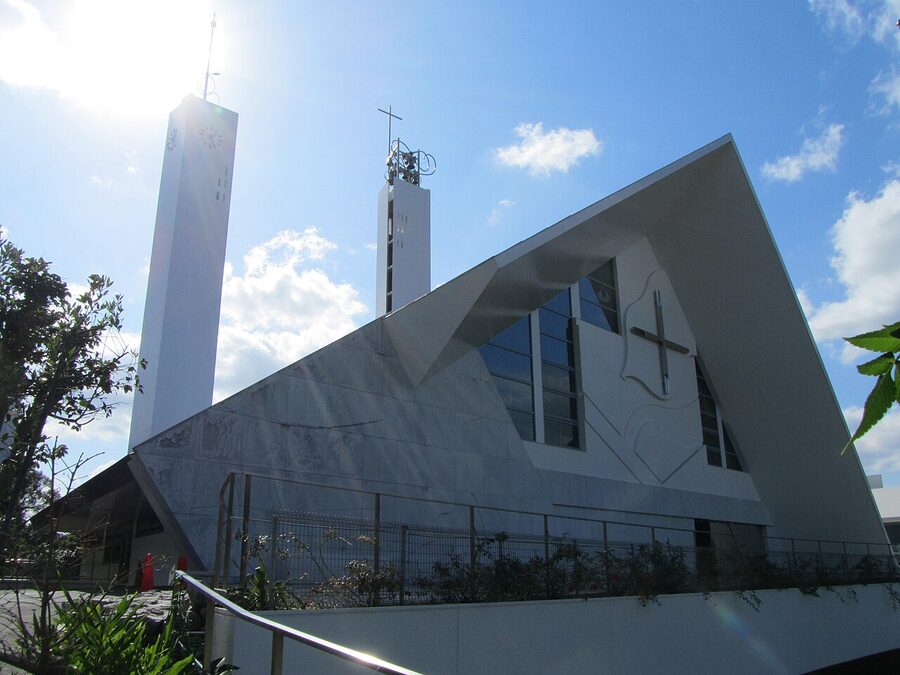
The St Xavier Memorial Park, on the Daidōji site, is in Kanakoso-chō on the other side of the town, fifteen minutes’ walk from Kami-Yamaguchi Station; the two are often confused, so check the address before you set off. Yamaguchi likes to call itself the home of Japan’s first Christmas, which Torres celebrated at the Daidōji with Japanese converts in 1552, and the city lights up through December on the strength of it.
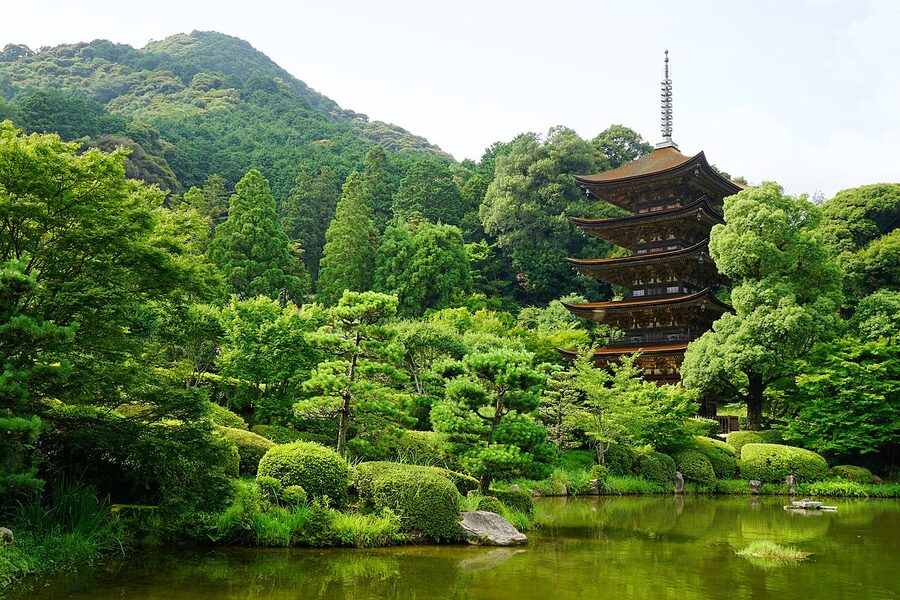
For Xavier’s Yamaguchi, add the Ōuchi residence site at Ryūfuku-ji and the pagoda of Rurikō-ji, both in the old town. If you have a car or the patience for a local train, Tainei-ji at Nagato-Yumoto is where the story of Xavier’s first great patron ends.
Sakai and Kyoto
In Sakai, Ebisu Park, known to everyone as Xavier Park, stands on or near the site of Hibiya Ryōkei’s house, right beside the Hanataguchi stop of the Hankai tramway. It has a 1949 memorial stone and not much else, which is what Xavier had in Sakai too.
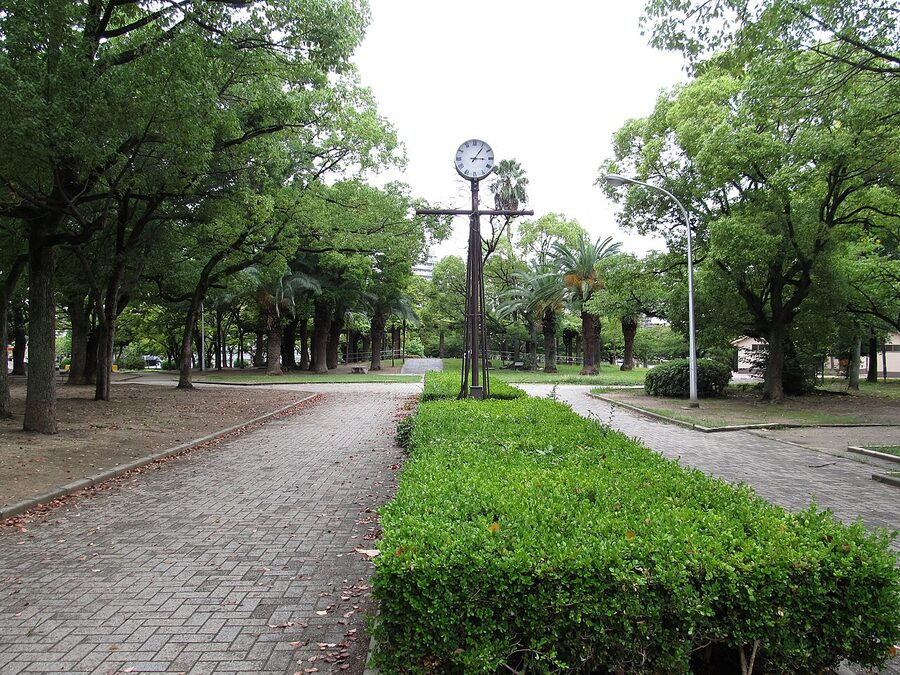
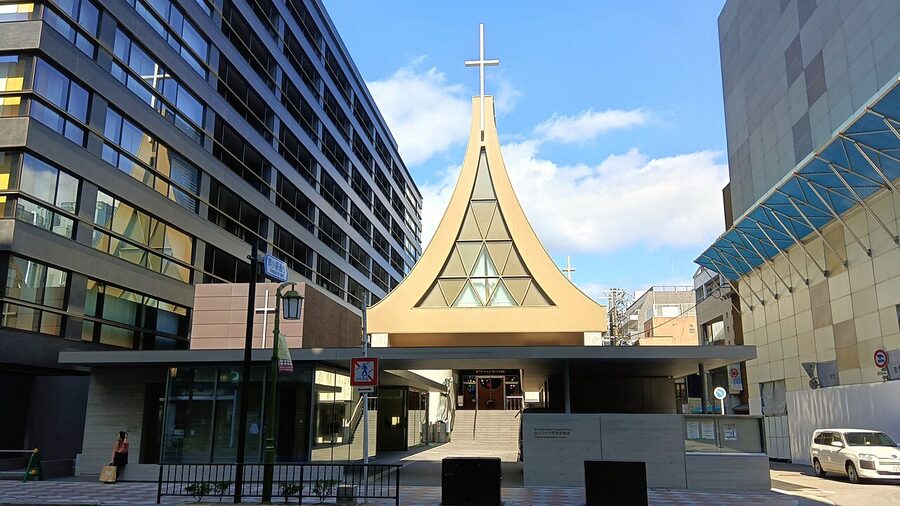
Kyoto has nothing from Xavier’s eleven days, which is fitting. Its Catholic cathedral, the Kawaramachi Church on Kawaramachi-dōri just north of Sanjō, is dedicated to St Francis Xavier, and it is a reasonable place to sit for ten minutes and think about a man who walked here barefoot in January and was turned away from every door.
Ōita
Ōita has Xavier in bronze twice. Satō Chūryō’s 1969 statue, holding a cross in his left hand with his right raised, stands in Yūhō Park, about ten minutes’ walk from JR Ōita Station, in front of a relief map of his route from Europe to Japan. A second statue, of 2015, faces one of Ōtomo Sōrin across a Nanban world map on the station’s north plaza.
For Sōrin himself, go to the Ōtomo residence site in Kentoku-machi, where the city has restored the lord’s garden and opened a small museum, the Nanban BVNGO Kōryūkan. Both are free, open 9:00–17:00 with last entry at 16:30, and closed on Mondays except the first Monday of the month and public holidays. Local tradition in Hiji says Xavier came over the hills and took ship there for Funai; historians now prefer a sea crossing from Yamaguchi, and Hiji keeps the tradition anyway.
Before you leave, buy a box of zabieru, Ōita’s famous biscuit-and-rum-raisin sweet, named after the saint and sold all over town. Xavier lived on rice and the occasional fish in Japan, and would not have recognised it.
Kobe and Tokyo
The Kobe portrait belongs to the Kobe City Museum in Kyōmachi, about ten minutes’ walk south of Sannomiya. The museum opens 9:30–17:30, to 20:00 on Fridays and Saturdays, and closes on Mondays. The portrait is an Important Cultural Property and is shown in rotation in the collection galleries on the second floor rather than permanently, so check the museum’s site before you make the trip; the Kobe history gallery on the ground floor is free.
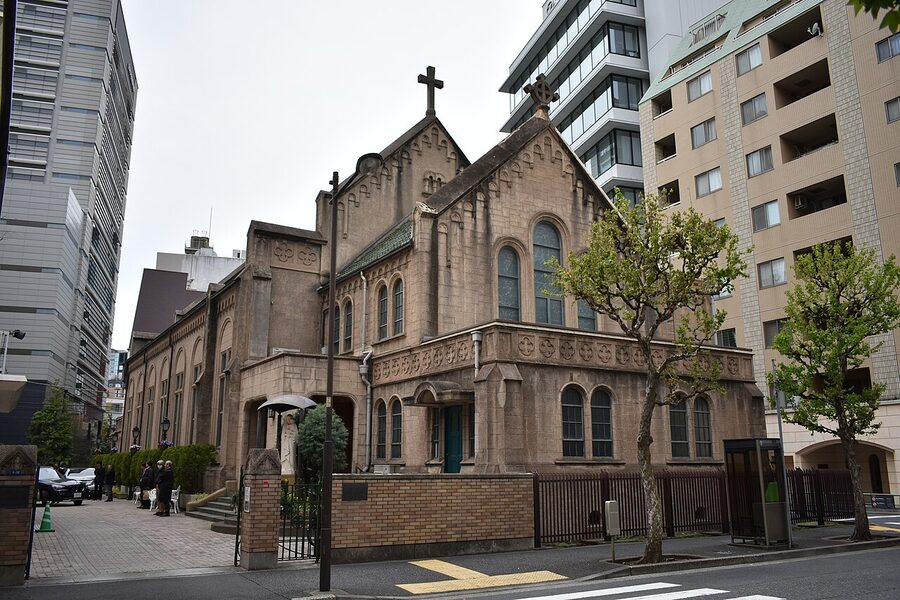
In Tokyo, the Kanda Catholic Church in Nishi-Kanda, officially St Francis Xavier Church, is a few minutes from Suidōbashi Station and keeps a bone relic. Its brick Romanesque church went up in 1928, after the Great Kantō Earthquake of 1923 destroyed its predecessor, and it is the quietest place in Tokyo to meet Xavier.
If you make it to Yamaguchi, walk up to the cathedral on Kameyama in the late afternoon and listen to the bells. Then go down to the old town, find the pagoda of Rurikō-ji, and remember that it was Shingon monks in this city who first made Xavier realise what he had been saying. He spent two years asking the Japanese to worship the Great Sun Buddha, and they were polite enough to listen. The least you can do is listen to his bells.