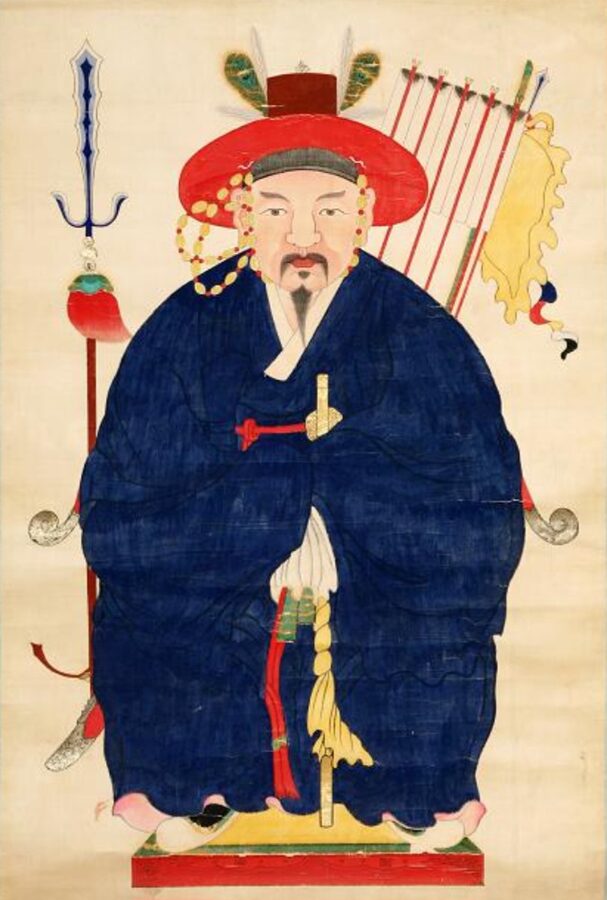
The most feared pirate of the 14th century was a boy of fifteen or sixteen on a white horse, and he went into battle wearing a mask of bronze. Korean chroniclers called him Agibaldo, which is less a name than a description: agi is Korean for a child, and baldo is most likely the Mongol baatar, a hero. In the autumn of 1380 he led an army of raiders deep into the hills of southern Korea, and the general sent to stop him was a frontier commander called Yi Seong-gye.
The Goryeosa, the official history of Korea’s Goryeo dynasty, tells what happened next with some relish. The boy was armoured so completely that there was nowhere to put an arrow, so Yi Seong-gye shot through the cord of his helmet, shot the helmet off as he reached up to straighten it, and left the killing shot to his Jurchen-born lieutenant Yi Du-ran. The river ran red for six or seven days, the chronicle says, and well over a thousand horses were taken. Twelve years later Yi Seong-gye was king.
Nobody knows what country Agibaldo came from. Japanese, Korean, Mongol and men of Jeju island have all been proposed, and the bronze mask fits none of them neatly. That uncertainty is the whole subject in miniature: the wokou (倭寇), the “Japanese pirates” of Korean and Chinese records, began as raiders from a handful of islands between Kyushu and Korea, and by the time the name stopped meaning anything, most of the men it described were Chinese.
This is the story of those pirates from their first raid on Korea in 1223 to the day in 1588 when Toyotomi Hideyoshi abolished them by decree. It begins where my account of the Mongol invasions ends, with Tsushima and Iki ruined and the Yuan navy at the bottom of Imari Bay, and it ends where the Imjin War begins. For the wider frame, my walk through Japan through the ages puts all of this in order.
In This Article
- Two characters and a long argument
- The great wave from 1350
- Gunpowder at Jinpo, arrows at Hwangsan
- Who were they?
- Envoys, a rival king and the golden pavilion
- The tally ships
- Tsushima, 1419: the island Korea invaded
- Two versions of a battle
- Fifty ships a year
- Not a plank to the sea: the Ming ban and the end of the tally trade
- Shuangyu, Hirado and the King of Hui
- The scholar on the beach
- The Jiajing raids
- Three in ten
- The scroll with the Japanese date
- Hu Zongxian’s trap and Qi Jiguang’s bamboo
- The mandarin duck and the bamboo spear
- Hideyoshi’s three articles
- The Murakami: pirates of a different kind
- From pirates to passports
- What the name became
- Where to see the wokou today
- Hirado: the Matsura Historical Museum and Wang Zhi’s hill
- Gotō: the Minjindō at Fukue
- Tsushima: Aso Bay and the Tsushima Museum
- Ōshima: the Murakami Kaizoku Museum
- Across the sea
Two characters and a long argument
The word is Chinese, and it is not a compliment. Wo (倭) was the old Chinese name for the people of the Japanese islands, and kou (寇) means a bandit or an invader; the Japanese read the pair wakō, the Koreans waegu. Nobody in Japan called themselves a wokou. It was a label applied from the other side of the sea.
The two characters first stand side by side on the Gwanggaeto Stele, raised in 414 in what is now Jilin province in China for a king of Goguryeo, where they mean the Wo raiding somewhere. By the 13th century waegu meant a gang of armed men who came off the sea, took what they wanted and left.
The first raid in the record comes in the Goryeosa under the fifth month of 1223: “the wokou raided Geumju”, the port now called Gimhae, near Busan. The Azuma kagami, the Kamakura regime’s own chronicle, confirms the traffic from the other end: in 1232 men from the Kagami shrine district near modern Karatsu came home from Goryeo with stolen treasure. This was the Kamakura era, and the warrior government did, occasionally, punish them.
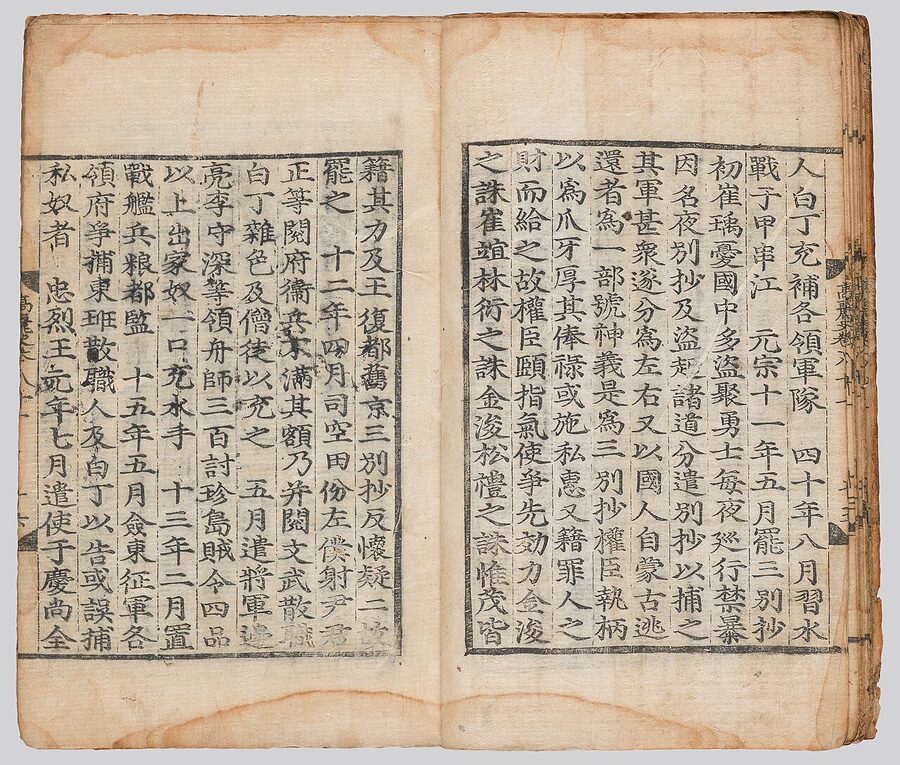
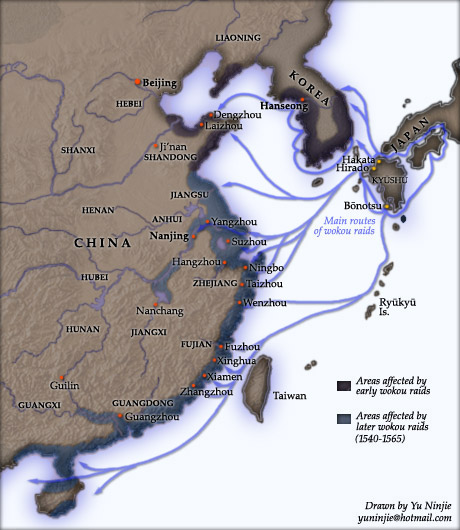
Then the record goes quiet, and when the pirates come back they come in fleets. Under the second month of 1350 the Goryeosa states flatly that “the wokou invasions began from this time”, and from then until the fall of Goryeo in 1392 it records some five hundred raids, almost one a month for forty years.
Historians divide the subject accordingly. The zenki wakō, the “early wokou” of the 14th and early 15th centuries, were mostly men from Tsushima, Iki and the Matsuura coast of Hizen. The kōki wakō, the “later wokou” of the 16th century, were mostly Chinese, and that is where the argument starts.
In Japan the pirate ship was the bahan-sen, written with the characters for Hachiman, the god of war, supposedly because pirates flew his banners. Japanese scholars now mostly think bahan is a foreign word that was given respectable characters afterwards, the first of many tidy explanations in this story fitted after the event.
The great wave from 1350
Why 1350? Part of the answer is the Mongols. Tsushima, Iki and the Matsuura coast, home of the loose sea league called the Matsura-tō, had been sacked in 1274 and 1281 and gained nothing for it, and the historian Mitamura Taisuke argued that their families felt no shame at all in raiding Goryeo, which had built the fleets that burned their villages. Even the Ming founder told Japan in the 1370s that the raiders were only exploiting the Yuan’s decline.
The rest lies in Japan’s own civil war. In 1336 Ashikaga Takauji set up a rival emperor in Kyoto, Emperor Go-Daigo fled to Yoshino, and for nearly sixty years there were two courts and two sets of armies. Go-Daigo’s loyalists, Kusunoki Masashige the most famous, were later made national heroes, but the historian Inamura Kenpu argued that loyalist houses in Kyushu such as the Kikuchi and the Matsuura raided Korea for rice to feed the war at home, and fought there like disciplined warrior bands.
The targets were rice and people. The raiders went first for the coastal granaries and the ships that carried tax rice to the capital, Gaegyeong, then for the people of the coast, who were put to work in Tsushima, Iki and north Kyushu or sold on, some as far as the Ryukyu kingdom. Goryeo bought captives back, and Kyushu lords who sent them home were paid for it, so kidnapping and repatriation became two halves of one trade.
By the 1370s raiders were pushing far inland, and the Goryeosa says whole coastal districts were abandoned. In 1376 a raiding army took Gongju, and the threat reached the approaches to Gaegyeong itself. The chroniclers add that after a Goryeo official tried and failed to murder a Japanese chieftain in 1375, the raiders stopped sparing anybody.
Gunpowder at Jinpo, arrows at Hwangsan
Goryeo’s answer came from Choe Mu-seon, a granary keeper’s son who had spent years trying to learn the Chinese secret of gunpowder. Around 1376 he coaxed the method for refining saltpetre out of a Chinese merchant named Li Yuan, in 1377 the court gave him an Office of Gunpowder Weapons, and by 1380 he had cannon on a new fleet.
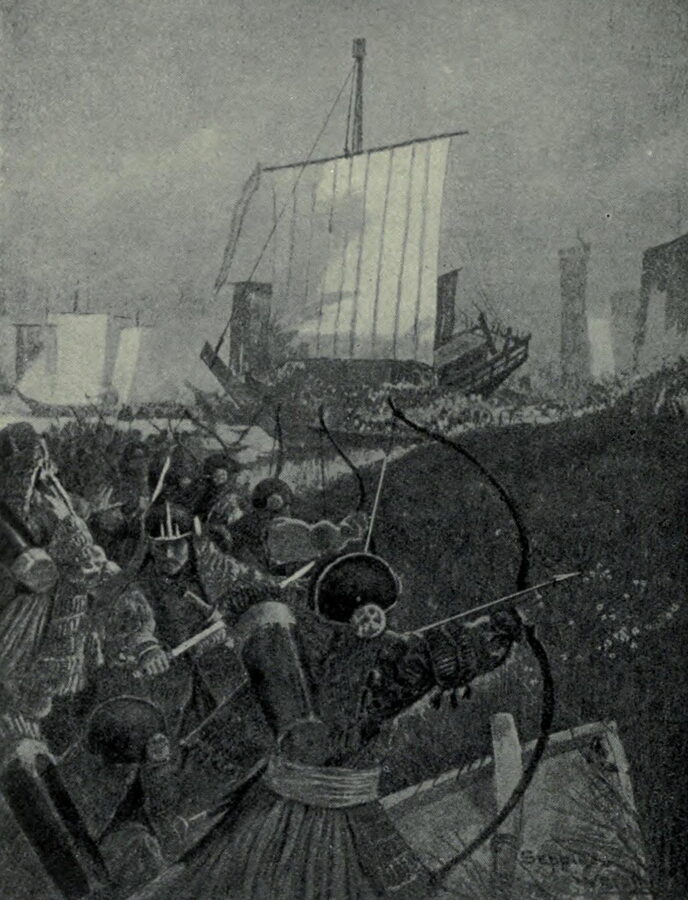
That autumn a fleet the Goryeosa numbers at five hundred ships anchored at Jinpo, at the mouth of the Geum river, and tied itself together. Na Se and Choe Mu-seon came at it with eighty to a hundred warships, by different counts, and burned it with their guns, the first use of cannon at sea in Korea. It was a crushing victory, and it left thousands of raiders stranded ashore with nothing to lose.
They marched east into the mountains, took Hamyang, killed two Goryeo generals and laid siege to Namwon. This was Agibaldo’s army, and in the ninth month of 1380 Yi Seong-gye caught it at Hwangsan, below the pass at Unbong, taking an arrow in the leg himself. Korea remembers it as the Hwangsan Daecheop, the Great Victory at Hwangsan, and only seventy or so raiders are said to have escaped into the Jirisan mountains.
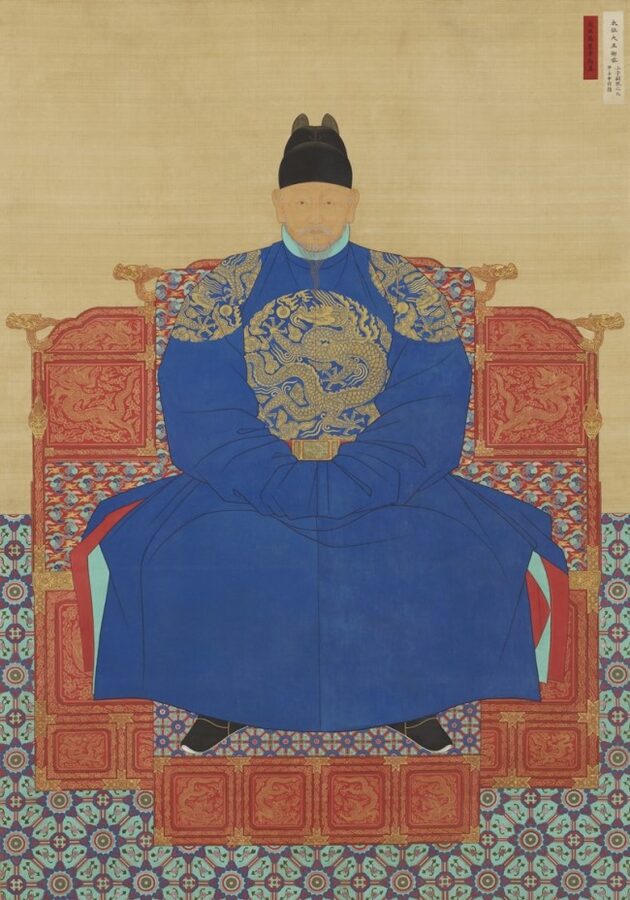
In 1383 Jeong Ji used guns to destroy another fleet off Namhae island, and in 1389 Bak Wi took a hundred ships to Tsushima itself and burned some three hundred pirate boats. Raids fell off sharply after that. The war had also given Yi Seong-gye an army, a reputation and the loyalty of the southern gentry, and in 1392 he ended the Goryeo dynasty and founded Joseon. The wokou did not overthrow a kingdom, but they did more than anybody to choose the man who did.
Who were they?
This is the oldest argument in the subject. The Goryeosa mentions Koreans riding with the raiders only three times in five hundred-odd entries, which on its face makes the early wokou overwhelmingly Japanese. Tanaka Takeo of the University of Tokyo argued instead that the surge of the 1370s and 1380s came when Korean outcasts joined in: the hwacheok, who butchered animals and worked leather, and the jaein, travelling performers, both despised groups with reason to hate the state.
Tanaka’s star witness was Yi Sun-mong, a Joseon official who had fought on Tsushima in 1419 and later told King Sejong that in the last years of Goryeo only one or two raiders in ten had been real Japanese. Murai Shōsuke, Tanaka’s successor in the field, points out that this is a single remark, made more than half a century after the event, in a speech about runaway peasants. In 1988 Murai offered a different idea: the raiders were “marginal men”, people of the sea between Kyushu, Korea and China who lived outside any state and for whom “Japanese” or “Korean” meant little.
Murai’s view is now the most cited, and it is under fire. Hamanaka Noboru answers that medieval Korea had no class of armed local lords to put such raids to sea, while Japan had plenty, and the Beijing historian Shen Ren’an calls the idea a way of dissolving a concrete history into a generalisation. In 2007 a joint Japanese and Korean teaching guide accused one Japanese textbook of using Murai’s work to make the Japanese share of the raiders look smaller.
Agibaldo sits right in the middle. His name points to Korea and Mongolia and his followers to Kyushu, while his face mask points nowhere: full face guards of the kind the Goryeosa describes are rare in Japanese samurai armour before the 16th century.
My own reading is the plainest one. The early raiders were mostly Japanese from three islands and a coastline, joined by whoever else found it worthwhile. Murai’s insight is about how they lived, between states, and that does not require them to have come from nowhere.
Envoys, a rival king and the golden pavilion
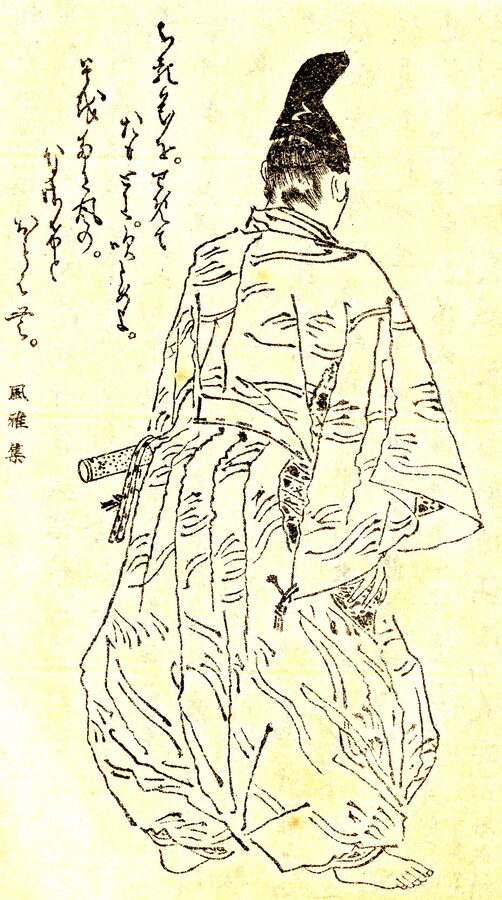
Goryeo also tried diplomacy. In 1377 it sent Jeong Mong-ju, the scholar who would be murdered on a stone bridge in 1392 for refusing to back Yi Seong-gye’s new dynasty, to Kyushu rather than Kyoto, because the man who could act was there: Imagawa Sadayo, better known by his Buddhist name Ryōshun, the shogunate’s commander in Kyushu and a poet of some note.
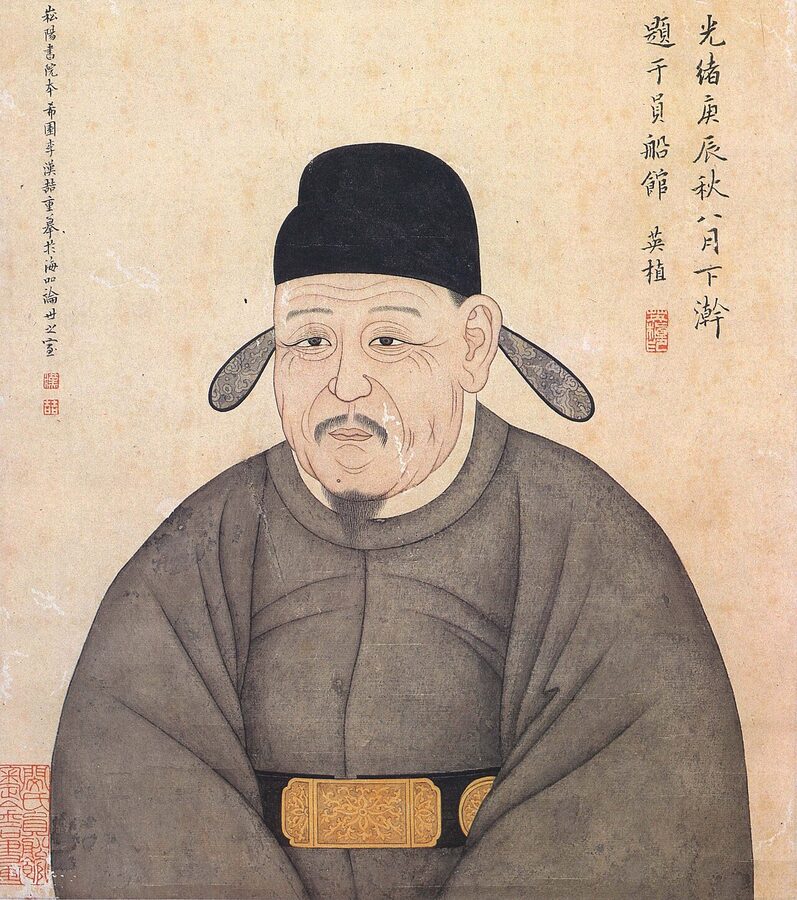
Ryōshun sent back captives again and again over the next twenty years and made a show of chasing pirates, because Goryeo, and then Joseon, paid for both. The Ming founder, Zhu Yuanzhang, the Hongwu emperor, sent his own envoys from 1369, and they landed in a Kyushu held by the Southern Court of Go-Daigo’s heirs. Its commander, Prince Kaneyoshi, accepted investiture from the Ming as “King of Japan”, which must have puzzled Kyoto.
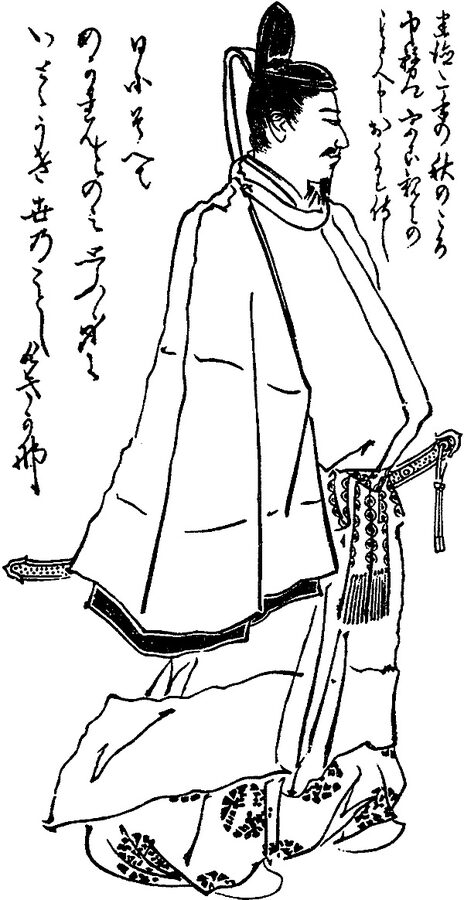
The man who settled it was Ashikaga Yoshimitsu, the third shogun, builder of Kinkaku-ji and reuniter of the two courts in 1392. In 1401 he sent a Zen monk, Soa, and a Hakata merchant named Koitsumi to the Ming court with gifts and a shipload of captives the pirates had taken. The emperor’s reply addressed him as “King of Japan, Minamoto Dōgi”, and from 1404 Japanese ships were licensed to trade in China.
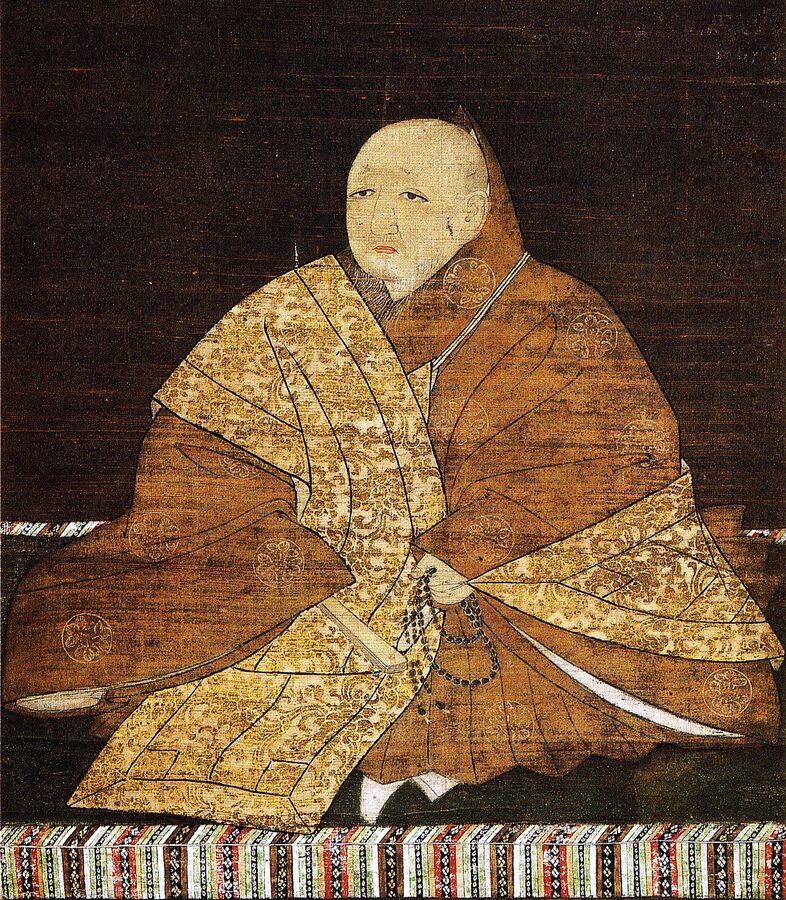
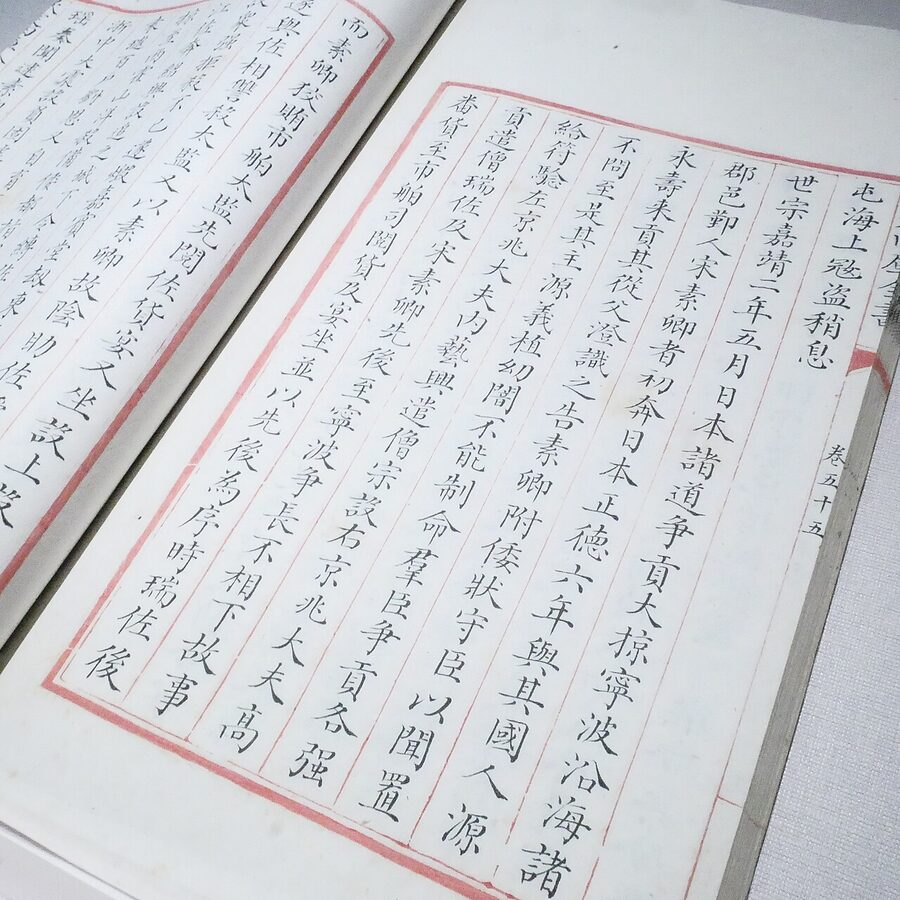
Yoshimitsu paid in pirates as well as gold. According to the official History of Ming, he sent captured raiders to China in the first years of the 15th century, and the emperor handed them back to the Japanese envoys, who steamed them to death in a cooking pot at Ningbo. The message was clear on both sides of the sea: the pirates were now bad for business.
The tally ships
The licence was a kangō, a tally, a numbered certificate whose other half sat in a register in China. Between 1404 and 1547 Japan sent seventeen tally missions, eighty-four ships in all, carrying swords, sulphur, copper and folding fans and bringing back copper coins, raw silk, porcelain and books. On paper each was a tribute embassy from a vassal king; in practice the ships were run by great lords, temples and the merchants of Hakata and Sakai, and the profits were enormous.
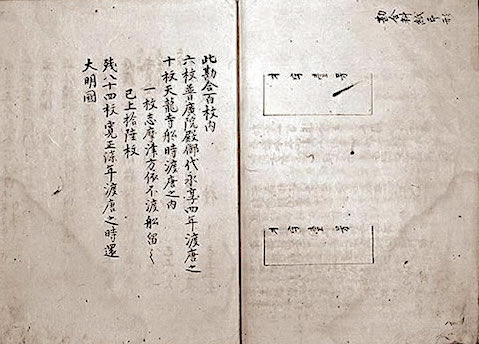
It was never smooth. Yoshimitsu’s son Yoshimochi broke it off in 1411, finding the vassal language humiliating, and the sixth shogun, Yoshinori, revived it twenty years later. Under Ashikaga Yoshimasa, who later retreated to Ginkaku-ji, the 1451 mission sailed with nine ships and about 1,200 people, and the alarmed Ming limited Japan to one mission every ten years, three ships and three hundred men. The shoguns who ran it are in my piece on the Muromachi era.
Tsushima, 1419: the island Korea invaded
For a generation after 1392 the arrangement worked. On Tsushima the Sō family made peace with the new Joseon court and kept the raiders in check, because trade with Korea was the island’s living. Then, in the fourth month of 1418, Sō Sadashige died, leaving a child heir, Sadamori, and real power passed to Sōda Saemontarō of Funakoshi, a man the Korean records call a pirate chief without embarrassment.
In the fifth month of 1419, with famine on Tsushima, a fleet of fifty-odd ships bound for China stopped to plunder the Korean county of Biin and went on to attack Haeju. The retired king Taejong, who still held the army while his son Sejong learned to rule, decided to finish the problem at its source. The Koreans call what followed the Gihae Dongjeong, the Eastern Expedition of the gihae year; in Japan it is the Ōei no gaikō, the foreign invasion of the Ōei era, or on Tsushima simply the Nukadake war.
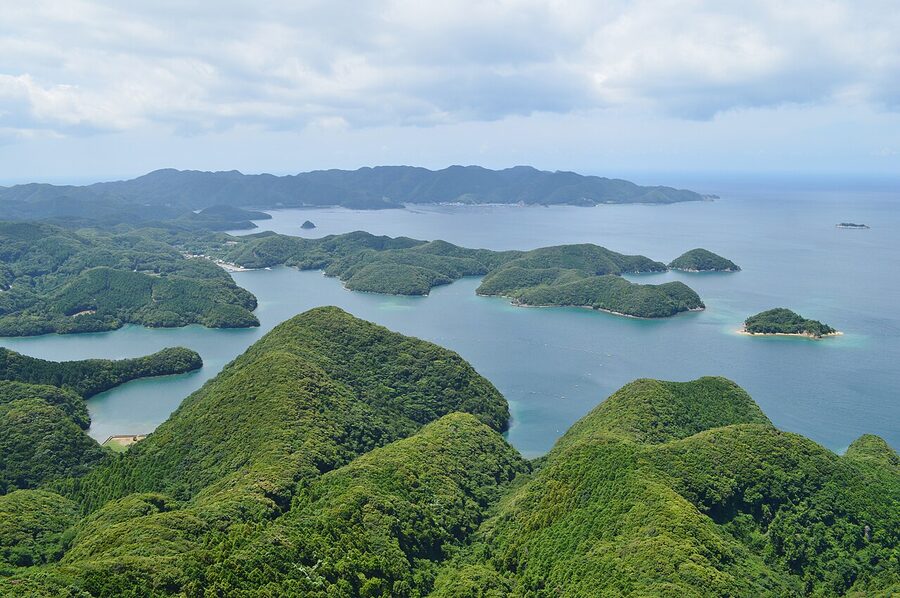
The army that sailed from Geoje island on the 19th day of the sixth month was commanded by Yi Jong-mu: 227 ships, 17,285 men and food for sixty-five days. The Veritable Records of the Joseon court say the islanders saw the first ten ships and started preparing a welcome, thinking their own men were coming home. Over the next days the Koreans burned 1,939 houses, took 129 boats, cut off 114 heads (some summaries say 104) and freed 131 Chinese captives.
On the 29th day the Korean left army under Bak Sil pushed inland near Nii and walked into an ambush at Nukadake, losing more than a hundred men, some driven over cliffs. Sadamori wrote to the Korean commander that the storms of the seventh month were coming and it would be wise to make peace and go. On the 3rd day of the seventh month the fleet sailed home, and Joseon talked about a second expedition and never sent one.
Two versions of a battle
The aftermath is a lesson in reading sources. The Korean court first admitted a hundred-odd dead and later raised the figure to 180, and it worried, briefly, that Chinese witnesses would report the defeat in Beijing. Nobody on the Korean side pretended it was a triumph.
The Japanese side improved on the facts at once. In Kyoto, Prince Fushimi Sadafusa wrote in his diary that China, Korea and the southern barbarians were coming, and a report from the Kyushu lord Shōni Mitsusada spoke of a vanguard of five hundred Mongol ships.
Another report, copied into the same diary, claimed 3,700 enemy dead and a battle in which the gods sent wind, thunder and hail and a woman warrior threw three hundred soldiers into the sea with her bare hands. A Sō family genealogy of 1719 gives 123 Tsushima dead against 2,500 Koreans.
The legend outlived its authors. In 1915, for the enthronement of the Taishō emperor, Sō Sadashige was given a posthumous court rank for repelling the invasion of 1419, which he had missed by dying the year before. Later research sorted that out, and his son got the credit, but it is a neat demonstration of how a frontier skirmish becomes a third Mongol invasion when the nation needs one.
Fifty ships a year
Peace came quickly, because both sides needed it. In 1420 the Korean envoy Song Hui-gyeong travelled to Kyoto and wrote the Nosongdang Ilbon haengnok, one of the best outsider’s views of medieval Japan; on Tsushima, Sōda Saemontarō protested to him about a Korean plan to annex the island to Gyeongsang province. Then Joseon did what Goryeo never managed. It turned the pirates into customers.
Raiders who surrendered were given Korean court ranks, clothing and houses, and others were licensed as traders. In 1443, in the agreement the Koreans call the Gyehae Treaty and Japanese historians the Kakitsu treaty, Sō Sadamori was allowed fifty trading ships a year and two hundred seok of rice and beans, and every Japanese ship bound for Korea needed a Sō permit. In 1444 the Joseon court told the Ming the wokou had been ended, and the Sō held Korea’s door to Japan for four hundred years.
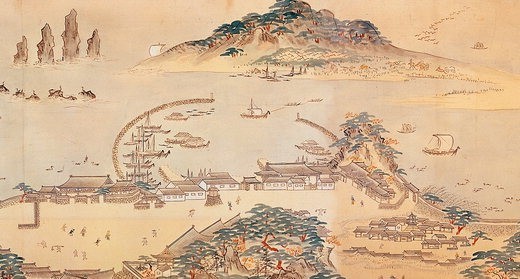
Japanese traders were limited to three ports, Busanpo, Jepo and Yeompo, and by the late 15th century Jepo alone had 347 Japanese households and some 2,500 people, far beyond the agreed limit. When a reforming Korean king clamped down on smuggling, the residents rose in the fourth month of 1510 with ships sent from Tsushima, the uprising the Koreans call the Sampo Waeran.
It failed, the settlements were cleared, and a treaty in 1512 halved Tsushima’s ships. From then on the Sō kept the trade alive partly with forged embassies, a skill that would be very useful to them in the 1590s.
Not a plank to the sea: the Ming ban and the end of the tally trade
China, meanwhile, had gone further than anyone. In 1371 the Hongwu emperor issued the first of the orders known as the haijin, the sea ban: no Chinese subject was to go abroad or trade with foreigners, and “not a single plank” was to go to sea. Foreign trade came only as tribute, on official ships, on a fixed schedule.
The coasts were to be held from forts, sixteen new ones in Fujian with 15,000 men and fifty-nine in Zhejiang with 58,000, and in 1386 whole island populations off Zhejiang were moved to the mainland so that pirates would find nothing there.
The trouble was that China’s economy still needed the sea. The 16th-century coastal provinces were rich and hungry for silver, and Japan had silver in quantity once a Hakata merchant, Kamiya Jutei, brought a Korean refining method to the Iwami mine in 1533. Japanese silver, Chinese silk and one tribute ship every ten years did not add up, and everyone on the coast knew it.
Then the tally trade blew itself up. After the Ōnin War two great houses fought over it, the Hosokawa with the merchants of Sakai and the Ōuchi of Yamaguchi with Hakata, and in 1523 both sent missions to Ningbo. The Ōuchi envoy, the monk Sōsetsu Kendō, carried the current tallies; the Hosokawa envoy, Rankō Zuisa, carried outdated ones and a Chinese-born adviser, Song Suqing, who bribed the officials into processing his ship first and seating his master higher at the banquet.
Sōsetsu’s men broke into the armoury, killed Rankō Zuisa, burned the Hosokawa ship and chased Song Suqing to the walls of Shaoxing, burning along the road, then seized a Ming officer and sailed away. The Ming court never forgot it. One last Ōuchi mission was allowed in 1547, and when the Ōuchi were destroyed in 1551, in the middle of the Sengoku era, the tally trade died with them.
Shuangyu, Hirado and the King of Hui
The later wokou grew in the gap. With the legal trade closed, Chinese, Japanese and, from 1513, Portuguese merchants met where the Ming navy was weakest, on the islands off Zhejiang and Fujian. The greatest market was Shuangyu, on Liuheng island near Ningbo, which the Portuguese called Liampó; at its height, Chinese accounts say, it had a thousand houses, three thousand people, a hospital and a Christian church, all illegal.
Its leading syndicate was run by the Xu brothers from She county in Huizhou, and in 1544 they took on a fellow countryman who had failed in the salt trade. His name was Wang Zhi, sometimes written 汪直 after his mother’s surname, and his art name was Wufeng, “Five Peaks”. He handled the syndicate’s money, then its fleet, and he knew Japan.
Chinese and Japanese sources put Wang Zhi on Fukue in the Gotō islands around 1540, with the blessing of the local lord, Uku Moritada, and in Hirado from about 1542, where Matsura Takanobu gave him a house on Katsuoyama. Takanobu was a minor lord with large ambitions, and Wang Zhi gave him the means. Hirado’s own museum says plainly that the town became known as the “Kyoto of the West”.
The scholar on the beach
In the eighth month of 1543 a junk drifted ashore on Tanegashima, off southern Kyushu, with about a hundred people aboard and nobody who spoke Japanese. The Teppōki, the chronicle of the gun written for the Tanegashima family in 1606, says the headman got the story by writing Chinese characters in the sand with a “Confucian scholar of the great Ming” named Wufeng. On board were Portuguese with matchlocks, and the young lord, Tanegashima Tokitaka, bought two.
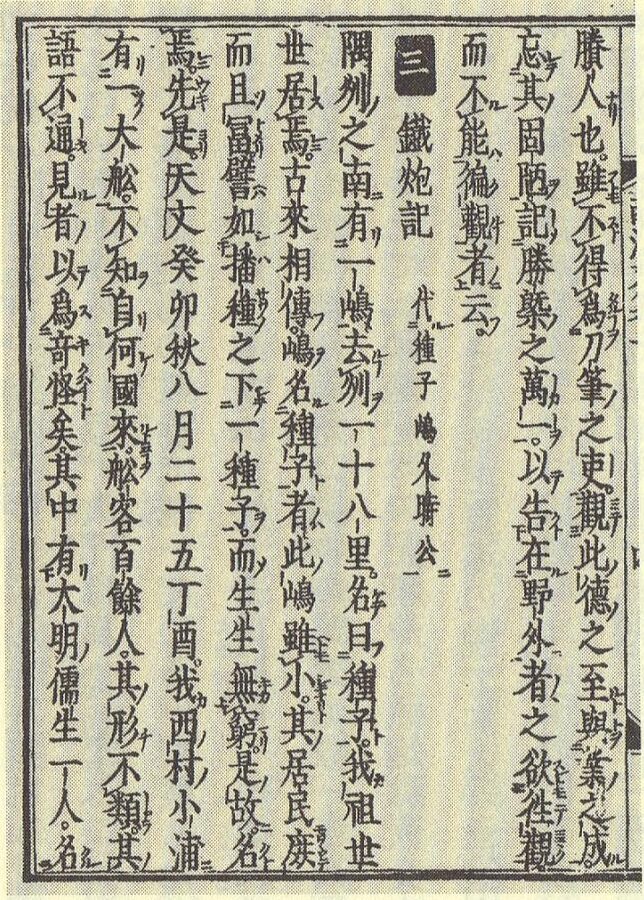
Was the scholar Wang Zhi? Many historians think so. Nakajima Gakushō, who has looked hardest at the trade of the 1540s, accepts that he may well have been, but warns that the most famous pirate’s name could also have been borrowed afterwards for a nameless interpreter. Either way, the guns came through a smugglers’ network, and within a generation Oda Nobunaga was winning battles with them.
The Portuguese came to Hirado in 1550, the year Francis Xavier, turned away by the Shimazu in Kagoshima, arrived to preach there. Xavier’s Japanese companion, the Satsuma man Anjirō, is described in some Japanese sources as having made his living in bahan, piracy. Christianity in Japan and the later wokou arrived along the same sea lanes.
The Jiajing raids
The Ming hit back in 1547, when the veteran general Zhu Wan was made governor of Zhejiang with authority over Fujian’s coast as well. He called the coastal gentry who financed the smugglers “pirates in gowns and caps”, published their names, and in the summer of 1548 sent a fleet into Shuangyu at night. The town was burned and the harbour filled with stones, but Wang Zhi escaped.
Zhu Wan did not survive his success. He executed ninety-six captured smugglers without imperial sanction, was impeached, and took poison in 1550, and for three years nobody dared take his job. The smugglers, scattered from their markets, turned to raiding, and Wang Zhi rebuilt his network from Jintang island and then, after the general Yu Dayou drove him out in 1553, from Hirado and Gotō.
In Japan he called himself the King of Hui, after his home prefecture, and was said to command two thousand men and the people of thirty-six islands. He claimed he led no raids himself, and what he wanted from Beijing was legal trade. But the fleets that sailed from his islands from 1552 were the worst the Chinese coast had seen, and by 1555 raiders based at Zhelin, south of modern Shanghai, were besieging walled cities and heading for Nanjing.
Three in ten
How Japanese were they? The official History of Ming gives the most quoted answer: “in general the true Wo were three in ten, and those who followed the Wo seven in ten”. Japanese reference works today put the Japanese share at ten or twenty in a hundred. The great captains, Wang Zhi, Xu Hai, Chen Dong and Ye Ma, were Chinese; the Japanese among their men were hired fighters, mostly from Kyushu, valued for their swords.
There were good reasons to call the raiders Japanese anyway. Ming soldiers were paid more for a Japanese head, local officials preferred foreign raiders to local bandits on their records, and Chinese captives were sometimes shaved in the Japanese style and pushed into the front line. Zheng Ruozeng’s Chouhai tubian, a coastal defence handbook of 1562, lists the Japanese provinces the fighters came from (Satsuma, Higo and Nagato first) and says the fleets left Gotō or Satsuma between the third and fifth months.
The cruelty in the Chinese accounts is formulaic, babies scalded and pregnant women cut open for bets, and Tanaka Takeo noted that such stories recur as types. The trade in people is better documented. Zheng Shungong, a Ming envoy held in Kyushu in the 1550s, wrote that two or three hundred Chinese slaves were being worked like cattle at one place in Satsuma alone.
One of them has a name. Su Ba, a Zhejiang fisherman, was taken in 1580 and sold at Kyōdomari in Satsuma to a Buddhist monk for four taels of silver, then resold to a Chinese merchant on Tsushima. He worked six years, bought his freedom, sold fish and cloth in Hirado, and in 1590 found a ship to Luzon, from where he got home in 1591. The historian Yoneya Hitoshi pieced his life together, and it is the only way to read the slave trade that does not reduce it to a number.
The scroll with the Japanese date
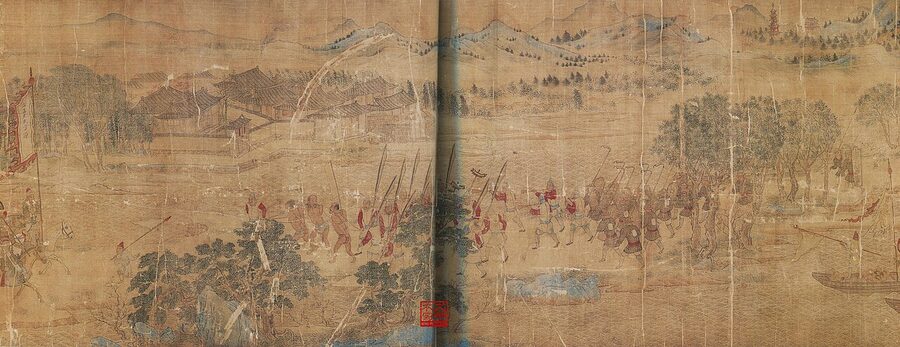
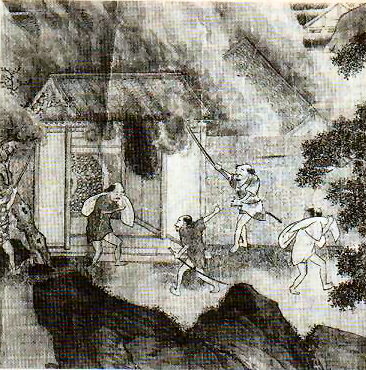
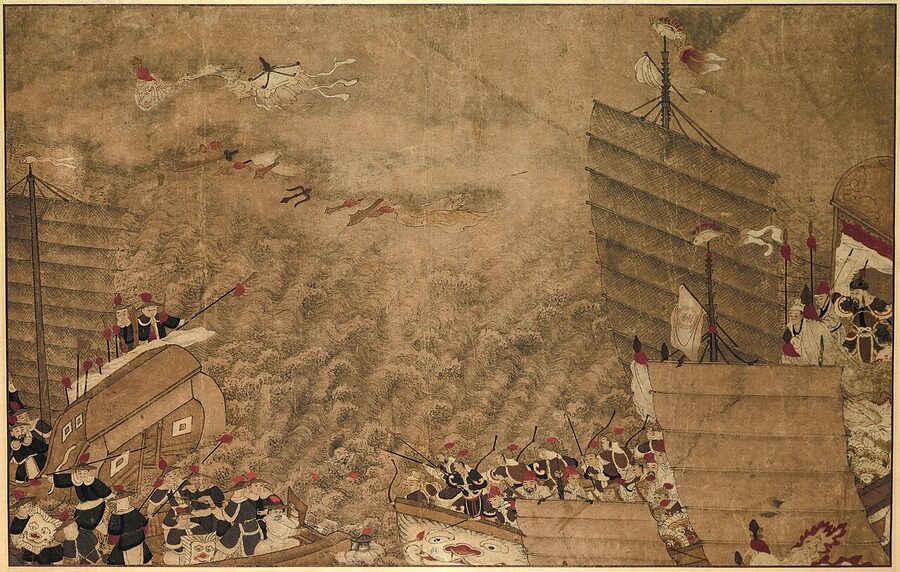
The University of Tokyo’s Historiographical Institute owns a silk handscroll some five metres long that came from China in the early 20th century labelled as a painting by the Ming master Qiu Ying of a victory in Taiwan. It is neither: it is a workshop copy, probably from the Jiangnan region, and has nothing to do with Taiwan. As the Wakō zukan, the Wokou scroll, it became the picture of the later pirates.
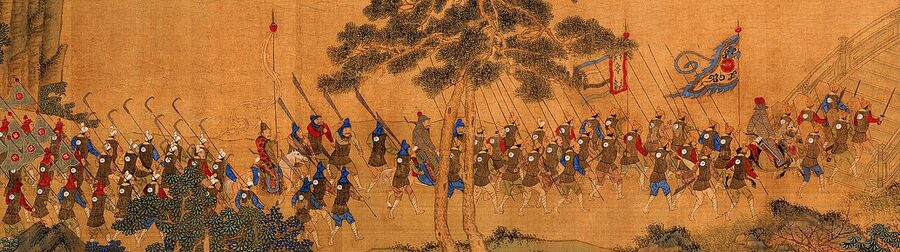
In 2010 the institute photographed it in infrared and found faded writing. Ming banners read like victory slogans: “the heavenly army of the great Ming defends the sea” and “cleanse the sea of the Wo barbarians”. And on a pirate ship’s flag, in the opening scene, was a Japanese era date, Kōji yonen, the fourth year of Kōji, which is 1558; the Beijing scroll turned out to carry “the third year of Kōji in Japan”, 1557.
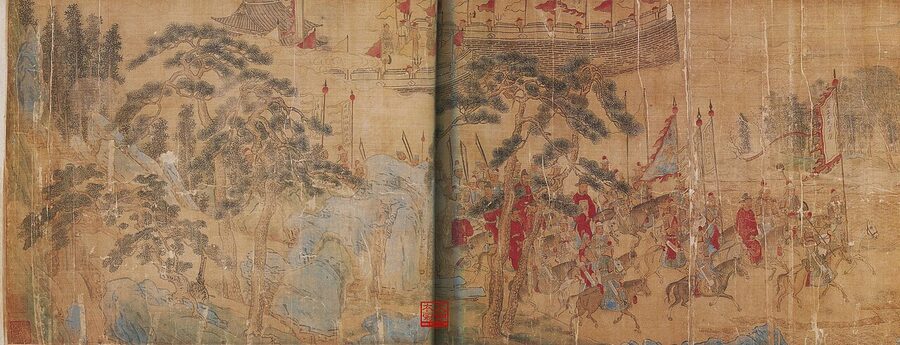
The researcher Suda Makiko pointed out what those years have in common: Wang Zhi came home to negotiate in the third year of Kōji and was imprisoned in the fourth. Both scrolls seem to descend from a lost original celebrating the defeat of the Jiajing raids, and later work tied it more closely to a battle of 1556. The painters marked the pirates as Japanese in the most precise way they knew, with a Japanese era name, while painting the end of a war against a Chinese pirate king.
Hu Zongxian’s trap and Qi Jiguang’s bamboo
The man who ended it was Hu Zongxian, like Wang Zhi a native of Huizhou, governor of Zhejiang from 1555 and supreme commander of the coast from 1556. He had seen the alternative: in 1555 Zhang Jing won the greatest Ming victory of the war at Wangjiangjing, north of Jiaxing, and was executed anyway because the court had already been told he was slow. Hu preferred trickery, and he was very good at it.
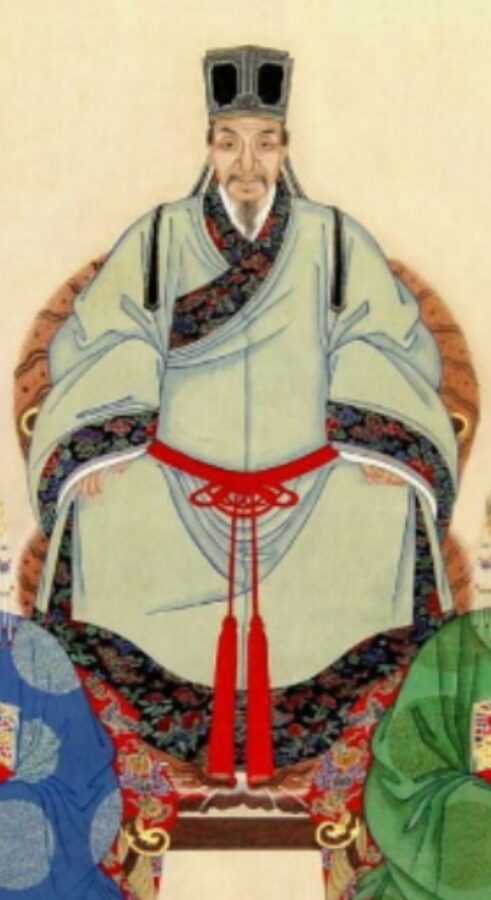
His first target was Xu Hai, who led the great raid of 1556 with Chen Dong and Ye Ma, all three tied to the Shimazu of Satsuma; Chen Dong was said to hold a post in the Shimazu household. Hu negotiated with each separately, let each believe the others were betraying him, and persuaded Xu Hai to hand over his allies. That autumn Xu Hai himself was cornered at the Shen family estate near Zhapu, and his body was found in a stream.
Then Hu turned to Wang Zhi. He released Wang’s family from prison, sent envoys to Gotō and let him believe that a pardon and legal trade were possible. In the autumn of 1557 Wang Zhi arrived off Zhoushan with a trading fleet sent by the Kyushu lord Ōtomo Sōrin, came ashore at Hangzhou that winter, was asked politely to help make matchlocks for the Ming army, and early in 1558 was put in prison.
He was beheaded on the 25th day of the twelfth month of the 38th year of Jiajing, which a Western calendar converts to 22 January 1560. Japanese reference works variously give his death as 1557, 1559 or 1560, which is what happens when arrest, sentence and execution fall in different years of two calendars. His adopted son Mao Haifeng cut Hu’s hostage to pieces and went back to raiding, and the raids moved south to Fujian for another seven years.
The mandarin duck and the bamboo spear
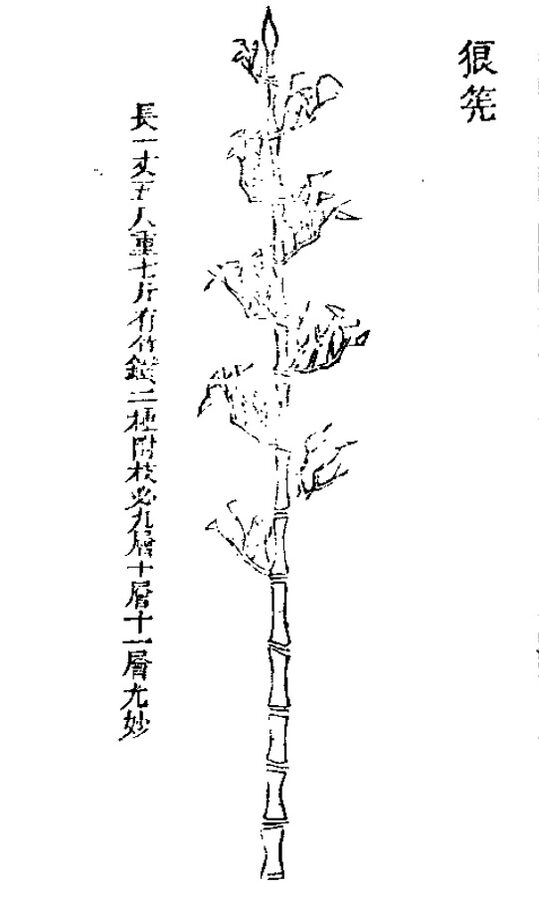
The soldier who finished them was Qi Jiguang, born in 1528 to a hereditary officer family at Dengzhou in Shandong. He gave up on the coastal garrisons, recruited farmers and miners from Yiwu in Zhejiang and drilled them hard. His answer to Japanese swordsmen was the yuanyang zhen, the mandarin duck formation, a squad of about ten in which shields, long spears and short weapons covered one another, with men carrying the langxian, a bamboo spear left with its branches on to entangle a sword.
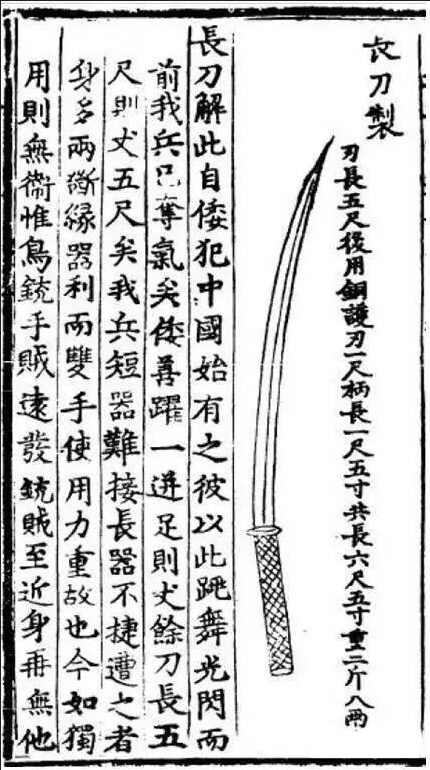
He also learned from the enemy. In 1561 his men captured a scroll of the Kage-ryū sword school, later printed in the Wubei zhi, and there is even a Japanese theory that the school’s founder, Aisu Ikōsai, had sailed with the wokou himself. The long Japanese blade, the subject of my piece on Japanese swords, entered the Ming army, and with his new troops Qi won at Taizhou in 1561 and in 1563 recaptured Xinghua and destroyed the raiders at Pinghai.
The decisive blow was not military. In 1567, months after the Jiajing emperor’s death, the court relaxed the sea ban and opened Yuegang in Fujian, renamed Haicheng, “clear sea”, to Chinese ships trading abroad, to anywhere but Japan. The raids died away almost at once.
Qi was moved north to rebuild the Great Wall against the Mongols, fell from favour and died out of office in the last month of 1587 by the Chinese calendar. Chinese governments rediscovered him in the 20th century, when fighting the Japanese was national policy again.
Hideyoshi’s three articles
Japan ended the wokou in a single document. On the 8th day of the seventh month of 1588, 29 August by the Western calendar, the same day as his order confiscating the swords of farmers, Toyotomi Hideyoshi issued a three-article decree against piracy. The first article complained that pirates had lately been at work in the waters between Bingo and Iyo despite an earlier ban, and the second ordered every lord to survey the boatmen and fishermen of every bay and make them sign oaths never to commit piracy.
The third said that if piracy happened anyway, the lord who had let it happen would lose his land.
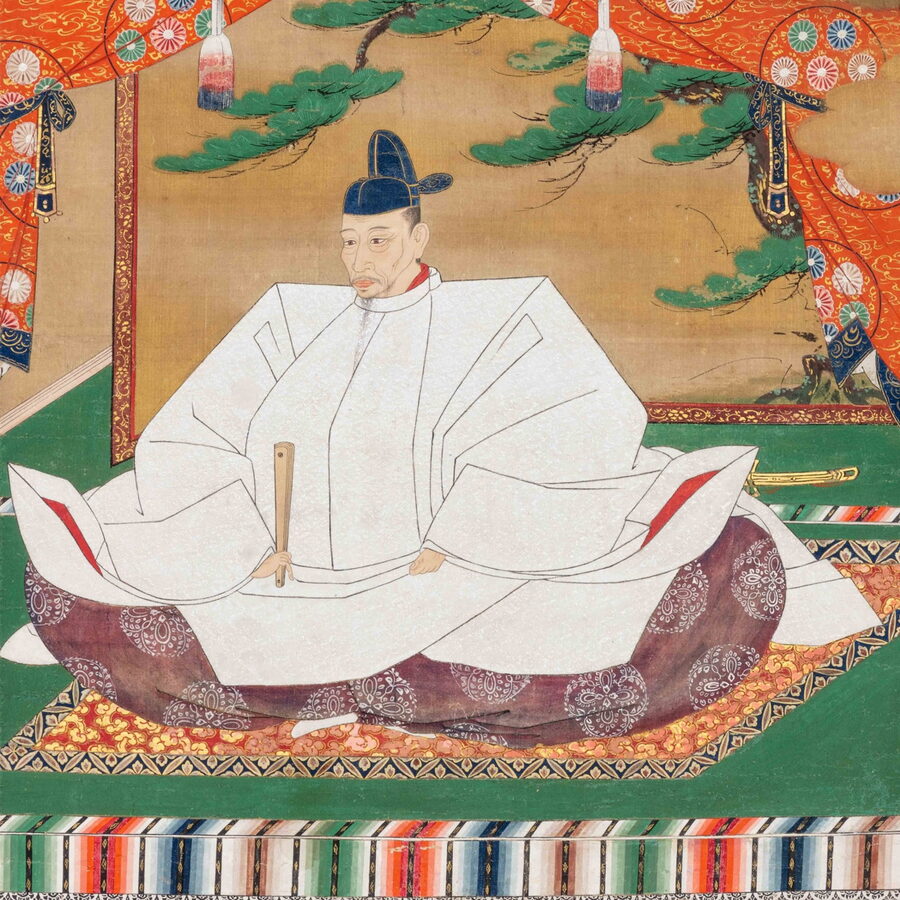
Japanese historians read the decree several ways at once: as the sea half of the sword hunt, as Hideyoshi taking control of shipping before his invasion of Korea, and as a signal to the Ming that Japan could police its coasts and might deserve legal trade again. In Kyushu, it worked. The lords who had sheltered Wang Zhi were now Hideyoshi’s vassals, and none wanted to lose his land over a fishing village’s sideline.
The Murakami: pirates of a different kind
The pirates in the Inland Sea between Bingo and Iyo were the Murakami, and they were not wokou at all. The three Murakami houses of Noshima, Kurushima and Innoshima held the islands of the Geiyo archipelago, where the tides between the islands race like rivers, and they lived by selling safety. A ship that paid them toll was given a kasho flag, a pass that protected it from everybody else. Luís Fróis called Murakami Takeyoshi of Noshima “the greatest pirate in Japan”, and Takeyoshi held linked-verse parties at Ōyamazumi shrine.
These were sea lords, not raiders of foreign coasts, and they fought for great daimyo: Murakami fleets helped the Mōri beat Nobunaga’s navy at Kizugawaguchi in 1576. Hideyoshi’s decree ended their business at a stroke. Takeyoshi’s son Motoyoshi seems to have had to answer a charge of breaking it in Kyoto, Takeyoshi left Noshima for a fief in Chikuzen, and the house ended as a squadron of the Mōri navy.
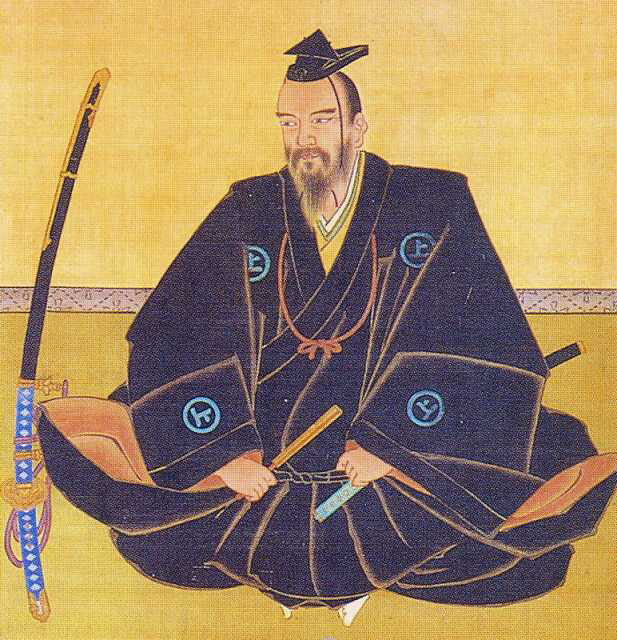
Kurushima Michifusa, of the third Murakami house, became one of Hideyoshi’s daimyo and was killed in 1597 at Myeongnyang, fighting the Korean admiral Yi Sun-sin. Hideyoshi had ended private violence at sea in order to use all of it himself.
From pirates to passports
The line from the wokou to the Imjin War is short. In 1589, ordered to bring the Korean king to Kyoto, Sō Yoshitoshi went to Seoul to ask for an embassy instead, and the Korean court asked him first to hand over the men behind a recent raid on the Jeolla coast, some of them Koreans who had guided the raiders. Yoshitoshi produced them within months, and the embassy sailed in 1590. The Korean name for the war that followed, Imjin Waeran, means the disturbance made by the Wae in the imjin year.
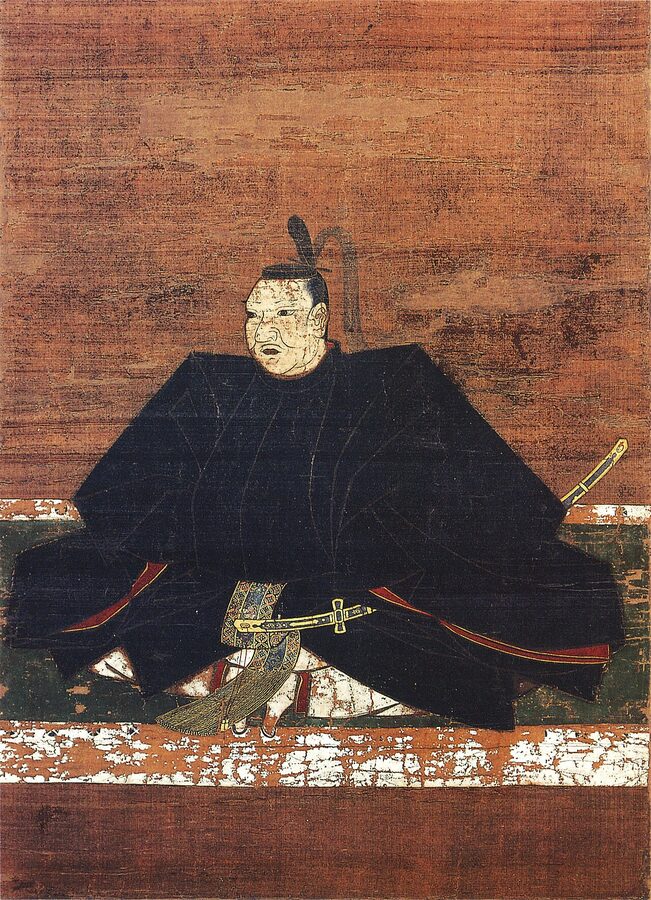
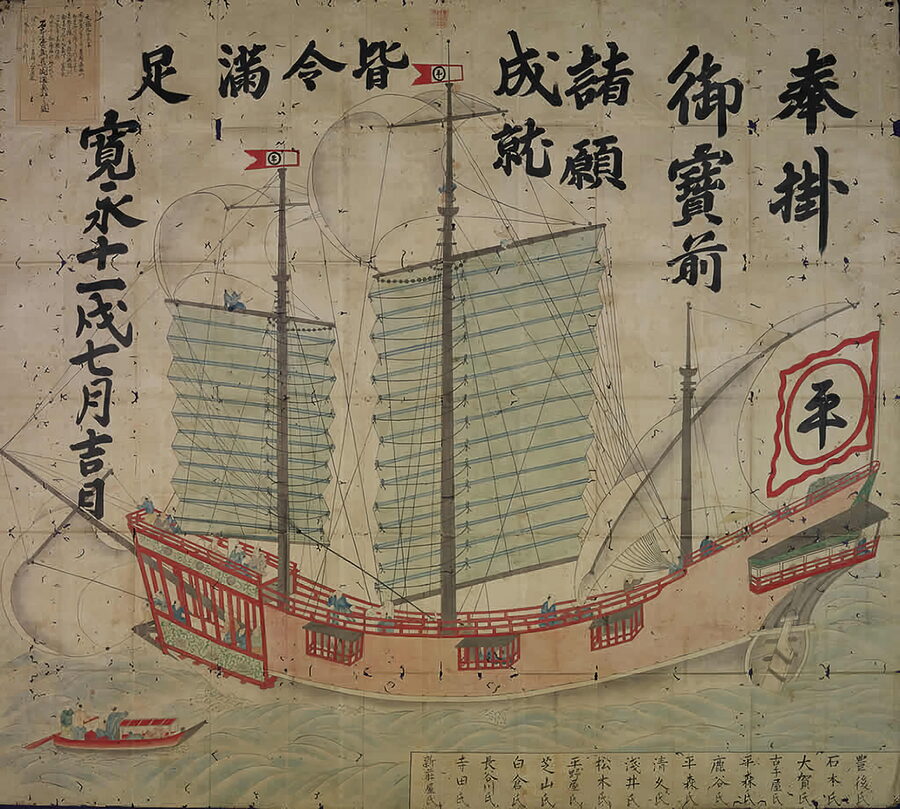
After the war the sea trade was licensed again. From 1604 Tokugawa Ieyasu issued shuinjō, permits bearing his red seal, and over three hundred and fifty red seal ships sailed from Nagasaki to Southeast Asia before 1635. Ieyasu, whose foreign advisers included the English pilot William Adams, also repeated Hideyoshi’s ban on piracy. The Ming never reopened trade with Japan, so the two countries met in third places: Manila, Hoi An, Macau and the ports of Ryukyu.
The heirs of the wokou were the Chinese sea lords of the 17th century. Zheng Zhilong worked out of Hirado and married a Japanese woman there, and their son Zheng Chenggong, the Koxinga of European accounts, was born in Hirado in 1624 and went on to take Taiwan from the Dutch. Japan’s own frontier closed in the 1630s with the rules now called sakoku, which forbade Japanese to sail abroad and confined the Dutch to Dejima. The shogunate kept the sea by emptying it.
What the name became
The word outlived the pirates. In Korea and China waegu and wokou became general terms of abuse for Japanese, and Japanese reference works themselves note that the Japanese army in China was called a “20th-century wokou”. In the 1930s, writers in both countries reached back to the raids: Chinese historians to make the pirates Japanese aggressors with Chinese traitors in tow, Japanese ones such as Takekoshi Yosaburō to make them pioneers of a maritime empire. Qi Jiguang became a hero again in China during the Korean War.
The scholarship moved the other way. From the 1950s Japanese historians such as Katayama Seijirō and Sakuma Shigeo, then Taiwanese and Chinese scholars, traced the 16th-century raids to China’s own coastal society and the sea ban. That has not settled the politics: in 2000 people from Fukue built a tomb for Wang Zhi in his home village in She county, and in 2005 two Chinese academics defaced it, calling him a traitor.
Where to see the wokou today
The wokou left no castles, which suits them. What you can see is the coast they used, the harbours where they did business and the museums of the families who sheltered and fought them. Hirado and Gotō belong together, Tsushima is a separate trip, and the Murakami are on the Shimanami Kaidō between Honshu and Shikoku.
Hirado: the Matsura Historical Museum and Wang Zhi’s hill
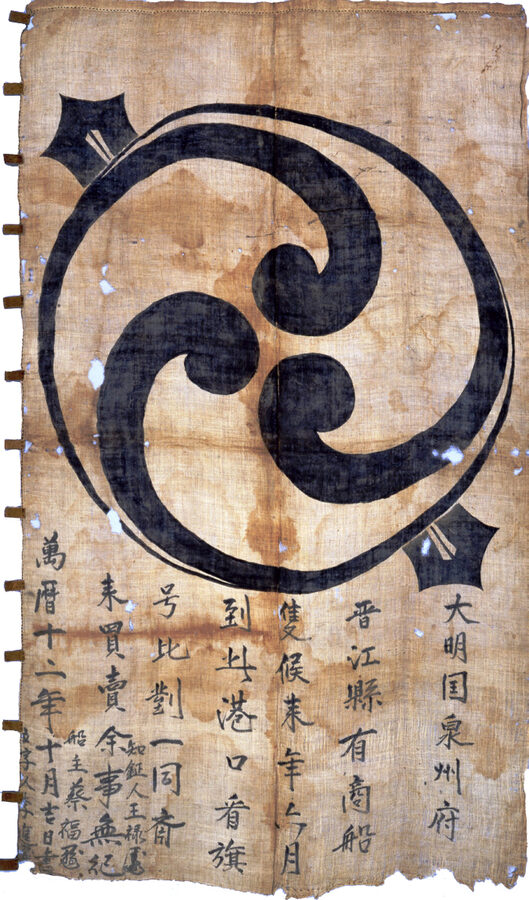
Start at the Matsura Historical Museum (松浦史料博物館), in the former residence of the Matsura lords above Hirado harbour. It covers the Matsura sea league, Wang Zhi, the Portuguese and Dutch trade and Zheng Chenggong, and its collection includes a flag said to have flown from a bahan pirate ship. It is open daily from 8:30 to 17:30 except 29 December to 1 January, and admission is ¥660 for adults and ¥330 for school pupils, or ¥880 combined with the Hirado Dutch Trading Post.
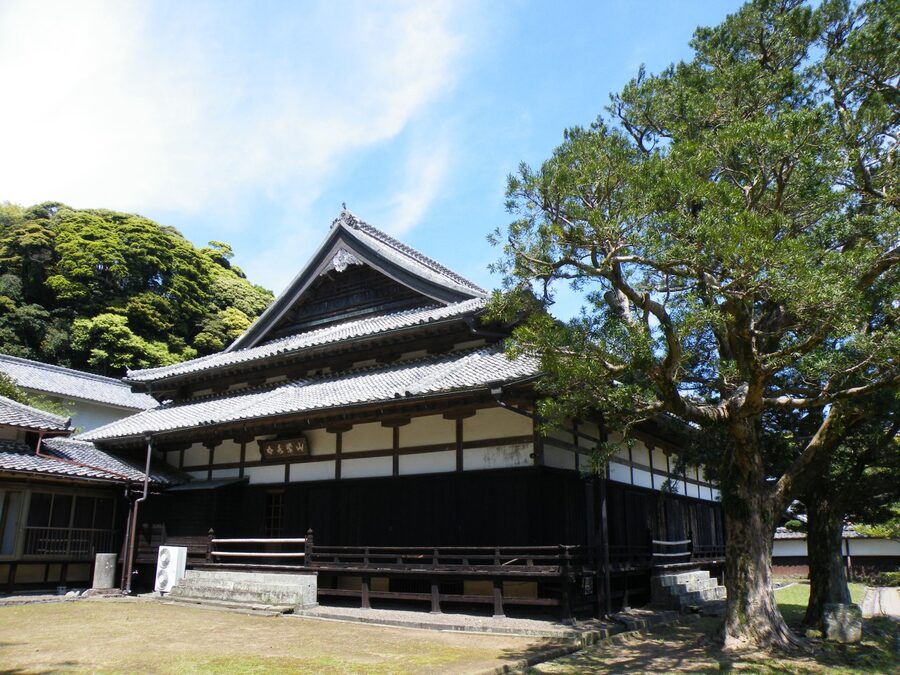
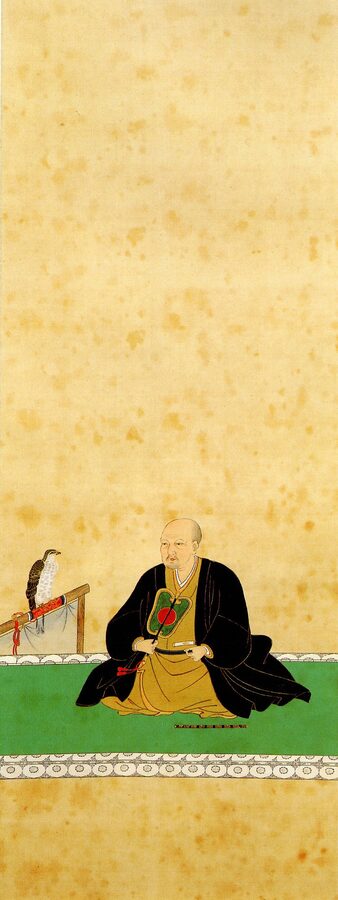
If you have read my piece on the tea ceremony, the tea room is worth the extra half hour; Takanobu took tea with Hideyoshi and Sen no Rikyū in 1588, showing off the kind of Chinese pieces that came in through Hirado’s trade. Then walk round the harbour. The site of Wang Zhi’s residence is marked by a stone and an information board on the slope of Katsuoyama, about five minutes from the harbour square, and the land itself is now private houses. On Uranomachi street is the Rokkaku-ido, a six-sided well in the Ming style, which local tradition ties to the Chinese merchants of the 1540s.
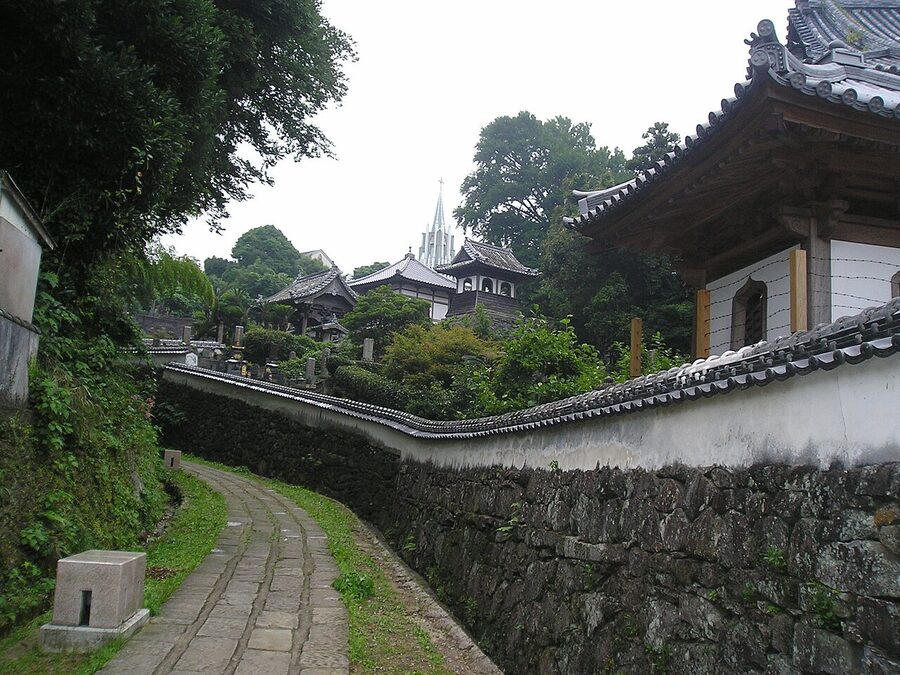
Getting there takes time. From Sasebo the bus to the Hirado harbour terminal takes about an hour and twenty minutes, and the museum is five minutes’ walk from the terminal; or take the Matsuura Railway to Tabira-Hiradoguchi and a taxi for about ten minutes. Stay the night. Hirado is at its best in the early morning, before the day trippers arrive, and the Hidden Christian villages on the island’s west coast, described in my piece on the Hidden Christians, are another day’s outing.
Gotō: the Minjindō at Fukue
On Fukue, the largest of the Gotō islands, the Minjindō (明人堂), the “hall of the Ming people”, stands near the Fukue river where Wang Zhi’s Chinese settlement grew up across the water from the Uku lords’ castle. Tradition says it was built in 1540 for prayers for safe voyages. The present hall was rebuilt in 1999 with stone carved in Nagasaki, so do not expect antiquity, but the site is the right one.
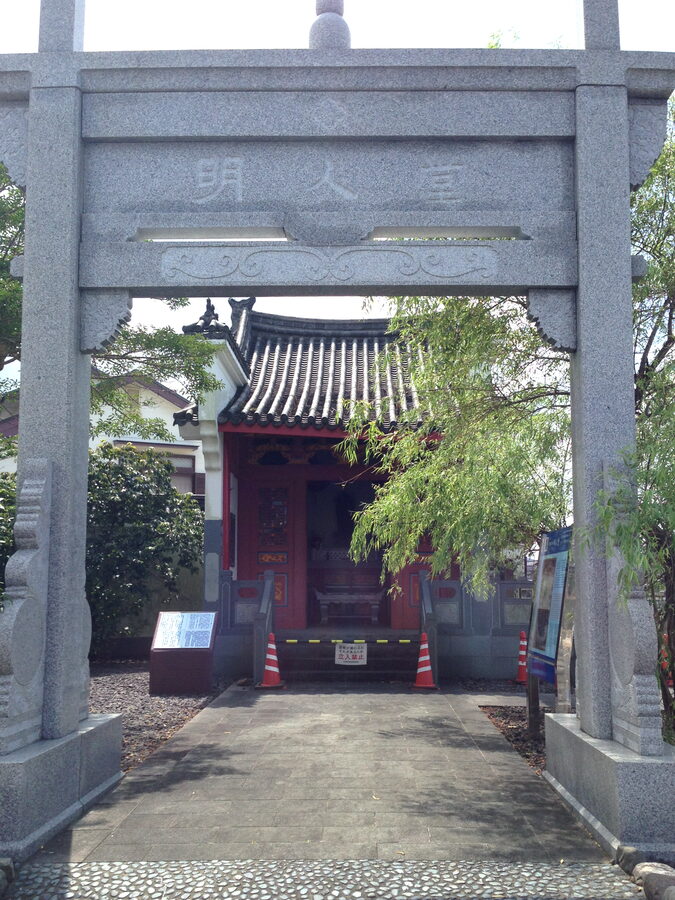
A few minutes away is the Rokkaku-i, the six-sided well that the Chinese residents are said to have dug for drinking water and for their ships, now a Nagasaki prefectural historic site. Both are free and easy to find on foot from the ferry terminal, and the tourist information desk inside the terminal has maps. Jetfoils from Nagasaki take about an hour and a half and car ferries about three hours, and there are flights from Nagasaki and Fukuoka.
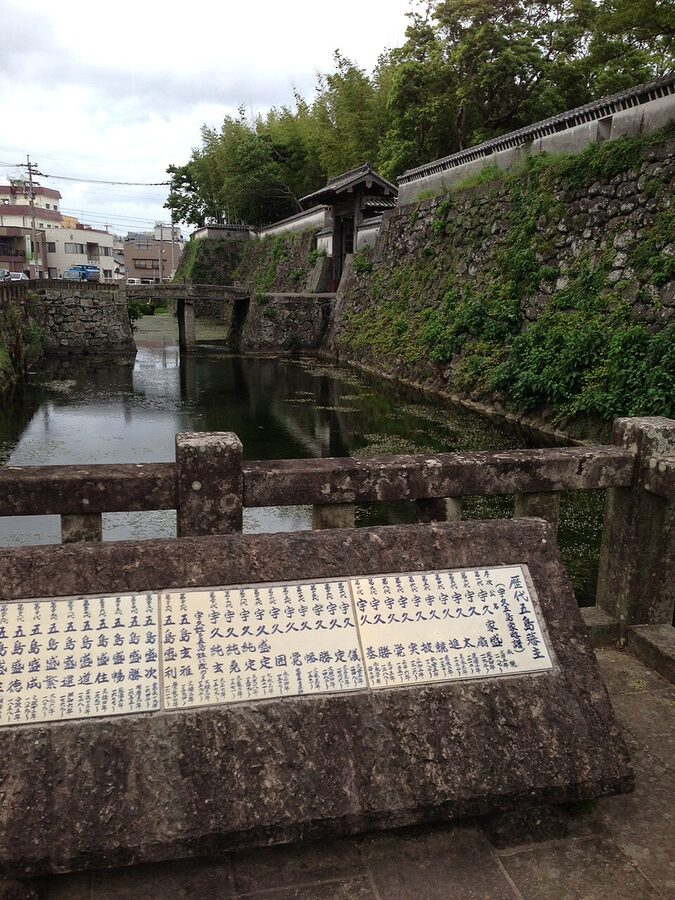
Tsushima: Aso Bay and the Tsushima Museum
Tsushima is a little over two hours from Hakata by jetfoil, and it is the one place where you can see the whole story at once: the island the raiders came from, the bay the Korean fleet sailed into in 1419, and Korea itself on a clear day from the north coast. The Tsushima Museum (対馬博物館) in Izuhara opened in 2022 and holds the archive of the Sō family, tens of thousands of documents on the island’s dealings with Korea, as well as finds from all over the island.
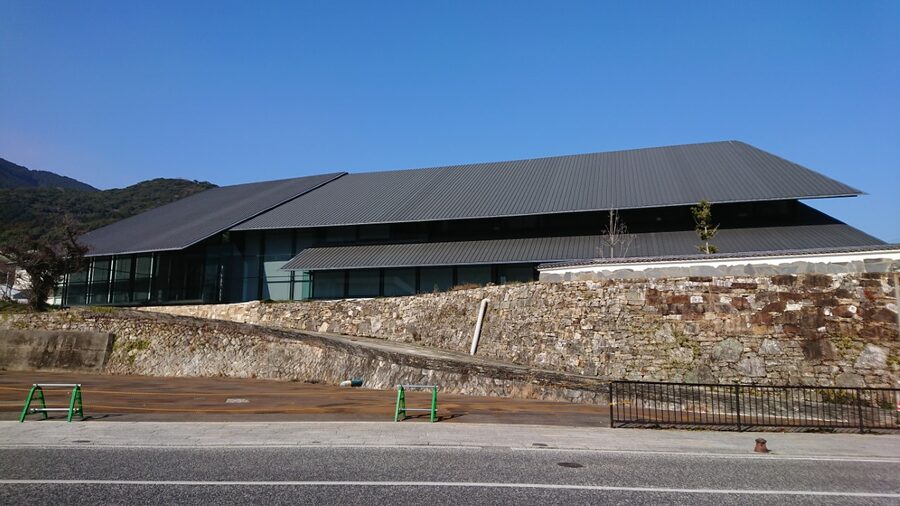
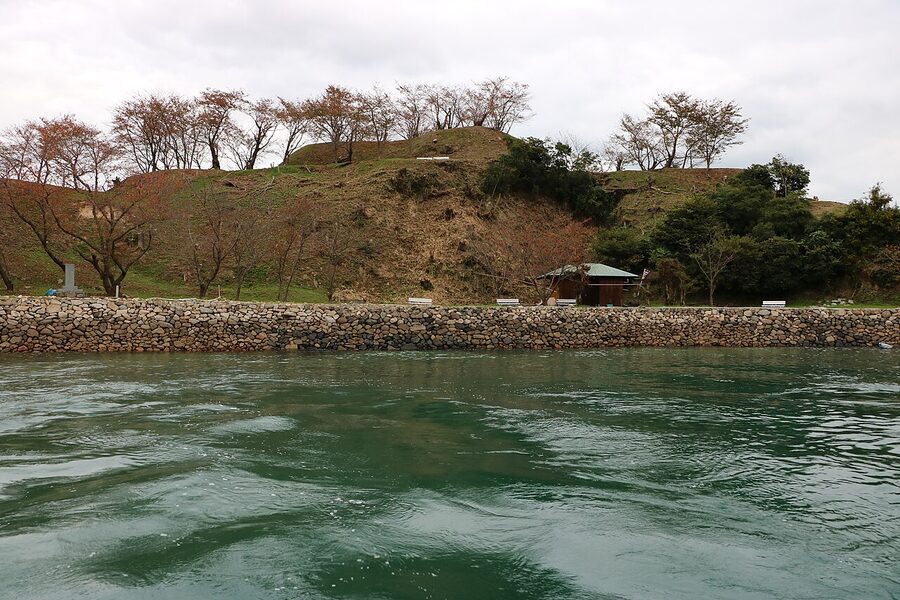
It is open from 9:30 to 17:00 (last entry 16:30) and closed on Thursdays, or the next weekday when Thursday is a holiday, and from 28 December to 3 January. Admission to the permanent galleries is ¥550 for adults, ¥330 for high school and university students and ¥220 for younger pupils, more during special exhibitions. Then hire a car and drive north to Aso Bay. The view from Mount Jō, with the 7th-century ruins of Kaneda castle on its summit, shows you the maze of inlets where the island’s sea families kept their boats and the Korean fleet anchored in 1419.
Ōshima: the Murakami Kaizoku Museum
For the other kind of pirate, cross to Ōshima on the Shimanami Kaidō. The Murakami Kaizoku Museum (今治市村上海賊ミュージアム) at Miyakubo holds the Noshima Murakami family’s armour, portraits and documents, including letters of Takeyoshi himself, and it is open from 9:00 to 17:00 (last entry 16:30), closed on Mondays (the next weekday after a Monday holiday) and from 29 December to 3 January. Admission is ¥310 for adults and ¥160 for students.
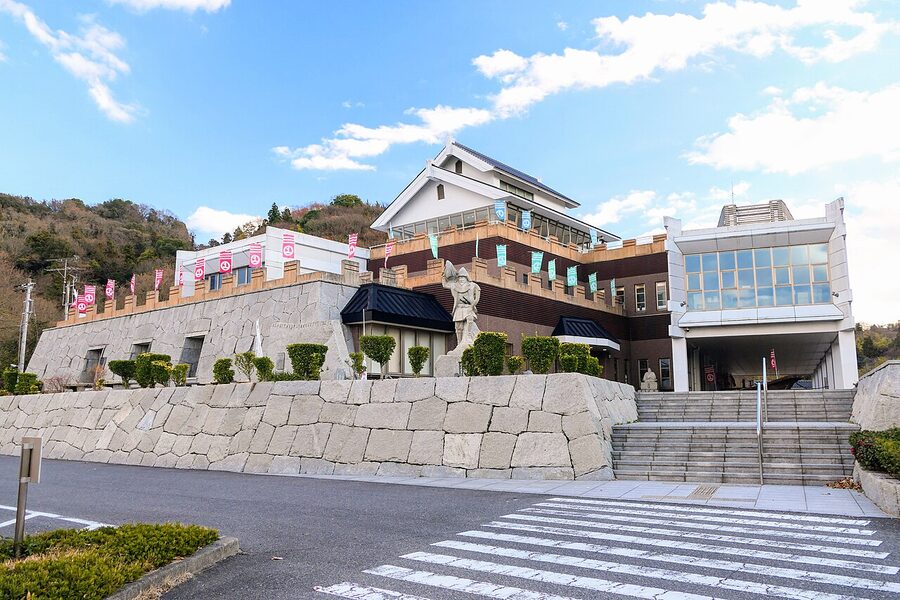
The bus stop is called Murakami Suigun Hakubutsukan, a minute from the door. By car, Ōshima-kita interchange is about three kilometres away but works only for traffic from the Onomichi side; from Imabari use Ōshima-minami, about ten kilometres. Cyclists on the Shimanami Kaidō should allow a detour, since the museum is off the main route.
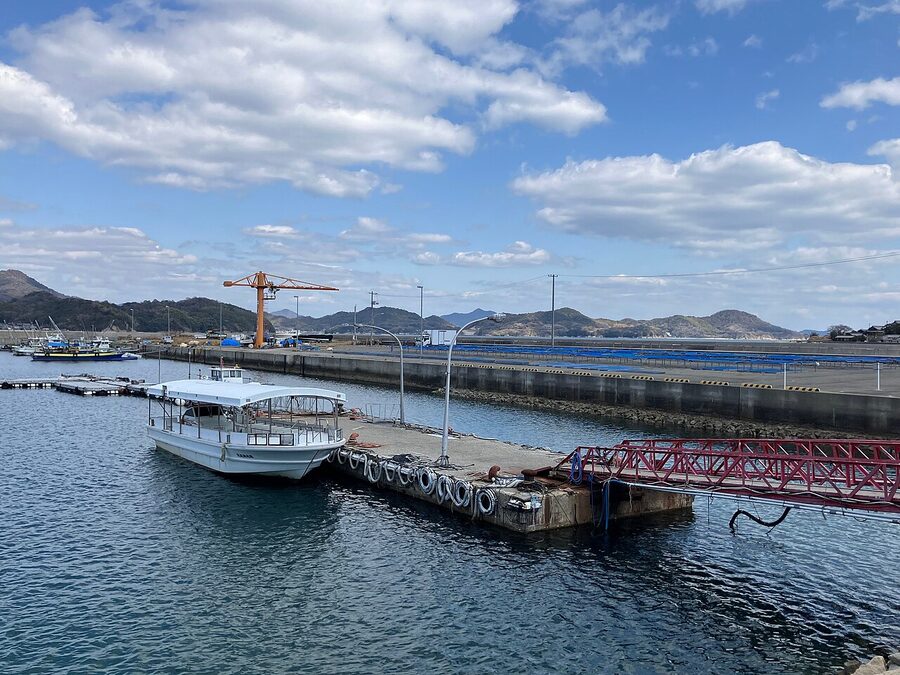
Across the sea
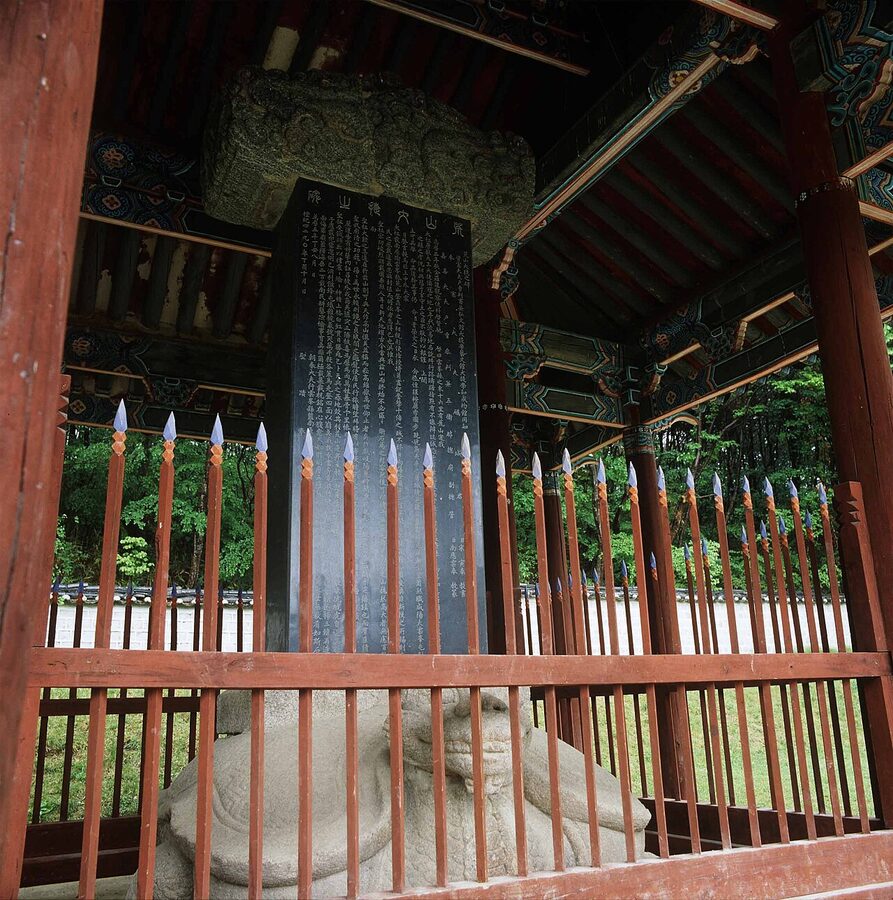
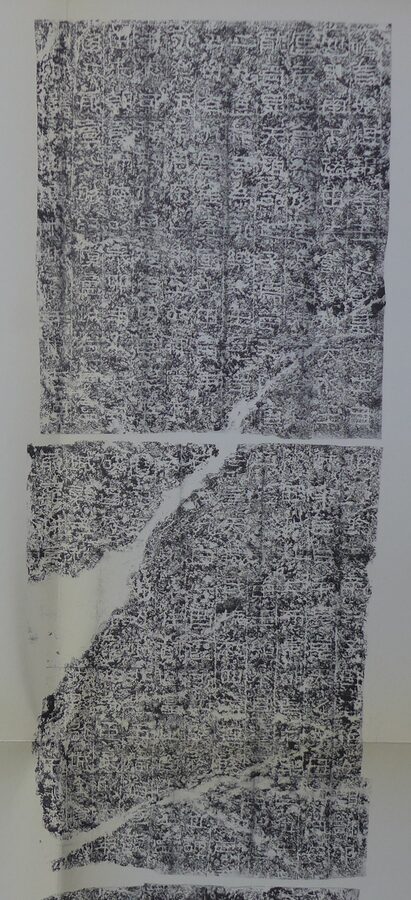
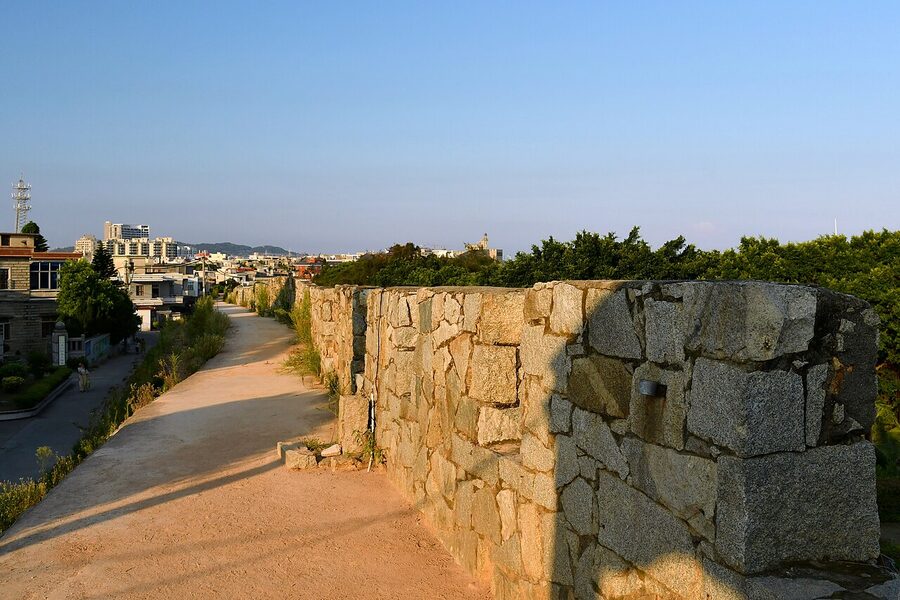
The other ends of the story are in Korea and China. Near Namwon in South Korea, the site of the Hwangsan victory is a national historic site: the 1957 replacement stele stands in its pavilion, the fragments of the 1577 original are kept in a separate hall, and nearby is a rock, the Pibawi, said to be stained with Agibaldo’s blood. On the Chinese coast, the fort at Chongwu in Fujian still has its Ming walls, and Qi Jiguang has memorial halls at Penglai in Shandong, where he was born, and in Taizhou in Zhejiang, where he won.
I said at the start that nobody knows what country Agibaldo came from. Standing on the hill above Hirado, I think that is the right ending. The wokou were the people of a sea that three governments claimed and none controlled, and whatever language they spoke at home, they were made into Japanese by the people who fought them and into heroes or villains by everyone who came after.
So go to Hirado and climb Katsuoyama, then take the ferry to Gotō and look at the little red hall by the river. And if you are ever near Namwon, find the rock with the red stain on it, and spare a thought for a boy in a bronze mask who was somebody’s son, from somewhere.