For the better part of two centuries, everyone in Iwakuni paid a tax for a bridge that most of them were not allowed to walk on. The levy was called hashide-mai (橋出米), bridge rice, and it fell on samurai and farmers alike; the bridge it paid for, five wooden arches thrown across the Nishiki River, was kept for the lord’s own retainers. A townsman with business on the castle side was supposed to take the ferry, although a coin pressed into the gatekeeper’s hand would often get him across anyway.
I keep coming back to Iwakuni because that one arrangement tells you most of what you need to know about the family who built it. The Kikkawa lost their castle seven years after they finished it, spent two and a half centuries being told by their own cousins that they were not proper lords, and put their pride into a bridge instead. The castle you see on the hill today is a concrete keep of 1962, standing in the wrong place on purpose. The bridge is the real monument, and it has been rebuilt so often that hardly a plank of it is old, which turns out to be the whole idea.
What follows is the family, the general who kept the Mōri army out of the fighting at Sekigahara, the castle that lasted seven years, the bridge that lasted 276, the typhoon that ended that run, and the town of today. It ends with how to go and what it costs since the prices went up in September 2026.
In This Article
- An old name with a Mōri inside it
- How the Mōri took the Kikkawa
- Motoharu, the northern river
- The fool of the family
- The army that sat down to lunch
- The 14th day of the ninth month
- Two provinces, and a head on offer
- Traitor or saviour
- A castle that lasted seven years
- The one-castle order
- A domain in all but name
- Lord Iwakuni and his fan
- Five arches out of a rice cracker
- The Monkey Bridge, a Chinese monk and a rice cake
- How the arches stand up
- Rebuilt on a timetable
- For samurai only
- Three strange bridges and the print sellers
- 276 years, then one night in 1950
- Wood again, by popular demand
- The Heisei rebuild
- The World Heritage question
- A keep in the wrong place, and the town around it
- The air station
- The white snakes
- Where to visit Iwakuni today
- Getting there
- Crossing the Kintaikyō
- Kikkō Park and the samurai houses
- The Kikkawa Historical Museum
- The ropeway and the keep
- Cormorant fishing on the Nishiki
- Cherry season and the April festival
- Iwakuni with Miyajima and Hiroshima
- Bridge rice
An old name with a Mōri inside it
The Kikkawa (吉川) were not upstarts. The family took its name from a village in Suruga, where the first head, Kikkawa Tsuneyoshi, served Minamoto no Yoritomo in the 1180s and 1190s; his son Tomokane died in 1200 cutting down the fleeing Kajiwara clan at Kitsunegasaki. A later head fought on the winning side in the Jōkyū War of 1221 and was given the estate of Ōasa in the hills of Aki, north of modern Hiroshima, where the family settled for good in 1313.
For two and a half centuries they were one of the proud mountain houses of Aki. Kikkawa Tsunemoto fought for the Hosokawa in the Ōnin War well enough to be called “Demon Kikkawa”, and copied out poetry and Zen texts in between. The family kept its papers, and still has them: the Kikkawa archive is an Important Cultural Property and one of the most valuable collections anywhere for the study of medieval Japan.
How the Mōri took the Kikkawa
The trouble came from next door. Mōri Motonari, the small Aki lord who would make himself master of western Japan, had married a Kikkawa daughter, and their second son, Motoharu (元春), was cousin to the Kikkawa head, Okitsune. Okitsune kept changing sides between the great powers of the region, and Motonari set about splitting his household. By 1547 Okitsune had agreed to adopt Motoharu as heir and retire into Mōri territory, in return for promises about the future of his own small son, Senbōshi.
The promises lasted three years. On the 27th day of the ninth month of 1550, on Motonari’s orders, Motoharu’s father-in-law Kumagai Nobunao and Amano Takashige attacked Okitsune’s house and killed him and his son together. The Mōri had taken over an ancient family by adoption and finished the job with murder, ordinary practice in the Sengoku era and worth remembering when you hear later Kikkawa complaints about how badly their Mōri cousins treated them.
Motoharu, the northern river
Motoharu and his younger brother Kobayakawa Takakage, adopted into the Kobayakawa, became the two props of their father’s state, the Mōri ryōsen or Two Rivers: Motoharu ran the war on the Sea of Japan side, Takakage on the Inland Sea. Motoharu fought at Miyajima in 1555, and the story told at Itsukushima Shrine has him stopping in the middle of the slaughter to put out fires before they reached the holy halls. He spent the 1560s grinding down the Amago, whose fortress of Gassan-Toda in Izumo surrendered in 1566.
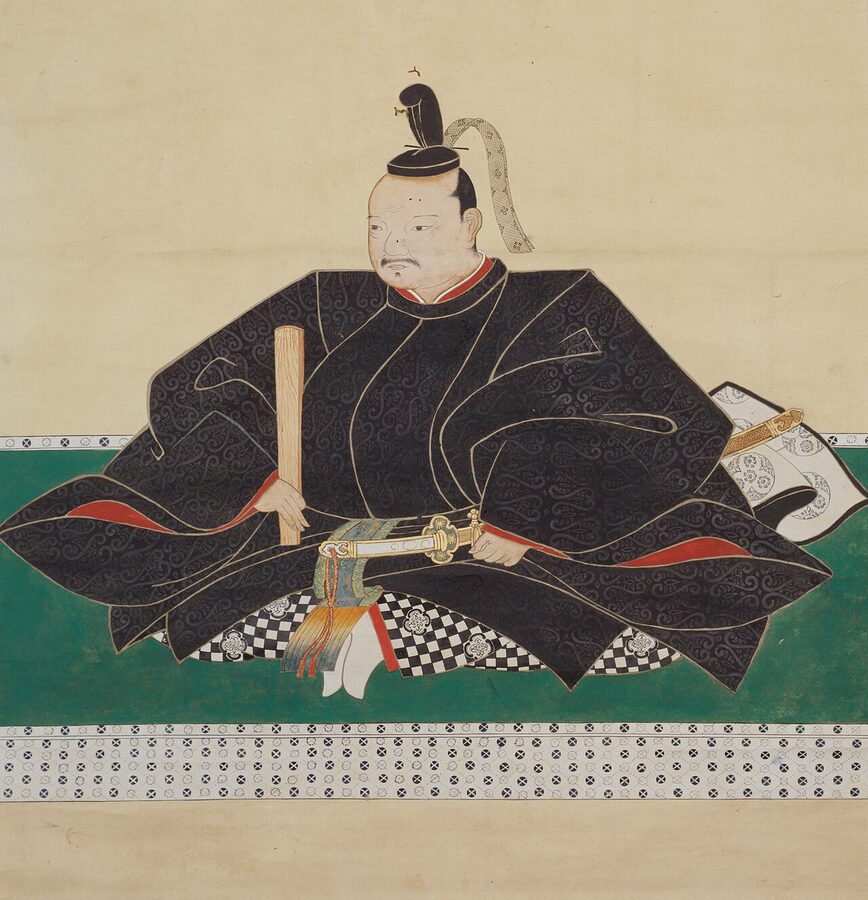
During that campaign he copied out the whole Taiheiki, the chronicle of the 14th-century civil wars, in forty volumes, beginning in the intercalary twelfth month of 1563 and finishing in the eighth month of 1565. The Kikkawa copy is an Important Cultural Property and one of the most complete early texts of the work. I have never seen a better argument for the boredom of a long siege.
He fought Hideyoshi’s armies at Kōzuki in 1578 and on the front that ended at Takamatsu in 1582, when news of the Honnō-ji incident sent Hideyoshi hurrying back to Kyoto. Motoharu is said to have retired rather than serve the man, but was talked into joining his Kyushu campaign anyway, fell ill and died at Kokura on the 15th day of the eleventh month of 1586. The Mōri side of the story, and Motonari’s grandson Terumoto in his new castle, is in my piece on Hiroshima Castle.
The fool of the family
Kikkawa Hiroie (吉川広家), Motoharu’s third son, was born on the first day of the eleventh month of 1561 and was a disappointment. The word his family used was utsuke, a fool, and around 1580 his parents put their complaints into a joint letter some seven metres long. His lands came to 150 kan, about what a retainer might hold, and for a while he angled to be adopted into another family altogether until Terumoto stopped it.
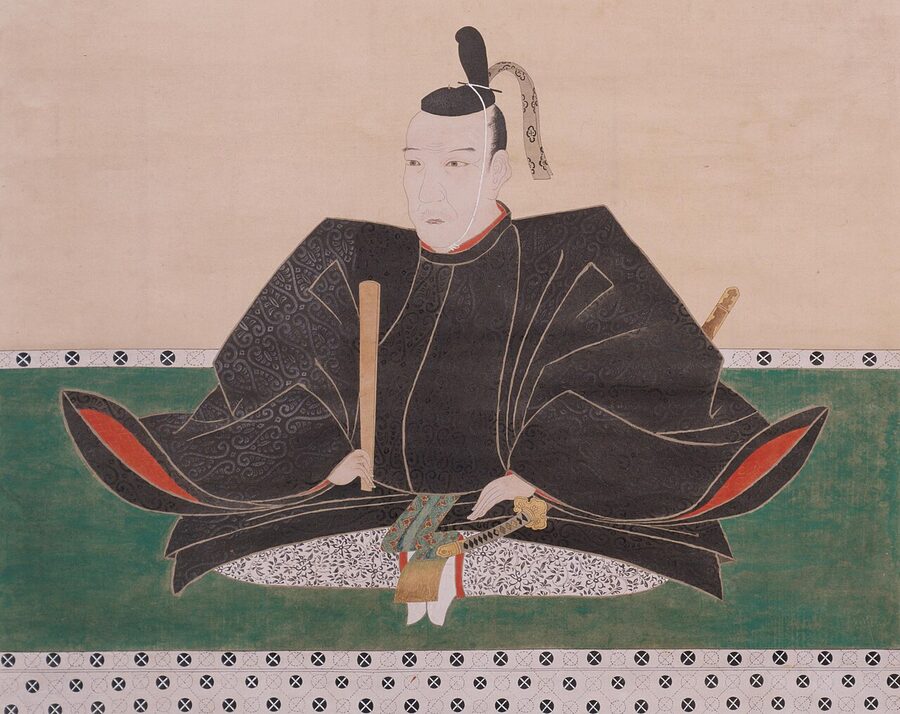
In 1583 he was sent to Osaka as a hostage to Toyotomi Hideyoshi, and within four years his father and his elder brother Motonaga were both dead and the fool was head of the house. Terumoto let him take the character hiro from the name of the Mōri ancestor Ōe no Hiromoto. Hideyoshi liked him, married him in 1588 to one of his adopted daughters, a sister of Ukita Hideie (she died in 1591 and he never took another wife), and in 1591 gave him 140,000 koku around the old Amago fortress of Gassan-Toda.
In the invasions of Korea he led the charge that broke the Ming army besieging Katō Kiyomasa at Ulsan. By the late 1590s Hideyoshi was praising him for holding the Mōri together, and he was the one member of the family who was sure who would win the next war.
The army that sat down to lunch
The quarrel began over land. After Hideyoshi’s death in 1598, Ishida Mitsunari pushed through a plan to hand Hiroie’s provinces to Mōri Hidemoto, Terumoto’s cousin and former heir; when Mitsunari fell from power in 1599, Tokugawa Ieyasu reversed it. Some historians date Hiroie’s dislike of Mitsunari, and his warmth towards Ieyasu, from that episode.
In the seventh month of 1600 Hiroie set out to join Ieyasu’s march on Aizu and reached Osaka on the 14th day to find the ground gone from under him. The Mōri monk-diplomat Ankokuji Ekei had committed Terumoto to Mitsunari’s rising, and on the 19th day Terumoto moved into the western enclosure of Osaka Castle as commander-in-chief of the Western Army.
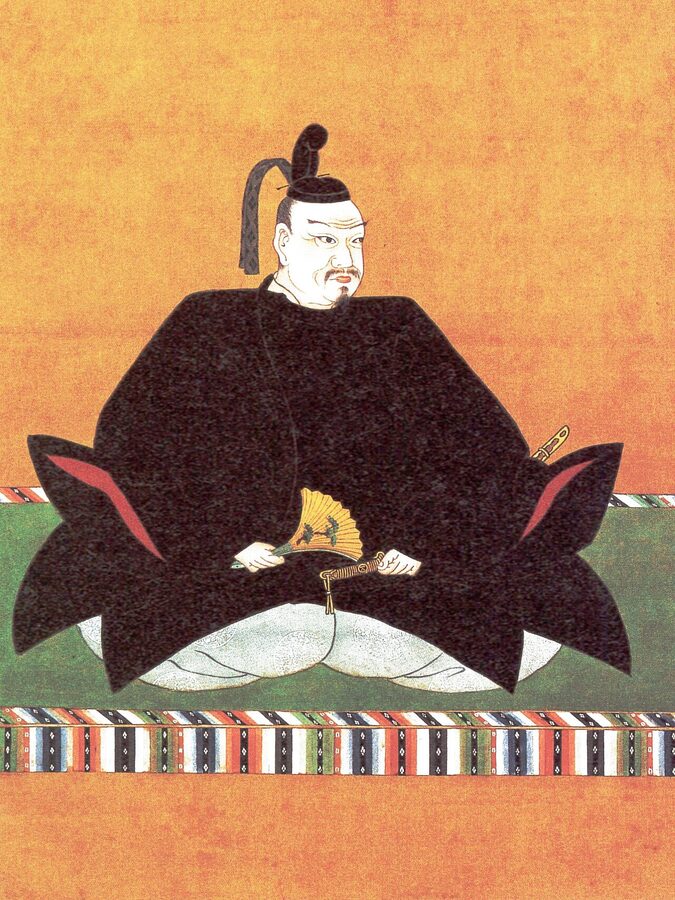
Hiroie thought it madness, and he and Ekei are said to have had a furious row inside the castle. On the 15th day of the seventh month he met secretly with the Mōri chief retainer Fukubara Hirotoshi and other doubters. Through Kuroda Nagamasa, an old friend of the family, he opened a private line to Ieyasu, and nobody told Terumoto, Hidemoto or Ekei.
The 14th day of the ninth month
The deal was sealed the day before the battle. Hiroie and Fukubara sent two hostages from senior Mōri families to Ieyasu’s camp with a promise that the Mōri would not fight, and received a joint oath from Honda Tadakatsu and Ii Naomasa: Ieyasu would not neglect Terumoto, and Terumoto’s provinces would be confirmed without change.
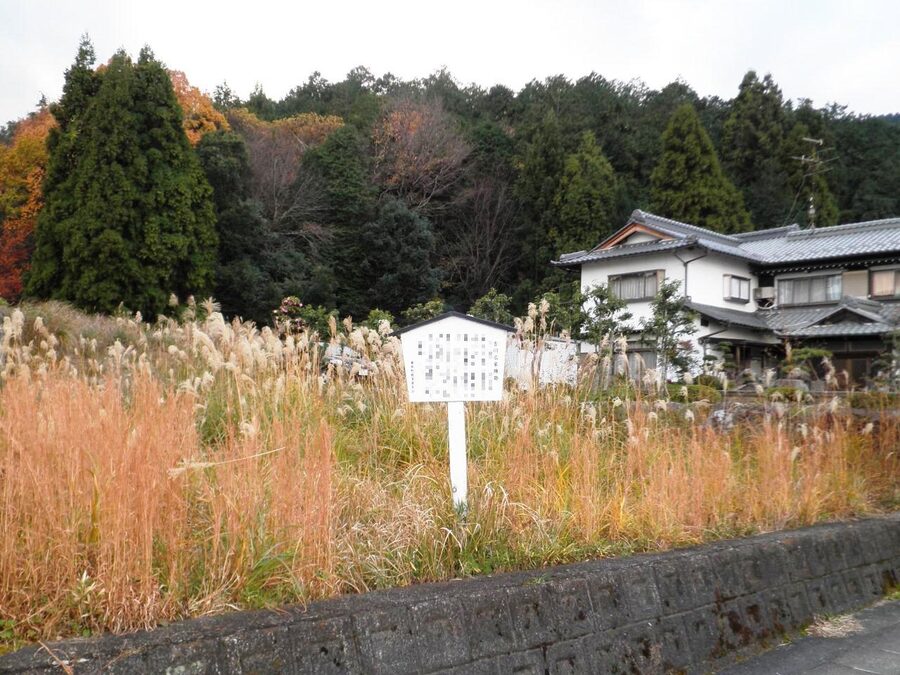
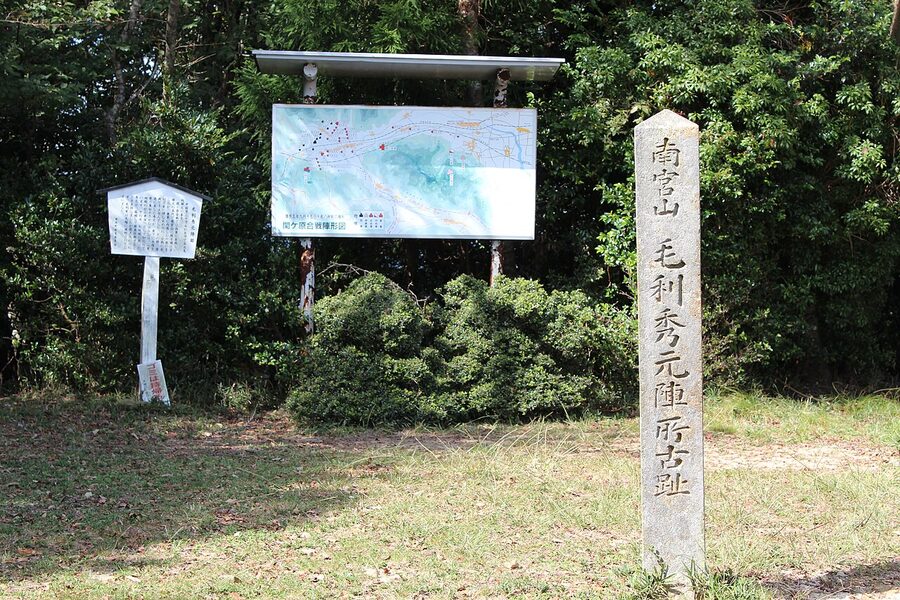
On the 15th day of the ninth month the Mōri army, with Hidemoto in nominal command, sat on Mount Nangū, on the flank of the Tokugawa army. Hiroie’s troops held the foot of the mountain, the only way down. When messengers came asking why the Mōri had not moved, Hiroie pleaded fog, and the tradition is that Hidemoto, stuck behind him, sent them away with the excuse that his men were eating their lunch. Hidemoto held the court rank of councillor, and Saishō-dono no kara-bentō, the Councillor’s empty lunch box, became a byword for a promise with nothing in it.
The troops of Chōsokabe Morichika, Natsuka Masaie and Ekei, camped further back, could not tell whether Hidemoto had turned traitor and stayed put too. By about noon the Western Army had broken, and the Mōri marched off towards Osaka without having fought anyone. My piece on the Battle of Sekigahara follows the rest of the day; for Iwakuni, what counts is that the largest army on the field did nothing, and that Hiroie had arranged it.
Two provinces, and a head on offer
Hiroie believed he had saved the house, and on the 25th day Terumoto left Osaka Castle on the strength of assurances that his lands were safe. Then Ieyasu’s men found letters with Terumoto’s seal all over them: he had not been a figurehead at all. On the second day of the tenth month Kuroda wrote that the deal was off, the Mōri would lose everything, and Ieyasu, praising Hiroie’s good faith, would give Suō and Nagato to Hiroie himself.
Hiroie could hardly admit now that he had known what Terumoto was doing. On the third day he pleaded for the two provinces to go to Terumoto instead, and swore that if Terumoto ever showed the slightest disloyalty again, Hiroie would take his head himself and present it. Ii Naomasa argued the same way. On the tenth day Ieyasu granted Suō and Nagato to Terumoto and his son and guaranteed their lives.
The Mōri went from between 1.12 and 1.2 million koku across eight provinces, depending on whose figures you use, to about 298,000 in two. Terumoto had to retire in favour of his young son and moved the family’s capital to Hagi. In a letter kept among the papers of the Fukubara family he wrote that these days everything was upside down: it was a time when the master had to be rescued by his own retainer.
Traitor or saviour
The Mōri argued about Hiroie for the next 250 years. In one reading he was a disloyal cousin who negotiated behind his lord’s back, sold out the Western Army and wrecked the Mōri as a great power; Hidemoto, the man he pinned to the mountain, became the senior figure in the new Chōshū domain and his bitter enemy. In the other, he was the only Mōri who read the situation correctly, and without him there would have been no Mōri at all.
The evidence is more tangled than either side likes. Ieyasu’s oath of the tenth day survives in the Kikkawa family papers, but the letters that show Hiroie heroically turning down his own reward survive only as copies in the Kikkawa kafu, a family history compiled at Iwakuni, with no originals known. Japanese historians have also traced how Iwakuni quietly paid writers to print its version: Miyagawa Ninsai’s Sekigahara gunki taisei carries the letters, and the Intoku Taiheiki was compiled by Kagawa Sen’a with secret Iwakuni money, in a process where forged documents were tolerated.
Modern scholars still disagree about how much Terumoto knew. Watanabe Daimon argues that the deal was made with his consent, a private truce kept from Hidemoto and Ekei; Mitsunari Junji thinks that unlikely but suggests Terumoto let it happen, keeping his army on Mount Nangū so he could come down on whichever side looked like winning. The family’s own museum puts it with some dignity: Hiroie schemed, the schemes failed, and yet the two provinces were kept.
My own view is that both readings are true, which is why Chōshū never forgave him. A man who saves your house by going behind your back has done you two things at once.
A castle that lasted seven years
Terumoto gave Hiroie 30,000 koku at Iwakuni, on the far eastern edge of the new Mōri lands, the furthest point from Hagi and the first that any army from the east would hit. His retainers arrived in the tenth month of 1600, and Hiroie landed on the coast at Yū in 1601 and began building at once.
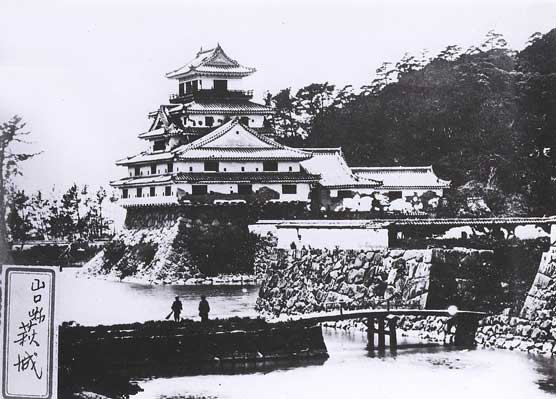
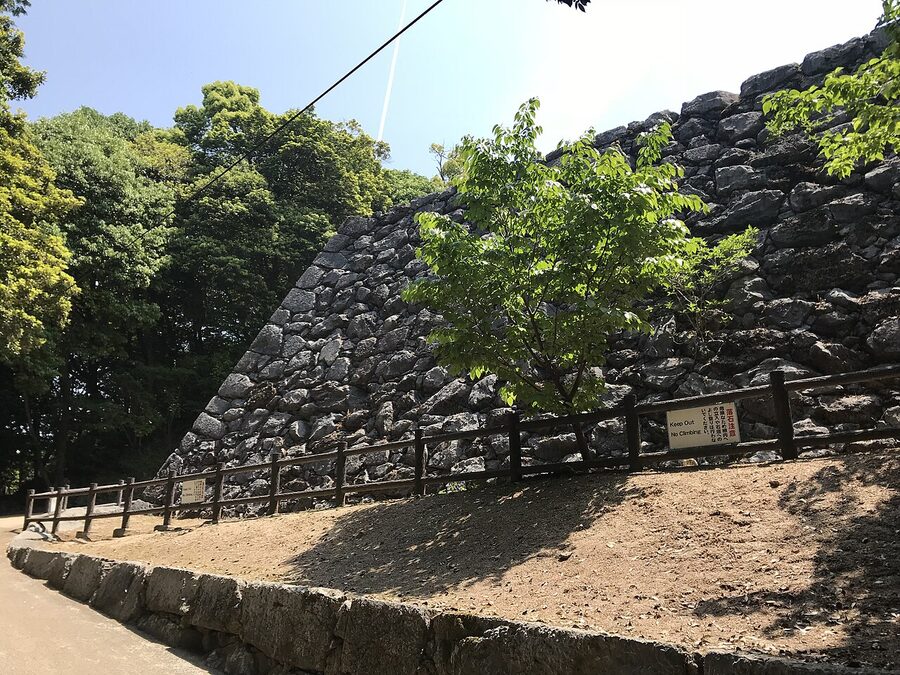
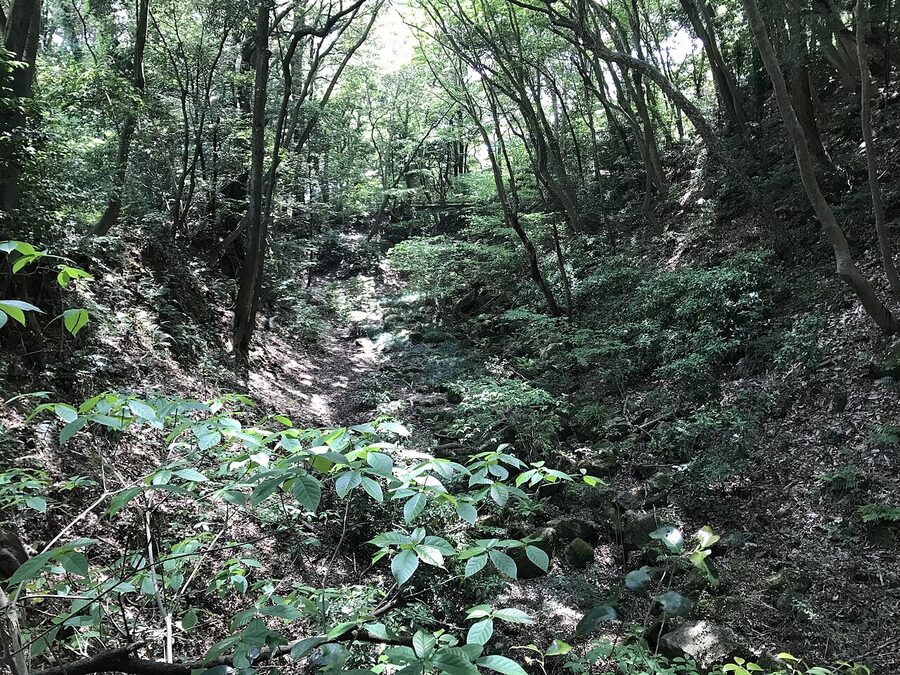
He built in two parts, in the manner of the late Azuchi-Momoyama era. At the foot of the hill went the o-doi, the residence and offices, finished in 1602. On top of Mount Yokoyama, about 200 metres up, with the Nishiki curling round it as a moat, went the fighting castle, finished in 1608: a main enclosure 180 metres along the ridge, a second and a north enclosure, stone walls 5.4 metres high and five turrets.
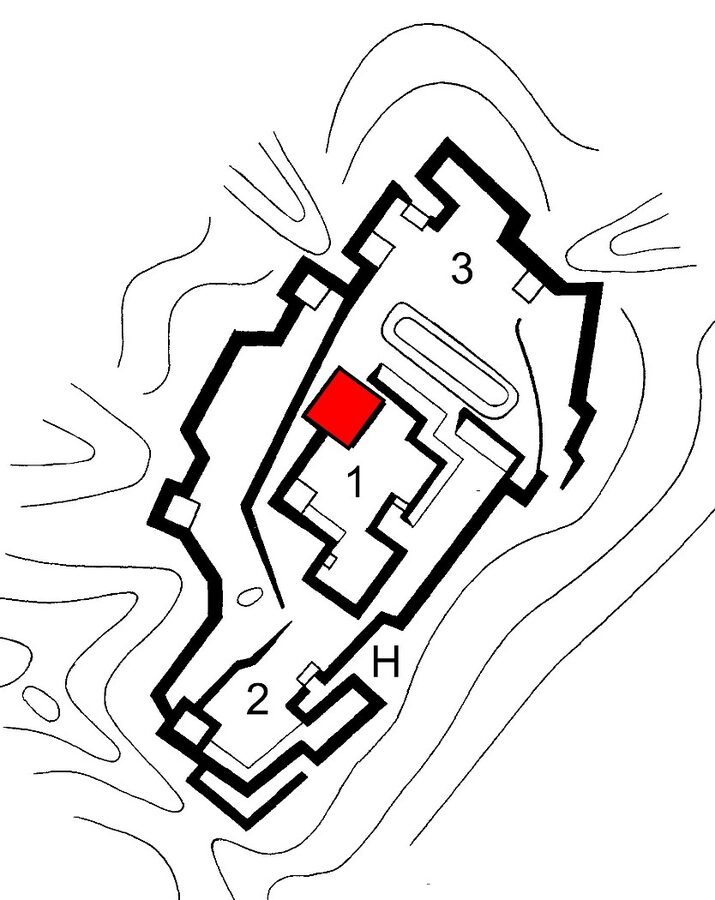
The keep stood at the north corner of the main enclosure, in the style called kara-zukuri or nanban-zukuri. Japanese sources do not agree on its size: some give four storeys outside and six floors within, while the city of Iwakuni and a popular castle dictionary describe three storeys and four floors. Nobody alive has seen it, so you can choose.
The one-castle order
In 1615, soon after the fall of Osaka, the shogunate issued the ikkoku ichijō rei (一国一城令), the one-castle-per-province order, dated the 13th day of the intercalary sixth month, which Japanese sources convert to 7 August 1615 by the Western calendar. Every lord was to keep the castle he lived in and pull down the rest, and some four hundred castles are said to have come down within days.
On paper Iwakuni should have survived, since the Mōri held two provinces and it was the only castle in Suō. But Mōri Hidemoto had already pulled down his own castle at Kushizaki in Nagato, and Iwakuni was made to match. When the Mōri reported that they had kept only Hagi, the shogunate’s reply, as it is usually told, was that they had never needed to destroy Iwakuni; Hidemoto, by then running Chōshū for Terumoto’s son, had every reason to want his rival’s castle gone.
Castles that were the seat of a recognised domain, Okazaki and Wakayama among them, came through the order. Iwakuni had no such standing, and its lords lived on in the residence at the foot of the hill until the end of the shogunate.
A domain in all but name
For 250 years Iwakuni was a domain in every way except the one that mattered to the Kikkawa. The shogunate treated them roughly as a tozama lord of 30,000 koku, with a residence in Edo and an audience with the shogun when a new head succeeded; Hiroie’s grandson Hiroyoshi met Iemitsu in 1630. But the Mōri never registered Iwakuni as a branch domain, called the Kikkawa their retainers, and kept them from the court ranks that real daimyo carried.
Sources disagree on whether the Kikkawa took part in alternate attendance: some say they were not allowed to, others that they went to Edo when a shogun or their own head changed. The other Mōri branches at Chōfu and Tokuyama were recognised domains, and some historians argue the difference was blood rather than spite, since those branches descended from Terumoto or his heir.
Hiroie retired in 1614, furious that the Mōri had smuggled a retainer into Osaka Castle to help the Toyotomi without telling him, but went on running Iwakuni and in 1617 issued a code of 188 articles (one encyclopedia counts 187). He died at Tsuzu on the 21st day of the ninth month of 1625. His son Hiromasa set up a paper monopoly in 1640 that carried the Iwakuni economy, and in 1634 claimed an assessment of 60,000 koku and tried, with Hidemoto of all people, to break away from the main house. It failed.
Lord Iwakuni and his fan
The Kikkawa finally got their reward from a crisis. In 1864 the shogunate sent some 150,000 men to punish Chōshū, and its lord, Mōri Takachika, asked the Kikkawa head, Tsunemasa, to talk to them. Tsunemasa met Saigō Takamori, the expedition’s staff officer, who came secretly to Iwakuni, and agreed terms: three Chōshū elders would commit seppuku and Takachika would apologise. Then he went in person to the expedition’s headquarters at Hiroshima, and the army withdrew without a battle.
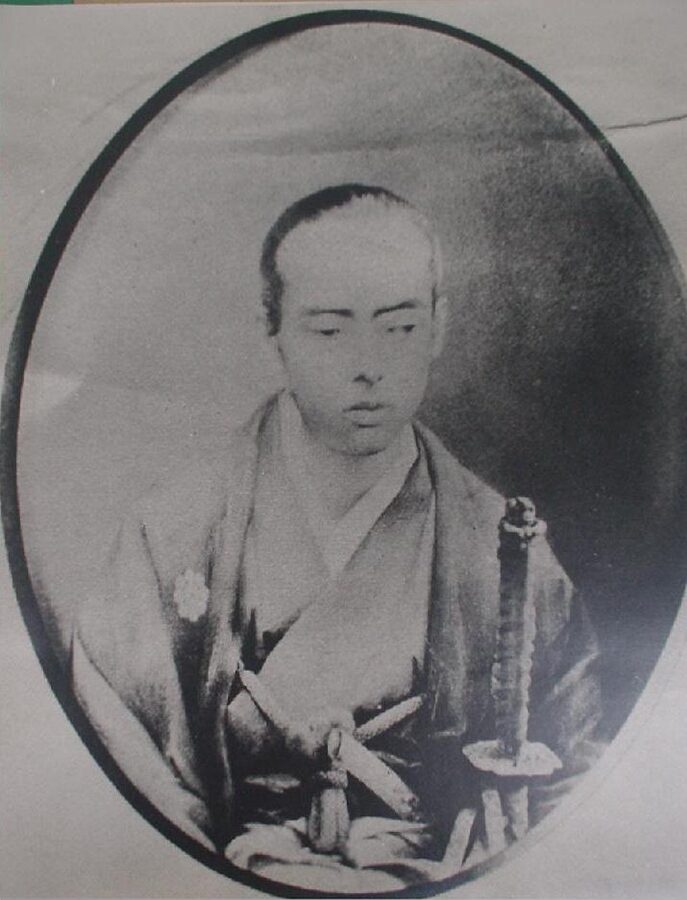
Iwakuni made a song of it: kami ka hotoke ka Iwakuni-sama wa, sensu hitotsu de yari no naka, “god or Buddha, Lord Iwakuni goes into the spears with nothing but a fan”. Takasugi Shinsaku and his friends saw a betrayal of Chōshū instead. When the shogunate came back in 1866, the Iwakuni troops fought on the Aki front and helped beat it.
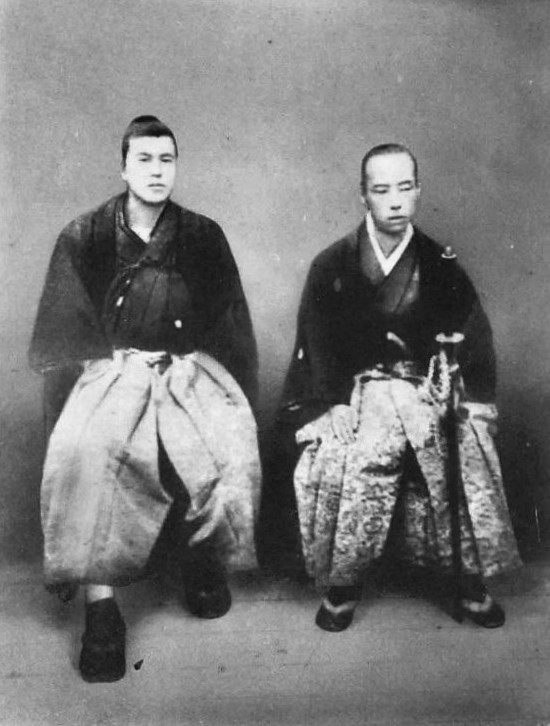
Tsunemasa died on the 20th day of the third month of 1867, and Takachika had the death concealed. On the 13th day of the third month of 1868 the new government recognised Iwakuni as a domain in its own right, with the dead man as its first lord. In 1871 the domains were abolished altogether. After 268 years of waiting, the Kikkawa had been daimyo for a little over three; the Meiji Restoration and the Boshin War pieces take up the story.
Five arches out of a rice cracker
The town plan needed a bridge from the start. The samurai lived in the Yokoyama quarter under the castle hill; the merchants and craftsmen lived across the river in Nishimi; and the main street of the castle town ran straight from one to the other, with the Nishiki in the way. Rules for a bridge-keeper dated the ninth month of 1639 survive, so a bridge stood there by then, and floods seem to have carried it off more than once.
Hiroie’s son Hiromasa built another in 1657, and the rains took it in 1659. The man who solved the problem was Hiromasa’s son, Kikkawa Hiroyoshi (吉川広嘉), born at Hagi in 1621, sickly all his life and sent to Kyoto to recover, where he picked up the learning of the capital and friends who included the painter Kanō Tan’yū. When he succeeded his father in 1663, he wanted a bridge that would not wash away.
The Monkey Bridge, a Chinese monk and a rice cake
His first thought was to have no piers at all, since piers were what the floods destroyed. He sent his carpenter, Kodama Kurōemon, to Kai province to study the Saruhashi, the Monkey Bridge, which leaps a gorge on cantilevered beams without touching the water. It was no use: the Saruhashi crosses about 30 metres, and the Nishiki at Iwakuni is about 200 metres wide.
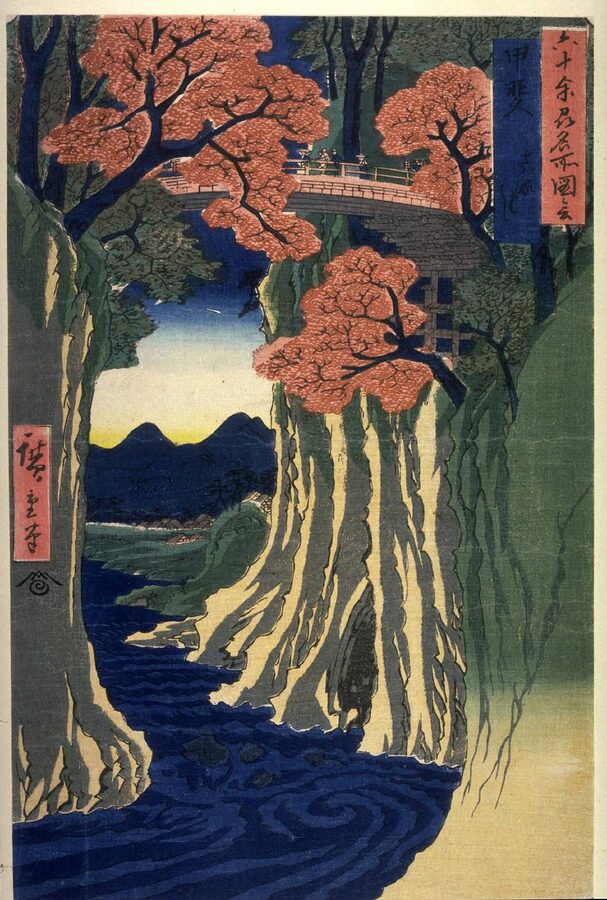
Two stories explain what happened next. In one, Hiroyoshi was toasting kakimochi, slivers of dried rice cake, and noticed how they curled into bows on the grill. In the other, the Chinese monk Dokuryū Shōeki (独立性易), a Ming monk who had settled in Japan, told him about the West Lake at Hangzhou, where a chain of arched bridges hops from island to island; some versions say Hiroyoshi saw them in a Chinese book about the lake.
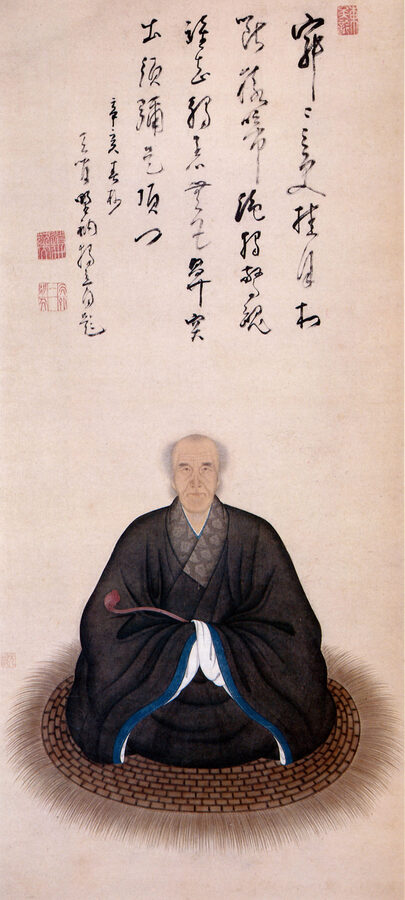
Put together, the ideas gave Hiroyoshi his design: cross the river in a series of short leaps, with a few massive stone piers built in the stream. In 2004 the Kintaikyō was twinned with the West Lake’s own bridge of the same name, and a stone recording the friendship stands beside it.
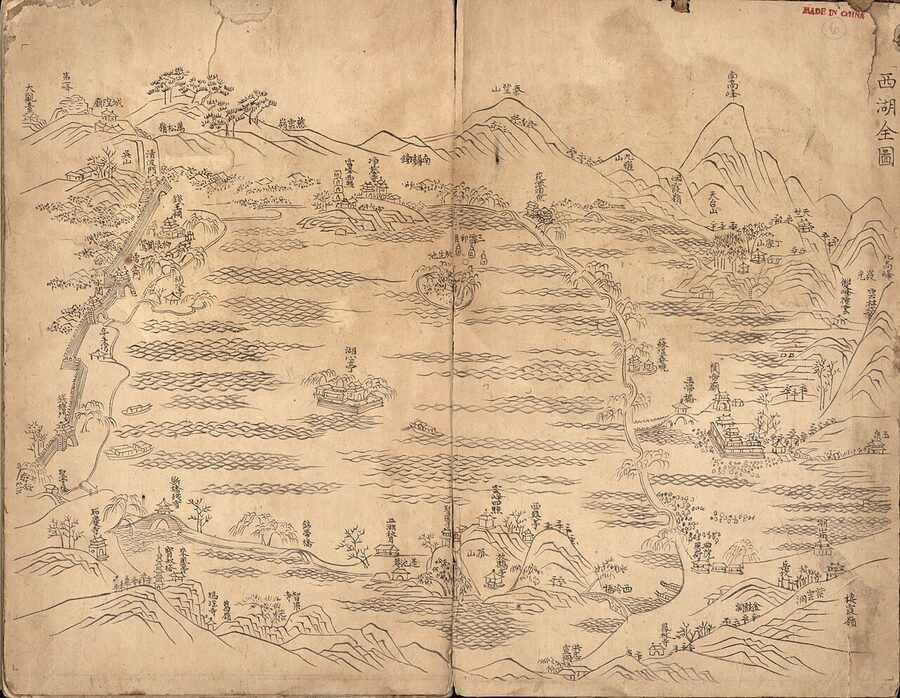
Work began on the 8th day of the sixth month of 1673, to Kodama’s design. Hiroyoshi moved into a house nearby to supervise, and tradition says he settled the curve of the arches by opening his folding fan. The bridge was finished in the tenth month, and the first to cross it were a farmer called Seibei and his family, twelve of them, chosen because they were known for getting on with each other.
In the fifth month of the next year a flood brought it down. The riverbed at Iwakuni is deep sand, and in a big flood the sand itself moved and took the piers with it. Hiroyoshi rebuilt the same year, this time laying huge paving stones across the riverbed and up both banks, so the river could no longer dig under the piers. Nobody photographs the paving, but it is the reason the bridge stood until 1950.
How the arches stand up
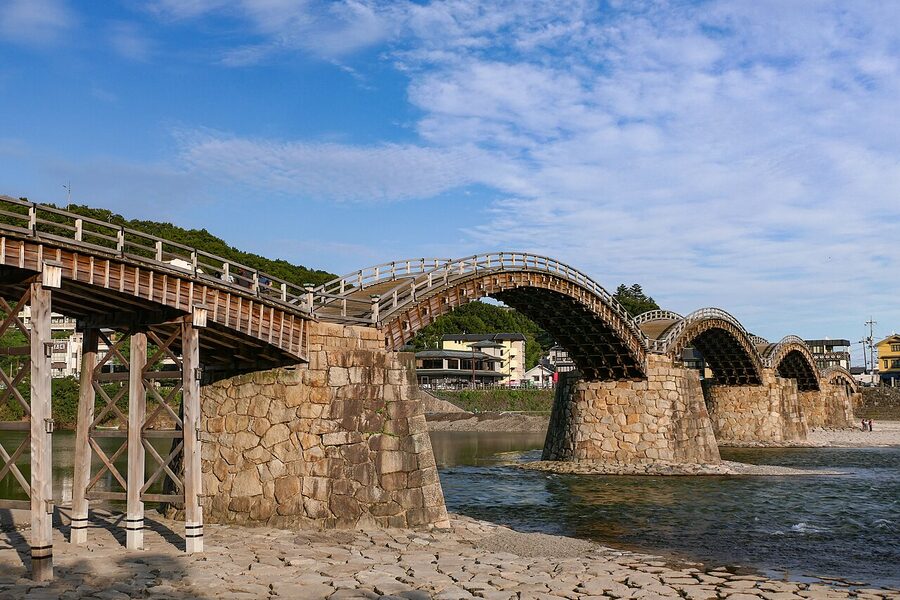
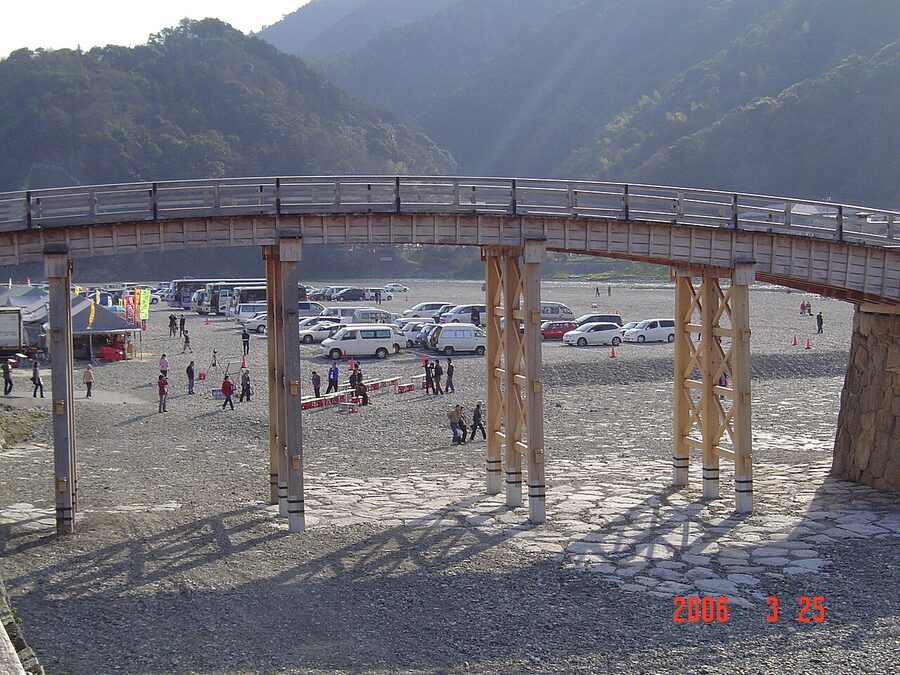
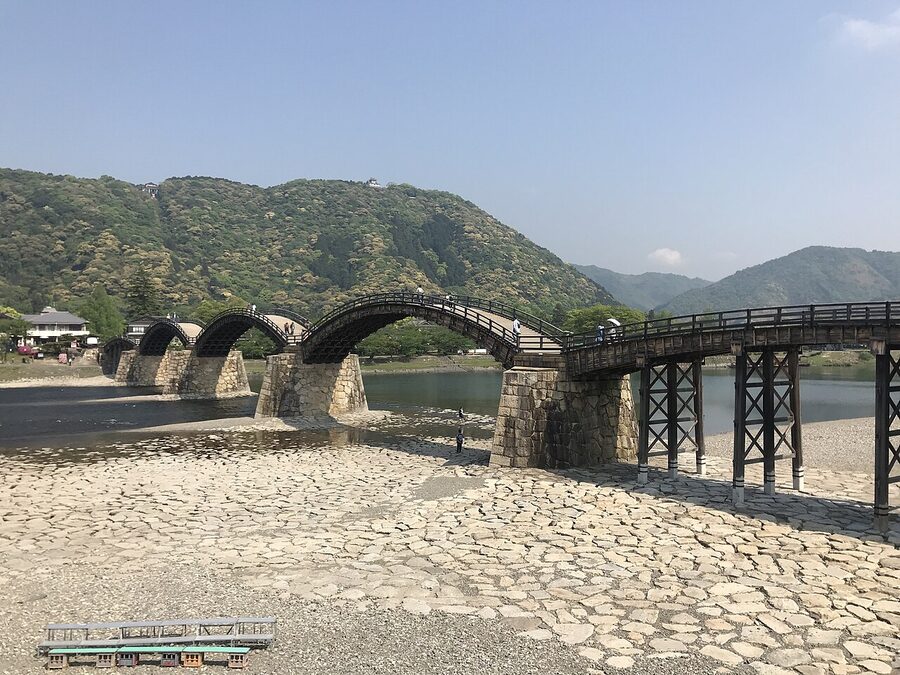
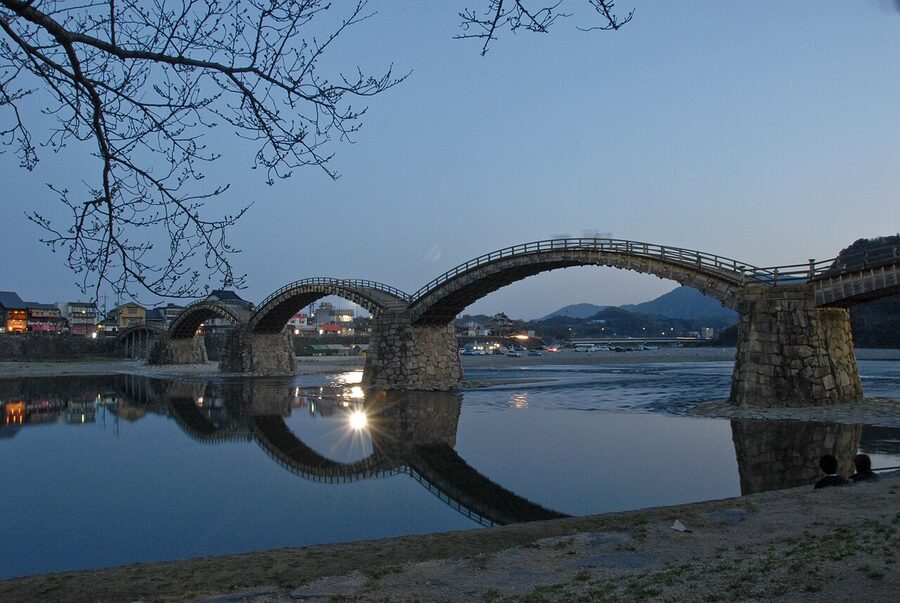
The bridge is about 193 metres long in a straight line, or about 210 metres along the deck as it climbs and falls, and 5 metres wide. English-language accounts often give about 175 metres; the Japanese figure is the one the city and the prefecture use. The three middle spans are true arches of 35.1 metres each, and the two end spans are flatter beam bridges standing on wooden legs on the dry riverbed.
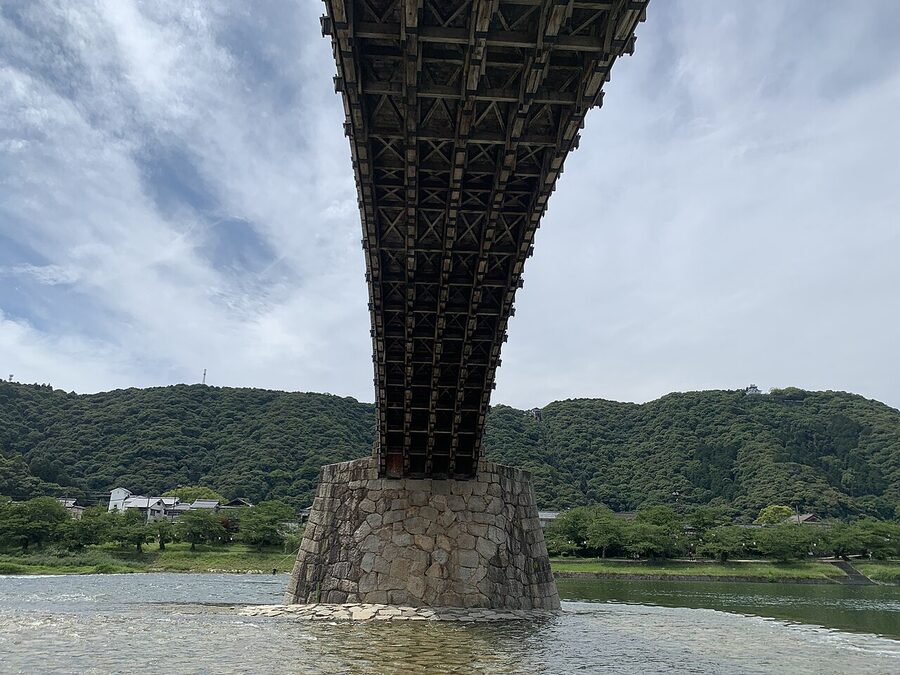
Each arch is built out from the piers rather than hung between them. Eleven layers of beams are stacked on each side, each reaching a little further over the water at a gentler slope, until a great ridge beam, the ō-munagi, is set between the ends of the ninth layer. The whole is locked together by joinery and bound with iron bands and clamps; you will read that the bridge uses no nails at all, which is not quite true, since the deck boards and some bands are nailed.
The timber is chosen by job: red pine, hinoki cypress, zelkova, chestnut, oak and hiba. In 2005 a typhoon carried off two of the wooden legs of the first span and the deck above came through undamaged, because the tenons were cut to pull out of their sockets rather than drag the bridge after them.
Rebuilt on a timetable
The domain never expected the wood to last, so it replaced it on a schedule: in the Edo period the arches about every twenty years, the end spans about every forty, and the deck and handrails about every fifteen. Counting the modern rebuilds, the first span has been rebuilt ten times, the second and third fourteen times each, the fourth sixteen and the fifth nine.
The wood would have lasted longer. The usual explanation is that the cycle let every master carpenter rebuild the bridge at least once with the next generation watching, and the records are almost complete, down to the name of every master. The oldest drawing is from 1699, and small improvements came with each round until 1796, when the bridge reached the shape it has today.
By the late Edo period the domain was planting forests to supply the next bridge. The modern city has a two-hundred-year plan to do the same.
For samurai only
The money came from the bridge rice, which every household paid regardless of rank, but only the domain’s own samurai could use the bridge. Townspeople and farmers took the ferry, or tipped the gatekeeper, and lords passing through with their processions had to ask permission. The story goes that visiting daimyo, regarding the Kikkawa as mere retainers, would not have their spears lowered, so the Kikkawa planted pines low enough to force the spears down; the tree is still called the yari-kokashi no matsu, the spear-toppling pine, although there is no record that anyone planted it for that purpose.
The most famous gatecrasher came in 1853. On her way from Kagoshima to Edo to marry the shogun Tokugawa Iesada, the young Atsuhime, adopted daughter of the Satsuma lord Shimazu Nariakira, asked to see the bridge. The domain office diary for the 11th day of the ninth month records that the Kikkawa replied that the bridge was damaged and offered her a boat; she answered that her father had been allowed across, and while the officials were still conferring she walked onto it anyway.
Three strange bridges and the print sellers
By the 19th century the Kintaikyō was one of the three strange bridges of Japan, with the Saruhashi and, depending on who is counting, the Aimoto Bridge in Etchū, the plank walkway along the cliffs of the Kiso road or the vine bridges of Iya. The domain records mostly call it the Ōhashi, the Great Bridge. The name Kintaikyō, the Brocade Sash Bridge, is thought to have stuck only after it was built, the earliest written use being by the scholar Utsunomiya Ton’an, and it became official only after the Meiji Restoration.
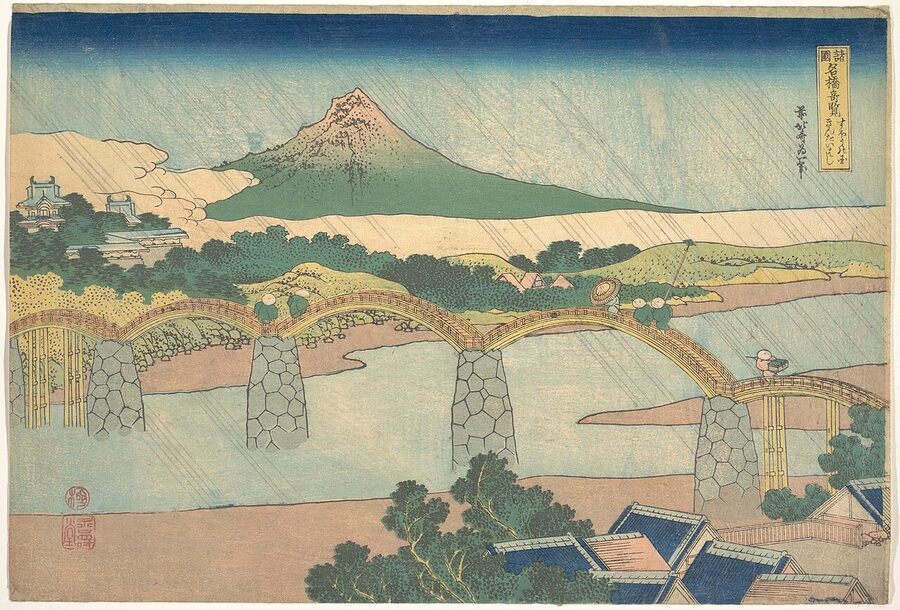
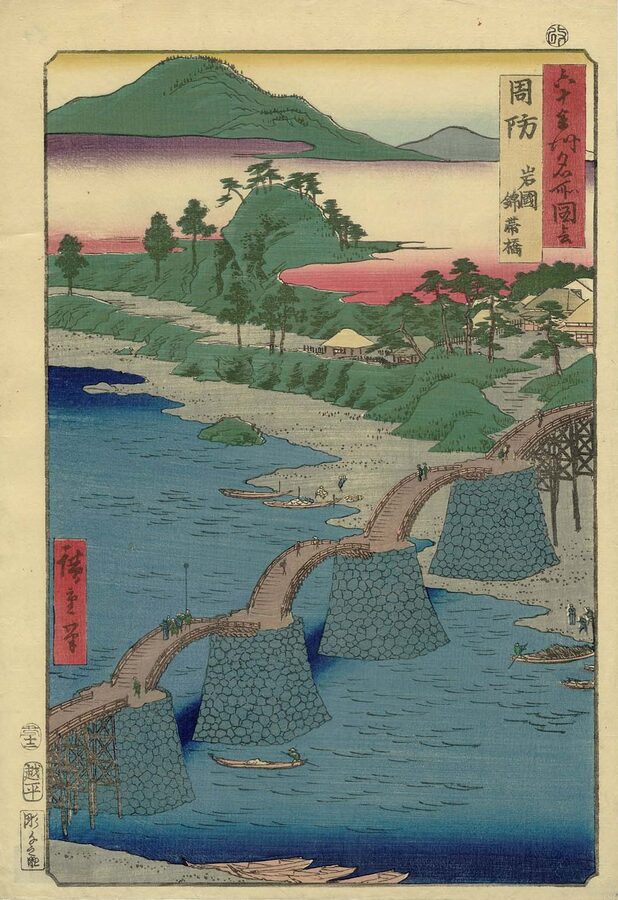
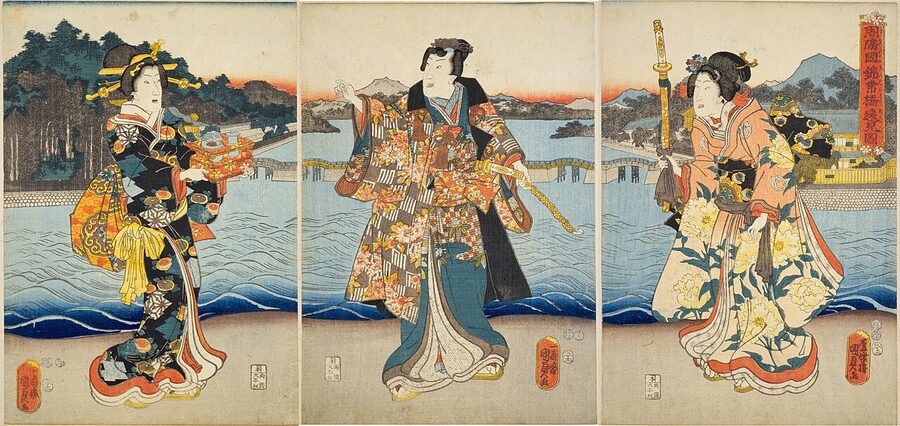
The print makers loved it. Hokusai drew it in the rain around 1830, Utagawa Kunisada set three kabuki actors in front of it in 1852, and in 1853 Hiroshige gave it a page in his Famous Places in the Sixty-odd Provinces. Whether any of them ever stood on it is another matter; my piece on ukiyo-e explains how a publisher decided what would sell.
276 years, then one night in 1950
The domain disappeared in 1871, and in 1895 local people founded a society to raise money for the rebuilding cycle. In 1922 the government designated the bridge a Place of Scenic Beauty; English accounts sometimes say it was made a National Treasure, but it was not. In 1926 the Crown Prince, the future Emperor Hirohito, came to see it.
Then came the war. Maintenance was neglected, and upstream the forests were cut, partly to tap pine roots for oil, so the hills held less water. When the occupying American forces lengthened the runway at the Iwakuni air base in 1949, they dug large amounts of gravel from the riverbed near the bridge. All three causes have been pointed to since, and nobody can now say which mattered most.
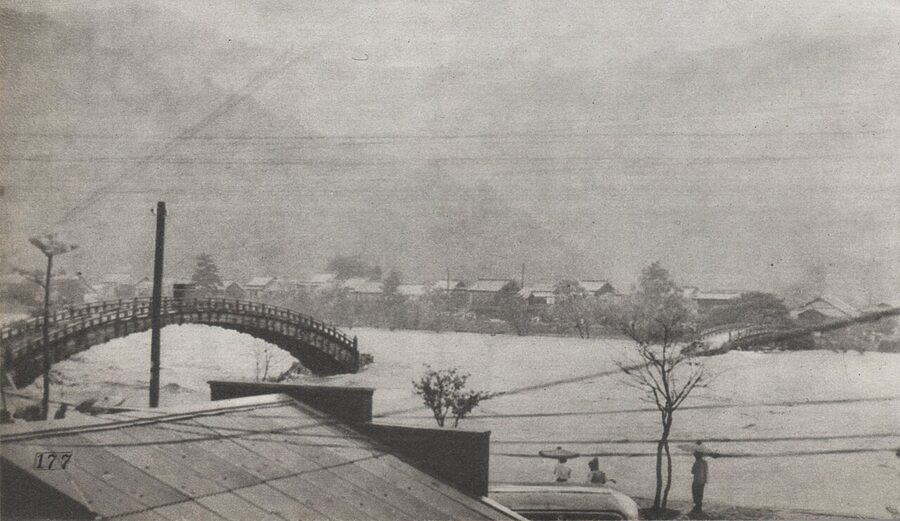
Typhoon Kezia came ashore in Kagoshima on 13 September 1950; that day its storm surge damaged Itsukushima Shrine just across the bay. On 14 September the Nishiki rose, the collapse started at the piers of the fourth span, and the bridge that had stood since 1674 went down the river almost entire. Japanese disaster records count 30 dead and 19 missing across the country; English-language accounts usually give 25 deaths.
Wood again, by popular demand
Rebuilding began on 22 February 1951 and finished on 15 January 1953, in the lean years of the Shōwa era. There was a proposal to rebuild in concrete; the people of Iwakuni would not have it, and the bridge went back in wood. The foundations and piers were rebuilt in reinforced concrete and raised by a metre, but the old stones were gathered up and put back on the outside, so the facing of the piers and the paving of the riverbed are the only parts that may go back to the 17th century.
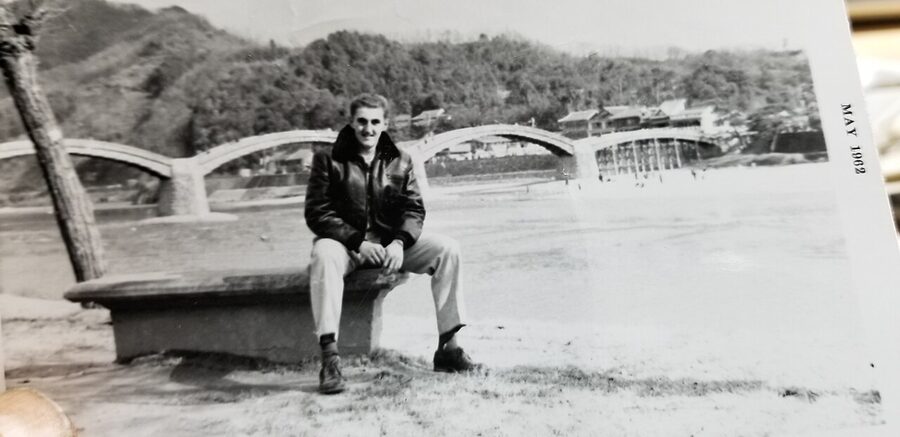
From 1966 the city began charging a fee to cross, to pay for the upkeep. That is the toll you pay today.
The Heisei rebuild
Between November 2001 and March 2004 all the woodwork was replaced for the first time in half a century, working only in the dry months when the river is low: the central span by March 2002, the two on the Yokoyama side by March 2003, the two on the town side in 2004. It cost ¥2.6 billion. The timber, all Japanese, took about seven years to gather, and Aomori hiba replaced pine for the end spans’ legs because it rots more slowly.
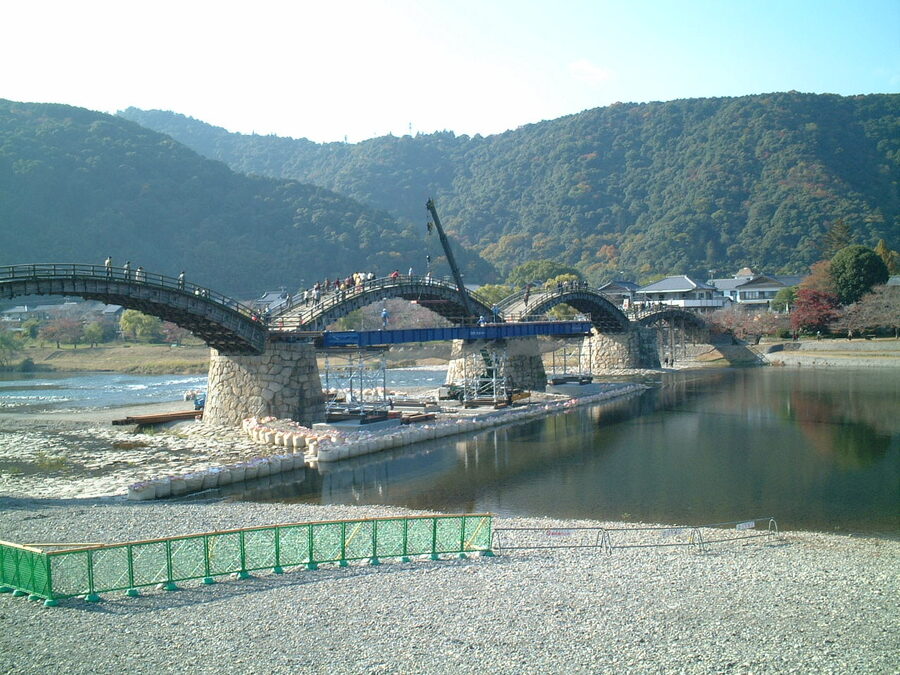
The carpenters worked from the Edo drawings, measuring in the old shaku system rather than in metres, and the iron fittings were hand-forged to reproduce the old tatara iron, with stainless steel ruled out. The bridge still attracts fools: in 1998 three men were arrested for driving a light truck across, and the repairs cost about ¥2.2 million.
The World Heritage question
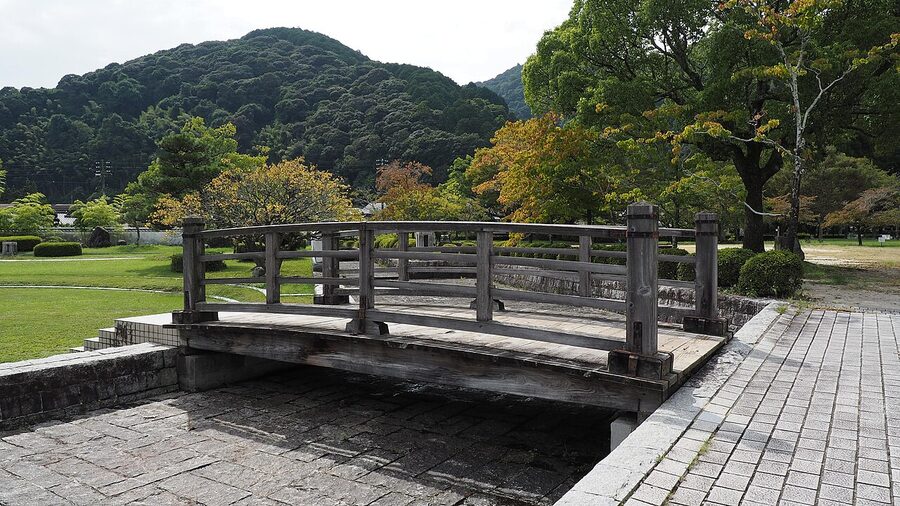
Iwakuni wants the Kintaikyō on the World Heritage list. In December 2018 Yamaguchi Prefecture and the city submitted a proposal to the education ministry, and in 2021 the bridge became a key component of an Important Cultural Landscape. But it is not on Japan’s Tentative List, from which nominations are made, and nothing has been added to that list for more than a decade; a working group of the national cultural council has been studying additions since April 2024.
The prefecture’s own papers name the problem: agreement, at home and abroad, on the bridge’s value and its authenticity. A bridge whose every timber has been replaced dozens of times is a hard sell on the old rules about original fabric, and an easy one if you think, as the Japanese tradition does at Ise Grand Shrine, that the thing worth keeping is the knowledge of how to build it again. I know which argument I find convincing.
A keep in the wrong place, and the town around it
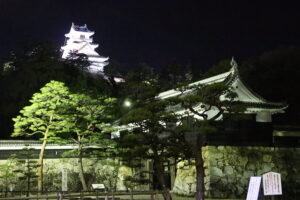
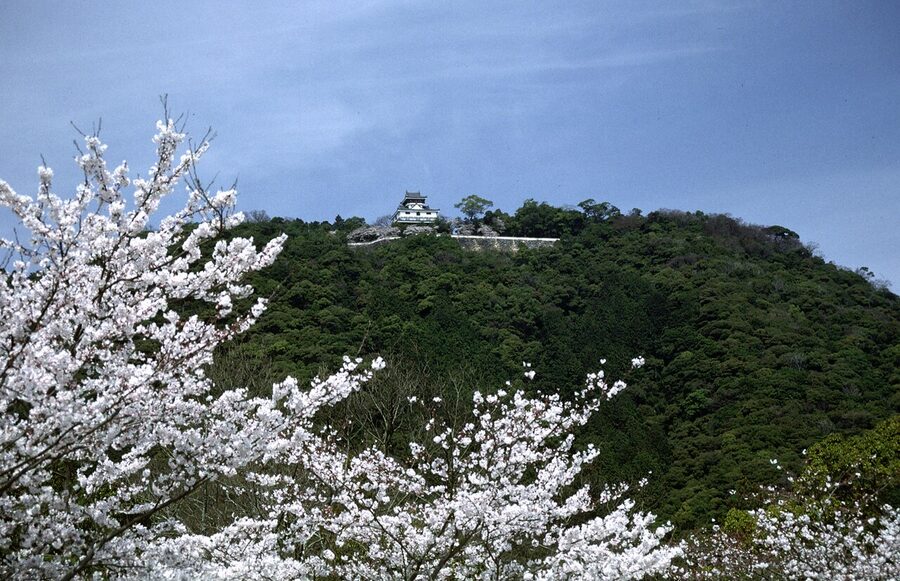
On 21 March 1962 Iwakuni got its castle back, or something like it. The new keep is reinforced concrete, designed by Fujioka Michio of the Tokyo Institute of Technology from an old structural drawing, and it was put not on the original base but further along the ridge, where it shows up from the town and the bridge. Japanese accounts put the shift at about 30 metres south; the city’s tourism site says about 50 metres east.
I don’t hold it against them. In 1962 a great many towns wanted their castles back, and Iwakuni at least put its replica where it works as scenery instead of pretending it stands on the original spot. It is not one of Japan’s twelve original castles and does not try to be.
The air station
The other thing that dominates modern Iwakuni is out on the delta. The Imperial Navy began building an air base there in 1938 and opened it in July 1940; American bombers raided the area in 1945, the last time on 14 August. After the war it passed through British Commonwealth hands, and in 1952 it became an American base. English-language accounts often say the Marines arrived then; Japanese records have the US Navy taking over in 1954 and the Marine Corps on 20 July 1958.
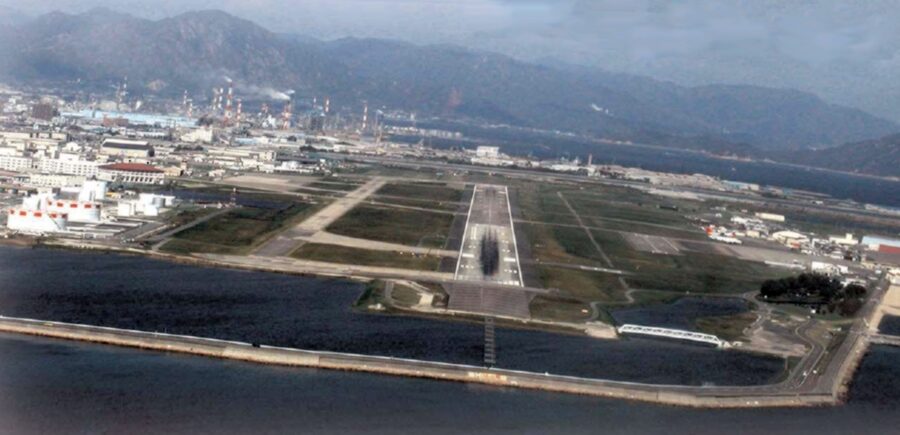
In 2006 the people of the old city of Iwakuni voted heavily against moving a carrier air wing here from Atsugi, and it came anyway, between 2017 and 2018. Since 13 December 2012 there have been civilian flights again, after a gap of 48 years, under the name Iwakuni Kintaikyō Airport. If you are here for the bridge, you will hear the jets more than you see them.
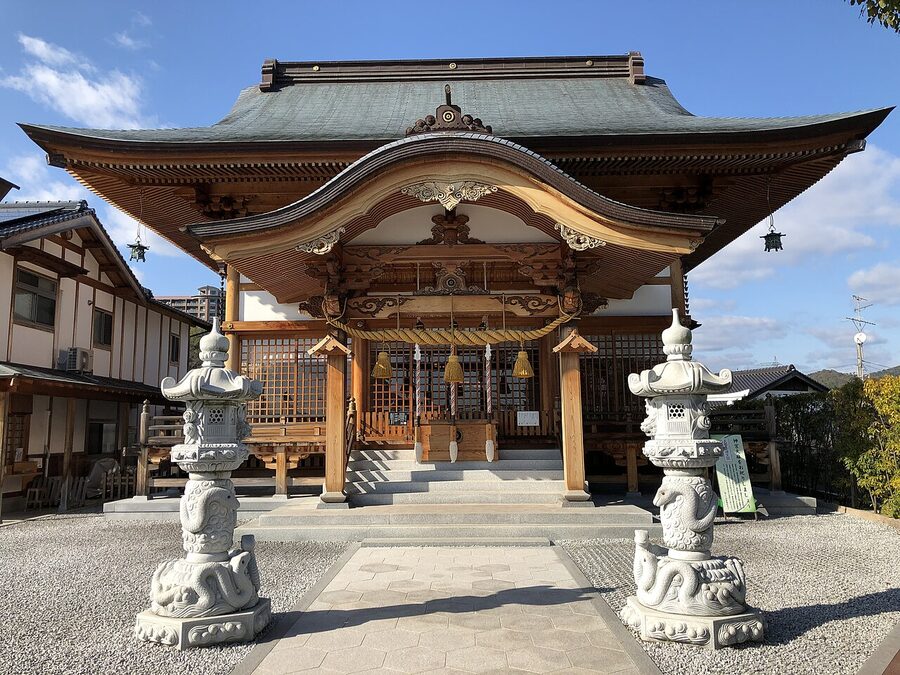
The white snakes
The oddest residents of Iwakuni are the white snakes, albino Japanese rat snakes that have bred true here in the wild for centuries, probably because nobody would harm them: white animals were messengers of the gods, and snakes that ate the rats in the rice stores were doubly welcome. The oldest record is from 1738, when a gatekeeper at the Kikkawa residence caught one.
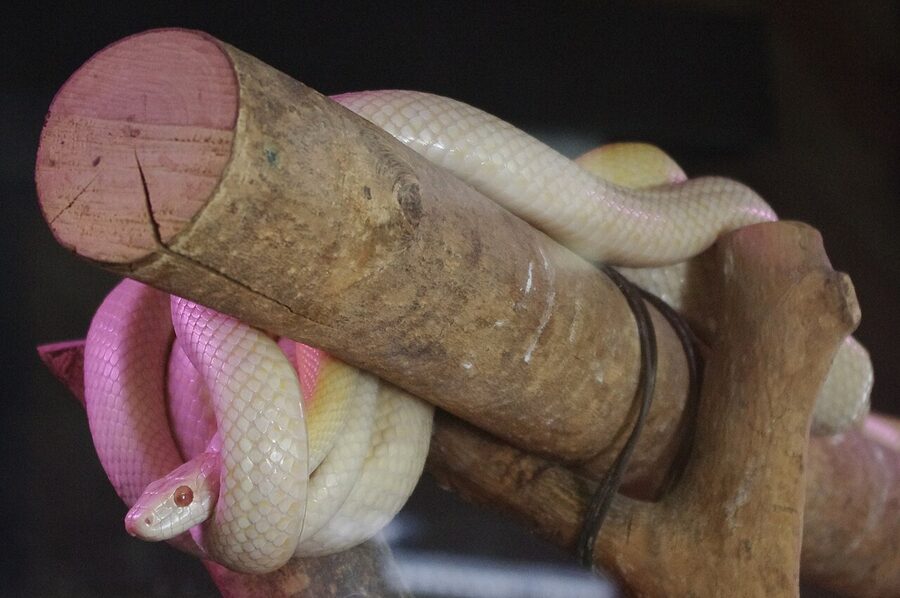
They were designated a Natural Monument in 1924, first as a habitat and from 1972 as an animal in their own right (not a “special national treasure”, as one English account has it). Their numbers fell after 1945, when rats were poisoned and the old granaries disappeared, and since 1965 the city and a foundation have bred them: 943 in 2005, 782 in 2008. They are tied to Benzaiten, the goddess of water and money, and a cast skin in your wallet is supposed to bring in cash.
Where to visit Iwakuni today
Everything below was checked against the official sites of the Iwakuni tourism office and the Kikkawa Historical Museum on 16 November 2026. Prices for the bridge, the ropeway and the keep all went up on 1 September 2026, so older guides will quote figures that no longer apply. The bridge, the park, the ropeway and the keep fit into three hours; the museum adds another, and in summer you will want to stay for the cormorant boats.
Getting there
The bridge is not near either station, so you will take a bus. From JR Iwakuni Station on the Sanyō Line, buses for Kintaikyō leave from the stop in front of the station and take about 20 minutes; from Shin-Iwakuni on the shinkansen, about 15. Get off at Kintaikyō and the bridge is a minute’s walk. From Hiroshima the local train to Iwakuni takes about 44 minutes, and a Kodama to Shin-Iwakuni 16.
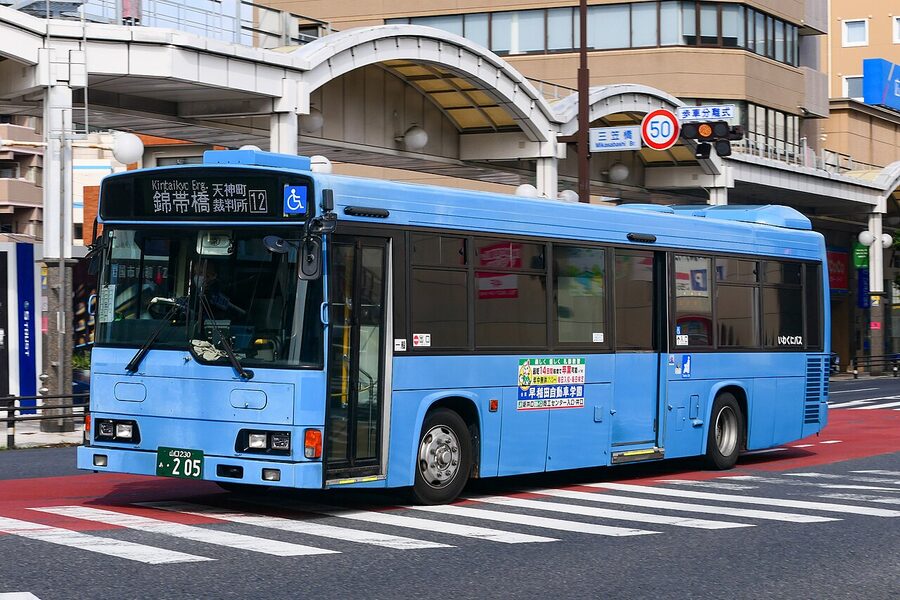
An express bus also runs between the Hiroshima Bus Centre and the Kintaikyō stop in about 50 minutes, ¥950 one way or ¥1,700 return. By car it is about ten minutes from the Iwakuni interchange on the Sanyō Expressway, with parking on the riverbed under the bridge.
Crossing the Kintaikyō
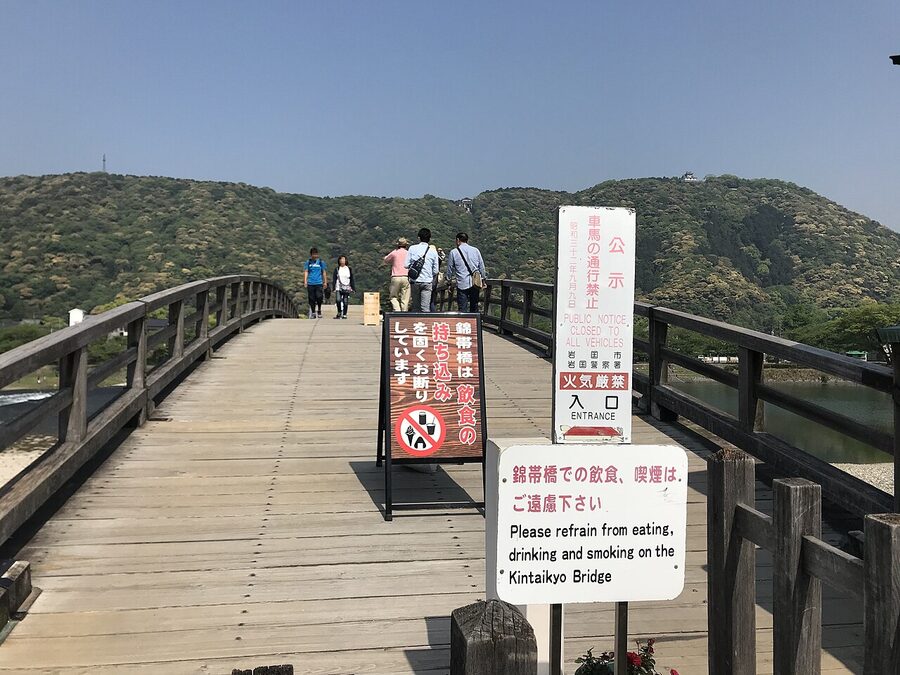
The bridge costs ¥500 for adults and anyone of junior high school age or older, ¥250 for primary school children, and nothing for younger children. There is no one-way ticket; the price covers the walk over and back, so keep it. The toll booth is staffed from 8:00 to 17:00 (18:00 in the main tourist seasons, 19:00 in summer), but you can cross at any hour by dropping the fare into the box, and the bridge is lit until 22:00.
If you are doing the ropeway and the keep too, buy the set ticket for all three, ¥1,550 for adults and ¥700 for children instead of ¥1,750 and ¥850, and decide before you pay, because a bridge ticket cannot be turned into a set ticket afterwards. The arches are stepped and the boards get slippery in rain and snow, and the bridge is closed when the river is high or a typhoon is coming. Eating, drinking and smoking on it are not allowed, and vehicles are banned.
Cross it twice, slowly, then go down to the riverbed and look at it from below. I like it best early in the morning, before the tour groups arrive, when you can stand under the arches and see the stacked timbers and the paving stones that have kept the piers standing since 1674.
Kikkō Park and the samurai houses
Across the bridge is Kikkō Park (吉香公園), laid out on the site of the Kikkawa residence and the houses of their senior retainers. It is free and always open. The Kikkawa family shrine, Kikkō Shrine, was formed in 1872 from three older family shrines and moved here in 1885, and the park grew up around it; you will pass the statue of Kikkawa Hiroyoshi at the entrance.
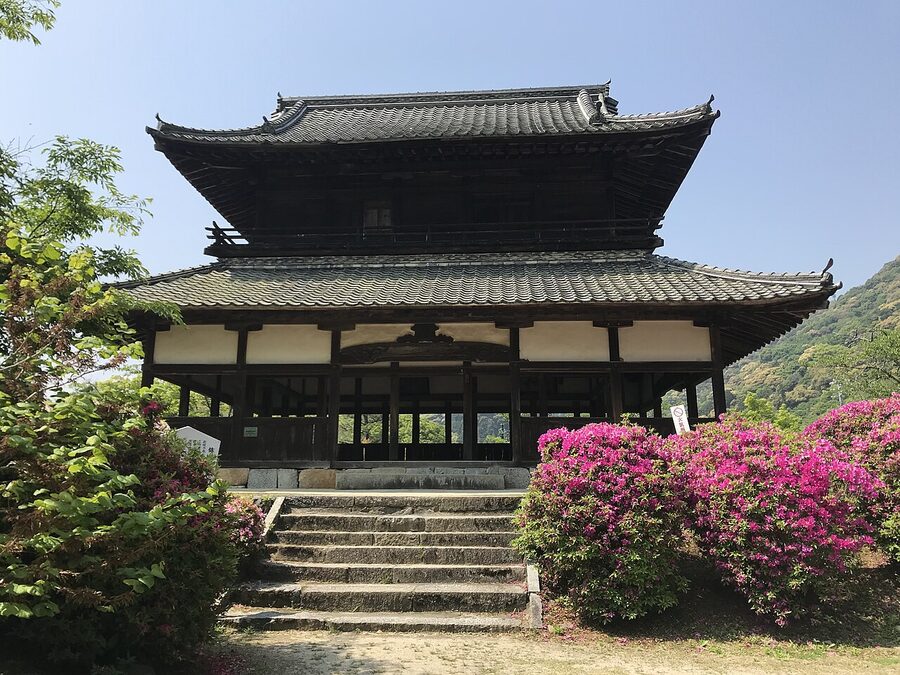
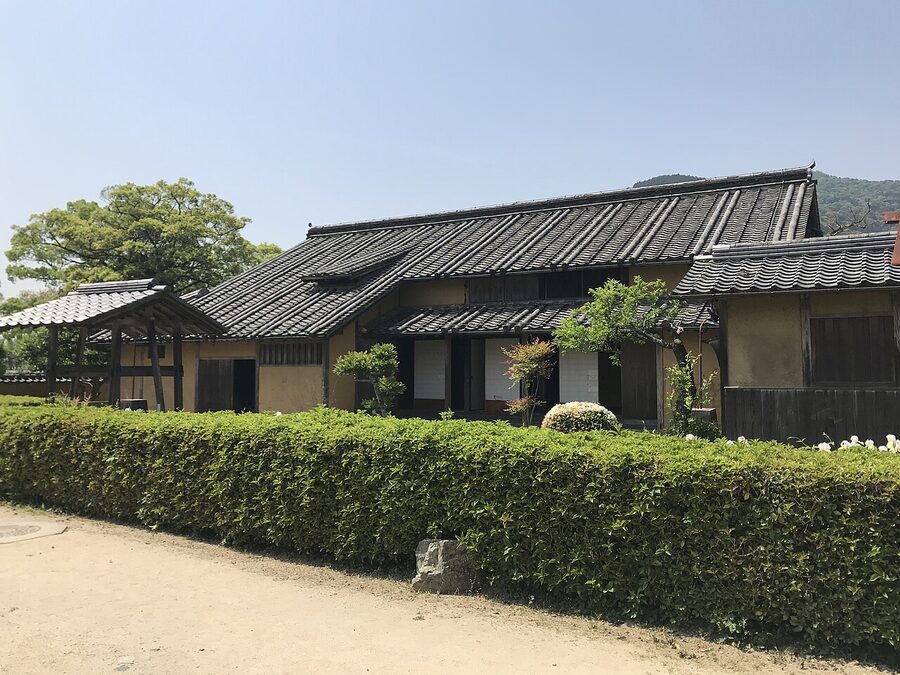
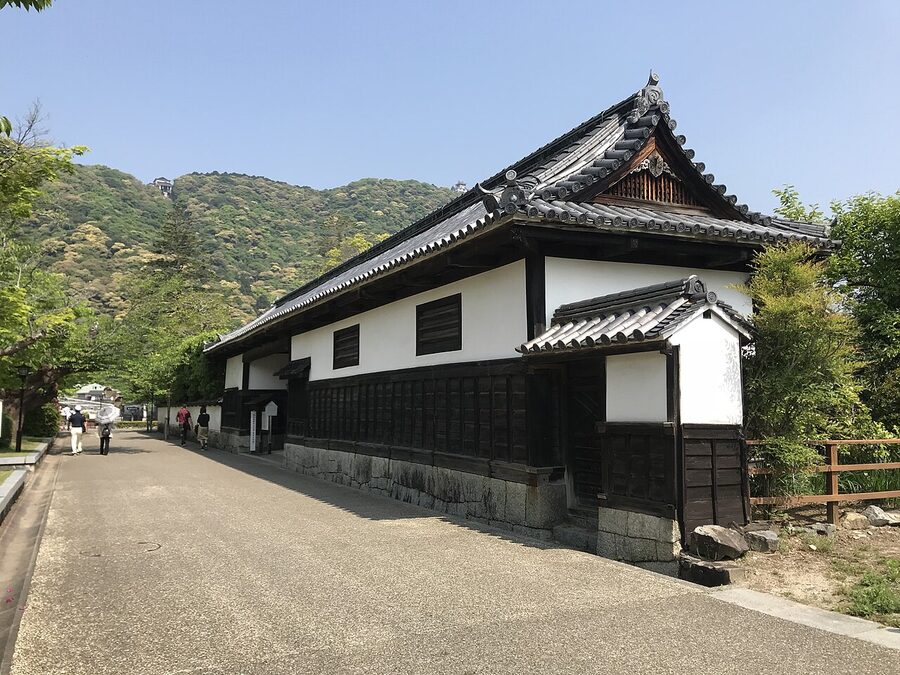
Walk round the moat to the gate of the Kagawa family, one of the five houses that served as Iwakuni’s elders, and on to the house of the Mekata, a middle-ranking samurai family, which is an Important Cultural Property. The Mekata house is closed for fire and security work until the end of December 2026, according to the city, so check before you count on going in; my guide to samurai districts covers the towns where whole streets of such houses survive. The white snakes have a small museum here too, the Iwakuni Shirohebi no Yakata, just in front of the ropeway station.
The Kikkawa Historical Museum
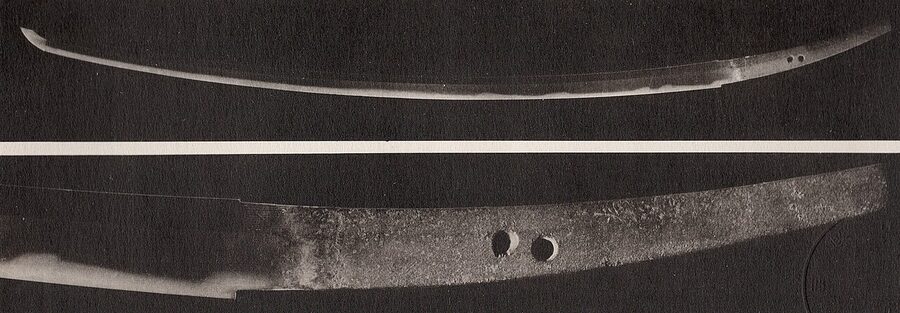
The Kikkawa Historical Museum (吉川史料館) holds about 7,000 objects that came down in the family, among them some 2,500 documents that are Important Cultural Properties, the National Treasure sword Kitsunegasaki and a campaign coat given to the family by Hideyoshi. It shows them in rotation, with four changes of display a year. Until 20 December 2026 the exhibition marks 440 years since the death of Kikkawa Motoharu, and the Kitsunegasaki blade is out until 29 November.
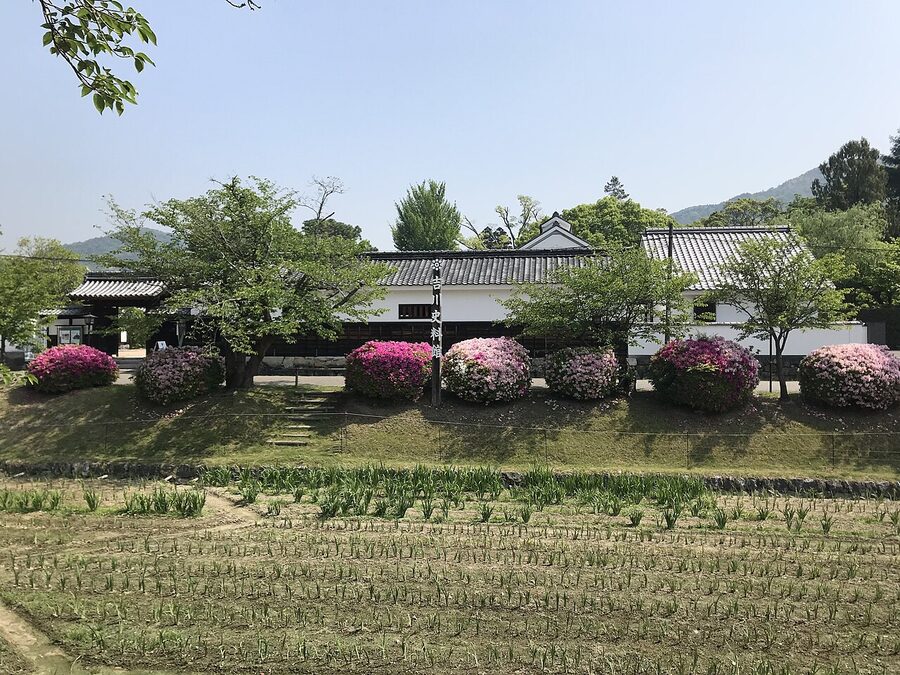
The museum opens 9:00 to 17:00 (last entry 16:30) and closes on Wednesdays, or the next day when Wednesday is a holiday, over the New Year and for the display changes. Admission is ¥700 for adults, ¥500 for high school and university students and ¥300 for younger pupils. It is about eight minutes on foot from the Kintaikyō bus stop. If you care at all about how the Sekigahara story was told, this is where the family’s side of it lives.
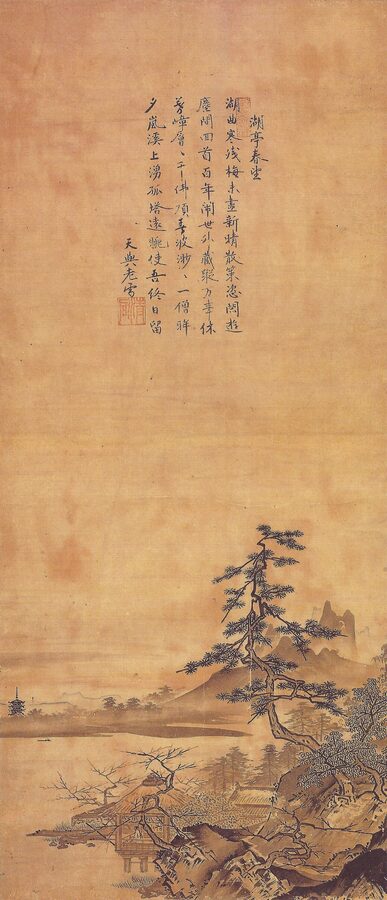
The ropeway and the keep
The Iwakuni Castle Ropeway climbs from Kikkō Park to the ridge of Mount Yokoyama in about three minutes, with cars every 15 minutes from 9:00 to 17:00. A return is ¥900 for adults and ¥400 for children, one way ¥500 and ¥250. It opened in 1963, the year after the keep.
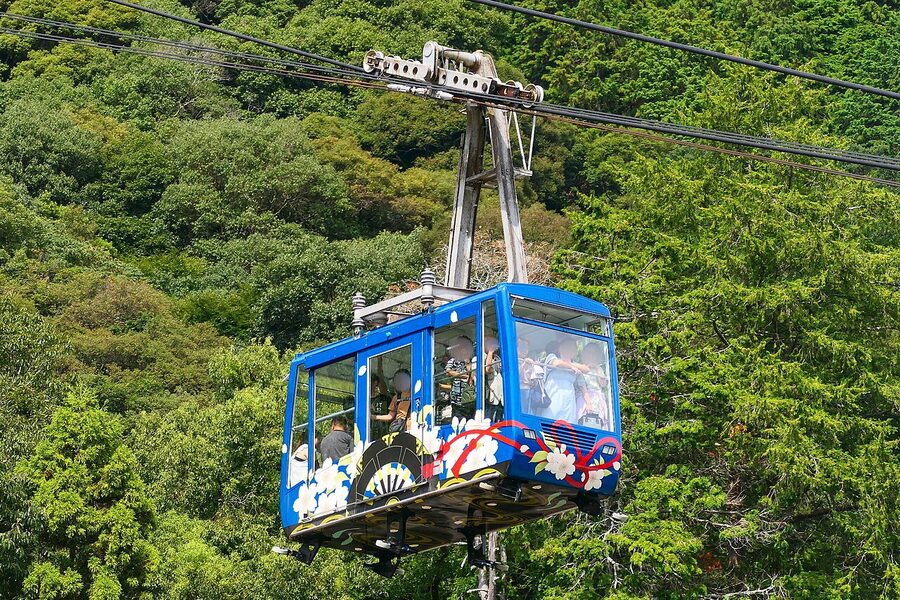
Check the closure dates before you go: the ropeway and the keep close all day on 26 November 2026, from 14:00 on 23 and 31 December, and for the annual inspection from 12 January to 19 February 2027, with further single days through 2027 on the city’s tourism site. You cannot drive to the keep, and the two-kilometre footpath from Momijidani Park has been closed since a landslide on 25 June 2026, so for now the ropeway is the only practical way up.
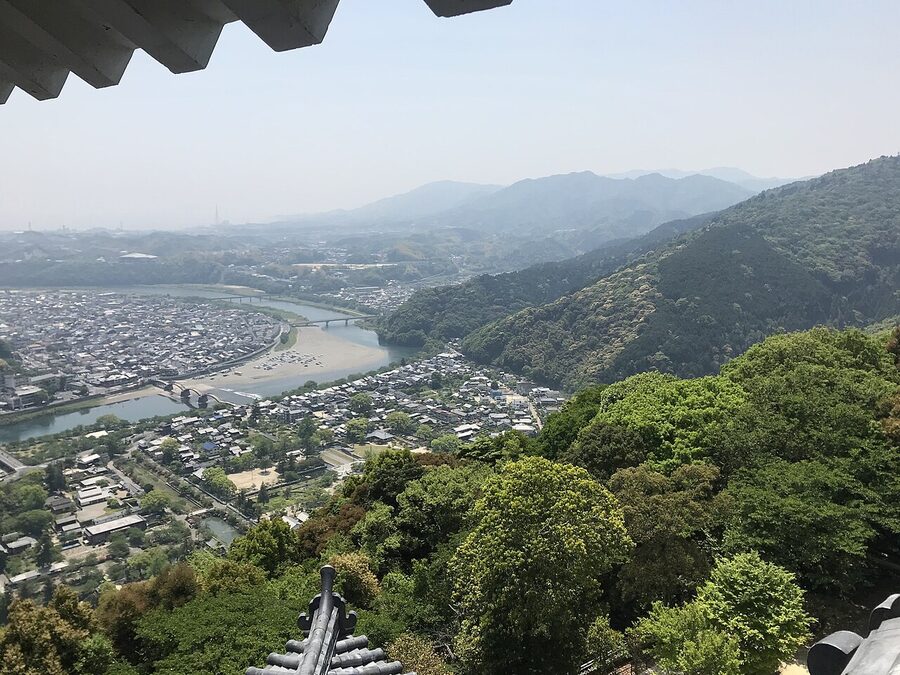
The keep opens 9:00 to 16:45 (last entry 16:30) and costs ¥350 for adults and ¥200 for children. Inside are a precise model of the bridge, photographs, and arms and armour, and the top floor looks out over the town and the air base to the islands of the Inland Sea; on a clear day you can pick out Miyajima. There is no lift. Don’t skip the stone base of the 1608 keep and the dry moat along the ridge: most people go straight from the ropeway to the keep and back, which leaves Hiroie’s castle quiet.
Cormorant fishing on the Nishiki
On summer nights the cormorant fishers work the river just below the bridge, their boats lit by fire, with the bridge lit up behind them. The city’s tourism office says the Iwakuni ukai goes back about 400 years and was revived in 1952 after a long break; my guide to cormorant fishing explains how it works and where else to see it.
In 2026 the season ran from 1 June to 10 September, with boats from 19:00 to 21:00, and published listings gave the fare as ¥3,500 for junior high school students and up and ¥2,000 for children from three. You watch from a sightseeing boat, and booking ahead is the safe course. The fishing’s own website could not be reached when I checked in November 2026, so confirm the 2027 dates and prices with the Iwakuni tourism association before you plan around them.
Cherry season and the April festival
The banks around the bridge carry about 1,500 cherry trees, and the bridge and Kikkō Park are among the hundred places chosen as Japan’s best for cherry blossom. They are usually at their best from late March to early April, when the town is at its most crowded. Plum blossom comes first, from mid-February, and in late April and early May the park has wisteria and some 10,000 azaleas.
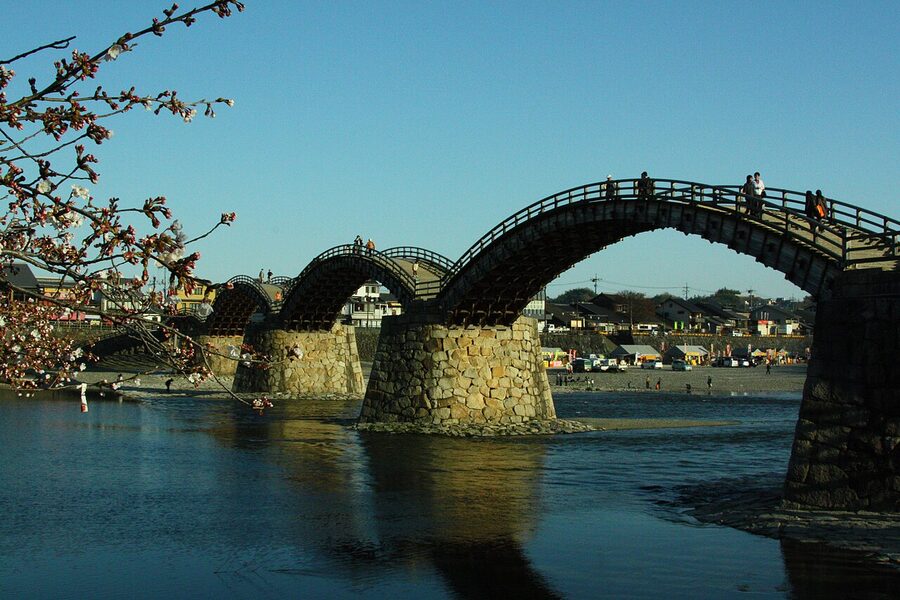
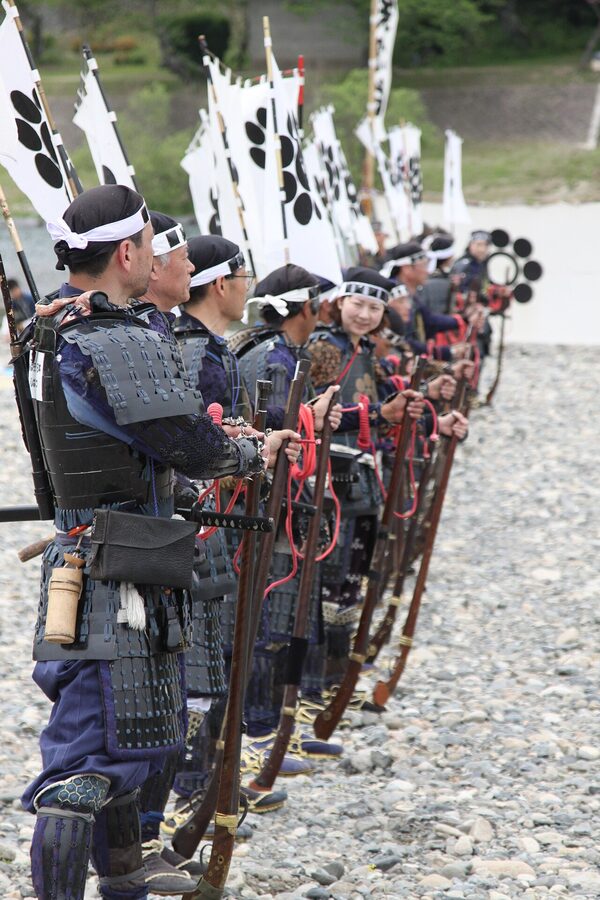
On 29 April the Kintai Bridge Festival brings a daimyo procession across the bridge and demonstrations by the Iwakuni matchlock gun society. It is about the only day of the year when the lords of Iwakuni parade over their bridge in style again, which is how the family would have wanted it.
Iwakuni with Miyajima and Hiroshima
Iwakuni sits on the same railway line as Miyajima and Hiroshima, and the three make an easy set. From Miyajimaguchi, the ferry port for Itsukushima Shrine, the train to Iwakuni takes about 19 minutes, plus 20 on the bus to the bridge; the direct boat between Miyajima and Iwakuni port is suspended for now, according to the city.
With one day, I would do Miyajima in the morning and Iwakuni in the afternoon and evening, when the bridge is lit and in summer the cormorant boats are out. With two, add Hiroshima Castle and the city’s museums, and sleep in Hiroshima, which has far more choice. For where the Mōri, the Kikkawa and the Tokugawa sit in the longer story, my overview of Japan through the ages and my piece on the Edo era are the places to start.
Bridge rice
Standing at the top of the middle arch, it is worth remembering who paid for all this. The farmers of Iwakuni handed over their bridge rice for two hundred years and took the ferry anyway, and the Kikkawa lords, nobody’s daimyo, poured their resentment into the one thing their cousins could not take away from them.
The castle is a replica in the wrong place, and the bridge is not old either; every timber in it has been replaced, most of them within living memory. What is old is the habit of rebuilding it, by carpenters who learned how from the carpenters before them. Pay the toll, keep the ticket for the walk back, and take your time on the way over. For most of its history you would not have been allowed on.