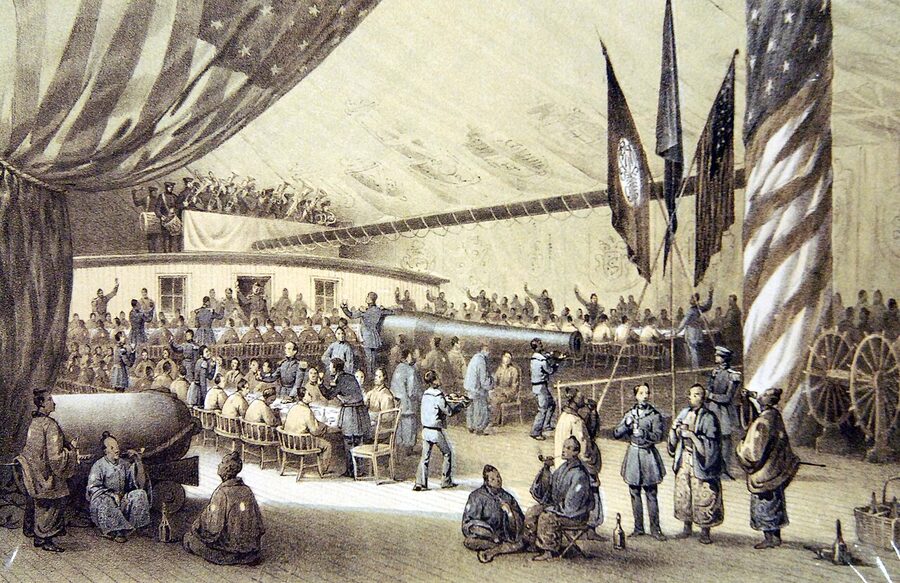
The last secret mission by a Japanese shinobi that anyone can document came back with two bread rolls, two leaves of tobacco, two candles and two sheets of American notepaper. The man who carried them home was Sawamura Jinzaburō, a part-time retainer of the Tōdō lords of Tsu, enrolled in the twenty-man shinobi company the domain kept among its Iga gentry, and he had been sent to find out what he could about Commodore Perry’s black ships. He did not swim out at night in a black hood. Historians think he most likely went aboard in his ordinary clothes, as one of an official Japanese party, and ate what he was given.
His family’s papers say the lord’s son asked for one of the rolls, so Jinzaburō gave it to him. The rest of the haul went stale or got lost over the years, except the notepaper, on which an American hand had written two Dutch sentences. One is the proverb “still water runs deep”. The other is a sailor’s joke ranking English, French and Dutch women by their talents in bed, kitchen and house, which is about as far from a ninja scroll as you can get.
I find that a better place to start than any film. The real shinobi were intelligence men, arsonists, scouts and, in the end, rather underpaid civil servants, and for most of their history they were called something else. The figure in black who runs up walls was put together later, on the kabuki stage, in Edo novels, in Taishō paperbacks and in the Japanese and American booms of the 1960s and 1980s. This is the story of both, and of where the evidence is solid and where it is very thin.
In This Article
- Shinobi, not ninja
- Night work for hire
- Two leagues on one border
- Nobunaga in Iga, 1578–1581
- Getting Ieyasu home
- Shinobi on the payroll
- Writing it down when nobody needed it
- How the black suit got on stage
- The boom years
- Kunoichi, and the woman who was not there
- Myth check
- Where to see the shinobi today
- Iga Ueno: the Iga-ryū Ninja Museum
- Iga Ueno Castle
- Kashiwara Castle site, Nabari
- Kōka: the Kōka-ryū Ninjutsu Yashiki
- Kōka no Sato Ninjutsu Mura
- Tokyo: Hanzōmon and the Hyakunin Bansho
Shinobi, not ninja
Start with the word. Nobody in the Sengoku period called anyone a ninja. The characters 忍者 existed, but the usual reading was shinobi (忍び) or shinobi no mono, and the reading “ninja” only took over in the Shōwa 1950s and 1960s, through novels and films. Before the Second World War the stock phrase was ninjutsu-tsukai, “user of ninjutsu”, which sounds more like a stage magician than a spy.
The period also had plenty of local names for the same kind of man. In the east, where the Hōjō of Odawara and the Takeda employed them, they said rappa or suppa; in other places kusa (grass, for the men who lay out in it), kamari, dakkō, or nokizaru, “monkey on the eaves”. In Iga and Kōka they were simply the Iga-shū and Kōka-shū, the men of those districts. When an English book tells you the ninja were “a secretive caste”, remember that the people who hired them, across four centuries of Japanese history, used a dozen different words and mostly meant “the lads who do the night work”.
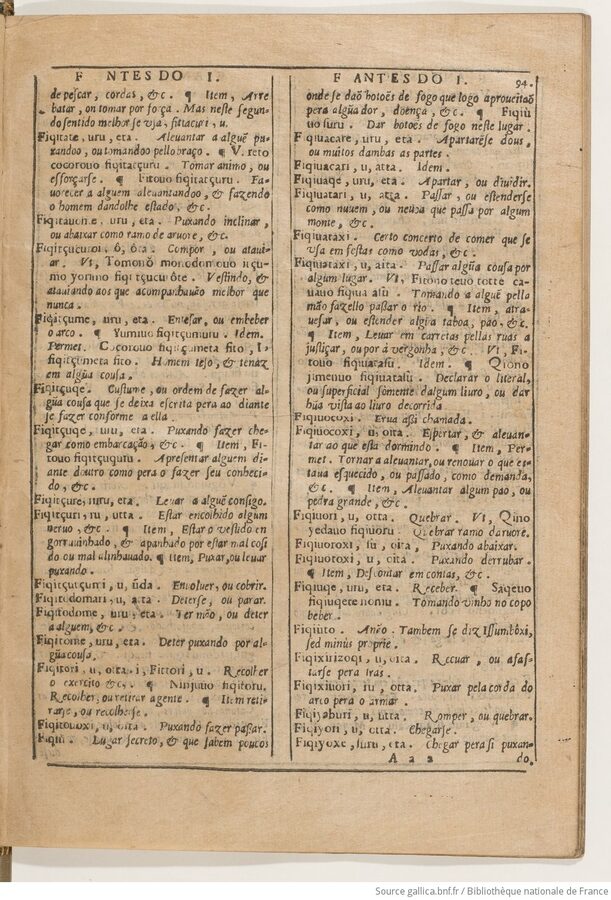
The best contemporary definition comes from an unexpected direction. In 1603 the Jesuit mission at Nagasaki printed the Nippo Jisho, a Japanese-Portuguese dictionary of some 32,000 words, and under Xinobi it explains, in Portuguese, that these were men who in wartime climbed into castles or slipped into camps at night or in secret to find out what was going on. That is it. No magic, no throwing stars, just spies who went over walls.
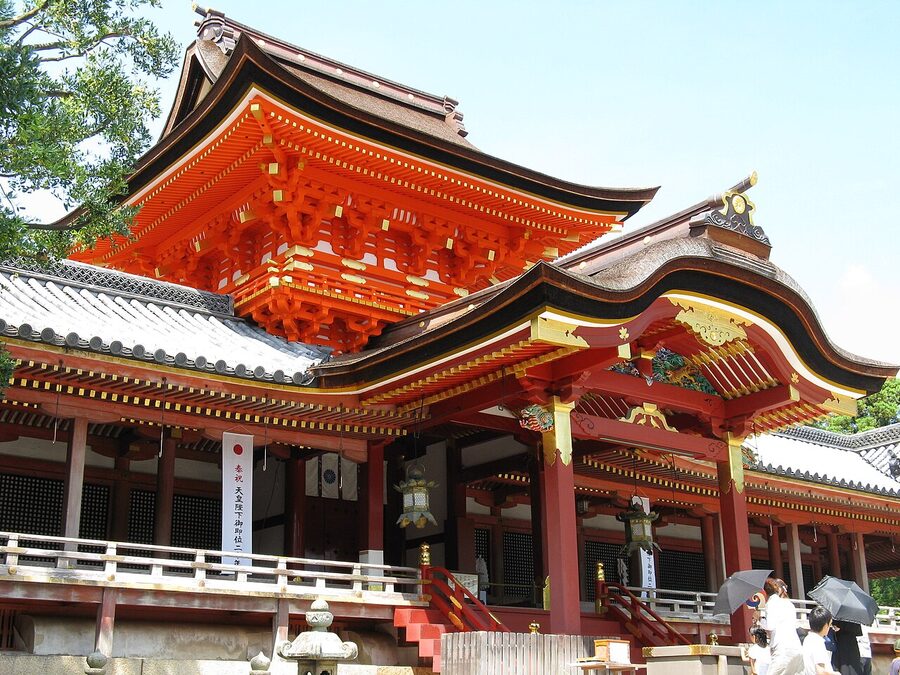
The oldest documentary appearance of the word in this sense is usually traced to the Taiheiki, the great war chronicle of the fourteenth century. During the fighting of 1338 between the Ashikaga and the Southern Court, the general Kō no Moronao was trying to dislodge the Southern army from the hill of Otokoyama south of Kyoto, and one night, the chronicle says, some skilled shinobi or other got in and set fire to the shrine buildings. The Taiheiki does not know who did it and does not much care. That shrugging tone is typical of almost every early mention.
You will also read that Prince Shōtoku employed a shinobi in the seventh century, or that the ninja schools began in 1162 when a defeated samurai met a Chinese warrior-monk in the mountains. The first is a local tradition the Nihon Shoki does not mention; the second belongs to the lineage claims of modern martial-arts schools, and no medieval document backs it. I do not mind either as folklore, only when they sit next to the Taiheiki as though they were the same kind of evidence.
Night work for hire
What the Sengoku records actually show is a market. Warlords needed men who could burn a camp, scout a castle, carry a message through enemy lines or take a gate at night, and they recruited them much as they recruited any other ashigaru, the light infantry of the age. The Yūki family of Shimōsa kept professional night raiders on hand. Ueda Norisada, the castle lord of Musashi-Matsuyama, put up a recruiting notice before one campaign saying he wanted night-runners and night-thieves “as many as can be had”, and that anyone with a criminal record or unpaid debts would have both wiped clean.
The manuals, written a century later by men who wanted their ancestors to look respectable, still admit the point. The Bansenshūkai of 1676 says flatly that the shinobi’s art is very close to the art of thieves. That is not an insult. It is a description of a skill set, and it explains why the best-paid practitioners came from two hill districts where every village was armed and nobody answered to a great lord.
The earliest of those districts to turn up doing this kind of work is Iga, the basin of hills that is now western Mie Prefecture. In the fourteenth century the Tōdai-ji estate of Kuroda in Iga was famous for its akutō, “bad bands”: local strongmen who refused their dues, blocked roads, built forts, set fires and raided at night, which is the shinobi job description a century and a half early. The last of them submitted to the temple in 1439, and the Iga gentry spent the next decades getting steadily more independent; in the Ōnin War they fought on both sides, and found the work outside the province paid.
The first episode historians treat as recognisably shinobi-style comes from 1502. Four hundred-odd mountain ascetics from Atago, north-west of Kyoto, marched into Iga to support some rebellious peasants, and on their first night in the province the Iga gentry fell on their camp. According to the diary of a court official, about ten of the four hundred made it back to Kyoto.
The best-known early record is the Tamon-in Nikki, the diary of a monk of Kōfuku-ji in Nara. In the eleventh month of 1541 it records that the Iga-shū slipped into Kasagi Castle, held by the warlord Kizawa Nagamasa, burned buildings inside and took part of the castle. English-language accounts usually give the date as the sixth day of that month; Japanese accounts give the twenty-sixth. The diary is also clear about what happened next: a relief force came up, the garrison sallied out, and more than thirty Iga men were killed.
I like that detail because it is so rarely quoted. Shinobi lost, often. They were not invulnerable shadow-warriors; they were skilled infantry doing a dangerous job for money, and when the plan went wrong they died like anyone else.
On the night of the nineteenth day of the third month of 1560 a band of Iga men under a leader called “Kizaru”, Tree Monkey, attacked Tōichi Castle in Yamato, and the lord and his wife fled in different directions. A Kizaru of Shimotsuge appears a century later in the Bansenshūkai‘s list of the eleven best practitioners of hidden shinobi work, one of the few places where manual and contemporary record actually meet.
In the intercalary third month of 1561, the Miyoshi general Naitō Munekatsu warned a castle commander that “the castle-taking men of Iga” had split into three bands and were heading for Settsu, Tanba and Harima, and told him to check everyone at the gate by night and by day, down to the servants. That letter is worth more than any number of later legends: a working general treating Iga infiltrators as a present danger.
The same year the Asai of northern Ōmi hired Iga men for twenty kanmon of cash. A later Asai chronicle has hired Iga men refusing to start their fire on schedule and telling the officers that outsiders could not possibly understand shinobi tactics; they did it their own way and the castle fell. Every freelancer who has argued with a client will recognise the tone.
Two leagues on one border
Iga and Kōka sit back to back across a line of low mountains, Iga in the basin to the south-east, Kōka in the valleys of southern Ōmi, now Shiga. Both were districts of small gentry, the jizamurai, with no great lord in control, and both solved the problem of governing themselves in a way that was unusual for the Sengoku era: by committee.
In Kōka, the families sharing a surname formed a dōmyōchū, a “same-name group”, in which the main house and the branch houses sat as equals. They decided by majority vote, and when the vote was tied they drew lots. By the 1560s the groups had federated into a district-wide league, and archaeologists have counted more than 180 small fortified houses across the district, square earthworks with ramparts up to eight metres high, none much bigger than its neighbours.
The Kōka men’s reputation goes back to 1487. The shogun Ashikaga Yoshihisa, determined to show that the Muromachi shogunate could still discipline a governor, marched into Ōmi to punish the provincial governor Rokkaku Takayori for helping himself to estates, and Takayori simply disappeared into the Kōka hills. For the next two years the Kōka gentry raided and harassed the shogun’s army, and in 1489 Yoshihisa died at his camp at Magari, aged twenty-three, with the campaign unfinished.
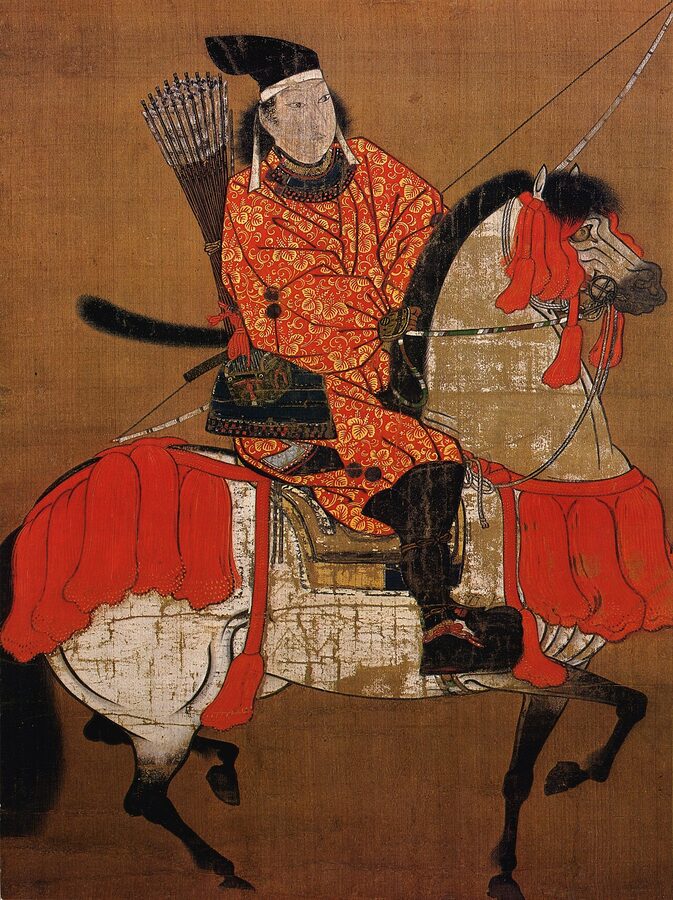
Later Kōka tradition turns Magari into a ninja epic, with fifty-three Kōka families creeping into the shogun’s camp to set fires. Be careful with it. The phrase “Kōka fifty-three families” first appears in a petition the Kōka gentry sent the shogunate in the 1660s, when they were trying to win back samurai status, and a supplement to the Ashikaga records gives the glory to an Iga house instead. What seems solid is that fighters in the Kōka hills made a shogun’s army miserable.
Iga’s league was the Iga sōkoku ikki, and its rulebook survives. The “Articles of the Iga League” (dated variously to 1560 or 1569) commit every member to fight any outside invader together, order the men of the province between seventeen and fifty to turn out, and threaten anyone who guides an enemy in with the destruction of his whole family. One clause mentions the Iga ashigaru who go off to other provinces to take castles, which is the closest thing anyone has to a contemporary job title for an Iga shinobi.
You will read that Iga was ruled by three “upper ninja” families, the Hattori, the Momochi and the Fujibayashi, each commanding middle and lower ninja in a neat pyramid. The Japanese scholarship rejects the pyramid outright. There was no ranked system of jōnin, chūnin and genin; the word jōnin in the Bansenshūkai means simply a master practitioner, “skilled, and known to no one”, and the triangle in most popular books was drawn by twentieth-century writers.
The rivalry is invented too. The idea of Iga and Kōka as sworn enemies comes from fiction, above all Yamada Fūtarō’s novel of 1958–59 in which ten Iga ninja and ten Kōka ninja fight to the death. In the records the two districts call themselves “Kō-Iga as one province”, intermarried freely and usually fought on the same side. They did fall out, once, and the moment they did, Oda Nobunaga walked through the gap.
Nobunaga in Iga, 1578–1581
The Tenshō Iga War is the event that made Iga’s reputation and ended its independence. It began with Nobunaga’s second son, Oda Nobukatsu, who had been adopted into the Kitabatake family that governed Ise and had disposed of his adoptive relatives in 1576. Iga was next door and nobody’s vassal. In 1578 a local defector offered to guide him in, and Nobukatsu ordered his man Takigawa Katsutoshi to rebuild Maruyama Castle on the Iga border as a base.
The Iga gentry met in a temple, agreed that the castle had to go before it was finished, and on the twenty-fifth day of the tenth month of 1578 some seven hundred of them attacked the building site. By early afternoon the garrison and the labourers were running for Ise.
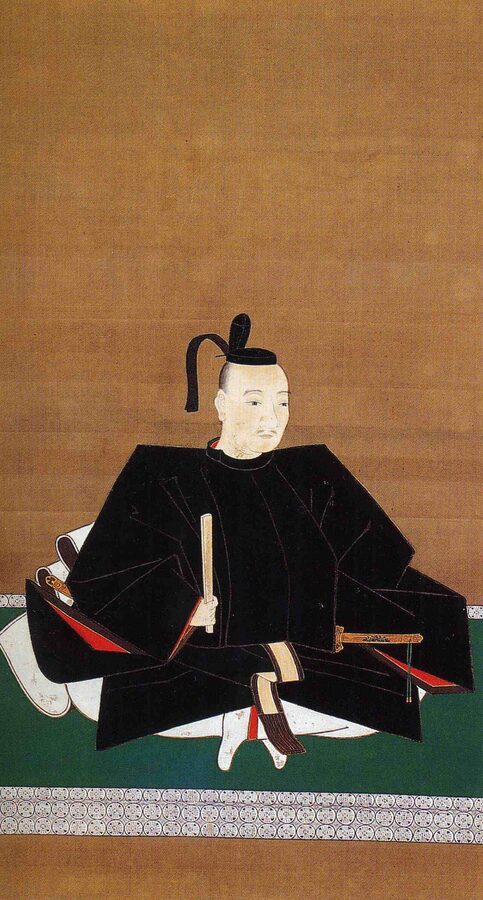
On the sixteenth day of the ninth month of 1579 (6 October 1579 in the Western calendar, by the usual conversion), Nobukatsu invaded from three directions with something like 10,800 men, without asking his father. The Iga men met each column in the hills, raided the camps at night with torches, ambushed the roads they knew and the invaders did not, and in two or three days had driven the whole army back into Ise. Nobukatsu’s senior retainer Tsuge Yasushige was killed at the Onikobu pass. Nobunaga wrote to his son that he would disown him, and he seems to have meant it for a while.
Two years later Nobunaga did it properly. In the fourth month of 1581 two Iga men, Fukuchi Munetaka and Mimisu Tomoaki, came to Azuchi and offered to show the way, and in the ninth month an army that sources variously put at forty to fifty thousand came over every pass into the province at once, from six directions, including the Kōka side. Nobunaga’s chronicle, the Shinchō Kōki, has the attack begin on the third day of the month; the later Iga chronicle, the Iranki, says the twenty-seventh.
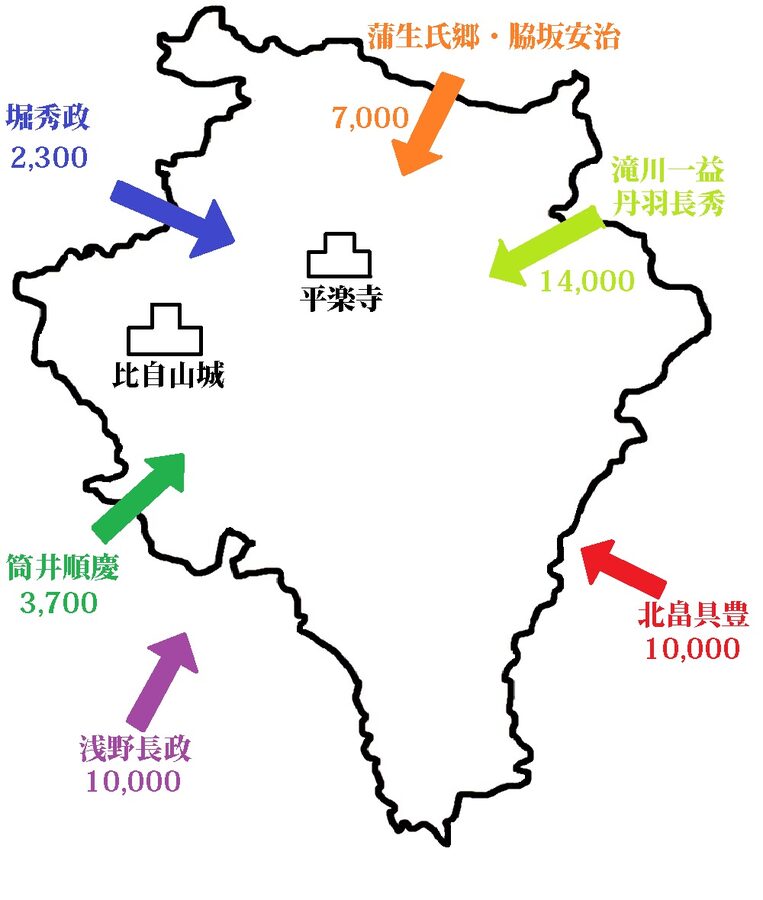
The Iga men did what they had done in 1579. They hit Gamō’s camp at night and caught his men asleep, and a night raid on Tsutsui Junkei’s lines is said to have cost him a thousand men. Hijiyama, a hill fort west of Ueno, held off Niwa Nagahide’s assaults again and again, and its defenders are still remembered in Iga as the “seven spears of Hijiyama”. But some of the league had already been bought, the rest could not coordinate, and the garrison of Hijiyama slipped away the night before the final assault to join the last holdouts at Kashiwara Castle in the south.
The Oda army then did what it had done to the monks of Mount Hiei ten years earlier. Villages and temples were burned and their people killed without distinction; at Heiraku-ji, the Iranki says, some seven hundred monks were beheaded. The same chronicle claims that thirty thousand of Iga’s ninety thousand people died, a figure you should treat as a war tale’s number rather than a census, and Japanese historians generally do. The Iranki was written by an Iga man in the seventeenth century, with every reason to make the catastrophe as large as possible.
Kashiwara surrendered on terms brokered by a Nara sarugaku actor, and by the middle of the ninth month the province was, in the Kōfuku-ji diarist’s word, “settled”. Nobunaga rode in to inspect it on the ninth day of the tenth month. Many of the league’s leaders simply left for other provinces and came home when things calmed down.
They did not wait long. Nine months later Nobunaga was dead at the Honnō-ji, and Iga rose again at once. One of Nobukatsu’s officers, Ogawa Nagayasu, sent to put the rising down, left a memoir that is one of the few eyewitness descriptions anyone has: he noted that the Iga men were “skilled at shinobi and night attacks”, kept his guard doubled, and when a night raid came he beat it off, chased the raiders to the gate of their fort, and stopped. Later he learned they had been waiting inside to close the gate behind him.
Getting Ieyasu home
The most famous single shinobi job in Japanese history happened in the same week, and it is mostly told wrong. When Nobunaga died on the second day of the sixth month of 1582, Tokugawa Ieyasu was sightseeing at Sakai with a few dozen companions, with Akechi Mitsuhide’s army between him and home and every village gang on the road eager for a fleeing lord’s head. He got back to Mikawa in about three days, overland through the hills of southern Ōmi and Iga to the Ise coast, then by boat.
I have told that journey in the article on Hattori Hanzō, the Tokugawa officer of Iga descent who went with him. The traditional story, set down in the shogunate’s official history, has two hundred Iga men escorting Ieyasu and being rewarded with posts in his service. Mie University’s Fujita Tatsuo points out that this version first appears in documents the Iga men compiled themselves in the early eighteenth century, when they were lobbying for better status, and that the surviving letters show Kōka men doing much of the guiding: more a Kōka crossing, he says, than an Iga one.
The Kōka side of the story is solid: the party spent a night at Ogawa in Kōka with the local lord Tarao Mitsutoshi, whose family were made hereditary Tokugawa intendants for it. One Japanese encyclopedia has Ieyasu taking two hundred Iga men into service that month; another counts three hundred escorts. Treat the numbers with suspicion and the debt as real.
The real reason so many Iga and Kōka men ended up working for the Tokugawa, though, was unemployment. In 1585 the new Toyotomi lord of Iga, Tsutsui Sadatsugu, carried out a samurai-barai, a clearing-out of the gentry, and made them choose between exile as rōnin and becoming farmers. The same year Toyotomi Hideyoshi stripped ten Kōka men of their lands after a river embankment they had been ordered to guard gave way, and the Kōka league dissolved, an episode still called the Kōka-yure, “the Kōka shake-up”. Dispossessed gentry went where the jobs were.
Shinobi on the payroll
The Iga men who followed Hattori Hanzō to the Kantō in 1590 became two hundred dōshin, constables, under his command, housed along the Kōshū road outside the western gate of Edo Castle that still bears his name. It was not a glamorous posting. By the group’s own records, seventy-five of them died between 1582 and 1615, many in the front lines of castle assaults, and the pay was about ten koku of rice a year, the income of a moderately prosperous farmer.
Later the shogunate fixed the Iga-mono into a set of minor posts: guards at the gates of the Ōoku, the shogun’s women’s quarters; keepers of empty mansions; inspectors who walked building sites to check the workmen turned up; gatekeepers at the Yamazato gate of the western enclosure. The standard stipend was thirty bales of rice plus rations for two, below the rank that allowed an audience with the shogun. The Iga name became a job title, and in the eighteenth century men from Kii who had never seen Iga held it.
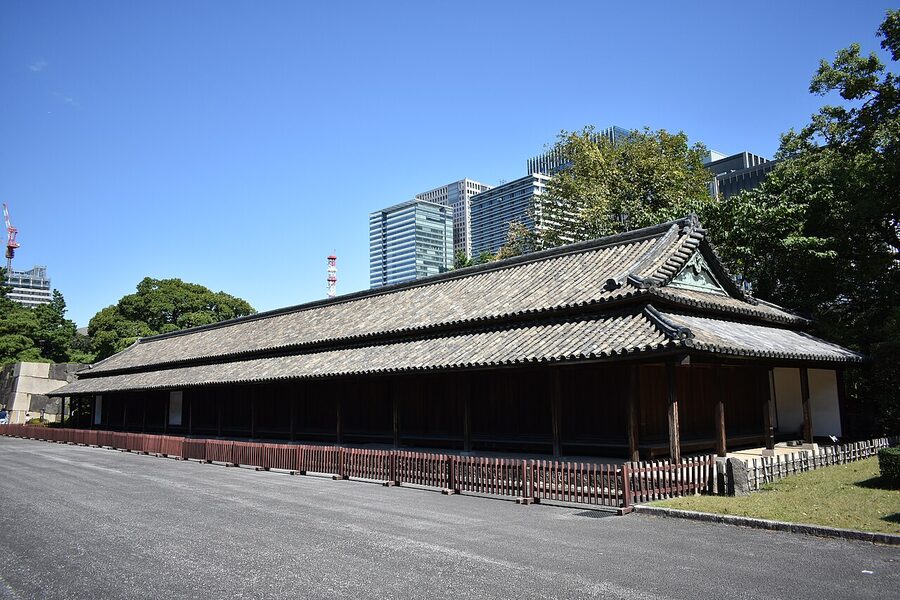
When the shogunate formed the Hyakunin-gumi, the four companies of musket guards, in 1633, the Iga company was one of them. The Kōka company had a better pedigree: before Sekigahara in 1600, more than a hundred Kōka men helped hold Fushimi Castle for Ieyasu and some seventy died there, and Ieyasu took their sons into service. Most Kōka families, though, refused to move to the Kantō at all.
The shogunate’s Iga men did genuine intelligence work until about 1624 and were mainly guards after that, though seven were sent on secret assignments as late as 1726. The domains employed their own. The Ikeda lords of Himeji had fifty-nine “Iga-mono” on their rolls when Ikeda Terumasa died in 1613, and the Ii of Hikone kept their own band. The Tsugaru of Hirosaki kept a corps called the hayamichi no mono, “fast-road men”, to watch their neighbours and the north, and it is recorded until 1870.
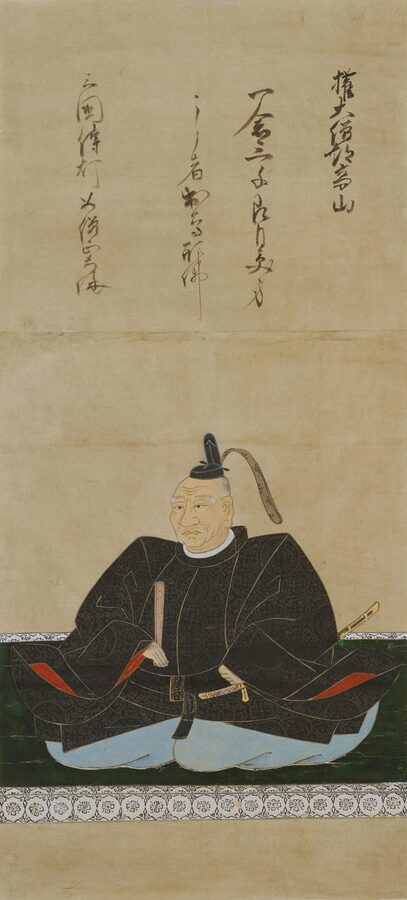
Iga itself went to Tōdō Takatora, and he handled its gentry cleverly. Rather than drive them out, he made them musokunin, a rank above farmers with the right to a surname and two swords, and by 1636 the domain had a “shinobi company”. Before the Osaka campaign of 1614 he chose ten Iga men skilled in infiltration and gave them stipends of thirteen to twenty koku and houses outside Ueno Castle. During the winter siege he sent shinobi to burn the ground in front of the enemy, and had them measure the depth of the moats.
That last job, measuring moats, is what nearly all shinobi work looked like in practice. The fullest account of an operation comes from the Shimabara Rebellion, the last real war of the seventeenth century. When the senior councillor Matsudaira Nobutsuna rode west in 1638 to take charge of the siege of Hara Castle, a group of Kōka men met him at the post town of Minakuchi and asked to come. He allowed ten.
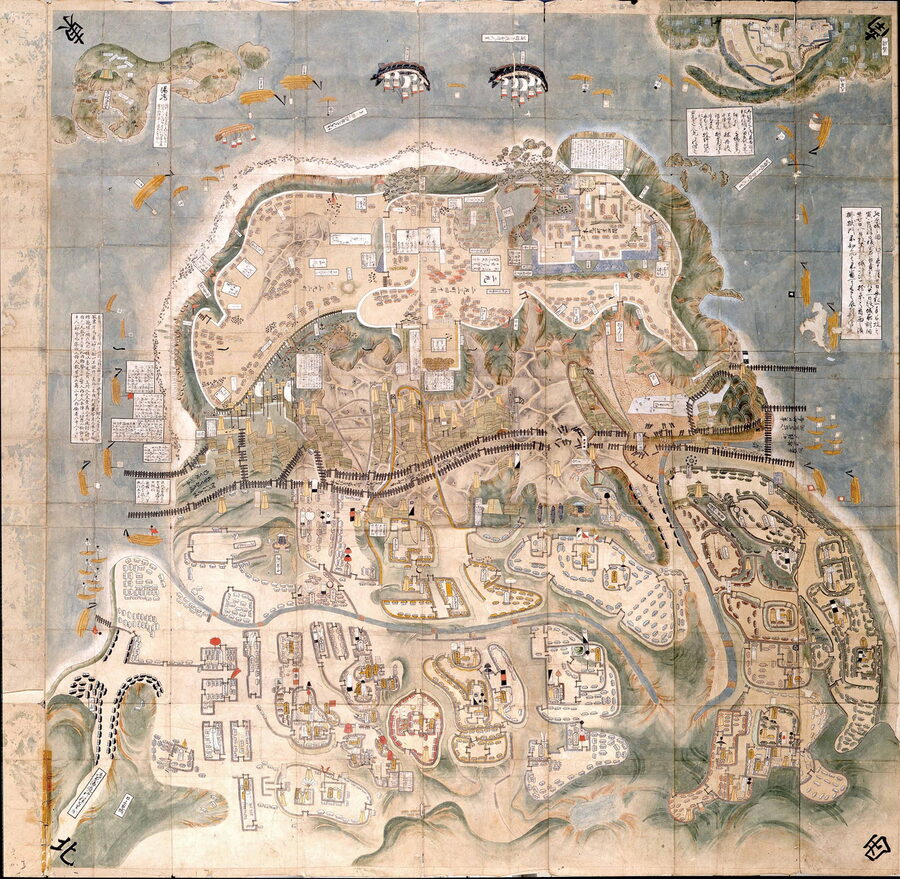
Their orders were reconnaissance: the distance from the siege lines to the castle, the depth of the marsh, the height of the walls, the shape of the loopholes. The diary kept by the family of one of them, Ukai Kanemon, says they also crept in at night and stole bags of the defenders’ rations, and on one raid captured a rebel banner. Two of them, Mochizuki Yoemon and Arakawa Shichirobei, were so badly wounded that they took forty days to recover, and another fell into a pit and was pelted with stones until he crawled out half dead.
And at the end of it the ten Kōka men got nothing. Their service was not credited, and none of them was taken on afterwards. It is the last time shinobi appear in a Japanese war, and it ends the way so much real intelligence work ends, with tired men going home unpaid.
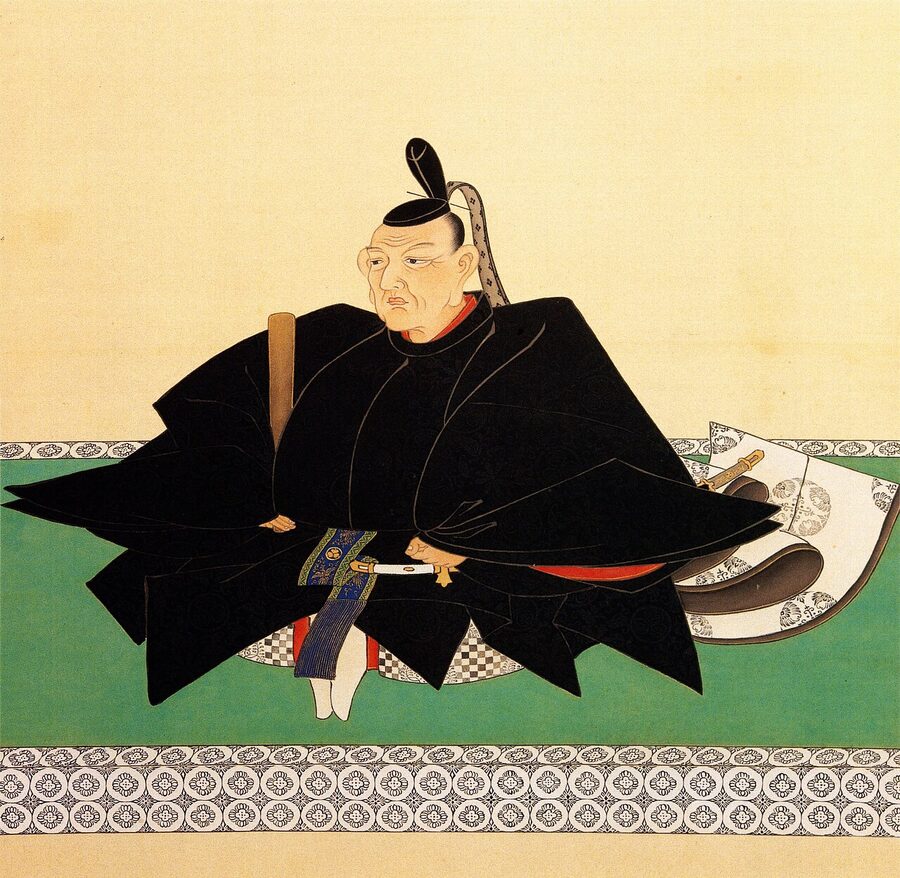
Japanese historians are blunt that the oniwaban were nothing of the sort: Yoshimune simply gave his Kii retainers the same rank as the Iga-mono. The shinobi of the Edo era were not a secret service. They were a pension scheme with a famous name. When the shogun‘s government fell in 1868, a band of Kōka descendants raised a unit for the imperial side and fought in the Boshin War; other units praised them, but nobody claims the manuals helped.
Writing it down when nobody needed it
Here is the paradox at the heart of the subject: nearly every ninjutsu manual you have heard of was written after the shinobi’s working life was over. The Ninpiden, attributed to Hattori Hanzō’s family, was put together in 1655, the Bansenshūkai has a preface dated the fifth month of 1676, and the Shōninki followed in 1681.
The Bansenshūkai is the big one: twenty-two volumes, compiled by a member of the Fujibayashi family of Iga (sources disagree on which member, and one Iga family genealogy credits a different man of the same surname altogether). The title means “ten thousand rivers gather into the sea”, and the idea was to collect the forty-nine local traditions of Iga and Kōka into a single book. It is organised like a military treatise: right mind, leadership, open infiltration, hidden infiltration, weather and timing, and tools.
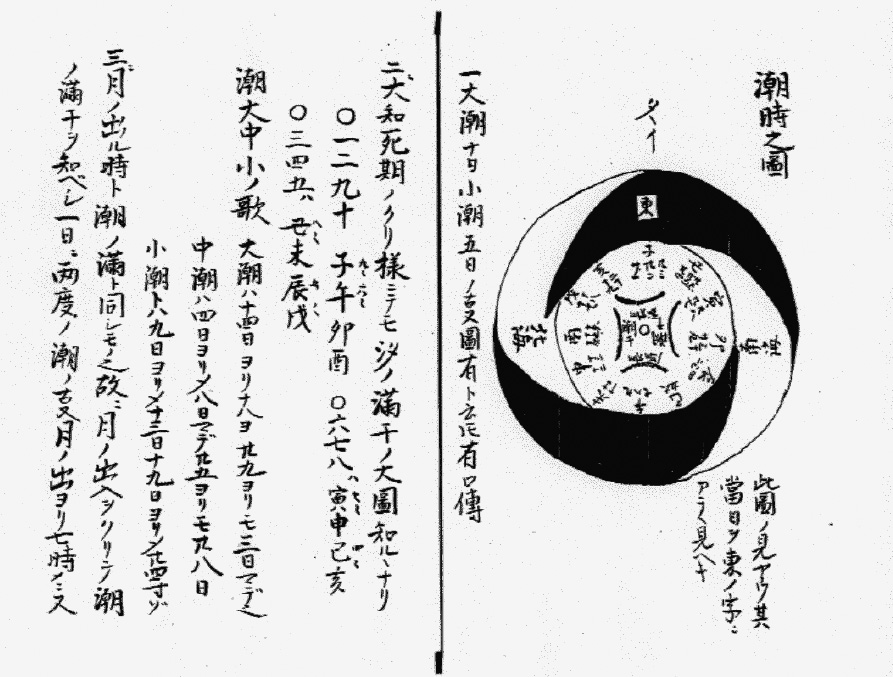
The volumes on “right mind” come first, and they are not about stealth at all. They insist that a shinobi must be loyal, upright and just, which tells you a lot about the intended readers: not spies in the field but an audience who needed to see that their grandfathers’ skills were honourable. The manual divides the work into yōnin, open infiltration, in which you walk in under your own face with a cover story, and innin, hidden infiltration, which is the climbing-in-at-night part. The first is the larger and more important.
The book went public in a way that tells you why it was written. In the fourth month of 1789 three Kōka descendants presented a copy to the shogunate’s commissioner of temples and shrines with yet another petition for samurai status, the one of the 1660s having failed. In the same petitions, about half of the twenty-one Kōka “old samurai” families admitted that they were too poor to keep up the arts at all. The Bansenshūkai was, among other things, a job application.
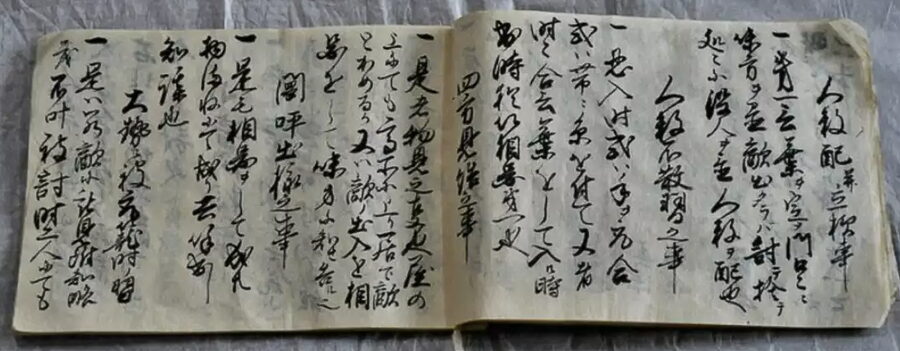
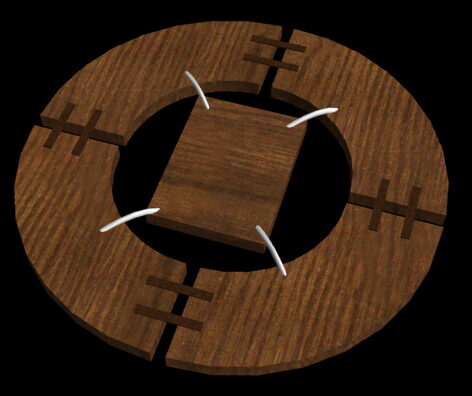
The other two “great manuals” are smaller. The Shōninki was written in 1681 by Natori Masazumi, a military scholar of the Kii domain, as one section of his school’s general teaching on warfare, and the original is lost. It is the source for the shinobi rokugu, the six things to carry (a braided hat, a hooked rope, a stone pencil, medicine, a three-foot towel and a fire-lighter), and the shichihōde, the seven disguises.
Those seven disguises are worth listing, because they are the real ninja costume: a komusō monk in a basket hat, an ordinary Buddhist priest, a yamabushi mountain ascetic, a merchant, a street entertainer, a sarugaku actor, and the “everyday look” of whatever local people wore. A shinobi in a castle town was supposed to be the least interesting person on the street.
Yamada Yūji of Mie University, who has done more than anyone to put the subject on a scholarly footing, goes further than most. He argues that ninjutsu as a system, rather than as a loose collection of tricks known to experienced soldiers, was born in the early Edo period, at the point when men began to write it down from Chinese military classics, temple treatises on strategy and their families’ memories. The manuals are evidence of how the descendants wanted the work remembered, which is not quite the same as evidence of how it was done.
He also points out something I find rather endearing: the authors tested things, mixing gunpowder and herbs and noting where a recipe handed down from earlier had no effect. These are not the books of mystics. They are the notes of practical men who were losing the reason to practise.
How the black suit got on stage
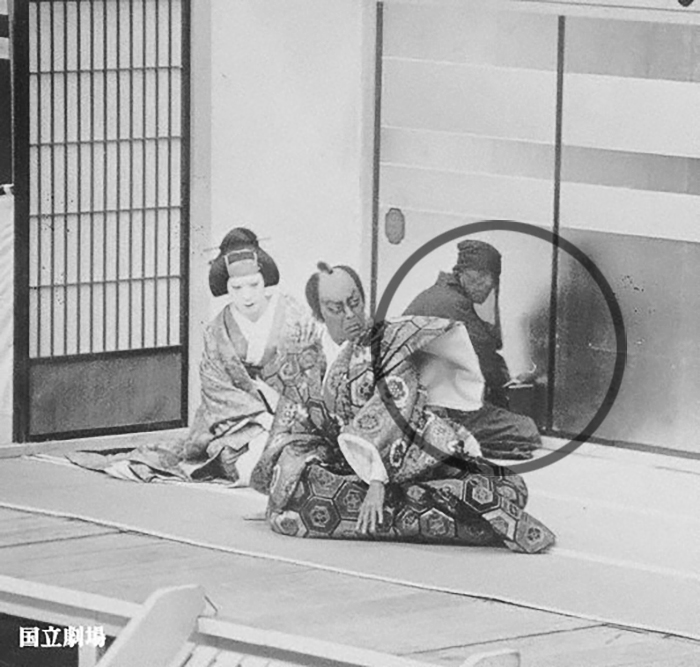
So where did the man in black come from? The usual answer is the kabuki theatre, and it is a good one. On the kabuki stage, stagehands called kurogo move about in full view of the audience, dressed head to foot in black, handing over props and whisking away fallen bodies, and by a convention everyone accepts, they are not there. Put a black-clad figure into a scene and an Edo audience read him as invisible.
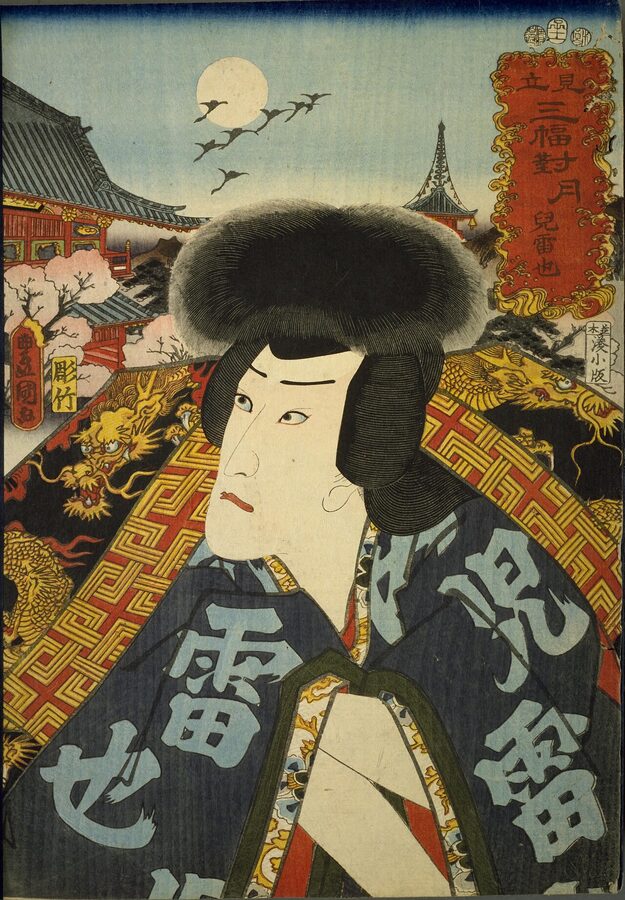
The theatre also needed its shinobi to be different from its samurai, and the plays made them so: sorcerers and thieves, using magic and odd weapons, the dishonourable mirror image of the samurai hero and his bushidō. The great example is Jiraiya, a gallant outlaw with toad magic who first appeared in a novel of 1806, was reworked into a long illustrated serial from 1839 and put on stage by Kawatake Mokuami in 1852. Jiraiya, his slug-magic wife Tsunade and the serpent villain Orochimaru were still drawing crowds a century and a half later, in manga.
Popular fiction collected the real names and dressed them up too. The Ehon Taikōki, an illustrated life of Hideyoshi published around 1800, has the thief Ishikawa Goemon learning ninjutsu from an Iga master, Momochi Sandayū, before trying to murder Hideyoshi in his bed; the real Goemon was a robber boiled alive in Kyoto in 1594, and nothing contemporary connects him with Iga at all.
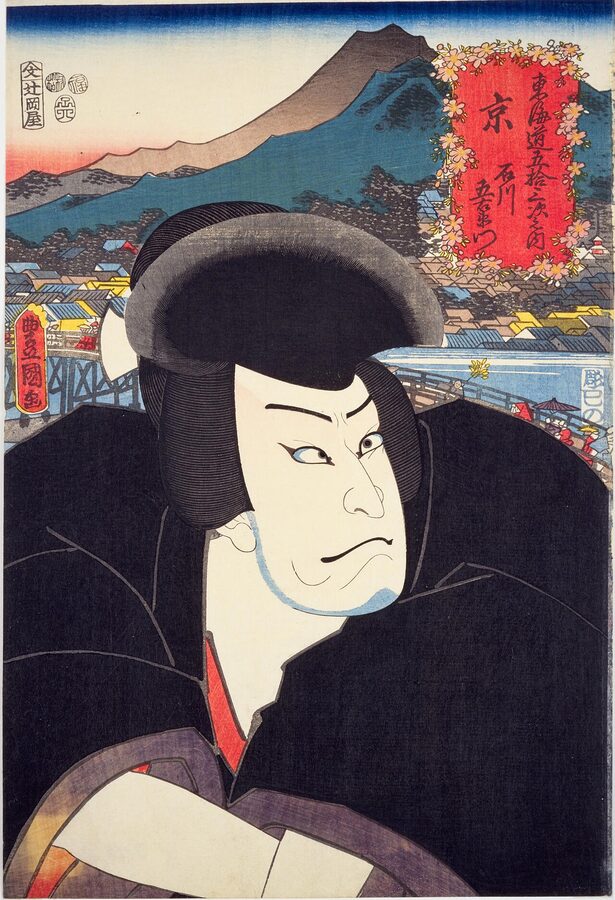
By the 1850s the prints show the costume fully formed, a figure in black from head to foot, face wrapped, creeping along a veranda. Put that next to the Nippo Jisho‘s plain definition and you can measure two and a half centuries of embroidery.
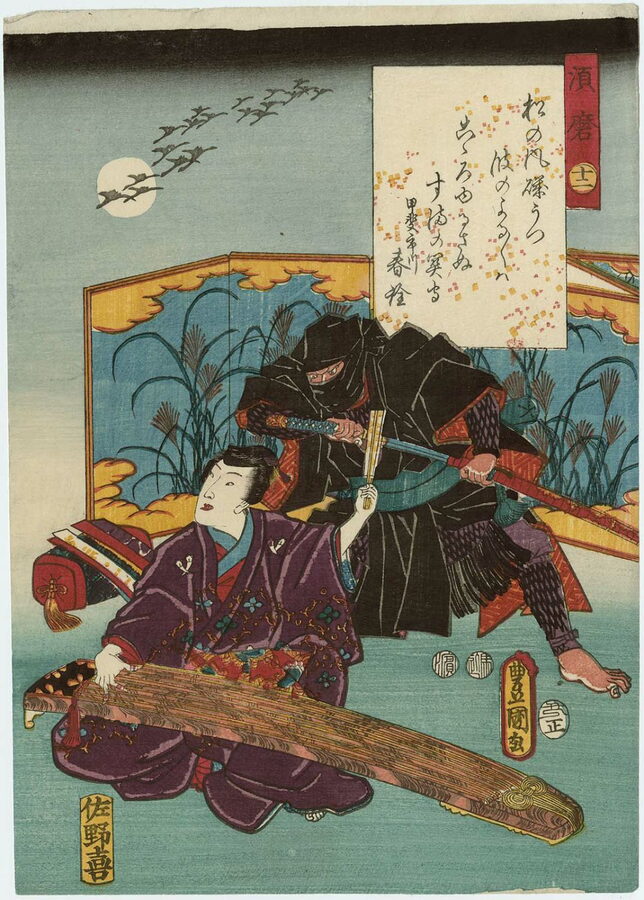
The twentieth century took the stage ninja and gave him a childhood. Between 1911 and 1924 an Osaka publisher put out some two hundred pocket books of storytellers’ tales for schoolboys and shop clerks, the Tatsukawa Bunko. The most popular title was Sarutobi Sasuke, the fortieth in the series, about a boy trained in the Kōka arts by a mountain hermit who becomes the chief of the ten heroes serving Sanada Yukimura at Osaka.
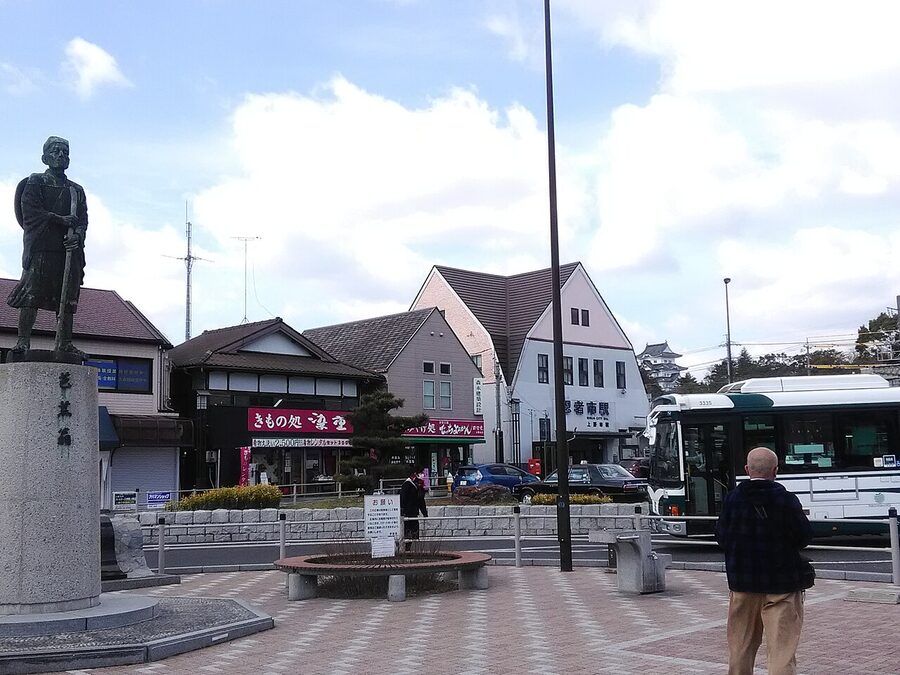
Sarutobi Sasuke never existed. He was created by a family of writers led by Yamada Atetsu, who mixed an old chronicle of the Sanada family with the Chinese Journey to the West, and added ninjutsu to the martial arts because Atetsu’s mother’s family claimed a Tōdō samurai ancestor from Iga. He and his partner Kirigakure Saizō became the heroes of a generation of Taishō children, and Imabari, where the family came from, still has a statue of him outside the station.
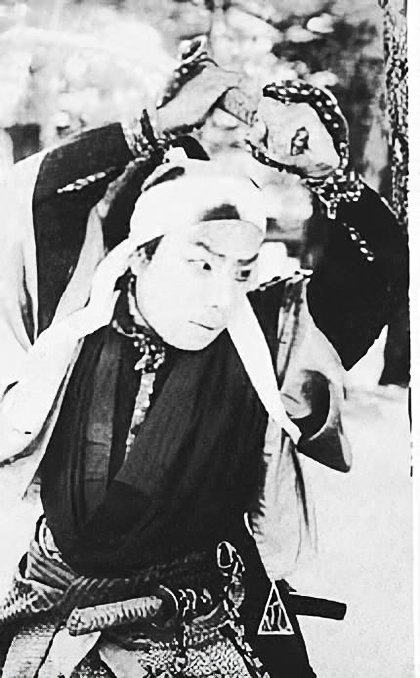
Film did the rest. Makino Shōzō’s Gōketsu Jiraiya of 1921, often called Japan’s first special-effects film, showed its hero vanishing in a puff of smoke, a trick Makino lifted from Georges Méliès’s A Trip to the Moon of 1902. Every ninja who has disappeared in smoke since is descended from a French stage magician.
The boom years
From the late 1950s a wave of serious novelists took up the subject. Shiba Ryōtarō, who would later become the most widely read historical novelist in Japan, won the Naoki Prize in 1960 with Fukurō no Shiro, “Owl’s Castle”, about an Iga shinobi hired to assassinate Hideyoshi. Murayama Tomoyoshi, a communist playwright, serialised Shinobi no Mono in the party newspaper, presenting the Iga men as exploited workers; the 1962 film starred Ichikawa Raizō and grew into a series. Shirato Sanpei drew ninja manga with the same leftist edge, and Yamada Fūtarō turned the whole thing into baroque fantasy.
Television sealed it. Onmitsu Kenshi, a samurai drama of 1962–65, switched to fighting ninja in its second season and reached ratings close to forty per cent. Its planner, Nishimura Shun’ichi, gave the ninja the four-pointed, swastika-shaped throwing star, and the show was the first to put the “water spider” on screen. A generation of Japanese children learned what a ninja looked like from a 1962 television prop.
Dubbed into English as The Samurai, the show was a hit in Australia, popular enough that Men at Work recorded a B-side called “Shintaro”, after its hero, in 1983. I enjoy that more than I probably should.
Abroad, interest began with a Newsweek piece in 1964 on Japan’s ninja boom. Three years later You Only Live Twice sent James Bond to a ninja training school filmed at Himeji Castle, all black outfits and rope work in the castle grounds. In 1981 Enter the Ninja launched Sho Kosugi, who went on to become the first Japanese actor paid a million dollars for a Hollywood role, and in 1984 two comic-book artists in New Hampshire created the Teenage Mutant Ninja Turtles.
By the time the American boom faded in the late 1980s, the image had gone round the world and come back changed. Hollywood’s ninja climbed office buildings in broad daylight, threw handfuls of shuriken, and fought with nunchaku and sai, Okinawan and Chinese weapons no shinobi ever carried. Ninjutsu reinvented itself as a martial art in the same decades, alongside the other modern budō like karate, and Yamada dates its presentation as a fighting system mainly to the 1980s.
Kunoichi, and the woman who was not there
The female ninja is the clearest case of an invention with a respectable-sounding footnote. Kunoichi was old slang for “woman”, from the three strokes く, ノ and 一 that make up the character 女. The Bansenshūkai does contain a “kunoichi technique”, but it describes using women as agents placed in a household, as maids or companions, to help an operation along. They are not described doing what the men did, and there is no hint of combat.
The sense of “female ninja” comes from 1960, when Yamada Fūtarō published a novel about a group of women shinobi with erotic magic, filmed in 1964 to great success. Everything since, from the anime heroines to the mesh vests (a cartoonist’s shorthand for the chain mail of samurai armour), descends from those books.
The historical kunoichi most often named is Mochizuki Chiyome, said to have run a school of shrine maidens for Takeda Shingen who travelled the provinces gathering intelligence. Her story has been taken apart, piece by piece, by Yoshimaru Katsuya of Mie University. The only source is a licence supposedly granted by Shingen in 1569, quoted in a 1930 history of shrine maidens and now lost; her husband is said to have died at the fourth battle of Kawanakajima, where the records name a different Mochizuki; and the idea that her maidens were spies first appears in a popular history of 1971, as the author’s own speculation.
A two-page “biography” in a 1991 magazine special did the rest, and she now has a role in a 2023 NHK historical drama. Genuine traces of women doing this work are slight: physiognomy sketches kept by a family that supervised travelling shrine dancers, and a Takeda-tradition manual preserved in the Matsushiro domain that names one transmitter only as “Holy Woman”. The whole of the evidence would fit on a postcard.
Myth check
Let me take the rest of the image piece by piece.
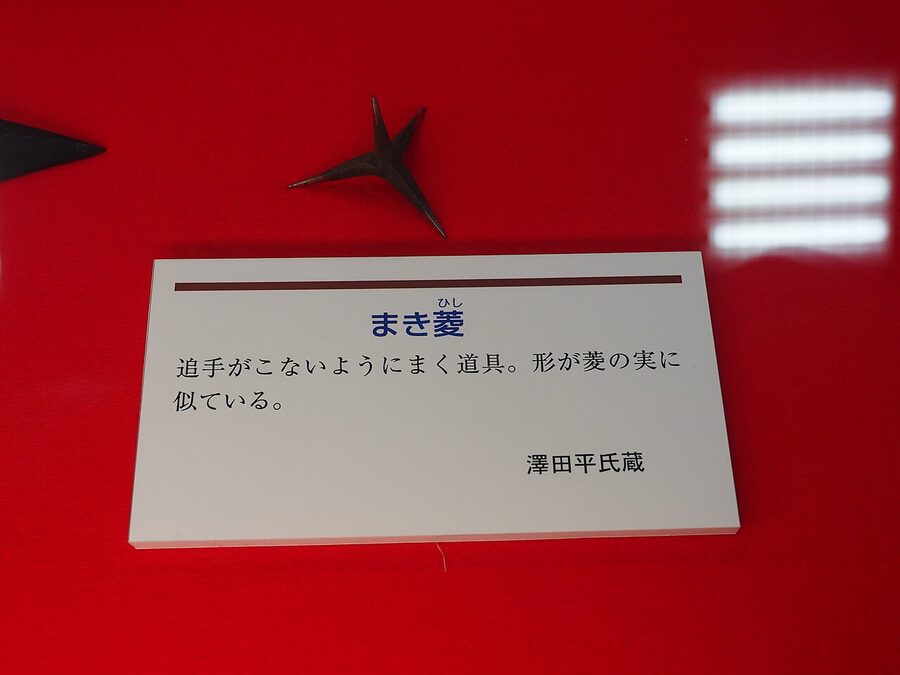
Throwing blades, shuriken, were real, but as a samurai’s martial art, mostly a short iron spike that the last shogun, Tokugawa Yoshinobu, practised; the Bansenshūkai does not mention them. They became the emblem of the ninja between the late Meiji and early Shōwa years, in the storybooks, and the swastika-shaped star so many cartoons copy was dreamed up for that 1962 television show. Even the writers who think shinobi carried them put the number at one, two or three.
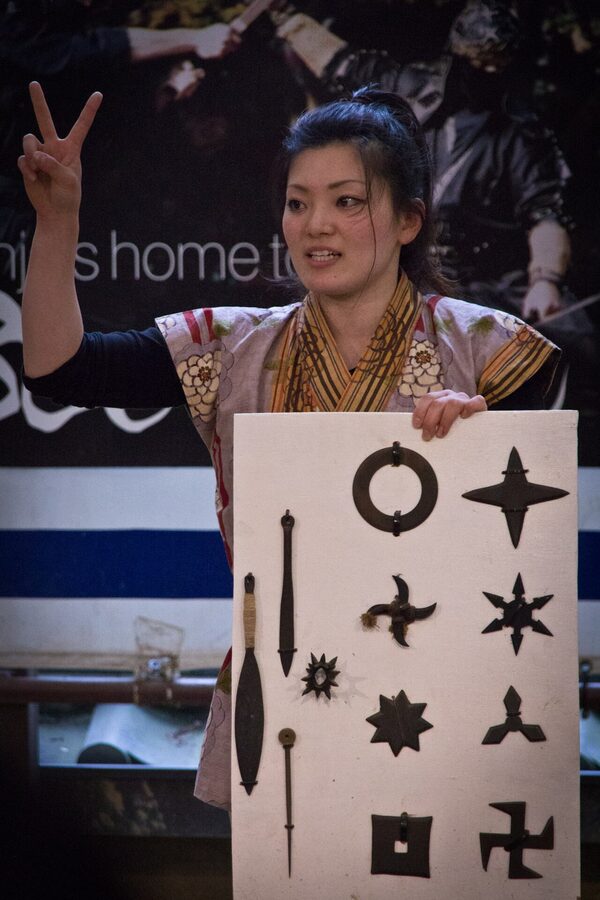
The black suit. Black shows up at night, as anyone who has tried to hide in dark clothes under a moon will know, and the clothes that survive as “shinobi dress” are mostly dyed brown, persimmon-tan or dark indigo, cheap dyes that look like farmers’ working clothes. The Kōka Ninja House describes a reversible coat, brown outside and dark inside, with pockets for a saw blade and a long towel. And in daylight, which is when most intelligence was actually gathered, a shinobi wore whatever the people around him wore.
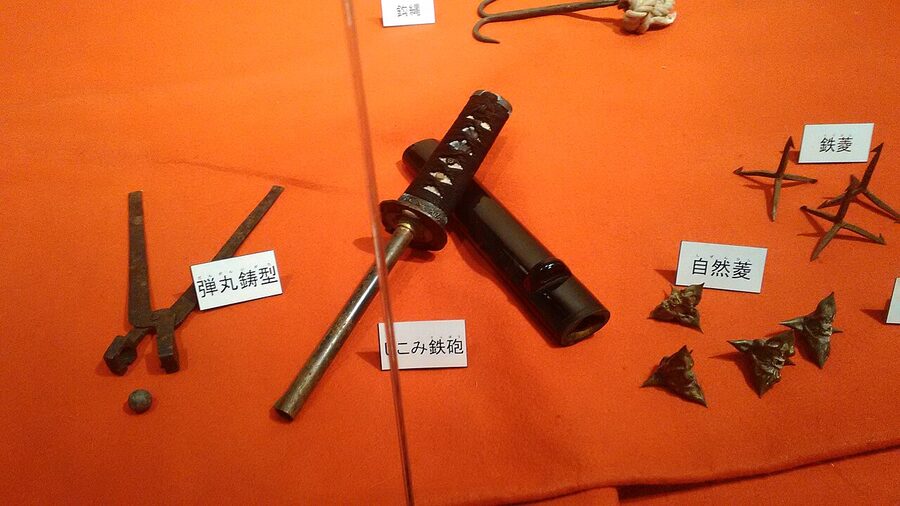
As for wall-running, water-walking and vanishing, the manuals describe ropes with hooks, collapsible ladders, hand claws and iron spikes driven between the stones of a castle wall to climb on. They describe throwing sand in a pursuer’s eyes and crouching motionless in the dark with a cloth over your head, so that searchers look past you. These are a burglar’s tricks, not a magician’s.
Sneaking about with swords. There is no special “ninja sword”. The straight-bladed, square-guarded ninjatō of the films has no convincing historical example; shinobi carried the ordinary swords of the time, or shorter blades for indoor work, and very often a sickle, because a farmer with a sickle looks like a farmer. The weapon the sources mention most is fire.
Assassins. There is very little evidence that shinobi killed people by stealth as a job. The nearest thing to a ninja assassination in the record is Sugitani Zenjūbō, often called a Kōka man, who in 1570 fired two shots at Nobunaga from ambush on the Chikusa pass and only grazed him; he was caught three years later and executed by being buried to the neck and slowly sawn. If shinobi did a lot of killing, nobody wrote it down.
What, then, has the research established? The International Ninja Research Center at Mie University opened in Iga in 2017, and its work has moved the subject from folklore into archives. The picture is of men whose real skill was information: making friends in a strange town, remembering what they heard and getting home with it. Fire was their technical specialty, and they knew medicines, which is why the Kōka hills are still full of pharmaceutical firms.
That last link is unusually concrete. Kōka families who had sold charms and medicines on the road turned to selling patent medicines door to door after 1884, when the government banned the charm trade, and several modern drug companies trace their founders to them. The research centre has even cooked up the manuals’ “ration pills” with food scientists to see if they work.
Yamada likes to say that the verb at the root of the word, shinobu, has two meanings: to move unseen, and to endure. The real shinobi did a great deal more enduring than vanishing.
Where to see the shinobi today
There are three clusters worth your time: Iga Ueno, the Kōka hills just over the border in Shiga, and two stops in central Tokyo. Iga and Kōka are an hour or so apart by the JR Kansai and Kusatsu lines, changing at Tsuge, depending on connections, so you can do both in a long day from Kyoto or Nagoya, but two days is kinder. Several places take cash only, so carry some.
Iga Ueno: the Iga-ryū Ninja Museum
The museum is in Ueno Park, the old castle hill, a short walk uphill from Uenoshi Station on the little Iga Railway. Reach the Iga Railway at Iga-Kambe on the Kintetsu Osaka Line (from Osaka-Namba, or from Nagoya changing at Ise-Nakagawa) or at Iga-Ueno on the thinly served JR Kansai Line. The Mie Kōtsū highway bus from Nagoya’s Meitetsu Bus Center takes about 100 minutes and stops at Uenoshi Station.
The museum opens 10:00–16:00 on weekdays (last entry 15:30) and 10:00–16:30 at weekends and on holidays (last entry 16:00), and closes from 29 December to 1 January. Entry is ¥1,000 for adults and ¥700 for children from four to fifteen. The ninjutsu show costs ¥600 more and does not run every day, so check the schedule on the museum’s own site before you plan around it.
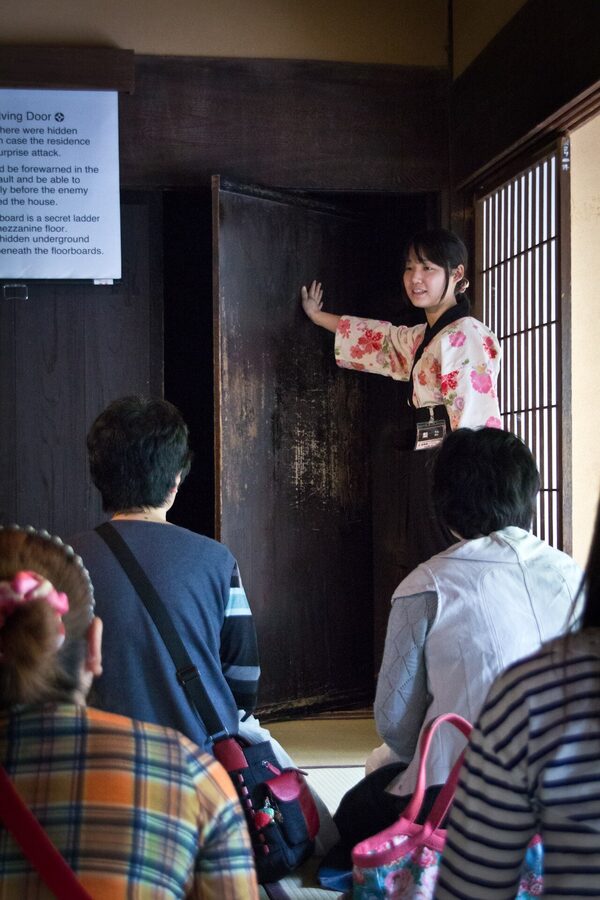
Take the house tour, then go through the two exhibition buildings: one shows replica tools made from the manuals, and the other, a converted rice store, covers the history and has a “ninja mandala” of the gods the Iga and Kōka men prayed to. The museum’s copies of the Bansenshūkai and the Iranki are shown in rotation, and in autumn 2026 it ran a small exhibition on the shift from the Iga-shū, the medieval band, to the Iga-mono, the Edo employees, which is the whole story in one room.
Iga Ueno Castle
Next door in the same park, Iga Ueno Castle stands where the temple of Heiraku-ji stood in 1581, when its monks were killed. Tōdō Takatora built the castle from 1611 and gave it a stone wall almost thirty metres high on the west side, because that was the side the Toyotomi in Osaka would come from; the three-storey keep is a 1935 reconstruction in wood.
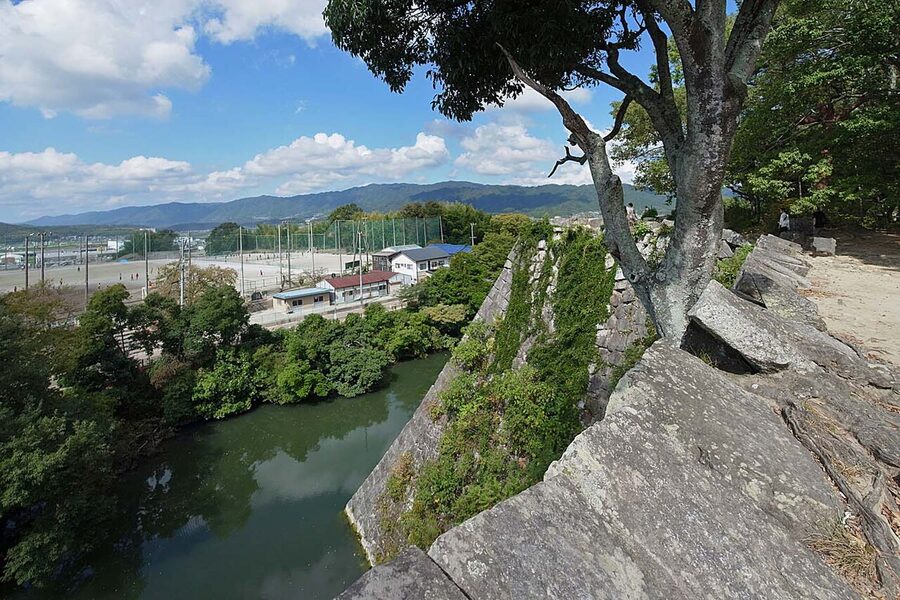
The keep opens 9:00–17:00 (last entry 16:45) and closes 29–31 December. Entry is ¥600 for adults and ¥300 for children, cash only. The keep’s contents are worthy but ordinary. Come for the wall, and walk the full length of it.
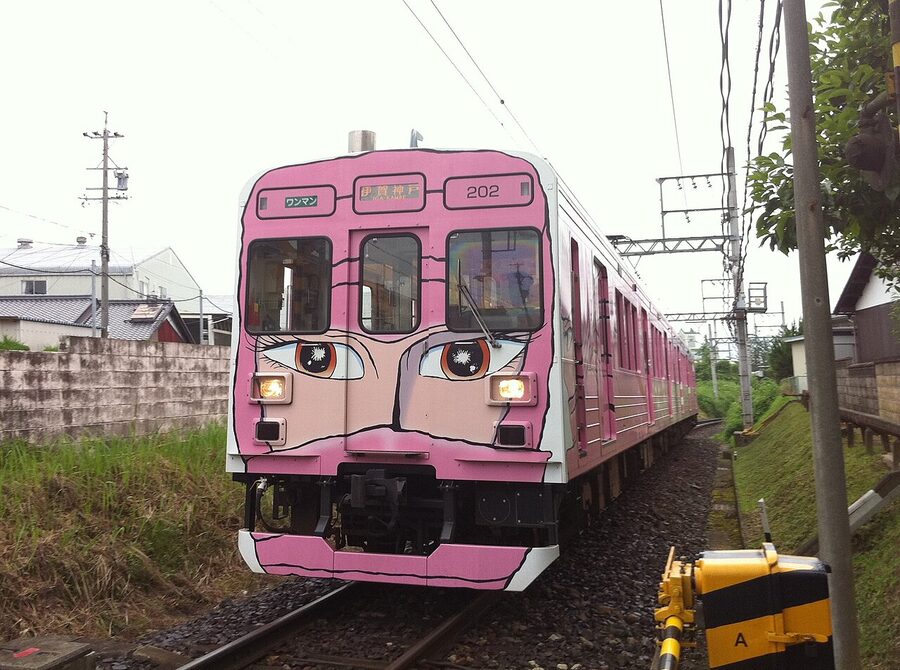
Kashiwara Castle site, Nabari
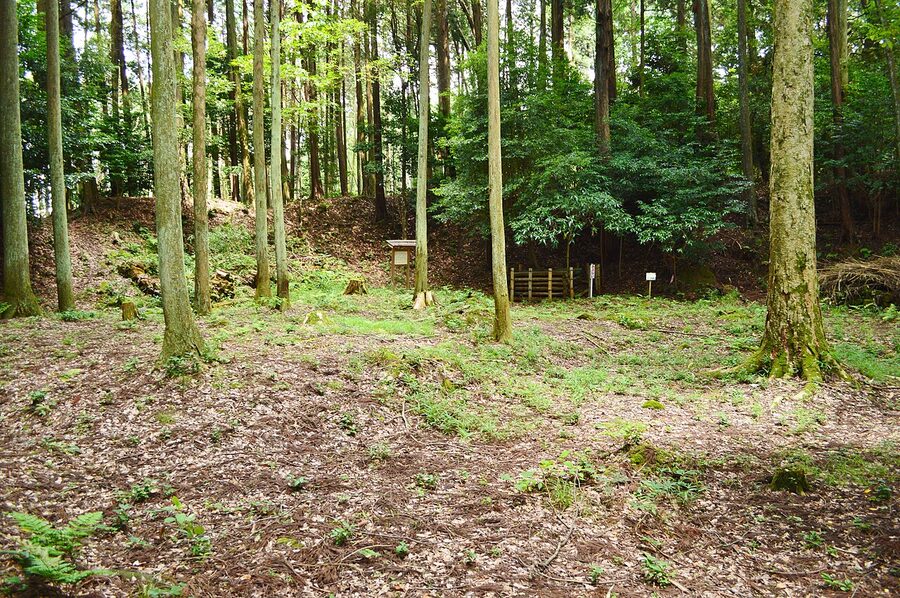
If you want the Tenshō Iga War without the gift shop, go to Kashiwara (also called Takino Castle) in the south of the province, where some 1,600 people, among them the Momochi family leader and the men who had slipped out of Hijiyama, made their last stand in 1581. It lies in the hills at Akame-chō Kashiwara, south of Akameguchi Station on the Kintetsu Osaka Line, on the way to the Akame Forty-Eight Waterfalls; you will want a car or a taxi and a map.
Kōka: the Kōka-ryū Ninjutsu Yashiki
The Kōka Ninja House is the former main residence of the Mochizuki family, one of the leading Kōka houses, at Ryūbōshi 2331 in the Kōnan district of Kōka city. The house was built in the Genroku period (1688–1704), so it postdates the shinobi’s working days by a good century, and it is fitted with revolving doors, rope ladders, a pitfall and an escape passage. Take the JR Kusatsu Line to Kōnan Station; it is about two kilometres, twenty minutes on foot or five by taxi.
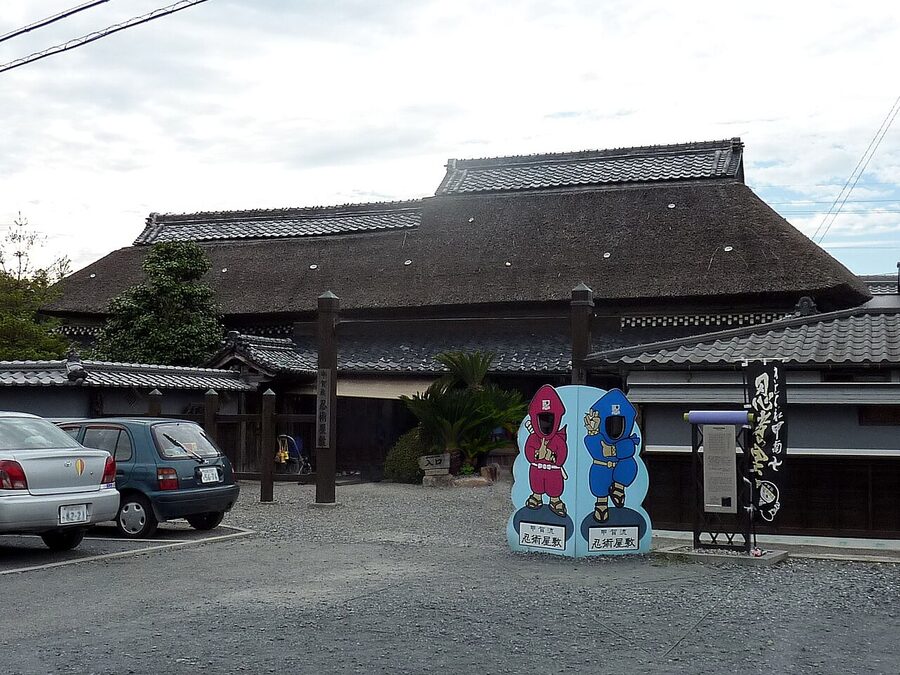
It opens 10:00–16:00 on weekdays (last entry 15:30) and 10:00–17:00 at weekends and on holidays (last entry 16:30). It closes every Wednesday and on the fourth Thursday of the month, from 27 December to 3 January, and for a winter break, so check its own site before going. Entry is ¥800 for adults and ¥600 for children, with a cup of the local herbal tea included.
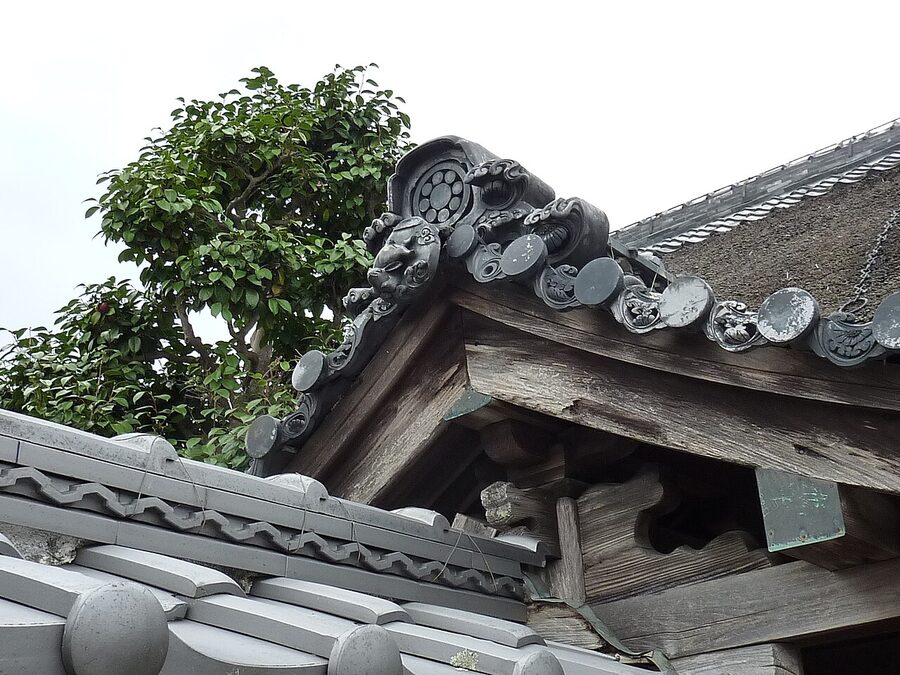
Kōka no Sato Ninjutsu Mura
Ten minutes from JR Kōka Station, the Kōka no Sato Ninjutsu Mura is a ninja theme park in the woods, with a trick house moved from a family linked to the Fujibayashi, a small museum, ninja training courses and the annual All-Japan Ninja Championship. It is aimed squarely at families. Adults pay ¥2,000 and children ¥1,500; it opens 10:00–17:00 (last entry 16:00), closes on Mondays, and runs a free pick-up from JR Kōka Station if you phone when you arrive.
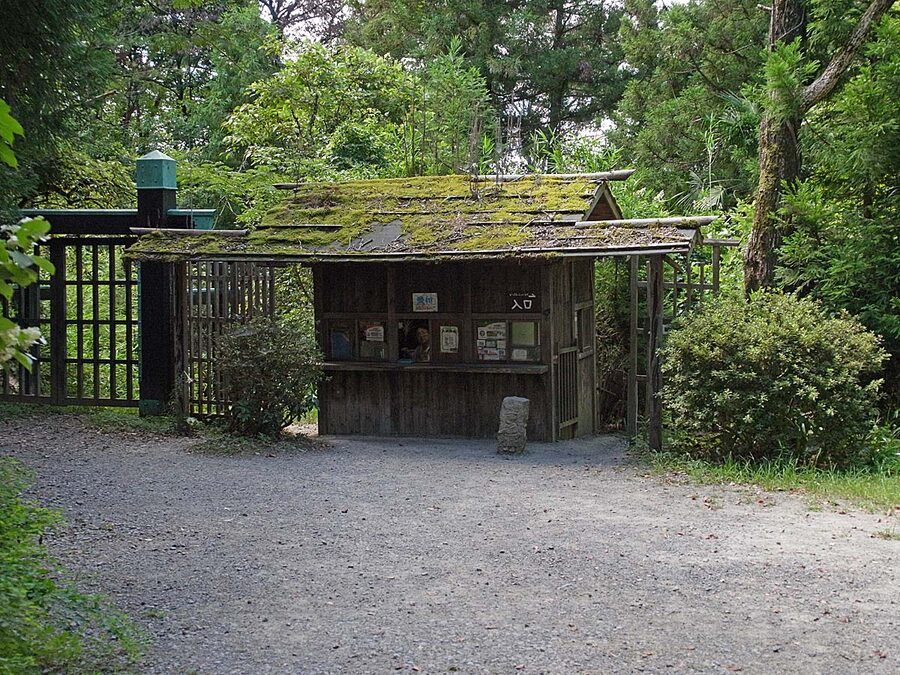
Tokyo: Hanzōmon and the Hyakunin Bansho
In Tokyo you can stand at the places where the shinobi clocked in. The Hanzōmon, the western gate of the old castle, takes its name from Hattori Hanzō, whose Iga constables lived along the road outside; it is three minutes from Hanzōmon Station on the Tokyo Metro, and you see it from the street, since it is still used by the Imperial household. The Hattori Hanzō article has the full walk from his grave at Sainen-ji in Yotsuya.
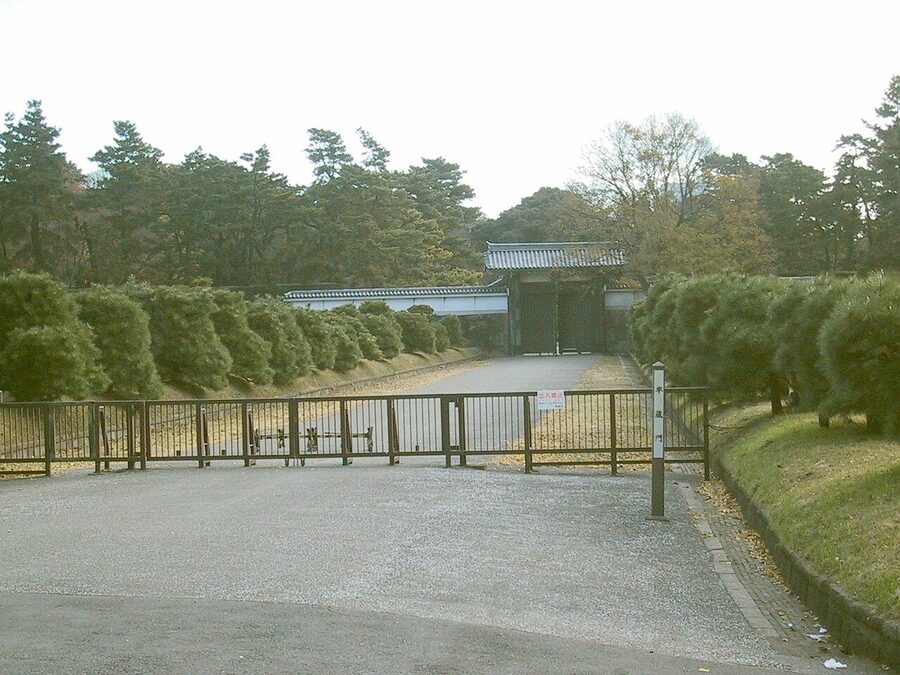
Then walk round to the Ōtemon, a few minutes from Ōtemachi Station, and into the Imperial Palace East Gardens. Just inside the Ōte San-no-mon is the Hyakunin Bansho, the long guardhouse where the Kōka and Iga musket companies took their turns on duty. The gardens are free; they open at 9:00 and close between 16:00 and 18:00 depending on the season, and are shut on Mondays and Fridays and from 28 December to 3 January. Expect a bag check at the gate.
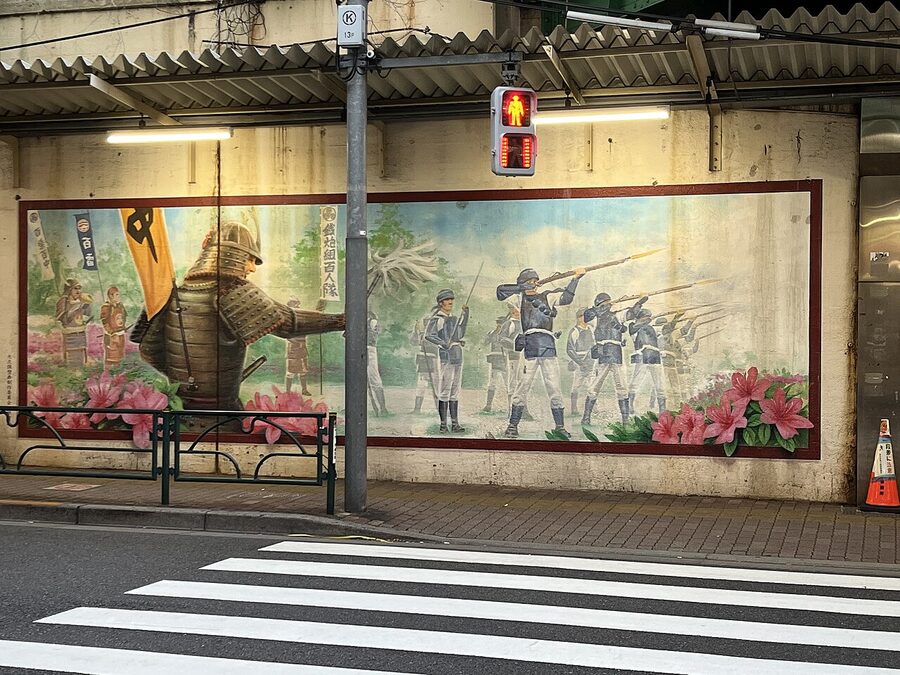
If you have an extra half-hour, take the Yamanote Line to Shin-Ōkubo for that mural and Kaichū Inari, the gunners’ shrine: a long way from the black-suited acrobat of the films, and much closer to the truth.
And when you are in Iga Ueno, take a last look at the castle walls and think of Sawamura Jinzaburō, the Tōdō domain’s shinobi, going aboard an American warship in his ordinary clothes to see what he could see. He came home with bread, tobacco, candles and a sailor’s dirty joke in Dutch, and his family wrote it all down. For the real shinobi, that was the job, and that was a good day.