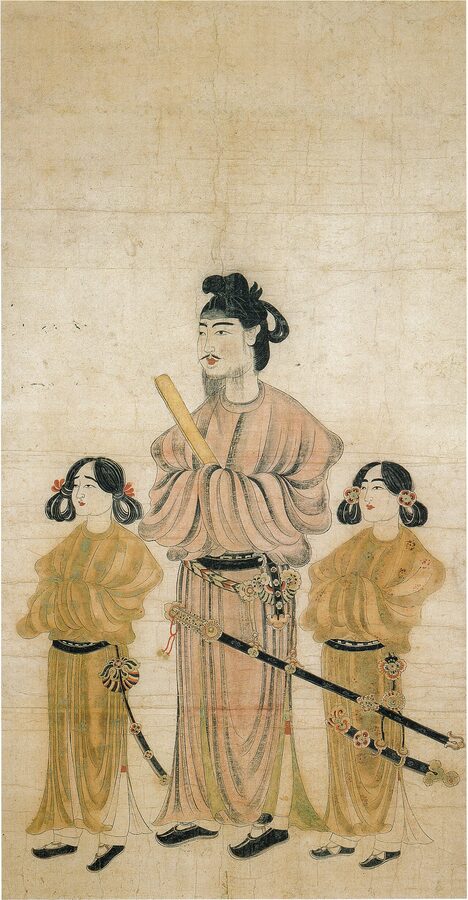
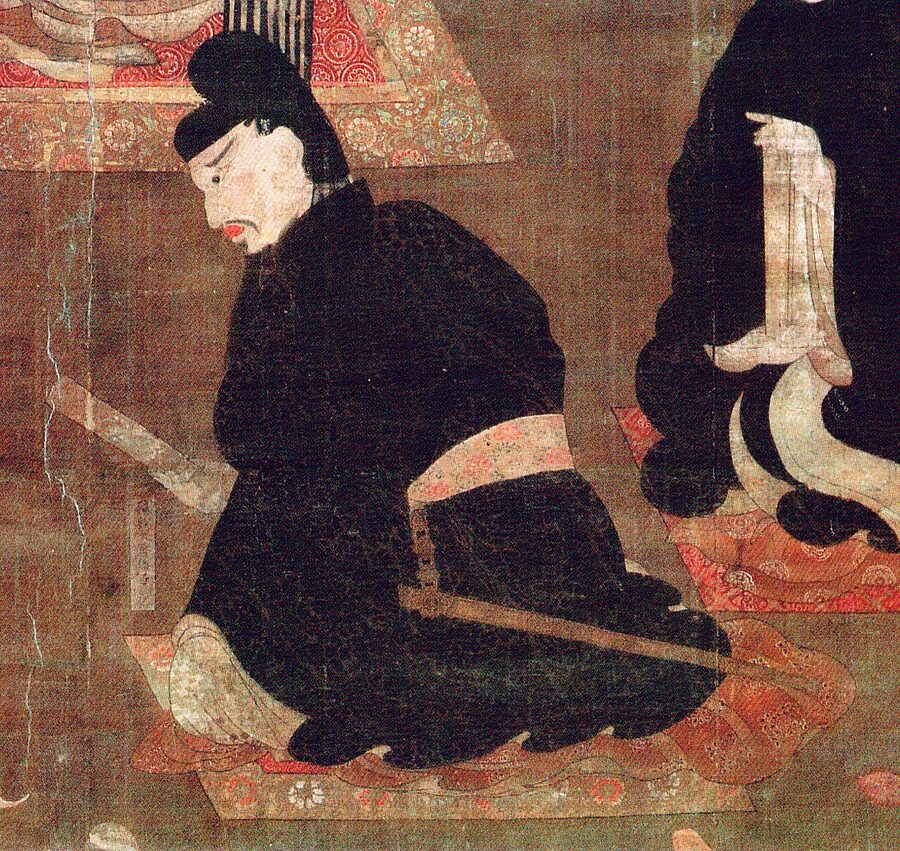
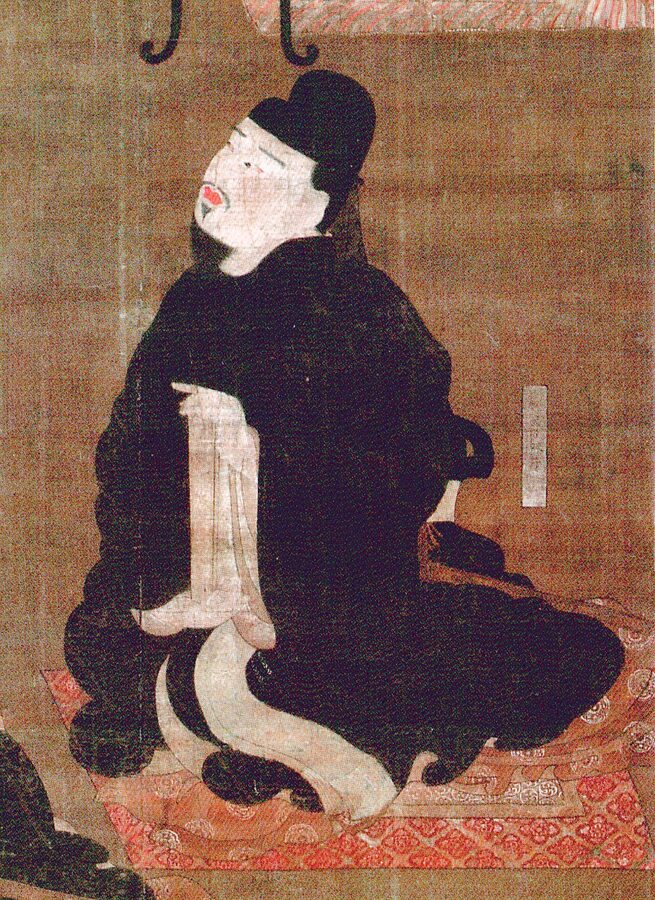
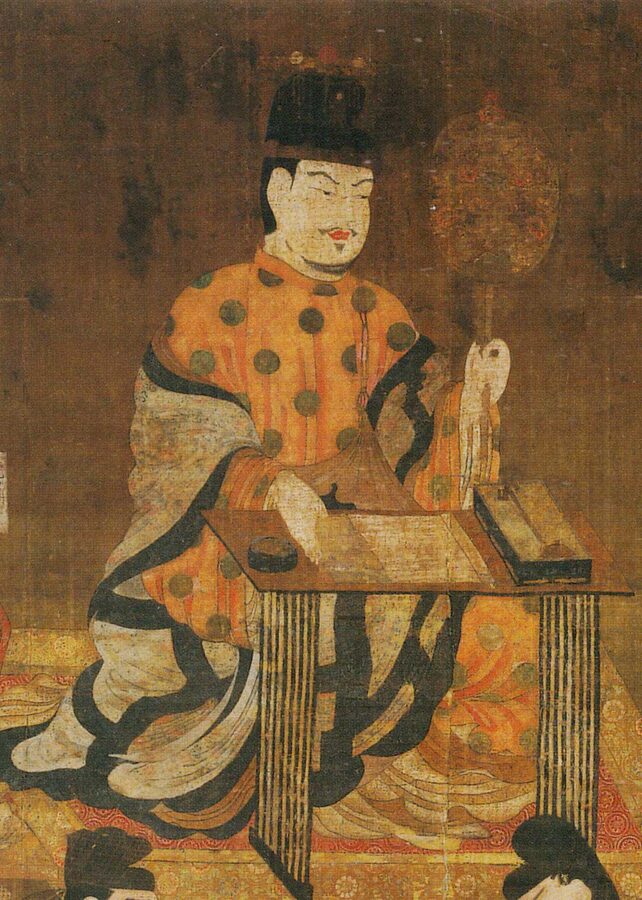
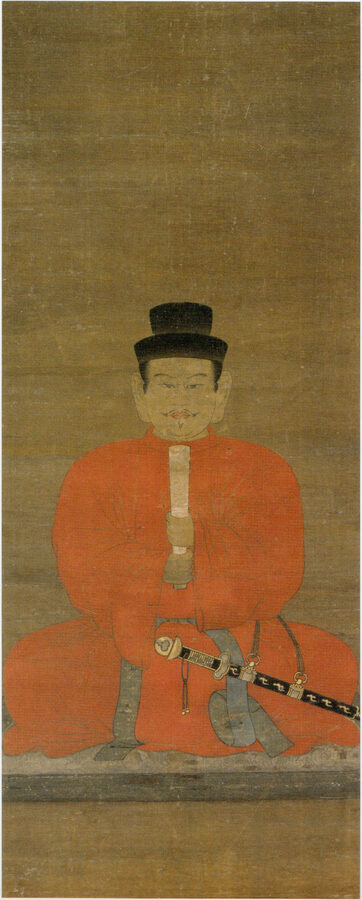
Hōryū-ji sold the most famous face in Japan for exactly ten thousand yen. In February 1878 the temple, which could no longer afford to fix its roofs, handed more than three hundred of its treasures to the imperial household and received that sum in return. Among them was a small painting of a man in a red robe holding a court tablet, with a boy standing at each elbow.
Eighty years later, in 1958, the Bank of Japan put the man in the middle of that painting on its new ten-thousand-yen note. For a generation of Japanese, “a Shōtoku Taishi” simply meant a big banknote, the way a Londoner says “a monkey” or “a pony”. The temple had sold him for the price of one of his own notes, and nobody seems to have noticed the joke.
Here is the trouble. The painting was probably made decades after the prince died, possibly a century, and the name printed under the face was never his name in life. Almost everything a Japanese schoolchild learns about him (the regency, the cap ranks, the constitution, the letter to the Sui emperor, the saintly death) comes from a chronicle finished ninety-eight years after his funeral by men with reasons of their own. I find Prince Shōtoku the most slippery figure in early Japanese history and one of the most enjoyable, because the real man and the saint have been arguing for fourteen hundred years, and you can still visit both.
In This Article
- The prince of the stable door
- Born at the stable
- A Soga boy
- The battle of 587
- Umako’s empress
- Twelve caps and seventeen articles
- The twelve cap ranks
- “Harmony is to be valued”
- The Son of Heaven where the sun rises
- Temples, swords and sutras
- Lectures and commentaries
- “The world is empty; only the Buddha is real”
- Three deaths in three months
- The embroidered paradise
- Fifteen princes at Ikaruga
- Kannon in a hidden hall
- The saviour Kannon
- Every founder’s favourite ancestor
- Did Prince Shōtoku exist?
- The textbook row of 2017
- Shōtoku on the money
- Where to find Prince Shōtoku today
- Shitennō-ji, Osaka
- Hōryū-ji and Chūgū-ji, Ikaruga
- Tachibana-dera, Asuka
- Eifuku-ji and the prince’s tomb, Taishi
- The Gallery of Hōryū-ji Treasures, Tokyo
The prince of the stable door
Start with the name, because that is where the arguments start. Nobody who lived alongside him wrote down what he was called. The Kojiki of 712 calls him Kamitsumiya no Umayado no Toyotomimi no Mikoto, and the Nihon Shoki (日本書紀) of 720, the official chronicle that traces the emperors back to the sun goddess Amaterasu and the source of nearly everything below, calls him Umayado no Toyotomimi no Miko, with grander variations.
“Umayado” (厩戸) means stable door, “Toyotomimi” something like “abundant, perceptive ears”, and “Kamitsumiya” is the Upper Palace, a phrase Chinese histories used for the residence of a crown prince. The name you know, Shōtoku Taishi (聖徳太子), “Crown Prince of Sagely Virtue”, first appears in the preface to the Kaifūsō anthology of 751, a hundred and twenty-nine years after his death, though a pagoda inscription at Hokki-ji of around 706 already calls him “the sage-virtue king”. It is a posthumous honorific, rather like calling an English king “the Confessor”.
The tidy alternative, Prince Umayado (Umayado-ō), has a history of its own. The historian Ogura Toyofumi used it in a 1963 paper as a working label, writing that he believed it was the prince’s name in life but would skip the proof, and he never supplied one. A year later Tamura Enchō used it in a popular paperback without comment. So the “real name” that Japanese textbooks would one day try to adopt began life as a scholar’s placeholder.
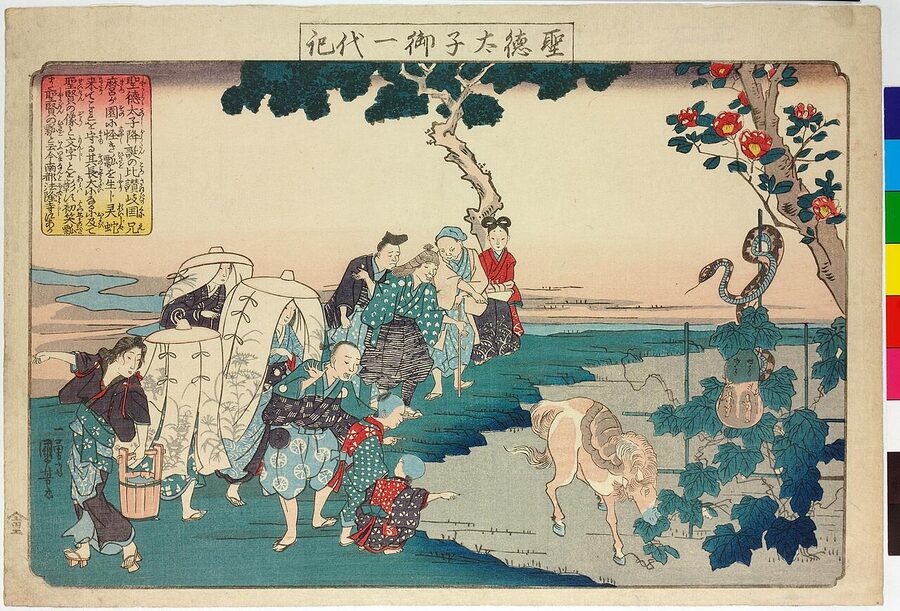
The ears come with a story. The Nihon Shoki says he could hear the suits of ten men at once and decide them all without a mistake; a temple biography, the Jōgū Shōtoku Hōō Teisetsu, makes it eight men, and a 10th-century life has him following thirty-six children at the age of eleven. Some Japanese scholars suspect the story grew backwards from the name.
Born at the stable
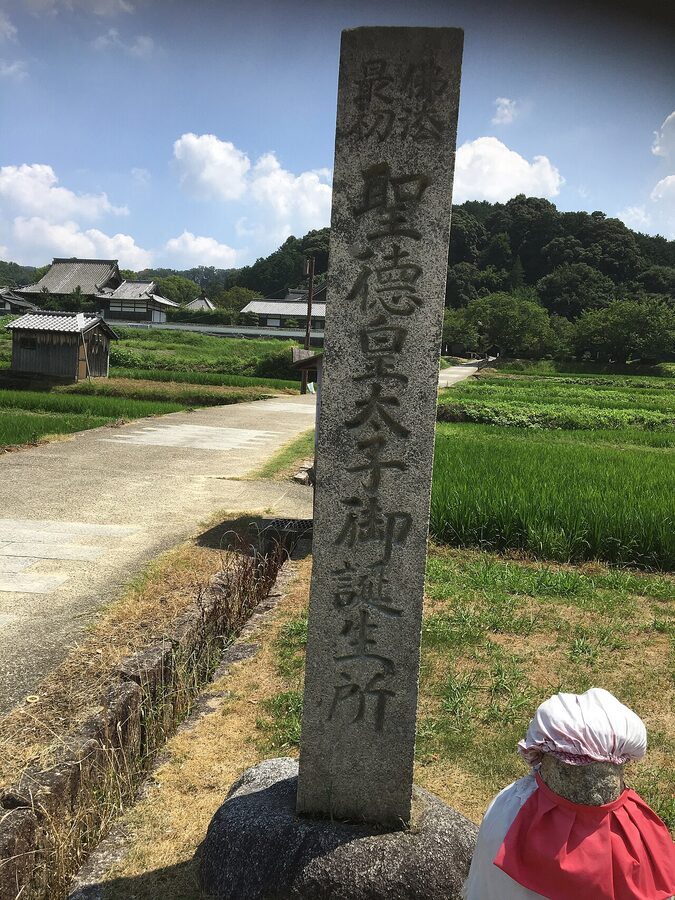
The Nihon Shoki says that his mother, Princess Anahobe no Hashihito, was inspecting the palace offices when she reached the door of the stables and gave birth there, without labour, on the spot. Japanese tradition dates this to the first day of the first month of 574, which English reference works convert to 7 February. Even the year is shaky: 574 rests on the age at death the temple sources give him, and Tachibana-dera, the temple on his supposed birthplace, says 572.
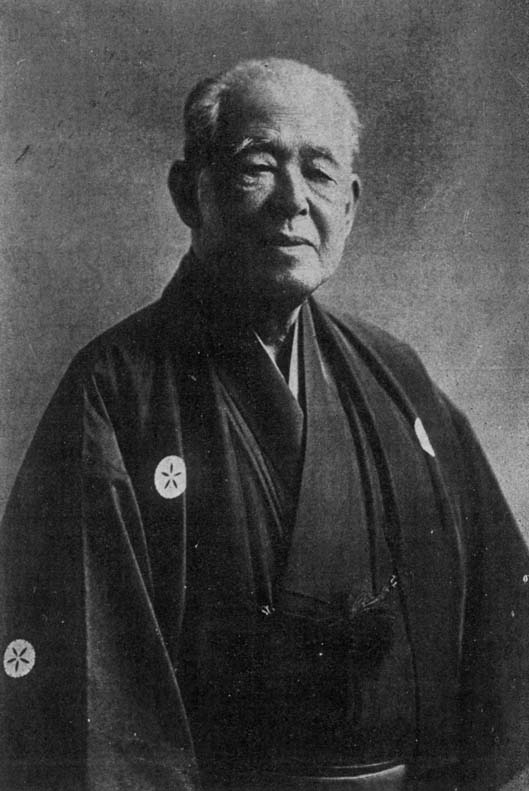
A royal baby born at a stable door rang a bell for Kume Kunitake, the Meiji historian best known for writing up the five-volume report of the Iwakura Mission. Kume suggested the story was borrowed from the Christian gospels, which could have reached Japan through the Nestorian church active in Tang China from 635. Later biographies add an annunciation of sorts, a golden monk appearing to the princess in a dream and asking to lodge in her womb, which made the parallel look even better.
Most Japanese scholars do not buy it, and nor do I. The year 574 was a year of the horse in the sixty-year cycle, which is reason enough for a stable to turn up in a birth legend, and miraculous births were common currency in Buddhist literature long before anyone in Asuka could have heard of Bethlehem. The annunciation dream, meanwhile, first appears centuries after the Nihon Shoki. You will meet the Christ theory in English-language accounts presented as a startling secret; it is neither startling nor secret.
A Soga boy
To understand Umayado you have to understand his family, and his family was the Soga. His father, later Emperor Yōmei, was a son of Emperor Kinmei by a daughter of the great minister Soga no Iname; his mother was another of Kinmei’s children, by a second daughter of the same Iname. His parents were half-brother and half-sister, which raised no eyebrows at a court that kept royal blood close, and both were grandchildren of the Soga patriarch.
The head of the family in his youth was Iname’s son, Soga no Umako, the boy’s great-uncle twice over and later his father-in-law, since Umayado married Umako’s daughter Tojiko no Iratsume. The Soga had backed Buddhism since images and sutras arrived from the Korean kingdom of Paekche in the middle of the 6th century. Their rivals the Mononobe, a military clan with deep roots in the old cults, had not.
The battle of 587
Emperor Yōmei died in 587, and the succession dispute became a war. Umako had the Mononobe candidate, Prince Anahobe, killed, then raised an army of princes and clans and marched on Mononobe no Moriya’s estate at Shibukawa, on what is now the eastern edge of Osaka. Moriya had built a stockade of stacked rice sheaves and was shooting from the branches of an enoki tree, and the Nihon Shoki says the attackers were driven back three times.
Umayado, about fourteen, was riding at the rear with his hair still tied up in the boyish style. According to the chronicle he cut a branch of nurude wood, carved images of the Four Heavenly Kings, the Buddhist guardians of the four directions, set them in his hair, and vowed to build them a temple if he won. Shortly afterwards an archer named Tomi no Ichii brought Moriya down out of his tree, and the most powerful anti-Buddhist clan in Japan ceased to count.
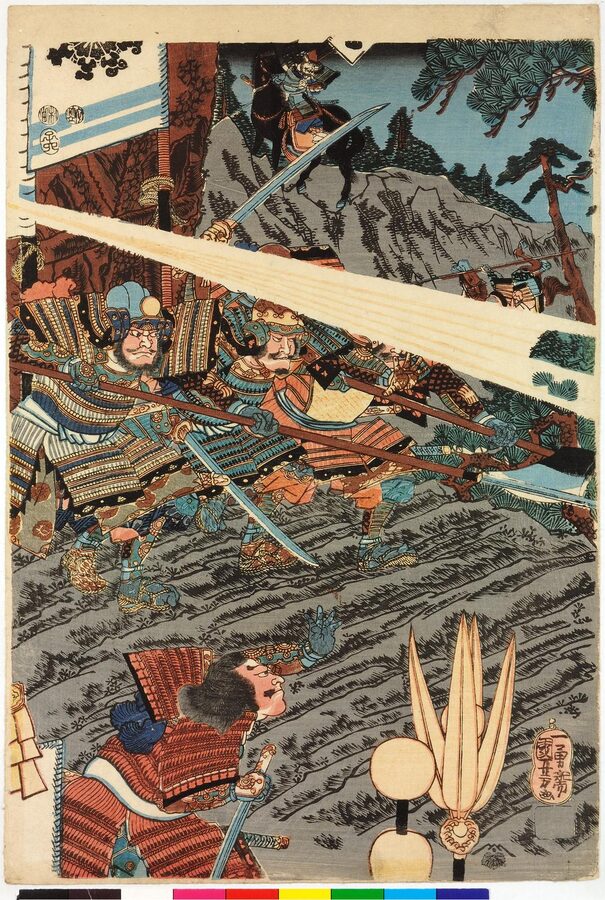
That is the founding story of Shitennō-ji, the temple of the Four Heavenly Kings in Osaka, and I would treat the boy-hero part with care. A chronicle compiled while the prince was being turned into a saint had every reason to put him at the centre of the decisive moment. Umako, whose own temple Hōkō-ji (now Asuka-dera) was begun the year after the battle, is a far more convincing winner.
Umako’s empress
The man Umako put on the throne next, Emperor Sushun, did not last. In the eleventh month of 592 Umako had him murdered, apparently because the emperor had been heard to say he would like to cut off the head of a man he disliked, and everyone assumed he meant Umako. The next month Umako installed Princess Nukatabe, the prince’s aunt and widow of an earlier emperor, as Empress Suiko.
She was the first woman on the throne whose existence nobody doubts; the chronicles never so much as name Himiko, the most famous woman ruler of early Japan. In the fourth month of 593 Umayado was named crown prince, and the Nihon Shoki says the empress “entrusted all affairs of government to him”. This is where English books get the word “regent”, a fair translation of a claim that is itself under suspicion.
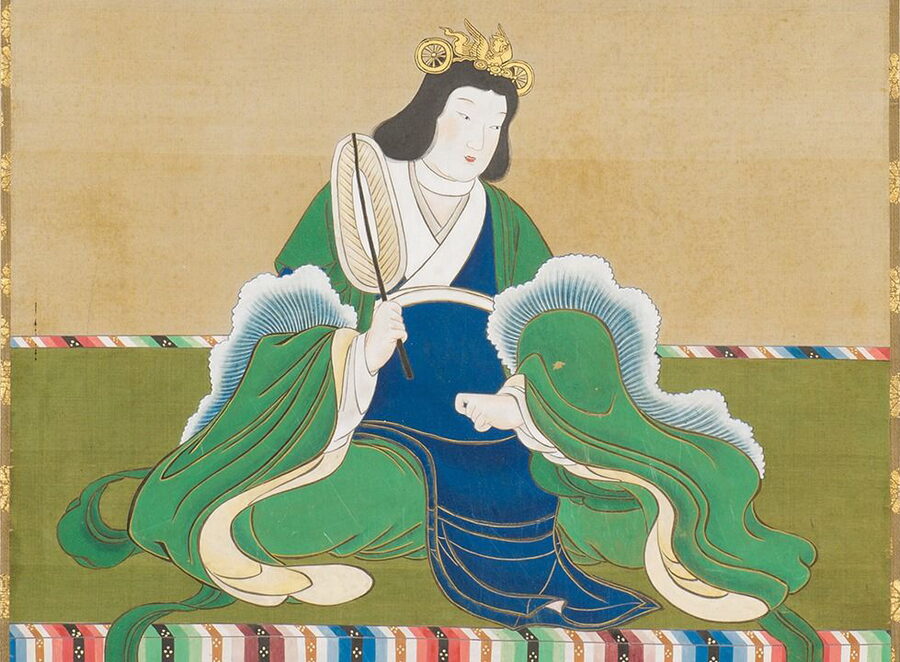
How much power the prince really had is one of the oldest arguments in the field. Seki Akira argued that Suiko’s court was basically Soga government and every reform a Soga project; Tamura Enchō replied that Umako had been chief minister since 572 without doing anything new, and that the reforms cluster suspiciously in the prince’s adult years. A standard Japanese dictionary of history splits the difference: the prince was probably active in government between about 602 and 612, and it is far from certain that the post of “crown prince” even existed yet.
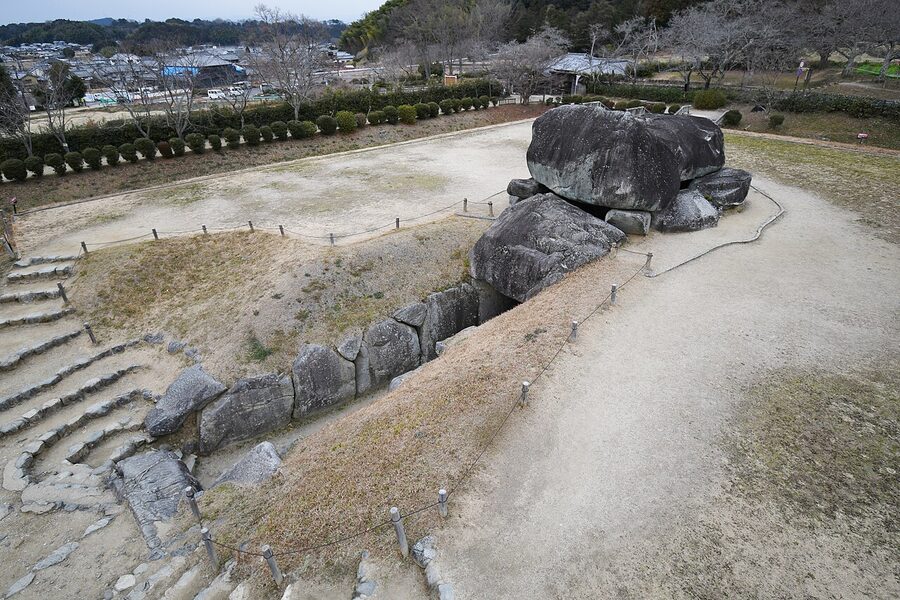
You can stand in Umako’s Asuka in an afternoon. His temple still has its Great Buddha, cast by the sculptor Tori early in the 7th century (the sources give 606 or 609) and patched so often that experts argue over how much of the original survives, and Ishibutai is a short walk away. If the prince was the brains of the age, Asuka is where the money and the muscle lived, and where the Asuka chapter of Japan’s long run of eras begins.
Twelve caps and seventeen articles
Suiko’s court sent its first embassy to the new Sui dynasty in China in 600, and it went badly. The Nihon Shoki does not mention it, but the Chinese dynastic history, the Sui shu, does: the envoys explained that their king treated heaven as his elder brother and the sun as his younger, holding court cross-legged before dawn and handing over to the sun when it rose. The Sui emperor Wendi said this made no sense whatsoever and told them to change it.
Several Japanese historians think that rebuke was the spur for what came next. The prince had teachers by then, the Korean monk Eji (慧慈), who arrived from Koguryŏ in 595, and a Confucian scholar called Kakuka. Over the next four years the court acquired a ranking system, a code of conduct for officials, new palace etiquette and a proper diplomatic manner, so that the next envoy to China would not be laughed at.
The twelve cap ranks
On the fifth day of the twelfth month of 603 (by the Western calendar, already January 604) the court announced the kan’i jūnikai (冠位十二階), twelve grades of rank marked by the colour of a silk cap. They ran Greater and Lesser Virtue, then Greater and Lesser Benevolence, Propriety, Faith, Righteousness and Knowledge, and the first caps were handed out on New Year’s Day of 604. The second rank, “Lesser Virtue”, is pronounced shōtoku too, though written differently, a homophone that has amused Japanese students ever since.
The colours are recorded nowhere, so every chart of purple, blue, red, yellow, white and black caps is a modern guess. The principle was the point: clan titles were hereditary and belonged to the whole family, while a cap rank belonged to one man and died with him. The Sui shu independently lists the same twelve grades, in a slightly different order, which is the best evidence that the system existed.
In practice it changed less than the textbooks suggest. Rank still followed birth, the system reached only the capital region, and the Soga ministers and royal princes stood above it as the people who gave caps rather than received them. The two famous exceptions both appear in this story: Tori the sculptor reached the third grade, and the diplomat Ono no Imoko climbed from the fifth to the very top.
“Harmony is to be valued”
On the third day of the fourth month of 604, the Nihon Shoki says, “the crown prince in person drew up for the first time laws in seventeen articles”. The Jūshichijō kenpō (十七条憲法) is usually called the Seventeen-Article Constitution in English, which makes it sound like a charter of rights. It is a set of moral instructions for courtiers and officials, mainly Confucian with Buddhist and Legalist pieces worked in.
The first article opens with the line every Japanese person can recite, wa wo motte tōtoshi to nasu, “harmony is to be valued”. The phrase adapts a saying in the Confucian Analects, and the article goes straight on to complain that men form factions, so they disobey their lords and quarrel with their neighbours. “Harmony” here means officials who stop squabbling along clan lines and settle disputes by discussion. The second article orders reverence for the Three Treasures of Buddhism (the Buddha, his teaching and the monks, not to be confused with the imperial regalia known as the Three Sacred Treasures), and the third tells officials to obey an imperial command without fail.
The last article returns to the first: important decisions must not be taken by one man alone. During the Pacific War the government stressed article three and made “harmony” mean national unity behind the war effort. After 1945 the same word was read as peace, and the prince was recast as the father of a democratic constitution, which would have surprised him.
Whether he wrote it is another question. Tsuda Sōkichi argued in 1930 that article twelve’s mention of provincial governors used a title that did not exist in Suiko’s day, and his work on the early chronicles later got him prosecuted; in 1999 the linguist Mori Hiromichi showed that the articles’ Chinese shares quirks and slips with the rest of the Nihon Shoki‘s Suiko chapter. The mainstream view now, as Yoshikawa Shinji put it in 2011, is that the text was probably polished in 720 but is basically a Suiko-era document, because its concerns fit that court too well to be invented. Steer clear of the Edo-period forgery called the “Five Constitutions”, eighty-five articles that add the Shinto gods the original never mentions, and which is still sold as the prince’s work.
The Son of Heaven where the sun rises
In the seventh month of 607 the court sent Ono no Imoko (小野妹子) to China with a letter. The Nihon Shoki says the embassy went to “Great Tang”, an anachronism its compilers never corrected, and does not quote the letter. The Sui shu does, and its opening is the most famous sentence in early Japanese diplomacy: “The Son of Heaven where the sun rises addresses a letter to the Son of Heaven where the sun sets. Are you in good health?”
The envoys added that they had heard the “Bodhisattva Son of Heaven west of the sea” was reviving Buddhism, and they had brought dozens of monks to study it. The emperor was now Wendi’s son, Emperor Yang. He read the letter, was displeased, and told his official for foreign affairs that if letters from barbarians were rude, he was not to be shown them again.
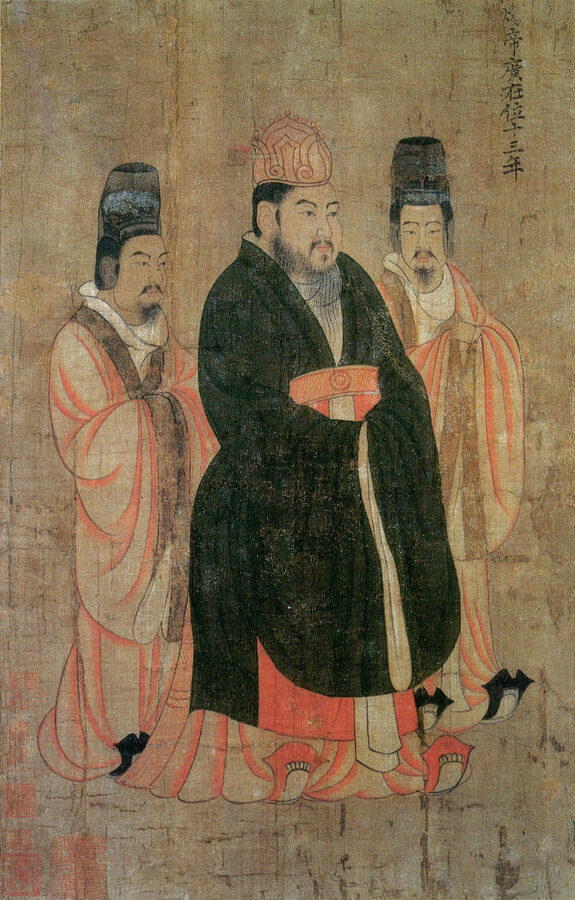
English accounts often say that Yang was offended at being placed in the land of the setting sun. Japanese historians mostly think that misreads the letter, because “where the sun rises” and “where the sun sets” are ordinary Buddhist terms for east and west, and the letter was pitched to flatter a famous patron of Buddhism. The insult lay in the words “Son of Heaven”. There was only one of those, by definition, and he lived in Chang’an.
Yang sent an envoy back anyway, since Sui was preparing to fight Koguryŏ and a friendly kingdom on the far side of it was worth a little rudeness. In the fourth month of 608 Imoko returned with a Sui official, Pei Shiqing, and announced that the emperor’s reply had been stolen from him in Paekche. Losing it was a crime that merited exile, and Suiko pardoned him; most historians suspect the reply addressed the Japanese ruler as a vassal, and that Imoko, possibly with the court’s blessing, made sure nobody had to read it.
The Nihon Shoki quotes the Japanese reply that Imoko carried when he escorted Pei home later that year: “The Heavenly Sovereign of the East respectfully addresses the Emperor of the West.” If the wording is genuine, it is one of the earliest uses of tennō, the title Japanese emperors still use, humble in tone but claiming a title no Chinese emperor could object to because it was not his. Many scholars suspect the editors of 720 improved it.
Imoko took eight students and monks with him, among them Takamuko no Kuromaro, Minabuchi no Shōan and the monk Min, who lived through the fall of Sui and came home decades later full of ideas. Minabuchi taught the young men who would kill Soga no Iruka in 645, a story told in my piece on the Fujiwara clan, and Takamuko and Min became the new regime’s advisers on Chinese government. That makes the embassy of 607 the hinge of the century, even if the letter that made it famous was never meant to be quoted.
Temples, swords and sutras
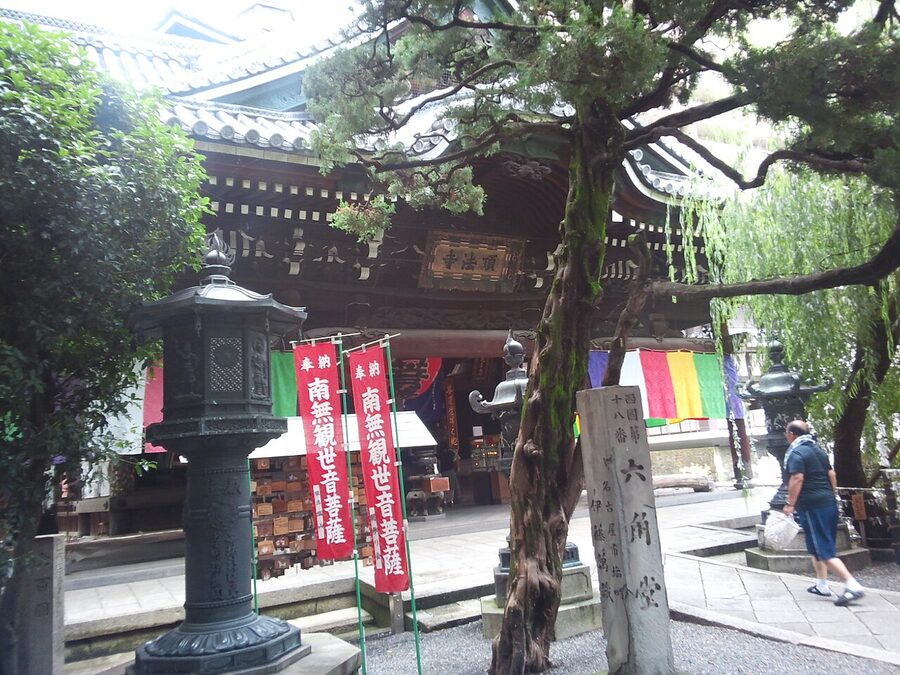
The prince kept his battlefield promise, at least according to the chronicle. “This year,” says the Nihon Shoki under 593, “Shitennō-ji was first built at Arahaka in Naniwa.” The archaeology is less tidy. Some of Shitennō-ji’s oldest roof tiles were pressed from the same moulds as tiles from the first Hōryū-ji, and the moulds were sharper at Hōryū-ji. They were used there first and then carted down to the Osaka plain, so serious building at Shitennō-ji probably began some years after the chronicle’s date.
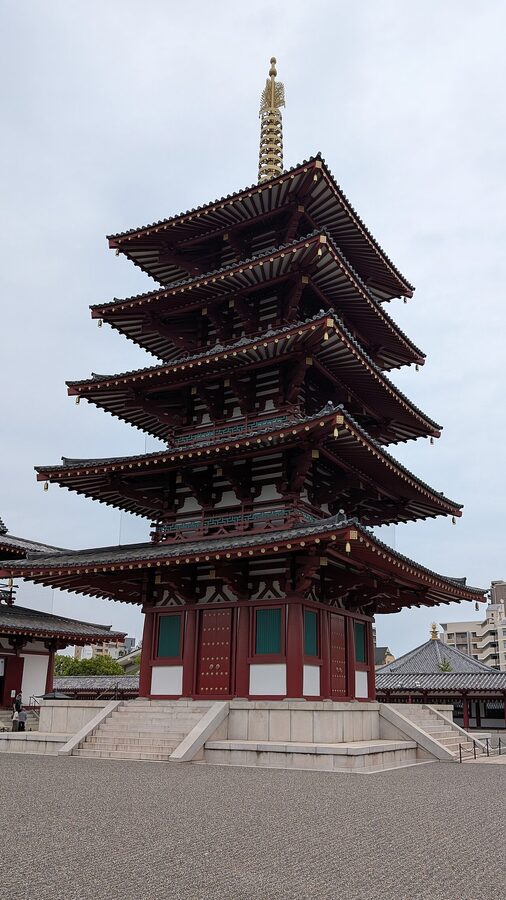
The layout, with gate, pagoda, golden hall and lecture hall marching in a straight line from south to north, is so tied to the place that archaeologists call it the Shitennō-ji plan. Legend credits the prince with four institutions here: the temple, a dispensary, a hospital and a refuge for the poor and old. The legend comes from an 11th-century source, but by the Kamakura period the charitable halls really did exist.
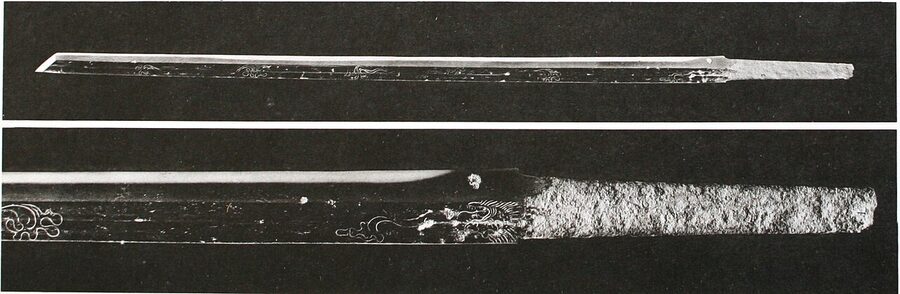
The temple also owns two straight swords of the Asuka period that it has long said were the prince’s. The Shichiseiken, the Seven Stars Sword, has the Great Bear inlaid in gold along its blade among clouds; the Heishi Shōrin-ken carries an inscription that has puzzled readers for centuries. Both are National Treasures and among the oldest surviving Japanese swords, made long before the curved blade.
In 601 the prince began a palace at Ikaruga, about twenty kilometres north-west of Asuka on the road to Naniwa, and moved there in 605. Beside it rose Ikaruga-dera, now Hōryū-ji, which an inscription on its Yakushi Buddha dates to 607. The Nihon Shoki says the first temple burned to the ground in 670; its foundations were excavated in 1939, along with traces of the prince’s palace under the eastern precinct. The rebuilt Hōryū-ji, the oldest surviving group of wooden buildings in the world, has an article of its own.
Lectures and commentaries
The Nihon Shoki says that in 606 the empress asked the prince to lecture on the Śrīmālā Sutra, the Shōmangyō, in which a queen preaches the doctrine of the Buddha-nature, and that he finished in three days. He lectured on the Lotus Sutra too, and Suiko was so pleased that she gave him a hundred chō of rice land in Harima province, which he handed on to his temple at Ikaruga.
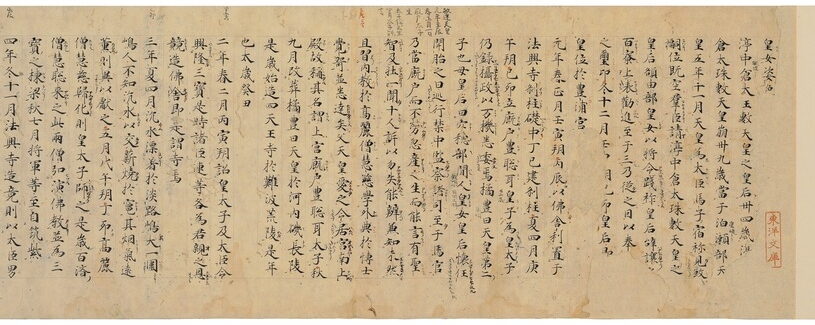
Three commentaries on these sutras, the Lotus, the Śrīmālā and the Vimalakīrti, have been credited to him since at least 747, when Hōryū-ji listed them in its inventory as his work. Together they are the Sangyō gisho (三経義疏). The Lotus commentary, the Hokke gisho, survives in four scrolls in what is said to be his own hand, each about fourteen metres long, full of corrections and in one place holed where the writer scraped too hard and patched it from behind.
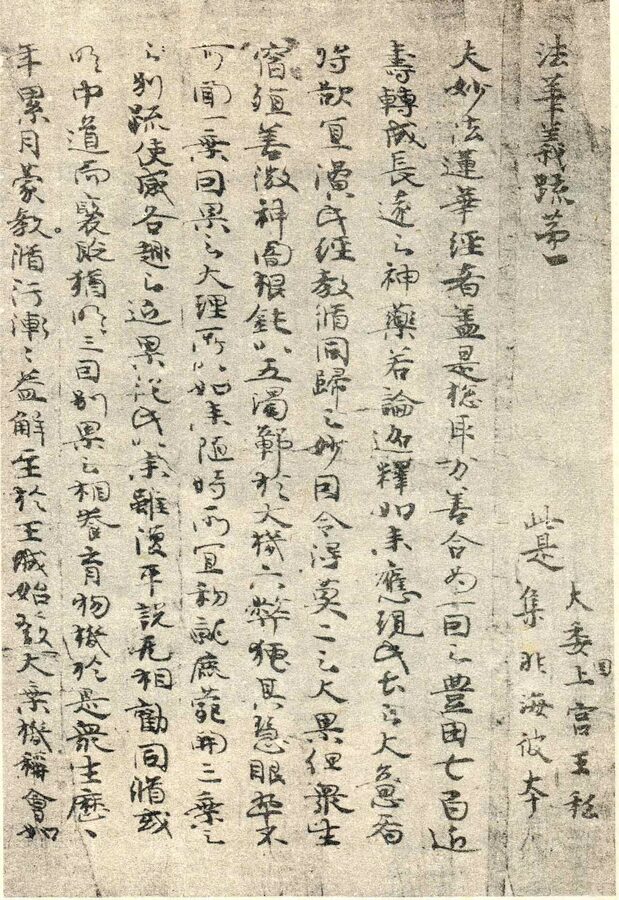
The doubts duly came. The commentary agrees about seventy per cent with a work by the Chinese monk Fayun, and the palaeographer Fujieda Akira argued it was a Chinese copyist’s work brought over by the embassies. Tōno Haruyuki pointed to ruled lines scored into the paper with a stylus, a habit of educated amateurs rather than hired scribes, and judged it an author’s draft; Inoue Wataru noticed that it uses a version of the Lotus Sutra that was superseded once the embassies’ monks came home, which places it in the Suiko court. The manuscript itself remains in the imperial collection, where scholars rarely see it.
“The world is empty; only the Buddha is real”
In 620, the Nihon Shoki says, the prince and Umako compiled a history of the emperors, a history of the country and records of the clans. None of it survives. In 645, when Umako’s grandson Iruka was murdered, Iruka’s father Emishi burned the royal chronicle along with himself and his house, and a scribe snatched the history of the country from the flames.
Three deaths in three months
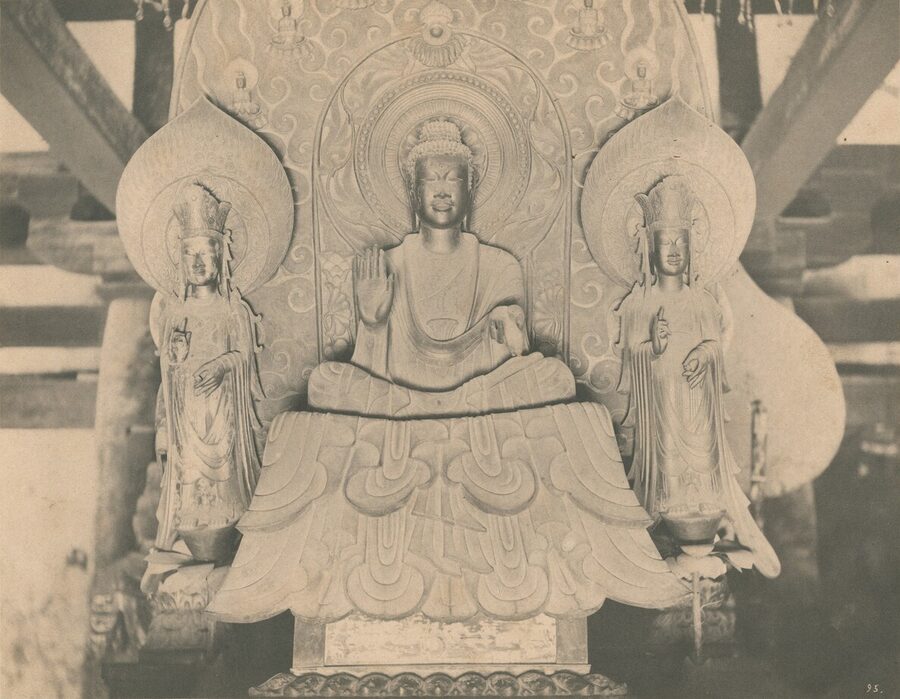
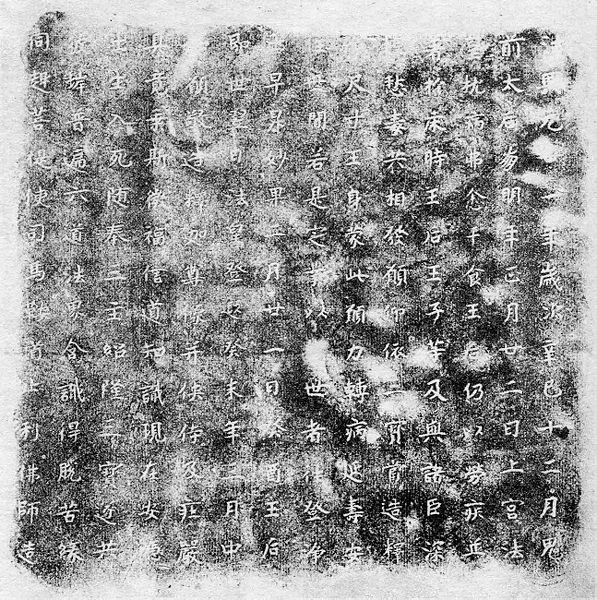
The prince’s mother died on the 21st day of the twelfth month of 621. Early in the new year he fell ill, and so did his consort Kashiwade no Hokikimi no Iratsume, who died on the 21st day of the second month of 622; he died the next day at Ikaruga, aged forty-nine. That is the version given by the inscription on Hōryū-ji’s Shaka Triad and by the Tenjukoku embroidery, which Japanese reference works follow. The Nihon Shoki puts his death on the fifth day of the second month of the year before, 621.
The chronicle makes the most of the funeral. Princes and ministers wept as if they had lost a parent, farmers stopped ploughing, women put down their rice-pounders, and everyone said the sun and moon had lost their light. In Koguryŏ his old teacher Eji vowed to die on the same day the next year so that he could meet the prince in the Pure Land; the chronicle reports, with no apparent surprise, that he did.
The embroidered paradise
His widow, Tachibana no Ōiratsume, a granddaughter of Suiko, went to the empress. According to the embroidered inscription, she said her prince had told her “the world is empty and false; only the Buddha is true”, that he must therefore have been reborn in a land called Tenjukoku, and that she wanted to see a picture of it. Suiko ordered her palace women to embroider two large curtains, and the inscription names the three men who drew the designs.
The curtains, the Tenjukoku shūchō (天寿国繍帳), were probably about two by four metres each, with the inscription stitched in four-character lines onto the shells of a hundred turtles. What survives fits in a frame less than ninety centimetres square, a patchwork with five turtles and twenty characters left; the full four hundred characters are known only because a temple biography copied them down.
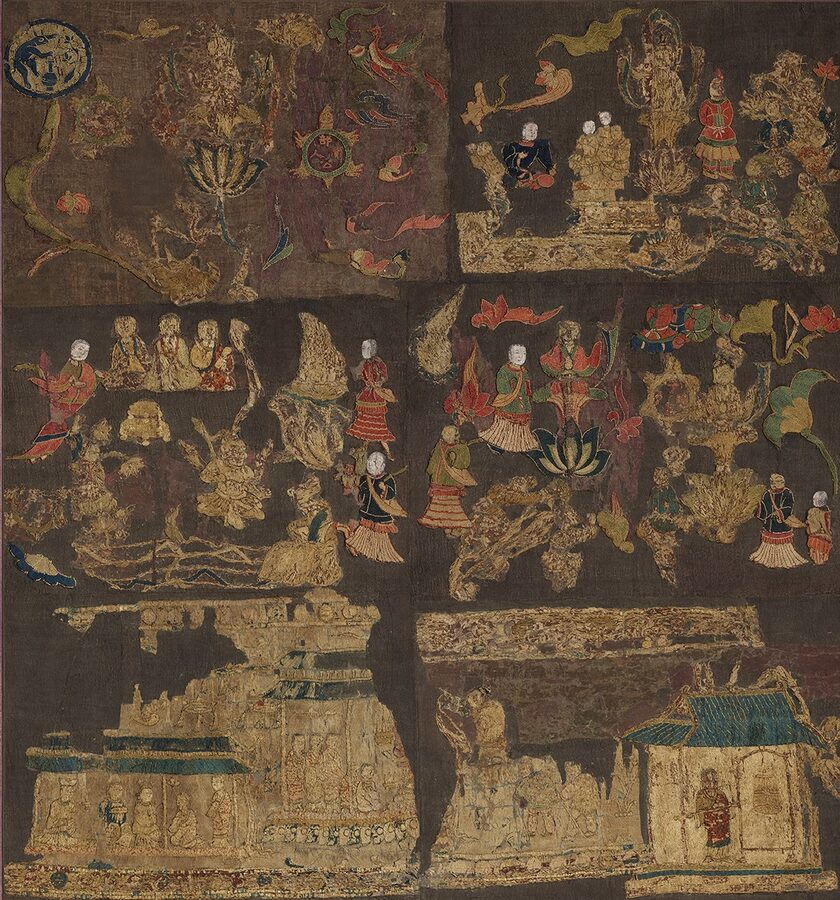
The curtains disappeared for centuries. In 1274 a nun called Shinnyo, who was reviving the nunnery of Chūgū-ji, learned in a dream that the death date of its founder, the prince’s mother, was recorded on a “mandala” in a Hōryū-ji storehouse, and a burglary that year gave the monks a reason to open it. Even an Edo-period scholar found the dream suspiciously convenient. Shinnyo had a copy made the following year, and over five centuries the original and the copy wore out together until somebody pasted the best fragments onto one backing.
Fifteen princes at Ikaruga
The prince left a large family and no throne. When Suiko died in 628 the court passed over his son Prince Yamashiro no Ōe, a grandson of Umako, in favour of the future Emperor Jomei. Yamashiro sat on a rich estate at a strategic crossroads with a following of his own, and none of that endeared him to the next generation of Soga.
In the eleventh month of 643 Soga no Iruka sent troops to the Ikaruga palace. Yamashiro’s family escaped into the Ikoma hills, where one of his men urged him to ride east, raise an army and come back. The Nihon Shoki gives him a famous answer: he would certainly win, but he would not trouble the people for his own sake. He came down from the hills, went into Ikaruga-dera with his family, and they all hanged themselves.
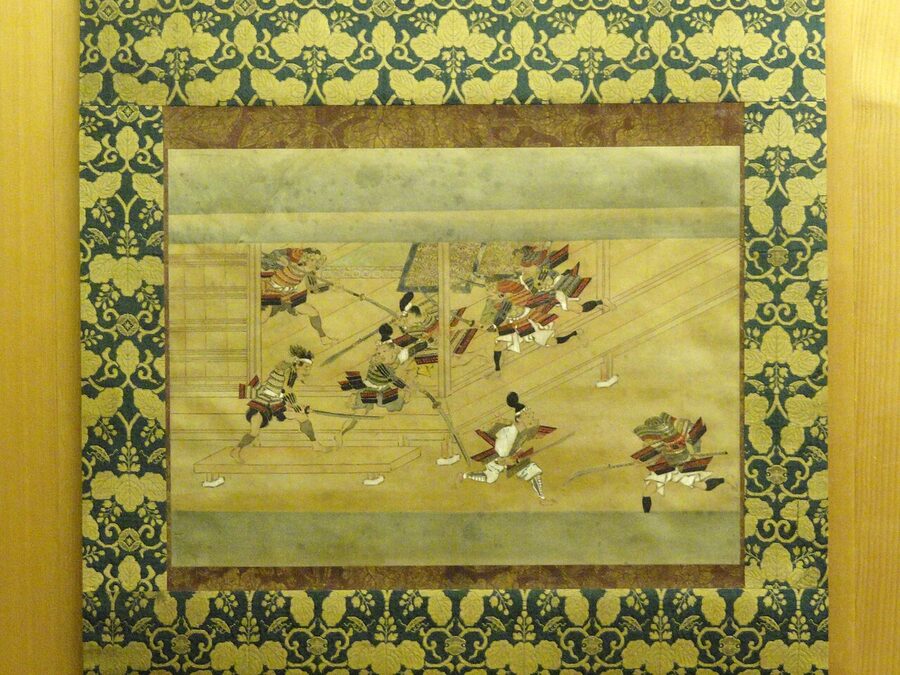
The temple biography counts fifteen princes. The House of the Upper Palace ended in an afternoon, killed by the grandson of the prince’s own father-in-law, and the chronicle says even Iruka’s father Emishi was appalled. Some historians suspect that Empress Kōgyoku and the future Emperor Kōtoku were quietly in on it. Iruka himself had less than two years to live.
Kannon in a hidden hall
A prince with no descendants makes an excellent saint, because nobody is left to contradict the legend. The Shaka Triad made “to the size of the prince” already treats his body as holy, and by 720 the Nihon Shoki had given him a miraculous birth, foreknowledge of the future, and the hungry man at Kataoka, a beggar he covered with his own robe who left nothing in his coffin but the folded garment. Chinese readers would have recognised a Taoist immortal shedding his corpse; later Zen monks decided the beggar had been Bodhidharma.
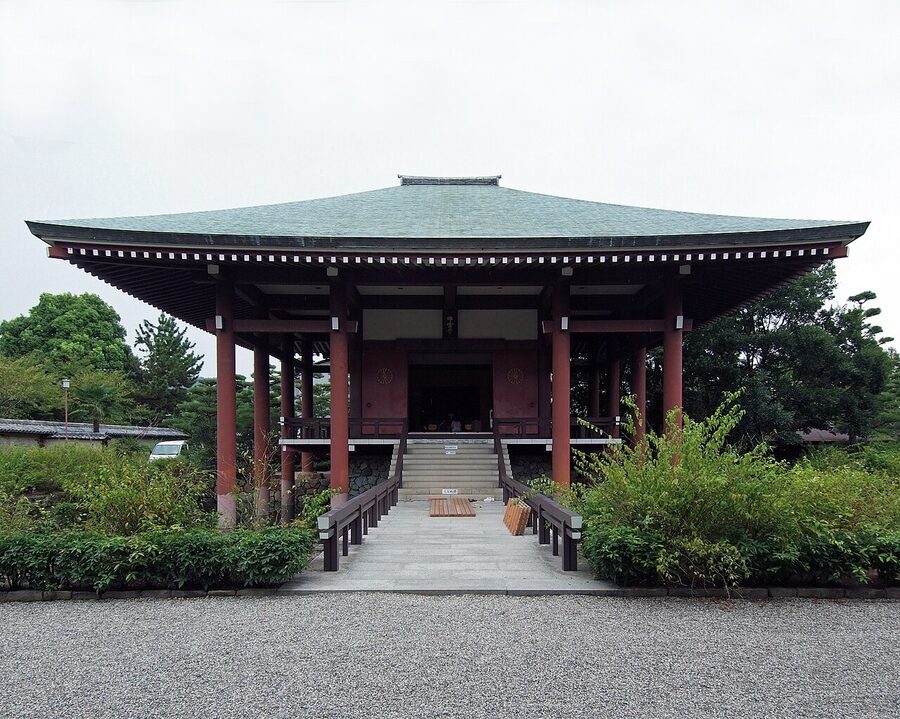
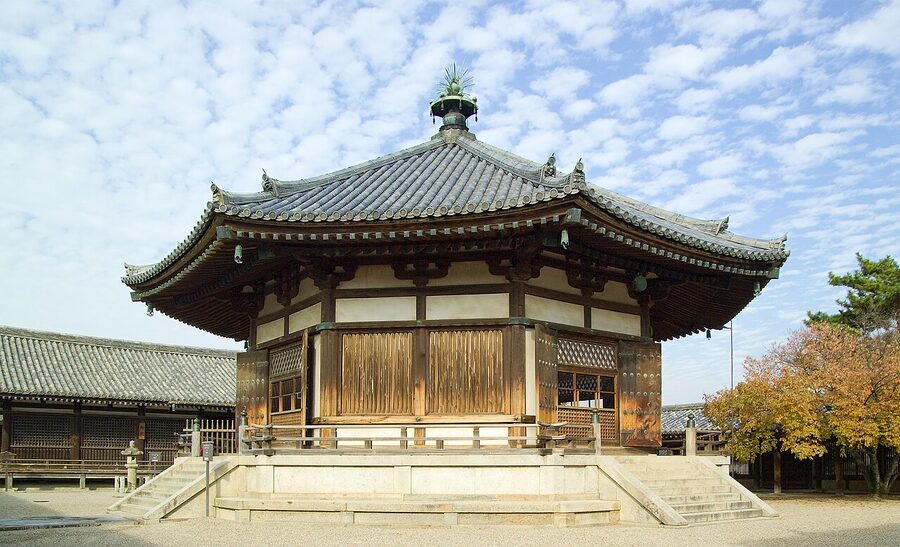
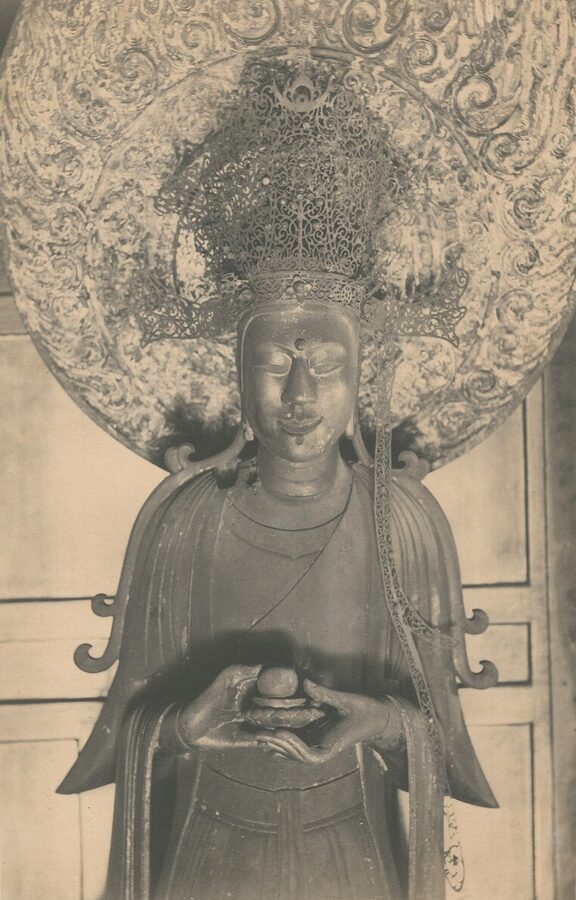
In the Nara period the cult got its architecture. Around 739 the monk Gyōshin built the octagonal Yumedono, the Hall of Dreams, on the site of the ruined Ikaruga palace, with a standing Kannon said to be the prince’s likeness. He was also declared the reincarnation of Huisi, a Chinese master of the Tiantai tradition, and one tradition holds that the story helped persuade the monk Ganjin to make his long journey to Japan.
The saviour Kannon
By the 10th century the prince was an incarnation of Guze Kannon, the “world-saving” bodhisattva of compassion, and the great biography of that century, the Shōtoku Taishi denryaku, set the legend in its final form. It gave him the black horse from Kai province that carried him over Mount Fuji and into Shinano in three days in 598, along with dozens of other marvels. Almost every later account, Japanese or English, is some version of the Denryaku.
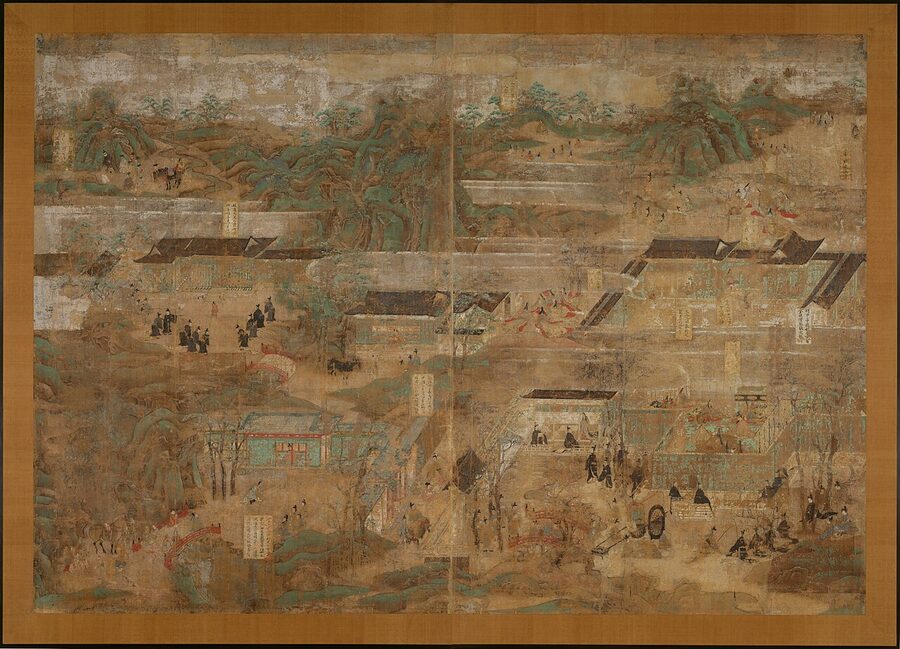
Hōryū-ji and Shitennō-ji spent the Heian period competing for the prince. In 1007 Shitennō-ji “found” a founding charter in his hand, printed with his palms, declaring that its west gate faced the eastern gate of paradise; crowds came to watch the sun set over Osaka Bay, and some walked into the sea. From 1054, when a stone carved with a prophecy was dug up at his tomb, the prince was also Japan’s leading prophet, and “Records of the Future” in his name kept turning up for three centuries.
Every founder’s favourite ancestor
Nearly every founder of a Japanese Buddhist school claimed the prince. Saichō of the Tendai school called himself his spiritual descendant, and a 12th-century history says Kūkai was the prince reborn. The most devoted was Shinran, founder of the True Pure Land school, who spent a hundred days in retreat at Rokkaku-dō in 1201, dreamed on the ninety-fifth night that Guze Kannon (in other words, the prince) spoke to him, and went straight to the teacher Hōnen. Of his roughly 540 hymns, nearly two hundred are about the prince.
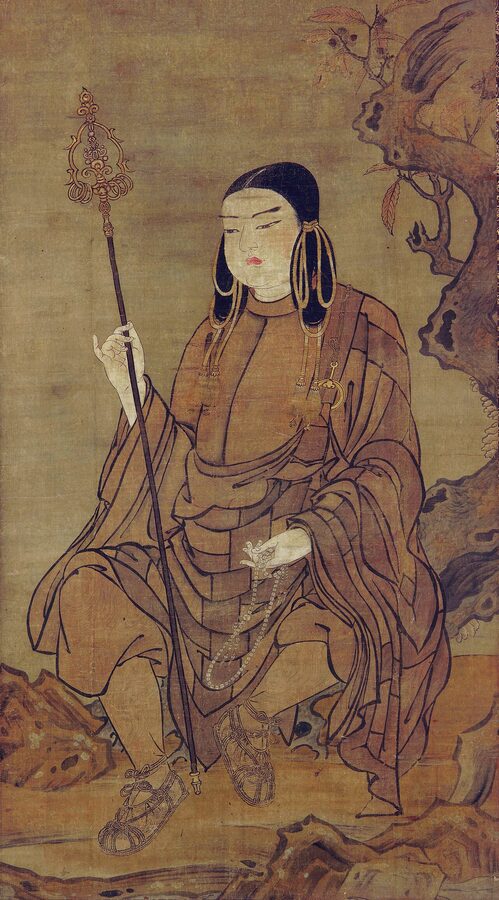
Not every devotee was gentle. In 1203 the tomb was broken into and one of the prince’s teeth stolen, and a Hōryū-ji chronicle written a few decades later says it ended up with Chōgen, the monk raising money to rebuild Tōdai-ji after the Genpei War, who put it to work as a fundraising relic. The story may not be true.
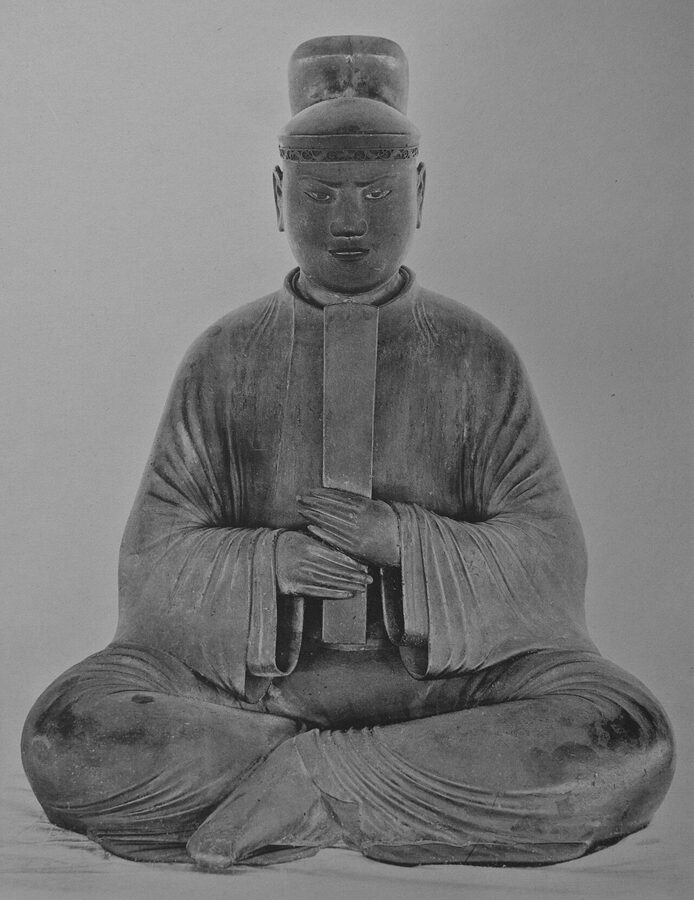
The cult also went down the social scale. From the late Muromachi period carpenters, plasterers, coopers and smiths met each year on the 22nd day of the second month for a Taishi-kō, honouring the prince as the patron of builders. Kongō Gumi, the Osaka temple builders who trace themselves to a Paekche carpenter brought over to build Shitennō-ji in 578, ran as an independent firm for over fourteen centuries, and Osaka’s contractors still gather at Shitennō-ji for a Taishi service. It is one reason so many of Japan’s great crafts claim the same founder.
There was a backlash too. Scholars of the Edo period such as Hayashi Razan and Hirata Atsutane attacked the prince for letting a foreign religion corrupt Japan, and ordinary readers took no notice. Hōryū-ji raised money by touring its treasures in Edo, and the prince turned up in Chikamatsu’s puppet plays, in picture books, and in ninja lore that solemnly named one of his retainers the first ninja.
The Meiji Restoration nearly finished Hōryū-ji, when the separation of Buddhism from Shinto cut off temple income. That is how the treasures came to be offered to Emperor Meiji‘s household in 1878, ten thousand yen and all. Then the mood changed. As Japan looked for national heroes, the author of the letter to the “Son of Heaven where the sun sets” became a model of a small country standing up to a great one, and he went into the schoolbooks and onto the money.
Did Prince Shōtoku exist?
Nobody seriously doubts that a royal prince called something like Umayado lived at Ikaruga in the early 7th century. The argument is about the saint. In 1963 Ogura Toyofumi argued that you have to separate the Prince Umayado of history from the Prince Shōtoku of faith before you can study either, and in 1999 the historian Ōyama Seiichi published “The Birth of ‘Shōtoku Taishi'”, and the debate went on television.
Ōyama accepted that Umayado was real, a Soga-connected royal who lived at Ikaruga and founded the temple there, and he accepted the cap ranks and the embassies, because the Sui shu confirms them. But he argued that no reliable evidence shows the prince doing any of the great deeds credited to him. The sage of the Nihon Shoki, he said, was created around 700 by Fujiwara no Fuhito, Prince Nagaya and the monk Dōji as a model Chinese-style ruler for a shaky succession, and the evidence at Hōryū-ji, from halo inscriptions to embroidery to commentaries, was made in the Nara period, after the fact.
The theory was a gift to television producers and to authors of books with titles like “Prince Shōtoku Never Existed”, and most English-language articles still frame the question that way. Among specialists it did less well. Art historians found the embroidery’s stitching and costumes too early for a Nara-period fake, philologists found Suiko-era features in the commentaries, and Ishii Kōsei wrote in 2021 that no paper actively endorsing Ōyama’s view had appeared for more than ten years.
What survives is a more careful habit of mind, which is all to the good. The prince of the inscriptions and the Sui shu was a royal Buddhist at the centre of a court remaking itself on Chinese lines, close enough to the work that later writers found it natural to credit him with all of it. The prince of the Nihon Shoki was polished into a sage a century later, and the prince of the Denryaku flies over Fuji. You may keep all three, as long as you know which one you are looking at.
The textbook row of 2017
The schoolbooks caught up with the scholars late in the Heisei era. In February 2017 the education ministry published draft curriculum guidelines that would have taught junior high school pupils to call him “Prince Umayado (Prince Shōtoku)”, since “Shōtoku Taishi” was a name given more than a century after his death. Conservative groups urged their members to write in, and by one count about 4,600 comments, roughly forty per cent of the total, were about the prince.
When the final guidelines came out on 31 March 2017, “Shōtoku Taishi” was back, more or less as before. If you have been following the story of the name, you will enjoy the irony: the “real name” the ministry had tried to substitute was the working label of a 1963 paper.
Shōtoku on the money
Prince Shōtoku has appeared on Japanese banknotes seven times, more than anyone else. The first was a 100-yen note of 1930, which put his portrait beside the Yumedono, and four different 100-yen notes carried him through the war and its aftermath. Then came the 1,000-yen note of 1950, the 5,000-yen note of 1957 and, on 1 December 1958, the 10,000-yen note, then as now Japan’s largest denomination.
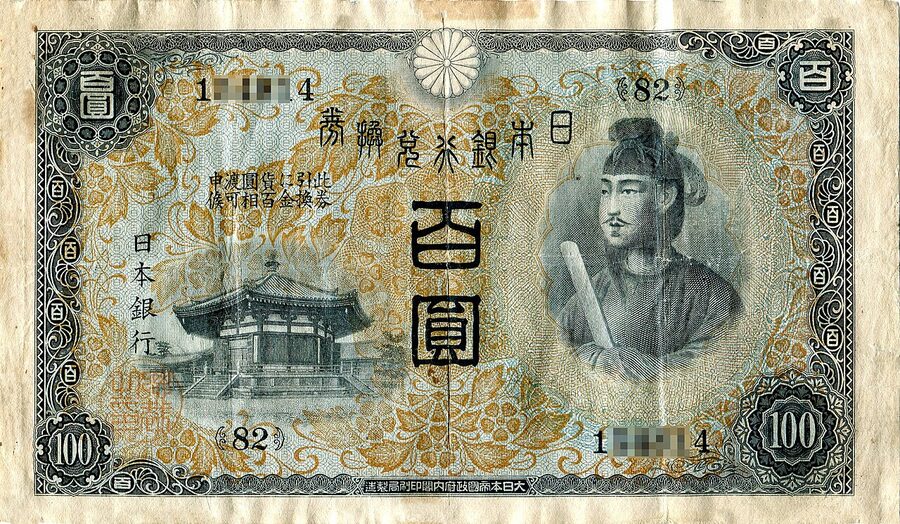
His survival after 1945 is a small story of its own. The occupation authorities removed militarist heroes from stamps and banknotes, but the man of “harmony” was by then being read as an apostle of peace, so he stayed. The 10,000-yen note ran through the high-growth years of the Shōwa era, which is why “a Shōtoku Taishi” became slang for serious money, and was replaced by Fukuzawa Yukichi only in 1984. It is still legal tender.
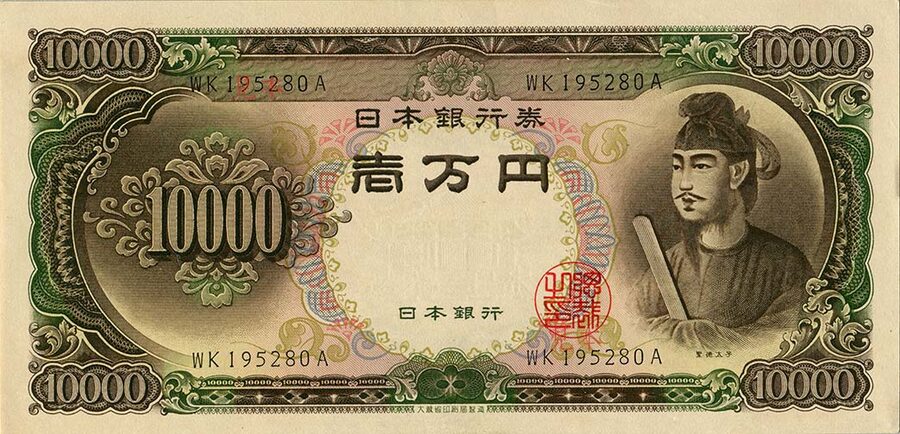
Nobody is sure who painted the original or when. The Meiji scholar Kurokawa Mayori pointed out that the hand-held tablet was not adopted at court until after 647, that the cap resembles a type introduced in 682, and that the red robe looks like a colour reserved for princes from 685, so he dated it to the end of the 7th century; others put it in the 720s or 730s, when the cult was being built. In 1983 the historian Imaeda Aishin announced that he had spotted the name of another temple on the mounting, suggesting the portrait showed someone else, until it emerged that he had been reading, through glass, a woven character whose silver thread had flaked off. The art historian Takeda Sachiko’s argument is the most persuasive I know: early Japanese portraits were made only of people who were worshipped, and no other layman of the age was worshipped like this.
Where to find Prince Shōtoku today
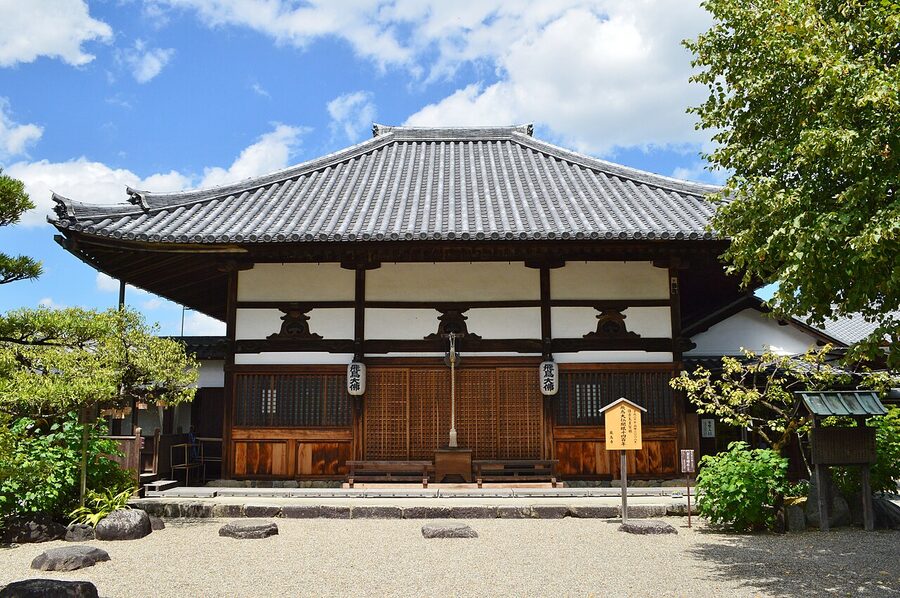
The prince’s places fall in a rough line across the Kansai region, and you can see them in two full days: Shitennō-ji in Osaka, Eifuku-ji and his tomb in southern Osaka Prefecture, Tachibana-dera in Asuka, and Hōryū-ji and Chūgū-ji at Ikaruga. Local leaflets will tell you that his birthplace, his tomb and his estate temple in Harima stand on one straight line, which I have not had the patience to check.
Shitennō-ji, Osaka
Toyotomi Hideyoshi rebuilt Shitennō-ji after the wars with the Ishiyama Hongan-ji left it in ashes in the 1570s; the siege of Osaka Castle burned it again in 1614, the Muroto typhoon of 1934 blew the pagoda onto the golden hall, and the air raid of March 1945 finished almost everything else. The central precinct was rebuilt in concrete between 1957 and 1963 by the architectural historian Fujishima Gaijirō, following the Asuka-period plan as closely as the building code allowed. Do not come for old timber. Come for the plan, the crowds and a place that has never stopped being used.
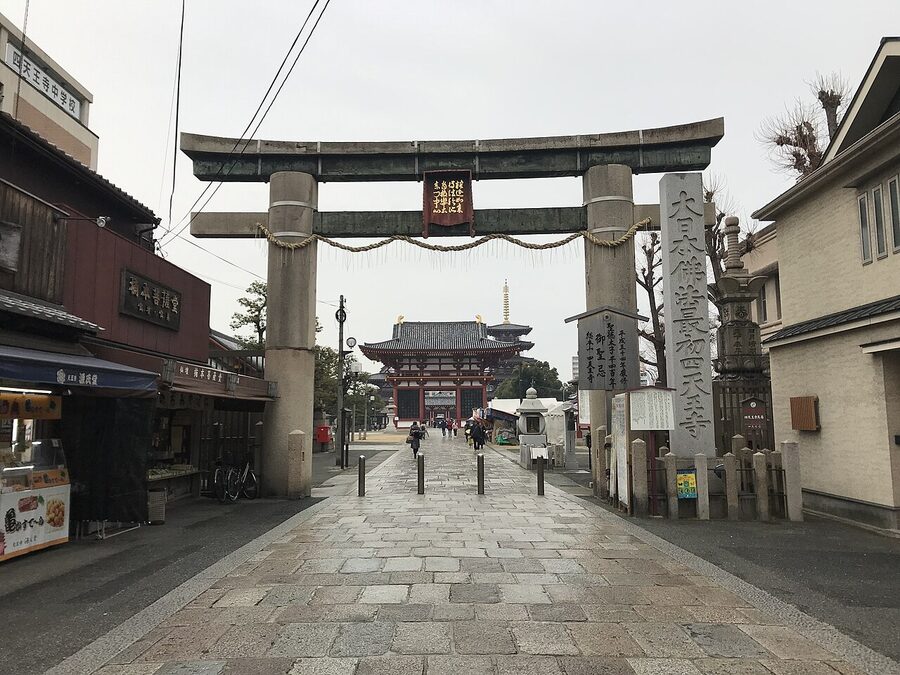
The best days to come are the 21st and 22nd of each month, when market stalls fill the precinct and the central precinct is free. The 22nd is the prince’s day, and on 22 April the temple holds its great memorial for him, the Shōryōe, with court dances all day on the stone stage over the turtle pond. Look out too for the small shrine to Mononobe no Moriya, the man the prince defeated, opened on the 22nd of the month; Japanese temples are careful to placate their founders’ enemies.
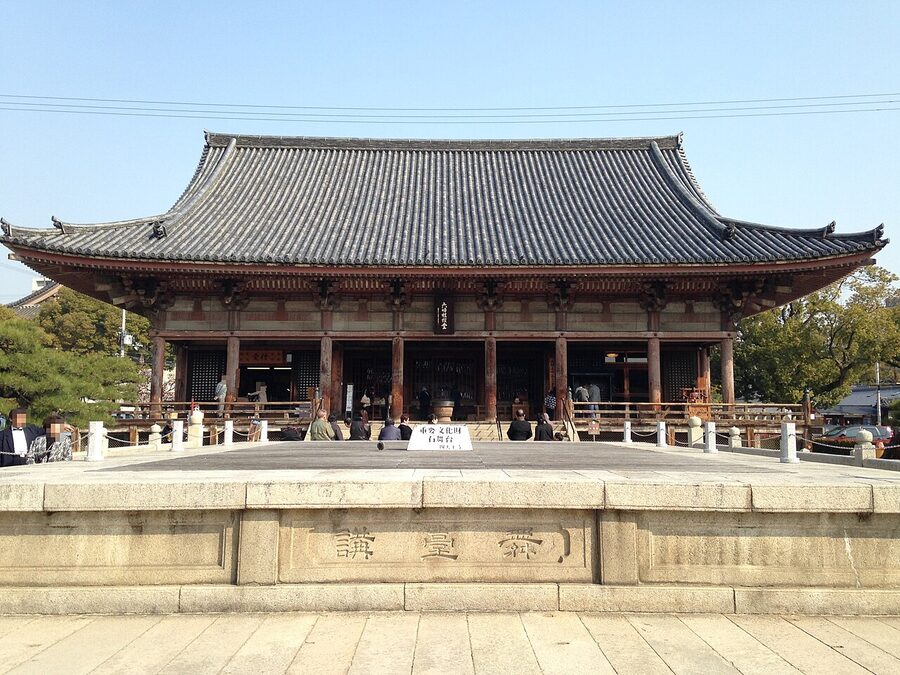
The central precinct is open 8:30–16:30 from April to September and 8:30–16:00 from October to March, with longer hours on the 21st. It costs ¥500 for adults (free for junior high school age and under), the Honbō garden ¥300 and the treasure house ¥500, and the outer grounds are free at any hour. The nearest station is Shitennōji-mae Yūhigaoka on the Tanimachi subway line, five minutes’ walk north; from Tennōji it is about twelve minutes on foot. The temple even has a spot for bowing towards the distant Ise Grand Shrine, a reminder that the prince’s Buddhism never meant abandoning the gods.
Hōryū-ji and Chūgū-ji, Ikaruga
Hōryū-ji is the main event, and my guide to Hōryū-ji covers the buildings, tickets and access. For the prince specifically, see the Shaka Triad in the Golden Hall, the Shōryōin, and above all the eastern precinct, where the Yumedono stands on the site of his palace; time your trip for the spring or autumn showing of the Guze Kannon if you can.
Then walk out of the eastern precinct to Chūgū-ji next door, the nunnery said to have been founded on his mother’s palace. Its replica of the Tenjukoku embroidery shows the scale of the thing, and its seated wooden bodhisattva, a favourite of photographers for a century, is one of the most beautiful sculptures in Japan. Chūgū-ji is open 9:00–16:30 from 21 March to 30 September and 9:00–16:00 the rest of the year, costing ¥600 for adults and ¥300 for children; from JR Hōryūji Station, take a bus to Hōryūji-sandō and walk about eight minutes.
Tachibana-dera, Asuka
Tachibana-dera stands where tradition says the prince was born, in a palace of his grandfather Emperor Kinmei, and claims to have become a temple in 606 after his lecture on the Śrīmālā Sutra. The Nihon Shoki first mentions it in 680, for a fire in its nuns’ quarters, but tiles from the early 7th century have been found here, so the claim is not absurd. Its name comes from the tachibana orange, said to have been brought back from the land of eternal life by a legendary envoy and planted on this spot.
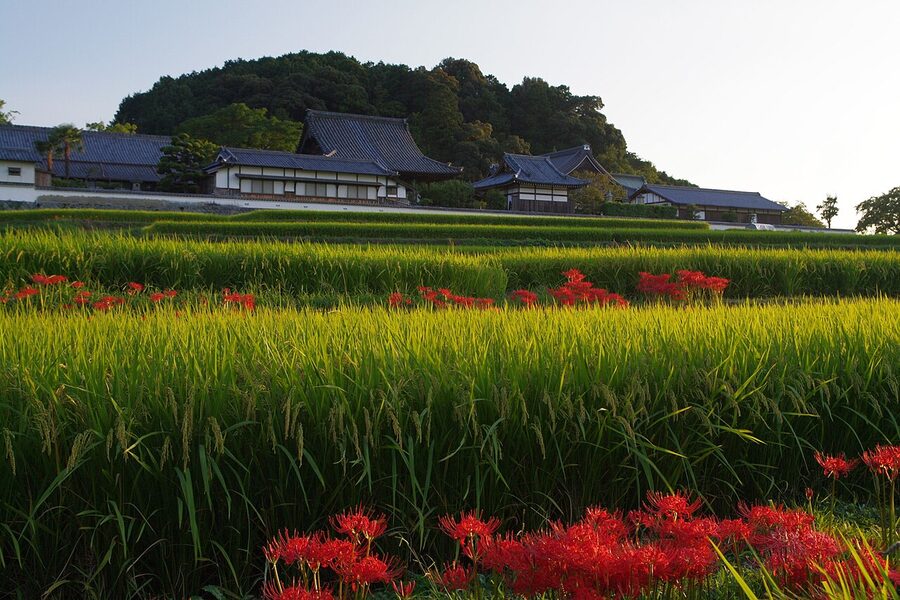
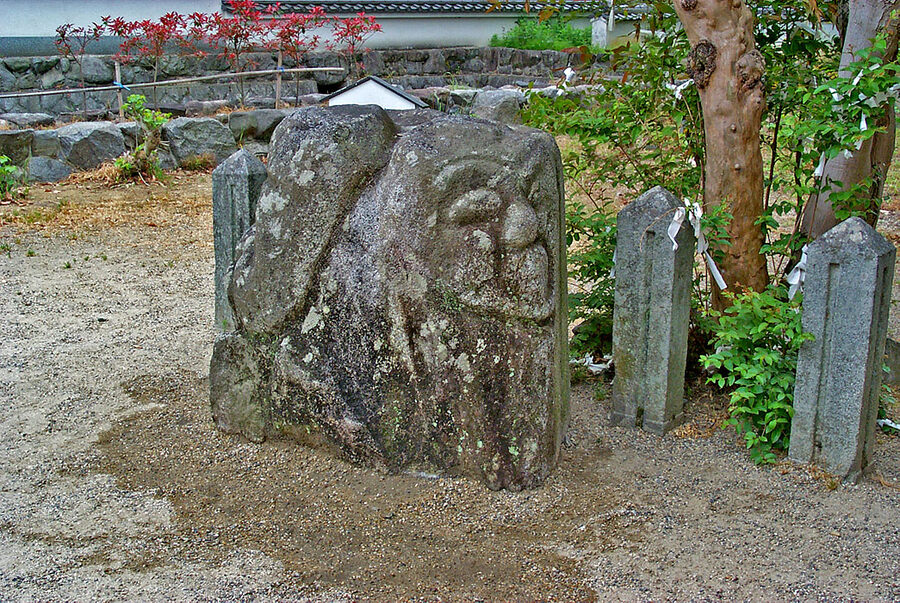
The buildings are mostly 19th-century (the main hall, with a statue of the prince at thirty-five carved in 1515, took about thirty years to rebuild from 1864), but the grounds are full of the 7th century. There is the foundation stone of a five-storey pagoda destroyed by lightning in 1148, a stone said to have shone with the light of the sun, moon and stars when the prince lectured, and the Nimen-seki, a two-faced stone with a good face and a bad one. In July 2026 the temple’s ancient remains were inscribed as part of the Asuka-Fujiwara World Heritage site, together with the Kawara-dera ruins across the road and a string of other Asuka sites.
Tachibana-dera is open 9:00–17:00 daily, and from April 2026 admission is ¥500 for adults. From Kintetsu Asuka Station it is about half an hour on foot or ten minutes on one of the rental bicycles everyone uses here, and the Kame loop bus from Asuka or Kashiharajingū-mae stops at Kawara, a few minutes’ walk away.
Eifuku-ji and the prince’s tomb, Taishi
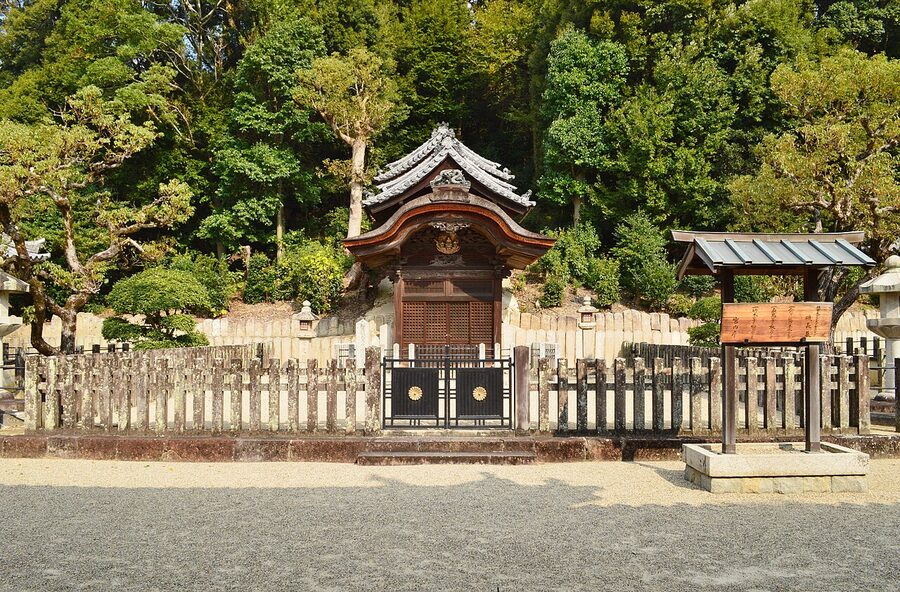
The prince lies with his mother and the consort who died the day before him in a round mound about fifty-four metres across behind Eifuku-ji, in the town of Taishi in southern Osaka Prefecture. The arrangement is called sankotsu ichibyō, “three sets of bones in one tomb”. The Imperial Household Agency manages it, so you look from the gate, but you can see the double ring of boundary stones around the mound, which, by one of the tomb’s traditional seven wonders, nobody can count twice and get the same answer.
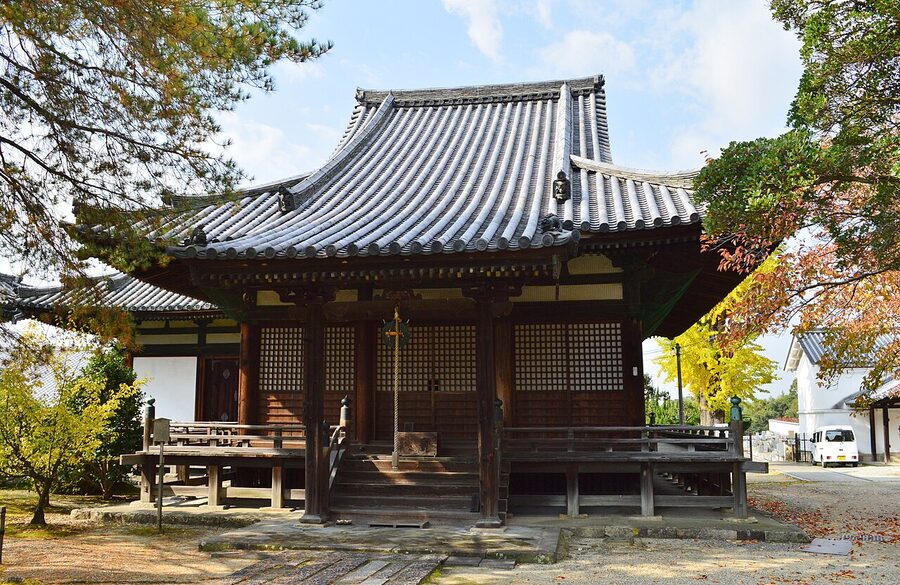
The temple was burned in 1574 during Oda Nobunaga‘s wars, so its buildings date from the 17th and 18th centuries. The precinct is crowded with the cult: a hall for Kūkai, a statue Shinran is said to have carved when he visited at eighty-eight, and a memorial pagoda to Minamoto no Yoritomo. In the 1170s Taira no Shigemori repaired the halls on the orders of his father Taira no Kiyomori.
The grounds are open 8:00–17:00 and free. The treasure house opens only at weekends and on holidays, 9:30–16:30, and closes in January and February, and the temple’s great festival, the Daijō-e, on 11 and 12 April, is when a special ticket opens the main hall, treasure house and Shōryōden together. From Kami-no-Taishi Station on the Kintetsu Minami-Osaka Line or Kishi Station on the Kintetsu Nagano Line, take the local bus to the Shōtoku Taishi Gobyō-mae stop, about three minutes from the gate.
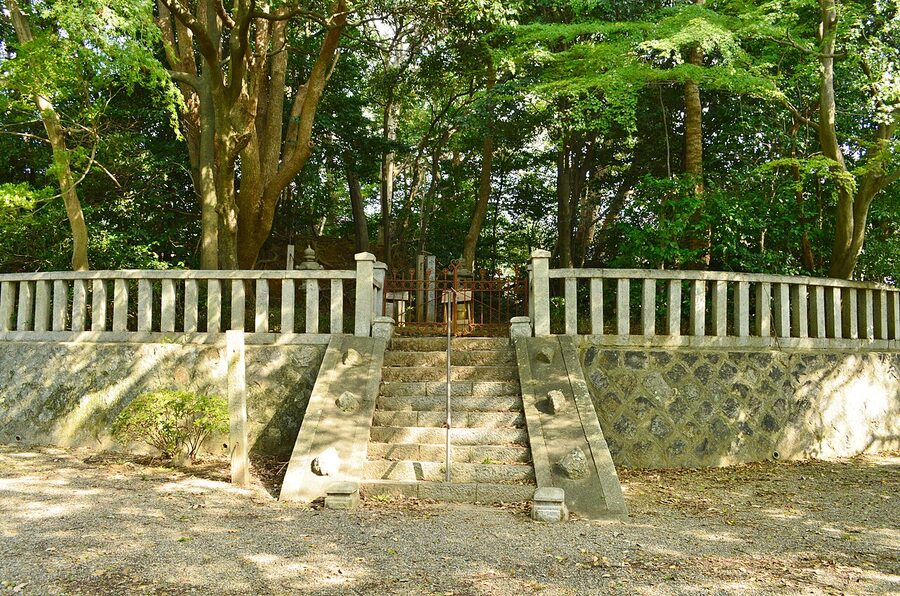
The valley was a Soga burial ground. Within a few kilometres lie the mausoleums of Yōmei, Bidatsu, Suiko and Kōtoku, which is why locals call it the Valley of the Kings, and the Takenouchi road runs from here towards Asuka along roughly the line of the highway the Nihon Shoki says the court built in 613. For the losing side of 587, Taishō Shōgun-ji in Yao stands near the traditional grave of Mononobe no Moriya.
The Gallery of Hōryū-ji Treasures, Tokyo
In Tokyo, the 1878 gift waits for you in Ueno. After the war most of it passed from the imperial household to the state, and since 1999 it has lived in a gallery designed by Taniguchi Yoshio in the grounds of the Tokyo National Museum, a cool, dark, quiet building that many people who come to the museum never find. The Hata no Chitei panels belong here, shown only for short periods, along with dozens of small gilt-bronze Buddhas of the prince’s century.
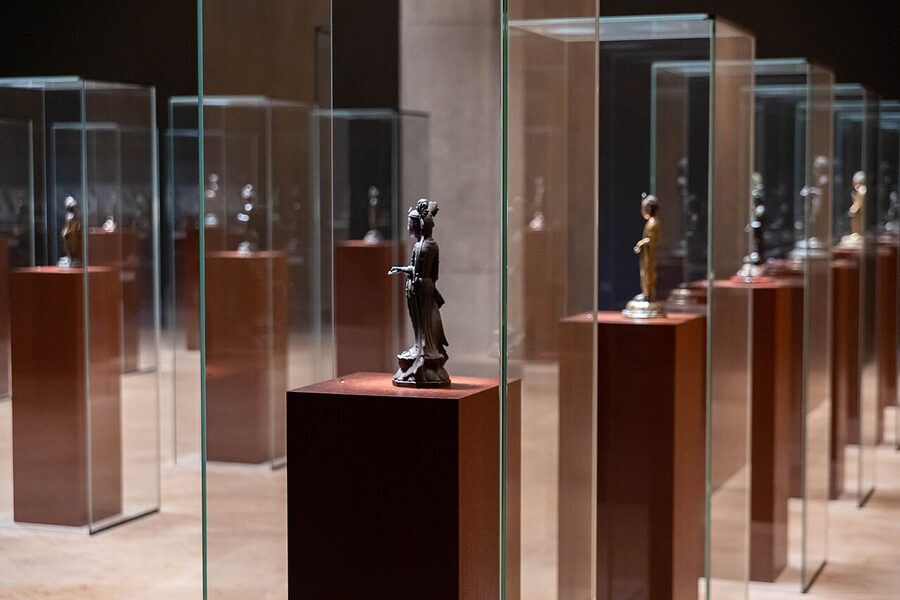
The museum is open 9:30–17:00 (later on some weekend evenings) and closed on Mondays unless Monday is a holiday; admission, which covers the gallery, is ¥1,000 for adults and ¥500 for university students, free for under-18s and over-70s. It is about ten minutes on foot from JR Ueno or Uguisudani. The portrait I started with is not here, and neither is the Hokke gisho; they are among the handful of objects the imperial family kept.
The rest of the ten-thousand-yen gift is, and that is reason enough to go. Hōryū-ji sold its prince to keep its roofs on, and the country turned him into money. Stand among the little Buddhas in Ueno, then take out whatever ten-thousand-yen note is in your wallet. The face on it has changed twice since his day, but ask anyone over sixty in Japan whose face belongs there, and I suspect you know the answer.